ALL TOGETHER NOW REHAB FITS MULTIPLE GROUPS INTO PARISH HOUSE - ALSO INSIDE: STANLEY TIGERMAN ISN'T DREAMING 16 VOA'S TOWERING ACHIEVEMENT 30 HOW ...
←
→
Page content transcription
If your browser does not render page correctly, please read the page content below
ALL
TOGETHER
NOW
REHAB FITS MULTIPLE GROUPS INTO PARISH HOUSE

ALSO INSIDE:
STANLEY TIGERMAN ISN’T DREAMING 16
VOA’S TOWERING ACHIEVEMENT 30
HOW DEPAUL FOUND ITS GROUNDS 38

                                     www.aiachicago.org   jan | feb 2012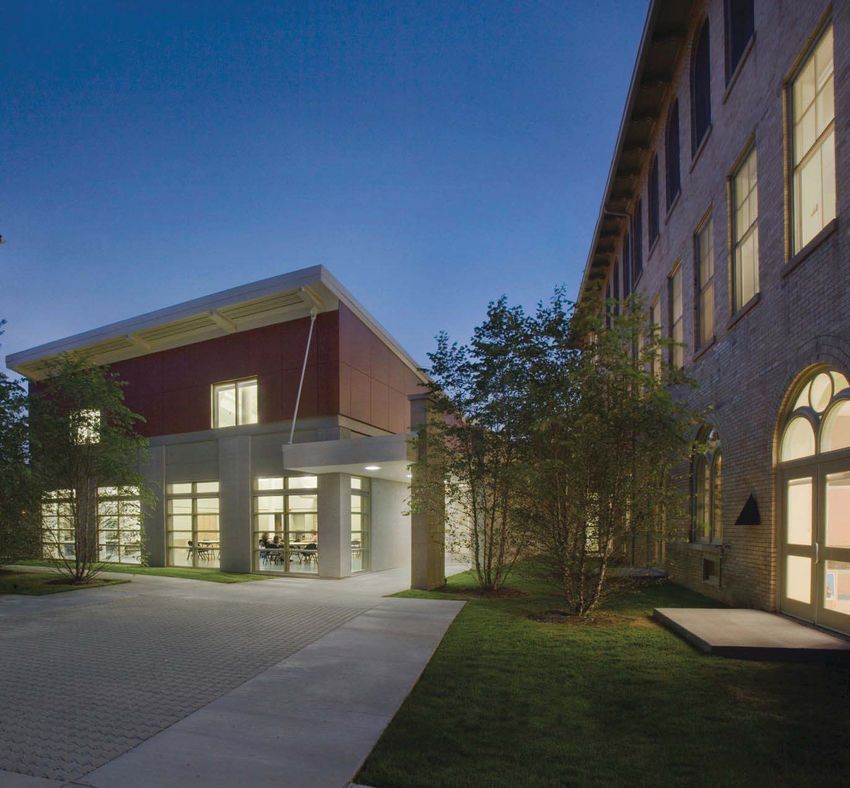
GROWING COMMUNITY CENTER’S CHURCH REHAB
SERVES MANY PURPOSES
By Laurie Petersen

     E
                MPTY CHURCHES AND SHUTTERED PAROCHIAL SCHOOLS ARE
                SCATTERED THROUGHOUT CHICAGO’S NEIGHBORHOODS.
                Meanwhile, day care centers, community organizations and charter schools
                are searching for facilities. Could this be divine providence?
                Concordia Place is a success story that illuminates both the challenges and
                the rewards of such undertakings. Concordia Lutheran Church in the North
     Center neighborhood was seeking to expand its very successful early childhood
     program. A church complex about a mile southwest in Avondale was on the market,
     and the neighbors did not want it razed for condos. Renovating the buildings and         Images courtesy of Holabird & Root
     constructing an annex resulted in an expansion of mission and program: Concordia
     Place now serves a multi-age population from babies to senior citizens.
        The property featured an unusual set of structures. St. Veronica Parish was
     founded in 1904 and a year later dedicated a combination church-school building at
     3300 N. Whipple. What looks like a three-story brick-and-limestone school actually
     contained a sanctuary on the ground fl oor, classrooms on the floor above, and a large
     community hall on the third floor. Gone was an old wood-frame convent in a wood-
     frame penthouse above it all; it was destroyed by fi re years ago.
        Chicago cultural historian Tim Samuelson says that this building type was not
     uncommon in the Chicago Archdiocese during the period. He notes that “it was a good,

34 ChicagoArchitect jan | feb 2012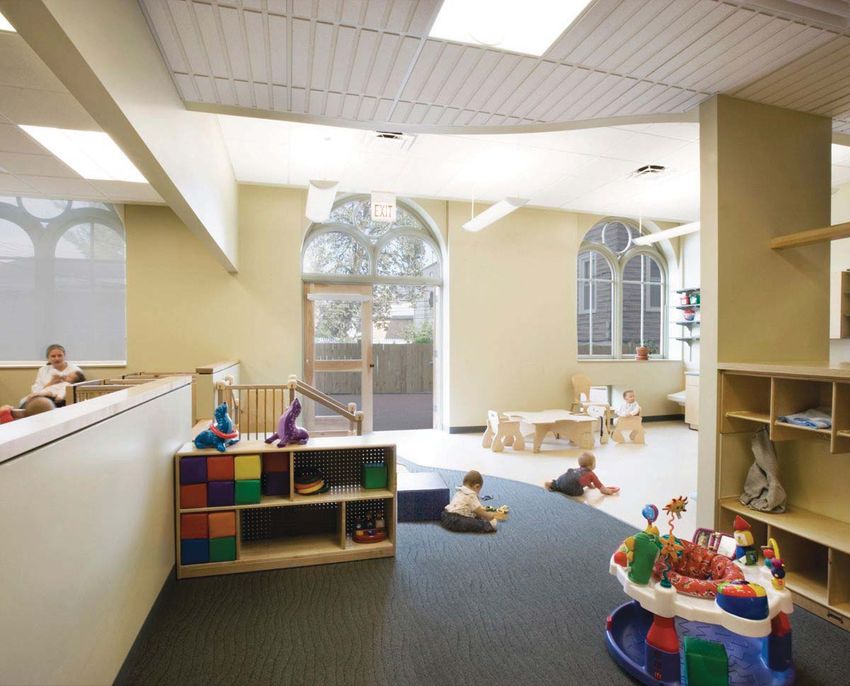
Lit up at night, the
                          annex (left) is set up
                          for a community event
                          and glowing like the
                          neighborhood beacon it
                          has become. During the
                          day, the interior space is
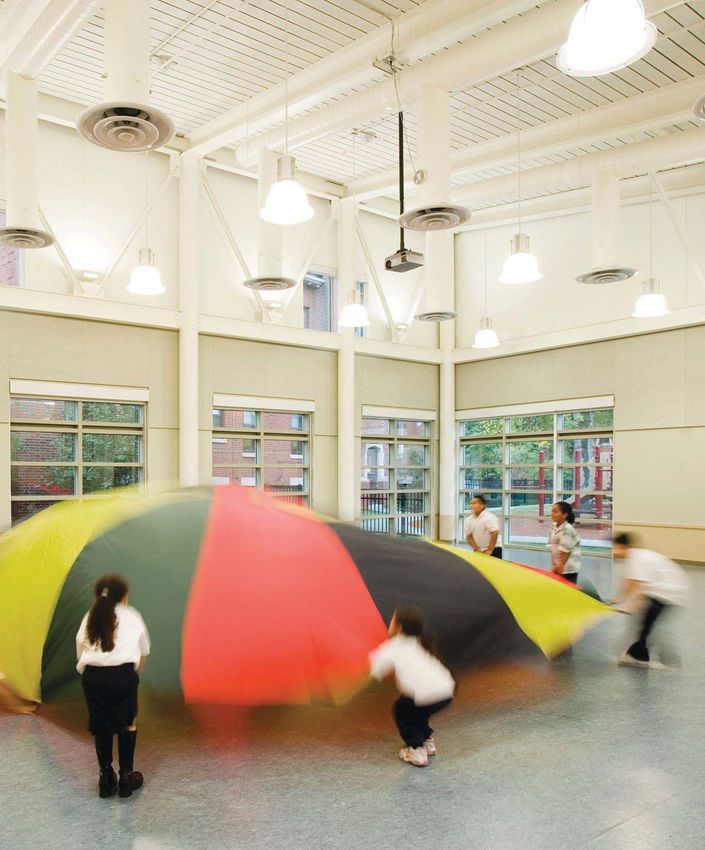
                          used for children’s large-
                          motor activities.

                          Three buildings contribute
                          to the complex (top right).
                          At left is the red brick
                          Schlacks-designed rectory,
                          rehabbed in an earlier phase
                          of work. The St. Veronica’s
                          church/school building is at
                          right, and the annex is at
                          back. Together, they enclose
                          a courtyard that is used for
                          both school and community
                          events, including a farmers’
                          market run by the after-
                          school teens.

                          The site plan (bottom right)
                          shows the three buildings
                          (in yellow): rectory on left,
                          church/school on right,
                          annex pulled to the back
                          of the site between the
                          two older structures. A
                          playground for preschool
                          children is left of the annex,
                          and a fenced play area for
                          toddlers is tucked to the
                          right of the school building.
                                                                                                                        Images courtesy of Holabird & Root

pragmatic Chicago-style solution.”                                        wondered what to do with the third floor. With the help of consultant
   The combination church-school building may now be the most             Laurel Lipkin, they surveyed the community and found that because
readily adaptable of church properties, as it has no bell towers, large   of gang activity, teen programs would be welcomed. There was also
rose windows or tall, voluminous naves. And the lack of the typical       a large population of seniors and non-English-speaking adults. So the
church basement means the main level is usually just a step or two        “bonus space” of the third floor would house a more comprehensive
up from the sidewalk, making ADA compliance easier to achieve. The        program, a community center. In addition to licensed childcare and
principal design quirk of the St. Veronica’s building was the slope of    preschool programs, Concordia Place’s offerings include after-school
the first floor toward the back wall where the altar was located.           and summer camp programs for ages 6 to 12, leadership
   In contrast to the modest church-school structure, the rectory,        development for teens, English classes for adults and wellness
built a decade later, is an imposing red-brick Tudor design by noted      programs for seniors.
ecclesiastical architect Henry Schlacks. The archdiocese closed              Architects Holabird & Root were charged with meeting all the
both church and school and sold the property to the city of               varied programmatic needs while preserving historic exteriors. Careful
Chicago in 1989. For a time, it was used as overfl ow space for            site planning made use of every square inch of the property. “We
nearby Carl Von Linne School, but by 2001 it was vacant and               wanted to get as much space as possible for the kids to play but also
suffering from vandalism.                                                 make a welcoming gesture to the public,” says project designer Maria
   When Concordia Lutheran purchased the property that year,              Segal. A single-story annex replaced a decrepit 1950s addition. Its
leaders of the group knew that the first two floors of the church-          colors and materials—soft red and light sage green composite
school building would be perfect for their early childhood and            cement panels—mediate between the red brick rectory and the
preschool program. But according to Reverend Nicholas Zook, they          yellow brick church-school building. Siting the annex at the back of

                                                                                                                   ChicagoArchitect    jan | feb 2012 35
1

    the lot created a courtyard that is now used for both school and         first floor classrooms: alternating windows were changed into doors,
    community events, including a farmers’ market run by the after-          and small square windows were punched into the walls below the
    school teens.                                                            sills of the remaining windows.
       The high-ceilinged annex is used for children’s large-motor               The interior of the church-school was gutted except for a stairway
    activities as well as banquets, community meetings and worship           in the southeast corner. Folding wooden doors that divided a large
    services. Extensive glazing provides a visual connection to the          room on the third floor were reused for the same purpose. Another
    outdoors and makes it glow during evening events. A playground for       compromise was reached with the second-floor hallways, which IHPA
    the preschool children is just south of the annex, and a fenced play     wanted to be as wide as they had been originally. To meet this
    area for toddlers is tucked into the north part of the site, offering    directive, yet gain much-needed classroom space, Holabird & Root
    direct access from those classrooms.                                     bumped out bays into the hallway and then took advantage of the
       The church complex is rated orange—meaning it possesses               configuration to incorporate hall benches.
    significance to the community—on the Chicago Historic Resources               The archdiocese had removed about half of the stained glass
    Survey. Receiving state funds for the project triggered the              windows before selling the property. Those that remained were
    involvement of the Illinois Historic Preservation Agency. The original   removed from the first-floor sanctuary and placed in back-lit frames in
    wood windows were restored and double-glazed. A compromise was           the historic stairwell and in the third-floor teen room, which can also
    reached between IHPA’s directive to preserve all window openings         serve as a chapel. Preservation of the glass was not required by the
    and Concordia’s desire to change them into glass-paned doors for the     IHPA but was done at the insistence of Rev. Zook, who “wanted to

    36 ChicagoArchitect jan | feb 2012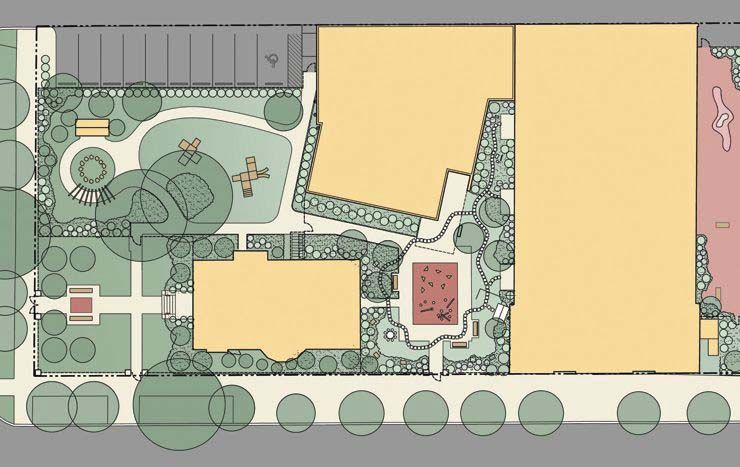
1. To maximize daylight and views for the children, alternating windows of the
                                                                                    first-floor classrooms were changed into glazed doors, and small square
                                                                                    windows were created just above floor level. Activity areas are defined by
                                                                                    low walls, lofts, and changes in ceiling and floor treatments. The neutral
                                                                                    palette is a soothing backdrop for the children’s toys and activities.
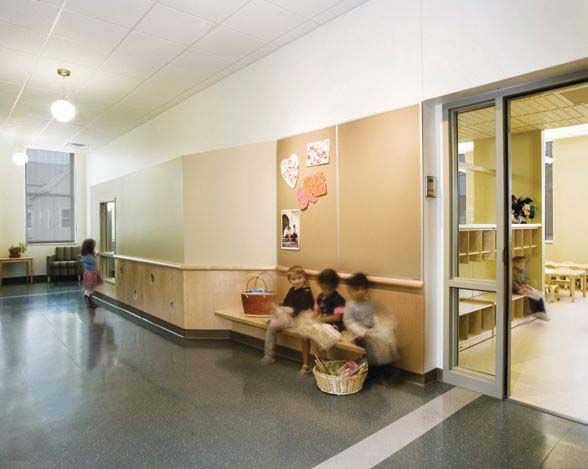
                                                                                 2. To gain classroom space while meeting the IHPA’s requirement for
                                                                                    wide second-floor hallways, Holabird & Root bumped out bays and then
                                                                                    incorporated benches. Interior windows provide views into classrooms.
                                                                                 3. The skylit third floor café serves as a secondary lobby and multi-age
                                                                                    meeting space.
                                                                                 4. The stairwell is the only historic element of the otherwise gutted interior.
                                                                                    Back-lit stained glass windows were originally in the first-floor sanctuary.

2

3

                                                                                                     4

    show continuity with this place as an anchor in the community.”           to the building’s success as a community center. Zook had wanted a
       The interior materials palette is in neutral, soothing colors with     grand first floor lobby, but it was not practical because that valuable
    natural materials, such as birch plywood, used wherever possible.         space was needed for classrooms, so instead, the project team
    “That way the child brings the life and color to the spaces,” Segal       created a great lobby upstairs. A pitched-roof skylight structure
    says. She and the client were able to visit several other childcare       provides abundant north light, and a café serves as a multipurpose
    centers and found some common desires: maximization of natural            space used at different times of day by seniors, adults and teens.
    light, a scale that is appropriate for children and an abundance of       New doors can close off the corridor to separate the licensed
    storage spaces. Zook praises Segal for creating storage from              preschool spaces from the community areas. Segal notes that this
    otherwise useless space, which helps maximize the flexibility of the       kind of mixed-use facility is a good model for the pooling of resources
    rooms. He is also enthusiastic about the variety of lighting, including   that is now often necessitated by tight budgets.
    daylight, that is found throughout the building.                             Challenges during the process included the discovery of cast-iron
       The child-appropriate scale was achieved despite high ceilings by      columns, requiring the addition of a secondary set of them in steel.
    breaking down the scale of the classrooms with alcoves, cubbies and       Zook feels that the added costs of preservation were part of the
    lofts. Activity areas are defined by changes in ceiling and floor           organization’s “good faith relationship to the community,” which
    treatments. Low, square windows provide views into adjacent               includes former St. Veronica parishioners. Instead of being lost to the
    classrooms as well as to the outdoors.                                    wrecking ball, this former church serves a new organization’s mission
       The third floor has an array of spaces whose flexibility has been key    as a place “where all our neighbors can gather, learn and grow.”CA

                                                                                                                               ChicagoArchitect   jan | feb 2012 37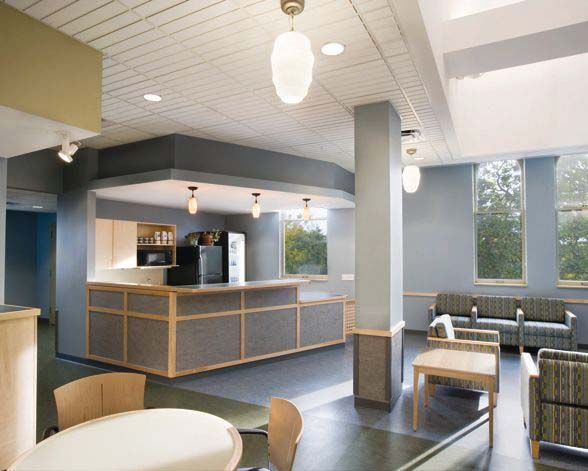


You can also read


