ANNUAL REVIEW 2018 - Farm Africa
←
→
Page content transcription
If your browser does not render page correctly, please read the page content below
ANNUAL REVIEW 2018
FARM AFRICA ANNUAL REVIEW 2018                                                               FARMAFRICA.ORG

 2   Letter from the Chair
 3   Letter from the CEO
 4   Where we work
 6   Livestock for livelihoods
 8   A holistic approach to building resilience
10   Our year in numbers
12   Transforming Kenya’s fish farming sector
14   Success with sesame in arid Tanzania
16   Chefs for Change
18   Thank you
19   Financial summary

LETTER FROM THE CHAIR                                                                                         LETTER FROM THE CEO
This Annual Review is the final report I       programmes from a range of audiences.                          Welcome to Farm Africa’s Annual Review, a      It was a year of growth for Farm Africa.
have the privilege to put my name to as        Some of my most cherished memories                             look at some of our 2018 highlights. We are    Our income increased from £12.0 million in
Farm Africa’s Chair. Along with Farm           are from leading increasingly ambitious                        pleased to present case studies of projects    2017 to £14.9 million in 2018 (or, including
Africa Deputy Chair, Jonathan Kydd, I          fundraising treks in eastern Africa.                           in four countries: Ethiopia, Kenya, Tanzania   Sidai, from £14.7 million to £18.1 million)
am stepping down from my post in July          The most recent trek in 2018, a trans-                         and Uganda, which illustrate the breadth       and we were proud to open a variety of
2019. I will be succeeded as Chair by John     boundary expedition starting at Farm                           of the organisation’s remit and impact.        innovative new projects ranging from
Reizenstein, while Judith Batchelar will       Africa’s orange-fleshed potato project                                                                        cashew farming in coastal Kenya to chilli
take on the role of Deputy Chair.              in Uganda, encompassing the ascent of                          What unites our work with sesame               farming in Uganda to a project empowering
                                               extinct volcano Mount Elgon, and ending                        growers, fish farmers, goat keepers            Ethiopian women to adapt to and mitigate
Since starting as Chair in 2013, I have seen   at the charity’s Growing Futures project in                    and agro-pastoralists is a triple focus        against climate change. We were delighted
Farm Africa grow its programme portfolio       western Kenya, encapsulated everything                         on improving agriculture, safeguarding         to submit a successful proposal to the EU
hugely, allowing this great organisation       Farm Africa stands for. Innovative                             the environment and taking a business          to scale up one of our largest projects: a
to reach more people in eastern Africa,        programming. Improved agriculture.                             approach to farming. The three pillars of      coordinated effort to preserve ecosystems
making a lasting change to farmers’            Environmental protection. Strengthened                         agriculture, environment and business          and boost livelihoods in Ethiopia’s Bale
livelihoods and restoring and protecting       links to market. And a healthy dose of                         underpinned all 26 of Farm Africa’s            Eco-Region.
the landscapes on which they depend.           challenge and camaraderie.                                     projects in 2018 and were vital to our
                                                                                                              success in sustainably improving lives         This report offers just a small window into
The organisation is constantly evolving        I extend heartfelt thanks to Jonathan Kydd,                    across eastern Africa.                         Farm Africa’s operations in 2018. I invite you
and as I depart I am excited to see Farm       my other fellow Trustees, Farm Africa’s                                                                       to visit our website at www.farmafrica.org
Africa start operations in a new country:      CEO Nicolas Mounard and his team across                        The report also introduces Chefs for           or follow us on social media to find out more.
the Democratic Republic of the Congo, and      six countries, and to everybody who has                        Change, a movement we spearheaded
to embark upon new innovative work in          supported Farm Africa over the last year.                      in association with the World’s 50             On behalf of the whole organisation and the
eastern Ethiopia helping not only refugee      Your support is quite simply                                   Best Restaurants and American NGO              farming families we serve, many thanks to
communities but host communities               transforming lives.                                            TechnoServe in 2018. As we go to print         all those who have supported Farm Africa
improve their lives through sustainable                                                                       in June 2019, our first ambassador chefs       in 2018. Our work would not be possible
agriculture. I also welcome the news that                                                                     have just returned from trips to visit the     without you.
Sidai, a social enterprise founded by Farm                                                                    two NGOs’ projects in eastern Africa and
Africa, is set to grow following the recent                                                                   Peru. We are excited to work with them to
$2.25 million investment from leading                                                                         champion the importance of sustainable
agri-tech company Devenish.                                                                                   agriculture to achieving the Sustainable
                                                                                                              Development Goals, a universal call to end
As I look back over my time at Farm Africa     Richard Macdonald CBE                                          poverty, protect the planet and ensure that    Nicolas Mounard
I am proud to have rallied support for our     Chair                                                          all people enjoy peace and prosperity.         CEO, Farm Africa

02                                                                                                                                                                                                       03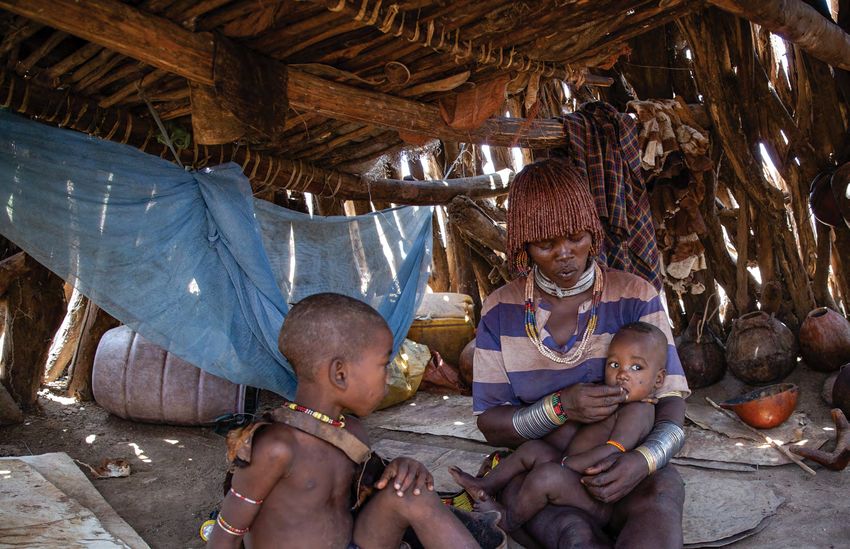
FARM AFRICA ANNUAL REVIEW 2018 FARMAFRICA.ORG
WHERE WE WORK FARM AFRICA’S PROJECT LOCATIONS IN 2018:
ETHIOPIA
9 1. Making forestry sustainable
FARM AFRICA WAS PLEASED TO START 2. Preserving ecosystems in Bale
WORK IN A NEW COUNTRY IN 2018: DR 3. Marketing Bale’s wild coffee
CONGO, BRINGING THE TOTAL NUMBER 7 4. Making forest coffee profitable
5. Sustainable coffee value chain development
OF COUNTRIES WE WORK IN ACROSS 8 6. Climate-smart agriculture
EASTERN AFRICA TO FIVE. 7. Market approaches to resilience
9 9
8. Sustainable production and marketing of forest products
9. Climate resilience for female farmers
We work with different types of farmers in
a range of regions, from dry rangelands to ETHIOPIA 10. Market-driven climate-smart agriculture
11. Livelihoods for refugee and host communities
lush, diverse forests. Our support extends 5
to communities facing varying challenges, 4 KENYA
from chilli farmers deeply affected by war in
6 7 12. Market-led aquaculture
Uganda, to cashew farmers affected by an 9 1 2 13. Growing Futures
economic downturn following insecurity in 9 14. Accelerated value chain development
coastal Kenya and Somalian refugee com- 3 15. Urban agriculture
munities in eastern Ethiopia.
16. Cashew nut and sesame production and marketing
25 10 17. Waitrose Foundation
7
9 TANZANIA
9
11 18. Orange-fleshed sweet potato production
19. Sesame production and marketing
20. Sunflower production
25 UGANDA
DR CONGO 23
26 21. Sweet potatoes for prosperity
22. Investing in Uganda’s young and female coffee farmers
21 KENYA 23. Commercialising chilli production
UGANDA 13 DR CONGO
24. Coffee production in Virunga National Park
26 14
14 REGIONAL
17 14
24 22 12
25. Livestock for livelihoods
15 26. Regional trade of staple foods
12 14
20
3,000,000 NUMBER OF
16 PEOPLE REACHED
2,600,000 2,600,000
19 26 The people we reach
20 come from a range of
2,500,000
backgrounds, and the
term ‘farmer’ is often an
18 1,900,000 inadequate way to describe
TANZANIA them. Our projects touch
2,000,000 1,800,000
the lives of men, women
and children, who may rely
1,500,000 1,400,000 on specific ecosystems we
have helped to transform,
or who merely have
benefited from the growth
1,000,000
in a specific value chain
Year through obtaining a job.
2014 2015 2016 2017 2018
26 05
04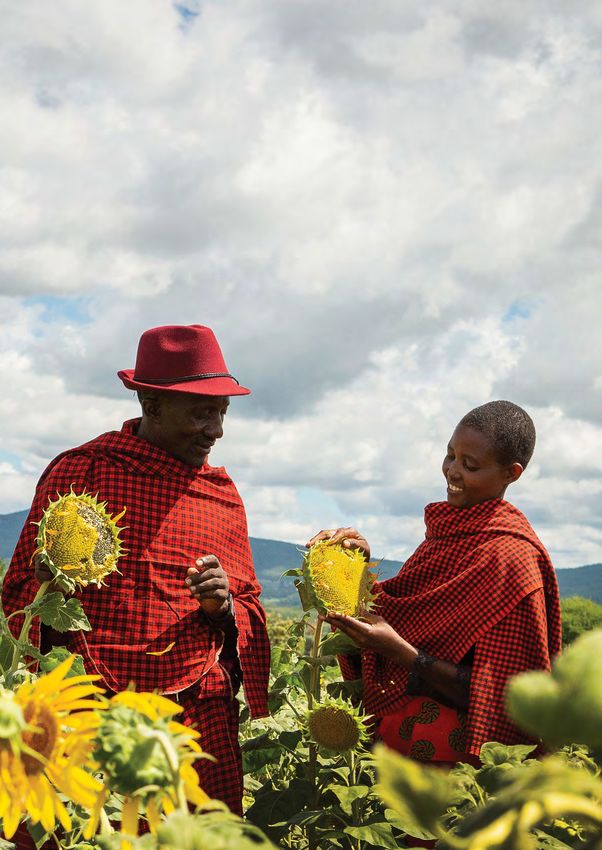
FARM AFRICA ANNUAL REVIEW 2018                                                                  FARMAFRICA.ORG

 LIVESTOCK FOR LIVELIHOODS                                                                                        IMPROVED GOAT BREEDS
                                                                                                                  In order to increase access to improved
                                                                                                                  goat breeds with high milk production
                                                                                                                                                               ANIMAL HEALTH
                                                                                                                                                               To support the health of the livestock,
                                                                                                                                                               Farm Africa has trained existing
                                                                                                                  potential, Farm Africa conducted a breed     Community Animal Health Workers
 FARM AFRICA IS HELPING IMPROVE THE LIVELIHOODS AND                                                               assessment in both countries to identify     (CAHWs) and local government staff to
                                                                                                                  a suitable dairy goat breed that could       enhance their practical and technical
 HEALTH OF 10,000 UGANDAN AND ETHIOPIAN PASTORALIST                                                               be cross-bred with the local goats and       goat husbandry skills. Farm Africa then
 WOMEN AND THEIR FAMILIES THROUGH A NEW MULTI-LAYERED                                                             could adapt well in the harsh climates       supported CAHWS to deliver practical
 THREE-YEAR LIVESTOCK PROGRAMME, WHICH BEGAN IN 2018.                                                             in the pastoral areas. Findings from the     training to the livestock groups on how
                                                                                                                  assessments indicated that the most          to control disease, manage inbreeding,
                                                                                                                  common dairy goat breeds currently in        construct shelters, castrate and feed their
                                                                                                                  the pastoralist zones are exotic varieties   goats (for increased kidding rates and milk
                                                                                                                  with low production capacity both in         production).
 The drylands of Ethiopia’s South Omo zone       Key challenges to be addressed include                           terms of meat and milk production.
 and Uganda’s Karamoja northern region           availability of fodder (particularly in the                                                                   After the training, communities stated
 are home to thousands of pastoralists who       dry season). Currently it is not common                          As a result, cross breeds with 50-75%        they were convinced of the benefits
 rely on livestock for their livelihoods. Over   practice for pastoralists to grow and store                      exotic genes (namely Toggenburg in           of supplementing their existing goat
 time, in both regions, disease, drought and     fodder during the wet season. Secondly,                          Uganda and Boer bucks in Ethiopia) are       feed by planting forage and had a clear
 degraded grasslands have reduced the            access to breeding services is problematic                       being procured from accredited breeders      understanding of the importance of goat
 size of herds, exacerbating high levels of      due to the distant location of the project                       and will be supplied to the livestock        shelters for disease control. Farm Africa
 poverty and malnutrition. Goats are well        sites. As a result, introducing improved                         groups. Through the supply of these bucks    will continue to support them to put their
 suited to these challenging landscapes and      breeds of goats is currently impossible.                         Farm Africa is establishing community-       knowledge into action over the remaining
 provide a potential solution to improving       Finally, a lack of capacity and access to                        run buck rearing stations alongside the      period of the project. A key focus for the
 the livelihoods of thousands of households      veterinary services means that livestock                         livestock groups where goat owners can       remaining years of the project will be
 in these borderland regions of Ethiopia         mortality can be high.                                           bring their local does to cross-breed.       working with the local partners to help
 and Uganda.                                                                                                                                                   households generate increased incomes
                                                 REVOLVING GOAT SCHEME                                                                                         and improve their diets.
 Goats are kept close to homesteads and          To address these challenges, in 2018 Farm
 are traditionally left to women to care for,    Africa was proud to launch the Livestock
 making them an ideal source of income           for Livelihoods project with support from
 for women. However, the challenge in            two local partners, Africa Innovations
 both countries is that local breeds do not      Institute (AFRII) and Mothers and Children
 produce sufficient milk or meat, which          Multi-Sectoral Development Organization
 limits both the income generation potential     (MCMDO). The project, which will run
 and the contribution they can make to           until 2022 with funding from the UK
 household nutrition. As a result, goats         government’s UK Aid Direct programme,
 are not seen as an important source of          has established a 7,200 woman-strong

                                                                                                                                                                                                             PHOTO: FARM AFRICA /ESTHER RUTH MBABAZI
 income or nutrition, but if key issues can      revolving goat scheme.
 be addressed this can be changed.
                                                 So far, each woman has received two goats
                                                 from Farm Africa. Over time, these women
                                                 will then gift two of the goats’ offspring to
                                                 other women within the livestock group.

“When I have increased
the size of my herd, I will                                                                                                                                                               This project is
have enough milk for my children                                                                                                                                                          funded by UK
                                                                                                                                                                                          aid from the UK
and I can sell what is left. When I sell                                                                                                                                                  government.
my fattened goats I will use half the
money to buy food (crops) and the
other half to buy more goats to fatten.”
— Hailo, Ethiopia (far right)

 06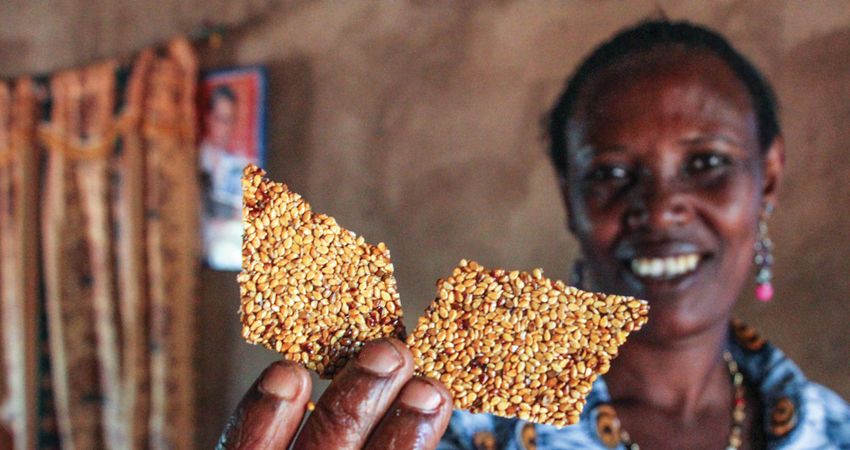
FARM AFRICA ANNUAL REVIEW 2018

A HOLISTIC APPROACH
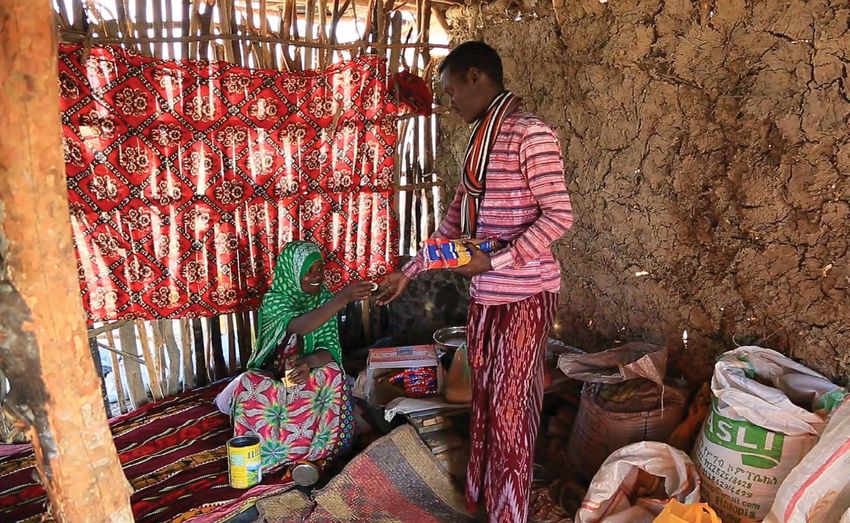
TO BUILDING RESILIENCE                                                                                                                                                          “In the past, during the dry
                                                                                                                                                                          season we used to trek to Awrah
                                                                                                                                                                           Woreda, hundreds of kilometres
OUR MARKET APPROACHES TO RESILIENCE (MAR) PROJECT HAS
MADE RANGELAND-DEPENDENT AGRO-PASTORALISTS BETTER                                                                                                                         away. We remained there as long
ABLE TO COPE WITH NATURAL SHOCKS SUCH AS DROUGHT IN THE                                                                                                                       as there was pasture for the
AFAR, SOMALI AND SNNP REGIONAL STATES OF ETHIOPIA.                                                                                                                             livestock. But from now on,
                                                                                                                                                                                       no more migration!”
                                                                                                                                                                                       — Medina, pictured on the left, whose
                                                                                                                                                                                             family used to be dependent on
Lowland Ethiopians are some of the most          from the ‘tragedy of the commons’                                                                                                       pastoralism, used a 2,500 Birr loan
climate vulnerable people in the world,          as natural resources are treated as                                                                                                          from her VSLA to build a shop
relying primarily on rain-fed livestock          a common good. All of this combined                                                                                                       selling food items such as sugar,
and agricultural production as a source          exacerbates vulnerability to climate                                                                                                                    macaroni and pasta
of income in the face of frequent and            shocks both for agro-pastoralists
unpredictable droughts and floods. The           and pastoralists alike. The traditional
little weather information available to          migration to urban centres, which might
communities is often not reliable due to         relieve stress on rangelands, is hampered
the very localised nature of the rainfall and    as few employment opportunities exist,
the generalised nature of forecasts. As          especially for rural-migrants.
a result, local governments have limited
skills and capability to plan and respond        Farm Africa’s MAR project has taken a           This project is
to climate shocks. Due to the remote             “systems” approach that aims to bring           funded by UK
locations, there is also limited access to       about transformative changes in the             aid from the UK
financial services, which is a critical factor   ability of people in lowland Ethiopia to deal   government.
in helping households diversify income           with climate shocks. The project, which
streams in the face of climate shocks.           is part of the £140m Building Resilience
                                                 and Adaptation to Climate Extremes and
Few people are engaged in climate-smart          Disaster (BRACED) programme funded
agricultural practices, and communal             by UK aid from the UK government,
systems to manage natural resources              simultaneously addresses multiple
such as forests and rangelands suffer            drivers of climate vulnerability.

OVER THE FIRST PHASE OF THE PROJECT, WHICH RAN FROM 2015 TO 2018:

Savings and asset building have       the costs of setting up the VSLAs.     Repayment of these loans was used       practices, such as vegetable       lands and allowed trees and           The MAR project has enabled
improved, with increased access       Participation in VSLAs has been        as a revolving fund to given loans to   farming and bee-keeping,           vegetation to flourish again,         communities to sustainably
to financial services playing a       particularly valued by women,          further beneficiaries.                  and investing in new income-       increasing the availability of food   manage 40,000 hectares of
vital role. We’ve helped 6,284        who appreciate their gains                                                     generating sources.                for livestock. Radio broadcasts of    watershed, rangeland and
people set up 327 Village Savings     in autonomy.                           Livestock insurance:                                                       accurate information from 25          forests.
and Loan Associations (VSLAs),                                               For the first time pastoralists were    Food supply was increased for      newly installed digital weather
which issue loans to finance the      4,211 loans totalling £473,432         able to access livestock indemnity      a third of project participants    stations and advice from 224          Income generated from the use
start-up of businesses such as        were issued, enabling community        insurance. Although very nascent in     through access to VSLA loans       village Early Warning and             of financial services, improved
petty trading, making and selling     members to access start-up             its implementation, MAR is helping      during emergencies, improved       Environmental Committees              farming practices and the
local drinks and animal fattening     capital.                               de-risk the insurance market            natural resource management        means farmers are better able to      challenge fund has helped people
for sale. More than 4,200 people                                             for potential business entrants         practices and investments in       anticipate, prepare and respond       pay for other costs like health
took out loans through the VSLAs      Farm Africa de-risked loans to         by testing the business case of         livestock and farming practices.   to shocks.                            care and school fees.
and Micro Finance Institutions,       pastoralists and agro-pastoralists     providing insurance to pastoralists.
averaging £112 per household.         by guaranteeing 80% of the loans                                               Livelihoods were made more         For example, with this information    Most of these outcomes relied
Using conservative assumptions,       that MFIs provided to individuals.     Project participants have               climate resilient through          they are better able to make          on multiple interventions,
we estimate the benefits of           As a result, six MFIs were             diversified their incomes by            improved natural resource          decisions on issues such as           highlighting the benefit of taking
income generated from the loans       supported through this project to      undertaking new green jobs in           management practices, which        cattle destocking and water           a holistic approach to building
to be nearly five times               provide loans to 3,612 individuals.    urban areas, adopting new farming       regenerated depleted grazing       conservation.                         climate resilience.

08                                                                                                                                                                                                                                 09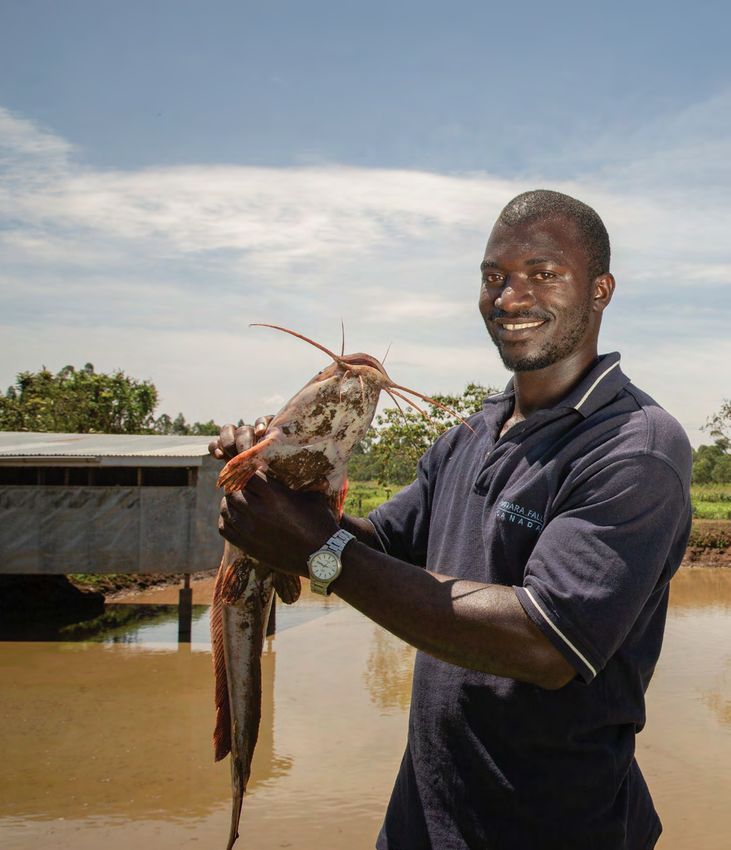
FARM AFRICA ANNUAL REVIEW 2018
OUR YEAR IN NUMBERS
AVERAGE INCOMES OF 15 SUPPORTERS LEFT US
FARMERS TAKING PART IN GIFTS IN THEIR WILLS,
OUR GROWING FUTURES totalling £187,100
PROJECT ROSE BY 50%
from the start of the project
in 2016 to the end of 2018 156 PEOPLE ATTENDED OUR
GALA DINNER in London
in September 2018, raising
WE TRAINED £116,000
4,211 LOANS TOTALLING £473,432
6,977 PEOPLE
were issued to community members
in southern
taking part in our Market Approaches
Ethiopia in
to Resilience project, enabling them to
climate-smart
access start-up capital
agriculture
7,200 WOMEN
WILL RECEIVE
GOATS throughout
2.6 MILLION our new Livestock
4,230 AMAZING
PEOPLE for Livelihoods
SUPPORTERS
REACHED project
donated almost
£500,000 as
regular gifts
4,646 GENEROUS
SUPPORTERS sent
8,900 donations,
totalling £586,400
WE’RE HELPING
AVERAGE HOUSEHOLD 15,000 FARMERS
INCOMES ROSE BY 148% PLANT 1,000,000
amongst farmers taking CASHEW TREES
26 PROJECTS IN part in our Orange Fleshed 120% INCREASE in coastal Kenya
5 COUNTRIES Sweet Potato Production IN PRODUCTIVITY
project in Tanzania amongst Tanzanian
sesame farmers
413 PEOPLE ATTENDED
WE ARE TRAINING working with Farm
OR TOOK PART IN OUR
4,800 COFFEE Africa
FUNDRAISING EVENTS,
FARMERS in raising over £191,450
SIX BRITISH FARMERS VISITED FARM AFRICA PROJECTS
western Uganda in
IN KENYA, LED BY THE NFU’S ADAM BEDFORD.
how to sustainably
increase yields “At the NFU, we’re proud to be in the business of
developing a stable and sustainable future for British
PROFITABILITY AMONGST agriculture. In Farm Africa, I see clear parallels.
THE BEST PERFORMING Farm Africa helps farmers to take an environmentally
FISH FARMERS MORE sustainable and business-led approach.”
THAN DOUBLED TO 77%
10 11
FARM AFRICA ANNUAL REVIEW 2018                                                                      FARMAFRICA.ORG

TRANSFORMING KENYA’S
                                                                                                                     BUSINESS ACUMEN                                PROTECTING THE ENVIRONMENT
                                                                                                                     We help fish farmers form collectives to       KMAP has developed a framework for
                                                                                                                     sell their fish in bulk, providing them with   sustainable aquaculture, which has been

FISH FARMING SECTOR                                                                                                  the leverage to sell at higher prices, while
                                                                                                                     staggering their production cycles with
                                                                                                                     other groups to ensure a continuous
                                                                                                                                                                    shared with the government. Training for
                                                                                                                                                                    farmers encompasses the importance of
                                                                                                                                                                    disease prevention, essential with shared
                                                                                                                     supply of fish is available for sale.          water resources, as well as efficient
DEMAND FOR FISH IN KENYA OUTSTRIPS SUPPLY, YET THE                                                                   Enterprise awareness extends to                water management. Attention is also
POTENTIAL OF THE FISH FARMING SECTOR IS BEING HELD BACK.                                                             demonstating lucrative value addition          paid to water quality and quality of
                                                                                                                     practices, such as selling fried and           inputs, which can mitigate effects of
FARM AFRICA IS WORKING TO CREATE JOBS AND BOLSTER                                                                    processed fish as well as raw fish. The        environmental impacts.
FOOD SECURITY AND NUTRITION BY HELPING THE KENYAN FISH                                                               value of tilapia, which accounts for three
FARMING INDUSTRY BECOME COMPETITIVE, OFFERING SUPPORT                                                                quarters of freshwater fish consumption,
                                                                                                                     can increase up to 80% through value
ALONG THE VALUE CHAIN FROM INPUT SUPPLIERS TO PRODUCERS
                                                                                                                     addition. Profitability amongst the best
AND SELLERS.                                                                                                         performing farmers more than doubled
                                                                                                                     to 77% in the year to 2018.

Kenya is facing a declining supply of wild     difference between making a profit or loss
caught fish. Farmers rearing fish in ponds     for many fish farmers.
have the potential to increase production
to reduce the current supply gap of 50,000     The results also showed that fingerlings
metric tonnes of fish a year, but are          produced and farmed in the same
struggling to make a profit due to a lack of   geographic area are more productive.
access to of high quality inputs, technical    From the project’s inception, four
know-how and investment.                       hatcheries supported by Farm Africa have
                                               increased fingerling production from
Launched in 2016, Farm Africa’s four-year      480,000 to 8.2 million a year. Based on
Kenya Market-led Aquaculture Programme         the outcomes of the trials, we have also
(KMAP) is helping boost the fish farming       started to support two nurseries, farms
industry by improving productivity;            that grow fry up to five-gram fingerlings, to
enhancing trade between suppliers, fish        help increase the available supply of larger
farmers and buyers; and developing an          fingerlings to fish farmers.
enabling environment.
                                               HIGH-QUALITY TRAINING
Enhancing sustainable aquaculture              We offer technical training in aquaculture
KMAP has cast a wide net and aims to           and business development, as well as
increase the incomes of 1,100 households       workshops on demonstration farms to
and provide a sustainable source of            help fish farmers develop the skills needed
fish to over a million consumers by the        to ensure the long-term viability of their
end of 2019. The project captures not          ponds. We emphasise the importance of
only experienced fish farmers but also         marketing and business skills, particularly
aquaculture novices.                           with regard to keeping accurate records
                                               of inputs and yield in order to monitor the
EVIDENCE-BASED APPROACH                        business success.
Optimising the use of expensive inputs,
such as fish feed and fingerlings              Outreach programmes such as peer-to-            “We have plenty of good fresh water.
(young fish), is critical to the success of    peer knowledge exchange and e-learning
independent fish farming businesses.           have reached 7,600 people to date. Farm         People tell us this fish is so great, so sweet.
Farm Africa and WorldFish’s ‘feed versus       Africa’s fish farming training website offers   They are surprised it is farmed fish but we
strain’ trials, undertaken from July 2017      detailed guidance on pond construction,
                                                                                                naturally have everything we need for great

                                                                                                                                                                                                                PHOTO: FARM AFRICA / ESTHER MBABAZI
to February 2018, revealed that releasing      pond stocking, fish health management,
larger fingerlings, weighing five grams        harvesting and transportation                    fish production. Thanks to Farm Africa we have
or more, into ponds, and using pelleted        to market.
feeds rather than mash reduced farmers’                                                         received lots of technical support and advice on
expenditure and sped up production. With                                                       which companies to get the best feeds from.
fish feed accounting for close to two thirds
of production costs of the farmed fish,                                                        This has enabled us to thrive. They support us a lot.”
this knowledge could make the crucial                                                          — Emmanuel Bukati, Vihiga, western Kenya

12
FARM AFRICA ANNUAL REVIEW 2018                                                                FARMAFRICA.ORG

SUCCESS WITH SESAME
                                                                                                               INCREASING MARKET ACCESS                     land to high quality seed production
                                                                                                               Farm Africa promoted the benefits of         and obtain certification for their seeds.
                                                                                                               collective bargaining in building stronger   The use of improved seeds, which

IN ARID TANZANIA                                                                                               links to market. We trained a network
                                                                                                               of 102 community entrepreneurs who
                                                                                                               aggregated and sold sesame grown by
                                                                                                                                                            accounted for 91% of those planted,
                                                                                                                                                            is a key factor to increasing sesame
                                                                                                                                                             yields.
                                                                                                               the farmers, carefully storing produce
TURNING TO SESAME PRODUCTION HAS PROVEN PROFITABLE                                                             in 43 warehouses. They helped improve        EMPOWERING WOMEN
FOR FARMERS WORKING WITH FARM AFRICA IN NORTHERN                                                               logistics, increase the flow of relevant     AND YOUNG PEOPLE
                                                                                                               market information and develop mutually      A focus on equality was core to the
TANZANIA. HIGHER CROP YIELDS, GREATER MARKET                                                                   beneficial business relationships among      project and we were proud to reach
ACCESSIBILITY AND MORE EQUALITY ARE ALL PLAYING THEIR                                                          actors in the sesame value chain. The        5,474 women and 5,821 young people.
PART IN IMPROVING THE HEALTH, WEALTH AND FOOD SECURITY                                                         model provided a major departure from        We trained community-based gender
                                                                                                               traditional marketing and is gradually       promoters to improve women’s confidence
OF LOCAL COMMUNITIES.
                                                                                                               increasing transparency in the market        and ability to participate in sesame
                                                                                                               environment.                                 production and marketing. Women’s
                                                                                                                                                            financial empowerment was boosted
                                                                                                               IMPROVED POLICIES                            through increased participation in village
Farming traditional crops such as maize       INCREASING PRODUCTIVITY                                          Farm Africa delivered training on the        savings and loan associations (VSLAs).
is less prosperous than it once had been      We are proud to have pushed up the                               importance of using standardised national    The proportion of young people profiting
to those in Tanzania’s Manyoni, Bahi and      adoption rates of good agricultural                              weights and measures, and initiated work     from sesame production saw a significant
Babati districts. Adapting to the more        practices from 5% to 83% amongst the                             to draft local bylaws enforcing their use.   rise from 35% to 97%, while that figure
arid climate has called for changing          11,117 smallholder farmers we worked                                                                          rose from 7% to 95% for women,
agricultural practices and switching to       with. Their seasonal output increased by                         We also worked to increase access to         catalysing a drop in the sesame-related
crops more tolerant of the increasingly       41% from an average of 442kg of sesame                           quality declared seeds by enabling 55        income gap between women and men
parched landscape.                            per farmer to 623kg, while productivity,                         farmers to dedicate two acres of their       from 28 % to 14%.
                                              measured in kilograms of sesame produced
Farm Africa’s Sesame Value Chain project      per acre, increased by 120% over the
in Tanzania, funded by Comic Relief,          project’s lifetime.
has encouraged farmers to invest in a
more sustainable future by growing and        A smartphone-based agricultural training
selling high-quality sesame, a drought-       app, developed harnessing the expertise
tolerant crop that is in high demand due      of local partners INADES-Formation and
its many uses in food, cosmetics and          COSITA, was instrumental to the project’s
pharmaceuticals.                              success. Smartphones pre-loaded with the
                                              apps were made available on credit to lead
The average incomes families earnt from       trainers selected from the farmers, who

                                                                                                                                                                                                             PHOTO: FARM AFRICA / HILARY DUFF
selling sesame increased by 44% over the      paid off the loan by training others in their
life cycle of the project, from Tsh 685,160   community.
(c £229) to Tsh 984,244 (c £329) per year.
Close to 85% of farmers have re-invested
part of their additional income into
expanding their production.

 “I make composite flour and nutritious flour, I also
 make snacks and a sesame drink that is like coffee.
 By making other products out of the sesame, I can earn
 much more than selling the sesame seeds alone.”
 —Clara, pictured right, from the Babati District of Tanzania, learnt how to plant,
 harvest and add value to sesame by turning it into products to sell. She now
 runs a successful enterprise and her income has more than doubled.
14                                                                                                                                                                                                      15
FARMAFRICA.ORG
CHEFS FOR CHANGE
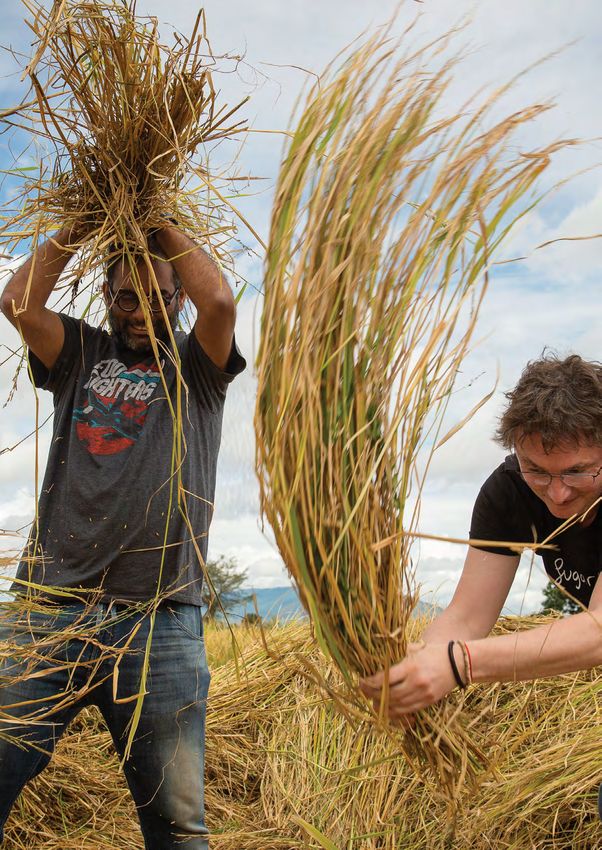
“We learnt how Farm Africa is helping
IN 2018, THREE OF THE WORLD’S BEST CHEFS, JOAN ROCA,
the farmers source the right seed, get ENEKO ATXA AND GAGGAN ANAND, JOINED FORCES WITH FARM
the highest yield, minimise wastage AFRICA AND TECHNOSERVE TO LAUNCH CHEFS FOR CHANGE,
and store the crops so they can sell A MOVEMENT THAT BRIDGES THE GAP BETWEEN TWO VERY
at the highest market price.” DIFFERENT WORLDS: HIGH-END CUISINE AND INTERNATIONAL
— Gaggan Anand (left), pictured with fellow DEVELOPMENT.
chef Andoni Luis Aduriz, threshing rice on
a Chefs for Change visit to Farm Africa’s
projects in Tanzania.
Food is something to be celebrated. Food The ambassador chefs are paired with
is essential to life. Food brings people high impact agriculture development
together, breaks down barriers and programmes across Africa, Asia and Latin
develops relationships. Food is a story. America.
Food’s journey from farm to plate Chefs for Change will follow the journeys
influences everything from the air we of chefs as they travel out of the kitchens
breathe to the landscapes we inhabit. and onto farms, and share the stories of
the small-scale producers they meet.
The majority of the world’s food is grown
on small-scale family farms and the As we go to print in June 2019, Chefs for
world’s best chefs count many small-scale Change ambassador chefs Gaggan Anand,
producers as their most trusted suppliers. Andoni Luis Aduriz, Luke Dale Roberts
However, the potential of millions of small- and Kyle and Katina Connaughton have
scale food producers around the world just returned from visits to eastern Africa
is thwarted by poverty, environmental and Peru to explore the challenges facing
degradation, climate change and lack of struggling small-scale food producers.
access to markets.
Gaggan Anand, chef at Gaggan, named as
Founded by leading chefs Joan Roca, No 2 in Asia’s 50 Best Restaurants, and
Gaggan Anand, Eneko Atxa and the NGOs Andoni Luis Aduriz, chef at Mugaritz in
Farm Africa and TechnoServe at The northern Spain, No 9 on The World’s 50
World’s 50 Best Restaurants Awards in Best Restaurants list, met rice farmers
Bilbao in June 2018, Chefs for Change is a working with Farm Africa in Tanzania’s
movement that bridges the gap between Babati District. Luke Dale Roberts, chef
two very different worlds: high-end cuisine at The Test Kitchen in Cape Town, South
and international development. Africa, named as Africa’s top restaurant,
travelled to Kenya’s Kisumu District to
The world’s best chefs and the planet’s meet fish farmers taking part in Farm
most remote rural communities both rely Africa’s Kenya Market Led Aquaculture
on one vital ingredient: farming. Project (KMAP). Husband and wife Kyle
and Katina Connaughton of SingleThread
Both know that food producers can only in Healdsburg, USA, winners of the 2018
thrive if they exist within a sustainable Miele One to Watch Award, went to Peru
agricultural model that is financially viable, to meet coffee and cocoa farmers working
increases soil fertility and manages water with the American NGO TechnoServe.
and waste.
Their stories will be shared by Farm Africa,
PHOTO: FARM AFRICA /ELIZA POWELL
Chefs for Change focuses on the TechnoServe and by The World’s 50 Best
importance of sustainable agriculture to Restaurants of which Farm Africa is the
the achievement of the UN’s 17 Sustainable official charity partner.
Development Goals (SDGs), which are a
universal call to end poverty, protect the Find out more about the Chefs for Change
planet and ensure that all people enjoy movement at www.chefsforchange.org
peace and prosperity.
16 17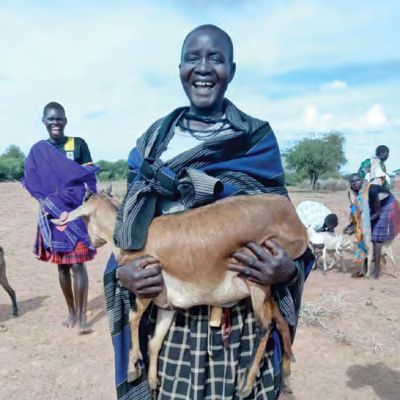
FARM AFRICA ANNUAL REVIEW 2018                                          FARMAFRICA.ORG

THANK YOU                                                               FINANCIAL SUMMARY
SPECIAL THANKS TO:                                                                                    INCOME
                                                                                                      Farm Africa receives income principally from four sources:
2 Sisters Food Group,               Commission, Hippeas, Jersey                                       • Grants from governments, institutions and other major donors to fund
ABP Food Group, Agricultural
Markets Development Trust,
                                    Overseas Aid, L J Fairburn & Son,
                                    Mark Anthony Trust, The Medicor           £18.1                      specific projects (restricted funding)
                                                                                                      • Corporate sponsorship income via our trading subsidiary Farm Africa
aBi Development Ltd, Ajahma         Foundation, Norwegian Agency              MILLION                    Trading Limited (unrestricted funding)
Charitable Trust, Albert            for Development Cooperation,                                      • Donations, legacies, and other fundraising activities (unrestricted
Bartlett, AMREF, Barfoots, Barr     Paperchase, Royal Norwegian                                          funding)
Foundation, Big Lottery Fund,       Embassy - Addis Ababa,                                            • Income and grants received by Sidai, our Kenyan social enterprise
Booker Group, Cabrito, Capital      Sainsbury’s, Omead Serati,                                           subsidiary company (a combination of restricted and unrestricted
Group, Comic Relief, Conservation   Sida, Slovak Agency for                 Programme grants             funding)
International, CTA, Cullisse,       International Development               £12.7million
The David & Lucile Packard          Cooperation, SOS Sahel,                 Sidai social enterprise   Total income in 2018 increased to £18.1million (2017: £14.7million). This
Foundation, Elsoms, Embassy         Technical Centre for Agricultural       £3.2million               was due mainly to an increase in the value of programme grants received
of Ireland - Addis Ababa,           and Rural Co-operation (CTA),           Donations + legacies      from donors. Programme grants increased from £9.7million in 2017 to
Embassy to the Kingdom of the       TRUEfoods, UK aid from the              £2.0million               £12.7million in 2018. This included income on several new projects including
Netherlands - Nairobi, European     UK government, Virunga                  Trading + other
                                                                                                      Livestock for Livelihoods, a four-year UK Aid Direct-funded project in
Union, Forest of the World,         Foundation, The Welland                 £0.2million               Ethiopia and Uganda, and Improving Rural Livelihoods, Empowering
Greencore Group, Guernsey           Charitable Trust, World Food                                      Communities and Partners, also in Ethiopia, with funding for four years
Overseas Aid and Development        Programme                                                         from the Swedish International Development Co-operation Agency.

                                                                                                      The piechart on the left shows the breakdown of income between the four
                                                                                                      principal sources. Total income of £18.1million represents Farm Africa’s
                                                                                                      highest ever annual income.

                                                                                                      EXPENDITURE
                                                                              £16.3                   Farm Africa’s expenditure falls in to four main categories:
                                                                              MILLION                 • Costs of implementing our programmes on the ground in Africa
                                                                                                      • Fundraising costs
OUR THANKS TO FARM AFRICA’S KEY CORPORATE PARTNERS IN 2018:
                                                                                                      • Support costs, including head office staff and governance
                                                                                                      • Costs incurred by Sidai in running its operations in Kenya

                                                                                                      Total expenditure in 2018 remained in line with the previous year, at
                                                                            Programmes
                                                                            £11.1million
                                                                                                      £16.3million (2017: £16.4million). The amount spent on implementing
                                                                                                      programmes fell slightly, from £11.3million to £11.1million. Support
                                                                            Sidai social enterprise   costs and fundraising costs both increased marginally, to £1.1million
                                                                            £3.4million
                                                                                                      (2017: £1.0million) and £0.8million (2017: £0.7million) respectively. Sidai’s
                                                                            Support costs             expenditure fell by £0.1million to £3.4million.
                                                                            £1.1million

                                                                            Fundraising               The piechart on the left shows the breakdown of expenditure between the
                                                                            £0.8million               four main categories.

AND TO THE SPONSORS OF THE FOOD FOR GOOD CAMPAIGN:

                                                                        BOARD OF TRUSTEES:            Judith Batchelar
                                                                        Chair: Richard Macdonald      Minette Batters
                                                                        CBE                           Colin Brereton
                                                                        Deputy chair: Professor       Serena Brown
                                                                        Jonathan Kydd                 Laketch Mikael
                                                                        Secretary: John Young         Carey Ngini (retired July 2018)
                                                                        Treasurer: John Shaw          Jan Bonde Nielsen
                                                                        (retired July 2018)           Jane Ngige (appointed July 2018)
                                                                        Nick Allen (appointed as      Charles Reed
                                    OSCAR            MAYER              Trustee May 2018 and as       John Reizenstein
                                            Quality Foods               Treasurer July 2018)          Tim Smith

18                                                                                                                                                                                    19
WE DRIVE AGRICULTURAL
AND ENVIRONMENTAL CHANGE
TO IMPROVE LIVES.
Our strategy has three pillars:
Agricultural expertise
Management and preservation of ecosystems
The power of business to drive prosperity
DR Congo FarmAfrica
Ethiopia
Kenya FarmAfrica
Tanzania FarmAfrica
Uganda
United Kingdom Farm_Africa
+44 (0)20 7430 0440
farmafrica.org Registered charity no 326901 (England & Wales)
info@farmafrica.org Front cover: Farm Africa / Eliza PowellYou can also read


