Application Security in an Ever Changing Digital Landscape - Trace Hollifield Security Architect - owasp
←
→
Page content transcription
If your browser does not render page correctly, please read the page content below

Application Security in an Ever
Changing Digital Landscape
Trace Hollifield
Security Architect
CISSP, GSLC, CISM, C|CISO, ITIL
Trace.Hollifield@microfocus.com

Agenda Security Landscape Specific Application Security (App Sec) Challenges Establishing an AppSec Program Why AppSec is Hard Software Security Research Results Conclusion

Security Challenges
Breaches Around the world
                                                           July 2015                                         July 2017

                                                        145 million                         500 million                   148 million
                                                     people affected                       people affected               people affected

                                                            77 days                          600 days                      229 days
                                                      time to detect                       time to detect                time to detect

http://www.informationisbeautiful.net/visualizations/worlds-biggest-data-breaches-hacks/
“90 percent of reported
security incidents result from
exploits against defects in the
          software.”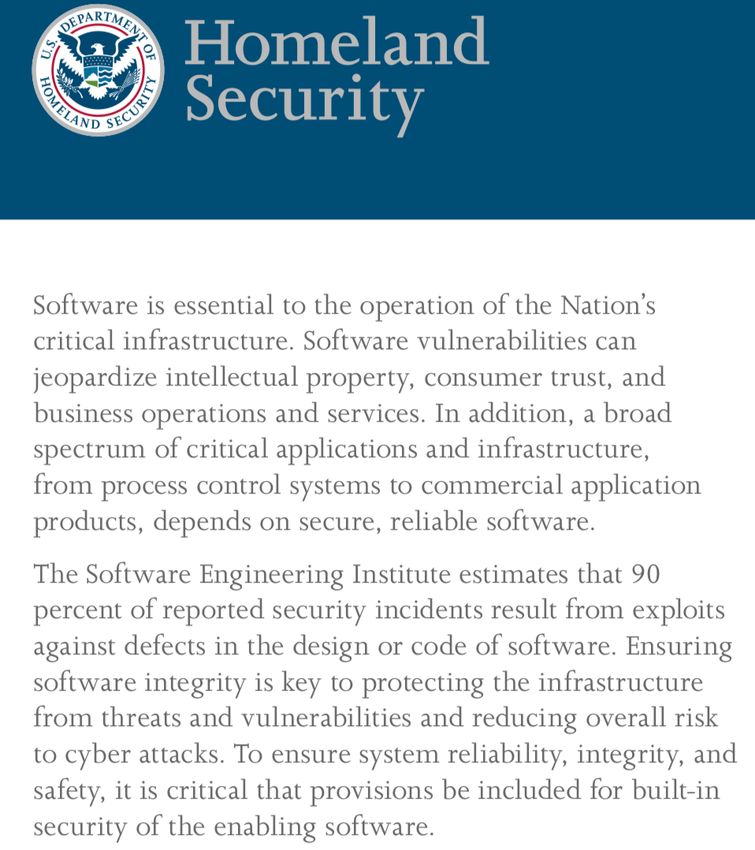
Got Vulnerabilities ?
                         Registered Vulnerabilities
25,000

                                                                                     21,360
                                                                                                      Since 1999, over 147k vulnerabilities
20,000                                                                      18,820
                                                                                                      have been registered

15,000

                                                                   10,965
                                                                                                      41% of all vulnerabilities are from
10,000
                                                   9,932
                                                           9,297                              9,655
                                                                                                      recent years
                                           7,469
                                  6,710
         5,155   5,329    5,331
 5,000

                                                                                                      7% are from 2019 (Only 63 days in)
    0
         2009    2010     2011     2012    2013    2014    2015    2016     2017     2018     2019

https://cve.mitre.org/data/downloads/index.html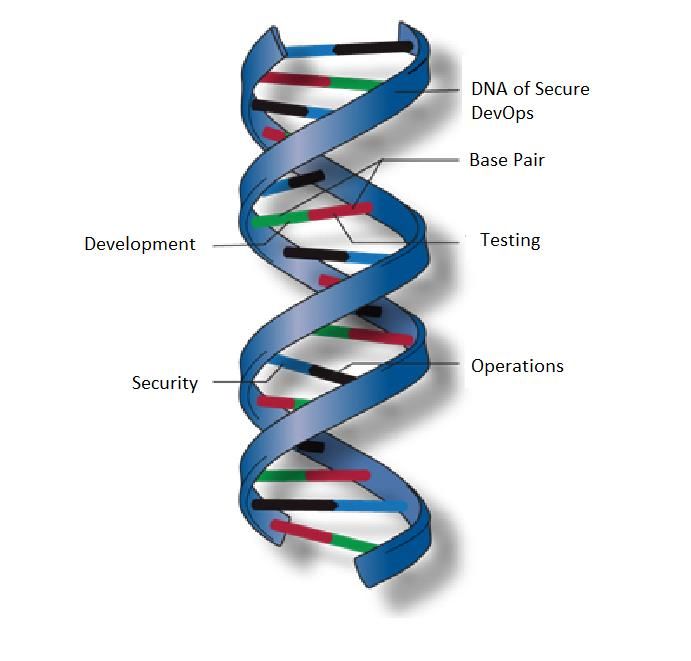
Malware

• Malware continues to grow and morph as new vulnerabilities are discovered and old vulnerabilities are not
  remediated.

• ~50 Million variants in the last 60 months
https://www.av-test.org/en/statistics/malware/
Malware – Attack Vectors and Cost
      Crimeware (Malware) Infection Vectors            Malware Cost
    45%                                                Trojans :
    40%
    35%                                                •  Keylogger Detective 2.3.2 (w/ hidden installation). Price: US $3
    30%
    25%
     20%                                               •  Web Browser Based (Opera, Mozilla Firefox, Chrome, Safari, etc).
     15%                                                  Price: US $8
     10%
      5%                                               •  Remote Access / Backdoor. Price: US $25
      0%
                                                       •  Spider Keylogger Pro v. 1.2.4. Price: US $50

                                                       Ransomware:
                                                       •  Winlocker Source Code. Price: US $8
                                                       •  Winlocker Activiation Key. Price: US $10-20
                                                       Source – Trendmicro “Russian Underground 101”

Malware Highlights
• Low Cost … The cost of various malware is extremely low for the possible greater rewards
• Accuracy by Volume … The attacker only needs to be right once while defense has to be right all the time
• Go Where the People Are … Web attacks are the most popular vector to infect hosts due to people’s habits, advertising
  conduits, and rapid changes in the environment which create challenges for data security defenders.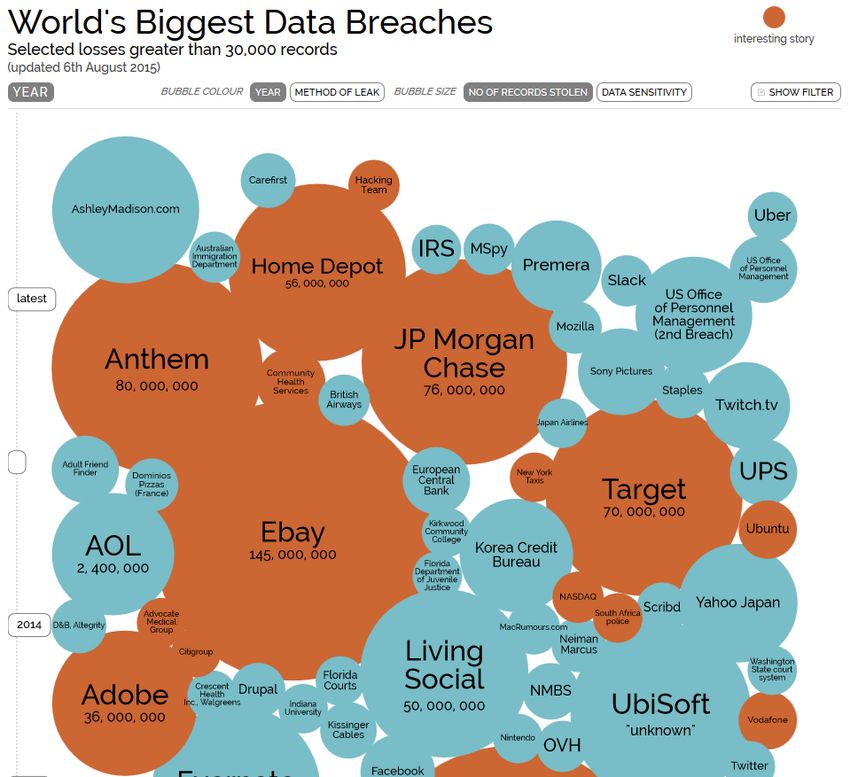
Ransomware Jackpot
   FBI Received Over 2,600 Ransomware Complaints in 2016 Costing $1.3 B
   • About 2673 complaints were submitted according to IC3’s report. The number is just the tip of the
     iceberg, though, when compared to the 298,728 cybercrime-related complaints received overall
     last year, 2016. Losses connected to such cybercriminal activities is reported to be around $1.3 B.

  WannaCry: Encrypts 176 file types, including                                                           Hidden Tear: Is an open-source ransomware that
  database, multimedia, and archive files, as well as                                                    allowed cybercriminals to create their own versions
  Microsoft Office documents.                                                                            which were themselves reworked into more
                                                                                                         spinoffs. One variant can encrypt up to 2,783 file
  Petya: Encrypts the system’s files, overwrites its                                                     types.
  Master Boot Record, and locks users out with a blue
  screen of death.                                                                                       Cerber: Sold as a ransomware as a service (RaaS),
  Locky: Encrypts over 130 file types, including those                                                   which means cybercriminals can customize its
  on removable drives and unmapped network                                                               encryption behavior and ransom demands; it’s been
  shares.                                                                                                recently spotted to be capable of stealing from
                                                                                                         Bitcoin wallets and evading machine learning.

https://cointelegraph.com/news/fbi-received-over-2600-ransomware-complaints-in-2016-costing-13-bln
https://www.trendmicro.com/vinfo/us/security/news/cybercrime-and-digital-threats/2017-ransomware-recap
Data Security Standards / Frameworks
• Several to pick from: ISO 27000, PCI-DSS, NIST, COBIT, SANS 20 and more
• Purpose of the Frameworks: To provide guidance on how to protect sensitive data
• Payment Card Industry – Data Security Standards (PCI-DSS) started in 2004 with the following requirements:
                                  Goals                                               Requirements
Build & Maintain a Secure Network                       1. Install and maintain a firewall configuration to protect cardholder data
                                                        2. Do not use vendor-supplied defaults for system passwords and other
                                                        security parameters
Protect Cardholder Data                                 3. Protect stored cardholder data
                                                        4. Encrypt transmission of cardholder data across open, public networks
Maintain a Vulnerability Management                     5. Use and regularly update anti-virus software or programs
Program                                                 6. Develop and maintain secure systems and applications
Implement Strong Access Control                         7. Restrict access to cardholder data by business need to know
Measures                                                8. Assign a unique ID to each person with computer access
                                                        9. Restrict physical access to cardholder data
Regularly Monitor and Test Networks                     10. Track and monitor all access to network resources and cardholder data
                                                        11. Regularly test security systems and processes
Maintain an Information Security Policy 12. Maintain a policy that addresses information security for all personnel
https://www.pcisecuritystandards.org/document_library
Being fully PCI Compliant…
Key Points Don’t
Can’t
make
• Not 100% across the board Let’s
wanna
me
• Compensating controls (duct tape) fill in the blanks do No!
Cost
$$
• Qualified Security Assessors (QSAs) work with shared data and limited time this!
engagements
• Compliance testing is only once a year
http://www.verizonenterprise.com/verizon-insights-lab/payment-security/2017/But we are PCI compliant… Not So Much.
(PFI – PCI Forensic Investigator)
Large Misses • Requirement 6: Vulnerability Management &
• Requirement 10: Logging and Log Review Patching
• Requirement 1: Network Environment & • Requirement 7: Need to Know Access & Permissions
Changes
• Requirement 12: Policies & Training
• Requirement 3: Data at Rest Protections
http://www.verizonenterprise.com/verizon-insights-lab/payment-security/2017/Challenge Summary
Bad Actors – External Business Impact
• Deep Pockets & Cheap Tools • Reputation and Confidence Loss
• Creative & Innovative • Lawsuits
• Successful at extorting funds from a business • Compliance Fines
• Combination of the three results in a decline
Bad Actors – Internal of revenue while increasing business
expenses
• Many verticals lack compliance maturity
• Many verticals struggle with existing compliance
requirements let alone new and evolving
requirements
• Lack of structured Policies & Processes combined
with enforcement
• Confirmed immaturity for Logging and Log Review,
Data at Rest Protections, Vulnerability Management,
Need to Know Access & Permissions
• Governments are jumping in on the action with new
compliance regulations and finesApplication Security Challenges
Tsunami of Apps
 1000 applications and counting…
Speed vs Depth

“I want 5 minute scans with no
false positives.”
Developer User Story

We have seen the AppSec team
AND IT IS YOU! (the developer)
Establishing an AppSec
Program
Goals and benefits of an Application Security Program
The mitigation of application security risks is not a one time exercise; rather it is an ongoing
activity that requires paying close attention to emerging threats and planning ahead for the
deployment of new security measures to mitigate these new threats. This includes the planning for
the adoption of new application security activities, processes, controls and training.
Source: “Application Security Guide for CISOs,” OWASP, 2013
A successful applications security programs need to:
Map security priorities to business priorities
Assess the current state and target state using a security program maturity model
Seamlessly integrate into development processes and tool chains
20Evolution of Capability for Application Security
Adaptive
Risk Prevention Protection
Risk Mitigation
Continuous Monitoring
Policy Education
Runtime Protection
Continuous Delivery Integration Awareness campaigns
Compliance Secure SDLC Monitoring Continuous Testing
Service Orchestration
Adaptive Response
Historical Correlation Analysis in Depth
Risk Identification Custom Reports Custom Report Enhancement Operational Metrics and KPIs
Active Engagement
(Proactive and Reactive)
Security Defect Prioritization Security Defect Trending Compliance enforcement
Dynamic Security Testing Critical Defect Remediation Release Management Integration Security Defect Eradication
Static Security Testing Data Summary Reporting Best Practices & Actionable Secure Reusable Components
Regulatory Compliance Initial Metrics Controls Secure Repositories
Basic AdvancedBaseline and periodic maturity assessments key
Blank Industry Enterprise Prioritized
Scorecard Best Practices Scoring Roadmap
Objective 3
Objective 2 8 4
7 6 2
Objective 1 5
1 3
Objective 0
Education Standard Planning Threat Md Sec Req Def Design Arch Rev Code Rev Sec Testing Vul Mgmt Infr Harden Ops Enable
Governance Requirements Verification Deployment
& Alignment & Design & Assessment & Operations
22Building Security Into the SDLC
Value of automated and manual analysis
Static Analysis Dynamic Analysis Manual Review
• 100% code coverage • Stimulate application through • Threat modeling
• Pinpoint and prioritize automated, external security • Requirements verification
violations within code attacks
• Security Architecture Reviews
authoring environment • Identifies, crawls and attacks
• Business logic verification
• Root cause of vulnerabilities application attack surface
• Reduce false positives
with line-of-code detail • QA or production
• Language specific remediation environments
strategies • Doesn’t require code
• Real world attack simulationBuilding an AppSec Program – Major Milestones
Project Planning Solution Roadmap SOC Process & Procedures Initial Monitoring Capability
Assess / Design Development Implementation Mature / Operate Operate / Transition
Architecture design Workflow Creation
Deliver KPIs
Business Process and Metrics
Integration Maturity
Activate development AppSec Maturation Assessment
and SDL Enhancements,
Rollout of Processes and monitoring & system
Procedures Update Roadmap
tuning, process and Advanced Analysis
(documentation and
training) technology adjustments Integrated Hunt Operations
Staff Planning
Role definition ML / Analytics
Processes & Procedures Data Onboarding ODS
Interviews
Hiring Business
Operational Analyst Development Plan
Technical
Hiring + Training
Analytical
Assess AppSec Operations
Workshop Deployment
Baseline Assessment Toolset Deployment go-live
Requirements Toolset integration
Data Readiness
Roadmap
Source: Fortify Professional Services, 2018Measure to demonstrate success
% of security defects identified by sprint/phase
% of security defects whose risk has been
accepted vs. % fixed
% of security defects per project over time
(between quarter to quarter)
Vulnerability density (security defects/LOC)
Average time required to fix/close security defects
during design, coding, and testing
Average time to fix security defects by defect type
Average time to fix security defects by application
size/code complexityWhy Application Security is Hard
Development Point of View: Challenges/Concerns
Security Gets Involved at
Full Scans Take Too Much Audit Process Takes Too
Later Stages in the Dev
Time! Much Time!
Cycle
Traditionally, static or dynamic When scans are initiated, Auditing is still the #1 bottleneck
scans are run before releasing developers don’t get results in for all application security
the app. days in some cases weeks. efforts.
This means either developers Scanning the entire code base Even if scans are completed in
get dozens of issues to fix in a and auditing can take time. minutes, human auditors work
very short time or they’ll release using FIFO queues and they’re
Developers get security issues
the app with these issues. outnumbered.
way later than they would like.
It is painful to go back to a Audit results are challenged by
project that you’ve already developers and cause
finished and fix things. friction/time loss.Where does Security fit in DevOps?
Security??Promise vs Reality of Security in DevOps
Where does security currently fit?
99% of those surveyed Testing during
agreed that DevOps is an none
Development
17%
opportunity to improve 20%
application security
But only 20% perform
application security testing
during development. Most
wait until late in the SDLC –
Network or not at all!
25%
Pre-Production
Gate
38%
Reference: Application Security and DevOps Report 2016Classic integration of security touchpoints can’t keep pace
Secure coding tools integrated
Security goals integrated in and vulnerabilities proactively
Application design/ Pre-Production Post-Production
planning and requirements identified and fixed
architecture is reviewed Penetration testing Penetration Testing Metrics and
definition
by security team Reporting Learn and
Threat Modeling
is performed Refine
Dynamic analysis
Static analysis
Planning and Design and
Development Testing Production Maintenance
Requirements Architecture
Application Monitoring
Risk assessment
and Profiles
Security team signs off Final design/architecture Secure coding Security team is involved Change management
requirements aligns with security goals standards are applied in pre-production sign off process includes security
and requirements and secure code is review and sign off
developed
Managed security testing
Program Governance
Risk-based application of security activities 30DevOps Toolbox
AST Integration can be a challenge given tool diversity
Security tools including Open
IDE’s Requirements & issues Containers
Source
Communication/ ChatOps
Code repositories & apps Build servers & Build tools Configuration automation
CloudModern Application Security Programs Need to Adapt
New languages
Software Supply Chain
Mobile Apps
Internet of Things
Open Source Software Components
Skills
Bimodal IT Agility Micro services
and containers
Continuous Integration Cloud
Automation
DevOps
More robust and dynamic apps
Continuous Development
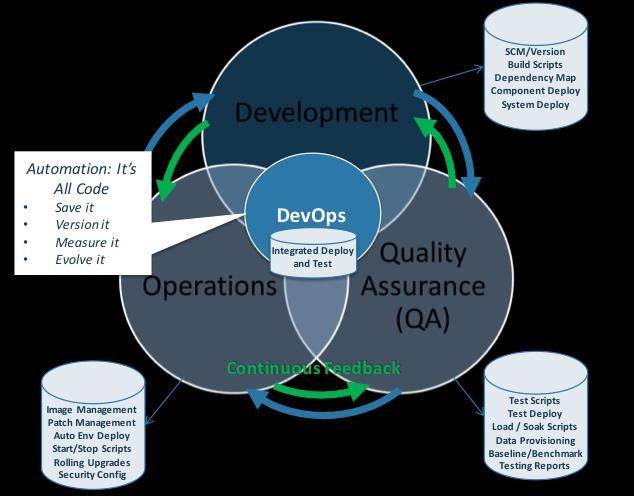
32Best practices for integrating security w/DevOps Security should be part of the DNA of DevOps • Make security part of the value stream • Identify skilled early adopters • Work in small consumable steps • Standardize on toolset • Early visible wins • Focus more on the process than defect totals • Begin with a loose security policy and tighten as process matures • Mark builds as unstable but don’t fail builds until process is mature
Effective/High Velocity DevOps with Security built-in
                                                             Check in Secure Code                                                    Build /
                                                        8                                                                        Translation Job

                               Repair MY
                                                                                                                             1
                                 Issues                                                            Source Code Mgmt System
                                           7

       IDE Security Plugin                       Developer                                         Vulnerability Mngt Platform
    Local Remediation Scan                                                                                                                            Translated
    Light Weight Static Scan                                                                                                                         Files sent to
                                                                                                                                                    available scan
 Prerequisites:                                                                                                                                          server

 1) Base line scan / audit                                           Triage &
                                                         5       Assign to Defect                                      3
    performed                                                    Tracking System
                                                                                                                                                     2
 2) Confidence threshold                                                                                           Upload New
    defined                                                                                                           Scan                         Security
                                                                                                                     Merged                        Analysis
 3) Audit Filters or Rules from                                               4                                       with
    previous scans applied via                                            New / Critical                             Existing                                   Static Scan
                                                      Lead Developer
    vuln mngt platform                                                  Issues Exist Alert                                                                        Servers
                                                                                                       Defect Mgmt System                                         Cluster

                                                                   Developer is sent ticket with
                                                             6       embedded link to issues

                                               Security CAN be part of the DNA of DevOps
Software Security Research Results
Annual Application Security Research Report
Software Security Research team

        Data                   Insight                     Meaningful
                                                           conclusions

Data from managed application security platform:                                     https://www.microfocus.
•    Anonymized and sanitized vulnerability data collected over a year (Nov 2016 –   com/media/report/applic
     Oct 2017)                                                                       ation_security_research_
•    7,800+ Web applications & 700+ mobile applications                              update_report.pdf
Three themes from the 2018 AppSec risk report
1 Analysis shows broad vulnerability in apps
The majority of web or mobile applications analyzed had at least
one critical or high severity issue
2
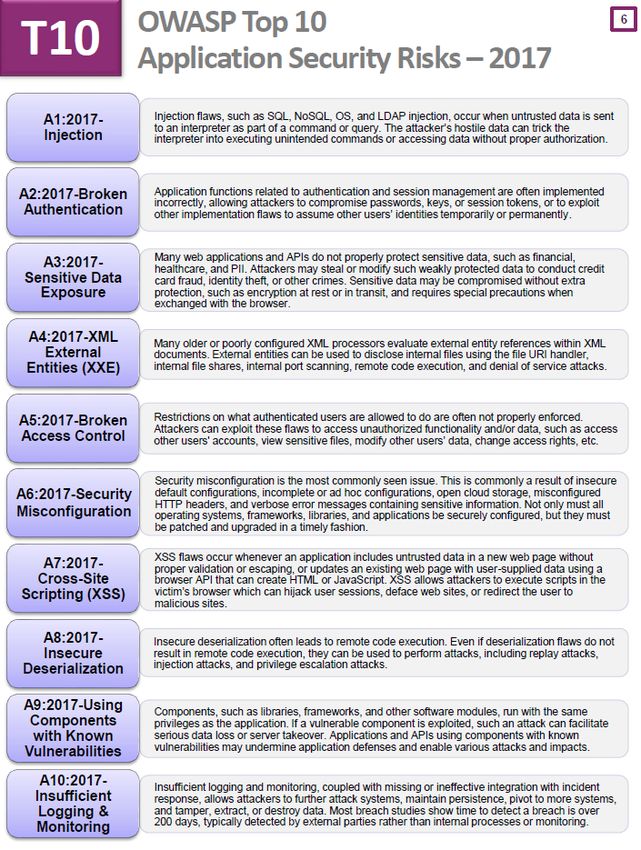
OWASP Top 10 is a starting point
1 out of 2 apps had critical or high vulnerabilities not covered
by the OWASP Top 10 2017
GDPR is forcing strong protection of customer data
3 GDPR strongly hints at the use of encryption and
pseudonymization as acceptable approaches to protect personal
data; applications are a potential weak link.2 OWASP Top 10 is an industry best practice
OWASP Top 10 is a powerful awareness
document for web application security.
• represents a consensus about the most
critical security risks to web applications
Some standards reference OWASP Top 10:
• MITRE
• PCI DSS
• United States Federal Trade Commission
Learn more here https://www.owasp.org/images/7/72/OWASP_Top_10-
2017_%28en%29.pdf.pdfOWASP Top 10 is a starting point, but is not all-inclusive. Many of the top reported security weaknesses in web application didn’t make the list, and it doesn’t include vulnerabilities to other attack surfaces of the organization. 90% of applications have at least one issue outside of the OWASP Top 10.
Categories outside of OWASP Top 10 (= None) are not lower
in severity

1 out of 2 apps have critical
or high vulnerabilities not
covered by the OWASP Top
10 2017
Regulatory compliance with standards and best practices
leave out issues across the board
                                                  % of tested applications with issues not covered by
Compliance with standards like                                   regulatory mapping
OWASP Top 10, NIST, PCI DSS, or             90%
GDPR is a great place to start, but all
standards have critical and high                                                 74%

severity weaknesses issues that                               58%
                                                                                                       63%

aren’t covered.                                   49%

Depending on the standard,                                                                                   25%
                                                                    20%                21%
anywhere from 1/5 to 1/2 apps have
critical or high vulnerabilities not
covered by the regulatory mapping.        OWASP Top 10           NIST             PCI DSS            GDPR - logical
                                                    at least one issue    critical or high severity issues
Summary
Making Application Security Matter
• Adapt and catch the wave!
• Establishing an application security
capability is an evolutionary journey
• Modern application security programs need
to adapt
• Security should be part of the DNA of
DevOps
• OWASP Top 10 is a starting point for
application security, but 1 out of 2 apps
had critical or high vulnerabilities not
covered by the OWASP Top 10 2017
2018 Application Security Research Update
https://www.microfocus.com/media/report/application_security_research_update_report.pdfFinal thought
This stuff doesn’t happen overnight
Think big Do smallThank You.
You can also read


