April 2021 Easing Border Restrictions Plan Coronavirus Disease 2019 Te Marae Ora Ministry of Health Cook Islands - Te Marae Ora Cook Islands ...
←
→
Page content transcription
If your browser does not render page correctly, please read the page content below
.

    Easing Border Restrictions Plan

       Coronavirus Disease 2019

                  April 2021
                  Version 2

Te Marae Ora Ministry of Health Cook Islands
Contents
Introduction 3
Legislative framework 3
Leadership and governance 4
Communication and consultation 4
Principles for easing border restrictions 4
Informing the decision to ease border restrictions 4
Safe zones 4
Safe borders 5
Safe health systems 5
Safe health financing 5
Safe families and communities 5
Safe quarantine 5
Safe isolation 6
Safe screening 6
Safe testing 6
Safe transportation 6
Safe travellers 6
Matrix for border control measures and disease transmission 7
Core minimum requirements to ease public health restrictions 9
References 13
Annex I: Community management structures 14
Annex 2: Critical preparedness readiness and response actions for COVID-19 15
Te Marae Ora: Corona virus Disease Easing Border Restrictions Plan 2Introduction On 22 January 2020, Te Marae Ora Ministry of Health Cook Islands ([Te Marae Ora], TMO) activated the health emergency response and incident management system. This followed reports of rapidly increasing numbers of cases of Coronavirus Disease 2019 (COVID-19) and associated deaths in Wuhan, China beginning 31 December 2019. The National Health Emergency Taskforce (NHET) held its first meeting on 27 January 2020. Through the support of Cabinet and Parliament, the legislative framework to deliver a robust public health response was secured, along with endorsement of the national emergency response plan (March), progressive border restrictions, and budget. On 16 April 2020, the Cook Islands was declared a COVID-19 free zone signalling the shift of COVID-19 from a public health emergency to a public health threat. The disease continues to surge in many countries worldwide. Globally, a cumulative total over 117 million cases have been reported and over 2.59 million deaths however over 65 million (57%) cases have recovered. Border restrictions established on 25 March 2020 have helped save lives. However the social and economic impact has been severe particularly to the tourism industry. Ongoing border restrictions threaten the livelihoods of many and will eventually impact on population health and wellbeing. Easing border restrictions is necessary to resuscitate the economy and social wellbeing of the Cook Islands. This process is complex and requires a clear understanding of the disease transmission patterns in potential travel zones for example New Zealand, border measures as well as availability of exit screening and testing for travellers. Additional factors to consider include Te Marae Ora’s health systems preparedness and readiness to respond to any threat, the community’s acceptance of the proposed measures, compliance with human rights principles, and the publics’ ability to maintain physical distancing and public health measures. Purpose and structure of plan The aim of this plan is to outline Te Marae Ora’s actions regarding the phased and safe easing of border restriction measures while minimising public health risks to Cook Islands residents and visitors. Legislative framework In February 2020, COVID-19 was made a notifiable and dangerous condition (Public Health Act 2004). The COVID-19 Act 2020 was promulgated on 25 March 2020 and provides legal powers to TMO to apply and enforce public health action in relation to Covid-19. Leadership and governance The organisation structure of Te Marae Ora has changed to reflect the reorientation of the health system and service delivery model which now includes a focus on primary care and preventive community based health services. The National Health Emergency Taskforce (NHET) will continue to meet monthly and provide advice to the Border easement Taskforce, Minister of Health and Cabinet as required for the health response and border control measures. Te Marae Ora Executive and the Health Incident Management Team (IMT) will coordinate public health actions with border control agencies and in collaboration with the Rarotonga health centres/Punas and the Pa Enua. Te Marae Ora: Corona virus Disease Easing Border Restrictions Plan 3
Communication and consultation
Te Marae Ora will collaborate with relevant border agencies on communications and ensure
targeting occurs at all levels of society to ensure a timely, effective and coordinated response.
Nationwide consultation will enable the mobilisation of community action that seeks to protect
vulnerable members, such as aged persons, those with non-communicable diseases (NCDs) or
disabilities, and others.

Principles for easing border restrictions
 1. Decisions will be informed by the best available information
 2. Inclusive decisions involve border agencies
 3. Human rights apply
 4. Vulnerable populations are protected
 5. Phased approach for example open to Auckland first
 6. Border restrictions may tighten or relax depending on epidemic trajectories
 7. Health system preparedness and readiness are optimised.

Informing the decision to ease border restrictions

WHO sets out criteria for countries to consider to enter a state of low level or no transmission:
1. That disease transmission is controlled
2. Health systems capacity in place to test, isolate, and treat every case, and trace every
   contact
3. Outbreak risks are minimised in settings such as health facilities and nursing homes
4. Preventative measures in place for work, schools, places where people travel or visit;
5. That importation risks can be managed; (border controls)
6. Communities are fully educated and engaged and empowered to adjust to the new norm.

Te Marae Ora has achieved the six WHO criteria to varying degrees with ongoing systems
strengthening plans in place.

Safe zones
Understanding the epidemiology of disease is critical in determining potential safe zones
(countries). The risks of importing COVID-19 is higher when countries have sustained community
disease transmission compared to clusters and sporadic cases. New Zealand and some Pacific
Island countries where COVID-19 has not been reported, lead others in becoming a safe zone.
Te Marae Ora monitors disease transmission patterns in Australia and the Pacific.

Safe borders
Closing the border on 25 March 2020 contributed significantly to the Cook Islands becoming a
COVID-19 free zone. The reversal of border control measures and safe easing of border
restrictions requires careful management to minimise the risk of importing COVID-19.

International border control measures vary between and within countries. Some may complement
or hinder national plans. The Cook Islands border measures therefore require flexibility to adapt
to the evolving landscape. Processes should also be streamlined and efficient while avoiding
breaches of human rights and international law.

Safe health systems
The reorientation of Te Marae Ora’s health system has resulted in a service delivery model that
focuses on primary care and preventive community based health services that involve the Puna

Te Marae Ora: Corona virus Disease Easing Border Restrictions Plan                                  4
(districts). Phone consultations are encouraged to keep sick patients at home. Rarotonga hospital
has a 32 bed isolation ward dedicated for COVID-19 patients, with a four bed negative pressure
room, three ventilators, and five airvo machines. Staff have received PPE supplies and training
on donning and doffing. A centralised quarantine facility has been identified in preparedness for
a COVID-19 outbreak in the Cook Islands.

Safe health financing
Where Te Marae Ora’s health system lacks long term Intensive Care Unit (ICU) capability,
measures to minimise additional burden on the health system have been implemented. Any
person/s with a chronic medical condition that requires ongoing health specialist care are
encouraged NOT TRAVEL as health services in the Cook Islands cannot be guaranteed unless
covered by travel or medical insurance.

The synchronisation of health systems strengthening and readiness, combined with fully engaged
and motivated community intent on protecting residents and visitors is critical for the successful
safe easing of border restrictions. The Matrix for border control measures and disease
transmission patterns is presented in Table 1.

Safe families and communities
Families and communities play a critical role in accepting, implementing and promoting public
health measures. Community development and empowerment highlight important concepts that
involve the transfer of knowledge to families and the community and help embed sustainable
public health practices.

Safe communities refers to the important role that the public, community leaders: Aronga Mana
and Religious Advisory Council, the Puna, Pa Enua, business sector, and all of society play to
protect all Cook Islands residents and visitors. These established measures include physical
distancing, hand, face, cough hygiene, staying home when sick and calling the Te Marae Ora
healthline. Singing in closed spaces or in close contact with others has resulted in large outbreaks
among choirs and other church groups overseas, therefore not recommended.

Effective communications is critical to ensuring families and communities understand these
messages and the public health actions required of them, so that Cook Islands residents and
visitors are protected.

Safe quarantine
Te Marae Ora’s Supervised Quarantine (SQ) policy (2021) clarifies the process for SQ in
Rarotonga for all travellers intending to travel to the Cook Islands.

Safe isolation
In the event a COVID-19 case is imported, a risk assessment will be undertaken to establish
clinical details, travel history and close contacts, so that isolation of the case and the quarantine
of close contacts can be arranged. Te Marae Ora’s COVID-19 public health protocol and clinical
guidelines will guide this process.

Safe screening
Medical screening and clearance in primary care allows for the general practitioner to assess
travellers and to declare them fit to travel. Exit screening at airports varies in terms of scope of
services and health personnel. Exit screening at Auckland International Airport involves travellers
receiving a temperature check and completing a COVID-19 symptom screening questionnaire.

Te Marae Ora: Corona virus Disease Easing Border Restrictions Plan                                 5
Some airports provide thermal screening. The option to provide exit screening with a temperature
check and symptom screen at Rarotonga International airport is available.

Safe testing
Affordable access to quality testing capability is an essential component in the decision to ease
border restrictions and provides a layer of confidence that travellers are COVID-19 free. Entry
and exit testing services are available in some international airports but not in Auckland. In-
country testing is limited and some test swabs are sent to Auckland for RT-PCR tests. Te Marae
Ora has secured in-country RT-PCR test capability.

Safe transportation
The rapid spread of COVID-19 was promulgated by highly connected global travel networks.
COVID-19 has been reported among a number of airline and airport staff reflecting the need for
adequate disinfection of aircraft and cargo and ensuring staff are COVID-19 free and practice
good hygiene measures. Some airports provide barrier glass to minimise close contact during
immigration transactions. The chemical disinfection of travellers and chemical and ultraviolet
disinfection of checked luggage is available in some airports. Flight attendants on some airlines
wear full PPE. Some airlines organise seating arrangements to keep an empty seat between
passengers to support physical distancing measures.

Safe contact tracing
Contact tracing is an established public health measure that helps to quickly find cases and their
close contacts and to isolate or quarantine them to limit the transmission of infection. This process
is resource intense and technology provides a range of tools to improve efficiencies. Te Marae
Ora and the public sector introduced a contact tracer application called Cooksafe, which currently
uses QR codes for all registered persons to scan places they have visited. There is further
exploration into using bluetooth technology to register a person’s location as well. Te Marae Ora
will/is utilising Go.Data an outbreak investigation tool for field data collection, contact tracing and
visualizations, provided free from WHO.

Safe travellers
Travellers should take responsibility to protect themselves by following public health advice. This
includes pragmatic physical distancing (2 metres form others), good hand, face and cough
hygiene, and disinfecting regularly used surfaces and the use of face masks when required.
These public health measures will assist in reducing the transmission of respiratory droplets
particularly among those in closed or crowded space

Te Marae Ora: Corona virus Disease Easing Border Restrictions Plan                                   6
Matrix for border control measures and disease transmission
Border restrictions may have to be tightened or relaxed depending on epidemic or disease
transmission trajectories. Understanding the basic epidemiological principles that underpin the
Cook Islands public health border measures is critical. The border measures outlined in the Matrix
are designed to be flexible and responsive to the disease transmission patterns of other countries.

Using New Zealand as an example, Level 1 alert removes the need for border restrictions for
travellers to the Cook Islands, while Level 2 alert requires for New Zealand exit screening at the
airport and possibly a test depending on disease transmission in New Zealand. Community or
clusters of cases disease transmission, is a requirement for SQ in a facility and exit testing.

Table 3: Matrix for border control measures and disease transmission
 New Zealand

             Levels                                Alert Level       Alert Level     Alert Level 4
                                   Alert Level
                                                    2 Reduce          3 Restrict      Lockdown
                                   1 Prepare
                                                    Sporadic          Cluster of      Community
                                    No Cases
                                                      Cases             cases        Transmission
   Cook      Level 1: Prepare                      NZ negative       NZ negative
                                        NZ                                            NZ negative
  Islands    COVID-19 is not                        COVID-19          COVID-19
                                     No border                                       COVID-19 test,
             present in Cook                         test, exit        test, exit
                                    restrictions                                     exit screening
             Islands and                            screening         screening
             controlled in New                      May be CI
                                                                      CI border
             Zealand with no          CI No           border                                CI
                                                                     restrictions,
             cases of                 border       restrictions,                      SQ 14 days,
                                                                         exit
             community              restrictions        exit                         exit screening
                                                                      screening
             transmission                           screening
                                                   NZ negative       NZ negative
             Level 2: Reduce        NZ                                                NZ negative
                                                    COVID-19          COVID-19
             COVID-19 is not    No  border                                           COVID-19 test,
                                                     test, exit        test, exit
             present in the    restrictions                                          exit screening
                                                    screening         screening
             Cook Islands but   CI border           CI border
             there is a        restrictions,                         CI SQ up to            CI
                                                   restrictions,
             community case in     exit                               14 days,        SQ 14 days,
                                                        exit
             New Zealand        screening                            exit screen     exit screening
                                                    screening
             Level 3: Restrict                     NZ negative       NZ negative
                                      NZ No                                           NZ negative
             COVID-19 has                           COVID-19          COVID-19
                                      border                                         COVID-19 test,
             been detected in                        test, exit        test, exit
                                    restrictions                                     exit screening
             the Cook Islands                       screening         screening
             and community                          CI border
             transmission may       CI border
                                                   restrictions,      CI SQ 14              CI
             be occurring          restrictions,
                                                       exit             days,         SQ 14 days,
                                       exit
                                                    screening        exit screen     exit screening
                                    screening
             Level 4:                              NZ negative       NZ negative
                                      NZ No
             Lockdown                               COVID-19          COVID-19         NZ border
                                      border
             There is more                           test, exit        test, exit      lockdown
                                    restrictions
             than one case of                       screening         screening

Te Marae Ora: Corona virus Disease Easing Border Restrictions Plan                                    7
COVID-19 in the
CI border CI border
Cook Islands and CI SQ 14
restrictions, restrictions, CI border
community days,
exit exit lockdown I
transmission may exit screen
screening screening
be occurring
Te Marae Ora: Corona virus Disease Easing Border Restrictions Plan 8Core minimum requirements to ease public health restrictions
WHO provides a framework to determine minimum core requirements to ease public health restrictions in the Cook Islands. Te Marae
Ora must remain in a state of preparedness and readiness and poised to respond rapidly to any threat of COVID-19 entering the Cook
Islands. Te Marae Ora’s state of readiness can be illustrated using traffic lights: green = high, amber = medium, red = low. The aim is
for Te Marae Ora to achieve high readiness (green) across all measures.
The actions Te Marae Ora is required to take under the various disease transmission scenarios is presented in more detail in Annex
IV - Critical preparedness readiness and response actions for each transmission scenario for COVID-19.
Table 2: Core minimum requirements to ease public health restrictions.
Country-level Country incident management system (IMS) structure January 2020: National Health Emergency Taskforce
coordination, and resourcing reflect epidemiological situation. established
planning and Contingency planning for rapid escalation or March 2020:
monitoring reactivation in place with adequate resources (incl. Cook Islands National Emergency Response Plan
HR) to respond endorsed
Consultation with Pa Enua re COVID-19
National Prayer Service COVID-19
National IMS structure implemented
COVID-19 Budget ($5M)
COVID-19 Act 2020 enacted
April- June: COVID-19 4 x policies and 33x SOPs final drafts
completed
March – December 2020
Public Health Protocol COVID-19
Public Health Protocol Ill Traveller
Critical Preparedness and Readiness Response Plan
Easing Border Restrictions Plan
Surveillance and Testing Plan
Risk Communication and Community Engagement Plan
Containment and Mitigation Plan
Dedicated COVID-19 website
March- April 2021- Plans, Policies and SOPs reviewed
Quarantine Free Travel Plan drafted
May 2021
QFT between NZ and the CI operational
Active surveillance in place for detection of cases January 2020:
and confirmation of an outbreak. This includes Surveillance systems established
Te Marae Ora: Corona virus Disease Easing Border Restrictions Plan 9Surveillance, rapid surveillance for COVID-19, ILI, SARS; and event- Daily situation reports issued
response teams and based surveillance March -June 2020:
case investigation Contact tracing training
GeneXpert test in country
GoData an outbreak investigation tool for field data
collection, contact tracing and visualizations
Cooksafe App introduced
July 2020:
Daily Hospital Health Service Report
December 2020:
Situation reports 3 times a week
March –April 2021
Refresher contact tracing training
Live exercise
Risk communication Whole of country sensitised to alert levels, its March 2020:
and community potential fluctuations, given the epidemiological Communications Plan COVID-19 implemented
engagement context, and public health measures associated with COVID-19 website established
these levels, and are mentally and physically Periodic IMS meetings
prepared for future change and reinstating of Periodic Rarotonga Puna meetings
restrictive public health measures. Continue April 2020: Periodic Pa Enua Puna meetings
prevention and precautionary messaging on physical November 2020
distancing and suspect case reporting NHET meetings held on a as needed basis
Domestic travel Enable domestic travel, balanced with the risk of April 2020: Domestic travel restrictions lifted
considerations preventing inter-island spread of COVID-19 Exit screening measures established at airport and
seaport
November 2020:
Health declaration forms implemented
Essential health That essential health services have been identified March 2020
services with modes of delivery adapted to protect those most Primary care and emergency services relocated to
vulnerable to severe impacts of COVID-19. This Tupapa community clinic
specifically includes those who are elderly, have Primary care - phone consults and appointments - COVID
NCDs or with other chronic illnesses example TB, testing, influenza vaccinations
HIV, and others who are immunocompromised. Public health relocated to Rarotonga Puna - includes
Services should be adapted to reduce physical health checks, blood and COVID testing, influenza
contact, improve spacing, and reduce overcrowding vaccinations, Tutaka, Operation Namu and planting
in all facilities. Mechanisms are in place to essential Oral health - dental emergencies only
health services are delivered. March- December 2020:
Oxygen Plant and line completed
Te Marae Ora: Corona virus Disease Easing Border Restrictions Plan 10 Electrical wiring at Rarotonga Hospital, Tupapa public
health building and TMO Administration building
completed
Two negative pressure units completed
Tupapa accident and emergency waiting room completed
Infection control and Basic IPC guidelines are provided to IPC staff March 2020
prevention (clinical ensure IPC staff disseminate information to IPC training for TMO and border agency staff, and Pa
and community essential facilities within and outside health Enua (Aitutaki)
settings) sectors example schools, workplaces, churches, May 2020
prisons IPC nurse recruited
healthcare workers involved in COVID-19 care, IPC training for SQ facility
especially in high-risk environments example May 2020
ICU, emergency rooms, HDU are trained and IPC Governance team set up at TMO
rigorously exercise appropriate PPE use September 2020
methods and processes Decontamination machine purchased
Basic IPC training will include: Refresher training courses ongoing
Standard precaution (hand hygiene, PPE,
respiratory hygiene, waste management,
environmental cleaning, safe handling, cleaning
and disinfection of patient care equipment)
Transmission-based precautions
(droplet/contact/airborne precautions)
WASH focal points ensure essential needs are
identified and basic WASH supplies and
infrastructure are available in healthcare facilities,
essential workplaces, schools, and in the
community
Mental health and Priority intervention area in preparedness, March 2020
psychosocial communications and actions to minimise the risk of 20 volunteers (psychological aides) engaged
support mental health and wellbeing of the population Corrective services response plan COVID-19 implemented
April 2020
Community workshops, counselling and training provided
May 2020
Counselling and workshops for private sector and Pa
Enua
September 2020
Counseling workshops
Laboratory March 2020
Te Marae Ora: Corona virus Disease Easing Border Restrictions Plan 11Molecular testing is available and accessible for IPC training for laboratory staff
diagnosis and confirmation of COVID-19 cases either May 2020
in country or referred to a reference laboratory with 70 Test cartridges for 2 GeneXpert machine received
results available within 1-7 days. Capacity to isolate 1351 swabs taken to date (all negative)
cases until results are confirmed and contact tracing May 2020
is completed. In country testing
October 2020
3,000 Antibody serology test kits arrived
May 2021
PCR Lab operational
Case management There is in-country capacity for case management of January and February 2020
and clinical COVID-19 cases and adequate level of health Travel advisories issued March 2020
preparedness system capacity to provide essential health services Isolation ward (32 beds) established
to non COVID-19 cases Cook Islands international and domestic border closed
Vulnerable groups identified in community - with support
Provided
Significant PPE/consumables ordered
April 2020
Supervised quarantine and medical clearance process
implemented
May 2020
Negative pressure room established
July 2021
CT scan in progress
May 2021
COVID-19 Vaccination roll out commences
Te Marae Ora: Corona virus Disease Easing Border Restrictions Plan 12References
Cook Islands Emergency Response Plan. (2020).
Cook Islands National Disaster Risk Management Plan 2017.
Department of Health. (2020). Australian Health Sector Emergency Response Plan for Novel
Coronavirus (COVID-19). Retrieved from
https://www.health.gov.au/resources/publications/australian-health-sector-emergency-
response-plan-for-novel-coronavirus-covid-19
Ministry of Finance and Economic Management. (2016). Cook Islands Population Census 2016.
Government of the Cook Islands. Retrieved from
http://www.mfem.gov.ck/images/documents/Statistics_Docs/5.Census-
Surveys/6.Population-and-Dwelling_2016/2016_CENSUS_REPORT-FINAL.pdf
Ministry of Finance and Economic Management. (2018). National Accounts 2018. Government
of the Cook Islands. Retrieved from
http://www.mfem.gov.ck/images/documents/Statistics_Docs/1.Economic/1.National-
Accounts/2018/Annual_2018/GDP_Statistics_Report_2018.pdf
Ministry of Health. (2014). Pandemic Readiness and Response Plan for Influenza and other
Acute Respiratory Diseases. Retrieved from
https://www.moh.gov.sg/docs/librariesprovider5/diseases-updates/interim-pandemic-
plan-public-ver-_april-2014.pdf
Ministry of Health. (2017). New Zealand Influenza Pandemic Plan: A framework for action.
Wellington: Ministry of Health
Ministry of Home Affairs. (2009). Preparing for a Human Influenza Pandemic in Singapore.
Retrieved from https://www.mha.gov.sg/docs/default-source/others/nsfpfinalversion.pdf
Te Marae Ora Cook Islands Ministry of Health Influenza Pandemic Plan 2009.
Te Marae Ora Ministry of Health Cook Islands Supervised Quarantine policy
Te Marae Ora: Corona virus Disease Easing Border Restrictions Plan 13Annex I: Community management structures
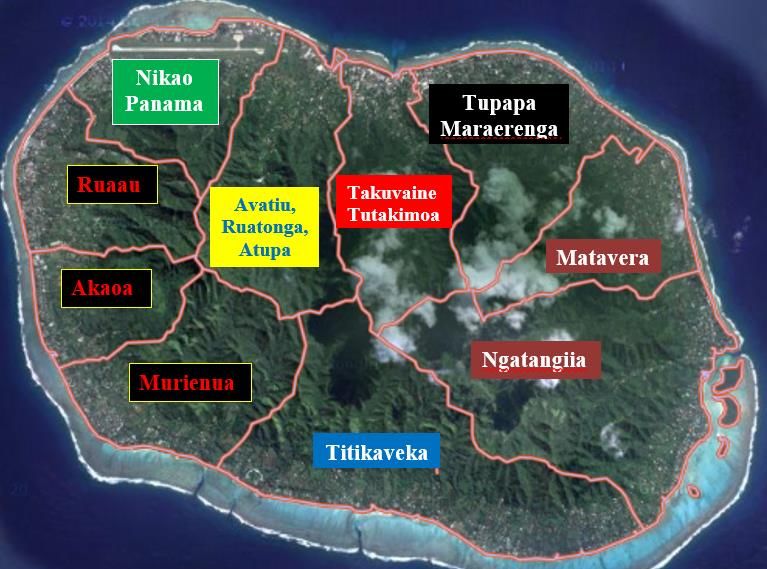
Rarotonga Puna Pa Enua DRM Committees
1. Ngatangiia 1. Mangaia
2. Matavera 2. Aitutaki
3. Tupapa Maraerenga 3. Atiu
4. Takuvaine Tutakimoa 4. Mauke
5. Titikaveka 5. Mitiaro
6. Murienua 6. Penrhyn
7. Akaoa 7. Manihiki
8. Ruaau 8. Rakahanga
9. Nikao Panama 9. Palmerston
10. Avatiu, Ruatonga, Atupa 10. Pukapuka
11. Nassau
Figure 1. Map showing community districts (Puna) for Rarotonga
Te Marae Ora: Corona virus Disease Easing Border Restrictions Plan 14Annex 2: Critical preparedness readiness and response actions for each transmission scenario for COVID-19
Te Marae Ora identifies the following actions based on the infection transmission scenarios: (adapted from WHO)
Table 3: Transmission scenarios
Level 1: Prepare Level 2: Reduce Level 3: Restrict Level 4: Lockdown
COVID-19 is not present There is more than one case
COVID-19 is not present COVID-19 has been detected
in Cook Islands and of COVID-19 in the Cook
in the Cook Islands but in the Cook Islands and
Transmission Scenario controlled in New Zealand Islands and community
there is a community case community transmission may
with no cases of transmission may be
in New Zealand be occurring
community transmission occurring
Slow transmission, reduce
Stop transmission and Stop transmission and Stop transmission and
Aim cases numbers, end
prevent spread prevent spread prevent spread
community outbreaks
Priority Areas Of Work
Emergency response Activate emergency response Enhance emergency Scale up emergency response Scale up emergency response
mechanisms mechanisms response mechanisms mechanisms mechanisms
Risk communication and Educate and actively Educate and actively Educate and actively Educate and actively
public engagement communicate with the public communicate with the public communicate with the public communicate with the public
through risk communication through risk communications through risk communication and through risk communication and
and community engagement and community engagement community engagement community engagement
Case finding, contact Conduct active case finding Enhance active case finding Intensify case finding contact Continue contact tracing where
tracing and management contact tracing and contact tracing and tracing and monitoring, possible, especially in newly
monitoring, quarantine of monitoring quarantine of contacts and infected areas, quarantine of
contacts and isolation of isolation of cases contacts and isolation of cases,
cases apply self-initiated isolation for
symptomatic individuals
Surveillance Consider testing for COVID- Implement COVID-19 Expand testing for COVID-19 Adapt existing surveillance
19 using existing respiratory surveillance using existing using existing respiratory systems monitor disease activity
disease surveillance systems respiratory disease disease surveillance systems (example through sentinel sites)
and hospital based surveillance systems and and hospital based surveillance
surveillance hospital based surveillance
Public Health Measures Hand, face hygiene, Hand, face hygiene, Hand, face hygiene, respiratory Hand, face hygiene, respiratory
respiratory etiquette, practise respiratory etiquette, practise etiquette, practise physical etiquette, practise physical
physical distancing, disinfect physical distancing, disinfect distancing, disinfect surfaces distancing, disinfect surfaces
surfaces surfaces
Laboratory testing Test suspect cases as per Test patients identified Test suspect cases as per TMO Test suspect cases as per TMO
TMO definition, contacts of through respiratory disease definition, contacts of confirmed definition, and symptomatic
confirmed cases, test surveillance cases, test patients identified contacts of probable/confirmed
patients identified through through respiratory disease cases, test patients identified
respiratory disease surveillance through respiratory disease
surveillance surveillance. If testing capacity
15Level 1: Prepare Level 2: Reduce Level 3: Restrict Level 4: Lockdown
is overwhelmed prioritise testing
in health care settings and
vulnerable groups. In closed
settings limit test to first
symptomatic suspect case.
Case Management Prepare to treat patients. Treat patients and develop Prepare to treat patients. Ready Prioritise care and activate
Ready hospital for potential triage procedures hospitals for potential surge triage procedures. Scale up
surge surge plans for health facilities
Promote self-initiated Promote self-initiated Activate surge plans for health Implement self-initiated isolation
isolation of people with mild isolation of people with mild facilities of people with mild respiratory
respiratory symptoms to respiratory symptoms to symptoms to reduce the burden
reduce the burden on health reduce the burden on health on health system
system system
Infection Prevention and Train staff in IPC and clinical Train staff in IPC and clinical Retrain staff in IPC and clinical Retrain staff in IPC and clinical
Control management specifically for management specifically for management specifically for management specifically for
COVID-19 COVID-19 COVID-19 COVID-19
Prepare for surge in health Prepare for surge in health Implement health facilities surge Implement health facilities surge
care facility needs, including care facility needs, including plans - report stocks supplies plans - report stocks supplies
respiratory support and PPE - respiratory support and PPE - twice daily twice daily
report stocks supplies report stocks supplies daily
weekly
Societal Response Develop all-of-society and Implement all-of-society, Implement all-of-society Implement all-of-society
business continuity plans repurpose government and resilience, repurpose resilience, repurpose
ready business continuity government, business continuity, government, business
plans and community services plans continuity, and community
services plans
16You can also read


