Immunisation Providers KIT - Immunisation Unit, Communicable Disease Control, Health Protection Service - ACT Government
←
→
Page content transcription
If your browser does not render page correctly, please read the page content below

Immunisation
Providers KIT
Immunisation Unit,
Communicable Disease Control,
Health Protection Service

                                health.act.gov.au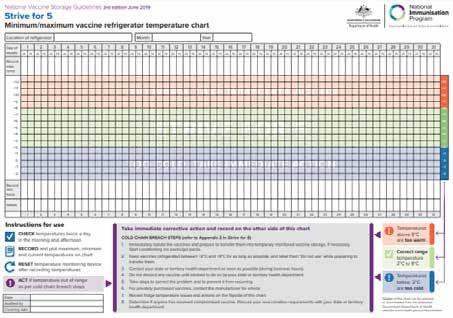
II              Immunisation Providers Kit

Acknowledgment of Country                         If you are deaf, or have a speech or hearing
                                                  impairment and need the teletypewriter
ACT Health Directorate acknowledges
                                                  service, please phone 13 36 77 and ask
the Traditional Custodians of the land, the
                                                  for 13 22 81.
Ngunnawal people. The Directorate respects
their continuing culture and connections          For speak and listen users, please phone
to the land and the unique contributions          1300 555 727 and ask for 13 22 81. For more
they make to the life of this area. It also       information on these services visit
acknowledges and welcomes Aboriginal and          www.relayservice.com.au
Torres Strait Islander peoples who are part of
                                                  © Australian Capital Territory, Canberra,
the community we serve.
                                                  July 2020
Accessibility                                     This work is copyright. Apart from any use
The ACT Government is committed to making         as permitted under the Copyright Act 1968,
its information, services, events and venues as   no part may be reproduced by any process
accessible as possible.                           without written permission from the Territory
                                                  Records Office, ACT Government,
If you have difficulty reading a standard         GPO Box 158, Canberra City ACT 2601.
printed document and would like to receive
this publication in an alternative format such    Enquiries about this publication should
as large print, please phone 13 22 81 or email    be directed to the ACT Health Directorate,
                                                  Communications and Government Relations,
HealthACT@act.gov.au
                                                  GPO Box 825, Canberra City ACT 2601.
         If English is not your first language
                                                  www.health.act.gov.au | www.act.gov.au
         and you require a translating and
         interpreting service, please phone       Enquiries: Canberra 13ACT1 or 13 22 81
         Access Canberra on 13 22 81.             Publication No. 20/0520
health.act.gov.au 1
Contents
Introduction........................................................................................................ 2
Cold Chain Management ...................................................................... 3
Principles of safe vaccine storage management..................... 3
Vaccine fridge...............................................................................................4
Power failure and vaccine cold chain management............. 5
Vaccine storage self-audit..................................................................... 5
Managing a cold chain breach........................................................... 6
ACT Health Immunisation Schedule..................................................... 7
Ordering Vaccines...................................................................................... 8
Health Care Worker Vaccination Requirements
in the ACT.............................................................................................................11
Adverse events following immunisation (AEFI)............................12
Special Immunisation Clinic.....................................................................13
Rabies and Australian Bat Lyssavirus (ABLV) Exposure........... 14
Resources............................................................................................................15
Useful Links........................................................................................................16
Notes......................................................................................................................172 Immunisation Providers Kit Introduction Immunisation is one of the most effective healthcare interventions. Getting vaccinated not only helps protect you but also the community by increasing the level of immunity in the population. It is essential that all people who are overdue for vaccination are followed up and offered vaccination. Immunisation providers should send details of all National Immunisation Program (NIP) and private vaccinations to the Australian Immunisation Register (AIR). Vaccination details can be submitted to the AIR: • using Practice Management Software • through the AIR site. More details about reporting to the AIR for health professionals can be found on the Australian Government Department of Human Services website. The online Australian Immunisation Handbook at https://immunisationhandbook.health.gov.au/ provides clinical advice for health professionals on the safest and most effective use of vaccines. It is essential that all immunisation providers have access to this resource. The Immunisation Unit at ACT Health manages the ACT Immunisation Program and provide vaccines to immunisation providers in the ACT. If you have any questions about immunisation or promotional material, please call (02) 5124 9800 or email Immunisation@act.gov.au. For translated information about immunisation, see Health Translations at https://healthtranslations.vic.gov.au/bhcv2/bhcht.nsf/ PresentEnglishResource?Open&x=&s=Immunisation. Learn more about influenza vaccination at https://www.health.act.gov.au/services/immunisation.
health.act.gov.au                                                                       3

Cold Chain Management
    Cold chain is the system of transporting and storing             “Purpose-built
    vaccines within the safe temperature range of +2°C to +8°C.      vaccine fridges
                                                                     are the only
    All immunisation providers responsible for ordering,
                                                                     suitable option
    storing and administering vaccines must understand the
                                                                     for vaccine
    principles of vaccine storage.
                                                                     storage”
    The National Vaccine Storage Guidelines: Strive for 5
    provide best practice guidelines for storing vaccines and
    managing the cold chain. Resources are available from
    the National Vaccine Storage resource collection.
    A breach occurs when vaccines experience temperatures             National
    outside of the recommended +2°C to +8°C range. If a               vaccine storage
                                                                      guidelines
    breach occurs:                                                    Strive for 5
                                                                      3rd edition

    •    Quarantine vaccines immediately AND
    •    Contact the Immunisation Unit on (02) 5124 9800 to
         report the breach as soon as possible.

Principles of safe vaccine
storage management
•       Vaccines must be stored in a purpose-built vaccine fridge.
•       Vaccines must be stored in their original packaging.
•       Monitor and record fridge temperatures at least twice daily, using the Health
        Protection Service (HPS) data logger.
•       Report temperatures outside the +2°C to +8°C to the Immunisation Unit
        on (02) 5124 9800 ASAP in business hours – quarantine vaccines until
        further notice.
•       Ensure protocols are in place for vaccine management.
•       Plan ahead for power failures.
•       Do a vaccine storage self-audit at least every 12 months.
•       Educate ALL staff responsible for handling vaccines.
The Health Protection Service recommends staff members involved in vaccine
management complete the 30 minute, free NSW Health Cold Chain online
learning module. The module can be found at: health.nsw.gov.au/immunisation
4 Immunisation Providers Kit
Vaccine fridge
Purpose-built vaccine fridges are the only suitable option for vaccine storage.
• Do not overstock. Ensure adequate fridge space to allow air flow around
vaccines.
• Consider space requirements for influenza vaccines. Do you need a second
vaccine fridge?
• Use labelled, open baskets to allow air flow around the vaccines.
• Ensure vaccine packaging is not touching the walls of the fridge.
• Inspect the fridge for signs of condensation or ice build-up regularly.
• Rotate vaccines to ensure the oldest stock is used first.
• Vaccine fridges must be continuously monitored using a data logger.
• Use the HPS data logger to record minimum, maximum and current
temperature twice daily.
The ACT Health issued data logger (LogTag) is to be used to monitor fridge
temperatures (minimum/ maximum/current) twice daily. The VMU will review
the LogTag temperatures prior to delivering vaccines. LogTag readings will be
used to determine if a cold chain breach has occurred.
• The VMU LogTags are calibrated annually.
• The probe must be located with the government vaccines.
A demonstration video on the use of LogTags is provided on the ACT Health
website: https://health.act.gov.au/services-and-programs/immunisation/health-
professionals
Fridge Log
You can order
this resource
by contacting
National Mailing
and Marketing:
Order ID: IT0179
• Email –
health@
nationalmailing.
com.au
• Phone –
(02) 6269 1080health.act.gov.au 5
Power failure and vaccine cold
chain management
• Have a back-up plan for managing power failure.
• Initially, leave vaccines in the fridge with the door closed and monitor
temperature closely.
• Be prepared to move vaccines and data logger quickly if temperature rises
above +8°C.
• Always move the supplied data logger with the vaccines.
• When the power returns, check temperature and report a cold chain breach
if necessary.
• Store affected vaccines at +2°C to +8°C and mark ‘Do Not Use’ until advice
is received.
• Contact the Immunisation Unit on (02) 5124 9800 as soon as possible in
office hours.
Vaccine storage self-audit
Immunisation service providers are required to carry out a self-audit at least
once every 12 months, and more frequently if there have been problems with
equipment or cold chain breaches.
The self-audit is a routine quality assurance and risk management process. It
enables staff to have confidence that they are providing safe and effective vaccines.
Audit documentation and cold chain logs should be stored for future reference.
The audit can be found in the current edition of Strive for 5 at
https://www.health.gov.au/sites/default/files/national-vaccine-storage-
guidelines-strive-for-5_0.pdf.6 Immunisation Providers Kit
Managing a cold chain breach
A cold chain breach occurs when vaccine storage temperatures have been
outside of the recommended range of +2°C to +8°C during storage or transport.
Immunisation providers must report all cold chain breaches to the
Vaccine Management Unit (VMU) on (02) 5124 9800 as soon as possible
during office hours.
1. Isolate vaccines and place a ‘DO NOT USE’ sign on the fridge.
2. Continue to store vaccines between +2°C to +8°C. The vaccines may need to
be transferred to an alternate purpose-built vaccine refrigerator or cooler if
the fridge is not back in range.
3. Complete the Cold Chain Breach Reporting Form and return to the
Immunisation Unit on fax: (02) 5124 9307 or email: immunisation@act.gov.au
4. Take steps to correct the cause of the breach and to prevent it from recurring.
5. Do not discard vaccines provided by ACT Health.
6. Ensure all staff are aware of correct cold chain management and provide
education if needed.
Cold Chain Breach Reporting Form: Contact VMU if needed
Cold Chain Breach Reporting Form Cold Chain Breach Reporting Form
SECTION 1: IMMUNISATION PROVIDER DETAILS SECTION 3: FRIDGE AND COLD CHAIN MONITORING DETAILS
Facility Name Phone Section 3 must be completed if there has been a refrigerator malfunction or the cause
of the cold chain breach is unknown
3.1 Refrigerator details
Address Person Reporting the breach
Date of refrigerator purchase
Provider type Contact Person Date of last refrigerator service
3.2 Data logger details
Email Prior breaches in last 12 months? Serial number HPS data logger
Other data logger reading available?
SECTION 2: DETAILS OF COLD CHAIN BREACH (CCB) Date of last battery change Non-HPS Logger
☐ Vaccine Specific refrigerator Date of last calibration/ service Non-HPS Logger
1. Type of refrigerator
☐ Other ___________________
3.3 Minimum/maximum thermometer details
2. Date of cold chain breach (CCB)
Min/max thermometer reading Min____________ Max________ Current__________
3. Date CCB identified
Copy of daily temp chart attached? ☐ Yes ☐ No
4. Select the reason for the CCB ☐ Refrigerator malfunction
☐ Power outage Date of last battery
☐ planned ☐ unplanned Date of last accuracy check i.e. ice
☐ Door left open ☐ Vaccines left out slurry
☐ Vaccines not monitored 3.4 Alternative vaccine storage details
5. Additional information about the
CCB Is there an alternative fridge for ☐ Yes
vaccine storage? ☐ No
Type of alternative fridge used for ☐ Vaccine specific refrigerator
6. Data logger temperature Min Max
back-up vaccine storage ☐ Domestic refrigerator
7. Duration outside 2° C to 8° C
(hrs/mins)
8. Is this the first CCB for these ☐ Yes
vaccines? (e.g. vaccines marked
Attachments required : All providers are required to provide the following items
☐ No, what is the date of the previous on the checklist
with a red x)
CCB?
☐ Non- HPS data logging for the duration of the cold chain breach (graph and temp log
9. Was anyone vaccinated with ☐ Yes ☐ No required)
potentially affected vaccines?
10. Select current vaccine management ☐ Vaccine management protocol (refer to ☐ Vaccine refrigerator twice daily min/max temperature chart
policies and procedures in place ‘Strive for 5’ Guidelines) ☐ Min/max temperature chart if used during transfer of vaccines e.g. esky
☐ Accessible Cold Chain Breach Protocol
☐ Completion of the NSW Health Cold Chain ☐ Last refrigerator service report (required if there has been a fridge malfunction)
Training Module by all staff ☐ Copy of last in-house audit
☐ Annual vaccine storage self-audits
Date of last audit:___________________
© Australian Capital Territory, Canberra | health.act.gov.au | Enquiries: 132281 © Australian Capital Territory, Canberra | health.act.gov.au | Enquiries: 132281health.act.gov.au 7
ACT Health Immunisation
Schedule
Additional copies of the ACT Immunisation Schedule can be obtained from the
Immunisation Unit, Health Protection Service.
Please refer to the Australian Immunisation Handbook
https://immunisationhandbook.health.gov.au/ for detailed information on
vaccines and the immunisation schedule.
ACT Immunisation Schedule https://www.health.act.gov.au/sites/default/files/2019-12/
Immunisation%20-%20Schedule.pdf
Immunisation Schedule
Last updated July 2020
AGE/RISK GROUP DISEASES VACCINATED AGAINST VACCINE BRAND NAME
CHILDHOOD
Birth Hepatitis B H-B-VaxII Paed® or Engerix B- Paed®
Diphtheria, tetanus, pertussis, poliomyelitis,
Infanrix-hexa®
Haemophilus influenzae type b (Hib) and hepatitis B
2 months
(may be given from 6 weeks) Pneumococcal Prevenar® 13
Rotavirus Rotarix®
Diphtheria, tetanus, pertussis, poliomyelitis,
Infanrix-hexa®
Haemophilus influenzae type b (Hib) and hepatitis B
4 months
Pneumococcal Prevenar® 13
Rotavirus Rotarix®
Diphtheria, tetanus, pertussis, poliomyelitis,
6 months Infanrix-hexa®
Haemophilus influenzae type b (Hib) and hepatitis B
Measles, mumps and rubella (MMR) Priorix® or MMRII®
12 months Meningococcal ACWY Nimenrix®
Pneumococcal Prevenar® 13
Measles, mumps, rubella and varicella (MMRV) Priorix-tetra® or Proquad®
18 months Diphtheria, tetanus, pertussis (DTPa) Infanrix® or Tripacel®
Haemophilus influenzae type b (Hib) Act-HIB®
4 years Diphtheria, tetanus, pertussis and poliomyelitis Infanrix-IPV® or Quadracel®
6 months to under 5 years Influenza Age appropriate influenza vaccine
ADOLESCENT
Diphtheria, tetanus, pertussis (dTpa) Boostrix®
Year 7
Human Papillomavirus (HPV) Gardasil 9®
Year 10 Meningococcal ACWY Nimenrix®
Adolescents aged 16 to 19 years
Meningococcal ACWY Nimenrix®
(Catch-up program)
ADULT
Pertussis (whooping cough) Boostrix® or Adacel®
Pregnant women FluQuadri® or Fluarix Tetra®
Influenza
or Afluria Quad®
65 years and over Influenza Fluad®
70 years and over Pneumococcal Prevenar 13®
70 to 79 years of age Shingles (herpes zoster) Zostavax®
ABORIGINAL AND TORRES STRAIT ISLANDER PEOPLE (ADDITIONAL VACCINES)
2, 4 and 12 months
(Catch-up program for children Meningococcal B Bexsero®
up to 2 years)
6 months and over Influenza Age appropriate influenza vaccine
50 years and over Pneumococcal Prevenar 13® and Pneumovax 23®
Refer to The Australian Immunisation Handbook for all medical risk factors and conditions
https://immunisationhandbook.health.gov.au
~ Refer to reverse side of schedule for explanation ~8 Immunisation Providers Kit
Ordering Vaccines
Vaccine orders must be faxed to (02) 5124 9307 or emailed to
immunisation@act.gov.au at least 2 working days prior to your scheduled
delivery date.
Vaccine deliveries are generally monthly but urgent requests can be made if
necessary. Urgent deliveries can take up to one week to deliver.
Providers must ensure they have adequate fridge capacity to hold a month’s
worth of stock. As a guide, estimate need using the following formula:
Number of vaccines used in previous month + 10% – stock on hand.
Your first influenza vaccine delivery for the season will be a set amount
determined by the VMU, to ensure all providers receive a base stock. Further
stock can be ordered with your monthly order. Urgent orders can be placed and
will be delivered as able. During the peak time, urgent requests may take up
to a week to deliver.
Doses of human papillomavirus vaccine (HPV) and hepatitis B are ordered on an
individual basis using the HPV vaccine catch-up order form and the Hepatitis B
order form.
Prior to ordering any vaccines, you will be asked to confirm you agree that:
• all vaccines will be stored in accordance with the National Vaccine
Storage Guidelines “Strive for 5” (any temperature breaches outside of the
recommended range of +2°C to +8°C will be immediately notified to the
Immunisation Unit)
• all funded vaccines will only be administered to eligible persons (National
Immunisation Program or ACT Government Program)
• data on recipients of Influenza, adult pneumococcal will be faxed to HPS
fortnightly
• all vaccines administered will be recorded on the Australian Immunisation
Register.health.act.gov.au 9
Routine Vaccine
Order Form: https:// Health Protection Service
www.health.act.
gov.au/sites/default/ Vaccine Management Unit
files/2019-10/ Vaccine Order Form
Vaccines%20-%20 It is essential that this vaccine order is faxed or emailed to the Vaccine Management Unit
at least 2 working days prior to your next scheduled delivery. Urgent orders may take up to
Order%20Form.pdf a week for delivery.
Immunisation providers are encouraged to keep vaccine stocks to a minimum by ordering
only the amount of vaccines required for the period until the next scheduled delivery. As a
guide – note the number of vaccines used over the last month, plus 10%, then take away the
amount of stock on hand.
Practice / Clinic: ________________________________________________________
Urgent Delivery Reason _______________________________________________
Scheduled Delivery Date: __ /__/__
Address:_______________________________________________________________
Telephone No: _______________________________
Current Doses
Vaccine Stock Required
Numbers
Act-HIB® (Hib)
Adacel® / Boostrix® (dTpa) Adolescent
Adacel® / Boostrix® (dTpa) Antenatal from 20 weeks’ gestation or as soon as
possible after this. Can be given up to delivery
Infanrix® / Tripacel® (DTPa)
Infanrix®-Hexa (DTPa, Hib, Polio, Hep B)
Infanrix®-IPV / Quadracel® (DTPa & Polio)
IPOL ® (IPV)
Neisvac-C® (MenCCV)
Nimenrix® (Meningococcal ACWY)
Pneumovax 23® (Pneumococcal)
Prevenar 13® (Pneumococcal)
Priorix® or MMR®II (MMR)
Priorix Tetra® / Proquad® (MMRV)
Rotarix® (Rotavirus)
Varilirix® / Varivax (Varicella)
Zostavax® (Herpes Zoster)
Other:
Please turn over for influenza HPV and hepatitis B vaccine orders.
Eligibility criteria for specific vaccines
All individuals aged 10 to 19 years can receive free catch-up vaccines through the
NIP. The catch-up needs to be commenced before the person’s 20th birthday
and may be completed beyond this age.
Refugees and other humanitarian entrants aged 20 years and over are eligible
for funded dTpa, poliomyelitis, MMR, hepatitis B and varicella vaccine under
the NIP.
For more information see https://www.health.gov.au/sites/default/files/free-
catch-up-vaccines-for-refugees-and-humanitarian-entrants-aged-20-years-
and-over-fact-sheet_0.pdf.10 Immunisation Providers Kit Other vaccines are available as listed below: Eligibility for additional free vaccines for at risk groups Vaccine Eligibility Order Hepatitis B • Catch-up doses for people
health.act.gov.au 11
Health Care Worker
Vaccination Requirements
TST must be conducted by an accredited Australian Chest Clinic including the Canberra Hospital Department of
Respiratory and Sleep Medicine (DRSM) (ph: 02 6244 2066). IGRA (i.e. TB Quantiferon) must be conducted by a National
Association of Testing Authorities Australia accredited laboratory.
in the ACT
TB clinical review by an accredited Australian Chest Clinic including DRSM at The Canberra Hospital (ph:02 6244 2066) is
required for:
• New or existing staff that have symptoms suggestive of active TB
• New or existing staff that have had household or close unprotected contact with a person with TB
Health• care Newworkers
or existing employed
staff that have by
lived/travelled
ACT Health,for a cumulative
including timestudents,
of ≥ 3 monthswho
in a country
havewith an
incidence of TB of ≥ 40 cases per 100,000 persons (see
direct patient contact are classified as Category A staff and need to provide
http://www.health.nsw.gov.au/infectious/tuberculosis/documents/countries-incidence.pdf.) and have returned
evidence of protection against
to employment within three specified
months diseases
of return from travel. according to the Occupational
Assessment,
• Screening
New or existing staffand Vaccination
that work policy.
in high risk areas (TableHealth
2) care workers must provide
•
vaccination Newrecords
or existingand/or
staff withserology
a positive TBas
screening
outlinedtest (TST >5mmtable
in the or indeterminate/positive
below. IGRA)
ACT Adult
Periodic Vaccination Record Cards can be ordered from the Immunisation
TB Screening
Unit and allofvaccinations
The frequency periodic TB screening and assessment
should be recordedby the DRSM
on thewill depend on whether
Australian staff are considered to be
Immunisation
working in a high, medium or low risk clinical area as set out in Table 2.
Register (AIR).
Table 1 Documented evidence of protection against the specified infectious diseases required from Category A staff/applicants
DISEASE EVIDENCE OF VACCINATION SEROLOGY RESULTS OTHER EVIDENCE
Diphtheria, One adult dose of Serology will not be Not applicable.
Tetanus, diphtheria/tetanus/pertussis accepted.
Pertussis vaccine (dTpa) within last 10
years. *
Hepatitis B History of completed age- Anti-HBs greater than Documented evidence of
appropriate course of hepatitis or equal to anti-HBc or HBS antigen.
B vaccine. 10mIU/mL.
A verbal history and written declaration
AND OR
are acceptable if all attempts fail to obtain
a vaccination record.
Varicella zoster 2 doses of varicella vaccine Positive IgG for VZV PCR confirmed
(chicken at least one month apart varicella. chickenpox or shingles
pox/shingles) (evidence of one dose is sufficient
if the person was vaccinated
OR OR
before 14 years of age).
Measles, mumps, 2 doses of MMR vaccine at Positive IgG for Birth date before 1966.
rubella (MMR) least one month apart. measles, mumps and
OR OR
rubella.
Tuberculosis Not applicable.
screening (TB) Note: Complete and refer to Form 3 Interferon Gamma Tuberculin skin test
(if required) as to whether screening and Release Assay (IGRA)- OR (TST).
clinical review by the Department TB Quantiferon.
of Respiratory and Sleep Medicine is also
required.
Influenza (Flu) Annual influenza vaccination, Not applicable. Not applicable.
noting it is preferable for the flu
vaccine to be administered
between the months of March
and June through to September.
* ADT vaccine doesn’t contain pertussis and is not counted as evidence of vaccination for diphtheria/tetanus/pertussis.
More
Table 2 information can be Ongoing
foundPeriodic
at: https://www.health.act.gov.au/sites/
Tuberculosis Screening
default/files/2018-10/Information%20Sheet%202%20%20Checklist%20of%20
Risk Examples Frequency
required%20evidence%20%282017%29.pdf.
High – manage > 3people with Chest clinic staff, bronchoscopy suite staff, laboratory workers Annually
infectious TB per year handling cultures of tuberculosis, mortuary attendants
Medium – manage 1-3 people with Respiratory ward/clinic doctors, nursing staff, physiotherapists and Five yearly
infectious TB per year technicians, infectious diseases physicians
Low – do not routinely manage All other staff No routine periodic
people with infectious TB screening12 Immunisation Providers Kit
Adverse events following
immunisation (AEFI)
An adverse event following immunisation (AEFI) is an unwanted or unexpected
event following immunisation that may be related to the vaccine itself, its
handling or administration, or may occur by coincidence, that is, regardless of
the vaccine.
It is not possible to identify every individual who might have a mild or serious
reaction to a vaccine, although there are a few contraindications to some
vaccines. By following recommendations on who should and who should
not receive particular vaccines, health practitioners minimise the risk of their
patient’s having serious adverse effects from vaccination. More information can
be found in The Australian Immunisation Handbook.
In the ACT, suspected AEFI should be reported to the Immunisation Unit,
Health Protection Service using the Immunisation Adverse Event Reporting Form,
or by contacting the Health Protection Service, Immunisation Unit on (02)
5124 9800. The Immunisation Unit reports all notifications to the Australian
Adverse Drug Reaction System (ADRS) at the Therapeutic Goods Administration.
Australia-wide annual reports on AEFI surveillance are published by the
Australian Government.
For more information see the National Centre for Immunisation Research and
Surveillance – Vaccine Safety factsheet at http://www.ncirs.org.au/public/vaccine-
safety or the ACT Health Adverse Event Following Immunisation factsheet at
https://www.health.act.gov.au/sites/default/files/2019-11/Adverse%20event%20
following%20Immunisation%20information%20sheet.pdf.
Adverse Event IMMUNISATION ADVERSE EVENT OFFICE USE ONLY
REPORTING FORM ACT CASE NO: __________
Following TGA CASE NO: __________
Immunisation 1. DETAILS OF PERSON WHO EXPERIENCED THE ADVERSE EVENT
Name___________________________________________________________________DOB ____/____ /_____
Reporting Form Gender M/F/ unknown (circle) Address ___________________________________________________________
State__________ Postcode_________ Home phone__________________ Mobile__________________________
https://www.
If a child, Parent/Guardian Name_________________________________________________________________
Aboriginal Torres Strait Islander Aboriginal & Torres Strait Islander Neither Not stated
2. PAST MEDICAL HISTORY
health.act.gov. Any known allergies?______________________________________________________________________________
Any medical conditions?____________________________________________________________________________
Does the person take any routine medications?________________________________________________________
au/services/ Any prior reactions following immunisation? Yes/No/Unknown: If Yes, provide details________________________
_______________________________________________________________________________________________
General Practitioner__________________________________________Phone________________________________
immunisation Was the person ill before the vaccine was given? Yes/No If Yes, provide details___________________________
_______________________________________________________________________________________________
_______________________________________________________________________________________________
3. VACCINATION DETAILS
School program Yes/No
Vaccine Provider Name ____________________________________________________________________________
Provider Address____________________________________Suburb______________ Post code_________________
Phone___________________ Fax__________________________ Email_____________________________________
Vaccine Dose No Date Time Batch No Route/Site/Side (left or right)
Brand/Type Administered Administered
Were any other vaccines given within 4 weeks prior to the adverse event? NO/YES: If Yes, specify details:
______________________________________________________________________________________________________
4. ADVERSE EVENT DETAILS
Onset of event
Date and time reaction occurred_____________________________________________________________________
If unknown, time elapsed between vaccination and adverse event _________________________________________
Detailed description the adverse event________________________________________________________________
_______________________________________________________________________________________________
_______________________________________________________________________________________________
_______________________________________________________________________________________________
_______________________________________________________________________________________________
HPS-00-0244 Page 1 of 2health.act.gov.au 13
Special Immunisation Clinic
The Special Immunisation Clinic (SIC) is held monthly at the Paediatric Day Stay
Unit in the Centenary Hospital for Women and Children. Referrals can be made
by medical practitioners using the Special Immunisation Clinic Referral Form.
To be eligible, referrals must be for:
• vaccines funded under the National Immunisation Program (NIP) and
• children 16 years of age or younger
AND meet at least one of the following criteria:
• previous serious adverse event following immunisation (as determined by
Public Health Physician or Public Health Registrar)
• anaphylaxis to previous vaccine (or vaccine component)
• high risk of adverse reaction post vaccination due to medical conditions.
People with egg allergy (including anaphylaxis) can safely receive MMR
vaccine in any setting.
People with egg allergy can safely receive influenza vaccine in any setting.
People with egg anaphylaxis should be vaccinated in a medical facility with
staff experienced in recognising and treating anaphylaxis.
SIC Referral Form: https://www.health.act.gov.au/sites/default/files/2019-11/
Adverse%20event%20following%20Immunisation%20information%20sheet.pdf
Special Immunisation Clinic Referral Form Special Immunisation Clinic Referral Form
Referrals only accepted for National Immunisation Program Referrals only accepted for National Immunisation Program
vaccines for children 6 weeks to ≤16 years of age vaccines for children 6 weeks to ≤16 years of age
COMMUNICABLE DISEASE CONTROL USE ONLY
PATIENT’S MEDICAL TEAM
Appointment date: ____/____ /_____ Appointment time:
General Practitioner: __________________________________________ Phone: _________________
REFERRER TO COMPLETE Address:______________________________________________________________________________
DETAILS OF PERSON Paediatrician/Specialist (if applicable): ____________________________ Phone: _________________
Name_______________________________________________________ ___ DOB: ____/____ /_____ Child’s usual immunisation provider: _______________________________________________________
Gender M/F/Other______________ Medicare card number: PRIVACY STATEMENT
Please advise the parent/guardian that their information will be provided to Immunisation, Communicable Disease
Address ____________________________________________ State__________ Postcode__________ Control at Health Protection Service and Paediatric Day Stay Unit at Centenary Hospital for Women and Children.
Parent/Guardian name: Mobile ___ Referrers Signature:_____________________ Date advised: / /
Email address: __________________________________ MEDICATIONS
If you wish the patient to have any medications pre or post vaccination please complete the request below:
Aboriginal Torres Strait Islander Both Aboriginal and Torres Strait Islander Neither Medication Dose Time Route Signature
Not stated Weight of Child _________________ Gestational age:_______________
PAST MEDICAL HISTORY
Allergies: _______________________________________________________________________________ ADDITIONAL INFORMATION
Medical conditions? (please attach summary/any relevant documents if available): ______ _______________________________________________________________________________________
_________ _______________________________________________________________________________________
______________________________________________________________________________ _______________________________________________________________________________________
Routine medications: _____ _______________________________________________________________________________________
REASON FOR REFERRAL _______________________________________________________________________________________
_______________________________________________________________________________________
Previous serious adverse event following immunisation (will be confirmed by Public Health Physician or Public
Health Registrar). Please provide a summary of reaction and to which vaccine :
____________________________________________________________________________________ COMMUNICABLE DISEASE CONTROL USE ONLY
Referral accepted? Yes / No If no, why? __________________________________________________ ________
____________________________________________________________________________________
____________________________________________________________________________________
Anaphylaxis to previous vaccine (or vaccine component) Signature:_______________________ Name:_________________________ Position:______________________
Other– please call Immunisation Public Health Nurse or Immunisation Coordinator on 6205 2300 to discuss.
* Persons with egg allergy (including anaphylaxis) can safely receive MMR vaccine in any setting. Vaccinations recommended:
Persons with egg allergy can safely receive influenza vaccine in any setting. Persons with egg anaphylaxis should Diphtheria, Tetanus, Pertussis Haemophilus Influenzae Type B Paediatric Hepatitis B
be vaccinated in a medical facility with staff experienced in recognising and treating anaphylaxis Adult Hepatitis B Human Papillomavirus Influenza
VACCINES REQUESTED Measles, Mumps, Rubella Meningococcal A,C,W,Y Poliomyelitis
Diphtheria, Tetanus, Pertussis Haemophilus Influenzae Type B Paediatric Hepatitis B Pneumococcal Rotavirus Varicella
Adult Hepatitis B Human Papillomavirus Influenza Other (please specify) ______________________________________________
Measles, Mumps, Rubella Meningococcal A,C,W,Y Poliomyelitis
Parents contacted for appointment date and time? Date: ____/____ /____
Pneumococcal Rotavirus Varicella
Other (please specify)
Attended SIC: ____/____/_____ Follow up phone call date: ____/____/______
REFERRER DETAILS:
Name: Correspondence completed: ____/____/______
Phone number: Fax number:
Advice for further vaccinations:________________________________________________________________
Referrer type:
General Practitioner Paediatrician Immunologist
Oncologist AEFI meeting Other (please specify)
Email: immunisation@act.gov.au Fax: 02 6205 1738
REFERRER’S SIGNATURE If faxing please also post a copy to:
Immunisation Unit, Health Protection Service,
Locked Bag 5005, WESTON, ACT, 2611
Signature:______________________________________________________ Date:____/_____/_______
Page 1 of 2 HPS-00-0961
Page 2 of 2 HPS-00-096114 Immunisation Providers Kit
Rabies and Australian Bat
Lyssavirus (ABLV) Exposure
Rabies and Australian Bat Lyssavirus (ABLV) are part of the same virus family and
are closely related. Both can cause fatal disease in humans.
Rabies is primarily found in animals that bite and scratch and occurs in much of
Asia, the Americas, Europe and Africa. Australia is currently rabies free. The World
Health Organisation (WHO) maintain maps of rabies-enzootic areas: see
https://www.who.int/health-topics/rabies#tab=tab_1 . The UK Health Protection
Agency (HPA) maintains a list of terrestrial rabies risk by country: see
https://www.gov.uk/government/collections/rabies-risk-assessment-post-
exposure-treatment-management.
If a person has been bitten or scratched by a bat anywhere in the world, or by an
animal in a rabies endemic country, please complete the Rabies/Australian Bat
Lyssavirus Post Exposure Prophylaxis Form and contact the Communicable
Disease Control (CDC) section urgently to assess whether post exposure
prophylaxis is needed. During business hours phone (02) 5124 9800 or after
(02) 9962 4155 to page the on-call officer.
Post exposure management will depend on the extent of the exposure, the
animal source, the person’s immune system and their vaccination history.
A post-exposure course of rabies vaccine and a one-off dose of rabies
immunoglobulin (RIG) may be recommended to prevent infection. Vaccine and
Human Rabies Immunoglobulin and should be administered as per the rabies
section of the Australian Immunisation Handbook found at: http://www.health.
gov.au/internet/immunise/publishing.nsf/Content/Handbook-home.
Rabies/ABL Post RABIES/AUSTRALIAN BAT LYSSAVIRUS
POST EXPOSURE PROPHYLAXIS FORM
Exposure Prophylaxis CASE DETAILS
Form: Contact the
Name_______________________________________________________________________DOB ____ /____ /_____
Address _________________________________________________________________________________________
Gender __________________________ Country of birth_________________________________________________
Immunisation Unit Home phone____________________________________ Mobile___________________________________________
If a child, Parent/Guardian Name_____________________________________________________________________
Aboriginal Torres Strait Islander Aboriginal & Torres Strait Islander Neither Not stated
NOTIFICATION DETAILS
Date and Time of Notification: _______________________________________________________________________
Name of person reporting exposure: __________________________________________________________________
Address: _____________________________________________________________ Phone: ____________________
EXPOSURE DETAILS
Date of exposure: ____ /____ /_____ Geographical location of exposure: ___________________________________
Description of incident: ____________________________________________________________________________
Type of exposure: Bite Scratch Puncture Lick (to broken skin) Other
Details:_________________________________________________________________________________________
Site of wound: ___________________________________________________________________________________
Depth/severity of wound (e.g. did the wound bleed?): ___________________________________________________
ANIMAL DETAILS
Type of animal:___________________________________________________________________________________
Did the animal appear unwell? Yes No Unknown
Details: ________________________________________________________________________________________
Was the animal agitated or unnaturally aggressive? Yes No Unknown
Details: _______________________________________________________________________________________
Is the animal available for testing? Yes No Unknown
If tested, was the animal positive for rabies/Australian Bat Lyssavirus? Yes No Unknown
Details of testing: _______________________________________________________________________________
CASE HISTORY
Was the wound sustained at work? Yes No Unknown
If so, occupation: _______________________________________________________________________________
Did the case spend more than a month in a rabies endemic area? Yes No Unknown
Was the case working with mammals in a rabies endemic area? Yes No Unknown
Did the case work with live lyssavirus in a laboratory? Yes No Unknown
Is the case immunocompromised? Yes No Unknown
November 2018health.act.gov.au 15
Resources
ACT Health
ACT health provides a range of factsheets, posters,
brochures, guides and other aids that can be ordered
using the ACT Health Immunisation Resource Order
Form found at https://www.health.act.gov.au/services/
immunisation
Free Influenza
Vaccine
For Aboriginal And Torres
Strait Islander people from
six months of age
Return the form by:
• Email – immunisation@act.gov.au Available from Winnunga Nimmityjah Aboriginal
Health Service, General Practitioners, ACT Health
• Fax – (02) 5124 9307
Early Childhood Immunisation Clinics or your usual
immunisation providers.
Influenza Vaccine Saves Lives
health.act.gov.au
Australian Government Department Protecting your baby
against influenza starts
of Health when you’re pregnant
Resources including brochures, posters, temperature
charts and reports are available for free from the
following website
https://www.health.gov.au/resources?search_api_views_
fulltext=immunisation&page=1.
Ask about the free vaccine today.
health.gov.au/immunisation
You can order these resources by contacting National
Mailing and Marketing by:
• Email – health@nationalmailing.com.au
• Phone – (02) 6269 1080 IMMUNISATION
PREVENTS
SERIOUS DISEASES
Quote the order ID number, the quantity of the resource
FAST FACTS
Immunisation saves lives.
All childhood
diseases we vaccinate Vaccines strengthen your child’s immune system.
you wish to order and provide your delivery address.
against can cause All childhood diseases we vaccinate against
serious illness, can cause serious illness, including death.
including death. Nearly 95% of five-year-old children in Australia are
vaccinated—however some areas have lower
rates of immunisation which puts everyone at risk.
All vaccines available in Australia have been
thoroughly tested for safety and effectiveness
and are continually monitored and evaluated.
Immunisation is a
Immunisation
safe and effective way Skipping or delaying vaccinations puts your
child and those around you at risk of contracting
of giving protection
saves lives.
serious diseases.
against these diseases.
Immunisation is a safe and effective way of
giving protection against diseases such as
whooping cough and measles.
National Immunisation Program
In Australia, with immunisationfacts.gov.au
the high rate of
vaccination, illness Contact Information
and death from these
diseases are now rare.
NT 08 8922 8044
QLD 13 HEALTH (13 43 25 84)
VIC 1300 882 008
ACT 02 6205 2300
immunisationfacts.gov.au
Let’s keep it that way. SA 1300 232 272 NSW 1300 066 055
TAS 1800 671 738 WA 08 9321 131216 Immunisation Providers Kit Useful Links 1. The Australian Immunisation Handbook: https://immunisationhandbook. health.gov.au/ 2. National Vaccine Storage Guidelines Strive for 5, 3rd edition: https://www. health.gov.au/sites/default/files/national-vaccine-storage-guidelines-strive- for-5_0.pdf 3. ACT Health Immunisation page: https://www.health.act.gov.au/services/ immunisation 4. ACT Health Disease Surveillance: https://www.health.act.gov.au/about-our- health-system/population-health/disease-surveillance 5. NCIRS – Immunisation Information & Resources: http://www.ncirs.org.au/ 6. Sharing Knowledge About Immunisation (SKAI): http://www.ncirs.org.au/ health-professionals/skai-supporting-health-professionals 7. Australian Government Department of Health: https://www.health.gov.au/ health-topics/immunisation 8. NSW Cold Chain Training Module: https://nswhealth.seertechsolutions.com. au/public_content/HETICP/HETI/CCMWebv3/story_ html5.html
health.act.gov.au   17

Notes
18 Immunisation Providers Kit
You can also read


