Be a Part of the Solution - COVID-19 Resources for India: A Communication Implementation Guide - Harvard University
←
→
Page content transcription
If your browser does not render page correctly, please read the page content below
This document is updated as of June 24, 2021                 1

COVID-19 Resources for India:

Be a Part of the Solution
A Communication Implementation Guide

2nd Edition

Updated as of June 24, 2021                    #COVIDFreeIndia
This document is updated as of June 24, 2021                                               2

           India’s COVID-19 Crisis in 2021
           India is in the middle of its worst health crisis in recent history, with the
           unprecedented second wave of COVID-19 infecting and killing millions
           of people. A decrease in the number of daily cases earlier this year
           led to a sense of complacency and decreased compliance with healthy
           behaviors proven to prevent COVID-19 transmission, such as wearing
           masks, hand washing, and physical distancing.

           In addition, the increased usage of social media has also led to
           uncontrolled spreading of misinformation and disinformation on
           COVID-19 prevention, treatment, prognosis, management, and vaccines.
           This spread of misinformation and disinformation through social media
           and other channels is arguably one of the major contributors to the current
           crisis and is likely leading to panic, uncertainty, and mismanagement of
           COVID-19.

           Our overarching goal at the Harvard T.H. Chan School of Public Health
           - India Research Center and Project SANCHAR is to do our part in the
           mitigation of the crisis by providing reliable and accurate information
           on COVID-19 prevention and promote prosocial behaviors drawing on
           the latest possible evidence. To this end, we are sharing this COVID-19
           Communication Implementation Guide with partners and affiliates with
           easy-to-understand facts, myth-busters, and guidelines on COVID-19
           prevention, and maintaining physical, social and emotional wellbeing.

           Our hope is that this Guide will serve as a useful resource for all and
           allows users to access, download and disseminate evidence-based,
           accurate information.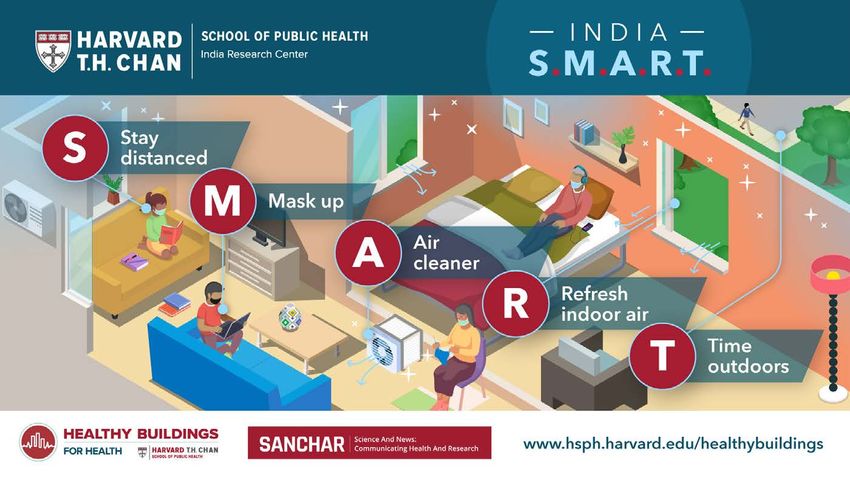
This document is updated as of June 24, 2021                                            3

           About the Communication
           Implementation Guide
           What is the Guide for?
           • Disseminating evidence-based information on COVID-19 to all
             communities and stakeholders across social media platforms.
           • Supporting partners, affiliates, and the general public in their efforts
             to increase awareness about COVID-19 and promote compliance
             with public health measures.
           • Encouraging the responsible use of social media for spreading key
             public health messages.

           Who can use the Guide?
           • Public health organizations
           • Civil society organizations
           • Journalists
           • Governmental organizations
           • Physicians and other medical professionals

           Given the urgency of the crisis, the time to act is right now.

           How can the Guide be used?
           • You can use this guide to share the information and resources with:
                o     General public
                o     COVID-19 patients and caregivers
                o     Pregnant women and nursing mothers
           • Share the infographics and video clips on social media platforms,
             such as WhatsApp, Twitter, Facebook, and other messaging apps.
             Direct social media sharing features and download links are enabled
             on our graphics, along with suggested captions.
           • The Guide itself can be shared as an interactive pdf on social media
             and other networks.

           We will be updating this Guide regularly, based on your feedback and
           the latest evidence-based guidelines. The Guide will also be available
           soon in major Indian languages.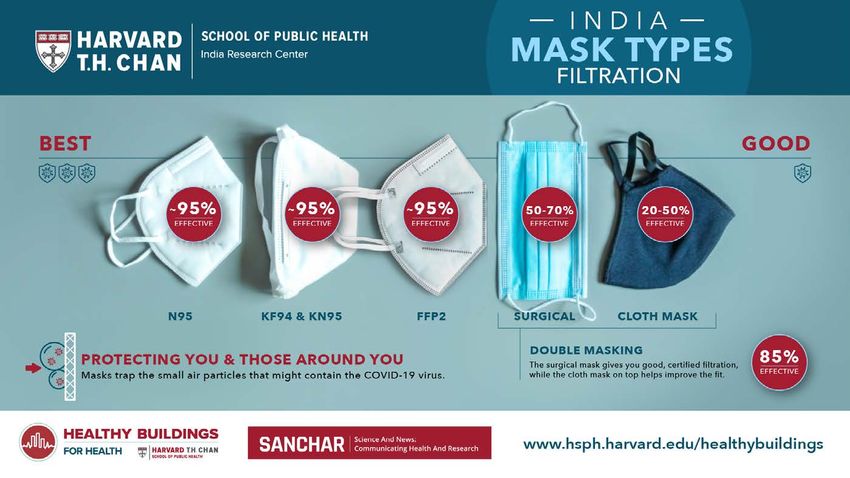
This document is updated as of June 24, 2021                                                       4

How to use the interactive elements of the Guide
How to get started?                                          How to download an infographic?

                     Download the guide
                       on your device

                                                                      Click on the image
                                                                         to download

How to share the information on WhatsApp, Facebook, and Twitter?

                                                                              Click on the icons
                                                                                   to share

How to watch a video?

                Click on the video
                     to watch

Tip: Open this guide using Adobe Acrobat for a seamless experience.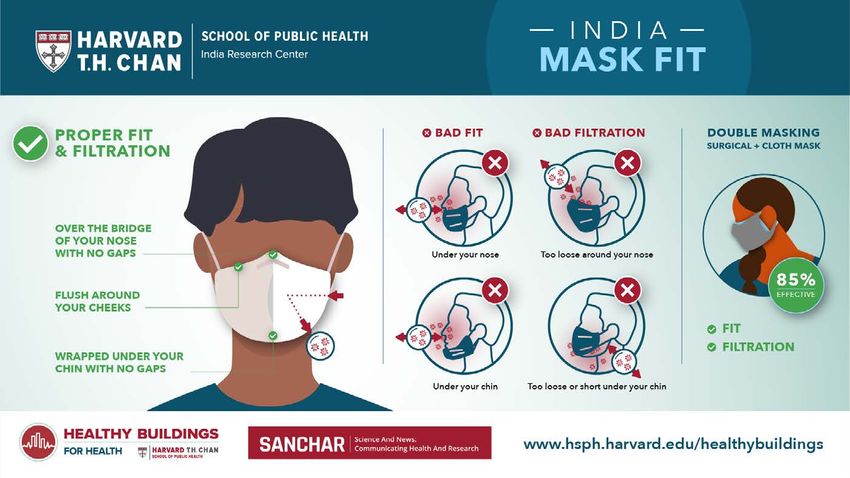
This document is updated as of June 24, 2021                                             5

           Disclaimers
           • This resource is not to be considered a substitute for medical advice.
              This only serves as a guide, not as a prescription. Please check
              with medical professionals before making decisions regarding your
              diagnosis and health.
           • Due to evolving/emerging evidence, guidelines are subject to
              change. Please check official guidelines from the Government of
              India’s Ministry of Health and Family Welfare, in addition to the expert
              opinions highlighted in our resources.
           • This is not a live document and is up to date as of June 24, 2021.
              Certain content will be dated as guidelines are updated. Please use
              your discretion when sharing materials, and visit our websites for the
              latest versions in English and Hindi:
           1. Harvard T.H. Chan School of Public Health - India Research Center
                 https://www.hsph.harvard.edu/india-center/covid-19-dashboard/
                 https://www.hsph.harvard.edu/india-center/covid-19-dashboard/
                 covid-19-hindi-new/
           2. Project SANCHAR
                 https://projectsanchar.org
                 https://hindi.projectsanchar.org/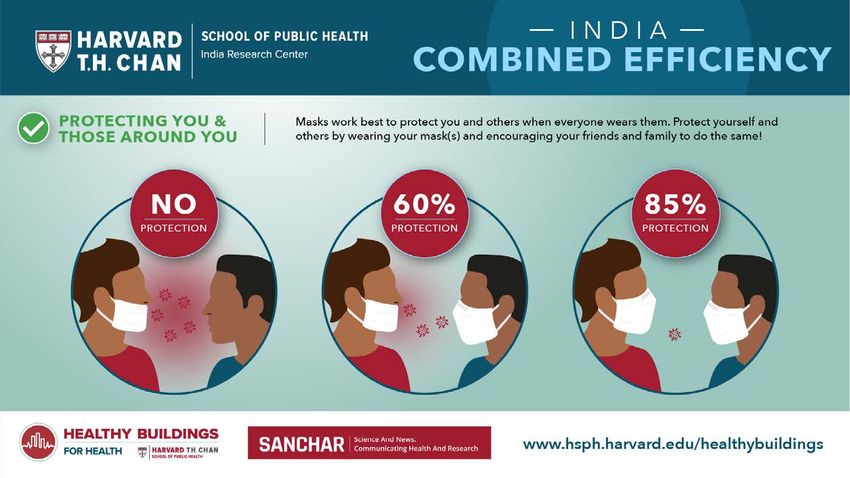
This document is updated as of June 24, 2021                             6

           Contents
           Section 1: COVID-19 Prevention and Control				           7
           Section 2: Vaccines and Vaccinations					                11
           Section 3: Home-based Management					16
           Section 4: Mental Health and Wellbeing					              19
           Section 5: Ventilation and Healthy Buildings				         25
           Section 6: Guide for Women and Children				              27
           Section 7: Frequently Asked Questions and Myth-busters   31
           Section 8: Acknowledgements and References 			           37
           Section 9: Contributors								39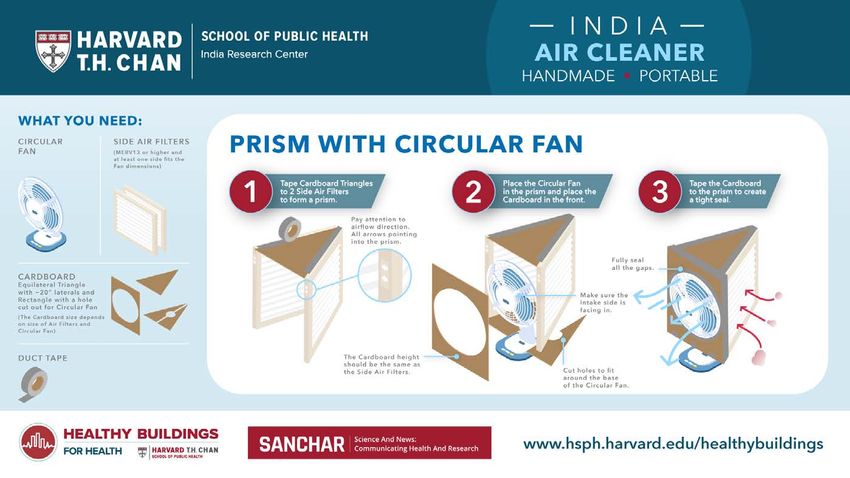
COVID-19 Resources                                                                7

          Section 1:
          COVID-19 Prevention
          and Control
          This section includes shareable infographics on COVID-19 prevention
          measures, advice on masking from Dr. Joseph G. Allen, Associate
          Professor of Exposure Assessment, Harvard T.H. Chan School of
          Public Health, expert advice from virologists, and relevant resources
          available on Harvard T.H. Chan School of Public Health’s websites.

                                                     1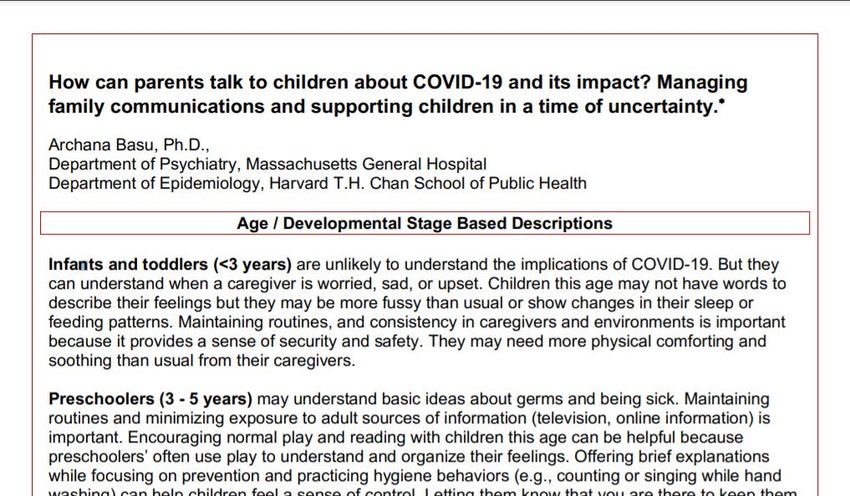
This document is updated as of June 24, 2021                                                      8

Resources for social media

What are some COVID-19 prevention and mitigation measures one can practice?
                                                           Practice these simple tips to
                                                           remain healthy and prevent the
                                                           spread of COVID-19.

                                                           For more information, check
                                                           out: https://www.hsph.harvard.
                                                           edu/india-center/covid-19-
                                                           dashboard/

                                                           #COVIDFreeIndia

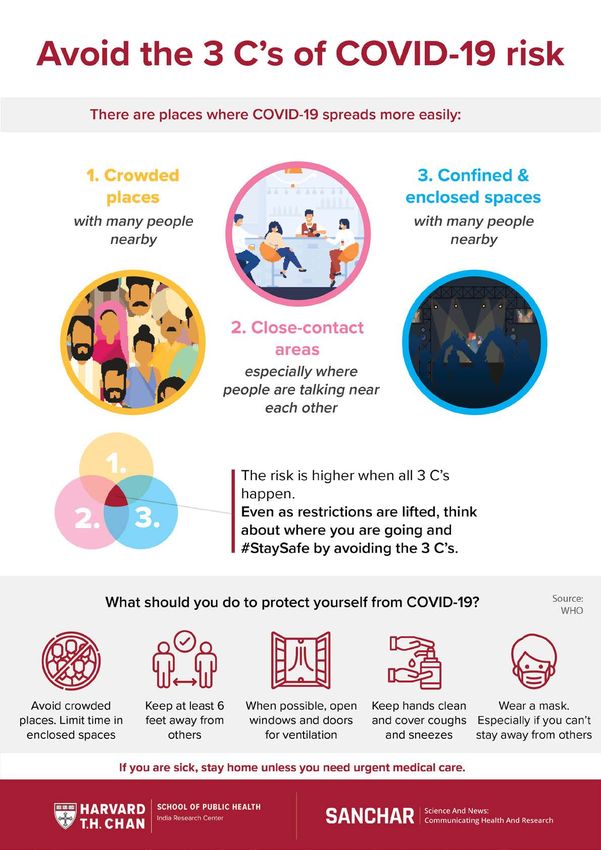
Avoid the 3 C’s to stay safe
                                               COVID-19 spreads easily in certain
                                               environments. Avoid the 3 C’s to reduce
                                               the risk of exposure.

                                               For more information, check out:
                                               https://www.hsph.harvard.edu/india-
                                               center/covid-19-dashboard/ or https://
                                               projectsanchar.org/

                                               #COVIDFreeIndia

                                               Adapted from: https://www.who.int/images/default-
                                               source/wpro/countries/malaysia/infographics/three-
                                               3cs/final-avoid-the-3-cs-poster.jpg?sfvrsn=638335c1_2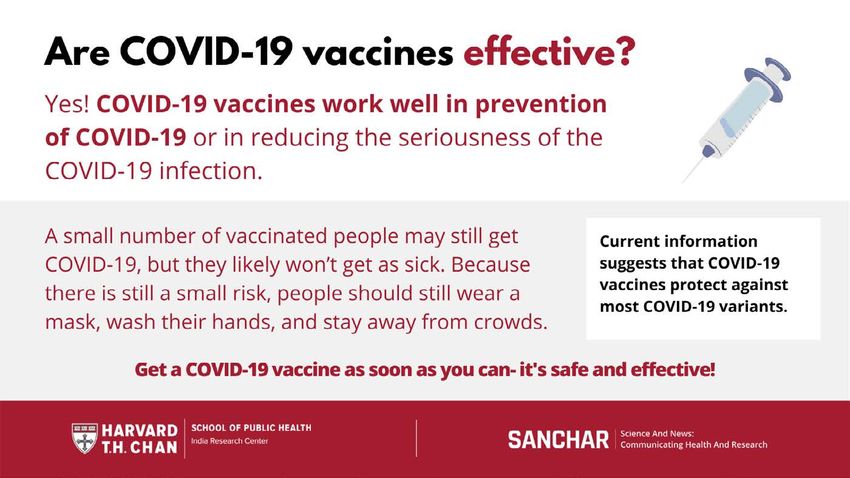
This document is updated as of June 24, 2021                                  9

Mask types by filtration
                                               Masks trap the small air
                                               particles that might contain
                                               the COVID-19 virus. Protect
                                               yourself and others by wearing
                                               your mask(s) and encouraging
                                               your friends and family to do
                                               the same! #KnowYourMask

                                               #COVIDFreeIndia
                                               #HealthyBuildings

How to wear a mask
                                               Understand how masks should
                                               fit for best protection. Protect
                                               yourself and others by wearing
                                               your mask(s) and encouraging
                                               your friends and family to do the
                                               same!

                                               #COVIDFreeIndia
                                               #HealthyBuildings
                                               https://www.hsph.harvard.edu/
                                               india-center/covid-19-dashboard/

Importance of wearing masks
                                               Masks work best to protect
                                               you and others when everyone
                                               wears them. Protect yourself
                                               and others by wearing your
                                               mask(s) and encouraging your
                                               friends and family to do the
                                               same!

                                               #MasksWork #COVIDFreeIndia
                                               #HealthyBuildings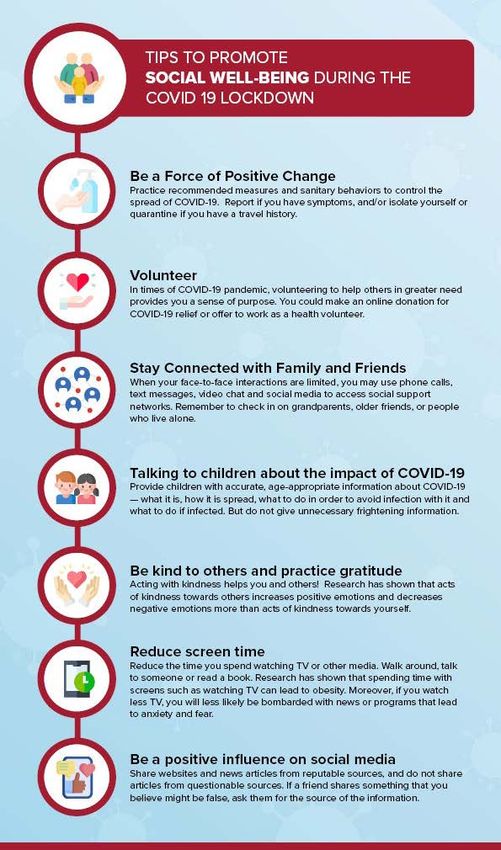
This document is updated as of June 24, 2021                                                  10

Hear from Experts
Virology of COVID-19

                                                        This video features Dr. Shahid Jameel,
                                                        Director, Trivedi School of Biosciences,
                                                        Ashoka University, and renowned
                                                        virologist. He discusses the biology of
                                                        COVID-19 and the COVID-19 vaccines
                                                        available as of April 2021. This expert
                                                        interview was conducted in April 2021
                                                        in Hindi by Mr. Mukesh Kejariwal, Head,
                                                        National Integrated Bureau, Rajasthan
                                                        Patrika.

Impact of misinformation and disinformation on people’s attitudes
                                                        Dr. K. Viswanath, Lee Kum Kee Professor
                                                        of Health Communication at Harvard
                                                        T.H. Chan School of Public Health, talks
                                                        about the impact of misinformation and
                                                        disinformation on people’s attitudes and
                                                        behaviors. This video is an excerpt from
                                                        a webinar held on May 7, 2021.

For more information and similar video releases, please refer to Project SANCHAR’s Dashboard
and YouTube pages.
COVID-19
This document
Resources
is updated as of June 24, 2021 11
Section 2:
Vaccines and
Vaccinations
This section includes shareable infographics on the types of COVID-19
vaccines, their development and side effects, and guidance on how to
stay safe at vaccination centers. This section also corrects misinformation
around COVID-19 vaccines and provides global lessons on COVID-19
vaccination. It also includes resources available on Harvard T.H. Chan
School of Public Health - India Research Center’s and Project SANCHAR’s
websites.
2This document is updated as of June 24, 2021 12
Resources for social media
Staying safe at vaccination centers.
Getting your COVID-19 vaccine is
important and the best way to keep you
healthy. When getting vaccinated make
sure you stay safe by checking the tips
in the infographic.
For more information, check out: https://
www.hsph.harvard.edu/india-center/
covid-19-dashboard/
#COVIDFreeIndia
Click to play
The vaccine process: Safe and Effective
Vaccines go through a thorough
development process to ensure
safety. Check out what steps are
taken to test vaccines.
For more information, check out:
https://www.hsph.harvard.edu/
india-center/covid-19-dashboard/
or https://projectsanchar.org/
#COVIDFreeIndiaThis document is updated as of June 24, 2021 13
How do we know if a vaccine is safe & effective?
All WHO-approved COVID-19
vaccines are safe and help protect
you from COVID-19. The infographic
describes the testing process these
vaccines go through to be safe for
use.
https://www.hsph.harvard.edu/india-
center/covid-19-dashboard/
#COVIDFreeIndia
What are the different types of COVID-19 vaccines that are available?
All vaccines are safe and help
protect you from COVID-19.
The infographic explains the
differences between the vaccines.
For more information, check out:
https://www.hsph.harvard.edu/
india-center/covid-19-dashboard/
or https://projectsanchar.org/
#COVIDFreeIndia
Are COVID-19 Vaccines effective? All WHO-approved
#COVID19Vaccines are effective
against COVID-19 and help prevent
infection, severe illness & death.
The best way to remain safe is to
get vaccinated, #WearMasks, wash
hands & avoid crowds.
https://www.hsph.harvard.edu/india-
center/covid-19-dashboard/
#COVIDFreeIndiaThis document is updated as of June 24, 2021 14
Side effects of the COVID-19 vaccine It is common for individuals to
experience side effects after
receiving the COVID-19 vaccine.
These include:
1. Pain and swelling at the site of
the shot
2. Flu-like symptoms
https://www.hsph.harvard.edu/
india-center/covid-19-dashboard/
#COVIDFreeIndia
Why do we need two doses of the COVID-19 vaccine?
It is important to get both doses of
the #COVID19Vaccine.
Dose 1 prepares the immune
system to protect itself from
#COVID. Dose 2 makes the
immune response stronger
& prepares the body to fight
infection.
https://www.hsph.harvard.edu/
india-center/covid-19-dashboard/
#COVIDFreeIndia
Hear from Experts
Misinformation around COVID-19 Vaccines
This video features Dr. K. Viswanath, Lee Kum
Kee Professor of Health Communication, Harvard
T.H. Chan School of Public Health, speaking
about what stakeholders, such as scientists,
journalists, health care workers, and the private
sector, can do to combat misinformation around
COVID-19 vaccines. The video is subtitled in
Hindi. This is an expert interview from February
2021, conducted by Mr. Mukesh Kejariwal, Head,
National Integrated Bureau, Rajasthan Patrika.This document is updated as of June 24, 2021 15
Building Public Confidence in Vaccination (कैसे बढाएं टीकाकरण पर भरोसा?)
This webinar features a panel with Dr. Renu
Swarup, Secretary, Department of Biotechnology,
Govt. of India; Dr. Vinod Kumar Paul, Member - NITI
Aayog; Dr. N.K. Arora, Executive Director, INCLEN
Trust International; and Dr. K. Viswanath, Lee Kum
Kee Professor of Health Communication, Harvard
T.H. Chan School of Public Health. The panelists
discuss India’s vaccination drive and strategies
to enhance public trust in vaccination. This was
a bilingual webinar, with panelists conversing
in both English and Hindi. The webinar was
moderated by Mr. Mukesh Kejariwal, Head,
National Integrated Bureau, Rajasthan Patrika
and was conducted in February 2021.
Development of COVID-19 Vaccines and the Myths related to COVID-19 Vaccines
This video features Dr. N.K. Arora, Executive
Director, INCLEN Trust International, and Chair,
COVID-19 Subcommittee of National Technical
Advisory Group for Immunization (NTAGI),
Government of India, discussing the development
and regulatory process of COVID-19 vaccines in
India, herd immunity, side effects of COVID-19
vaccines, and learnings from India's experience
with vaccination programs. This expert interview
was conducted in Hindi by Mr. Mukesh Kejariwal,
Head, National Integrated Bureau, Rajasthan
Patrika in February 2021.
COVID-19 Vaccine Rollout: Lessons from Around the World
This webinar features panelists Dr. Barry Bloom,
the Joan L. and Julius H. Jacobson Research
Professor of Public Health, and Former Dean,
Harvard T.H. Chan School of Public Health; Dr.
Swati Piramal, Vice Chairperson, Piramal Group;
and Mr. Luigi D'Aquino, Chief of Health, UNICEF
India. Dr. K. Viswanath, Lee Kum Kee Professor of
Health Communication, Harvard T.H. Chan School
of Public Health, moderated the discussion on
challenges and opportunities arising from the
global COVID-19 vaccine drive. This webinar was
conducted in English in March 2021.
For more information and similar webinars, please refer to Project SANCHAR’s Dashboard, or
Harvard T.H. Chan India Research Center’s DashboardCOVID-19
This document
Resources
is updated as of June 24, 2021 16
Section 3:
Home-based
Management
This section includes shareable infographics on managing COVID-19
at home, from patient and caregiver perspectives, as well as expert
advice from a webinar titled “Evidence-based Management & Science
Communication for COVID-19”.
3This document is updated as of June 24, 2021 17
Resources for social media
Tips for Managing COVID-19 at home.
Use these tips to keep yourself and your
family safe if someone in your household is
sick with COVID-19.
For more information, check out: https://
www.hsph.harvard.edu/india-center/covid-
19-dashboard/ or https://projectsanchar.org/
#COVIDFreeIndia
Click to play
If you think you have COVID-19, follow these
simple safety tips to stop the spread and
keep others safe.
For more information, check out: https://
www.hsph.harvard.edu/india-center/covid-
19-dashboard/ or https://projectsanchar.org/
#COVIDFreeIndia
Click to playThis document is updated as of June 24, 2021 18 Hear from Experts Evidence-based Management & Science Communication for COVID-19 This webinar, hosted by the Harvard Club of India, was part of a series called “India Matters,” featuring Dr. C.S. Pramesh, Director of Tata Memorial Hospital, and Dr. K. Viswanath, Professor of Health Communication at Harvard T.H. Chan School of Public Health. The webinar was opened by Mr. Sanjay Kumar, President of the Harvard Club of India. During the interactive discussion, moderated by Dr. Ananya Awasthi, Secretary, Harvard Club of India, the experts addressed the deluge of misinformation and disinformation on social media relating to the ongoing pandemic and discussed strategies to translate the latest evidence base on the clinical management of COVID-19. Dr. Sonali Vaid, Director, Incluve Labs, facilitated the Live Q & A, and the webinar was concluded by Dr. Abha Mehndiratta, Vice President, Harvard Club of India. This webinar took place on May 7, 2021. For more information and similar webinars, please refer to Project SANCHAR’s Dashboard, or Harvard T.H. Chan India Research Center’s Dashboard
COVID-19
This document
         Resources
              is updated as of June 24, 2021                                           19

           Section 4:
           Mental Health
           and Wellbeing
           This section includes shareable infographics on maintaining health
           and wellbeing during the COVID-19 pandemic, mental health tips for
           caregivers, and providing mental health support to children through
           mindful parenting. This section also presents expert advice on strategies
           for young people coping with their mental health during the pandemic,
           and discussions on the impact of COVID-19 on children’s wellbeing.

                                               4
This document is updated as of June 24, 2021 20
Resources for social media
Tips for mental, physical, and social wellbeing
The #COVID19 pandemic & the 2nd wave in India have taken an emotional, mental, and physical toll
on us all. See the list of tips to help you promote your mental, physical, and social wellbeing.
Tips for mental #wellbeing include: Along with mental wellbeing, physical health
• Practicing mindfulness and wellbeing are equally important to maintain
• Breathing exercises overall #health. Tips for physical #wellbeing
• Meditation include:
• Limiting news consumption • Setting a routine
• Mindful use of social media • Exercising
• Healthy eating & sleeping habits
Read about more tips here: https://www.hsph. Read more here: https://www.hsph.harvard.edu/
harvard.edu/india-center/mental-well-being/ india-center/physical-well-being/
#COVIDFreeIndia #COVIDFreeIndiaThis document is updated as of June 24, 2021 21
Tips for social wellbeing include:
• Reduce screen time
• Stay virtually connected with friends & family
• Volunteer and help others, if you can
• Be kind
Read more tips that promote social wellbeing
here: https://www.hsph.harvard.edu/india-center/
social-well-being/
#COVIDFreeIndia
Mental health tips for people at home with COVID-19
Tips for managing mental health during COVID-19
isolation:
• Explain importance of home isolation
• Limit exposure to media
• Maintain a healthy lifestyle
• Seek support from friends and family
https://www.hsph.harvard.edu/india-center/
covid-19-dashboard/
#COVIDFreeIndia
Click to playThis document is updated as of June 24, 2021 22
How can I support my child during COVID-19?
Tips to support children during #COVID:
• Spending time with your child
• Being responsive to their emotional needs
• Setting up a daily routine
• Maintaining a healthy diet
• Leading by example!
https://projectsanchar.org/
#COVIDFreeIndia
Click to play
How do I talk to my child about COVID-19?
Talk to your children about #COVID:
• Attentively listen to your child
• Fact check & refer to accurate
information
• Provide realistic assurance to
your about #COVID
https://www.hsph.harvard.edu/
india-center/covid-19-dashboard/
https://projectsanchar.org/
#COVIDFreeIndia
What should I do about my child’s COVID-19 media exposure?
Follow these tips to manage your
child’s COVID-19 media exposure:
• Limit exposure to media &
negative news
• Minimize screen time
• Spend time together
• Participate in indoor activities
https://www.hsph.harvard.edu/
india-center/covid-19-dashboard/
#COVIDFreeIndiaThis document is updated as of June 24, 2021 23
Hear from Experts
Mental Health and COVID-19: Coping Strategies for Young People
This webinar, co-hosted with the U.S. Consulate
General, Mumbai, India, features Dr. Shekhar
Saxena, Professor of the Practice of Global
Mental Health, Harvard T.H. Chan School of
Public Health; Dr. Elizabeth Levey, Instructor
in Psychiatry, Harvard Medical School; Ms.
Padmini Somani, Founder Director, Salaam
Bombay Foundation; and Dr. Nimesh G. Desai,
Director, Institute of Human Behaviour and Allied
Sciences. The panelists discussed challenges
and coping mechanisms, in the context of mental
health during the COVID-19 pandemic, with a
focus on younger populations. The webinar was
conducted in English and was moderated by Ms.
Divya Rajagopal, Senior Assistant Editor, The
Economic Times. The webinar was held in July
2020.
For more information and similar webinars, please refer to Project SANCHAR’s Dashboard, or
Harvard T.H. Chan India Research Center’s Dashboard
Resources developed by Faculty at
Harvard T.H. Chan School of Public Health
Basic Psychosocial Skills: A Guide for COVID-19 Responders
A resource by the Inter-Agency Standing
Committee (Inter-Agency Standing Committee,
2020. Basic Psychosocial Skills: A guide for
COVID-19 responders. Geneva: World Health
Organization.).This document is updated as of June 24, 2021 24
Managing Bereavement around the Coronavirus (COVID-19)
For further information on “Managing
Bereavement around the Coronavirus
(COVID-19),” access this Handout developed
by Profs Christy Denckla, PhD; Karestan C.
Koenen, PhD, Harvard T.H. Chan School of
Public Health; & M. Katherine Shear, MD,
Columbia University School of Social Work.
How can parents talk to children about COVID-19 and its impact? Managing family
communications and supporting children in a time of uncertainty.
For further information on “How can parents
talk to children about COVID-19 and its
impact? Managing family communications
and supporting children in a time of
uncertainty,” refer to this Handout developed
by Dr. Archana Basu, Ph.D., Department of
Psychiatry, Massachusetts General Hospital;
Department of Epidemiology, Harvard T.H.
Chan School of Public Health.
MGH Psychiatry Online Guide to Mental Health Resources
For further information on tips &
recommendations to protect the mental
health of Health Care Providers, refer to
MGH Psychiatry Online Guide to Mental
Health Resources, developed by the
Department of Psychiatry, Massachusetts
General Hospital.This document is updated as of June 24, 2021 25
Section 5:
Ventilation and Healthy
Buildings
This section includes shareable infographics on the importance of
ventilation and healthy buildings, with advice from Dr. Joseph G. Allen,
Associate Professor of Exposure Assessment, Harvard T.H. Chan School
of Public Health.
5This document is updated as of June 24, 2021 26
Resources for social media
India S.M.A.R.T Be SMART and protect yourself
and others around you.
• Stay Distanced.
• Mask up.
• Air cleaner.
• Refresh indoor air.
• Time outdoors.
IndiaSMART is India Protected.
#HealthyBuildings
#COVIDFreeIndia
https://www.hsph.harvard.edu/
india-center/covid-19-dashboard/
Types of handmade and portable air cleaners you can make
Filters can remove substantial
amounts of particles from the
air and reduce exposure to
airborne COVID-19. You can
make one for your room and
protect yourself and your
household members.
#COVIDFreeIndia
#HealthyBuildings
How to make a circular fan air cleaner
Reduce your indoor exposure
to COVID-19. Learn how to
make a portable do-it-yourself
prism air cleaner with a circular
fan to remove contaminants
such as viruses from the air.
#COVIDFreeIndia
#HealthyBuildingsThis document is updated as of June 24, 2021 27
Section 6:
Guide for Women
and Children
This section includes shareable infographics on breastfeeding
guidelines for mothers with COVID-19 and expert advice on the impact
of the COVID-19 outbreak on children’s wellbeing.
6This document is updated as of June 24, 2021 28
Resources for social media
Can COVID-19 positive mothers breastfeed their children?
Breastfeeding your child is
important. Check out the
infographic below on how to
safely breastfeed your child even
when you have COVID-19.
For more information, check out:
https://www.hsph.harvard.edu/
india-center/covid-19-dashboard/
#COVIDFreeIndia
Importance of continued breastfeeding for COVID-19 positive mothers
Continued breastfeeding for
COVID-19 positive mothers is
important and recommended.
Check out how breastfeeding
can keep your baby safe from
COVID-19.
For more information, check:
https://www.hsph.harvard.edu/
india-center/covid-19-dashboard/
#COVIDFreeIndia
A tip to help mothers breastfeed if their baby is too sick
Here is a tip in the event the
baby is too sick to be breastfed.
If this is the case, seek medical
advice.
For more information, check
out: https://www.hsph.harvard.
edu/india-center/covid-19-
dashboard/
#COVIDFreeIndiaThis document is updated as of June 24, 2021 29
Does COVID-19 vaccine cause infertility?
COVID-19 vaccines have been
thoroughly tested and are
safe and effective. Infertility is
not a known side effect of the
vaccines.
For more information, check
out: https://www.hsph.harvard.
edu/india-center/covid-19-
dashboard/
#COVIDFreeIndia
Hear from experts
Impact of the COVID19 outbreak on the Health and Well being of Children
This webinar, co-hosted with the National
Commission for the Protection of Child Rights
(NCPCR), features Dr. Karestan C. Koenen,
Professor of Psychiatric Epidemiology,
Department of Epidemiology, Department of
Social and Behavioral Sciences, Harvard T.H.
Chan School of Public Health; Dr. Archana Basu,
Clinical Psychologist, Massachusetts General
Hospital, and Research Scientist, Harvard T. H.
Chan School of Public Health; and Dr. Shekhar
Seshadri, Department of Child and Adolescent
Psychiatry and Associate Dean of Behavioural
Sciences, National Institute of Mental Health
and Neuro Sciences (NIMHANS). The panelists
discussed COVID-19 and its adverse impact on
child health, as well as strategies to address
the challenges children have faced during
the pandemic. This webinar was conducted in
English and moderated by Dr. Ananya Awasthi
in May 2020.This document is updated as of June 24, 2021 30 How to communication about COVID-19 to children and young adults Dr. Archana Basu, Clinical Psychologist, Massachusetts General Hospital, and Research Scientist, Harvard T. H. Chan School of Public Health shares tips on how to communicate about COVID-19 to children and young adults. This video is an excerpt from a webinar held on May 18, 2020. For more information and similar webinars, please refer to Project SANCHAR’s Dashboard, or Harvard T.H. Chan India Research Center’s Dashboard
This document is updated as of June 24, 2021                                      31

           Section 7:
           Frequently Asked Questions
           and Myth-busters
           This section presents frequently asked questions (FAQs) and
           myth-busters pertaining to COVID-19 prevention and control, COVID-19
           vaccines, and information for mothers and children.

                                               7
This document is updated as of June 24, 2021 32
Frequently Asked Questions (FAQs)
Getting a vaccine - Eligibility, vaccine timing, and doses
Who is eligible for the COVID-19 vaccine?
If I have already had COVID-19 and recovered, do I still need to get the
COVID-19 vaccine?
If I currently have COVID-19, should I get the vaccine now?
What if I get COVID-19 in between 2 vaccine doses?
Why do I need to get two doses of the vaccine?
What is the right timing between COVID-19 vaccine doses?
Do I need to get the same vaccine for the first and second dose of my
COVID-19 vaccine?
Getting a vaccine - During and after your appointment
How can I stay safe from COVID-19 at vaccination centers?
Do I need to wear a mask and avoid close contact with others if I have
received two doses of the vaccine?
Are there side effects to receiving the vaccine?
Do fully vaccinated people in India need to continue wearing masks in
social settings?
Vaccine Safety
Can I get COVID-19 from the vaccine?
How do we know the vaccine is safe?
Is it safe for me to get the vaccine if I am pregnant or breastfeeding?This document is updated as of June 24, 2021 33
What are the contraindications or reasons someone should not get the
COVID-19 vaccine?
Can COVID-19 vaccine cause infertility in men or women?
Does Covishield (Oxford/AstraZeneca) vaccine cause blood clots?
Vaccine Basics - Vaccine development and how they work
What are the ingredients in vaccines?
Why was the COVID-19 vaccine developed so much faster than other
vaccines?
How are vaccines tested?
How does the COVID-19 vaccine work?
How to Protect Myself and My Family
What steps can my family take to reduce our risk of getting COVID-19?
Should I use a facemask or face cover to prevent COVID-19?
What does it mean to practice ‘social distancing’?
How should I clean and disinfect my home in order to protect myself and
my family from COVID-19?
How important is good ventilation to prevent COVID-19 infection?
If I have visitors, how can I reduce the risk of spreading COVID-19?
Symptoms, Testing and Treatment
What are the symptoms of COVID-19?
Are the symptoms of COVID-19 different in children than adults?This document is updated as of June 24, 2021 34
Who needs to be tested for COVID-19?
Which COVID-19 tests are approved in India?
What should I do if I think I am sick?
What should I do if someone in my household has COVID-19?
When should people with COVID-19 stop home isolation?
Higher Risk
Who is at risk for serious complications from COVID-19?
Are people with disabilities at higher risk for COVID-19 infection or
severe illness?
What resources are available to me if I am struggling with issues related
to sexual or domestic violence during this time?
How COVID-19 Spreads
How does COVID-19 spread?
Can COVID-19 be caught from a person who has no symptoms?
Can someone who has been quarantined for COVID-19 spread the
illness to others?
Mental Health and Wellbeing
How do I maintain mental health and wellbeing during COVID-19?
How do I manage mental health during COVID-19 isolation?
How do I maintain the mental health and wellbeing of children during the
COVID-19 crisis?
o How can I talk to my child about COVID-19?This document is updated as of June 24, 2021 35
o How can I support my child during COVID-19?
o How Should I Manage my Child’s COVID-19 Media Exposure?
o When should I seek help?
For more information and similar frequently asked questions, please refer to our English and Hindi
COVID-19 dashboards at:
Harvard T.H. Chan School of Public Health – India Research Center
Dashboard in English
Dashboard in Hindi
Project SANCHAR
Dashboard in English
Dashboard in Hindi
Myth-busters
COVID-19 Prevention and Control
This section presents myth-busters to address common concerns around
COVID-19 in India and to reduce the spread of misinformation and disinformation.
It is NOT true that antibiotics can prevent or treat COVID-19.
It is NOT true that eating garlic (and other foods commonly used as home remedies
for the flu and common cold) can help prevent infection with COVID-19.
COVID-19 CAN be transmitted in areas with hot and humid climates.
Drinking warm water and getting enough sunlight are NOT primary ways to protect
against COVID-19.
It is NOT true that radiation from 5G lowers our immune system, making us more
susceptible to the COVID-19 virus.
COVID-19 affects people of ALL ages.This document is updated as of June 24, 2021 36
COVID-19 Vaccines
COVID-19 vaccines are a critical tool that will help slow the spread of the
coronavirus, prevent infection, and ultimately build herd immunity to the disease.
Vaccine manufacturers, governments, regulators, and health care workers
across the world are speeding up the development and deployment of new
vaccines and medicines, after ensuring their safety and effectiveness to reduce
sickness and death from COVID-19.
Here are some facts debunking misinformation about COVID-19 vaccines in
India:
It is NOT true that the COVID-19 vaccine contains any pig fat/pork gelatin.
It is NOT true that people could pick up animal traits from the COVID-19 vaccines.
It is NOT true that doctors give COVID-19 vaccine injections through male genitalia.
It is NOT true that the COVID-19 vaccine will cause infertility in women or men.
For more myth-busters, please refer to our English and Hindi resources at:
Harvard T.H. Chan School of Public Health – India Research Center
Resources in English
Resources in Hindi
Project SANCHAR
Resources in English
Resources in HindiThis document is updated as of June 24, 2021 37
Section 8:
Acknowledgements
and References
8This document is updated as of June 24, 2021 38
Acknowledgements
We would like to thank the Viswanath Lab, the Dana-Farber Cancer Institute, and the Health
Communication Core at the Dana-Farber/Harvard Cancer Center for their support and guidance
during the development of these resources.
We are drawing this information from the websites of a variety of trustworthy organizations (e.g. World
Health Organization (WHO), the United States Centers for Disease Control and Prevention (CDC), the
Ministry of Health and Family Welfare, (MoHFW) Government of India, All India Institute of Medical
Sciences (AIIMS), and the Indian Council of Medical Research (ICMR) among others). Some of this
language is used word for word, and other language is paraphrased. We would like to acknowledge
the hard work of these organizations in compiling this information.
We are also grateful to the following faculty and their teams from the Harvard T.H. Chan School of
Public Health and Massachusetts General Hospital*:
• Dr. Joseph G. Allen, Associate Professor of Exposure Assessment Science and Director, Harvard
Healthy Buildings Program, and the Harvard Healthy Buildings Program team
• Dr. Karestan Koenen, Professor of Psychiatric Epidemiology, Department of Epidemiology, Harvard
T.H. Chan School of Public Health
• Dr. Archana Basu, Clinical Psychologist, Massachusetts General Hospital, and Research Scientist,
Harvard T.H. Chan School of Public Health
• Dr. Shekhar Saxena, Professor of the Practice of Global Mental Health, Department of Global
Health and Population, Harvard T.H. Chan School of Public Health
• Dr. Barry Bloom, Joan L. and Julius H. Jacobson Research Professor of Public Health, and Former
Dean, Harvard T.H. Chan School of Public Health
• Dr. Elizabeth Levey, Instructor in Psychiatry, Harvard Medical School
References
• World Health Organization. (2019). Parenting in the time of COVID-19. https://www.who.int/
emergencies/diseases/novel-coronavirus-2019/advice-for-public/healthy-parenting
• All India Institute of Medical Sciences. (2020). Helping children cope with stress during the 2019-
nCoV outbreak. https://covid.aiims.edu/helping-children-cope-with-stress-during-the-2019-ncov-
outbreak/
• Basu. A. (n.d.). Talking with children about the Coronavirus. Harvard University—The Graduate
School of Arts and Sciences. https://gsas.harvard.edu/student-life/harvard-resources/talking-
children-about-coronavirus
• Duncan, L. G., Coatsworth, J. D., & Greenberg, M. T. (2009). A model of mindful parenting:
Implications for parent–child relationships and prevention research. Clinical child and family
psychology review, 12(3), 255-270.
• Brooks, S. K., Webster, R. K., Smith, L. E., Woodland, L., Wessely, S., Greenberg, N., & Rubin, G. J.
(2020). The psychological impact of quarantine and how to reduce it: rapid review of the evidence.
The Lancet, 395(10227), 912-920.
• World Health Organization. (2021). Healthy At Home- Mental Health. https://www.who.int/
campaigns/connecting-the-world-to-combat-coronavirus/healthyathome/healthyathome---
mental-health
*The faculty do not bear responsibility for any possible errors in the Guide.This document is updated as of June 24, 2021 39
Section 9:
Contributors
Harvard T.H. Chan School of Public Health - India Research Center
Project SANCHAR
9This document is updated as of June 24, 2021 40 Led by K. Viswanath, PhD Lee Kum Kee Professor of Health Communication, Harvard T.H. Chan School of Public Health; Director, Harvard T.H. Chan School of Public Health – India Research Center Team • Ananya Awasthi • Sitara Mahtani • Mesfin Bekalu • Rachel McCloud • Megan Chau • Shana McGough • Dhriti Dhawan • Sara Minsky • Ria Golecha • Ramya Pinnamaneni • Tushar Khurana • Manvi Poddar • Ananya Kumar • Dave Rothfarb • Jenna Lang • Marina Sá Teixeira • Pavitra Madhira • Coralia Vázquez-Otero About the Harvard T.H. Chan School of Public Health - India Research Center The Harvard T.H. Chan School of Public Health - India Research Center is the first global Center of the Harvard T. H. Chan School of Public Health. Established in 2015, the Center has three strategic goals of research, teaching, and translation of evidence into policies and programs. The Center provides a platform to facilitate faculty exchange and partnership between public health researchers and Harvard Chan faculty. The Center is led by Prof. K. Viswanath, Lee Kum Kee Professor of Health Communication at the Harvard T. H. Chan School of Public Health. About Project SANCHAR Project SANCHAR, or Science and News: Communicating Health And Research, is aimed at building the capacity of journalists to draw on the latest science and data for shaping public knowledge, attitudes and policy on health.
This document is updated as of June 24, 2021                                          41

                                  Join the conversation:

                            COVID-19 Resources for India: Be a Part of the Solution
                                            #COVIDFreeIndia
You can also read


