RAPTOR FEST M ackinaw - April 5-7, 2019 - Mackinaw Raptor Fest
←
→
Page content transcription
If your browser does not render page correctly, please read the page content below
M      ackinaw
RAPTOR FEST
 April 5–7, 2019

 www.MackinawRaptorFest.org
                              1
Welcome to the Mackinaw Raptor Fest
                                                     Welcome to the fourth annual Mackinaw Raptor Fest,
                                                     offered by the Mackinac Straits Raptor Watch (MSRW).
                                                     This boutique event attracts both repeat attendees
                                                     and newcomers. Timed to offer you a chance to see
                                                     Red-tailed Hawks, Rough-legged Hawks and Golden
                                                     Eagles during spring migration, the Fest also lets you
                                                     share the company of other birders and learn about
                                                     raptors and water birds from exceptional presenters
                                                     and interpreters.

                                                     Through your attendance, volunteering, and generous
                                                     donations, you have enabled MSRW to celebrate its fifth
    MACKINAC STRAITS RAPTOR WATCH BOARD              anniversary. Since 2014, our bird migration research
    OF DIRECTORS, L-R: STEVE BAKER, DAVE             has expanded to embrace hawks, owls, and waterbirds
    MAYBERRY, JOSH HAAS, JACKIE PILETTE,             during both spring and fall migration. Volunteer or
    KATHY BRICKER, STEVE WAGNER, ED PIKE             contracted raptor naturalists greet people and teach
    NOT PICTURED: BERT EBBERS, MELISSA               them about birds at the Hawk Watch.
    HANSEN, JOANN LEAL, SUE STEWART
                                                     Starting in 2016, education increased through
                                                     launching the Mackinaw Raptor Fest, giving dozens
                                                     of talks and exhibits around Michigan, and earning
    What is                                    ?     more media and on-line coverage. To promote
                                                     conservation of needed habitat, MSRW submitted
                                                     data to key decision-makers about the importance of
    Mackinac Straits Raptor Watch supports
                                                     the Straits to waterbirds and other migrants. In late
    the conservation of habitat for migrating
                                                     2018, Executive Director Richard Couse joined MSRW
    birds of prey and waterbirds in the Straits of
                                                     to enable even more successes.
    Mackinac region. It:
                                                     As MSRW launches into its sixth year of 2019, we thank
    Conducts research to quantify the species
                                                     you for your support.
    diversity and abundance of raptors and
    waterbirds migrating through the Straits
    of Mackinac, and to document changes in
                                                     Enjoy the 2019 Mackinaw Raptor Fest!
    migration patterns over time.

                                                     On the cover:
    Provides educational opportunities for
    people of all ages to increase understanding
    of raptor and waterbird migration, and
                                                     The 2019 Mackinaw Raptor Fest logo
    the special significance of the Straits and
                                                     features a photograph by Keynote
    the natural resources surrounding it for
                                                     Speaker, Todd Katzner. He explains:
    migrating birds.                                 “This Golden Eagle was captured,
                                                     tagged, and released in 2006 near
    Supports the conservation and stewardship        the Allegheny Front Hawkwatch,
    of the natural resources in the Straits region   near Central City, Pennsylvania. We
    to optimize the size, location, suitability,     tracked that eagle for a couple of years and learned
    and sustainability of stop-over habitat for      that it summered in Quebec and wintered in the central
    raptors and waterbirds.                          Appalachians of Pennsylvania and West Virginia.”

2   www.mackinacraptorwatch.org
Thank you to all!                                                          Fest Mission
It is my great pleasure to welcome back this awesome event.
Mackinaw City, one of the major flyways for migrating raptors,             Provide an entertaining and
is very fortunate to have this dedicated group of people who               educational showcase to promote
devote so much time and effort into this enterprise. This                  public awareness and knowledge
being the fourth annual Raptor Fest, we as a community feel                of raptors and waterbirds and the
proud that this event attracts so many birders and others who              significance of Mackinaw City and
are curious about the nature of these migrations. We have
                                                                           the Straits of Mackinac during
witnessed over the years that this event has taken place, a
growing attendance and influx of new visitors from far and                 migration.
wide. We thank all who attend and hope you enjoy your stay
in our beautiful village. We look forward to hearing about the             Promote positive public attitudes
success of your watch and count.                                           towards raptors and waterbirds
Scott P. Newman, Village President                                         and their importance to the
Mackinaw City, Michigan                                                    environment.

                                                                           Become an internationally
                                                                           renowned annual festival that
                                                                           will generate ongoing ecotourism
                                                                           revenue for the Straits area and
                                                                           sponsorship for research on
                                                                           raptors.

Come Visit Petoskey Too!
The Petoskey Area is just 45 minutes from Mackinaw City
and Raptor Fest. We invite guests to come explore Petoskey,
Harbor Springs, Boyne City, Alanson and Bay Harbor either
before or after experiencing this enlightening event. Keep in
mind that the Sunset Coast Birding Trail includes our area
and this is a paradise for birders year ‘round.
                                                                                                  PHOTO BY STEVE BAKER
Visit www.PetoskeyArea.com for more information.

Why So Many Hawks in Mackinaw City?                                    Mackinac VS Mackinaw?
Every Spring and Fall, thousands of hawks, eagles, and vultures        Visitors to the Straits area wonder why this
funnel into the Straits of Mackinac, concentrated until conditions     name has two spellings. The French occupied
are right to continue migration across the narrowest stretch of        this region first and spelled it Mackinac,
water between the Upper and Lower Peninsulas. To save energy,          pronounced as Mackinaw. The British
daytime raptors often soar on rising air currents to gain altitude.    who followed spelled the name the way it
Called kettles, these formations contain dozens, hundreds, or even     sounded. Over time the city retained the “aw”
thousands of birds, spiraling upward until the birds disappear from    spelling while the bridge, straits, island, and
sight. Those higher up strike out across the three-mile-wide Straits   the county containing St. Ignace clung to the
of Mackinac. Some hawks make it in only one try. Those who fail        “ac” spelling. So, the Mackinac Straits Raptor
will return to try again later the same day or on future days.         Watch sponsors the Mackinaw Raptor Fest.

                                                                                                                         3
2019 Programs
    					                           SATURDAY, APRIL 6

9:00 AM Plenary Session:
“Conservation of Raptors and Michigan’s Natural Features Inventory
Program” BY DAVID CUTHRELL
The Michigan Natural Features Inventory has been generating and disseminating the highest quality scientific
information on the location and condition of rare species for more than 35 years. David will provide an overview of the
Program and its Biotics Conservation Database. This database, approaching 20,000 records, is used by many entities
in the conservation of rare species, including rare raptors.

10:15 AM Breakout Session Choices:
                                                              the camera. Josh Haas will share some of his favorite
“Science of Lead Poisoning of Raptors”                        techniques for capturing inspiring images of hawks in
BY TODD KATZNER                                               flight and getting around tracking and focus issues.
Lead is a poisonous metal present in a variety of             He will share his favorite spots for the best photo
commercial products, as a pollutant from industrial           opportunities and tell how to prepare for your days of
activities, and as an environmental contaminant in many       photographing hawks.
urban and rural habitats throughout the world. When
ingested or inhaled, the body "mistakes" lead for calcium
and other beneficial metals, and thus transports lead into
                                                              “Osprey Migration Across the
nerve cells and other vital tissues. Mankind has long known   Americas” BY MARK MARTELL
about lead as an agent of sickness and death. But recent      Ospreys, with their worldwide distribution, large size,
medical studies show harmful effects at unexpectedly          and long migratory flights have been studied throughout
low levels of exposure, including impairment of cognitive     all phases of their life cycle. From northern nesting
function and physical growth in children.                     grounds, along well-established migration corridors, to
                                                              tropical wintering areas, they have adapted to a variety
“Movement Ecology of Bald Eagles in                           of climates, geography, and human disturbance. Ospreys
                                                              have been counted at raptor watch sites, tracked with
the Midwest” BY TRISH MILLER                                  satellite telemetry, and observed for countless hours.
Bald Eagles are often found along the waterways of the        Such research reveals how Ospreys recovered from near
Midwest throughout the year. However, an increasing           extinction to become one of the most widespread –
number are nesting and wintering in upland areas,             and in some places common – raptors, through taking
where they are exposed to wind energy, electrocution,         advantage of environments modified by humans.
lead poisoning, and collisions with vehicles. To better
understand how eagles use the Midwest and to conserve
this iconic species, Dr. Miller and colleagues tracked 71
                                                              “Why Are We Here?: The Migratory
Bald Eagles with telemetry. Learn about their findings        Mindset of MSRW” BY RICHARD COUSE
and efforts to conserve Bald Eagles in this fragmented        This talk gives an overview of MSRW’s organizational
landscape.                                                    history and research findings over the years. Rich will
                                                              describe educational public outreach as well, through
“Raptors in Flight: Photography Tips”                         people viewing the research sites in Cheboygan,
BY JOSH HAAS                                                  Mackinaw City, and St. Ignace. He will summarize past
                                                              Mackinaw Raptor Fests for those who did not attend
Hawks in flight pose big challenges to aspiring bird          them. The program will also allow attendees to provide
photographers. Tricky lighting and erratic raptors            input and reactions on possible future research,
often seem like they want nothing more than to avoid          education, and conservation work.
4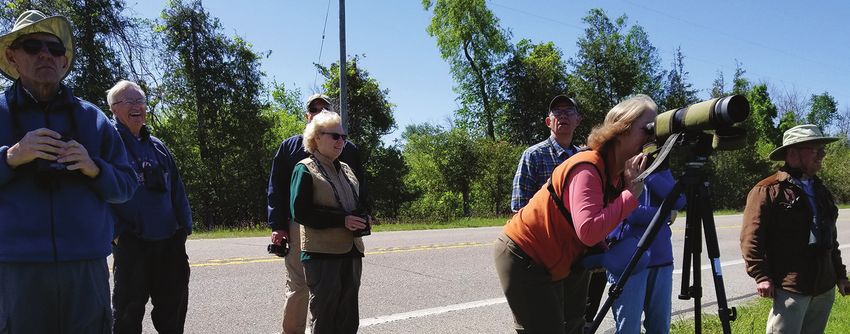
11:15 AM Breakout Session Choices:
“Twenty Years of Recovering
                                                               “Snowy Owls and Project
California Condors – What To Do
                                                               SNOWstorm” BY MICHAEL LANZONE
With What We’ve Learned About
                                                               Some Snowy Owls remain on the northern breeding
Lead in the Environment”                                       grounds or actually move onto the Arctic sea ice, hunting
BY CHRIS N. PARISH                                             in perpetual winter darkness. Others, sometimes in
Humans narrowly averted the extinction of North America’s      large numbers, migrate south in a phenomenon called
largest flying land-bird. The trials and tribulations of       an irruption. In the mega-irruption of 2013, Snowy Owls
condors offer landscape-scale insights into an ever-           were seen as far south as Florida and Bermuda. Most
changing arena of anthropogenic forcings. Since lead           people assume that hunger has driven these owls south,
poisoning remains the single greatest threat to condors,       and that the birds will starve to death in unfamiliar
the North American Non-Lead Partnership benefits them          landscapes. Both assumptions have been proven wrong
as well as other scavengers. Keeping lead out of the           by Project SNOWStorm. In this talk, Michael Lanzone
environment is as important as ongoing scientific research     shares research from many collaborators in Project
in recovering and protecting such species.                     SNOWstorm.

“Adaptations for Raptor Flight”                                “Movement Ecology of Bald Eagles in
BY JOSH HAAS                                                   the Midwest” BY TRISH MILLER
As predators and meat-eaters, raptors must first capture       See page 4 description
their prey. How is that done and how easy is it? This
talk will wow you with the many adaptations that allow
birds of prey to master their challenging lifestyle. Special   “Why Are We Here?: The Migratory
features include their body and wing shapes, weight,           Mindset of MSRW” BY RICHARD COUSE
and feathering patterns. These and other structural and        See page 4 description
physiological factors result in spectacular feats of flight
by raptors, from tail chases to dives from great heights.

                KEYNOTE PRESENTATION
     1:45 PM “Golden Eagle Conservation” BY TODD KATZNER
   Todd, Chair of the Eastern Golden Eagle
   Working Group, explains how this international
   collaborative of managers and researchers has
   tracked and worked to conserve Golden Eagles
   in eastern North America since 2006. Before their
   work, very little was known about these birds.
   Through telemetry and more traditional research,
   this group has learned about the ecology,
   behavior, and conservation of this enigmatic bird.
   This program will help you better understand the
   eastern Golden Eagle and its migration ecology,
   including new insights into the relationship
   between Golden Eagle migration behavior and the
                                                                  PHOTO BY STEVE BAKER
   potential threats of wind turbines.

                                                                                                                           5
2019 Programs
       					                              SATURDAY, APRIL 6

    3:00 PM Breakout Session Choices:
                                                                       “Identification of Waterbirds in
                                                                       Flight” BY DARRELL LAWSON
                                                                       Based on years of identifying and photographing
                                                                       waterbirds and serving as back-up counter for MSRW,
                                                                       Darrell will explain and illustrate how to identify
                                                                       waterbirds in flight. You will learn of features not
                                                                       emphasized in most bird books such as the tempo of
                                                                       wing flapping, shape of body, and silhouettes.

                                                                       “Hawk Watching: A Novice-Friendly
                                                                       Hawk Identification Experience”
                                                                       BY BOB PETTIT
                                                                       Hawk watching is a thrilling type of birdwatching. Learn to
                                                                       identify hawks in flight during migration. This workshop
                                                                       highlights using binoculars, recognizing hawk types,
                                                                       learning flight characters, discovering flight ID clues, and
    “Wind Energy and Raptors Panel                                     comprehending migration mechanics. You will receive
    Discussion” WITH TODD KATZNER, MARK                                ample handouts, learn how raptors behave in flight,
    MARTELL, TRISH MILLER, DAVID CUTHRELL                              and hear about experiencing raptor migration. You will
                                                                       become more skilled in hawk identification and better
    This first-ever panel discussion at a Mackinaw Raptor
                                                                       appreciate the migration, beauty, and role of birds of prey.
    Fest takes advantage of the presence of four specialists
    who have been engaged in research and activism on this
    issue. Their studies, including telemetry, provide insights
    into the relationship between Golden Eagle migration
                                                                       “Why Are We Here?: The Migratory
    behavior and the potential threats of wind turbines. They          Mindset of MSRW” BY RICHARD COUSE
    have conducted raptor surveys for power companies                  See page 4 description
    putting up wind turbines and been involved in siting and
    mitigation methods to reduce the possibility of harm
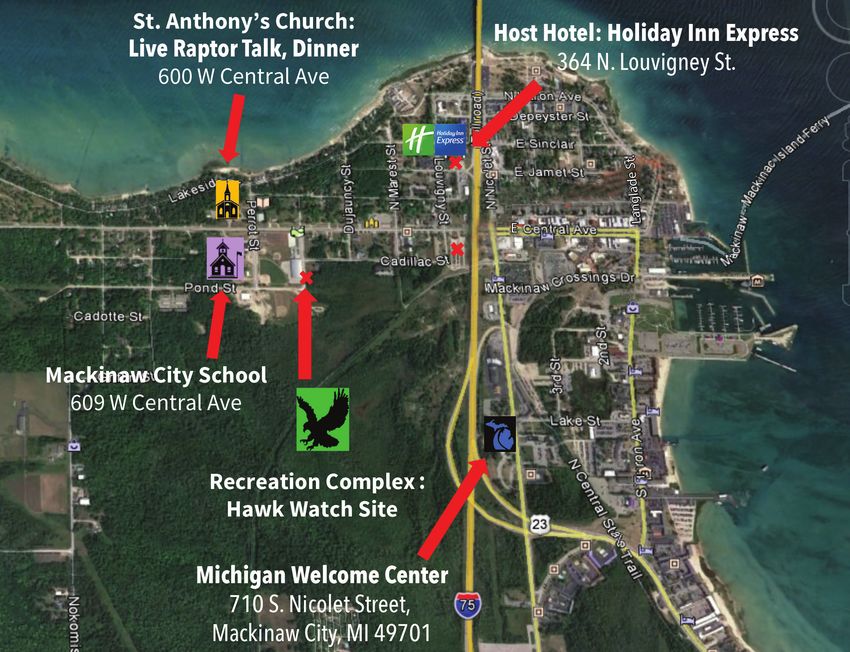
    from alternative energy sources.                                    4:30 PM St. Anthony’s Church:
    “VultureNet: The Internet of Wildlife                               “Modern Falconry with Live Raptors”
                                                                        BY JENNY SCHROEDER
    and the Future of Animal Tracking”
    BY MICHAEL LANZONE                                                  A licensed falconer will bring several of her hunting birds
                                                                        along with equipment to show how falconry has changed
    This talk has a lot of potential application for raptors passing    over time and what falconry looks like in modern time.
    through Mackinac Straits in the future. Mike will explain           She will address history, regulation, training techniques,
    and give examples of how the transmitters that raptors and          and the inner workings of the behavior between the
    vultures are wearing can talk to all the smaller transmitters       oldest hunting partners in the world. This program will
    from other birds and animals. They can collect all their data       include live Falcons, Hawks and Owls.
    as well and send it back to the researchers.
6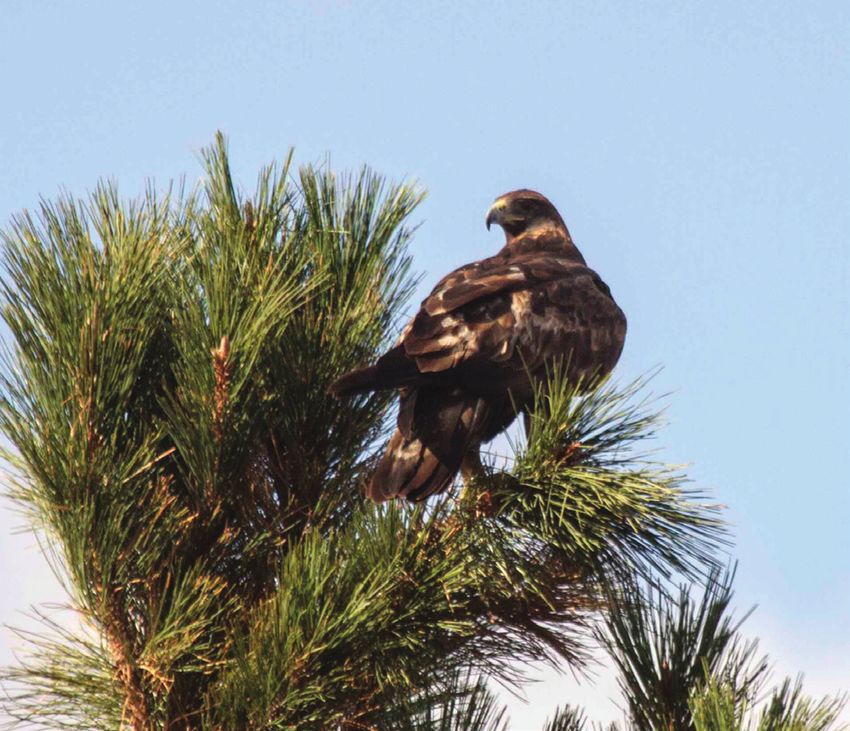
2019 Presenters

                  KEYNOTE SPEAKER
Keynote Speaker Todd Katzner (Eastern Golden Eagle
Working Group presenter) is a research wildlife biologist
at the Snake River Field Station of the U.S. Geological
Survey in Boise, Idaho. After 25 years of work in ecology and
conservation biology, he now focuses on understanding
and mitigating threats from renewable energy to soaring
birds of prey. Todd also researches raptors in central Asia,
particularly eagles in the Republic of Kazakhstan. He co-
edited and authored the book The Eagle Watchers and co-
founded the wildlife telemetry company Cellular Tracking
Technologies, LLC. (Of interest to anyone into truly long-
distance migratory raptors, his research also includes the
Red-footed Falcon!)

                         PLENARY SPEAKER
                         Plenary Speaker David Cuthrell (Eastern Golden Eagle Working Group presenter)
                         is a conservation scientist with the Michigan Natural Features Inventory, part of
                         MSU Extension. He has assisted with a variety of rare species surveys throughout
                         the state and has worked with Northern Goshawks and Red-shouldered Hawks
                         for over two decades. Believing that “conservation requires knowledge and
                         action,” he disseminates information to the U.S. Fish and Wildlife Service,
                         Michigan DNR, and through publications, training workshops, and participation
                         in many professional organizations. When he is not chasing bugs or sloshing
                         through prairie fens, he enjoys time with his family and umpiring baseball.

                         LIVE RAPTOR PRESENTER
                         Live Raptor Presenter Jenny Schroeder has a passion for youth education.
                         She runs Hawk Hill Raptors in order to educate people about birds of prey
                         through programs with live raptors. Schroeder has a degree in animal behavior
                         from Michigan State University and has been conducting wildlife education
                         programming for about twenty years. She worked full time for ten years for the
                         Michigan United Conservation Clubs coordinating their Wildlife Encounters
                         Program in partnership with the Michigan State University College of Veterinary
                         Medicine Wildlife Rehabilitation Center. Looking for a more in- depth way to
                         understand raptor behavior, Schroeder found the answer in falconry. She has
                         been a licensed falconer for 12 years and belongs to the Michigan Hawking Club.
                                                                                                             7
2019 Thank you to our Sponsors

Evening                             Program ($100)                      In-Kind Donors
($1,000 and up)                     Susan Hayes Affholter               Bird Watchers Digest/Redstart Birding
                                    Au Sable Valley Audubon
Straits Area Audubon Society                                            CheapTotes
                                    Carp Lake Womens’ Club
                                    Chocolay Raptor Center              Coffman Hardware
Birds of Prey ($500)                Citizens National Bank              Nancy Demeuse
Coffman Hardware                    Dar's Hallmark                      Keith Hammond
Petoskey Area Visitors Bureau       W.W. Fairbairn Hardware             Harbor Lights Grill
                                    Lynn Fraze Photography              Irish Boat Shop
Petoskey Regional Audubon Society
                                    Keyhole Bar & Grill                 Deb Kurtz
                                    Mackinaw Woman’s Club
Keynote ($250)                      Paradise Lake Association
                                                                        McLean and Eakin Bookstore
Audubon Society of Kalamazoo        Petoskey Plastics                   Patagonia
Awakon Federal Credit Union         Straits Area Federal Credit Union   Teysen Gifts
                                    Thunder Bay Audubon Society         Vernales Restaurant
8                                   Wheeler Chevrolet Buick Motors      Ward and Eis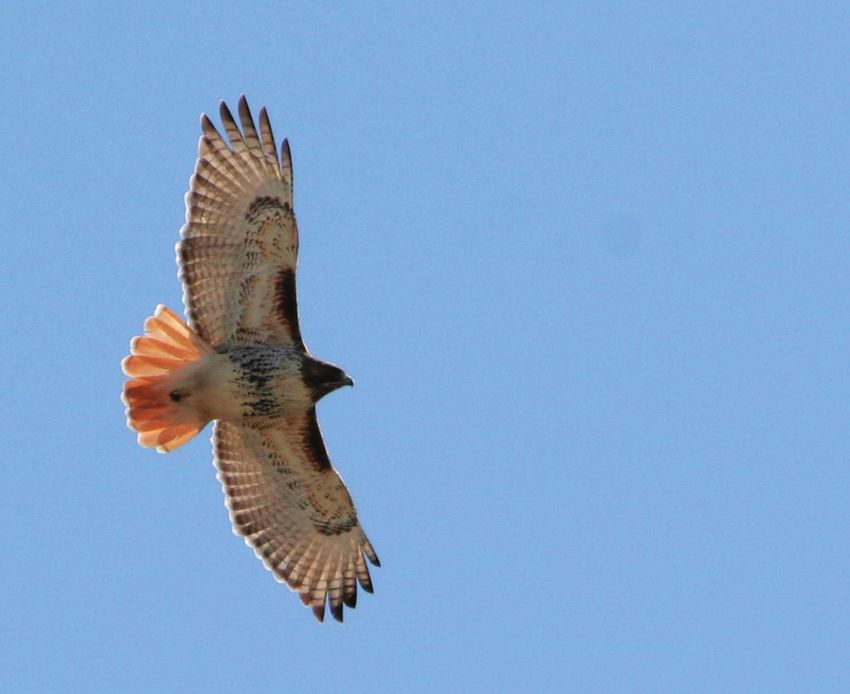
2019
    Major Fest Volunteers
     Susan Affholter   Sponsors
     Gary Appold       Audio-Visual
g
     Barbara Beck      Photography
     Kathy Bricker     Chair
     Karen Busch       Speaker Liaison
     Dennis Fay        Website
     Cathy Freebairn   Silent Auction
     Leonard Graf      Field Trips & Interpreters
     Melissa Hansen    Exhibitors
     Lisa Hoyt         Master of Ceremony
     Eileen Martini    Speaker Liaison
                                                    WE THANK PELLSTON REGIONAL AIRPORT
     Dave Mayberry     Merchandise
                                                    AND LITTLE TRAVERSE CONSERVANCY FOR
     Tammy Noirot      Registrant Bags
                                                          VOLUNTEER MEETING SPACE.
     Denise Richards   Scholarships
     Linda Rogers      Site Manager                                                       9
2019 Presenters
                         Richard Couse became Executive Director of Mackinac Straits Raptor Watch
                         in September 2018. Rich first worked in the field of Human Services advocating for
                         troubled teens, variously as a counselor, grant writer, and program coordinator.
                         After earning a Master’s Degree in Environmental Studies from Antioch University
                         New England, he conducted field research on species ranging from Nelson’s
                         Sparrows, Piping Plovers, and Least Terns to Eastern Hognose Snakes and the
                         federally-endangered New England Cottontail Rabbit. He is passionate about the
                         importance of raptor conservation and sees great potential for MSRW. The sky is
                         the limit!

                         Josh Haas, past                                          Chris N. Parish
                          President of Battle Creek                                 (Eastern Golden Eagle
                          Audubon, first developed                                  Working Group presenter)
                          a love for hawks working                                  was raised in a small
                          with the birds of prey at the                             farming/ranching and oil
                          Kalamazoo Nature Center. A                                town in San Joaquin Valley,
                          hawkwatching trip to Lake                                 California. After being
                          Erie Metropark opened his                                 introduced to wildlife of
                          eyes to hawks in migration.                               the desert foothills through
 Perplexed by seeing specks at a distance with an         hunting and fishing, he attended Northern Arizona
 overwhelming itch to know what they were, he             University in Biology on an athletic scholarship.
 started learning from veteran hawk watchers and          Upon reflection of the vast gap between the people
 was hooked. He spent seven seasons helping the           of the land and conservation-oriented groups,
 Detroit River Hawkwatch as a relief counter. His goal    he vowed to bring these groups together to build
 of making hawks accessible to everyone spawned           intentional and successful conservation. After five
 the “Hawks on the Wing” instructional video on           years with the Arizona Game and Fish Department
 identifying hawks in flight. Josh co-owns Hawks at       as a wildlife biologist, he became Condor Program
 a Glance and Glances At Nature Photography where         Director for The Peregrine Fund and now serves as
 he sells his work, teaches lessons and workshops,        its Director of Global Conservation while pursuing a
 and leads bird photography trips around the              Ph.D. at Northern Arizona University. He also chairs
 Midwest.                                                 the North American Non-Lead Partnership.

                         Mark Martell (Eastern Golden Eagle Working Group presenter) is a Senior
                         Ecologist with Tetra Tech, Inc. Sciences in Bloomington, Minnesota. Before moving
                         to this environmental consulting firm, he served as Director of Bird Conservation at
                         Audubon Minnesota for twelve years. It was there that he began satellite tracking
                         of Golden Eagles. Prior to Audubon, he was a Research Fellow at the Raptor Center
                         at the University of Minnesota. He has conducted research on raptors in North and
                         Central America since 1985 and was the keynote speaker at the 2017 Mackinaw
                         Raptor Fest.
10
Mike Lanzone Bob Pettit gained
(Eastern Golden Eagle his love for spotting and
Working Group presenter) counting birds from his
started birding when he was mother and ornithologist
8, and since then has traveled father. He earned his Masters
the world to watch, listen degree in Ornithology from
to, study, and photograph Central Michigan University
birds. He has worked as a and became a Biology Professor at Monroe County
field ornithologist for various Community College. Bob co-founded the Erie
state, federal, and private organizations in the U.S. Shores Birding Association, chaired the Whitefish
and Mexico and was the Assistant Coordinator Point Bird Observatory and the Hawk Migration
for the 2nd Pennsylvania Breeding Bird Atlas. He Association of North America, and was president of
served as Supervisor of the Biotechnology and the Holiday Beach Migration Observatory. He has
Biomonitoring Lab at Powdermill, the biological volunteered as raptor observer for over 30 years,
research station of Carnegie Museum of Natural amassing 1,500+ hours of observation, and has
History. Currently, Mike is the Chief Executive Officer conducted workshops on hawk identification for
of Cellular Tracking Technologies in Somerset, PA. over 25 years. For Bob, it’s not about racking up a
His recent work has focused on Golden Eagle and list of species. It’s about camaraderie and giving
Snowy Owl flight behavior and telemetry, including a little something back, ‘seeing it, sharing it with
participation in Project SNOWstorm. Mike is excited other folks, and then sharing the data with the
about the application of bioacoustics to monitoring world so we can see the health of our environment.’
nocturnal bird migrants using their flight calls, as
well as geographically remote breeding populations
of songbirds. Mike’s hobbies include butterflies,
Dr. Trish Miller
dragonflies and damselflies, photography, wine (Eastern Golden Eagle
making, and gardening. Working Group presenter)
has been studying birds for
over 20 years and has been
Darrell Lawson, a tracking and studying eagles
computer programmer, for over a decade. She has
ranks as one of the top Ebird a long standing interest in bird conservation and
participants in Michigan. spatial ecology. Dr. Miller works as a senior research
He is past president of wildlife biologist and the executive director of
Petoskey Regional Audubon Conservation Science Global where she studies
Society and served on the movement ecology and conservation of raptors,
governing committee of Mackinac Straits Raptor especially eagles. Her research integrates telemetry
Watch as well as a substitute waterbird counter. and spatial modeling to address conflicts with
Darrell leads many birding field trips and is the human development. She received her B.S. in
primary developer of the Sunset Coast Birding Trail biology from the University of Nevada, Las Vegas,
in northern lower Michigan. and her M.S. and Ph.D. in ecology from Penn State.
Photography Notice to Attendees MSRW uses volunteer photographers to take pictures,
to spread awareness of the importance of this scientific work and to encourage public participation.
No photos will be used or sold for profit. Photos may be posted on MSRW on-line sites or printed in
brochures or other written materials. By attending any MSRW event you are giving consent for your
photo to be taken and used. If you do not wish for your image to appear please inform us during
registration. In the case of minor children, MSRW will ask parents for written permission beforehand.
112019 Interpreters &
Field Trip Leaders
Steve Baker, a retired Kathy Bricker began
veterinarian from Indian attending Toledo Star and
River, has observed raptor Sky Study Group monthly
migration in the Straits meetings when she was 9
of Mackinac since the years old. Although she
early 1980s. He serves on pursued careers in biology,
the Board of Directors of land conservation, and non-
Mackinac Straits Raptor profit management and development rather than
Watch and has been the astronomy, she has shared her knowledge about
principal volunteer spring hawk counter since 2011 constellations with many groups since retiring to
as well as helping with waterbirds. Steve leads northern Michigan in 2006. A past president of
field trips and gives programs for several Audubon both Petoskey Regional and Straits Area Audubon
societies and land conservancies. He enjoys Societies, she co-founded Mackinac Straits Raptor
botanizing (especially for native orchids and ferns), Watch, serves as its Secretary and Mackinaw Raptor
kayaking, hiking, taking nature photographs, and Fest Chair, and presents programs to groups around
trying to learn the dragonflies. Michigan about its work.
Dave Mayberry Leonard Graf is a
works in landscape design licensed bird bander who has
and execution. For this, birded on all seven continents.
he travels frequently to He brings over 25 years of
Mackinac Island where experience as a part time
he has observed the volunteer hawk and waterbird
spring raptor migration counter at the Whitefish Point
for many years. He serves Bird Observatory. Leonard has
on the Board of Directors spent over 20 years leading
of Mackinac Straits Raptor Watch, which he co- winter birding tours to Sault Ste. Marie and leads state
founded. He created the public information kiosks wide birding trips for local Audubon clubs. He co-
at the hawk and owl research sites and manages authored the annotated checklist, “Birds of Leelanau
MSRW’s merchandise effort. County and Sleeping Bear National Lakeshore.”
Ed Pike, retired from Michigan's Department of Natural Resources, has conducted
bird research for four decades. As a licensed bird bander, he studied Barn Swallows
and Piping Plovers, serving on the U.S. Fish and Wildlife Service's Piping Plover
Recovery Team and chairing the D.N.R.'s Piping Plover Recovery Team. Wanting to
learn the importance of the Straits of Mackinac to raptors, he secured funding for
the first spring hawk count in 2004 and has banded more than 2,000 owls of eight
species, working both spring and fall migrations as a volunteer. Ed co-founded and
chairs the Mackinac Straits Raptor Watch.
Darrell Lawson, See Presenter description on page 11
12Bev Kirby has long been
an avid birder, volunteering
with Michigan Audubon’s
Winter Bird Feeder Survey
and Cornell University’s
Project FeederWatch since
the beginning of both citizen
science programs. She volunteered and watched
hawks at Mackinac Straits for many years before
Mackinac Straits Raptor Watch was founded and
continues as volunteer greeter whenever she can. Bev
worked at Birmingham Public School District for 35 FRONT ROW, L-R: 2018 SCHOLARS KELSEY BECRAFT
years. A native Canadian, Bev is seldom seen without AND MAEVE KLEIN; BACK ROW, L-R: FUNDERS
a smile on her face and her husband Jack by her side. JACKIE PILETTE, JOSH HAAS, CATHY FREEBAIRN
Elliot Nelson, an
outreach educator with Student Scholarship Program
Michigan Sea Grant, works Mackinac Straits Raptor Watch encourages
with coastal communities young people through hiring them to conduct
and businesses in the bird research and awarding scholarships to the
Eastern Upper Peninsula Mackinaw Raptor Fest. Anyone may donate to
to apply science-based enable future Student Scholars the chance to
knowledge to address Great attend the Fest. Each scholarship of $300 covers
Lakes, Lake Superior, northern Lake Michigan and the Fest fee, two field trips, and lodging.
northern Lake Huron issues. Nelson was formerly
a Research Assistant at the University of Michigan
Water Center and helped create the Michigan Water THE RONALD E. WALLIN HAWK
Collaboration Network. He also was the Program WATCH FUND HAS BEEN CREATED
Coordinator for the North Huron Birding Trail, a high IN RON’S MEMORY AND ENABLED
school science teacher and Founding Environmental ONE SCHOLARSHIP IN 2019.
Educator of the Cedar Campus Environmental
Stewardship and Tourism Program.
Bruce Seeger relocated
to Cheboygan from
downstate a decade ago.
Interested in birds for
most of his life, he joined
Straits Area Audubon
Society and participates
in the annual Cheboygan Christmas Bird Counts.
Seeger learned about the Hawk Count from an Wind Under Wings 2018 Award
article in the Cheboygan Daily Tribune announcing The 2018 Wind Under Wings Award was given
that professional counter Kevin Georg was hired by Bev Kirby to Erich Doerr, who accepted it on
to do the first count. Seeger credits Kevin Georg behalf of the St. Ignace News. The newspaper
for teaching him much about raptors and their was honored for its accurate, timely, and in-
identification during countless hours at the hawk depth reporting of Mackinac Straits Raptor Watch
watch over five years, including the magical day when activities over the past five years.
nearly five thousand Red-tailed Hawks were counted.
1314
15
2018 Research
                                                                                                           Results at a Glance

     M
                                                                                                           SPRING HAWK COUNT, STARTED 2014:
                                                                                                           64,298 individuals of 19 species with

                     ackinaw                                                                               rarities of Black Vulture, Gryfalcon,
                                                                                                           and Mississippi Kite
      RAPTOR FEST                                                                                          (historic range 43,191 to 50,399)

                                                                                                           FALL HAWK COUNT, STARTED 2017:
                                                                                                           10,047 individuals of 15 species
     Friday, April 5                                                                                       (historic range 8,719 to 10,047)
     7:15 pm        Owls, Stars, and Night-Sky Photography at Headlands Dark Sky Park
                    FIELD TRIP REGISTRANTS ONLY                                                            SPRING OWL BANDING, STARTED 2015:
                                                                                                           182 Owls captured of 3 species
     Saturday, April 6                                                                                     (historic range 82 to 254)
     8:30–9 am      Registration and Coffee, Exhibitors, Merchandise, Silent Auction
     9–10 am        PLENARY SESSION: Conservation of Raptors by David Cuthrell                             FALL OWL BANDING, STARTED 2014:
     10:15–11 am    BREAKOUT SESSIONS (choose one)                                                         118 Owls captured of 3 species
                    • Science of Lead Poisoning of Raptors                                                 (historic range 173 to 550)
                    • Movement Ecology of Bald Eagles in the Midwest
                    • Raptors in Flight: Photography Tips
                                                                                                           SPRING WATERBIRD COUNT, STARTED 2016:
                    • Osprey Migration Across the Americas
                    • Why Are We Here?: The Migratory Mindset of MSRW                                      30,167 individuals of 38 species
     11:15 am–Noon BREAKOUT SESSIONS (choose one)                                                          (historic range 39,386 to 47,785)
                   • Twenty Years of Recovering California Condors –
     		 What To Do With What We’ve Learned About Lead in the Environment                                   FALL WATERBIRD COUNT, STARTED 2015:
                   • Adaptations for Raptor Flight                                                         29,034 individuals of 43 species
                   • Snowy Owls and Project SNOWstorm                                                      (historic range 26,283 to 44,302)
                   • Movement Ecology of Bald Eagles in the Midwest
                   • Why Are We Here?: The Migratory Mindset of MSRW
     Noon–1:45 pm Lunch at Area Restaurant of your choice (list and map provided)
     1:45–2:45 pm KEYNOTE: Golden Eagle Conservation by Todd Katzner
     3:00–3:45 pm BREAKOUT SESSIONS (choose one)
                  • Wind Energy and Raptors Panel Discussion
                  • VultureNet: The Internet of Wildlife and the Future of Animal Tracking
                  • Identification of Waterbirds in Flight
                  • Hawk Watching: A Novice-Friendly Hawk Identification Experience
                  • Why Are We Here?: The Migratory Mindset of MSRW
     4–4:30 pm      Modern Falconry with Live Raptors at St. Anthony’s Church
     5:45 pm        Pizza & Pasta Buffet, Silent Auction, Wind Under Wings Award at St. Anthony’s Church    Exhibits
     7:15 pm        Owls, Stars, and Night-Sky Photography at Headlands Dark Sky Park
                    FIELD TRIP REGISTRANTS ONLY                                                             BE SURE TO VISIT THE HALLWAY
                                                                                                            EXHIBITS FROM VARIOUS NON-
     Sunday, April 7                                                                                        PROFIT CONSERVATION GROUPS.
     5:30–Noon      Sharp-tailed Grouse Lek Trip to Upper Peninsula, meeting at Mackinaw City
                    Welcome Center ∙ FIELD TRIP REGISTRANTS ONLY                                            Learning Bird Songs
     8 am–4 pm      Late Winter Birding in the Eastern Upper Peninsula, meeting at Mackinaw City School     TEACHES TRIED AND TRUE
                    FREE TO ALL REGISTRANTS
                                                                                                            METHODS TO MASTER BIRD SONG
     7 am–3 pm      Waterbird Research Viewing                                                              IDENTIFICATION AND ADD ANOTHER
     9:30 am–11 am Learning Bird Songs by Bob Pettit at Headlands Dark Sky Park Guest House                 ASPECT TO YOUR BIRDING
     10 am–4 pm     Hawk Watch Research Viewing                                                             ENJOYMENT. YOU WILL RECEIVE
                                                                                                            FREE EXPLANATORY HANDOUTS.

        Learn More, Register, or Volunteer at www.MackinawRaptorFest.org
16
You can also read


