ARLES 2020 Press File - #arlestourisme - Arles Tourisme
←
→
Page content transcription
If your browser does not render page correctly, please read the page content below
ARLES 2020
 Press File

              #arlestourisme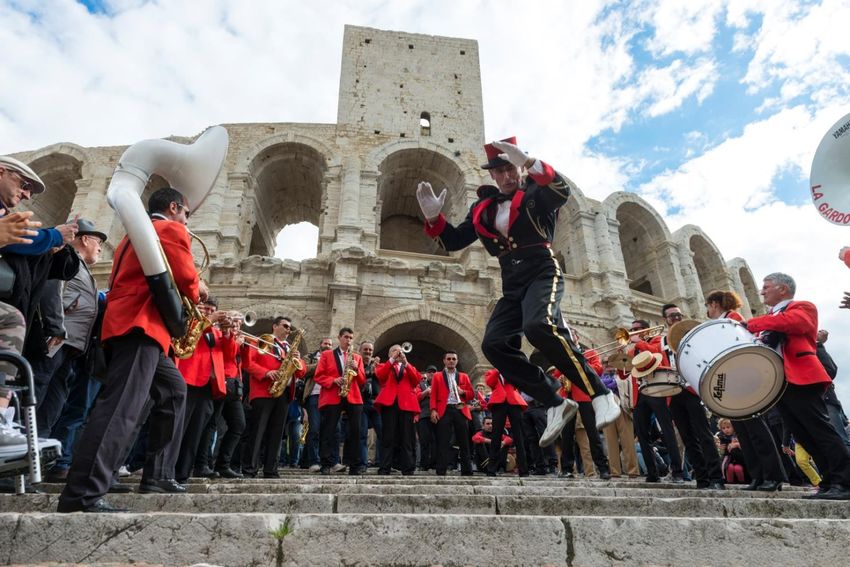
INTRODUCTION
February 21st 1888.

Vincent van Gogh arrived yesterday in Arles. In a letter to his brother Theo, the painter writes about
his first impressions : «I noticed some magnificent plots of red earth planted with vines, with
mountains in the background of the most delicate lilac. And the landscape under the snow with the
white peaks against a sky as bright as the snow was just like the winter landscapes the Japanese did.»

Light: a key factor in painting and in photography. Arles and its surroundings gained notoriety thanks
to those whose highlight its beauty : artists of course (Van Gogh, Lucien Clergue, Christian Lacroix…)
but mainly people who protect and develop its traditions as well as cultural and natural heritage.

When you stay in Arles, you go through more than 2.000 years of history !

Your journey begins in 80/90 BC : Amphitheater (Arena), Roman Theater, Cryptoportico of the Forum,
the Baths of Constantine… All these remains of the colony Arelate are listed on the UNESCO world
heritage list, as well as Saint-Trophime’s church and cloister, some of the finest Romanesque buildings
in Provence. During the Renaissance period, numerous Arlesian families became prosperous and we
can still admire today their townhouses (Hôtel de Luppé, hôtel de Quiqueiran de Beaujeu…).

The time machine speeds up.

1912 : Pablo Picasso, inventor of Cubism, arrives in Arles to satisfy two passions : Van Gogh and
bullfights. The love story with the city comes to its climax 60 years later when Picasso offers 57
drawings to the Réattu Museum ! Still in the late 60’s, Lucien Clergue, photographer, launches with a
few friends Les Rencontres d’Arles, which sets Arles out as an international capital of photography.

Here we are in 2020. The Luma Foundation and its new lighthouse designed by Frank Gehry is nearly
completed and the Museon Arlaten is about to wake up after a long sleep. This ethnographic museum
reminds us how much Arlesians are deeply attached to their traditions, their celebrations and their
territory.

Because you must never forget that Arles also means Camargue, a unique biosphere in the world. On
the front of the postcard : pink flamingos, bulls, horses, rice paddies… And on the back : a fragile
ecosystem, particularly exposed to climate change.
MAIN HEADLINES

                                 The Museon Arlaten - museum of Provence

                                 After more than 10 years of renovation, the ethnographic museum
                                 reopens Spring 2020.

                                 Created by author Frédéric Mistral in 1896 and installed in the old Jesuit
                                 College, the Museon Arlaten shows some 38.000 objects that witness
                                 ways of living, working or thinking in the lower Rhône valley during the
                                 18th and 19th centuries.

                                 www.museonarlaten.fr

                      Lee Ufan Foundation
      This contemporary art foundation was created by
    Korean-born artist Lee Ufan, a master of meditative
                                           minimalism.
      As expected, the Vernon townhouse, in Arles city
       center, will become a sanctuary for minimal art.

                              www.leeufanfoundation.org

Luma Arles, a cultural lighthouse
This interdisciplinary art center is being
erected on former railway warehouses.
The public park designed by Bas Smets
and the main building conceived by Frank
Gehry will fully open to the public in
2021.

Eventually, you will find there a luxurious
park including a lake and over 500 trees
coming from the mediterranean region.
The Resource building will house
international standard exhibition spaces,
an auditorium, an archive program and
artistic production facilities.

Luma is already presenting an exhibition program with activities open to the general public. Every
summer, its doors are open to Les Rencontres d’Arles, the world music festival Les Suds and the music
festival We Love Green.

27-31 May 2020 : LUMA DAYS, a forum of art and ideas, will be focused on the following topic : In
transit : a geography of change !

www.luma-arles.org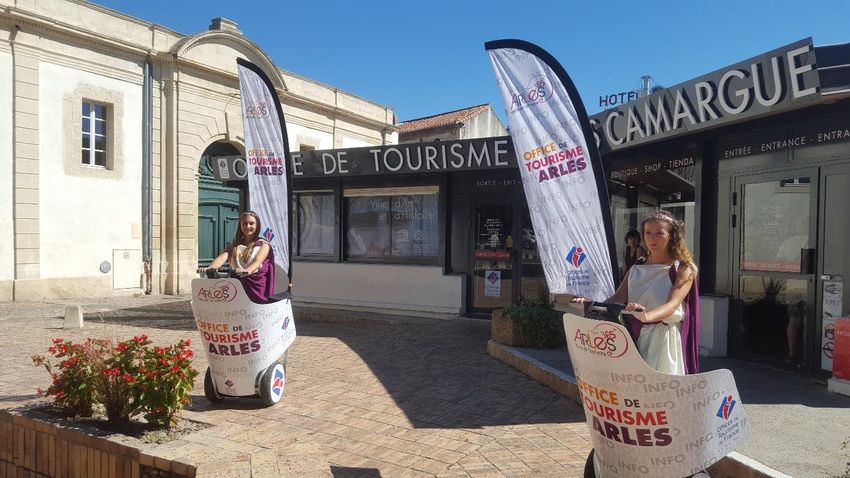
INDISPENSABLE HERITAGE
                         Christian Lacroix, fashion designer born in Arles in 1951 :
                         « As a child, I used to act in the Arena (Amphitheater), sing opera in the
                         Roman Theater. The Alyscamps cemetery was my playground. »

This Celtic city was colonized by the Greeks and then in the 1st century AD developed
rapidly under the Romans. With its tapered lines, the Roman obelisk on the Place de la République
is the only one, with that of the Place de la Concorde in Paris, visible in France, and a witness to this
past history. Later, in the 12th century, Romanesque architecture gave the city its remarkable aspect.
In the 17th century rich Provençal families competed to build the nicest townhouses, showcases of their
wealth.

Arles is listed on 3 different types of UNESCO World heritage lists: First for its historical
center and all the Roman and Romanesque monuments, then for the pilgrimage Route to
Santiago de Compostela in Spain.

The Roman builders
After Rome itself, it is here in Arles that the
largest number of Roman ruins can be
found. At the apogee of the Roman Empire,
more than 50,000 people lived in “Colonia
Julia Paterna Arelate”.

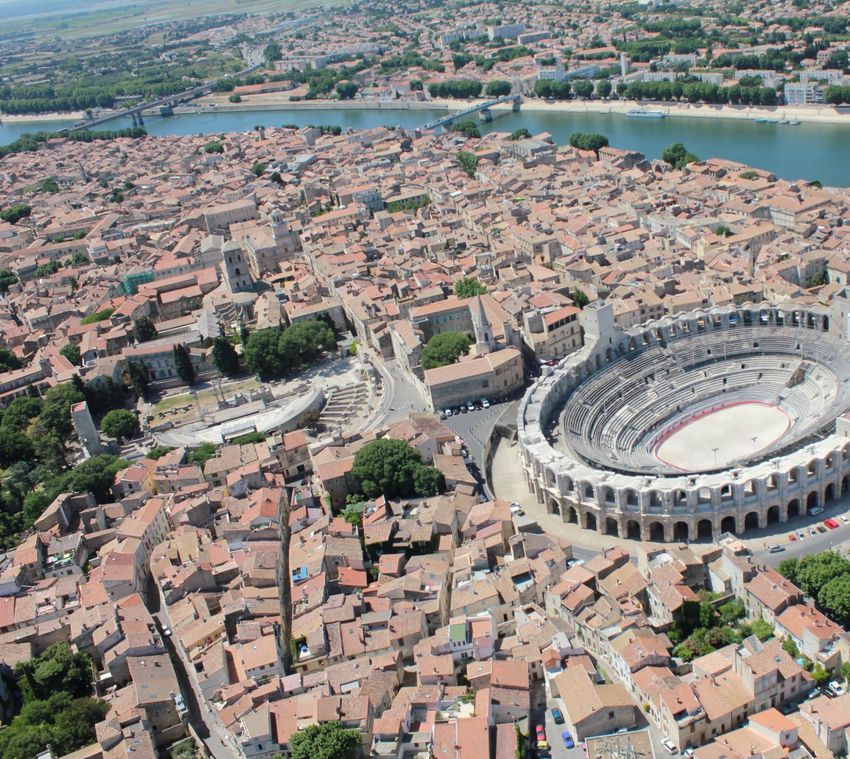
The Roman amphitheater is remarkable:
games here could be watched by 21.000
spectators.   Inside   and   outside   circular
walkways, horizontal passages, alternating
staircases, the construction was clever. The
building is also surprising by its dimensions,
more than 130m long.

During the Middle Ages it was transformed into an authentic closed and fortified city, then rehabilitated
in the 19th century when it was returned to its original use, as a venue for shows for the general public.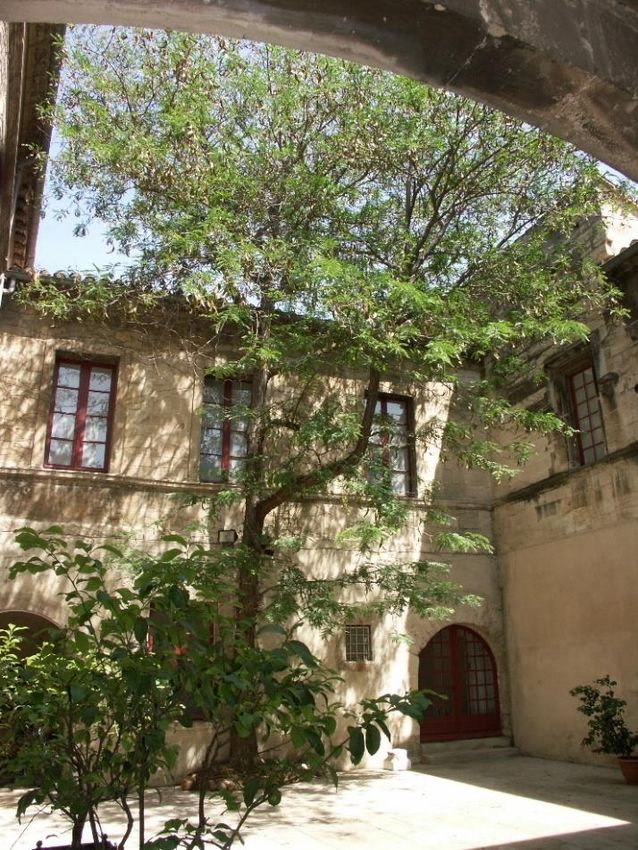
Beside the amphitheater and built during
                                                         the same period, the Roman theater
                                                         still reveals part of its seating and its
                                                         orchestra section. This exceptional scenic
                                                         venue comes to life again every summer
                                                         with superb programs including the
                                                         “Escales du Cargo”.

Roman history fans can make deeper
discoveries by going under the city. Here the
Cryptoportico, a series of impressive
underground        galleries,    formed      the
foundations of the Roman Forum, the
invisible part of this huge public square in the
center of the Roman city.

On the banks of the Rhone, the Baths of
Constantine were popular thanks to their
hypocausts allowing hot air to circulate
through hollow bricks under the floors of
raised rooms.

                                                   The Alyscamps, the Christian cemetery,
                                                   offers a shady walking path beside rows of
                                                   remarkable sarcophagi.     Vincent Van Gogh
                                                   immortalized them “again” in his works.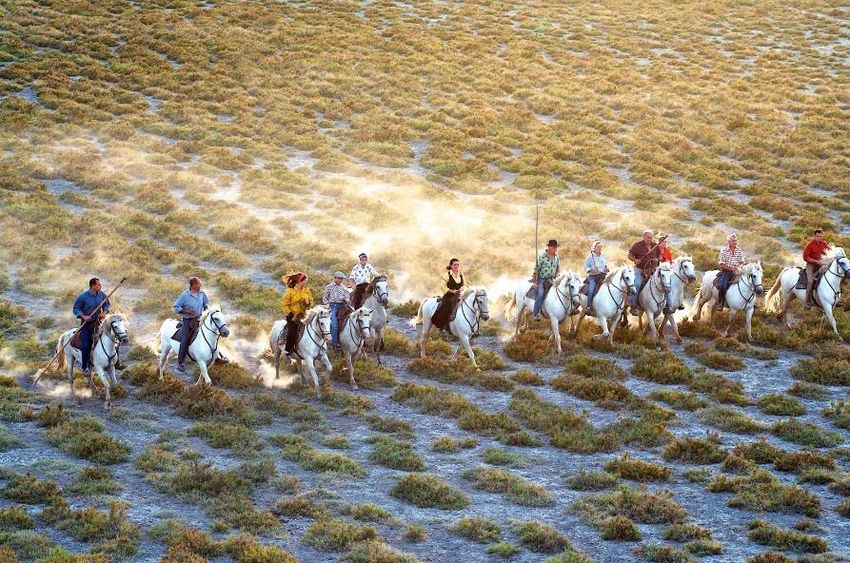
Romanesque and classical architecture

                      Vincent Van Gogh in a letter to his brother Théo (1888) :
                       « There’s a Gothic porch here that I’m beginning to think is admirable, the porch of St
                      Trophime, but it’s so cruel, so monstruous, like a Chinese nightmare, that even this beautiful
                      monument in so grand a style seems to me to belong to another world »

                                                      The portal of St. Trophime’s church is decorated
                                                      with richly carved statues, dominated by Christ in
                                                      glory in an almond-shaped mandorla.

                                                      St. Trophime’s cloister, built during the 12th
                                                      century, is a remarkable example of Provençal
                                                      Romanesque architecture.

Another period, another style, the 17th century
saw a flurry of building in Arles.

The City Hall, designed in 1673 by the
architect Jacques Peytret, in collaboration with
the future architect of the Palace of Versailles,
Jules   Hardouin-Mansart,      boasts    a   flat
Romanesque vault covering a remarkable
vestibule. About fifty townhouses spread out
throughout the different quarters of the city
were built by the important Arlesian families of
the times.        Among them, the Grille
townhouse (Hôtel de Grille) is one of the
most representative of the great classical
architecture of Louis XIV.

You can also stop in front of the Luppé townhouse (Hôtel de Luppé) and its astonishing façade that
looks like a Florentine palace, across from the amphitheater. Other townhouses are open to the public,
such as the Quiqueran de Beaujeu townhouse which presently houses the National Photography
School, or the Léautaud de Donines townhouse, occupied by the Vincent Van Gogh Foundation.

 Outside the city, on the road to Fontvieille, in the
 heart of Arles Country, Montmajour Abbey is a fine
 example of eight centuries of monastic architecture.
 It was founded at the end of the 11th century by
 Benedictine monks, and the buildings and their
 natural surroundings inspired Van Gogh. From the
 top you will be able to discover a unique panorama
 over the Alpilles hills and the Crau plain.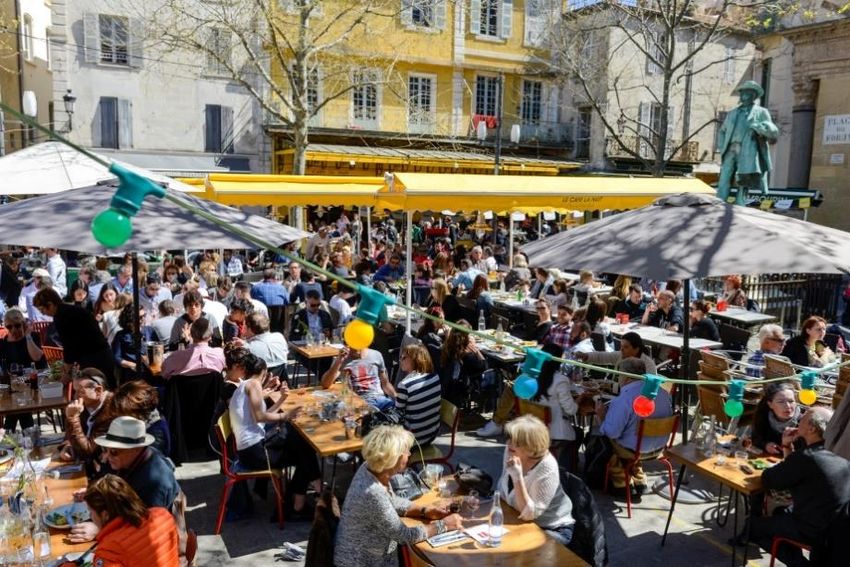
MUSEUMS
Here beauty is inside the « package » and part of the « packaging ». True showcases, the
Arlesian museums are worth visiting for two reasons. You will be entering places seeped in
history or resolutely contemporary, and meet artists, trends, other times. A Roman barge in
a modern museum or contemporary photos in a 15th century priory.

                                                     Réattu Museum

                                                     Built at the end of the 15th century, magically
                                                     dialoguing with the Rhone River, the Great Priory of
                                                     the Knights of Malta owes its destiny to Jacques
                                                     Réattu (1760-1833), an Arlesian artist who turned
                                                     it into his residence, studio and the laboratory of his
                                                     dreams. Since 1868 it has become a museum and
                                                     preserves all of his works and his personal art
                                                     collection.    A place of confluences, with works
                                                     ordered from contemporary artists in a mixture of
                                                     disciplines, the museum offers thematic exhibitions
                                                     and renewed hangings allowing us to discover art in
                                                     a different way.

                                                     Pandora’s Box : new exhibition from February 15th
                                                     to May 31st.

                                                     www.museereattu.arles.fr

Museon Arlaten (see page 3)

Created by the author Frédéric Mistral in 1896, this departmental ethnographical museum is a place of
memory of Provençal society. The Laval-Castellane townhouse (15th century) which houses the museum
has been closed for renovation for 10 years, and the reopening is announced and impatiently awaited
for spring 2020.

www.museonarlaten.fr

 Arles Archeological Museum

 The Arles departemental archeological museum occupies a
 contemporary building designed by Henri Ciriani and displays the
 archeological collections of Arles : 1800 objects are on display for
 the public out of a collection of 30,000 objects (objects of daily life,
 architectural elements, mosaics, sarcophagi, scale models…).
                                    A visit to this museum is essential to
                                    understand the evolution of the
                                    Roman city; you will be fascinated
                                    by the Gallo-Roman barge found
                                    complete in the Rhone and exhibited
                                    in the museum, as well as by the
                                    supposed bust of Julius Caesar.

                                   www.arles-antique.cg13.fr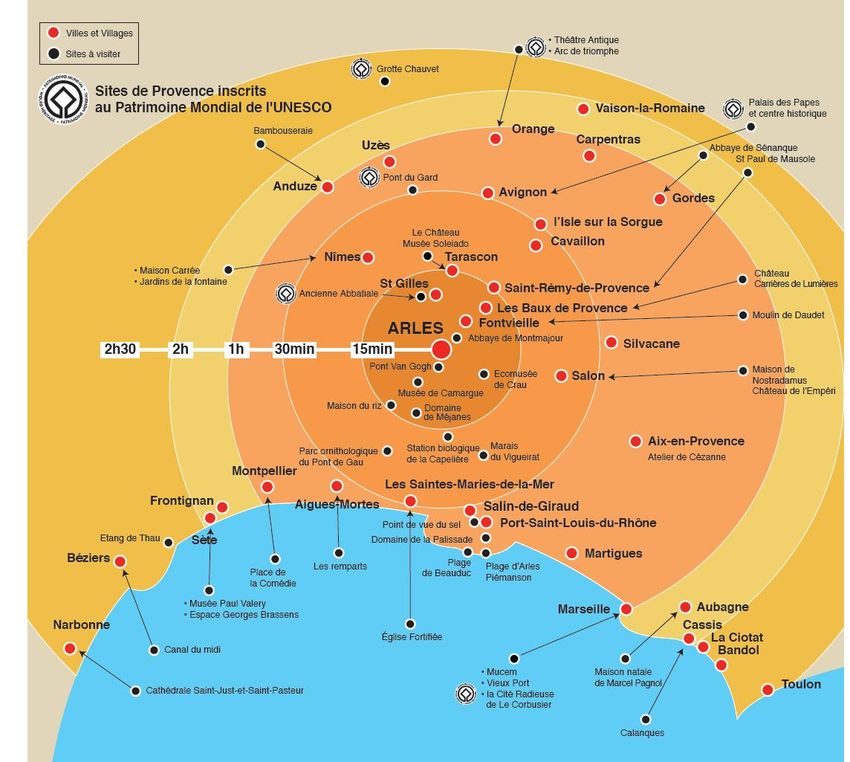
CAMARGUE,
        ANOTHER EXPERIENCE OF PROVENCE

                        Peter Lindbergh, photographer (1944-1919), fond of Arles :

                        « To be accepted and loved by Arlesian and Camargue people, it’s very easy.
                        You have a drink outside for the aperitif and if a big mosquito lands on your
                        arm, you don’t move, you don’t swat it. You just let it suck your blood. »

Arles is also the Camargue, a wild nature preserve, a biosphere unique in the world a true
full-sized postcard: horses, bulls, pink flamingos, ponds, rice paddies…as far as the eye can
see.
The Camargue is a wide alluvial plain created by the incessant struggle between the Rhone
River and the Mediterranean Sea. It is the only French delta of its size, and stands out because
of the wealth of its ecosystems. It has an international reputation for bird-watchers, as a site
for both migrating and sedentary water birds and the only zone in Europe where pink
flamingos reproduce!

        ©CRT PACA

Parc Naturel Régional de Camargue, so wild
The park spreads over 100,000 ha in several towns and boasts 75 km of coastline. At the center of the
park, the nature preserve protects 13,000 ha from the mischief of man, in the towns of Les Saintes-
Maries-de-la-Mer and Arles.

The Camargue is also an area where men and women work. Swamps, farmland and rice paddies string
out one after another; pink flamingos and farm-raised bulls live together. Raising “Camargue Rice” is an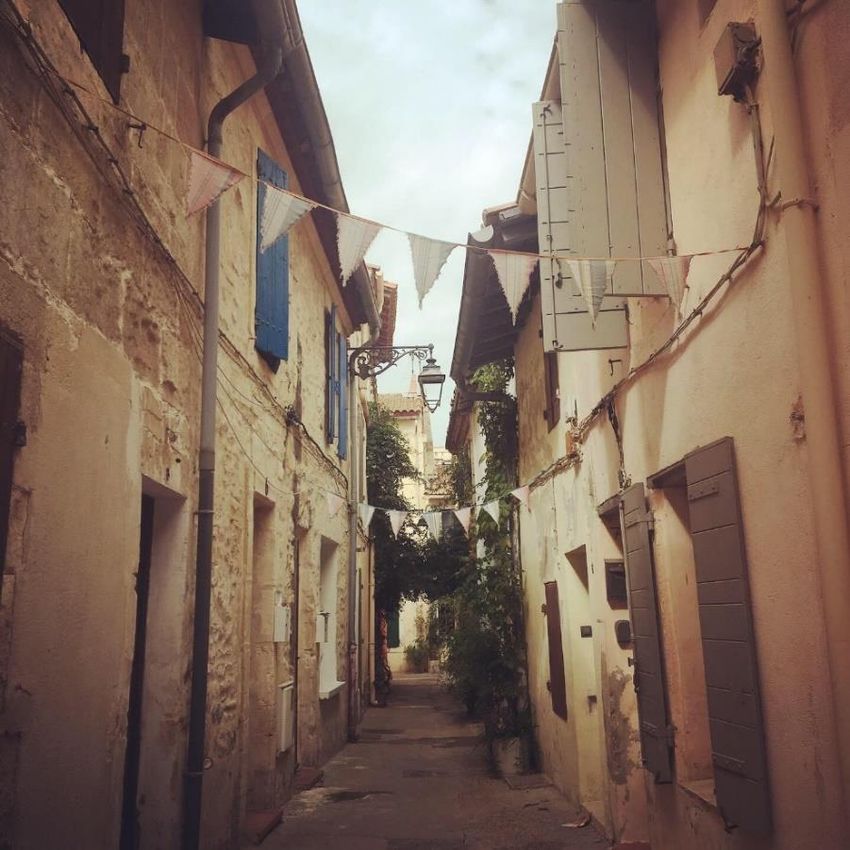
ecological way of preserving the local ecosystem. It has been produced since the 16th century but only
took off industrially in the 1940’s. Another original asset is the raising of Camargue bulls, delicious in
traditional dishes like the “gardiane” (bull-meat stew). At the seaside, the dunes and the beaches create
a natural barrier, but they are fragile and in constant movement. The town of Arles has 28 km of fine
sandy beaches: the largest natural beach on the Mediterranean Sea (Beauduc and Piémanson).

To cross this land, you can take the numerous
discovery trails (Mas du Pont de Rousty, La
Palissade, La Capelière, les Marais du Vigueirat)
and the hiking or cycling trails between Salin de
Giraud and Les Saintes-Maries-de-la-Mer along the
sea dike (Digue à la Mer), or discover the Méjanes
« draille » (path) guided by a Camargue horse, or
spend a day on a bull ranch (« manade »)

A booklet containing details of 14 hiking or bike
trails in the Camargue regional nature park has
been co-edited by the Arles Tourism Office and the
Park. It is on sale at the Tourism Office or can be
downloaded from our site:

www.arlestourisme.com/fr/assets/pdf/pdfs_document/pochette_OK.pdf

Numerous sites are open to the public and allow you to explore nature while respecting the Camargue
wildlife. Several of them regularly organize discovery tours conducted by nature and bird guides.

The Camargue Museum

The museum is housed in a former Camargue sheep barn and it traces the evolution of human
activities in the Rhone River delta from the 19th century up to today : from agricultural activities (rice-
growing, animal-raising, hunting, fishing, salt-gathering) to industrialization (dikes, pumping stations,
irrigation canals). Your visit can continue along a 3.5 km discovery trail illustrating all the farm
activities.
www.museedelacamargue.com

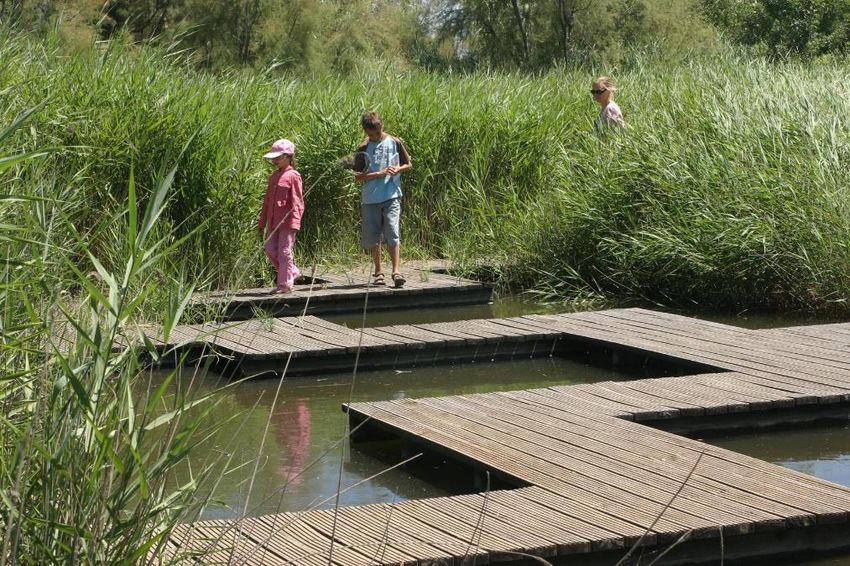
The Marais du Vigueirat, a hike in the middle of an exceptional nature preserve

The    Viguerat    Swamps      are   a
protected natural site covering 1,200
hectares, located at the junction
between     two    ecosystems,     the
Camargue and the Crau. They have
been listed as a national Nature
Preserve.      They belong to the
Conservatoire     du     Littoral,   a
government preservation agency.
They represent a complete inventory
of Camargue wildlife : more than
2,000 species of plants and animals,
300 species of birds, nearly 35,000
ducks, 641 species of plants… and
also ranches with horses and bulls,
so emblematic in the Camargue. You
can visit the Marais du Vigueirat with
your family on the Etourneau nature paths (a raised boardwalk) or with a guide in a carriage, on foot or
on horseback.

www.marais-vigueirat.reserves-naturelles.fr
The Domaine de la Palissade, a good
balance between environmental
protection and awareness

The Domaine de la Palissade, situated
between Salin-de-Giraud and the coast,
covers 702 ha on the right bank of the
Grand Rhone River. It is located
completely outside the dikes that protect
the lower Camargue from the flood waters
of the river or the sea, and thus is
especially interesting ecologically, with
specific wildlife. It belongs to the
Conservatoire du Littoral and can be
discovered on man-made paths or on
horseback. A nature exhibition and a
Camargue picnic site complete the
proposed activities. www.palissade.fr

                                            The Rice House, how rice-growing has evolved in the
                                            Camargue

                                            The Rozière family have been rice-growers for several
                                            generations and they receive visitors on their authentic
                                            rice farm. The Rice House is a learning center telling the
                                            history of rice-growing from its origins until today. Three
                                            different spaces are devoted to specific rice-growing
                                            machines, different stages in the transformation of rice,
                                            and a shop selling excellent Camargue products.

                                            Open every day from March to November and by
                                            appointment from December on.
                                            www.maisonduriz.com

La Maison du cheval Camargue (The Camargue horse farm)

Located at the heart of the Camargue Regional Nature Park, the Mas de la Cure belongs to the
Conservatoire du Littoral. The farm federates a network of animal breeders, ranchers and Camargue
horse lovers, all of whom are attached to Camargue culture. All year round the farm offers guided visits
where you can discover the history of the rustic Camargue horse and observe him in his natural wild
habitat. A unique and unforgettable experience!

www.maisonduchevalcamargue.com

La Capelière, The Camarague National Nature Preserve

The Camargue National Nature Preserve is a protected space unique in France and one of the largest
protected wetlands in Europe. La Capelière, the Preserve information center, has a permanent exhibition,
a nature hiking path with different Camargue landscapes, and walking trails on the Salin-de-Badon site.

www.snpn.com/reservedecamargue/
« Manades » (ranches), from animal-raising to fun festivities
The « manades », or farms specializing in “Camargue” horse- and bull-raising, keep traditions alive and
open their gates to visitors. The “gardians” (cowherds) share their know-how and the traditions they
inherited from their elders. This is where bulls are raised for the Camargue bull games, called “course à
la cocarde”, because a young “raseteur” must take off a ribbon or “cocarde” attached to the horns of the
bull. A respectful ballet between the man and the animal.
©Lionel Roux
Manade Blanc, www.manade-blanc.fr
Manade Fernay,
www.masdesjasses.com/manade_fernay_arles/
Manade Jacques Bon, www.masdepeint.com
Manade Jacques Mailhan, www.manadejacquesmailhan.fr
Manade Jalabert, www.manadejalabert.com
Manade St Germain, www.massaintgermain.com/
Manade Yonnet, 04 42 86 82 44
Domaine de Méjanes, www.mejanes-camargue.frSalin de Giraud, between salt and sea
The village of Salin-de-Giraud is located on the southeast side of the Camargue delta, 40 km
from the center of Arles.
Salt has been harvested here for centuries. But the village of Salin-de-Giraud was actually created
near the mouth of the Grand Rhone at the end of the 19th century, when two companies using salt
established factories here, encouraging the migration of foreign workers (Greeks, Spaniards,
Armenians, Italians…). In 1855, a chemical engineer from Lyon, Henri Merle, bought 8000 ha of
swamps and marshes to furnish sodium chloride and other salts for his factory in the Gard department.
In 1895 it was the turn of the Solvay company. Salt bought from Merle was used to make soda, an
essential element in the manufacture of Marseilles soap.
The wide tracts of salt flats are interesting for both ecology
and scenery. The development of a small number of
invertebrate species here offers abundant food for birds,
allowing for nesting colonies unique in Europe, notably for
pink flamingos.
Salin-de-Giraud has a sea front that is
very popular in the summer, with the
wide wild beach of Piémanson, also
known as the Arles beach, and its seven
kilometers of fine sand in the heart of the
Camargue, or the gulf of Beauduc,
specializing in kitesurf.
Les Bois Flottés: the new Salin-de-Giraud campgrounds,
located in this former salt-harvesting city, right beside the
long sandy Piémanson beaches. Kitesurf and wild-beach
lovers should remember this address.
www.camping-les-bois-flottes
12TRADITIONS
Frédéric Mistral, provençal poet (1830-1914), Literature
Nobel Prize :
« Arle ! O, tu que siès estado tout ço que l’on pòu estre, la metroupòli d’un
emperi, la capitalo d’un reiaume e la matrouno de la liberta »
« Arles, you have been everything that can be, the metropolis of an empire, the
capital of a kingdom and the matron of freedom », speech to the Arlesians, 1887
The language, local dress and
traditional festivities make Arles the
capital of Provençal culture.
« Gardians » (cowherds) and Arlésiennes
are the natural actors in the traditional
festivities that rime with the seasons in
Arles Country. Arles vibrates to the rhythm
of bull games. Since 1402 when the bull
games originated, each year, from the
beginning of April to the end of October, the
bull fans gather... The “Cocarde d’Or” (Gold
Ribbon) is the most prestigious show, and
the “Trophée des As” shows are days of
glory for the “raseteurs”, “tourneurs” and
especially for the stars of the show, the
“cocarde” bulls. The Arles arena also thrills to the sounds of bullfights, the Arles “plaza” being one of the
most important venues for French bullfighting.
The major traditional festivities
La Course de Satin (Satin Race)
The first Satin Race took place in 1529.
The Arles Festival Committee continues the tradition and reserves this competition exclusively for
Camargue race horses from the best breeding farms. The riders ride bareback (with no saddle). The
winner carries away the Gold-Embroidered Silk Scarf, of which a relic is on display in the Museon Arlaten.
He or she will be able to keep it for a year and if he (she) wins three consecutive victories, the silk scarf
will belong to him (her) permanently.
La fête des Gardians (Gardian Festival)
The « gardians » (cowherds) celebrate each year on May 1. They gather on the Boulevard des Lices and
then parade through town and salute the statue of Frédéric Mistral on the Place du Forum. A “messo
parado” is celebrated in Provençal in the Eglise de la Major in presence of the equestrian statue of St.
George, the patron saint of the “gardians”. In the afternoon, games are organized in the arena. The
“Gardian” Confrérie was founded in 1512 and is the oldest mutual assistance society still existing today in
France.
The election of the Queen of Arles
The first modern Queen of Arles was elected in
1930. In all, there have been 23 since. The
young lady who is chosen must maintain the
culture, the Provençal dress costume and the
Provençal language for 3 years.
Who will follow Nais Lesbros?
Answer on May 1st 2020 !
13The Festival of Arles
The Pegoulado (July 3rd 2020) : on the Friday before the Costume
Festival, more than 1000 participants take part in a long evening
parade in traditional costumes from all around the region on the
Boulevard des Lices in Arles.
The Costume Festival (July 5th 2020) : it takes place on the first
Sunday in July: a parade in local dress costumes finishing with a show
in the Roman Theater.
The Golden Cocarde takes place on the Monday following the
Costume Festival. It is the most prestigious of all the bull games.
The Rice Festival
Each year at the end of the summer, the Rice Festival reminds us of
the economic importance of this crop. Just before the harvest, Arles
celebrates this cereal grain grown around the world. Quarters, villages,
associations and families busily prepare floats decorated with rice to create the “corso” that will go on
parade Saturday night and Sunday morning at the beginning of September.
The Easter Feria (April 10 to 13 2020)
The Easter Feria opens the French bullfighting season and attracts 300,000 visitors. “Bodegas” are
opened where the “aficionados” can gather as soon as the “corrida” is over. “Penas” or “bandas” (groups
of musicians) take charge of the animation around the arena and throughout the city.
La Rice Feria (September 12-13 2020)
It takes place during the 2nd weekend in September. It is associated with the “Camargue gourmande”
salon, featuring Camargue rice and other agricultural products from the farms around Arles (olives, olive
oil, local wines, AOC bull meat, Camargue salt…) as well as local crafts.
14The art of the « santon »
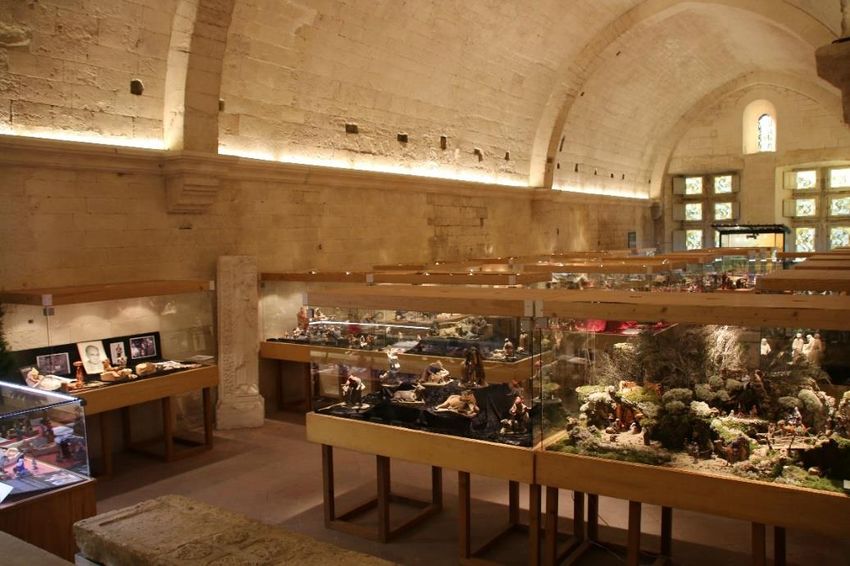
The « santons », called in Provençal « santouns” (little saints) are statues made by hand out of clay.
They are used to make Christmas manger scenes. At first, the family crib was limited to the characters
of the Nativity. The santon-makers in Provence were inspired by techniques inherited from old traditional
craftsmen and the characters in the “Pastorale” (Provençal Christmas play), to create their own santons.
The work of each santon-maker can be recognized by specific details like no others. Each year, for more
than 60 years now, and for two months, the International Santon-Makers Salon takes place in
St.Trophime’s cloister. Arles also organizes a Santon Fair at the end of November: creative workshops,
molding, painting, demonstrations, music, choral singing…
Fans should not miss the Provençal Santon Conservatory and its exceptional collection. This museum,
managed by an association, was opened thanks to the santon-maker Henri Vezolles and tells the history
of Provençal santons from their origins until today.
Meet our santon-makers
Evelyne Ricord: A sculptor, santon creator, designated one of the best craftsmen of France in her
category, clay santons - 06 24 61 71 69 – By appointment only.
The Provençal Santon Conservatory, 14 Rond point des Arènes
Imagined by the santon-maker Henri Vezolles, this museum tells the history of Provençal santons from
their origins until today. In an 18th century house, we can admire the works of the greatest Provençal
santon-makers, past and present. About 2000 santons are on display, the work of different santon-
makers such as Thérèse Neveu, Paul Fouque, Marcel Carbonel, Roger Jouve, Simone Jouglas, Thierry
Deymier, Liliane Guiomar, Christian Gayraud, Fernand Volaire
15ARTS IN ARLES
Special landscapes and light have always inspired artists and creators, either actors,
painters, photographers or musicians…
PAINTINGS
Vincent van Gogh is certainly the artist who best captured the light of the city !
Vincent arrived in Arles on a cold February day in 1888, looking for light. He then
began a period of intense and passionate work in the Southern French sunlight. His
stay in Arles was the most productive of his career. He created 300 works in 15
months. Among the best known: The Night Café and the Hospital Garden. Even
though none of his work is on permanent exhibit in Arles, the settings that he painted
are everywhere. The Van Gogh Foundation regularly exhibits works by the artist in
collaboration with major international museums.
Letter to his friend Emile Bernard – around March 18 1888 :
« I want to begin by telling that this part of the world seems to me as beautiful as Japan for the
clearness of the atmosphere and the gay colour effects. The stretches of water make patches of a
beautiful emerald and a rich blue in landscapes, as we see it in the Japanese prints. Pale orange
sunsets making the fields look blue. Glorious yellow suns. »
Arles Vincent van Gogh Foundation
The entrance gate, by Bertrand Lavier, sets the
stage and reveals the subtle alliance between this
15th-century townhouse and contemporary art.
As you go through the door raise your eyes to
admire the play of light in the glass work of
Raphael Hefti. And don’t forget the unbelievable
terrace from which you have a view of the city,
the Rhone River and Montmajour Abbey, a lasting
tribute to the master.
Exhibition Vincent van Gogh + Laura Owens from
May 16th to October 18th 2020
www.fondation-vincentvangogh-arles.org
The Van Gogh walking tour, step by step
A pedestrian tour leads the curious visitor to the sites where the
master set up his easel. A dozen “spots” are thus to be discovered on
a pleasant stroll through the city. Among them: The Yellow House, on
the Place Lamartine, Starry Night over the Rhone, on the Rhone River
quay… The art lover is thus plunged into the heart of Vincent Van
Gogh’s paintings. Guided visits organized all year round.
10 minutes away from the city, you can see the reproduction of the
Van Gogh Bridge.
www.arlestourisme.com/fr/le-circuit-van-gogh
16PHOTOGRAPHY
Arles, photography and Lucien Clergue, a native.
©Robert Durand Pablo Picasso par Lucien Clergue
The photographer, born in 1953, was a close friend of Pablo Picasso, despite their age difference.
“Clergue’s photographies are God’s sketchbooks”, once said the painter about his young friend.
In the 60’s, Lucien Clergue worked to create the photography collection of the Réattu Museum,
which became the first Fine Arts Museum to include photographs, with prints by famous artists like
Richard Avedon, Cecil Beaton, Man Ray, Dora Maar…
In 1969, he created with a group of close friends Les Rencontres de la Photographie (Arles
Photography Festival).
The Arles International Photography Festival – starting June 29th 2020
Every summer since 1969, with over sixty exhibits installed in different exceptional heritage buildings
throughout the city, the Arles Festival helps transmit world heritage photography. This melting pot of
contemporary creation receives throngs of visitors from all over the world. Exhibits, projections,
workshops… The whole city takes part: the museum, exhibition spaces, galleries, a church, industrial
wasteland…
www.rencontres-arles.com
© Anaïs Fournié
17The Manuel Rivera-Ortiz Foundation
The foundation promotes photography and documentary films by diffusing and supporting young or
confirmed photographers and video-film makers with a social message. The Blain Hotel will now open
between April and November. www.mrofoundation.org
European Nude Photo Festival – May 8-13 2020
For nearly 20 years, the Nude Photo Festival has been
exhibiting European photos, with the presence of an
Arlesian artist each year. www.fepn-arles.com/
École Nationale Supérieure de la Photographie
Since 1982, Arles has been home to the National Photography School (Ecole Nationale Supérieure de la
Photographie). This is the only art school in France exclusively devoted to photography. In January
2020, students and teachers will move to a new building, designed by architect Marc Barani, located
next Luma.
© RSI Studio pour Marc Barani
IMAGE
The MOPA, Motion Pictures in Arles, school, is
a leader in French animation and educates
future top-level professionals whose
productions receive awards at international
film and cartoon festivals. In 2018, one of their
movies The Garden Party was on the Oscars’
shortlist !
www.ecole-mopa.fr
18ART GALLERIES
Arles is a city with varied cultural activities, including contemporary art events and shows
all year round. There are more than 300 art galleries during summer !
Anne Clergue Galerie
From Easter to October, Anne Clergue shows her « art
crushes ». She used to work at the Castelli Gallery in New
York and at the Arles Van Gogh Foundation. She’s been an
exhibition curator several times and gives conferences
about the friendship between her father and Pablo Picasso.
www.anneclergue.fr
La Maison Close
A shooting studio and an art gallery, located in the
Amphitheater area, in the historic center. A
contemporary architecture full of light, even in the
winter !
www.lamaisonclosearles.com
Galerie Huit
The gallery hosts exhibitions, artists, and
guests from around the world.
Created in 2007 by Julia de Bierre (writer,
gallery-owner, curator), it also offers very
stylish independent apartments.
www.galeriehuit.com
©François Delebecque
Arles Gallery
Anne Eliayan and Christian Pic see themselves as artists
more than gallery-owners. All year round, they exhibit
their work as well as other artists, either painters,
photographers or plasticians. A convivial artspace also
opened for projects shared with Arlesian students.
www.arlesgallery.com
©A .Eliayan
19BOOKS
Book Festival : Arles se livre
March 4-8 2020
Literature is everywhere in Arles, major players
include the Actes Sud publishing house and the
Méjean cultural pole. But literature and a taste for
words also include the translators’ conference, 16
other publishing houses including Editions Piquier,
specialized bookshops, the Book Conservation
Center, printing presses… and all the Arlesian
cultural actors, theaters, stages, museums…
For this third edition, the city will resound with
“words” for 5 days, and books will invade public
spaces but also more intimate places like cafés,
restaurants, shops…
www.arles-se-livre.fr
Actes Sud at the Méjan
The Méjan is a complete cultural complex,
a publishing house, an enchanting
bookstore, a friendly gourmet restaurant,
an art-house cinema, exhibits and even a
hammam, all of this located in the Saint-
Martin de Méjan chapel and adjoining
buildings.
On the banks of the Rhone, on the well-
named Nina Berberova square, the site is a
haven for lovers of books and culture, and
is open to all with a desire to share.
Les Grandes Largeurs, the new bookstore in the historic city center, regularly offers readings, exhibitions,
concerts and workshops for children.
De Natura Rerum : Located in a lovely Arlesian house near the Roman amphitheater De Natura Rerum
(In the nature of things) is the second bookstore in France specializing in Antiquity. But it is also an art
gallery and a beer cellar for locally brewed beers.
Other nice bookstores are worth visiting, such as Off Print, located in the Parc des Ateliers. This editor
and book seller publishes specialized works on contemporary art, photography and graphics.
20MUSIC
Les Suds, winter edition – March 1-8 2020
The music Festival « Les Suds » has a winter edition. Music from around the world resonates in the city
during one week.
www.suds-arles.com/fr/2019/les-suds-en-hiver-1650
Les Suds Arles – July 13-19 2020
For 25 years, the « Suds » have kicked off summer
festivities with a rich program of music from around
the world. During 7 days and 6 nights, more than
60 concerts take place in the city center with
workshops and master classes in dance, singing and
world music… It is a major popular festival that
attracts visitors from all over Europe. This summer,
Goran Bregovic will ignite the public in the Roman
theater !
www.suds-arles.com
Escales au Cargo – July 22-24 2020
A concert hall and center of Arlesian night life, the Cargo de Nuit is an institution. Each summer, in July,
the “Escales du Cargo” generate vibrations for the Arles inhabitants and music lovers. The programs are
always top-level. Last year, Texas chose the Roman Theatre for its unique concert in France ! On July
24, 2020, the rockband Archive will perfom in Arles to celebrate their 25th birthday !
www.escales-cargo.com
21THE TOURISM OFFICE IS WAITING FOR YOU
Which street to take ? Which quarter to visit? Understand, listen,
question… The Tourism Office offers 1000 ways of visiting the city,
to learn the secrets of gladiators, to visit the Luma project display or
to walk in the steps of Vincent Van Gogh.
Find us on the Boulevard des Lices and at www.arlestourisme.com !
Combined tickets for monuments
Pass Liberté. Valid for 1 month, it will allow you to visit your choice of 4 monuments, a monument-
museum (the Réattu) and your choice of another museum. 12€ / 10€ (Reduced rate) per person, free
for children under 18 accompanied by an adult.
Pass Avantage. Valid 6 months, allows entrance into all the monuments and museums of Arles. 16€
(instead of 49.50€ if each ticket were to be bought individually) / 13€ (Reduced rate) per person, free
for children under 18 accompanied by an adult. This ticket is really advantageous because you can save
more than 30 euros !
Smartphone application Arles Tour
This free application localizes nearby points of interest and immediately
furnishes pertinent information. Visits, monuments but also hotels,
restaurants, an agenda, tour routes through different sections of Arles on
a variety of themes : Roman Arles, Medieval Arles, Arles as a UNESCO
World Heritage city, In the Steps of Vincent Van Gogh, Street Art,
Sonorous walking tours, Craftsmen’s tour.
A plus : you can give your opinion and consult those of other users with
this application.
City theme tours
Discover Arles on foot by following the theme tours : discover the monuments listed by UNESCO, the
Arles Archeological Museum and the monuments, from Saint Trophime’s to the Alyscamps (Medieval
Arles), in the footsteps of Vincent Van Gogh, the Réattu museum and the treasures of the Renaissance
and Classical periods, a selection of town houses in the old city center, 20th- and 21st-century
architecture and heritage. Documents on sale in the Tourism Office for 2 € or downloaded for free.
22Guided tour
The Tourism Office offers numerous visits of Arles and its
monuments in the historic city center, in the footsteps of Vincent
Van Gogh, Santiago de Compostela, Arles and the Rhone River,
Arles and its townhouses, the Arles market, the Roquette section.
In French or English for individuals. Other languages available
only for groups.
Book online : www.arlestourisme.com/fr/visites-guidées-
arles.html
Theme visits
The Arles Archeological Museum (Musée Départemental Arles Antique), LUMA Arles or the Vincent Van
Gogh Foundation organize tours conducted by guides or mediators.
On 2 or 3 wheels
Rent a bike, a Segway, taxi or rickshaw service, or a guided tour on a scooter for an unusual effortless
visit !
23FOR EVERY TASTE BUDS
Here everything begins on Saturday morning. The Arles market is a regional reference, the largest,
the most lavish, the most authentic, the most generous, it is showered with superlatives. People come
from the Camargue and the surrounding areas to feel the vibrations. Seasonal vegetables, Camargue
oysters, olive oil, Arles sausage, Camargue rice, “tellines” (tiny Camargue shellfish) from the Beauduc
gulf, Carteau mussels, Alpilles goat cheeses…and also, woven baskets, clothing, Provençal fabrics,
Camargue inspirations…
After the market, head for the terraces on the Boulevard des
Lices and its Cafés : The Malarte with its « bistrot » style or the
Waux Hall, meeting-point for Camargue bull-game lovers.
Walking through the narrow streets, you will find fashion shops
next to lovely townhouses, great reminders of the city’s
prestigious past. Take some fresh air near the Rhône banks and
go explore la Roquette, the former sailors’ quarter. Don’t
hesitate to get lost in this labyrinth where narrow houses are
decorated with Virginia creeper, jasmine and laurel trees.
…Evening is here, let’s try some of the numerous arlesian
restaurants : gastronomic, “bistrots”, “guinguettes”, traditional
or tapas style.
24STARRED
L’Atelier de Rabanel
2 stars in the Michelin Guidebook and 5 chefs’ hats
in the “Gault et Millau”. The restaurant has become
an Arlesian monument, and the chef with his South-
Western French accent is one of our best
ambassadors for local products. A sensitive menu,
with lots of vegetables, and terribly photogenic.
Cooking lessons and market strolls with the chef are
also organized.
www.rabanel.com
La Chassagnette
After taking a tour of the fascinating organic vegetable
garden, head for the terrace under the arbor. Here the
specialty is plants and chef Armand Arnal cooks with
vegetables and wild herbs. A Michelin-starred
restaurant.
www.chassagnette.fr
TRENDY
L’Arlatan
The Hotel Arlatan boasts a restaurant offering
tasty dishes following the rhythm of the seasons
with fresh local produce, and in a fabulous, colorful
décor created by the artist Jorge Pardo. The
cocktail bar, open daily from 11:00 AM to
midnight, offers eclectic timeless cocktails.
www.arlatan.com/fr
Le Chardon
The Paris Popup team invites chefs from all over the world
to come and live and work in the rue des Arènes. A bistrot-
style menu with influences ranging from Canadian to
Australian and South-American…
www.hellochardon.com
25Gaudina
In this historic old Arlesian butcher shop, the former
assistant chef of the 3-star restaurants Régis and Jacques
Marcon puts the accent on meat.
www.facebook.com/GaudinaArles
Simone & Paulette
It is the meeting between two inhabitants of
Arles who share the same passion for their
city, cooking and hospitality. It is also the idea
of sharing happy moments around the kitchen
counter in this new “mess hall”.
www.simoneetpaulette.com
Hôtel Voltaire - restaurant
Chefs Tamir Nahmias and Or Michaeli cook delightful
Mezze ! Very pleasant terrace to have lunch and get
sun tanned...
www.hotel-voltaire.com
26NOT TO MISS
La Bodeguita
Very popular bar and restaurant, in summer and
winter !
Be prepared for a feria-tapas atmosphere : cumin
scented chickpeas, prawns on plancha, baby squids
served with a persillade…
The tapas menu is as promising as the wine and
cocktail menus !
www.bodeguita.fr
L’Épicerie du Cloître
During summer, people rush to the Épicerie to enjoy
the shade of its huge paulownia ! While sitting at
wooden tables, you will taste a simple and friendly
cuisine with seasonings travelling from Provence to
Japan ! You also can try a selection of food jars and
ingredients, either in-store or take-away.
www.lecloitre.com
Lou Marquès
The Jules César hotel’s restaurant is one of the finest
in Arles. The dishes, that smell of Provence, are
signed by Chef Joseph Kriz.
Why don’t you try one of his Signature dishes :
langoustine risotto with organic red rice from the
Camargue, served with dried fennel sauce.
www.hotel-julescesar.fr
La Telline
Beside the Vaccarès pond, La Telline is one of the best
traditional restaurants in the Camargue. The “telline”
(small shellfish) is their specialty, but all Camargue
products are served. A cozy dining room, wooden
beams, checkered tablecloths and a lovely fireplace
where bull steaks and Mediterranean fish are grilled.
www.restaurantlatelline.fr
27FOR STARRY NIGHTS
Extract from a letter Vincent Van Gogh
wrote to his sister about night in Arles :
« If you look carefully you’ll see that some
stars are lemony, others have a pink, green,
forget-me-not blue glow. And without
labouring the point, it’s clear that to paint a
starry sky it’s not nearly enough to put white
spots on blue-black. »
Contemporary design – L’Arlatan
The Arlatan is bursting into the 21st century thanks
to the exceptional vision of the artist Jorge Pardo who
has spread his colors, lighting and designs over a
giant mosaic measuring more than 6000 m2.
www.arlatan.com
Miami style – Hôtel Voltaire
Recenty refurbished, Hôtel Voltaire offers 10 bedrooms
with a sober but warm decoration. Particularity : 3
bedrooms with dormitories of 4 beds, 40euros in high
season, unbeatable value for money !
www.hotel-voltaire.com
Bohemian vintage - Maison Volver
Florence Pons et Carole Picard transformed this
50’s hotel located in the Cavalerie area and
made it fashionable again.
Granito floor, vintage pieces of furniture,
bedlinen in pure linen, its 12 bedrooms invite
you to relaxation. Special mention for the
terrace, very pleasant during the hot summer !
www.maisonvolver.com
28Nomade chic - Le Cloître
Design and decoration groupies will recognize that the
interior decoration is the work of India Madhavi. A
miniature Provençal square, stone walls, neo-baroque
and nomad chic design, the influences of this designer
go perfectly with the charm of the spot.
www.hotelducloitre.com
Photogenic - Le Calendal
In 2018, in collaboration with the Arles National
Photography School, each room of the hotel was
decorated with a unique collection of photographs,
representing the work of more than a dozen students.
Influences : literature, architecture, cinema and
painting.
www.lecalendal.com
Historic & trendy – Grand Hôtel Nord Pinus
This marvelous establishment boasts repeated artistic
references from Picasso to Cocteau, including Peter
Lindbergh and Peter Beard… True or imaginary epics, a
stay here is an initiation.
www.nord-pinus.com
Couture Signature - Hôtel Jules César
This emblematic edifice has become a true shop-
hotel where the periods and the colors of the
Arlesian designer Christian Lacroix make the
difference. It opens onto the city and anyone can
come in for a fashionable cup of tea, for every
budget !
www.hotel-julescesar.fr
5 star Nature - Hôtel Mas de Peint
This 17th century elegant manor house is a subtle balance
between the generosity, love of hosts’ house and charming
hotel. Beautiful and peaceful bedrooms. Come live with the Bon
family and share their universe : ride beside the « gardians »
(cow herds) through the wide-open spaces, taste fresh healthy
food from their vegetable garden, bull steak and rice from their
estate.
www.masdepeint.com
29MAJOR EVENTS IN 2020
Pandora’s Box at Réattu Museum : February 15 to May 31 2020
The museum will display its permanent collection like a curiosity cabinet. You
will discover some unknown facts about Arles, such as the creation of a
natural history museum by the first mayor of Arles.
www.museereattu.arles.fr
©Noah Webb ©Jerry Uelsmann
Vincent Van Gogh + Laura Owens at the Arles Vincent Van
Gogh Foundation : May 16 to October 18 2020
Laura Owens is a California artist, known for her large-scale
paintings that combine a variety of historical art references
and painterly techniques. The Whitney Museum of American
Art (New York) acknowledged her work with a mid-career
survey in 2018.
www.fondation-vincentvangogh-arles.org
Queen of Arles election – May 1st 2020
The election takes place every 3 years during the Gardian Festival. The young lady who is chosen
embodies the local culture with the dress costume and the Provençal language.
The Arles International Photography Festival – starting June 29, 2020
Since 1969, les Rencontres d’Arles have been a major influence in disseminating the best of world
photography and playing the role of a springboard for photographic and contemporary creative
talents. In 2019, the festival welcomed more than 145 000 visitors.
www.rencontres-arles.com
Les Suds à Arles du 13 au 19 juillet 2020
Every summer, during 7 days and 6 nights, 50.000 people from all around the world come to the world
music festival and attend more than 60 concerts and musical encounters in the city center.
www.suds-arles.com
« If I was a gladiator » at Arles Archeological Museum – August to
December 2020
Over the years, the Museum has received gladiatorial combat and
experimental archeology specialists, such as the ACTA company
which created an exhibition based on gladiator re-enactment. It will
enable children and adults to experiment the « real » life of a
gladiator : training, equipment and combat.
www.arles-antique.cg13.fr
30Very special Arles…
It's the largest city in France, 7 times bigger than
Paris and the third city of the Bouches du Rhône
department with its 53.000 inhabitants.
8 monuments are on the UNESCO world heritage
list: the Amphitheater and the Baths of Constantine
for example.
Comfort and gastronomy : three 5-star hotels (Le
Jules César, le Mas de Peint et l’Hôtel Particulier)
and two Michelin starred restaurants (L’Atelier
Rabanel et le Chassagnette).
Every year, more than 2 millions visitors come to
Arles, half of them are foreigners.
4.000 jobs depend on the cultural economy.
In 2018, the New York Times chose Arles for its TOP
50 places to see in the world !
Like Paris, London and Tokyo, Arles has become part
of Louis Vuitton City Guide collection.
Gucci chose the Alyscamps for its cruise fashion
show in 2018 !
31Access to Arles
By plane :
The Marseille Provence Airport is 50min away from Arles by car. You can fly from 124 destinations in 33
countries. Passengers can take a shuttle to Vitrolles train station and then a direct train to Arles.
www.mp.aeroport.fr
By train :
- Around 4 hours from Paris (TGV to Marseille Saint Charles or new train station Nîmes-Pont du
Gard, then connexion by TER to Arles)
- Around 2h30 from Lyon
- Around 1 hour from Marseille
www.sncf.com
By car :
- Around 7 hours from Paris
- Around 2h30 from Lyon
- Around 1 hour from Marseille
32Jules Michelet, l’Amour, 1858 :
« A young man sees in Paris a wonderful lady with regular features. He falls in
love. He marries her, then becomes curious to know his wife’s origins, the city of
Arles, where she was born. There, he sees the same person that he thought was
unique at every corner. This miracle runs through the streets. He sees hundreds of
girls and thousands as pretty. It’s the beauty of a whole people, the Arlesian beauty
that he fell in love with. »
Photo credits : B.Levet (frontpage), H.Hote, L.Roux, J.luz, J-L.Rabanel, R.Bénali, F.Riou, J-P.Boeuf,
H.Goluza, V.Ovessian, C.Moirenc, I.Mesbah, O.Quérette, G.Vlassis
Contact
Hélène Drouet
Press Officer
h.drouet@arlestourisme.com
12, boulevard Émile Zola - 13200 ARLES
Tél. : +33(0)4 90 18 41 24 - +33(0)6 87 56 10 71
www.arlestourisme.com
33You can also read


