FY2021-2022 PROPOSED BUDGET - Blue Line Airport Station - Artist Conceptual Rendering - Capital Metro
←
→
Page content transcription
If your browser does not render page correctly, please read the page content below
FY2021-2022 PROPOSED BUDGET

Blue Line Airport Station - Artist Conceptual Rendering   1
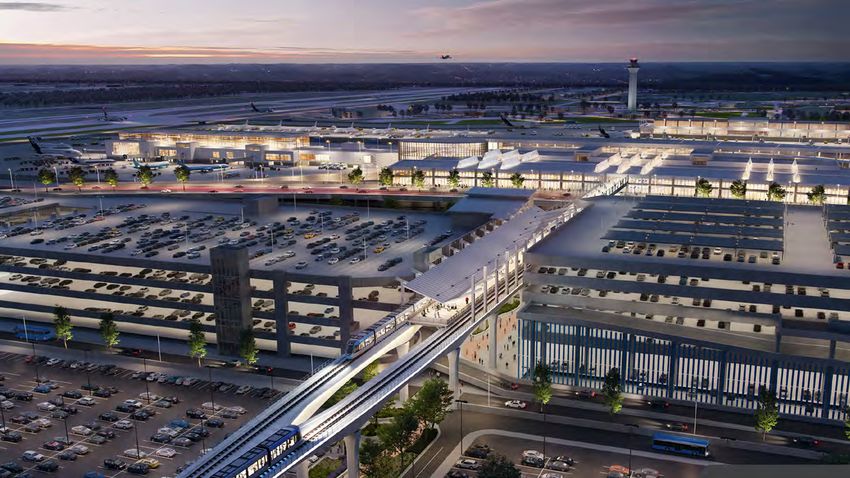
TABLE OF CONENTS
03........BOARD OF DIRECTORS
04........ATP SENIOR LEADERSHIP
05........INTRODUCTION & OVERVIEW
     06........MESSAGE FROM THE EXECUTIVE DIRECTOR
     08........AGENCY OVERVIEW
     11........AGENCY ORGANIZATIONAL CHART
     12........PROJECT CONNECT
     15........BUDGET HIGHLIGHTS
19........OPERATING BUDGET
26........CAPITAL BUDGET
32........APPENDIX
     33........OPERATING FUND SUMMARY
     34........ANTI-DISPLACEMENT FUND SUMMARY
     35........FINANCIAL POLICIES
     41........BUDGET PROCESS
     43........GLOSSARY & ACRONYMS

                                                     2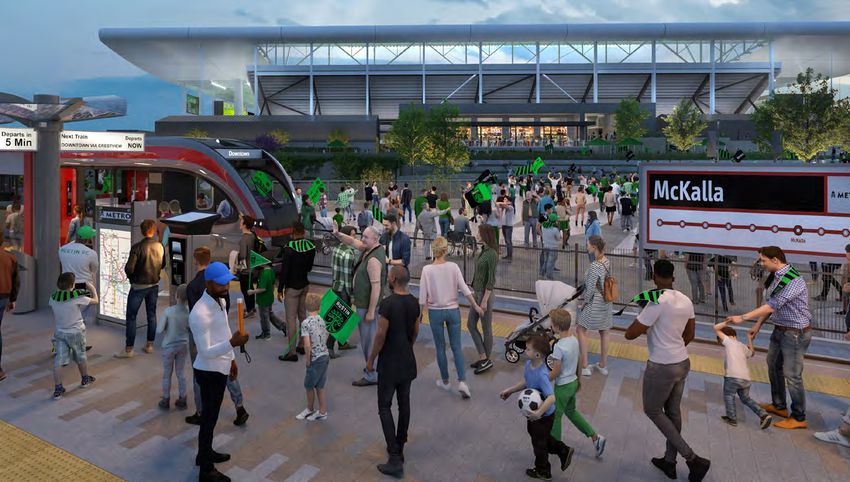
BOARD OF DIRECTORS

 Veronica Castro      Dr. Colette        Mayor
   de Barrera      Pierce Burnette    Steve Adler
   Board Chair        Vice Chair     Board Member

  Eric Stratton     Tony Elkins      Gina Fiandaca
 Board Member      Board Member        Ex-Officio

                                                     3
ATP SENIOR LEADERSHIP

                       Randy Clarke
                     Executive Director

          Dave Couch                Peter Mullan
         Chief Program          Chief of Architecture
             Officer              & Urban Design

          Greg Canally             Casey Burack
      Chief Financial Officer    General Counsel &
      & Chief Development       Chief Administrative
              Officer                  Officer
                                                        4
INTRODUCTION & OVERVIEW
06 MESSAGE FROM THE EXECUTIVE DIRECTOR
08 AGENCY OVERVIEW
11 AGENCY ORGANIZATIONAL CHART
12 PROJECT CONNECT
15 BUDGET HIGHLIGHTS

                                         5
MESSAGE FROM THE EXECUTIVE DIRECTOR
AUSTIN TRANSIT PARTNERSHIP BOARD,
I am very pleased to present to you the first full year, annual budget for the Austin Transit
Partnership, an independent organization created jointly by the City of Austin and the Capital
Metro Transportation Authority (Capital Metro) to implement Project Connect, the transformative
transit expansion plan for our community.

With a 2020 population of just over one million residents, Austin is now the 11th largest city in
the country, just behind San Jose, California. Austin will soon be among the ten largest cities in
the country, and its growth is expected to continue–the Austin Chamber of Commerce projects
that the Austin MSA will grow by 27.6% over the next decade. Fortunately, Austin citizens have
long recognized the need to adequately fund public services, and they responded affirmatively
last November to the plans to strengthen our transportation infrastructure—58% of Austin voters
approved Project Connect.

Leading up to the 2020 election, the Capital Metro and the City engaged with community
members and other stakeholders to develop and refine the Project Connect system plan,
to ensure it will meet Austin’s needs for faster and more reliable transportation and will
improve access to essential services, such as education, healthcare, shopping, childcare,
and employment. These needs are especially prevalent in historically underserved and
unrepresented communities, and Project Connect will allow the whole community to benefit from
these investments.

While our organization is still developing, we have already achieved some remarkable milestones
since the agency’s incorporation in December 2020.
• The governance structure has been established and our Board
  and advisory committee members selected;
• A talented staff with the experience, expertise, and commitment to implement
  Project Connect has been or is in the process of being recruited;
• The first Project Connect enhancements—neighborhood circulators in the
  Dessau, South Menchaca, and North Oak Hill neighborhoods—are online;
• The FTA has accepted our light rail projects into Project Development,
  a major step towards an eventual grant award;
• The Expo and Pleasant Valley Rapid Bus Transit projects have been included
  in the U.S. Department of Transportation’s FY22 Annual Report on Funding
  Recommendations and recommended for funding in President Biden’s FY22 Budget;
• Multiple ILA agreements between the City, Capital Metro, and
  ATP have been negotiated and approved; and,

                                                                                                     6
MESSAGE FROM THE EXECUTIVE DIRECTOR
• Work has begun on many important aspects of project delivery, such as
  creating the Real Estate Acquisition Management Plan (RAMP) and developing
  the contractual and technical specifications for the rolling stock.

Shifting our gaze to the next 12 months, we will continue to advance
Project Connect initiatives through the design phase.
• Our light rail projects are on course to reach 30% design and complete the
  environmental impact statement by the end of the next fiscal year;
• Procurements supporting Expo and Pleasant Valley BRT projects—vehicles
  and charging infrastructure, IDIQ contracts for construction, and shelter
  design and fabrication—to be awarded over the next four months;
• Design work to be completed this Fall for both projects with groundbreakings
  in December 2021 for Expo and January 2022 for Pleasant Valley;
• Work will progress on the RAMP, which is a required part of the FTA approval process,
  and our real estate team will be identifying opportunities for early acquisitions;
• Procurement will be working with all aspects of ATP to issue a Request for
  Proposal for our rolling stock and to procure required professional services
  contracts—such as acquisition, relocation, surveying, property management,
  appraisal, title, closing, legal, financial advisory, and depository services; and,
• ATP will move into full operations with the continued hiring of agency staff, the
  remodel of our dedicated Project Connect Program office, and the configuration and
  implementation of core financial, human resources, and project management software.

Looking back over these last few months, and the years leading up to the November election,
I feel an immense sense of pride on what we have accomplished. I am also grateful to all who
have worked so hard to help launch this transformative effort. Our efforts and those of our
partners, the City and Capital Metro, will provide the transportation infrastructure, facilities, and
services that will greatly enhance the mobility of Austin residents and their neighbors. While
there will be challenges ahead, we look forward to partnering with you, the board, and the
community on this transformative program.

Sincerely,

Randy Clarke
Executive Director
                                                                                                        7
AGENCY OVERVIEW
On November 3, 2020, Austin voters approved Proposition A, which provided a dedicated
revenue stream through an increase in the property tax rate to fund Project Connect. The ballot
proposition also authorized an independent board to oversee and finance the acquisitions,
construction, equipment, and operations and maintenance of the transit system. In anticipation
of a successful election, Capital Metro and the City authorized the execution of an interlocal
agreement creating the Austin Transit Partnership. ATP’s Articles of Incorporation were signed
by the Secretary of State on December 23, 2020, establishing ATP as an independent local
government corporation, and operations began on January 1, 2021.
The bylaws of ATP, as approved by both the City and Capital Metro, established a 5-member
board jointly appointed by members of the Capital Metro board and City Council. Three members
are to be community experts in the fields of finance, engineering and construction, and
community planning or sustainability. Austin City Council and Capital Metro board shall each have
one representative. The ATP board is responsible for oversight of design, construction, financing,
and implementation of Project Connect projects, in accordance with the Project Connect map and
associated sequencing plan that was approved by the City and Capital Metro, and in partnership
with the City and Capital Metro.
PA R T N E R S H I P
Orange Line MetroRapid Transit Supportive
Blue Line MetroExpress Anti-Displacement
Tunnel Pickup Investments
Green Line - Ph. 1 Customer Technology Upgrades
Facilities Red Line Improvements
8AGENCY OVERVIEW
INTEGRATED FINANCIAL MODEL
Revenues dedicated to funding the project include funds from the City of Austin, Proposition A,
Capital Metro, federal grants and fare revenues from operations. The revenues will be utilized to
fund multiple project elements including construction costs, operating and maintenance, ongoing
state of good repair investments, and debt service. The individual revenues are not dedicated to
one type of project expenditure, rather there is flexibility to utilize the funding for the range of
costs that will be necessary to construct and operate the project.
The City’s contribution will be approximately 20% of the operations and maintenance property tax
revenue collected by the City as approved by voters in November 2020. Capital Metro will provide
sales taxes, capital funds, fare revenues and Park & Ride revenues. The revenues are anticipated
to begin in different years, with an early capital contribution in 2021 and sales taxes beginning in
2023.
FUNDING
City of Austin Capital Metro FTA
Funding Funding Grants
AUSTIN TRANSIT PARTNERSHIP
Financing of
Capital Costs
Revenue Federal
Pay as You Go
Bonds Loans or TIFIA
Federal grants are expected to be provided through FTA’s Capital Investment Grant Program
(CIG) utilizing both New Starts and Small Starts grants. New Starts grants are for fixed guideway
projects exceeding $300 million in size and requesting greater than $100 million in grant funds.
Small Starts grants are for transit projects under $300 million in size with a request for less
than $100 million. Fixed guideway includes light rail, heavy rail and bus rapid transit projects,
which have their own right of way. It is currently assumed that New Starts grant funding would
be procured for the Orange and Blue Lines (including tunnel elements). Small Starts funding is
assumed for the MetroRapid projects.
9AGENCY OVERVIEW
ATP will fund construction of Project Connect elements through cash, known as pay-as-you-go
financing, the issuance of revenue-backed bonds, and federal loans secured through the TIFIA
loan program. ATP will also pay Capital Metro for the operations and maintenance of transit
enhancement.
Project expenditures have been previously established with the approval of the sequencing
plan. This plan guides and informs all aspects of ATP’s operations, including development of the
annual budget.
PROJECT CONNECT SEQUENCE PLAN
YEARS
1 2 3 4 5 6 7 8 9 10 11 12 13
LIGHT RAIL
Orange Line (LRT)
Blue Line (LRT)
METRORAIL
Red Line (Commuter Rail)
Green Line (Commuter Rail)
METRORAPID
Phase I
Gold Line (Complete NEPA)
METROEXPRESS / PARK & RIDES
METROBUS / METROACCESS
CUSTOMER TECH SYSTEMS
ANTI-DISPLACEMENT INVESTMENTS $100 million $100 million $100 million
NEPA / Preliminary Engineering Final Design / Procurement Construction / Commissioning
10AGENCY ORGANIZATIONAL CHART
ATP LEADERSHIP
Randy Clarke
Executive Director
Casey Burack Greg Canally
Dave Couch Peter Mullin General Counsel Chief Financial Officer
Chief of Architecture & Chief Development
Chief Program Officer & Chief Administrative
& Urban Design Officer
Officer
John Rhone Vacant Brandon Carr Diane Siler
Deputy Program Director of Architecture
Deputy Counsel Budget Director
Officer & Urban Design
Jennifer Pyne Jackie Nirenberg
Senior Director for
Juliana Harris Vicky Redrick
Director of Human Resources
Project Controls, Community Engagement Procurement Director
Director
Risk & Federal Processes
Courtney Chavez Alex Gale
Equity & DBE Director Real Estate Director
Vacant
Treasurer
Vacant
Controller
11PROJECT CONNECT
12PROJECT CONNECT
DESCRIPTION OF PROJECT CONNECT
Project Connect is a transformative public transit program that will bring many firsts to Austin.
The program, adopted by voters in November 2020, is designed to increase connectivity to
more neighborhoods in the Austin metro area and will make Austin one of the most equitable,
sustainable, and innovative areas of the country.
Highlighted elements of Project Connect:
• LIGHT RAIL - The backbone of Project Connect is a light rail system consisting of two primary
lines. The Orange Line starts at the North Lamar Transit Center, travels south through
downtown and along South Congress Avenue to Stassney Lane. The Blue Line will travel
from downtown, through Travis Heights, and east on Riverside Drive to Austin-Bergstrom
International Airport.
• REGIONAL RAIL - Enhancements on the Red Line are also scheduled, with additional track
planned to increase capacity and safety, as well as new stations, including a station at Q2
Stadium that will open in 2023.
• DOWNTOWN TRANSIT TUNNEL/HUB - Light rail will travel below street level through the
downtown transit tunnel, separating light rail from traffic at street level. Key to the safety,
connectivity, and on-time performance of the entire system will be the downtown transit hub,
an underground concourse connecting the Convention Center/Brush Square, Rainey/MACC,
Congress Avenue, and Republic Square light rail stations. Riders will be able to connect
to both the Orange and Blue light rail lines (which will travel below downtown in subway
tunnels), the Red Line regional rail and many bus routes through the downtown transit hub.
• ENHANCED BUS SERVICE - Project Connect includes four new MetroRapid routes to enhance
frequency. The plan also envisions a zero-emissions bus fleet, and the agency has already
completed an electric bus charging yard in North Austin.
• PARK AND RIDES - Nine new Park & Rides and one new regional transit center will be
funded, enabling riders from the greater Austin area to connect efficiently to the transit
system.
• NEIGHBORHOOD CIRCULATORS - On-demand pickup and drop-off service within geographic
zones offer connections into the transit system.
13PROJECT CONNECT LEANDER
To Georgetown
45
TOLL
Pflugerville
Pickup Zone
LAKELINE
Howard Ln Stoney
325 Creek
HOWARD LIGHT RAIL
Walnut Creek METROEXPRESS
TECH RIDGE Park
Orange Line
Metro Park PARMER Current MetroExpress
TRANSIT CENTER
Potential Future Extension Future MetroExpress
PARMER
ACC Blue Line ADDITIONAL AVAILABLE SERVICES
Northridge BRAKER LN BRAKER MetroAccess
METRORAIL
BROADMOOR/DOMAIN
Red Line MetroBike
INITIAL INVESTMENT | August 2021 SOUTHEND KRAMER Green Line
Potential Future Extension CURRENT PARK & RIDE
PROPOSED PARK & RIDE
ACC HIGHLAND TO T ECH RIDGE
MCKALLA
METRORAPID
Gold Line CIRCULATOR (PICKUP)
Enhanced MetroRapid Route APPROXIMATE ZONE LOCATION
Metric Bl
To Georgetown RUTLAND Potential Future Extension
POTENTIAL TUNNEL LOCATION
Leander
Pickup Zone METROBUS
TRANSFER Rundberg Ln
2 Current Frequent SCHEMATIC MAP
LEANDER Local Routes
RUNDBERG
325 POINT NOT TO SCALE
CROSSROADS 45
TOLL
Pflugerville
Pickup Zone
Bur
LAKELINE
FOUR POINTS OHLEN To Hutto 325
NORTH LAMAR
net
Walnut Creek
Pickup Zone RE 10
Stoney D TRANSIT CENTER
Rd
Howard Ln
325 Creek
NORTHCROSS
LI Manor
DELCO CENTER
NE
N Lamar Bl
HOWARD Walnut Creek TECH RIDGE Park Pickup Zone
Metro Park PARMER TRANSIT CENTER
ELGIN
PARMER
ACC
BUR CHACA LL
AND
Northridge BRAKER LN
St Johns Ave
M E NO A K H I
BRAKER
300 MANOR
d
BROADMOOR/DOMAIN Dessau
or R
130
NET
SOUTHEND KRAMER
Pickup Zone
LOOP 360 CRESTVIEW TOLL
SPRINGDALE
Man
TO
Emma SHOPPING
ACC HIGHLAND TO T ECH RIDGE
MCKALLA
Long CENTER
WILDHORSE
Metric Bl
RUTLAND Metro
Park WHELES
Rundberg Ln ALLANDALE KOENIG
325
RUNDBERG
CROSSROADS HIGHLAND
51st St
NORTH 300 WESTMINST
LOOP
GREEN LINE
Burn
FOUR POINTS OHLEN 325 LBJ PHILOMENA
NORTH LAMAR 10 High School
TRIANGLE
RE
et R
D TRANSIT CENTER TEXAS HEALTH CLARKSON BERKMAN/
LI DELCOCOMMISSION
7
d
NORTHCROSS NE CENTER MUELLER
N Lamar Bl
Bl
HYDE HANCOCK
LK
PARK
BUR CHACA L
AND
300 St Johns Ave
M
M E NO A K H IL
AIRPORT
d
or R
SPRINGDALE 38½ St
NET
LOOP 360 CRESTVIEW BLVD
SHOPPING
Man
CENTER Seton HEMPHILL
TO
Emma
COLONY PARK 337
Hospital PARK ST. DAVID’S
Ex
Lamar Bl
Long NE ATX
337 COLONY
20
po
Metro
Dr
Pickup Zone PARK TOWN UT 2
sit
EXPO
San Jacinto Bl
WHELESS
gs
Park CENTER
ALLANDALE KOENIG EAST 300
rin
ion
337
335 University EXPO LAFAYETTE
Sp
HIGHLAND
Bl
LOYOLA/ of Texas CENTER
k
51st St
UT/WEST MALL
Oa
NORTH 300 WESTMINSTER JOHNNY
LOOP LOOP MORRIS MLK
TRIANGLE PHILOMENA
360 MLK DECKER
TEXAS HEALTH CLARKSON BERKMAN/ MEDICAL
7 ACC
LK
COMMISSION MUELLER SCHOOL
M
EASTVIEW
Enfield Rd
Bl
HYDE HANCOCK DOWNTOWN AREA Dell Seton
LK
PARK 7 10
M
38½ St AIRPORT Hospital
BLVD
Seton HEMPHILL CAPITOL 2
Hospital PARK ST. DAVID’S EAST GOVALLE
Ex
Lamar Bl
20 GOV’T CENTER/ COMAL
po
Dr
RED
UT BUD 2 130
sit
San Jacinto Bl
CAPITOL WEST
gs
EAST
EAST 300 TOLL
rin
ion
335 University LAFAYETTE US 183
Sp
TRINITY Huston-Tillotson
Bl
of Texas
5TH/6TH WEBBERVILLE 4
k
UT/WEST MALL
Oa
5TH/6TH University
LOOP MLK East ATX
Pickup &
& LAMAR CONGRESS
360 MEDICAL W LYNN
Zone
AVE
LK
SCHOOL ACC PLEASANT VA
M
Enfield Rd EXPOSITION
Dell Seton EASTVIEW CROSSTOWN
7 10 Hospital
CONV. CENTER/ PLAZA SALTILLO CESAR CHAVEZ
CAPITOL 2 SPRINGDALE REPUBLIC
Exposition
Pickup Zone EAST GOVALLE SQUARE BRUSH SQUARE 17
RED BUD
GOV’T CENTER/ COMAL Cesar Chavez St
Lake Austin CARTS EASTSIDE
S Lamar Bl
CAPITOL WEST Lady Bird RAINEY/
TRINITY Huston-Tillotson
BUS PLAZA Lake MACC
5TH/6TH WEBBERVILLE 4 Long
5TH/6TH & LAMAR CONGRESS
University Zilker
& W LYNN AVE Center AUDITORIUM Roy G. Guerr
CROSSTOWN
ParkVALLEY
PLEASANT SHORES
EXPOSITION
WATERFRONT CO River Par
REPUBLIC CONV. CENTER/ PLAZA SALTILLO CESAR CHAVEZ 7
SQUARE BRUSH SQUARE 17
LAMAR LAKESHORE
GOLD
Cesar Chavez St
LINE
Lake Austin SQUARE 20
S Lamar Bl
Lady Bir
d LakeRAINEY/ Rive
MACC rsid
Zilker Long e Dr Rive
Park Center AUDITORIUM
SHORES
Roy G. Guerrero 10 TRAVIS
S Congress Ave
CO River Park
7 WATERFRONT SOCO HEIGHTS LAKESHORE RIVERSIDE
LAMAR LAKESHORE 17 To Bastrop
GOLD
S 1st St
LINE
SQUARE 20 Rive ACC 311
Burton Dr
rsid
e Dr Riverside Bastrop Hwy
10 TRAVIS
7 FARO
OLTORF WEST
S Congress Ave
SOCO HEIGHTS RIVERSIDE
LAKESHORE 20
OLTORF
S 1st St
BLUE LINE AUS
Burton Dr
7 MENCHACA FARO MONTOPOLIS METROCENTER 300 OLTORF EAST
OLTORF WEST (TEMPORARY NAME)
B Austin-
Gr art
PLEASANT VALLEY
ORANGE
Parker Ln
Bergstrom
MENCHACA ee on 300 OLTORF EAST
Bl
LINE
B International
OLTORFnb Cr
Montopolis Dr
ar
Gr art
PLEASANT VALLEY
Airport
Parker Ln
m
ee on el ee
Bl
La
nb Cr t k
ar
S
BRODIE
m
el ee
ST EDWARD’S
La
t k
OAKS
S
BRODIE
OAKS ST EDWARD’S
St Edward’s
7
St Edward’s
7
University
Pa
North Oak Hill University
TODD LN
Pa
LAMAR/ TODD LN
n
Pickup Zone
n
311 Ben White Bl
th
th
WESTGATE Ben White Bl
er
er
Tr
Tr
l
WESTGATE
l
SOUTH CONGRESS WESTGATE
WESTGATE TRANSIT TRANSIT CENTER ST. ELMO SOUTH CONGRESS
CENTER
WESTGATE TRANSIT TRANSIT CENTER ST. ELMO
CENTER
ORANGE
BRODIE
McKinney
LINE
West Gate
OAK 10
HILL ACC BRODIE Falls
Blvd
South Austin State
West Gate
OAK STASSNEY 10
TO BURNET
MENCHACA
Stassney Ln ACC
Park
HILL
Blvd
311 DOVE SPRINGSSouth Austin
STASSNEY
TO BURNET
MENCHACA
Stassney
WILLIAMLn
CANNON EAST
S 1st St
311 DOVE SPRINGS
William Cannon Dr 7 130
333 TOLL
WILLIAM CANN
S 1st St
CHERRY CREEK WILLIAM CANNON
333
MCKINNEY FALLS
10 SLAUGHTER William Cannon Dr 7
TRANSIT CENTER Thaxton Rd 333
TANGLEWOOD
CHERRY CREEK WILLIAM CANNON
WILDFLOWER 333 GOODNIGHT
Southpark 333 To Lockhart
Meadows
South Menchaca To San Marcos
Pickup Zone Map represents 15-percent design of program. 10 SLAUGHTER
TRANSIT CENTER T
TANGLEWOOD
WILDFLOWER
GOODNIGHT
Southpark
Meadows
14
To San MarcosBUDGET HIGHLIGHTS
15BUDGET HIGHLIGHTS
FY2021-2022
ATP’s total operating and capital budget for FY 2021-2022 is $312.2 million, with more than 85%
of the budget funding Project Connect capital projects and an additional 13%, or $42 million,
budgeted for transit-supportive anti-displacement investments. This is a $215.3 million increase
from the prior fiscal year, which started in January 2020.
FY21 vs FY22 BUDGET COMPARISON FY21 Budget - $96.9M FY22 Budget - $312.2M
$300M
$266.5M
$250M
$200M
$150M
$100M
$65.2M
$42M
$50M $23M
$8.7M $3.7M
$0M
CAPITAL OPERATING ANTI-DISPLACEMENT INVESTMENTS
SOURCES OF FUNDS
The property tax revenue is
FY21 Budget - $209.7M
increasing 6% over the previous FY21 vs FY22 REVENUE COMPARISON
FY22 Budget - $176.9M
year’s budget and represents
approximately 20% of the total $300M
O&M property tax collected by $250M
the City of Austin. ATP’s FY22 $200M
$144.7M $153.5M
revenue is projected to be $176.9 $150M
million, a decline of $32.8 million $100M
$65M
from the FY21 budget due to $50M $23.4M
a planned decrease of Capital $0M
PROP A PROPERTY TAX CAPITAL METRO
Metro contributions from $65
million to $23.4 million. The FY21
contribution included a one-time transfer of funds set aside over the course of the last few years
in anticipation of advancing Project Connect. The contribution level for FY22 represents the
normalized annual amount expected from Capital Metro over the forecast horizon.
16BUDGET HIGHLIGHTS
PAY AND BENEFITS
Staff are ATP’s most valuable resource — without a dedicated, expert staff, the goals of Project
Connect would not be possible. In order to recognize and care for our staff, ATP provides a
standard pay and benefits package. The FY22 budget also includes $258,000 for a 3% wage
increase planned for January 2022. Total pay and benefits for FY22 is $15.2 million.
STAFFING
FY21 saw incredible growth throughout ATP. During the past six months, 37 staff members of
the original 42.5 FTEs budgeted have been hired or seconded from Capital Metro. As the agency
continues to build out capacity, additional staff will be added. In FY22, the budget estimates 42
new positions will be needed throughout the organization including community engagement;
project oversight; legal, financial, and procurement services; architecture and urban design; and
project delivery.
REAL ESTATE AND RIGHT-OF-WAY
The FY22 Budget includes funding for a consultant to provide real estate acquisition, relocation,
surveying, property management, appraisal, title and closing services as well as funds for
potential early acquisition of parcels. Real estate staff will complete the Real Estate Acquisition
Management Plan required for FTA approval and will continue to work with City of Austin, Travis
County, and State entities on real estate coordination for right-of-way and real estate needs.
17BUDGET HIGHLIGHTS
CONTRACTS
Throughout the remainder of this fiscal year and into FY22, procurement staff will be soliciting
bids for a number of administrative and professional services, including real estate, legal,
human resources, financial advisory and risk, debt issuance, banking and auditing. By the
second quarter of next fiscal year, a request for proposals for rail vehicles will be issued, after
establishing technical specifications. The budget also includes funding for the existing project
management and design and engineering contracts as well as new contracts necessary for
surveying, project controls, general engineering, and general planning services.
CAPITAL
For FY22, the total capital budget is $266.5 million, which includes work in all areas of Project
Connect. The light rail system, including the tunnel under Lady Bird Lake and downtown, will
finish conceptual design this fiscal year and is on target to reach 30% design by the end of the
next fiscal year. Both the MetroRapid Pleasant Valley and Expo projects have been included in
the U.S. Department of Transportation’s FY22 Annual Report on Funding Recommendations and
recommended for funding in President Biden’s FY22 Budget, and Capital Metro and ATP are
coordinating with FTA to pursue Small Starts Grant Agreements under the CIG program. McKalla
Station, which will support the new Q2 Stadium, is scheduled to begin construction in 2022.
Design work on Park & Ride locations supporting the MetroRapid, MetroExpress and light rail
lines along with the build-out of electrification infrastructure will begin, moving the projects into
development.
FINANCIAL POLICIES
Along with the board’s adoption of the FY22 Budget, ATP’s foundational set of financial policies
will also be approved establishing sound financial management practices based on industry
best practices. The financial policies will help to ensure the thoughtful, cautious, and pragmatic
oversight of the agency’s financial resources. Included are 20 policies covering accounting,
budget, purchasing, reserves, investments, and debt.
18OPERATING BUDGET
19OPERATING BUDGET
OPERATING BUDGET OVERVIEW
On November 3, 2020, Austin voters approved Proposition A, which increased property tax
revenue to fund the Project Connect transit system. The proposition dedicated additional revenue
raised by the increased tax to an independent board that oversees and finances the acquisition,
construction, equipping, and operations and maintenance of the transit system.
ATP’s operating budget comprises five main components: a transfer to the capital budget to fund
projects, the transit-supportive anti-displacement funding included in the proposition, a transfer
to Capital Metro for system operations, administrative services and an operating contingency.
FY22 ATP SOURCES OF FUNDS FY22 ATP USES OF FUNDS
Capital Metro Transfer to
$23.4M, 13% Anti-Displacement
Investments Fund
Transfer $42M, 13%
Prop A to Capital Transfer for
Property Tax $266.5M, 86% CapMetro Operations
$153.5M, 87% $2.2M, 1%
Administrative Expenses Operating Contingency
$453K, 0% $1M, 0.5%
FY22 marks the first full budget year for ATP, which was incorporated in December 2020. The
FY21 budget comprised the nine-month period of January through September 2021. While FY21
budgeted and estimated amounts are included in the charts and tables throughout the document,
true comparisons will be difficult given the unusual fiscal year duration. In addition, FY21 was a
transitionary period focused on start-up and capacity building and does not represent the costs
associated with a fully operational organization. Likewise, since ATP is a new entity, data prior
to FY21 is not available. Future budgets will benefit from continued operations with the added
ability for trend analysis and year-over-year comparisons.
20OPERATING BUDGET
REVENUE
ATP’s FY22 revenue is projected to be $176.9 million, a decline of $39.1 million from expected
FY21 revenue due to a planned decrease of Capital Metro contributions from $66.7 million to
$23.4 million. The FY21 contribution included a one-time transfer of funds set aside over the
course of the last few years in anticipation of advancing Project Connect. The contribution
level for FY22 represents the normalized annual amount expected from Capital Metro over the
forecast horizon.
Revenue FY21 Approved Budget FY21 Estimate FY22 Proposed Budget
Proposition A Property Tax 144,700,746 149,252,756 153,549,067
Capital Metro 65,000,000 66,749,749 23,365,670
Total Revenue 209,700,746 216,002,505 176,914,737
With the approval of Proposition A, voters authorized an increase in the ad valorem tax rate
of $0.0875 per $100 valuation in the City of Austin for the current year. In FY21, that revenue
is estimated at $149.3 million. In FY22, property tax revenue is expected to increase by $4.3
million, or 2.9% from the prior year. It should be noted that per State law, revenue collected can
only increase 3.5% over the previous year. Additional revenue is generated from new properties
added to the tax roll.
The timing and process for the City’s transfer of property tax revenue to ATP is governed by the
interlocal agreement with the City for transfer of property tax revenue, which was approved
by the ATP board on June 16, 2021 and the Austin City Council on July 29, 2021. Included in the
agreement is the apportionment formula the City will use to determine the share of tax revenue
to transfer to ATP, which equals 20.789% of total M&O revenue collected less allowances for
previously-approved tax increment reinvestment zones, homestead preservation zones and
economic incentive agreements.
21OPERATING BUDGET
EXPENDITURES
The FY22 expenditure budget is $312.2 million, which represents a significant increase over
FY21, ATP’s abbreviated initial year, as was anticipated in the sequencing plan. The most
significant driver of the increase is the progression of transit projects through planning into
development and construction. The increase also reflects the planned expansion in funding for
Anti-Displacement Investments and the continued build out of the administrative functions.
Expenditures FY21 Approved Budget FY21 Estimate FY22 Proposed Budget
Transfer to Capital 65,176,909 46,601,845 266,500,000
Transfer to the
Anti-Displacement 23,000,000 23,000,000 42,000,000
Investments Fund
Transfer for
2,361,622 2,361,622 2,219,117
CapMetro Operations
Operating Contingency 0 0 1,000,000
Administrative Expenses 6,352,118 251,219 452,909
Total Expenditures 96,890,649 72,214,685 312,172,026
TRANSFER TO CAPITAL
The $266.5 million budgeted for capital represents the planned spending on all capital projects
for FY22. Because all the revenue for FY22 is recorded directly into the Operating Fund, a
transfer into capital is needed to fund project expenditures. On the capital ledger, the funding
source is shown as cash. Details on the capital projects can be found in the Capital Budget
section.
TRANSFER TO ANTI-DISPLACEMENT INVESTMENTS FUND
The funding approved on November 3, 2020 via Proposition A included $300 million to prevent
transportation investment-related displacement and ensure people of different incomes can
benefit from the transportation investment. Per an ILA between ATP and the City, funds will be
provided to the City on a reimbursement basis to administer and implement the Project Connect
Anti-Displacement Programs. The City will use the funds:
• To acquire real property for transit supportive development that will preserve and/or increase
the amount of affordable housing proximate to the transit corridors, or
• For financing tools and other anti-displacement strategies related to the implementation of
Project Connect.
22OPERATING BUDGET
Funds are budgeted in accordance with the sequencing plan and as established in Exhibit B of
the ILA. The planned annual allotment of the $300 million in Anti-Displacement Funds is $23.0
million in FY21, $42.0 million in FY22, $35.0 million in FY23, and $20.0 million in the subsequent
10 years. Since the City has projected it will not expend any of the FY21 allotment of funds, that
$23.0 million will be available in FY22 along with the second-year allotment, bringing the total
available to the City to $65.0 million, which has been included in its annual budget.
Anti-Displacement Investments Fund Summary
FY21 Approved Budget FY21 Estimate FY22 Proposed Budget
Unspent Balance
0 0 23,000,000
from Prior Year
Transfer in from
23,000,000 23,000,000 42,000,000
Operating Fund
Transfer to City of Austin (23,000,000) 0 (65,000,000)
Unspent Funds 0 23,000,000 0
TRANSFER FOR CAPITAL METRO OPERATIONS
In 2019, PFM Financial Advisors developed the Project Connect Integrated Financial Model
in close collaboration with the City of Austin and Capital Metro. The model established the
viability of a financing plan predicated on a dedicated property tax revenue stream to back debt
issued by an independent entity and was adopted as part of the ILA creating ATP. The model
also recognized the revenue and operations costs associated with the Project Connect transit
investments. As transit enhancements come on-line, ATP will receive the fare revenue resulting
from those enhancements and provide support to Capital Metro for the additional operations
costs. By August, Project Connect will have rolled out three pickup zones for the Dessau, South
Menchaca, and North Oak Hill neighborhoods. The total funding transferring to Capital Metro for
the operations of these enhancements in FY22 will be $2.2 million.
23OPERATING BUDGET
ADMINISTRATIVE EXPENSES
ATP as an entity was created with a specific purpose: to oversee and finance the acquisition,
construction, equipping, and operations and maintenance for the transit system; and finance the
transit-supportive anti-displacement strategies related to Project Connect. As such, the majority
of the costs related to operating ATP, including staff, contracts, facility leases, office supplies,
and staff development, will be incorporated into an allocation plan and apportioned to the capital
projects. Non-allocable costs and overhead will be budgeted within the Operating Fund under
Administrative Expenses. In FY22, the total Administrative Expenses, net the portion allocated
to capital, is $0.5 million. A description of the cost allocation plan is included in the Indirect Cost
Allocation section of this document.
OPERATING CONTINGENCY
As a nascent organization, ATP is continually evaluating its organizational structure and funding
requirements. A $1.0 million contingency has been established to provide the agency with the
ability to make minor adjustments to spending and nimbly respond to unplanned expenditures
requirements.
FUND SUMMARY AND RESERVES
In FY21, $209.7 million in revenue and $96.9 million in expenditures were approved by the board.
The remaining balance of $112.8 million was reserved for future Project Connect costs. The
amounts have been updated to $216.0 million and $72.2 million, respectively, based on current
spending levels, bringing the total balance to be carried into FY22 to $143.8 million. In FY22,
expenditures are expected to outpace revenue by $135.3 million, requiring use of those reserved
funds. The funds reserved for future project commitments is expected to be $8.5 million.
ATP Operating Fund Summary
FY21 Approved Budget FY21 Estimate FY22 Proposed Budget
Balance from Prior Year 0 0 143,787,820
Total Revenue 209,700,746 216,002,505 176,914,737
Total Expenditures 96,890,649 72,214,685 312,172,026
Reserved for Future
112,810,097 143,787,820 8,530,531
Project Commitments
24OPERATING BUDGET
INDIRECT COST ALLOCATION
Indirect costs, or overhead, are charges that are not identified with a single department and are
used for more than one intended purpose.
ATP uses a simplified allocation procedure, as described in 2 CFR § 200 section B.2, because
the agency has only one major function: to oversee and finance the acquisition, construction,
equipping, and operations and maintenance of the transit system. As an agency, we are
responsible for the delivery of Project Connect’s set of capital projects. In simplified terms, ATP’s
cost allocation plan separates the total annual expenditures between direct and indirect costs.
Once the indirect cost pool is determined, those costs are equitability distributed to each of our
projects and activities.
ATP’s indirect, or overhead, costs include general and administrative costs directly related to
the corporate office and costs associated with the management and overseeing of the Project
Connect transit projects. They include labor, rent, utilities, computer software and maintenance,
supplies, equipment, staff development, and professional services. Also included are
reimbursements to Capital Metro and the City of Austin for support with accounting, marketing,
information technology, grant requirements, and the expediting of permit reviews. Costs are
allocated to each project and activity based on a proportionate share of total annual expenditures
incurred by those projects and activities.
INDIRECT COST ALLOCATION -- $31.7 MILLION
City & CapMetro Support
$5.2M
Salary & Benefits
$10.7M
Supplies & Equipment
$0.4M
Contracts
$8.2M Other
$0.9M
Leases/Rentals
$6.3M
25CAPITAL BUDGET
26CAPITAL BUDGET
CAPITAL BUDGET OVERVIEW
Unlike the operating budget, which appropriates funding annually, capital budget funds are
available until expended, typically over multiple years. The annual capital budget provides the
additional appropriations necessary to begin new, or continue existing, projects. The capital
budget funds major improvements and expansions of the agency’s facilities and infrastructure,
while the operating budget primarily funds the ongoing operations, including personnel,
professional services, office leases, and other overhead costs. Essentially, the capital budget
funds the total cost of acquiring or constructing an agency asset, including design, bidding,
project management, right-of-way acquisition, and construction.
For FY22, the capital budget is solely funded through a transfer from the operating budget. It is
planned that in the future, funding sources will expand to include revenue-backed debt, grants,
federal loans, and various other smaller revenue.
FY22 CAPITAL BUDGET -- $266.5 MILLION
Red Line
$13.5M, 5%
Facility Improvements
$25.5M, 9%
Orange Line
$92.8M, 35% Park & Ride
$10.0M, 4%
MetroRapid
$42.0M, 16%
Blue Line
$82.8M, 31%
27CAPITAL BUDGET
For FY22, the total capital budget is $266.5 million, which includes work in all areas of Project
Connect. The light rail system, including the tunnel under Lady Bird Lake and downtown, will
finish conceptual design this fiscal year and is on target to reach 30% design by the end of the
next fiscal year. Both the MetroRapid Pleasant Valley and Expo projects have been included in
the U.S. Department of Transportation’s FY22 Annual Report on Funding Recommendations and
recommended for funding in President Biden’s FY22 Budget, and Capital Metro and ATP are
coordinating with FTA to pursue Small Starts Grant Agreements under the CIG Program. McKalla
Station, which will support Q2 Stadium, is scheduled to begin construction in 2022. Design work
on Park & Ride locations supporting the MetroRapid, MetroExpress and light rail lines along with
the build-out of electrification infrastructure will begin, moving the projects into development.
Project Name FY22 Appropriation
Project Connect Program Management 27,000,000
Light Rail Orange Line 73,500,000
Light Rail Blue Line 63,500,000
Light Rail Tunnel 11,500,000
MLS Rail Station (McKalla) 13,500,000
MetroRapid Expo Center 11,000,000
MetroRapid Pleasant Valley 14,000,000
MetroRapid Menchaca-South Lamar 6,000,000
MetroRapid Gold Line 11,000,000
MR P&R Expo 2,000,000
MR P&R Pleasant Valley 2,000,000
MR P&R Menchaca/S Lamar & Gold Line 2,500,000
MetroExpress Park & Ride 3,500,000
MR In-Field Charging Expo 1,000,000
MR In-Field Charging Pleasant Valley 1,000,000
MR In-Field Charging Menchaca/S Lamar & Gold Line 3,500,000
Project Connect Facilities 20,000,000
Total Capital Budget 266,500,000
28CAPITAL BUDGET
LIGHT RAIL PROJECTS
A total of $175.5 million is being appropriated for the four light rail subprojects that comprise the
Orange and Blue Lines: $27.0 million for program management services, $73.5 million for the
Orange Line, $63.5 million for the Blue Line, and $11.5 million for the tunnel.
HDR, as the program manager/owner’s representative for Project Connect, augments ATP and
Capital Metro staff to successfully manage the program, provide NEPA compliance analysis and
documentation, secure Federal Transit Administration funding and work with partner agencies.
Tasks include help with scheduling, cost control, cost estimating, technical document review,
strategic communications, graphics, video and 3D visualizations, conceptual and preliminary
engineering, and alternatives analysis.
The Orange and Blue lines are progressing on parallel time schedules as defined through
the sequencing plan. The 15% draft design packages have been prepared; surveys have
been completed for the geotechnical boring locations for the tunnel; and all drilling has been
completed. The FY22 budget includes funding for design and engineering, environmental
compliance, project controls, utilities and surveys, and right-of-way acquisition.
METRORAIL RED LINE: MCKALLA STATION
The FY22 budget includes $13.5 million, ATP’s share of funding for McKalla Station, a new
regional rail station that will provide increased mobility and transit options for the North Burnet
area. Additional funds will be provided by Capital Metro. The station will be located adjacent
to Q2 Stadium, near Delta Drive, on the MetroRail Red Line between Braker Lane and Rutland
Drive. Currently, preliminary engineering and the environmental review is underway. Design is
anticipated to be complete by the end of the calendar year with groundbreaking occurring in
early 2022.
29CAPITAL BUDGET
METRORAPID PROJECTS
The FY22 Capital Budget includes $42.0 million for four new MetroRapid lines that will provide
the Austin community and visitors with alternate routes to get around the city. Plans for
MetroRapid include an all-electric expanded bus service, newly designed stations, and an
improved customer experience. The four proposed MetroRapid projects include:
• The Expo Center MetroRapid Project consists of an approximately 12-mile route along some
of the highest-ridership corridors in the Capital Metro system: Trinity Street, San Jacinto
Boulevard, Manor Road, and Loyola Lane. A total of 44 stations will be served throughout the
corridor, seamlessly connecting downtown Austin with northeast Austin.
• The Gold Line MetroRapid Project consists of a 6-mile route that would operate from Austin
Community College Highland Campus to Republic Square Park. The route will travel along
Airport, Red River, San Jacinto, Trinity, and 4th Streets and serve ten stations.
• The Menchaca/South Lamar MetroRapid Project consists of two extensions of the existing
MetroRapid 803 service to the south and southwest connecting both areas to downtown
Austin. The approximately 5-mile extension to Oak Hill would require seven new stations
along the US 290 frontage road, while the approximately 4.5-mile extension to Slaughter Lane
would follow Menchaca Road, also requiring seven additional stations. Both extensions would
bolster the current 803 service, which is one of CapMetro’s strongest-performing routes.
Both route branches would converge on S. Lamar Boulevard to downtown Austin for a total of
approximately 15.5 miles.
• The Pleasant Valley MetroRapid Project consists of an approximately 15-mile route along the
E. William Cannon Drive, Pleasant Valley Road, and Airport Boulevard corridors. Because this
route acts as a north-south spine east of I-35, extending transit coverage to the growing area
of southeast Austin, it represents one of the highest-ridership corridors in the Capital Metro
system. A total of 43 stations will be served throughout the corridor, improving mobility and
connectivity of several communities in east/southeast Austin between Mueller and Goodnight
Ranch.
30CAPITAL BUDGET
The $11.0 million and $14.0 million for Expo and Pleasant Valley, respectively, will be part of
the overall funding strategy that includes anticipated federal grant awards provided directly
to Capital Metro. Both projects have completed 30% design with 100% design projected to be
completed early 2022. Station construction is scheduled to begin winter 2021, and bus deliveries
begin mid-2022. Service is anticipated to begin in summer 2023.
Menchaca-South Lamar is currently in design phase, and staff is analyzing options for federal
funding. The line will be constructed in three phases. Phase 1 will include new Oak Hill and
Menchaca legs; Phase 2 will include replacing the fleet with electric buses; and Phase 3 will
include increasing frequencies to five minutes on the main corridor section to the Domain and 10
minutes on the extensions. The $6.0 million included in the FY22 budget will allow for completion
of design work and the start of station construction.
The Gold Line is also currently in design phase, and staff is evaluating project implementation
phasing. The FY22 budget has $11.0 million to complete design work and begin station
construction.
METROEXPRESS AND PARK & RIDE
Over the next three years, nine additional Park & Ride locations will be established: four for
MetroExpress routes — currently planned at Four Points, Loop 360, Oak Hill, and south MoPac
— and five for the new MetroRapid routes. The $10.0 million included in the FY22 budget
will primarily cover design, site improvement, construction, and real estate acquisition. The
completion of the Park & Rides will be coordinated with other route work and all projects are
anticipated to be completed in FY24.
PROJECT CONNECT FACILITIES
Because the MetroRapid lines will use an all-electric fleet, charging stations at or near the end
of each line are required. The FY22 budget includes funding of $5.5 million to begin design and
planning of the charging facilities. In addition, $20.0 million is included to start design work on
Project Connect maintenance facilities necessary to maintain the expanded transit system.
31APPENDIX
33 OPERATING FUND SUMMARY
34 ANTI-DISPLACEMENT FUND SUMMARY
35 FINANCIAL POLICIES
41 BUDGET PROCESS
43 GLOSSARY & ACRONYMS
32OPERATING FUND SUMMARY
ATP FY 2022 Operating Fund Summary
2021 Approved Budget 2021 Estimate 2022 Proposed Budget
Balance from Prior Year 0 0 143,787,820
Revenue
Prop A Property Tax 144,700,746 149,252,756 153,549,067
Capital Metro 65,000,000 66,749,749 23,365,670
Total Revenue 209,700,746 216,002,505 176,914,737
Total Funds Available 209,700,746 216,002,505 320,702,557
Expenditures
Transfer to Capital 65,176,909 46,601,845 266,500,000
Tranfer to Anti-Displacement
23,000,000 23,000,000 42,000,000
Investments Fund
Transfer for CMTA Operations 2,361,622 2,361,622 2,219,117
Operating Contingency 0 0 1,000,000
Administrative Expenses 6,352,118 251,219 452,909
Total Expenditures 96,890,649 72,214,685 312,172,026
Reserved for Future
112,810,097 143,787,820 8,530,531
Project Commitments
33ANTI-DISPLACEMENT FUND SUMMARY
ATP FY 2022 Anti-Displacement Investments Fund Summary
2021 Approved Budget 2021 Estimate 2022 Proposed Budget
Balance from Prior Year 0 0 23,000,000
Transfers In
Operating Fund 23,000,000 23,000,000 42,000,000
Total Revenue 23,000,000 23,000,000 42,000,000
Total Funds Available 23,000,000 23,000,000 65,000,000
Expenditures
Transfer to City of Austin 23,000,000 0 65,000,000
Total Expenditures 23,000,000 0 65,000,000
Balance 23,000,000
34FINANCIAL POLICIES
OVERVIEW
The Government Finance Officers Association considers the adoption of financial policies
to be a best practice in that they “are central to a strategic, long-term approach to financial
management.” Specifically, well-written policies can institutionalize good financial management
practices, help the organization avoid unnecessary risk, support favorable bond ratings, which in
turn reduce the cost of borrowing, and clearly communicate the policy framework within which
staff is working.
ACCOUNTING POLICIES
1. A
TP will establish accounting practices that conform to generally accepted accounting
principles as set forth by the authoritative standard-setting body for not-for-profit entities.
2. A
TP’s annual financial report will be audited by an independent certified public accounting
firm and will be issued no later than six months following the end of the fiscal year. ATP’s
report will include a Statement of Net Position; a Statement of Revenues, Expenses, and
Changes in Net Position; a Statement of Cash Flows; Notes to the Financial Statements; the
Auditor’s Opinion; and other information as required.
3. The audit firm will report the results of the annual audit to ATP’s Finance and Risk Advisory
Committee within 60 days after the issuance of the annual report. The Chief Financial Officer
will ensure the timely resolution of audit recommendations as applicable.
4. T
he Internal Auditor shall be responsible for conducting financial and performance audits. The
Executive Director shall be responsible for establishing a process to ensure timely resolution
of audit recommendations.
5. C
apital assets shall be recorded at cost and depreciated over their useful lives using the
straight-line method.
6. All grants and other federal and state funds will be managed to comply with the laws,
regulations, and guidance of the grantor.
7. G
rant revenue will be recognized when all eligibility requirements have been met. The grantor
will retain a reversionary interest in the capital asset over the estimated useful life of that
asset.
35FINANCIAL POLICIES
BUDGET POLICIES
8. A
five-year financial forecast will be prepared annually, projecting revenue and expenditures.
The forecast will be used as a planning tool in developing the following year’s budget.
9. T
he board shall adopt an annual operating budget and capital budget no later than its
September board meeting immediately preceding the start of the fiscal year. The proposed
budget will be made available for public review at least 21 days prior to the board meeting.
10. B
udget accountability rests primarily with individual departments. Department directors
will review budget variances on a quarterly basis with ATP’s Budget Director. Significant
budget variances will be further evaluated by the Budget Director and the responsible chief
to determine whether remedial action is required. If remedial action is required, the Budget
Director will make recommendations to the Chief Financial Officer/Chief Development Officer
to address the variance.
11. Q
uarterly reports on year-to-date spending compared to budget will be provided to the
Board; such reports will be reported no later than 45 days after the end of each quarter, with
the 4th Quarter report reported no later than 60 days after the end.
RESERVE AND CONTINGENCY POLICIES
12. R
eserves and contingencies may be set aside periodically for specific future purposes. The
Chief Finanical Officer shall develop procedures for utilization of such reserves.
PURCHASING POLICIES
13. A
TP shall have and maintain a procurement policy, to be approved by the board, that is
consistent with all applicable local, state, and federal statues, and:
a. P
rovides for public confidence in the integrity, fairness, and accountability of ATP’s
procurement system.
b. E
nsures the fair and equitable treatment of all persons who deal with the procurement
system of ATP.
c. P
romotes contracting opportunities for all Disadvantaged Business Enterprises (DBEs),
Minority-Owned Business Enterprises (MBEs), and Women-Owned Business Enterprises
(WBEs), both as prime contractors and subcontractors.
d. Fosters full and open competition.
e. M
eets the customer’s needs in terms of cost, quality, and timeliness of the delivered
product or service.
36FINANCIAL POLICIES
f. P
romotes positive relationships through courtesy and impartiality in all phases of the
procurement process.
g. H
andles confidential information or proprietary information with proper consideration of
the ethical and legal ramifications of disclosure.
h. M
aintains the integrity of ATP’s procurement system.
i. P
rovides for the timely, impartial resolution of all procurement issues.
j. P
rovides increased efficiency and effectiveness in ATP’s procurement activities, thereby
exercising good stewardship of public funds and maximizing, to the fullest extent possible,
the purchasing value of those public funds.
INVESTMENT POLICIES
14. A
TP’s portfolio shall be designed and managed in a manner responsive to the public trust
and consistent with local, state and federal law. ATP investments will be made in accordance
with the following objectives in priority order:
a. Preservation of capital and protection of principal.
b. M
aintenance of sufficient liquidity to meet operating needs.
c. Security of ATP funds and investments.
d. Diversification of investments to avoid unreasonable or avoidable risks.
e. Maximization of return on the portfolio.
15. A
s a nonprofit entity acting on behalf of the City of Austin, ATP is subject to Chapter 2256 of
the Texas Government Code and may accordingly invest its funds in:
a. Obligations of the United States or its agencies and instrumentalities.
b. D
irect obligations of the state of Texas.
c. O
ther obligations, the principal and interest on which are unconditionally guaranteed or
insured by the state of Texas or the United States or its agencies and instrumentalities,
including obligations that are fully guaranteed or insured by the Federal Deposit
Insurance Corporation or by the explicit full faith and credit of the United States.
d. O
bligations of states, agencies, counties, cities, and other political subdivisions of any
state having been rated as to investment quality by a nationally recognized investment
rating firm and having received a rating of not less than A or its equivalent.
37FINANCIAL POLICIES
e. B
ankers’ acceptance, so long as each such acceptance has a stated maturity of 270
days or less from the date of its issuance, will be liquidated in full at maturity, is eligible
collateral for borrowing from a Federal Reserve Bank, and is accepted by a domestic
bank whose short-term obligations are rate at least A-1, P-1, or the equivalent by a
nationally recognized credit rating agency or which is the largest subsidiary of a bank
holding company whose short-term obligations are so rated.
f. C
ommercial paper with a stated maturity of 365 days or less from the date of its issuance
that either:
i. Is rated not less than A-1, P-1, or the equivalent by at least two nationally recognized
credit rating agencies.
ii. Is rated at least A-1, P-1, or the equivalent by at least one nationally recognized credit
rating agency and is fully secured by an irrevocable letter of credit issued by a bank
organized and existing under the laws of the United States or any state thereof.
g. Fully collateralized repurchase agreements having a defined termination date, placed
through a primary government securities dealer, as defined by the Federal Reserve, or
a financial institution doing business in Texas, and secured by a combination of cash and
obligations described by a. above (the principal and interest on which are guaranteed by
the United States or any of its agencies), pledged with a third party selected or approved
by ATP, and having a market value (including accrued interest) of no less than the
principal amount of the funds disbursed. The term includes direct security repurchase
agreements and reverse security repurchase agreements. The term of any reverse
repurchase agreement may not exceed 90 days after the reverse security repurchase
agreement is delivered. Money received by ATP under the terms of a reverse security
repurchase agreement may be used to acquire additional authorized investments, but
the term of the authorized investment acquired must mature not later than the expiration
date stated in the reverse security repurchase agreement.
h. C
ertificates of deposit issued by depository institutions that have a main office or branch
office in Texas that are:
i. guaranteed or insured by the Federal Deposit Insurance Corporation, or its successor.
ii. s ecured by obligations that are described by a. through d. above, which are intended to
include all direct federal agency or instrumentality issues that have a market value of
not less than 102% of the principal amount plus accrued interest of the certificates.
38FINANCIAL POLICIES
i. S
hare certificates issued by a depository institution that has a main office or branch office
in Texas and that is guaranteed or insured by the National Credit Union Share Insurance or
its successor.
j. S
ecurities and Exchange Commission (SEC)-registered and regulated, no-load money
market mutual funds that comply with the SEC Rule 2a7, and provides ATP with a
Prospectus and other information required by the Securities Exchange Act of 1934 or the
Investment Company Act of 1940. Excluding bond proceeds, no more than 80% of ATP’s
monthly average fund balance may be invested in money market mutual funds. And
excluding bond proceeds, ATP may not invest funds under its control in an amount that
exceeds 10% of the total assets of any individual money market mutual fund.
k. Local government investment pools (LGIP) organized in accordance with the Interlocal
Cooperation Act (Chapter 791, Texas Government Act) and that meet the requirements of
the PFIA Section 2256.016, to include:
i. assets that consist exclusively of the obligations that are described by Section IV.A., a.
through i. above and/or money market mutual funds permitted in j. above that are also
consistent with the Investment Policies and Objectives adopted by the LGIP.
ii. c ontinuously rated no lower than AAA, AAAm or at an equivalent by at least one
nationally recognized rating service.
iii. provide ATP with all PFIA required reporting, financial, and disclosure information.
l. A
securities lending program that meets the following conditions:
i. A securities lending agreement shall be executed in writing.
ii. T
he securities lending agreement and all loans shall be executed only with a primary
securities dealer, as defined by the Federal Reserve; or a financial institution doing
business in the state of Texas that has a senior debt rating of at least A or its equivalent
by two nationally recognized rating services.
iii. The securities lending agreement shall have a term of one year or less.
iv. All loans shall be terminable at any time.
v. T
he securities lending agreement shall require that all collateral be pledged to or
owned by ATP, held in ATP’s name, and as applicable, deposited simultaneously as the
security loaned with a third party approved by ATP.
39You can also read


