Bang for the buck Maximizing the economic returns from mega events
←
→
Page content transcription
If your browser does not render page correctly, please read the page content below
Government & Public Sector
Insights                     Bang for the buck
                             Maximizing the economic returns from mega events
Detailed preparation, dedication and intense rivalry are                                with average real cost overruns of 179%.5 This is far larger than
by no means confined to the competitors in an Olympic                                   for other megaprojects, including infrastructure.6 Furthermore,
Games or World Cup. Drawn to the global spotlight and                                   these events typically drive a short-term surge in economic activity,
the chance to invigorate investment, years before the                                   through a jump in investment, a temporary influx in tourism and a
first whistle blows or starting gun fires, cities around the                            rise in services spending.
world have jostled for position in their quest to host this                             This spike can then give way to a long and negative tail in the
type of mega event. However, this prestige comes with a                                 aftermath of the event. The cost of failure is high. In particular, an
high price tag.                                                                         excessive build-up of capital stock in the short-term can turn into
The successful bidder must therefore approach the event with a                          a fiscal burden in the long-run. There are also detrimental effects
careful strategy leading to sustainable economic outcomes as the                        from re-prioritization of investment spending to meet mega event
public outlay for mega events is enormous. For example, the Brazil                      needs. These factors mean that economic returns from mega
World Cup (2014) cost an estimated US$11.3 billion.1 South Africa                       events can be negative overall.
spent an estimated US$9.5 billion on its own Cup in 2010.2 The                          However, mega events can be a significant driver of economic and
Sochi Winter Olympics (2014) cost an estimated US$50 billion, and                       social development, if planned and executed effectively. To optimize
the Beijing Olympics (2008) reportedly came with a price tag of                         their impact, governments should direct mega event investments
US$40 billion.3                                                                         to lead to sustainable economic growth and greater social inclusion.
Increasingly, mega events cost more than the revenue they                               There are nine mega channels through which governments can
generate.4 From a cost perspective, spiraling expenses and under-                       affect a lasting, positive legacy for the massive investment they
estimated outlays are the norm. A mega event study suggests                             have made, identified in the chart below. Approached in this way,
Olympic Games overrun expense estimates with 100% consistency,                          a mega event can be a meaningful catalyst for broader, positive
                                                                                        change in the economy. This is particularly important in a global
                                                                                        environment where countries often struggle with fiscal constraints
                                 Improving                                              and increasing competition for scarce capital and investments.
                               government              Growing business
      Building trust
                               effectiveness            responsibly and
     and confidence
                                    and                   sustainably
     in the economy
                               bureaucracy                                              By the numbers
                                                                                        There are often sizable disparities between the actual
                                                                                        and projected economic impact of mega events.
      Give investors                                       Encouraging
     better and more
                                 Promoting
                                                         governments to
                                                                                        Typical predictive, ex ante, economic impact models
                               diversity and                                            for mega events assess their direct impact.7 These
    informed data for                                     invest in their
                               inclusiveness
     decision-making                                         systems                    models estimate the number of visitors an event is
                                                                                        expected to draw, the number of days each spectator
                                                                                        is expected to stay, and the amount each visitor will
                                                                                        spend each day. Combining these figures, an estimate
                                                                                        of the “direct economic impact” is obtained. This
    Developing talent
                                Supporting               Developing a                   direct impact is then subjected to a multiplier to
                                 economic                collaborative                  account for the initial round of spending recirculating
    and employment
                                  growth                   behavior                     through the economy. This additional spending is
                                                                                        known as “indirect economic impact.” As a result,
                                                                                        the total economic impact is around double the size
Mega events can drive positive economic and social legacy through nine key channels     of the initial spending.

1. “Mega-events may get less ambitious as Brazil counts World Cup costs,” Reuters website, http://www.reuters.com/article/2014/06/13/us-brazil-worldcup-megaevents-analysis-
idUSKBN0EO0CJ20140613, accessed 13 October 2014.
2. “The Beautiful Game: Brazil and the Economics of Football,” J.P. Morgan website, https://www.jpmorgan.com/tss/General/World_Cup/1320523420378?M=6c55c547-6920-
4dac-a84d-6e055b13b470, accessed 13 October 2014.
3. “The mega-cost of mega-events,” Theage website, http://www.theage.com.au/national/education/voice/the-megacost-of-megaevents-20140710-3bp74.html, accessed
13 October 2014.
4. Ibid.
5. Ibid.
6. Bent Flyvbjerg and Allison Stewart, “Olympic Proportions: Cost and Cost Overrun at the Olympics 1960-2012,” Saïd Business School, June 2012.
7. Matheson, Victor, “Mega-Events: The effect of the world’s biggest sporting events on local, regional, and national economies” (2006). Economics Department Working Papers.
Paper 68. http://crossworks.holycross.edu/econ_working_papers/68.

2    | Bang for the buck: maximizing the economic returns from mega events
However, the actual impact of a mega event is far broader
in scope. These events have had diverse implications for
economic activity, fiscal management and ongoing economic
competitiveness. Economic benefits also come with substantial
costs, and the enormous expense involved in hosting an event
needs to be taken into consideration.8 Measuring opportunity cost
is also complex, and a particular imperative in emerging markets,
such as the South Africa (2010) and Brazil (2014) World Cups,
where public financing typically drives investment for the event.
Furthermore, mega events have social distribution effects on
employment, incomes and displacement. There are also intangible
effects, including regional and national pride and international
reputation.
Consequently, to capture the true economic impact of a
mega event, several substantial factors must be considered.
Comprehensive cost-benefit analysis using appropriate multipliers
is essential. These multipliers must take into account leakages
and substitution effects. In addition, governments must
carefully consider crowding out effects for investment, reduced
consumption, and long term fiscal burdens caused by the
re-direction of financial resources to infrastructure projects.
Event assessments that take all of these factors into account
should drive estimates of the long-term economic value of mega
events. A realistic ex-ante assessment of the impact of a mega
event is critical, since recent studies indicates that there have been
large discrepancies in estimated impact, with ex-post analyses
typically suggesting ex-ante studies overestimated the impact of a
mega event, sometimes by a factor of 10.9
Consequently, events can have limited, or negative, economic
returns overall. This is apparent even in ex-post event impact
studies; for example, such a study of the 1994 World Cup hosted by
the US suggested personal income was down US$4 billion in host
cities.10 Over time, this payoff can weaken still, as fiscal obligations
and unused capital stock come into the picture.
Measurement is ultimately a difficult task, with the long-
term impact particularly complicated to capture. As a result,
policymakers need to approach mega events from an economic
development standpoint. Investment, and expected economic,
social and other legacies should be aligned with existing
development objectives to maximize the chance of the event adding
to the economy’s productive capacity and growth potential.

8. See note 7 above.
9. Siegfred, John J., and Andrew Zimbalist. 2000, “The Economics of Sports Facilities and Their Communities.” Journal of Economic Perspectives, 14(3): 95-114.
10. Robert Baade and Victor A. Matheson, “The Quest for the Cup: Assessing the Economic Impact of the World Cup,” Regional Studies, 2004.

                                                                                                 Bang for the buck: maximizing the economic returns from mega events |   3
Mistakes, there have been a few
Mega events that drive negative economic returns share                                     Very high commitment of public funds to mega events drives high
several core characteristics. For one, the event generates                                 public leverage, particularly where public investments are the
a fiscal burden; the host borrows to build. The Montreal                                   main source of funding for the event, such as in India and South
Olympics (1976) is a key example. The city ultimately                                      Africa.14 At the same time, explosive cost overruns add to debt
incurred a debt of US$2.8 billion, or about US$11.5 billion                                pressures. For example, Athens initially estimated that its games
in 2013 dollars, which was not paid off until 2006.11 There                                would cost US$1.6 billion, but the final expenditure was closer
are numerous other examples of high debt burdens for                                       to US$16 billion. The Sochi Winter Games in 2014 were initially
mega events, including the Barcelona Olympics (1992),                                      budgeted at about US$12 billion; the projected cost in late 2009
the Athens Olympics (2004) and the Delhi Commonwealth                                      reached US$33 billion, with US$23 billion from public sources.15
Games (2006).

Table 2: Average and median percentage cost overruns12 (not including London 2012), real terms

                 Metric                                   Summer, %                                     Winter, %                                Total, %
 Average cost overrun                        252                                          135                                         179
 Median cost overrun                         118                                          109                                         112
 Maximum cost overrun                        796 (Montreal 1976)                          321 (Lake Placid 1980)                      796
 Minimum cost overrun                        4 (Beijing 2008)                             17 (Vancouver 2010)                         4
Note that the difference between Summer and Winter Games is not statistically significant, and is presented for comparison purposes only

Second, there is construction leakage. This partly explains why                           the city, up 49% relative to the first half of the month prior to the
a city or country can see enormous construction investment in                             event. Congestion was estimated to drive a considerable negative
preparation for a mega event, but limited economic impact. With                           “substitution effect” in local demand and consumption around the
businesses sourcing materials and also labor from offshore or                             event. This is where the local population shifts activity and spending
outside the region, and associated tax revenues and consumer                              as a consequence of the event, avoiding some areas and reducing
spending leaving the region, multiplier effects are dulled. Such                          local consumption. At the same time, “crowding out” of regular
leakages are expected to have been significant in Sochi, with                             visitors who are displaced by the event can be significant — during
the city having to import hugely, from engineers to construction                          South Korea’s World Cup in 2002, the total number of foreign
workers, construction equipment and materials.13 They may be                              visitors around the event was the same as that at the same time the
even larger for the upcoming Qatar World Cup in 2022.                                     year before.16
Third, some events show difficulty managing the demand spike                              Finally, some events are characterized by overbuilding. Specific
associated with the mega event. The rapid influx of tourists                              event infrastructure, such as stadiums, and also additional hotel
drives a jump in demand that the host country cannot meet, and                            accommodation, can be constructed to meet the anticipated run-up
accordingly squeezes infrastructure. For example, during the                              in demand, though this capital stock is often not productive post the
Sydney Olympics in 2000, hotel occupancy rates were at 100% in                            event. There are many examples of such “white elephant” Olympics,

11. “Is It Worth It?,” IMF website, http://www.imf.org/external/pubs/ft/fandd/2010/03/zimbalist.htm, accessed 13 October 2014.
12. “Sustainable mega events in developing countries,” Konrad-Adenauer-Stiftung, 9 December, 2011.
13. See note 11 above.
14. Flyvbjerg, Bent and Stewart, Allison, Olympic Proportions: Cost and Cost Overrun at the Olympics 1960-2012 (June 1, 2012). Saïd Business School Working Papers,
Oxford: University of Oxford, 23 pp.. Available at SSRN: http://ssrn.com/abstract=2238053 or http://dx.doi.org/10.2139/ssrn.2238053.
15. Müller, M. 2009. Measuring the regional economic impact of mega-events: what are the benefits of the 2014 Olympics for Sochi? In: Professional training for the
XXII Olympic and XI Paralympic Winter Games: problems and perspectives, ed. G. Romanova, 192-201. Sochi: Sochi State University for Tourism and Recreation.
16. Victor A. Matheson and Robert A. Baade, “MEGA-SPORTING EVENTS IN DEVELOPING NATIONS: PLAYING THE WAY TO PROSPERITY?”
http://web.williams.edu/Economics/neudc/papers/matheson.pdf

4    | Bang for the buck: maximizing the economic returns from mega events
and other mega event sites, such as many of the venues for the
2004 Athens Olympic Games. The Beijing and Sydney Games also
left a legacy of several expensive facilities, which are now under-
utilized and have expensive, ongoing operating costs.17 This is
particularly problematic where public investment is driving capital
projects for the event. Investment in world-class sports facilities can
represent a re-direction of public funds from other infrastructure
investments,18 suggesting financial loss for the government but
also a lost opportunity for improving national productivity.
Learning from the best
While the “worst case” for a mega event is represented
by excess leverage, capacity squeeze and non-productive
capital stock, “best case” events instead are catalysts for
change, supporting long-term economic competitiveness,
through sustainable capital investments, which raise
potential economic growth and productivity. Successful
events have several key characteristics.
First, mega events that strengthen competitiveness consider a
country’s natural competitive advantage as the starting point. This
means public investment is directed to sectors that continue beyond
the event date, ensuring the event has a clear strategic objective
beyond the event itself. There are several key examples at the city
level. For example, for the 1992 Barcelona Olympics, the city used
the event to drive infrastructure investment and regenerate the
city as a tourism and business destination. Urban development
was therefore the focus of Olympics-related investment, as was an
upgrade to business infrastructure more generally, with the creation
of a digital district in the city. The infrastructure spend for the
event was estimated at US$10 billion, of which US$5 billion was on
infrastructure and US$2.7 billion on real estate. The 2012 London
Olympics also used the event to promote specific sectors, for
example with the establishment of a technology cluster and district.
Second, fiscal sustainability is at the forefront. Ensuring the public
sector can carry the cost of the investment and its debt service
expenses is crucial to containing economic spillovers, including
rising interest rates and crowding out effects for other projects.
For example, Moody’s estimates suggest government outlays on
17. “Is It Worth It?,” IMF website, http://www.imf.org/external/pubs/ft/fandd/2010/03/zimbalist.htm, accessed 13 October 2014.
18. “Sustainable mega events in developing countries,” Konrad-Adenauer-Stiftung, 9 December, 2011.
Bang for the buck: maximizing the economic returns from mega events | 5the 2014 Brazil World Cup should not represent a strain on public systems in Johannesburg and Cape Town.22 In another investment-
finances. Even the state most heavily exposed to the event, Mato related initiative, Brazil has changed its foreign investment policy
Grosso, which built a stadium and a light rail system, is estimated part of its broader economic development plan, to help stimulate
to increase debt-to-total revenues nearly nine percentage points to foreign capital inflows for direct investment.23
about 515, a level that does not impact its credit rating.19
Support for private sector development through procurement,
Funding models are also important to sustainability, with capacity building and market creation are also important best
engagement of the private sector, for example through public- practice examples. The London Olympics drove such initiatives,
private partnerships (PPPs) advantageous. The 1984 Los Angeles including workforce skill development, in areas including digital,
Olympics 1984 is a key example; the event generated a modest media and hospitality; enterprise export promotion support; and
surplus as private finance played a dominant role.20 Beijing used specific procurement strategies, including for engaging small and
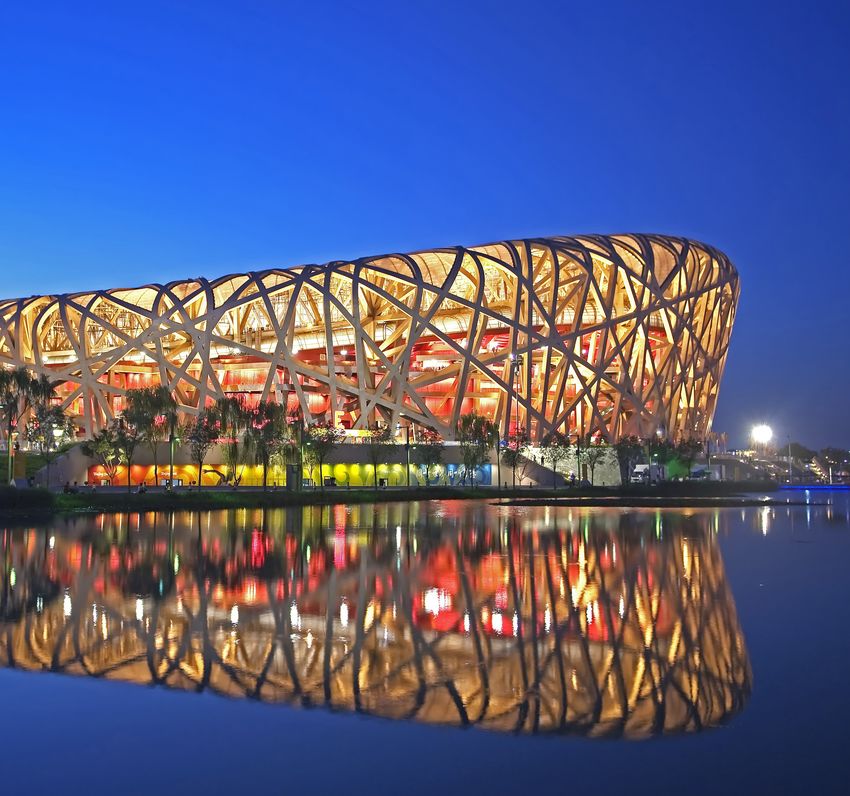
PPPs to drive funding, developing and operating costs. This medium sized enterprizes. Furthermore, the 2022 Qatar World
included the use of a Build Operate Transfer Model for the China Cup is supporting private sector development through facilitating
National Olympic Stadium.21 The winning consortium comprised participation of SMEs and startups in procurement and tenders for
transnational conglomerate, the CITIC Group, and the State-Owned the event.24 Qataris plan to use the World Cup to drive economic
Asset Management Company. The two entities formed the National diversification in the energy-rich state, at the same time bolstering
Stadium Company, responsible for the investment, construction, market opportunities for SMEs in the oil and gas industries, as
design and management for the facility. The Company secured a well as a broader range of sectors.25 The ultimate objective is to
30-year concession period starting in 2008, after which the promote sustainable economic growth, including through a more
stadium will be transferred to Beijing’s Municipality at no cost. In resilient domestic demand base and through reduced reliance on
Barcelona, close to 40% of Olympics investments were funded by imports.
the private sector and focused mainly on real estate.
And in emerging markets in particular, mega events can be a
Finally, best-practice mega events ensure investment decisions powerful catalyst for sustainable development.26 They offer the
are integrated into economic development plans. This involves opportunity to drive change to a green economy, including through
strengthening existing development agendas for infrastructure, transport, construction and energy. The Cape Town Green Goal
employment and private sector development. For example, the Program, part of the South Africa World Cup (2010), is one such
South Africa World Cup (2010) left a strong positive legacy for example, with the city prioritizing environmental legacy of its
transport infrastructure. Most of the transport infrastructure investments, and also running environmental awareness-raising
construction linked to the World Cup was also part of long-term campaigns.
transport planning for the country, such as rapid transit bus
Going for gold on competitiveness and sustainability
The core characteristics of “best case” mega To make the event a catalyst for sustained economic
events suggest a clear roadmap for optimizing competitiveness, policymakers must ensure that the process of
their economic results. For governments wanting preparing for the event is a driver for broader improvement, rather
to ensure investment made in mega events today than focusing solely on the event itself. This means event planning
will drive sustainable growth and act as a catalyst needs to consider baseline competitiveness conditions and national
for economic transformation, there are several key competitiveness goals. Mega events investment decisions can then
policy steps. align with these broader objectives and support meaningful change.
19. “World Cup will have little impact on Brazil, says Moody’s,” Financial Times website, http://www.ft.com/intl/cms/s/0/770b70c8-b6b7-11e3-8695-00144feabdc0.
html#axzz3DTX7xKu1, accessed 13 October 2014.
20. “Is It Worth It?,” IMF website, http://www.imf.org/external/pubs/ft/fandd/2010/03/zimbalist.htm, accessed 13 October 2014.
21. BROUDEHOUX, A.-M. (2007), SPECTACULAR BEIJING: THE CONSPICUOUS CONSTRUCTION OF AN OLYMPIC METROPOLIS. Journal of Urban Affairs, 29: 383–399.
doi: 10.1111/j.1467-9906.2007.00352.x
22. “Sustainable mega events in developing countries,” Konrad-Adenauer-Stiftung, 9 December, 2011.
23. “The Beautiful Game: Brazil and the Economics of Football,” J.P. Morgan website, https://www.jpmorgan.com/tss/General/World_Cup/1320523420378?M=6c55c547-6920-
4dac-a84d-6e055b13b470, accessed 13 October 2014.
24. “Qatari SMEs eye World Cup business-QBIC,” Zawya website, https://www.zawya.com/story/Qatari_SMEs_eye_World_Cup_businessQBIC-ZAWYA20140720060917/,
accessed 13 October 2014.
25. “Support for SMEs can help reduce imports, boost Qatar economy,” Gulf Times website, http://www.gulf-times.com/eco.-bus.%20news/256/details/388988/support-for-smes-
can-help-reduce-imports,-boost-qatar-economy, accessed 13 October 2014.
26. “Sustainable mega events in developing countries,” Konrad-Adenauer-Stiftung, 9 December, 2011.
6 | Bang for the buck: maximizing the economic returns from mega eventsStep one: map economic competitiveness
Governments should conduct a national competitiveness These sub-sectors are distinguished by their ability to meet the
assessment at the outset of a mega event proposal and planning direct needs of the mega event, and their likelihood of continuing
process. In identifying those sectors and sub-sectors where the to grow post-event. This is a step-by-step process, to prioritize
country or region has a competitive advantage, and equivalently sub-sectors. Mapping a country’s GDP to International Standard
in identifying shortfalls in regulatory or legal systems, policymakers Industrial Classification sectors is a useful way to segment the
can optimize mega events investment and launch wider economic economy and systematically assess competitiveness. This map
reforms. should also be dynamic, showing the expected trajectory and
long-term potential of these sectors in a given country’s benchmark
To do this, policymakers should first establish those sectors
economies.
and sub-sectors in which they have a competitive advantage.
Section Divisions Description
A 01–03 Agriculture, forestry and fishing Agriculture (1–5)
B 05–09 Mining and quarrying Mining and extraction (6–9)
C 10–33 Manufacturing Industry (10–44)
D 35 Electricity, gas, steam and air conditioning supply
E 36–39 Water supply; sewerage, waste management and remediation
activities
F 41–43 Construction
G 45–47 Wholesale and retail trade; repair of motor vehicles and motorcycles Services (45–99)
H 49–53 Transportation and storage Finance
I 55–56 Accommodation and food service activities
Real estate
J 58–63 Information and communication
K 64–66 Financial and insurance activities Arts
L 68 Real estate activities Education
M 69–75 Professional, scientific and technical activities
N 77–82 Administrative and support service activities
O 84 Public administration and defence; compulsory social security
P 85 Education
Q 86–88 Human health and social work activities
R 90–93 Arts, entertainment and recreation
S 94–96 Other service activities
T 97–98 Activities of households as employers; undifferentiated goods — and
services-producing activities of households for own use
U 99 Activities of extraterritorial organizations and bodies
Bang for the buck: maximizing the economic returns from mega events | 7Step two: identify competitive sectors for growth
This breakdown provides a baseline assessment of productivity reflecting the country’s location, resource base or existing
across sectors, demonstrates their growth potential and maps regulatory environment. For example, with the 2012 London
sector activity and expected growth path to a country’s national Olympics, the UK drove expansion in its technology, media and
development agenda. From here, governments can establish a hospitality sectors. Similarly, South Korea used the 2002 World Cup
shortlist of sub-sectors to focus on for private sector development. to increase the competitiveness of its IT and tourism sectors.
These sub-sectors are typically those with inherent advantages,
Step three: leverage the mega event for sector growth and development
Next, policymakers need to determine how to best leverage the technology, labor markets, innovation, infrastructure and other
mega event to drive growth in the selected sub-sectors. First, this critical factors. Government can then map these catalysts to
involves a wider review of economic competitiveness, considering the chosen sub-sectors, to determine what kind of support the
the institutions, policies and other factors, such as innovation, that sub-sectors need, and which competitive capabilities need to be
drive a country’s productivity. Using a comprehensive national strengthened. For example, a competitiveness assessment may
competitiveness assessment tool, such as the World Economic reveal that the economy has an underdeveloped private sector,
Forum Competitiveness Index, is an effective approach. This allows poorly developed export capabilities or an environment that
policymakers to breakdown competitiveness across efficiency, discourages local or foreign investment.
The Global Competitiveness Index Framework: 12 pillars of competitiveness
1. Institutions
2. Infrastructure
Basic requirements
3. Macroeconomic environment
4. Health and primary education
5. Higher education and training
6. Goods market efficiency
7. Labor market efficiency
Efficiency enhancers
8. Financial market development
9. Technological readiness
10. Market size
11. Business sophistication
Sophistication and innovation
12. Innovation
8 | Bang for the buck: maximizing the economic returns from mega eventsPolicymakers can then devise and implement tailored reforms to PPP structures, reform procurement regulation, change visa
support the priority sub-sectors. The exact combination of reforms restrictions or establish special economic zones. Similarly,
will depend on the priority sub-sectors, with the maturity of the governments could use the event to drive a change to tax or foreign
sector and level of competition key factors for consideration. ownership rules, if the target sectors benefit.
Mega events are important catalysts for governments to formalize
Step four: evaluate financial sustainability of infrastructure investments post-event
To further support sustained economic competitiveness, the majority of public funds to these types of projects, over fit-for-
investment in productive infrastructure is crucial. For governments, purpose structures, such as swimming pools or a bobsled run.
the imperative is to maximize the use of event infrastructure post-
Policymakers could develop a financing scorecard to assess
event, and to minimize the associated fiscal burden. As a result,
prospective investments, which could include total-cost-of-
mega event investment plans should be carefully integrated into the
ownership estimates, public debt implications and benchmark
national economic development strategy.
returns for alternative capital projects to capture opportunity cost.
Transportation infrastructure, ICT, healthcare facilities and public This would also include metrics on private sector engagement,
housing should be the focus of public investment in mega events crucial to maximizing efficiencies and the commercial viability of
capital projects. Investment in such productive capital stock should assets, including through PPPs.
have positive project net present value, which justifies allocating
Bang for the buck: maximizing the economic returns from mega events | 9Conclusion While mega events are a temporary disruption to Best-in-class mega events, which advance national economic normal activity where they are hosted, they do competitiveness, focus on a country’s natural competitive not need to represent a short-term spike in the advantages, deliver fiscal sustainability and are deeply integrated economy. Effective management of mega events into economic development plans. In contrast, sub-optimal events strategy can drive long-term gains in productivity are characterized by leakage: high leverage and over-investment and potential economic growth, with the event in uncompetitive sectors and unproductive capital stock. With the working as a catalyst for investment in competitive economic impact of mega events difficult to measure, maintaining sub-sectors, regulatory reform and for advancing policy focus on economic competitiveness is critical to achieving a socio-economic goals. positive legacy. 10 | Bang for the buck: maximizing the economic returns from mega events
Mega events at EY
Mega events are already part of EY’s DNA as we have been providing support to mega
events since the 1984 Los Angeles Olympic Games. We have worked with some of the
largest and most complex of events around the globe, with experience throughout the
whole lifecycle of an event, supporting all of the significant stakeholders. We are proud
to be one of the few professional services organizations that is the Official Supporter and
Professional Advisor for two of the world’s biggest multi-sports events: the Rio 2016
Olympic and Paralympic Games and the Glasgow 2014 Commonwealth Games.
EY is the most globally integrated professional services organization – in our mindset,
actions and structure — and we want to use this advantage to support our mega event
clients in taking their events to all the corners of the world. We are investing in our people
and their skills and building a global mega events practice that will support the efficient,
effective and economic delivery of mega events around the world.

 Economic feasibility studies          Bid book preparation for bid           Risk services for government
                                       committees                             delivery authorities
 EY’s lead Advisory teams can          Bid planning and execution is          Risk Advisory services at EY focus on
 drive economic feasibility            at the core of our mega events         the full spectrum of risk management,
 assessments for mega events,          business. Our Transaction              from internal audit, internal controls, to
 including cost-benefit analysis for   Advisory Services (TAS) teams          information security and enterprise-wide
 all projects related to the mega      coordinate all aspects from the        issues. For mega events clients, teams
 event, including infrastructure.      beginning of the bid process,          can provide specialty support, including
 The team can support host cities      foreseeing challenges and              venue risk management, to mitigate
 in pre-bid feasibility studies.       revealing the decisive differential.   risks and optimize event performance.

 Audit services for Winter             Performance Improvement                Event Infrastructure and
 and Summer organizing                 services for organizing                Urban Development
 committees                            committees
 Assurance teams from EY’s global      The EY Advisory Performance            Delivering infrastructure and
 network provide a comprehensive       Improvement teams can deliver          infrastructure legacy planning is a
 suite of audit services, which can    measurable and sustainable             critical aspect of mega events. For
 support mega event organizing         improvement in clients’ business       governmental clients considering
 committees. Vendor selection          performance, by focusing on the        new infrastructure, mega expansions,
 assurance, capital project            areas of Finance, Customer, and        significant renewal work and/or PPP
 assurance and infrastructure          Supply Chain. This includes venue      initiatives, EY’s Infrastructure Advisory
 assurance are key services.           operations review and operations       business can support the entire
                                       observation programs.                  investment lifecycle.
                                                                              From initial planning, procurement,
                                                                              and financing, through to construction
                                                                              and exit, our team provides a range of
                                                                              services to facilitate efficient, timely and
                                                                              cost effective delivery of infrastructure.

 Tax services for National             IT Transformation services             Climate Change and Sustainability
 Olympic committees and                for organizing committees              Services for legacy programs
 organizing committees
 EY’s global tax teams have the        EY Advisory Performance                EY’s CCaSS teams can monitor the
 broad capabilities to match the       Technology services teams              delivery of the event and support the
 spectrum of tax issues through        help mega events hosts rethink         transition to sustainable legacy. CCaSS
 the life of a mega event. The         how they architect, deploy             can offer expertise in social impact
 teams can support host cities         and manage technology. The             assessments and reporting.
 on tax challenges, including          teams can work with you
 human capital management,             to help accelerate business
 tax regulatory changes and            performance through technology
 committee tax closing.                transformation, enterprise
                                       intelligence, enabling technology
                                       and technology risk and security.

                                       Bang for the buck: maximizing the economic returns from mega events |              11
Contacts EY | Assurance | Tax | Transactions | Advisory
About EY
EY is a global leader in assurance, tax, transaction and advisory
Global mega events contacts services. The insights and quality services we deliver help build trust
and confidence in the capital markets and in economies the world over.
Global Leader We develop outstanding leaders who team to deliver on our promises
to all of our stakeholders. In so doing, we play a critical role in building
a better working world for our people, for our clients and for our
George Atalla communities.
+1 703 747 1548
george.atalla@ey.com EY refers to the global organization, and may refer to one or more, of
the member firms of Ernst & Young Global Limited, each of which is
a separate legal entity. Ernst & Young Global Limited, a UK company
Global Infrastructure Leader
limited by guarantee, does not provide services to clients. For more
information about our organization, please visit ey.com.
Bill Banks How EY’s Global Government & Public Sector Center can help
+61 2 92484522 your organization
bill.banks@au.ey.com Around the world, governments and not-for-profit organizations
are continually seeking innovative answers to complex challenges.
They are striving to provide better services at lower costs and to
Regional mega events contacts create sustainable economic development, a safe environment, more
transparency and increased accountability. EY combines private sector
leading practices with an understanding of the public sector’s diverse
North America needs, focusing on building organizations’ capabilities to deliver
improved public services. Drawing on many years of experience, we
can work with you to help strengthen your organization and achieve
Mark Gibson
lasting improvements. Our Global Government & Public Sector brings
+1 949 437 0499
mark.gibson@ey.com together teams of highly skilled professionals from our assurance,
tax, transaction and advisory services. We are inspired by a deep
commitment to help you meet your goals and enhance public value,
South America for today and tomorrow.
© 2015 EYGM Limited.
Alexandre Rangel
+ 55 21 3263 7228 All Rights Reserved.
alexandre.rangel@br.ey.com
EYG no. FK0088
Europe, Middle East & Africa BMC Agency
BACS 1002381
David Leather
+44 16 1333 2717 ED None.
dleather@uk.ey.com In line with EY’s commitment to minimize its impact on the environment, this
document has been printed on paper with a high recycled content.
OCEANIA
This material has been prepared for general informational purposes only and is not intended to
be relied upon as accounting, tax, or other professional advice. Please refer to your advisors for
specific advice.
Matt Colston
+61 3 9288 8628 ey.com
matt.colston@au.ey.com
Senior Strategic Analyst
Rebecca Hiscock-Croft
+1 212 773 5532
rebecca.hiscockcroft@ey.comYou can also read


