Benefiting from the Power of the Human-Animal Bond When Personal Interaction Is Not Possible - Animal-Related Engagement - Pet Partners
←
→
Page content transcription
If your browser does not render page correctly, please read the page content below

white paper

       Animal-Related Engagement

 Benefiting from the Power of the
Human-Animal Bond When Personal
    Interaction Is Not Possible
Table of Contents
About Pet Partners

Contributors

Benefits of Animal-Related Engagement

Incorporating Animal-Related Stimuli When
Animal-Assisted Interaction Is Unavailable

Notes from Leading Animal-Assisted
Intervention Professionals

Suggested Animal-Related Engagement
Activities

Conclusion

References
About Us
For over 40 years, the Pet Partners mission has been to improve human health and well-being through the
human-animal bond (HAB). With this objective in mind, we have developed various programs that explore and
promote interactions with animals. We have funded research, created educational opportunities, advocated for
public policy related to pets, and championed standards of practice to promote ethical and safe programming.
Through our Therapy Animal Program, we have trained, evaluated, and registered over 60,000 teams throughout
our organization’s history, empowering individuals to share the love of their pets throughout their communities.

While there is nothing quite like interacting with a therapy animal face-to-face, we know that the bonds we
share with animals are greater than any situation, context, or activity could ever be. As advocates for the HAB,
we’re committed to making this relationship available to as broad an audience as possible. Just by considering
the unique connection that we share with animals, we can enjoy positive outcomes such as improved mood and
better relationships with those around us.7, 12 Furthermore, in learning about the interconnectedness of humans
with animals and the planet, we make significant steps towards a healthier and happier world for us all.

Connections and activities related to animals that fall outside in-person therapy animal visits can be defined as
Animal-Related Engagement (ARE). This term was created by Dr. Taylor Chastain Griffin with Pet Partners to
encompass the range of activities involving animals that go beyond physical interactions.

In this paper, we’ll outline some of the benefits of engaging with animal-related activities while also exploring
some ideas for continuation of services from some of the field’s top leaders. Finally, specific activities will be
suggested so that you’re prepared to bring the love of animals to your facilities and clients, no matter the
circumstances.

                                                         [3]                                           white paper
Contributors

                Taylor Chastain, PhD
                National Director, AAI Advancement, Pet Partners

                In her role as National Director of AAI Advancement for
                Pet Partners, Dr. Taylor Chastain focuses on supporting
                research and professional development within the therapy
                animal arena. Having witnessed hundreds of interactions
                between her own therapy animals and the people with
                whom they’ve visited, she is passionate about bolstering
                the intervention with empirical investigation and the
                promotion of field standardization. Dr. Chastain obtained
                her doctorate in research psychology in 2018, with her
                studies focusing on the human-animal bond as it is
                experienced in contexts of shared traumatic experiences.
                Through her undergraduate education in psychology
                and animal behavior to her graduate work to become
                a mental health counselor, she has always strived to
                shape her educational and professional endeavors with
                the foundational goal of promoting Animal-Assisted
                Interventions (AAI) . Dr. Chastain is also a dog trainer and
                Pet Partners team evaluator, and has been a registered
                handler with Pet Partners since 2015. She is based in
                Georgia where she lives with her cat and seven dogs.

  white paper           [4]
He has been recognized by numerous organizations
                                                          for his service and dedication to children, animals, and
                                                          the community. In July of 2016 he received the William
                                                          McCulloch Award for Excellence in HAI Education and
                                                          Practice from the International Association of Human
                                                          Animal Interaction Organizations (IAHAIO), in Paris,
                                                          France.

                                                          Dr. Fine’s primary research interests relate to the
                                                          psycho-social impact of human-animal interactions
                                                          and animal-assisted interventions, social skills training
                                                          and children with ADHD, and resilience in children. He
                                                          is the author of several books including Our Faithful
                                                          Companions, Parent Child Dance, Therapist’s Guide
                                                          to Learning and Attention Disorders, Fathers and
                                                          Sons, The Total Sports Experience for Children,
Aubrey Fine, Ed. D                                        Give a Dog Your Heart, The Handbook on Animal
                                                          Assisted Therapy (the 5th edition was released in
Dr. Aubrey Fine is a native of Montreal, Canada.          July 2019), and Afternoons with Puppy. He is a past
He received his graduate degree from University of        board member of Pet Partners and is presently the
Cincinnati in 1982. He has been on the faculty at         chair of the Human-Animal Bond Advisory Board of
California State Polytechnic University since 1981        Pet Partners; the past chair of the steering committee
and is presently a Professor Emeritus and a licensed      on Human Animal Interactions for the American
psychologist. In 2001 he was presented the Wang           Veterinary Medical Association; and member at large of
Award given to distinguished professors within the        the Human Animal Interactions Section of Division 17
California State University system (23 universities).     of the American Psychological Association.

                                                        [5]                                         white paper
(PATH, Intl.) instructor. Since then, Dr. Stewart has
                                                        incorporated animal-assisted interventions with dogs
                                                        and rabbits in college counseling and juvenile detention
                                                        settings. At Idaho State, Dr. Stewart directs the
                                                        Certificate Program in Animal Assisted Interventions in
                                                        Counseling, offers AAIs in her clinical supervision, and
                                                        incorporates AAIs in her teaching across the Council
                                                        for Accreditation and Related Educational Programs
                                                        Core. Dr. Stewart is the primary author of the American
                                                        Counseling Association Competencies for Animal
                                                        Assisted Therapy in Counseling, while currently
                                                        serving as the chair of Ethics and Standards for the
                                                        Human-Animal Interactions in Counseling Interest
                                                        Network of the American Counseling Association,
Leslie A. Stewart, PhD, LPC                             a member of the Pet Partners Human-Animal Bond
ISU Faculty/Professional Consulting
                                                        Advisory Board, and a subject matter expert consultant
Dr. Leslie A. Stewart is a licensed professional        of the American Psychological Association’s Human
counselor and associate professor of counseling at      Animal Interaction Division. Dr. Stewart shares her
Idaho State University’s Department of Counseling. Her life with several species of animal family members
research agenda includes animal-assisted interventions including dogs, rabbits, mice, a cat, and a ball python.
in counseling and supervision, crisis response, trauma- In her free time, Dr. Stewart volunteers at a local
informed counselor preparation, and counselor training educational zoo that houses injured or unreleasable
with experiential modalities. Before beginning her      native wildlife species and enjoys hiking, camping,
career in counseling and counselor education, Dr.       kayaking, and wildlife viewing in the beautiful Rocky
Stewart facilitated therapeutic horsemanship as a       Mountain wilderness.
Professional Association for Therapeutic Horsemanship

    white paper                                       [6]
Benefits of Animal-Related Engagement
Think back to the first time you were brought to tears over the way that an animal touched your heart. For some
of us, these memories stir up accounts of interactions with childhood pets, recalling rich stories of the beloved
creatures with whom we shared our homes. For others, an animal may have first stirred our hearts when we
were lost in a story about the pet’s great adventure. Maybe you were empathetic to an Aristocat, or perhaps you
mourned along with Billy while reading Where the Red Fern Grows.

Even when engaging with animal-based content doesn’t bring forth deep emotions such as love and lament, this
kind of content can certainly inspire a smile and brighten our mood. After all, there must be a reason that some
of the most-viewed videos online include dancing birds, curious kittens, and cuddly
canines. By simply watching these clips, we often find ourselves taking a
breath of relief, breaking free from the stress of the day by grinning at the
animal who has found its way onto our screen.

Preliminary research on animal-related engagement
(ARE) echoes these sentiments. While nothing can
replace the emotional connection that we share with
animals during face-to-face interactions, existing
literature has supported the claim that pet-
related stimuli can also be impactful for certain
populations.

In a 2010 study10 that investigated the
impact of different dog-related stimuli
on engagement levels of people with
dementia, researchers looked at how

                                                       [7]                                         white paper
interaction with a dog was received as compared to viewing a puppy video, completing a dog-coloring activity,
and interacting with a plush and a robotic dog. Participants across all groups maintained consistent levels of
engagement, suggesting that the inclusion of an animal both in practice and in thought fostered an environment
of participation and collaboration. An additional finding of this study was that among all groups, residents who
viewed the puppy videos maintained their engagement for the longest period of time. Anyone who has ever lost
themselves in puppy videos on YouTube can certainly relate!

This isn’t the first-time researchers have investigated the impact of pet-related stimuli on people with memory
impairment, and the interventions of interest are not always media or crafts that focus on animals. A 20049 study
called for the incorporation of a robotic cat and a plush cat into a residential facility for people with dementia.
The researchers were interested in determining whether these model animals would influence the participants’
moods. Relative to baseline measures, participants who interacted with the plush cat demonstrated statistically
significant decreases in agitation. Similar findings existed for those who interacted with the robotic cat, yielding
data that is further supported in a 20081 investigation that found that interactions with a live dog and a robotic
dog led to similar improvements in participants’ loneliness.

While much of the foundational research focused on pet-related stimuli has concentrated on measuring the
intervention’s impact on people with memory impairment, there has been more recent research to help us better
understand just why we so often go down the proverbial animal-related video rabbit hole (pun completely
intended), and then feel so much better after doing so!

Watching animal videos has been empirically correlated with a more positive affect in the viewer, leading to
an enhanced mood and increases in general feelings of positivity.7 The creation of this positive affect12 not
only brings a smile to our face, but it might also help open our minds, making us more receptive to resources
and options that are available to us. This is great news for those of us whose bosses may occasionally walk up
behind us to catch a kitty on our screen. As a matter of fact, a 2012 study13 found that participants who viewed
animal footage not only reported better moods, but they had positive increases in their productivity as well!

     white paper                                        [8]
Realizing that it’s not always possible for people to engage in hands-on interaction with animals,4 researchers
have also evaluated the impact of animal-related engagement in studies that involve fish tanks. When an
aquarium was added to the dementia unit of a senior living facility, it was not just the people with dementia who
displayed significant improvements in behavioral measures.5 The researchers in this study also monitored the
staff’s job satisfaction throughout the progression of the experiment, noting significant improvements after the
fish tank had been added to the facility.5 While further research on the topic is needed, a comprehensive meta-
analysis on the impact of fish tanks noted their association with relaxation, mood, pain perception, and even
nutritional intake and body weight.5 Whether it be through watching animal videos on the internet or gazing into

                                                       [9]                                         white paper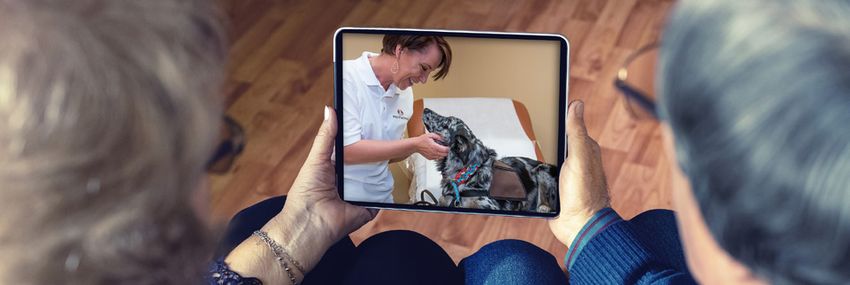
the aquatic life of an aquarium, there is some sort of innate attraction in witnessing the actions of animals that
we’re only just beginning to empirically appreciate.

Finally, research suggests that we may be inclined to get along better with one another when we remember the
affection that we have for animals. There is extensive literature that focuses on the ways in which a pet impacts
the relational dynamics of our homes. For example, attachment with a pet in childhood has been associated with
prosocial behavior and better quality of life in adulthood.8 Furthermore, a child having a bond with their pet has
been correlated with the development of important constructs such as social competency and empathy.14

But even outside of the inclusion of a pet in specific family dynamics, there is evidence to suggest that just by
looking at cute animal photos, interpersonal relationships might be enhanced.11 In a 2017 study, researchers
repeatedly paired positive stimulus (photos of puppies and bunnies, to be precise) to photos of participants’
spouses. As a result, participants demonstrated more positive automatic reactions to their partners over time.
Even more impressively, the participants also reported improvements in overall marriage satisfaction throughout
the course of the study. In this case, by improving automatic attitudes and responses that participants had
towards their loved ones, the animals’ images made a lasting impact on family relations.

Bolstered by both our anecdotal experiences and some foundational research on the topic, let’s define animal-
related engagement.

                   Any engagement opportunity that allows participants
                        the benefits of the human-animal bond by
                     encouraging the remembrance of feelings that are
                   commonly associated with interaction with an animal.

     white paper                                         [ 10 ]
These activities might include the
following:
• Virtual therapy animal visits
• Crafts, puzzles, or games based
on animals
• Interaction with videos, written
content, photos, or even model
animals (plush animals and
robotics)
Finally, these activities can
be adapted so that they are
appropriate for a wide audience,
varying in subject matter so that
the content speaks to the young
and the old, those who are sick and
those who are well, and to lovers of
all different kinds of species.
[ 11 ] white paperIncorporating Animal Related Stimuli when
Animal-Assisted Intervention is Unavailable
The world would be a better place if we all had unlimited access to therapy animals.
However, there are many reasons why we might find ourselves limited in our ability to
engage in animal-assisted interventions (AAI).
• The high demand for teams versus the volunteer nature of most AAI
At Pet Partners, our Therapy Animal Program is made possible by the committed human
handlers who take time out of their busy schedules to share the love of their pets with
the world. Given the volunteer nature of their work, they are not always available to visit
every facility that requests their services. While we’re continually striving to add more
teams to the Pet Partners program, we understand that it can sometimes be challenging
to find teams who can visit according to your facility’s demand.
• Respect for the welfare of our therapy animals
The well-being of our therapy animals is top priority. We believe that animals should
not merely tolerate their role in a visitation program, they should enjoy it! Pet Partners
has many standards in place to protect the well-being of our pets during therapy animal
visits. One of those standards limits an animal’s visiting capacity to two hours per day.
This helps prevent animals from becoming too tired or burnt out, promoting the safety
and integrity of our work.
white paper [ 12 ]• Infection Control & Zoonosis
Pet Partners has long championed standards of practice for therapy animals. These
standards offer the field’s best measures for limiting the chances of spreading infection
through therapy animal programming. To reduce infection, Pet Partners teams are
extensively trained on the following infection control measures:
♦ Hand hygiene protocols
♦ Barriers while visiting
♦ Disinfecting equipment used during visits
♦ Animal health requirements
♦ The prohibition of raw meat diets for animals
[ 13 ] white paperWhile these standards ensure that the thousands of therapy animal visits we complete
each year are done in a safe manner, there are times when issues of infection control
make it impossible to engage in a visiting program. These cases sometimes take place on
an individual basis, when a client’s specific treatment plan calls for extreme measures of
infection prevention. But we’ve recently learned how global circumstances can prevent
our volunteerism, leaving a massive need for the benefits of the human-animal bond
during a time in which visitation is nearly impossible.
In any of these circumstances, ARE can be utilized to fill the gap and provide clients and
patients with a valuable reminder of the power of animals.
Use ARE to set the stage for future AAI
While you’re waiting for therapy animals to become available at your facility, you can begin
to set the stage so that your clients are optimally prepared for the intervention. Check out
some of the suggested activities that you’ll find later in this document and determine which
opportunities will be most appropriate for getting your clients ready for their upcoming
interactions with therapy animals.
Incorporate ARE when AAI services must be suddenly terminated
There are times when we must suddenly cease or delay clients’ interactions with therapy
animal teams. Maybe a team is unexpectedly unavailable, or maybe a client is no longer a
good fit for active engagement with an animal. AAI professionals often talk about the need
to plan ahead for the termination of AAI services, as not being able to continue interaction
with a therapy animal (due to retirement, loss, or unforeseen circumstances) can greatly
impact a client who has formed a bond with that animal.3, 6
white paper [ 14 ]In order to uphold ethical integrity and best
practices, we must be ready to facilitate
conversations about what it is like for the client
to no longer be able to visit with the animal they
have bonded with.3 In these cases, leaders in the
field of professionalized AAI often suggest that
clients be provided with a token of remembrance
to assist them during times of separation from the
therapy animals.3 Perhaps one of the activities that
is outlined in this resource can be adapted for your
client’s needs, promoting conversations about the
human-animal bond and incorporating the warmth
of animal interaction even if the therapy animals
cannot be present.
Fill the gap that some clients experience
when AAI is simply not possible
Maybe your client is a great candidate for AAI, but
for reasons outside of your control, therapy animal
visits are simply unavailable at the moment. We
think you’ll find that the activities outlined here
still have the ability to bring a smile to your client’s
face, providing even more evidence to support the
fact that the human-animal bond is larger than any
circumstance we could ever find ourselves in!
[ 15 ] white paperNotes from Leading AAI Professionals
When therapy animal visits must be discontinued due to external circumstances, those who work in
the world of AAI must be especially diligent to ensure not only that client services are being upheld,
but also to keep therapy animals active and engaged so that they are ready to return to work when
the timing is right. At Pet Partners, we’re fortunate to work with some of the top leaders in the AAI
community. See what these experts have to say about how they are navigating uncharted waters in
response to the COVID-19 pandemic.
Note from Dr. Aubrey Fine
AAI Advocates, well as professionally, the positive impact of human-
animal interactions. These relations are now being more
All of us would agree that we live in a seemingly
rigorously studied and documented by scientists. In so
uncharted era. The uncertainty of COVID-19 has had a
many ways their findings (the science) are catching up
tremendous impact on all of us and compels many of us
to what many of us have known intuitively for centuries:
to reconsider what is important and how we continue
animals are good for our well-being. Our animals have
to live our lives going forward, including our work as
lifted the spirits of many and have helped provide
pet handlers. As I sit here considering what to write,
opportunities filled with joy, hope, and optimism. Our
I am reminded of an African proverb that emphasizes
visitations have aided individuals who benefited from a
“However long the night, the dawn will eventually
humane reminder of their importance and value in life.
break.” This verse, no doubt, conveys a sense of
The visits also provide a gentle nudge to persevere and
encouragement and optimism that we can continue to
deal with the challenges they are experiencing in their
find enrichment in our lives. This enrichment should also
daily lives. Our visits make a difference and even if we
include our devotion to our companion animals and being
cannot visit in person, our presence could be a welcome
Pet Partners handlers.
breath of fresh air in this time of uncertainty. I believe
Just like many of you, I have worked alongside animals that there are still many ways that you can let people
for several decades. I have witnessed personally, as know that they are remembered and continue to share
white paper [ 16 ]our animals’ tremendous gifts of life. A realistic option in the future I can put together a webinar or website for
this era of physical distance is to try to stay connected all of you to observe. In essence, I sit next to my dogs
virtually. The following represents a few ideas that I have and together we model and have the children practice
used recently and over the years, so that my clients can and regulate their breathing. The process has a positive
still connect with my animals. impact on supporting their sense of calm.
I have had many virtual visits with several of my patients Other suggestions that are just fun exercises can be to
who all seem not only to miss our interactions but also develop some educational activities such as small word
miss seeing their four-legged friends. Ironically, as I sit searches and puzzles that are easy to make (free online
virtually talking with my patients (children and teens) resources exist to develop them) as well as various
and their parents, the dogs instinctively lay by my side humane education activities that could support character
listening to the conversations just as they would have development. Your clients (especially children) can
done in my own clinical area. At times they lean on my continue to read to the dogs and you can facilitate a short
lap so they can see who is on the screen to the delight of interaction applying what you may be using with our Pet
the children that I serve. Frequently, children will call out Partners program. Additionally, I’ve recommended to
their names and the dogs react positively in response. families that they read stories about therapy animals, and
watch films with positive messages that have dogs as
I periodically integrate a couple of interactive activities
well as other animals in them.
while visiting virtually so the children can continue to
engage with the dogs. For example, I have them talk to Finally (as I noted in the book Afternoons with Puppy),
my animals and ask them to follow certain directions. I frequently write children letters from my dogs with
Some children may ask the dogs to sit or lay down. Some healthy and hopeful messages they can enjoy reading
have even asked if I could throw a ball to the dogs, or while they are at home. Over the past couple weeks,
give them a belly rub, or they give me ideas of how to I’ve written a couple of dozen cards that maintain our
brush them. For a few moments they are involved and continued connection with fun messages! Parents have
connected! shared with me that their children enjoy receiving the
mail and seem to be in better spirits while reading the
I’ve also incorporated some relaxation and mindfulness
notes.
activities with the children while sitting alongside my
therapy dogs. In this short essay it would be difficult Especially now in our hectic and frantic times, I
to explain the exercises I implement, but perhaps in encourage all to set aside a few moments to reflect on
[ 17 ] white paperthe importance of what we contribute to the quality-of- we are continuing to support them is a gift worth sharing!
life of those we serve. A time of social/physical distance I could end this short commentary with quotations from
as a new way of life should not mean that we cannot great sages and philosophers about the importance
have and sustain connections; it truly is amazing that of our connections with those who care about us.
these alternatives can sustain our relationships and However, the words of Winnie the Pooh, a somewhat
provide for some opportunities for the connections unacknowledged philosopher, said it best: “if there ever
that they seek. They may not be as good as our actual comes a day when we can’t be together [in person],
physical visits, but they are alternatives that we must keep me in your heart. I’ll stay there forever.”
embrace!
In a time of restricted visitations, we don’t have to
Providing a sense of hope will not only allow us to realize discontinue our connection, but must search for
that positive outcomes are still in our reach, but also alternatives to share the tremendous benefits derived
permit us to continue to enhance the daily lives of those from the bond. Our clients will appreciate the notion
who benefit from them. Our animals have become an that they’re being thought of and for that moment being
integral part of people’s lives and for them to realize that remembered.
Dr. Aubrey H. Fine
white paper [ 18 ]Note from dr. Leslie Stewart
In many ways, we are experiencing a global event that arsenal of relevant information and resources, I find
some might say crisis and trauma specialists have been myself stretched to the very limit of my own coping.
training for through our entire careers. In many ways, But one thing has not changed. In a hurricane of global
this is true. In the midst of a global pandemic, almost uncertainty, fear, and crisis, our animals stand before
every aspect of our daily lives and routines has been us — unchanged, consistent, and ever attentive. It is as
interrupted, shaken, modified, obstructed, and even if their dependability and devotion shine as a beacon of
sidelined. Further, as we struggle to adapt to profound familiarity, comfort, and support to guide our navigation
changes in our fundamental ways of being in the world, through this storm. They are our allies, our teachers, our
we find ourselves without the ability to access one of companions, our rock.
the most important human coping strategies: person-
It is for these very reasons that I choose to include the
to-person social support. As a Licensed Professional
animals I work with — an exuberantly affectionate
Counselor specializing in crisis response and trauma-
English shepherd named Star, and a sassy and
informed care, I find solace in the somewhat predictable
charismatic rabbit named Saki — into my role teaching
processes of the human crisis response. From this
and preparing the next generation of professional
perspective, we can understand and normalize some
counselors and crisis responders. They have much to
of the experiences we share in these times: feelings of
teach us about patience, trusting the process, creating
agitation and restlessness while simultaneously lacking
safety in relationships, and honoring authentic connection
motivation and focus; irritability and difficulty being fully
above all else — all crucial lessons for mental health
present in our socially-distant interactions; a sense of
professionals of every specialty. These animal-assisted
existential fear in not knowing how and when this will
education interventions are experiential to the core, and
end; and of course, a sense of isolation and grief that
rely greatly on the physical interactions between my
somehow runs deeper than experiences of loss and
students and my animal partners. Even outside of the
loneliness we’ve encountered before.
classroom, many students seek support for their own
Though some comfort is available in knowing all of journey of healing and personal growth by working with
these experiences are normal and temporary, they my animals one-on-one in my office. Their presence has
hurt. They hurt badly. And it feels like they will last become a trademark of our curriculum, and their physical
forever. Even as a seasoned crisis responder with an absence is greatly missed by my students following our
[ 19 ] white papertransition to Zoom-based class lectures, supervision some solutions in kind. Below, I discuss some of the
meetings, and advising meetings. interventions we’ve adapted and created to help maintain
the personal, professional, and educational benefits
Although there is no true substitute for in-person human-
associated with my four-legged co-instructors.
animal interaction, we rise to the challenge to adapt our
animal-assisted intervention to virtual formats. Simply Trick training is one of my most-utilized interventions
stated, we want to continue working on the lessons that for teaching counseling and crisis response students.
were so unceremoniously cut short. I know the animals By using only positive, relationship-based training
miss their students, too. Any time she hears the familiar methods to teach an animal a new behavior or trick,
voices of her student friends, Saki jumps awake and students must first learn to establish a relationship of
bounces around the room. Star jolts to attention and trust and mutuality. To do that, we must understand
jumps into my lap to be included. During emotionally- the perspective of another who is very different from
charged meetings or discussions, Saki still sends us ourselves. Students must appreciate that the animal did
calming signals by deliberately grooming herself in our not necessarily choose to participate in this learning by
line of sight, and Star nuzzles my hand, leans in close, utilizing positive and non-coercive training techniques
and hops into the chair next to mine, ‘her’ office chair, to to engage and interest the animal. As this process takes
provide cuddles and watch the computer screen. They time and does not always go as planned, students learn
don’t recognize the faces of their students on screen, to trust the process, honor the relationship, manage
but they know they are with us somehow. And they can expectations and frustrations, and adapt in real-time to
still detect and respond to pain and powerful emotions. unexpected responses and circumstances.
These responses are further evidence for something I
This semester, several of my students, supervisees, and
already intuitively knew: the bonds forged between our
advisees are working on target training Saki the bunny.
students and their animal teachers are mutual, deep, and
Target training involves teaching an animal to approach
lifelong.
and make contact with a target (in our case, a ping pong
Indeed, the animals are already implementing their own ball hot-glued to the end of a wooden dowel). Once
natural solutions to the physical divide, and this has the animal understands and consents to the concept,
certainly not gone unnoticed. As the human handler numerous tricks and more complex behaviors can be built
and caregiver of these extraordinary beings and the upon the target foundation. This year’s student-selected
holder-of-space for my students, I’m inspired to generate goal: teach Saki to circle around someone’s foot with the
white paper [ 20 ]target stick. Since students are no longer able to work 2. Working with Saki/Star by proxy. If a student does
directly with Saki, we have implemented the following not have a pet at home, or cannot engage with a pet
adaptations: for an extraneous reason, I become the student’s
1. Working with the student’s own animal. For proxy with Star or Saki. In this type of exercise, the
students with pets at home, the relationship-building student directs my every move and word when
and positive reinforcement training techniques working with either animal. Although I did not
practiced with Saki are applied to working with a expect it, this adaptation has offered my students
personal pet at home. In this intervention, I am able some benefits of becoming the process observer
to participate virtually in many of the same ways I for their own choices, as it offers a unique ‘outsider’
would in live sessions, such as serving as a process perspective on the behaviors they instruct me to
observer and consultant. In the sessions we’ve perform. In several proxy sessions, students have
conducted in the past few weeks, most students discovered insights about how they might be coming
chose to continue the goal of target training. Species across to others.
included so far are dogs, cats, and rabbits. For some 3. Reflection activities. If animal interaction is not the
students, we are able to move directly into the trick priority for a class or session due to more urgent
training by transferring skills learned with Saki. With clinical or other consultation needs, we engage in
others, we’ve first needed to attend to relationship reflections on lessons learned before COVID-19
building and student management of expectations or interrupted our in-person work. After describing the
personal reactions to the pet’s unexpected responses challenge or issue at hand, I invite the student to first
or lack of engagement. So far, a vast majority of reflect upon the lessons they learned when working
students report a more meaningful and positive with Saki. What ideas or metaphors are translatable
relationship with their own pets and are still able here? What did you already successfully do with
to translate challenges and lessons learned with Saki that you can apply to this situation? How do
animals to the challenges and nuances of effective you think an animal would perceive you if you were
clinical work with human clients. interacting with her in the same way that you are
interacting with the colleague/clinical client?
[ 21 ] white paperThe examples I discussed above represent only a and don’t overthink it! Just like I encourage my students
handful of potential strategies for virtual animal-assisted to do, trust the process, honor the relationship, embrace
interventions. Each professional handler knows their less-than-graceful learning curves, and remind yourself
animals and professional population best, and I am that the power of the human-animal bond has been a
eager to hear about the ingenuity and innovation that steadfast force for thousands of years throughout every
my fellow professional handlers create and employ in trial and tribulation of history. Our animals, our rocks,
the months ahead. Even though we may not be able to have stood the test of time for us for millennia. Trust
see it in this moment, I wager that this era will result in in them, and COVID-19 will be just another disaster
unprecedented ingenuity to increase access to AAI in conquered together alongside our ever-dependable,
populations that were previously underserved in this ever-attentive, ever-devoted animal allies, teachers, and
way. I can only speak from my own experience, but if I’ve companions.
gleaned any tips from that, it would be to trust yourselves
With sincere wishes for the well-being of you and yours,
and follow the lead of your animals, invite solutions and
ideas from the populations and individuals you serve, Dr. Leslie A. Stewart
white paper [ 22 ]Suggested Animal-Related Engagement Activities
There are so many ways in which our love for animals can be meaningfully incorporated during times in which
therapy animal visits aren’t possible.
Crafty? We’ve got you covered!
Tech-driven? There’s something for you.
Perhaps you’d like to learn or give back to the community around you? There’s an ARE for that, too. The following
suggestions will help you determine what activities will work best for your circumstances.
1. Virtual Therapy Animal Visits
These are real-time digital interactions with Pet Partners therapy animal teams. As outlined in our
Virtual Visit Guide, these visits allow for personal interaction via means such as video calling and other
interactive video platforms.
[ 23 ] white paper2. Pet Partners’ We Are All Ears Program
Impressive things happen when we practice reading to animals. In existing research on the topic, young readers
have demonstrated increases in measures such as reading rate, accuracy, fluency, and comprehension.15 Children
not only improve in their reading skills through this practice, but the addition of a furry friend to reading time
might also help young readers stay on task and focus during their reading sessions.2 Through our Read With Me
initiative, Pet Partners teams have partnered with young learners for years by bringing therapy animal teams
to schools and libraries. However, even when in-person visiting is unavailable, pets can still be incorporated to
positively influence a child’s reading experience.
We Are All Ears is an online platform with resources designed to encourage young readers
to practice their skills with the pets they have at home:
• Take a pledge for children to read to their pets
• Download a reading log, bookmark templates, and a special bingo card
that encourages regular reading
• Print out a Certification of Completion to present to your
child and pet upon reaching their goals — pretty much
equivalent to an honorary “dogtorate” degree!
Even if you don’t have pets at home, there are
ways to infuse a child’s love for animals into their
reading practice. Step outside and read to the
wildlife around you, find a friend whose pet could
use some video story time, or encourage your
young learner to read to a favorite stuffed animal.
Select books that tell the stories of animals and
white paper [ 24 ]their connection to humans. By shifting
the focus to a nonjudgmental animal
companion, reading time will take on a
whole new life in your home or facility.
3. Animal-Based Arts and Crafts
As evidenced in preliminary research on
animal-related stimuli, some populations
may see improvements in measures of
mental wellness just by coloring a picture
of an animal.10 Consider incorporating
some animal-focused arts into your
facility’s toolkit. Perhaps you and your
clients can create reusable cage cards for
your local animal shelter, make greeting
cards to thank therapy and working
animals, or use clay to create models of
your favorite childhood pets.
Realizing that these activities will often
be incorporated in the absence of therapy
animal visits, Pet Partners has created a
therapy animal coloring book available for
download.
[ 25 ] white paper4. Video Content that Focuses on Animals
How many of us can attest to personal stories of
being brought to tears while watching an online
video of a person and an animal? Whether it be
a short clip showing a soldier returning home to
their pet or a full movie about an animal’s great
adventures, we know that this kind of entertainment
has a way of pulling on our heart strings. Consider
the age and circumstances of the population you’re
working with, and then select appropriate material
to share.
Pet Partners also has some video material that
is sure to warm your heart. Realizing the power
of sharing ARE, Pet Partners has recently launched a new Facebook group where members are invited to
contribute their own content. In this group, you’ll find videos in which handlers share the love of their animals in
many creative ways. Some handlers post videos to educate others about the unique attributes of their therapy
animal’s species or breed, while others share heartfelt personal testimonies for AAI. Log on to view this content,
and perhaps you’ll even be motivated to create and share a video of your own.
5. Connect with Local Animal Organizations
The only thing that feels better than giving back to the community is giving back to the community in a way that
reflects your love for animals. There are many pet toys that can be made at home, and staff at your local shelter
can help you select a design that best fits their most pressing needs.
white paper [ 26 ]Or maybe a splash of personal touch will make all
the difference when adopters walk through the
shelter halls. Consider working with your clients
to create custom and creative adoption cards that
are sure to spark the attention needed to match
Fido with his forever home.
6. Provide Education Related to Animals
Consider engaging clients with materials that
teach them about different kinds of animals.
For example, you might develop population-
appropriate engagement that teaches about
the work of therapy animals, educates about
a specific breed or species, or even provides
education in animal welfare. Suggestions for education topics:
Whether you develop curriculum on therapy What is the difference between a
therapy animal, a service animal, and
animals or on polar bears, engaging clients in
other kinds of working animals?
educational material that speaks to their love for
animals will not only yield new knowledge, but How can you tell what an animal is
feeling based on their body language?
also stir up passion for animals that will exist
whether or not we’re actively interacting with the What kinds of species can become
animals we’re learning about. therapy animals?
What do parrots eat? How long do
they live?
[ 27 ] white paperConclusion
At Pet Partners, we believe more than anything
in the healing that comes with experiencing the
human-animal bond. While we hope to see a day
when every single person who desires to visit
with a therapy animal is able to do so, we also
know that the connection that we share with
animals is larger than any single intervention
could ever be. In promoting the ways in which
a simple consideration of an animal might
positively influence people of all ages and
circumstances, we’re proud to be advocates for
the ever-expanding realization of the power of
the human-animal bond.
white paper [ 28 ]References
1. Banks, M. R., Willoughby, L. M., & Banks, W. A. (2008). Animal-assisted therapy and loneliness in nursing homes: use of robotic versus
living dogs. Journal of the American Medical Directors Association, 9(3), 173-177.
2. Bassette, L. A., & Taber-Doughty, T. (2013, June). The effects of a dog reading visitation program on academic engagement behavior in
three elementary students with emotional and behavioral disabilities: A single case design. Child & Youth Care Forum (Vol. 42, No. 3, pp.
239-256). Springer US.
3. Chandler, C. K. (2012). Animal Assisted Therapy in Counseling. Routledge.
4. Clements H, Valentin S, Jenkins N, Rankin J, Baker JS, Gee N, et al. (2019) The effects of interacting with fish in aquariums on human health
and well-being: A systematic review. PLoS ONE 14 (7): e0220524. Retrieved from https://doi.org/10.1371/journal.pone.0220524 Editor:
Mariusz Duplaga.
5. Edwards, N. E., Beck, A. M., & Lim, E. (2014). Influence of aquariums on resident behavior and staff satisfaction in dementia units. Western
Journal of Nursing Research, 36(10), 1309-1322.
6. Fine, A. H. (Ed.). (2019). Handbook on Animal-Assisted Therapy: Foundations and Guidelines for Animal-Assisted Interventions. Academic
press.
7. Garland, E. L., Fredrickson, B., Kring, A. M., Johnson, D. P., Meyer, P. S., & Penn, D. L. (2010). Upward spirals of positive emotions counter
downward spirals of negativity: Insights from the broaden-and-build theory and affective neuroscience on the treatment of emotion
dysfunctions and deficits in psychopathology. Clinical Psychology Review, 30(7), 849-864.
8. Hawkins, R. D., & Williams, J. M. (2017). Childhood attachment to pets: Associations between pet attachment, attitudes to animals,
compassion, and humane behaviour. International Journal of Environmental Research and Public Health, 14(5), 490.
9. Libin, A., & Cohen-Mansfield, J. (2004). Therapeutic robocat for nursing home residents with dementia: preliminary inquiry. American
Journal of Alzheimer’s Disease & Other Dementias®, 19(2), 111-116.
10. Marx, M. S., Cohen-Mansfield, J., Regier, N. G., Dakheel-Ali, M., Srihari, A., & Thein, K. (2010). The impact of different dog-related stimuli on
engagement of persons with dementia. American Journal of Alzheimer’s Disease & Other Dementias®, 25(1), 37-45.
11. McNulty, J. K., Olson, M. A., Jones, R. E., & Acosta, L. M. (2017). Automatic associations between one’s partner and one’s affect as the
proximal mechanism of change in relationship satisfaction: Evidence from evaluative conditioning. Psychological Science, 28(8), 1031-
1040.
12. Myrick, J. G. (2015). Emotion regulation, procrastination, and watching cat videos online: Who watches Internet cats, why, and to what
effect?. Computers in Human Behavior, 52, 168-176.
13. Nittono, H., Fukushima, M., Yano, A., & Moriya, H. (2012). The power of kawaii: Viewing cute images promotes a careful behavior and
narrows attentional focus. PloS ONE, 7(9), e46362.
14. Poresky, R. H., & Hendrix, C. (1990). Differential effects of pet presence and pet-bonding on young children. Psychological Reports, 67(1),
51-54.
15. Treat, W. A. (2013). Animal-assisted literacy instruction for students with identified learning disabilities: Examining the effects of
incorporating a therapy dog into guided oral reading sessions (Doctoral dissertation, UC Santa Cruz).
[ 29 ] white paper345 118th Ave SE, Suite 200 Bellevue, WA 98005-3587
You can also read


