BERWICKSHIRE HIGH SCHOOL

   SCHOOL HANDBOOK
       2021-22
←
→
Page content transcription
If your browser does not render page correctly, please read the page content below

BERWICKSHIRE HIGH SCHOOL
SCHOOL HANDBOOK
2021-22
SCHOOL DETAILS

Rector:    Mr Bruce Robertson

Address:   Berwickshire High School, Langtongate, Duns, Berwickshire, TD11 3QG

Telephone: 01361 883710

Email:     bhs@scotborders.gov.uk

Website:   berwickshirehighschool.co.uk

                                     1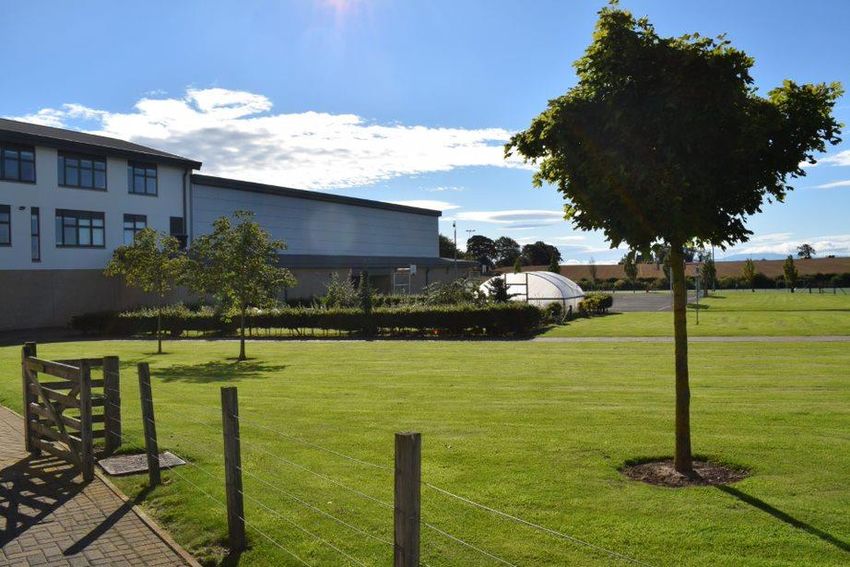
WELCOME FROM THE RECTOR

On behalf of the staff and students at Berwickshire High School, a very warm welcome to
you.

Berwickshire High School is a rural state comprehensive, located in the east of the Scottish
Borders. We have a student role of around 680 and a staff of around 100. We have five
partner primary schools: Chirnside, Coldstream, Duns, Greenlaw and Swinton.

We are a hugely ambitious school which sets high standards for everything we do. This
includes the quality of our curriculum and of teaching, the support we offer our students,
and our expectations for student effort and behaviour. Striving for the very best is what
we are all about.

As of August 2020, our school is under new leadership. We have moved quickly to address
areas identified in the previous year's inspection as requiring improvement. As a result,
our school today is a very different one from what it was then. We have embarked on a
programme of radical transformation, with our vision is to become the best state
secondary schools in the country, offering our students an education which rivals that in
any other school.

This handbook has been written for parents and perspective parents. It contains
information we think will be of interest to you. You can find out more about Berwickshire
High School on our school website: berwickshirehighschool.co.uk

I look forward to meeting and working with you in the near future.

                                                                     Bruce Robertson, Rector
                                                                                August 2020

                                             2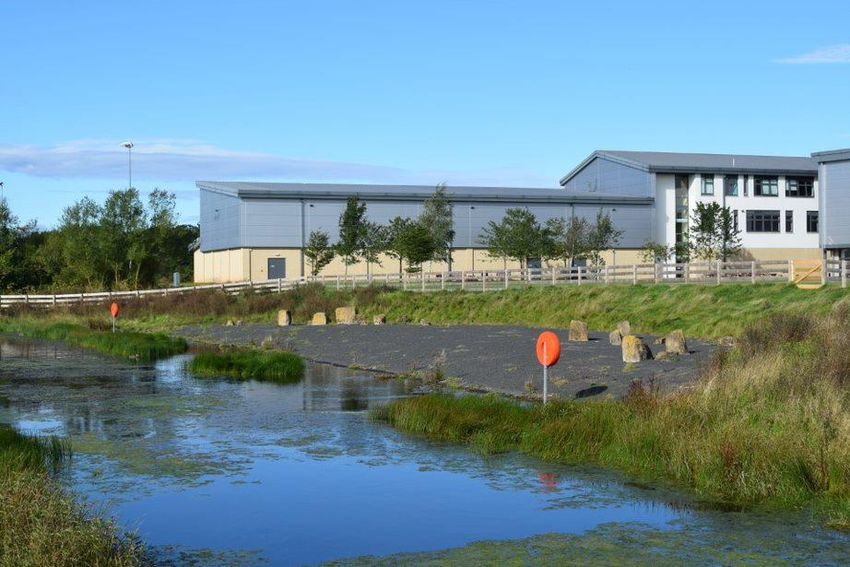
WELCOME FROM THE STUDENT HEAD TEAM

This is a message from Joana
Gaspar, Lewis Barker, Mariah Rong,
Dior Slater and Martha Beattie, your
new Head Team. We are really
excited to represent this school, to
give back to a place that has given
so much to us. This year, we have
moved away from the old Head
Boy/Girl and Deputy Head Boy/Girl
structure in favour of a general
Head Team, where each of us plays
a role in making Berwickshire High
School the best it can be for
students, parents, staff, and the
community.

So far, the Head Team has worked with our new Senior Prefects (Ailsa Dewar, Jessica
Scott, Finlay Hamilton, Liam Brown, Sophie Scott and Gaby Gracey) to arrange Prefects in
and out of school. We have introduced a new idea where we have Prefects keeping an eye
out on students down the street, to ensure minimum disruption to our community, and to
ensure that the behaviour of our students reflects the excellent standard of the
Berwickshire High School.

However, this is only the beginning. So far, our ideas include bringing back mental health
ambassadors, organising an S6 day which promotes learning and bonding, and increasing
student voice through installing a suggestion box and holding regular Student Council
meetings. We also have a lot more in store for the future. To achieve these goals, we will
work closely with Mr Robertson (our new Rector), the Senior Leadership Team, Mrs Hughes
(who is in charge of promoting student leadership, participation and achievement), Mrs
Morrison (who does a fantastic job with the House System), and other staff and students.

Our committees this year include Charities, Communication, Yearbook, Sports, Prom and
Social. Following a competitive applications process, we have selected Matthew Baker as
Head of the Charities Committee, Wasim Younus as Head of Communications, Olivia Taylor
as Head of Yearbook, Heather Kinghorn as Head of Sports, Matthew Duxbury and Lauren
Watson as joint Head of Prom, and Toby Kershaw and Archie Fuller as joint Head of the
Social Committee. Despite the restrictions imposed due to Covid-19, we are certain that
they will still do a fantastic job, albeit, in a slightly different way to normal.

Finally, we want to leave a legacy behind and be remembered as a Head Team that
helped bring about positive changes to this school. In particular, we’d like to connect
more with the younger years to inspire future leaders. We hope to make the Berwickshire
High School a warm, welcoming, place that ensures everyone can learn, achieve, and
contribute the best they can. We hope that everyone here will become outstanding
individuals.

                                            3
CONTENTS

                                                  Page

Vision, Aims & Values                              5

General Information                                6

Staff                                              7

Senior Leadership Team                             9

Extended Leadership Team                           10

Transition from Primary to Secondary               11

Curriculum                                         12

The S4-6 Curriculum                                13

Teaching Approaches                                14

Assessing, Tracking & Reporting Progress           16

Support for Students                               17

Enhanced Provision                                 23

Student Leadership, Participation & Achievement    24

Student Behaviour                                  26

School Session 2020-21                             27

Enrolment                                          28

Administrative & Statutory Information             29

Medical Arrangements                               33

                                         4
VISION, AIMS & VALUES
VISION
Our vision is to be the best state secondary school in Scotland. By this, we mean in terms
of:
1. The quality of teaching we offer
2. The support, challenge and inspiration we give to our students
3. Everyone enjoying their work and feeling proud of the community they are a part
of
_____
AIM
We aim to create outstanding individuals. By this, we mean students who:
1. Learn, as much as they can
2. Achieve, the very best they can
3. Contribute, to make our school and community better and better
_____
VALUES
Our vision and aim will be realised through a focus on five core values (CRESS):
Committed - we have a mind-set of continuous improvement
Respectful - we show respect towards others, our facilities, and ourselves
Enthusiastic - we believe you get out what you put in
Supportive - there is help when we need it
Safe - we look out for each other
5
GENERAL INFORMATION
Berwickshire High School is a state secondary comprehensive.
The school roll is 654. This is made-up as follows:
S1: 108
S2: 120
S3: 121
S4: 133
S5: 96
S6: 76
There are 88 members of staff.
Our partner primary schools are Chirnside, Coldstream, Duns, Greenlaw and Swinton.
We have an excellent school building and outdoor spaces, which opened in 2009.
THE SCHOOL DAY
The school day starts at 8:50am. There is a warning bell at 8:45am, which signals when
students should make their way to Registration.
Timings are as follows:
MONDAY TO THURSDAY
Registration 08.50 - 08.57
Period 1 08.57 – 09.46
Period 2 09.46 – 10.35
Break 10.35 – 10.50
Period 3 10.50 – 11.39
Period 4 11.39 – 12.28
Period 5A 12.28 – 13.17 (S4-6) and S1-3 Lunch
Period 5B 13.17 - 14.07 (S1-3) and S4-6 Lunch
Period 6 14.05 – 14.55
Period 7 14.55 – 15.45
FRIDAY
Registration 08.50 - 08.55
Period 1 08.55 – 09.44
Period 2 09.44 – 10.33
Break 10.33 – 1053
Period 3 10.53 – 11.42
Period 4 11.42 – 12.31
Period 5 12.31 – 13.20
THE SCHOOL OFFICE
The school office is open during term time from 8.30am until 4.30pm Monday to Thursday
and 8.30am until 3.30pm on Friday. Out of hours and during holidays messages can be left
by ringing our absence line - 01361 884844.
6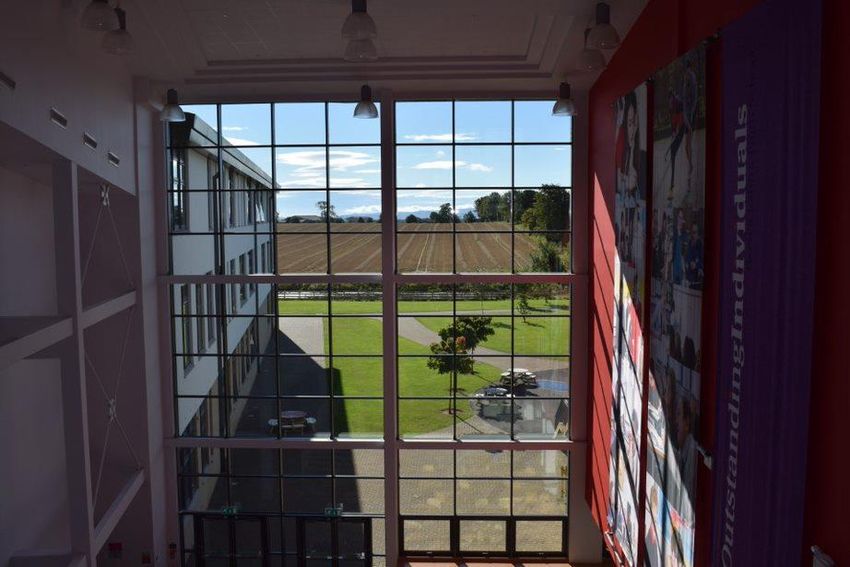
STAFF

                                    TEACHING STAFF

Languages & Literacy                          Sciences
Miss R Currie (Principal Teacher)             Mrs J Addie (Principal Teacher)
Mrs C Farmery                                 Dr S Barker
Mrs S Hughes (PT SLPA)                        Miss G Morison
Mr D Huffman (PT Pedagogy)                    Mr S Watson
Mrs E Allan                                   Miss J Gavana (NQT)
Mrs M Thompson                                Dr M Rogerson
Miss S Hanry                                  Mrs L Stokes
Mrs S Rowson                                  Mr R Stewart
                                              Mr D McArthur (NQT)

Expressive Arts                               Social Subjects
Mr C Mabon (Principal Teacher)                Miss C Grant (Principal Teacher)
Mr H Playfair                                 Mr M Stutt
Mrs J Montague                                Mr H Meadows
Mrs S Watt                                    Mrs H Patterson
Miss L Bell                                   Mrs N Ralston
                                              Miss K McAleece

Technologies                                  Mathematics & Numeracy
Mrs G Marchand (Principal Teacher)            Mrs S Brown (Principal Teacher)
Ms E Brotherston                              Mr D Simpson
Ms K Parker                                   Mrs C Kenneally
Mrs N Brown                                   Ms C Navarro NQT
Mrs P Yates                                   Mr D McArthur NQT (Maths/Physics)
Mr P Gibson NQT

Health & Wellbeing                            Student Support
Mr R Harvey (Principal Teacher)               Mr C Ash (PT Pastoral - Scott)
Miss A Robb                                   Mr J Fleming (PT Pastoral – Douglas)
Mrs G Taylor                                  Mrs L Kennedy (PT Pastoral - Home)
Mrs D Morrison                                Mr C Gracey (PT DYW)
Mr C Murray                                   Mrs K Huffman (PT Support for Learning)
Mr R Campbell NQT                             Mr R Smith (PT Complex Needs)
                                              Ms A R Castelblanco
                                              Mrs J Boyle
                                              Mrs K Cuthers
                                              Mrs P Grant
                                              Mrs R Shields
                                              Mr J Tennent

                                          7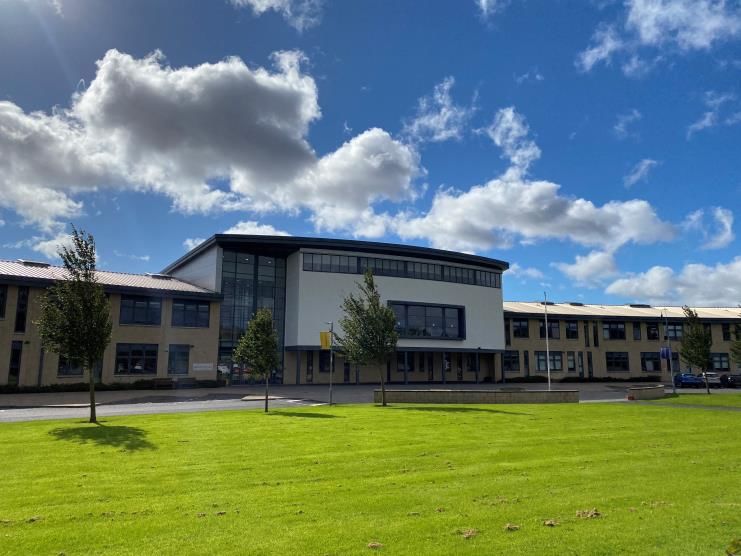
BUSINESS SUPPORT STAFF                        TECHNICIANS
Business Manager     Mrs A Merryfield       Science              Mrs F Gourlay
Admin Assistants     Ms S Bunyan                                 Mrs M McMillan
                     Mrs F Turnbull         Design & Technology Mr B Pratt
School Assistants    Mrs L Cleland
                     Mrs M Gregory          INSPIRE ANA
Home Ec Auxiliary    Mrs L Rhind            Mrs A Lindsay
Librarian            Mr I Bain
Catering Supervisor  Ms N Lothian           PSAs
                                            Miss D Hills (Douglas)
          STUDENT SUPPORT STAFF             Mr J Nevin (Scott)
Classroom Support   Complex Needs           Mrs C Wood (Home)
ANAs                ANAs
Ms F Bell           Mrs L Haste
Mrs A Cruickshank   Mrs D Jones                     SCHOOL FACILITY STAFF
Ms S Dickson        Ms K Lackenby           Facility Manager      Mr R Cleghorn
Mrs S Shiell        Mrs R Lister            Cleaning Supervisor   Mrs H Warnock
Ms M Smith          Ms T McGregor           Head Janitor          Mr R Maxwell
Mr W Redpath        Mrs M Rato              Janitors              Mr N Brack
                    Miss A Simpson                                Mr J Pigg
                    Mrs I Trace

                                        8
SENIOR LEADERSHIP TEAM
Our Senior Leadership Team (SLT) comprises the Rector, two Depute Rectors, and our
Business Manager.
Rector: Mr B. Robertson
Depute Rectors: Ms K. Thomson and Mr P. Macklin
Business Manager: Mrs A. Merryfield
REMITS
Rector
Strategic overview of teaching and learning
Vision, aims & values
Policy and procedures
Communications strategy
Recruitment and selection
Whole-school self-evaluation and quality assurance
Improvement planning
Staff Working Time Agreement and calendar
Liaison with Parent Council
Liaison with local authority
Depute Rector – Ms K. Thomson Depute Rector – Mr P. Macklin
Year Head: S1-3 Year Head: S4-6
P7-S1 transitions Targeted support: S1-6
S1-3 course choices Enhanced P7-S1 transitions
Professional learning programme S4-6 course choices
Inspire Learning Post-16 transitions
Tracking & reporting Child protection
SQA Co-ordinator Timetable (joint)
Student Teachers, Newly Qualified Staff cover (joint)
Teachers & Recently Qualified
Teachers
New staff induction
Health & safety (joint)
School trips
Business Manager
Facilities management
Finance and budgets across the Cluster
Liaison with Human Resources
Absence over (joint)
Timetable (joint)
Health & safety (joint)
9EXTENDED LEADERSHIP TEAM
Our Extended Leadership Team (ELT) comprises the Rector, two Depute Rectors, Business
Manager, seven Principal Teachers (Curriculum), five Principal Teachers (Support), and
three Principal Teachers with whole-school remits.
Rector: Mr B. Robertson
Depute Rectors: Mr P. Macklin
Ms K. Thomson
Business Manager: Mrs A. Merryfield
Principal Teachers (Curriculum)
Expressive Arts: Mr C. Mabon
Health & Wellbeing: Mr R. Harvey
Languages: Miss R. Currie
Mathematics: Mrs S. Brown
Science: Mrs J. Addie
Social Subjects: Ms C. Grant
Technologies: Mrs G. Marchand
Principal Teachers (Support)
Enhanced Provision: Mr R. Smith
Support for Learning: Mrs K. Huffman
Guidance (Douglas House): Mr J. Fleming
Guidance (Home House): Mrs L. Kennedy
Guidance (Scott House): Mr C. Ash
Principal Teachers (Whole-school)
Vocational Curriculum & Partnerships: Mr C. Gracey
Student Leadership, Participation & Achievement: Mrs S. Hughes
Pedagogy: Mr D. Huffman
Our ELT meets on a fortnightly basis, to discuss and agree strategic and operational
matters.
10TRANSITION FROM PRIMARY TO SECONDARY
Our school serves a largely rural catchment area taking students from the following
primary schools: Chirnside, Coldstream, Duns, Greenlaw, and Swinton.
The move from primary to secondary school is an important event for our students. At
Berwickshire High School wish to make this move as untroubled and smooth as we can.
Primary 7 students spend 2 days visiting the school in June, following their S1 timetable.
These visits give the students the opportunity to become familiar with our school building
and the structure of the school day. Students who will travel on school transport in August
are given temporary bus passes to enable them to use school transport on their two day
visit in June.
An information evening for parents/carers of Primary 7 students is held in June. Here they
will get the opportunity to meet Heads of Departments, meet Guidance Staff, tour the
school and taste the food the school canteen offers to students.
_____
ADDITIONAL SUPPORT NEEDS
For children with significant additional support needs, the primary school is likely to hold
a transfer review meeting. The purpose of this meeting is to consider the additional
support needs of your child and how these needs would be best met. The people present
at the review will be the parents, the child’s teacher, a representative of the Support for
Learning Department of Berwickshire High School, and any other professionals who may
have been working with your child. Your child too, is likely to be invited.
_____
OUT-WITH THE CATCHMENT AREA
A number of students also choose to attend our school from out-with our catchment area.
This is done by applying to Scottish Borders Council for a placing request. Parents are
invited to contact the school to arrange a visit prior to submitting the placing request
form. We have an excellent relationship with our cluster primaries and together we aim to
develop a strong partnership.
11CURRICULUM
By ‘curriculum’, we mean what we teach our students.
RATIONALE
All students of Berwickshire High School should develop:
The knowledge they need to understand the world around them
The skills they need to continue to learn and to contribute to society
Attributes which reflect our school values
A love learning for the sake of learning, seeing it as interesting, exciting and
empowering
Knowledge-based; skills-orientated
The Berwickshire High School curriculum is ‘knowledge-based; skills-orientated’. By
teaching students a rich body of knowledge (about things and of how to do things), we lay
the foundations for them to develop a broad range of specific skills, some of which will be
transferable across subject disciplines.
Attributes
As well as teaching our students knowledge and skills, we aim to develop their character
through a focus on particular attributes. These attributes link to our school values and
include things such as hard work, politeness and being kind.
_____
WHERE STUDENTS LEARN
For the most part, our curriculum is taught in specific subjects. However, it also extends
beyond this to include learning in assemblies, clubs, sports, shows, trips, work experience
and volunteering.
_____
THE S1-3 CURRICULUM
The S1-3 curriculum is often referred to as the Broad General Education (BGE). It is
informed by the national guidelines produced by Education Scotland, but the specific
content is unique to Berwickshire High School.
The subjects students study in S1-3 include English, maths, science, history, modern
studies, geography, religious and philosophical studies, art, music, French, Spanish, PE,
home economics, and a range of technology-focused subjects.
Moving from S2 into S3, students are able to make subject choices which allow them to
personalise their curriculum more.
Fuller details of our S1-3 curriculum can be found on our school website, in the ‘Teaching
& Learning’ section.
12THE S4-6 CURRICULUM
Once they move into S4, students begin what is often
referred to as the Senior Phase of their education in
school.
For the first time, the courses they study are national
courses, common to different schools across the
country. The typical courses which students follow are:
Nationals (National 1, National 2, National 3,
National 4 and National 5)
Highers
National Progression Awards
National Certificates
Advanced Highers
In S4, students typically study six courses, each timetabled for five periods per week. They
are also taught physical education (PE), personal and social education (PSE), and religious,
moral and philosophical studies (RMPS).
In S5, students typically study five courses, each timetabled for five periods per week.
They are also taught personal and social education (PSE), and religious, moral and
philosophical studies (RMPS). They can make a choice to be taught physical education (PE)
or practical Cookery. Many S5 students will also have independent Study Periods.
In S6, students can choose from the same range of courses as S5 students, but can also
study Advanced Highers. They are taught personal and social Education (PSE) and
Citizenship. As a general rule, S6 students are expected to follow a curriculum which has a
minimum of 28 timetabled periods (although this can be reviewed on a case-by-case
basis). As part of their curriculum, S6 students are expected to make an enhanced
contribution to the school or local community, for example, through volunteering.
Developing the Young Workforce (DYW)
In addition to academic course options, senior students have the opportunity to learn in
work placements and Foundation Apprenticeships. Some of the courses we offer in the
Senior Phase are delivered by partner agencies, including Community Learning and
Development, Borders College and Queen Margaret University.
Our Principal Teacher of the Vocational Curriculum & Partnerships works in partnership
with DYW Borders in providing opportunities within the school curriculum for students to
work with local employers.
The school organises an annual Careers Fair and Senior Work Placements in order to help
raise awareness of the range of careers and training on offer to our young people and the
different routes to work in our local area and beyond. It is the aim, through DYW, to
maximise and sustain those potential business links for our young people in helping them
plan for their future training and employment leading to a positive destination.
13TEACHING APPROACHES
TEACHING IN LESSONS
At Berwickshire High School, we pride ourselves in
the fact that approaches to teaching are research-
informed. We work hard to ensure that all of our
staff have a research-informed understanding of:
1. How students learn
2. The best ways to teach students particular
things
An important message from educational research is
that ‘novices’ and ‘experts’ think and learn
differently. The best way to teach novices is
using teacher-led approaches; learner-led
approaches are better for experts.
Whenever anyone starts to learn anything new,
they are novices in that area. This is independent
of age. A P1 student who can’t read is a novice
reader; an S6 student beginning an Advanced
Higher chemistry course is a novice in quantum
mechanics.
For this reason, when teaching novices, we expect teachers in Berwickshire High School to
make use of teacher-led approaches. This includes what we call ‘direct-interactive
instruction’ and ‘formative assessment’.
Once students become more expert in a particular area, less structured approaches can
offer a powerful means for students to apply and demonstrate their learning, including in
creative ways.
_____
HOMEWORK
‘Homework’ has an important part to play in student learning. It can take different forms,
but really there are two types of homework that we think are most important:
1. Practise, to consolidate learning from lessons
2. Preparation, to prepares students for a future lesson (such as advance reading or
research)
_____
INDEPENDENT STUDY
As students progress through school, the need for independent becomes more and more
important. The more students do, the more successful they are likely to be. Hard work
counts.
That said, research is clear that not all study habits are equally effective. Below is a
summary of ‘ineffective’ and ‘effective’ study habits:
14Ineffective Effective
Reading notes again and again and again Retrieval Practice:
• Writing notes from memory
Copying from a textbook • Making mind-maps from memory
• Read, cover, write, check, correct
Re-writing notes • Using flash cards
• Practising questions
The BBC Bitesize website is an excellent independent learning resource for all
S1-6 students. For S4-6 students, the Bright Red website and Scholar should be very
useful.
_____
STUDY SUPPORT
Details of when Study Support is available to our students can be found on our school
website, in the ‘Teaching & Learning’ section.
15ASSESSING, TRACKING & REPORTING PROGRESS
ASSESSMENT
We recognise that ‘teaching’ and
‘learning’ are two different things: just
because something has been taught,
doesn’t mean it has been learned. We
use assessment to find the extent to
which what has been taught has been
learned.
Low-stakes
Because of its importance, we assess
student all the time. For the most part,
this is ‘low stakes’. By that, we mean
that it simply used to find out what
students have learned.
Examples of ‘low stakes’ assessment
include:
Asking students questions
Observing students as they carry out a task
Quizzing
Daily, Weekly, Monthly & End-of-topic Review
To help assess student learning on a continuous basis, we ask teachers to begin lessons
with a short review of previous learning, which we call ‘Daily Review’. We also ask that
they build ‘Weekly Review’, ‘Monthly Review’ and ‘End-of-topic Review’ into their
teaching programmes. By doing so, teachers can assess student learning over more
extended periods of time.
_____
TRACKING & REPORTING
Learning Logs
Every 4-6 weeks, we ask students to complete a ‘Learning Log’ in each of their subjects.
This is designed to record performance in assessment activities, such as Monthly and End-
of-topic Review. Learning Logs help students to track progress, and to report this to
parents.
Tracking Reports
Complementing Learning Logs, three times a year we send parents a short tracking
report, summarising student progress in each of their subjects. These reports include:
The level a student is working at (for example, Level 3 in the Broad General
Education; National 5 in the Senior Phase)
Their course target (for example, to ‘pass’ or to achieve a grade B)
A green/amber/red progress measure
An effort and behaviour rating
16SUPPORT FOR STUDENTS
PASTORAL SUPPORT
The school pastoral system ensures
that every child has an identified
adult who has specific responsibility
for them in school and who liaises
closely with home. We call this
person the student’s Guidance
Teacher. Guidance Teachers are
responsible for the pastoral care of
all students in their ‘House’
(Douglas, Home or Scott). They are
supported in their work by Student
Support Assistants (SSAs).
Guidance Teachers also work closely with external partners and agencies, including
Educational Psychologists, Social Work, and Skills Development Scotland.
Once a week, Guidance Teachers teach students in personal and social education (PSE)
lessons.
_____
SUPPORT FOR LEARNING
At different stages in their education, students may require support to help them learn.
Our Support for Learning faculty works with teachers from across our school to ensure that
all students get the support they need, whenever they need it.
In-class support
Sometimes, the support we provide will be in classes. This might be by ensuring a student
has access to particular support resource, or by ensuring there is an adult on hand to offer
support. This adult may be a teacher or a support assistant.
Out-of-class support
At other times, students require support out of lessons. This might be via one-to-one
tutoring, small group teaching, or mentoring.
Contact
If a pupil feels that they need additional support for learning, the first person to speak to
is their Guidance Teacher. In consultation with parents, they will make appropriate
enquiries and referrals.
_____
17CHILD PROTECTION
Our settings in the Scottish Borders work hard to keep our children and young
people safe - all children and young people have a right to feel safe within the
setting, home and community.
Within our setting we strive to provide a safe, secure and nurturing environment
for our children and young people, which promote inclusion and achievement.
All staff in Education have a statutory and professional responsibility to take
action if we have reason to believe a child is suffering, or is at risk of abuse.
Our Scottish Borders Child Protection procedures set out what we will do if we
have reason to believe a child is being abused or is at risk of abuse, either within
the home or the community. These procedures are designed to ensure that
children and young people get the help they need when they need it.
All staff are aware of their child protection responsibilities and every year all
staff in our setting attend a child protection update.
Many of our staff undertake additional multi-agency child protection training.
Every setting has a Child Protection co-ordinator who has the responsibility for
overseeing child protection concerns as well as those young people who are care
experienced within the setting.
The Child Protection co-ordinator for the setting is Peter Macklin, Depute Rector
What to do if you have a child protection concern?
It's everyone’s responsibility to protect children.
If you have any concerns that a child is being harmed or is at risk of
harm, please call without delay
01896 662787 (Duty Children and Families Social Work Team)
01896 752111 (Out of office hours that covers all areas)
Emergency contact
If you consider a child or young person is in immediate danger, call the
Police on 999 immediately
Need more information about keeping our children and young people safe?
This link takes you to the Scottish Borders Child Protection Committee online website
where you can find some suggested links to websites to better inform you about safety
issues such as Internet safety and Child Sexual Exploitation as well as letting you know
about opportunities for training in Child Protection. You can also find the Scottish Borders
Child Protection Procedures on this website.
http://onlineborders.org.uk/community/cpc
18GETTING IT RIGHT FOR EVERY CHILD
(GIRFEC) is the national approach in Scotland to improving outcomes and
supporting the wellbeing of our children and young people by offering the right
help at the right time from the right people.
The GIRFEC approach aims to make it easier for parents, children, young people
and the services that support them – such as early years services, schools and the
NHS – to work together to get it right.
Practitioners work together to support you and your child, working across
organisational boundaries and putting your child and you at the heart of decision
making, ensuring we give all our children and young people the best possible start
in life.
GIRFEC means that everyone working with Scottish Borders children, young people
and their families are encouraged to:
Ensure children, young people, and their families get the help they need
when they need it and are central to the process of finding solutions.
Use one consistent and equitable approach, actively share information to
agreed protocols and work more effectively together to improve outcomes
for children and young people.
Be clear about personal responsibility to do the right thing for each
child/young person.
Work with children, young people and their families, using a collaborative
approach with fewer meetings. This should ensure children, young people
and their families give information only once, and enables the development
of one plan to meet all their needs.
Respond to children and young people and take appropriate, proportionate
and timely action with the minimum of paperwork, bureaucracy and
duplication.
GIRFEC is part of the Children and Young People (Scotland) Act 2014 and the
GIRFEC provisions are planned to be fully implemented by August 2017. If you
would like any further information please ask your child’s Headteacher.
_____
YOUNG CARERS
A young carer is someone who is under 18 years of age or who has reached 18 and
still a pupil at school and provides or intends to provide care for another individual. A
number of young carers do not always identify themselves or wish to be identified.
Young carers undertake a number of tasks for the people they live with and look
after. They are often left alone to do things like washing, cooking, shopping, paying
bills, collecting medication or helping to look after younger brothers or sister.
19This means they might not have as much time to complete work at home which has
an ongoing effect on progress and learning or attend clubs and after schools
activities therefore missing out on the social aspects of school.
Within Berwickshire High School we want our young carers to enjoy school and that
it is a positive place to come and they feel included. Please let us know if there are
difficulties meeting deadlines with work, arriving on time or any other issues which
affect a young person.
COUNCIL’S IMPLEMENTATION OF BRITISH SIGN LANGUAGE PLAN
The Council’s BSL Plan 2018-24 has seven holistic actions. These actions are
consistent with the ten long term goals of the National BSL Plan in Scotland, which
are, early years and education; training and work; health, mental health and
wellbeing; transport; culture and the arts; justice and democracy.
These goals represent the Scottish Government’s aim “to make Scotland the best
place in the world for BSL users to live, work and visit.”
The Council will implement measures to promote awareness of BSL and the use of
BSL, with the long term goal being that across Scotland information and services
will be accessible to all BSL users*.
Contact Scotland –BSL is an online British Sign Language interpreting service that
allows deaf people across Scotland to access services free and available 24 hours a
day throughout the year: https://contactscotland-bsl.org/
If a BSL user requests a face to face meeting then the School is required to provide
a face to face interpreter.
*Whenever we refer to ‘BSL users’ we mean D/deaf and /or Deafblind people
(those who receive the language in a tactile form due to sight loss) whose first of
preferred language is British Sign Language
Where and how a parent can find out more about the school’s curriculum at
local and national level. Skills for life, the four capacities. How is the school
implementing Curriculum for Excellence? The Es and Os, broad general
education, progression through the curriculum levels and curriculum planning
guidance. You may wish to signpost parents to national websites for some of
this information including Parentzone :
http://www.educationscotland.gov.uk/parentzone
Education Scotland: http://www.education.gov.scot/
_____
2021
USEFUL LINKS AND CONTACT DETAILS
Respectful Relationships Policy: www.scotborders.gov.uk/antibullying
Educational Psychology Service: The Educational Psychology Service (EPS) works
with all SBC schools to support children’s learning and wellbeing. Further
information about the EPS is available on the Scottish Borders Council website.
Here you can access a downloadable leaflet for parents and carers, which explains
in more detail how we may be able to work with you to support your child in
school: www.scoborders.gov.uk/EPS
NHS Borders School Nurse: Ruth Skinner available Wednesday lunchtime or by
appointment (01361 885 015)
Careers Guidance Service: Skills Development Scotland, Ross Ryrie
Enquire: The Scottish advice service for Additional Support for Learning:
www.enquire.org.uk Phone: 0845 123 2303.
Employment of Children: Children under the statutory school leaving age can
only be employed within the terms of the bye-laws on the Employment of
children. These regulations allow anyone to be employed at 14 years but
under certain circumstances children under 13 years of age can be
employed, and for those over the age of 13 there are limits on the hours and
type of employment which are allowed. Parents and employers must both
complete an application form for an employment permit before the
employment begins. Forms and application forms are available from the
school office. Further details can be obtained from HQ Operations, Children
& Young People Services, Scottish Borders Council, Newtown St Boswells,
TD6 0SA. Further information can be found at:
https://www.scotborders.gov.uk/info/20025/licensing/670/employment_by
elaws_for_children_and_young_people/1
22ENHANCED PROVISION
The Enhanced Provision faculty supports students with severe and complex additional
support needs, where significant adaptation to the school curriculum requires targeted
support interventions.
The experience for students in our Enhanced Provision faculty is adapted and tailored to
meet individual needs. We aim for all young people in the faculty to feel fully included in
life of the school. There is a focus on developing independence, communication and life
skills, whilst developing confidence and resilience when interacting with the wider world.
All students have an Individualised Education Plan (IEP) drafted in consultation with parents,
education staff and if appropriate Allied Health Professionals. IEPs are reviewed regularly
to ensure progression with literacy, numeracy and health and wellbeing targets.
23STUDENT LEADERSHIP, PARTICIPATION &
ACHIEVEMENT
There are a wide range of leadership, participation and
achievement opportunities available to students in
Berwickshire High School. What follows is a selection of
these.
HEAD TEAM AND PREFECTS
In the senior school, our S6 Head Team and Prefects have
key leadership roles. Each member of the S6 Head
Team is responsible for leading the improvement of a
specific aspect of school life for students. Once a week,
the S6 Head Team meets with the Senior Leadership
Team (Rector, Depute Rectors and Business Manager) to
discuss relevant matters.
Senior Prefects and Prefects also play a key leadership
role in our school. Amongst other duties, they help
supervise the school building and grounds at break and
lunchtimes. They also monitor student behaviour on
buses and in the local community.
_____
STUDENT VOICE
Students have the opportunity to help lead the continuous improvement of our school
through 'student voice'.
Student voice comes about in variety of ways, including through consultation and ensuring
there are opportunities to discuss ideas. Important forums include:
The Student Council
Committees
A suggestions box
Surveys
Focus groups
_____
THE HOUSE SYSTEM AND STUDENT COUNCIL
Our House System plays an important role in student voice. Each year, House Captains are
voted in to represent their class in House events and the Student Council.
The Student Council meets once a month to discuss any issues arising in the school and
wider community. These include:
Achievements of our students and how these should be celebrated
The supports that are in place for students
Proposals from our suggestions box
Each Student Council representative is responsible for communicating messages from
discussions at council meetings with the wider student body.
24Our Student Council is led by S6 students, who are responsible for ensuring that minutes
are taken during and that key information is displayed on our Student Council display
board for all students to read.
_____
AMBASSADORS
Many of our senior students are 'Ambassadors'. Ambassadors take a lead role in a particular
area of school life, such as mental health.
_____
STUDENT ACHIEVEMENT
We strive to ensure student achievements, both in and out of school, are recognised and
celebrated. We do this in a variety of ways, including through:
Notice boards
Assemblies
School website
House points
Praise Postcards
25STUDENT BEHAVIOUR
We expect high standards of student behaviour at all times. This is as important in
‘unstructured’ time (such as break and lunchtimes) as it is in lessons.
WARM-STRICT
Our approach to working with students is ‘warm-strict’: we expect staff to develop close
working relationships with students, but we won’t tolerate poor behaviour.
_____
RULES
To support students to behave well, we have clear school rules. Some of the most
important for you to be aware of are:
We are a mobile-phone free school. While mobile phones can be brought to
school, they are not to be seen, heard or used at any time whilst in the school
building.
From the moment students enter the building, we expect full school uniform. This
means that all outdoor clothing needs to be removed and put into a bag or locker.
With the exception of S6, students go outside at morning break. At lunchtime,
they go outside once they are finished their lunch. Students are not allowed back
into the building until the bell goes. (On days where the weather is poor, this rule
is reviewed.)
There is zero-tolerance to swearing at staff.
_____
RECOGNISING POSITIVE BEHAVIOUR
Because high standards of student behaviour are expected at all times, we don’t believe it
is right to reward this. Good behaviour is a basic expectation.
However, we do believe that it is right to reward behaviour which goes above and beyond
basic expectations. We do this in a number of ways, including use of House Points and
Praise Postcards.
_____
CONSEQUENCES FOR POOR BEHAVIOUR
Should student behaviour fall short of our expectations, a system of consequences will be
applied:
For low-level poor behaviour, students may be moved seat or asked to stay behind
for a conversation at the end of a lesson.
For poor behaviour deemed to me more serious, or for persistent low-level poor
behaviour, staff will issue a detention. In the first instance, this will usually be a
20-minute lunchtime detention. The level up from this is a 30-minute after-school
detention. The level up from that is a 60-minute Friday afternoon detention.
26SCHOOL SESSION 2021-22
Autumn Term
Date Details
Wednesday 18 August 2021 Students resume
Friday 08 October 2021 All break, mid-term
Monday 18 October 2021 Staff in service day
Tuesday 19 October 2021 All resume
Monday 29 November 2021 St Andrew's Day holiday, school closed
Tuesday 30 November 2021 All resume
Thursday 23 December 2021 All break, term ends
Winter Term
Date Details
Monday 10 January 2022 All resume
Friday 11 February 2022 Students break, February holiday
Monday 14 February 2022 Staff in service day
Monday 21 February 2022 All resume
Friday 01 April 2022 All break, term ends
Summer Term
Date Details
Monday 18 April 2022 All resume
Monday 02 May 2022 May Day holiday, school closed
Tuesday 3 May 2022 Staff resume – in service day
Wednesday 4 May 2022 Pupils resume
Thursday 30 June 2022 Last day of term for Students and staff
Casual Holidays
Each Learning Community allocates 2 casual holidays for Students and staff details below;
Learning Community Dates
Monday 21 February 2022
Berwickshire
Monday 30 May 2022
Details of the school session for 2022/23 will be available on Scottish Borders Council’s
Website.
27https://www.scotborders.gov.uk/info/20009/schools_and_learning/621/term_holiday_an
d_closure_dates/2
ENROLMENT
ENROLMENT ARRANGEMENTS
Every household in the Scottish Borders is within a school catchment area. Normally you will
be given a priority place in the secondary school within your catchment area. However it is
also possible to apply for a place in a school that is not in your catchment area.
Please note that your nearest school may not be your catchment school.
To apply for a place at Berwickshire High School:
If you live in our catchment area - please complete an enrolment form and return it
to the school office.
If you do not live in our catchment area - please make a placement request.
We will require a copy of your child’s birth certificate and evidence that you live in the
catchment area.
In most cases, a place will be available and the Rector will give you details of start dates,
uniform and a copy of the School Handbook.
In the unlikely event that the school is full you may be directed to the nearest alternative
school with places.
2829
ADMINISTRATIVE & STATUATORY INFORMATION
DATA PROTECTION
Scottish Borders Council is a local authority established under the Local Government etc.
(Scotland) Act 1994 and its headquarters is based at Newtown St Boswells, Melrose TD6
0SA. You can contact our data protection officer by post at this address, or by email at:
dataprotection@scotborders.gov.uk , or by telephone – 0300 100 1800.
Why we need your information
Every child of school age has the right to be educated. A child is of school age if he/she has
attained the age of 5 but has not attained the age of 16 years. The term “young person”
applies to a student over school age, but who has not attained 18 years. The education
authority has a duty to provide education to any young person who is still a school student.
We need to collect, use and store personal information about you and your child/children
to enable us to provide your child/children with an appropriate education. We provide these
services to you as part of our statutory function as your local authority under:
The Education (Scotland) Act 1980, Education (Scotland) Act 1980
The Education (Placing in Schools etc. Deemed Decisions) (Scotland) Regulations
1982
The Standard in Scotland’s Schools Act 2000
Education (Scotland) Act 2016
We also use your information to verify your identity where required, contact you by post,
email or telephone to maintain our records.
Who we will share information with
We will share information with health and wellbeing services and may share information
with other external agencies and organisations who provide or assist with educational
provision and with online payment solution providers.
The Scottish Government for examination, career guidance and monitoring
purposes.
ParentPay, ESP Systems and CRB to allow the school to offer cashless catering and
to receive payment for school trips and events;
Groupcall to allow the school to communicate with you;
The NHS for health monitoring;
Netmedia to enable the online arrangement of parents evenings;
Internal Scottish Borders Council departments to allow the provision of catering
and transport.
On each occasion, the recipients are bound to the terms of a Data Sharing Agreement and
accordingly will only use your child’s data for the specified purpose. This data sharing is in
accordance with our Information Use and Privacy Policy and covered in our full privacy
statement on our website.
We are also legally obliged to share certain data with other public and regulatory bodies
such as Education Scotland, Police and NHS will do so where the law requires this.
30Your information may also be shared and analysed internally in order to provide
management information, inform service delivery reform and similar purposes to meet our
duty to achieve best value and continuous service improvement.
We are legally obliged to safeguard public funds so we are required to verify and check your
details internally for fraud prevention. We may share this information with other public
bodies (and also receive information from these other bodies) for fraud checking purposes.
How long do we keep your information for?
We only keep your personal information for the minimum period amount of time necessary.
Sometimes this time period is set out in the law, but in most cases it is based on the business
need. We will retain a copy of your child/children’s educational record up until they reach
the age of 25.
Photographs/Videos
Photographs and videos may be taken by staff in the school, media and other parents for a
variety of reasons for example Sports Day, celebrations of achievement, charity events,
excursions etc. The school your child attends may wish to display or show photographs or
videos taken by themselves, in print, in various locations or by electronic means such as a
website. Likewise the media or other parents may wish to use the images of Students in
various ways. We ask you at the time your child enrols at one of our schools if you are happy
for images of your child to be used in this way and we try to ensure you are aware of, and
understand, such possible use of your child’s image and that you have consented.
Any permission given will remain in force during your child’s primary and secondary
schooling until you indicate that you wish to withdraw your consent. You can do this by
contacting the head teacher of your school as soon as possible.
Your Rights
You have the right to request access to any personal data held about you by the Council.
You can also request that we restrict the use of your information or even object to any
further processing. You can do this by contacting the Data Protection Officer using the
contact details provided above. We will respond to your request within thirty calendar days.
For more information on your rights please visit:
http://www.scotborders.gov.uk/DPYourRights If you would like a hard copy of this
information, please contact us using the contact details provided above.
Complaints
We aim to directly resolve all complaints about how we handle personal information. If your
complaint is about how we have handled your personal information, you can contact our
Data Protection Officer by email at dataprotection@scotborders.gov.uk or by telephone on
0300 100 1800.
However, you also have the right to lodge a complaint about data protection matters with
the Information Commissioner's Office, who can be contacted by post at:
Information Commissioner's Office
Wycliffe House
Water Lane
Wilmslow
Cheshire
SK9 5AF
31You can visit their website for more information https://ico.org.uk/make-a-complaint/ .
If your complaint is not about a data protection matter you can find details on how to make
a complaint on:
https://www.scotborders.gov.uk/info/20016/have_your_say/155/make_a_complaint/1
EMERGENCY CLOSURE OF SCHOOL
In the event of an emergency arising whereby it is necessary to close the school, you will
be contacted by ‘Group Call’ which is a text message to your mobile phone. It is the
parents’ responsibility to inform the school of any changes to your contact details. If you
know that your mobile phone does not have a signal, or you do not have a mobile phone,
please inform the School Office so that they can record an alternative landline number to
contact you on. Students will not be allowed to leave the school unaccompanied unless
school staff are satisfied that there is someone at home to receive them.
SEVERE WEATHER
In the event of severe weather we will make every effort to keep the school open and
continue as normal. However, there may be situations where this is not possible and it is
therefore important that you follow the points below in terms of transport arrangements.
During adverse weather, school transport may be subject to cancelled services, amended
routes, longer journey times or alternative bus stops used. In extreme cases there may be
the need to cancel all school services.
Morning Journeys
1. School bus drivers and operators have complete discretion to cancel or vary school
transport given any local weather conditions.
2. In the case of morning journeys to the school, the driver may decide that he/she
either cannot undertake the journey or complete the trip to school. The driver
would then return the children home. In the event of adverse weather conditions,
parents should ensure that some arrangement has been made at home to cover this
possibility.
3. Should the school transport for your child not operate in the morning because of
adverse weather conditions but you decide to take your child to school yourself then
you are expected to collect your child either at the end of the school day or at the
time of early closure. Do not bring your child to school when buses do not run unless
you are certain of being able to collect them at the end of the school day – even if
the weather worsens.
4. School transportation may well be delayed due to adverse weather so students will
have to wait longer and be exposed to the cold.
5. Parents must ensure that their children are warmly dressed just in case the journey
to school is very slow or even halted in bad weather. In normal circumstances,
students should not wait more than 15 minutes if the bus is late. In severely cold
weather, this 15 minute rule need not apply.
326. If your child travels to school on connecting services, drivers will be told to wait for
each other and not to leave any children standing in adverse weather conditions.
Should the second bus not arrive children will be returned home. If the second bus
does arrive but cannot complete the journey to school that driver will return
children to their homes.
What will happen if students are sent home early due to bad weather or other
emergency?
1. The Rector, with knowledge of local weather conditions, will work with the
Education Department to make decisions regarding a school closure or to send
children home early should severe weather conditions threaten.
2. Where students use school transportation a set of emergency instructions are used to
contact transport operators and other schools using the same transport, and parents
whose children have a long way to walk home from the drop-off points. Parents must
ensure that some arrangement has been made to cover the possibility of students
being sent home early.
3. Schools routinely communicate with parents or groups of parents using Groupcall
text messaging service. Once the decision has been made then Groupcall will be
used to send updated information regarding sending Students home early. Parents
are asked to ensure that the school that their child attends has an up to date and
accurate mobile telephone number on record for these purposes. It is further
suggested that parents who may find it difficult or not possible to have their mobile
telephone switched on throughout the day ensure that they check their phone on a
regular basis for any Groupcall messages from the school when bad weather has
been forecast or where they see deterioration in the weather.
4. If school transport is in operation and you collect your own child from school during
severe weather then the school office must be informed so that transport is not
delayed while staff look for a missing child.
Additional information to ensure the safe travel of students to/from school
1. The ultimate responsibility for the safety of children walking to and from bus pick-
up/drop-off points rests with the parents. Parents must decide whether or not
children can make their way to meet transport in low temperatures.
2. If you feel that your child should not walk home alone in bad weather from the drop-
off point it will be your responsibility to meet him/her. Drivers will not normally set
children down at any point significantly different from the usual one. The driver will
use his/ her judgment in deciding whether to leave the child or to keep him/her on
the bus. In the latter case, your child would be taken to a nearby school or place of
safety. Children must follow any instructions given to them by the driver in any
emergency and should not leave the bus to make their own way home.
3. Where transport is unable to operate to take children home as a result of extreme
weather conditions The Emergency Planning Team will work alongside our partners
to provide alternative and safe transport home. Arrangements have been made with
Radio Borders to relay information about the cancellation of school transportation
and group call and Scottish Borders Website will be used to inform parents of any
important information.
33MEDICAL ARRANGEMENTS
Limited First Aid facilities are available in school and parents are requested not to send
students to school who are feeling unwell. Should a student become unwell at School,
First Aiders will telephone the parent(s)/carer(s). To enable this to happen it is important
that the School be informed of any changes to emergency contact numbers.
First aid treatment for minor injuries is carried out in school for any more serious injuries it
will be necessary for the students to be collected and taken to their Doctor/Health
Centre/BHG.
Students who have medical/dental appointments during the school day should bring the
appointment card or a letters from parent(s) to the school office to allow them to sign out.
Action plans are in place for students who suffer allergic reactions which could result in
anaphylaxis shock or who suffer from diabetes etc. It is the responsibility of the
parents/carers to inform the school of any health development in their child which might
require an Action plan be put in place. Expiry date and replacement of
medication/diabetic supplies is a parental responsibility as detailed in the action plan.
Should a student use any medication held at Berwickshire High School office, it is the
parents’ responsibility to replace the medication, epipen, diabetic medication/drinks,
etc. immediately.
NHS Borders conduct a programme of inspections and vaccinations in school. NHS Borders
Permission letters are sent home via the school with students and vaccinations take place
in school administered by an NHS Immunisation Team during the school day.
34You can also read


