Parent Guide 2018 - The heart of learning in our thriving community - Greymouth High School
←
→
Page content transcription
If your browser does not render page correctly, please read the page content below
Parent Guide 2018

  The heart of learning in our thriving community
Contents
    Term Dates & Holidays 2018                                                         2

    Welcome to Greymouth High School                                                   3

    Staff & Facilities, Parent Services                                                4-6

    Student Services                                                                   6-7

    Curriculum & Courses, Māwhera Services Academy                                     8-9

    Student Management: Positive Behaviour for Learning (PB4L)                         10-17

    School Charges                                                                     18

    Emergency Plans                                                                    19

    Greymouth High School Uniform		                                                    20-22

    Complaints Policy		                                                                23-26

    Greymouth High School Procedure for Dealing with Concerns or                       27
    Complaints

    NOTES                                                                              28

Term Dates 2018

 Term One           Tuesday 30th January         →     Friday 13th April
 Term Two           Monday 30th April            →     Friday 6th July
 Term Three         Monday 23rd July             →     Friday 28th September
 Term Four          Monday 15th October          →     Thursday 13th December*

* Or to a day in December which ensures that the school has been open for instruction for
380 half-days in 2017.

2018 Holidays
Waitangi Day                  Monday 6th February
Good Friday                   Friday 30th March
Easter Monday                 Monday 2nd April
Easter Tuesday                Tuesday 3rd April
Anzac Day                     Tuesday 25th April  (during Term 1 holiday)
Queen’s Birthday              Monday 4th June
Labour Day                    Monday 22nd October
Westland Anniversary Day      Monday 3rd December

Telephone: (03) 768 0472 Facsimile: (03) 768 6293 Absence line: 0800 GREY HIGH
E-mail: office@greyhigh.school.nz Website: www.greyhigh.school.nz FIND US ON FACEBOOK

2                                                      STRIVE FOR SUCCESS Whaia te iti Kahurangi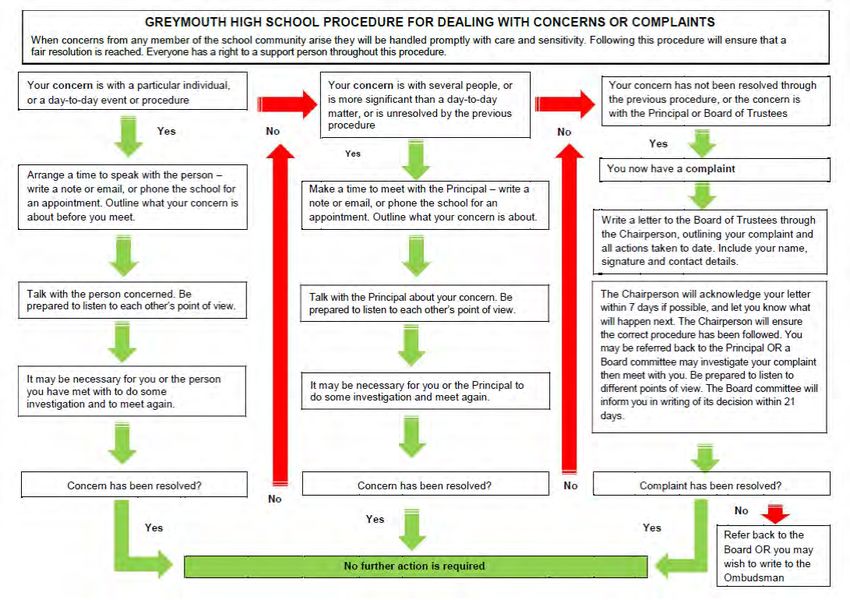
Welcome to Greymouth
High School
E ngā mana, e ngā reo, e ngā
karangaranga maha nau mai ki te Kura Tuarua o Māwhera

           Motto                          Vision                             Values

   Whaia te iti kahurangi       The heart of learning in our      Akoranga             Respect
    Strive for success             thriving community            Community             Hauora

This booklet has been prepared to help you better understand how the school works. It sets out the
services we provide and our expectations of your children in their learning and behaviour when they
are in our care. Please keep it and refer to it during the year.

We aim to have a school culture which values akoranga (learning), respect, community and hauora
(well-being). We have high expectations for all of our students and staff and it is very important
that you do too – it is proven that having high expectations for students from both parents and
school makes the biggest difference to their achievement.

Our expectations for students and staff are made clear in the PB4L section of this guide. They are:

       Learning                 Respect               Responsibility                  Safety

We encourage you to get involved with your child’s education and to support your school.
Greymouth High School belongs to you and your community: we are here to serve you and your
children to the best of our ability. We always value any opportunity to talk with members of the
families and whanau of our students.

STRIVE FOR SUCCESS Whaia te iti Kahurangi                                                             3
Staff and Facilities
Office Hours
8.15am – 5.00pm during term time.

Staff
For contact details please refer to the Greymouth High School website: www.greyhigh.school.nz

Key Staff
Your child will have a Mentor Teacher who should be your usual first point of contact, either by
email or phoning the school office.

Library
The hours for student use are 8.45am – 4.30pm each school day. The Library is closed for the first
ten minutes of lunchtime. This is to ensure that students have their lunch.

Parent Services
Partnership
A good partnership between school and parents, caregivers and whanau helps students to be
successful. We know that parents, caregivers and whanau care about the education their children
receive. Please contact the school if you need information on your child’s progress or if you have any
concerns.

Communication
We communicate within the school with Daily Notices. These are available via the school website
and an online Parent ‘portal’.

Weekly Parents’ Newsletters are available from the school office, posted on request, by email or on
the school website, www.greyhigh.school.nz or from our Facebook page. Facebook can also be used
to ask questions.

In addition we encourage parents to sign up to SchoolLinks free from our website. This lets us send
alerts by text.

Families of all students are contacted early in the year by their Mentor Teacher and this sets a
pattern for regular communication.

Our annual school magazine has been produced since 1923.

Parent Portal
Parents and caregivers can access our school database to see live information specific to their
son/daughter.

Through the Parent Portal you will have view access to:
   •  Student Timetables
   •  Student Attendance
   •  School Assessment Results
   •  Fee information
   •  Daily Notices

The passwords are unique for each student and are provided at the start of each year.

4                                                         STRIVE FOR SUCCESS Whaia te iti Kahurangi
Whanau Hui
Whanau Hui provide for two-way communication and consultation as well as an opportunity to
support our rangatahi and Kaupapa Māori. They are held on the evening of the 4th Thursday of
each term, unless advertised otherwise in Te Whare Akoranga

Whanau Hui is open to anyone with an interest in Kaupapa Māori, related to Greymouth High
School. Parents and whanau are especially welcome.

Attendance
Absences are notified to parents/caregivers by the Attendance Officer through email, text and direct
phone contact. You can notify the school of a student absence via: 0800 GREYHIGH (0800 473 944)
or by emailing attendance@greyhigh.school.nz.

Reporting
We report on student achievement and progress with written reports and Weekly Notes. Parent/
Teacher meetings are scheduled twice a year. We are very happy to organise meetings for individual
parents, caregivers or whanau at other times.

      Weekly Note Reporting System
      Greymouth High School has a weekly reporting system for students. A “Weekly Note” will be
      available on the portal each Friday to parents and students.

      The purpose of the Weekly Note is to ensure that the whole community surrounding each student
      is kept aware of their attitude to learning and progress at school. Parents will be made aware
      in “real time” of how their sons and daughters are working in their classes. The subject teacher,
      Dean and Pastoral Care staff will be able to track and support those students who are not
      reaching expectations.

      The Weekly Note reminds students that their progress at school is being monitored by their
      teachers and parents. Students will receive constant and regular reminders about what they
      should be doing to achieve.

Parent Teacher Association
Our Parent Teacher Association has the aim of supporting the school and helping to spread information.
This is an important way of being involved and informed. Many interesting topics are discussed at these
meetings. This is a valuable organisation and deserves full support from all our parents. The Parent
Teacher Association makes an active contribution towards fund-raising every year. They also request
a donation of $20.00 from all families each year to help them support student activities at school.
Meetings are held on the 2nd Wednesday of each month and are listed on the School Calendar in the
weekly newsletter.

Supporting Learning
All of the parent services are designed to help parents, caregivers and whanau in their very
important role of supporting their child’s learning. We wish to develop further the ways parents and
the school can work together to support student learning and we appreciate your ideas.

Enrolment Process
We invite students and parents to enrolment meetings. Enrolment forms and information packages
will be sent out to parents or they can be obtained from the school office.

The Enrolment Team will meet with as many new students and their families as possible. This is to
ensure that we provide for each child in the best possible way.

At these meetings parents will have the opportunity to indicate any preferences or needs they have
for their child.

STRIVE FOR SUCCESS Whaia te iti Kahurangi                                                                 5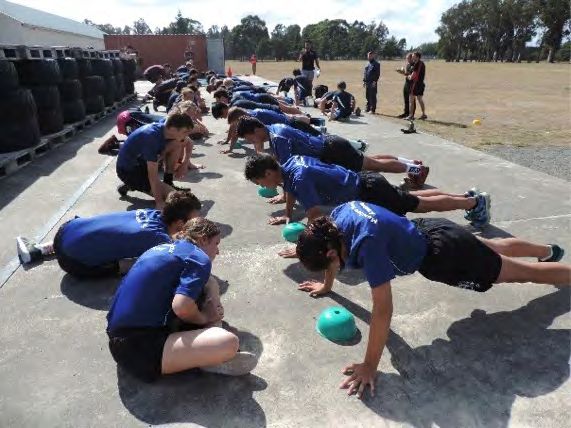
Student Services
Guidance
We have a guidance team consisting of a School Counsellor,
a Careers Advisor, Deans, and Special Educational Needs Co-
ordinator (SENCo).

Deans have as their main focus the success and progress in
learning in their year groups.

Student Leadership
Student opinions are valued in shaping our school. Student
leaders are selected each year from students nominated by
the student body. This includes – Board of Trustees Student
Rep, Head Students, Pūmanawa, Arts Leader, Sports Leader
and House Leaders. Their job is to support students and the
school.

Student Council
The Student Council, representing all students, provides an important opportunity for every student
to participate in the running and improving of the school. It also provides leadership opportunities
for students. The Council organises and carries out projects and campaigns to improve various
aspects of student life. The Council has committees that advise staff.

Mentor Classes
Each student is allocated to a Mentor class with a Mentor Teacher. The mentor role is a pastoral
role with the aim of guiding and supporting students, and communicating with home.

Peer Support
Within the Mentor class structure there will be specially selected and trained senior students who
will take all Year 9 students through a ‘Peer Support’ programme designed to help them settle in
well and to get the best from their opportunities at Greymouth High School.

Tutorials & Homework Club
These operate to support students with their learning.

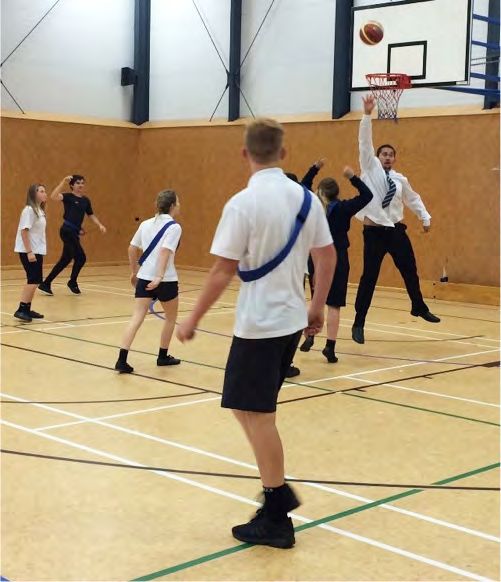
Sport and Recreation
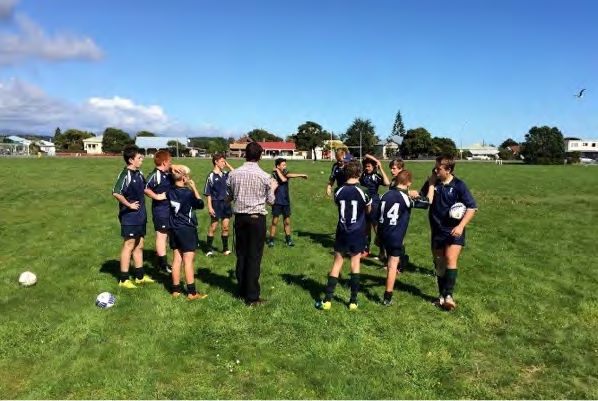
All students can take part in a wide range of sporting and recreational activities. Many students will
compete in team or individual sports at local, regional and national levels.
Our Sports Co-ordinator offers activity and sports equipment from the office in the new gym
during interval and lunchtime, Monday - Thursday, as well as supporting competitions and
tournaments.

Health & Wellbeing
The school has a Nurse Aide and we have regular visits from a Public Health Nurse to help us deal
with any special medical needs your child may have. The enrolment form asks for known health
problems to be identified and we rely on parents to keep us informed of changes.

Greymouth High School does not tolerate bullying and harassment. This includes verbal, physical
and cyber bullying. If you believe that your child has been a target of bullying in any form, please
do not hesitate to contact the school. You can speak to; your child’s Mentor, Dean, the student
Counsellor or a member of the Senior Leadership team. What is most important is that you do
contact the school as soon as possible.

6                                                        STRIVE FOR SUCCESS Whaia te iti Kahurangi
Culture
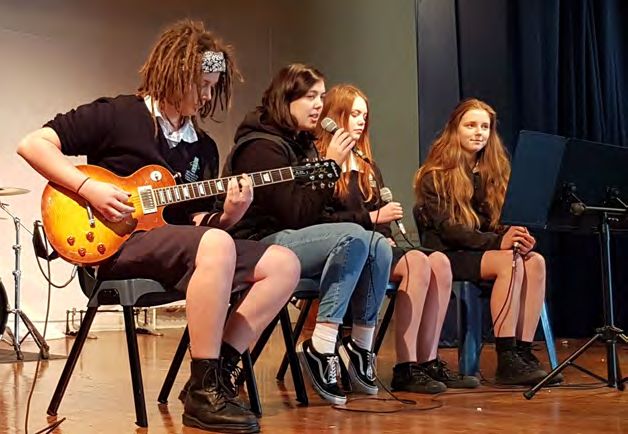
Drama, Music and Art are offered as full subjects at every level and students are encouraged to
take part in choirs, bands, Kapa Haka, school shows and productions. Individual music tutoring is
available. Other groups include debating, chess and Shakespeare Competition. In most years there
is a musical or drama production, either large or small.

Careers
Students in Year 9 and 10 students begin preparing a Learning Career Plan (LCP) which is updated
as they progress into the senior school. The plans enable students to gain the relevant information
to make good career choices, give them personal support with their career planning and provide
them with a tailored career plan that is relevant to their needs.

Year 10 students complete a unit of work on the ‘World of Work’ in preparation for senior course
choices.

Wi-Fi Access
Students have access to the school Wi-Fi network for free, so long as it is used in accordance with
our Responsible Use Agreement.

Student Café
There is a café on site for students to use. This is located in the Technology Building in the Library
Quad. It is open during break times: 10.50-11.15am interval and from 1.20-2.10pm lunchtime.

Student Office
The student office is open all day. Friendly staff are available to advise students, enable contact
with home or signing in and out as well as storing large or heavy items. A phone is available freely
for student use. You can call the student office on 0800 GREYHIGH (03 768 0472 Ext 823).

Library
Our library is open at interval and lunch. As well as books and quiet reading spaces, a variety of
games are available.

Toki Pounamu
Greymouth High School partners with most of our contributing primary schools in a commitment
to using technology to be at the leading edge of education. This means we have agreed on some
common ways we teach and your child learns, which helps your child to gain a consistent experience
from primary through secondary school. It also means we run a trust to support access to a
computer for each student for school use - the trust is non-profit making and enables you to spread
payments to as little as $3.80 per week over three years, with insurance and extended warranty
included. We have chosen to all use Chromebooks: we also all use the same ICT support (a company
called Fusion). This makes the computer itself like a uniform item (no competition) and gives you
consistency. Full details are available separately.

                                                       If your child’s Chromebook gets damaged or
                                                       stops working properly, it can be brought to
                                                       the library and will be replaced with a loan
                                                       Chromebook while it is assessed and repaired.
                                                       We expect loan computers to be treated with
                                                       care and respect and returned when requested.

STRIVE FOR SUCCESS Whaia te iti Kahurangi                                                                7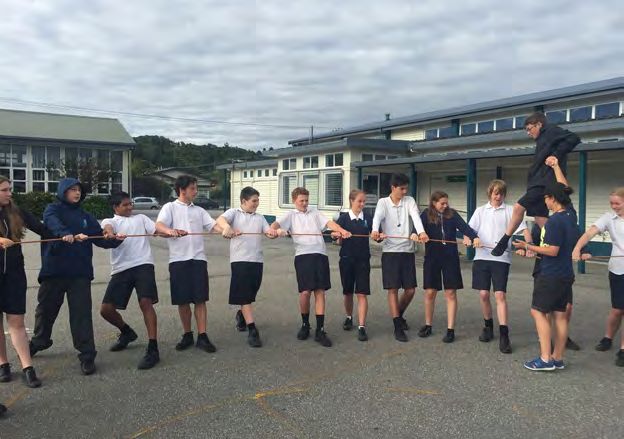
Curriculum
and Courses
Curriculum
Greymouth High School’s vision for learning
is that we are moving towards differentiated
and individualised learning for all students
that provides each student the start on a
pathway to success in their future lives.

Year 9 and 10
In the junior school Year 9 students take core
subjects of English, Mathematics, Science, Social Studies and Physical Education and are exposed
to a range of modules, including Te Reo / Tikanga Māori which explore the Arts, Technology and
Language curriculum areas.

In year 10 students continue to study English, Mathematics, Science, Social Studies and Physical
Education but are now able to select options of interest covering the Arts, Technology and
Languages but also branching into some of the new subjects which will be on offer in the senior
school.

Year 11 to 13
In the senior school students at Greymouth High School have a variety of pathways to choose from.

For students who have yet to decide on a career direction either towards university, trades or
employment they can continue in a general pathway choosing any of the options available at
Greymouth High School. At Year 11 English, and Mathematics remain compulsory, and at Year 12,
English.

For students who have decided on a pathway heading towards University or Degree study, students
should select options which lead onto University Entrance subjects at Level 3 and are supported in
the senior years to explore tertiary options with visits to relevant tertiary institutions.

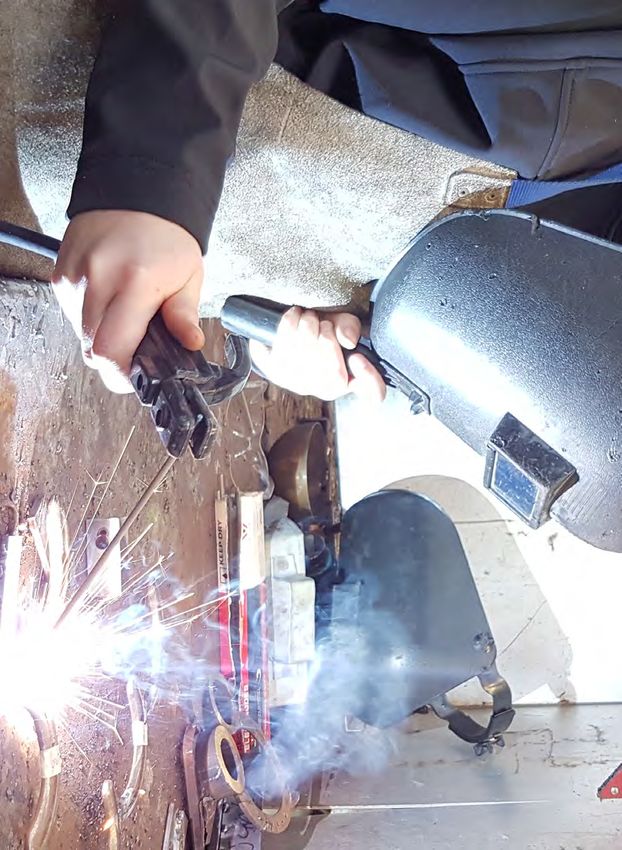
For students who have a clear trades based pathway in mind, they can choose to enter the West
Coast Trades Academy. This offers a vocational pathway into the trades for students and is a two
year programme. Students choosing this option will study one day a week on a West Coast Trades
Academy Course, or in block courses which can include some school holiday commitments.

As students begin to consider leaving school we also offer programmes in conjunction with the Tai
Poutini Polytech where students are part time enrolled at both, thus allowing them to make the
bridge to tertiary study easily and still with the support of the school environment.

Gateway is a workplace-based programme which aims to develop students' employability skills and
qualities as well as contributing to NCEA. In 2018, our Gateway Programme will work in partnership
with our WCTA programmes.

Also on offer is the Māwhera Services Academy. Information on all programmes is available
through Mentor Teachers, Deans or Career Services.

8                                                      STRIVE FOR SUCCESS Whaia te iti Kahurangi
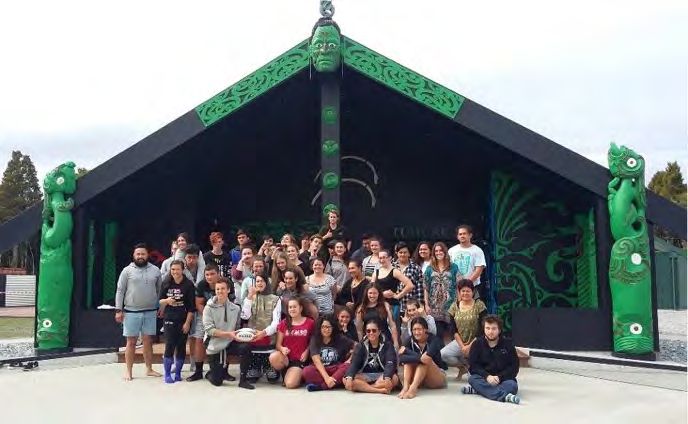
Māwhera Services Academy
Māwhera Services Academy is a pathway
offered at Greymouth High School aimed
at students in Years 12 and 13 who have an
interest in pursuing a career in the armed
forces, police, fire service or related industries,
but this is not essential and as such, any
application would be considered. It is located
onsite and students participate fully in the
school community, mentored by a full time
Director with a military background.

The programme includes courses in English,
Mathematics and Core Skills and students
select two other options of interest. Core
Skills involves ‘services training’ including
adventure based learning, field exercises,
leadership development, confidence building,
military drill and survival training. Students
are working towards NCEA qualifications.
The academy is supported by the NZ Defence
Force with a range of activities, courses and
exercises.

A junior option is available as a ‘taster’.

Further information and an application pack
are available at the school office.

STRIVE FOR SUCCESS Whaia te iti Kahurangi             9
Student Management
Positive Behaviour for Learning
What is PB4L?
The acronym PB4L stands for Positive Behaviour for Learning. It is a school wide integrated
initiative which aims to promote appropriate behaviour in a positive manner that is non-
threatening and supportive of all students and staff. It aims to minimise problematic behaviours
and maximise and celebrate positive social and academic student behaviours.

Positive Behaviour for Learning is based on more than twenty years’ research in creating positive
school cultures, and is supported by research which describes the success of thousands of schools
across Canada, Norway, Iceland, USA and Australia.
It is about:
    •   Establishing a school environment that supports long term success
    •   Integrating positive academic and social behaviour expectations
    •   Teaching desirable behaviours
    •   Improving behaviour support systems for students
    •   Increasing positive interactions with students
    •   Using data for decision making
    •   Decreasing reactive management
    •   Maximising academic achievement

Our School-Wide Expectations
We will establish clear expectations for the behaviour we expect in all areas of our school. We will
teach those expectations to the students and reward them frequently with our in-class and out
of class rewards systems. The expectations for all student behaviour will be clear throughout our
learning and social areas.

Greymouth High School is a place of
     •   Learning
     •   Respect
     •   Responsibility
     •   Safety

10                                                       STRIVE FOR SUCCESS Whaia te iti Kahurangi
Greymouth High All teaching areas
Device Use
This includes: All classrooms, EOTC, Walkways &
School is a place All areas This includes: Chromebooks, computers, laptops,
Specialist Rooms, Library, Hall Corridors
of… cell phones, iPods, iPads
Gymnasiums, pool/ courts
• Take ownership of • Actively participate in the • Read • Be a savvy digital learner
your learning learning process information • Use assigned sites/ apps as instructed by your
• Take advantage of • Allow others to learn on notice teacher
LEARNING opportunities to • Appropriate use of cell phones, boards • Store your work in appropriate folders
learn iPods and computers • Share your knowledge and expertise with others
• Have a positive • Seek help and support if you are unsure
attitude
• Use polite and • Take care of furniture, equipment • Allow people • Follow the THINK process
appropriate • Everyone listens to the person to walk • Take care of your device and the devices of
language speaking through others
• Take care of • Treat people and place • Use polite and • Leave others’ devices alone
the school appropriately appropriate • If teacher is talking or students are presenting
STRIVE FOR SUCCESS Whaia te iti Kahurangi
RESPECT
environment language “SHARK IT!!”
• Be considerate • Consider the privacy of others
towards other
people and their
property
• Follow instructions • Follow instructions given • Move around • Keep your work authentic
given • Arrive on time with the correct without • Ensure your device is charged and ready for use
• Dress in correct equipment disturbing • Follow class guidelines for use of devices
uniform • Complete set tasks to the best of other classes • Follow the kawa of care and AUP
• Be in the right your ability • Tidy up your
place at the right • Clean up work area rubbish using
RESPONSIBILITY
time bins provided
• Rubbish in bins • Move to class
• Quiet around quickly and
classrooms quietly
• Use areas
appropriately
Stay on school Line up quietly and carefully outside Walk Be cyber SMART and make SMART decisions
grounds unless classroom Report hazards Only post content that you and your whanau would
permitted to leave Stay in class during class time Safe interaction be proud of
SAFETY Report unsafe Enter and exit room in an orderly with peers Keep your passwords secure and lock your devices
activities/ accidents fashion Keep bags out Report any harmful posts
Follow safety instructions/ of walkways
procedures
11Rewarding Positive Behaviour There are many ways that we acknowledge and reward students following the school-wide expectations of learning, respect, responsibility and safety. The PB4L Team which includes staff and parent and student representatives meet and use a data driven process to select a behavioural focus from the matrix found on page 2. This behaviour is then explicitly taught to students and a reward system is set in place to acknowledge students who meet this expectation during the focused time. These rewards may be individual or class based rewards. Rewarding Effort and Achievement Classroom Reward Systems Classroom teachers often have their own reward systems in place to recognise effort and achievement in class during the year. For example: stickers, positive notes, stamps, phone call or postcard home Well Done Certificates Classroom teachers will award well done certificates for substantial academic achievement or effort. These should be kept by your child until they have three and they should then be handed in to their mentor teacher. Tohu Kahurangi Awards When your child receives three well done certificates, these are passed on to the Year level Dean. The Dean will look at your child’s pastoral record and decide if he/ she is entitled to receive a Tohu Kahurangi Dean’s award. Principal’s Award When your child receives two Tohu Kahurangi awards, the Dean will again review your child’s pastoral record and decide if they are entitled to receive a Principal’s award. The names of students who receive Principal’s awards are published in our school newsletter. 12 STRIVE FOR SUCCESS Whaia te iti Kahurangi
Behaviour Management System
Our aim is to have a behaviour management system that all students, parents and teachers
understand. This involves the school wide expectations, consequences and rewards.

Greymouth High School has the following shared beliefs that have influenced our behaviour
management procedure:
  •  Learning is the priority
  •  It is the right of every student to learn unhindered by others
  •  Maintaining positive relationships is important
  •  Teachers should have high expectations for their students
  •  Students, teachers and family/ whanau have a shared responsibility for making the system
     work and upholding the school wide expectations
  •  Strengthening the contact between home and school is imperative
  •  Positive behaviour of students should be acknowledged and rewarded
  •  Consequences should include a continuum of responses to problem behaviours

Our school-wide behaviour management system has been developed to:
  1. Reduce the number of students choosing inappropriate behaviours
  2. Reinforce the fact that students perform better when teachers have high expectations and
      consequences are clear and consistent
  3. Give a consistent approach to classroom management for all staff

Consequences v Punishment
At Greymouth High School, we don’t see consequences as punishment, but rather as a process to
help students reflect and learn the expected behaviour. These consequences help students develop
self-control and self-discipline over their behaviour.

 A Consequence                                   Punishment
 Emphasises what a student should do             Emphasises what a student should not do
 Is an ongoing process                           Is a one time occurrence
 Sets an example to follow                       Insists on obedience
 Leads to self control                           Undermines independence
 Helps students change                           Is an adult release
 Is positive                                     Is negative
 Accepts student’s needs to assert self          Makes students behave
 Fosters students ability to think               Thinks for student
 Shapes behaviour                                Condemns behaviour

STRIVE FOR SUCCESS Whaia te iti Kahurangi                                                      13
Behaviour Management Procedures: In Class
What’s happened Who’s involved Protocol
1st offence Classroom • Behaviour is named.
Teacher • Teacher makes it clear that behaviour being
Student portrayed is not appropriate.
• Expected behaviour stated – refer to school
wide expectation
• Redirect, reteach.
2nd offence Classroom • Teacher keeps track in roll book (if that is
Teacher teacher’s chosen method or agreed class
Student consequence)
• Student is warned that repeat of this
behaviour will result in a consequence
• Redirect, reteach.
3rd offence Classroom • A consequence is issued by the classroom
Teacher teacher.
Student
At this point, the student will be informed that
anymore of this particular behaviour will not
be tolerated and the only step left is a DRF
(discipline referral form).
4th offence Classroom Discipline Referral Form (DRF) is issued.
Teacher Students are removed for one of three
Student reasons:
Allocated Senior • Ongoing refusal to follow teacher
Class instructions
Home • Unwanted talking
• Verbal or physical harassment
See DRF procedures on page 15.
Ongoing, disruptive Classroom • Dean initiates home contact based on
behaviour Teacher referral data or classroom teacher refers to
Student Dean for ongoing, disruptive behaviour.
Year Level Dean • Dean may issue appropriate consequences
Home • If the issue is based in one particular class,
in the interim, the student might have to
attend the Student Support Centre during
lesson time with particular teacher.
Outrageous Classroom • Teacher will send an Emergency Response
Classroom Behaviour Teacher Card to the Student Office and a member
See further detail Student of SLT will come and collect student.
SLT / DEAN • Teacher will be required to fill in an in-depth
Home report.
• Outside agencies may need to be involved.
14 STRIVE FOR SUCCESS Whaia te iti KahurangiDiscipline Referral Form (DRF) Procedures If your student has received a DRF, they have been referred out of their own class and sent to a senior classroom. They will have been removed for one of three reasons: 1. Ongoing refusal to follow teacher instructions 2. Unwanted talking 3. Verbal or physical harassment By being issued with a DRF, your child will have automatically obtained a 1 hour after school detention which they must attend the following school day. This will be held from 3.15pm – 4.15pm. The classroom teacher will phone home on the day the DRF is issued to advise you that a detention has been issued. Your child will attend the after school detention the following day, run by one of the school deans. Here they will complete a reflective thinking sheet, which will form part of the discussion with their classroom teacher. The student does not go back to class until this step has been completed. They may need to be placed in a senior referral class for a period on the day the detention is to take place. During the after school detention, the classroom teacher who issued the DRF will arrive. The teacher reviews the completed reflecting thinking sheet and has a restorative chat with your child in an attempt to work the problem out. If the issue is resolved, your child will be free to leave at 4.15pm and they will return to class the following period. If issue is unable to be resolved after restorative chat with student, then further support will be required from the Dean, where the Dean may call a meeting with teacher, student and parents/ caregivers in an attempt to resolve issue. On-going disruptive behaviour will involve the Dean contacting home and administering a further Dean’s detention/ consequence. STRIVE FOR SUCCESS Whaia te iti Kahurangi 15
Outrageous Classroom Behaviour
It is the right of every child to learn unhindered by others. Outrageous classroom behaviour is wilful,
deliberate and makes continuation of the lesson difficult while the student is still present. The
behaviour could include:
    •    Direct abuse of/ swearing at teacher
    •    Ongoing defiance of teacher request or instruction
    •    Endangering the safety of others
    •    Vandalism
    •    Total refusal to go to the particular referral room
    •    Refusing to comply with a teacher’s instructions in a referral room

Outside agencies may need to be involved.

 In such instances the student’s teacher will send an Emergency Response Card to the Student
 Office and a member of SLT will come and collect the student.

 The teacher will need to complete an in-depth written account of what happened to SLT as
 soon as is practical after the lesson.

Stand-downs/Suspensions
The Principal may stand-down or suspend a student should the misbehaviour be extreme, continual
or a dangerous example to others. A stand-down involves the Principal deciding a student is not to
attend school for up to five days. A suspension involves a student being referred to the Board of
Trustees for a decision about his/her future at the school.

School Rules
The school has rules designed to ensure each student’s learning needs are met, to promote their
welfare and safety and to promote co-operation between students and between students and
teachers. It is important to the Board that the school has a good reputation in its community.

     1.  Physical and/or emotional violence is unacceptable (this includes verbal and physical, cyber
         harassment, bullying and intimidation).
     2. Follow instructions from staff.
     3. Respect others’ property.
     4. Offensive and/or abusive language is unacceptable.
     5. Do not possess or use alcohol, tobacco, recreation and illegal drugs or harmful substances
         including vapes or the equipment intended for the consumption of banned substances.
     6. Attendance at all classes is essential.
         (When absent, a note or phone contact from parents/caregivers is required).
     7. Stay on the school grounds unless you have (written) permission to leave and have signed
         out at the office at any time during the school day.
     8. Look after our school environment (grounds and buildings).
     9. Follow the uniform/dress code.
     10. Glass bottles and large (over 700ml) soft drinks bottles are not permitted.
     11. Energy drinks are not permitted.
     12. Aerosol cans are not permitted.

16                                                        STRIVE FOR SUCCESS Whaia te iti Kahurangi
Smoking, Drinking, Drugs No pupil is allowed to smoke, consume or be in the possession of tobacco, vapes, recreational drugs, alcohol, or other harmful substances while they are under the control of the school (including breaks during the day, before and after school, and while in school uniform). This also applies to all students at any school function or on any school camp or trip or at weekends and holidays if the students are under the control of the school at the time. The school takes a strong line on these issues. This involves making every effort to prevent the use of harmful substances and ensuring strong support for students identified consuming or in possession of these. Consequences may include stand down or suspension and will always involve referral to the Police and Health Services. Cellphones / Digital Devices It is expected that cellphones/digital devices will be used appropriately at all times. Each student has to sign and adhere to a Responsible Use Agreement to be allowed to have a cellphone/digital device at school. Smart phones may be used in class under teacher direction. Teachers have the right to confiscate cell phones/digital devices should that be necessary. If this is for longer than the lesson, the phone will be stored in the office for collection. Leaving the School Grounds No student should leave the school grounds without official permission. Students are not permitted to be off the school grounds during the day unless they have written permission. Lunch Passes may be issued to students in response to a request from a parent/caregiver for students in Years 9, 10, 11 & 12. The pass will only permit them to go home for lunch – the address will be shown on the pass. Year 11 students can request a lunch pass to go to Parky’s on Marsden Road. Year 12 students can request a Lunch Pass enabling them to go to either the High Street shops or Parky’s. Year 13 are permitted off site during intervals and lunchtimes, but should sign out if they are leaving during class time. STRIVE FOR SUCCESS Whaia te iti Kahurangi 17
School Charges
School Donation
The Board of Trustees sets a school donation each year of $85.00 for one student and $120.00 per
family. You will be sent a request for payment in Term 1 or if you wish you may pay at enrolment
time. Although this donation is voluntary, we rely on it to offer a good range of sporting and
cultural activities. Donations help subsidise some sports and cultural activities, van running costs,
and activities such as the Year 10 Sewell Peak Challenge. These are just some examples and we
really appreciate your support.

Contribution for Activities and Materials
The funding received by schools only provides for the very basic curriculum delivery. We pride
ourselves on offering enhanced learning opportunities for all students. To allow this we rely on
contributions from parents/caregivers. These contributions are detailed in the course outlines and
on the stationery lists.

Fundraising
The Board of Trustees supports the idea of fundraising in principle, for special projects. The School
may have fundraising projects from time to time involving staff and students.

18                                                       STRIVE FOR SUCCESS Whaia te iti Kahurangi
Emergency Plans
Given our living on a shaky isle, we thought it would be useful to remind all our school community of
emergency plans for all students, staff and visitors.

                      In the event of an emergency in school hours
       (fire, earthquake, pandemic or any other emergency resulting in whole school evacuation)

   •    The school will assume responsibility for all students until they are collected.
   •    No student will be released from the school unless a parent or authorised person (emergency
        contact) collects them. Authorised persons are those persons who the parent has
        nominated on the student’s enrolment form.
   •    Any parent or authorised person collecting a student is to report to the reception area at
        the main office. School can then record that the student has been collected. In the instance
        that the main office is unusable, we will leave written instructions on the front doors of the
        alternative reporting area.
   •    Students should not leave school premises; however, the school recognises that some
        students may make their own decision to leave, without school permission and without
        signing out.
   •    At some stage, it may be necessary to close the school. Be assured that any students who
        have not been collected will be looked after to ensure your child remains safe. Parents
        will be notified as possible and the information will also be deposited at the Grey District
        Council’s Civil Defence Emergency Operations Centre. Handover of students will only be
        made to authorised Civil Defence Emergency Operations Centre welfare staff.
   •    In the event of an emergency out of school hours
                           (dependent on power, internet, phone coverage)

Our staff will endeavour to message all families. We will communicate as best as circumstances
allow to advise of any school closure. This communication could come via any of the following ways:
   •   Email
   •   Text
   •   Greymouth High School Facebook page
   •   Greymouth High School Website - www.greyhigh.school.nz
   •   Notices on main entry points to the school.
   •   Radio - The Hits 93.1 FM

Do you have an emergency plan?
We urge all our families to make sure that you have in place your own plan to cover your family in
these circumstances and that all family members fully understand the plan. Make sure that you
have an emergency survival kit set up so that your family can take care of itself for between three
to seven days following an emergency. See www.getthru.govt.nz for assistance with this.

Are your emergency contacts up to date?
If a person is not listed as an emergency contact with the school, then they will not be able to take
your child from school until contact has been made with a listed emergency contact. Sometimes
this causes frustration and delays in your child being able to leave the school. Please make sure we
have all the correct details for any person that may arrive at school wanting to pick up your child in
any situation.

Have any of your details changed?
Notify the school of any changes to:                   Contact our office or your child’s mentor
  •    Email addresses                                 teacher to update your details.
  •    Phone numbers, including cell phones
  •    Residential addresses                                Ph: 0800 GREY HIGH or
  •    Postal addresses                                     office@greyhigh.school.nz

STRIVE FOR SUCCESS Whaia te iti Kahurangi                                                             19
Uniform
In 2017, we started to bring in a revised uniform, with a 'phasing in' period as follows:
2018 2019
Year 9 and 10 in new uniform
Rest of school option of new
or old uniform All students in new uniform
Year 13 in uniform pre-2017
or new uniform
The Board of Trustees has set the following rules for uniform in 2018:
• Only school uniform items as defined in the table below may be worn on the school grounds
• Uniform items should be clean, tidy and worn with respect
Year 9-11 Female Year 9-11 Male
Charcoal Macpac softshell optional. Charcoal Macpac softshell optional.
Navy GHS jacket (pre-2017) accepted for Navy GHS jacket (pre-2017) accepted for
year 11 year 11.
Navy V-neck jersey optional. Navy V-neck jersey optional.
2017 or earlier acceptable for year 11. 2017 or earlier acceptable for year 11.
Navy V-neck cardigan optional.
Pale blue short sleeve blouse. Pale blue short sleeve shirt.
Pre-2017 white blouse acceptable for Pre-2017 white polo or dress shirt acceptable
year 11. for year 11.
Optional tartan (blue-green with yellow fine Optional long trouser in dark navy (pre-2017
line) skirt to be worn at top of knee. grey trousers accepted for Year 11)
Pre- 2017 Blackwatch tartan skirts and kilts
acceptable for year 11 OR
Optional navy school shorts OR Optional navy school shorts OR
Optional long trouser in dark navy
Plain black tights or plain black socks Plain black socks
Plain black shoes (any material) with flat or Plain black shoes (any material) with flat or
low heel. Note, covered-toe shoes must be low heel. Note, covered-toe shoes must be
worn in science and technology areas. worn in science and technology areas.
20 STRIVE FOR SUCCESS Whaia te iti KahurangiYear 12-13 Female Year 12-13 Male
Navy blazer optional. Navy blazer optional.
Charcoal Macpac softshell optional. Charcoal Macpac softshell optional.
Navy GHS jacket (pre-2017) accepted. Navy GHS jacket (pre-2017) accepted.
Navy V-neck jersey optional. Navy V-neck jersey optional.
2017 or earlier acceptable. 2017 or earlier acceptable.
Navy V-neck cardigan (single colour) optional.
White short sleeve blouse. Blue/white check long sleeve or short sleeve
shirt.
Pre-2017 white polo shirt acceptable.
Optional tartan (blue-green with yellow fine
line) skirt to be worn at top of knee.
Pre-2017 Blackwatch tartan skirts and kilts
acceptable OR
Optional navy school shorts OR Optional navy school shorts OR
Optional long trouser in dark navy Optional long trouser in dark navy
Plain black tights or plain black socks Plain black socks
Plain black shoes (any material) with flat or Plain black shoes (any material) with flat or
low heel and dark sole. Note, covered-toe low heel and dark sole. Note, covered-toe
shoes must be worn in science and technology shoes must be worn in science and technology
areas. areas.
Unisex accessories
• White plain (no obvious writing) short sleeve thermals under shirts or blouses
• School sunhat (navy or black) for terms 1 and 4
• School beanie (navy or black) for terms 2 and 3
• School scarf (navy or black) for terms 2 and 3
Dress Code for Mufti
The appearance of students is expected to be a credit to the school at all times.
The following dress code will apply to the wearing of mufti:
1. The standard of dress is tidy, casual clothing. Please bring a change of clothes for Outdoor
Education and Physical Education classes where appropriate.
2. Footwear is to be safe, clean and worn at all times. Covered shoes must be worn in
workshops and labs. Non marking shoes must be worn in the gym.
3. Clothing which is drug, alcohol or tobacco-related, offensive or abusive, is not to be worn.
4. Hats and hoods must be removed in the classroom.
Year 13 'Dress Up days'
A tradition of special dress up days for Year 13 has been established. These are to be arranged in
advance through the Student Leadership Team.
Physical Education Uniform
Students must have an appropriate change of clothing for Phys Ed. Black shorts and plain t-shirt is
preferable. Non-marking gym shoes or trainers must be used for Phys Ed. School shirts may not be
worn for Phys Ed.
STRIVE FOR SUCCESS Whaia te iti Kahurangi 21Personal Presentation
1. Extreme hairstyles, untidy facial hair, excessive jewellery, excessive makeup and offensive
piercings are not permitted at school. Common sense applies in manner of presentation
that could bring discredit to the school. The discretion of the Principal will apply. It is
expected that students express their individuality tastefully and in a manner that does not
cause offence or bring negative comment.
2. Jewellery. Not to be excessive. Must be removed for health and safety reasons eg in
workshop and sport situations.
• Cultural considerations, such as ta moko or turbans, will be respected.
• Any exemption or variation from these rules is at the discretion of the Principal after an
approach from parents or caregivers of the student concerned.
Uniform Shop
The Uniform Shop is located in the Gym Quad on Tuesdays and Thursdays, 2.00 - 5.00pm term
time. If you are wanting to purchase uniform items outside of shop hours, please come to the
school office. It is also open in the last two weeks of January and the first week of school in Term 1.
If you have any queries about any school uniform item, please contact the school office.
EFTPOS/Cash/Cheque/Credit Card & LAYBY available. You are welcome to use our layby system
for all your uniform requirements. Please note credit card payments incur an additional 3% fee.
Layby for 2018 Uniforms
Parents can start oayby payments for uniform at any time. Payments can be made to the school
office and held for your uniform purchase. In January the Uniform Shop will be given a list of
payments.
Please give the office both the student and the parent name as a reference.
If you would like to make direct credit payments please contact the school office for the details you
will need.
22 STRIVE FOR SUCCESS Whaia te iti KahurangiGreymouth High School Board of Trustees
Complaints Policy
Policy Statement
All concerns and complaints are dealt with fairly and effectively, in the
interests of all parties concerned and in line with the schools values and beliefs.
Staff members who wish to report incidents of serious wrongdoing within the school and wish to be
protected should follow the Greymouth High School protected disclosures procedure.
Procedures for Complaints
These procedures cover the way the School treats any concern or complaint.
At all times attempts will be made to resolve complaints informally by the complainant, where
appropriate, communicating initially with the person whose actions have given rise to the
complaint. If the complainant is not satisfied then the complaint should be made, preferably in
writing, to the Principal.
Complaints will be treated in confidence, however in the interest of natural justice the person (or
persons) the complaint is about must have the opportunity to hear all details of the complaint and
formulate a reply.
The Principal will discuss all complaints with the Board Chairperson to determine the level of the
complaint.
Examples of serious complaints:
• By school staff against parents/caregivers/students
• By parents against teachers or other staff regarding treatment of children
• Alleging any criminal conduct or unlawful contact
• Alleging sexual harassment
• Against the Principal
• Against a Board member or the Board
Principal’s duties on receipt of a complaint
The Principal will deal with a complaint by:
• ensuring the issue is heard (by the Principal or designated staff member) to the satisfaction
of all parties or the Principal is able to adjudicate on the complaint;
Or by
• referring the complaint to the Board providing a written report with all relevant information
affecting the complaint.
• noting the complaint in the complaints register.
Where parents/caregivers are dissatisfied with the Principal’s actions or decisions concerning any
complaint they should place their concerns in writing to the Board of Trustees chairperson. The
Board Chairperson cannot decide Independently as to what action will be taken and must refer all
complaints to the whole Board.
STRIVE FOR SUCCESS Whaia te iti Kahurangi 23Board’s duties on receipt of a complaint
Any complaint received by the Chairperson shall in the first instance be referred to the Principal and
then be dealt with in the Public Excluded session by the whole Board and will be:
• considered on the information presented in writing.
• either concluded with no further action, referred back to the Principal with or without
recommendations, or referred to a Complaints Committee of no less than three people.
• based on the principles of natural justice which require that all parties have the opportunity
to present their views in writing and/or orally
• answered by the Board by writing to the complainant with appropriate information as to
how the complaint was resolved or what action is to be taken next.
• referred back to the Principal for further information or mediation as appropriate.
The Board recognises that not all complainants will be satisfied with the outcome of a complaint.
If a complainant is not satisfied with the Board’s decision then the chairperson should advise the
complainant of other avenues e.g. Ombudsman.
Complaints Committee
Should it be necessary to establish a complaints committee, the Board has the authority to include
personnel from outside the Board who have appropriate expertise.
The Complaints Committee will have the responsibility of deciding whether a complaint has been
established. No one with a personal interest or predetermined view will become a member of the
Complaints Committee or take part in any Board deliberations.
The Complaints Committee will:
• consider all relevant information.
• entitle any party to have a supporter, lay advocate or legal representation. The Board will
not be liable for any expenses incurred by the other parties.
After a hearing the Complaints Committee may:
1. Find the complaint not established.
2. Find the complaint established and make recommendations on a course of action to the
Board.
Complaints against the teaching or support staff
In addition to the preceding procedures the Board shall have regard to the following principles when
addressing complaints (either serious or otherwise) against staff:
• All complaints against staff shall be dealt with in accordance with the relevant Employment
Agreement.
• All complaints against staff are to be referred in the first instance to the Principal.
• Copies of the letter of complaint should be given to the staff member for a written
response.
• The staff member should be advised that they can seek representation from a professional
and/or union representative.
• In the case of allegations that may have disciplinary implications, the Board should convene
the Complaints Committee to investigate and report on the substance of the complaint. This
committee could hear submissions from the staff member’s designated support person.
24 STRIVE FOR SUCCESS Whaia te iti KahurangiComplaints against the Board
Complaints against the Board alleging misconduct and/or dereliction of duty will be referred to a
panel (appointed by an independent Advisor) comprising three or more people and may include:
1. A Principal of a local school
2. A STA representative
3. Any other suitable person.
It is recognised that the Board has no power of discipline over individual Board members under any
Act of Parliament.
Complaints against the Principal
Complaints against the Principal shall be in writing and referred to the Board chairperson who will
inform the Board and where appropriate initiate mediation.
All complaints against the Principal will be dealt with in accordance with the relevant employment
agreement and the procedures for complaints against staff members.
Complaints against Students
Complaints against or about students will be dealt with under the student behaviour management
procedures.
Administration
• All complaints are recorded in the complaints register.
• All letters of complaint responded to within 3 days.
• Where possible all complainants are advised of process and timeline.
• Regular updates are given if the process is longer than one month.
• A formal closure letter will be sent when the complaints process has been concluded.
• Any employee who has material placed on their personnel file as a result of a complaint will
be advised.
• Complaints material will be filed and held confidentially to prevent unauthorised access to
this data.
Review Date: 2017
STRIVE FOR SUCCESS Whaia te iti Kahurangi 25" 27 Strive for Success
Whaia te iti Kahurangi
26 STRIVE FOR SUCCESS Whaia te iti KahurangiNOTES STRIVE FOR SUCCESS Whaia te iti Kahurangi 27
Telephone: (03) 768 0472 | 0800 GREYHIGH
      E-mail: office@greyhigh.school.nz

 www.greyhigh.school.nz
You can also read


