Beyond
Investing
Temasek Review 2013
←
→
Page content transcription
If your browser does not render page correctly, please read the page content below

Beyond Investing Temasek Review 2013


Beyond Investing
This 10th edition of Temasek Review marks the
39th anniversary since our founding in 1974.
We grew with Singapore, before venturing forth
into Asia and other growing economies.
Today, our portfolio is valued at over S$200 billion.
In our roles as an active owner investor, a
forward looking institution, and a trusted steward,
we are guided by our Temasek Charter and
MERITT values, committed always to think
beyond today, beyond investing.
Ten years ago, we formalised our policy of
sustainable philanthropic giving. Over the decade,
our endowments and philanthropic entities have
touched the lives of over 100,000 people in
Singapore and beyond.
We benefit from the shade of trees planted by
those before us. The trees we plant today will
provide shade for tomorrow’s generation.

                                                        1
Contents

The Temasek Charter                                 4

Performance Overview                                6

From Our Chairman                                   8

Portfolio Overview                                 14
Portfolio Highlights                                16
Value since Inception                               18
Total Shareholder Return                            19

Group Financial Summary                            20
Statement by Auditors                               22
Statement by Directors                              23
Group Financial Highlights                          24
Group Income Statements                             26
Group Balance Sheets                                27
Group Cash Flow Statements                          28
Group Statements of Changes in Equity               29

Financing Framework                                30

                  Explore Temasek Review 2013 at
                  www.temasekreview.com.sg
                  by scanning the QR code

2         Temasek Review 2013
Contents

Shaping Our Portfolio                 32
Investment Philosophy                   34
Year in Review                          36
Looking Ahead                           38
Wealth Added Framework                  40
Managing Risk                           41

Shaping Our Institution               48
Our MERITT Values                       50
Governance Framework                    51
Board of Directors                      58
Senior Management                       60
The Temasek Heartbeat                   64
Remuneration Principles                 67

Expanding Horizons                    70
Engaging Friends                        72
Temasek International Panel             74
Temasek Advisory Panel                  75

Commitment to Community               76
Making a Difference                     78

Major Investments                     84

Contact Information                   94

Temasek Portfolio at Inception        96

                                             3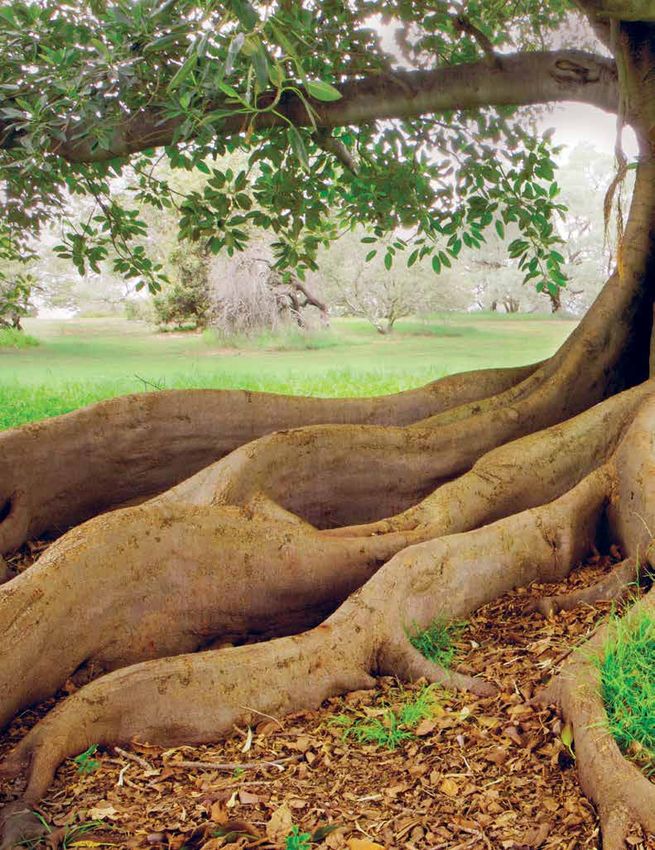
One generation plants trees,
    the next generation enjoys the shade.
    Chinese proverb

The Grand Old Tembusu
Featured on Singapore’s $5 note, this majestic tree in the
Singapore Botanic Gardens has been designated one of the
nation’s Heritage Trees. Tembusu trees are resilient natives
to South East Asia; they thrive and bloom, even in adverse
conditions, and can live up to 200 years.

4         Temasek Review 2013
The Temasek Charter

Temasek is an active investor and shareholder.
We deliver sustainable value over the long term.

Temasek is a forward looking institution.
We act with integrity and are committed to the pursuit of excellence.

Temasek is a trusted steward.
We strive for the advancement of our communities across generations.

                                                                        5
Performance Overview
(as at 31 March)

We ended our financial year with a record portfolio value amidst an uncertain world.
We maintained a steady course as an investor and owner, an institution and a steward,
building our people and capabilities for tomorrow.

Portfolio Value                              Portfolio Value (S$b)
Value increased by S$154 billion
over the decade

                                                                                                              215
                                                                                                  193   198

S$215b
                                                                         185            186
                                                                  164
                                                            129                  130
                                                      103
Portfolio value                                  90

                                                 04   05    06     07    08      09     10        11    12    13

Total Return to Shareholder                  Rolling S$ Total Shareholder Return (%)
Compounded annual return of 13%
to shareholder over 10 years                     46                                     43

                                                            25    27
                                                 20   18                 17             16                    14
                                                                                 13               15    15    13

8.86%
                                                      16    16    18                          9
                                                 3                 8    10                              10    9
                                             0        5     6                7   6       6        5     1
One-year return to shareholder
                                                                                   -30
                                                 04   05    06    07     08      09    10         11    12    13
                                                 One-year         10-year            20-year

Active Investor                              Investments & Divestments (S$b)
Invested S$159 billion and
divested S$100 billion over the decade                                   32
                                                            21                                          22    20
                                                      13          16                              13
                                                                                        10

S$7b
                                                                                 9
                                                  3
                                                  1
                                                      5            5                    6         9
Net investments for the year                                13
                                                                         17      16                     15    13

                                                 04   05    06    07     08      09     10        11    12    13
                                                 Investments      Divestments

6         Temasek Review 2013
Performance Overview

Ten-year Returns to Temasek by Vintage      Portfolio                    10-year Annualised
Annualised 16% returns over last decade     Market Value1                S$ Returns to Temasek1 (%)
for investments older than 10 years                  S$215b

                                                                                                        20
                                            S$117b

20%                                          S$98b
                                                                                                 16
Ten-year returns to Temasek
on post-March 2003 investments
                                              Newer investments made after 31 March 2003
                                              Older investments held as at 31 March 2003

Group Shareholder Equity                    Group Shareholder Equity (S$b)
Group shareholder equity of S$156 billion
                                                                                                         169
before fair value reserve                                                            150   155    158
                                                                         144
                                                                                                  146    156
                                                                   114         118         134
                                                                         120   120   128
                                                              91
                                              65      71           93
                                                              84

S$169b
                                              65      71

                                              04      05      06   07     08   09    10    11     12         13
Group shareholder equity
                                             Fair value reserve
                                             Shareholder equity before fair value reserve

Group Net Profit                            Group Net Profit (S$b)
Average annual group net profit
of S$10 billion over the decade
                                                                          18

                                                              13

S$11b
                                                                                           13
                                                                                                  11         11
                                                                   9
                                               7      8
                                                                               6
                                                                                      5
Group net profit
                                              04      05      06   07     08   09    10    11     12         13

1
    As at 31 March 2013.

                                                                                                                  7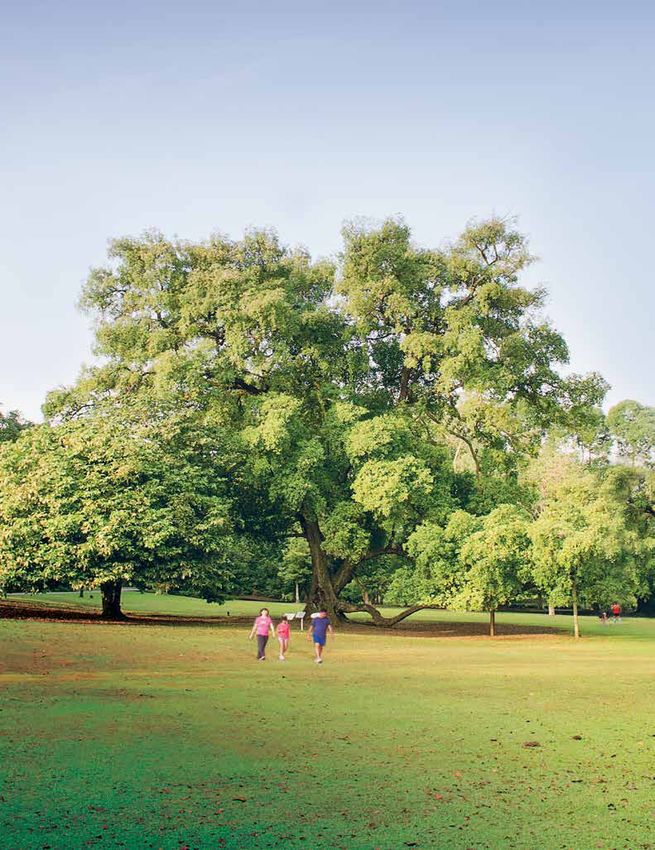
From Our Chairman

                           Last year marked a turning point in the global economy.

                           Europe pulled back from the brink. The United States saw tentative signs
                           of recovery, fuelled by the Fed’s loose monetary policy. China prepared to
                           reshape its economy towards a steadier and more sustainable structure.
                           The turmoil in major economies was cushioned by the massive and
                           synchronised monetary easing.
                           Small open economies were buffeted by the sustained increase in liquidity
                           and capital flows, including inflationary pressures on real asset pricing, from
                           the flood of new money.
                           Structural risks lurk beneath the surface in Europe, China and the
                           United States. Mid-size economies such as Korea, Mexico and Turkey
                           are benefiting from local structural reforms.

                           Performance Highlights
                           We ended our financial year with a record net portfolio value of S$215 billion1
                           as at 31 March 2013, including a net cash position.
                           One-year Total Shareholder Return (TSR) was 8.86%, giving us a
                           Wealth Added of S$3.7 billion above our risk-adjusted cost of capital
                           hurdle. Three-year TSR was 4.94% compounded annually.
                           Our longer term 10-year and 20-year TSRs were at 13% and
                           14% respectively. TSR since inception in 1974 was 16%.
                           Over the last decade, our portfolio value more than tripled in Singapore

14%                        dollar terms2 from a trough of S$61 billion in March 2003.
                           Our exposure to Asia remained steady at 71%. This included our
Twenty-year TSR
                           Singapore portfolio, which kept pace with overall portfolio growth
                           at about a third of our underlying exposure over the last six years.
                           Over 73% of our portfolio was held in liquid and listed assets.
16%                        As a group, shareholder equity increased to S$169 billion, including fair
TSR since inception        value reserve of S$13 billion.

                           1
                               US$173 billion as at 31 March 2013.
                           2
                               Temasek’s portfolio value grew over five times in US$ terms from US$34 billion at
                               end March 2003, in part reflecting the S$ appreciation over US$ during the decade.

8        Temasek Review 2013
From Our Chairman
Group net profit was stable at S$11 billion, with higher realised gains
from Temasek’s investment activities being offset by weaker performance
at some of our portfolio companies, which were impacted by a softer global
economy last year.
S$215b
Record
portfolio value
Dividends, distributions and divestment proceeds remain the primary source
of our investment funding, supplemented by the occasional debt issuance.
Standard & Poor’s and Moody’s continue to rate us AAA/Aaa respectively;
our 10th year as a triple-A credit since our inaugural rating in 2004.
Favourable credit markets during the last financial year gave us the
73%
Portfolio held in liquid
opportunity to issue two long-dated US dollar bonds totalling US$1.7 billion.
and listed assets
Meanwhile, we continue to explore the possibility of issuing retail bonds.
Investment Activities
In total, we made S$20 billion of investments and S$13 billion of divestments
during the year. Major net investments were in the energy and resources
sectors, and in North America and Europe.
During the year, we rebalanced our financial services portfolio, with
S$8 billion of investments and S$7 billion of divestments. We increased
our stake in ICBC, the world’s largest bank by market capitalisation, and
deepened our exposure to Asia’s insurance industry with stakes in AIA
and Ping An. The financial services sector remained our largest exposure
at 31% of our portfolio.
We increased investments in our energy and resources portfolio, with
net investments of S$4 billion. This included a 6% stake in Repsol, a
listed Spanish integrated oil company with substantial international
operations. We also invested in Kunlun Energy, a Chinese gas transmission
and midstream company, and in Cheniere Energy, a US company which
is building a liquefied natural gas (LNG) export terminal.
In the resources space, we invested in Turquoise Hill Resources,
a Canadian-listed international mining company with assets mainly
in Mongolia.
In Singapore, we participated in the bond cum warrants rights issue of
Olam International. Subsequent to the rights issue, we increased our stake
from 16% to almost 23% through a series of market purchases.
Post March 2013, we took a stake in Markit, a financial information
services company.
9From Our Chairman continued
Singapore and China remained our largest exposures by geography in terms
of underlying assets, at 30% and 23% respectively as at 31 March 2013.
Our exposure to North America and Europe grew to 12%, arising from
various energy and resources investments, and other investments such
as a 4.6% stake in Evonik, a German specialty chemical company.
Australia and New Zealand exposure declined marginally to 13% of our
portfolio, while Latin America exposure increased to 2%.
As part of our investment and divestment activities, we occasionally use
put and call options. These amounted to a gross notional S$222 million as
at 31 March 2013.
We remain primarily a direct equity investor with less than 10% of our
portfolio in third party managed funds.
Institutional Initiatives
Organisationally, we seek opportunities to seed and grow new businesses.
Our newly established Enterprise Development Group will bring together
many of our existing platforms and initiatives, ranging from venture
investments in early stage businesses to the development of new
business models that cater to changing opportunities and needs.
During the year, we established Pavilion Energy with an initial capital
commitment of US$1 billion, to invest in the region’s growing needs for
S$20b clean energy, especially around the LNG supply chain. Pavilion Energy will
develop as an independent Temasek portfolio company with its own board,
Investments management and operating capabilities.
Heliconia Capital Management provides growth capital for Singapore-based
small and medium sized enterprises. It has made early stage co-investments
in Singapore-based companies, such as Heptagon, a leading developer of
S$13b advanced micro optics used in smart phone cameras, and Razer Inc., a leader
Divestments in high-performance video game systems.
10 Temasek Review 2013From Our Chairman
Clifford Capital commenced operations in late 2012, with a focus
on financing Singapore-based companies to grow into new markets.
Vertex invests in early stage companies in Asia and the United States.
Together with Heliconia, they provide capital at various growth stages
S$169b
Group shareholder
for smaller enterprises. equity
Our joint venture investments with Malaysia’s Khazanah Nasional Berhad
in Singapore and Malaysia are on track. Projects in Singapore have broken
ground. In Johor, one wellness-related project in Iskandar Malaysia was
successfully launched in June, with another to be launched by end 2013.
S$11b
As an institution, we continue to deepen our competencies and improve Group net profit
our operational systems, be it our Temasek Long Term Returns Simulation
model, or our IT platforms to enhance workflow and risk mitigation.
We are working to establish offices in Europe and the United States
to strengthen our capabilities in these markets.
Beyond Investing
We are more than just an investor.
We are first and foremost a long term owner, focused on building and
shaping our portfolio for future generations. We are mindful of our role as
a forward looking institution, to challenge ourselves to prepare for the future
and to focus on building for the long term. We take our responsibility as a
steward to heart, striving for the advancement of the communities we touch.
As an active investor and shareholder, we are committed to deliver
sustainable value over the long term.
As a forward looking institution, we set markers for ourselves to instil
institutional discipline. The publication of our Temasek Review, the
10th edition since 2004, is one such public marker. Voluntarily seeking
credit ratings and issuing Temasek Bonds are part and parcel of our
institution building process.
Temasek contributes to the Singapore Government budget, at a sustainable
pace, via the dividends we pay to our shareholder and tax on our profits.
However, we see our role as a trusted steward going beyond dividends
and taxes.
11From Our Chairman continued
Singapore is a small city-state, with no natural resources, a relatively
small population and a very open, competitive economy. The strength of
Our endowments
Singapore’s economy is, in no small part, due to its strong reserves position.
help develop people
We aim to continue contributing to Singapore budgets through the future
and rebuild lives.
returns on investments that Temasek makes today.
Beyond investing, we are building a group of stakeholders who share in
the success of Temasek – such as the non-profit philanthropic organisations
(NPPOs) we endow. We share our returns above our risk-adjusted hurdle
by making endowments for community causes. Our endowments fund the
NPPOs on a sustainable basis. They, in turn, help develop people and rebuild
lives, through education, healthcare, knowledge and a sense of community.
For a society to thrive and its people to grow, each generation must plant
trees to shade the next. We in Temasek work hard to plant trees in more
ways than one.
In Appreciation
We could not have succeeded without the support of many others.
My thanks go to my Board colleagues for their trust and confidence,
and for their dedication to the Temasek mission. I have worked with many
fine people on our Board who have shared the responsibility of guiding
Temasek’s journey.
I am very pleased to welcome Lucien Wong, who joined our Board in
March 2013. Lucien brings with him extensive experience and insights
as a leading member of the legal community. As I mentioned last year,
Lim Boon Heng joined the Board in June 2012. I also wish to record the
Board’s special appreciation to Kwa Chong Seng, who served close to
15 years as Director and Deputy Chairman, before retiring in May 2012.
I extend my appreciation to the Temasek team – past and present, as it
continues to build and shape the institution. The team has been quick to
embrace change and renew itself periodically. Collectively, they are dedicated
stewards of Temasek’s future.
12 Temasek Review 2013From Our Chairman
My thanks go to a wider group of stakeholders as well, starting with our
shareholder, the Minister for Finance1. Ministers who have held that office
Each generation must
have been committed to Temasek’s role as a long term investor. This has
plant trees to shade
given us the confidence to undertake some major investments, knowing
the next. We plant
that we would have to ride periods of significant market volatility.
trees in more ways
The Minister for Finance has always maintained the discipline of its role than one.
as a shareholder, by not interfering in Temasek’s decisions reserved for the
Board and management. This has enabled us to operate on a commercial
basis, in pursuit of our Temasek Charter.
I reserve a special affection for the portfolio stalwarts which have been
with us for many years – some established even before our inception in
1974. I have watched them grow from purely Singapore companies to leading
players in the region or the world. They provided the stable and deep base
from which Temasek could grow confidently into Asia and beyond.
To our friends, at home and abroad, we thank you for your support and
guidance. Our Temasek International Panel (TIP), Temasek Advisory Panel
and TIP emeritus members consist of some of the world’s finest business
minds and their insights are invaluable to us.
As we enter our 40th year, the spirit of Temasek endures. We cherish our
role as an active investor and an owner, doing things today always with
tomorrow in mind. We relish the challenge of going beyond investing,
and embrace the responsibility of being a trusted steward for our society
and our future generations.
S DHANABALAN
Chairman
July 2013
1
Under the Singapore Minister for Finance (Incorporation) Act (Chapter 183), the Minister for
Finance is a body corporate, which is the shareholder of Temasek.
13Portfolio
Overview
Portfolio Highlights 16
Value since Inception 18
Total Shareholder Return 19
“Everybody can make
investments, but we aim
to safeguard and increase
wealth across generations.”
Kristian Zimmermann, Director,
Risk Management
Rain Tree
A native of Mexico, Brazil and Peru,
the rain tree has ranged into Asia.
It has a characteristic
umbrella-shaped canopy,
and folds its leaves in the
rain, allowing rain to
moisten the ground
below. The rain tree is
host to many animals, birds
and insects that feed on its
fruits and flowers.
15Portfolio Highlights
(as at 31 March)
Temasek has a net portfolio of S$215 billion, comprising mostly equities. It has
an underlying exposure of 58% to mature economies1 and 42% to growth regions2.
Global Exposure3
41% 30% 25% 4%
Asia ex-Singapore Singapore North America & Latin America,
Europe, Australia Africa, Central Asia
& New Zealand & the Middle East
1
Singapore, Japan & Korea, North America & Europe, Australia & New Zealand.
2
Asia (excluding Singapore, Japan & Korea), Latin America, Africa, Central Asia & the Middle East.
3
Distribution based on underlying assets.
16 Temasek Review 2013Portfolio Overview
2013 2012
Asia ex-Singapore 41 42
Singapore 30 30
Geography3 Australia & New Zealand 13 14
(%) North America & Europe 12 11
Latin America 2 1
Africa, Central Asia & the Middle East 2 2
2013 2012
Financial Services 31 31
Telecommunications, Media & Technology 24 24
Transportation & Industrials 20 21
Sector3
(%) Life Sciences, Consumer & Real Estate 12 12
Energy & Resources 6 6
Others 7 6
2013 2012
Listed large blocs (≥20% share) 38 37
Liquidity
Liquid & sub-20% listed assets 35 36
(%)
Unlisted assets 27 27
2013 2012
Singapore dollars 65 65
Hong Kong dollars 11 12
Currency4 US dollars 6 7
(%) British pounds sterling 6 6
Euros 2 1
Others 10 9
4
Distribution based on currency of denomination.
17Value since Inception
Formed in 1974, Temasek began with a portfolio of S$354 million.
Comprising mostly startups and joint ventures, our initial portfolio1 included
a low-cost bird park, which was a recreational facility cum pollution alert
system in a nascent, industrialising Singapore. Some of our portfolio
companies have since become iconic Singapore brands like Singapore
Airlines and the Singapore Zoo. Others have grown to become reputable
regional or global businesses, such as DBS and Keppel.
Two decades later, the Singapore Government decided to liberalise various
domestic services. Four statutory entities – SingTel, PSA, Singapore Power
and MediaCorp – were corporatised and transferred to Temasek to be
managed commercially. Some were later restructured. Power generating
assets and street lighting were spun off from Singapore Power and sold
via competitive tenders, while Singapore Power itself went on to invest in
Australian grid assets. Spin-offs from PSA grew into new businesses, such
as Mapletree Investments in regional real estate, while PSA transformed
itself into an international port operator.
Over the last decade, Temasek’s portfolio has grown from a trough
of S$61 billion in March 2003, to a record S$215 billion in March 2013.
Temasek Portfolio Value since Inception
Temasek steps up investments in Asia Global
(in S$ billion) Financial
Crisis
250
SARS
Epidemic
200
Dotcom Peak
150
Listing of SingTel
100
50
0
74 2 75 3 76 77 78 79 80 81 82 83 84 85 86 87 88 89 90 91 92 94 4 95 96 97 98 99 00 01 02 03 04 05 06 07 08 09 10 11 12 13
December 4 March 4 Financial Year
Market value Shareholder equity Shareholder equity before fair value reserve 5
1
See the list of companies in the initial portfolio on page 96.
2
Incorporation of Temasek on 25 June 1974.
3
Financial year 75 began on 25 June 1974 and ended 31 December 1975.
4
Financial year-end was changed from 31 December before 1993 to 31 March from 1994 onwards.
5
FRS39 Financial Instruments: Recognition and Measurement, introduced during year ended 31 March 2006, requires
available-for-sale financial assets to be measured at fair value.
18 Temasek Review 2013Portfolio Overview
Total Shareholder Return
Total Shareholder Return (TSR) measures compounded annual
returns to our shareholder. It includes dividends to our
shareholder and excludes capital injections from our shareholder.
For the financial year ended 31 March 2013, our one-year TSR in
Singapore dollar denomination6 was 8.86%, while our three-year
TSR was 4.94%.
Longer term TSRs for 10, 20 and 30 years were 13%, 14% and 15%
respectively. TSR since inception was 16% compounded annually over
39 years.
Average risk-adjusted hurdle rates for Temasek have been around 8-9%
through the years. Annualised core inflation in Singapore has been about
2.0%7 over the past 10 years.
S$ Total Shareholder Return and Risk-adjusted Hurdle Rate (%) (as at 31 March 2013)
Period (in years)
16
Since Inception (1974)
9
15
30
9
14
20
9
13
10
9
3
5
9
5
3
8
9
1
8
Total Shareholder Return in S$ terms Risk-adjusted hurdle rate
6
TSR in US$ terms was 10%, 9%, 5%, 17%, 16%, 17% and 18% for 1, 3, 5, 10, 20, 30 and 39-year periods respectively.
7
As of the year ended March 2013, annualised core inflation in Singapore was 2.2%, 2.2%, 2.0% and 1.7% for 1, 3, 10 and
20-year periods respectively (Source: Monetary Authority of Singapore).
1920 Temasek Review 2013
Group Financial
 Summary
 Statement by Auditors                  22
 Statement by Directors                 23
 Group Financial Highlights             24
 Group Income Statements                26
 Group Balance Sheets                   27
 Group Cash Flow Statements 28
 Group Statements
 of Changes in Equity                   29

 Financing
 Framework                              30

“We invest not only to
 generate wealth, but
 also to build institutions,
 develop people and give
 back to our society.”
 Camie Yu, Associate Director,
 Investment

 Oak
 Grown from tiny acorns,
 and home to owls and
 squirrels, the mighty oak
 trees are known for their
 size, strength, hardiness and
 longevity. These trees have one
 of the world’s hardiest woods,
 and typically start producing acorns
 after about 20 years of growth.

                                             21
Statement by Auditors
We are the auditors of Temasek Holdings (Private) Limited (“Temasek”). We have audited
the statutory consolidated financial statements of Temasek and its subsidiary companies
(the “Group”) for the financial years ended 31 March 2008, 2009, 2010, 2011, 2012 and
2013 and have issued unqualified audit reports1. The audited statutory consolidated financial
statements of the Group for the financial years ended 31 March 2004, 2005, 2006 and 2007
were audited by PricewaterhouseCoopers LLP2 whose auditors’ reports3 were also unqualified.
Under the Singapore Companies Act, Chapter 50, Temasek is an exempt private company
and is not required to publish its audited statutory consolidated financial statements.
Management is responsible for the preparation and presentation of the Group Financial
Summary for the financial years ended 31 March 2004 to 2013 set out from pages
24 to 29. The Group Financial Summary consists of the Group Financial Highlights,
Group Income Statements, Group Balance Sheets and Group Cash Flow Statements
as at and for the financial years ended 31 March 2004 to 2013 and Group Statements
of Changes in Equity for the financial years ended 31 March 2012 and 2013, which is
prepared and presented based on the audited statutory consolidated financial statements.
The Group Financial Summary does not contain all the disclosures required by Singapore
Financial Reporting Standards applied in the preparation of the audited statutory consolidated
financial statements of the Group. Reading the Group Financial Summary, therefore, is not a
substitute for reading the audited statutory consolidated financial statements of the Group.
Our responsibility is to express an opinion on the Group Financial Summary based on our
procedures, which were conducted in accordance with Singapore Standard on Auditing
(SSA) 810 – Engagements to Report on Summary Financial Statements.
In our opinion, the Group Financial Summary is summarised and presented consistently, in all
material respects, with the audited statutory consolidated financial statements of the Group.
KPMG LLP
Public Accountants and Certified Public Accountants
Singapore
26 June 2013
1
Dated 16 July 2008, 15 July 2009, 1 July 2010, 29 June 2011, 27 June 2012 and 26 June 2013 respectively.
2
PricewaterhouseCoopers LLP was converted from a partnership to a limited liability partnership on
1 January 2009.
3
Dated 24 June 2004, 15 July 2005, 13 July 2006 and 5 July 2007 respectively.
22 Temasek Review 2013Group Financial Summary
Statement by Directors
Our auditors, KPMG LLP, have expressed unqualified opinions on the audited statutory
consolidated financial statements of Temasek Holdings (Private) Limited and its subsidiary
companies (the “Group”) for the financial years ended 31 March 2008 to 2013. Our auditors
for the financial years ended 31 March 2004 to 2007, PricewaterhouseCoopers LLP 2, have
expressed unqualified opinions on the audited statutory consolidated financial statements
of the Group for the financial years ended 31 March 2004 to 2007.
On behalf of the directors
S DHANABALAN
Chairman
26 June 2013
HO CHING
Executive Director & Chief Executive Officer
26 June 2013
23Group Financial Highlights1
(for year ended 31 March)
Profit Margin2 (%) VA/Employment Cost 3
24.2
20.7
18.2
16.8 16.1
14.5
12.2 12.3
9.0
5.3 3.2 3.0 3.4 2.9
2.6 2.7 2.5 2.2 2.6 2.6
04 05 06 07 08 09 10 11 12 13 04 05 06 07 08 09 10 11 12 13
Net Debt to Capital4 (%) EBITDA Interest Coverage 5
21.8
19.9
16.6
14.6
12.6 13.5
12.2 11.9 11.5
10.7 10.7 10.7
9.3 9.4 9.7
8.1 7.7 8.3
6.4
5.0
04 05 06 07 08 09 10 11 12 13 04 05 06 07 08 09 10 11 12 13
Return on Average Equity 6 (%) Return on Average Assets7 (%)
15.9
14.1
12.4
11.1
8.9 9.2 9.5
8.3
6.8 6.5 7.1 6.6 6.8 6.3
4.7 5.3 5.1
3.4 4.3 3.5
04 05 06 07 08 09 10 11 12 13 04 05 06 07 08 09 10 11 12 13
1
The Group Financial Summary, including highlights as set out from pages 24 to 29, is prepared and presented based on
the audited statutory consolidated financial statements of the Group for the financial years ended 31 March 2004 to 2013.
2
Profit before share of results of associated companies, partnerships and joint ventures, expressed as a percentage
of revenue.
3
Gross value added per dollar of employment cost.
4
Net debt expressed as a percentage of the sum of shareholder equity, non-controlling interests and net debt.
5
Profit before income tax, finance expenses, depreciation, amortisation and impairment loss on property, plant
and equipment and intangibles, divided by finance expenses.
6
Profit attributable to equity holder of the Company expressed as a percentage of average shareholder equity.
7
Total profit, add back finance expenses, expressed as a percentage of average total assets.
24 Temasek Review 2013Group Financial Summary
Group Income Statements (in S$ billion)
For year ended 31 March 2004 2005 2006 2007 2008 2009 2010 2011 2012 2013
Revenue 56.5 67.5 79.8 74.6 83.3 79.6 76.7 83.5 83.5 83.8
Profit before
income tax 11.8 12.2 19.0 14.3 25.5 10.4 8.5 17.8 14.8 15.2
Profit attributable
to equity holder of
the Company 7.4 7.5 12.8 9.1 18.2 6.2 4.6 12.7 10.7 10.6
Group Balance Sheets (in S$ billion)
As at 31 March 2004 2005 2006 2007 2008 2009 2010 2011 2012 2013
Total assets 180.8 199.1 213.7 242.4 295.5 247.9 284.8 297.9 302.6 317.4
Shareholder equity
before fair value reserve 64.5 70.9 83.6 92.9 120.2 119.9 127.8 134.6 146.4 155.9
Fair value reserve8 – – 7.0 21.1 23.9 (1.5) 21.9 20.9 11.8 13.2
Shareholder equity 64.5 70.9 90.6 114.0 144.1 118.4 149.7 155.5 158.2 169.1
Net debt9 21.9 26.9 16.7 23.6 33.8 22.1 17.8 9.5 16.1 13.3
8
Prior to the financial year ended 31 March 2006, long term investments were stated at cost less allowance for diminution
in value. With the introduction of FRS39 Financial Instruments: Recognition and Measurement during the financial year
ended 31 March 2006, available-for-sale financial assets (AFS) were required to be measured at fair value. At each reporting
date, AFS are remeasured at their fair value. Changes in fair value, other than impairment losses, are recognised in other
comprehensive income and presented in the fair value reserve in equity until the AFS are disposed. Impairment losses
are recognised in the income statement.
9
Total debt less cash and cash equivalents.
25Group Income Statements
In S$ billion
For year ended 31 March 2004 2005 2006 2007 2008 2009 2010 2011 2012 2013
Revenue 56.5 67.5 79.8 74.6 83.3 79.6 76.7 83.5 83.5 83.8
Cost of sales (37.7) (43.8) (53.3) (49.3) (53.3) (57.5) (50.7) (53.0) (56.3) (56.0)
Gross profit 18.8 23.7 26.5 25.3 30.0 22.1 26.0 30.5 27.2 27.8
Other income 5.9 4.1 9.4 8.3 15.8 16.2 4.5 4.9 6.3 5.0
Expenses:
Selling & Distribution (3.6) (3.9) (4.1) (4.3) (5.2) (5.0) (5.3) (5.8) (5.6) (5.2)
Administrative (5.7) (7.0) (8.0) (8.1) (8.6) (8.1) (8.7) (7.3) (8.0) (8.2)
Finance (1.7) (2.1) (2.4) (2.6) (3.2) (2.7) (2.4) (2.6) (2.6) (2.4)
Other expenses (4.2) (5.0) (4.9) (5.1) (8.7) (15.3) (10.0) (6.2) (7.1) (6.7)
Profit before share of
results of associated
companies, partnerships
and joint ventures 9.5 9.8 16.5 13.5 20.1 7.2 4.1 13.5 10.2 10.3
Share of results of
associated companies
and partnerships 1.5 1.4 1.2 (0.8) 3.2 1.3 2.4 2.6 3.0 3.2
Share of results of
joint ventures 0.8 1.0 1.3 1.6 2.2 1.9 2.0 1.7 1.6 1.7
Profit before income tax 11.8 12.2 19.0 14.3 25.5 10.4 8.5 17.8 14.8 15.2
Income tax expense (2.1) (1.8) (2.5) (1.3) (3.0) (1.3) (1.7) (2.0) (1.4) (1.9)
Profit from continuing
operations 9.7 10.4 16.5 13.0 22.5 9.1 6.8 15.8 13.4 13.3
Profit from discontinued
operations – * * * – – – – – –
Total profit 9.7 10.4 16.5 13.0 22.5 9.1 6.8 15.8 13.4 13.3
Profit attributable to:
Equity holder of
the Company 7.4 7.5 12.8 9.1 18.2 6.2 4.6 12.7 10.7 10.6
Non-controlling interests 2.3 2.9 3.7 3.9 4.3 2.9 2.2 3.1 2.7 2.7
Total profit 9.7 10.4 16.5 13.0 22.5 9.1 6.8 15.8 13.4 13.3
* Less than S$0.1 billion.
26 Temasek Review 2013Group Financial Summary
Group Balance Sheets
In S$ billion
As at 31 March 2004 2005 2006 2007 2008 2009 2010 2011 2012 2013
Shareholder equity
before fair value reserve 64.5 70.9 83.6 92.9 120.2 119.9 127.8 134.6 146.4 155.9
Fair value reserve 1
– – 7.0 21.1 23.9 (1.5) 21.9 20.9 11.8 13.2
Shareholder equity 64.5 70.9 90.6 114.0 144.1 118.4 149.7 155.5 158.2 169.1
Non-controlling interests 23.9 25.3 25.4 24.4 25.7 22.6 23.5 24.0 23.5 25.6
88.4 96.2 116.0 138.4 169.8 141.0 173.2 179.5 181.7 194.7
Property, plant
and equipment 61.6 69.3 65.6 65.5 75.3 68.2 68.0 66.8 67.8 69.0
Intangibles 13.5 14.7 14.5 14.8 21.4 19.9 19.1 18.9 17.9 18.1
Investments in associated
companies, partnerships
and joint ventures 15.7 17.0 27.1 35.0 39.5 41.1 44.6 42.1 49.5 52.8
Financial assets 11.7 13.8 27.5 52.3 73.9 40.2 64.2 65.3 60.7 70.0
Investment properties 8.2 7.8 1.8 3.6 5.0 5.3 6.5 7.1 7.9 4.3
Properties under
development 0.4 0.5 0.5 0.2 0.6 0.8 0.2 0.2 0.4 0.5
Other non-current assets 6.5 8.3 10.0 10.4 9.4 9.5 10.2 11.3 10.7 11.9
Deferred tax assets 1.6 2.1 1.7 1.6 1.8 2.0 1.8 1.7 1.5 1.4
Net current assets/
(liabilities) 15.8 14.7 12.6 8.4 (3.1) 11.8 22.0 27.6 32.8 33.4
Current assets 61.6 65.6 65.0 59.0 68.6 60.9 70.2 84.5 86.2 89.4
Current liabilities (45.8) (50.9) (52.4) (50.6) (71.7) (49.1) (48.2) (56.9) (53.4) (56.0)
135.0 148.2 161.3 191.8 223.8 198.8 236.6 241.0 249.2 261.4
Non-current liabilities (46.6) (52.0) (45.3) (53.4) (54.0) (57.8) (63.4) (61.5) (67.5) (66.7)
88.4 96.2 116.0 138.4 169.8 141.0 173.2 179.5 181.7 194.7
¹ Prior to the financial year ended 31 March 2006, long term investments were stated at cost less allowance for diminution
in value. With the introduction of FRS39 Financial Instruments: Recognition and Measurement during the financial year
ended 31 March 2006, available-for-sale financial assets (AFS) were required to be measured at fair value. At each reporting
date, AFS are remeasured at their fair value. Changes in fair value, other than impairment losses, are recognised in other
comprehensive income and presented in the fair value reserve in equity until the AFS are disposed. Impairment losses are
recognised in the income statement.
27Group Cash Flow Statements In S$ billion For year ended 31 March 2004 2005 2006 2007 2008 2009 2010 2011 2012 2013 Operating cash flow before working capital changes 13.9 16.9 18.6 17.6 21.2 14.0 16.4 20.2 16.8 18.4 Changes in working capital (2.5) (4.4) 2.6 2.5 (0.3) 1.5 (4.1) (2.9) (1.6) (3.2) Cash generated from operations 11.4 12.5 21.2 20.1 20.9 15.5 12.3 17.3 15.2 15.2 Income tax paid (1.2) (1.5) (1.6) (1.6) (2.0) (1.8) (1.3) (1.3) (2.0) (1.7) Net cash inflow from operating activities 10.2 11.0 19.6 18.5 18.9 13.7 11.0 16.0 13.2 13.5 Net cash inflow/(outflow) from investing activities (7.7) (4.7) (16.5) (23.3) (30.4) 0.1 (5.3) (4.9) (14.8) (11.8) Net cash inflow/(outflow) from financing activities 6.8 (4.8) (0.2) 2.2 13.3 (6.4) (0.2) (1.7) (1.4) 2.0 Net increase/(decrease) in cash and cash equivalents held 9.3 1.5 2.9 (2.6) 1.8 7.4 5.5 9.4 (3.0) 3.7 28 Temasek Review 2013
Group Financial Summary

Group Statements of Changes in Equity

In S$ billion

                                                             Attributable to Equity Holder
                                                                          of the Company
                                                           Share
                                                          Capital                Currency        Non-
                                                       and Other     Revenue Translation controlling
                                                        Reserves    Reserves     Reserves    Interests        Total
    Balance at 1 April 2011                                 69.4         90.1          (4.0)      24.0        179.5
    Total profit                                                  –           10.7       –           2.7       13.4
    Others, net1                                              (5.2)           (2.5)   (0.3)         (3.2)      (11.2)
    Balance at 31 March 2012                                  64.2           98.3     (4.3)        23.5        181.7
    Total profit                                                  –           10.6       –           2.7       13.3
    Others, net    1
                                                               4.3            (2.3)   (1.7)         (0.6)       (0.3)
    Balance at 31 March 2013                                  68.5          106.6     (6.0)        25.6       194.7

1
      Comprise movements during the financial year including but not limited to:
      – Issuance of ordinary shares;
      – Change in fair value of financial assets;
      – Dividends to shareholder;
      – Share of associated companies’ and joint ventures’ reserves; and
      – Currency translation differences.

                                                                                                                  29
Financing Framework
We publish our Temasek Review, obtain credit ratings and issue
Temasek Bonds as public markers of our financial discipline and
credit quality.
Since our inaugural rating in 2004, we have been credit rated as
an investment company at AAA/Aaa by Standard & Poor’s Ratings
Services (S&P) and Moody’s Investors Service (Moody’s) respectively.
Under our US$10 billion Guaranteed Global Medium Term Note (MTN)
Programme, we have, to date, issued a total of 13 Temasek Bonds
in US dollars, Singapore dollars and British pounds sterling. The
MTN Programme and all the Temasek Bonds are AAA/Aaa rated.
The total amount outstanding under our MTN Programme as at
31 March 2013 was about S$11.7 billion1 with a weighted average maturity
of over 14 years. They range from our maiden 10-year T2015-US$ Temasek
Bond issued in September 2005, to the latest issues in July 2012 of the
10.5-year T2023-US$ and the 30-year T2042-US$ Temasek Bonds.
Our total outstanding short term borrowings were S$1.6 billion2
as at 31 March 2013. This included S$1.3 billion3 of outstanding
Euro-commercial Paper (ECP) issued under our US$5 billion ECP programme
with the highest short term ratings of A-1+ by S&P and P-1 by Moody’s.
Together, our long and short term debt issuance programmes4 supplement
our primary sources of funds, which include divestment proceeds, dividends
from portfolio companies and distribution from fund investments.
We closed our financial year ended 31 March 2013 in a net cash position.
Temasek Credit Ratings
Standard & Poor’s Moody’s
Ratings Services Investors Service
Corporate Credit Rating AAA Aaa
MTN Programme AAA Aaa
Temasek Bonds AAA Aaa
ECP Programme A-1+ P-1
1
Approximately US$9.4 billion as at 31 March 2013.
2
Approximately US$1.3 billion as at 31 March 2013.
3
Approximately US$1.0 billion as at 31 March 2013.
4
Total outstanding was S$13.0 billion or approximately US$10.4 billion as at 31 March 2013
under a combined programme size of US$15 billion.
30 Temasek Review 2013Financing Framework
Temasek Bonds – Issue Profile
Yield at
Tenor Coupon Issuance Issue Maturity
Bond Series Currency Billions (years) (%) (%) Date Date
T2015-US$ USD 1.75 10 4.5000 4.5750 21 Sep 05 21 Sep 15
T2019-US$ USD 1.5 10 4.3000 4.3280 26 Oct 09 25 Oct 19
T2023-US$ USD 1.2 10.5 2.3750 2.4660 23 Jul 12 23 Jan 23
T2039-US$ USD 0.5 30 5.3750 5.4410 23 Nov 09 23 Nov 39
T2042-US$ USD 0.5 30 3.3750 3.5020 23 Jul 12 23 Jul 42
T2020-S$ SGD 1.0 10 3.2650 3.2650 19 Feb 10 19 Feb 20
T2025-S$ SGD 0.5 15 3.7850 3.7850 5 Mar 10 5 Mar 25
T2029-S$ SGD 0.3 20 4.0000 4.0000 7 Dec 09 7 Dec 29
T2035-S$ SGD 0.5 25 4.0475 4.0475 5 Mar 10 5 Mar 35
T2039-S$ SGD 0.3 30 4.2000 4.2000 7 Dec 09 7 Dec 39
T2050-S$ SGD 1.0 40 4.2000 4.2000 2 Aug 10 2 Aug 50
T2022-£ GBP 0.2 12 4.6250 4.6620 26 Jul 10 26 Jul 22
T2040-£ GBP 0.5 30 5.1250 5.1550 26 Jul 10 26 Jul 40
Temasek Bonds – Issue Size and Coupon
6
5.3750%
5.1250%
5
4.5000% 4.6250%
4.3000%
4.0000%
4.2000% 4
4.0475% 4.2000%
Coupon (%)
3.7850% 3.3750%
3 3
Issue Size (S$b) 5
3.2650%
2.2 2.3750%
2 1.9 2
1.5
1.0 0.9 0.9 1.0 1
1
0.3 0.6
0.4 0.5 0.5
0.3 0.6
0 0
2013 2015 2019 2020 2022 2023 2025 2029 2035 2039 2040 2042 2050
Year of Maturity
USD Bond SGD Bond GBP Bond
5
Exchange rates as at 31 March 2013.
3132 Temasek Review 2013
Shaping Our
 Portfolio
 Investment Philosophy           34
 Year in Review                  36
 Looking Ahead                   38
 Wealth Added Framework          40
 Managing Risk                   41

“Being thoughtful,
 creative and bold in how
 we shape our environment
 to generate value for
 ourselves, our partners
 and community.”
 Neo Gim Huay, Director,
 Enterprise Development Group

 Moreton Bay Fig
 An evergreen banyan
 tree native to Australia, the
 large Moreton Bay Fig is
 best known for its beautiful
 buttress roots, while its
 abundant production of fruit
 makes it a key source of food
 for birds.

                                      33
Investment Philosophy
We think and act as owners of our portfolio as a whole,
to deliver sustainable long term value to our stakeholders.
The early successes of Temasek and its Singapore portfolio companies
rode on the transformation of Singapore from third world to first.
Since 2002, we capitalised on the growth of Asia to strengthen our
portfolio potential for the long term. We also benefited from the regional
and global growth of our Singapore portfolio companies.
Newer vintage investments, younger than 10 years old, delivered
annualised returns of 20% to Temasek over the last decade, while
investments held prior to 2003 delivered an annualised 16% over the
same period.
Our investments over the last decade have been based on the
following themes:
• Transforming Economies
• Growing Middle Income Populations
• Deepening Comparative Advantages
• Emerging Champions
Guided broadly by our investment themes, we seek to build a portfolio that
delivers returns sustainably over the long term. We track total investment
returns against the relevant investment risk-adjusted hurdle.
As an owner, we have the flexibility to take concentrated positions with a
long or short time horizon, and invest, divest or remain liquid when it makes
sense. Our capital structure allows us to take a view on long term trends
without being concerned about short term volatility.
Portfolio Market Value1 10-year Annualised S$ Returns to Temasek1 (%)
S$215b
S$117b Newer investments made 20
after 31 March 2003
S$98b Older investments held 16
as at 31 March 2003
1
As at 31 March 2013.
34 Temasek Review 2013Shaping Our Portfolio
As a shareholder, we identify value creation opportunities with a view to
building our portfolio value over the long term. We engage with the boards
and management of our portfolio companies to share our perspectives and
promote strong governance, but look to them to execute their strategies
and manage day to day operations. We review our portfolio regularly and
maintain the full flexibility to reshape it as opportunities arise.
In recent years, we have increased focus on sectors such as energy,
resources, technology, consumer and other middle income needs, with
an active rebalancing of various sectors as needed. We expect to continue
this reshaping of the portfolio in the short and medium term. In terms of
geography, Asia will continue to be our primary focus for new investments,
but we have started increasing our pace of investments in the Americas
and Europe.
We believe that our strong industry focus, local market presence in key
geographies and global network of relationships give us unique insights
into investment opportunities.
To deepen our insights, particularly in new markets that we enter, and to open
opportunities through co-investment, we invest a small percentage of our
portfolio in third party managed private equity and credit funds. We also
share some of the opportunities we identify with like-minded co-investors.
From time to time, we may express our equity views through put and call
options. Such decisions depend on our interest to invest or divest selected
positions, and on market conditions. As at 31 March 2013, we had a
gross notional S$222 million of put and call options.
Framework for Sustainable Value
Making investments Managing investments Shaping investments
• Intrinsic value tests • Risk-adjusted returns • Intrinsic value tests
• Maintain flexible stance • Sound governance • Buy/sell
• Optimise leverage • Capable leadership • Trade/swap
• Create optionality • Operational excellence • Rationalise/restructure
• Mitigate risks • Human capital • Develop optionalities
• Alternative instruments • Portfolio overlay • Co-invest
• Monitoring • Seeding new businesses
35Year in Review
Over the last decade, we invested S$159 billion and divested
S$100 billion, mostly in Asia.
During the last financial year ended 31 March 2013, we invested S$20 billion
and divested S$13 billion. Net investments totalled S$7 billion.
Financial services remained our largest exposure by sector, accounting
for 31% of our portfolio. However, for the second consecutive year,
investments in energy and resources were the largest contributors
to our net investments, in line with our strategy. Energy and resources
accounted for 6% of our portfolio.
Within financial services, we added investments to the insurance sub-sector,
with a 2% stake in AIA Group, the largest independent listed pan-Asian
life insurance group, and 1% of Ping An Insurance Group in China. These
investments give us access to some of the world’s largest under-penetrated
insurance markets.
In the resources sector, we invested in Turquoise Hill Resources, a
Canadian-listed international mining company, which among other things,
is the 66% owner of the Oyu Tolgoi 1 copper-gold project in Mongolia.
On a geographic basis, Asia ex-Singapore made up 41%2 of our portfolio,
with Singapore another 30%; similar to last year. These markets continued
to attract the largest proportion of our investments. However, there were
also new investments in North America and Europe, which together
accounted for 12% of our portfolio.
European deleveraging presented some interesting opportunities. We
made our first investment in Spain; a 6% stake in Repsol, an integrated oil
company headquartered in Madrid, with substantial international operations.
In Germany, we took a 4.6% stake in Evonik Industries, a specialty
chemicals company.
12% In North America, we invested in some fast growing companies in the
Underlying exposure technology and energy sectors. We took a 13% stake in Jasper, a global cloud
to North America based platform that enables mobile operators to provide machine to machine
and Europe services. We also invested in Venari Resources, an oil company focused on
deep water exploration in the Gulf of Mexico.
In China, we continued to rebalance our stakes in the Chinese banks, with
an increased exposure to the Industrial and Commercial Bank of China (ICBC).
30% Other investments in China included a follow-on investment in Alibaba Group,
Underlying assets a leading e-commerce company in China, and Kunlun Energy, a gas
in Singapore transmission and midstream company.
1
The Mongolian phrase, Oyu Tolgoi, means Turquoise Hill, reflecting the bluish green tints
of oxidised copper on the rocks.
2
This includes a 23% underlying exposure to China.
36 Temasek Review 2013Shaping Our Portfolio
In India, we invested S$128 million in Godrej Agrovet, an agribusiness
company, furthering our partnership with the Godrej Group.
New investments in other growth markets included S$374 million in
S$7b
Net investments
exchangeable rights for shares in PT Matahari Putra Prima Tbk, a leading
for the year
operator of hypermarkets in Indonesia. We also invested in Halkbank,
a leading SME bank in Turkey, as part of the government’s divestment
programme. In Latin America, we made a S$86 million investment in
Netshoes, a leading sporting goods and apparel online retailer, with
operations in Brazil, Mexico and Argentina. European deleveraging
presented some
In Singapore, we had an opportunity to invest further in Olam, a global supply interesting
chain manager and processor of agricultural products and food ingredients. opportunities.
In addition to participating in the bond cum warrants rights issue, we also
increased our stake to almost 23% as at 31 March 2013.
During the year, we invested in several new platforms to complement our
investing activities.
We established Pavilion Energy, to participate in the region’s growing energy
needs, especially around the LNG supply chain.
Heliconia Capital Management was established to provide growth capital to
Singapore based small and medium sized enterprises. It invested in two SME
growth funds, Dymon Asia and Credence, and co-invested alongside them in
a number of Singapore based companies.
We also increased our investment in Vertex, an early stage venture capital
firm. Vertex and Heliconia complement each other by providing equity capital
at different stages of development for smaller companies.
Further, we partnered three banks and two insurance companies to establish
Clifford Capital, which commenced operations in late 2012. Clifford Capital
provides project finance loans to Singapore companies looking to expand
overseas, thereby addressing funding needs in a different part of their
capital structure.
Post March 2013, we invested in Markit, an information services and
solutions provider to the financial services industry, particularly focused
on the derivatives market.
Divestments during the financial year included Asia Pacific Breweries
and Bharti Infratel. We also divested 2.5% of SingTel, bringing our stake
to 52%. SingTel remains the largest single investment in our portfolio.
37Looking Ahead
Urbanisation and the needs of a growing middle income
population underpin the long term prospects of growth
markets such as Asia and Latin America.
These trends will drive growth in demand for energy and resources, as
well as consumer goods and services, including healthcare. Technology,
especially the ubiquity of the mobile internet, will transform most industries.
We look to invest in opportunities that capitalise on these secular trends.
The world economy continues to face significant challenges after the
Global Financial Crisis, such as the structural debt concerns in the
United States and the eurozone crisis. Governments and policy makers
have, however, shown a strong will to address these challenges, thereby
reducing the tail risks for the global economy.
The US economy is showing signs of recovery, with both housing
and consumer confidence indicators improving. Europe will continue to
have sluggish growth, and the austerity measures, together with rising
unemployment in several peripheral countries, will create bumps along
the way. That said, there are high quality multinational companies in
Europe that have a global presence and could represent attractive
investment opportunities.
The macro environment in China appears stable post a smooth leadership
transition, but micro level data continues to be mixed. The economy is going
through structural changes. This should create investment opportunities
both from reforms in state owned enterprises and the private sector.
We are cognisant of the challenges posed by slower growth in China and
around the world. Central bank intervention and excess liquidity have also
distorted valuations in several sectors and markets. We see increased market
volatility as the United States and other mature markets tighten their loose
monetary policies and grapple with weak fiscal conditions. These market
disruptions could provide attractive investment opportunities for us as we
look at the longer term picture in our identified areas of growth.
Growth markets in Asia and Latin America will continue to be focus areas
for us going forward. We are, however, seeing increasing opportunities in
Market disruptions the United States and Europe that are beneficiaries of the growth in other
could provide geographies, and are likely to step up our pace of investments in these
attractive investment markets. We will also look out for opportunities in other mid-size middle
opportunities. income economies such as Korea, Turkey and select markets in Africa.
38 Temasek Review 2013Shaping Our Portfolio
Simulation of 20-year Returns for Different Economic Scenarios
We use the Temasek Long Term Returns Simulation model to simulate the
likelihood of a range of returns at the end of 20 years. This is the range of
Geometric, or Compounded Annualised, 20-year Returns. The simulation
assumes a passively managed hypothetical portfolio with an initial country
and sector thematic mix mimicking the Temasek portfolio, and is underpinned
by our view of the most likely economic and market scenario (base case),
especially over the next five years.
Depending on policy responses of various governments, the economic
pathways may change. These alternative economic scenarios have different
likelihoods of positive or negative outcomes relative to the base case. Two
such cases are shown in the chart below as the upside and downside cases
to give a sense of how policy responses over the next five years may affect
longer term returns.
These simulations are not predictive. They provide a directional feel of
potential outcomes at the end of 20 years.
Likelihood of Geometric (Compounded Annualised) 20-year Returns1
Peaks indicate most
likely returns outcome
Relative Likelihood
Higher likelihood of
higher negative returns
in downside case Higher likelihood of
higher positive returns
in upside case
– ve 0 + ve
Compounded Annualised 20-year Returns (%)
Base
Downside
Upside
1
Simulation of a Temasek country and sector thematic mix portfolio.
39Wealth Added Framework
In 2003, we formalised the discipline of measuring our returns
against risk-adjusted hurdles to account for capital deployed
and the associated risks.
This drives our investment strategy, capital allocation, performance
management and incentive system to deliver over market cycles.
Wealth Added (WA) is our dollar returns above a risk-adjusted hurdle,
which is derived from a capital asset pricing model. Investments in riskier
sectors or markets have higher hurdles.
Total WA is the sum of all our individual investment WA, adjusted for changes
in our recurring operating costs.
When WA is positive, we have a positive WA-based bonus pool to share.
Part of such WA bonuses is deferred to future years. When returns are
below our risk-adjusted hurdle in aggregate, we share a negative bonus pool.
This means a clawback of the deferred bonuses cumulated from prior years,
and if needed, from future bonuses as well.
Delivering Sustainable Returns over the Long Term
Investment
Strategy
Incentive Wealth Added Capital
Delivering
Framework Sustainable Returns Allocation
over the Long Term
Performance
Management
40 Temasek Review 2013Shaping Our Portfolio
Managing Risk
We are predominantly a concentrated equities investor, with
a higher year to year volatility of returns, and the expectation
of higher returns over the long term.
As an owner investor, we do not have limits or targets for asset class,
geographic, country or sector concentration. We take risks whenever
we invest, divest or hold our assets.
We track and manage risks which may arise through market or economic
cycles. Specific risks at company or unit levels have designated risk owners.
We balance our risk taking with a compensation philosophy that fosters
the spirit of ownership of risk outcomes over longer term market and
economic cycles.
Day to day risk decisions are taken by management, while major risk
decisions, including major investments and divestments, are Board
level decisions.
Our risk management framework covers three categories of risks: strategic,
performance and operational.
Risks to Short Term Reported Returns
Marking an equities portfolio to market means short term reported results
are expected to fluctuate due to the underlying performance and/or
market sentiments.
This mark to market approach could lead to a once in 20 years chance of our
net portfolio value swinging by as much as 30-40%.
Over the last 20 years, our worst annual return was indeed a Total
Shareholder Return (TSR) of negative 30% reported in March 2009 during
the Global Financial Crisis, followed by an equally large positive 43% rebound
the following year.
Risk Categories
Strategic risks Performance risks Operational risks
• Reputation • Macroeconomic • People
• Aggregate risk profile • Geography • Legal & regulatory
• Political • Industry • Systems & processes
• Structural foreign exchange • Markets • Counterparty
• Funding & liquidity • Tax • Business disruption
41Managing Risk continued
Concentration Profile of S$215b Portfolio
(as at 31 March)
2013 2012
Singapore 30 30
Country 1 China 23 24
(%) Australia 13 14
Rest of portfolio 34 32
2013 2012
Financial Services 31 31
Sector1 Telecommunications, Media & Technology 24 24
(%) Transportation & Industrials 20 21
Rest of portfolio 25 24
2013 2012
Singapore Telecommunications Limited 14 14
Single China Construction Bank Corporation 8 10
Name
Standard Chartered PLC 7 7
(%)
Rest of portfolio 71 69
2013 2012
Liquid & sub-20% listed assets 35 36
Liquidity
Listed large blocs (≥20% share) 38 37
(%)
Unlisted assets 27 27
1
Distribution based on underlying assets.
42 Temasek Review 2013Shaping Our Portfolio
Aggregate and Concentration Risks
We use Value-at-Risk 2 (VaR) to track one-year portfolio value risk. As at
31 March 2013, our one-year VaR was S$13 billion3 or 6% of net portfolio,
due to lower market volatility. The corresponding VaR for the year before was
S$24 billion or 12% of portfolio value, compared to our actual positive return
of 8.86% for year ended March 2013.
Our largest sector concentration as at 31 March 2013 was in the financial
services sector. This was 31% of the portfolio and 46% of total portfolio VaR.
SingTel remains our largest single name concentration at 14% of our portfolio
in March 2013, down from a hefty 30% in March 2004. Before accounting
for diversification effects, it constitutes 33% of our portfolio VaR.
Our top 10 holdings, representing 55% of portfolio value, contribute
68% of total portfolio VaR.
Asset Mix and Diversified Value-at-Risk by Sector (as at 31 March)
Asset Mix (%) Sectors Value-at-Risk Mix (%)
31 46
Financial Services
31 46
24 Telecommunications, 9
24 Media & Technology 11
20 Transportation 14
21 & Industrials 20
12 Life Sciences, Consumer 10
12 & Real Estate 14
6 14
Energy & Resources
6 5
7 7
2013 Others
6 4
2012
2
Three-year weekly price movements, weighted towards the most recent six months, are used to compute our annual VaR,
with a confidence level of 84%, i.e. we expect to risk losses larger than our annual VaR with a once in six years probability.
VaRs are not generally comparable between institutions due to differences in assumptions or parameters used. They are
useful to benchmark relative rather than absolute changes in portfolio risks between different periods for an institution,
provided the same model is used.
3
This means a one-in-six years chance for our portfolio value to fall by S$13 billion or more within 12 months. Conversely,
this also means a five-in-six chance of a gain in value or an outcome better than a S$13 billion decline or a 6% fall in value.
43You can also read


