BIAN Webinar; "CIBC & Santander - A BIAN Adoption Journey" - October 22nd 2020 - A BIAN Adoption Journey"
←
→
Page content transcription
If your browser does not render page correctly, please read the page content below

BIAN Webinar;
“CIBC & Santander - A BIAN Adoption Journey”

 October 22nd 2020
A Warm Welcome to YOU –
Dialing in From all around the globe!

                                  Copyright BIAN 2020 | Banking Industry Architecture Network
On Today’s Webinar
                                                                Messalina Cadiz-Tostevin
                                                                Sr. Management Consultant
                                                                CIBC
                                                                Canada

                                                                Warren Hankin
                                                                Solution Architect
                                                                Santander
                                                                UK

                                                                  Hans Tesselaar
                                                                  Executive Director
                                                                  BIAN eV

            Copyright BIAN 2020 | Banking Industry Architecture Network
BIAN’s Mission

 To provide the world with the best banking architecture. To be the banking
 technology standard.
 The Central objective is to support the banking business/clients with high
 performance and security.

 One of the key objectives for IT in the banking industry are to lower the IT and
 operational costs of the bank and help banks mitigate the risks associated with
 technology innovation.

 To provide a trusted roadmap for constant innovation. We create best practice
 architecture that the world’s banks can rely upon 100%. To gather the best
 minds in banking architecture for the world to share in an open way.

 By collaborating and sharing in an open way, the best expertise across our
 global ecosystem of leading banks, technology providers, FinTech players,
 academics and consultants to define a revolutionary banking technology
 framework that standardizes and simplifies the overall banking architecture.

                        Copyright BIAN 2020 | Banking Industry Architecture Network
Introduction | BIAN & Financial Institutions

                        Copyright BIAN 2020 | Banking Industry Architecture Network
Introduction | BIAN & Partners

                         Copyright BIAN 2020 | Banking Industry Architecture Network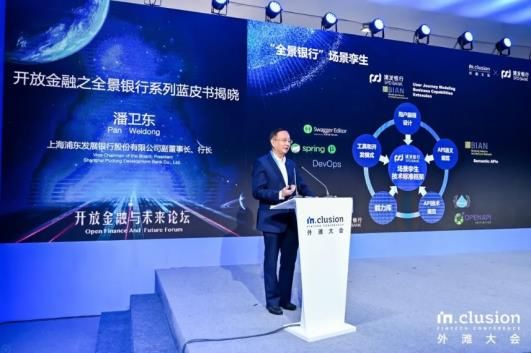
Introduction | BIAN & Academic, Standard Bodies and Training Partners

                        Copyright BIAN 2020 | Banking Industry Architecture Network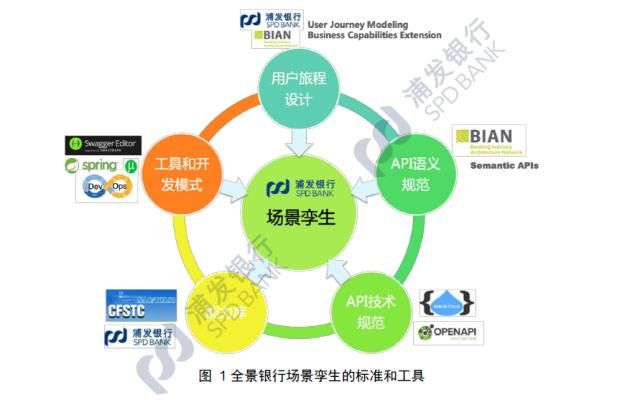
Model Management Practice
                   BIAN @ CIBC Overview
                   Enterprise Architecture
October 22, 2020

Internal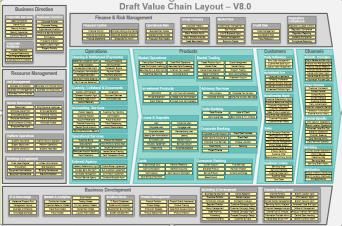
9

 Introduction
 Presenter
             Messalina Cadiz-Tostevin
             Senior Management Consultant, Enterprise Architecture & Data Governance, CIBC

             Over 20 years technology and business analysis experience working in the
             insurance and banking industry. The past few years of my career has been
             spent leading the model management practice for the Enterprise Architecture
             & Data Governance group in CIBC.

Internal
10

 Introduction
  About CIBC
  CIBC is a leading North American financial institution and one of the top 5 banks in Canada. From
  Personal, Business, and Commercial Banking to Wealth Management and Capital Markets businesses,
  our 45,000 employees provide a full range of financial products and services to 10 million clients in
  Canada, the United States and around the world. CIBC was founded in 1867 and has its
  headquarters in Toronto.

  Investor Facts*:
  ▪    Total Assets of $651.6 billion
  ▪    Market Capitalization $50 billion
  ▪    Reported Revenue $18.6 billion
  ▪    Reported Net Income $5.1 billion

  Awards & Recognitions:
  ▪    Recognized by Global Finance magazine as the Best Consumer Digital Bank in Canada (2020).
  ▪    Earned top overall score in The Forrester Banking Wave™: Canadian Mobile Apps report (2019)
  ▪    Recognized by Celent Research for delivering a cutting-edge integration platform that leverages open
       source technologies (2019).

*Reported as of October 31, 2019

Internal
Our models are framed around the Architecture
11
stack and represents a view to each layer
Business Area,
BIAN Service
Business Domain
Coarse Landscape
Service Domain
grained Business Architecture
Data Architecture Banking Industry Data Model
Common Info
(data objects & metadata)
Application Architecture Model
Fine Technology Architecture
grained
Reference Data Architecture Microservices
Sales & Service Framework Service-Oriented Architecture
Operations & Execution
Risk & Compliance
Business Support Infrastructure,
Technology & Security & Utility
Security Model Services & Products
BIAN is technology and implementation agnostic and focuses solely on the business capability
level; capabilities that support the realization of our banking products and services and that
help us run as a bank.Our vision is to leverage models that are fit for
12
purpose and inform our strategic decisions.
Conceptual View
▪ Which business capabilities are being realized?
Architect Business ▪ Do Gaps, Redundancies, Overlaps exist?
Governance ▪ Are there opportunities for simplification, rationalization, re-use?
Leverage Capability View
models
BIAN Technology
Leverage
models Capability View
API Marketplace Technology
& Security
What data is being Model
APIs exposed (internally,
externally)? • What are the standard
Common technologies?
Info • What is the underlying technology
composition of the application?
Model
▪ What data is being moved between internal systems?
Data ▪ What data is being shared with external parties?
▪ What data is implicated in new initiatives?
Capability
Internal View13
Why BIAN? The Value Proposition
Applying a Business Capability Lens to our Technology Landscape
1 a. We mapped every application in our portfolio to BIAN Service Domains
b. This allows us to view our application portfolio alignment to the BIAN Service Domains; we
can identify applications that overlap across multiple service domains and applications that
support similar capabilities.
Creating a Value Chain ‘Bank on a Page’ View for the Enterprise
2 a. We were able to create a ‘Bank on a Page’ view through which we can examine our current
technology investments against business capabilities, and which can help us identify
rationalization and optimization opportunities as well as potential gaps.
b. Our triage, governance and risk processes will be able to leverage the same ‘Bank on a Page’
view to evaluate proposed new solutions to our application portfolio and to promote
application rationalization and modernization while preventing the proliferation of redundant
applications.
Future proofing our Technology Portfolio for Disruptive Industry Change
3 a. We anticipate that BIAN will assist us to evolve our core banking capabilities into a
componentised framework and enable us to help our clients achieve their ambition while
adapting to changing market and technology demands.
b. We are positioning our Bank for Domain Driven Design, Microservices architecture and Open
Banking.
InternalCIBC BIAN Journey – Planting the Seed 14
Lessons Learned
Establish clear goals for the
POC to validate BIAN:
✓ Compare/contrast BIAN
against other models
✓ Identify areas where
BIAN could help
✓ Leverage BIAN
resources & WGs
Start
Completed pilot and
Internal received go-ahead decision
to move forward with BIAN
(Q3 2018)CIBC BIAN Journey 15
01- Lessons Learned
✓ A clear Roadmap is helpful on
how to incrementally roll out
BIAN as the model is complex &
the PCM effort is huge for big
organizations with legacy
systems and proprietary
models.
✓ Start with a small group of
change agents & champions to
establish a baseline.
Developed BIAN Roadmap
And Project Organization
01
& Scope for Phase 1
“Plant the Seed”
(Q4 2018)
Start
Completed pilot and
Internal received go-ahead decision
to move forward with BIAN
(Q3 2018)CIBC BIAN Journey 16
02- Lessons Learned
✓ The BIAN model is very complex
and the online resources are
plentiful but overwhelming. We
created a more simplified deck
to onboard our Enthusiasts.
✓ Learning curve is steep.
✓ Architects with Business
Banking background had an
easier time adopting the model.
Enthusiasts selected and
02
trained on BIAN
Developed BIAN Roadmap
And Project Organization
01 (Q1 2019)
& Scope for Phase 1
“Plant the Seed”
(Q4 2018)
Start
Completed pilot and
Internal received go-ahead decision
to move forward with BIAN
(Q3 2018)CIBC BIAN Journey 17
03- Lessons Learned
✓ The HPBM-to-BIAN to model
confirmed that we could match the
majority of the HPBM components to
BIAN except for those that we knew
where implementation, technology
or data specific.
03 Iteration 1
HPBM-to-BIAN Mapping
of Future State
Components/Sub-
Enthusiasts selected and
02 Components
By SME’s
trained on BIAN (Q2 2019)
Developed BIAN Roadmap
And Project Organization
01 (Q1 2019)
& Scope for Phase 1
“Plant the Seed”
(Q4 2018)
Start
Completed pilot and
Internal received go-ahead decision
to move forward with BIAN
(Q3 2018)CIBC BIAN Journey 18
04- Lessons Learned
✓ The mapping exercise
took longer than Iteration 2
Strategic & Modernize
anticipated as the
Enthusiasts had to shift
Application HPBM-to-BIAN
Mapping 04
of Future State
their thinking from Components/Sub-
technology to business Components
By Enthusiasts
capabilities. (Q3 2019)
✓ Some of the Service 03 Iteration 1
Domain Role HPBM-to-BIAN Mapping
descriptions were a of Future State
Components/Sub-
little vague.
Enthusiasts selected and
02 Components
By SME’s
trained on BIAN (Q2 2019)
Developed BIAN Roadmap
And Project Organization
01 (Q1 2019)
& Scope for Phase 1
“Plant the Seed”
(Q4 2018)
Start
Completed pilot and
Internal received go-ahead decision
to move forward with BIAN
(Q3 2018)CIBC BIAN Journey 19
05- Lessons Learned
✓ We were able to
simulate BAU Iteration 2
Strategic & Modernize
05
governance.
✓ In addition we were
Application HPBM-to-BIAN
Mapping 04 Impact analysis of
Application
of Future State
able to create Value Components/Sub- Portfolio Governance
Artifacts, Processes
Chains with technology Components
(Q4 2019)
By Enthusiasts
and LOB views. But we (Q3 2019)
need to engage with 03 Iteration 1
the Business & AD HPBM-to-BIAN Mapping
teams to align along of Future State
Components/Sub-
those views
Enthusiasts selected and
02 Components
By SME’s
trained on BIAN (Q2 2019)
Developed BIAN Roadmap
And Project Organization
01 (Q1 2019)
& Scope for Phase 1
“Plant the Seed”
(Q4 2018)
Start
Completed pilot and
Internal received go-ahead decision
to move forward with BIAN
(Q3 2018)CIBC BIAN Journey 06 20
Change Mgt & Phase 1
Implementation
06- Lessons Learned (Q1 2020)
✓ The PCM effort across
all of Enterprise Iteration 2
Strategic & Modernize
05
Architecture is ongoing
and we continue to
Application HPBM-to-BIAN
Mapping 04 Impact analysis of
Application
of Future State
learn by applying the Components/Sub- Portfolio Governance
Artifacts, Processes
model and to refine Components
(Q4 2019)
By Enthusiasts
our understanding. (Q3 2019)
✓ Allow for 3-6 months of 03 Iteration 1
post-implementation HPBM-to-BIAN Mapping
socialization. of Future State
Components/Sub-
Enthusiasts selected and
02 Components
By SME’s
trained on BIAN (Q2 2019)
Developed BIAN Roadmap
And Project Organization
01 (Q1 2019)
& Scope for Phase 1
“Plant the Seed”
(Q4 2018)
Start
Completed pilot and
Internal received go-ahead decision
to move forward with BIAN
(Q3 2018)21
What are the opportunities going forward?
We have a unique opportunity to partner more closely with our business and technology
partners to develop solutions with the following benefits –
Raise Business Value: The alignment to a common framework and ubiquitous language
improves cross-functional collaboration and communication to successfully deliver
business solutions and value.
Lower Cost & Risk: Cost and risk are minimized through a tightly managed value chain
that effectively connects purpose to strategy to business and organizational
capabilities.
InternalLeveraging BIAN Artifacts and Tools 22
The BIAN Service The BIAN Value Chain view
Landscape is a logical, shows the service domains that
organizing framework of all the organization uses in the front
currently identified Service office, middle and back office.
Domains.
The BIAN Service Domain is a
generic, elemental business
capability building block and is
stable over time.
The BIAN Business Scenario is a The BIAN Wireframe
linked sequence of interactions represents the available
between Service Domains in service connections for a
response to a business event. selection of Service Domains.
Moving from the business narrative to business scenarios to componentized capabilities
to a component-based architecture and design.
Internal23 Thank You
Confidential

                                 BIAN Webinar
               BIAN as a functional language - the journey (so far!) toward fully
                            compliant Domain Driven landscape.

                                 21st October 2020

                                                        24
Confidential
View of Generic Banking Institution
NOTE – not intended to be an
exact representation of Santander
Santander is a complex
global, multi-entity
organization.
For purpose of
demonstrating, this is a
an example of the
generic global bank
view across the
customer and product
dimensions
25Confidential
Example BIAN Use Case 1
BIAN AS A FUNCTIONAL LANGUAGE TO ORGANIZE IT LANDSCAPE
• In a complex global, multi-entity organization such as Santander Group, BIAN
provides value as a common functional language to organize and manage the
FUNCTIONAL Applications Portfolio.
LANGUAGE FOR
IT • Key IT portfolio tools are being updated to include BIAN Service Landscape as a
new dimension to manage our assets.
• This also provides a view into opportunities such as simplification of the
BIAN
Coverage
application landscape, reducing costs, decommissioning.
26Confidential
Example BIAN Use Case 2
BaaS - API FUNCTIONAL REFERENCE FRAMEWORK
• A reference architecture framework has been defined in order to provide common
standards across the group.
API DESIGN
• API Functions are published in the Intranet API Portal
• Enables more efficient identification of required APIs, also preventing inadvertent
duplication.
Domain Driven • Each API is classified under its corresponding BIAN Service Domain.
Design
• API Design: Each API must expose functions from only one BIAN Service Domain.
• Also recognises, in some cases, a service domain may have more than one API
• An API can delegate responsibility to another API, matching the Service Domain model
of delegating responsibilities to other service domains. This is hidden from the
consumer.
27Confidential
Example BIAN Use Case 2
BaaS - API FUNCTIONAL REFERENCE FRAMEWORK
• Banking as a Service (BaaS) APIs can be reused and have business logic that is
common for many applications according to its BIAN Service Domain (Capability) which
sets the logical boundaries and scope of functionality and data (I.e. Domain Driven
API DESIGN
Design)
• BaaS APIs are Touchpoint, Customer Journey or Customer Service
Channel
UK Application
capabilities
Experience API
Domain Driven • Each BaaS API must exclusively manage it’s Experience API
Delivers a
Design own data, for the whole lifecycle of that Service
business
function
data. Service Domain 1 Service Domain 2
BaaS API #1 BaaS API #2
BaaS API #1 Service BaaS API Service #2
Simple
orchestration
System Service API
System Service System Service System Service
Backends, Domains/Processors 28Confidential
Direction of travel towards service orientated fully compliant landscape
29BIAN INFOGRAPHIC
https://view.ceros.com/hotwirepr/bian-guide-to-adoption/p/1
Copyright BIAN 2020 | Banking Industry Architecture NetworkBenefits: Premium versus Freemium
✓ ✓
MEMBER NON-MEMBER
Consume software and standards
Anyone in the community can use and provide feedback for our open source
COMMUNITY
✓
projects and standards
Contribute to the BIAN Standard
Members and non-members are encouraged to get engaged and contribute
Propose New Programs
Any member can propose ideas for new programs or working groups ✓
Approve and Steer Programs
The Board approves new programs driving the Foundation direction ✓
Foundation Corporate Governance
Board and Members meet annually to drive the strategy of the community ✓
Program Promotion & Thought Leadership
We work with our Community to promote standards adoption and produce thought leadership
✓ ✓
NETWORK
✓
content
Strategy Advisory
Free attendance and additional member perks at our annual conference.
BIAN Introduction Days
Meet-ups open to the entire community focused on specific topics ✓ ✓
Member Meetings, Resources and Events
Member only events with market leaders including shared networking and
✓
✓ ✓
workgroup meetings
Open Developer API Platform
Our Open API Sandbox environment is open for all contributions
BIAN Architect Certification Program
Access to training and certification program and supporting materials
✓ ✓
BIAN SERVICES
Project Startup and Support
Mentor and advisory services to our members as they consider to use the BIAN Models in their
✓
✓
Architectural environment to ensure the projects succeed.
General Assembly Meeting
All members have voting rights, 1 member 1 vote, due=ring our annual general assembly regarding
✓
Board Elections, Budget, Strategy and so on
Roundtables, Training, Workshops
SMEs from BIAN and member firms provide custom training and workshops on a range of topics
31 Copyright BIAN 2020 | Banking Industry Architecture NetworkMember driven organization
Fees (annual membership)
▪ Large Software / Tech vendors / Integrators
(250 employees or more)
EUR 30.000,-
▪ Banks / FI’s that are not vendors
EUR 20.000,-
▪ Mid-Size Software / Tech vendors / Integrators
(less than 250 employees)
EUR 10.000,-
▪ Federal Banks / Central Banks
EUR 10.000,-
▪ Small Software / Tech vendors / Integrators / FinTech's
(less than 50 employees)
EUR 5.000,-
▪ Academic Partners
Copyright BIAN 2020 | Banking Industry Architecture Network
EUR 0,-2020 - Planned BIAN Open Webinars Q4
Complimentary BIAN Webinar:
BIAN Release 9.0, from Open Banking
Complimentary BIAN Webinar:
Enterprise Architecture to Open
Semantic APIs The BIAN Framework as the Cornerstone for
Open Banking in China
In this webinar BIAN will give an introduction in November
the BIAN release 9.0 of the Banking Industry
3
Reference Architecture.
In this webinar, our members Shanghai Pudong
Development Bank share their experiences on
We guide you through the content of the BIAN
release 9.0 digital repository and show how to
navigate through the BIAN architectural
artifacts.
9am - 10am (CET) or
3pm - 4pm (CET)
an Open Banking PoC they launched in China
Their experiences are an example for the usage
BIAN for the Chinese Banking and Insurance
tbd
Can´t make it on Sector.
November 3? More
33 Copyright BIAN 2020 | Banking Industry Architecture NetworkQuestions?
Please stay muted and type There is a
short poll at
your Questions in the righthand the end of this
bar, or send them to webinar,
please take a
info@bian.org few minutes to
share your
thoughts with
us!
Thanks in
advance.
34 Copyright BIAN 2020 | Banking Industry Architecture NetworkYou can also read


