Biennial Report 2009 2011 - TU Dortmund
←
→
Page content transcription
If your browser does not render page correctly, please read the page content below
1

Biennial Report 2009 - 2011
CONTENTS

      EDITORIAL                         4

      INTRO
      Department Professors              7
      Structure of the Department        8
      Events                            10
      Awards                            17
      Colloquia                         21
      Staff News                        23
      Plenary and Keynote Lectures      25

      EDUCATION
      Overview                          28
      Evaluation                        31
      Students’ Council                 32
      Ten-Star Service                  34
      Alumni                            35
2     RESEARCH
      Process Intensification            36
      Polymer Science and Engineering   38
      Biotransformations                40
      Modeling                          42
      Highlights                        44
      Network                           51
      The European Project Office        52

      FACTS & FIGURES
      Doctoral Degrees                  54
      Publications                      57
      Graduates and Theses              58
      Patents                           59
      Staff                             60
      Students                          61
      Finances                          63
      Tuition Fees                      64
      Infrastructure                    66
      International Exchange            67
      Publications                      68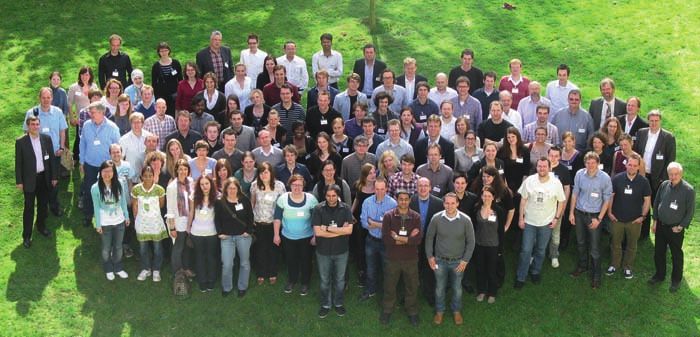
3

   Biennial Report
July 2009 - June 2011
EDITORIAL

                            This is the second biennial re-   for his contributions to the teaching and research of
                            port of our department which      the department.
                            we prepare every two years on     We are very happy that our first stage programs, the
                            the occasion of the meeting       Bachelor programs in Biochemical Engineering (BIW)
                            of our Advisory Board. While      and Chemical Engineering (CIW) are very well ac-
                             the general orientation of the   cepted. In 2010 with enrollment restrictions in both
                             department has remained un-      programs, we could welcome about 180 first year
                             changed, continuous adapta-      students. In order to cope with the increasing num-
                             tions are being made in order    bers of young people who want to start their univer-
    to cope with new challenges and to use new opportu-       sity studies due to the reduction of the duration of
    nities. Our mission statement that we formulated in       the high school education and the abolishment of the
    2008:                                                     military service, we removed the restriction for Chem-
    Research and education for the development and op-        ical Engineering in 2011 and increased the intake to
    timization of safe, sustainable and efficient production   110 for Biochemical Engineering.
    processes based on a strong interaction of natural and
    engineering sciences                                      In the transition to a Bachelor/ Master system, the
4   continues to define our efforts in teaching and in re-     department opted for a 7 semester Bachelor program
    search.                                                   which, in contrast to shorter programs, is planned
                                                              such that the graduates are indeed employable by in-
    With the appointment of Professor Dr. Oliver Kayser       dustry. However, in all German universities currently
    as a full professor in Technical Biochemistry who as-     the vast majority of the students opt for the continu-
    sumed his position on April 1, 2010, the extension        ation towards a Master degree. After our first experi-
    and re-structuring of our research and teaching in        ences, we made some adaptations to the Bachelor
    biochemical engineering has been finalized. Thanks         programs and we now look forward to many years of
    to the sponsoring of the BAYER AG, we could establish     operating a stable system. One major change was
    a new professorship in Equipment Design that has          the modification of the introductory courses in the
    been assumed by Dr. Norbert Kockmann who joined           first semester in both programs where the students
    us from Lonza, Switzerland, on April 1, 2011. The de-     will now also work on small problems in groups to in-
    partment now is in a position to develop chemical and     crease their motivation and help them to understand
    biochemical transformations from the foundations          the importance of the basic subjects that are taught
    in chemistry, biochemistry and thermodynamics to          in the first semesters to real biochemical and chemi-
    their technical realization and systematic, model-        cal engineering problems. We hope that this will con-
    based optimization. Our colleague Prof. Dr. Hans Fahl-    tribute to a further reduction of the still considerable
    enkamp who held the professorship in Environmental        drop-out rate during the first semesters.
    Technology retired on July 31, 2011, but some of his
    projects are still on-going. I wish to thank him warmly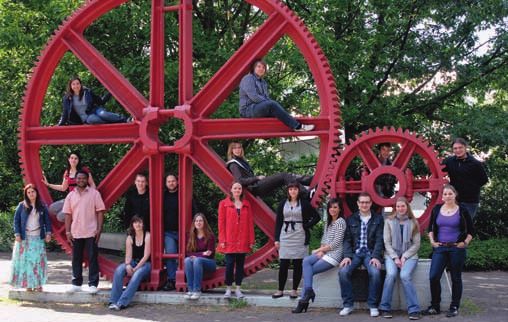
EDITORIAL

While the beginning students are now educated ac-          invest significantly both in the infrastructure (lab
cording to the new rules, a large number of students       experiments, computers, software etc.) and in stu-
have finished their Diplom-Ingenieur studies within         dent assistants for tutorials and in additional staff to
the last two years and were in high demand both by         improve the student-staff ratio. These fees also ena-
the research groups of the department and by indus-        bled the hiring of our Academic Coordinator whose
try.                                                       work improved the information and counseling of the
On the Master level, we have been offering a spe-          students as well as the coordination of the teaching
cialization in Process Systems Engineering as an           activities very significantly. In 2011, a former storage
international four semester English taught program         area will be revamped into a student center to offer
for several years now. Up to now, the program has          the students good working conditions for individual
only been chosen by foreign students and by gradu-         and group learning on the university premises. Over-
ates of German Fachhochschulen. After having coped         all we will have spent more than 1,1 M€ on improve-
with the adaptation of the learning strategies to the      ments of the learning conditions of the students from
German university style of independent learning and        these fees. After the change of the provincial govern-
requesting problem solving skills in the exams, the        ment, the tuition fees have been abolished and are
students perform well academically and are suc-            replaced by a provincial program for the improvement
cessful on the job market. Besides, the Department is      of the quality of teaching, and we hope to be able to      5
strongly involved in the Master Programs in Polymer        continue these activities as in the previous years.
Science (together with the department of Chemistry
and the FH Gelsenkirchen) and in Automation and            The research of the department continued to grow
Robotics (interdepartmental). It can be observed that      in size and in impact. In 2010, we spent a record 6,89
the graduates of all these Master programs are also        M€ third party funding, for the first time surpassing
well accepted by the employers.                            our budget from the university and putting us in sec-
The department puts significant efforts into the            ond place among the departments of the university.
international dimension of the education of the stu-       Besides a growing number of high-level publications
dents. Besides semesters abroad in the context of          the research of the department has been recognized
the European Erasmus scheme or organized indi-             in two really outstanding honors to members of our
vidually, we can offer semesters abroad in top-level       department: Gabriele Sadowski received a Leibniz-
US universities and in Hong Kong, reciprocating the        Prize of the German Research Council, and Andrzej
participation of their students in the Dortmund In-        Górak received the Bundesverdienstkreuz in recogni-
ternational Summer Program which is a unique low-          tion of his contribution to the scientific cooperation
threshold opportunity to study in Germany and was          with Poland. Congratulations!
initiated and is still for a large part organized by our   During the reporting period, we were very happy to be
department.                                                awarded a DFG Transregio-SFB on Integrated Proc-
Thanks to the availability of funds from the Tuition       esses in Several Fluid Phases together with TU Berlin
Fees that were collected from 2007-2011, we could          and the OvGU Magdeburg, the first time that several
EDITORIAL

    research groups of the department are involved in a      Despite our continuing success in teaching and re-
    SFB. A strength of the department is the high number     search, the department is facing significant challen-
    of European projects and networks in which groups        ges during the next years, in particular on the budget
    from the department participate which not only           side. For the next years it is likely that we will have
    provide funding for research but also opportunities      additional income from the extra funds for the additi-
    for interaction with researchers in many European        onal student intake, but in the long run TU Dortmund
    countries for the young researchers in the depart-       expects a significant reduction of the overall budget
    ment, adding an international dimension to their         that is available for teaching and research. This will
    personal development. The management of and the          necessitate strategic discussions and decisions
    application for such projects has been strongly sup-     both on the university and on the department levels.
    ported by the establishment of the EU project office      Due to the uncertainty about our budget situation,
    of the department, sponsored by the Land NRW. In         we already had to put the process of hiring a new
    conjunction with the European Integrated Project F3,     professor for environmental process engineering on
    Bayer and TU Dortmund joined forces to set up a joint    halt. More than ever, we will need external funding
    research and education facility in the area of process   and sponsoring to be able to continue to operate on
    intensification in a public-private partnership. The      our current level. Nonetheless we are confident that
6   INVITE Center in Leverkusen will be opened in Sep-       we will be able to maintain our high standards and
    tember and provide us with additional facilities for     will continue to be a member of the top-tier of similar
    pilot scale and industrial scale developments.           departments in Europe.

                                                             Sebastian Engell
                                                             Department Chair
INTRO - DEPARTMENT PROFESSORS

         Laboratory of                       Laboratory of
         Biochemical Engineering (BVT)       Fluid Separations (FVT)
         Prof. Rolf Wichmann                 Prof. Andrzej Górak

         Laboratory of                       Laboratory of
         Biomaterials and                    Particle Technology (MV)
         Polymer Sciences (BMP)              Prof. Peter Walzel
         Prof. Jörg C. Tiller

         Laboratory of                       Laboratory of
         Chemical Biotechnology (BT)         Plant and Process Design (APT)
         Prof. Andreas Schmid                Prof. Gerhard Schembecker

        Laboratory of                        Laboratory of                    7
        Chemical Process Development (TCA)   Process Dynamics
        Prof. Arno Behr                      and Operations (DYN)
                                             Prof. Sebastian Engell

         Laboratory of                       Laboratory of
         Environmental Technology (UT)       Reaction Engineering (TCB)
         Prof. Hans Fahlenkamp               Prof. David W. Agar

        Laboratory of                        Laboratory of
        Equipment Design (AD)                Technical Biochemistry (TB)
        Prof. Norbert Kockmann               Prof. Oliver Kayser

         Laboratory of                       Laboratory of
         Fluid Mechanics (SM)                Thermodynamics (TH)
         Prof. Peter Ehrhard                 Prof. Gabriele Sadowski
INTRO - STRUCTURE OF THE DEPARTMENT

    The Department of Biochemical and Chemical Engi-       The central facilities support the work of the labo-
    neering is one of 16 departments at the Technische     ratories in research and education. The Chief Ad-
    Universität Dortmund. The Department BCI consists      ministrative Officer manages these facilities and is
    of 14 laboratories. The Department Chair and the two   responsible to the Department Chair. The Academic
    Vice-Chairs administer the department and perform      Coordinator is responsible for all matters regarding
    official duties.                                        students affairs.

8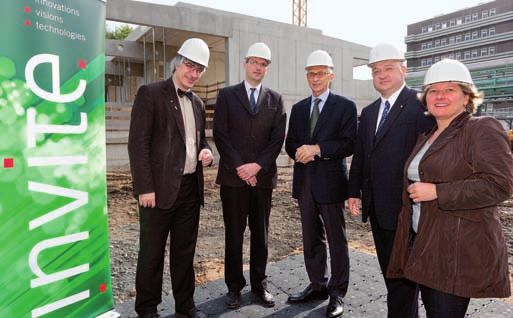
INTRO - STRUCTURE OF THE DEPARTMENT

                                      9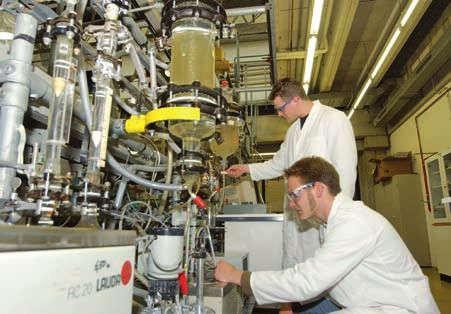
INTRO - EVENTS

     Meeting of the Advisory Board 2009                      ChemCar-Award 2009

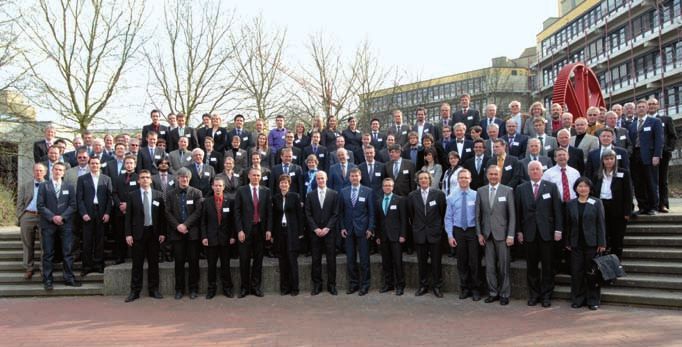
10   2009                                                            The new Advisory Board of the Department BCI discuss-
                                                                     es with the members of the Department BCI for the first
     Prof. Kim Dam-Johansen of the Technical University of           time. (October 8th)
     Denmark (DTU) visits the Department of Biochemical
     and Chemical Engineering. (July 3rd)                            Biochemical and Chemical Engineering Open Day: the
                                                                     laboratories and working groups present their latest
     The Department receives the „Hallmark of Excellence“            research results. At the graduation ceremony, the De-
     (Gütesiegel) of the Society of German Faculties for             partment BCI conveys Bachelor, Master and Diploma
     Mechanical and Chemical Engineering (FTMV e.V.).                degrees. (October 9th)
     (July 9th)
                                                                     Participation in JOBtec at the Dortmund CineStar. (No-
     Prof. Sebastian Engell chaired the IFAC Symposium               vember 11th)
     on Advanced Process Control in Istanbul. (July 13th-
     15th)                                                           The research proposal „Integrated Chemical Processes
                                                                     in Liquid Multiphase Systems“ (INPROMPT), part of the
     Ten stars for very good teaching service were awarded           SFB/TR 63, is funded by the German Science Founda-
     to the Laboratories of Fluid Mechanics, Fluid Separa-           tion. (November 18th)
     tions and Thermodynamics. (July 22nd)
                                                                     Study Information Day. (November 19th)
     The team of the Department of Biochemical and
     Chemical Engineering wins the national ChemCar-                 The Department BCI takes part in the „Kinder-Uni“ (Chil-
     Competition 2009. (September 9th)                               dren’s University). Titel of the presentation: What are
INTRO - EVENTS
synthetic materials are able to do? – About baby dia- Seminar lecture Prof. Shah: “The new role of digital au-
pers, Lego bricks and football boots. (November 20th) tomation systems in process monitoring: Sensor-fusion
and signal processing for plant health management“.
The project meeting of the EU-project EMBOCON takes (April 28th)
place at the Laboratory of Process Dynamics and Opera-
tions. (December 3rd) The Department BCI opens its doors for the campus fes-
tival. (June 19th)
Signing of the cooperation agreement between the
Department of Biochemical and Chemical Engineering The students’ council takes part in the “Stillleben”, a cul-
and the Technical University of Denmark (DTU), Lyngby. tural activity on the closed A40 motorway. (July 19th)
(December 14th)
The Laboratory of Prof. Kayser achieved the success-
The European Project Office, part of the Department of ful heterologous biosynthesis of Tetrahydrocannabinol
Biochemical and Chemical Engineering, is founded. It (THC) in microorganisms. (August 18th)
offers project management services to all researchers
from Technische Universität Dortmund. (December 17th) The Department BCI participates with different activi-
ties in the „SchnupperUni“ [A Taste of University]. (Au-
gust 26th)
2010 11
Prof. Dr. Gabriela P. Henning from INTEC Universidad
In the course of Ruhr 2010, Capital of Culture, every Nacional del Litoral, Santa Fe, Argentina gives a course
month the Department BCI provides for the BCI “Conceptual models and their applications”. (September
homepage one artistic image of its research results 13th -15th)
(Engineering Meets Art)
Study Information Day. (March 4th)
Kick-off Meeting of the project „European Multilevel
Integrated Biorefinery Design for Sustainable
Biomass Processing (EuroBioRef)“. (March 22nd)
On the Girls Day, the participants are given an insight
into the work of the Department. (April 22nd)
Priv. Doz. Lars Blank gives his inaugural lecture “Sys-
tems Biotechnology and Biocatalysis”. (April 28th)
Engineering Meets Art.
Picture submitted by Dipl.-Inf. Martin Hüfner & Dipl.-Ing. Stephan Fischer,
Laboratory of Process Dynamics and OperationsINTRO - EVENTS
Degree certificate conferral in graduation ceremony
12 The Process Dynamics and Operation Group celebrates The Department conducts the first professional train-
its 20th anniversary with an international colloquium on ingworkshop for the secretaries of the Department.
“Perspectives in Process Operations”. (September 17th) (November 22nd)
Participation in JOBtec at the Dortmund CineStar. Melik Bugra Dogru is the first graduate of the new Mas-
(September 29th) ter Program Process Systems Engineering. (December
2nd)
A student team from the Department BCI takes 4th
place at the ChemCar-Competition 2010. (September Biotrends 2010 conference organised by the Research
30th) and Development Network ChemBiotec and the Labo-
ratory of Technical Biochemistry at the TU Dortmund.
The Minister for Innovation Svenja Schulze, visits the (December 1st-2nd)
INVITE-Center at Bayer AG in Leverkusen, a project in
which the Department Biochemical and Chemical Engi- 2011
neering is closely involved. (October 4th)
Kick-off Meeting of the project “Energy Efficiency Ma-
Biochemical and Chemical Engineering Open Day: the nagement”. (January 27th)
laboratories and working groups present their latest
research results. The program includes the graduation The conference eLEARNing-TuDO2011 takes place at TU
ceremony, the Department bids farewell to the gradu- Dortmund. Dipl.-Inf. Martin Hüfner, Laboratory of Pro-
ates. (October 8th) cess Dynamics and Operations, presents the web-basedINTRO - EVENTS
learning program Learn2Control, which supplements The Laboratory of Thermodynamics organizes the Sym-
the classical engineering education at the Technische posium “Thermodynamik 2011“. (March 25th)
Universität Dortmund. (January 28th)
On Girls’ Day, the participants are given an insight into
The international Symposium “Challenges in Fluid Sepa- the work of the Department. (April 19th)
rations” takes place at the TU Dortmund on the occasion
of the 60th birthday of Prof. Dr. Andrzej Górak. (February Marlene Senftleben is the first Bachelor graduate in
18th) Chemical Engineering and Jens Kamplade is the first
Bachelor graduate in Biochemical Engineering at the
Gottfried Wilhelm Leibniz Prize awarded to Prof. Dr. TU Dortmund. (April 7th)
Gabriele Sadowski. (March 16th)
Prof. Sebastian Engell visits R&D institutions in India
Study Information Day. (March 17th) as a member of a delegation of the European project
EUCLID. (April 18th-23th)
The Department BCI obtains financial support from
TeachingLearnIng for a new teaching project. The dona- First Workshop of the „Stiftung zur Förderung des
tion is used to extend the lecture “Technische Biologie” Kokereiwesens in Technik und Wissenschaft“ and the
towards project-oriented contets. (March 24th) Department of Biochemical and Chemical Engineering 13
is conducted. (May 4th)
Prof. Sebastian Engell and M.Sc. Tiago Fiorenzano Finkler First Bachelor in CIW/BIW:
congratulate the first Master in Process Systems Engineering: B.Sc. Jens Kamplade and B.Sc. Marlene
M.Sc. Melik Bugra Dogru Senftleben with Prof. Sebastian EngellINTRO - EVENTS
“Perspectives in Process Operations“
International Colloquium
on the Occasion of the
20th Anniversary of the
Process Dynamics and Operations Group
at TU Dortmund
September 17th, 2010 Prof. Gabriela P. Henning
Speakers
14 Bjarne Foss, NTU Trondheim, Norway
Process Control - Vertical and Horizontal Integration
Bruce H. Krogh, Carnegie Mellon University, Pittsburgh, USA
Verification of Hybrid Dynamic Systems
Ignacio E. Grossmann, Carnegie Mellon University, Pittsburgh, USA
Prof. Ignacio E. Grossmann Progress in Mixed-integer Programming and Applications in Process
and Prof. Cesar de Prada Systems Engineering
Gabriela P. Henning, Universidad Nacional del Litoral, Santa Fe,
Argentina
Production Scheduling in the Process Industries - Trends, Challenges
and Opportunities
Cesar de Prada, Universidad de Valladolid, Spain
Trends and Needs in Process Control
Sebastian Engell, TU Dortmund, Germany
20 Dynamic Years and More to Come
Dr. Achim Küpper and
Prof. Hans Georg Bock Norbert Kuschnerus, Bayer Technology Services, Leverkusen,
Germany
Future Automation in the Process Industries
Hans Georg Bock, IWR, Universität Heidelberg, Germany
Prof. Dr. Sebastian Engell What Separations Brought TogetherINTRO - EVENTS
International Symposium Speakers
“Challenges in Fluid Separations”
Welcome Addresses
TU Dortmund Prof. Dr. Ursula Gather, Rector, Technische Universität Dortmund,
Germany
Prof. Dr.-Ing. Sebastian Engell, Vice Chair Department BCI, Tech-
February 18th, 2011 nische Universität Dortmund, Germany
Jörg Hunold, Ministry of Innovation, Science, Research and Tech-
nology of North Rhine-Westphalia, Germany
Dr. Andreas Förster, Managing Director ProcessNet, DECHEMA ,
Germany
Lectures, Chairwoman: Prof. Dr. Gabriele Sadowski, Technische
Universität Dortmund, Germany:
Prof. Dr.-Ing. Hans Hasse, University of Kaiserslautern, Germany:
The driving forces of fluid process engineering
Dr.-Ing. Helmut Mothes, Bayer Technology Services GmbH, Ger-
many:
Open innovation - a successful approach for challenges in fluid
separations 15
Prof. dr. ir. Andrzej Stankiewicz, Delft University of Technology, The
Netherlands:
Advancing fluid separations via fundamental concepts of process
intensification
Prof. dr. ir. André de Haan, Eindhoven University of Technology, The
Netherlands:
Prof. Dr. Sebastian Engell, Prof. Dr. Ursula Gather, Challenges in exploiting ionic liquids as advanced fluids in future
Prof. Dr. Andrzej Górak, Dr. Andreas Förster, Jörg Hunold fluid separations
Lectures, Chairwoman: Prof.ssa Dott.ssa Elisabetta Brunazzi,
University of Pisa, Italy:
Dr. Wilfried Seyfert, BASF SE, Germany:
Prof. Dr. Ursula Gather Fluid separation research - how to match academic haute cuisine
and industrial barbecue
Prof. dr hab. inz. Stanislaw Ledakowicz, Technical University of
Lódz, Poland:
Abatement of NOx emission from chemical industry
Dr. Søren Bøwadt, European Commission, Belgium:
Visions in chemistry - from virtual institutes to open innovation
Prof. Dr.-Ing. Günter Wozny, Technische Universität Berlin, Ger-
many:
Distillation - a science or a kind of art
Prof. Dr.-Ing. Andrzej Górak, Technische Universität Dortmund,
Scientific staff,
Germany:
Laboratory of Fluid Separations
Fluid separations - tradition with a promising futureINTRO - EVENTS
Speakers
Prof. Dr. Joachim Groß, Universität Stuttgart:
Von Flüssigkeitstheorien zur Anwendung von Flüssigkristallen
Prof. Dr. Hans Hasse, Technische Universität Kaiserslautern:
Molekulare Simulationen mit Kraftfeldmethoden: Von der Struktur
fluider Systeme zu deren physikalisch-chemischen Eigenschaften
Dr. Kai-Martin Krüger, Evonik Industries AG:
Was Polymere im Öl zu suchen haben
Dr. Klaus-Dieter Hungenberg, BASF SE:
On-line Methoden zur Verbesserung der Sicherheit und Leistung
International Symposium von Polymerisationsreaktoren
“Thermodynamic” Prof. Dr. Ralf Dohrn, Bayer Technology Services GmbH:
Messung von Phasengleichgewichten bei hohen Drücken:
Eine immer neue Herausforderung
TU Dortmund
Prof. Dr. Gabriele Sadowski, Technische Universität Dortmund:
16 March 25th, 2011
2001-2011: 10 Jahre Thermodynamik an der Technischen
Universität Dortmund
Prof. Dr. Gabriele SadowskiINTRO - AWARDS
Federal Cross of Merit to
Prof. Andrzej Górak,
June 29th, 2010
Professor Dr. Andrzej Górak has been awarded
the Federal Cross of Merit on ribbon (Verdienst-
kreuz am Bande) of the Federal Republic of
Germany on 29th of June 2010. The head of the
Laboratory of Fluid Separations at TU Dortmund,
who additionally is full professor at TU Lodz,
received the high state award for his contribu-
tions to mutual understanding and cooperation
between Poland and Germany.
17
Barbara and Prof. Dr. Andrzej Górak, Sabine Kelm-
Schmidt, Joanna Górak and Dr. Markus RostekINTRO - AWARDS
Gottfried Wilhelm Leibniz Prize trial standard and is used in software packages to
awarded to Prof. Gabriele Sadowski process and predict states. In her more recent work
Sadowski has expanded the scope of thermodynamic
research to the life sciences and the study of com-
March 16th, 2011 plex mixtures containing biologically derived agents
and biological agents. This research in the emerging
field of bio-thermodynamics is especially relevant to
A highly successful researcher at the interface of medical science and biotechnology, and, for instance,
engineering and natural sciences, Gabriele Sadowski can contribute to the production of particulate phar-
is a recognised authority in the international thermo- maceutical substances.
dynamics research community. Her research in the
areas of polymer thermodynamics and statistical After completing her degree and doctorate at the
thermodynamic equations of state has been truly Technical University of Leuna-Merseburg, Sadowski
groundbreaking. Among her other achievements, shifted the focus of her studies to process enginee-
Sadowski has extended the scope of the SAFT theory, ring and completed her habilitation thesis in this
used to create molecular models of fluids, to include discipline at TU Berlin in 2000. She was appointed
polymer systems. Known as PC-SAFT, the equation Head of the Laboratory of Thermodynamics at the
18
of state which she developed has become an indus- TU Dortmund in 2001 at just thirty-six years of age.
Her numerous research awards and keynote lectures
at leading international conferences testify Gabri-
Gottfried Wilhelm Leibniz Prize awarded
ele Sadowski‘s academic standing and expertise. In
to Prof. Dr. Gabriele Sadowski addition to initiating and coordinating a DFG Priority
Program, Sadowski was Department Chair and a
member of numerous academic advisory boards in
the chemical industry. Her reputation for scientific
excellence has enabled Sadowski to attract both top-
class scientists from abroad as well as early career
researchers to her projects.INTRO - AWARDS
2009 Norbert Kockmann was awarded a prize as the
ASME-ICNMM2009 outstanding researcher for his
Poster Award: Rühl J., Blank L. M. and Schmid A.; contributions on transport phenomena in microchan-
“Selected P. putida strains can grow in the presence nels. (June 23rd)
of high butanol concentrations”; DECHEMA Jahresta-
gung Biotechnology, (2009); Mannheim. (September Professor Dr. Andrzej Górak is awarded the Federal
8-10th) Cross of Merit with Ribbon (Verdienstkreuz am Ban-
de) of the Federal Republic of Germany. (June 29th)
Sonja Hermes and Katrin Sulzbacher receive the
Bayer Technology Services (BTS) Prize for the best Patrick Schmidt, Laboratory of Fluid Separations, is
degrees (Diploma Certificate) in biochemical and awarded the Springorum-Denkmünze of RWTH
chemical engineering. (October 9th) Aachen. (August 31st)
Andreas Hofmann (Chemical Engineering) and Julian Tim Roth, Laboratory of Fluid Separations, receives
Treese (Biochemical Engineering) receive the Wacker the second best presentation prize at the Distillation
Chemie Prizes for best intermediate diploma. (Octo- and Absorption 2010 conference. (September 15th)
ber 9th)
19
Katharina Koch, Laboratory of Fluid Separations, re-
The students’ council of the Department of Biochemi- ceives the second best poster prize at the Distillation
cal and Chemical Engineering receives the „Lehr- and Absorption 2010 conference. (September 15th)
preis“ of the TU Dortmund. (December 16th)
Axel Mescher, Laboratory of Particle Technology, re-
Katrin Sulzbacher (Laboratory of Plant and Process cieves the Best Presentation Award at 23rd Annual
Design) receives a prize as the best graduate of the Conference on Liquid Atomization and Spray Sys-
Department of Biochemical and Chemical Engineer- tems, Brno (CZ). (September 16th)
ing. (December 16th)
Arnold EuckenPrize is awarded to Dr.-Ing. Feelly
2010 Rüther, Laboratory of Thermodynamics. (September
21st)
Together with his working group at Lonza, CH-Visp,
Norbert Kockmann wins the prestigious Sandmeyer- ProcessNet 2010: Poster Award to Monika Sellerberg,
Preis 2010 of the Swiss Chemical Society for their Laboratory of Particle Technology. (September 30th)
ground-breaking work in the area of microreactor
technology and its application to industrial Thermodynamics-Colloquium: Lecture prize awarded
chemistry. (February 11th) to Christoph Held, Laboratory of Thermodynamics.
(October 6th)INTRO - AWARDS
Daniel Sudhoff and Sebastian Heitmann receive Sebastian Heitmann, Laboratory of Fluid Separa-
the Bayer Technology Services (BTS) Prize for the tions, receives the “Jahrgangsbestenspreis” of the
best degrees (Diploma Certificate) in biochemical “Gesellschaft der Freunde der TU Dortmund e.V.”
and chemical engineering. (October 8th) for his diploma thesis. (December 16th)
Franziska Horbach (Chemical Engineering) and Malte 2011
Fittkau (Biochemical Engineering) receive the Wacker
Chemie Prizes for the best results in the bachelor Gottfried Wilhelm Leibniz Prize 2011 is awarded
courses in Biochemical and Chemical Engineering. to Prof. Gabriele Sadowski from the Laboratory of
(October 8th) Thermodynamics. (March 16th)
The Klaus-Goerttler Prize awarded to Dr.-Ing. Hendrik Daniel Sudhoff receives the Hans-Uhde-Prize for
Kortmann, Laboratory of Chemical Biotechnology, for his outstanding scholarly achievements in the
his outstanding PhD thesis. (October 14th) chemical engineering programme. (March 29th)
The PSE Model-Based Innovation Prize 2010 is awar-
ded to Ala Eldin Bouaswaig and Sebastian Engell,
20 Laboratory of Process Dynamics and Operations.
(October 15th)
Bayer Technology Services (BTS) Prize winners 2009 and 2010INTRO - COLLOQUIA
2009 2010
Dr. Klemens Kohlgrüber, Bayer Technology Services, Prof. Dr. David J. Cole-Hamilton, University of St. An-
Leverkusen: “Neue Entwicklungen und Modellierun- drews, Fife, Schottland: “Biphasic hydroformylation
gen von Apparaten für die Polymerherstellung und of alkenes, using water, ionic liquids and/or super-
-aufbereitung”, (July 15th). critical fluids”, (January 6th).
Priv. Doz. Dr. Christian Hertel, Deutsches Institut für Prof. Ireneusz Zbicinski, Technical University, Lodz,
Lebensmitteltechnik e.V., Quakenbrück: “Molekular- Polen: “Advanced analysis of spray drying process”,
ökologische Aspekte von Laktobazillen in Lebens- (January 20th).
mittelfermentationen”, (July 22nd).
Dr. Martin H. G. Prechtl, Universidade Federal do Rio
Prof. Holger Wormer, TU Dortmund, Ombudsmann: Grande do Sul, Brasilien: “Molecular Ruthenium Hy-
“Dunkle Materie? - Vom Umgang mit Fälschungen, dride and Nanoscale Catalysts: Synthesis, Properties
der Sicherung guter wissenschaftlicher Praxis und and Application in Catalysis”, (January 27th).
der Rolle des Ombudsmanns”, (October 21st).
Dr.-Ing. habil. Lars M. Blank, TU Dortmund: “Systems
P. Matulka / Prof. P. Ehrhard, TU Dortmund: “Experi- Biotechnology and Biocatalysis”, (April 28th).
21
mente zur Partikeltrennung in laminarer Rohrströ-
mung; Simulationen zur Partikeltrennung in lamin- Prof. Dr. Udo Kragl, Universität Rostock: “Simulation,
arer ionische Flüssigkeiten und Mikroverfahrenstechnik
Rohrströmung”, (October 28th). - Werkzeuge für die Prozessintensivierung enzyma-
tischer Reaktionen”, (May 26th).
Prof. Dr.-Ing. Ulf Plöcker, ehem. Evonik Degussa
GmbH, Hanau: “Überleben in der Krise”, (November Prof. Juan A. Asenjo, University of Chile, Sandiago
4th). de Chile: “The Rational Purification of Proteins: Pro-
teomics, Expert Systems, Modelling, Process Condi-
M. Sellerberg / R. Karande, TU Dortmund: “Lamina- tions and Optimization”, (June 2nd).
res Dispergieren; Application of segment flow
microsystems to enzymatic catalysis”, (November Prof. dr. ir. Luuk A. M. van der Wielen, TU Delft,
11th). Niederlande: “In-situ product recovery”, (June 9th).
Prof. D. Agar / Prof. P. Ehrhard, TU Dortmund: “Kapil- Dr. Hans-Juergen Henkel, Akzo Nobel GmbH, Frank-
lar-Mikroreaktoren; Mikrokanäle mit internen pro- furt-Höchst: “Entwicklung einer neuen Brenner-
grammierbaren Elektroden”, (November 18th). Technologie - vom Labor in die Praxis”, (June 16th).INTRO -COLLOQUIA
Prof. John Woodley, DTU Lyngby, Dänemark: “Future 2011
challenges for biocatalytic processes”, (June 30th).
Dr. Robert Franke, Evonik Oxeno GmbH, Marl:
Prof. Dr. Gerhard Kreysa, ehem. DECHEMA e.V., “Großtechnische homogene Katalyse - Neue Ansätze
Frankfurt/M.: “Klima und Klimaschutz aus Sicht des für alte Probleme am Beispiel der Hydroformylierung”,
Chemieingenieurwesens”, (July 7th). (January 26th).
Prof. Dr.-Ing. Andreas Pfennig, RWTH Aachen: “Glo- Prof. Dr.-Ing. Jerzy Mackowiak, ENVIMAC Engineer-
bale Bilanzen als Wegweiser für zukünftige Entwick- ing GmbH, Oberhausen und Lehrbeauftragter TU
lungen in der Verfahrenstechnik”, (July 14th). Dortmund: “Fortschritte bei der Modellierung der
Fluiddynamik und des Stofftransportes in den Trenn-
Prof. Xiong-Wei Ni, Director NiTech Solutions Ltd., apparaten der thermischen Trenntechnik (Antritts-
School of Engineering and Physical Science, Heriot- vorlesung)”, (April 6th).
Watt University, Edinburgh, UK: “Continuous crystal-
lisation is right here and right now”, (October 13rd). Prof. Christos Georgakis, Tufts University, Medford,
Massachusetts, USA: “Data-Driven Optimization
Prof. Dr.-Ing. Oliver Kayser, TU Dortmund: “Kombi- of Batch Processes: The Design of Dynamic Experi-
natorische Biosynthesen - neue Strategien zur ments”, (April 27th).
22
Gewinnung pharmazeutisch relevanter Naturstoffe”,
(October 13th). Dr. Matthias Rauls, BASF SE, Ludwigshafen: “Hoch-
reinigung von Chemikalien durch Schmelzekristal-
ao Univ. Prof. Dr. Bernhard Lendl, TU Wien, Öster- lisation - Industrielle Bedürfnisse und methodische
reich: “Neue Entwicklungen der IR- und Raman- Ansätze”, (June 1st).
Spektroskopie für die Analytischen Wissenschaften”,
(November 17th). Prof. Gabriele Sadowski, Prof. Jörg Tiller and Prof.
Oliver Kayser, TU Dortmund: “Pharmazeutische
Prof. Dr. Piet van Leeuwen, Institute of Chemical Formulierungen”, (June 8th).
Research of Catalonia (ICIQ), Tarragona, Spain: “Rho-
dium catalyzed hydroformylation: New covalent and Prof. Dr. Stephan Scholl, TU Braunschweig:
supramolecular ligands”, (December 1st). “Mikrosysteme für partikuläre Life Science-An-
wendungen”, (June 15th).
Prof. Dr. Hans-Jürgen Federsel, AstraZeneca,
Södertälje, Sweden: “Chemistry and Engineering as
Key Contributors in the Development of Novel Drugs”,
(June 29th).INTRO - STAFF NEWS
2010 2011
Dr. Lars Blank from the Laboratory of Chemical Bio- Dr. Achim Hoffmann, leader of a research group in the
technology completes his Habilitation and qualifies Laboratory of Fluid Separations, passes away at the
as a professor. (January 13th) age of 42. (January 11th)
New Chair: Prof. Dr. Andrzej Górak. (February 24th) Prof. Dr. Gabriele Sadowski wins the Gottfried Wil-
helm Leibniz Prize, Germany’s most prestigious
Prof. Dr. Oliver Kayser is appointed Director of the research prize. (March 16th)
Laboratory of Technical Biochemistry. (April 1st)
Prof. Dr. Norbert Kockmann is appointed Director of
Dr. Jerzy Mackowiak is awarded an honorary profes- the Laboratory of Equipment Design. (April 1st)
sorship. (May 1st)
New Chair / Vice Chair: Prof. Dr. Sebastian Engell
Prof. Dr. Andrzej Górak was awarded the Federal (Chair) und Prof. Dr. Gerhard Schembecker (Vice
Cross of Merit with ribbon (Verdienstkreuz am Ban- Chair). (May 11th)
de) of the Federal Republic of Germany. (June 29th)
Dr. Daniela Zander from the Laboratory of Biomateri-
als and Polymer Sciences completes her Habilitation 23
and qualifies as a professor. (May 11th)
Engineering Meets Art.
Picture submitted by Dipl.-Ing. Sebastian
Heitmann from Laboratory of Fluid SeparationsINTRO - STAFF NEWS
Prof. Dr. rer. nat. Prof. Dr.-Ing.
Oliver Kayser Norbert Kockmann
Prof. Kayser was appointed Prof. Kockmann was appointed
Director of the Laboratory of Director of the Laboratory of
Technical Biochemistry of the Equipment Design of the De-
Department of Biochemical and partment of Biochemical and
Chemical Engineering Chemical Engineering
April 1st, 2010. April 1st, 2011.
Born: 1967 in Recklinghausen, Germany Born: 1966 in Burgsteinfurt, Germany
Education: 1986 - 1991 Pharmacy study at the Education: 1985 - 1991 Mechanical Engineering at
Westfälische Wilhelms Universität Münster Technische Universität München
1991 – 1992 Predoctoral Fellow at the University of
Florida, Gainesville, USA PhD: 1991 – 1996 PhD Thesis at the Institute of Techni-
24
cal Thermodynamics, Heat and Mass Transfer, Universi-
PhD: 1992 – 1997 PhD Thesis at the Institute of tät Bremen
Pharmaceutical Biology, FU Berlin, Germany
Positions:
Postgraduate Qualification: 1998 – 2003 Institute of 1997 – 2001 Messer Griesheim GmbH, Project manage-
Pharmaceutical Technology, Biopharamacy and Biotech- ment for air separation units and syngas plant
nology, FU Berlin, Germany 2001 – 2007 Group leader at Lab of Design of Microsys-
tems for Micro Process Engineering, Albert-Ludwigs-
Positions: University of Freiburg, IMTEK
2003 – 2010 Professor for Natural Product Biosynthesis 2007 – 2011 Head of Microreactor Technology, Conti-
at the University of Groningen, The Netherlands nuous-flow reaction technology, Lonza AG, Visp, Schweiz
Research Interests
- Biosynthetic pathways of secondary natural
products in plants
- Metabolic Engineering Research Interests
- Metabolomics - Modular equipment and plants
- Synthetic Biology - Micro process engineering
- Medicinal Plant Biotechnology - Process intensification
- Applications to white biotechnology and - Transport phenomena in microstructured devices
pharmaceutical biotechnology - Multiphase flow and particle generationINTRO - PLENARY AND KEYNOTE LECTURES
Chemical Biotechnology (BT) Chemical Process Development (TCA)
Blank, L. M., Heyland, J., Kortmann, H., Schmid, A.: Behr, A.: How to transfer homogeneous catalysis
Einzelzellanalyse und quantitative Physiologie für die into a technical scale: the miniplant technique, 17th
systembiotechnologische Untersuchung der Protein- International Symposium on Homogeneous Catalysis,
produktion in Hefen. Jahrestagung der Biotechnolo- Poznan, Poland, July 4th-9th,2010.
gen, Aachen, Germany, September 21st-23rd, 2010.
Behr, A.: Use of carbon dioxide via catalytic conversi-
Buehler, B., Blank, L. M., Schmid, A.: Biocatalysis ons of a lactone platform chemical, 11th Internatio-
meets Systems Biotechnology. Jahrestagung der nal Conference on Carbon Dioxide Utilization, Dijon,
Biotechnologen, Aachen, Germany, September 21st- France, June 27th-30th, 2011.
23rd, 2010.
Equipment Design (AD)
Buehler, B., Kuhn, D., Ebert, B. E., Blank, L. M., Schmid,
A.: Ecoefficiency and metabolic evaluation of recom- Kockmann, N.: Transport limitations in multiphase-
binant microbial biocatalysts for specific carbon flow microreactors – Current status and challenges,
oxyfunctionalization. BioTrends 2010, Dortmund, Keynote lecture 1st Joint ETPFG-EFCE Multi-Phase
Germany, December 1st-2nd, 2010. Meeting, Bled, Slovenia, June 3rd-6th, 2009.
25
Halan B., Schmid, A., Buehler, K.: Productive catalytic Kockmann, N.: Transitional Flow and Related Trans-
biofilms on solid support membrane aerated reac- port Phenomena in Complex Microchannels, Keynote
tors: process design for fine chemical synthesis. lecture ICNMM09 ASME NanoMicroMiniChannels,
DECHEMA Bioverfahrenstechnik an Grenzflächen, Pohang, South Korea, June 22nd-24th, 2009.
Potsdam, Germany, May 30th-June 1st, 2011.
Kockmann, N., Eyholzer. M., Gottsponer, M., Roberge,
Buehler, B., Collins, J., Brandenbusch, C., Kuhn, D., D.M., Brunner, A.: Microreactors in Pharmaceutical
Park, J. B., Schrewe, M., Blank, L. M., Sadowski, G., Industry-From Lab-Scale to Production, Keynote
Schmid, A.: Whole-cell biocatalysis in organic-aque- lecture GRAMS, Group for Research on Automated
ous two-liquid phase systems. Frontiers 2011, Delft, Flow and Microreactor Synthesis, Kinki Chemical
The Netherlands, June 21st-22nd, 2011. Society, Japan, Osaka, August 7th, 2009.
Kockmann, N.: Microstructured Devices – Opport-
unities in Lab R&D and Production, VDMA-Roadshow
Mikrofluidik, Introductory lecture on 4 events in
Germany, June 16th-30th, 2010.INTRO - PLENARY AND KEYNOTE LECTURES
Dittmeyer, R., Kockmann, N.: Mikroverfahrenstech- Fluid Mechanics (SM)
nik: Wo stehen wir mit der Apparate- und Prozess-
entwicklung? Tandemvortrag auf der ProcessNet- Wälter, B., Ehrhard, P.: Numerical simulation of
Jahrestagung, Aachen, Germany, September 21st- electrical double layers and internal electrodes in
23rd, 2010. microchannels, Jahrestagung GAMM, Danzig, Polen,
February 9th-13th, 2009.
Kockmann, N., Roberge, D.M.: Continuous-flow Mi-
croreactors for New Chemical Routes and Scale-Up Boettcher, K., Holbach, A., Ehrhard, P.: Radial spreading
from Lab to Production, invited keynote lecture 4th and stability of a thin rotating liquid droplet, Jahres-
Siegfried Symposium, Zurich, Switzerland, Septem- tagung GAMM, Graz, Österreich, April 18th-21st, 2011.
ber 23rd, 2010.
Particle Technology (MV)
Kockmann, N.: Sicherheitsrelevante Reaktionen in
der Flüssigphase mit Mikroreaktoren, 671, Dechema
Walzel, P.: Influence of spray method on product
Kolloquium, Frankfurt, Germany, October 28th, 2010.
quality and morphology in spray drying, 17th Interna-
tional Drying Symposium (IDS 2010), Magdeburg,
26 October 3rd-6th, 2010.
Walzel, P.: Einfluss des Zerstäubungsprozesses auf
die Produktparameter, APV-Seminar Sprühtrocknung
Engineering Meets Art. zur Herstellung fester Arzneiformen, Fulda, Feburary
Picture submitted by Dipl.-Ing. Jan-Bernd Große-Daldrup 28th-March 1st, 2011.
from Laboratory of Plant and Process Design
Technical Chemistry B (TCB)
Agar, D. W.: Liquid-Liquid slug flow capillary microre-
actors. 6th ERA-Chemistry Flash Conference, Roscoff,
France, February 28th-March 4th, 2010.
Agar, D. W., Kreysa, G.: Decarbonisation of fossil fuels
via methane pyrolysis. DGMK Int. Conf. Berlin Future
role of hydrogen in petrochemistry and energy supply,
October 4th-6th, 2010.
Agar, D. W.: Non-catalytic gas-solid reaction-modelling
and measurement, ProcessNet 2010, Aachen,
September 29th, 2010.INTRO - PLENARY AND KEYNOTE LECTURES
Technical Biochemistry (TB) Thermodynamics (TH)
Kayser, O.: Metabolic engineering strategies for Sadowski, G., Held, C., Naeem, S.: Modeling of elec-
the optimization of medicinal and aromatic plants: trolyte and polyelectrolye systems, ProcessNet Work-
expectations and realities, ISMAP 2009, Lubljana, ing Party “Molecular Modelling and Simulation for
Slovenia, June 18th, 2009. Process and Product Design” and the EFCE Working
Party on Thermodynamics and Transport Properties,
Kayser, O.: Metabolic engineering for improved Würzburg, Germany, March 22nd-23rd, 2010.
heterologous terpenoid biosynthesis. 58th GA
Meeting (Society for Medicinal Plants and Natural
Sadowski, G.: Modellierung von Polymer-Phasen-
Product Research), Berlin, Germany, September 1st,
gleichgewichten unter hohem Druck, Fachausschuss
2010.
Hochdruckverfahrenstechnik, Maribor, Slowenien,
March 10th-11th, 2011.
Kayser, O.: Development of phytochemicals into
commercial pharmaceutical products (International
Workshop), Yogjakarta, Indonesia, July 5th-8th, 2010.
27
Kayser, O.: Metabolic engineering for improved
heterologous terpenoid biosynthesis, Terpenist,
Istanbul, Turkey, September 27th, 2010.
Engineering Meets Art.
Picture submitted by Dipl.-Ing. Sven Kaiser
Kayser, O.: Phytoöstrogene – ihre Chemie, Bio- from Laboratory of Environmental Technology
chemie und Wirkung im Menschen, Phytoestrogene
– Sekundäre Pflanzeninhaltstoffe mit tumorpräven-
tivem Potenzial? (Workshop Phytomedizin), Rostock,
Germany, December 10th, 2010.
Kayser, O.: Metabolic engineering of microorganisms
for the production of terpenoids from plants. (Drug
Discovery and Development Seminar) Basel, Switzer-
land, March 28, 2010.EDUCATION - OVERVIEW
Engineering education – focused on Besides lectures and tutorials, a significant number
fundamentals of practical courses are included within all degree
programmes. Laboratory practicals designed to im-
According to the mission statement of the Depart- part practical knowledge are incorporated to
ment of Biochemical and Chemical Engineering, its underpin the scientific and process engineering
study programmes are designed to optimally prepare fundamental courses and their applied aspects.
and qualify graduates for their professional careers, Industrial internships and excursions to industrial
enabling them to develop and improve material- firms are an integral component of these practical
conversion processes that are both ecologically courses.
sustainable and effective. This philosophy entails
an intimate dovetailing of scientific and engineering The knowledge acquired within the first six sem-
coursework. Even though practical aspects are cov- esters is utilised in the seventh semester during the
ered in the broadly based and intensive lectures on process design project, which is carried out as a joint
fundamental principles, the syllabus remains basi- group project by 8 to 10 students. The task posed is
cally research-oriented. an exercise in pre-planning design for an industrial
production plant within a limited time frame and
under realistic conditions. In the final Bachelor’s
28 The Department BCI offers two Bachelor’s thesis, the students demonstrate their ability to
programmes: conduct systematic and independent research work.
Biochemical Engineering Following completion of the Bachelor’s degree,
Chemical Engineering graduates can obtain postgraduate education in one
of the following three Master’s degree programmes:
In the first three semesters of the Bachelor’s study
programmes, teaching concentrates predominantly Biochemical Engineering
on fundamental mathematics and scientific courses. Chemical Engineering
For students in the biochemical engineering option, Polymer Science
courses on the basics of biology and biochemistry
are included. Fundamental engineering subjects are
introduced in the third semester, and process engi-
The Master’s study programme in Chemical
neering subjects are taught from the fourth semester
Engineering offers students a choice of two
onward. In addition, students can select a variety of
specialisations in either:
elective courses. Further coursework on basic
personal skills and technical English, complements
Chemical Engineering (taught mainly in
the technical-scientific material.
German) or
Process Systems Engineering (taught
entirely in English)EDUCATION - OVERVIEW
Apart from the mandatory study programme con- Innovative teaching projects
sisting of lectures and tutorials and laboratory
practicals, the students can select elective courses High drop-out rates of students in engineering study
according to their particular interests and chosen course programmes are common in Germany and
areas of specialisation. The Master’s study pro- are often caused by examination failures in the initial
grammes conclude with a Master’s thesis of six phase of the degree course. The existing situation is
months’ duration. characterised by:
Too little systematic guidance and direct support
of studies and scientific learning.
Teaching Quality Assurance
The fact that, during the first semesters, educa-
The Department of Biochemical and Chemical tion takes place almost exclusively in external
Engineering has defined rules for the teaching faculties. This leads to a certain alienation from
quality assurance which lay down: the actual degree course. The students often
have the impression that knowledge is being
the objectives of quality assurance provided in isolation without an overall context,
the structures needed to ensure quality which first becomes apparent in a much later 29
assurance phase of their studies.
measures to further enhance the quality of
teaching by 2011 - 2013 Exclusively ‘talk-and-chalk’ teaching in large
groups. Lectures and non-interactive tutorials
In conjunction with the existing commission for dominate.
teaching and studies and the examination commit-
tee, a special commission has been established for Problems of a “commuter-university”. Students
the enhancement of the quality of teaching and cannot always establish a social network, e.g.
studies, which will analyse the present status, for learning groups. This can aggravate problems
identify shortcomings and propose countermeasures with motivation and performance.
to the faculty council.
Higher education entrance qualification after 12
(instead of previously13) years of primary and
secondary education.EDUCATION - OVERVIEW
From the analysis of these problems, the Depart- “Introduction to Industrial Chemistry” for chemical
ment of Biochemical and Chemical Engineering has engineering) project work will be conducted in groups
developed a new course teaching format for the first of three to five students.
semester, for which the faculty has obtained external
funding. This project work is intended to provide a bridge bet-
ween everyday life and the future profession. Stimu-
The trial run of this project work in the first semester lating problems or applications encountered daily life
of the Biochemical Engineering degree during the will be investigated experimentally and then analysed
winter semester 2010/2011 was extremely success- using simple engineering tools.
ful and convinced TeachIng LearnIng, the competence
centre for engineering education, to fund this innova- The students will comes to understand how engineers
tive educational project with more than 15,000 €. approach the solution of a problem and which tools
are required. Interdisciplinarity and perspectives will
As of the winter semester 2011/2012, freshmen in become tangible, hopefully strengthening the commit-
both study course programmes will carry out project ment to the chosen career path.
work in their first semester. After an initial lecture Basic skills needed for studies (e.g. use of the library,
(“Industrial Biology” for biochemical engineering and proper citation, writing of reports) will be conveyed, as
30 well as soft skills, such as team work, design of pos-
ters and papers, presentation and time management.
The potential for generating of social contacts
Student Information Day
amongst the students and to the supervising doctoral
students, who – even without an explicit mentoring
programme – will be accessible for questions and
advice, should not to be underestimated.
With the project work in the first semester, the De-
partment of Biochemical and Chemical Engineering
is embarking into promising territory. Contacts to
the competence centre for teaching and learning in
engineering science TeachIng LearnIng should help to
avoid mistakes and guarantee success. A local indus-
trial cooperation partner - Uhde GmbH - has declared
its willingness to provide funding for the infrastructure
necessary.EDUCATION - EVALUATION
Evaluation - An Instrument for Quality mous. The evaluation results are posted (without
Assurance in Teaching comments) in the Department BCI and mailed to all
students and scientific staff in the department.
To ensure the high quality of the courses offered in
the study programmes, the students evaluate the Once a semester, the Commission for Teaching and
courses given by the teachers of the department. Studies examines the teachers’ evaluation results.
It makes suggestions about certain courses, but it
Toward the end of the semester, all students receive can also take measures on a more general scale, for
questionnaires about the courses they have attend- instance, to deciding that a lecturer must attend a
ed. These forms are distributed by a representative further training course. In the case of a negative eval-
of the Student ‘s Council and they are immediately uation, the Commission for Teaching and Studies will
filled out and collected without being viewed by the organise a consultation with the lecturer concerned
instructor. The lecturers are informed of the results of to try to eliminate the problems in the future.
the questionnaires, but all comments remain anony-
31
Average Results of the EvaluationEDUCATION - STUDENTS’ COUNCIL
The Students’ Council is an elected group of students The Students’ Council itself is organised in sev-
in the Department of Biochemical and Chemical eral working groups, for example Public Relations,
Engineering, representing the interests of their fel- Evaluation, Homepage, Party, Old Exams, Students’
low students. The main focus of its work lies on the Studyroom and, especially, the 10-Star-Service. The
improvement of study conditions and the quality 10-Star-Service was introduced in 2008 and rates
of teaching. For this purpose, the Students’ Council the performance of the department’s laboratories
meets once a week to discuss current issues. In order in different categories such as teaching, exams and
to influence the department’s decisions and poli- availability of the teaching staff. This rating influ-
cies, members of the Students’ Council participate ences the distribution of the department’s budget to
in all committees, e.g. the Department Council, the the different laboratories. Furthermore, the Students’
Teaching and Studies Commission, the Budget and Council organises tutorials and revision courses for
Structures Commission, the Commission for the dis- exams. It has direct contact to the Students’ Union
embursement tuition fees and the Public Relations Executive Commission, to the Department Chair and
Committee. external organizations. All students are regularly
informed about the Students’ Council’s activities via
circular emails or its homepage.
32
The Students’ Council 2011EDUCATION - STUDENTS’ COUNCIL
The Department of Biochemical and Chemical Engi- Counselling of pupils during the University Open
neering and the Students’ Council have been work- Day or the Consulting Night
ing together successfully for many years. The main
achievements of this cooperation in the last two Organisation of orientation programmes for
years were the following: freshmen, e.g. the orientation week, the
“Doing”-programme, which provides information
Improvement of the 10-Star-Service about the university’s daily procedures, or a
3-day-field trip for socialising and meeting fellow
Modification and improvement of the course of freshmen
study in the bachelor’s and master’s programmes
Social events for students
Public relations work for many local events,
including a stall on the motorway A40 as part Planning of a modern students’ workroom with
of the project “European Capital of Culture 2010” workspace for over 50 students, realized from
and schools’ open days the tuition fees
organisation of tutorials in many subjects for all
students of the department 33
The students’ workroom: opening from winter term 2011EDUCATION - TEN-STAR SERVICE
The Ten-Star Service: Quality Control for good Once a year the stars are awarded to the Laborato-
Study Conditions ries.
Following Laboratories have fulfilled all points in the
In June 2008 binding service rules for teaching and undertaking and received ten stars:
studying were agreed upon between the Department
BCI and the students. These “Ten-Star Service” rules 2009
define the Departments obligations toward the stu-
dents and include following points: Laboratory of Fluid Mechanics
Laboratory of Fluid Separations
Teaching in Focus Laboratory of Thermodynamics
Examinations
Diploma theses 2010
Letters of Recommendation and Certificates
Availability Laboratory of Environmental Technology
Complaint management Laboratory of Fluid Separations
Study Information and Lecture Materials Laboratory of Thermodynamics
Evaluation and Teaching
34 Work space and Infrastructure
Laboratory courses
10-Star Service: Winner 2010EDUCATION - ALUMNI
Alumni of the Department of Biochemical and For the future, in addition to the annual Open Day of
Chemical Engineering the Department of Biochemical and Chemical Engi-
neering‘, the Department‘s plans include more events
and establishing a discussion forum. Polls of gradu-
The Department of Biochemical and Chemical ates will allow courses to be adapted more rapidly to
Engineering has its own section in the Association of the changing requirements of industry.
Alumni of the Technische Universität Dortmund, the
Friends‘ Association (Freundegesellschaft). Finally, the Alumni Association offers an opportunity
for meeting former fellow-students and for making
The Department is proud of its graduates, who have new professional contacts.
been successful all over the world, and who, in some
cases, still take an active interest in the life of their
alma mater, giving both moral and financial support
by, for example, giving lectures to the students and
members of the Department, taking teaching as-
signments, the supervision of group projects or term
assignments, or donations.
35
In return, they are informed about the latest research
projects and the results of research through a news-
letter send out twice a year. In addition, the alumni
can acquaint outstanding graduates with their com-
panies as potential employers.
First BCI Alumni newsletter, January 2011You can also read


