Birdman or Birdbrain About the Show
←
→
Page content transcription
If your browser does not render page correctly, please read the page content below
Birdman or Birdbrain

About the Show
When The Book pages transform into rongorongo script, Freddi,
Samantha, and Fred transport back to 1765 to Rapa Nui (a.k.a. Easter
Island) and face to face with a 15-ton moai! It’s just another day at      Curriculum Connections
the beach as the trio jump off cliffs, swim through shark infested          • ancient civilizations
waters to the Birdman’s Island (Motu Nui), oh, and try to find The Book     • archeology
                                                                            • Easter Island
along the way!
                                                                           Subject Areas
Introduction                                                                • language arts
                                                                            • social studies
Historical mysteries are a sure-fire way to get students interested
in the past. Studying the origins and meaning of the giant stone
statues of Rapa Nui give students a wonderful opportunity to delve
into a civilization that remains an enigma.

Historical Background
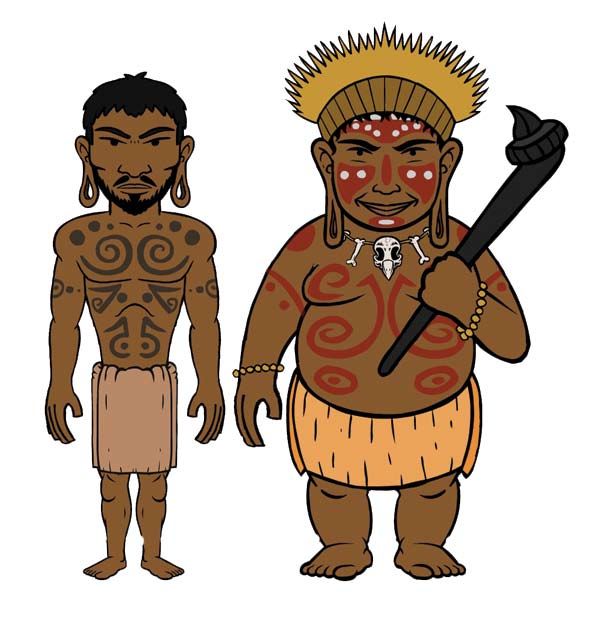
Rapa Nui, an island in the Pacific Ocean off the coast of Chile, is more
than 1,000 miles away from the nearest inhabited island, Pitcairn
Island. Rapa Nui received the name Easter Island from Admiral Jacob
Roggeveen, who sailed a trade ship for the Dutch West India Company.
He landed on the island on Easter Day, 1722, and named it in honor of
the holiday. It is now a Chilean territory.
A mere 66 square miles, Rapa Nui was inhabited for thousands of years
by Polynesians who raised crops, built houses, and worshipped gods in
nearly complete isolation from the rest of the world. They also created
enormous stone statues, moai, that still stand. These statues are
thought to honor sacred chiefs and gods and may have emerged out of
friendly competitions between groups of craftsmen. The exact number
of statues is unknown, but estimates vary between 800 and 1000. The
seven stunning moai at Ahu Akivi were built around 1460 and face the
point at which the sun sets during the equinox. Each measures 14 feet
tall and weighs 12 tons.

Birdman or Birdbrain www.timewarptrio.com Time Warp Trio In the Classroom 
Birdman or Birdbrain
Historical Background continued

Although carved figures can be found on other Pacific islands, none match the size of those on Rapa Nui.
Carved by skilled craftsmen from quarries inside the Rano Raraku volcano, the statues range from six
feet to over 30 feet tall. No two are exactly alike. Archeologists and historians are still not sure how
islanders, using simple tools, could have moved the huge statues across several miles and then raised
them to a standing position.
Rapa Nui was also governed in an unusual way. It is unclear when the cult of the birdman began, but
followers of the god Makemake—half man, half bird—held a festival each year that featured a grueling
race to find the first egg of the speckled sooty tern. The winner’s clan leader became chief of the
island and as such was awarded special privileges and treated with great honor. The last ceremonies
took place in 1866.
By the time European explorers arrived in 1722, much of the ancient culture had disappeared. Over the
next few hundred years, disease, missionaries, and enslavement further destroyed the society. No one
was left who knew how to read the hieroglyphic script, called rongorongo, written on wooden tablets.
Fewer than 30 examples of rongorongo survive today.

                                                                  re
                                     Want students to get even mo
                                           excited about hi story?

                                                   Check out the Easter Island adventure for kids at
                                                   www.timewarptrio.com/adventures/easter/
                                                   Put It Back, Jack! and other interactive games to play.
                                                   P lentifax 487—the ultimate time traveler’s guide—gives facts
                                                    about the moai, Rapa Nui, and more!
                                                    Cool Books that kids will love.

Birdman or Birdbrain www.timewarptrio.com Time Warp Trio In the Classroom 
Activity 1

Mystery History
In this activity, students become history detectives as they
research various theories about Rapa Nui.

Instructions
1. R eview with students facts about Rapa Nui: how it got its name,
  where it is, special features of the land and civilization, etc.
                                                                             Objectives
                                                                              • t o practice research skills
  Tell students that many aspects of Easter Island remain a mystery.
                                                                              • t o learn about lost civilizations
2. E xplain to students that they are now going to become history
  detectives.                                                                Materials
                                                                              • w riting supplies
3. Divide the class into four groups. Assign each group one of the
  following topics:                                                          Curriculum Standards
                                                                              • NCSS
     • How people came to live on Rapa Nui.
                                                                                 Culture: Explain why individuals
     • How the moai were built.                                                  and groups respond differently
                                                                                 to their physical and social
     • How the moai were moved.                                                  environments and/or changes to
     • Why the civilization collapsed.                                           them on the basis of shared
                                                                                 assumptions, values, and beliefs.
4. Tell student groups that they will research their question and present
  to the class as many theories as possible.                                  • NCTE/IRA
                                                                                 Students conduct research on
5. D uring the course of their research, students may find more than one        issues and interests by
  explanation about Rapa Nui. When they present the results of their             generating ideas and questions,
  research to the class, have them present all the theories and explain          and by posing problems. They
  which one they think is correct and why.                                       gather, evaluate, and synthesize
                                                                                 data from a variety of sources to
                                                                                 communicate their discoveries in
                                                                                 ways that suit their purpose and
                                                                                 audience.

Birdman or Birdbrain www.timewarptrio.com Time Warp Trio In the Classroom 
Activity 2

Rongorongo
Students use what they learn about rongorongo,
a written language using symbols, to develop a symbol
to represent themselves.

Instructions                                                                  Objective
1. L inguists, people who study languages, think that some of the             • t o explore writing systems
  rongorongo symbols represent sounds, some whole words, and some
  ideas.                                                                      Materials
                                                                               • c olored paper
2. Distribute the “Rongorongo” handout or go to any of the Web sites
                                                                               • m arkers, glue sticks
  below to look at examples of rongorongo.
                                                                               • “ Rongorongo” handout
3. Have students choose a rongorongo symbol (an ideograph) they like
  and draw it on a piece of paper. Below the ideograph, have them write       Curriculum Standards
  down what they think the ideograph means. If the ideograph contains          • NCSS
  more than one being, is there a conversation going on? What are they            Individual Development &
                                                                                  Identity: The students will
  talking about?
                                                                                  explore factors that contribute
4. Have students think about their interests, personality, or family. What       to one’s personal identity such
  symbol would they use to represent themselves? Have students design             as interests, capabilities, and
  their own rongorongo symbol.                                                    perceptions.

5. W
    hen students have completed their name symbols, have them share           • NCTE/IRA
  them with the class and explain how they designed the symbol.                   Students use a variety of
                                                                                  technological and information
Note: for more information about rongorongo, check out:                           resources to gather and
www.omniglot.com/writing/rongorongo.htm                                           synthesize information and to
www.openweb.ru/rongo/glyphs1.htm                                                  create and communicate
                                                                                  knowledge.
www.rongorongo.org

Birdman or Birdbrain                           www.timewarptrio.com               Time Warp Trio In the Classroom
Rongorongo
Some of the symbols look like birds or fish or other sea creatures.
Some symbols look like people.
Some symbols look like plants.
Some symbols look like geometric designs.
Some of the symbols have just one part, and some have many parts.
Birdman or Birdbrain www.timewarptrio.com Time Warp Trio In the Classroom
© 2006 WGBH Educational Foundation.Resources
Recommended Books
For Teachers Vaka: Saga of a Polynesian Canoe The Mutiny on Board HMS Bounty
by Thomas Davis. by William Bligh, adapted by Deborah
Among Stone Giants: The Life of
(Polynesian Press, 1992) Kestel. (ABDO Publishing Co., 2002)
Katherine Routledge and Her
This novel is the saga of 300 years of Great Illustrated Classics series.
Remarkable Expedition to Easter
Polynesian voyaging, told by a former An adaptation of the famous 1789
Island by Jo Anne Van Tilburg.
Prime Minister of the Cook Islands. mutiny aboard the ship Bounty and
(Scribner, 2003)
how Captain Bligh and 18 of his men
This biography of the extraordinary Voyage of Rediscovery: A Cultural were set adrift in open boats in the
Routledge, who helped lead an Odyssey Through Polynesia South Pacific.
expedition to Easter Island in 1914, by Ben Finney. (University of
highlights her work and her life, California Press, 1994) Myths of Oceania by Anita Dalal.
marked by great success but also by Tells of the story of a historic 1985 (Raintree Steck-Vaughn, 2002)
mental illness. See also Routledge’s voyage from Hawaii to New Zealand Ten myths from the South
book, The Mystery of Easter Island that recreated the technology and Pacific include creation myths,
(Adventures Unlimited Press, 1998). navigation of ancient Polynesians. tales of the trickster Maui,
and stories of the significance
Easter Island by Michel Orliac. For Students of Easter Island’s carvings.
(Abrams, 1995) Fiction
Discoveries series. A lavishly The Shark Callers by Eric Campbell.
Call It Courage by Armstrong
illustrated guide to Easter Island (Macmillan, 1993)
Sperry. (Macmillan, 1940)
and its mysterious history. Two boys, one traveling around the
This Newbery award winner is
world with his family and the other
The Enigmas of Easter Island: considered a classic coming-of-
apprenticed to become a sacred Shark
Island on the Edge. 2nd ed. by Paul age story. It tells the story of
Caller in Papua New Guinea, are
Bahn. (Oxford University Press, 2003) Mafatu, son of the great chief of
caught in the eruption of the volcano
A comprehensive, in-depth look at Hikueru, who must confront his
Matupi and the subsequent tidal wave.
the island, its civilization, and recent fear of the sea.
Can they both survive?
discoveries about the giant statues
Hunter by Joy Cowley.
and the birdman cult. The Stone Idol by Franklin W. Dixon.
(Philomel, 2004)
(Simon & Schuster, 1981)
Splendid Isolation: Art of Easter After a plane crash in a remote
Hardy Boys mysteries. Amateur
Island by Eric Kjellgren. area of New Zealand, Jordan and
detectives Frank and Joe Hardy try
(Metropolitan Museum of Art, 2001) her brother are guided by Hunter,
to track down a small Easter Island
The catalog for a 2002 exhibit, this a slave to Maori warriors, who
idol stolen from a South American
book explores the cultural heritage lived there 200 years earlier.
antiquities dealer.
of Easter Island, including word As the two worlds meet, Jordan
carvings and rongorongo. realizes the connection she has
to her ancestral past.
Maui and the Big Fish by Barbara
Ker Wilson. (Frances Lincoln, 2003)
This creation legend tells how six of
the South Pacific islands—now known
as the large islands of Hawaii—came
into being. For younger readers.
Birdman or Birdbrain www.timewarptrio.com Time Warp Trio In the Classroom Resources
Nonfiction James Cook and the Exploration of Web Sites
Australia and the South Pacific by the Pacific by Charles J. Shields.
Fran Sammis. (Marshall Cavendish, 2000) (Chelsea House, 2002) Easter Island
Mapping Our World series. Presents Captain James Cook explored the http://www.mysteriousplaces.com/
information about natural features South Pacific and Tahiti. He proved Easter_Isld_Pge.html
of the South Pacific as well as that New Zealand was an island, and Take a virtual tour of Easter Island,
crops, culture, languages, economics, claimed vast areas of Australia for including photographs of the moai.
and more. Great Britain.
Easter Island Home Page
Easter Island, Giant Stone Statues Mysteries of Lost Civilizations www.netaxs.com/~trance/
Tell of a Rich and Tragic Past by Anne Millard. (Copper Beech linklist.html
by Caroline Arnold. (Houghton Books, 1996) Information on Easter Island’s
Mifflin, 2000) Chapters explore mysteries such history, culture, and tourism,
Photographs and text explore as lost cities, missing people, including extensive Web links.
what we know about Easter Island, and mysterious objects, including
Kon-Tiki Web Server
including the true story of the the mysteries of Easter Island
www.museumsnett.no/
Birdman competition. and its people.
kon-tiki/Research/Papers/
The Easter Island Statues Oceania by Charlotte Greig. walking_statue.html
by Deborah Underwood. (Mason Crest, 2003) Explore scholarly papers from
(Thomson Gale, 2005) Cultures and Costumes: Symbols Norway’s Kon-Tiki Museum.
This book describes the giant stone of Their Period series. Traditional
ceremonial and everyday dress NOVA: Secrets of Easter Island
statues, including how archeologists pbs.org/wgbh/nova/easter/
have uncovered answers to many (and the significance of each to the
many countries and peoples of the A team of archeologists try to figure
questions. out how the moai were moved, using
South Pacific) are described.
Explorers of the South Pacific by only tools and materials available to
Daniel E. Harmon. (Mason Crest, 2003) Rediscovering Easter Island by ancient inhabitants of Easter Island.
Long before Captain Bligh sailed the Kathy Pelta. (Lerner Publications, 2001)
The effects of Europeans on the Polynesian Voyaging Societ y
Bounty in the South Pacific,
island are traced, beginning with the pvs.kcc.hawaii.edu/welcome.html
Polynesians sailed the waters from
arrival of the first Europeans in 1722 This organization investigates how
Easter Island to New Zealand and
to the present day. For older readers. the Polynesian seafarers discovered
north to Hawaii.
and settled the islands of the Pacific.
Southwest Pacific by Sharon
Franklin, Rhonda Krafchin, and Rapa Nui
Cynthia A. Black. (Raintree www2.hawaii.edu/~ogden/piir/
Steck-Vaughn, 2000) pacific/Rapanui.html
The culture and history of four areas Explores the people, government,
of the South Pacific are explored economy, history, and more.
through the arts and crafts of their
Please note:
people. Step-by-step directions for Although these sites were verified at the time
four craft projects are included. of publication, Web site addresses and content
are frequently subject to change.
©2006 WGBH Educational Foundation. All rights reserved. Time Warp Trio™ is produced by WGBH in association with Soup2Nuts for Discovery Kids. Major funding was provided
by a grant from the National Endowment for the Humanities. Any views, findings, conclusions, or recommendations expressed in these classroom materials do not necessarily represent those of the
National Endowment for the Humanities. Based on THE TIME WARP TRIO book series written by Jon Scieszka and illustrated by Lane Smith. Time Warp Trio is a registered trademark of Chucklebait, LLC.
Used with permission. Third party trademarks are the property of their respective owners. Used with permission.
Birdman or Birdbrain www.timewarptrio.com Time Warp Trio In the Classroom You can also read


