BITCOIN REGULATION: GLOBAL IMPACT, NATIONAL LAWMAKING - FORKLOG CONSULTING
←
→
Page content transcription
If your browser does not render page correctly, please read the page content below

February 2017

Bitcoin Regulation: Global
Impact, National Lawmaking

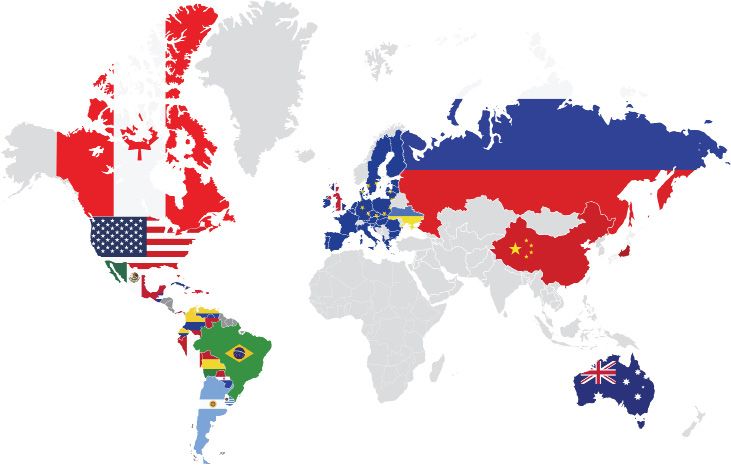
Australia, Great Britain, Hong Kong, European Union, Canada, China, Latin America, Russian
Federation, United States of America, Ukraine, and Japan
Lawyers from Axon Partners together with experts from ForkLog Research, a
cryptocurrency consulting company, prepared this report on the legal regulation of Bitcoin
businesses in Australia, Great Britain, Hong Kong, European Union, Canada, China, Latin
America, Russia, USA, Ukraine, and Japan.

Report prepared by:

Vlad Likhuta
Anatoliy Kaplan
Dima Gadomsky
Kyrylo Korol
Oleh Heletkanych
Orest Havryliak
Tetiana Otter

This report provides the analysies of jurisdictions popular among Bitcoin businesses in
the context of cryptocurrency regulation by national governments.

Structure:

* Jurisdiction

* Summary – brief outline on of a the section

* Background – timeline of cryptocurrency regulation for the period between 2014 and
2014 (in certain cases, the timeline covers 2012 and 2013)

* Regulatory Framework – analysis of the legal status of cryptocurrencies and
regulatory requirements for theto Bitcoin businesses

* Tax Treatment – analysis of tax regulations for special tax rules that apply to
cryptocurrency transactions and statements issued by regulators on general tax rules
application

* Liability – study of national legislation, including court rulings, for partial or full
bans on Bitcoin businesses

Readership:
This report is designed for businesses dealing with, or intending to deal with, cryptocurrencies,
regulators and banking authorities. Lawyers and other interested parties, can use the
document as a source of the latest information on cryptocurrency businesses regulations in
the said report jurisdictions.

forklog.consulting                          axon.partners
hello@forklog.consulting                   poke_us@axon.partners

                           February 2017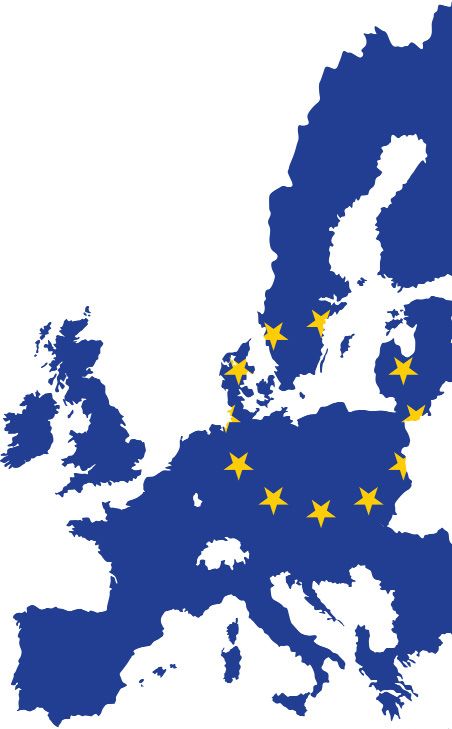
INTRODUCTION

The difference between fiat money and digital currencies is that fiat money is issued by
central banks, while issuers of digital currencies are decentralized. We have to decide what
we want our future to be like:
1. A variety of jurisdictions. In this case, things will be more or less like they are now.
2. A globalized world without countries and borders. In this case, we will have a single
global government and one decentralized currency.
3. A totally decentralized world. Decentralized money fits this purpose.

The first and second and versions would be possible if they do not create any inconveniences
for governments. Governments may control the whole process of turning the idea of
decentralization into fiction, since every centralized regulation of a decentralized system is an
oxymoron.

                              Oleksiy Gerashchenko
                              Economist, publicist, instructor at Kyiv Mohyla
                              Business School
INTRODUCTION

Cryptocurrencies are one of the key drivers of global social and political reform.

The level of citizens’ trust in governments falls from year to year all over the world. The most
forward-looking members of society are determined either to liquidate the state in its current
form, or to replace it with a group of service companies operating on a competitive basis.

In this context, major changes will be shaped not only by the so-called public contract, but
also by the international legal system as a whole. Decentralized systems are among of the key
tools of these changes. This summary covers the problems faced by governments around the
world trying to create the most appropriate legal frameworks for cryptocurrency businesses.

Due to their historical background, most countries cannot truly embrace innovation and
technological progress. In this context, this summary may be considered as a kind of chronicle
of regulatory entropy. And, most importantly, the situation with cryptocurrencies correlates
with unsystematic attempts to regulate numerous other innovative phenomena.

                              Anatoliy Kaplan
                              CEO ForkLog Research

                              kaplan@forklog.com
INTRODUCTION

What is cryptocurrency? Is it a currency or a commodity? Is it subject to VAT? Are
cryptocurrency exchanges required to obtain licenses? Actually, there is no unified approach
to dealing with cryptocurrencies: regulators’ opinions differ from jurisdiction to jurisdiction
(local authorities within one jurisdiction may even disagree on the matter). The key questions
remain unanswered, causing additional law enforcement issues. Without specifying the legal
status of digital money, it is difficult to even determine tax treatment rules for income (or
profits) obtained in cryptocurrency. In fact, cryptocurrency is in a legal vacuum. It is hard to
tell whether it is for good or for bad: the answer depends on the specific situation.

One can endlessly argue about the nature of cryptocurrencies and their legal status. However,
it looks like in 2017, as before, regulators in most jurisdictions will continue to keep a watch
on the development of the cryptocurrency industry and warn about the risks associated with
the use of digital currencies.

In this summary, we provide analysis of certain jurisdictions for the cryptocurrency business
in the context of its regulation by governments. The purpose of this document is to provide
as much information as possible on the legal requirements for cryptocurrency activities and
changing trends in legal regulation.

                             Vlad Likhuta
                             Legal research analyst at ForkLog Research and
                             Axon Partners associate

                             vlad@forklog.com
                             likhuta@axon.partners
INTRODUCTION

Throughout history, when people felt the need to use money, they used all kinds of different,
materials including shells, domestic animals, corn, and tobacco. Ancient Spartans used iron
money that looked like a bunch of sticks. It wasn’t easy to use these sticks, and they were
meant to discourage Spartans from theft, corruption or even accumulating wealth. Another
example is Russian Alaska, where walrus hide was used for notes.

Throughout the ages, mankind has been trying to take a new look at the form and role of
money. Our generation’s task is to finally turn conventional currencies into digital money.

                             Dima Gadomsky
                             Attorney-at-Law, Partner at Axon Partners

                             gadomsky@axon.partners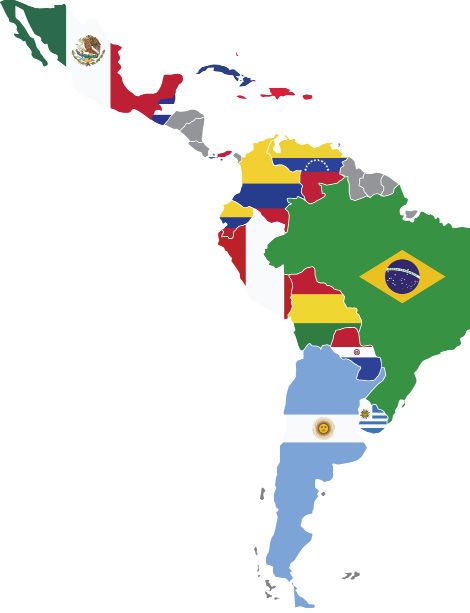
TABLE OF CONTENTS

Glossary _______________________10            Latin America________________ 52

Australia______________________ 13            Russian Federation_________55
Summary________________________________ 14    Summary________________________________ 56
Background_______________________________15   Background______________________________ 57
Regulatory Framework__________________ 18        Regulators’ Statements____________________ 58
Tax Treatment____________________________19      Miscellaneous____________________________61
                                              Regulators’ Framework__________________ 64
Great Britain_________________20              Tax Treatment___________________________ 64
Summary_________________________________21    Liability__________________________________ 65
Background______________________________ 22
Regulatory Framework__________________ 25     United States
Tax Treatment___________________________ 25   of America___________________ 66
                                              Summary________________________________ 67
Hong     Kong____________________ 27          Background______________________________ 68
                                              Regulatory Framework___________________71
European Union_____________ 31                Tax Treatment____________________________74
Summary________________________________ 32    Liability__________________________________ 76
Background______________________________ 33
Regulatory Framework__________________ 38     Ukraine________________________ 77
Tax Treatment___________________________ 39   Summary________________________________ 78
                                              Background______________________________ 79
Canada_________________________ 41            Regulatory Framework__________________ 83
Summary________________________________ 42    Tax Treatment___________________________ 83
Background______________________________ 43   Liability__________________________________ 84
Regulatory Framework__________________ 45
Tax Treatment___________________________ 46   Japan__________________________85
                                              Summary________________________________ 86
China___________________________ 47           Background______________________________ 87
Summary________________________________ 48    Regulatory Framework__________________ 89
Background _____________________________ 49   Tax Treatment___________________________ 90
Regulatory Framework___________________51     Liability___________________________________91
Tax Treatment____________________________51
GLOSSARY                                                                     10

B
Bitcoin          Either a peer-to-peer payment system or the world’s first
                 cryptocurrency (as the context may determine)

Blockchain       Distributed database based on consensus between the
                 participants of a Bitcoin distributed system

C
Cryptocurrency   Cryptographically secured decentralized digital currency.
                 Information about cryptocurrency transactions is collected
                 and stored on Blockchain. In this document, the terms
                 ‘digital money’, ‘cryptocurrency’, ‘virtual currency’, and
                 ‘digital currency’ are used interchangeably

Cryptocurrency   A platform that provides services allowing to exchange one
Exchange         cryptocurrency for another and, in certain cases, exchange
                 cryptocurrencies for fiat money. Cryptocurrency exchanges
                 may also provide services like margin trading

Cryptocurrency   Activities directly or indirectly related to cryptocurrencies
Activities       (for example, mining or use of cryptocurrencies as a
                 medium of payment or exchange). These activities may
                 be both commercial and noncommercial (for example,
                 research)

Cryptocurrency   Commercial and noncommercial relations involving
Relations        cryptocurrencies (for example, cryptocurrency exchange)
GLOSSARY 11
Cryptocurrency A transaction confirmed by digital signature intended to
Transaction transmit digital tokens, information on which is stored on
Blockchain
Cryptocurrency Operation involving cryptocurrencies
Operation
Cryptocurrency A company carrying out cryptocurrency activities, as a
Company rule, for commercial purposes
Cryptocurrency Specialized software or platform allowing to store
Wallet cryptocurrencies and conduct cryptocurrency transactions.
In some cases, cryptocurrency wallets allow to exchange
cryptocurrencies for fiat money
Cryptocurrency Systematic activities carried out by cryptocurrency
Trading exchanges intended to make profits. In the context of
this document, these are regular operations involving the
exchange of one cryptocurrency for another
Cryptocurrency A group of people based all over the world involved
Community in cryptocurrency activities and contributing to the
development of cryptocurrencies. The crypto community’s
activities are primarily non-commercial and voluntary.
The international cryptocurrency community has no
coordination center and every individual or group act at
their sole discretion
Cryptocurrency Companies and individuals dealing in cryptocurrencies
Industry and/or participating in cryptocurrency relationsGLOSSARY 12
М
Mining Resolving cryptographic puzzles using computing capacity
or special devices. Mining is used to process transactions
and issue new tokens in the Bitcoin network. It is
decentralized and protected from any attacksAustralia
SUMMARY                                                                                      14

The Australian government is seeking to provide a favorable environment to develop tech
companies and create local fintech centers. The government apparently intends to become
one of the most progressive jurisdictions and to use Blockchain for public administration
(for example, in overland transport management). Australia Post is also looking into using
Blockchain. Non-governmental projects with the a focus on digital money and decentralized
technologies are also actively developing.

Digital currency is not defined as a finance product, and consequently, cryptocurrency
activities are not subject to licensing (except for activities involving fiat money or other
finance products). The Australian Digital Currency & Commerce Association launched
the Digital Currency Industry Code of Conduct that established best practice standards
of conduct for businesses operating in the Australian digital currency industry. However,
this document applies only to Association members. In addition, Australian lawmakers are
actively developing anti-money laundering and counter terrorism financing regulations
that would apply to digital currencies. Operations involving cryptocurrencies are taxed
under general rules, i.e. income tax and corporate tax. However, there is a double taxation
problem in Australia: goods and services tax is levied when fiat money is exchanged for
cryptocurrencies, and when cryptocurrencies are used to pay for goods and services. At
the same time, when cryptocurrencies are used for investment, capital gains tax is not
levied.
BACKGROUND                                                                                        15

       1            2    3                     4          5    6                              7

2013                    2014                       2015                     2016

1      May 2013
       Reserve Bank of Australia defined
                                                    5         April 2015
                                                              Reserve Bank of Australia: says any
       Bitcoin as an alternative to national                  potential benefit of cryptocurrency
       currencies and a payment system                        regulation will exceed the cost

2      December 2013
       The governor of the Reserve Bank
                                                    6         August 2015
                                                              Economics References Committee:
       of Australia indicated that “there                     cryptocurrencies to be treated as
       would be nothing to stop people in                     money for the purposes of goods
       this country deciding to transact                      and services tax
       in some other currency in a shop if
       they wanted to”
                                                    7         November 2016
                                                              Australian Accounting Standards
                                                              Board: says it is necessary to work
3      February 2014
       The Australian Taxation Office
                                                              out accounting standards for digital
                                                              currencies
       to work out the approaches to
       tax treatment of cryptocurrency
       transactions

       Australian Securities and
       Investments Commission (ASIC)
       states intention to regulate activities
       involving cryptocurrencies

4      December 2014
       According to the Australian
       Securities and Investments
       Commission, digital currencies may
       not be defined as financial products
BACKGROUND 16
1
Information Paper for the Cryptocurrencies have been under discussion since 2013,
Payments System Board [Elec- when the Reserve Bank of Australia defined Bitcoin as an
tronic resource] // Reserve Bank alternative to national currencies and a payment system.1
of Australia. — May 2013. — Mode
of access In late 2013, when speaking about Bitcoin, Glenn Stevens,
the Reserve Bank governor said that US dollars, Euros
2
Glenn Stevens says Bitcoins show or any other currency can be held freely in Australia and
promise, but so did tulips [Elec- there is no law prohibiting people from transacting in any
tronic resource] // The Australian currency if they want to.2
Financial Review. — 12/13/2013.
— Mode of access In February 2014, Michael Hardy from the Australian
Taxation Office said that the tax office was working out
3
ATO weighs Bitcoin rules [Elec- approaches to tax treatment of cryptocurrencies.3
tronic resource] // The Australian
Financial Review. — 2/9/2014. — In February 2014, John Schmidt, CEO at Australian
Mode of access Transaction Reports and Analysis Center said that Bitcoin
could possibly attract criminal organizations. However,
4
Australian Government Tracks according to Mr. Schmidt, such a threat was not a major
All Bitcoin to AUD Conversions issue for Australia.4
[Electronic resource] // Coin-
Desk. — 2/24/2014. — Mode of At the same time , a representative of the Australian
access Securities and Investments Commission (ASIC) said that
they were looking into the possibilities to regulate activities
5
ATO weighs Bitcoin rules [Elec- involving cryptocurrencies.5
tronic resource] // The Australian
Financial Review. — 2/9/2014. — In 2014, the Australian Securities and Investments
Mode of access Commission informed that digital currencies were not a
financial product. Consequently, operators did not need
licenses to purchase, trade, and hold digital currencies,
as well as to carry out other transactions, except those
involving fiat money and other legally defined financial
products.6
In March 2015, the Department of the Treasury releasedBACKGROUND 17
6
Australian Regulator: Bitcoin the a tax discussion paper indicating that digital currencies
is Not a Financial Product [Elec- had not been contemplated when the current tax system
tronic resource] // CoinDesk. — washad been designed.7
12/16/2014. — Mode of access
In April 2015, the Reserve Bank of Australia stated that
7
Re:think — Better tax, better benefits of cryptocurrency activities regulation would not
Australia [Electronic resource] // outweigh the potential costs.8
Australian Government. — March
2015. — Mode of access In August 2015, the Senate Economics References
Committee released a report indicating that
8
Opening Statement to the Senate cryptocurrencies had to be treated as money for the
Economics References Committee purposes of goods and services tax. In addition, tax
Inquiry into Digital Currency regulations have to be amended to free cryptocurrency
[Electronic resource] // Reserve exchange operations from tax, and to levy tax when
Bank of Australia. — 4/7/2015. — cryptocurrencies are used to pay for goods and services.9
Mode of access
In November 2016, the Australian Accounting Standards
9
Digital currency—game changer Board released a position paper, stating the necessity to
or bit player [Electronic resource] work out accounting standards for digital currency and
// Parliament of Australia. — other intangibles assets.10
8/4/2015 — Mode of access
In May 2016, the government agreed with the Senate
10
Australian Government Pushes Economics References Committee that anti-money
for Bitcoin Accounting Stand- laundering and counter terrorism financing regulations
ards [Electronic resource] // should be applied to local cryptocurrency exchanges.11
CoinDesk. — 11/21/2016. — Mode
of access In October 2016, the government started to work out the
amendments to anti-money laundering laws to include
11
Government response to the digital currency exchanges. The governments is planning to
Senate Economics References begin finalizing the legislation in 2018.12
Committee report: Digital curren-
cy—game changer or bit player
[Electronic resource] // The
Treasury. — 5/5/2016. — Mode of
accessREGULATORY FRAMEWORK 18
12
Australia Will Regulate Bitcoin In Australia, cryptocurrency is not defined as a financial
Exchanges Under AML Laws // product. Consequently, cryptocurrency transactions,
CoinDesk. — 8/8/2014. — Mode including purchase, sale, holding, etc., are not subject
of access to licensing. This rule does not apply to cryptocurrency
operations related to fiat money and other financial
13
Australian Regulator: Bitcoin products, including the exchange of cryptocurrencies for
is Not a Financial Product [Elec- fiat money.13
tronic resource] // CoinDesk. —
12/16/2014. — Mode of access In addition, in December 2016, the Australian Digital
Currency Industry Code of Conduct (hereinafter referred
14
Australian Digital Currency to as “Code”) came into force, developed by the Australian
Industry Code of Conduct [Elec- Digital Currency & Commerce Association (hereinafter
tronic resource] // Australian referred to as the “Association”).14
Digital Currency business associ-
ation — 02.12.2016. — Mode of The Code is binding only for Association members who
access undertake to:
* Comply with anti-money laundering requirements and
counter terrorist financing legislation
* Verify information concerning company directors, top
managers and shareholders
* Comply with ‘Know Your Customer’ policies
* Ensure that customers are able to seek indemnification in
good faith in case services have been provided improperly
15
Id. In addition, to ensure compliance with the Code’s
requirements, annual audits and certification of
Association members have been introduced. In case any
member has failed to comply with the Code’s requirements,
the Association may impose penalties15.TAX TREATMENT 19
16
Australian Tax Office Explains In March 2014, the Australian Taxation Office notified
Bitcoin, Intends to Tax it [Elec- Bitcoin businesses that profits obtained from digital
tronic resource] // CoinDesk. — currency activities are subject to income tax and corporate
3/14/2014. — Mode of access tax.16
17
Tax treatment of crypto-cur- According to the guidance paper on the tax treatment of
rencies in Australia — specifically cryptocurrencies, for the purpose of goods and services
bitcoin [Electronic resource] tax, cryptocurrency transactions are treated as barter
// Australian Taxation Office. — agreements.17
12/18/2014. — Mode of access
In fact, this means that Australia has issues with double tax
18
Id. applied to digital currencies, since goods and services tax
is levied twice: when fiat money is exchanged for digital
19
Government response to currencies and when digital currencies are used to pay for
Australia’s FinTech priorities [Elec- goods and services.
tronic resource] // The Treasury.
— Mode of access However, double tax is applied only to Bitcoin businesses,
since users are not required to pay double tax, provided
20
Tax treatment of crypto-cur- that the total amount of cryptocurrency does not exceed
rencies in Australia — specifically 10,000 Australian dollars.18
bitcoin [Electronic resource]
// Australian Taxation Office. — In addition, the government intends to revoke double tax
12/18/2014. — Mode of access treatment of cryptocurrency operations.19
21
Id If a digital currency is used for investment, capital gains
tax is not due.20 In addition, wages to employees may be
paid in cryptocurrency, provided that there is an agreement
between the employer and employee.21Great Britain
SUMMARY                                                                                       21

Great Britain is a leader of cryptocurrency integration and one of the most favorable and
convenient jurisdictions for Bitcoin businesses. In addition, the British government provides
support to cryptocurrency startups.

However, the government has not yet worked out a clear-cut regulatory framework for
crypto activities. In fact, cryptocurrencies are in a gray zone (legal vacuum). At the same
time, the government intends to regulate cryptocurrencies in order to prevent the use of
digital currencies for money laundering, financing terrorism, and other illegal activities,
and as well to support innovations in this sphere.

The revenues of Bitcoin businesses are subject to capital gains tax, corporation tax, and
income tax.
BACKGROUND                                                                          22

1                          2        3                     4 5                      6

2014                           2015                     2016

1      2014
       The Bank of England released its
                                              6   November 2016
                                                  Nine companies involved in
       first statement concerning Bitcoin.        cryptocurrency activities joined the
                                                  regulatory sandbox.

2      November 2014
       HM Treasury issued a Call for
       Information on digital currencies.

3      March, 2015
       Her Majesty's Government agreed
       that digital currencies pose
       insignificant risks to financial and
       monetary systems

4      February 2016
       The Commonwealth Working
       Group on Virtual Currencies
       published a report on the legal
       status of digital currencies and
       regulation of transactions involving
       digital currencies

5      March 2016
       The Bank of England to create
       digital currency RSCoin
BACKGROUND 23
22
The economics of digital In 2014, the Bank of England first addressed the public
currencies [Electronic resource] about Bitcoin by publishing an article titled “The
/ R.Ali, J. Barrdear, R. Clews, J. economics of digital currencies” in the Bank’s quarterly
Southgate // Bank of England. — bulletin.
2014. — Mode of access
According to experts, the greatest hypothetical risk to
23
UK Treasury Issues 'Call for the monetary system that might be posed by digital
Information' on Digital Cur- currencies is if the economy were to become ‘Bitcoinised’
rencies [Electronic resource] // — where ‘Bitcoinised’ means the use of the cryptocurrency
CoinDesk. — 04.11.2014. — Mode as a major means of payment. This would affect the
of access government’s ability to influence price-setting and regulate
the economic system. Though the economy is extremely
24
Digital currencies: call for unlikely to become Bitcoinised, Bitcoin may be possibly
information [Electronic resource] used alongside sterling.22
// The UK Government. —
03.11.2014. — Mode of access In November 2014, Her Majesty's Treasury (hereinafter
referred to as the “Treasury”) issued a Call for Information
on digital currencies with the purpose to look into the
potential barriers that Bitcoin businesses face and the
potential benefits and risks of cryptocurrencies. Experts
in digital currencies and decentralized technologies
responded to 13 key questions posed by the Treasury.23
The call for information received over 120 responses,
and in 2015, the Treasury published a Response to the
Call for Information.24 The UK government agreed with
the majority of respondents and the Bank of England
assessment that the use of digital currencies poses
minimal risks to the financial stability and the British
monetary system.25 It was also noted that the regulation of
cryptocurrencies would not only prevent criminal use, but
also support innovation.26
In October 2016, the Commonwealth Working Group onBACKGROUND 24
25
Digital currencies: response to Virtual Currencies published a report on the legal status of
the call for information [Electron- digital currencies and regulation of transactions involving
ic resource] // The UK Govern- digital currencies.27
ment. — March 2015. — Mode of
access In March 2016, Mr. Ben Broadbent, Deputy Governor for
Monetary Policy at the Bank of England gave a speech
26
Id. at the London School of Economics. According to Mr.
Broadbent, innovation is extremely important for digital
27
Working Group Report [Elec- currencies.28
tronic resource] // The Common-
wealth. — October 2016 Reportedly, a scientist from University College London
Mode of access helped the Bank of England to create the digital currency
known as RSCoin.29
28
Broadbent B. Central banks
and digital currencies [Electronic In May 2016, the Financial Conduct Authority (hereinafter
resource] / Ben Broadbent // Bank referred to as the “FCA”) published detailed information
of England. — 3/2/2016. — Mode on its official website about Project Innovate (Innovation
of access Hub).30 Its participants are new businesses involved in
electronic commerce, including cryptocurrency exchange
29
Central banks beat Bitcoin at companies, can receive advice regarding the legal
own game with rival supercurren- regulation of their business activities.31
cy [Electronic resource] // The
Telegraph. — 3/3/2016. — Mode The regulatory sandbox is a special environment that
of access allows fintech businesses to test their products and
communicate with customers (users) without any risk
30
Project Innovate and Innova- of breaching the law. The sandbox participants don’t
tion Hub // Financial Conduct have to obtain any licenses or register with any public
Authority. — 11/1/2016. — Mode authorities.32 In November 2016, it was announced that 22
of access startups were involved in the regulatory sandbox, including
nine companies involved in cryptocurrency activities:
31
Epiphyte, Luno, SETL and others.33
The United States is Falling
Behind in Bitcoin Regulation /
Kyle Torpey // Bitcoin Magazine.
— 4/25/2016. — Mode of accessREGULATORY FRAMEWORK 25
32
Regulatory sandbox [Electronic In 2014, the FCA confirmed that bitcoin is neither
resource] // Financial Conduct currency nor money, so it falls outside the scope of the UK
Authority. — 11/21/2016. — Mode financial services regulatory framework. Therefore, a digital
of access currency is still regarded as a unique digit combination
generated through complex mathematical calculations and
33
UK Regulator Adds 9 Block- algorithms. Consequently, bitcoins also fall outside the
chain Startups to Fintech 'Sand- British Money Laundering Regulations 2007.34
box' / CoinDesk. — 11/7/2016.
— Mode of access In April 2016, the FCA granted the first electronic money
license to Circle. The license made it possible for Circle to
34
establish a banking relationship with Barclays, the British
Bitcoins and the law: what's the
bank. It is the first time that a large global bank has agreed
position?. (2014). Lawyer 2B, 4.
to work with a cryptocurrency company.
35
Bitcoin Start-Up Gets an Elec- The Economic Secretary to the Treasury said that the
tronic Money License in Britain license and Barclays’ relationship with Circle “prove our
[Electronic resource] // The New decision to introduce the most progressive, forward-
York Times. — 4/6/2016. — Mode looking regulatory regime is paying off ”.35
of access
In April, the Treasury published an Action Plan for anti-
36
Action Plan for anti-money money laundering and counter-terrorist finance. In this
laundering and counter-terrorist document, the Treasury proposed to use anti-money
finance [Electronic resource] // laundering legislation for cryptocurrency exchanges and
Gov.uk. — April 2016. — Mode of other companies involved in cryptocurrency exchange
access activities. However, such legislation is not to be applied to
companies that provide cryptocurrency wallets to users,
but do not provide digital currency exchange services.36
TAX TREATMENT
In 2014, Her Majesty's Revenue and Customs (hereinafter
referred to as “HMRC”) released a policy paper on the taxTAX TREATMENT 26
37
Revenue and Customs Brief 9 treatment of digital currencies, according to which any
(2014): Bitcoin and other crypto- income received from mining activities will generally be
currencies [Electronic resource] outside the scope of value-added tax (hereinafter referred
// Gov.uk. — 3/3/2014. — Mode to as “VAT”), and when digital currencies are exchanged
of access for Sterling or foreign currencies, no VAT will be due.
However, VAT will be due from suppliers of any goods or
services sold in exchange for any cryptocurrency. The value
of the supply of goods or services on which VAT is due will
be the sterling value of the cryptocurrency at the point the
transaction takes place. In addition, activities involving
cryptocurrencies will be subject to corporation tax, income
tax, or capital gains tax, depending on the activities and the
parties involved.37Hong Kong
28

                   1 2           3            4                                        5

2013                   2014                  2015                   2016

1      November 2013
       The Hong Kong Monetary Authority labeled Bitcoin a virtual commodity and
       informed that it had no intention to regulate it.

2      January 2014
       The Secretary for Financial Services and the Treasury issued a statement warning
       the public that Bitcoin is a highly speculative commodity

3      July 2014
       The Hong Kong Police Force warned about the risks of Bitcoin trading and
       investing.

4      February 2015
       Hong Kong Bitcoin exchange closed, taking with it about 387 million USD in
       investor funds.

5      November 2016
       The Hong Kong Monetary Authority warned that overall implementation of
       Blockchain technology may increase the risk of its use for criminal purposes.
29
38
Legal System in Hong Kong Hong Kong gained its independence from Great Britain
[Electronic resource] // Depart- and became a special Chinese administrative region in
ment of Justice of the Hong Kong 1997. Therefore, Hong Kong has a peculiar legal system.
Special Administrative Region. — Up to 2047, local Hong Kong legislation adopted before
3/11/2016. — Mode of access 1997 (influenced by Great Britain) will be applicable,
together with the laws of China that apply to defense issues
39
Bitcoin not regulated by the and foreign affairs.38 Like in the UK, cryptocurrencies fall
Hong Kong Monetary Authority outside legal regulation, and no special tax treatment is
(HKMA) [Electronic resource] // provided under tax regulations.
Medium. — 11/17/2013. — Mode
of access In November 2013, Norman Chan, Chief Executive of the
Hong Kong Monetary Authority (hereinafter referred to as
40
Hong Kong Treasury Official “HKMA”) said that Bitcoin is a virtual commodity, and the
Issues Bitcoin Warning [Elec- regulator does not intend to regulate it.39
tronic resource] // CoinDesk. —
1/9/2014. — Mode of access In January 2014, the Secretary for Financial Services and
the Treasury warned that Bitcoin was a highly speculative
41
Virtual Commodities Trading commodity which posed numerous risks to anyone
(Bitcoin) [Electronic resource] // who might decide to trade, exchange or hold digital
Hong Kong Police Force. Decem- currencies.40
ber 2016. — Mode of access
In July 2014, the Hong Kong Police Force warned about
the risks of cryptocurrency trading and investing. Again,
Bitcoin was labeled a highly speculative commodity.41
In February 2015, Hong Kong bitcoin exchange shut its
doors (claimed bankruptcy), taking with it about 387
million USD in investor funds.42
The HKMA reminded that given the highly speculative
nature of Bitcoin, transactions with cryptocurrencies
require extra precautions.43
In March 2015, the Secretary for Financial Services and30
42
Hong Kong's My Coin Disap- the Treasury indicated that the government does not see
pears With Up To $387 Million, the need for legislation to regulate or ban cryptocurrency
Reports Claim [Electronic re- activities..44
source] // CoinDesk. — 2/9/2015.
— Mode of access In November 2016, the HKMA warned that overall
implementation of Blockchain technology may increase the
43
The HKMA reminds the public risk of its use for criminal purposes.45
to be aware of the risks associated
with Bitcoin [Electronic resource] Tax regulations do not contain special tax rules for
// Hong Kong Monetary Authority. cryptocurrencies and cryptocurrency transactions, and
— 2/11/2015. — Mode of access regulators did not release any statements on the matter.
44
Hong Kong Official: Bitcoin
Legislation Not Necessary [Elec-
tronic resource] // Coin Desk. —
3/25/2015. — Mode of access
45
Центробанк Гонконга
предупредил о возможном
использовании блокчейн-
платформ в преступных целях
[Электронный ресурс] //
ForkLog. — 11/11/2016. — Mode
of accessEuropean Union
SUMMARY                                                                                     32

The European Union includes 28 countries, each of which has its national regulations on
both traditional and Bitcoin businesses. Still, EU member states are considered favorable
jurisdictions for Bitcoin businesses.

As of today, no EU regulator has enacted any special regulations for cryptocurrency
activities. In 2016, the European Commission suggested to establish additional regulations
for cryptocurrency exchanges and companies providing cryptocurrency wallets to users.
In particular, to introduce the requirements for mandatory registration or licensing for
cryptocurrency exchanges exchanging cryptocurrencies for fiat money and vice versa and
companies providing cryptocurrency wallets to users.

Up to the end of 2016, cryptocurrencies and crypto operations were regulated within the
scope of anti-money laundering and counter terrorist financing policies.
For tax purposes, cryptocurrencies and cryptocurrency operations are treated according
to local regulations of EU member states, with the exception of value-added tax as in
November 2015 the European Court of Justice ruled that no value-added tax is due when
Bitcoin is sold or purchased for fiat money.
BACKGROUND                                                                                      33

                                               4                             7         11 13
             1                     2     3         5         6               8 9     10 12

2012               2013                2014                2015              2016

1      October 2012
       The European Central Bank defined
                                                           cryptocurrencies until regulations
                                                           for digital currencies would be
       Bitcoin as convertible decentralized
                                                           enacted
       virtual currency

2      December 2013                                   6   March 2015
                                                           The Eurpopean Central Bank issued
       The European Banking Authority
                                                           a summary where digital currencies
       warned that users were not
                                                           were outlined as unstable currencies
       protected from financial losses
                                                           that nevertheless could change
       in case an exchanger went out of
                                                           payment systems.
       business

3      March–May 2014                                  7   January 2016
                                                           The European Commission
       A European Central Bank official
                                                           announced that it was going to
       said that digital currencies pose
                                                           toughen reporting rules applied
       certain risks to users
                                                           to exchanges and cryptocurrency
                                                           wallet providers
4      June 2014
       According to the Organization
       for Economic Cooperation and                    8   January 2016
                                                           Public hearings took place in the
       Development, though there are
                                                           European Parliament dedicated to
       certain risks related to Bitcoin, its
                                                           cryptocurrencies. An official from
       protocol may be very important for
                                                           the European Parliament budget
       the financial system
                                                           committee stated that the European

5      July 2014
       The European Banking Authority
                                                           Parliament was going to keep
                                                           watch over cryptocurrencies. He
       advised that financial institutions                 also noted that there is no hurry in
       should not buy, hold or sell                        regulation of financial products
BACKGROUND 34
9 February 2016
The European Parliament’s
International Police Organization
(Interpol) and the Basel Institute of
Committee on Economic and
Management aimed at combating
Monetary Affairs released a draft
money laundering involving
report on virtual currencies,
cryptocurrency
according to which no direct
regulation for Bitcoin and other
virtual currencies was required 13 October 2016
The European Central Bank
supported the regulation of
A European Council conclusion
cryptocurrency exchanges, pointing
was published calling to amend the
out that digital currency was
existing EU anti-money laundering
neither money, nor currency, and
and counter terrorist financing
warned that the wide use of virtual
regulations in particular, in the
currencies could affect central
context of cryptocurrencies
banks’ powers to control the money
supply
10 July 2016
The European Commission
proposed to adopt a directive that
would require cryptocurrency
wallet providers to comply with EU
Directive 2015/849.
11 August 2016
The European Banking Authority
published an Opinion on the
proposed Directive, saying
provisions on the collection of
personal data should be more strict
12 September 2016
Europol announced the
establishment of a working
group in cooperation with theBACKGROUND 35
46
Virtual currency schemes Back in 2012, the European Central Bank (hereinafter
[Electronic resource] // European referred to as the “ECB”) released a report stating that
Central Bank. — October 2012. — traditional financial regulation may not be applicable to
Mode of access Bitcoin. Bitcoin was defined as a convertible decentralized
virtual currency.46
47
EU Banking Regulator Issues
Warning on Virtual Currencies In December 2013, the European Banking Authority
[Electronic resource] // Coin- (hereinafter referred to as the “EBA”) warned that
Desk. — 12/13/2013. — Mode of cryptocurrencies were not bank assets, and cryptocurrency
access business fell outside of the regulatory framework, and
therefore, users were not protected from financial losses in
48
European Central Bank: Bitcoin case an exchange went out of business.47
Shouldn't be Ignored or Dismissed
[Electronic resource] // Coin- In March 2014, ECB official Yves Mersch said that despite
Desk. — 3/25/2014. — Mode of their relatively small impact on the economy, digital
access currencies pose certain risks to users. He also stated that
digital currencies should not be ignored.48 In May 2014,
49
European Central Bank: Bitcoin Mersch said that users had problems with understanding
a Risky Alternative to Euro [Elec- what was going on in the cryptocurrency market, in
tronic resource] // CoinDesk. — particular due to the lack of regulations.49
5/21/2014. — Mode of access
In June 2014, the Organization for Economic Cooperation
50
The Bitcoin Question [Elec- and Development (hereinafter referred to as the “OECD”)
tronic resource] // Organisation stated that though there are certain risks related to Bitcoin,
for Economic Co-operation and its protocol may be very important for the financial
Development. — 6/16/2014. — system.50
Mode of access
In July 2014, the EBA published an opinion addressed
to the European Council, European Commission and
European Parliament and advised that financial institutions
should not buy, hold or sell cryptocurrencies until
regulations for digital currencies would be enacted.51BACKGROUND 36
51
EBA proposes potential regula- In March 2015, the ECB issued a summary where digital
tory regime for virtual currencies, currencies were labeled as unstable currencies that
but also advises that financial nevertheless could change payment systems.52
institutions should not buy, hold
or sell them whilst no such regime In early January 2016, the European Commission
is in place [Electronic resource] announced that it was going to toughen reporting
// European Banking Authority. — rules applied to exchanges and companies providing
7/4/2014. — Mode of access cryptocurrency wallets to users (cryptocurrency wallet
providers). In particular, the European Commission was
52
Virtual currency schemes — going to require European cryptocurrency exchanges and
a further analysis [Electronic cryptocurrency wallet providers to verify the identities of
resource] // European Central their users.53
Bank. — Februrary 2015. — Mode
of access In January 2016, a public hearing took place in the
European Parliament dedicated to cryptocurrencies. An
53
Questions and Answers: Action official from the European Parliament budget committee
Plan to strengthen the fight against stated that the Eurpean Parliament was going to keep
terrorist financing [Electronic re- watch over cryptocurrencies. He also noted that there is no
source] // European Commission. hurry in regulation financial products.54 In late February,
— 2/2/2016. — Mode of access the European Parliament’s Committee on Economic and
Monetary Affairs (hereinafter referred to as “ECON”)
54
EU is not going to ban crypto- released a draft report.
currencies [Electronic resource]
// ForkLog. — 1/26/2016 — Mode On virtual currencies, according to which no direct
of access regulation for Bitcoin and other virtual currencies
is required. ECON also suggested to adjust Bitcoin
55
regulations in accordance with existing anti-money
Draft report on virtual currency
laundering and counter terrorist financing regulations.
— a further analysis [Electronic
In addition, the authors of the report proposed to create
resource] // European Parliament.
a special taskforce to deal with cryptocurrency-related
— 2/23/2016. — Mode of access
issues.55 In May, the European Parliament approved the
proposal for the taskforce. 56
In February 2016, a European Council conclusion wasBACKGROUND 37
56
EU Parliament Approves
published calling to amend the existing regulations.57
Proposal for Digital Currency Task
Force [Electronic resource] //
In July, 2016 the European Commission proposed to
CoinDesk. — 5/26/2016. — Mode
adopt a directive that would require cryptocurrency wallet
of access
providers to comply with the Directive (EU) 2015/849.58
57
The European Commission proposed to introduce
Council conclusions on the
mandatory registration and licensing for cryptocurrency
fight against the financing of
exchange operators exchanging cryptocurrencies for fiat
terrorism [Electronic resource] //
money and vice versa, as well as cryptocurrency wallet
European Council. — 7/5/2016. —
providers. The draft Directive made provisions for the
Mode of access
establishment of central databases of digital currency
58
users.59 The proposal was submitted to the European
Commission strengthens trans-
Parliament.60 The proposed Directive will apply only
parency rules to tackle terrorism
to cryptocurrency wallet providers storing at least one
financing, tax avoidance and
personal key on their servers.61
money laundering [Electronic re-
source] // European Commission.
In August 2016, the EBA published an Opinion on the
— 7/5/2016. — Mode of access
proposed Directive. According to the Opinion, the
59
provisions on the collection of personal data should
Proposal for a Directive of
be more strict, and European regulators should be able
the European Parliament and of
to impose sanctions on cryptocurrency exchanges and
the Council 2016/0208 (COD)
cryptocurrency wallet providers failing to comply with the
[Electronic resource] // European
rules.62
Commission. — 7/5/2016. —
Mode of access
In September 2016, Europol announced the establishment
60
of a working group in cooperation with the International
European Union Adopts
Police Organization (Interpol) and the The Basel Institute
Tighter Bitcoin Controls Amid
on Governance aimed at combating money laundering.63
Terrorism Crackdown [Elec-
In October 2016, the ECB published its Opinion on the
tronic resource] // CoinDesk. —
European Commission’s proposal.64
7/5/2016. — Mode of access
In its Opinion, the EBA:
* Supported the mandatory registration or licensing ofBACKGROUND 38
61
E.U. Representatives Clarify the cryptocurrency exchanges exchanging cryptocurrencies for
Proposed Anti-Money Laundering fiat money and vice versa, and as well for cryptocurrency
Directive [Electronic resource] // wallet providers.
Bitcoin Magazine. — 8/3/2016. —
Mode of access * Indicated that it would be more accurate to treat virtual
currencies as a means of exchange, rather than as a means
62
Opinion of the European of payment.
Banking Authority on the EU
Commission’s proposal to bring * Pointed out that virtual currency is neither money nor
Virtual Currencies into the scope currency
of Directive (EU) 2015/849
(4AMLD) [Electronic resource] * Warned that the wide use of virtual currencies may affect
// European Banking Authority. — central banks’ powers to control the money supply.
8/11/2016. — Mode of access
REGULATORY FRAMEWORK
63
Money Laundering with Dig- EU regulators use the term ‘virtual currency’ instead of the
ital Currencies: Working Group term ‘cryptocurrency’.
Established [Electronic resource]
// Europol. — 9/9/2016. — Mode Virtual currency is treated as a means of payment. In
of access particular, this is evidenced by the European Commission’s
proposal to establish an additional regulation for virtual
64
Opinion of the European Cen- currency exchanges and virtual currency wallet providers
tral Bank CON/2016/49 [Electron- by adopting a Directive.65
ic resource] // European Central
Bank. — 10/12/2016. — Mode of However, the ECB criticized this approach. According to
access the regulator, the definition of a cryptocurrency as a virtual
currency is inaccurate. In addition, according to the ECB
Opinion, virtual currencies are a means of exchange, not a
means of payment, and is neither money, nor currency.66REGULATORY FRAMEWORK 39
65
Proposal for a Directive of At the same time, the directive proposed by the European
the European Parliament and of Commission provides for the mandatory registration
the Council 2016/0208 (COD) or licensing of cryptocurrency exchanges exchanging
[Electronic resource] // European cryptocurrencies for fiat money and vice versa, and
Commission. — 7/5/2016. — cryptocurrency wallet providers. In addition, it provides
Mode of access for the establishment of a central database containing
information about digital currency users.67
66
Opinion of the European Cen-
tral Bank CON/2016/49 [Electron- By the end of 2016, no specific rules had been enacted that
ic resource] // European Central would regulate cryptocurrency activities by EU regulators
Bank. — 10/12/2016. — Mode of (agencies).
access
TAX TREATMENT
67
Proposal for a Directive of In November 2015, the European Court of Justice ruled
the European Parliament and of that Bitcoin should be treated as currency (a means of
the Council 2016/0208 (COD) payment), not as a commodity, at least for tax purposes.
[Electronic resource] // European Therefore, when Bitcoin is sold or purchased for fiat
Commission. — 7/5/2016. — money, no value-added tax is due.68 Earlier, local regulators
Mode of access used different approaches to value-added tax treatment of
cryptocurrencies.
68
Judgement of the court in case
C-264/14 [Electronic resource] Other tax rules that apply to cry currency and
// European Court of Justice. — cryptocurrency transactions are defined under local
10/222015. — Mode of access regulations of member states, depending on the nature of
of the transactions. As a rule, for tax purposes a digital
69
Bit Coins: Decrypting the Cur- currency is treated as an intangible asset or commodity, but
rency (Updated) [Electronic re- not as currency or money.
source] // Lexology. — 5/30/2016.
— Mode of access In Norway, Finland and Germany, cryptocurrency is
subject to capital gains tax and wealth tax. In Bulgaria,TAX TREATMENT 40
70
The brave new world of Bitcoin digital currency is treated as a financial tool and
- Austria [Electronic resource] // consequently, tax rules for financial tools apply to
Lexology. — 26.06.2016. — Mode digital currencies.69 In Austria, tax authorities treat
of access cryptocurrency as an intangible asset, and mining is
defined as an operating activity. Therefore, income gained
from the sale of cryptocurrency is subject to income tax.70Canada
SUMMARY                                                                                    42

Canada ranks #2 for the number of Bitcoin ATMs after the USA. To better understand
Blockchain technology, the government is developing a digital version of the Canadian
dollar. Regulators continue to keep watch over the development of digital currencies and
distributed technologies, and regulates cryptocurrencies when required.

The activities of cryptocurrency exchanges were regulated in 2014: the Governor General
of Canada approved a bill, according to which digital currency exchanges were required
to register with the Financial Transactions and Reports Analysis Centre of Canada and
comply with anti-money laundering regulations. Cryptocurrency exchanges which failed
to register with the Financial Transactions and Reports Analysis Centre of Canada, were
unable to open bank accounts. Apart from that, Bitcoin businesses are not regulated.

When digital currency is used to pay for goods or services, tax rules for barter transactions
are applied. When digital currency is sold, such transactions are subject to income tax,
corporation income tax, or capital gains tax.83, 84
BACKGROUND                                                                                      43

                                3
       1                    2       4         5            6                     7

2013                        2014                    2015                2016

1          April-May 2013
           Canadian banks start closing
                                                     5     November 2014
                                                           According to a representative of
           the accounts of cryptocurrency                  the Bank of Canada, the regulator
           exchanges. The Bank of Canada                   was carefully monitoring the risks
           informs on its website that                     connected to new forms of digital
           cryptocurrency may not be defined               money
           as money

                                                     6     June 2015

2          January 2014
           Information emerges that the
                                                           The Standing Senate Committee
                                                           on Banking, Trade and Commerce
           Department of Finance Canada                    says regulation of cryptocurrencies
           does not consider Bitcoin to be                 should be minimized
           legal tender. According to a Bank of
           Canada official, payment systems,
           like Bitcoin, should not be subject to
                                                     7     June 2016
                                                           The Bank of Canada informed that
           excessive control and regulation                it was developing a digital version
                                                           of the Canadian dollar based on

3          February 2014
           Bitcoin was mentioned in the
                                                           Blockchain technology

           federal budget 2014 in the context of
           anti-money laundering and counter
           terrorist financing

4          April 2014
           The Bank of Canada says it cannot
           forecast how digital currencies will
           develop, but continues to monitor
           the cryptocurrency industry
BACKGROUND 44
71
Canadian banks tell BTC In April 2013, Canada’s leading banks started to close the
exchanges, 'Take off ' [Electron- accounts of cryptocurrency exchanges. Possibly, accounts
ic resource] // CoinDesk. — were closed because cryptocurrency exchanges did not
4/29/2013. — Mode of access have licenses required to operate as money services
businesses.71,72
72
Canadian bank drops BTC
exchange [Electronic resource] // In January 2014, information emerged that the Department
CoinDesk. — 5/2/2013. — Mode of Finance Canada did not consider bitcoin to be legal
of access tender. However, according to a Bank of Canada official,
small independent payment systems, like Bitcoin, should
73
Canada Says Bitcoin Isn’t Legal be neither controlled, nor regulated too strictly, since
Tender [Electronic resource] they do not pose any major threats to Canada’s financial
// The Wall Street Journal. — system.73
1/16/2014. — Mode of access
In February, the Department of Finance Canada published
74
Budget 2014 - The Road to the federal budget 2014, where Bitcoin was mentioned in
Balance: Creating Jobs and Op- the context of anti-money laundering and counter terrorist
portunities [Electronic resource] financing.74
// Government of Canada. —
2/11/2014. — Mode of access In April, a briefing on digital currencies before the Senate
of Canada took place. According to a Bank of Canada
75
Briefing on Digital Currencies official, the Bank of Canada cannot forecast how digital
[Electronic resource] // Bank of currencies will be developing, but continues to monitor the
Canada. — 4/2/2014. — Mode of cryptocurrency industry.75
access
The same month, the Bank of Canada published a notice
76
Decentralized E-Money on its website indicating that cryptocurrency doesn’t
(Bitcoin) [Electronic resource] // fall under today’s definition of money.76 In November,
Bank of Canada. — April 2014. — remarks were released made by Carolyn A. Wilkins, Senior
Mode of access Deputy Governor of the Bank of Canada. According to Ms.
Wilkins, the regulator was carefully monitoring the risks
connected to new forms of digital money.77
In June 2015, a report prepared by the Standing SenateBACKGROUND 45
77
Bank of Canada is Keeping Committee on Banking, Trade and Commerce was
a Close Eye on E-Money, Says issued. According to it, when it comes to cryptocurrency,
Senior Deputy Governor Carolyn the best strategy is to monitor the development of
Wilkins [Electronic resource] // technologies, while the government should not overwhelm
Bank of Canada. — 11/13/2014. — cryptocurrencies and decentralized technologies with
Mode of access excessive regulation.78
78
Digital Currency: You Can't Flip In November 2015, Carolyn A. Wilkins, Senior Deputy
This Coin! [Electronic resource] Governor of the Bank of Canada, said that the government
// Senate of Canada. — June 2015. had to accept the reality that more and more people
— Mode of access are using digital money, including those that were not
denominated in national currency.79
79
Innovation, Central-Bank Style
[Electronic resource] // Bank of In June 2016, the Bank of Canada informed that it was
Canada. — 11/13/2015. — Mode developing a digital version of the Canadian dollar based
of access on Blockchain technology to get a better insight into this
technology’s nature.80
REGULATORY FRAMEWORK
80
Canada Has Been Experiment- In June 2014, the Governor General of Canada approved a
ing With A Digital Fiat Currency bill intended to provide that81:
Called CAD-COIN [Electronic
resource] // Forbes. — 6/16/2016. * Cryptocurrency exchanges are required to register with
— Mode of access the Financial Transactions and Reports Analysis Centre of
Canada (hereinafter referred to as “FINTRAC”) as money
81
Dealing in virtual currencies service businesses;
subject to anti-money laundering
safeguards in Canada [Electronic * Companies dealing with cryptocurrencies are subject
resource] // Out-Law.com — to anti-money laundering regulations and must report
6/24/2014. all suspicious transactions to the regulator, verify user
identities, etc.;You can also read


