BREA NEWS - Brookhaven National Laboratory
←
→
Page content transcription
If your browser does not render page correctly, please read the page content below
B R O O K H A V E N  R E T I R E D
                       E M P L O Y E E S A S S O C I A T I O N

                BREA NEWS    www.bnl.gov/bera/activities/brea/
Volume 21, Issue 3                                                                       May/June 2021

   BREA Meetings                           From the President
                                           by Arnie Moodenbaugh, moodenba@optonline.net
BREA meetings are held on the
second Tuesday of every           To fellow BREA Members,
month (except for August), at 1   Springtime is here. Even at our home on Long Island, our somewhat
p.m. All BREA members are         neglected lawn is green and growing, and we have at least one
invited to participate. As long   daffodil flower that the deer haven't found yet. My wife and I fairly
as the BNL site continues         easily obtained both Covid-19 shots in March. Some things finally
                                  seem to be looking up.
to be closed to retirees,
BREA may arrange an               Progress is also being made at BNL, but
alternate mode of                 by demolition. Removal of the HFBR
                                  stack started in early January 2021 and
communication. Watch              was completed by late February 2021,
for email notices.                using methods that minimize risk to
Meeting Schedule                  people and the surrounding environment.

May 11, 2021 via video link,      The little photo at right is probably
                                  the last you’ll see of the familiar
BNL site closed to retirees       320-foot-tall stack on the BNL
June 8, 2021                      campus. In the larger photo, that
July 13, 2021                     yellow contraption dangling next to
                                  the stack (already stripped of its
BREA Officers                     red and white paint, which
President                         contained asbestos and lead) is
                                  MANTIS, a chimney-demolition
 Arnold Moodenbaugh               machine. And on the right is a photo of
 moodenba@optonline.net
                                  MANTIS chomping its way down the
Vice President                    stack. You can see photos of the entire
 Lillian Kouchinsky               process at https://www.bnl.gov/
  lkouchin@yahoo.com              stakeholder/docs/CAC/Extra-Stack-
Secretary                         Photos.pdf.
                                                                                     – MANTIS photos by
 Laura Miller                     All BREA meetings are being held                     Roger Stoutenburgh
  lj96miller@outlook.com          virtually until further notice due to BNL
Treasurer                         site restrictions. Upcoming BREA
                                  meetings via Zoom are Tuesdays at 1 p.m. EDT on May 11, June 8
 Leslie G. Fishbone               and July 13. About 20 to 30 members usually call in. We encourage
  lgfishbonenn@gmail.com
                                  all of you with good internet service to participate. Contact me
                                  (moodenba@optonline.net) if you are not familiar with Zoom and
***                               would like some help. The Lab is currently in Phase 2, which
Newsletter Editor                 includes expanded limited operations. Some issues that may affect
 Mona S. Rowe                     BREA members include ID badge renewals for retirees and their
 msrowe.hi@gmail.com                                                               (continued on page 3)
BREA NEWS                                                                                                MAY/JUNE 2021

         Brookhaven Lab's Top-10 Stories of 2020
                                                    With all the remarkable changes and challenges that took place in
                                                    2020, BNL had a banner year in science. Many Lab employees worked
                                                    remotely to keep vital science programs running while minimizing the
                                                    spread of SARS-CoV-2, the virus responsible for the COVID-19
                                                    pandemic. And throughout this unprecedented year, dedicated Lab
                                                    staff collaborated on new ways of working to transform scientific
                                                    meetings, educational outreach programs, tours, and more to new
                                                    virtual formats that reached larger audiences than ever before. Among
                                                    the top stories of 2020, as measured by importance, page views,
                                                    engagement on social media—or all three!—are:
                                              Tackling COVID-19 – Starting in the spring, scientists across the
                                              Laboratory began to focus their expertise and the Laboratory’s unique
                                              scientific tools on National Virtual Biotechnology Laboratory (NVBL)-
                                              supported efforts, user studies, and research to tackle the challenges of
COVID-19 — from computational modeling, to drug-discovery experiments at the National Synchrotron Light Source II, to
exploring the properties of masks and more.
Electron-Ion Collider – Brookhaven Lab was chosen to build a brand-new nuclear physics research facility, an Electron-
Ion Collider that will explore the most fundamental building blocks of matter and the strongest force in nature. Brookhaven
will work closely with partners from Thomas Jefferson National Accelerator Facility in Virginia to realize this one-of-a-kind
research facility.
Quantum Leaps – Brookhaven scientists took a couple of quantum leaps, making strides in extending the range of
quantum communications, a stepping stone to a new quantum internet, and establishing a new collaborative Co-design
Center for Quantum Advantage, which will leverage the Laboratory’s expertise in materials science to build the
fundamental tools needed to create quantum computers.
RHIC’s Smashing Success – Nuclear physicists used our Relativistic Heavy Ion Collider — celebrating its 20th year of
operations — to get a fresh glimpse of the particle interactions that take place in the cores of neutron stars, and to study
how quarks and gluons, the inner building blocks of protons and neutrons, combine and stay confined within these
composite particles. And our most popular social media post of the year featured stunning tracks of cosmic rays captured
while calibrating RHIC’s STAR detector.
Catalysts for Artificial Photosynthesis – Brookhaven chemists made new discoveries about catalysts and reactions
that mimic plants ability to capture solar energy and transform it to other useful forms of energy. To advance their work on
“artificial photosynthesis,” several Brookhaven chemists have joined a new center for collaborative research on developing
catalysts for harnessing solar energy in liquid fuels.
Better Battery Materials – On the frontier of energy storage, scientists at Brookhaven gained useful insights into
materials for making better batteries. These included discovering how structural defects can improve performance and
developing a way to increase capacity of a promising high-rate electrode material featuring a unique flower-shaped
nanostructure.
Biomolecule Imaging Advances – Scientists at Brookhaven developed new ways to “see” and study biomolecules. They
opened a new cryo-electron microscopy center, began work to develop a quantum x-ray microscope at the National
Synchrotron Light Source II, and demonstrated a new way to tag and image cell membrane proteins in 3-D.
DNA Nanostructures – Speaking of biological molecules, scientists at the Center for Functional Nanomaterials found
new ways to leverage DNA as a building material for making 3-D nanosuperconductors, peptide-coated origami-like
structures for delivering drugs to tumors, and other ordered 3-D arrangements with potentially tunable optical or catalytic
properties.
Matter-Antimatter Asymmetry – An international collaboration of theoretical physicists, including Brookhaven
theorists, published a new calculation regarding the decay of particles called kaons. Comparing the prediction with
experimental measurements gives scientists a way to test for tiny differences between matter and antimatter—which could
help to explain the predominance of matter in our universe.
Multi-turn Energy-Recovery Accelerator – Accelerator physicists at Brookhaven Lab and Cornell University
demonstrated the world’s first capture and reuse of energy in a multi-turn particle accelerator, where electrons are
accelerated and decelerated in multiple stages and transported at different energies through a single beamline. This
advance paves the way for ultra-bright particle accelerators that use far less energy than today’s machines.
                                                                                  – Karen McNulty Walsh, kmcnulty@bnl.gov

                                                              !2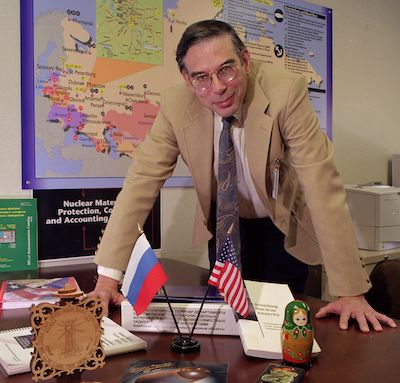
BREA NEWS                                                                                           MAY/JUNE 2021

President’s Message (continued)                                        Les Fishbone Named
spouses. We also can’t predict when in-person                            Fellow of INMM
meetings/events will resume.
Before our February Zoom meeting, John Hill gave us             Retiree and BREA
a virtual presentation on Covid-19 research at BNL.             member Les Fishbone
Replying to a question, he said that Pfizer used NSLS-          spent most of his career
II to study structural aspects of its vaccine. Now we’ve        at BNL working to
learned that a biotech tool developed in the 1980s by           safeguard nuclear
Bill Studier, the late John Dunn and their group in             materials. In recognition
BNL’s Biology Department is fundamental to making               of his more than three
Covid vaccines. Read the Lab’s story at https://                decades advancing
www.bnl.gov/newsroom/news.php?a=218806.                         scientific diplomacy
                                                                including through
Some of you may have caught the Zoom talk by BNL                cooperative technical
physicist Vladimir Tishchenko about the Muon g-2                exchanges with                Les Fishbone
experiment at Fermilab that made headlines recently.            counterparts at Russian             – Roger Stoutenburgh
(My apology to those who missed his talk because of             nuclear institutes,
my error in giving the wrong time in the email                  Fishbone was elected to
headline.)                                                      the rank of Fellow by the Institute of Nuclear Materials
The 50-foot diameter Muon g-2 electromagnet was                 Management (INMM).
built, installed and used successfully at BNL’s AGS.            INMM is dedicated to the safe, secure and effective
Then, in 2013, it was moved to Fermilab in Illinois.            stewardship of nuclear materials and related
The photos below show the magnet being lifted by                technologies. Nuclear materials management accounts
crane off of a specially outfitted trailer and loaded           for the production, use, storage, transport, handling
onto a barge at Smith Point Marina. The journey took            and protection of essential elements of the nuclear fuel
a month by sea and land. Fermilab’s present results             cycle, notably uranium and plutonium.
are basically in agreement with and an extension of
the BNL data, which found a deviation from the                  In its citation of Fishbone, INMM described his work
“Standard Model” of particle physics.                           as wide ranging, including systems studies of nuclear
                                                                materials safeguards and development and application
                                                                of a mathematical model for analyzing energy
                                                                technology priorities. INMM acknowledged Fishbone’s
                                                                long-standing service to the institute by mentoring and
                                                                guiding student, post-doc and early-career members
                                                                through far-reaching articles in the Journal of Nuclear
                                                                Materials Management.
                                                                While working at BNL, Fishbone also served as an
                                                                adjunct professor in the Department of Political
                                      – Michael Herbert         Science at Stony Brook University and, during a leave
                                                                of absence, as a staff member of the International
                                                                Atomic Energy Agency.
Listening to Tishchenko’s talk, my own background in
condensed matter physics left me somewhat adrift of             Fishbone earned his B.S. in physics from the California
the details, but the complicated strategies for sifting         Institute of Technology and his Ph.D. in physics from
out and checking the results did impress me. During             the University of Maryland. He joined the scientific
one of the more challenging parts of the talk, I                staff at BNL in 1977, working initially in the
daydreamed about my encounter with muon research                Department of Energy & Environment and, in 1980,
years ago. In the fall of ’68, I drove from Oregon to           moving to the Department of Nuclear Energy.
Chicago with another Portland State undergrad to                               – Mona S. Rowe, msrowe.hi@gmail.com
participate in an Argonne Lab semester research
program. There, I worked on a cosmic muon project               Editor’s note: Les Fishbone was elected INMM Fellow
using spark chambers, doing primarily computer                  in July 2020. Another BNLer, Susan Pepper, chair of
analysis.                                                       the Nonproliferation and National Security
     – Arnie Moodenbaugh, moodenba@optonline.net                Department, was elected president of the INMM for a
                                                                term beginning in October 2020.
                                                           !3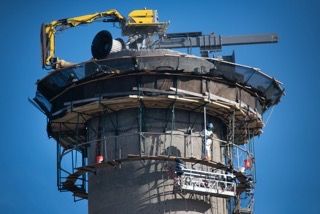
BREA NEWS                                                                                      MAY/JUNE 2021

Membership Renewal                                                    In Memoriam
Is your BREA membership expiring?                    We deeply regret to inform you of the passing of the
Find out by going to BREA’s website:                 following BNL retirees.
https://www.bnl.gov/bera/activities/brea/               Marilyn McKeown, 95, April 2, 2021
To renew, fill out the form below.                      Geraldine Callister Miller, 90, March 3, 2021
                                                        Jack Preses, 73, April 8, 2021
PLEASE PRINT
Last name: ____________________                      More information can be found at BREA’s website:
                                                     www.bnl.gov/bera/activities/brea. To post an obituary for
First name: _______ MI: ____________                 a deceased BNL employee or retiree, email information to
Address: _________________________                   msrowe.hi@gmail.com or mail it to BREA in care of BERA
                                                     at the address in the panel below.
________________________________
Phone: _______ Email: ______________
Membership type:                                           Food Drive for Island Harvest
[ ] annual ($10)                                     Brookhaven Lab is doing a food drive for Island Harvest.
[ ] 5 years ($40)                                    Leading this campaign is Amy Engel, Manager of
[ ] Life ($95)                                       Environmental and Community Engagement. She’s
Date: _________ Check amount: ________               arranged for boxes on site for food donations, which will
                                                     go directly to pantries in the neighborhoods around BNL.
MAKE YOUR CHECK OUT TO BREA
[ ] I want to receive BREA News by mail              Christine Carter, who supervises all BERA activities, said
    via the U.S. Post Office.                        that Covid has made the need especially great. She
[ ] I want to receive BREA News by email only.       described homeless in trailers and people camping in
    Do not mail it to me via the U.S. Post Office.   Suffolk parks all winter. “Heartbreaking,” she said.
Mail form and check (made out to BREA) to:           Early this year, BREA voted to make a donation to Island
  Beth Lin, BREA Membership Chair                    Harvest using funds from its treasury. For the Lab’s food
  81 Westchester Drive                               drive, retirees are invited to donate to Island Harvest
  Rocky Point, NY 11778
              – Beth Lin, Membership Chair
                                                     online at https://www.islandharvest.org.
                       hellobylin@yahoo.com

 Brookhaven Retired Employees Association
 BREA c/o BERA
 Brookhaven National Laboratory
 Bldg. 400 Brookhaven Avenue
 Upton, NY 11973
 Phone: (631) 344-5090
 Email: BREA@bnl.gov
 Web: https://www.bnl.gov/bera/activities/brea/

                                                           !4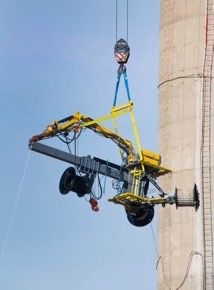
You can also read


