Budget and Capital Improvements Plan 2019-2020 - LOTT Clean ...
←
→
Page content transcription
If your browser does not render page correctly, please read the page content below
Budget and
Capital Improvements Plan
2019-2020
Table of Contents
Executive Summary 1
Financial Planning 3
Capital Budget and
Capital Improvements Plan 13
Operating Budget 58
Executive Summary
The LOTT Clean Water Alliance provides wastewater                    Many of these projects are large-scale, span multiple
treatment and reclaimed water production services                    years, and require substantial investment. At the
for the urban areas of Lacey, Olympia, and Tumwater                  same time, LOTT must operate its treatment facilities
in north Thurston County. LOTT’s complex system of                   24 hours a day, 7 days a week, 365 days a year, to
treatment and conveyance facilities represents one of                ensure that wastewater is properly treated and
our communities’ largest regional investments, worth                 cleaned before it is released into the environment. To
an estimated $750 million.                                           support all this, LOTT must carefully manage financial
                                                                     resources, planning ahead with a long-term view that
                                                                     provides flexibility to adjust to changing conditions,
                                                                     while minimizing impacts to ratepayers.

                                                                     LOTT uses a six-year financial planning period, and
                                                                     2019 and 2020 represent the first biennium of the
                                                                     current planning cycle.

                                                                     This document outlines LOTT’s two budgets for
                                                                     the 2019-2020 biennium – a Capital Budget and an
                                                                     Operating Budget. The Capital Budget includes costs
                                                                     to replace, upgrade, or rehabilitate existing facilities
                                                                     and to build new system capacity. These projects
                                                                     are described in the Capital Improvements Plan, also
LOTT treatment facilities operate continuously to ensure that        included in this document. The Operating Budget
wastewater is properly treated and cleaned.
                                                                     contains all the costs necessary to operate LOTT’s
                                                                     facilities and provide related services. The following
To sustain the communities’ investment in the existing               table shows a combined summary of both operating
system and accommodate future service needs,                         and capital revenues and expenses for 2019-2020.
LOTT operates under a continual cycle of planning,
designing, and completing numerous capital projects.

                Overall Budget Summary 2019-2020

                                                                    2019-2020          2017-2018          Annual
                REVENUE
                                                                     Budget              Budget          % Change

                Wastewater Service Charge                           $61,352,922         $54,873,484         5.9%
                Capacity Development Charge                         $12,279,900         $10,342,772         9.4%
                Miscellaneous Revenue                                 $800,000            $930,000         (7.0%)
                Net Revenue from Rates and Charges               $74,432,822           $66,146,256          6.3%
                Debt Funding                                        $19,050,000          $1,050,000       857.1%
                (Increase)/Decrease in Cash                         $13,366,664         $16,223,043        (8.8%)
                Total Resources                                 $106,849,486           $83,419,299          14%

                                                                    2019-2020          2017-2018          Annual
                EXPENSES
                                                                     Budget              Budget          % Change

                Net Operating Expense                               $26,938,876         $24,733,548         4.5%
                Debt Service                                        $18,149,681         $18,043,479         0.3%
                Capital Expense                                     $61,760,929         $40,642,272         26%
                Total Expenses                                  $106,849,486           $83,419,299          14%

                                                                1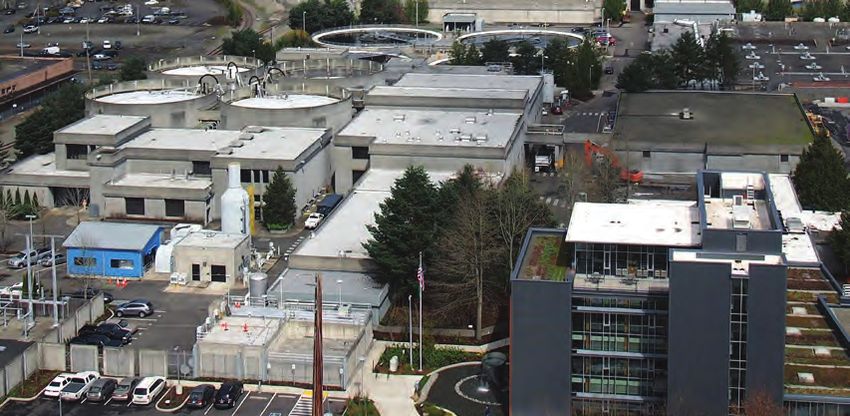
Capital Budget                                                   • Wastewater Service Charge – The monthly rate in
                                                                   2019 will be $39.80, increasing by $1.16 from the
Capital costs are based on LOTT’s Capital                          2018 rate due to a 3% inflationary adjustment.
Improvements Plan (CIP), which is reviewed and
updated each biennium. The projects identified in the            • Capacity Development Charge – The fee for new
CIP are necessary to ensure LOTT sustains the existing             connections in 2019 will be $6,049.21, increasing
wastewater treatment system and provides needed                    from $5,810.79 in 2018. The 2019 rate includes the
new system capacity. The CIP includes a detailed six-              3% inflationary increase, and an additional $64.10
year plan through 2024 and a summary long-range                    increase that occurs annually through 2019.
plan for 2025 through 2039 and beyond. The Capital               • Service Charges – LOTT also receives revenues
Budget includes costs for projects on the short-term               such as disposal fees from waste haulers. Rates
CIP that LOTT expects to spend within the calendar                 for disposal of septage, vactor, and similar non-
years 2019 and 2020. It is up about 26% per year over              septage wastes are automatically adjusted in
the 2017-2018 Capital Budget due to several large-                 conjunction with the Wastewater Service Charge.
scale projects needed to upgrade portions of the
Budd Inlet Treatment Plant.
                                                                 Revenues
Operating Budget                                                 Throughout the past several budget cycles, monthly
                                                                 Wastewater Service Charge (WSC) revenues have
The Operating Budget includes three categories of                seen stable growth as new customers are added to
expense – personnel, direct operating expense, and               the system. This natural growth in WSC revenues
general expense. Overall operating expenses for                  funds the increased expenses associated with the
2019-2020 have increased approximately 4.5% per                  Operating Budget. Growth in the number of Capacity
year over the previous Operating Budget.                         Development Charge (CDC) connection fees has
                                                                                              been modest in the
Rates                                                                                         last few years, however,
                                                                                              there are indications
LOTT has two primary                                                                          that the local housing
rates – a monthly rate for                                                                    market, and associated
LOTT sewer service and a                                                                      new connections, are
one-time connection fee.                                                                      on the upswing. LOTT
The monthly rate is called                                                                    continues to take a
the Wastewater Service                                                                        conservative approach
Charge (WSC). Revenue                                                                         to revenue forecasting
from the WSC is used to                                                                       and anticipates modest
pay for costs of sustaining                                                                   growth in the 2019-
and operating the existing                                                                    2020 WSC and CDC.
wastewater treatment
system. The connection
fee is referred to as the
Capacity Development
Charge (CDC). Revenue
from the CDC pays for
costs associated with
building new system
capacity to serve
new customers.

                              The Operating Budget includes three categories of expense –
                              personnel, direct operating expense, and general expense.

                                                             2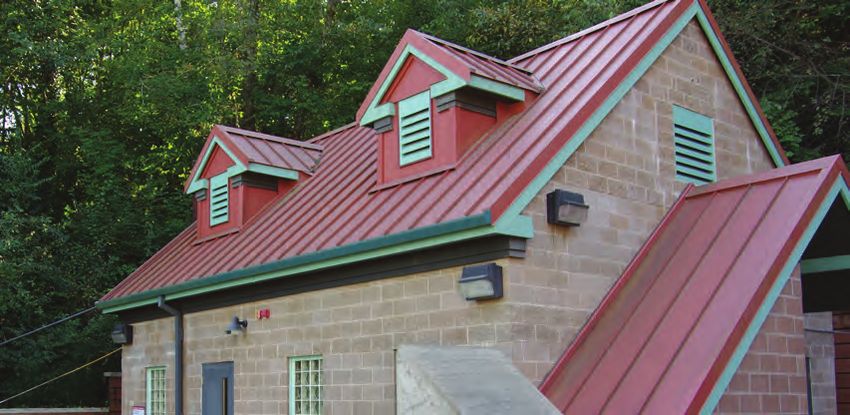
Financial Planning
Overview
The LOTT Clean Water Alliance operates a                                        and capital expense – exist to fund the total
complex system of facilities worth an                                              cost of capital construction. For 2019-
estimated $750 million. The LOTT                                         Net        2020, LOTT’s combined infrastructure
system includes the Budd Inlet                                        Operating       investment (debt service plus capital
Treatment Plant, Budd Inlet                                            Expense          costs) represents 75% of total
Reclaimed Water Plant, Martin Way                                        25%             expense, with operating costs
Reclaimed Water Plant, Hawks                Capital                                     representing 25%.
Prairie Reclaimed Water Ponds              Expense
and Recharge Basins, three major              58%                         Debt              With large-scale capital project
pump stations, 22 miles of sewer                                         Service           commitments, the Board of
interceptor lines, and 11 miles of                                        17%             Directors must consider budget
reclaimed water pipelines. Portions of                                                   decisions based on long-term
the Budd Inlet Treatment Plant are over                                               financial planning. LOTT uses a
60 years old, and major upgrades to the plant                                   customized finance planning tool to track
have been ongoing for the past several years.                            anticipated expenses into the future, develop a
                                                                       capital finance plan that provides sufficient funds
To sustain the Budd Inlet Treatment Plant and other                    for capital projects, and balance the source of
facilities, LOTT operates under a continual cycle of                   funds between rate income and borrowed dollars.
planning, designing, and completing numerous                           Continual efforts are made to identify and implement
capital projects. Many of these projects are large-                    cost-saving measures, and savings realized help to
scale, span multiple years, and require substantial                    minimize LOTT’s debt, reducing costs to ratepayers
investment. LOTT revenue needs are driven primarily                    from interest and other expenses associated with
by the cost of this capital construction. Of the three                 borrowing money. The results of this approach
cost centers shown in the chart, two – debt service                    have been excellent. LOTT’s service charge remains
                                                                                                     below the average for
                                                                                                     the region, and the
                                                                                                     percentage increase
                                                                                                     in rates is consistently
                                                                                                     below regional and
                                                                                                     national averages.

                                                                                                      The Projected Budget
                                                                                                      Summary table on the
                                                                                                      following page shows
                                                                                                      anticipated expenses for
                                                                                                      each biennium over the
                                                                                                      next six years.

With large-scale capital project commitments, the Board of Directors must consider budget decisions
based on long-term financial planning.

                                                                  4
Projected Budget Summary 2019-2024

                                         2019-2020     2021-2022     2023-2024
   REVENUE
                                          Budget        Budget        Budget
   Wastewater Service Charge             $61,352,922   $67,056,000   $73,289,648
   Capacity Development Charge           $12,279,900   $13,027,740   $13,821,130
   Miscellaneous Revenue                    $800,000      $700,000      $677,000
   Net Revenue from Rates and Charges    $74,432,822   $80,783,740   $87,787,778
   Debt Funding                          $19,050,000           $0             $0
   (Increase)/Decrease in Cash           $13,366,664   $11,177,578   ($7,893,602)
   Total Resources                      $106,849,468   $91,961,318   $79,894,176

                                         2019-2020     2021-2022     2023-2024
   EXPENSES
                                          Budget        Budget        Budget
   Net Operating Expense                 $26,938,876   $30,480,321   $34,847,082
   Debt Service                          $18,149,681   $20,125,685   $16,835,557
   Capital Expense                       $61,760,929   $41,355,312   $28,211,537
   Total Expenses                       $106,849,486   $91,961,318   $79,894,176

To sustain facilities, LOTT
operates under a continual
cycle of planning, designing,
and completing numerous
capital projects.

                                            5
Revenue, Rates, and Fee Summary
LOTT’s primary sources of revenue are the monthly service rate, known as the Wastewater Service Charge, and
a new connection fee, known as the Capacity Development Charge. LOTT also receives miscellaneous revenues
from other sources.

Wastewater Service Charge                                        CDC Adjustment – The fee for new connections in
The Wastewater Service Charge (WSC) is used to pay               2019 will be $6,049.21, and in 2020, will be $6,230.69.
most of the cost for repairs or upgrades to the existing         This reflects a 3.0% increase for inflation each year. In
wastewater treatment system, loan payments for                   2019, it includes an additional $64.10 increase that is
system-related capital costs, and operating costs.               a separate non-inflationary adjustment put in place
The WSC is assessed based on the equivalent                      in 2002 to allow for incremental adjustment of the
residential units (ERUs). The LOTT charge is included on         CDC over 17 years. The revenue from this adjustment
the customers’ utility bills, which are sent out by LOTT’s       accounts for the cost of initial projects associated
partner cities. Each city also assesses a separate charge        with implementation of LOTT’s Wastewater Resource
on utility bills for costs associated with maintaining           Management Plan.
their city-owned sewer collection systems.
                                                                 Miscellaneous Revenue
Because 75% of LOTT’s expenses are related to                    LOTT also earns interest on cash deposits and
capital construction, a 3% inflationary adjustment               receives revenues from miscellaneous other sources
based on construction industry data is planned to                such as disposal fees from waste haulers. Rates for
apply to both the WSC and the CDC rates each year                disposal of septage, vactor, and similar non-septage
of the 2019-2024 planning period. The adjustment                 wastes are automatically adjusted in conjunction with
was originally established by the LOTT Board of                  the Wastewater Service Charge.
Directors in 2012 as part of a comprehensive capital
finance plan to ensure the utility keeps pace with               Service Charge Adjustments – The adjusted rate
escalating construction costs over time and is able to           for septage disposal will change to $16.42 per
adequately fund LOTT’s Capital Improvements Plan.                100 gallons in 2019. The rate for vactor and similar
The adjustment was reviewed and reaffirmed                       non-septage disposal will change to $4.25 per
by the Board during the 2019-2024 strategic                      100 gallons. In 2020, the septage disposal rate is
planning process.                                                $16.91 per 100 gallons. The rate for 2020 vactor and
                                                                 similar non-septage disposal is $4.38 per 100 gallons.
WSC Adjustment – For 2019, the monthly charge will
be $39.80, increasing $1.16 from the 2018 rate. For
2020, the monthly charge is $41.00.                              Revenue Projections and
                                                                 Analysis
Capacity Development Charge                                      Throughout the past several budget cycles, WSC
The Capacity Development Charge (CDC), also                      revenues have seen slow but stable growth, while
described as a connection fee or hook-up fee, is                 growth in CDC revenue has fluctuated considerably.
used to build projects that add new capacity, such               LOTT takes a conservative approach to revenue
as satellite reclaimed water plants, larger sewer lines,         forecasting and anticipates modest growth in both
and other projects that increase LOTT’s ability to               the WSC and the CDC for 2019 and 2020.
serve new customers. The CDC is also assessed based
on equivalent residential units.

                                                             6
Wastewater Rate Comparisons
The LOTT Clean Water Alliance is frequently asked why its rates are high. Concern about the cost of wastewater
services is often expressed by residents who are comparing the cost of wastewater and drinking water services,
which can appear on the same utility bill, or by new residents to the community who have moved here from
areas of the country with lower utility costs.

Wastewater treatment is, in general, an expensive                      LOTT is a recognized leader in wastewater treatment
business. LOTT treats an average of 14 million gallons                 in the state. The Budd Inlet Treatment Plant remains
of wastewater each day. The water must be treated                      one of the only treatment plants employing
to high standards to meet state permit requirements                    biological nutrient removal on Puget Sound. This
and be safely released into the environment. This                      advanced nitrogen removal technology is likely to be
requires a complex system of infrastructure –                          required of most major plants along Puget Sound in
pipelines, pump stations,                                                                                 the future, potentially
treatment plants, and                                                                                     resulting in major
related equipment – that                                                                                  rate increases for
must be up and running                                                                                    those communities.
24 hours a day, 7 days                                                                                    LOTT also operates an
a week.                                                                                                   advanced membrane
                                                                                                          biological reactor
By contrast, drinking                                                                                     system at the Martin
water services are                                                                                        Way Reclaimed
considerably less                                                                                         Water Plant, which
expensive. This is due to                                                                                 was one of the first
the fact that our region                                                                                  membrane plants in
enjoys a stable supply of                                                                                 the state producing
high quality groundwater                                                                                  Class A Reclaimed
                              The vast differences in drinking water and wastewater services rates is due
to meet drinking water                                                                                    Water. This same
                              to the complexity of treatment involved.
needs. This water requires                                                                                technology is now
only minimal treatment.                                                                                   being developed by
Rates for drinking water and for wastewater services                   several communities in our region to meet ever more
can seem disproportionate, but are mainly due to                       stringent treatment requirements, and will likely
the vast differences in the amount and complexity of                   require significant increases to their rates.
treatment involved in each.
                                                                       LOTT conducts an informal survey every few years
Part of the cost of wastewater treatment comes from                    to see how its residential rates compare with other
our communities’ location along Puget Sound. The                       communities. Some utilities, like LOTT, use a flat rate
U.S. Environmental Protection Agency (EPA) requires                    structure and others use a volume-based structure.
states to comply with the federal Clean Water Act                      To even out the different structures, all of the
by identifying water bodies that do not meet water                     surveyed rates were compared assuming 585 cubic
quality standards and developing action plans to                       feet (or 4,376 gallons) per month for an equivalent
bring those waters into compliance. Puget Sound,                       residential unit. The current survey, conducted in
and more specifically, Budd Inlet, are water quality                   2018, shows that our monthly charges are lower
impaired. The Washington State Department of                           than the average. Given LOTT’s lower than average
Ecology has placed stringent requirements on LOTT                      rates, and the advanced treatment already provided,
to reduce the amount of nitrogen and biochemical                       LOTT ratepayers are receiving a high value for the
oxygen demand discharged into Budd Inlet. LOTT                         investments they are making. LOTT strives to ensure
was the first, and until recently, the only plant along                its service charges are reasonable and affordable, and
Puget Sound that was required to treat wastewater to                   is meeting that objective when compared to other
advanced secondary standards to remove additional                      utilities in the region.
nitrogen from the water. This high level of treatment
adds technological complexity and cost to the
operation of LOTT’s main treatment facility.
                                                                7
Wastewater Rate Comparisons
2018 2016 2-Year Annualized Flat or 2018 2016
Rate Rate Increase Volume Rank Rank
Tamoshan $127.56 $115.70 5.1% F 1 1
City of Tenino $122.00 $94.00 14.9% F 2 2
Boston Harbor $99.39 $82.14 10.5% F 3 5
City of Shelton $96.62 $45.02 57.3% V 4 27
Olympic View $95.71 $86.81 5.1% F 5 4
City of Chehalis (in city limits) $91.11 $91.11 0.0% V 6 3
City of Bonney Lake $85.76 $73.75 8.1% V 7 8
Grand Mound $83.58 $75.81 5.1% F 8 7
City of Centralia (in city limits) $80.02 $76.98 2.0% V 9 6
City of Seattle $78.74 $71.78 4.8% V 10 9
City of Renton $74.13 $70.26 2.8% F 11 10
City of Everett $69.65 $59.87 8.2% F 12 15
City of Bellevue $69.20 $64.96 3.3% V 13 12
City of Auburn $69.11 $66.32 2.1% F 14 11
Average $65.68 $58.64 6.3%
City of Snoqualmie $65.16 $44.51 23.2% F 15 28
City of Longview (in city limits) $64.67 $63.41 1.0% V 16 13
City of Yelm $64.56 $57.37 6.3% F 17 17
City of Bremerton (in city limits) $62.65 $61.09 1.3% V 18 14
City of Olympia $60.11 $57.79 2.0% F 19 16
City of Kelso $59.55 $57.24 2.0% F 20 18
City of Lacey $59.07 $55.95 2.8% F 21 19
City of Sumner $58.88 $55.24 3.3% V 22 20
City of Tumwater $55.75 $53.02 2.6% F 23 21
City of Tacoma $52.34 $47.95 4.6% V 24 23
City of Vancouver $51.80 $46.70 5.5% F 25 25
City of Puyallup $51.41 $48.22 3.3% V 26 22
Pierce County Sewer $48.44 $45.64 3.1% F 27 26
City of Mount Vernon $47.32 $47.32 0.0% V 28 24
City of Orting $44.93 $42.59 2.7% F 29 29
City of Bellingham (in city limits) $43.16 $39.47 4.7% F 30 30
Lakehaven Sewer District (KC Metro) $42.79 $39.32 4.4% V 31 32
City of Hoquiam $41.44 $39.44 2.5% F 32 31
Lakehaven Sewer District (Pierce Co) $40.80 $36.57 5.8% V 33 34
City of Edmonds $39.86 $33.25 9.9% F 34 35
City of Aberdeen $36.78 $36.78 0.0% F 35 33
Lakehaven Sewer District $30.27 $27.62 4.8% V 36 36
8Cost Allocation
Operating costs are paid out of Wastewater Service LOTT is currently conducting a cost of service analysis
Charge (WSC) revenue; capital projects and debt to update the basic unit of measurement (the
service are paid from both WSC and Capacity equivalent residential unit or ERU), and to review the
Development Charge (CDC) revenues. The allocation cost centers and cost allocations employed in LOTT’s
between these funds depends on the type of project accounting practices. LOTT’s partner communities
involved, as specified by the Interlocal Cooperation are using more reclaimed water than ever before,
Act Agreement for Wastewater Management. and have high interest in using more water than
LOTT currently produces. As a result, future Capital
The primary purpose of the CDC is to pay for new Improvements Plans may include projects that
capacity in the system and to ensure that growth pays are demand-driven, rather than strictly capacity-
for growth. This was one of the guiding principles in driven, and adjustments in LOTT’s cost allocations
the development of the interlocal agreement. The may be needed to accommodate this “new” type of
LOTT Board determined that the costs assigned to the project. Results of the cost of service analysis will be
CDC should reflect the full spectrum of construction, integrated into future budgets and CIPs.
interest on debt, costs for staff, and related ancillary
costs to support new capacity development. Because
LOTT develops new capacity “just in time,” the utility
Emergency Reserves
invests significant staff time and other resources in One of LOTT's Board-directed goals is to maintain
ongoing activities, such as planning, engineering, land six months of operating expenses and additional
acquisition, permit acquisition, public involvement, reserves for emergency capital expenditure. These
and other project-related activities. amounts are separate from, and in addition to,
reserves required by debt covenants. For 2019 and
It is important to recognize that the CDC is adjusted 2020 emergency reserves will include:
over the life of the Capital Improvements Plan (CIP)
• $3.0 million for emergency capital expenditures
and is not used for short-term revenue adjustments.
When conditions require short-term revenue • $8.8 million (approximately) in emergency
adjustments for capital projects, the WSC must be operating reserves
raised to meet costs as
required by the interlocal
agreement. Over time, the
two funds are reviewed to
ensure that system costs
and new capacity costs are
applied to the appropriate
projects. The estimated costs
and revenues are balanced
over the life of the Capital
Improvements Plan, and the
Board of Directors reviews
these costs each biennium
to determine if adjustments
are needed.
The primary purpose of the Capacity Development Charge is to pay for new capacity in the system
and to ensure that growth pays for growth.
9Investment in a knowledge management program is helping create training tools and succession plans to provide specialized technical
knowledge needed to run a complex treatment plant such as LOTT’s.
Cost Control
LOTT operates under a set of core values that includes managing financial resources in a responsible, sound,
economical, and equitable manner. Toward that goal, LOTT actively manages projects and programs to identify
efficiencies and cost-savings, minimize expenses, and limit the need to increase rates. Cost control takes vigilance
and effort, and is an integral aspect of how LOTT does business. LOTT cannot prevent the rising cost of supplies
and labor, but makes every effort to minimize capital and operational costs through a variety of efforts, including:
• Asset Management – The Asset Management • Energy Reduction Efforts – LOTT achieved its
Program inventories LOTT’s equipment, processes, goal of 5% reduction in total energy use by 2018.
and systems to proactively identify and schedule Through extensive work with Puget Sound Energy,
needed repairs and replacements. This program Cascade Energy, Oregon State University, and
protects LOTT’s assets and extends their useful life. Washington State University, several energy audits
have been conducted to identify ways to optimize
• Finance Management – LOTT seeks out grants
energy usage throughout LOTT’s facilities. LOTT has
and low interest loans, and has kept interest rates
also developed an incentive program to recognize
below 3.2% for all outstanding debt. Large-scale
employee-generated ideas for energy-saving
projects are awarded based on competitive
projects, and anticipates significant additional
bidding. Other contracts, such as services, are
energy reduction will be achieved from planned
actively negotiated to obtain the best pricing.
upgrades to the Budd Inlet Treatment Plant.
• Business Case Evaluation – Value engineering
• Human Resource Management – LOTT works
by a diverse team of technical staff ensures that
to make the most of staffing levels, realigning
each project is designed and built efficiently and
workloads and resources to create efficiencies.
effectively. Projects are scheduled over time, and
Investment in a proactive knowledge management
rearranged on the CIP, so as not to exceed available
program is helping create training tools and
financial and staffing resources.
succession plans to effectively prepare future
employees with the specialized technical
knowledge needed in this industry.
10Capital Improvements Planning
LOTT operates under a National Pollution Discharge maintained properly to keep the plant running. Asset
Elimination System (NPDES) permit that is issued management is a proactive approach to sustaining
by the Washington State Department of Ecology the plant and LOTT’s other infrastructure, allowing
for the U.S. Environmental Protection Agency (EPA). the utility to keep ahead of needed maintenance
LOTT must meet all permit requirements, as well as and avoid unexpected, and potentially catastrophic,
expectations of federal and state agencies regarding system failures.
responsible utility management. The EPA has
developed the Capacity, Management, Operation, and Capacity-related data is modeled in a geographic
Maintenance Performance Program Plan, requiring information system (GIS) to develop population
wastewater utilities to demonstrate that they have growth forecasts and predict associated wastewater
a comprehensive, long-term plan for maintaining flows and loadings spatially throughout the system.
existing utility infrastructure and meeting future This information is used to develop a three-part
system needs. LOTT meets that expectation through Capacity Report, which helps identify and prioritize
development of an organizational Strategic Plan capital projects for inclusion in the Capital
every six years, and through continual review and Improvements Plan. Based on this report, LOTT
adjustment of the Capital Improvements Plan. The identifies needs within the system and develops
Capital Improvements Plan, prepared each biennium, projects to meet those needs.
is submitted to the Department of Ecology, along
with a three-part Capacity Report, as part of permit All this information funnels into the Capital
requirements. Improvements Plan, which lists projects anticipated
over the short- and long-term.
Continuous planning is key to this process and
allows LOTT to sustain existing infrastructure and
build new infrastructure to meet projected future
capacity needs. One of the first steps in planning Capacity Report
capital improvements is gathering information
LOTT's Capacity Report is updated annually,
about the condition of existing infrastructure, repair
and is available on LOTT’s website at
and replacement needs, current system capacity,
www.lottcleanwater.org. The report contains
and needs for additional capacity in the future. Data
three sections:
gathered includes:
• Asset management data, such as system condition, Flows and Loadings Report analyzes
criticality, and useful life residential and employment population
projections within the urban growth area, and
• Population forecasts from the Thurston Regional
estimates the impact on wastewater flows
Planning Council
and loadings in the LOTT wastewater system.
• Recently added sewer pipelines
Inflow & Infiltration and Flow Monitoring
• Anticipated septic tank conversions to the Report uses dry and wet weather sewer flow
sewer system monitoring results to quantify the amount of
• Flow monitoring results unwanted surface stormwater (inflow) and
subsurface groundwater (infiltration) entering
• Planned development the sewer system, and prioritizes sewer line
rehabilitation projects.
The asset management data is used to identify and
prioritize projects necessary to sustain existing Capacity Assessment Report analyzes
treatment, conveyance, and discharge equipment system components to determine when
and facilities. Portions of LOTT’s main treatment limitations will occur and provides a timeline
facility, the Budd Inlet Treatment Plant, are over for new and upgraded system components.
60 years old. The plant involves a complex maze
of piping and thousands of assets that must be
11Capital Project Categories Support Services and Projects
Support Services and Projects provide planning
LOTT’s Capital Improvements Plan is built around
information and services that support projects in all
four major project categories. Understanding these
categories. They include the ongoing flow monitoring
categories, and the types of projects within them,
and flow reduction programs, property acquisition,
provides a general understanding as to how they are
and special studies and projects that support LOTT’s
funded. Each individual project is assessed regarding
long-range Wastewater Resource Management Plan.
the proportion of existing system/new capacity
Engineering and staff costs allied with the Capital
benefits, and is funded through a combination of
Improvements Plan are also included in this category.
WSC/CDC funds that reflects that proportion.
These projects are funded from monthly rates.
System Upgrades CIP Overview and
Organization
System Upgrade projects include improvements to
existing facilities. Upgrades are necessary to replace
outdated equipment, improve efficiency, and in some
cases, to meet higher water quality standards. One The Capital Improvements Plan (CIP) represents all
of the public values guiding LOTT’s operations is to major capital projects in the foreseeable future. It is
maximize use of existing facilities before building revised each biennium based on updated capacity
new ones. These projects are funded primarily from reports, asset management evaluations, and other
monthly rates. changing conditions.
The CIP is divided into two sections – short-term and
New Capacity long-term. Each section is summarized in a table.
New Capacity projects are those that provide new • 2019-2024 CIP – This six-year CIP groups projects
facilities to serve added wastewater flows. Under the by category. It includes a Capital Budget column
Wastewater Resource Management Plan, also known showing anticipated spending for 2019 and 2020
as the Highly Managed Plan, LOTT is continuously for each project. Following the table, a project
planning for new system capacity, to be built “just in summary page is provided for each project in the
time” to ensure that future demands are met. For this short-term plan.
purpose, LOTT considers three types of capacity when
describing its overall operational capacity – treatment • 2025-2039 CIP – The longer-range table divides
capacity, discharge and use capacity, and conveyance projects by operational systems, based on asset
capacity. New capacity projects are funded primarily management life-cycle investments needed to
from new connection fees. meet the expected build-out condition of the entire
Lacey-Olympia-Tumwater service area.
Asset Management (Repair,
Rehabilitation, and Capital Budget and Short-Term
Replacement) CIP Summary
When systems or equipment reach the point 2019-2020 2019-2024
where repairs are no longer cost-effective, they Budget CIP
can be rehabilitated (overhauled) to a usable
System Upgrades $39,161,012 $68,327,427
condition or they can be replaced. These projects
New Capacity $188,769 $660,691
are funded from monthly rates.
Asset Management $4,796,715 $16,884,373
Support Services and Projects $17,614,433 $45,277,429
Total $61,760,929 $131,149,921
12Capital Budget and Capital Improvements Plan
2019-2020 Capital Budget / 2019-2024 Capital Improvements Plan
Summary                                                         Year      Year      2019-2020     2019-2024
  Page                                                          Start   Complete   Expenditure       CIP
          System Upgrade Projects                                                  $39,161,012   $68,327,427

          Budd Inlet Treatment Plant                                               $33,659,794   $53,510,361

  16      DAFT System and Thickened Sludge Pumping Upgrade      2019      2020      $2,391,572     $2,391,572
  17      Biological Process Improvements                       2020      2021     $22,446,697    $31,175,969
  18      Ultraviolet Disinfection Upgrades                     2019      2019      $9,185,865     $9,185,865
  19      North Odor Scrubber and Air Handling Upgrades         2023      2024        $103,664     $5,183,223
  20      Centrate Building Rehabilitation                      2022      2023             $0      $4,012,573
  21      Storage Warehouse                                     2021      2022        $554,105      $583,269
  22      Washington Street Property Improvements               2019      2019        $977,889      $977,889
          Conveyance                                                                $2,779,666     $5,379,265

  23      Capitol Lake Pump Station Wet Well Coatings           2019      2020        $231,254      $231,254
  24      Collection System Management Program                  2008    Ongoing       $203,000     $1,479,090
  25      Collection System Piping Rehabilitation I             2019      2020      $1,795,304     $1,795,304
  26      Collection System Piping Rehabilitation II            2021      2022             $0       $974,868
  27      Manhole Rehabilitation                                2020      2021        $232,428      $581,069
  28      Martin Way and Sleater Kinney Manhole Repair          2019      2019        $317,681      $317,681
  29      STEP Waste Receiving Station                          2022      2023            TBD            TBD
          Martin Way Reclaimed Water Plant                                            $721,553     $9,437,801

  30      Reclaimed Water Plant Improvements                    2022      2023        $721,553     $8,478,244
  31      Membrane Filter Replacement                           2023      2023             $0       $959,556

          New Capacity Projects                                                      $188,769       $660,691

  32      Henderson Conveyance and Recharge                     2022      2024        $188,769      $660,691

          Asset Management Projects                                                $4,796,715    $16,884,373

  33      General Equipment Repair and Replacement (LERF)       2009    Ongoing     $1,162,351     $3,633,847
  34      Instrumentation and Controls Replacement              2012    Ongoing       $871,600     $1,959,285
  35      Budd Inlet Treatment Plant Groundwater Control        2022      2022             $0       $341,914
  36      Digester Refurbishment                                2015      2024      $2,169,702     $9,402,042
  37      Facility Roof Repair and Replacement                  2016    Ongoing            $0       $954,224
  38      Influent Pump Station Valve and Piping Improvements   2018      2019        $360,062      $360,062
  39      Capitol Lake Pump Station Power Improvements          2019      2019        $233,000      $233,000

                                                           14
2019-2020 Capital Budget / 2019-2024 Capital Improvements Plan (continued)
Summary Year Year 2019-2020 2019-2024
Page Start Complete Expenditure CIP
Support Services and Projects $17,614,433 $45,277,429
40 Annual Miscellaneous Professional Services 2006 Ongoing $649,600 $2,069,891
41 Engineering Project Support 2006 Ongoing $3,065,365 $9,663,563
42 Facilities Project Support 2006 Ongoing $2,778,097 $8,757,951
43 Administrative Project Support 2006 Ongoing $2,754,813 $8,684,548
44 Flow Monitoring Program 2006 Ongoing $393,000 $1,052,298
45 Flow Reduction Programs 2006 Ongoing $440,000 $1,290,000
46 WET Center Exhibit Updates 2011 Ongoing $60,000 $560,000
47 Miscellaneous Small Projects 2006 Ongoing $743,911 $2,199,259
48 Reclaimed Water infiltration Study 2012 2019 $1,381,934 $1,381,934
49 Information Technology Upgrades 2014 Ongoing $356,326 $944,658
50 Water Quality and Habitat Improvement 2006 2024 $350,000 $1,050,000
51 Septic Conversion Incentive Program 2017 2024 $640,000 $1,920,000
52 Energy Efficiency and Consumption Reduction Program 2014 Ongoing $194,880 $620,967
53 Property Acquisition 2017 Ongoing $2,500,000 $3,500,000
54 Occupied Space and Facilities Improvements 2018 Ongoing $1,114,183 $1,514,183
55 Public Health Emergency Support Program 2018 2024 $250,000 $250,000
Total $61,760,929 $131,149,921
The Ultraviolet Disinfection project will upgrade the existing system and refurbish the
Fiddlehead outfall emergency gate.
15DAFT System and Thickened Sludge Pumping Upgrade
Project Type System Upgrade
Location Budd Inlet Treatment Plant
Description This is phase two of the effort to upgrade the dissolved air flotation thickener (DAFT)
system. This project includes installation of new bottom sludge collectors, aspirating
pumps, thickened sludge pumps, and process piping.
Background The DAFT system is used to thicken primary and waste sludge before it is pumped
into the digesters. The DAFTs were constructed in the early 1980s and much of the
associated equipment is approaching the end of its useful life.
Duration 2 years
Start Complete 2019-2020 Expenditure 2019-2024 CIP
2019 2020 $2,391,572 $2,391,572
16Biological Process Improvements
Project Type System Upgrade
Location Budd Inlet Treatment Plant
Description This project involves optimizing the current biological treatment process by reconfiguring
the first aeration basins, and reducing the energy required for biological nutrient removal.
The improvements include replacing oversized blowers and minimizing recycle pumping.
The project also includes optimizing methanol addition to the secondary process.
Background The first aeration basins were installed in 1994 and were originally sized to meet the
anticipated demands of the former brewery in Tumwater. Much of the equipment is
reaching the end of its useful life.
Duration 2 years
Start Complete 2019-2020 Expenditure 2019-2024 CIP
2020 2021 $22,446,697 $31,175,969
17Ultraviolet Disinfection Upgrades
Project Type System Upgrade
Location Budd Inlet Treatment Plant
Description This project involves upgrading the existing ultraviolet disinfection system, including
ultraviolet lamps, ballasts, control modules, and power supplies, and refurbishing the
Fiddlehead outfall emergency gate.
Background UV disinfection is the final treatment step prior to discharge to Budd Inlet. The
existing system was installed in 1993 and has an estimated useful life of 20 years.
Manufacturer’s support for this equipment was discontinued in 2018.
Duration 1 year
Start Complete 2019-2020 Expenditure 2019-2024 CIP
2019 2019 $9,185,865 $9,185,865
18North Odor Scrubber and Air Handling Upgrades
Project Type System Upgrade
Location Budd Inlet Treatment Plant
Description This project replaces the north odor scrubber with new, state-of-the-art technology
that is more effective in removing odor-causing compounds and more efficient in
balancing airflows. The project also includes improvements to the headworks, solids,
and maintenance building air handling systems.
Background The north odor scrubber equipment was originally installed in the early 1980s as
part of the Budd Inlet Treatment Plant construction for the secondary upgrade and is
reaching the end of its useful life.
Duration 2 years
Start Complete 2019-2020 Expenditure 2019-2024 CIP
2023 2024 $103,664 $5,183,223
19Centrate Building Rehabilitation
Project Type System Upgrade
Location Budd Inlet Treatment Plant
Description Phase two of the centrate management system upgrade includes replacement of
the roof, refurbishment of the interior steel beams, odor control system replacement,
electrical upgrades, and the addition of centrate basin covers.
Background Centrate is a byproduct of the solids dewatering process. With the completion of
the east primary sedimentation basins, the original basins can be used to store and
manage centrate. This is the second phase of work to repurpose the basins and better
manage centrate loading to the secondary treatment process.
Duration 2 years
Start Complete 2019-2020 Expenditure 2019-2024 CIP
2022 2023 $0 $4,012,573
20
30Storage Warehouse
Project Type System Upgrade
Location Budd Inlet Treatment Plant
Description This project involves the design and construction of a 5,000 square foot warehouse at the
Budd Inlet Treatment Plant to store and manage LOTT’s extensive spare parts inventory.
Background LOTT currently stores spare parts in 14 different locations, on and off the site of the
main treatment plant, making it extremely difficult to maintain inventories and
manage parts. The number of critical spare parts that need to be in stock and readily
accessible has increased as LOTT’s Asset Management Program has matured.
Duration 2 years
Start Complete 2019-2020 Expenditure 2019-2024 CIP
2021 2022 $554,105 $583,269
21
30Washington Street Property Improvements
Project Type System Upgrade
Location Budd Inlet Treatment Plant
Description This includes removal of a LOTT-owned building between Washington and Franklin
Streets, which is in a severe state of disrepair, and paving of surrounding gravel
parking areas.
Background The property was purchased by LOTT in 2013 as a site for future facilities associated
with the Budd Inlet Treatment Plant, such as additional equalization basins, digesters,
secondary clarifiers, or other treatment process infrastructure.
Duration 1 year
Start Complete 2019-2020 Expenditure 2019-2024 CIP
2019 2019 $977,889 $977,889
22Capitol Lake Pump Station Wet Well Coatings
Project Type System Upgrade – Conveyance
Location Capitol Lake Pump Station
Description This project involves replacing the coatings in the Capitol Lake Pump Station wet wells,
which have begun to fail, creating the risk of wet well deterioration and pump blockages.
Background Coatings of wet wells protect the concrete from degradation caused by the presence
of hydrogen sulfide. Wet well coatings were installed at the Capitol Lake Pump Station
in 1999, however, moisture from groundwater intrusion prevented proper adhesion of
the coatings. The new wet well coatings will increase the lifespan of the concrete in the
wet wells and reduce the risk of system failure during high flow situations.
Duration 2 years
Start Complete 2019-2020 Expenditure 2019-2024 CIP
2019 2020 $231,254 $231,254
23Collection System Management Program
Project Type System Upgrade – Conveyance
Location Systemwide
Description This includes the ongoing monitoring and rehabilitation of sewer lines and manholes
within the LOTT collection system. It ensures federal compliance with capacity
management, operations, and maintenance standards and is an integral part of
LOTT’s Asset Management Program. Annual activities include closed circuit televised
inspection and condition assessment, which is used to develop plans for needed
repairs and replacements.
Background LOTT currently owns and maintains approximately 22 miles of gravity sewer lines,
8 miles of forcemains, and 300 manholes. In alignment with LOTT’s overall Asset
Management Program, a formal collection system management program has been
developed. The program provides an efficient and systematic approach to inspection,
maintenance, repair, and replacement of LOTT’s collection system assets.
Duration Ongoing
Start Complete 2019-2020 Expenditure 2019-2024 CIP
2008 Ongoing $203,000 $1,479,090
24Collection System Piping Rehabilitation I
Project Type System Upgrade – Conveyance
Location Collection System
Description This is one of two collection system rehabilitation projects, which includes interceptor
pipeline segments along Cherry Street, Chestnut Street, State Avenue, Martin Way West,
and Tumwater Hill.
Background In 2017, LOTT completed a comprehensive condition assessment of the collection
system including manholes and sewer interceptors. This project was identified as part
of a prioritized investment plan to ensure reliability of the collection system.
Duration 2 years
Start Complete 2019-2020 Expenditure 2019-2024 CIP
2019 2020 $1,795,304 $1,795,304
25Collection System Piping Rehabilitation II
Project Type System Upgrade – Conveyance
Location Collection System
Description This is the second of two collection system rehabilitation projects, which includes
interceptor pipeline segments along Cooper Point Road North, Mottman Road, and
Tumwater Hill.
Background In 2017, LOTT completed a comprehensive condition assessment of the collection
system including manholes and sewer interceptors. This project was identified as part
of a prioritized investment plan to ensure reliability of the collection system.
Duration 2 years
Start Complete 2019-2020 Expenditure 2019-2024 CIP
2021 2022 $0 $974,868
26Manhole Rehabilitation
Project Type System Upgrade – Conveyance
Location Collection System
Description As a result of a condition assessment, 23 manholes were found to be in need of
rehabilitation. These manholes will be rehabilitated with structural liners.
Background In 2017, LOTT completed a comprehensive condition assessment of the collection
system including manholes and sewer interceptors. This project was identified as part
of a prioritized investment plan to ensure reliability of the collection system.
Duration 2 years
Start Complete 2019-2020 Expenditure 2019-2024 CIP
2020 2021 $232,428 $581,069
27Martin Way and Sleater Kinney Manhole Repair
Project Type System Upgrade – Conveyance
Location Collection System
Description Six manholes located along the Martin Way Interceptor West will be refurbished.
Background The Martin Way Pump Station forcemain discharges into the Martin Way gravity
interceptor at Sleater Kinney Road. This discharge releases hydrogen sulfide, a corrosive
sewer gas, which has corroded the manholes downstream of the forcemain.
Duration 1 year
Start Complete 2019-2020 Expenditure 2019-2024 CIP
2019 2019 $317,681 $317,681
28STEP Waste Receiving Station
Project Type System Upgrade – Conveyance
Location Collection System
Description This project involves efforts to optimize flows and loadings in the northeast portion
of the service area. One component of this effort is construction of a waste receiving
station to allow for controlled input and management of septic tank effluent pumping
(STEP) system loads.
Background LOTT plant processes are vulnerable to disruption by the growing number of high-
strength STEP loads from large community septic systems. This facility would isolate
these loads, allowing them to be sampled, analyzed, and pretreated as necessary, prior
to metering the loads into LOTT’s treatment facility influent. More analysis is needed to
evaluate potential project components and further define the scope and costs.
Duration 2 years
Start Complete 2019-2020 Expenditure 2019-2024 CIP
2022 2023 TBD TBD
29Reclaimed Water Plant Improvements
Project Type System Upgrade
Location Martin Way Reclaimed Water Plant
Description This project involves a number of improvements to the treatment plant to replace
aging infrastructure and improve operational reliability. Improvements include valve
replacement, additional blower capacity, improvements to automation, and upgrades
to the electrical and control systems.
Background Since the Martin Way Reclaimed Water Plant first came on-line in 2006, a number of
operational challenges have been identified. Also, reclaimed water demand in the
system has increased significantly making continuous and reliable operation increasingly
important. This project will address some of the operational limitations of this facility.
Duration 2 years
Start Complete 2019-2020 Expenditure 2019-2024 CIP
2022 2023 $721,553 $8,478,244
30Membrane Filter Replacement
Project Type System Upgrade
Location Martin Way Reclaimed Water Plant
Description This project involves the scheduled periodic replacement of the membrane filters at
the Martin Way Reclaimed Water Plant.
Background The Martin Way Reclaimed Water Plant uses membrane bioreactor technology to
produce Class A Reclaimed Water. The membrane filters were last replaced in 2013.
Based on the manufacturer’s recommendation, the estimated useful life of the
membranes is 7 to 10 years. The next replacement is currently scheduled for 2023,
though this timeline may change based on condition and performance of
the membranes.
Duration 1 year
Start Complete 2019-2020 Expenditure 2019-2024 CIP
2023 2023 $0 $959,556
31Henderson Conveyance and Recharge
Project Type New Capacity – Conveyance
Location Deschutes Valley Reclaimed Water System
Description This includes design and construction of a reclaimed water pipeline from LOTT’s
Reclaimed Water Storage Tank in Tumwater to future recharge basins. The pipeline will
be approximately two miles in length and will include a connection to Pioneer Park. This
also includes continued site evaluation at LOTT's Henderson North property.
Background The Henderson North property was purchased in 2015 as a potential site for future
recharge of reclaimed water produced at the Budd Inlet Treatment Plant.
Duration 3 years
Start Complete 2019-2020 Expenditure 2019-2024 CIP
2022 2024 $188,769 $660,691
32General Equipment Repair and Replacement
Project Type Asset Management
Location Systemwide
Description This provides funding for miscellaneous small repair and replacement projects.
Background In 1987 LOTT established the LOTT Equipment Replacement Fund (LERF) to set aside
funds for equipment replacement. These funds pay for small projects identified through
LOTT’s asset management program.
Duration Ongoing
Start Complete 2019-2020 Expenditure 2019-2024 CIP
2009 Ongoing $1,162,351 $3,633,847
33Instrumentation and Controls Replacement
Project Type Asset Management
Location Systemwide
Description This line item provides funding for instrumentation and controls replacements
and upgrades.
Background The control system receives input from a number of controls and instuments, many of
which are reaching the end of their useful lives and need to be replaced.
Duration Ongoing
Start Complete 2019-2020 Expenditure 2019-2024 CIP
2012 Ongoing $871,600 $1,959,285
34Budd Inlet Treatment Plant Groundwater Control
Project Type Asset Management
Location Budd Inlet Treatment Plant
Description This project involves assessment of groundwater intrusion into facilities within the
Budd Inlet Treatment Plant, such as the utilidor and process tankage, and installation of
corrective measures, such as dewatering wells, to minimize groundwater intrusion.
Background In 2014, after the east primary sedimentation basins were completed, excessive
groundwater intrusion was noted in and around the north end of the utilidor. One
source, a leaky pipe, was identified and addressed, but flow continued into some
plant structures. In recent years plant construction appears to have shifted flow from
area artesian springs underlying the plant and increased groundwater intrusion. This
assessment and construction of dewatering wells is intended to alleviate the excess
groundwater intrusion, protect plant infrastructure from further groundwater-related
degradation, and minimize related impacts on plant capacity.
Duration 1 year
Start Complete 2019-2020 Expenditure 2019-2024 CIP
2022 2022 $0 $341,914
35Digester Refurbishment
Project Type Asset Management
Location Budd Inlet Treatment Plant
Description The project includes the inspection and refurbishment of aging components
associated with the digesters.
Background The digesters were constructed in 1982 and much of the associated equipment
is reaching the end of its useful life. There are four digesters, with three in-service
and one off-line at any one time. Use of the digesters is rotated on an annual basis.
This project will follow the rotational schedule to complete the inspection and
refurbishment of one off-line digester at a time.
Duration 10 years
Start Complete 2019-2020 Expenditure 2019-2024 CIP
2015 2024 $2,169,702 $9,402,042
36Facility Roof Repair and Replacement
Project Type Asset Management
Location Systemwide
Description This includes repair and replacement of facility roofs at the Budd Inlet Treatment Plant
and offsite facilities.
Background As part of LOTT’s Asset Management Program, a maintenance and monitoring
program was established to maximize the life of the existing roofs and ultimately plan
for their replacement. A number of roofing systems at the plant and pump stations are
reaching the end of their useful lives and need to be replaced in the coming years.
Duration Ongoing
Start Complete 2019-2020 Expenditure 2019-2024 CIP
2016 Ongoing $0 $954,224
37Influent Pump Station Valve and Piping Improvements
Project Type Asset Management
Location Budd Inlet Treatment Plant
Description This replaces valves and piping associated with the isolation of influent pumps.
Background The influent pumps lift and move flow to the primary sedimentation basins. The pump
station valves isolate the pumps from the wet well to allow routine maintenance and
emergency repairs. The valves and associated piping, installed in 1994, are reaching the
end of their useful life.
Duration 2 years
Start Complete 2019-2020 Expenditure 2019-2024 CIP
2018 2019 $360,062 $360,062
38Capitol Lake Pump Station Power Improvements
Project Type Asset Management
Location Capitol Lake Pump Station
Description This project will upgrade aging electrical systems to improve the redundancy and
reliability of the pump station, and the ability to perform necessary maintenance.
Background The Capitol Lake Pump Station was expanded in 2000 and since then, electrical
standards for redundancy, reliability, and safety have changed.
Duration 1 year
Start Complete 2019-2020 Expenditure 2019-2024 CIP
2019 2019 $233,000 $233,000
39Annual Miscellaneous Professional Services
Project Type Support Services and Projects
Location Systemwide
Description This provides funding for various unexpected small projects that are identified during the
biennium, including projects associated with emergency situations.
Duration Ongoing
Start Complete 2019-2020 Expenditure 2019-2024 CIP
2006 Ongoing $649,600 $2,069,891
40Engineering Project Support
Project Type Support Services and Projects
Location Systemwide
Description Engineering staff provide support for current and future projects. Services include
facility planning, permitting, engineering design, construction management, and
documentation.
Duration Ongoing
Start Complete 2019-2020 Expenditure 2019-2024 CIP
2006 Ongoing $3,065,365 $9,663,563
41Facilities Project Support
Project Type Support Services and Projects
Location Systemwide
Description Staff from Operations, Maintenance, Control Systems, and Environmental Compliance
provide support for capital projects. Services include participation on project teams,
design review, construction support, equipment and process commissioning, and
integration into LOTT's asset management system.
Duration Ongoing
Start Complete 2019-2020 Expenditure 2019-2024 CIP
2006 Ongoing $2,778,097 $8,757,951
42Administrative Project Support
Project Type Support Services and Projects
Location Systemwide
Description Staff from the Finance and Environmental Planning & Communication Divisions
provide a variety of support for capital projects. Services include environmental
evaluations, public notification, participation on project teams, contracting and bid
support, accounting, and financing. This line item also includes a portion of LOTT's
general expenses related to capital projects.
Duration Ongoing
Start Complete 2019-2020 Expenditure 2019-2024 CIP
2006 Ongoing $2,754,813 $8,684,548
43Flow Monitoring Program
Project Type Support Services and Projects
Location Systemwide
Description This provides funding for the collection and analysis of flow monitoring data to support
the development of the annual three-part Capacity Report (Flows and Loadings, Inflow
& Infiltration and Flow Monitoring, and Capacity Assessment). Annual costs include the
monthly data collection fees, and annual calibration, relocation, and maintenance of
flow meters.
Background As part of LOTT’s National Pollutant Discharge Elimination System (NPDES) permit,
LOTT is required to monitor its sewer collection basins so that each is assessed within a
seven-year period.
Duration Ongoing
Start Complete 2019-2020 Expenditure 2019-2024 CIP
2006 Ongoing $393,000 $1,052,298
44Flow Reduction Programs
Project Type Support Services and Projects
Location Regional
Description This line item funds efforts related to the regional Water Conservation Program,
implemented in collaboration with LOTT's partner water utilities.
Background To help maximize capacity at the Budd Inlet Treatment Plant, LOTT encourages
and facilitates water conservation. Through this program LOTT provides incentives
for residential and commercial projects that cost-effectively reduce water use and
wastewater flows.
Duration Ongoing
Start Complete 2019-2020 Expenditure 2019-2024 CIP
2006 Ongoing $440,000 $1,290,000
45WET Center Exhibit Updates
Project Type Support Services and Projects
Location Regional Services Center
Description The WET Science Center serves as the heart of LOTT's education and outreach program.
Exhibits and other features of the WET Center are updated occasionally to ensure they
reflect relevant, up to date information and hold community interest.
Duration Ongoing
Start Complete 2019-2020 Expenditure 2019-2024 CIP
2011 Ongoing $60,000 $560,000
46Miscellaneous Small Projects
Project Type Support Services and Projects
Location Systemwide
Description This line item provides funding for unidentified small projects that arise during
the biennium.
Background Small-scale projects that fall into this category include collection and conveyance
system improvements, small construction projects, and engineering analysis and
design. This also includes funding for projects authorized through LOTT’s Public Art
Policy, which was approved by the Board of Directors in July 2008 to incorporate public
art in large-scale, publicly accessible capital projects.
Duration Ongoing
Start Complete 2019-2020 Expenditure 2019-2024 CIP
2006 Ongoing $743,911 $2,199,259
47Reclaimed Water Infiltration Study
Project Type Support Services and Projects
Location Systemwide
Description This is a multi-year study to examine the interrelationships and issues related to reclaimed
water, groundwater infiltration, and residual chemicals, such as those from soaps,
household cleaners, medicines, and cosmetics, as well as other contaminants. Activities for
2019-2020 include data analysis, modeling, and extensive public involvement.
Background As identified in the Wastewater Resource Management Plan, LOTT’s strategy for
meeting future capacity needs includes reclaimed water production and use of
reclaimed water for groundwater recharge. The intent of this study is to provide
necessary, related scientific information to policymakers.
Duration 8 years
Start Complete 2019-2020 Expenditure 2019-2024 CIP
2012 2019 $1,381,934 $1,381,934
48You can also read


