BULLARTO-BULUK DEDJTR'S ABORIGINAL INCLUSION ACTION PLAN - Jobs, Precincts and Regions
←
→
Page content transcription
If your browser does not render page correctly, please read the page content below

BULLARTO-
2018-20

          BULUK
          DEDJTR’S ABORIGINAL
          INCLUSION ACTION PLAN

           DEDJTR
           CONNECTS
           OUR GREAT PEOPLE
           AND CULTURE

                              BULLARTO-BULUK – DEDJTR’S ABORIGINAL INCLUSION ACTION PLAN 2018-20   1
ACKNOWLEDGEMENT
We acknowledge Aboriginal people
as Australia’s first peoples, and as the
Traditional Owners and custodians of
the land on which we live and work.
We recognise the strength of Aboriginal people and communities
and the value of their contribution to enriching Victorian life
through their daily work and involvement at key events.
We recognise all Aboriginal cultures and communities are
diverse,and should be celebrated.
We acknowledge that the land is of spiritual, cultural and
economic importance to Aboriginal people. We embrace the
spirit of reconciliation, guaranteeing equality of outcomes and
ensuring an equal voice.
                                                                                  COVER ARTWORK
The title Bullarto-buluk is a Boon Wurrung phrase meaning                         © Gail Harradine Wotjobaluk/
’Progress/growth’. We gratefully use this with the permission                     Djupagalk/Jadawadjali Traditional
of the Boon Wurrung Clan. The assistance of the Victorian                         Owner, born Dimboola, Victoria
Aboriginal Language Corporation is also acknowledged.                             Title:  “Wila 1”
                                                                                  Medium: Acrylic on canvas
Note: throughout this document the term “Aboriginal” is used to                   Size:   39.5(L) x 40(H) x 1.5(W) cm
refer to both Aboriginal and Torres Strait Islander people. Use of                Wila means the wind and what it
the terms “Koori”, “Koorie” and “Indigenous” are retained in the                  carries in terms of spirituality and
names of some programs and initiatives, and, unless noted otherwise,              connection. It links us to others, and our
                                                                                  pride in our identity, that we continually
are inclusive of both Aboriginal and Torres Strait Islander peoples.
                                                                                  share with the wider community
                                                                                  through our artistic expression and
                                                                                  unique economic base.

Authorised and published by the Victorian Government
1 Treasury Place, Melbourne.
Department of Economic Development, Jobs, Transport and Resources
1 Spring Street Melbourne Victoria 3000
T: (03) 9208 9999
April 2018
ISBN 978-1-925466-09-6 (Print)
ISBN 978-1-925466-10-2 (online)
Unless indicated otherwise, this work is made available under the terms
of the Creative Commons Attribution 3.0 Australia licence. To view a copy
of this licence, visit creativecommons.org/licenses/by/3.0/au It is a condition
of this Creative Commons Attribution 3.0 Licence that you must give credit
to the original author who is the State of Victoria.

Accessibility
If you would like to receive this publication in an
accessible format, such as large print or audio,
contact the Diversity and Inclusion Team at
Diversity@ecodev.vic.gov.au or phone (03) 8392 7009.
This document is also available in accessible Word
and PDF format at economicdevelopment.vic.gov.au
SECRETARY’S FOREWORD

I am pleased to present Bullarto-buluk, the renewed Department
of Economic Development, Jobs, Transport and Resources (DEDJTR)
Aboriginal Inclusion Action Plan 2018-20. This plan outlines the
department’s commitment to working in partnership with Aboriginal
Victorians to support inclusive economic participation, progress
reconciliation and contribute to state and national efforts to
‘Close the Gap’.
The renewed plan builds on our commitment              Bullarto-buluk has been refreshed to reflect
to empower Aboriginal Victorians through the           the department’s renewed commitment to
Victorian Aboriginal Economic Strategy. Together,      contributing to Aboriginal self-determination
this will create greater economic opportunities        at the whole-of-government level and to strengthen
for Aboriginal Victorians to secure jobs or            delivery of the plan’s initiatives. As part of the
operate businesses and to build self-esteem,           refresh, the department’s overarching approach
economic wealth and positive role models within        to engagement with Aboriginal communities has
the Aboriginal community and to contribute to          been articulated. Foundation principles of Respect,
Victoria’s economy.                                    Relationships and Opportunities have been
The department is committed to Aboriginal              embedded to be consistent with Reconciliation
people representing two percent of its workforce       Australia’s program areas and align Bullarto-buluk
by 2020. It will do this by strengthening              with the department’s Workforce Diversity and
understanding and recognition of Aboriginal            Inclusion Framework. Additionally, governance
culture and perspectives across all areas of its       arrangements have been simplified to reflect
operations and creating internal employment            the department’s organisational structure
opportunities. DEDJTR is also committed to             and governance.
ensuring its activity is inclusive of Aboriginal       Bullarto-buluk remains a living document that
Victorians. It will do this by increasing Aboriginal   will be updated as learnings and new opportunities
participation in policy, projects and programs.        are identified and captured.
The department is also committed to partnering         The ongoing success of this plan relies on
with Aboriginal Victorians and across government       leadership, strong governance and a commitment
to support broader social outcomes for                 to delivery. All of us at DEDJTR are committed to
Aboriginal people. For instance, through the Jobs      ensuring this happens and look forward to the
Victoria Employment Network the department             journey ahead.
has successfully partnered to reduce repeat
offending. The department is building a pipeline
of Aboriginal businesses by proactively inviting
them to gain insights into overseas trade missions.
The department is also increasing the capability
and capacity of Aboriginal Victorians through          Richard Bolt
employment and social procurement from                 Secretary
Aboriginal businesses within the department
and the Level Crossing Removal project.
INTRODUCTION

DEDJTR aims to continually strengthen its
responsiveness to the needs and aspirations
of Aboriginal Victorians.
To achieve this the department must maintain a strong
understanding of the priorities and aspirations of Aboriginal
Victorians and where these intersect with the department’s             DEDJTR is committed
daily work and responsibilities. This understanding will be
gained through strong ongoing relationships, built through             to empowering
genuine engagement and mutually beneficial partnerships.               Aboriginal Victorians
Through this understanding, DEDJTR will deliver policies,              to participate in the
projects, programs and initiatives that lead to quality and
sustainable outcomes for Aboriginal Victorians.                        Victorian economy
Bullarto-buluk outlines DEDJTR’s vision to work in partnership         and to contribute to
with Aboriginal people and communities. The plan outlines how
the department will engage its portfolios and the key economic
                                                                       broader social and
levers it will use to support inclusive economic participation,        community outcomes
progress reconciliation and contribute to state and national
efforts to ‘Close the Gap’.
The department has clear responsibilities under the Victorian
Aboriginal Affairs Framework. Certain portfolios also have
responsibilities under the Traditional Owner Settlement and
Native Title Agreements.
Bullarto-buluk sets out five key action areas that will guide
the department’s portfolios, both individually and collectively,
in delivering on its objectives. Regular reporting will also support
the department to remain accountable in the plan’s delivery.
Bullarto-buluk provides insight into the department’s capacity
to support improved social and economic outcomes for
Aboriginal Victorians. It builds on the learnings and successes
of previous governments and broader state and national efforts
and provides an important building block for future work.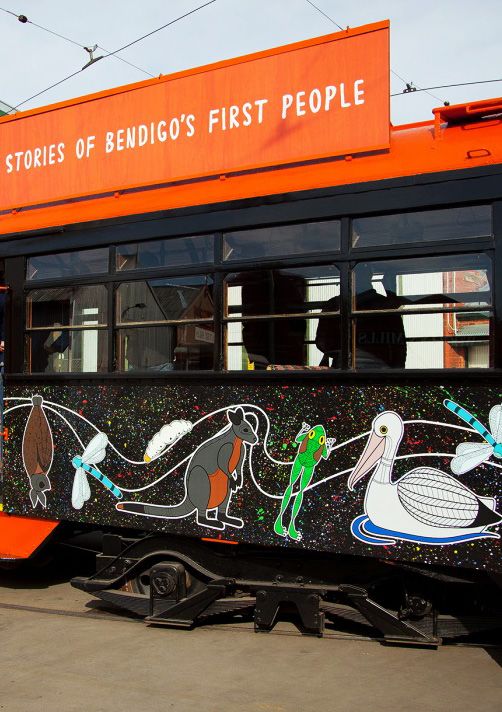
ABOUT DEDJTR

DEDJTR drives economic development and
job creation across Victoria through transport and ports,
investment attraction and facilitation, trade, innovation,
regional development and small business, together with
key services to sectors such as agriculture, the creative
industries, resources and the visitor economy.
Its role is to work with the private and public sectors and Victorian communities
to sustainably develop Victoria’s economy and grow employment.
In delivering on its role the department must ensure growth is inclusive, with
employment and incomes improved for all Victorians, including Aboriginal Victorians.
Underpinning the department’s performance is the collaborative efforts of its more
than 3000 employees working on the development of partnerships, policies, projects
and programs that foster innovation, creativity, productivity, investment and trade
– and together create the conditions for sustainable economic growth across Victoria.

CLOSING THE GAP

The Victorian Government is committed to the           The VAIF sets out common principles of the
Council of Australian Government’s (COAG)              department’s strategic approach to engage and
National Indigenous Reform Agreement (Closing          partner with Aboriginal communities in Victoria.
the Gap on Indigenous Disadvantage), a bipartisan      The department engages with a range of groups
agreement that aims to close the gap in key health,    within Aboriginal communities and each program
social and economic outcomes between Aboriginal        area has their own approach on when, how and
and non-Aboriginal Australians.                        who to engage.
In November 2012, the Victorian Government             The Victorian Aboriginal Business Strategy 2013-
released its overarching Aboriginal policy             2020 aims to create more job opportunities and
framework, the Victorian Aboriginal Affairs            make it easier for Aboriginal Victorians to start
Framework 2013-18 (VAAF). The VAAF aligns with         new businesses or enhance existing businesses.
Commonwealth Government commitments and                This approach is supported by Tharamba Bugheen:
has the primary goal of improving whole of life        Victorian Aboriginal Business Strategy 2017-2021.
outcomes for Aboriginal Victorians through
priority government action.
Bullarto-buluk and other Victorian Government
department Aboriginal Inclusion Action Plans,
commits to undertaking actions which will
contribute towards the outcomes identified
in the VAAF.
The DEDJTR AIAP aligns with broader state level
strategies including the Victorian Aboriginal
Economic Strategy 2013-20, the Victorian Aboriginal
Inclusion Framework (VAIF) and Barring Djinang–
Victorian Aboriginal Public Sector Employment
Strategy. The relationship between these strategic
documents is outlined below:

                                                            COAG
 COMMONWEALTH                               National Indigenous Reform Agreement
 GOVERNMENT                              Closing the Gap on Indigenous Disadvantage

                                             Victorian Aboriginal Affairs Framework

 STATE
                         Victorian Aboriginal            Barring Djinang:          Victorian Aboriginal
 GOVERNMENT
                               Inclusion                   the Victorian           Economic Strategy
                             Framework                Aboriginal Public Sector     Victorian Aboriginal
                                                       Employment Strategy          Business Strategy

 STATE
                                           DEDJTR Aboriginal Inclusion Action Plan
 DEPARTMENTS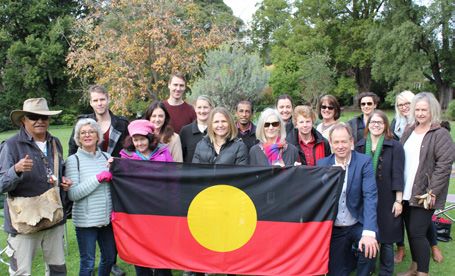
VICTORIAN CHARTER OF HUMAN
RIGHTS AND RESPONSIBILITIES

In its activities DEDJTR complies with the Victorian Charter of Human
Rights and Responsibilities Act 2006, which recognises the rights of
Aboriginal people to maintain their spiritual, material and economic
relationship with resources under traditional laws and customs.

POLICY DRIVERS

Bullarto-buluk aligns with the DEDJTR Economic
Inclusion and Diversity Foundation Principles.
The foundation principles were developed to underpin the breadth of the department’s
responsibility to promote inclusion across its workforce, programs, services and the
Victorian economy.
The foundation principles are grouped under three themes: Respect, Relationships
and Opportunities and extend within the plan to:

Respect                 Aboriginal people have equitable access to opportunities
                        and services that promote inclusion and participation

Relationships           we collaborate to empower Aboriginal communities

Opportunities           Aboriginal people should have the same access and
                        opportunities as others.

Bullarto-buluk also forms part of the department’s Workforce Diversity and
Inclusion Framework which sets out four key pillars - Flexibility, Inclusion,
Gender Equality and Life Stage.
The plan is a key component of the Inclusion focus area within the framework,
alongside action plans regarding the inclusion of a range of groups, including
people with disability and people from culturally diverse communities.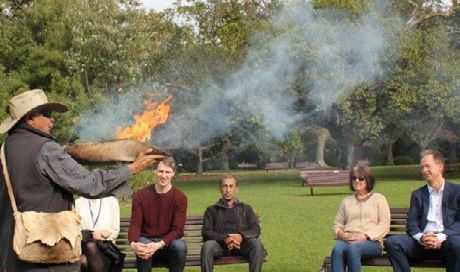
VISION

DEDJTR will work in partnership with Aboriginal people
and communities to support increased inclusive
economic participation by Aboriginal Victorians.
This will be achieved by actively strengthening the inclusion of Aboriginal culture
in the workplace, increasing Aboriginal participation in the design, implementation
and evaluation of departmental policies, projects and programs, and improving
Aboriginal access to economic opportunities through public, private and community
sector opportunities.

PRINCIPLES

DEDJTR aspires to embed the following
principles across its portfolios:

We respect and         We respect Aboriginal culture and believe it is deeply
acknowledge            important and must be recognised and understood
Aboriginal             in all of our department’s daily work and practices.
culture

We listen              In everything we do, we listen, learn and adjust our
and learn              approaches to embrace the values of Aboriginal communities.

All actions make       Everything we do – understanding community need,
a difference           designing, implementing, providing access to our policies,
                       projects and services, and assessing the impact of our work
                       – can make a difference to Aboriginal people.

We reject all          We acknowledge the fundamental human rights of Aboriginal
forms of racism        people to maintain their identity and culture. We are
and intolerance        committed to supporting a deeper appreciation of Aboriginal
                       culture not only as our responsibility but as an important way
                       of reducing and mitigating against the impact of racism that
                       may be experienced by Aboriginal people.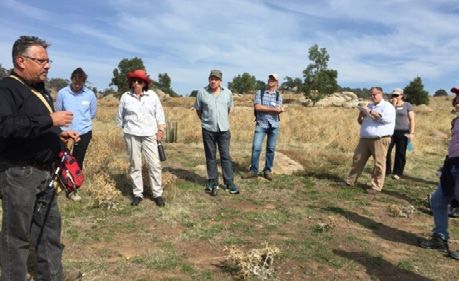
KEY ACTION AREAS

Bullarto-buluk has five key action areas which guide the
department towards its vision to work in partnership with
Aboriginal people and communities to support inclusive
economic participation for Aboriginal Victorians.
These action areas create a foundation for the delivery of DEDJTR policies and
projects that incorporate Aboriginal perspectives and result in sustainable social
and economic outcomes for Victorian Aboriginal communities.
The five key action areas are:

   1        Recognition, respect, promotion and celebration
            of Aboriginal culture and heritage

   2        Genuine engagement, partnership and participation

  3         Place-based projects

  4         Employment

   5        Economic participation
1. RECOGNITION, RESPECT, PROMOTION AND
CELEBRATION OF ABORIGINAL CULTURE AND HERITAGE
Foundational Respect - Aboriginal people have equitable access to opportunities
principle and services that promote inclusion and participation
Indicator Percentage of team members that report increased confidence and skill
in working effectively on Aboriginal issues and in partnership with Aboriginal
communities and organisations.
Target Increase
Action Responsible group Time frame
Outcome 1 – DEDJTR actively acknowledges and celebrates Aboriginal culture
1.1 Review and communicate DEDJTR’s Welcome People and July 2018
to Country and Acknowledgement of Traditional Workplace Services Ongoing
Owners protocol. All Groups
1.2 Continue to develop and install Acknowledgement of People and Ongoing
Country signage, appropriate cultural material and Workplace Services
other cultural symbols in departmental workplaces.
Outcome 2 – DEDJTR officers at all levels have increased cultural understanding,
awareness and capability
1.3 Develop and implement a communications plan that Stakeholder April 2018
promotes the Bullarto-buluk’s progress and provides Communications Ongoing
resources and tools for DEDJTR team members. and Channels
1.4 Encourage DEDJTR team members to participate in All Groups Ongoing
Reconciliation Week, NAIDOC Week celebrations and People and
other significant events and training. Workplace ServicesCASE STUDY
DEDJTR celebrates National
Reconciliation Week 2017
As part of the 2017 National Reconciliation Week
celebrations, the Secretary, Richard Bolt and team
members from across the department came
together to participate in an Aboriginal Heritage
Walk at the Royal Botanic Gardens in Melbourne.
Team members commenced with a traditional
smoking ceremony before undertaking a guided
tour hosted by a local Aboriginal guide.
The tour provided an interactive and enriching
cultural experience for colleagues, with participants Bendigo’s Dja Dja Wurrung Tram
gaining an understanding of native plants and
their traditional uses first hand. Participants had In July 2017 Bendigo Tramways launched the
the opportunity to appreciate their surroundings Bendigo’s Dja Dja Wurrung Tram, an initiative
through sight, sound, touch and taste while learning developed by Bendigo Heritage Attractions
about customary practices. and the Dja Dja Wurrung people, through the
Team members discussed the significance of the Dja Dja Wurrung Clans Aboriginal Corporation.
land for Aboriginal people, their role as custodians Bendigo’s Dja Dja Wurrung Tram project involved
of the land, and its role in the path to reconciliation. introducing livery, artwork, and custom audio
narratives to one of Bendigo’s active trams to
celebrate and demonstrate recognition and
respect to the Traditional Owners of the Bendigo
area - the Dja Dja Wurrung people.
DEDJTR contributed $11,000 to the $48,850 project
through its Transport Investing in Regions initiative.
DEDJTR’s funding contribution went towards the
writing, recording and editing of the custom audio
narrative. The commentary was narrated by
Dja Dja Wurrung people and accompanied by
music and soundscapes.
The Dja Dja Wurrung Clans Aboriginal Corporation
is the Registered Aboriginal Party recognised as
the Traditional Owners of the land. The Corporation
has been seeking opportunities to increase the
public’s cultural awareness of the Dja Dja Wurrung
and to develop new and interesting ways to share
their stories.
The Dja Dja Wurrung traditional territory
encompasses the Bendigo and Clunes goldfields
and the Loddon and Avoca river watersheds.2. GENUINE ENGAGEMENT, PARTNERSHIP
AND PARTICIPATION
Foundational Relationships - we collaborate to empower Aboriginal communities.
principle
Indicator Aboriginal people participating in DEDJTR programs and initiatives.
Target Increase
Action Responsible group Time frame
Outcome 3 – DEDJTR consistently and effectively engages with
Aboriginal stakeholders in policy development and delivery
2.1 Work closely with departmental agencies All Groups Ongoing
to support the objectives of Bullarto-buluk
2.2 Promote engagement with Aboriginal communities: AIAP Working Group December 2018
a. Develop and promote guidance materials Economic Strategy and Ongoing
on Aboriginal engagement Performance
b. Include Aboriginal perspectives when reviewing, AIAP Working Group
developing and evaluating policy by appropriately
engaging with Aboriginal stakeholders
2.3 Continue to work with Traditional Owners and other Agriculture Victoria Ongoing
government agencies to improve recognition and
protection of Aboriginal customary knowledge.
2.4 Implement Traditional Owner Settlement Act 2010 Policy, Programs, Small Ongoing
and Native Title Act 1993 agreements. Business and Employment
Victorian Fisheries Authority
2.5 Partner with Traditional Owners to develop Policy, Programs, Small Ongoing
a Traditional Owner game hunting strategy. Business and Employment
2.6 Engage with traditional owners to develop a better Policy, Programs, Small Ongoing
understanding of traditional Aboriginal fishing. Business and Employment
Victorian Fisheries Authority
2.7 Identify opportunities for senior executives Regional Development Ongoing
to meet on country with Aboriginal communities. Victoria and Agriculture
Victoria
2.8 Facilitate networking opportunities between Policy, Programs, Small Ongoing
Aboriginal communities and the timber industry. Business and Employment
2.9 Leverage whole of government investment in growth Creative Victoria Ongoing
industries to deliver social, economic and creative
outcomes for Aboriginal people and communities.CASE STUDY Yarram Entry – Aboriginal Sculpture Project Aboriginal Southern Cross and Nerran the Moon Sculpture, created by Gippsland artists Col Little and Deb Milligan was unveiled on Friday 22 September 2017. The sculpture celebrates the cultural heritage of Gippsland’s Gunaikurnai people and will welcome motorists into Yarram. Located at the northern entry to Yarram, at the former site of a rundown drive-in visitor bay, the sculpture has interpretative text, landscaping and a safe parking bay for visitors wishing to take some travel rest and to view the sculpture. The project has been designed with oversight by the Gunaikurnai Land and Waters Aboriginal Corporation. It tells an Aboriginal story about the local area, which is of important cultural significance to the Gunaikurnai people. The work has also been supported by the nearby Wulgunggo Ngalu Learning Place, a specialised Aboriginal justice and learning centre, that assisted with the initial landscaping. The $70,000 project has been funded by $52,500 from the Victorian Government’s Transport Investing in Regions initiative, $15,000 from VicRoads and $2,500 from Wellington Shire Council.
CASE STUDY

Engaging with Traditional Owners
in land and resources
Traditional Owners have an ongoing connection to
country and a role in managing natural resources.
DEDJTR’s agriculture portfolio (combining forestry,
fisheries, game and agriculture) continues to seek
to improve engagement and partnerships with
recognised traditional owners.
In 2016, Agriculture Victoria partnered with
the Department of Environment, Land, Water
and Planning to hear from Traditional Owners
about ways to improve recognition of Aboriginal        DEDJTR team members learning about the priorities of the Dja Dja
knowledge in land and resources management.            Wurrung people on their country with Dja Dja Wurrung Traditional
                                                       Owner Corporation, CEO Rodney Carter.
Traditional Owners said we need to prioritise
better engagement and implementation of
Native Title / Recognition and Settlement
Agreements (RSAs).
Since then Agriculture Victoria has:
• Assigned a senior team member to the
  Dja Dja Wurrung RSA Implementation
  Project Control Group.
• Facilitated a team member information session
  on Recognition and Settlement Agreements.
• Organised an on-country cultural learning
  program by Dja Dja Wurrung Traditional
  Owner Corporation.
• Engaged the Federation of Victorian Traditional
  Owners to prepare case studies about how
  Traditional Owners can more easily express their
  culture and fulfil customary responsibilities when
  supported by respectful policy.
Participation in the management
of Victoria’s Fisheries
In late 2016, Fisheries Victoria hosted the inaugural
Murray Cod Conference at Shepparton on Yorta
Yorta Country. Yorta Yorta Elders, Uncle Col Walker
and Norman Stewart, shared the Yorta Yorta
spiritual connection to the iconic Murray Cod
through their creation stories.
Fisheries Victoria, with support from the Australian
Government Fisheries Research and Development
Corporation, is working with Traditional Owners
to increase their involvement in the management
of Victoria’s fisheries. The project involves using
multimedia - spoken words, recorded stories,
archives and GIS mapping - to depict Victoria’s
rich and varied Aboriginal customary fishing
practices. To date, the Taungurung and Dja Dja
Wurrung Traditional Owners have been engaged
in the project.
Helping achieve Target One Million
The Gunaikurnai Joint Management Rangers were
a key partner in supporting on-ground works to
improve access to fishing spots in Lake Tyers State
Park. The works were undertaken by Parks Victoria
using a $45,300 grant from Target One Million’s
Better Fishing Facilities Program. Sustainable Hunting Action Plan
In December 2016, the State Government released
The Lake Tyers State Park is one of ten parks
a Sustainable Hunting Action Plan that, among other
that are under a joint management partnership
things, commits to the development of a Traditional
between the Gunaikurnai Land and Waters
Owner Game Hunting Strategy in partnership with
Aboriginal Corporation and the state.
traditional owners.
The Sustainable Hunting Action Plan also commits
to partner with Traditional Owners to continue to build
participation in land management and conservation.3. PLACE-BASED PROJECTS
Foundational Relationships - we collaborate to empower Aboriginal communities.
principle
Indicator Percentage of Aboriginal people and communities reporting increased social
and economic wellbeing as a result of DEDJTR projects, and a strengthened ability
to benefit from and influence government initiatives.
Target Improve
Action Responsible group Time frame
Outcome 4 – DEDJTR’s strategic projects are inclusive of Aboriginal Victorians
3.1 In supporting the overarching objectives of Regional Regional Development 2018-2020
Partnerships, identify and deliver five projects in Victoria (All Groups)
partnership with local rural Aboriginal communities to:
a. protect and raise awareness of Aboriginal cultural heritage
b. promote Aboriginal economic participation and improve
access to mainstream services, and
c. promote and demonstrate recognition and respect
for Aboriginal communities amongst the wider
Victorian community.
3.2 Deliver five transport projects that are developed Transport for Victoria 2018-2020
through strong partnerships with local rural
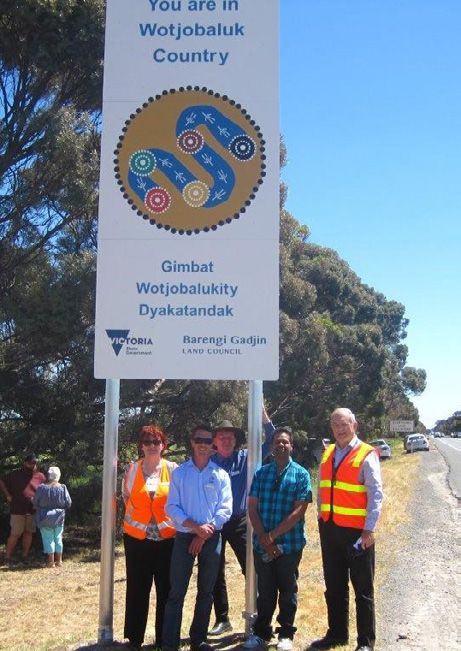
Aboriginal communities.CASE STUDY Wotjobaluk Country Signage In October 2017, a traditional smoking ceremony marked the completion of 18 new roadside signs welcoming people to Wotjobaluk country. Horsham Rural City Council representative Councillor Mark Radford, VicRoads Acting Regional Director, Mal Kersting and representatives from the Barengi Gadjin Land Council Aboriginal attended an event to celebrate the project’s symbolic opening. The Welcome to Country signs illustrate the Aboriginal connection to the land, by acknowledging the peoples of the Barengi Gadjin Land Council, who represent Traditional Owners from the Wotjobaluk, Jaadwa, Jadawadjali, Wergaia and Jupagulk peoples. The signs are located on the perimeter of the Barengi Gadjin Land Council Reconciliation Action Plan traditional land at strategic roadside locations on 100kmh roads. The initiative continues to deliver on the Victorian Government’s commitment to recognise, respect and celebrate Aboriginal culture and heritage as outlined in the VAAF and is further supported by Bullarto-buluk. The project was supported by $45,000 from the Victorian Government’s Transport Investing in Regions initiative and $22,000 from VicRoads.
CASE STUDY

Creative Victoria
In 2017, Creative Victoria supported two exciting
new programs which celebrate, strengthen and
promote Victorian First Peoples arts and provide
opportunities for Aboriginal creatives in developing
their careers.
Yirramboi First Nations Arts Festival is a new festival
developed by the City of Melbourne, and supported
by Creative Victoria. Yirramboi showcases and
celebrates how international First Nations artists,
are expressing and sharing their culture in
contemporary ways.                                        Yalingwa Opening. (L-R): Arweet Carolyn Briggs (Elder, Boon
                                                          Wurrung), Jacob Boehme (Director, Yirramboi First Nations
Yirramboi (which means ‘tomorrow’ in the shared
                                                          Festival), Natalie Hutchins (Minister for Aboriginal Affairs),
languages of the Boon Wurrung and Woi Wurrung             Hannah Presley (Curator, Yalingwa), Victoria Lynn (Director,
people of the Kulin Nations) successfully engaged         TarraWarra Museum of Art), Max Delany (Director Australian
local Aboriginal creatives and community, as well         Centre for Contemporary Art).
as featuring First Nations artists from New Zealand,      Photo: Australian Centre for Contemporary Art
Canada, USA, Africa, Scotland, Pacific Islands,
Wales and Taiwan.
The program included over 60 events spanning
dance, music, visual art, theatre, film and talks,
that were choreographed, produced, directed
and performed by Indigenous artists in May 2017.
Yalingwa, a Woiwurrung word that means both ‘day’
and ‘light’, is a new Victorian Government program
that will be delivered in partnership with the
Australian Centre for Contemporary Art (ACCA)
and the Tarrawarra Museum of Art in the Yarra
Valley. Yalingwa incorporates a major biennial
exhibition, new Indigenous arts fellowships and
support for curatorial positions. The exhibitions
will focus on new commissions by contemporary
Indigenous artists, with the first to be hosted by
ACCA in mid-2018.
The Yalingwa initiative has been developed
in collaboration with Victoria’s Aboriginal and
Torres Strait Islander arts sector. It will be overseen
by an Advisory Committee that will bring together
Aboriginal community and cultural leaders who
will act as advisors, ambassadors and mentors,
together with gallery representatives.
‘Circle’, a moon-drenched sound bath and live activation of Federation Bells, by Naratha Williams at YIRRAMBOI First Nations Arts Festival 2017. Photo: Bryony Jackson
4. EMPLOYMENT

 Foundational       Opportunities - Aboriginal people should have the same access
 principle          and opportunities as others.

 Indicator          Increase employment of Aboriginal people at DEDJTR.

 Target             Aboriginal people to be two (2) per cent of the DEDJTR workforce

Action                                                          Responsible group        Time frame

Outcome 5 – DEDJTR increases the proportion of staff who identify as Aboriginal and assists
            their career development

4.1 Actively attract and recruit Aboriginal people to
    achieve the department’s two per cent Aboriginal
    employment target:
a.   Strengthen employment policies and practices to attract    All Groups              December 2018
     and recruit Aboriginal people and promote participation    People and              Ongoing
     in employment programs.                                    Workplace Services
b.   Develop a talent pool of Aboriginal team members           People and              Ongoing
     through expressions of interest, designated roles and      Workplace Services
     by advertising DEDJTR employment opportunities in
     a range of media accessed by Aboriginal job seekers.       All Groups
c.   Continue to access Aboriginal employment programs,         All Groups              Ongoing
     including graduate and traineeship programs, to employ
                                                                People and
     Aboriginal graduates and trainees
                                                                Workplace Services
d.   Expand entry level pathways into the department for                                July 2018
                                                                People and
     year 12 and VET students, including through the VPS                                Ongoing
                                                                Workplace Services
     Aboriginal VET Graduate Program
                                                                All Groups              Ongoing
e.   Offer opportunities such as internships, cadetships
     and scholarships to assist Aboriginal people with the      People and
     completion of tertiary studies and transition into work    Workplace Services
f.   Deliver the Engaging Koorie Students in Primary            Agriculture Victoria    July 2020
     Industries Project and continue to support agricultural
     science education and career development programs
     for Aboriginal students.
g.   Target Aboriginal people when delivering and               Policy, Programs,       Ongoing
     participating in the Youth Employment Scheme (YES)         Small Business
     for young Victorians aged 15 to 24 to undertake a          and Employment
     traineeship in the Victorian Public Service.               All Groups
h.   Target Aboriginal people when delivering and               Policy, Programs,       To 2020
     participating in the four-year Jobs Victoria Youth         Small Business
     Cadetship Scheme (JVYCS) pilot program to provide          and Employment
     135 YES graduates with cadetships.
                                                                All Groups
Action Responsible group Time frame
4.2 Actively retain and progress Aboriginal team
members to improve Aboriginal employment outcomes
in the department:
a. Create career pathways by actively recruiting All Groups Ongoing
Aboriginal team members for senior roles and
People and
offering a management and executive leadership
Workplace Services June 2019
program to Aboriginal team members, such as the
VPS Aboriginal Future Leaders Pilot Program
All Groups Ongoing
b. Provide all DEDJTR staff with professional development
October 2018
opportunities, including use of the VPS Cultural People and
Capability Toolkit to strengthen their Aboriginal cultural Workplace Services
understanding and capability
People and Ongoing
c. Continue to provide a culturally appropriate Employee Workplace Services
Assistance Program for Aboriginal team members
All Groups
d. Incorporate input from Aboriginal team members on
All Groups Ongoing
strategies to support them and their career progression
and implement these strategies, including through People and December
the VPS Regional Aboriginal Staff Networks Workplace Services 2019
e. Improve data integrity by monitoring business groups’ People and
Aboriginal employment outcomes, progression and Workplace Services Ongoing
participation in learning and development initiatives
by Aboriginal team members
4.3 Target Aboriginal people for recruitment to DEDJTR All Groups Ongoing
boards and committees.CASE STUDY
A community resource for all
LXRA partners with Barpa
The Mernda Rail Jobs Hub supports the community
to deliver sustainable social to find employment on the project and within the
and economic benefits wider construction industry.
“We are going to be tapping into a group of people
BARPA fits out Mernda Rail Jobs Hub who traditionally face barriers to finding jobs in the
The Level Crossing Removal Authority (LXRA) construction industry – this includes people from
appointed Barpa, an Aboriginal-owned social disadvantaged, diverse and minority groups,” said
benefit supplier to manage the construction Mr Joe Aygur, Project Director, Mernda Rail Extension.
of the Mernda Rail project and fit out of the “The overwhelming response to the Hub shows that
Mernda Rail Jobs Hub. people are excited to work on a major infrastructure
The Hub assists job seekers from a range of project for their community, which is also close
disadvantaged backgrounds to find employment to their home and families.
on the Mernda Rail Extension Project. “In addition to the Mernda Rail Jobs Hub, we also
Barpa was formed through a partnership between have established a network of industry specialists,
the Federation of Victorian Traditional Owner service providers and social enterprises who will
Corporations and Cockram Construction. help to identify, prepare and place people in roles
on our project,” he said.
Inaugural Director and Business Development
Manager, Jeremy Clark, says the formation of “The Mernda Rail Jobs Hub is a unique opportunity
the company was driven by a desire to build for the community to gain access to jobs in
the capacity of Traditional Owners through construction and rail and we’re proud to be paving
employment and training. They found that the the way for job creation on major projects in the
construction industry was a great fit for this state,” Mr Aygur said.
purpose and Mr Clark said, “There’s always Barpa builds Aboriginal capability
construction; building things is something
Since launching in 2014, Barpa have grown steadily
that’s always going to happen,”.
and now have 10 team members in six offices
nationwide, and have undertaken 23 contracts
across Australia. They offer skilled positions in
areas such as contract administration, building
coordination, construction estimation and
building development.
Barpa also aids employees through a training
program called Pathways to Construction
which helps them plan a career path and gain
qualifications. Jeremy emphasises the company
does not offer charity but the opportunity for
Aboriginal people to further their job opportunities
and develop a career.
Jeremy says employees gain a sense of pride
in their work, the ability to earn money, as well
as in creating something tangible.
Barpa hopes the Mernda Jobs Hub will lead to
more contract opportunities in Victoria, increasing
the potential for social and economic benefits
in the community.CASE STUDY Jobs Victoria – Supporting Aboriginal students into careers with Victoria Police DEDJTR, Skillinvest and Victoria Police are delivering an innovative school-based traineeship program through Jobs Victoria designed for Aboriginal and Torres Strait Islander youth across the state. The traineeship program aims to keep more Aboriginal students in school and offers a pathway to a career that may not have otherwise been available. The program is also helping to change negative perceptions about the police and aims to bolster the number of Aboriginal employees within the Victorian police force. Across the four years of the program, 60 Aboriginal students will be placed in local police stations in Victoria, gaining valuable skills and hands-on work experience while completing a Certificate III in Business Administration. The current trainees are from rural Victoria, including Bairnsdale, Bendigo, Echuca, Geelong, Horsham, Mildura, Moe, Morwell, Portland and Sale as well as from Metropolitan Melbourne. Trainee, Kyal Atkinson is in Year 11 at St Joseph’s School in Echuca. He is undertaking a school-based traineeship with Victoria Police, working at the Echuca police station and completing a Certificate III in Business Administration. Kyal has been participating in the Jobs Victoria school based traineeship program since February 2017, which is funded by Jobs Victoria and run by Skillinvest in partnership with Victoria Police. Kyal is interested in a career in the police force and aims to follow in his uncle’s footsteps. He sees this traineeship as a great opportunity to represent his community and work towards greater understanding and cooperation between the Aboriginal community and Victoria Police. To watch Kyal’s story, visit: jobs.vic.gov.au/working-stories/community-leaders- in-the-making.
5. ECONOMIC PARTICIPATION

 Foundational       Opportunities - Aboriginal people should have the same access
 principle          and opportunities as others.

 Indicator          Employment (through procurement) of Aboriginal people by DEDJTR,
                    its agencies and contractors.

 Target             Increase

Action                                                         Responsible group       Time frame

Outcome 6 – DEDJTR contributes to Aboriginal business growth and workforce participation

5.1 Leverage whole-of-government procurement and               Strategic Procurement   Ongoing
    contract management guidelines to increase
    Aboriginal economic participation to achieve the
    VPS 1% procurement target.
a.   Purchase gifts for overseas dignitaries and offices       Trade Victoria          Ongoing
     from local Aboriginal businesses through an open
     and transparent process.
b.   Use the DEDJTR Social Procurement Policy                  All Groups              Ongoing
     to identify opportunities to increase procurement
     from Aboriginal businesses and service providers.

5.2 Continue the strong representation of Aboriginal           Regional Development    Ongoing
    people on Regional Partnerships to ensure their voice      Victoria
    is heard as part of the Partnerships approach.

5.3 Implement Tharamba Bugheen: Victorian Aboriginal           Policy, Programs,       Ongoing
    Business Strategy 2017-2021.                               Small Business and
                                                               Employment

5.4 Include Aboriginal business content and programming        Policy, Programs,       August 2018
    in the 2018 Small Business Festival.                       Small Business and
                                                               Employment

5.5 Develop a quarterly online Aboriginal business survey      Policy, Programs,       Ongoing
    to track the growth of the Aboriginal business sector.     Small Business and
                                                               Employment

5.6 Deliver the Jobs Victoria Employment Network (JVEN)        Policy, Programs,       To 2020
    to provide long-term unemployed or at-risk people with     Small Business and
    sustained employment outcomes. This includes five          Employment
    JVEN services primarily targeting Aboriginal Victorians
    and other support service providers.
Action Responsible group Time frame
5.7 Deliver jobs for 75 Aboriginal people in the Goulburn Policy, Programs, To 2020
Murray region to transition to work from education Small Business and
and training through the Algabonyah Employment Employment
Partnerships program.
5.8 Leverage the Major Transport Infrastructure Program Major Transport Ongoing
contracts with the construction industry to require Infrastructure Program
a 2.5 per cent Aboriginal employment target and the
procurement of goods and services from Aboriginal
enterprises. This includes:
a. The development of Aboriginal employment and
training pathways and business opportunities into
the infrastructure sector; and
b. Actively promoting Aboriginal business procurement
with our construction partners, including a 3 per cent
Social Enterprise and Aboriginal Business procurement
target for LXRA.
5.9 Deliver initiatives that celebrate, strengthen and promote Creative Victoria Ongoing
Victorian Aboriginal arts and provide opportunities for
Aboriginal artists to develop their careers.
5.10 Engage with Aboriginal organisations to realise their Agriculture Victoria Ongoing
aspirations for agriculture businesses.
5.11 Improve agriculture and biosecurity service delivery Agriculture Victoria Ongoing
to, and engagement with Aboriginal communities.
5.12 Work with Visit Victoria to support Aboriginal tourism Creative Victoria Ongoing
and inform Aboriginal tourism businesses and service Visit Victoria
providers of government support programs.
5.13 Engage with Aboriginal organisations to assist them Visit Victoria Ongoing
to realise their aspirations for tourism
5.14 Grow relationships between regional tourism boards and Visit Victoria Ongoing
Aboriginal organisations/businesses working in tourismCASE STUDY
Building Aboriginal businesses, jobs and
the next generation of skilled Aboriginal
talent for Victoria’s infrastructure projects
Training for the Future is the Victorian Government’s skills and
industry capability development program coordinated by LXRA
and delivered in partnership between government and industry.
The program aims to develop a sustainable, capable and inclusive
supply chain and talent pipeline for the Victorian Government’s
major transport and infrastructure projects.
Training for the Future has created an Aboriginal Inclusion Action
Plan for industry to develop an Aboriginal supply chain and talent
pipeline. Its plan is a commitment towards investing in the economic
participation of Aboriginal businesses, people and communities
by increasing the capability and capacity of Aboriginal businesses
and people to grow and succeed in rail and infrastructure.
For example, in February 2018, investments in Aboriginal businesses
and employment through the Major Transport Infrastructure
Program’s LXRA project resulted in the removal of level crossings
with over 189,000 Aboriginal employment hours, and a $20 million
investment in Aboriginal businesses and social enterprises.
These investments also include building the next generation of skilled
Aboriginal talent for Victoria’s major transport infrastructure projects.
Investments in Aboriginal businesses and employment
through the Major Transport Infrastructure Program’s Level
Crossing Removal Authority has resulted in the removal
of level crossings with over 189,000 Aboriginal employment
hours, along with a $20 million investment in Aboriginal
businesses and social enterprises.Leah Hunt, one of Training for the Future’s GEN44
participants, is a proud Jadawadjali, Gunditj-mara
and Wamba Wamba woman who worked as a
summer intern at Heritage Victoria, and is working
with the Mernda Rail Extension Project team to
create a community display of historical artefacts
found at a heritage dig in Plenty Gorge Park.
GEN44 offers 44 paid internships per year in the
rail, transport and infrastructure industry to people
from marginalised backgrounds to create a diverse
group of skilled graduates who are equipped for
jobs in rail and transport.
Leah grew up in Bordertown, South Australia.
After working at the Aboriginal Land Council in
Horsham as a teenager, Leah moved to Melbourne
to study Archaeology at La Trobe University.
Leah is passionate about her studies and her
dedication is evident in her work. Image: Leah Hunt, a proud Jadawadjali, Gunditj-mara and
“Archaeology is an important job and one that Wamba Wamba woman working as an archaeology intern
in one of Victoria’s major transport infrastructure projects.
should not be undertaken lightly as this is the
future of my people and our culture, and it needs
Leah would recommend the GEN44 Program
to be protected.”
to other students: “It’s a great way to enter into
She heard about the GEN44 program via a Narrm the industry and to build networks amongst the
(Melbourne) Aboriginal Facebook page advertising companies and relevant parties... This internship
the archaeological internship. also provided a way for me to gain experience
Leah has been enjoying her internship, meeting and knowledge.“
other archaeologists and working closely with them, Given the unique nature of the work Leah has
and on several interesting projects with Heritage been doing with the Mernda team, her summer
Victoria and LXRA. contract was extended through her final semester
“I have been working in the Conservation Lab, at university to provide the team with her
where I have been conserving artefacts, and archaeological expertise to assist with curating
cataloguing them. I have also been out working the artefacts exhibition.
on an excavation site in the city, where I had the
opportunity to excavate and wet sieve. We found
beads, animal bones, pieces of metal, such as nails,
we also found ceramics and glass, marbles and
parts of a doll.”IMPLEMENTATION
All of DEDJTR’s portfolios have responsibility
to implement Bullarto-buluk.
The Diversity and Inclusion Team in the People and Workplace
Services Division undertakes a dual coordination role to:
• support the functions of the DEDJTR Aboriginal Inclusion
Action Plan Working Group and
• meet with counterparts across the department to monitor
the implementation of employment-related actions
in Bullarto-buluk. Key representatives include the:
- Director Human Resources in Employment,
Investment and Trade
- Director People and Culture in Transport for Victoria
- Director Office of the Coordinator-General in the
Major Transport Infrastructure Program and
- Senior Advisor, Strategy and Planning.EVALUATION Monitoring and evaluation activities will be undertaken across the lifespan of the DEDJTR AIAP to track progress, and identify achievements, key learnings and future priorities. This information will be used to assess and refresh Bullarto-Buluk during implementation. As a living document, our plan will be continuously reviewed and improved throughout its lifespan.
GOVERNANCE

Victorian Government Secretaries’ Leadership        DEDJTR Aboriginal Inclusion Action Plan
Group on Aboriginal Affairs                         Working Group
Through this group, departmental Secretaries        Ongoing facilitation and coordination of the
have been charged with responsibility for           delivery of the AIAP will be undertaken by the
driving the change necessary at the service         Working Group which is convened by the Corporate
and administrative level to deliver improved        Services Group and consists of representatives
outcomes for Aboriginal Victorians. Secretaries     including DEDJTR Executive Directors and/or senior
are responsible for driving the development         delegates from each DEDJTR Group and, where
and implementation of departments’ Aboriginal       relevant, representatives from Aboriginal community
Inclusion Action Plans.                             controlled organisations, Aboriginal community
                                                    representatives, local government, DEDJTR agencies
DEDJTR Executive Board                              and other State Government departments.
DEDJTR AIAP progress reports will be presented
                                                    The Working Group meets quarterly and
to the DEDJTR Executive Board (EB) biannually.
                                                    is responsible for:
EB membership includes the DEDJTR Secretary,
Lead Deputy Secretaries, Heads and the              • facilitating the delivery of the AIAP and the
Coordinator-General for each DEDJTR Group.            preparation, review and endorsement of the
The EB will consider recommendations and              annual work plan
endorse decisions on future work plan priorities.   • providing input into the monitoring and
                                                      evaluation framework
                                                    • facilitating and delivering on actions
                                                      as Aboriginal Inclusion champions within
                                                      their own areas, and
                                                    • providing AIAP action progress updates
                                                      to include in quarterly, biannual and annual
                                                      reports and the provision of recommendations
                                                      for future actions.
Bullarto-buluk: DEDJTR Aboriginal Inclusion Action Plan
- Governance arrangements
REPORTING MEETING
REQUIREMENTS REGULARITY
ACCOUNTABILITY
LEADERSHIP &
DEDJTR Portfolio Ministers
Secretaries’ Leadership Group on Aboriginal Affairs (SLGAA) Biannually
to SLGAA
DEDJTR Secretary
DEDJTR Executive Board
Annual review
DEDJTR Aboriginal Inclusion Action Plan 2018-20 of AIAP
DEDJTR Aboriginal Inclusion Working Group
SUPPORT, COLLABORATION,
ACCOUNTABILITY AND
Representation:
PROGRAM DELIVERY,
• Executive Directors/Directors from each DEDJTR Group
AUTHORISATION
• Aboriginal VPS team members
Biannually to Quarterly
Where relevant: Executive Board (more frequently
• DEDJTR agencies and offices as needed)
• State Government departments
• Aboriginal community controlled organisations
• Aboriginal community representatives
• Local governmentDEDJTR 11495 05/18
You can also read


