California Task Force on Family Caregiving - California ...
←
→
Page content transcription
If your browser does not render page correctly, please read the page content below
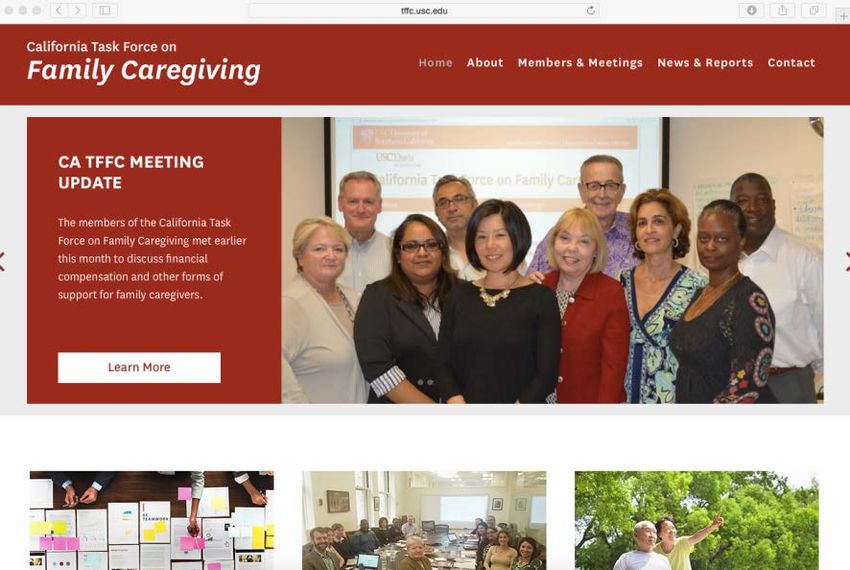
California Task Force on Family Caregiving
Kathy Kelly                Sandi Fitzpatrick, MA
   Executive Director               Executive Director
Family Caregiver Alliance   California Commission on Aging
  kkelly@caregiver.org          sfitzpatrick@ccoa.ca.gov

                                                             2
Thank you!

This work was made possible by a grant from AARP California
                and Archstone Foundation

                                                              3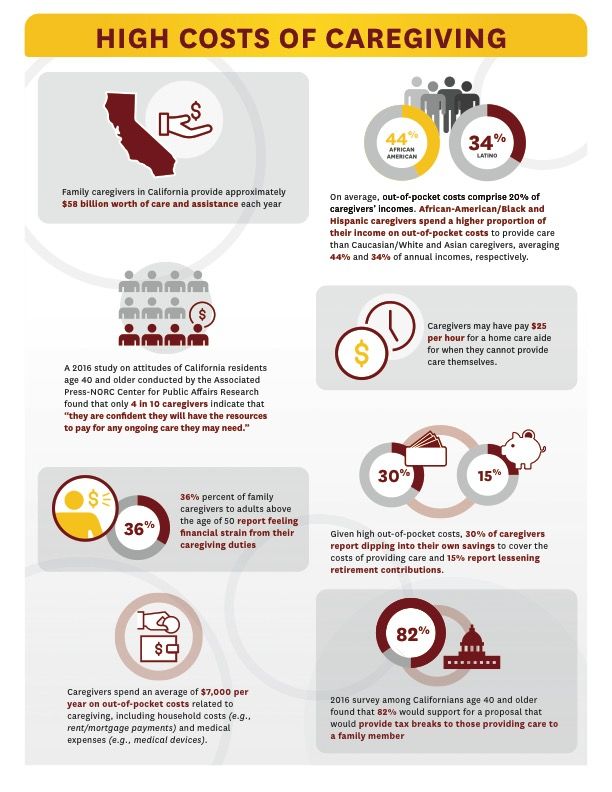
Who are family caregivers in California?
California has 4.5 million caregivers to adults aged 18 and older1
60% of caregivers are women2
On average, caregivers are 49 years old2
1 in 4 caregivers are Millennials3
56% of caregivers are employed2
1 in 4 assist a person with dementia2
The average time in this role is 4 years2
Caregivers in the state provide an estimated $57 billion dollars of
care, surpassing Medi-Cal in terms of economic value1
4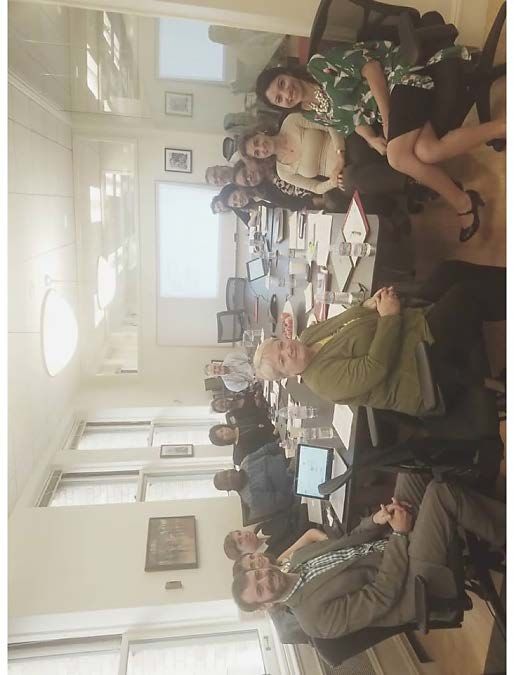
What challenges do caregivers face?
Health impacts of caregiving:4
Musculoskeletal injury
Cardiovascular disease
Poor immune functioning
Depression
Possible increased mortality
Financial impacts of caregiving:
High out-of-pocket costs (e.g., home modification)5
Negative impact on employment (e.g., reduced work hours)2
Reduced savings opportunities6
Increased risk of poverty7
5
What Programs Directly Support Family Caregivers in CA?
National Family Caregiver Support Program Title IIIE (established 2000)
Funding from ACL-AoA to CA Dept. of Aging to 33 Area Agencies on Aging for service delivery –
most typically through contracts with CBO’s but also at the AAA organization level
Services include including caregiver information, referral assistance, counseling and training
support, temporary respite
Targets caregivers of adults over 60 except for dementia (any age qualifies)
California network of 11 Caregiver Resource Centers (established 1984)
Provides information, assessment, educational programs, skill training, psychoeducational
interventions, counseling, support groups, consumer-directed respite, legal consultation
Targets caregivers of adult-onset cognitive impairments (18 and up) such as stroke, Parkinson’s,
head injury, dementia
General fund budget through the CA Dept. of Health Care Services. The budget for the CRC’s cut
by 74% in 2010. CRC’s assess and address caregiver concerns through CRC-delivered services with
respite typically through vouchers.
6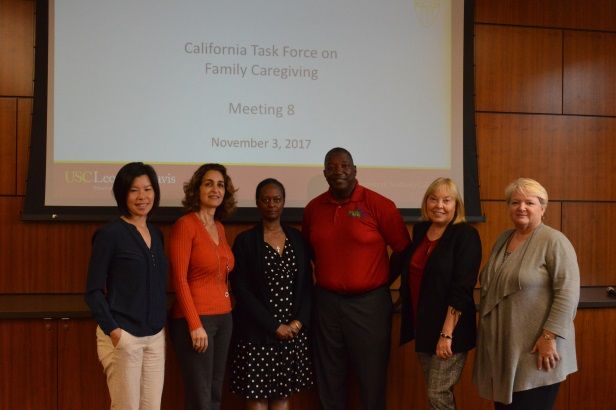
Creation of the CATFFC through ACR 38
The CATFFC was created under ACR 38 (Brown)8:
This measure would establish the California Task Force on
Family Caregiving, to meet, if a nonstate organization agrees
to provide administrative support to the task force, to examine
issues relative to the challenges faced by family caregivers and
opportunities to improve caregiver support, review the current
network and the services and supports available to caregivers,
and make policy recommendations to the Legislature.
The task force would be required to submit an interim report
to the Legislature no later than January 1, 2017, and a final
report no later than July 1, 2018.
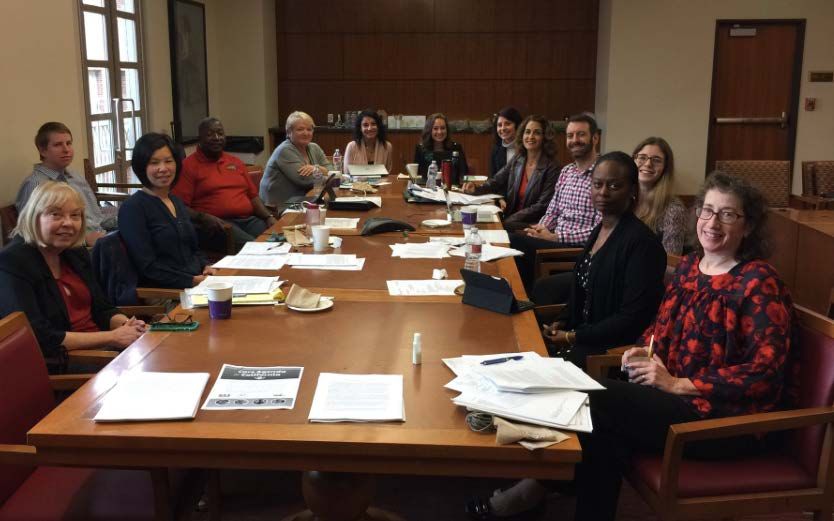
Organization of the CA TFFC 12 members were appointed 6 by the Assembly, 6 by the Senate Election of Chair, Dr. Donna Benton, and Co-Chair, Sandi Fitzpatrick Non-state funding through AARP and Archstone Foundation Administrative & Research Team at USC (led by Dr. Kathleen Wilber) Convened in October 2016, will end in July 2018 Bi-monthly meetings, alternating by phone and in-person
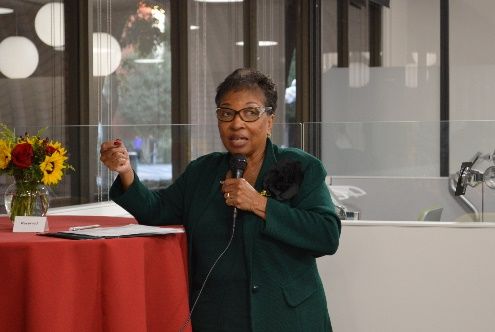
This is the first time California
has a Task Force looking into
caregiving. My hope is that we
shine a spotlight on the
millions of Californians
providing unpaid care to
recognize both the value and
burden they take on.

-Edie Yau, Task Force member

                                    9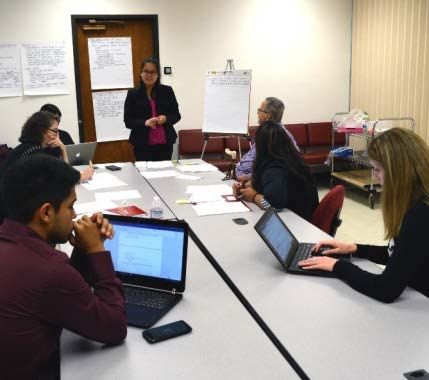
Task Force members
Mary Ball, former President/CEO at Alzheimer’s San Diego
Donna Benton, PhD, Research Associate Professor of Gerontology, USC
Les Cohen, Legislative Advocate Emeritus, Orange County Ombudsman
Carmen Estrada, Executive Director of Inland Caregiver Resource Center
Sandra Fitzpatrick, Executive Director, California Commission on Aging
Kathleen Kelly, MPA, Executive Director of the Family Caregiver Alliance
Karen Lincoln, PhD, Associate Professor and Director, USC Hartford Center of Excellence in
Geriatric Social Work University of Southern California
Anat Louis, PsyD, Director Direct Services, Department of Aging, City of Los Angeles
Eric Mercado, Research Editor, Los Angeles Magazine
Douglas Moore, Executive Director of the UDW Homecare Providers Union and International
Vice President of the American Federation of State, County, and Municipal Employees
Edie Yau, Director of Diversity and Inclusion for the Alzheimer’s Association
10The role of an academic partner
Logistical convenience
Experience managing grants, staff and resources to convene meetings
Complimentary skill set
Researchers to compile up-to-date, high quality research
Ability to conduct new research, as needed
Institutional recognition
“Brand” recognition to assist with reaching out to community partners
Trustworthy email handle, website, materials
11Process of developing recommendations Priority areas reported in Interim Report to the Legislature in January 2017: Integrated approach to care management Comprehensive array & continuum of services Caregiver compensation Data on caregivers and services Access to affordable & accessible services Education and training
Process of developing recommendations
Research-driven reviews on each priority area at each meeting
A compilation of work by other state task forces
http://tffc.usc.edu/wp-
content/uploads/2017/08/task_force_comparisons.pdf
Survey of agencies serving caregivers across California (Best
Practices)
http://tffc.usc.edu/wp-content/uploads/2018/01/Best-Practices-in-
Serving-California’s-Caregivers-1.4.pdf
Best practices in policymaking brief:
http://tffc.usc.edu/wp-content/uploads/2018/01/Strategies-to-Create-
Policies-that-Support-Family-Caregivers-final.pdf
13Values to guide recommendations and legislation
Support diverse caregiver needs, including cultural awareness, cultural
competency, and sensitivity
Person- & family-centered care
Work-life balance
Choice & options for caregivers
14Recommendation 1
Support the financial wellbeing of family caregivers, and limit the extent to
which this role contributes to an increased risk of poverty and long-term
financial insecurity.
Tax credits for the high out-of-pocket costs of caregiving
Stipend or similar program to support caregivers with the costs of community-
based services
Build on Family Medical Leave Act and Paid Family Leave laws
Increase awareness of existing programsRecommendation 2 Modernize and standardize caregiver assessments across the state to support individualization of services, reduce service fragmentation, and increase knowledge of who among caregivers in the state uses services. Develop and implement a standardized assessment tool Increase funding for caregiver assessments Collect representative survey data on caregivers in California Remove barriers across agencies that inhibit safe return of people with an intellectual disability or cognitive impairment
Recommendation 3
Equip caregivers with easily accessible information, education, and training
that is specific to their situation, and is provided in culturally competent
and relevant ways.
Increase access to tailored education and training materials and programs
Provide culturally competent education and training
Increase funding to California’s Caregiver Resource Centers to provide
information, education, and trainingRecommendation 4 Increase access to affordable caregiver services and supports, including respite care that allows caregivers to take a break. Grow the number of respite care providers in the state Expand access to affordable respite services
Recommendation 5
Integrate family caregivers into hospital processes, support them in
navigating care transitions and with providing complex care tasks, and
increase caregiver choice in whether to complete complex care tasks.
Allow nurses to delegate some tasks (e.g., administering medication) to
qualified home health providers
Standardize the hospital discharge process to better support caregivers
Assist with implementation of the California Hospital and Family Caregiver Act
Ensure access to telehealth for caregivers and recipientsRecommendation 6
Increase funding to California’s Caregiver
Resource Centers to expand services, including
respite care and educational programs, and
support innovative programs
20Recommendation 7
Create a statewide advisory council on matters affecting family caregivers
that provides advice on integrating caregiver issues across state
departments, services, initiatives, and programs, and provides policy
expertise to the Legislature.
21Draft of the final report and recommendations
A draft of the final report can be
found online:
http://tffc.usc.edu/wp-
content/uploads/2018/04/Task-
Force-final-report-4.7.pdf
The final release of the report will be
on July 1, 2018
22Additional Information
Website: http://tffc.usc.edu
Email: tffc@usc.edu
Facebook:
https://www.facebook.com/CAtffc/
Twitter: https://twitter.com/CA_tffc
@CA_tffc
23Copies available!
We have (shareable) blogs!: http://tffc.usc.edu/news-reports/
24References
1. Reinhard, S. C., Feinberg, L. F., Choula, R., & Houser, A. (2015). Valuing the invaluable: 2015 update. Insight on the Issues,
104. Retrieved online at: https://www.aarp.org/content/dam/aarp/ppi/2015/valuing-the-invaluable-2015-update-new.pdf
2. National Alliance for Caregiving and AARP Public Policy Institute. (2015, June). Caregiving in the U.S. Retrieved online from:
http://www.caregiving.org/wp content/uploads/2015/ 05/2015_CaregivingintheUS_ Final-Report-June-4_WEB.pdf
3. Vega, W. A., Aranda, M. P., & Rodriguez, F. (2017). Millennials and Dementia Caregiving in theUnited States. USC Edward R.
Roybal Institute on Aging and UsAgainstAlzheimer’s. Retrieved online at:
https://www.usagainstalzheimers.org/sites/default/files/Dementia%20Caregiver%20Report_Final.pdf
4. Capistrant, B. D. (2016). Caregiving for older adults and the caregivers’ health: an epidemiologic review. Current
Epidemiology Reports, 3(1), 72-80.
5. Rainville, C., Skufca, L., & Mehegan, L. (2016, November). Family Caregiving and Out-of-Pocket Costs: 2016 Report. (Report
for the AARP) Retrieved online from: http://www.aarp.org/content/dam/aarp/research/surveys_statistics/ltc/2016/family-
caregiving-cost-survey-res-ltc.pdf
6. MetLife Mature Market Institute, National Alliance for Caregiving, Center for Long-Term Care Research and Policy at New
York Medical College. (2011, June). The MetLife Study of Caregiving Costs to Working Caregivers: Double Jeopardy for Baby
Boomers Caring for Their Parents. Retrieved online at: https://www.metlife.com/mmi/research/caregiving-cost-working-
caregivers.html#key%20findings
7. Lee, Y., Tang, F., Kim, K. H., & Albert, S. M. (2015). The vicious cycle of parental caregiving and financial well-being: A
longitudinal study of women. The Journals of Gerontology Series B: Psychological Sciences and Social Sciences, 70(3), 425-
431.
8. Assembly Concurrent Resolution, Cal. Assemb. B 38 (2014-2015), Chapter 200 (Cal. Stat. 2015)
25You can also read


