Call to Action The Dangers of Influenza and COVID-19 in Adults with Chronic Health Conditions
←
→
Page content transcription
If your browser does not render page correctly, please read the page content below

Call to Action
          The Dangers of Influenza and COVID-19
          in Adults with Chronic Health Conditions

October 2020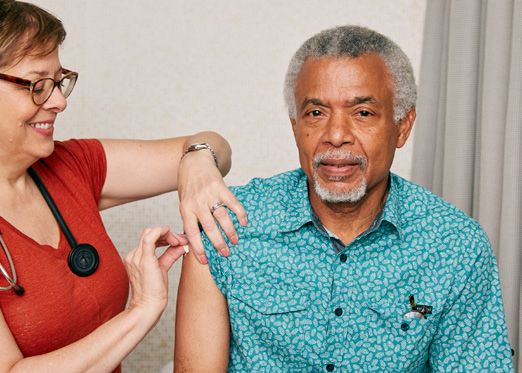
Experts urge all
healthcare professionals
to prioritize influenza
vaccination to help
protect adults with
chronic health conditions
during the COVID-19
pandemic
The recommendations in this Call to
Action are based on discussions from an         Call to Action
August 2020 Roundtable convened by
the National Foundation for Infectious          The Dangers of Influenza
Diseases (NFID). The multidisciplinary          and COVID-19 in Adults with
group of subject matter experts                 Chronic Health Conditions
explored the risks of co-circulation
and co-infection with influenza and
SARS-CoV-2 viruses in adults with chronic       Overview
health conditions from the perspective          While every influenza (flu) season is unpredictable,
of their specialized areas of medicine          the 2020-2021 season is characterized by an
and discussed strategies to protect             unprecedented dual threat: co-circulation of
these vulnerable populations.                   influenza and the novel coronavirus (SARS-CoV-2)
                                                that causes COVID-19. Moreover, there is concern
Experts agreed that higher levels of            that co-circulation and co-infection with influenza
influenza vaccination coverage during           and COVID-19 viruses could be especially harmful,
the 2020-2021 influenza season could            particularly among adults at increased risk of
reduce the number of influenza-related          influenza-related complications.
hospitalizations, helping to avoid
                                                Influenza poses serious health risks to adults
unnecessary strain on the US healthcare
                                                with certain chronic health conditions including
system during the COVID-19 pandemic,
                                                heart disease, lung disease, and diabetes. The
so that healthcare facilities have the
                                                increased risk of influenza-related complications
capacity to provide care to patients            includes the potential exacerbation of underlying
with COVID-19.                                  health condition(s), as a result of influenza-related
                                                inflammation that may persist long after the
                                                acute infection. Of particular concern, adults with
                                                chronic health conditions have an increased risk

                                            1
of long term complications, such as heart attacks            Annual influenza vaccination during the 2020-2021
and strokes, after experiencing acute influenza              influenza season is more important than ever due
or COVID-19.                                                 to the simultaneous threat posed by the COVID-19
                                                             pandemic. Vaccination against influenza will have
Annual influenza vaccination is essential to help
                                                             added benefits—not only will it help to prevent
prevent infection, mitigate severe disease and
                                                             influenza, reduce disease severity, and prevent
related complications, and alleviate additional strain
                                                             serious influenza-related complications, but it will
on an overburdened US healthcare system. While
                                                             also help to reduce strain on the US healthcare
recommended in the US for all individuals age six
                                                             system, due to the COVID-19 pandemic.
months and older, annual vaccination is especially
important for adults with chronic health conditions,         Burden of Influenza in US Adults
older adults, and underserved minority populations
                                                             with Chronic Health Conditions
to avoid exacerbation of chronic health conditions,
permanent physical decline, or death. Even in                Influenza is a contagious viral infection associated
cases when influenza vaccination does not prevent            with a significant disease burden. Each year in the
infection, it can reduce the severity of disease and         US, influenza is responsible for millions of illnesses,
prevent serious influenza-related complications,             hundreds of thousands of hospitalizations, and tens
such as heart attacks or strokes. During the 2018-           of thousands of deaths.2
2019 influenza season, it is estimated that influenza
                                                             Although all individuals can be impacted by
vaccination prevented 4.4 million illnesses, 58,000
                                                             influenza, the burden is greatest in adults with
hospitalizations, and 3,500 deaths (Figure 1).1
                                                             certain chronic health conditions including heart

Figure 1: Benefits of Influenza Vaccination1

                Approximately 49% of the US population chose to get an influenza vaccine
                 during the 2018-2019 influenza season, and this prevented an estimated:

          4.4 million                            58,000                                     3,500
        influenza illnesses              influenza hospitalizations                     influenza deaths

    More than the population                About the number                         Equivalent to saving
        of Los Angeles                      of students at Ohio                   about 10 lives per day over
                                              State University                      the course of the year

                                                                                               10 LIVES
                                                                                                A DAY

                                                         2
disease, lung disease, and diabetes, as well as adults several weeks past the acute infection stage.
age 65 years and older and underrepresented This inflammation often worsens an individual’s
minority populations, who often have underlying underlying disease and can lead to heart attack
health conditions. It is important to note that adults or stroke, even after the acute illness has been
with chronic health conditions are at increased risk resolved—adding to the risk of mortality (Figure 3).
of influenza-related complications, hospitalization,
exacerbation of underlying disease, and death, Figure 3: Potential Effects of Influenza
even when health conditions are well-controlled, Infection on Adults with Chronic
due to the effects of influenza-related inflammation Health Conditions
INCREASED
that may occur long after acute influenza infection. MORTALITY
As the dual threat of influenza and COVID-19 INCREASED
FRAILTY
converge, experts urge all healthcare
professionals to prioritize influenza
INCREASED
HOSPITALIZATION
vaccination for adults with chronic health
conditions and other vulnerable patients.
EXACERBATED
CHRONIC
DISEASE
During the 2019-2020 influenza season, 92.6 percent
of adults hospitalized with influenza-related
complications had at least one underlying medical
CHRONIC
INFLUENZA
condition.3 The most commonly reported underlying DISEASE
INFECTION
medical conditions in patients hospitalized for
influenza include heart disease, diabetes, obesity,
and chronic lung disease (Figure 2).
While adults with chronic health conditions are
at increased risk of severe illness and influenza-
Figure 2: Selected Underlying Medical related complications every year, the COVID-19
Conditions of Laboratory Confirmed pandemic may further increase the risk of adverse
Influenza Hospitalizations for the outcomes. Many of the underlying health conditions
2019-2020 Influenza Season4 that make adults vulnerable to influenza are also
Asthma 23%
linked to increased vulnerability to SARS-CoV-2
infection, severe disease outcomes, increased
Chronic lung disease 36%
hospitalization, and mortality. During the 2020-2021
Heart disease 47% influenza season, the possibility of co-infection with
influenza and SARS-CoV-2 is an even greater cause
Metabolic disorder (diabetes) 43%
for concern particularly for adults with chronic
Obesity 40% health conditions, despite the limited data currently
available on interactions between the two viruses
An often-overlooked effect of influenza infection and the potential consequences.5
is the inflammatory reaction that can last for
3Annual influenza vaccination is a key prevention While every year presents a challenge to increase
strategy to protect all adults, and especially influenza vaccination coverage, the 2020-2021
those with chronic health conditions. Although season will have additional unprecedented
influenza vaccination has been shown to prevent obstacles due to the COVID-19 pandemic. Innovative
hospitalization and influenza-related mortality, strategies are necessary to ensure influenza
vaccination rates remain suboptimal and have vaccines are safely administered during the
stagnated around 50 percent among US adults.6 COVID-19 pandemic.
Less than half of adults age 50 to 64 years receive
an annual influenza vaccine, and this pattern Preparing for an Influenza Season
has been consistent for the past decade.7 While During the COVID-19 Pandemic
influenza vaccination rates are higher among adults
age 65 years and older, approximately one-third Anticipated Burden of Influenza and COVID-19
still remain unvaccinated each year—well below During the 2020-2021 Season
US public health goals.8 According to a recent NFID COVID-19 has had an adverse impact on routine
survey, nearly one-quarter of individuals at high risk vaccinations. Due to COVID-19-related stay-at-home
for influenza-related complications said they did orders, adult vaccination rates in the US as of May
not intend to get vaccinated against influenza.9 2020 had declined by 12 to 63 percent (varying by
state) in comparison to the previous year, with
nearly half of adults age 50 years and older not
receiving recommended vaccinations.10 Influenza
Key Challenges for the vaccination rates may also suffer during the 2020-
2020–2021 Influenza Season 2021 season.
▪ I ncreasing vaccine coverage among As of September 2020, more than 200,000
adults with chronic health conditions in individuals in the US died from COVID-19,
the presence of a dual threat of influenza with new cases being reported daily.11,12 The
and COVID-19 trajectory of the COVID-19 pandemic is uncertain
▪ Reducing strain on the US healthcare system and partly depends on personal protection,
that adults with chronic health conditions infection control, and social distancing
often rely upon measures. The pattern bears resemblance
▪ Addressing logistical concerns, including to the novel H1N1 influenza A virus that
limited emergency room/hospital capacity, emerged in the spring of 2009, where cases
issues with access to traditional vaccination increased until summer, decreased somewhat
sites, and limited opportunities to vaccinate during the summer, and spiked before the start
adults with chronic health conditions of the traditional influenza season. Although this
against influenza due to fewer healthcare may also happen with COVID-19, predictions are
visits overall far from certain. As of early September, the rate
▪ Potential issues related to co-infection with of new COVID-19 cases per day was increasing in
influenza and SARS-CoV-2 that can complicate some midwestern and southern states.13
underlying chronic health conditions
4While social distancing, wearing masks or other Any resulting strains on the US healthcare system
face coverings, and other measures to control could have detrimental consequences for adults
the spread of COVID-19 could also help control with chronic health conditions in terms of disrupting
the spread of influenza, loosening these measures routine care. While healthcare professionals
could allow both COVID-19 and influenza to continue to see critically ill patients, other adults
circulate. In the US, influenza viruses usually have postponed or cancelled healthcare visits due
begin circulating in October/November and to COVID-19, potentially neglecting the care of their
peak in February. Influenza vaccination campaigns chronic health conditions and risking worsened
may need to be extended depending on the healthcare outcomes. Influenza vaccination is
timing of the US influenza season. crucial not only to avoid ER and ICU strain, but also
to help protect adults from influenza and related
COVID-19 mimics influenza in its clinical
complications.
presentation, its mechanism of transmission,
and its time of onset.14 Like influenza, COVID-19
can result in prolonged inflammation and
complications, but is more severe as COVID-19
is completely novel to patient immune systems.
“ It won’t take a ‘bad’ flu season—just ‘a’
flu season to make things more difficult
The Impact of Influenza and COVID-19 on in the ER and elsewhere in the US
Emergency Department Response and
Healthcare Utilization
healthcare system.
”
Due to COVID-19 surges, US emergency rooms – Nicholas F. Vasquez, MD
Vice Chair, Diversity, Inclusion,
(ERs) are already operating in a state of overload,
& Health Equity, American College of
without the additional strain caused by influenza.
Emergency Physicians
ERs have become acute-care sites, with 90 percent
of ERs routinely reporting crowded conditions.15
In a normal year, ER visits peak during the winter
months, especially for visits related to respiratory Influenza Virus Interactions with Chronic Health
illnesses.16 Experts warn of the daunting prospect Conditions During the COVID-19 Pandemic
of treating both influenza and COVID-19 patients Millions of US adults live with one or more common
competing for the same resources, such as chronic health conditions, such as heart disease,
intensive care unit (ICU) beds or personal protective lung disease, or diabetes, which significantly
equipment.17 As the winter months approach and increases their vulnerability to influenza-related
the dual threat of influenza and COVID-19 looms, complications.
managing ICU strain will become even more Many of the same chronic health conditions
challenging. associated with increased risk from serious
influenza-related complications are also linked
to poor outcomes and mortality associated
with COVID-19 (Figure 4).
5Figure 4: Selected Underlying Conditions Both influenza and COVID-19 can trigger
Among Hospitalized Patients with inflammation that may worsen outcomes for
Laboratory-Confirmed Influenza vulnerable individuals. Infection with SARS-CoV-2
Compared with COVID-19 18,19 virus can result in serious consequences due
to increased inflammation in the absence of an
Influenza COVID-19 effective innate immune response and naïve
0% 10% 20% 30% 40% 50% immune system in older adults. Both influenza
Asthma and COVID-19 each have been shown to cause
significant illness in adults with chronic health
Chronic lung disease
conditions, and co-infection may represent a
Heart disease
potential added danger to these patients.
Immune suppression Impact on Adults with Heart Disease
Metabolic disorder
Over the past eight US influenza seasons, nearly
(diabetes) 47 percent of patients hospitalized for laboratory-
Neurologic disorder confirmed influenza have had heart disease, which
is the most common underlying health condition
Obesity
associated with influenza-related complications.18
Pregnancy Similar to influenza, heart disease is also seasonal,
with hospitalizations and deaths usually peaking
Renal disease
in the winter.20 In addition to heart disease being a
No known condition risk factor for more severe illness associated with
influenza infection, influenza can also precipitate
heart disease. In one recent study, investigators
“
reported that patients were six times more likely
Flu vaccination goals should include to have a heart attack within the first week of
universal coverage of individuals at high having a laboratory-confirmed influenza infection
risk for COVID-19, as there is essentially compared with one year before or after the
infection.21 In another recent study of adults
complete overlap between COVID-19 and
hospitalized with influenza, nearly 12 percent of
flu risk groups.
” patients experienced an acute cardiovascular event,
suggesting that clinicians need to ensure that
– William Schaffner, MD
NFID Medical Director their patients with underlying chronic conditions
are vaccinated against influenza each year to help
protect against these events.22
6The relationship between influenza and heart Impact on Adults with Lung Disease
disease is of particular concern during the current Adults with lung diseases such as chronic
pandemic, as severe COVID-19 outcomes have also pulmonary obstructive disease (COPD) or asthma
been associated with pre-existing cardiovascular are more likely to develop serious influenza-
conditions and post-infection injury to heart tissue. related complications and require hospitalization.
Similar to influenza, patients with heart disease For laboratory-confirmed influenza-related
are especially vulnerable to the adverse effects of hospitalizations during the past eight US influenza
COVID-19. A high prevalence of heart disease has seasons, 30 percent had chronic lung disease
been documented among patients experiencing (including pulmonary fibrosis and COPD) and 20
severe COVID-19 cases and death. From February percent had asthma.26 Underlying pulmonological
to May 2020, cardiovascular disease was present in conditions can be exacerbated by influenza or
32 percent of US patients hospitalized for COVID-19 subsequent secondary infections (e.g., viral or
and in 61 percent of patients who died from bacterial pneumonia). COPD increases susceptibility
COVID-19.23,24 In the original outbreak in China, to influenza, and COPD patients experience
more than 7 percent of COVID-19 patients and higher mortality and critical illness as a result
22 percent of critically ill patients experienced of influenza infection.30
myocardial injury from the infection.25
Among confirmed COVID-19 hospitalization cases in
Impact on Adults with Diabetes the US, nearly 12 percent had asthma and 19 percent
Diabetes is second only to heart disease as the had chronic lung disease, indicating a potential
most common underlying health condition for relationship between pulmonological conditions
influenza-related hospitalization in the US.26 and severe COVID-19 illness.28 Emerging studies
Chronic hyperglycemia caused by diabetes can indicate that COVID-19 patients with preexisting
negatively affect immune function and increase pulmonological conditions had a higher risk of
the risk of morbidity and mortality due to infection developing severe respiratory illness.31 Multiple
and associated complications. During the influenza studies also report lasting pulmonological effects
A H1N1 pandemic in 2009, individuals with diabetes after COVID-19 infection, which can be especially
had three times the risk of hospitalization from dangerous for those with existing pulmonological
H1N1 infection and four times the risk of ICU conditions.26-28 Influenza and COVID-19 can result in
admission once hospitalized.27 similar pulmonological complications—a particular
risk for those with existing lung disease.
Individuals with diabetes are at a high risk
of suffering complications from influenza Impact on Older Adults
and COVID-19, especially if they have other Older adults have an increased risk of developing
comorbidities. Of confirmed COVID-19 severe outcomes from influenza. During the 2018-
hospitalization cases in the US, nearly 40 2019 influenza season, 75 percent of influenza-
percent had diabetes.28 Patients with diabetes associated deaths and 57 percent of hospitalizations
or uncontrolled hyperglycemia had a mortality occurred in adults age 65 years and older.32 In 2017-
rate that was more than four times greater than 2018, the percentage of influenza-associated deaths
patients without these conditions.29 and hospitalizations in this age group was even
greater at 83 percent and 67 percent, respectively.33
7In addition to increased severe illness and mortality, among minority populations were apparent during
15 to 19 percent of older adults hospitalized with the 2009 H1N1 epidemic, with American Indians/
influenza experience catastrophic disability—a Alaskan Natives, Hispanics, and Blacks more likely
significant decline in functional independence and to be hospitalized, compared to Whites
activities of daily living. The risk of experiencing this and Asians.40
decline persists throughout the month following
Certain racial and ethnic groups have a higher risk
hospital discharge.34
of COVID-19—Blacks and Hispanics have a 2.6 times
The higher prevalence of comorbid chronic greater risk for COVID-19 than Whites (Figure 5).41
health conditions in older adults, even those
Other factors that impact health outcomes include
younger than age 65, contributes to an
socioeconomic status, healthcare access, and
increased risk of infection. During the 2017-2018
occupational exposure. A report of healthcare
influenza season, adults age 50 to 64 years had
workers who tested positive for COVID-19
hospitalization rates higher than those for young
antibodies showed a significantly greater incidence
children, second in incidence only to adults age 65
in non-white workers compared to white workers.42
years and older.35 Recent studies show that adults
younger than age 65 years with chronic health A recent study found that while almost half
conditions also have high frailty scores, and that (49 percent) of the lowest-income communities
the frailty scores can predict survival, did not have ICU beds available in their healthcare
independent of age.36 facilities, this was true for only 3 percent of
the highest-income communities in the US.43 While
Impact on Underserved Adult Populations influenza vaccination can help protect underserved
Underserved adult populations, which include adults from disease exacerbation and influenza-
communities of color and rural populations, are related complications, urgent action is needed to
disproportionately affected by chronic health improve vaccination rates in these populations,
conditions.37 Black patients face higher rates of as they typically have high-risk health conditions,
heart disease and related risk factors (e.g., high exposure risks, and low influenza vaccination
obesity, hypertension), and Hispanic patients coverage (Figure 6).
are 1.6 times more likely to have diabetes.28,38
Racial and ethnic disparities in hospitalization
Figure 5: COVID-19 Cases by Race and Ethnicity41
COVID-19 Infection Rates Compared to White, Non-Hispanic Persons
American Indian Asian, Black or African Hispanic
or Alaska Native, Non-Hispanic American, or Latino
Non-Hispanic persons persons Non-Hispanic persons persons
2.8X 1.1X 2.6X 2.8X
more cases more cases more cases more cases
8Figure 6: Disparity of Vaccination Coverage For patients with asthma, getting vaccinated
in Underrepresented and Underserved against influenza has been shown to reduce febrile
Adult Populations During the 2018–2019 illness and the use of asthma medication, as well
Influenza Season7 as preventing asthma attacks that lead to ER visits
or hospitalizations.47 For patients with diabetes,
Hispanic 37% influenza vaccination is associated with a reduced
American Indian, risk of all-cause death, cardiovascular death, and
38%
Alaska Native death from heart attack or stroke.48,49 Influenza
Black only,
non-Hispanic
39% vaccination can potentially prevent dysregulated
Other or
40%
immune responses in older adults and/or those with
multiple races
chronic health conditions, thereby also decreasing
Other, non-Hispanic
Overall
41% the risk of catastrophic disability.
Asian 44%
“
Overall 45%
White only,
While not perfect, flu vaccination
49%
non-Hispanic
prevents hospitalizations and helps
Benefits of Influenza Vaccination in Adults
with Chronic Health Conditions
save lives.
”
– Patricia N. Whitley-Williams, MD
NFID President
Influenza vaccination prevents tens of thousands
of deaths and hospitalizations every year.
Influenza vaccination has many documented
benefits for those with chronic health conditions.
A large and increasing body of evidence The Benefits of Influenza
supports the protective effect of influenza Vaccination for Adults with
vaccination in patients with cardiovascular disease. Chronic Health Conditions Include:
For example, estimates of the efficacy of
the influenza vaccine in preventing heart attacks ▪ Less severe influenza illness
and strokes range from 15 to 45 percent, ▪ Fewer hospitalizations
meaning that influenza vaccination is equal ▪R
educed occurrence of heart attacks
to or more effective than smoking cessation, and strokes
statins, and antihypertensive therapy.44 The
▪P
reventing exacerbation of chronic
American Heart Association (AHA) and
health conditions
American College of Cardiology (ACC) have
been recommending annual influenza vaccination ▪R
educed all-cause and influenza associated
for individuals with heart disease for more mortality
than a decade.45 Influenza vaccination for COPD
patients has been shown to result in reduced
patient mortality, decreased development
of severe illness, and fewer hospitalizations,30
as well as reduced risk of ischemic heart
disease for older COPD patients.46
9Because both SARS-CoV-2 and influenza are
anticipated to co-circulate in the 2020-2021 season,
Influenza Vaccine
the timing of influenza vaccination programs may
Recommendations for the 2020– need to adjust accordingly, including starting
2021 Season: Advisory Committee vaccination campaigns earlier and extending them
on Immunization Practices to accommodate stay-at-home orders and other
(ACIP) Recommendations COVID-19 mitigation and control measures.
▪R
outine annual vaccination with Addressing Medical Needs and Improving Access
a licensed influenza vaccine to Influenza Vaccination
appropriate for age and health status All healthcare professionals, including primary
is recommended for all individuals care providers and specialists, should ensure
age ≥6 months who do not that patients receive an annual influenza vaccine,
have contraindications especially those at increased risk for influenza-
▪E
mphasis should be placed on vaccination related or COVID-19-related complications. As part
of high-risk groups (including adults of their efforts to appropriately manage chronic
with chronic health conditions) and their health conditions in adult patients, healthcare
contacts/caregivers professionals must insist on annual influenza
vaccination as a proactive step in preventing
influenza-related hospitalization.
Strategies for Increasing Influenza
Vaccine Coverage for Adults
with Chronic Health Conditions “ As healthcare professionals, we have to
be proactive about recommending the flu
During the COVID-19 Pandemic vaccine if we are going to be successful
It is imperative that both healthcare professionals in immunization during the COVID-19
and patients are aware of the potential
public health threat created by influenza and
pandemic.
”
COVID-19 co-circulation and co-transmission, and – Michael D. Hogue, PharmD
the importance of annual influenza vaccination, President, American Pharmacists Association
particularly for vulnerable populations.
Healthcare professionals must be prepared
for the possibility of a COVID-19 surge during
the 2020-2021 influenza season. Even after acute
influenza infection, healthcare professionals
must also be aware that there is often a sustained
increase in inflammation in patients for weeks,
typically leading to increased frailty.
10Healthcare Professionals Who Treat Implementation
▪ Stock influenza vaccines and offer vaccination
Adults with Chronic Health Conditions
at every patient encounter throughout
Can Improve Influenza Vaccination influenza season
Coverage by: ▪ I f you are not able to provide influenza
vaccinations onsite, refer to pharmacies or
Communication with Patients
other alternative vaccination sites or clinics
▪ Strongly recommend vaccination at every patient
to broaden access to vaccination
encounter throughout influenza season
▪W
rite “influenza prescriptions” and insist on
▪ I nform adults with chronic health conditions,
annual vaccination
including heart disease, lung disease, and
diabetes, that influenza can exacerbate their ▪U
se standing influenza vaccine orders and
condition and trigger an adverse cardiovascular include an automatic notification in the electronic
event or other serious complication health record to remind staff to discuss influenza
vaccination with all patients
▪P
roactively reach out to patients with chronic
health conditions who do not have a scheduled ▪S
et a goal of at least 90 percent influenza vaccine
fall visit and request that they come in to get coverage in the practice; assess on an ongoing
vaccinated against influenza basis and make adjustments as needed
▪U
se community health workers, peer networks, ▪A
ssess whether adults are up-to-date on
social media influencers, and storytelling influenza and other recommended vaccines and
strategies to relay the importance of annual remind patients at every encounter, even
influenza vaccination and help dispel if the encounter is virtual or by telephone
misconceptions and myths about vaccines ▪ I ncorporate influenza vaccination into routine
chronic disease management
Communication with Staff
▪ Assign an influenza vaccine champion in the ▪E
nsure adequate time during office visits
practice or health system to discuss any patient concerns about
influenza vaccination
▪E
ducate all clinicians and office staff on
current influenza vaccine recommendations
▪ I nitiate annual vaccine education updates as part
of required employee clinical training
A strong, unified national message to seek
influenza vaccination even while under
shelter-in-place instructions can result
in increased vaccinations.
11Influenza Vaccination Strategies Talking Points for Patient Encounters
During the COVID-19 Pandemic Vulnerable populations must be informed that
To ensure high vaccination coverage during the influenza vaccination is important every year,
COVID-19 pandemic, healthcare professionals and particularly so during the COVID-19 pandemic.
must take the following steps: They must also be made aware there are multiple,
safe, familiar, and convenient healthcare delivery
▪D
evelop a robust communications plan, sites where they can receive influenza vaccines.
engaging community organizations and Clear messaging regarding safe access to, and
influencers to deliver messages about the administration of, influenza vaccines is needed
importance of annual influenza vaccines to ensure confidence, allay fears, and improve
and locations offering vaccination
coverage rates. To support this, healthcare
▪M
essages need to include information professionals can:
about how patients can safely get vaccinated
during the COVID-19 pandemic (e.g., wear ▪E
mphasize that while there is not a COVID-19
a mask and stay six feet apart from others) vaccine currently available, there are safe and
effective influenza vaccines with decades of safety
▪T
o engage at-risk and underserved
data to support them. Getting vaccinated against
communities, use targeted messages
influenza can help protect individuals, their loved
delivered by trusted sources through
ones, and communities
trusted communication channels
▪T
alk openly to patients about the steps being
▪P
rovide innovative vaccine access points
taken to administer vaccines safely during the
(e.g., drive-thru vaccination clinics in local
COVID-19 pandemic
parking lots, pharmacies, use of strike teams
and mobile vans) ▪R
emind patients with chronic health conditions
that influenza vaccination can help prevent heart
▪V
accination season should be expanded to ensure
attacks, strokes, hospitalization, and a decline in
that the influenza vaccine continues to be offered
quality of life
while influenza viruses are circulating, from fall,
through the winter, and into the spring ▪C
ommunicate clearly about the number of lives
in the community saved by annual influenza
▪ F acilitate coordination across many different
vaccination and how many more could be saved
types of stakeholders and communicators to
if vaccination rates were higher
ensure they are aware of the importance of
influenza vaccination
▪D
ocument influenza vaccine administration in
immunization information systems, especially as
nontraditional vaccine-deployment strategies will
be used more frequently this influenza season
▪ F ormulate targeted plans to vaccinate residents
and employees at long-term care facilities, as
these individuals are especially vulnerable to
influenza and SARS-CoV-2 infection
12How to Improve Patient Outcomes: ▪R
emind healthcare professionals that they are
a trusted source of information for patients
Overcoming Barriers
▪P
romote and establish safe and efficient
▪E
nsure that healthcare professionals have up-to- vaccination clinics
date information about the benefits of influenza
vaccination, including how influenza vaccines can
prevent influenza-related complications among
those with underlying chronic health conditions
▪C
ommunicate the importance of influenza
“ If you do get flu despite having received
the vaccine, you are likely to have a
vaccination for disease prevention and for
milder infection. You won’t have to go
protection against adverse outcomes from co-
infection with influenza and SARS-CoV-2 to the emergency room, you may not
▪E
ncourage specialists to see each patient visit be hospitalized, and your risk of dying
as an opportunity to discuss influenza vaccination
▪U
se healthcare facility staff, medical students,
decreases.
” – William Schaffner, MD
or other healthcare professional trainees to reach NFID Medical Director
out and educate patients
Summary and Conclusion
Experts anticipate that the co-circulation of influenza and SARS-CoV-2 will make the 2020-2021
influenza season particularly challenging. This dual public health threat underscores the critical
need to optimize the use of influenza vaccines in helping to protect US adults—particularly
among vulnerable populations including adults with chronic health conditions, older adults,
and underserved minority populations.
Healthcare professionals must insist on influenza vaccination for adults with chronic health
conditions throughout influenza season to reduce the severity of influenza and prevent related
complications. Influenza vaccination can also help prevent related emergency room visits and
hospitalizations, reducing strain on the healthcare system.
To learn more, visit www.nfid.org/flu and www.cdc.gov.
From primary care physicians to nurses to specialists, it is the responsibility of all healthcare
professionals to educate, motivate, and insist that patients receive all recommended vaccines.
13Participating Organizations
The following organizations participated in the 2020 virtual roundtable focused on increasing awareness
of the dangers of influenza and COVID-19 among adults with chronic health conditions and the benefits of
annual influenza vaccination, to improve public health outcomes:
AARP American Thoracic Society
Alliance for Aging Research Association of Black Cardiologists
American Academy of Family Physicians Association of Diabetes Care & Education Specialists
American Academy of Physician Assistants Association of Immunization Managers
American Association for Respiratory Care Biotechnology Innovation Organization (BIO)
American Association of Clinical Endocrinologists Center for Sustainable Health Care Quality and Equity
American Association of Nurse Practitioners Centers for Disease Control and Prevention
American College of Cardiology Immunization Action Coalition
American College of Emergency Physicians Infectious Diseases Society of America
American College of Osteopathic Family Physicians National Adult and Influenza Immunization Summit
American College of Physicians National Association of Chain Drug Stores
American Lung Association National Black Nurses Association
American Nurses Association National Lipid Association
American Pharmacists Association National Medical Association
American Society for Transplantation and Cellular
Preventive Cardiovascular Nurses Association
Therapy
The Gerontological Society of America
American Society for Preventive Cardiology
American Society of Transplant Surgeons
Sanofi Pasteur has provided funding and other support for this activity. NFID policies restrict funders from controlling program content.
14References
1. CDC. What are the benefits of flu vaccination? Published August 31, 14. Yue H, Zhang M, Xing L, et al. The epidemiology and clinical
2020. www.cdc.gov/flu/prevent/vaccine-benefits.htm. Accessed characteristics of co-infection of SARS-CoV-2 and influenza viruses
September 21, 2020. in patients during COVID-19 outbreak. J Med Virol. Published online
June 12, 2020. doi:10.1002/jmv.26163
2. CDC. Preliminary In-Season 2019-2020 Flu Burden Estimates. Centers
for Disease Control and Prevention. Published April 17, 2020. www. 15. Emergency Medicine Practice Committee. Emergency Department
cdc.gov/flu/about/burden/preliminary-in-season-estimates.htm. Crowding: High Impact Solutions. May 2016.
Accessed August 25, 2020.
16. Uscher-Pines L, Elixhauser A. Emergency Department Visits and
3. Xu X, Blanton L, Elal AIA, et al. Update: Influenza Activity in the Hospital Inpatient Stays for Seasonal and 2009 H1N1 Influenza,
United States During the 2018-19 Season and Composition of 2008–2009: Statistical Brief #147. In: Healthcare Cost and Utilization
the 2019-20 Influenza Vaccine. MMWR Morb Mortal Wkly Rep. Project (HCUP) Statistical Briefs [Internet]. Rockville (MD): Agency
2019;68(24):544-551. doi:10.15585/mmwr.mm6824a3. for Healthcare Research and Quality (US) 2006 Feb-2013 Jan.
4. FluView: Influenza Hospitalization Surveillance Network, Centers 17. COVID-19 and flu season: A ‘daunting prospect’ for hospitals. Healio.
for Disease Control and Prevention. gis.cdc.gov/GRASP/Fluview/ August 14, 2020. www.healio.com/news/20200814/covid19-and-flu-
FluHospRates.html. Accessed July 28, 2020.” season-a-daunting-prospect-for-hospitals. Accessed September 3,
2020.
5. Leyfman Y, Erick TK, Reddy SS, et al. Potential Immunotherapeutic
Targets For Hypoxia Due to COVI-FLU. Shock. Published online July 18. Laboratory-Confirmed Influenza Hospitalizations. gis.cdc.gov/
8, 2020 doi:10.1097/SHK.0000000000001627. grasp/fluview/FluHospChars.html. Accessed July 28, 2020.
6. FluVaxView webpage report. Published online September 26, 2019. 19. COVID-NET: COVID-19-Associated Hospitalization Surveillance
Available at www.cdc.gov/flu/fluvaxview/coverage-1819estimates. Network. gis.cdc.gov/grasp/COVIDNet/COVID19_5.html. Accessed
htm. Accessed July 27, 2020. July 28, 2020”.
7. Recent Influenza Vaccination Trends across Influenza Seasons | 20. Stewart S, Keates AK, Redfern A, McMurray JJV. Seasonal variations
FluVaxView | Seasonal Influenza (Flu) | CDC. Published February 26, in cardiovascular disease. Nat Rev Cardiol. 2017;14(11):654-664.
2019. www.cdc.gov/flu/fluvaxview/trends-summary.htm. Accessed doi:10.1038/nrcardio.2017.76.
August 28, 2020.
21. Kwong JC, Schwartz KL, Campitelli MA, et al. Acute Myocardial
8. CDC. Flu Vaccination Coverage, United States, 2018–19 Influenza Infarction after Laboratory-Confirmed Influenza Infection. New
Season | FluVaxView | Seasonal Influenza (Flu). Published September England Journal of Medicine. 2018;378(4):345-353. doi:10.1056/
25, 2019. www.cdc.gov/flu/fluvaxview/coverage-1819estimates.htm. NEJMoa1702090.
Accessed May 13, 2020.
22. Chow EJ, Rolfes MA, O’Halloran A, et al. Acute Cardiovascular
9. NFID Survey: Attitudes about Influenza and Pneumococcal Disease Events Associated With Influenza in Hospitalized Adults: A Cross-
Prevention. National Foundation for Infectious Diseases. Published sectional Study. Ann Intern Med. Published online August 25, 2020.
October 21, 2019. www.nfid.org/about-nfid/newsroom/news- doi:10.7326/M20-1509.
conferences/2019-nfid-influenza-pneumococcal-disease-news-
23. Stokes EK, Zambrano LD, Anderson KN, et al. Coronavirus Disease
conference/national-poll-attitudes-about-flu-and-pneumococcal-
2019 Case Surveillance - United States, January 22-May 30, 2020.
disease-prevention. Accessed September 15, 2020.
MMWR Morb Mortal Wkly Rep. 2020;69(24):759-765. doi:10.15585/
10. Vaccine Rates for All Ages Drop Dramatically During COVID-19. mmwr.mm6924e2.
Medscape. www.medscape.com/viewarticle/931913. Accessed
24. Wortham JM, Lee JT, Althomsons S, et al. Characteristics of Persons
August 28, 2020.
Who Died with COVID-19 - United States, February 12-May 18, 2020.
11. CDC. Coronavirus Disease 2019 (COVID-19). Centers for Disease MMWR Morb Mortal Wkly Rep. 2020;69(28):923-929. doi:10.15585/
Control and Prevention. Published February 11, 2020. www.cdc.gov/ mmwr.mm6928e1.
coronavirus/2019-ncov/need-extra-precautions/evidence-table.
25. Clerkin Kevin J., Fried Justin A., Raikhelkar Jayant, et al. COVID-19
html. Accessed August 19, 2020.
and Cardiovascular Disease. Circulation. 2020;141(20):1648-1655.
12. CDC. Excess Deaths Associated with COVID-19. Published August doi:10.1161/CIRCULATIONAHA.120.046941
26, 2020. www.cdc.gov/nchs/nvss/vsrr/covid19/excess_deaths.htm.
26. Laboratory-Confirmed Influenza Hospitalizations. gis.cdc.gov/
Accessed August 28, 2020.
grasp/fluview/FluHospChars.html. Accessed July 28, 2020.
13. The New York Times. Coronavirus in the U.S.: Latest Map and Case
27. Allard R, Leclerc P, Tremblay C, Tannenbaum T-N. Diabetes and the
Count. www.nytimes.com/interactive/2020/us/coronavirus-us-cases.
Severity of Pandemic Influenza A (H1N1) Infection. Diabetes Care.
html. Accessed September 18, 2020.
2010;33(7):1491-1493. doi:10.2337/dc09-2215.
1528. COVID-19 Hospitalizations. gis.cdc.gov/grasp/COVIDNet/COVID19_5. 39. Diabetes and Hispanic Americans - The Office of Minority Health.
html. Accessed July 28, 2020. Accessed August 27, 2020. minorityhealth.hhs.gov/omh/browse.
aspx?lvl=4&lvlid=63.
29. Bode B, Garrett V, Messler J, et al. Glycemic Characteristics
and Clinical Outcomes of COVID-19 Patients Hospitalized in 40. CDC H1N1 Flu |Q&A: Flu-Related Hospitalizations and Deaths in the
the United States. J Diabetes Sci Technol. 2020;14(4):813-821. United States from April 2009 – January 30, 2010. www.cdc.gov/
doi:10.1177/1932296820924469. h1n1flu/race_ethnicity_qa.htm. Accessed August 27, 2020.
30. Mulpuru S, Li L, Ye L, et al. Effectiveness of Influenza Vaccination 41. CDC. COVID-19 Hospitalization and Death by Race/Ethnicity.
on Hospitalizations and Risk Factors for Severe Outcomes in Updated August 18, 2020. https://www.cdc.gov/coronavirus/2019-
Hospitalized Patients With COPD. CHEST. 2019;155(1):69-78. ncov/covid-data/investigations-discovery/hospitalization-death-by-
doi:10.1016/j.chest.2018.10.044. race-ethnicity.html. Accessed September 7, 2020.
31. Dreher M, Kersten A, Bickenbach J, et al. The Characteristics of 42. Self WH, Tenforde MW, Stubblefield WB, et al. Seroprevalence of
50 Hospitalized COVID-19 Patients With and Without ARDS. Dtsch SARS-CoV-2 Among Frontline Health Care Personnel in a Multistate
Arztebl Int. 2020;117(16):271-278. doi:10.3238/arztebl.2020.0271. Hospital Network - 13 Academic Medical Centers, April-June 2020.
MMWR Morb Mortal Wkly Rep. 2020;69(35):1221-1226. doi:10.15585/
32. CDC. Estimated Influenza Illnesses, Medical visits, Hospitalizations,
mmwr.mm6935e2.
and Deaths in the United States — 2018–2019 influenza
season. Published January 9, 2020. www.cdc.gov/flu/about/ 43. Kanter GP, Segal AG, Groeneveld PW. Income Disparities In Access
burden/2018-2019.html. Accessed May 14, 2020. To Critical Care Services. Health Affairs. Published online August 3,
2020. doi:10.1377/hlthaff.2020.00581.
33. CDC. 2017-2018 Estimated Influenza Illnesses, Medical visits,
Hospitalizations, and Deaths and Estimated Influenza Illnesses, 44. MacIntyre CR, Mahimbo A, Moa AM, Barnes M. Influenza vaccine
Medical visits, Hospitalizations, and Deaths Averted by as a coronary intervention for prevention of myocardial infarction.
Vaccination in the United States. www.cdc.gov/flu/about/burden- Heart. 2016;102(24):1953-1956. doi:10.1136/heartjnl-2016-309983.
averted/2017-2018.htm. Published December 18, 2019. Accessed May
45. Davis MM, Taubert K, Benin AL, et al. Influenza vaccination as
13, 2020.
secondary prevention for cardiovascular disease: a science
34. Andrew MK, MacDonald S, Ye L, et al. Impact of Frailty on Influenza advisory from the American Heart Association/American College
Vaccine Effectiveness and Clinical Outcomes: Experience From of Cardiology. J Am Coll Cardiol. 2006;48(7):1498-1502. doi:10.1016/j.
the Canadian Immunization Research Network (CIRN) Serious jacc.2006.09.004.
Outcomes Surveillance (SOS) Network 2011/12 Season. Open Forum
46. Huang C-L, Nguyen PA, Kuo P, Iqbal U, Hsu Y-HE, Jian W-S. Influenza
Infect Dis. 2016;3(suppl_1). doi:10.1093/ofid/ofw172.573.
vaccination and reduction in risk of ischemic heart disease among
35. CDC. 2017-2018 Estimated Influenza Illnesses, Medical visits, chronic obstructive pulmonary elderly. Comput Methods Programs
Hospitalizations, and Deaths and Estimated Influenza Illnesses, Biomed. 2013;111(2):507-511. doi:10.1016/j.cmpb.2013.05.006.
Medical visits, Hospitalizations, and Deaths Averted by Vaccination
47. Vasileiou E, Sheikh A, Butler C, et al. Effectiveness of Influenza 46
in the United States. Published December 18, 2019. www.cdc.gov/
in Asthma: A Systematic Review and Meta-Analysis. Clin Infect Dis.
flu/about/burden-averted/2017-2018.htm. Accessed May 13, 2020.
2017;65(8):1388-1395. doi:10.1093/cid/cix524.
36. Brummel NE, Bell SP, Girard TD, et al. Frailty and Subsequent
48. Vamos EP, Pape UJ, Curcin V, et al. Effectiveness of the influenza
Disability and Mortality among Patients with Critical Illness. Am
vaccine in preventing admission to hospital and death in people
J Respir Crit Care Med. 2016;196(1):64-72. doi:10.1164/rccm.201605-
with type 2 diabetes. CMAJ. 2016;188(14):E342-E351. doi:10.1503/
0939OC.
cmaj.151059.
37. Meyer PA, Yoon PW, Kaufmann RB, Centers for Disease Control
49. Modin D, Claggett B, Køber L, et al. Influenza Vaccination Is
and Prevention (CDC). Introduction: CDC Health Disparities and
Associated With Reduced Cardiovascular Mortality in Adults With
Inequalities Report - United States, 2013. MMWR supplements.
Diabetes: A Nationwide Cohort Study. Diabetes Care. Published
2013;62(3):3-5.
online July 6, 2020. doi:10.2337/dc20-0229.
38. Carnethon MR, Pu J, Howard G, et al. Cardiovascular Health in
African Americans: A Scientific Statement From the American
Heart Association. Circulation. Published online November 2017.
doi:10.1161/CIR.0000000000000534.
16THE DANGERS OF INFLUENZA (FLU) AND COVID-19
IN ADULTS WITH CHRONIC HEALTH CONDITIONS
93% US adults with chronic health
conditions are at high risk for COVID-19 34+
of adults and flu-related complications million adults
hospitalized for flu during have diabetes and are
the 2019-2020 season had at · Exacerbation of chronic health conditions 3x more likely to be hospitalized
least one reported underlying · Permanent physical decline from COVID-19 and die from
medical condition · Risk of heart attack or stroke flu-related complications
· Death
30+ Adults 39+ Adults
million adults with million adults with
have heart disease and
hypertension have asthma and/or COPD, asthma
are 3x more likely are 1.5X more likely
are at 6x increased risk putting them at greater
to be hospitalized risk of serious flu-related to be hospitalized
of heart attack within
for COVID-19 for COVID-19
7 days of flu infection complications
Annual flu vaccination is the best way to protect yourself from flu and serious long-term complications
In the US, there are currently no approved vaccines for COVID-19
Learn more at www.nfid.org/loweryourflurisk
#LowerYourFluRisk
#FightFluTHE DANGERS OF INFLUENZA (FLU) AND COVID-19 IN ADULTS WITH CHRONIC HEALTH CONDITIONS
What do they all have in common?
Susan, Age 75 Janet, Age 50 Jake, Age 62 Darrell, Age 57 Maria, Age 49 José, Age 64
HEART DISEASE HIV/AIDS OBESE (BMI≥40) ASTHMA DIABETES CHRONIC OBSTRUCTIVE
PULMONARY DISEASE (COPD)
93% Because of their chronic health
conditions, they are at high risk for serious 34+
of adults COVID-19 and flu-related complications: million adults
hospitalized for flu during the 2019-
· Worsening of chronic health condition have diabetes and are 3x more likely
2020 season had at least one to be hospitalized from COVID-19 and
reported underlying medical condition · Disability
die from flu-related complications
· Hospitalization
· Death
30+ Adults 39+ Adults
million adults with million adults with
have heart disease and are at
hypertension have asthma and/or COPD, asthma
are 3x more likely to be are 1.5X more likely to be
6x increased risk of heart attack putting them at greater risk of
serious flu-related complications hospitalized for COVID-19
within 7 days of flu infection hospitalized for COVID-19
Annual flu vaccination is the best way to protect yourself from flu and serious long-term complications
In the US, there are currently no approved vaccines for COVID-19
Learn more at www.nfid.org/loweryourflurisk
#LowerYourFluRisk
#FightFluCopyright © 2020 National Foundation for Infectious Diseases. www.nfid.org
You can also read


