CAMARGO - FRAC - GOETHE - COLLABORATIVE RESIDENCY IN THE AIX-MARSEILLE-PROVENCE METROPOLITAN AREA - The Camargo Foundation
←
→
Page content transcription
If your browser does not render page correctly, please read the page content below
CAMARGO - FR AC – GO ETH E
       CO LL ABO R ATIVE R E S I D E N CY I N TH E
AIX- MAR S E I LLE- P ROVE N CE M ETRO P O LITAN AR E A

                 CA LL FO R A P P LI CATI O N S

                 C A M A R G O & F R AC & G O E T H E • C A L L F O R A P P L I C AT I O N S • 1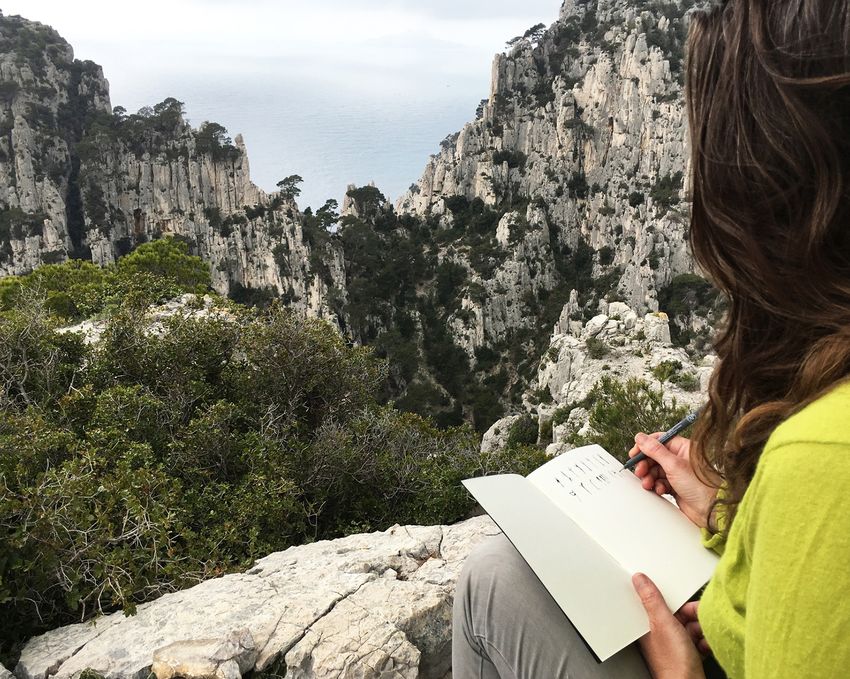
TA B LE O F CO NTE NTS

           ABOUT THE PROGRAM                                                                 3
           SCOPE OF THE PROGR AM                                                             4
           PURPOSE OF THE RESIDENCY                                                          5
           ELIGIBILITY                                                                       6
           SELECTION CRITERIA AND PRIORITIES                                                 7
           S T I P E N D , A C C O M M O D AT I O N , A N D D U R AT I O N                   8
           H O W T O A P P LY ?                                                              9
           H I STORY                                                                         10
           A B O U T T H E PA R T N E R S                                                    11
           C O N TA C T U S                                                                  13

           C A M A R G O & F R AC & G O E T H E • C A L L F O R A P P L I C AT I O N S • 2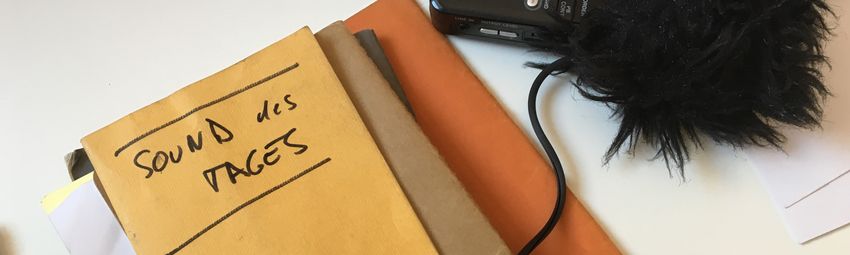
ABOUT TH E P ROG R AM

THE FRAC, MARSEILLE, FRANCE                                                                                                    THE CAMARGO FOUNDATION, CASSIS, FRANCE

  Through this joint interdisciplinary residency program, the Camargo
Foundation in Cassis, the Fonds Régional d’Art Contemporain Provence-
Alpes-Côte d’Azur (Frac), and the Goethe-Institut in Marseille come
together to support one international project led by a team of artists and
scholars willing to explore the Aix-Marseille-Provence Metropolitan
Area. The selected team, composed of two to four members, will be
hosted both at Frac and Camargo in 2021/2022.

                                             C A M A R G O & F R AC & G O E T H E • C A L L F O R A P P L I C AT I O N S • 3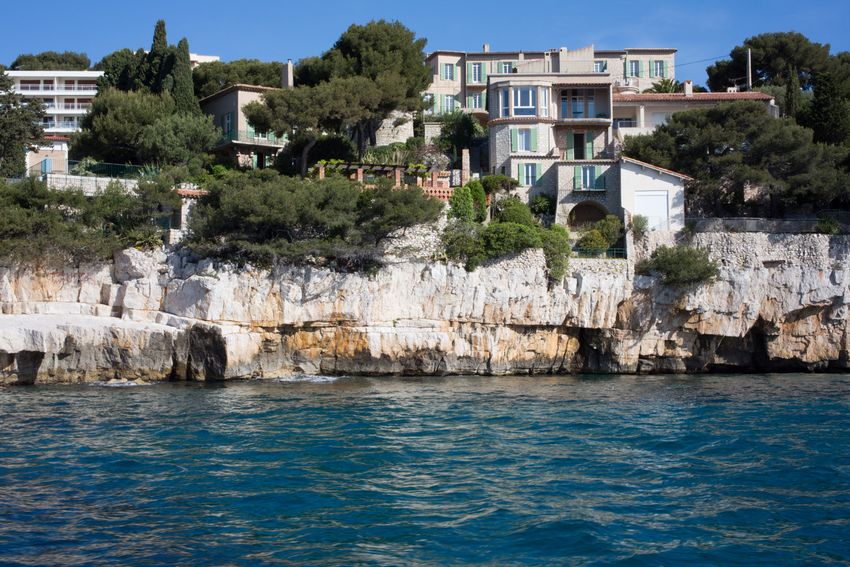
SCO P E O F TH E P ROG R AM
                                                                                                                                 MARSEILLE © FRANCK GERARD
   This Program focuses on the different dimensions of the Marseille metropolitan
area. The newly established Aix-Marseille-Provence Metropolitan Area is
located on the Mediterranean Sea with a mix of urban areas and unique natural
sites. As the second largest metropolitan area in France, it has nearly 2 million
inhabitants in 92 municipalities, with large inequalities. This Program offers
the possibility of a joint residency in two art organizations located in two very
different parts of the metropolitan area. The focus of the selected project should
involve some artistic research taking into account the two different settings/
territories of the residency.

   Frac Provence-Alpes-Côte d’Azur: the urban context of Marseille as a city
constantly involved in processes of transformation—its social, architectural,
and economic fabric—while shedding light on the way that the inhabitants of
the city use, reinterpret, and take over public spaces. The Frac is located in the
harbor area, which in the last 20 years has been at the center of a large urban
redevelopment program.

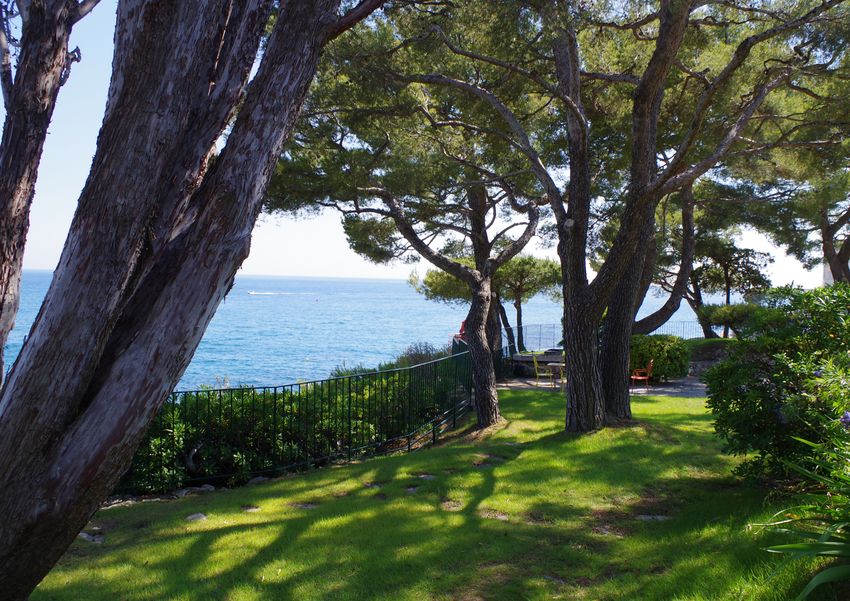
   The Camargo Foundation: the larger regional context of the territory of
Aix-Marseille-Provence and its location on the Mediterranean Basin. Camargo
is located in Cassis, town of 7600 inhabitants. This old fisherman’s village
became over the last decades a wealthy suburb of Marseille and attracts a lot
of tourists. It is at the center of the Calanques National Park, the only national
park in an urban area in Europe. It is therefore the perfect environment to study
issues around the protection of biodiversity and landscape, the evolution of
the environment, tourism, past and present industrialization, urban pressure,
migration, and globalization.

                                               C A M A R G O & F R AC & G O E T H E • C A L L F O R A P P L I C AT I O N S • 4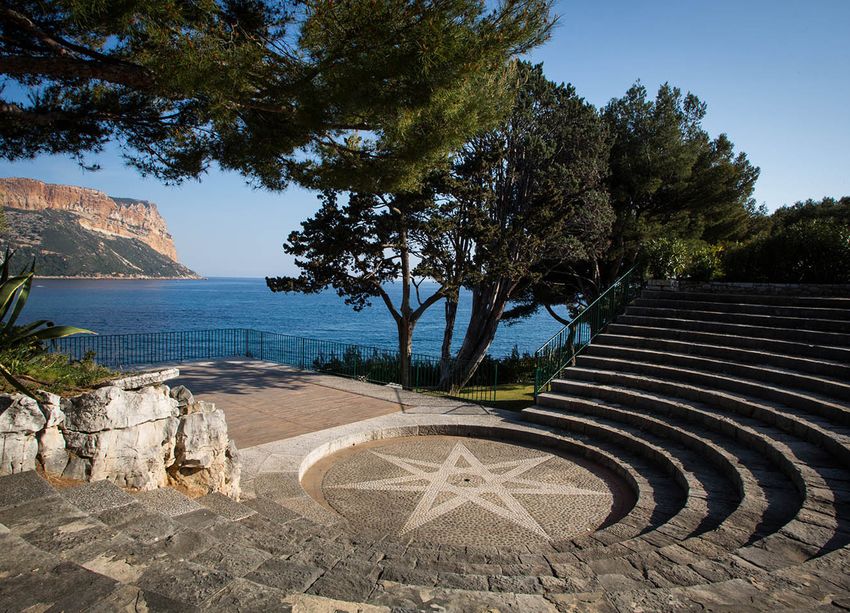
P U R POS E O F TH E R ES I DE N CY
The main purpose of the residency is to stimulate relations and cultural exchanges between researchers and artists of the Mediterranean
Basin and Europe, in order to support the development of projects at the interface between scientific research and the arts with
the aim of a common production. In their proposals, applicants should therefore clearly demonstrate their interest in interdisciplinary
crossovers and exchanges between arts and sciences, on the basis of their research and itineraries.

The residents will benefit from the professional setting, the support, and the network of the involved organizations.

The residency will also include a public presentation of the working process or outcome of the residency, which will take place at each of
the two residency centers (Camargo and Frac).

                                                                                                                     SOUND NOTES BY KATHRIN WILDNER © NATHALIE ABOU-ISAAC

                                              C A M A R G O & F R AC & G O E T H E • C A L L F O R A P P L I C AT I O N S • 5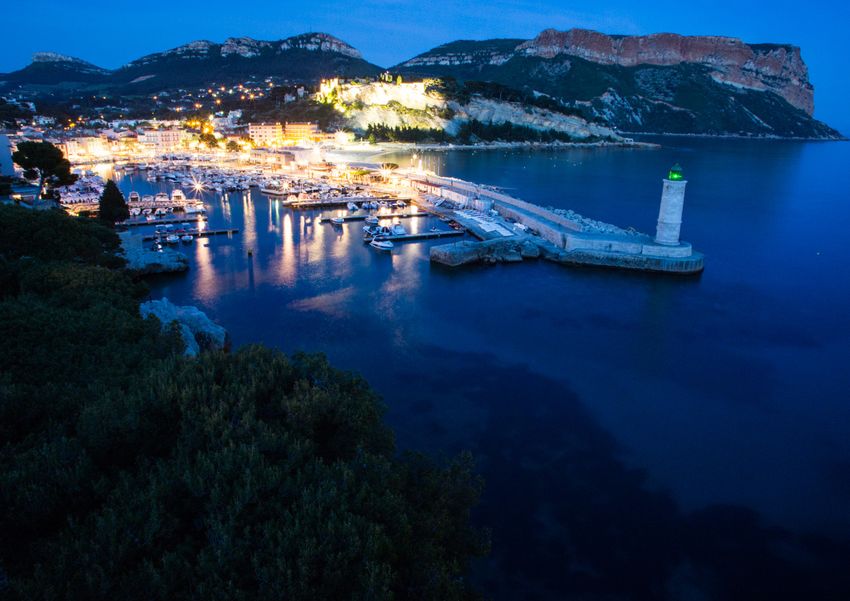
E LIG I BI LIT Y

                                                                    © MOHAMEDALI LTAIEF (DALI) AND DARJA STOCKER, FORMER GOETHE & CAMARGO RESIDENTS

The residency is open to teams of artists in all creative disciplines and researchers/critics/curators working with experimental
or artistic approaches. Applicants must be professionals actively working in the arts.

At least one group member must be a resident of Germany.

Preference will be given to teams that include a member from a Mediterranean country (including the Region Provence-Alpes-Côte-
D’Azur, European countries, as well as countries of the Southern and Eastern Mediterranean regions).

The team can be composed of two to four members. The team should apply with a joint proposal and artists or researchers applying as
individuals are not eligible.

                                            C A M A R G O & F R AC & G O E T H E • C A L L F O R A P P L I C AT I O N S • 6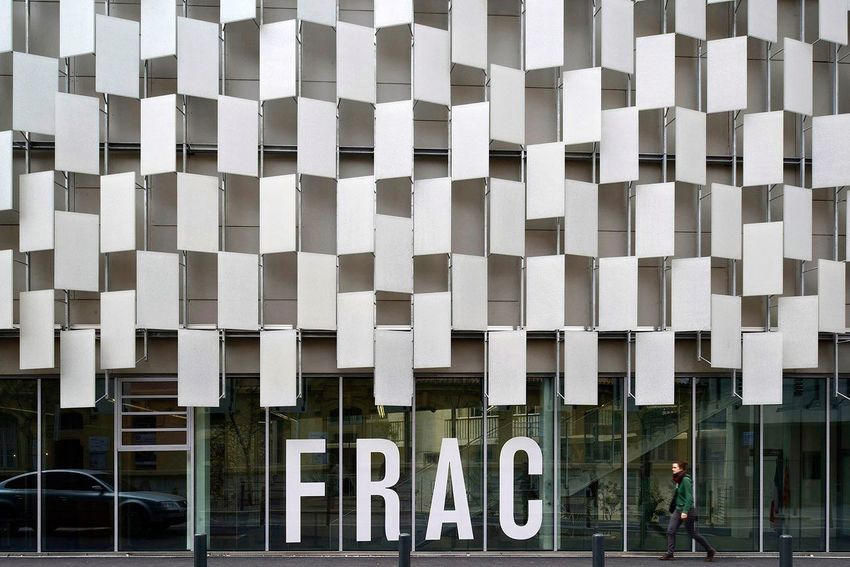
S E LEC TIO N CR ITE R IA AN D P R IO R ITI ES

In addition to the artistic quality of the proposal, special consideration will be given to projects and ideas that include historical,
geographical, sociological, and political approaches to questions related to human migration and displacement. Interdisciplinary
approaches will be given priority. The program fosters exchange in order to allow the team as well as the local arts and science communities
to benefit from each other’s perspectives and mutually broaden their horizons.

                                                                                                                                 COLLABORATIVE PROJECTS AT CAMARGO

                                               C A M A R G O & F R AC & G O E T H E • C A L L F O R A P P L I C AT I O N S • 7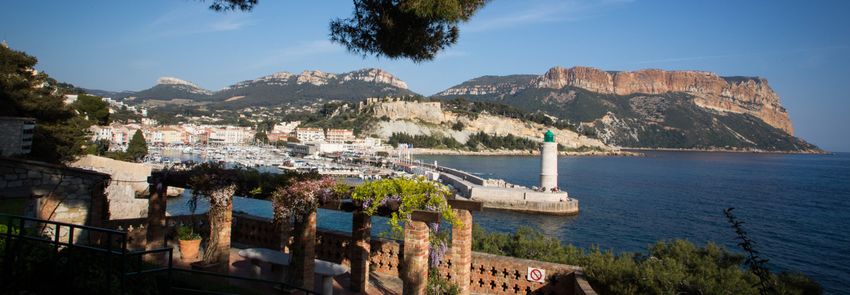
STI P E N D, ACCO M M O DATI O N , AN D D U R ATI O N

NUMBER OF SUPPORTED TEAMS
Through this Program, the organizations support one team composed of two to four members.

STIPEND, TRAVEL, AND PRODUCTION
An overall one-time stipend of €2,500 will be provided to the selected project to cover expenditures associated with the residency
(including travel expenses and production costs).

ACCOMMODATION
The residents will be hosted by the receiving organizations in Marseille and Cassis. The Camargo Foundation’s campus includes thirteen
furnished apartments, a reference library, a music/conference room, an open-air theater, one artist’s studio with darkroom, and one
composer’s studio with a piano. The Camargo Foundation does not have a dance studio. The facilities are ideal for desk work. The Camargo
Foundation does not provide art supplies or technical equipment. All apartments include a fully equipped kitchen for residents to prepare
their own meals. The Frac building includes two 40 m2 studio apartments, with one bedroom and one double bed each. The organizations
will work together with the selected team to organize the residency by taking into account the capacity, the availability, and the
constraints of the hosting organizations.

DURATION AND TIMELINE
The residency spans 4 to 6 weeks according to the needs of the project, divided between Marseille and Cassis. The residency can be
done in different phases over a period of up to 2 years. The residencies will take place between January 2021 and December 2022. The
precise schedule will be determined according to the availabilities of the apartments, the needs of the selected teams, and general health
concerns that might have an impact on travel and the residency itself.

                                              C A M A R G O & F R AC & G O E T H E • C A L L F O R A P P L I C AT I O N S • 8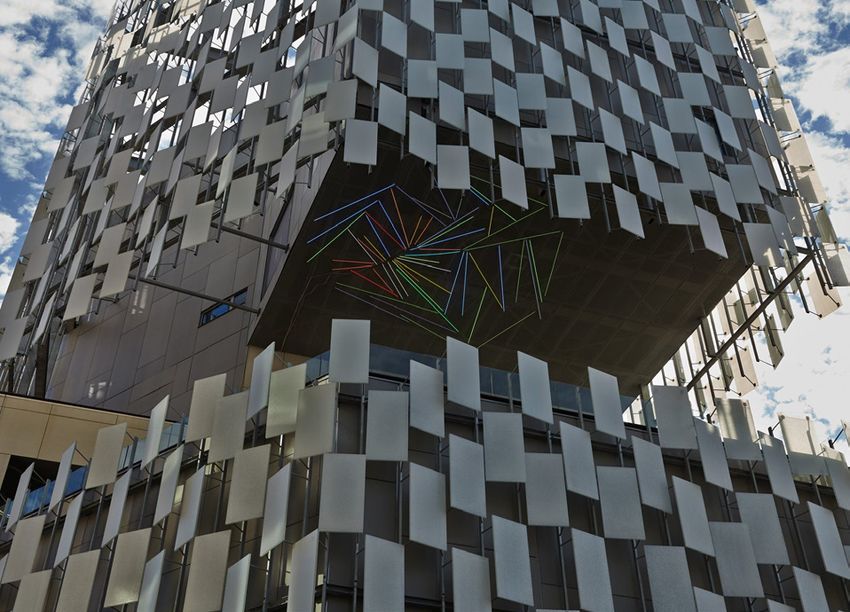
H OW TO AP P LY ?

DEADLINE
Applications must be submitted no later than Sunday, July 12, 2020, by midnight CET (e.g. Paris). Late and/or incomplete applications will
not be reviewed. The outcomes of the selection process will be communicated in early fall 2020.

APPLICATIONS
The applicants are asked to hand in an application in French or English. We accept applications only via our online platform, Submittable:
. The application must include the following:

•   A proposal narrative that describes your intended focus of the residency, whether on (a) particular work(s) or a more open-ended
    area of inquiry, and conveys the relevance of your project for today (up to 1200 words).
•   A rationale for wanting to work specifically at Camargo and Frac (as opposed to any other residency center) and/or in the Aix-
    Marseille-Provence area, including but not limited to existing or potential connections with people, places, organizations, and
    environments (up to 300 words).
•   A rationale for why a residency is appropriate at this specific stage of your proposal and/or career (up to 300 words).
•   A current CV for all team members (up to 3 pages each CV).
•   Work samples. If providing a work in progress, please also provide finished work. Visual artists may submit up to 16 images for visual
    artists; writers may submit up to 20 pages; filmmakers may submit up to 20 minutes of clips linked to a video-sharing site (Vimeo is
    preferred but not required.) Applicants must provide detailed information about each work sample, including descriptive captions, cue
    points, passwords, the applicant’s role in the work represented, etc.

                                              C A M A R G O & F R AC & G O E T H E • C A L L F O R A P P L I C AT I O N S • 9
H I STO RY

Bringing together two different residency programs, initiated in 2014 and 2017, this joint program involves three of the most important
cultural institutions in the Aix-Marseille Metropolitan Area.

Since 2014, the Camargo Foundation and the Goethe-Institut in Marseille partnered up to launch a call each year on a different theme:
public spaces, natural sites, circulation of people and ideas. Each time the focus was on linking local perspectives to wider international
ones.

In 2017, the Frac and the Goethe-Institut Marseille started a residency program, which focused on questions around architecture and
urban planning.

In 2019, the three organizations decided to support one common project: Kathrin Wildner, an urban anthropologist working on the
sounds of the Joliette district in Marseille. Since this partnership, the three organizations decided to come together to launch a call every
year to support interdisciplinary collectives through a double-residency opportunity.

FORMER RESIDENTS OF THE GOETHE & CAMARGO PROGRAM
2014 - 2015 Anke Doberauer and Elisabeth Dorier
2016 - 2017 Erik Goengrich and Boris Sieverts
2017 Mohamedali Ltaief and Darja Stocker
2018 Mediterranean Drexciya
2018-2019 Kathrin Wildner (in partnership with Frac)

                                               C A M A R G O & F R AC & G O E T H E • C A L L F O R A P P L I C AT I O N S • 1 0
ABOUT THE PARTNERS Founded by American artist and philanthropist Jerome Hill (1905-1972), the Camargo Foundation fosters creativity, research, and experimentation through its international residency program for artists, scholars, and thinkers. Since 1971 Camargo has hosted nearly 1,000 individuals working in the arts and humanities from all over the world. Located in Cassis, France, on the edge of the Mediterranean Sea, the Foundation offers time and space in a contemplative and supportive environment, giving residents the freedom to think, create, and connect. The mission of the Fonds Régional d’Art Contemporain Provence-Alpes-Côte d’Azur is to bring together public collections of contemporary art, disseminate them to new audiences and invent forms of awareness of current creation. Since its inauguration in 2013 and the opening of the new building designed by Kengo Kuma in the district of La Joliette, at the gateway to Euroméditerranée in Marseille, the Frac has become an emblematic place for the cultural development of Marseille. With a collection of +1000 works and representing +540 artists, the Frac now occupies a regional, national and international territory, and develops new methods of distribution for its collection through a network of partners. A true laboratory for artistic experimentation, its programming con confirms its commitment to the emergence and attempts, artistic and intellectual, to think “what is happening” today in our society while providing access to contemporary art in the six departments of the region. C A M A R G O & F R AC & G O E T H E • C A L L F O R A P P L I C AT I O N S • 1 1
The Goethe-Institut, as the major international cultural institution of the Federal Republic
of Germany, promotes knowledge of the German language abroad and fosters international
cultural cooperation. It also invites the international audience to discover Germany by
educating it about its cultural, social, and political life. To mark the occasion of the nomination
of Marseille-Provence as European Capital of Culture in 2013, the Goethe-Institut opened a
branch in Marseille, which has since been offering cultural activities year-round.

C A M A R G O & F R AC & G O E T H E • C A L L F O R A P P L I C AT I O N S • 1 2
CO NTAC T U S

 The Camargo Foundation
 1 Avenue Maurice Jermini, 13260 Cassis
 Julian McKinnon, Program Coordinator
 jmckinnon@camargofoundation.org

 Fonds régional d’art contemporain Provence-Alpes-Côte d’Azur
 20 Boulevard de Dunkerque, 13002 Marseille
 Nathalie Abou Isaac, Head of Public Programs and Outreach
 nathalie.abou-isaac@fracpaca.org

 Goethe-Institut Marseille
 La Friche la Belle de Mai, 41 rue Jobin, 13003 Marseille
 Stephanie Krämer, Head of Public Programs
 stephanie.kraemer@goethe.de

 C A M A R G O & F R AC & G O E T H E • C A L L F O R A P P L I C AT I O N S • 1 3
1, avenue Maurice Jermini | 13  2 60 Cassis
                                                                              +33 4 42 01 11 57 | apply@camargofoundation.org
                                                                                                       www.camargofoundation.org
                                                                                You can find us also on Facebook and Instagram

                                                                                           Photos of the campus of the Camargo Foundation © Viviana Peretti

C A M A R G O & F R AC & G O E T H E • C A L L F O R A P P L I C AT I O N S • 1 4
You can also read


