Canada-Ontario Community Housing Initiative (COCHI) & Ontario Priorities Housing Initiative (OPHI) - PROGRAM GUIDELINES
←
→
Page content transcription
If your browser does not render page correctly, please read the page content below
Canada-Ontario
Community Housing
Initiative (COCHI) &
Ontario Priorities
Housing Initiative (OPHI)
PROGRAM GUIDELINES

  MINISTRY OF MUNICIPAL AFFAIRS AND HOUSING - MAY 2019
Program Guidelines Summary

Introduction
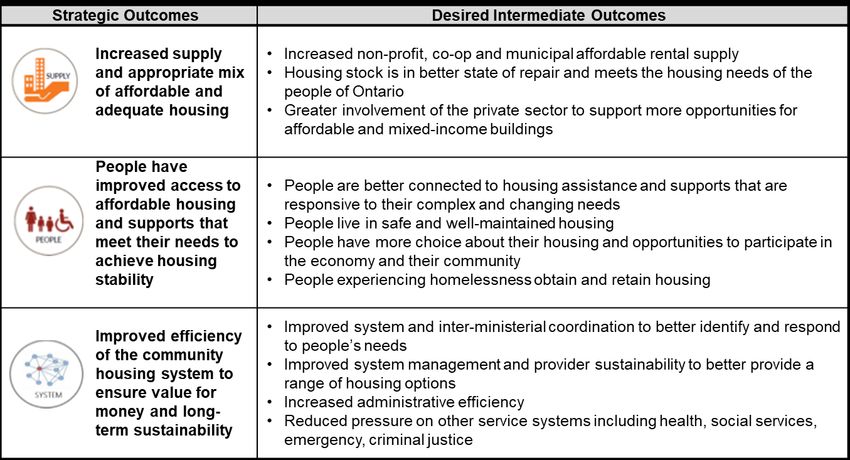
Ontario’s Community Housing Renewal Strategy is a multi-year plan to stabilize and
grow Ontario’s community housing sector, with the aim of achieving the following
outcomes and measures of success:

Over time, the Community Housing Renewal Strategy will help Ontarians be more
connected to housing assistance and supports that better meet their needs, live in safer
and well-maintained buildings, find housing more easily, and have more opportunities to
participate in the economy and their community.

The Community Housing Renewal Strategy is complemented by the Housing Supply
Action Plan, which is focused on enhancing housing affordability in the broader housing
market. Creating more housing, of the types and sizes people need, will help make
home ownership and renting more affordable and give people more choice.

Together, Ontario’s Community Housing Renewal Strategy and the Housing Supply
Action Plan demonstrate the government’s commitment to supporting the creation of
housing that responds to all Ontarians’ needs, across all incomes.

Leveraging the nine-year (2019-20 to 2027-28) federal government investments under
the National Housing Strategy is important to achieving the goals and objectives of
Ontario’s Community Housing Renewal Strategy.

                                                                                       1
On April 30, 2018, Ontario and the Canada Mortgage and Housing Corporation signed a
Bilateral Agreement regarding the National Housing Strategy. This agreement provides
an opportunity to align federal funds with Ontario’s Community Housing Renewal
Strategy priorities.
The Bilateral Agreement defines community housing:
Community-based housing that is owned and operated by non-profit housing
corporations and housing co-operatives or housing owned directly or indirectly by
provincial, territorial or municipal governments or district social services
administration boards and includes Social Housing.
For the purposes of these programs, in Ontario, social housing is defined as follows:
A project listed as a “Transferred Housing Program” in Schedule 1, Regulation
367/11 of the Housing Services Act, 2011.
Consistent with the Community Housing Renewal Strategy, the nine-year National
Housing Strategy investments will be delivered in three three-year funding periods:
Phase I - (2019-20 through to 2021-22)
Phase II - (2022-23 through to 2024-25)
Phase III - (2025-26 through to 2027-28)
These guidelines set out the parameters for Phase I for the following two National
Housing Strategy funding streams:
Canada-Ontario Community Housing Initiative (COCHI) - to protect affordability
for households in social housing, to support the repair and renewal of existing
social housing supply, and to expand the supply of community housing over time.
Ontario Priorities Housing Initiative (OPHI) - to address local housing priorities,
including affordability, repair and new construction.
COCHI funding represents a re-investment of federal funding that has been declining
under the Canada-Ontario Social Housing Agreement. It provides an opportunity for
Service Managers and housing providers to address the challenges associated with
projects reaching the end of their operating agreements and/or mortgage maturity. The
Province recognizes the significant challenges that Service Managers face in
maintaining this important supply of community housing.
OPHI is modelled after similar, previous affordable housing programs, with the most
recent being the Investment in Affordable Housing Program Extension (IAH-E). There
are a number of additional features in this program, including the addition of a support
services component and the eligibility of social housing under Ontario Renovates.
There will be an opportunity to review program priorities and desired outcomes prior to
the second and third funding periods. The Ministry intends to undertake a review of the
2early experience with program take-up and release updated/revised guidelines in 2021
to align planning for implementation beginning in April 2022.
COCHI and OPHI Program Parameters
Although COCHI and OPHI are separate programs under the Bilateral Agreement, they
are designed to share as many common elements as possible.
Service Managers are encouraged to view COCHI and OPHI as companion stackable
programs as there are common eligibility parameters, e.g., repair under the COCHI
Capital Component and OPHI Ontario Renovates Component, and rent supplements
under the COCHI Operating Component and OPHI Rental Assistance Component.
COCHI and OPHI funding under the Bilateral Agreement cannot replace or displace
any level of municipal spending in place on or before March 31, 2018.
Uses of Funding
The Bilateral Agreement sets out the following broad uses of funding for COCHI and
OPHI, which will assist in achieving the goals of Ontario’s Community Housing Renewal
Strategy:
Capital Expenditures COCHI OPHI
Affordable Rental New Construction
Affordable Rental Acquisition and/or
New Supply Rehabilitation
Social Housing Affordable Rental Conversion
Social Housing
Affordable Homeownership
Repair Affordable Ownership Housing
Affordable Rental Housing
Social Housing
Social Housing
Homeownership Down
Payment Assistance
Operating Expenditures
Rent Supplements
Housing Allowances
Support Services*
Transitional Operating
Funding for Housing
Providers
*Please refer to Appendix D for a non-exhaustive list of eligible support services.
3Ontario Targets to be Achieved
The Bilateral Agreement includes nine-year targets agreed to by the Province and the
Canada Mortgage and Housing Corporation. Funding under the Bilateral Agreement is
to be used to ensure that the same number of units under the Canada-Ontario Social
Housing Agreement in place as of April 1, 2019 will continue to be offered as community
housing over the period of 2019-20 to 2027-28.
In addition, the Bilateral Agreement requires the preservation of Urban Native
Housing (UNH) units to ensure there is no net loss of units with adequate rental
affordability and that retained units will be improved through repair and/or capital
replacement. The Ministry recognizes that UNH units may well require operating/rent-
geared-to income (RGI) subsidies on an on-going basis.
Ontario and the Canada Mortgage and Housing Corporation agreed to the following
baseline numbers:
131,063 Social Housing units, of which 95,109 are low-income;
Of the total number of Social Housing units, 1,452 are UNH, with all 1,452 units
being targeted as low-income.
Scope of the Guidelines
These Program Guidelines describe the program priorities and requirements for COCHI
and the program components and requirements of OPHI for the first three-year period
(2019-20 to 2021-22) of the National Housing Strategy investments.
In alignment with the phased approach of the Community Housing Renewal Strategy,
the nine-year National Housing Strategy investments will be delivered in three three-
year phases. At the end of each phase, program achievements will be reviewed and
assessed, and if necessary, program priorities for the following three-year period will be
adjusted.
Please note that the Program Guidelines may be updated on an as needed basis and
any changes will be communicated to the Service Managers.
Role of the Service Manager
Service Managers are responsible for:
Entering into a Transfer Payment Agreement with the province
Completing and updating an Investment Plan outlining how their confirmed and
planning funding allocations will be used under COCHI and OPHI
Developing application processes for COCHI and OPHI, if applicable
Selecting, recommending, and where applicable, approving projects
Entering into funding agreements with housing
providers/proponents/landlords/service providers/recipients
4 Advancing payments to proponents, housing providers, service providers or
recipients based on agreed upon payment schedules
Monitoring projects to ensure timely completion and occupancy
Fulfilling reporting requirements as per the Transfer Payment Agreement
Adhering to indemnification provisions as per the Transfer Payment Agreement
Preventing and resolving issues for projects that encounter difficulties
Participating in communication events pertaining to the National Housing
Strategy as per the Communications Protocol Requirements outlined in Schedule
F of the Transfer Payment Agreement.
Service Managers retain all responsibility for the delivery of COCHI and OPHI even if
third party delivery agencies or providers are engaged.
The Ministry is available to assist Service Managers with the implementation of COCHI
and OPHI. For any questions or more information, Service Managers are encouraged to
e-mail HousingProgramsDelivery@Ontario.ca.
Transfer Payment Agreement
One Transfer Payment Agreement will govern the responsibilities of Service Managers
for both COCHI and OPHI.
Service Managers will enter into a Transfer Payment Agreement with the province to
participate in COCHI and OPHI. The Transfer Payment Agreement contains an
accountability framework between the province and Service Managers and outlines the
roles and responsibilities of the Service Manager.
The Transfer Payment Agreement outlines:
Financial provisions (i.e. administration fees, payment dates and financial
accountability)
Eligibility criteria
Indemnification and repayment provisions
Risk management protocols for projects facing difficulties
Reporting and other accountability provisions
Other requirements (e.g. French Language Services).
Transfer Payment Agreements should be signed by no later than September 15, 2019
to ensure that Service Managers receive program funding in a timely manner.
Investment Plan, Reporting and Monitoring Approach
Investment Plan
To balance Service Manager flexibility and the province’s need to be accountable to the
Canada Mortgage and Housing Corporation for spending under the Bilateral
Agreement, Service Managers will be required to develop an Investment Plan.
5The Investment Plan will be used as the main budget setting and quarterly reporting
tool.
The Investment Plan will outline how the annual COCHI and OPHI funding allocations
will be used over the first three-year funding period (2019-20 to 2021-22). Investment
Plans must be Council/Board (or delegated authority) approved. The Ministry will review
the Investment Plans to ensure consistency with the Bilateral Agreement and Program
Guidelines.
As part of developing the Investment Plan, the Ministry’s expectation is that Service
Managers will consult with community housing providers within their service areas to
determine their needs and requirements to promote long-term sustainability and
viability. The Ministry acknowledges that timing for the 2019-20 fiscal year may not
allow for extensive consultation and planning.
The Investment Plan is intended to be a concise document that identifies:
The COCHI and OPHI components the Service Manager will deliver in each year
of the program and how the selected components address the needs identified in
the Service Managers’ Housing and Homelessness Plan;
How, in the COCHI and OPHI capital components, Service Manager decisions will
reflect value for money and prudent use of public funds;
The number of units expected to be created and repaired and households to be
assisted under the selected COCHI and OPHI components in each year of the
program;
The amount of funding from each year’s funding allocation to be used for the
COCHI and OPHI selected components, and the projected and actual
commitments on a quarterly basis;
The timing and method of the distribution of COCHI and OPHI funds on a project-
level;
Any targeted vulnerable sub-populations under the selected program
components, according to the groups defined under the National Housing
Strategy1, as applicable; and,
The amount of funding from each year’s funding allocation to be used for
administration.
In addition to the Implementation Plan, there is a COCHI Sustainability Plan that
illustrates how the selection of projects will support the Community Housing Renewal
objective of COCHI. Service Managers are required to list the specific projects they
intend to fund with their COCHI allocation to ensure that only housing providers that
demonstrate long-term sustainability receive this funding. This plan must be
Council/Board (or delegated authority) approved. Although the submission of the
1
NHS vulnerable sub-populations: Seniors, Indigenous peoples, persons with disabilities, women and girls,
particularly those fleeing situations of domestic violence, veterans, visible minorities, refugees, people suffering
from mental illness or substance dependence, individuals and families experiencing homelessness.
6COCHI Sustainability Plan is mandatory, payments will not be contingent on its
submission. Please refer to Schedule I of the Transfer Payment Agreement.
Reporting
The Investment Plan will also serve as the baseline reporting tool to enable the province
to monitor program achievements and to report back to Canada Mortgage and Housing
Corporation per the Bilateral Agreement. As such, Service Managers will be required to
provide quarterly updates to the Investment Plan.
The Ministry is committed to achieving streamlined reporting requirements across all
transfer payment programs to minimize administrative burden and maximize the
focus on achieving outcomes, while providing necessary accountability for the
expenditure of government funds. In the case of the COCHI and OPHI programs, the
Ministry must meet minimum requirements in order to access federal funding and
must work towards progressively meeting the full requirements of Canada Mortgage
and Housing Corporation, as outlined in the Bilateral Agreement, for reporting to the
federal government. The Ministry is also committed to working with Service
Managers and Canada Mortgage and Housing Corporation towards a streamlined
and efficient reporting approach.
Service Managers are required to provide the following information in the Investment
Plan for all components under COCHI and OPHI:
Details on initial budget by component for both COCHI and OPHI (see above);
For applicable components, an initial projection of how funding will be disbursed
by quarter;
Quarterly updates on actual disbursements to date (this will include a comparison
of initial projected disbursements to actual disbursements);
Changes to the budget by component;
Narrative information;
Project level details; and
Performance measures (e.g., targets).
The details identified in the Investment Plan will help to inform quarterly payments made
by the Ministry, progress on spending, and targets. This information will then be used to
update reports such as the Progress Reports and Quarterly Claims required by Canada
Mortgage and Housing Corporation under the Bilateral Agreement.
The province is required to submit an Annual Audited Statement of Disbursements to
the Canada Mortgage and Housing Corporation for each fiscal year. The information
provided through the year-end Investment Plan due to the Ministry each May 31, will be
aggregated at the provincial level, audited and presented to the Canada Mortgage and
Housing Corporation as part of the Annual Audited Statement of Disbursements
requirement under the Bilateral Agreement.
7Please note there are other reporting requirements for components under COCHI and
OPHI that are specified under each component in the Program Guidelines.
The initial Investment Plan for 2019-20 must be submitted to the Ministry for review no
later than September 15, 2019.
The Supplemental COCHI Sustainability Plan may be emailed directly to
HousingProgramsDelivery@Ontario.ca, by no later than December 15, 2019.
Service Managers are required to update their Investment Plans and include details on
progress (i.e. actual disbursements against projected disbursements) and revised
forecasts per the schedule below:
Due Date Description Purpose
September Initial Investment Plan to Ministry Provides a budget
15, 2019 due. Includes: breakdown by component
Budget by component for for COCHI and OPHI to
both COCHI and OPHI be input into the Transfer
For applicable Payment Hub System
(formerly known as
components, projected
Grants Ontario) for
disbursements by quarter program spending
for both COCHI and OPHI requirements
The forecast spending by
quarter allows the
Ministry to know how to
flow quarterly payments
December 15, Updates to the Investment Plan. YTD information allows
2019 Includes: for program monitoring
Year-to-date (YTD) actual Projected disbursements
Q3 Report disbursements for both for remainder of the year
COCHI and OPHI allows for updated
payment information
Projected disbursements
for remainder of the year
for COCHI and OPHI
February 15, Updates to Investment Plan. Actual and projected
2020 Includes: disbursement information
YTD actual disbursements is required for program
Q4 Report for both COCHI and OPHI monitoring and to ensure
Projected disbursements full take-up of available
funding
for February and March for
both COCHI and OPHI
8May 31, 2020 Final year-end reporting to Allows the Ministry to
Investment Plan. Includes: complete final
Updated actual reconciliation
disbursements for Fiscal The final information will
Year 2019-20 for both be used to form the
Annual Audited
COCHI and OPHI
Statement of
Any other updates if Disbursements
necessary requirement of CMHC
FLS reporting is to
Report confirming continued comply with provincial
compliance with the French legislation
Language Services (FLS)
requirements.
The Investment Plans for 2020-21 and 2021-22 must be submitted to the Ministry
according to the following schedule:
Due Date Description Purpose
February 15, Initial Investment Plan Year 2 and Provides a budget
2020 and 3 to Ministry for review. Includes: breakdown by component
2021 Budget by component for for COCHI and OPHI to
both COCHI and OPHI be input into TP Hub
For applicable components, System for program
spending requirements
projected disbursements by
The forecast spending by
quarter for new fiscal year quarter allows the
for both COCHI and OPHI Ministry to monitor
progress
September Updates to the Investment Plan YTD information allows
15, 2020 and Year 2 and Year 3 include: for program monitoring
2021 YTD actual disbursements Projected disbursements
for both COCHI and OPHI by quarter allows for
Q2 Report Projected disbursements for updated payment
information
remainder of the year for
both COCHI and OPHI
December 15, Updates to the Investment Plan YTD information allows
2020 and Year 2 and Year 3 include: for program monitoring
2021 YTD actual disbursements Projected disbursements
for both COCHI and OPHI for remainder of the year
Q3 Report Projected disbursements for allows for updated
payment information
remainder of the year by
quarter for both COCHI and
OPHI
9February 15, Investment Plan Update Year 2 Actual and projected
2021 and and Year 3: disbursement information
2022 YTD actual disbursements is required for program
for both COCHI and OPHI monitoring and to ensure
Q4 Report Projected disbursements for full take-up of available
funding
February and March for
both COCHI and OPHI
May 31, 2021 Final year-end reporting on Allows the Ministry to
and 2022 Investment Plan Year 2 and Year complete final
3. Includes: reconciliation
Updated actual The final information will
disbursements for fiscal be used to form the
year 2020-21 and 2021-22 Annual Audited
Statement of
for both COCHI and OPHI
Disbursements
Any other updates if FLS reporting is to
necessary comply with provincial
legislation
Report confirming continued
compliance with the French
Language Services (FLS)
requirements.
Monitoring
The quarterly updates to the Investment Plan will also serve as the tool for the Ministry
to monitor program progress. Although payments will be made up-front based on the
projected disbursements in the Investment Plan, the Ministry will use the information
provided in the quarterly updates to the Investment Plan to adjust quarterly payments to
reflect Service Manager needs.
Funding Commitments
Funding allocations are provided on a “use it or lose it” basis. For operating
components, all funds must be disbursed to the recipient in the program year in which
the funding was committed.
Funds not committed by the required timelines may be reallocated to other Service
Managers as funding from one year cannot be allocated by the Province to future years.
Realignment to other Service Managers will help to maximize federal funding received
in one year to reach overall desired program outcomes. Details on what constitutes a
commitment are provided in the subsequent COCHI and OPHI sections.
As part of the Bilateral Agreement, the Province is required to provide the Canada
Mortgage and Housing Corporation with project level details for both capital and
10operating expenditures under COCHI and OPHI. If this information is not provided to the
Ministry by the key dates identified, Service Managers risk losing funding as per the
“use it or lose it” provision.
Payments
Where applicable and unless otherwise stated in the Program Guidelines, the Ministry
will provide quarterly payments based on the information requested through the
Investment Plan.
Generally, payments to Service Managers will be made on a quarterly basis as follows:
April 15;
July 15;
October 15; and
No later than March 1.
These dates may be adjusted within 2019-20.
Administration Costs
Service Managers may use up to five percent of each of their annual COCHI and OPHI
funding allocations to assist with the administration costs for delivering the respective
initiatives. Service Managers are responsible for determining the amounts required by
program year and identifying these amounts in their Investment Plans.
Service Managers are encouraged to reduce their administration costs below 5 percent
to provide more funding to program recipients.
Administration costs will be paid to Service Managers quarterly based on the annual
Investment Plan.
French Language Services
Service Managers providing a service to the public in connection with COCHI or OPHI
and that have an office (including the offices of sub-contractors) located in or serving a
designated area must:
Ensure services are provided in French; and,
Make it known to the public (through signs, notices, other information on
services, and initiation of communications in French) that services provided to
and communications with the public in connection with the initiatives are
available in French.
The list of designated areas can be found in Appendix A.
Service Managers are required to submit annual French Language Services Reports
confirming their continued compliance with the French language services requirements,
11by May 31 of each year so that it aligns with the final year-end reporting.
Environmental Assessment
Projects approved under COCHI and OPHI are subject to the Canadian Environmental
Assessment Act 2012 (“CEAA 2012”). Service Managers are required to check for
compliance of the CEAA 2012 and provide confirmation to the Ministry. Please refer to
Appendix B for the CEAA 2012 checklist. CEAA 2012 compliance does not apply to the
Homeownership, Rental Assistance, or Housing Support Services components of OPHI
or the operating component of COCHI.
Communications Protocol
Service Managers participating in COCHI and OPHI must agree to adhere to the
Canada Mortgage and Housing Corporation-Ontario Bilateral Agreement –
Communications Protocol. This is to ensure open, transparent, effective and proactive
communications with citizens through ongoing public information activities that
recognize the contributions of each party.
Important Dates
Date Description
September 15, Transfer Payment and Investment Plan due to ensure timely
2019 quarterly payments
For 2019-20 only
September 15, Updates to the Investment Plan. Includes:
2020 and 2021 Year-to-date actual disbursements for both COCHI and OPHI
For applicable components, projected disbursements for
Q2 Report remainder of the year for both COCHI and OPHI
Note: Service Managers have until September 15 to formally
request transfers of funding between Capital and Operating
components, and vice versa, within each of the COCHI and
OPHI allocations. This allows time for the Ministry to seek the
necessary approvals to move funding to align with Service
Manager needs.
December 15, Updates to the Investment Plan. Includes:
2019, 2020 and Year-to-date actual disbursements for both COCHI and OPHI
2021 For applicable components, projected disbursements for
remainder of the year for both COCHI and OPHI
Q3 Report
December 31, Final day to input Contribution Agreements into Transfer
2019, 2020, Payment Hub System and to commit funding
122021 If Contribution Agreements not in system, the respective
funding allocation may be reallocated to another Service
OPHI Rental Manager
Component only
January 30, Final day to input Project Information Forms and, where
2020, 2021 and applicable, Contribution Agreements into Transfer Payment
2022 Hub System and to commit funding
If Project Information Forms and Contribution Agreements not
in system, the respective funding allocation may be reallocated
to another Service Manager
February 15, Investment Plan for 2020-21 and 2021-22 funding for both
2020 and 2021 COCHI and OPHI due
and 2022
Investment Plan update Year 2 and Year 3:
Q4 Report Year-to-date actual disbursements and projected
disbursements for February and March for both COCHI and
OPHI
May 31, 2020, Final year-end reporting on Investment Plan. Includes:
2021 and 2022 Final actual disbursements for each fiscal year for both COCHI
and OPHI
The final information will be used to form the Annual Audited
Statement of Disbursements
Any other updates if necessary
*If any of the above dates fall on a holiday or weekend, the due date is one day before
the stated date above.
13Canada-Ontario Community Housing Initiative
(COCHI)
Introduction
When the responsibility for social housing was transferred from the federal to the
provincial government in the late 1990s, a distinction was made between social housing
projects that were built under programs funded solely by the federal government, and
programs that received some form of provincial funding.
Social housing projects that were solely federally-funded retained their original
operating agreement and mortgage as required by the Canada-Ontario Social Housing
Agreement. This is also the case for units funded through federal rent supplement
programs. Together, these units account for approximately 25 percent of the social
housing supply in Ontario:
These projects are owned and operated by non-profits, co-ops, and private
landlords (for rent supplements).
This category also includes Urban Native Housing programs.
They are governed by the rules and requirements outlined in their original
operating agreement; specific requirements vary on an agreement-by-agreement
basis.
After the operating agreement ends, neither the Province nor Service Managers
have authority over these projects unless Service Managers and housing
providers have entered into some form of agreement that addresses ongoing
obligations.
Social housing projects that included provincial funding had their operating agreements
voided and their rules transferred to provincial legislation, now the Housing Services
Act, 2011. These projects account for over 70 percent of the social housing supply:
Some of these projects are owned and operated by non-profits and co-ops. The
remainder are government-owned public housing projects, administered and
delivered through municipal Local Housing Corporations.
Although there are funding formula differences between Local Housing
Corporations and non-profit and co-operative housing projects, these projects are
governed by rules and procedures detailed in the Housing Services Act, 2011.
These rules include how rent-geared-to-income tenants are selected (through the
centralized wait list), how rents are calculated, how the operating subsidy that the
14provider receives from the Service Manager is calculated, and how the Service
Manager may intervene in provider operations or governance under certain
circumstances.
As these projects are no longer tied to an operating agreement, there is no
specific “end date” to the housing provider’s obligations to provide social housing
(or to the Service Manager’s responsibility to fund that provider).
While there are numerous challenges facing social housing in Ontario, a key issue is the
risk of “losing” community housing supply and the potential impacts on lower-income
tenants related to end of operating agreements and mortgages for social housing
providers and to the state of good repair.
The Province recognizes that Service Managers are the primary funders of social
housing, with financial assistance provided by the federal government through the
Canada-Ontario Social Housing Agreement (and in the case of District Social Service
Boards, some provincial funding associated with Territories Without Municipal
Organization).
The Province also acknowledges the variations in social housing portfolios (e.g. non-
profit, co-operative and Local Housing Corporations), demand and local solutions that
Service Managers are using now to manage housing needs in their respective areas.
Consistent with the goals of Ontario’s Community Housing Renewal Strategy, the
Canada-Ontario Community Housing Initiative has been designed to provide a flexible
approach to help Service Managers address these issues and modernize the
community housing system to move towards greater housing provider sustainability and
self-sufficiency.
Objective
The objective of COCHI for the first three years of the program (2019-20 to 2021-22) is
to protect tenants in projects with expiring operating agreements/mortgages and to
begin to stabilize the supply of community housing through repairs, renovations and
operating support. COCHI funding is intended to support social housing providers that
can demonstrate their potential for long-term sustainability.
There will be an opportunity to review COCHI program priorities prior to the second and
third funding periods.
Funding Allocation
Service Managers have been provided with COCHI funding allocations for the first three
years to allow for planning and program implementation. COCHI funding will also be
used to support provincial dedicated supportive housing providers and the Rural and
Native Housing program.
15The annual amount of COCHI funding for Service Managers is primarily determined by
the amount required to offset the ongoing annual funding decline from the Canada-
Ontario Social Housing Agreement. The Social Housing Agreement funding to be
received by Service Managers is published in the Ontario Gazette. COCHI funding,
however, is different from the Social Housing Agreement funding in that it is provided as
a distinct Transfer Payment.
Funding allocations will be provided on a “use it or lose it” basis, as funds are provided
by the federal government on the same basis. Funds that are not committed by the
required timelines may be re-allocated by the Ministry to other Service Managers. Since
funding from one year cannot be allocated by the Province to future years, realignment
to other Service Managers would ensure utilization of all available federal funding in
each year.
Service Managers are allowed to use up to five percent of their funding allocation for
administration costs. Administration costs will be paid out equally on a quarterly basis in
the year.
Funding Commitments
The following documentation is required to commit funds under COCHI:
Operating Component - Commitment letter from the Ministry
NOTE: Funding for both COCHI operating components – Rental Supplements and
Transitional Operating – must be fully disbursed to the recipient in the program
year in which the funding was committed. Funding cannot be extended beyond the
program year.
Capital Component – Approved Project Information Form in Transfer Payment
Hub System and either an executed Letter of Agreement or Funding
Agreement
Reallocation
To ensure all funds are committed, Service Managers may move funding from one
COCHI component to another within the same program year if the original planned
commitment for funding cannot be met, as follows:
If a Service Manager wishes to reallocate funding from the capital component to
the operating components, or vice versa, a request for reallocation shall be
submitted to the Ministry by September 15 of the applicable year for which the
reallocation is requested. The Ministry will attempt to accommodate such
requests but cannot guarantee approval.
16All annual funding allocations must be committed to projects within the specified
timelines in each program year; otherwise, the outstanding funding allocation may be
reallocated to other Service Managers. The Ministry will review Service Managers’ third
quarter Investment Plan updates for each program year to determine whether funding
targets will be met and whether reallocation is needed. Any funding remaining to be
committed after January 30 of each program year may be re-allocated. Any funding that
is re-allocated from a Service Manager will be deducted from that Service Manager’s
total overall allocation.
General Eligibility
Housing providers/projects are eligible to receive COCHI funding if:
As of April 1, 2019, Schedule 1, the project was administered within a
“Transferred Housing Program” in Schedule 1, Regulation 367/11 of the Housing
Services Act, 2011.
At the time of the commitment and use of the COCHI funding for the
provider/project, the project is still listed as a “Transferred Housing Program” in
Schedule 1, Regulation 367/11 of the Housing Services Act, 2011.
Note that housing that was, or is, only within either of the following social housing
categories is not eligible to receive COCHI funding:
“Program No 2: Rent Supplement Program” (federal requirements are that
COCHI funding be used to support community housing, which does not include
private landlords);
“Program No 9: Rural and Native Homeownership Program” (the Province
provides funding to Ontario Aboriginal Housing Services for this program).
Uses of Funding
As outlined in the Bilateral Agreement, COCHI funding is to:
Be used solely in social housing and community housing;
Protect, regenerate and expand social housing and to reduce housing need in
social housing; and,
Preserve Urban Native housing units – no net loss of units; retained units
improved through repair/capital replacement; and adequate affordability support.
17To support Ontario’s Community Housing Renewal Strategy, Service Managers are
encouraged to use COCHI funding for:
1. Protecting rent-geared-to-income tenants in non-profit and co-operative housing
projects with expiring operating agreements/mortgages;
2. Preserving social housing supply through repairs and renovations; and/or
3. Supporting social housing providers that can demonstrate their potential for long-
term sustainability through transitional operating funding.
NOTE: As per the Bilateral Agreement, COCHI funding cannot be used to offset
municipal social housing subsidy expenditures. COCHI funding must be used in
addition to existing municipal subsidy social housing expenditures.
Urban Native Housing
For those Service Managers with Urban Native housing units, there is a requirement
that this stock will be prioritized to receive COCHI funding where providers are able and
willing to continue. Urban Native housing projects typically have higher repair/renovation
needs and most were developed with 100% rent-geared-to-income units.
Of the total number of social housing units in Ontario, 1,452 are Urban Native housing,
with all 1,452 units being targeted for low-income households receiving rent-geared-to-
income assistance.
The COCHI program requires the preservation of Urban Native housing units to ensure
that there is no net loss of units and retained units will be improved through repair,
capital replacement as well as through adequate affordability support.
Unlike other social housing providers, Urban Native housing providers are not subject to
the rules of the Housing Services Act, 2011 and have their own operating agreements.
In order to help guide Service Managers when working with Urban Native housing
providers, the Ministry is requiring Service Managers to follow the principles outlined
below:
Urban Native housing is intended to support individuals in housing need that
identify as Indigenous;
There is a fair and transparent approach for selecting tenants;
Indigenous governance of Urban Native providers is to be supported and
maintained; and,
Funding is to be used to support culturally safe housing stability for tenants and
ongoing viability and sustainability of the provider.
18The Ministry acknowledges that operating subsidies for many Urban Native housing
projects will likely need to be ongoing (rather than transitional) given that most projects
have no market housing units to offset operating costs.
Further guidelines on Urban Native housing may be developed in consultation with
housing providers and Service Managers.
COCHI Operating Components:
Protection for RGI tenants and support for housing providers that can demonstrate their
potential for long-term sustainability could take the form of operating funding.
Rent Supplements
Where operating expenditures are planned, eligible costs could include a rent
supplement. A rent supplement is a subsidy paid to the landlord on behalf of a
household in need of rental assistance.
Service Managers are encouraged to prioritize households residing in social housing
and affected by expiring operating agreements and/or mortgage maturity.
Providing rent supplements is intended to promote housing stability for tenants who
would otherwise face affordability challenges.
Transitional Operating Funding
COCHI funding may also be used as a short-term transitional operating subsidy. The
expectation is that housing providers would use this funding to address immediate
areas of concern with the clear objective of reaching an operational and financial status
that does not require an ongoing government subsidy but could transition to a rent
subsidy agreement that is not an ongoing subsidy.
For example, transitional operating subsidy funding could help a housing provider to
address:
Asset management planning services, such as building condition audits and
technical assessments of significant repairs that must be addressed within
identified timelines;
Business streamlining/operations analysis; and,
Enabling acquisitions and mergers of housing providers/assets to improve
operating efficiencies and economies of scale.
Households paying a rent-geared-to-income rent consistent with the Housing Services
Act, 2011 who are supported through the use of COCHI operating funding will be
eligible to meet a Service Manager’s Service Level Standard as per the Act.
19COCHI Capital Component:
Repair
Support for community housing providers, including Local Housing Corporations, could
take the form of repair and renovation funding.
Where capital expenditures are planned, the Ministry encourages Service Managers to
utilize COCHI funding for strategic capital repairs which preserve and extend the
functional lifespan of the social housing supply, such as investments based on capital
needs identified in current building condition audits and that help support ongoing
housing provider sustainability.
Eligible work could include:
Replacing and/or repairing core building systems, and sub-systems (e.g. heating
and/or cooling, leaking roof systems, water issues, structural repairs, etc.); and,
Carrying out health and safety repairs (e.g., accessibility renovations).
Housing providers/projects that receive funding under the COCHI Capital Component
must remain affordable for a ten-year period after the completion of the funded retrofit
work, including a minimum of five (5) years during which it will operate as social housing
under the Housing Services Act, 2011. This requirement applies regardless of any
operating agreements or mortgage obligations or agreements between a Service
Manager and eligible housing provider.
Service Managers may also utilize OPHI funding for social housing capital repair
(please refer to Page 43 for more detail).
Project Submission/Approval Process
COCHI Operating Components:
Allocations will be committed at the beginning of each program year through a letter
from the Ministry based on the projected disbursements identified in the Investment
Plan submitted by the Service Manager through the Transfer Payment Hub System.
Service Managers are required to report-back on a quarterly basis and demonstrate
program take-up through updates of their actual disbursements in their Investment
Plans. Please see Page 7 for details on reporting requirements and due dates.
20Once the Ministry has reviewed the annual Investment Plans and the individual social
housing projects receiving COCHI operating components funding are approved by the
Service Manager, the Service Manager will enter project details into the Transfer
Payment Hub System.
COCHI Capital Component:
Service Manager funding is provided in the form of a forgivable loan to the housing
provider based on the estimated cost of reviewed work items. Service Managers must
not reduce existing subsidy payments to social housing providers as a result of COCHI
funding.
The Service Manager is responsible for selecting and approving all eligible COCHI
projects, monitoring progress and completion of projects, quality of work and for the
advancement of funds. Service Managers and housing providers are encouraged to
liaise early with building departments to avoid code compliance issues, i.e., building
permits, etc.
Service Managers are also responsible for creating and entering into project funding
agreements with each eligible housing provider that will receive COCHI Capital
Component funding. Repairs must commence within 120 days of signing the funding
agreement and completed by the end of the subsequent Fiscal Year, i.e. March 31,
2021 for the 2019-20 funding year. Copies of all financial invoices must be kept for
reporting and audit purposes.
Once the Ministry has reviewed the annual Investment Plans and the individual projects
are approved by the Service Manager, the Service Manager will enter project details as
per the Project Information Form into the Transfer Payment Hub System to commit
funding.
The Ministry reserves the right to decline any proposed uses of COCHI funding that are
not consistent with the Program Guidelines and the Bilateral Agreement; revision and
resubmission may be required.
A minimum of 90 percent of the annual capital component funding allocation must be
committed to eligible housing providers by December 31 of each program year. If a
Service Manager has not met this threshold, the Ministry reserves the right to reallocate
funds to another Service Manager to ensure full commitment of program funding. Any
funding remaining to be committed after January 30 of each program year may be re-
allocated to another Service Manager.
21The Service Manager must not approve a funding request unless the housing provider
has agreed to operate the project as per the affordability requirements included on Page
20.
Service Managers must ensure project status is updated and documents are posted in
the Transfer Payment Hub System on an on-going basis.
Funding Payment Process
COCHI Operating Components:
The Ministry will provide quarterly payments based on quarterly projected disbursements
identified in the Investment Plan.
Funds are transferred electronically to Service Managers. Service Managers must
ensure that the Ministry has their latest banking information to receive these funds.
Service Managers advance monthly payments to housing providers upon the signing of
housing provider agreements.
COCHI Capital Component:
Service Managers will receive 20 percent of the annual program funding as their first
quarter payment based on the repair budget identified in the Investment Plan.
The Ministry will make the remaining 80 percent through subsequent quarterly
payments to Service Managers based on the projected disbursements in the Investment
Plan.
The primary purpose of the quarterly forecasts in the Investment Plan is to indicate
quarterly cash flow requirements over the life of the program, but no later than the end
of the subsequent fiscal year. The quarterly cash flow request must be at or close to the
time the funds are needed by the housing provider to pay for their relevant
expenditures.
Payments to Service Managers will not be based on development milestones of
individual projects; Service Managers must flow funds to the housing providers based
on pre-established project milestones for their respective projects.
22Reporting
Service Managers will be required to report municipal social housing expenditures that
match the annual COCHI allocation provided. The Ministry will work with Services
Managers in 2019-20 to confirm reporting format.
COCHI Operating Components:
COCHI reporting consists of updating and submitting the Investment Plan with Service
Manager progress on a quarterly basis. Quarterly reports should be completed and
submitted through the Ministry’s Transfer Payment Hub System. Please see Page 7 for
dates and reporting requirements.
For quarterly updates, Service Managers are required to track disbursements and
recipient numbers separately for each stream. Quarterly Investment Plan updates must
include the number of occupied units.
Service Managers are also required to track and report on the following information for
the social housing projects receiving COCHI funding:
Landlord agreements and, if applicable, agreements with third-party delivery
agencies
Where a project specifically targets any of the targeted vulnerable sub-
populations listed on Page 6.
This reporting ensures compliance with the provisions of the Canada Housing and
Mortgage Corporation-Ontario Bilateral Agreement, the Service Manager Transfer
Payment Agreement, and other established program parameters.
COCHI Capital Component:
Service Managers are required to report to the Ministry on the status of each project
during its repair, retrofit and regeneration activities. Service Managers must update
progress on project activities and payments to housing providers regularly through the
Ministry’s Transfer Payment Hub System. Service Managers must submit confirmation
of construction start and completion for each project in the Ministry’s Transfer Payment
Hub System.
Service Managers are also required to track and report on the following information for
the Social Housing projects receiving COCHI funding through the Project Information
Form:
23 Where a project specifically targets any of the targeted vulnerable sub-
populations listed on Page 6.
Please see Page 7 for dates and reporting requirements.
Service Managers must also monitor compliance with the ten-year affordability period
for each project that receives COCHI capital funding. Service Managers are required to
file project reports annually to the Ministry for the first three years following project
completion. After this period, the Ministry will audit a sample of Service Managers every
year. Every Service Manager will be audited at least once over the remaining seven
years of the affordability period.
24Ontario Priorities Housing Initiative (OPHI)
Program Components
OPHI offers the following program components to Service Managers:
Rental Housing component
Homeownership component
Ontario Renovates component
Rental Assistance component
Housing Support Services component
Details on each component are included in these Guidelines.
Service Managers have the flexibility to select the components they will deliver each
year using their OPHI approved and planned annual funding allocations. Planned
commitments and projected take-up for selected program components must be
identified in each Service Manager’s Investment Plan – see page 5.
Funding Allocations
Service Managers have been provided with their approved funding allocation for Year 1
and planning allocations for Years 2 and 3 of OPHI. Allocations are based on the
Service Manager’s share of all households in Ontario and their share of Ontario
households in core housing need equally weighted.
The Ministry will work with Service Managers who wish to “pool” their annual funding
allocations into one fiscal year to facilitate the development of larger projects. In this
scenario, the Ministry coordinates a swapping of funding allocations from different
fiscal years between Service Managers and ensures each Service Manager
maintains their total funding allocations. Requests for swapping should be made as
soon as possible by emailing HousingProgramsDelivery@Ontario.ca.
Funding Commitments
Funding allocations are provided on a “use it or lose it” basis. Funds not committed by
the required timelines may be reallocated to other Service Managers as the swapping
exercise described above is the only option available to move funds between program
years.
25The following documentation is required to commit funds under OPHI:
Rental Housing – Contribution Agreement, confirmation of security
Homeownership – Approved project information in Transfer Payment Hub
System and Agreement of Purchase and Sale, or Funding/Contribution
Agreement with non-profit developer and confirmation of security
Ontario Renovates – Approved project information in Transfer Payment Hub
System, confirmation of security (mortgage or promissory note), either an
executed Letter of Agreement or Funding Agreement
Rental Assistance – Commitment letter from the Ministry
Housing Support Services – Services Agreement with a Support Services
Agency or equivalent, payments for services if applicable
NOTE: Funding allocations are provided on a “use it or lose it” basis, since funding
from one year cannot be allocated by the Province to future years. Therefore, unlike
the previous Investment in Affordable Housing program, funding for both OPHI
operating components – Rental Assistance and Housing Support Services – must be
disbursed in the program year in which the funding was committed. Funding cannot
be extended beyond the program year.
Capital Components
Rental Housing component funding allocations must be committed by December 31 of
each program year.
For the Homeownership and Ontario Renovates components, no more than 10% of
each component’s funding allocation may be planned for take-up in the fourth quarter of
the respective program years. A minimum of 90% of the annual funding allocations for
each component must be committed by December 31 of each program year.
Notwithstanding the above, any funding that remains to be committed by January 30 of
each program year may be reallocated to other Service Managers.
Operating Components
Allocations for the Rental Assistance component will be committed at the beginning of
each program year through a letter from the Ministry based on the projected
disbursements identified in the Service Manager’s Council-approved Investment Plan.
Housing Support Service funding will be committed based on the submission of
Services Agreements (or equivalent if delivered directly by the Service Manager)
Service Managers who directly deliver the Rental Assistance component and/or the
Housing Support Services component are required to report on program take-up
through their quarterly Investment Plan updates. The Ministry will provide quarterly
26payments to Service Managers based on projected disbursements. Service Managers
will be required to provide copies of rent supplement Landlord Agreements and
Services Agreements under the Housing Support Services component to demonstrate
program take-up.
Reallocation
To ensure all funds are committed, Service Manager’s may move funding from one
OPHI component to another within the same program year if the original planned
commitment for funding cannot be met, as follows:
Funding originally planned for the capital components (Rental Housing,
Homeownership and the Ontario Renovates) can be reallocated within these
components
Funding originally planned for the Rental Assistance component’s Rent
Supplement stream and Housing Allowance Direct Delivery stream, or the
Housing Support Services component can be reallocated within these
streams/components (for more information on delivery streams please refer to
Page 47)
No funding can be moved to the Housing Allowance Shared Delivery stream
from the other OPHI components, or vice versa
If a Service Manager wishes to reallocate funding from the capital components
to either the Rental Assistance Component’s Direct Delivery Streams or the
Housing Support Services component, or vice versa, a request for reallocation
shall be submitted to the Ministry by September 15 of the applicable year for
which the reallocation is requested. The Ministry will attempt to accommodate
such requests but cannot guarantee approval.
Under the capital components, all annual funding allocations must be committed to
projects within the specified timelines in each program year; otherwise, the outstanding
funding allocation may be reallocated to other Service Managers. The Ministry will
review Service Managers’ third quarter Investment Plan updates for each program year
to determine whether funding targets will be met and whether reallocation is needed.
Any funding remaining to be committed after January 30 of each program year may be
reallocated. Any funding that is reallocated from a Service Manager will be deducted
from that Service Manager’s total overall allocation.
27Rental Housing Component
The Rental Housing component will:
Increase the supply of community rental housing for households on, or eligible to
be on, social housing waiting lists.
Ensure that safe, adequate and affordable rental housing is available to Ontario
households.
Eligibility Criteria - Projects
Eligible projects must be non-profit/municipal/co-operative developments or
partnerships, and be one of the following:
New construction, including additions and extensions
Acquisition and, where required, rehabilitation of existing residential buildings to
maintain or increase the affordable rental housing stock
Conversion of non-residential buildings or units to purpose-built rental
buildings/units
Social housing redevelopment which involves building new affordable rental
units/additions on social housing sites is eligible provided that the appropriate ministerial
or Service Manager consent, as applicable, is obtained as per the Housing Services
Act, 2011.
Amendments to the Housing Services Act, 2011, effective January 1, 2017, have
resulted in changes to consent authorities. Specifically, Service Managers now have
consent authority for the transfer of most social housing properties. Please refer to the
Guide for Service Manager Consents under the Housing Services Act, 2011 which can
be found at: http://www.mah.gov.on.ca/AssetFactory.aspx?did=15950.
Projects that are not eligible include:
Projects proposed by private sector proponents without non-profit/municipal/co-
operative partnership*
Secondary suites in owner-occupied housing (eligible under the Ontario
Renovates component)
Nursing and retirement homes
Shelters and crisis care facilities
Owner-occupied housing
Student residences
*Canada Mortgage and Housing Corporation has made available other programs – for
example, the National Housing Co-Investment Fund – to support the development of
affordable units by private developers. The Ministry is interested in focusing OPHI
funding on the development of community housing that will provide longer-term public
benefit.
28Eligibility Criteria – Units
Units must be modest in size and amenities relative to other housing in the community.
Units are expected to be self-contained. Proponents who wish to develop congregate
living buildings (rooms with shared living spaces) for supportive housing may be eligible
for program funding and should provide a rationale in order to receive funding.
Service Managers may establish size and amenity requirements. If Service Managers
do not set size requirements, the following provincial minimum and average size
requirements must be used as a guideline for new construction projects.
Bachelor 1 Bedroom 2 Bedroom 3 Bedroom 4 Bedroom
2 2 2 2 2
Minimum 40.0 m 48.7 m 60.4 m 83.6 m 102.2 m
2 2 2 2 2
Average 41.8 m 55.0 m 67.4 m 92.9 m 109.2 m
Up to 30% of the total available space may be used for non-residential purposes,
including common areas and services used directly with the residential accommodation
such as office space for support services providers.
Project Submission Process
Service Managers will solicit proposals and select Rental Housing projects to
recommend to the Ministry for funding approval. All procurement processes must be in
accordance with the Municipal Act, 2001 or the City of Toronto Act, 2006 (applicable to
the City of Toronto).
Service Managers will submit recommended projects for the Ministry’s consideration
within the allocation set out in their Investment Plans.
Recommended projects shall:
Be approved by council and/or board based on municipal/board procurement
practices and in accordance with the Municipal Act, 2001 or the City of Toronto
Act, 2006 (applicable to the City of Toronto).
Be able to sign a Contribution Agreement no later than December 31 of each
program year.
Be able to start construction within 120 days after signing a Contribution
Agreement and be completed within four years.
Be financially viable from a construction and operating cost perspective – based
on Service Manager confirmation.
Meet the current Ontario Building Code and Canadian Environment Assessment
Act, 2012 requirements.
Have rents that on average for the project are at or below 80% of the Canada
Mortgage and Housing Corporation Average Market Rent for the community or
29You can also read


