Cape Scott Challenge - SKILS
←
→
Page content transcription
If your browser does not render page correctly, please read the page content below
www.skils.ca

                                     Program Information Package

                                           Cape Scott Challenge

Program Description
This is an expedition that is designed for the
intermediate to advanced paddler that wishes
to explore remote locations while receiving
quality instruction and feedback along the way.
Whether you have received training through a
professional organization, or you are a
motivated boater with practical experience, this
course will allow you to apply and polish your
existing skills while deepening your
understanding of their tactical applications.
Traveling through the remote Orca and
Humpback whale habitats of Northern
Vancouver Island you will push yours skills while
exploring surf beaches and the rocky points of
this beautiful ocean playground.

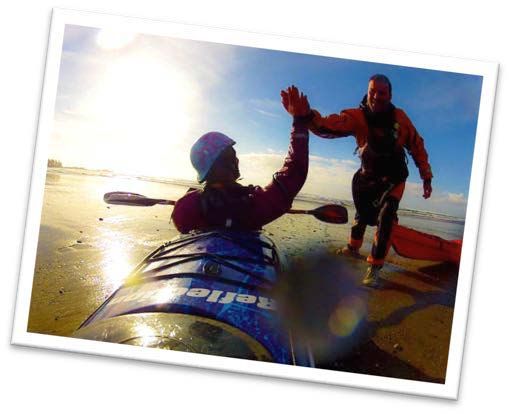
Facilitated by our committed instructors you will take full advantage of this wild place. You will hone
your skills in everything from expedition management to technical paddling and build yourself from
confident paddler to competent mariner.

To help you prepare for our time together, we have created this course package to be used as an
equipment checklist. There is a lot of information included, so be sure to review all the pages.

     1   Cape Scott Challenge Program Document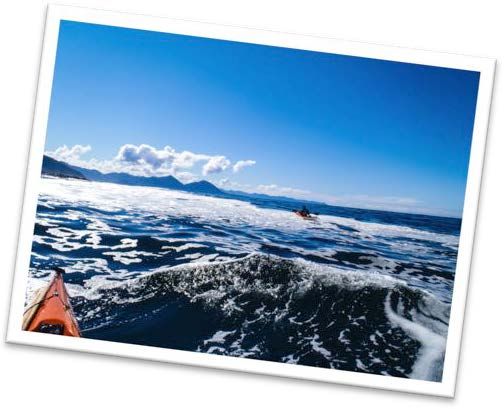
Paperwork Checklist
Please use the following checklist to ensure you have received and reviewed all the required
documentation prior to the program start date:
   ✓ Cape Scott Challenge Program Document – please review
  ❑   SKILS Waiver
  ❑   SKILS Medical Form

Program Logistics
Prerequisites
 This expedition is designed for individuals who
 have had previous kayak touring experience
 and training.

           •   Interested candidates should have
               extensive (over 50 days) previous
               sea kayak experience and have
               experience in dynamic waters and
               surf. Vigorous sea conditions along
               exposed shores with infrequent
               landing opportunities present
               significant challenges for individual
               safety and group management

           §   Participants must be 18 years of age or older.

           §   Considerable personal paddling experience in light and moderate sea conditions or
               higher including overnights.

           §   Please note that this course is intense as well as mentally and physically demanding. If
               you are unsure of your ability to take this course, please call us to discuss your
               concerns prior to registering.

           §   You must be able to paddle at a speed of 3 knots for up to 6 hours per day.

Group Size
 A minimum of 3 participants is required to run this program while the maximum group size we
 adhere to is 8.

      2   Cape Scott Challenge Program Document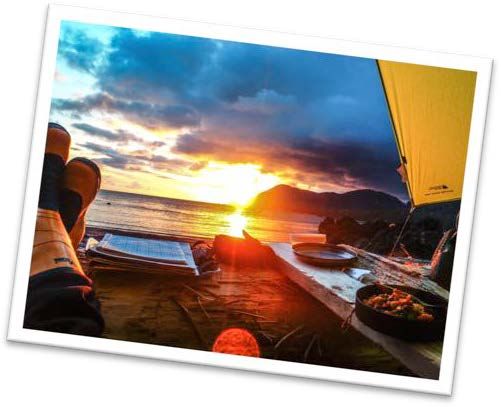
Locations and Traveling
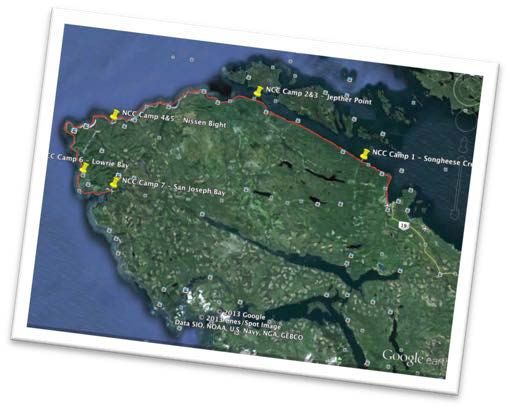
Our program will begin on the Northern end of Vancouver Island in Port Hardy, BC, Canada. Port
Hardy is reached via BC S 19N highway from Nanaimo on Vancouver Island BC. We will meet in
downtown Port Hardy on Market Street at the intersection of Main Street, near the Port Hardy
Visitor Information Centre (7520 Market Street). There is short-term street parking available at this
location, and a large grass lawn on which you can prep your kayak and sort your gear. Across the
grass lawn is a broad, flat, tidal beach, which will serve as our jumping off point for our push
around the north end of the Island. Long-term parking is available close-by at the base of Hastings
Street, right by the water. We will meet in downtown Port Hardy on Market Street at the
intersection of Main Street, near the Port Hardy Visitor Information Centre (7520 Market Street) at
8am on Day 1. From here we will take care of the final particulars and paperwork, load boats, park
vehicles and head out into the Pacific Ocean! Upon arrival at San Josef Bay at the end of our trip,
we have arranged for a shuttle from San Josef Bay to Port Hardy. You should expect to stay a night
in Port Hardy at the end of the trip as we anticipate our return to be late in the day.

Meals
You are required to provide your own breakfast for the morning of the first day. From this point
on, SKILS will provide all meals and a full expedition style kitchen complete with stove and pots and
all the essentials. Food will be delicious and nutritious.

Our Classroom
The Northern Coast of Vancouver Island and Cape Scott will be our classroom. These stretches of
coastline are remote and offer the diversity of beautiful pocket surf beaches, rugged rocky
coastline and exposed waters.
The weather is variable at all times on the
West coast; during the expedition we can
expect sun, rain and wind in varying amounts.
Please come prepared. You will also spend
time in the water during rescue practice and
play time. The water temperature varies from
6 degrees Celsius to 15 degrees Celsius. Bring
warm clothing and immersion gear. Drysuits
are strongly recommended.

Your Instructors
SKILS staff members are industry leaders and professionals with extensive guiding and instructional

   3   Cape Scott Challenge Program Document
experience and certification. For profiles on each of our staff members, please visit our website at
www.skils.ca

Accommodation
You are responsible for all accommodation before and after the program. We will start early on the
first day in Port Hardy. There is camping south of Port Hardy at Quatse River Regional Park and
Campground (http://www.quatsecampground.com), as well as a number of marina resorts and
motels in Port Hardy. It is recommended that you make a reservation for your accommodation at
this time of year. There is also camping in Telegraph Cove south of Port McNeill, however please
plan 1h 30min driving time to Port Hardy from here. At the end of the trip, SKILS will take care of
the shuttle back to Port Hardy. We recommend that you plan to camp or secure a motel for the
last day of the program as we will be returning later in the day.

What to Bring
The following is a list of gear that you will need on the course. Most items are required, however,
an * indicates items are optional. If you need to rent equipment, contact our office at
info@skils.ca. Your instructors can carry your rental kayak to Port Hardy for you at no cost.

  Kayaking Equipment
          Sea worthy kayak – The kayak must have              .
          positive buoyancy 17 feet long                      Helmet – Helmet must be designed for
          Paddle                                              surf kayaking or whitewater kayaking;
          Spare paddle                                        bicycle helmets don’t offer sufficient
          PFD ULC approved                                    protection.
          Whistle                                             Paddle float
          Hand pump
          15 m Buoyant heaving line or Tow line

  Navigation Equipment                                        *Chart case – large zip lock will work,
          *Charts – Canadian Hydrographic Service             but not very well
            o *Chart 3549 S Queen                             *Orienteering Compass
                Charlotte Strait (Western                     * Marine Compass (highly
                Portion)                                      recommended)
            o *Chart 3624 S Cape Cook to

   Camping Gear

   4   Cape Scott Challenge Program Document
Tent
Sleeping bag – 3 season bag with synthetic insulation
Sleeping mat
*Tarp with thin cord
*Pillow case
Bathroom
Toothbrush and toothpaste
Sunscreen and lip balm with high SPF protection (30 +)
Toilet paper
*Tarp with thin cord
*Pillow case
*Small first aid kit 'ouch kit'
* Camp towel
* Pads and/or Tampon
Immersion Clothing
Wet suit and paddling jacket or dry suit suitable for extended cold water immersion on the west
coast. You will be paddling in this gear for extended periods of time, so make sure it fits well.
Drysuits are strongly recommended and available for rent through SKILS. Please contact SKILS to
arrange your rental.
Neoprene booties or other immersion footwear
Paddling gloves or poggies
Personal Clothing - following is a guidelines to assist with your packing; feel free to bring more or
less as you feel necessary.
Torso Feet
Rain Jacket 2-3 pair warm sock made with
1-2 fleece or wool sweaters/jackets synthetics and/or wool
2 pair long jane/john tops *2 pair liner socks – Polypropylene
1-2 t-shirts or wool are common materials
1 wind breaker 1 pair camp shoes – Sneakers work well
*1 pair rubber boots
Legs 1 pair sport sandals or shoes that can get
Rain Pants wet.
1-2 pair pants – At least one should be
made of nylon Head
1 pair fleece or wool pants 2 wool or fleece caps
1 pair long john/jane bottoms 1 Brimmed hat or baseball cap
1 pair shorts
*Bathing suit Hands
1 pair of fleece or wool gloves
5 Cape Scott Challenge Program DocumentMiscellaneous Gear
Notebook with pencils and/or pens
Water bottle
Pocket Knife
Sunglasses with good UV protection with
retriever strap
Spare garbage bags and zip locks
Headlamp or Flashlight with extra
batteries
Additional Items
* Binoculars
* Flares
* VHF Marine Radio or Weather Radio
* GPS
* Reading material
6 Cape Scott Challenge Program DocumentPacking your gear
You will need to waterproof at least your clothing and sleeping bag. Depending on how
watertight your kayak is, you can pack the rest of your gear loose or in zip locks inside nylon
stuff sacks. Here are two packing methods that work well. In fact, we usually use a combination
of the two when we pack. Remember to leave room for group gear.
Dry Bag Method
Dry Bags are especially designed for paddle sports and are available at most sporting
goods stores. Depending on the closure system they do not always keep all the water out.
Test them in the shower before the trip. You will need two 20 litre bags for your sleeping
bag and bulky clothing and 2 or 3 10 to 15 litre bags for your other clothing and gear.
Stuff Sack with Garbage Bag Liner Method
This is the tried and true method of years gone by. Line a stuff sack with a garbage bag.
Pack as normal. Squeeze the air out before twisting the garbage bag top. Don’t tie the
garbage bag or use twist ties. Simply tuck the twisted end down into the stuff sack before
drawing the top closed. This technique is reliable but not durable, so make sure you bring
extra bags with you. You can improve the durability of this system by adding a 2nd stuff
sack into the garbage bag creating a plastic sandwich. This method takes up less room
than dry bags and makes the kayak easier to pack.
A couple of final pointers....
Lots of smaller bags are better than a few larger ones
A large duffel bag or IKEA bag is useful for transporting all your small bags.
Thank you for enrolling in our Cape Scott Challenge. If
you have additional questions or concerns, please contact
us at info@skils.ca. We look forward to playing on the
water with you!
7 Cape Scott Challenge Program Document8 Cape Scott Challenge Program Document
You can also read


