Case Western Reserve University School of Law Scholarly Commons
←
→
Page content transcription
If your browser does not render page correctly, please read the page content below

Case Western Reserve University
                                                      School of Law Scholarly Commons

Faculty Publications

2013

Tattoos & IP Norms
Aaron K. Perzanowski
Case Western University School of Law, akp73@case.edu

Follow this and additional works at: https://scholarlycommons.law.case.edu/faculty_publications

   Part of the Intellectual Property Law Commons

Repository Citation
Perzanowski, Aaron K., "Tattoos & IP Norms" (2013). Faculty Publications. 47.
https://scholarlycommons.law.case.edu/faculty_publications/47

This Article is brought to you for free and open access by Case Western Reserve University School of Law Scholarly
Commons. It has been accepted for inclusion in Faculty Publications by an authorized administrator of Case
Western Reserve University School of Law Scholarly Commons.
Article

Tattoos & IP Norms
                                      †
Aaron Perzanowski

Introduction ............................................................................... 512
I. A History of Tattoos .............................................................. 516
      A. The Origins of Tattooing ......................................... 516
      B. Colonialism & Tattoos in the West ......................... 518
      C. The Tattoo Renaissance .......................................... 521
II. Law, Norms & Tattoos ........................................................ 525
      A. Formal Legal Protection for Tattoos ...................... 525
      B. Client Autonomy ...................................................... 532
      C. Reusing Custom Designs ......................................... 539
      D. Copying Custom Designs ........................................ 541
          1. Defining Copying ................................................ 542
          2. Detection & Enforcement .................................. 549
          3. The Harms of Copying ....................................... 554
      E. Copying Flash .......................................................... 557
      F. Copying Other Visual Art ....................................... 560
III. Explaining Tattoo Norms .................................................. 567
      A. Tattoo Culture .......................................................... 569
      B. Tattoo Economics ..................................................... 575
          1. Norms as Collective Self-Interest ..................... 577
          2. Norms as Exclusionary Practices ...................... 581
IV. Lessons from the Tattoo Industry ..................................... 584
      A. The Role of Non-Legal Incentives ........................... 584
      B. Customization & Service ......................................... 587
Conclusion .................................................................................. 590

    † Associate Professor, Case Western Reserve University School of Law.
Thanks to Dave Fagundes, Mike Madison, and Pam Samuelson for helpful
comments. This article also benefitted from discussions at the Intellectual
Property Scholars Conference at Stanford Law School and workshops and col-
loquia at Case Western Reserve University School of Law, University of Akron
School of Law, University of Notre Dame Law School, Wayne State University
Law School, and Whittier Law School. Copyright © 2013 by Aaron
Perzanowski. Reuse of this article is permitted under the terms of the Creative
Commons Attribution 3.0 license, the full terms of which are available at
http://creativecommons.org/licenses/by/3.0/legalcode.

                                             511
512                  MINNESOTA LAW REVIEW                                [98:511

                              INTRODUCTION
     Twenty-one percent of adults in the United States—more
                                                                1
than sixty-five million Americans—have at least one tattoo.
                                                            2
For those under age forty, that percentage nearly doubles. Not
surprisingly, the tattoo business is booming. By some esti-
mates, the U.S. tattoo industry generates $2.3 billion in annual
         3
revenue. Once the mark of sailors, convicts, and circus per-
                                                        4
formers, the tattoo has infiltrated mainstream society.
     Despite its countercultural origins, the tattoo industry
shares much in common with other, more familiar creative in-
         5
dustries. Fundamentally, it capitalizes on market demand for
                         6
original creative works. Yet as public goods, the value of those
                                                    7
works is readily appropriable through copying. Predictably,
copying is both a practical reality and a source of concern with-
                 8
in the industry. But unlike their counterparts in most other
creative industries, tattooers nearly uniformly reject formal le-
gal mechanisms for adjudicating claims over ownership and

     1. See One in Five U.S. Adults Now Has a Tattoo, HARRIS INTERACTIVE
(Feb. 23, 2012), http://www.harrisinteractive.com/vault/Harris%20Poll%2022%
20-Tattoos_2.23.12.pdf.
     2. See Tattooed Gen Nexters, PEW RESEARCH CTR. FOR THE PEOPLE &
THE PRESS (Dec. 9, 2008), http://pewresearch.org/daily-number/tattooed-gen
-nexters (noting that 36% of adults between eighteen and twenty-five and 40%
of those between twenty-six and forty currently have, or previously had, a tat-
too).
     3. Max Chafkin, King Ink, INC. (Nov. 1, 2007), http://www.inc.com/
magazine/20071101/king-ink.html. This estimate, based on 2007 data, likely
significantly underestimates current industry revenue.
     4. In its modern form, “a tattoo is created by injecting ink into a person’s
skin. To do this, an electrically powered tattoo machine, often called a gun,
moves a solid needle up and down to puncture the skin between 50 and 3,000
times per minute. The needle penetrates the skin by about a millimeter and
deposits a drop of insoluble ink into the skin . . . .” Anderson v. City of Hermo-
sa Beach, 621 F.3d 1051, 1055 (9th Cir. 2010).
     5. Cf. Ivan Quintanilla, Tattoos Through Time: A New Museum for Am-
sterdam, N.Y. TIMES, Jan. 10, 2012, 6:00 AM, http://www.intransit.blogs
.nytimes.com/2012/01/10/tattoos-through-time-a-new-museum-for-amsterdam/
(discussing an Amsterdam museum opening dedicated exclusively to tattoo
art).
     6. See generally David Cummings, Creative Expression and the Human
Canvas: An Examination of Tattoos as a Copyrightable Art Form, 2013 U. ILL.
L. REV. 279 (2013) (arguing that tattooers’ work is capable of satisfying the
statutory requirements for copyrightability).
     7. Id. at 307.
     8. See Interview with Subject 2, Compiled Transcripts with Anonymous
Tattooers at 19 (May 5–June 1, 2012) (on file with author).
2013]                      TATTOO NORMS                                    513
          9
copying. Although tattoos fall squarely within the protections
of the Copyright Act, copyright law plays virtually no part in
                                                       10
the day-to-day operation of the tattoo industry. Instead,
tattooers rely on a set of informal social norms to structure cre-
ative production and mediate relationships within their indus-
     11
try.
      Following in the tradition of earlier scholarship exploring
                                                                 12
the intersection of intellectual property law and social norms,
this Article sets out with three objectives: to provide a descrip-
tive account of the norms related to creative production within
the tattoo industry; to explain both the industry’s choice to
forego formal assertions of legal rights and the particular con-
tent of the norms it has embraced; and to consider the implica-
tions of this case study for intellectual property law and policy
more generally.
      But this Article differs from much of the prior work on in-
tellectual property and social norms in two ways. First, the tat-
too industry norms reported here represent the first example of
market-driven informal alternatives to intellectual property
law that emerged despite fully applicable formal protections.
Unlike norms that emerge in the shadow of some barrier to
                                                13
meaningful intellectual property protection, tattoo industry
norms function as an informal system of community govern-

     9. Practitioners in the tattoo industry refer to themselves by a number of
terms, including “tattooists,” “tattoo artists,” and “tattooers.” See Interview
with Subject 1, supra note 8, at 16; id. with Subject 13 at 144. While these
terms sometimes reflect subtle shades of meaning, I will refer to them as
“tattooers,” the term most commonly used by my interview subjects.
   10. See infra Part II.A.
   11. See Robert D. Cooter, Decentralized Law for a Complex Economy: The
Structural Approach to Adjudicating the New Law Merchant, 144 U. PA. L.
REV. 1643, 1661 (1996) (explaining that norms exist when members of a group
are obligated to do something under certain conditions or face some sanction).
   12. See, e.g., David Fagundes, Talk Derby to Me: Intellectual Property
Norms Governing Roller Derby Pseudonyms, 90 TEX. L. REV. 1093 (2012);
Emmanuelle Fauchart & Eric von Hippel, Norms-Based Intellectual Property
Systems: The Case of French Chefs, 19 ORG. SCIENCE 187 (2008); Jacob Loshin,
Secrets Revealed: How Magicians Protect Intellectual Property without Law, in
LAW & MAGIC: A COLLECTION OF ESSAYS 123 (Christine A. Corcos ed., 2010);
Dotan Oliar & Christopher Sprigman, There’s No Free Laugh (Anymore): The
Emergence of Intellectual Property Norms and the Transformation of Stand-Up
Comedy, 94 VA. L. REV. 1787 (2008).
   13. See Loshin, supra note 12, at 125–30; Fauchart & von Hippel, supra
note 12, at 187–91; Oliar & Sprigman, supra note 12, at 1799–1805; see also
Elizabeth L. Rosenblatt, A Theory of IP’s Negative Space, 34 COLUM. J.L. &
ARTS 317, 322–25 (2011).
514                  MINNESOTA LAW REVIEW                              [98:511
                                                                              14
ance that developed despite an applicable body of formal law.
And unlike norms governing nonmarket behavior, tattoo indus-
try norms prevail despite the same profit motive characteristic
                         15
of many creative fields.
     Second, tattoo industry norms are unique because they
must account for a more complex set of relationships than those
observed in earlier case studies. Tattooers must establish
norms that govern not only their interactions with each other,
but with clients who play an important role in the creation and
                                16
use of their works as well. Further complicating matters,
aside from copying within their industry, tattooers are faced
                                                                17
with the question of the propriety of copying outside of it. This
overlapping complex of relationships between tattooers, clients,
and the broader art world yields a correspondingly rich, nu-
                                                            18
anced, and perhaps contradictory set of creative norms.
     Part I of this Article offers a brief history of the practice of
tattooing—beginning with its widespread use in early civiliza-
tions, then turning to its colonial reincorporation into the West,
                                                               19
and the recent emergence of the “tattoo renaissance.” This
Part will also introduce the basic structure and vocabulary of
the contemporary tattoo industry.
     After establishing the doctrinal applicability and practical
irrelevance of formal copyright law to tattoos, Part II catalogs
the norms that structure the tattoo industry. To develop this
descriptive account, I conducted fourteen in-person qualitative
interviews in early 2012 with tattooers throughout the United

    14. See infra Part II.
    15. David Fagundes, for example, has described the norms governing roll-
er derby pseudonyms. See Fagundes, supra note 12, at 1108–31. Because such
noms de guerre are registerable as service marks, those norms serve as an al-
ternative to, rather than a substitute for, formal law. Id. at 1114–15. But they
emerge in large part because of the non-market volunteerism that defines the
roller derby community. Id. at 1140–43.
    16. See Interview with Subject 2, supra note 8, at 19.
    17. Others have described norms that distinguish between obligations
owed to those within a community and obligations owed to those outside of it.
See Rebecca Tushnet, Payment in Credit: Copyright Law and Subcultural Cre-
ativity, 70 LAW & CONTEMP. PROBS. 135, 156 (2007) (discussing norms within
fan communities).
    18. See Tattoos Conquer Modern Art as Needles and Ink Replace Brushes,
THE GUARDIAN, Jan. 22, 2010, http://www.theguardian.com/world/2011/jan/
23/tattoo-artists-new-york (discussing the “intimate client relationships”
maintained by tattooers and the tattoo industry’s “fractured” interaction with
the modern art world).
    19. See generally Arnold Rubin, The Tattoo Renaissance, in MARKS OF
CIVILIZATION 233 (Arnold Rubin ed., 1988).
2013]                      TATTOO NORMS                                   515

States, identified through snowball sampling relying on exist-
                         20
ing industry contacts. In terms of geography, gender, experi-
ence level, work environment, style, and clientele, these inter-
views capture a diverse, if not necessarily representative, cross
                                                       21
section of perspectives within the tattoo community.
     These interviews revealed five core norms. First, tattooers
as a rule recognize the autonomy interests of their clients both
in the design of custom tattoos and their subsequent display
and use. Second, tattooers collectively refrain from reusing cus-
tom designs—that is, a tattooer who designs an image for a cli-
ent will not apply that same image on another client. Third,
tattooers discourage the copying of custom designs—that is, a
tattooer generally will not apply another tattooer’s custom im-
ages to a willing client. Fourth, tattooers create and use pre-
designed tattoo imagery, or “flash,” with the understanding
that it will be freely reproduced. Finally, tattooers generally
embrace the copying of works that originate outside of the tat-
too industry, such as paintings, photos, or illustrations. In some
ways, these norms unintentionally echo familiar concepts from
copyright law, but they differ from formal law in important re-
spects as well.
     Part III offers a number of complementary explanations for
the content of tattoo industry norms and the industry’s reliance
upon them. Both the culture and economics of the tattoo indus-
try gave rise to its particular set of norms. Tattooers share a
disdain for authority and a history of harsh legal regulation
that renders them generally hostile to the legal system. Per-
haps more importantly, as a deeply client-driven enterprise,
the tattoo industry is sensitive to consumer expectations. Those
expectations provide strong incentives for the development of
norms in order to preserve the industry’s collective interest in
the continued viability of the market for custom tattoos. Final-
ly, tattoo norms also erect barriers to entry to the increasingly
crowded field of tattooers, revealing the guild-like nature of the
industry.
     Part IV concludes by considering the broader lessons the
tattoo industry offers for intellectual property law and policy.
The tattoo industry’s success reveals the importance of custom-

   20. Snowball sampling is a “nonrandom sampling technique . . . in which
survey subjects are selected based on referral from other survey respondents.”
KEN BLACK, BUSINESS STATISTICS FOR CONTEMPORARY DECISION MAKING 230
(4th ed. 2004).
   21. See Interview with Subject 2, supra note 8, at 1.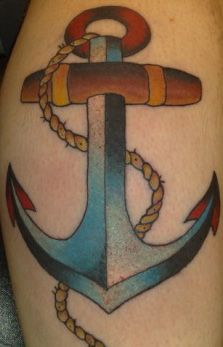
516                  MINNESOTA LAW REVIEW                                 [98:511

izing creative goods to deter widespread copying and of bun-
dling easily copied creative goods with difficult-to-copy personal
services.

                     I. A HISTORY OF TATTOOS
     The term “tattoo” entered the English language through
                                                          22
Captain James Cook’s accounts of his travels in Polynesia. In
1769, Cook witnessed Tahitians engaged in the practice of
“tattowing” and described it as follows:
    Both sexes paint their Bodys, Tattow, as it is called in their Lan-
    guage. This is done by inlaying the Colour of Black under their skins,
    in such a manner as to be indelible . . . . The colour they use is lamp
    black, prepar’d from the Smoak of a Kind of Oily nut, used by them
    instead of Candles. The instrument for pricking it under the Skin is
    made of very thin flatt pieces of bone or Shell . . . . One end is cut into
    sharp teeth, and the other fastened to a handle. The teeth are dipped
    into black Liquor, and then drove, by quick sharp blows struck upon
                                    23
    the handle with a Stick . . . .
Cook’s account marks the beginning of the modern history of
            24
the tattoo. But tattooing developed in cultures across the
globe long before the European public became fascinated with
Cook’s adventures.
     This Part briefly traces the five-thousand-year history of
tattooing, from evidence of its use in pre-historic societies to the
contemporary, technology-mediated tattoo industry. This his-
torical grounding, particularly the dramatic shift in American
tattooing over the last five decades, is central to understanding
the attitudes and norms surrounding copying within the indus-
try today.

A. THE ORIGINS OF TATTOOING
    In 1991, climbers in the Italian Alps stumbled upon the
frozen corpse of the Tyrolean Iceman, a 5300-year-old mummy
adorned with fifty-seven simple geometric tattoos made from a
                           25
pigment derived from soot. The Iceman was not alone among

   22. C.P. Jones, Stigma and Tattoo, in WRITTEN ON THE BODY 1 (Jane
Caplan ed., 2000).
   23. WILLIAM J. L. WHARTON, CAPTAIN COOK’S JOURNAL DURING HIS FIRST
VOYAGE ROUND THE WORLD MADE IN H.M. BARK ‘ENDEAVOUR,’ 1768–71: A
LITERAL TRANSCRIPTION OF THE ORIGINAL MSS. WITH NOTES AND INTRODUC-
TION 93 (1893).
   24. Jones, supra note 22, at 1.
   25. Maria Anna Pabst et al., The Tattoos of the Tyrolean Iceman: A Light
Microscopical, Ultrastructural and Element Analytical Study, 36 J. ARCHAEOL.
SCI. 2335, 2335 (2009); Jennifer Viegas, Oetzi Iceman’s Tattoos Came from
2013] TATTOO NORMS 517
pre-historic tattoo collectors. Egyptian mummies dating back to
2100 B.C. were tattooed with a “‘dark, blackish-blue pigment
applied with a pricking instrument, perhaps consisting of one
26
or more fish bones set into a wooden handle.’” A Scythian
mummy from 500 B.C. bore elaborate depictions of animals on
27
the arms and back. And a thousand-year-old Peruvian mum-
my featured “ornamental tattoos depicting stylised apes, birds,
28
and reptiles on the forearms, hands, and lower legs.”
Tattooing was practiced throughout the ancient world. In
29
Japan, the evidence dates to at least the third century B.C.
The admonition in Leviticus—“[n]ever mark your skin with tat-
30
toos”—suggests the practice was known among the Israelites.
The Persians passed tattooing on to the Greeks, who used the
term “stigmata” to describe images “inscribed on the face or
some other part of the body . . . by pricking the places with
needles, wiping away the blood, and rubbing it in . . . the [ink]
31
preparation.” The Greeks, in turn, passed the practice on to
32
the Romans.
The social meanings of these early tattoos were as diverse
as the cultures that created them. Some tattoos were purely
33 34
ornamental. Others had ceremonial or religious functions.
35
Still others are thought to have served therapeutic purposes.
36
Some indicated high rank or social status, whereas Greek and
Fireplace, DISCOVERY NEWS (July 17, 2009, 12:48 PM), http://www.nbcnews
.com/id/31965532/ns/technology_and_science-science/t/oetzi-iceman-tatoos
-came-fireplace/#.UjjhvaXujnp.
26. Jones, supra note 22, at 2 (quoting Richard S. Bianchi, Tätowierung,
in LEXICON DER ÄGYPTOLOGIE 145–46 (W. Helck & E. Otto, VI ed., 1986)).
27. See Pabst, supra note 25, at 2337.
28. Leopold Dorfer et al., A Medical Report from the Stone Age?, 354 LAN-
CET 1023, 1023 (1999).
29. See MARGO DEMELLO, BODIES OF INSCRIPTION: A CULTURAL HISTORY
OF THE MODERN TATTOO COMMUNITY 72 (2000); DONALD RICHIE & IAN
BURUMA, THE JAPANESE TATTOO 11 (1980).
30. LEVITICUS 28:19 (New Living Translation).
31. Jones, supra note 22, at 4–5 (quoting AETIUS AMIDENUS,
TETRABIBLON 8, 12; Alessandro Olivieri, Corpus Medicorum Graecorum VIII/2
(Berlin, 1950), pp. 417–18).
32. Jones, supra note 22, at 4–11.
33. Dorfer et al., supra note 28, at 1023.
34. See Juliet Fleming, The Renaissance Tattoo, in WRITTEN ON THE BODY
68–70 (Jane Caplan ed., 2000); Jones, supra note 22, at 13 (noting that tattoos
were often part of Christian pilgrimages to the Holy Land).
35. See Dorfer et al., supra note 28, at 1023 (noting the close correspond-
ence between tattoos on mummified remains and acupuncture points).
36. See WILFRID DYSON HAMBLY, THE HISTORY OF TATTOOING 206–07518 MINNESOTA LAW REVIEW [98:511
37
Roman “stigma” were reserved for prisoners and slaves. Over
the centuries that followed, tattoos continued to serve many of
these same functions.
B. COLONIALISM & TATTOOS IN THE WEST
Tattooing was practiced in the British Isles long before
Cook’s excursions to Polynesia. The Picts, the pre-Roman in-
habitants of modern-day Scotland, “receive[d] their name from
their painted . . . bodies, because they are marked by tattoos of
38
various figures made with iron pricks and black pigment.”
And in the early seventeenth century, Native Americans re-
39
exposed the British to tattooing. Europeans of this period en-
countered tattoos in Africa and Asia as well, apparently “with-
40
out being tempted to try it for themselves.”
That changed when Cook returned to Europe after his se-
cond circumnavigation, bearing not only accounts of Polynesian
tattooing but a living example of it. Omai, a tattooed native of
the island of Raiatea, arrived in England in 1774 onboard one
41
of Cook’s ships. Omai became something of a sensation;
“newspapers printed his life story, the most celebrated artists
painted his portrait, the popular theatre made him into a hero
and a box-office hit, and learned men counted it an honor to
42
shake his hand . . . .” More importantly, he “sparked a tattoo-
43
ing vogue among the English aristocracy.”
(2009) (noting the “status-giving” function of tattoos in Polynesian cultures).
37. Jones, supra note 22, at 5.
38. SAINT ISIDORE (OF SEVILLE), THE ETYMOLOGIES OF ISIDORE OF
SEVILLE 198 (Stephen A. Barney et al. trans., 2006); see also JOHN SPEED, THE
HISTORY OF GREAT BRITAINE 167 (1611) (“The Britaines . . . by means of artifi-
cial incisions of sundry formes have from their childhood divers shapes of
beasts incorporate upon them; and having their markes deeply imprinted
within their bodies . . . .”).
39. SAMUEL PURCHAS, PURCHAS HIS PILGRIMAGE 955 (1617) (describing
Algonquian women who would “pounce and raze their bodies, leggs, thighes,
and armes, in curious knots and pourtraytures of fowles, fishes, beasts and
rub a painting into the same, which will never will out.”); see also Fleming, su-
pra note 34, at 69 (noting that “pouncing” and “razing” were English terms for
tattooing used until the mid-eighteenth century).
40. Id. at 67.
41. Harriet Guest, Curiously Marked: Tattooing and Gender Differences in
Eighteenth-Century British Perceptions of the South Pacific, in WRITTEN ON
THE BODY 83 (Jane Caplan ed. 2000).
42. Stephan Oettermann, On Display: Tattooed Entertainers in America
and Germany, in WRITTEN ON THE BODY 196 (Jane Caplan ed., 2000).
43. Fleming, supra note 34, at 67.2013] TATTOO NORMS 519
Initially, the European tattooed class comprised primarily
sailors, soldiers, and adventurers who traveled to Tahiti, New
44
Zealand, and other far-flung locales. Cook’s own crewmembers
were among the first Europeans to return with traditional Pol-
45
ynesian tattoos. And tattooing quickly spread throughout the
46
British military.
By the nineteenth century, European fashionable society
47
was “gripped by a tattoo craze.” Sutherland Macdonald and
Ted Riley opened tattoo studios where wealthy Londoners ea-
gerly joined the newly tattooed upper class with the likes of
Queen Olga of Greece, the Duke of York, Lady Randolph
48
Churchill, and King Oscar II of Sweden.
In the United States, Martin Hildebrandt opened the first
49
professional tattoo shop in 1846 in New York. Early U.S.
tattooers like Hildebrandt and Gus Wagner relied on the same
50
basic techniques and hand tools used for thousands of years.
But in 1891, another New York tattooer, Samuel O’Reilly, in-
vented the tattoo machine, a device that fundamentally re-
44. DEMELLO, supra note 29, at 49.
45. Id. at 45; Harriet Guest, Curiously Marked: Tattooing, Masculinity,
and Nationality in Eighteenth Century British Perceptions of the South Pacific,
in PAINTING AND THE POLITICS OF CULTURE: NEW ESSAYS ON BRITISH ART
1700–1850, at 130–31 (John Barrell ed., 1992) (describing the “inauguration of
the nautical tradition” of tattooing in the eighteenth century).
46. For example, Lord Roberts, who was tattooed during his military ser-
vice in Burma, encouraged tattoos among his officers. James Bradley, Body
Commodification? Class and Tattoos in Victorian Britain, in WRITTEN ON THE
BODY 145 (Jane Caplan ed., 2000).
47. Id. at 145–46.
48. Id. Of course, tattoos were not found exclusively among members of
high society. During this period, relatively crude and inexpensive tattoos could
be found among “sailors, dockers, and other rough diamonds”—as well as
criminals and convicts—throughout Europe. Id. at 141 (quoting GEORGE
BURCHETT, MEMOIRS OF A TATTOOIST 13,139 (1958)); see also Jane Caplan,
National Tattooing, Traditions of Tattooing in Nineteenth-Century Europe, in
WRITTEN ON THE BODY 156–57 (Jane Caplan ed., 2000) (discussing tattoos
among German and Italian criminals); Hamish Maxwell Stewart & Ian Duf-
field, Skin Deep Devotions: Religious Tattoos and Convict Transportation to
Australia, in WRITTEN ON THE BODY 118 (Jane Caplan ed., 2000); Abby M.
Schrader, Branding the Other/Tattooing the Self: Bodily Inscription among
Convicts in Russia and the Soviet Union, in WRITTEN ON THE BODY 184–85
(Jane Caplan ed., 2000); DEMELLO, supra note 29, at 50.
49. DEMELLO, supra note 29, at 49.
50. Alan Govenar, The Changing Image of Tattooing in American Culture,
1846–1966, in WRITTEN ON THE BODY 214–15 (Jane Caplan ed., 2000).520 MINNESOTA LAW REVIEW [98:511
51
shaped tattooing. The introduction of electric machinery made
52
tattooing cheaper, faster, and less painful. It also helped de-
velop a distinctive American aesthetic characterized by “strong
black line . . . heavy black shading; and a dab of color” from a
53
limited palette emphasizing red, blue, and green.
Tattooers in the United States were generally from the
54
same working class backgrounds as their clients and typically
55
had no prior art training. Rather than create custom artwork
for their clients, tattooers of this era worked almost exclusively
56
from collections of pre-drawn images called “flash.” Designs
included military insignia, ships, hearts, flowers, skulls, dag-
57
gers, snakes, tigers, Christian icons, and scantily clad women.
These same images, or minor variations on them, hung on the
58
walls of nearly every tattoo shop of the era. When a tattooer
came across an appealing new design, he copied it—sometimes
directly off of the body of a willing client—and added it to his
59
stock of flash. Some enterprising tattooers, first among them
Lew Alberts and Charlie Western, sold sheets of flash to other
60
tattooers.
The combination of the electric tattoo machine and simple,
pre-made flash designs enabled the industry to capitalize on
61
the popularity of tattoos during the Interbellum period. In
many ways, the tattoo industry was structured around the
needs of soldiers and sailors who frequented tattoo shops in
62
large groups with limited leave time. “Sailors came in,” one
tattooer told me, “and you cranked them out as quickly as you
[could] because they’re all on leave. The financial impetus was
51. See U.S. Patent No. 464,801 (issued Dec. 8, 1891). Charlie Wagner pa-
tented improvements on O’Reilly’s device in 1904. See U.S. Patent No. 768,413
(issued Aug. 23, 1904).
52. Susan Benson, Inscriptions of the Self: Reflections on Tattooing and
Piercing in Contemporary Euro-America, in WRITTEN ON THE BODY 240 (Jane
Caplan ed., 2000); DEMELLO, supra note 29, at 50.
53. DEMELLO, supra note 29, at 50.
54. See Rubin, supra note 19, at 234; R.I. Geare, Tattooing, SCI. AM., Sept.
12, 1903, at 190.
55. DEMELLO, supra note 29, at 51; Rubin, supra note 19, at 234.
56. DEMELLO, supra note 29, at 52–53; Govenar, supra note 50, at 217.
57. DEMELLO, supra note 29, at 52; Govenar, supra note 50, at 218–19.
58. DEMELLO, supra note 29, at 52.
59. Id.
60. Govenar, supra note 50, at 217.
61. DEMELLO, supra note 29, at 59.
62. See DEMELLO, supra note 29, at 63–65.2013] TATTOO NORMS 521
63
there to crank those [tattoos] out.” Soldiers and sailors during
the World Wars also bolstered the popularity of tattooing
among the general public and helped set trends in terms of tat-
64
too style, subject matter, and placement.
But in the post-war period, the popularity of tattoos began
to wane. Many soldiers returning from World War II realized
that their tattoos were not as enthusiastically accepted outside
65
of the military. And unsanitary conditions in many tattoo
66
shops raised serious public health concerns. Tattooers failed
to sterilize equipment, used the same needles on successive
67
customers; and drew ink from a shared container. After re-
ported hepatitis outbreaks, many state and local governments
began to heavily regulate tattooing or ban it altogether, forcing
68
many tattooers either out of town or out of business.
Although tattooing continued, both in licensed shops and
unlicensed back rooms, garages, and basements, the post-war
period was a time of creative stagnation. Tattooers still relied
largely on the same collection of flash designs prominent at the
69
turn of the century. But this period of creative stagnation and
dwindling popularity set the stage for a fundamental shift in
70
the industry.
C. THE TATTOO RENAISSANCE
For more than a century, the U.S. tattoo industry was de-
fined by flash. These simple, badge-like images offered
tattooers a source of popular, ready-made designs that could be
71
quickly and consistently applied to their customers. Flash met
the needs of tattooers, who considered themselves craftsmen or
tradesmen, with little interest in artistic expression for its own
72
sake. And it met the needs of clients, whose tattoos often
63. Interview with Subject 6, supra note 8, at 54.
64. DEMELLO, supra note 29, 63–65.
65. Id. at 66–67; Govenar, supra note 50, at 229.
66. See, e.g., DEMELLO, supra note 29, at 62.
67. Id. at 62.
68. Govenar, supra note 50, at 229–32. For more on the legal regulation of
the tattoo industry, see infra Part III.A.
69. See Govenar, supra note 50, at 217.
70. See Rubin, supra note 19, at 235–36.
71. DEMELLO, supra note 29, at 196 n.4.
72. See CLINTON R. SANDERS, CUSTOMIZING THE BODY: THE ART AND
CULTURE OF TATTOOING 86 (2008); see also Rubin, supra note 19, at 233–35.522 MINNESOTA LAW REVIEW [98:511
communicated group membership or commemorated milestones
73
through established iconography.
But beginning in the 1960s, tattooers began to
74
reconceptualize their work. Norman Keith Collins, better
known as Sailor Jerry, was among the first and most important
75
tattooers to challenge prevailing practices. Influenced by Jap-
anese tattoo traditions, he sought to elevate tattoo artistry in
the United States by creating elaborate, stylistically and the-
matically consistent tattoos that incorporated the entire human
76
body as a canvas. Tattoos tailored to a particular human form
in the Japanese tradition stood in stark contrast to the typical
American approach of unsystematically scattering small
77
standalone images across the body.
Over the next few decades, the innovations of Sailor Jerry
78 79
and protégés like Cliff Raven and Don Ed Hardy helped
bring about three interlinked shifts in the industry that led to
80
what some have called the tattoo renaissance. First, a new
generation of tattooers was drawn to the industry because of its
potential for artistic innovation and expression. Experienced
and trained fine artists, many with graduate-level education,
81
began to see tattooing as a viable and legitimate career path.
Second, the creative output of the tattoo industry changed as a
result of the influx of artistically inclined tattooers. New tech-
niques and styles that drew on influences ranging from cubism
82
to graffiti began to emerge. Third, the client base of the indus-
try underwent a transformation. As clients became more afflu-
ent, better educated, and more knowledgeable about tattoos
and art generally, they developed higher expectations of tech-
83
nical skill and originality.
73. “When you had gone five thousand miles at sea, you got a bluebird on
your chest. When you’d gone ten thousand, you got the second bird on the oth-
er side.” DEMELLO, supra note 29, at 64 (quoting Doc Webb).
74. Rubin, supra note 19, at 233–35.
75. DEMELLO, supra note 29, at 73–74.
76. Rubin, supra note 19, at 236–37; see also DEMELLO, supra note 29, at
72–75.
77. See Rubin, supra note 19, at 233–35 (describing the “international folk
style” of tattooing that characterized the early U.S. tattoo industry).
78. Id. at 236–41.
79. Id. at 241–45.
80. Id. at 233–36.
81. Id. at 235; SANDERS, supra note 72, at 19.
82. See DALE RIO & EVA BIANCHINI, TATTOO 12 (2004).
83. See Rubin, supra note 19, at 235; see also DEMELLO, supra note 29, at
92.2013] TATTOO NORMS 523
These three changes gave rise to the most important devel-
opment in the industry from the perspective of creative
84
norms—custom tattooing. Rather than simply offer their cli-
ents a selection of flash from which to choose, tattooers increas-
ingly created unique bespoke designs for individual clients, cus-
85
tomized for both their tastes and their bodies. Custom work
provided tattooers an opportunity to create new pieces of origi-
nal art instead of re-inking old designs. To the older generation
of tattooers, who saw their work primarily in financial rather
than artistic terms, the choice to devote time and energy to cus-
tom designs was puzzling. As one tattooer described:
That’s how the old timers made their money, repeating stuff over and
over again. When the new school guys came around, when I came
around, and started doing original [one-of-a-kind] artwork on every-
body, the old timers looked at me like “Dude, you are crazy. Why do
86
you want to do that? We’ve got plenty of designs that sell great.”
As a result of these changes, the tattoo industry today is
87
defined by two very different paradigms. The street shop fits
comfortably with the common public conception of a “tattoo par-
88 89
lor.” A garish neon sign flickers above the entrance. The
walls are papered with flash designs. Clients walk in off of the
street without appointments, select the image of their choice,
and are tattooed by whichever tattooer happens to be free at
90
the moment. Clients are often charged a pre-determined,
91
cash-only flat rate. Most simple flash designs can be tattooed
92
in well under an hour, sometimes as quickly as a few minutes.
Hundreds, likely thousands, of tattoo shops in the United
93
States fit this basic model.
84. See Enid Schildkrout, Inscribing the Body, 33 ANN. REV. ANTHROPOL-
OGY 319, 336 (2004) (“As more and more middle-class people were tattooed,
and as artists with formal art training in other media entered the profession
. . . custom work increasingly replaced flash . . . .”).
85. See id.
86. Interview with Subject 7, supra note 8, at 58.
87. See, e.g., INKIES TATTOO STUDIO, http://www.inkiestattoo.com (last
visited Nov. 2, 2013) (describing the tattoo shop as “high-end”).
88. See Interview with Subject 1, supra note 8, at 8.
89. See, e.g., FINELINE, http://www.finelinetattoo.com (last visited Nov. 2,
2013).
90. See, e.g., Interview with Subject 9, supra note 8, at 81–82.
91. See, e.g., SANDERS, supra note 72, at 143.
92. See, e.g., Interview with Subject 6, supra note 8, at 54.
93. As of 2007, an estimated 15,000 tattoo shops operated in the United
States. See Chafkin, supra note 3.524 MINNESOTA LAW REVIEW [98:511
Less familiar to the public imagination is the high-end cus-
tom tattoo shop. Skull & Sword, a respected shop in San Fran-
94
cisco, is one example. Located on the second floor of nonde-
95
script building, the shop features minimal signage. Rather
than accept walk-ins, tattooers book appointments several
96
months in advance. Instead of flash hanging on the walls,
each tattooer’s portfolio of custom tattoos is available for view-
97
ing. Custom tattoo clients are charged an hourly rate for the
time spent applying the tattoo. At high-end shops, rates be-
tween $150 and $250 per hour are not uncommon—again, cash
98
only. A sizable custom tattoo can take many hours to com-
plete, often requiring multiple appointments over the course of
99
months.
Most tattoo shops, and most tattooers, operate somewhere
along a spectrum between these two paradigms, providing a
combination of small, simple, pre-designed tattoos and more
100
elaborate custom work. Since most tattooers learn on the job
through an apprenticeship, they commonly start with simple
flash designs, developing the skills necessary for more complex
101
custom designs over time. And because they work in both mi-
lieus, many tattooers self-consciously play the roles of both cre-
ator and copyist, a duality that informs and complicates indus-
102
try norms surrounding creative production. Tattooers work in
a medium that has a long history of widely accepted copying of
103
a corpus of shared images and iconography. That tradition,
however, conflicts with the premium placed on originality as
custom tattooing developed.
94. SKULL & SWORD, http://www.theskullandsword.com (last visited Nov.
2, 2013).
95. Skull & Sword, CITY-DATA.COM, http://www.city-data.com/businesses/
212287593-skull-sword-san-francisco-ca.html (last visited Nov. 2, 2013).
96. SKULL & SWORD, supra note 94.
97. Id.
98. “Cash only” is perhaps the only truly universal rule in the tattoo in-
dustry. See, e.g., SANDERS, supra note 72, at 105, 143.
99. Interview with Subject 13, supra note 8, at 154.
100. See, e.g., id. with Subject 12 at 130 (explaining the grey area between
tracing tattoos and creating new work).
101. As one tattooer explained, “When you are first starting off and learn-
ing to tattoo you don’t get to be picky. You don’t get to choose. Because you are
trying to learn, you have to practice.” Interview with Subject 7, supra note 8,
at 57.
102. See, e.g., Interview with Subject 12, supra note 8, at 130 (explaining
that the tattooer had not been “doing anything [other prominent tattooers]
had not been doing for 20 years”).
103. See, e.g., DEMELLO, supra note 29, at 37, 53.2013] TATTOO NORMS 525
II. LAW, NORMS & TATTOOS
A tattoo, like any other original work fixed in a tangible
medium, is protected by copyright law. And like the other pub-
lic goods that copyright law protects, tattoos are susceptible to
104
unauthorized reproduction. Once a tattooer creates a design
and applies it to the skin of a client—particularly if an image of
the tattoo is published on the internet or in print—non-rivalry
105
and non-excludability lead to predictable results. Copying is a
106
topic of perennial concern within the tattoo industry. But
copyright lawsuits or other formal assertions of rights are ex-
ceedingly rare. Instead, tattooers have developed a set of in-
formal norms to structure the creative process and relation-
107
ships within their industry. This Part, after addressing the
applicability of formal copyright protection, describes the key
norms that have emerged within the industry.
A. FORMAL LEGAL PROTECTION FOR TATTOOS
108
In the absence of some applicable exclusion or limitation,
copyright law protects “original works of authorship fixed in
109
any tangible medium of expression . . . .” Originality requires
that a work is independently created rather than copied from
preexisting material, and that it reflect a modicum of creativi-
110
ty. Although the standard for originality is low, its evaluation
turns on both an objective analysis of the work and an exami-
111
nation of the process by which it was created.
The fixation requirement ensures that the work is embod-
ied in a physical form “sufficiently permanent or stable to per-
mit it to be perceived, reproduced, or otherwise communicated
104. See 17 U.S.C. § 101 (2012).
105. See ROBERT COOTER & THOMAS ULEN, LAW AND ECONOMICS 40 (6th
ed. 2011).
106. See, e.g., Interview with Subject 1, supra note 8, at 6–7 (explaining
that copying is only acceptable within certain circumstances).
107. See, e.g., id. with Subject 12 at 130 (stating that tattooing is “not rein-
venting the wheel,” everything is based on copying).
108. See, e.g., 17 U.S.C. § 101 (2012) (“[T]he design of a useful article . . .
shall be considered a pictorial, graphic, or sculptural work only if, and only to
the extent that, such design incorporates pictorial, graphic, or sculptural fea-
tures that can be identified separately from, and are capable of existing inde-
pendently of, the utilitarian aspects of the article.”).
109. Id. § 102(a).
110. See Feist Publ’n, Inc. v. Rural Tel. Serv. Co., 499 U.S. 340, 345 (1991).
111. Id. at 346–47.526 MINNESOTA LAW REVIEW [98:511
112
for a period of more than transitory duration.” Fixation
serves two functions. It helps reduce problems of proof by in-
113
sisting on a durable record of the protected work. Fixation al-
so helps ensure that works are preserved and disseminated for
114
the benefit of future generations.
In the case of a custom tattoo, the question of
copyrightability must be addressed with regard to two distinct
but related works. Tattooers occasionally ink an image free-
115
hand directly on a client’s skin. But more often, they create a
116
detailed line drawing of the tattoo design on paper. Once the
line drawing is prepared, the tattooer copies it to a stencil,
which when transferred to the client’s skin serves as a template
117
for tattooing the outline of the design.
Although the line drawing forms the basis for the tattoo, it
differs from the final product on the client’s skin in important
118
ways. A drawing on paper is a two-dimensional representa-
tion. Depending on the location of the tattoo, the client’s body
119
transforms that flat image to a three-dimensional work. Par-
ticularly for tattoos thoughtfully designed to take advantage of
the shape of the client’s body, the shift to three dimension can
120
dramatically alter the appearance of the tattoo. More gener-
ally, line drawings often lack the shading and color typically
121
added to the final tattoo. If the tattoo embodies creative ex-
pression not reflected in the line drawing, it is probably best
122
considered a derivative work in copyright terminology. But
where the tattooer simply transfers the line drawing to the
body without adding or altering its expression, the tattoo is
123
properly understood as a mere reproduction.
112. 17 U.S.C. § 101 (2012).
113. See Douglas Lichtman, Copyright as a Rule of Evidence, 52 DUKE L.J.
683, 730–34 (2003).
114. See Aaron Perzanowski, Fixing RAM Copies, 104 NW. U. L. REV. 1067,
1094–95 (2010).
115. Interview with Subject 9, supra note 8, at 82.
116. See id. with Subject 9 at 82–83.
117. See id.
118. See id. with Subject 1 at 12.
119. Id. with Subject 8 at 71.
120. See id. with Subject 8 at 71–72.
121. Id. with Subject 7 at 64.
122. See 17 U.S.C. § 101 (2012).
123. Id.2013] TATTOO NORMS 527
Line drawings fall squarely within the Copyright Act’s def-
124
inition of “pictorial, graphic, and sculptural” works. A pencil
or ink drawing on paper satisfies the fixation requirement. So
assuming the work is not merely a copy of a preexisting work
and reflects some amount of creativity, the line drawing is eli-
gible for copyright protection. This result is neither surprising
nor controversial.
The same basic analysis would seem to hold for the tattoo
as applied to a human subject. To the extent the tattoo is inde-
pendently created and satisfies the low bar for creativity, it is
125
original. And as your mother has no doubt warned you, tat-
toos are permanent. An indelible representation of a work easi-
ly meets the statute’s demand for a work “fixed in a tangible
126
medium of expression.” Tattoos then, like their pencil and
paper counterparts, appear to be appropriate subjects of copy-
127
right protection.
But a recent dispute over Mike Tyson’s facial tattoo gave
one commentator an opportunity to challenge this seemingly
128
straightforward result. In 2003, Victor Whitmill tattooed an
129
abstract image, inspired by Maori moko, on the face of former
124. See id. §§ 101, 102(a).
125. See Feist Publ’n, Inc. v. Rural Tel. Serv. Co., 499 U.S. 340, 345–47
(1991).
126. Id.
127. The existing literature on copyright in tattoos either assumes or con-
cludes as much. See Matthew Beasley, Note, Who Owns Your Skin: Intellectual
Property Law and Norms Among Tattoo Artists, 85 S. CAL. L. REV. 1137
(2012); Thomas F. Cotter & Angela M. Mirabole, Written on the Body: Intellec-
tual Property Rights in Tattoos, Makeup, and Other Body Art, 10 UCLA ENT.
L. REV. 97 (2002); David Cummings, Creative Expression and the Human Can-
vas: An Examination of Tattoos as a Copyrightable Art Form, 2013 U. ILL. L.
REV. 279 (2013); Christopher A. Harkins, Tattoos and Copyright Infringement:
Celebrities, Marketers, and Businesses Beware of the Ink, 10 LEWIS & CLARK L.
REV. 313 (2006); Christine Lesicko, Tattoos as Visual Art: How Body Art Fits
into the Visual Artists Rights Act, 53 IDEA 39 (2013); Yolanda M. King, The
Challenges “Facing” Copyright Protection for Tattoos, 92 OR. L. REV. (forth-
coming 2013).
128. See Declaration of David Nimmer at 18, Whitmill v. Warner Bros.
Entm’t, Inc., No. 4:11-cv-00752 (E.D. Mo. May 20, 2011) [hereinafter Nimmer
Declaration] (“For copyright protection in tattoos to arise, Congress would
have to act anew, in the manner of its 1980 amendment to the Copyright Act
to afford protection to computer software and its 1990 amendment to the Cop-
yright Act to afford protection to architectural works.”).
129. See generally Peter Gathercole, Contexts of Maori Moko, in MARKS OF
CIVILIZATION 171 (Arnold Rubin ed., 1988).528 MINNESOTA LAW REVIEW [98:511
130
heavyweight boxing champion Mike Tyson. Tyson subse-
quently appeared in the Warner Brothers film The Hangover.
In that film’s sequel, the same tattoo design was reproduced on
the face of comedian Ed Helms as evidence of a night of drunk-
131
en decision-making. Whitmill, after seeing promotional mate-
rials for the film featuring his design, sued Warner Brothers to
132
enjoin the release of the film.
133
In an expert witness declaration, David Nimmer offered
a number of legal conclusions suggesting that Whitmill was not
134
entitled to copyright protection for Tyson’s tattoo. Despite af-
firming in his oft-cited copyright treatise that a tattoo could
“qualify as a work of graphic art, regardless of the medium in
135
which it is designed to be affixed” including “human flesh,”
Nimmer argued in his capacity as an expert that Tyson’s skin
did not qualify as a tangible medium of expression, comparing
136
it to a frosty window pane or wet sand as the tide approaches.
But those quintessential examples of transitory media are a far
137
cry from the lifelong fixation of a tattoo.
More plausibly, Nimmer pointed to the useful article limi-
tation on pictorial, graphic, and sculptural works as a separate
138
basis for denying protection. The useful article doctrine pre-
cludes copyright protection for products whose purpose is utili-
tarian rather than expressive, largely eliminating copyright
130. Complaint at 2, Whitmill v. Warner Bros. Entm’t, Inc., No. 4:11-cv-
00752 (E.D. Mo. Apr. 28, 2011).
131. Id. at 4.
132. Id. at 4–5. Whitmill’s copyright registration covers “artwork on [a] 3-D
object” presumably because he created the tattoo directly on Tyson’s face with-
out first drawing the design on paper. See TRIBAL TATTOO, No.
VA0001767704, available at http://cocatalog.loc.gov/cgi-bin/Pwebrecon.cgi?v1=
1&ti=1,1&Search%5FArg=va0001767704&Search%5FCode=REGS&CNT=25&
PID=FRK-tCFkHI5cOIoxALv0Rr_iVMy&SEQ=20130918145100&SID=1.
133. Nimmer has updated and revised Nimmer on Copyright since 1985.
See David Nimmer, IRELL & MANELLA LLP, http://www.irell.com/professionals
-51.html (last visited Nov. 2, 2013).
134. See generally Nimmer Declaration, supra note 128.
135. Nimmer Declaration, supra note 128, at 4 (citing NIMMER ON COPY-
RIGHT § 1.01[B][1][i] n.392 (1999)).
136. Nimmer Declaration, supra note 128, at 4; see also Ann Bartow, When
a Treatise Writer Tries to Reconfigure Copyright Law to Benefit a Client,
MADISONIAN.NET (May 25, 2011), http://madisonian.net/2011/05/25/when-a
-treatise-writer-tries-to-reconfigure-copyright-law-to-benefit-a-client (noting
Nimmer’s reversal).
137. See Nimmer Declaration, supra note 128, at 9.
138. Id. at 7–11.2013] TATTOO NORMS 529
139
protection for industrial design. Pictorial, graphic, or sculp-
tural elements incorporated into a useful article are protectable
only to the extent they are physically or conceptually separable
140
from the underlying article. Mike Tyson’s face, as Nimmer
rightly noted, serves a primarily utilitarian, biological function.
But applying the standard test for separability, Tyson’s
141
tattoo is easily divorced from his skin as a conceptual matter.
Nimmer insisted, however, that “the only legally cognizable re-
sult is to apply the strict requirement of physical separabil-
142
ity.” Otherwise, he claimed the Copyright Act would “set to
naught the Thirteenth Amendment’s prohibition of badges of
143
slavery.”
At the root of Nimmer’s startling equation of willing recipi-
ents of tattoos with slaves is a concern over certain remedies
144
available to a successful copyright plaintiff. As he noted, cop-
yright protection could grant Whitmill control over Tyson’s
145
public displays of the tattoo as well as reproductions of it in
146
photographs or video. Nimmer worried that the derivative
work right could give Whitmill some say over other tattoos Ty-
147
son might choose to apply to his face. And in the unlikely
event the tattoo qualifies as a “work of recognized stature” un-
der the Visual Artists Rights Act, Tyson could be prevented
148
from destroying or removing it.
139. Robert C. Denicola, Applied Art and Industrial Design: A Suggested
Approach to Copyright in Useful Articles, 67 MINN. L. REV. 707 (1983) (“Copy-
right law has reluctantly embraced a variety of works embodied in utilitarian
objects, while simultaneously purporting to exclude the general province of
industrial design.”).
140. Brandir Int’l, Inc. v. Cascade Pac. Lumber Co., 834 F.2d 1142, 1143
(2d Cir. 1987).
141. See id. at 1145 (“[W]here design elements can be identified as reflect-
ing the designer’s artistic judgment exercised independently of functional in-
fluences, conceptual separatability exists.”); see also King, supra note 127.
142. Nimmer Declaration, supra note 128, at 11.
143. Id.
144. See id. at 5–6.
145. See 17 U.S.C. § 106(5) (2012) (granting the copyright holder the exclu-
sive right to publicly display the work).
146. See id. § 106(1) (granting the copyright holder the exclusive right to
reproduce the work).
147. See id. § 106(2) (granting the copyright holder the exclusive right to
prepare derivatives based on the work).
148. See id. § 106A(a)(3)(B) (granting the author of a work of visual art the
right “to prevent any destruction of a work of recognized stature”).530 MINNESOTA LAW REVIEW [98:511
Although the court characterized Nimmer’s arguments as
149
“silly,” these potential consequences are indeed alarming.
Luckily, copyright law offers courts many tools aside from the
blunt instrument of protectability that they could, and almost
certainly would, use to avoid this parade of horribles. These in-
150 151
clude narrow readings of exclusive rights, fair use, first sale
152 153
and related exhaustion doctrines, implied license, and equi-
154
table discretion over injunctive relief. But there is another
reason of far more practical importance why Nimmer’s fears
were unwarranted: the scenarios he envisioned are fundamen-
tally at odds with the established norms of the tattoo indus-
155
try.
Copyright suits between tattooers and their clients, or
156
suits between two tattooers, are virtually non-existent. Most
of the copyright litigation involving tattoos centers around tat-
157
too-inspired designs used on clothing or other merchandise.
149. See Joe Mullin, Tyson Tattoo Lawsuit: Studio’s Defenses Are ‘Silly,’
Says Judge, PAIDCONTENT (May 25, 2011), http://paidcontent.org/2011/05/25/
419-judge-shows-sympathy-for-plaintiffs-in-tyson-tattoo-case/. The parties
subsequently agreed to dismiss the suit under the terms of an undisclosed set-
tlement. See David Kravets, Hangover Tattoo Infringement Lawsuit Settles,
WIRED, June 22, 2011, 2:15 PM, http://www.wired.com/threatlevel/2011/06/
tattoo-flap-settled.
150. See Jessica Litman, Lawful Personal Use, 85 TEX. L. REV. 1871, 1879
(2007).
151. See 17 U.S.C. § 107 (2012).
152. See id.; see also Aaron Perzanowski & Jason Schultz, Copyright Ex-
haustion and the Personal Use Dilemma, 96 MINN. L. REV. 2067, 2107 (2012).
153. See infra Part II.E; see also Michael Grynberg, Property Is a Two-Way
Street: Personal Copyright Use and Implied Authorization, 79 FORDHAM L.
REV. 435, 454 (2010).
154. See N.Y. Times Co. v. Tasini, 533 U.S. 483, 486, 505 (2001) (“It hardly
follows from [a finding of infringement] that an injunction . . . must issue.”);
Campbell v. Acuff-Rose Music, Inc., 510 U.S. 569, 578, n.10 (1993) (describing
how the goals of copyright law are “not always best served by automatically
granting injunctive relief ” ); see also eBay Inc. v. MercExchange, L.L.C., 547
U.S. 388, 392 (2006) (noting that issuing patent injunctions “in accordance
with the principles of equity” is “consistent with [the Court’s] treatment of in-
junctions under the Copyright Act”).
155. See, e.g., Interview with Subject 3, supra note 8, at 40.
156. Whitmill, it should be stressed, did not bring a suit against his client.
Tyson prominently displayed his tattoo in the first Hangover and other subse-
quent paid public appearances, including his current one man show on
Broadway, without any objection from his tattooer. See Michael Wilson, For
Tyson, a ‘Vulnerable’ Performance Outside the Ring, N.Y. TIMES, June 19,
2012, at A20.
157. See Crispin v. Audigier, 839 F. Supp. 2d 1086, 1088 (C.D. Cal. 2011)
(discussing that tattoo designs were used on apparel, jewelry, and other mer-
chandise); Tattoo Art, Inc. v. Tat Int’l L.L.C., 711 F. Supp. 2d 645, 647 (E.D.2013] TATTOO NORMS 531
Occasionally tattooers sue each other on non-copyright
158
grounds. And rarely, non-copyright litigation arises between
159
tattooers and their clients.
But not a single reported decision addresses a copyright
claim brought by a tattooer against a client or a fellow tattooer.
And the available record reveals only one such case even being
160
filed in the United States. In 2005, Portland tattooer Mat-
thew Reed filed a complaint against his client, Rasheed Wal-
161
lace, a former player for the NBA’s Portland Trailblazers.
Reed tattooed a custom image of an Egyptian family on Wal-
162
lace’s arm, for which Wallace paid Reed $450. Six years later,
the advertising firm Wieden+Kennedy prominently featured
163
Wallace’s tattoo in an advertising campaign for Nike. Reed,
who had not authorized the use of the tattoo in the ad cam-
paign, registered a copyright in his drawing of the design and
filed an infringement complaint against Nike,
Wieden+Kennedy, and Wallace, which was eventually dis-
164
missed after a joint stipulation. Notably, although Reed’s cli-
ent was named as a party, it was the prominent use of the tat-
too in the ad campaign and not Wallace’s regular public
165
displays of it that triggered the suit.
Va. 2010) (noting flash designs licensed for use as airbrush stencils); S.T.R.
Indus. v. Palmer Indus., 1999 WL 258455 (N.D. Ill. Apr. 9, 1999) (explaining
that tattoo themed designs applied to pool cues).
158. See, e.g., Quidgeon v. Olsen, 2011 U.S. Dist. LEXIS 42309, at *2–3
(C.D. Ill. Apr. 19, 2011) (explaining a trademark dispute between competing
tattoo shops).
159. See, e.g., Minnifield v. Ashcraft, 903 So. 2d 818, 820 (Ala. Crim. App.
2004) (demonstrating the invasion of privacy claim against tattooer for pub-
lishing photo without permission).
160. See Complaint, Reed v. Nike Inc., No. 05-CV-198 BR (D. Or. Feb. 10,
2005).
161. Id. A similar dispute arose in the United Kingdom over the use of
footballer David Beckham’s tattoos in an ad campaign. See Noam Cohen, On
Tyson’s Face, It’s Art. On Film, A Legal Issue., N.Y. TIMES, May 21, 2011, at
A1.
162. Complaint, Reed, supra note 160.
163. Id.
164. Stipulation of Dismissal with Prejudice, Reed v. Nike, Inc., No. 05-CV-
198 BR (D. Or. Oct. 19, 2005).
165. For a detailed discussion of Reed, see Harkins, supra note 127. Recent-
ly, Rick Genest a heavily tattooed model with distinctive facial tattoos settled
a dispute with the producers of the television series American Horror Story
over alleged copyright and likeness rights. Matthew Belloni, Fox Settles ‘Amer-
ican Horror Story’ Legal Spat Over 'Zombie Boy' Tattoo (Exclusive),
HOLLYWOOD REPORTER (Oct. 16, 2012), http://www.hollywoodreporter.com/thr
-esq/foxs-american-horror-story-zombie-379219.You can also read


