Cataloguing the Lubango Bird Skin Collection: towards an atlas of Angolan bird distributions
←
→
Page content transcription
If your browser does not render page correctly, please read the page content below
Cataloguing the Lubango Bird Skin Collection: towards an
                         atlas of Angolan bird distributions
                     Michael S. L. Millsa,b, Ursula Frankec, Grant Josepha, Francisco Miatod, Suzanne Miltonb,
                                   Ara Monadjeme, Dieter Oschadleusf and W. Richard J. Deanb

              Cataloguer la collection de peaux d’oiseaux de Lubango : vers un atlas des répartitions des oiseaux
              angolais. La collection de peaux d’oiseaux logée à Lubango, Angola, comprend plus de 40.000 spécimens,
              représentant plus de 850 taxons. En juin 2008, nous avons travaillé sur la collection pendant deux semaines,
              afin de collecter des données concernant la distribution des espèces. Ces travaux font partie d’un projet atlas
              pour les oiseaux de l’Angola. La collection est toujours en bon état et le «Instituto Superior da Ciências e
              Educação» (ISCED), qui abrite la collection, doit en être félicité. Les données mentionnées sur les étiquettes
              de 15.000 peaux, dont celles de tous les spécimens des espèces moins connues, ont été saisies dans une base
              de données informatisée. Les 25.000 enregistrements restants sont faits sur la base de photos des «fiches de
              catalogue». Les spécimens les plus intéressants sont ceux de quatre Aigrettes vineuses Egretta vinaceigula—les
              premières données pour l’Angola de cette espèce cataloguée mondialement «Vulnérable». D’autres exemples
              de peaux intéressantes sont illustrés par des photos et attirent l’attention sur l’importance de la collection
              pour des études systématiques. La collection de mammifères est aussi mentionnée brièvement. Enfin, des
              recommandations sont faites pour la gestion future de la collection.
              Summary. The bird collection housed in Lubango, Angola, contains more than 40,000 skins, representing
              more than 850 taxa. As part of an atlas project for Angolan birds, we visited the skin collection for two
              weeks in June 2008, to extract distributional information from the specimens. The skin collection is still in
              good condition, and the Instituto Superior da Ciências e Educação (ISCED), which houses the collection,
              is to be commended for this. Data from labels of 15,000 skins were entered into an electronic database,
              including all specimens of lesser known species. The remaining 25,000 entries are being made from
              photographs of ‘catalogue’ cards. The most interesting specimens are four Slaty Egrets Egretta vinaceigula,
              the first records of this globally Vulnerable species in Angola. Other examples of interesting skins are
              illustrated in various photographs, drawing attention to the importance of the collection for systematic
              studies. A brief mention is also made of the mammal collection. Finally, a list of recommendations is given
              for the future management of the collection.

          W       ith the sixth-longest bird list of any African
                  country, Angola harbours an exceptionally
          rich biodiversity. Add to this one of Africa’s highest
          bird conservation priorities—the Western Angola
          Endemic Bird Area (Stattersfield et al. 1998) and
          its biologically important scarp forests—and the
          biological importance of the country becomes
          unquestionable. During the 1960s and 1970s the
          country’s biodiversity was investigated, plant and
          animal collections established, and several reserves
          were appropriately managed (Huntley 1974),
          but 30 years of civil unrest have left conservation
          and research in Angola well behind that of other
          southern African countries. Basic information on
          species distributions is poor, and the network of            Figure 1. The team working on the skin collection,
          reserves is dysfunctional.                                   entering details from bird labels into a database
               Recent peace and stability have provided new            (Michael Mills)
          opportunities for improving the situation. As a              L’équipe travaillant sur la collection de peaux, saisissant
          first step, old reserves need to be re-established,          par ordinateur les données mentionnées sur les étiquettes
          knowledge of species distributions updated and               (Michael Mills)

          Cataloguing the Lubango Bird Skin Collection: Mills et al.                                Bull ABC Vol 17 No 1 (2010) – 43

abcbul 33-100218.indd 43                                                                                                   2/18/2010 10:24:43 AM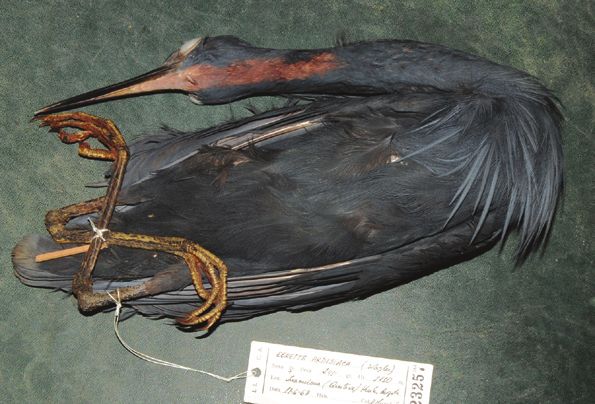
refined, key gaps in the conservation network         Department at the Instituto de Investigação
          identified and remedied, and links built with         Científica de Angola (IICA). In 1963 Dr Pinto
          Angolan counterparts. Whilst available data           was appointed leader of the Centre for Studies at
          on Angolan bird distributions were recently           the IICA in Lubango. He subsequently managed
          summarised (Dean 2000), the contents of the           to gather a very competent group of collectors
          largest collection of Angolan bird skins, referred    and taxidermists, most of them Angolans, familiar
          to here as the Lubango Bird Skin Collection           with the birds and the countryside. This group,
          (LBSC), were largely unknown. Summaries based         usually a team of six men but involving over 60
          on some information contained in the LBSC were        different personnel over the years, served the IICA
          published by Pinto (1970, 1972, 1973, 1983),          well by establishing a collection of over 40,000
          but the collection of more than 40,000 specimens      specimens, representing almost all of the avian
          must be considered the largest untapped source of     taxa known to occur in Angola. The collection is
          information on Angola bird distributions, and a       currently housed at the the Instituto Superior da
          primary source for systematic research. A sizeable    Ciências e Educação (ISCED), whose staff is to
          collection of mammal skins and skulls is also         be commended for maintaining the collection in
          housed here.                                          excellent condition.
              The aim of our visit to Lubango was four-             Although the collection at Lubango contains
          fold: (1) to report on the condition of the           very little ‘old’ material, there is a long history of
          LBSC and make recommendations for its future          collecting natural history specimens in Angola.
          management, (2) to garner valuable distributional     Bird collections had commenced by the 1850s,
          information from the LBSC on birds (and to            with visits by Dr Francisco Welwitsch, a botanist
          a lesser degree bats), (3) to draw attention to       who collected some birds between 1853 and 1860,
          the value of the collection for study purposes,       and Joaquim Monteiro, a mining engineer who
          and (4) to build links for future research and        collected birds in 1858–67. Collecting activity at
          capacity building in Angola, centred on the           about this time was stimulated by requests for bird
          collection. Here we report on the condition of        specimens from Prof. J. V. du Bocage in Portugal,
          the LBSC and make recommendations for its             who requested that military and administrative
          future management and use, draw attention to          officers in Angola collect birds for him. Also, in
          the importance of the collection by highlighting      1864, José Alberto D’Oliviera Anchieta went to
          its contents, and provide a progress report on        Angola to collect birds for Prof. Bocage. His first
          the cataloguing of the skin collection. Links with    collection, said to be ‘rich’, was lost in a shipwreck
          Angolan counterparts are being developed on           (Pinto 1983). Anchieta returned to Angola in
          several fronts, most notably through the work of      1866, and remained in the country until his death
          Brian Huntley and colleagues of the South African     in 1897. He worked mostly in central and western
          National Biodiversity Institute (SANBI), but are      Angola, collecting almost 4,400 specimens of 460
          not reported on here.                                 species of birds, of which 46 were new species to
                                                                science.
          Short history of the skin collection and                  A number of collectors of many different
          collecting in Angola                                  nationalities followed Anchieta in the late 1800s;
          The LBSC is one of the largest collections of bird    O. Sala (Dutch), C. J. Andersson (Dean et al.
          specimens in south-central Africa and contains        2006; Swedish), A. W. Eriksson (Swedish), C.
          many well-prepared specimens, comparable in           Hamilton (British), J. Falkenstein (German), L.
          quality to any collection in Africa. The collection   Petit and A. Lucan (French), O. Schütt and F.
          is a tribute to the late Dr António da Rosa Pinto,    W. von Mechow (Steinheimer & Dean 2007;
          who, in 1958, began the nucleus of the collection     German), P. J. van der Kellen (Dutch) and
          by leading a collecting trip to Moxico Province,      the Valdivia Expedition. Many of these are
          in the east of the country. At the time, Dr Pinto     remembered in the names of Angolan birds.
          was a teacher at Salazar High School in Lourenço      With interest growing in the natural history
          Marques (now Maputo) in Mozambique, and               of Angola, expeditions sponsored by museums
          was in Angola on an official ‘temporary’ mission      began to visit the country in the early 1900s: the
          with the objective of establishing an Ornithology     French mission of Rohan-Cabot (Ménégaux &

          44 – Bull ABC Vol 17 No 1 (2010)                       Cataloguing the Lubango Bird Skin Collection: Mills et al.

abcbul 33-100218.indd 44                                                                                          2/18/2010 10:24:43 AM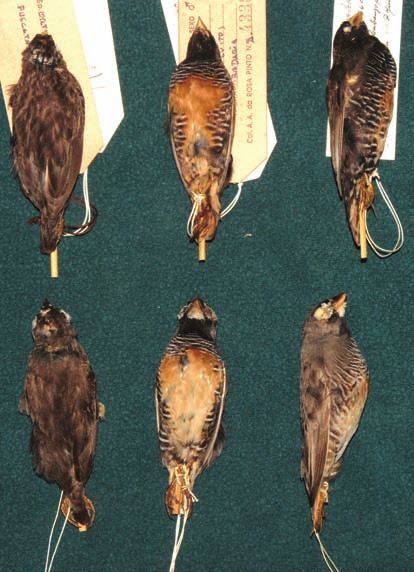
Berlioz 1923), the Swiss scientific expedition to            Angola and sent to Portugal in the late 1800s
          Angola in 1928–29 (Monard 1934), the Phipps-                 and early 1900s were destroyed in a fire at the
          Bradley expedition (with Rudyerd Boulton as                  University of Lisbon in 1978 (Mearns & Mearns
          collector), the Vernay-Angola expedition and                 1998), and many other specimens have not been
          collecting trips by Hubert Lynes and Jack Vincent            traced. Fortunately the bird collection at Lubango
          (Lynes & Sclater 1933, 1934), and the Pulitzer-              remains intact and is an extremely important
          Angola expedition, again with Rudyerd Boulton                source of reference material for ongoing research
          as collector. Boulton subsequently collected                 on the birds of Angola.
          and described a new endemic species, Pulitzer’s
          Longbill Macrosphenus pulitzeri (Boulton 1931).              Methods
          In 1929–30, the Gray African Expedition of                   For two weeks in June 2008 the authors worked
          the Academy of Natural Sciences, Philadelphia,               at the LBSC. Bird specimens were removed
          collected birds and mammals in central-western               from drawers and information displayed on their
          Angola (Bowen 1931, 1932), and an Italian                    labels transcribed into an electronic database
          expedition in 1930 collected the holotype of                 on laptop computers (Fig. 1). The following
          an endemic subspecies of Lühder’s Bushshrike                 information was captured for each specimen:
          Laniarius luehderi amboinensis (Moltoni 1932).               specimen number, species name, subspecies, sex,
          Individuals, some sponsored by museums and                   age, weight, collection date and locality, and
          owners of private collections, were also active              collector’s name. In addition, photographs were
          in Angola during the early 1900s. Dr William                 taken of many skins, including representatives
          Ansorge made several trips to Angola between                 of all of the rarer specimens. Lesser known
          1903 and 1909, collecting c.8,000 bird specimens             species were generally processed first. During the
          (and many previously undescribed freshwater                  available time, data from 15,000 specimens were
          fish). The Portuguese naturalist Francisco Newton            captured into the database, covering all of the
          visited Angola at about the same time (de Seabra             rarer species. Handwriting on the labels was often
          1905), C. H. Pemberton collected in 1901–02                  hard to read, requiring substantial cleaning of the
          and Willoughby Lowe collected some material                  database, to correct names of collection localities
          in the Luanda area in 1910–11 (Bannerman                     and collectors. This work is ongoing.
          1912). Important collections in the 1930s were                   In addition to entering data from labels, specimen
          made by Jean Bodaly who collected birds at                   ‘catalogue’ cards (cf. Fig. 2) were photographed for
          Chitau, Bié, and by H. K. Prior at Dondi,                    the entire collection. Each card represents a single
          Huambo. During a similar period, Rudolf Braun,               species and subspecies, and contains the following
          who was resident in Angola, collected some                   information on specimens belonging to the taxon:
          material, most of which is now in the Zoological
          Museum in Berlin. The last collections of birds
          in Angola before the Ornithology Department
          of the IICA was established were made by H. A.
          Beatty, who collected for the Field Museum in
          Chicago. In two separate major collecting trips
          in 1954–55 and 1957, Gerd Heinrich collected
          birds for the Zoologisches Institut, Hamburg,
          the Field Museum and the Peabody Museum
          at Yale University. The Transvaal Museum and
          the British Museum sponsored expeditions in
          the 1950s, and both expeditions obtained very                Figure 2. An example of the bird ‘catalogue’ cards, for
                                                                       Grey-striped Francolin Francolinus griseostriatus, giving
          useful study material. With the exception of some            the specimen number, date and location of collection,
          birds donated to the IICA by Heinrich and the                and sex (Michael Mills)
          British Museum, most of the specimens collected              Un exemple d’une «fiche de catalogue», pour le
          between 1850 and 1960 in Angola are scattered in             Francolin à bandes grises Francolinus griseostriatus, avec
          museums in Europe, the UK and North America.                 le numéro du spécimen, date et localité de collection, et
          However, many of the specimens collected in                  sexe (Michael Mills)

          Cataloguing the Lubango Bird Skin Collection: Mills et al.                                Bull ABC Vol 17 No 1 (2010) – 45

abcbul 33-100218.indd 45                                                                                                   2/18/2010 10:24:43 AM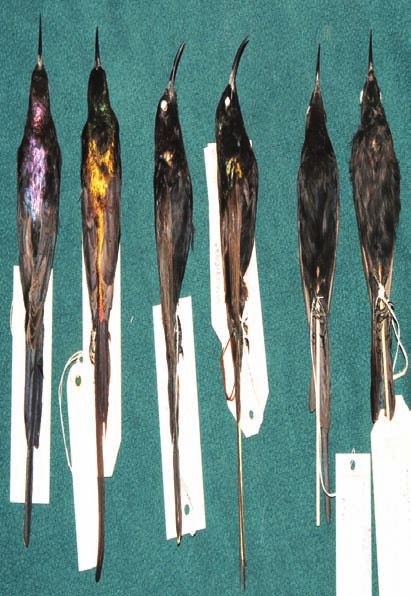
3a                                 3b                                                           6

           4
                                                                                                          7

           5

                                                                                                          8

          46 – Bull ABC Vol 17 No 1 (2010)        Cataloguing the Lubango Bird Skin Collection: Mills et al.

abcbul 33-100218.indd 46                                                                           2/18/2010 10:24:48 AM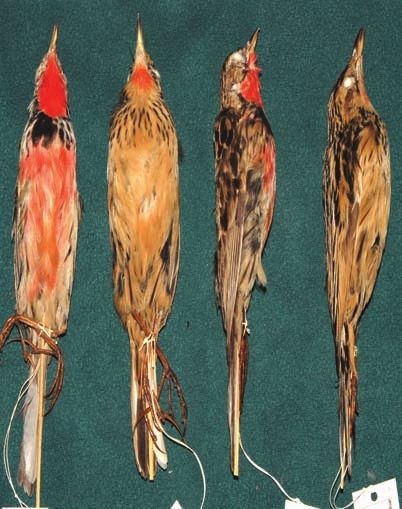
Legend to figures on opposite page                            Un exemple du remarquable mâle en plumage nuptial
                                                                        de l’endémique Euplecte doré Euplectes aureus (en
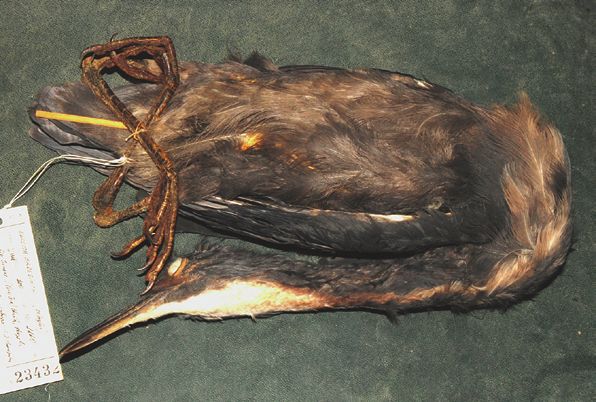
          Figure 3. Two of the four specimens of Slaty Egret            haut), à côté de l’Euplecte à croupion jaune E. capensis
          Egretta vinaceigula in the collection: (a) adult, (b)         (en bas). La population de l’Euplecte doré à São Tome
          immature. These are the first published records of the        est supposée avoir été introduite (Fry & Keith 2004)
          species in Angola (Michael Mills)                             (Michael Mills)
          Deux des quatre spécimens de l’Aigrette vineuse Egretta       Figure 7. The near-endemic Bocage’s Sunbird Nectarinia
          vinaceigula de le collection : (a) adulte, (b) immature. Il   bocagii (second, fourth and sixth) alongside the
          s’agit des premières données publiées de l’espèce pour        distinctive, endemic gadowi subspecies of Bronzy Sunbird
          l’Angola (Michael Mills)                                      N. kilimensis. Bocage’s Sunbird is dark purple and black,
          Figure 4. A comparison of Black-chinned Quailfinch            whereas Bronzy Sunbird is greenish bronze and has a
          Ortygospiza gabonensis (top) and African Quailfinch O.        longer, more curved bill (Michael Mills)
          fuscocrissa (bottom), from Angola. The latter species has     Le quasi endémique Souimanga de Bocage Nectarinia
          a white chin and spectacles, but overall the species are      bocagii (deuxième, quatrième et sixième spécimens)
          very similar and may belong to a single species (Payne &      à côté de la sous-espèce endémique distincte gadowi
          Sorenson 2007). Skins from the Lubango museum come            du Souimanga bronzé N. kilimensis. Le Souimanga de
          from a contact zone of the two taxa and could be used         Bocage est violet foncé et noir, tandis que le Souimanga
          as part of a detailed phylogenetic study using multiple       bronzé est bronze verdâtre et a un bec plus long et plus
          representatives from each quailfinch form, required to        arqué (Michael Mills)
          properly test whether the three detected genetic lineages
          exhibit consistent plumage differences (Fry & Keith           Figure 8. The very similar Bates’s Sunbird Cinnyris
          2004, Payne & Sorenson 2007) (Michael Mills)                  batesi (top) and Little Green Sunbird Anthreptes seimundi
                                                                        (bottom). The latter is overall brighter green, with a
          Une comparaison entre l’Astrild-caille à face noire           shorter, straighter bill; Bates’s Sunbird is greyer below,
          Ortygospiza gabonensis (en haut) et l’Astrild-caille à        and has a black tail, which is hard to see in the field
          lunettes O. fuscocrissa (en bas) de l’Angola. La dernière     (Michael Mills)
          espèce a le menton blanc et des lunettes blanches, mais
          pour le reste les deux espèces sont très semblables et        Les très semblables Souimanga de Bates Cinnyris batesi
          pourraient comprendre une seule espèce (Payne &               (en haut) et Souimanga de Seimund Anthreptes seimundi
          Sorenson 2007). Les spécimens du musée de Lubango             (en bas). Ce dernier a le plumage vert plus vif, avec un
          proviennent d’une zone de contact des deux taxons et          bec plus court et plus droit ; le Souimanga de Bates est
          pourraient servir pour une étude phylogénétique détaillée.    plus gris dessous et a une queue noire, ce qui est difficile
          Une telle étude devrait utiliser plusieurs représentants de   à voir sur le terrain (Michael Mills)
          chaque forme d’astrild-caille pour pouvoir examiner si
          les trois lignées détectées ont des différences de plumage
          consistantes (Fry & Keith 2004, Payne & Sorenson              specimen number, collection date and locality, and
          2007) (Michael Mills)                                         sex for each example in the collection. Photographs
          Figure 5. Male (top) and female (bottom) specimens of         of these cards (4,661 in total, representing 859
          Black-chinned Weaver Ploceus nigrimentus, collected in        species) have now been labelled and ordered
          Huambo town (previously Nova Lisboa) in March 1966            by family. Data entry is continuing using these
          probably the most recent of this rare species in Angola.
          Only two other specimens are listed in Dean (2000), with      photographs, but is expected to take at least
          the only other localities being Galanga (the type locality)   another 18 months to complete.
          and Mombolo (Michael Mills)                                       A small amount of time was dedicated to
          Spécimens mâle (en haut) et femelle (en bas) du Tisserin      comparing specimens of similar species, and taking
          à menton noir Ploceus nigrimentus, collectés à Huambo         side-by-side photographs, as well as inspecting the
          (auparavant Nova Lisboa) en mars 1966 probablement            mammal collection.
          les mentions les plus récentes de cette espèce rare en
          Angola. Seulement deux autres spécimens, de Galanga           Findings
          (la localité type) et Mombolo, sont mentionnés par
          Dean (2000) (Michael Mills)
                                                                        Broadly, the collection remains in excellent
                                                                        condition, free of insect damage. Specimens are
          Figure 6. An example of the striking endemic male
          Golden-backed Bishop Euplectes aureus in breeding
                                                                        housed in wooden drawers lined using paper,
          plumage (top), alongside Yellow Bishop E. capensis            in 28 large wooden cupboards. All specimens
          (bottom). A population of Golden-backed Bishop on São         are labelled and the complete collection of field
          Tome is believed to have been introduced (Fry & Keith         journals remains with the skins. However, the
          2004) (Michael Mills)                                         room in which the collection is kept is incredibly
                                                                        dusty, the field journals are unordered and poorly

          Cataloguing the Lubango Bird Skin Collection: Mills et al.                                 Bull ABC Vol 17 No 1 (2010) – 47

abcbul 33-100218.indd 47                                                                                                    2/18/2010 10:24:48 AM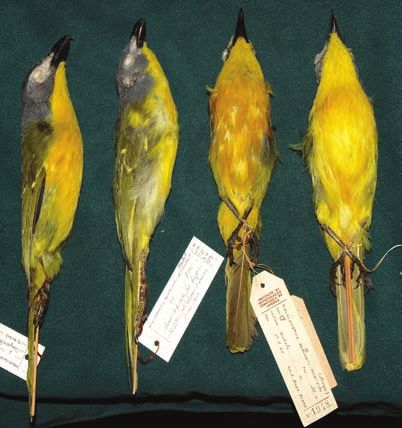
Table 1. Details of the four specimens of Slaty Egret Egretta vinaceigula in the Lubango Bird Skin Collection.
                   Tableau 1. Données sur quatre spécimens de l’Aigrette vineuse Egretta vinaceigula logés dans la collection
                                                         de peaux d’oiseaux de Lubango.

            Specimen details                                    Collection details
            No.            Sex     Age       Mass (g)           Locality                          Date                    Collector
            23532          F       Imm.      300                Rio Cunene (Quiteve)              27 June 68              A. R. Pereira
            23257          F       Ad.       245                Luamúcua (Quiteve)                19 June 68              D. Mumputu
            23259          F       Ad.       175                Luamúcua (Quiteve)                19 June 68              A. R. Pereira
            23432          F       Imm.      300                Rio Cunene (Quiteve)              24 June 68              D. Mumputu

          kept, and a large number of mounted specimens                        cards, but it was not found. While the collection
          are clumsily arranged, making for poor working                       generally contains few types, it does house the type
          conditions. Although the collection has been kept                    series of the subspecies of Scaly-fronted Weaver
          in good condition by Prof. José Luis Alexandre                       Sporopipes squamifrons pallidus described by Pinto
          and his staff at ISCED, there is no official curator                 (1967). Several rare or uncommon weavers are
          or ornithologist at the collection. The current                      represented: Black-chinned Weaver P. nigrimentus
          ‘caretaker’ of the collection has no training in                     (2), Loango Weaver P. subpersonatus (2), Brown-
          biology or taxidermy, and the collection remains                     capped Weaver P. insignis (5), Black Bishop
          largely unused. There is not yet an official                         Euplectes gierowii (1 from Tanzania) and Golden-
          protocol for access, although permission to work                     backed Bishop E. aureus (47). Three specimens
          on the collection can be granted by the Dean                         of Southern Masked Weaver Ploceus velatus were
          of ISCED, Prof. Matondo Tomalela. Francisco                          collected by Pinto from the isolated Lake Dilolo
          Miata is employed and trained to maintain and                        during August 1958 (Pinto 1965, Dean 1996),
          care for the herbarium collection housed here,                       with further specimens from this expedition
          and a counterpart in the bird collection is urgently                 housed at the Lisbon Museum (Louette 1984).
          needed.                                                              It has been suggested that these birds belong
              The LBSC is significant for both the number of                   to the reichardi-ruweti species complex (Dean
          specimens it contains (>40,000) and the great variety                2000). The LBSC specimens are dull-plumaged,
          of taxa presented (>850), including numerous rarer                   but one is a male starting to moult: there are a
          species. More than 1,600 photographs of skins                        few orange feathers on the upper throat. Other
          were taken, representing >400 species, and have                      than this orange plumage anomaly (the throat
          been databased. The most interesting discovery                       should be turning black), the weavers appear to
          was the presence of four specimens of Slaty Egret                    match nominate Southern Masked Weaver found
          Egretta vinaceigula, erroneously labelled as Black                   further south in Angola. The nearest locality for
          Herons E. ardesiaca (Fig. 3). These specimens                        Southern Masked Weaver is in north-west Zambia
          (Table 1; Fig. 1) were all collected during a trip                   (Dowsett et al. 2008).
          to Quiteve, Huila Province, on the banks of
          the Cunene River (16˚02’S 15˚11’E), on 19–27                         Mammals
          June 1968, and constitute the first records of this                  The mammal collection at Lubango consists
          Vulnerable species for Angola (Dean 2000).                           of skins and skulls of a variety of species. The
              Some other specimens of interest are                             aim of this expedition was to catalogue the bird
          summarised in Table 2 and species and species                        collection, thus there was only limited time for AM
          comparisons are illustrated in Figs. 4–12.                           to examine the mammals, which numbered more
              DO worked exclusively on the Ploceidae. Most                     than 3,000 specimens of at least 123 species. The
          Angolan Ploceidae are represented in the collection,                 bats were examined in greatest detail and included
          notable exceptions being Orange Weaver Ploceus                       211 specimens of 23 species. This represents
          aurantius and Slender-billed P. pelzelni. Pinto                      about one third of the 63 species known to occur
          (1972) listed a specimen of P. pelzelni collected                    in Angola. With respect to collecting sites, there is
          in Cabinda that should have been present in                          a geographical bias towards the south-east of the
          the museum and is listed on the ‘catalogue’                          country, which is unsurprising since that is where

          48 – Bull ABC Vol 17 No 1 (2010)                                       Cataloguing the Lubango Bird Skin Collection: Mills et al.

abcbul 33-100218.indd 48                                                                                                            2/18/2010 10:24:48 AM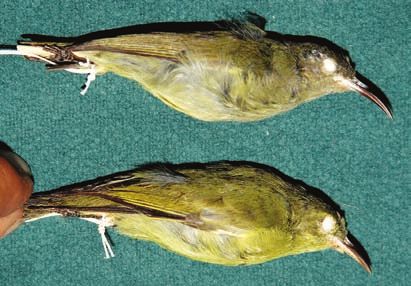
Table 2. Summary of some of the more interesting specimens contained in the Lubango Bird Skin Collection, with the
                                                 number of specimens for each species (No.).
              Tableau 2. Aperçu d’un nombre de spécimens intéressants dans la collection de peaux d’oiseaux de Lubango, avec
                                      l’indication du nombre de spécimens pour chaque espèce (No.).

          Common Name Scientific Name                                            No.   Notes
          Rufous-chested Sparrowhawk Accipiter rufiventris                       3     Rare in Angola
          Swierstra’s Francolin Francolinus swierstrai                           6     Vulnerable endemic
          Grey-striped Francolin Francolinus griseostriatus                      12    Near-Threatened endemic
          White-throated Francolin Francolinus albogularis                       6     Rare in Angola
          Horus Swift Apus horus                                                 12    Form toulsoni, often treated specifically as Loanda Swift
          Bradfield’s Hornbill Tockus bradfieldi                                 16    Scarce species
          White-headed Barbet Lybius leucocephalus                               37    Endemic and distinctive ssp. leucogaster
          Benguela Long-billed Lark Certhilauda benguelensis                     55    Near-endemic
          Grimwood’s Longclaw Macronyx grimwoodi                                 38    Data Deficient
          Angola Cave Chat Xenocopsychus ansorgei                                31    Endemic
          Black-necked Eremomela Eremomela atricollis                            65    Localised species
          Congo Moor Chat Myrmecocichla tholloni                                 29    Near-endemic
          Gabela Akalat Sheppardia gabela                                        7     Endangered endemic
          Pulitzer’s Longbill Macrosphenus pulitzeri                             4     Endangered endemic
          Laura’s Woodland Warbler Phylloscopus laurae                           1     Endemic ssp. laurae; rare in Angola
          Rock-loving Cisticola Cisticola aberrans                               6     Endemic ssp. bailunduensis
          Angola Slaty Flycatcher Melaenornis brunneus                           32    Endemic
          Margaret’s Batis Batis margaritae                                      1     Rare in Angola; endemic ssp. margaritae
          White-fronted Wattle-eye Platysteira albifrons                         4     Near-Threatened near-endemic
          Bare-cheeked Babbler Turdoides gymnogenys                              15    Near-endemic
          Black-faced Babbler Turdoides melanops                                 21    Near-endemic
          Rockrunner Chaetops pycnopygius                                        22    Near-endemic
          Bannerman’s Sunbird Cyanomitra bannermani                              13    Near-endemic
          Bocage’s Sunbird Nectarinia bocagii                                    11    Near-endemic
          Ludwig’s Double-collared Sunbird Cinnyris ludovicensis                 76    Endemic
          Oustalet’s Sunbird Cinnyris oustaleti                                  31    Localised species
          Gabela Helmetshrike Prionops gabela                                    3     Endangered endemic
          Chestnut-backed Sparrow Weaver Plocepasser rufoscapulatus              82    Near-endemic
          Bar-winged Weaver Ploceus angolensis                                   11    Near-endemic
          Black-chinned Weaver Ploceus nigrimentus                               2     Near-endemic
          Golden-backed Bishop Euplectes aureus                                  47    Endemic
          Dusky Twinspot Euschistospiza cinereovinacea                           29    Endemic ssp. cinereovinacea

          Lubango is situated. The collection includes a                 (dassies) (Heterohyrax and Procavia) and at least
          number of interesting bat specimens such as two                33 genera of rodents. Primates are particularly
          D’Anchieta’s Fruit Bat Plerotes anchietae, a species           poorly represented with skins of just six species.
          known from just 11 specimens (Bergmans 1989,
          Kock et al. 1998); 21 specimens of Angolan                     Habitats: erosion of biodiversity in the
          Epauletted Fruit Bat Epomophorus angolensis, an                environs of Lubango
          Angolan near-endemic; and African Sheath-tailed                The habitats in which birds were collected
          Bat Coleura afra, a widespread species but in                  between 1958 and 1974 ranged from coastal desert
          southern Africa known from just three specimens                through palm and baobab savanna on lowland
          (Monadjem et al. in press). Non-chiropteran                    alluvium along the Cunene River, to grassland
          mammals well represented in the collection                     and sclerophyllous shrubland on the sandstones
          include genets (Genetta), hares (Lepus), hyraxes               of the high-altitude tableland that surrounds

          Cataloguing the Lubango Bird Skin Collection: Mills et al.                                      Bull ABC Vol 17 No 1 (2010) – 49

abcbul 33-100218.indd 49                                                                                                                 2/18/2010 10:24:48 AM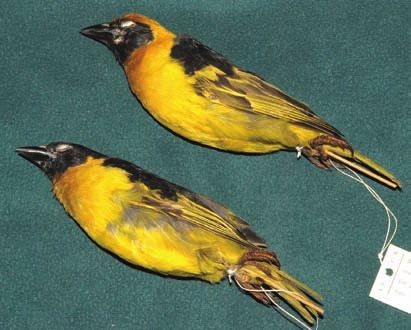
9                                                                                                            11

                                                                                                                        12

          10

                                                                diversity of shrubs including Protea welwitschi and
                                                                grass trees Xeris sp. Closed Afromontane forest
                                                                patches occurred in deep, well-watered gorges on
                                                                the escarpment. When the bird collection was
                                                                constituted, in 1958–74, the human population of
                                                                Angola was sparse and most of the woodland in the
                                                                southern part of Angola was intact. Tall woodland
                                                                that included large specimens of such hardwoods
                                                                as Pterocarpus angolensis (kiaat), Combretum (bush
                                                                willow) and Baikiaea plurijuga (teak) extended
                                                                from the Namibian border to Lubango.
                                                                    Human population growth over the past four
                                                                decades has changed the face(s) of the landscape.
          Lubango, to escarpment forest along the ‘Scarp’       Within a 50-km radius of Lubango miombo
          and equatorial gallery forest along various rivers.   woodlands have been cleared and replaced with
          Travelling from northern Namibia to Lubango           subsistence agriculture based on grain crops, goats
          we passed successively through palm savanna and       and cattle, with charcoal made from large miombo
          mopaneveld, baobab savanna, Baikiaea (teak)           trees as a cash supplement. Further from the city
          woodland on yellow sand, mixed woodland               of Lubango bags of charcoal and honey for sale
          with Combretum, Terminalia, Commiphora and            at roadside markets are witness to the continued
          Albizia set among spectacular granite hills, and      erosion of the woodland, as trees make way for
          then, at higher altitudes on red sands, miombo        more subsistence crops, cut to raid bee hives,
          woodland. The sandstone plateau above the town        ringbarked for materials used in medicine or to
          of Lubango supports stunted miombo and a high         construct bark hives, and converted to charcoal

          50 – Bull ABC Vol 17 No 1 (2010)                       Cataloguing the Lubango Bird Skin Collection: Mills et al.

abcbul 33-100218.indd 50                                                                                          2/18/2010 10:24:51 AM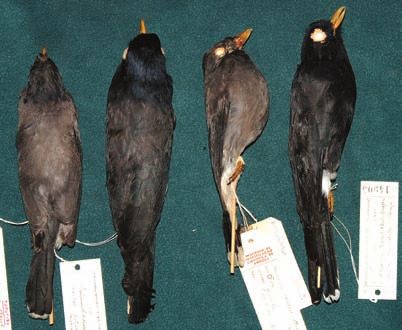
Legend to figures on opposite page                                for heating and cooking in the ever-growing
          Figure 9. The endemic Monteiro’s Bushshrike                       urban centres. Large trees are disappearing in even
          Malaconotus monteiri (second and fourth) alongside its            quite remote areas such as the slopes above the
          closest relative, Grey-headed Bushshrike M. blanchoti,            precipitous cliffs of the escarpment at Leba. Smoke
          which differs in lacking the pale ring around the eye, in         rising from the woodland, cut stumps, charcoal
          having a yellowish, not greyish eye, and a less robust bill.      pits, paths made by ox-drawn sleds, and feathers
          Monteiro’s Bushshrike is supposedly less orange below             of wild birds used to sustain the woodcutters bear
          (Fry & Keith 2000, Sinclair & Ryan 2003), but these
          two specimens contradict this (Michael Mills)                     silent witness to the ongoing erosion of the natural
                                                                            capital of this beautiful land.
          L’endémique Gladiateur de Monteiro Malaconotus
          monteiri (deuxième et quatrième spécimens) à côté de
          son parent le plus proche, le Gladiateur de Blanchot              Towards an atlas
          M. blanchoti, qui diffère par l’absence du cercle oculaire        One of the objectives of compiling a catalogue and
          pâle et par son œil jaunâtre, non pas grisâtre, et son            database of the bird specimens in the Lubango
          bec moins fort. Le Gladiateur de Monteiro est supposé             collection is to build a georeferenced database of
          être moins orange dessous (Fry & Keith 2000, Sinclair             bird specimen records for Angola. These data will
          & Ryan 2003), mais ceci est contredit par ces deux
          spécimens (Michael Mills)
                                                                            be merged with another database, containing data
                                                                            on distributions taken from Traylor (1963), Pinto
          Figure 10. Rosy-throated Longclaw Macronyx ameliae
          (second and fourth) alongside examples of the Data
                                                                            (1983), Dean (2000) and Mills & Dean (2007),
          Deficient Grimwood’s Longclaw, well represented in the            data on bird specimens in other collections and sight
          collection by 38 specimens of two subspecies, grimwoodi           records of birds contributed by visitors to Angola.
          and cuandocubangensis, the latter not mentioned in Keith          These data will then be mapped, probably at a 15’
          et al. (1992) (Michael Mills)                                     × 15’ scale. The maps will provide guidelines for the
          La Sentinelle à gorge rose Macronyx ameliae (deuxième             recommendation of protected areas and will also
          et quatrième spécimens) à côté d’exemplaires de la                provide some basic distribution patterns, useful for
          Sentinelle de Grimwood, espèce «Insuffisamment                    modelling effects of climate change and potential
          documenté» bien représentée dans la collection par                environmental disasters (e.g. oil spills from offshore
          38 spécimens de deux sous-espèces, grimwoodi et
          cuandocubangensis. Cette dernière n’est pas mentionnée            wells along the northern coast). Gap analyses
          par Keith et al. (1992) (Michael Mills)                           using these data will establish priorities for future
          Figure 11. The Endangered, endemic Gabela                         ornithological field work in Angola.
          Helmetshrike Prionops gabela (first and third) alongside              Bird atlas studies not only show bird distribution
          its closest relative, the widespread Retz’s Helmetshrike P.       patterns, but more importantly also identify areas
          retzii, illustrating the latter species’ larger size and darker   for which there are no data. Globally, bird atlases
          plumage (Michael Mills)                                           have made a key contribution to conservation,
          Le Bagadais de Gabela Prionops gabela (premier et                 through highlighting the conservation priorities
          troisième spécimens), espèce endémique «Menacée                   of species (providing fundamental data for Red
          d’extinction», et son parent le plus proche à large               Data listing) and habitats (e.g. Fishpool & Evans
          distribution, le Bagadais de Retz P. retzii, illustrant la
          taille plus grande et le plumage plus foncé de ce dernier
                                                                            2001). Angola, emerging from decades of political
          (Michael Mills)                                                   instability, is a country where knowledge of bird
          Figure 12. Two subspecies of Meves’s Starling
                                                                            distributions is particularly poor, although the
          Lamprotornis mevesii found in Angola; the more glossy             avifauna is diverse. Most surveys and collecting
          mevesii (top and third) alongside the duller benguelensis,        have been conducted in western and north-central
          endemic to the southern escarpment zone, that may                 Angola, and along the coastal areas and parts
          deserve specific status (Hall 1960). Specimens from the           of the Mayombe in Cabinda. We do not know
          Lubango Bird Skin Collection could help unravel the               whether gaps in the distribution of certain species
          systematics of this species (Michael Mills)                       are ‘real’ or artefacts of surveys. An atlas will help
          Deux sous-espèces du Choucador de Meves Lamprotornis              close these gaps or show whether they are real.
          mevesii représentées en Angola: mevesii, plus brillant (en
                                                                            This has important implications for conservation
          haut et troisième), et benguelensis, endémique de la zone
          australe de l’escarpement, plus terne. Les deux formes            in Angola in that attention will then be drawn to
          pourraient être des espèces à part entière (Hall 1960);           areas of high avian species richness, which might
          des spécimens de la collection de Lubango pourraient              also prove to be areas of high species richness
          servir à élucider leur taxonomie (Michael Mills)                  amongst other taxa. Identifying focal areas will

          Cataloguing the Lubango Bird Skin Collection: Mills et al.                                  Bull ABC Vol 17 No 1 (2010) – 51

abcbul 33-100218.indd 51                                                                                                     2/18/2010 10:24:51 AM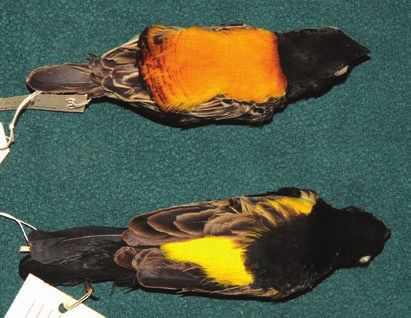
also lead to an evaluation of land use practices in    initiatives to provide alternative sources of income
          these areas and an assessment of their impacts; for    for the local inhabitants, it is unlikely that the next
          example, charcoal burning using native woodland        generation of Angolans will be able to enjoy the
          (miombo species complex) trees.                        beauty of the country and the biological diversity
                                                                 experienced by their grandparents, to taste wild
          Recommendations for the collection                     honey, see Giant Sable Hippotragus niger variani
          Although the collection is being kept in reasonable    in the wild, or even to simply find sufficient wood
          condition, conditions can be greatly improved and      or charcoal for their daily needs.
          the collection should be put to practical use. We
          recommend that the following steps be taken:           Acknowledgements
          • Produce an electronic database of the bird           Funding for this research came from the generous
              skin collection, which work is in progress,        contributions of Ursula Franke, the African Bird Club
              and once the database is complete, copies          Conservation Fund, Tony Dowd and Robert Angiers.
              will be provided to colleagues in Angola and       Brian Huntley assisted tremendously with organising
              worldwide, to promote work using the skins.        access to the collection, and with logistical support.
              Data will start to be made available online        Many thanks to Yudo Borges and especially Eduardo &
              via the website of Natural World (www.nat-         Tanya Traguedo for their help during our visit, and for
              world.org) within the next 12 months.              being such hospitable hosts. Prof. Matondo Tomalela,
                                                                 Dr Fernanda Lages, Prof. José Luis Mateus Alexandre
          • Training of (a) young Angolan ornithologist(s),      and other staff at ISCED were incredibly supportive of
              to act as curator for the collection.              our work, and this project would have been impossible
          • Possible ‘adoption’ of the collection by a foreign   without them. Dr Michel Louette, Robert J. Dowsett,
              museum to assist with training and to improve      Ron Demey and Guy Kirwan commented on an earlier
              the conditions in which skins are kept.            version of this paper.
          • Cleaning of the entire room in which the skins
              are housed.                                        References
          • Properly organising all documents pertaining         Bannerman, D. A. 1912. On a collection of birds made
              to the collection.                                     by Mr Willoughby P. Lowe on the West Coast of
          • Cleaning and cataloguing the valuable collec-            Africa and outlying islands; with field notes by the
              tion of books associated with the collection.          collectors. Ibis 9(6): 219–268.
                                                                 Bergmans, W. 1989. Taxonomy and biogeography of
          • Encouraging collaboration between Angolan                African fruit bats (Mammalia, Megachiroptera).
              and foreign researchers, using the skin collec-        2. The genera Micropteropus Matschie, 1899,
              tion as a point of contact.                            Epomops Gray, 1870, Hypsignatus H. Allen, 1861,
          • Stimulate interest in Angolan birds by incor-            Nanonycteris Matschie, 1899 and Plerotes Andersen,
              porating informative visits to the collection          1910. Beaufortia 39: 89–153.
              in standard biology courses at the institute       Boulton, R. 1931. New species and subspecies of
              and making use of the specimens for student            African birds. Ann. Carneg. Mus. 21: 43–56.
              projects.                                          Bowen, W. W. 1931. Angolan birds collected during
                                                                     the Gray African expedition, 1929. Proc. Acad. Nat.
          Conclusions                                                Sci. Phil. 83: 263–299.
          Given the threats to biodiversity in Angola,           Bowen, W. W. 1932. Angolan birds collected during
          it is important that some of the plant and                 the second Gray African expedition, 1930. Proc.
          animal collections from the 1970s remain in the            Acad. Nat. Sci. Phil. 84: 281–289.
                                                                 Dean, W. R. J. 1996. The distribution of the Masked
          country to guide and inspire a new generation
                                                                     Weaver Ploceus velatus in Angola. Bull. Br. Ornithol.
          of Angolan scientists. With the help of SANBI,
                                                                     Cl. 116: 254–256.
          other biodiversity experts in the South African        Dean, W. R. J. 2000. The Birds of Angola: An Annotated
          Development Community and assistance from                  Check-list. BOU Checklist No. 18. Tring: British
          outside the region there may still be time to              Ornithologists’ Union.
          plan a protected area network for Angola that          Dean, W. R. J., Sandwith, M. & Milton, S. J.
          will retain all vegetation types and the associated        2006. The bird collections of C. J. Andersson in
          fauna. Without planning, active protection and

          52 – Bull ABC Vol 17 No 1 (2010)                        Cataloguing the Lubango Bird Skin Collection: Mills et al.

abcbul 33-100218.indd 52                                                                                           2/18/2010 10:24:51 AM
southern Africa, 1850–1867. Archiv. Nat. Hist. 33: molecular phylogeny of quailfinches Ortygospiza.
159–171. Bull. Br. Ornithol. Cl. 127: 4–26.
Dowsett, R. J., Aspinwall, D. R. & Dowsett-Lemaire, Pinto, A. A. da Rosa. 1965. Contribuição para o
F. 2008. The Birds of Zambia. An Atlas and conhecimento da avifauna da região nordeste do
Handbook. Liège: Tauraco Press & Aves. Distrito do Moxico, Angola. Bol. Inst. Invest. Cient.
Fishpool, L. D. C. & Evans, M. I. 2001. Important Bird Angola 1(2): 153–249.
Areas in Africa and Associated Islands: Priority Sites Pinto A. A. da Rosa. 1967. Descrição de 4 novas
for Conservation. Newbury: Pisces Publications & subespécies de aves de Angola. Bol. Inst. Invest.
Cambridge, UK: BirdLife International. Cient. Angola 4: 29–32.
Fry, C. H. & Keith S. (eds.) 2000. The Birds of Africa. Pinto A. A. da Rosa. 1970. Um catálogo das aves do
Vol. 6. London, UK: Academic Press. Distrito da Huíla. Mem. Trab. Instituto Invest.
Fry, C. H. & Keith S. (eds.) 2004. The Birds of Africa. Cient. Angola 6.
Vol. 7. London, UK: Christopher Helm. Pinto, A. A. da Rosa. 1972. Contribuição para o estudo
Hall, B. P. 1960. The faunistic importance of the scarp da avifauna do Distrito de Cabinda (Angola). Mem.
of Angola. Ibis 102: 420–442. Trab. Inst. Invest. Cient. Angola 10: 1–103.
Huntley, B. J. 1974. Outlines of wildlife conservation Pinto A. A. da Rosa. 1973. Aditamento á avifauna
in Angola. J. South Afr. Wildlife Manag. Assoc. 4: do Distrito de Moçamedes, Angola. Livro de
157–166. homenagem ao Professor Fernando Frade Viegas da
Keith, S., Urban, E. K. & Fry C. H. (eds.) 1992. The Costa 700 Aniversário: 383–419.
Birds of Africa. Vol. 4. London, UK: Academic Pinto, A. A. da Rosa. 1983. Ornitologia de Angola.
Press. Vol. 1. Lisbon: Instituto de Investigação Científica
Kock, D., Burda, H., Chitaukali, W. N. & Overton, Tropical.
M. J. 1998. Plerotes anchietae (Seabra, 1900) in Seabra, A. F. 1905. Aves de Angola da exploração de
Malawi, Central Africa (Mammalia: Chiroptera). Francisco Newton em Angola. Ann. Sci. Nat. Porto
Z. Saugetierk 63: 114–116. 9: 153–159.
Louette, M. 1984. The identity of swamp-dwelling Sinclair, I. & Ryan, P. 2003. Birds of Africa South of the
weavers in northeast Angola. Bull. Br. Ornithol. Cl. Sahara. Cape Town: Struik.
104: 22–24. Steinheimer, F. D. & Dean, W. R. J. 2007. Avian
Lynes, H. & Sclater, W. L. 1933, Lynes-Vincent tour type specimens and their type localities from Otto
in Central and West Africa in 1930–1931. Part I. Schütt’s and Friedrich von Mechow’s Angolan
Ibis 13(3): 694–729. collections in the Museum für Naturkunde of the
Lynes, H. & Sclater, W. L. 1934. Lynes-Vincent tour Humboldt-University of Berlin. Zootaxa 1387:
in Central and West Africa in 1930–1931. Part II. 1–25.
Ibis 13(4): 1–51. Traylor, M. A. 1963. Check-list of Angolan birds.
Mearns, B. & Mearns, R. 1998. The Bird Collectors. Publ. Cult. Companhia de Diamantes de Angola 61:
London, UK: Academic Press. 1–250.
Ménégaux, A. & Berlioz, J. 1923. Mission Rohan- a
A. P. Leventis Ornithological Research Institute, University
Chabot, Angola et Rhodesia 1912–1914. Oiseaux, of Jos, PO Box 13404, Jos, Plateau State, Nigeria. E-mail:
Histoire Naturelle 4: 107–155. michael@birdingafrica.com
Mills, M. S. L. & Dean, W. R. J. 2007. A revision of b
Percy FitzPatrick Institute, DST/NRF Centre of
the avifauna of Angola. Ostrich 78: 55–63.
Excellence, University of Cape Town, Private Bag X3,
Moltoni, E. 1932. Uccelli d’Angola raccolti da L.
Rondebosch 7701, South Africa.
Fenaroli durante la spezione 1930 Baragiola-Durini c
Tal 34, 80331 Munich, Germany.
Atti. Soc. Ital. Sci. Nat. Milan 71: 169–178.
Monadjem, A., Taylor, P., Cotterill, F. P. D. &
d
ISCED, Department of Natural Sciences, Lubango,
Schoeman, M. C. In press. Bats of Southern Angola.
Africa: A Biogeographic and Taxonomic Synthesis.
e
Department of Biological Sciences, University of
Johannesburg: University of the Witwatersrand Swaziland, Private Bag 4, Kwaluseni, Swaziland.
Press.
f
Animal Demography Unit, Department of Zoology,
Monard, A. 1934. Ornithologie de l’Angola. Arqu. University of Cape Town, Rondebosch, 7701, South
Museu Bocage. Arq. Mus. Bocage 5: 1–110. Africa.
Payne, R. B. & Sorenson, M. D. 2007. Integrative Received 18 February 2009; revision accepted 9 June
systematics at the species level: plumage, songs and 2009.
Cataloguing the Lubango Bird Skin Collection: Mills et al. Bull ABC Vol 17 No 1 (2010) – 53
abcbul 33-100218.indd 53 2/18/2010 10:24:51 AMYou can also read


