MARINE TURTLES in the Mediterranean Sea - IUCN
←
→
Page content transcription
If your browser does not render page correctly, please read the page content below
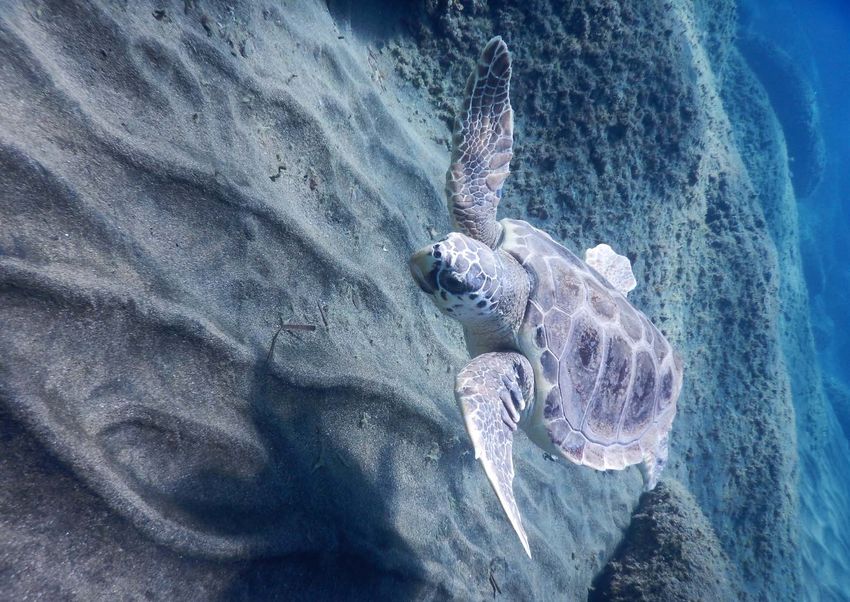
Conservation of

MARINE
TURTLES
in the Mediterranean Sea

                           © DEKAMER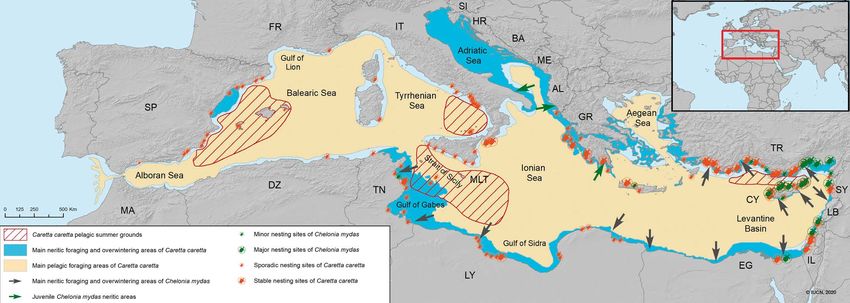
RECOMMENDATIONS SPECIES OCCURRING
to managers and policymakers in the Mediterranean Sea
The Mediterranean Sea is a semi enclosed pelagic habitats An exceptional
The current conservation status of Mediterranean marine turtles is based on the most updated scientific
sea connected with the Atlantic Ocean in the Alboran nesting event
knowledge and conservation efforts: this status cannot be considered as permanent, and protection of key of green turtle
through the Strait of Gibraltar, the Black Sea, around the
nesting sites throughout the region remains a priority requiring continuous attention and effort. Scientific was recorded in
Sea through the Marmara Sea, and the Red Balearic Islands
knowledge has radically improved over recent decades. However, knowledge levels are not homogeneous, the summer of
Sea via the Suez Channel. It has a coastline and southwest 2019 in the Kuriat
with more research efforts allocated to loggerhead turtles, some geographic areas, countries or topics, and
of 46,000 km and is surrounded by 21 Italy. Demersal Islands, Tunisia
with results that are not always comparable. Significant gaps exist from the most fundamental topics, such as
countries in addition to overseas territories. habitats of adults representing the
the distribution of major nesting sites and total number of egg clutches laid annually in the Mediterranean, to
are localised in western most
more specific topics like age at maturity, survival rates, at-sea abundance and mortality, and behaviour. nesting record of
Out of the seven Out of the seven species of sea turtles the Eastern area,
the green turtle.
5 RESEARCH 5 PROPOSED
species of sea currently inhabiting the world’s oceans, in the Nile Delta
TOP turtles currently three can be found in the Mediterranean and in front of
inhabiting the but only two of them breed in the region: Egypt, Syria, Lebanon, Israel, the Northern
PRIORITIES IN THE MEDITERRANEAN: CONSERVATION PRIORITIES: world’s oceans,
loggerheads (Caretta caretta) and green Adriatic Sea and the wide Tunisian
et up long-term in-water
S ear-round protection of key
Y three can be
found in the (Chelonia mydas). continental platform. The major breeding
monitoring programmes in key feeding and wintering grounds. grounds are located in Greece, Turkey,
Mediterranean
foraging areas for assessing sea Continue current conservation but only two There are also occasional records of Cyprus and Libya, with low numbers of egg
turtle abundance and trends. methods at nesting areas threat of them breed leatherbacks (Dermochelys coriacea), olive clutches laying in several other countries
Assess distribution and level of (in situ protection, relocations, in the region: and Kemp’s ridleys (Lepidochelys olivacea around the Mediterranean (Table 1).
nesting activity in all countries, light management, etc.). loggerheads
and Lepidochelys kempii).
with special focus in Lybia. Educate fishers about on-board (Caretta caretta)
and green Green turtle nesting is confined to the
Quantify bycatch (including sea turtle handling best practices. Mediterranean loggerheads are the easternmost part of the Mediterranean,
(Chelonia mydas).
small-scale fisheries) rates and Seasonal protection of main smallest specimens of this species in mostly in Cyprus and Turkey, and fewer
intentional killings in associated migratory corridors. the world, and their stable nesting areas sites in Egypt, Israel and Lebanon, as well
mortality, key foraging areas and Test and implement bycatch range from the Western Mediterranean as some Greek Islands in the Cretan Sea.
migratory pathways. mitigation approaches. to the Levantine coast in the East, with It is estimated that more than 2,200 egg
Understand how climate most of the estimated 8,000 egg clutches clutches are laid each year. Information
change might impact sex ratios, laid annually occurring in the Eastern on post-hatching dispersal and the
geographical range and phenology basin, especially in Greece. Loggerheads occurrence of high densities of small
Estimate/improve estimates of are known to occur in large numbers in oceanic, juvenile green turtles, supported
demographic parameters. different areas of the Mediterranean Sea, by the high incidence of stranding of
with juveniles from the Mediterranean small turtles on the south coast of Turkey
population and early adults that migrate suggest that the Levantine basin is the
6 MAIN ACTIONS
from the Atlantic and are abundant in main nursery area for this species (Table 2).
TO REDUCE THREATS:
Migration routes of sea turtles populations based on mark/recapture methods and satellite
tracking between the Mediterranean Sea and multiple pelagic and coastal foraging and nesting regions located
Eliminate intentional educe impact of
R ontrol pollution
C in temperate and tropical waters.
killing or exploitation coastal development originating from land
of sea turtles with safeguard actions and vessels; reducing
and eggs (e.g. minimise photo- at sea arrival of municipal and runoff Observed movements of
pollution) in nesting sites including effluents and solid waste loggerhead sea turtles from
the Mediterranean into the
Atlantic Sea
Observed movements
onitor and reduce
M stimate and reduce
E evelop spatial-temporal
D of loggerhead sea turtles
from the Atlantic into the
fisheries bycatch boats strike in closures to fisheries Mediterranean Sea.
important areas of important areas for Observed movements of
leatherback sea turtles from
for marine marine turtles Guyana through the Atlantic
turtles Possible movements
of loggerhead sea turtles
between Cabo Verde and
the Mediterranean.
2 3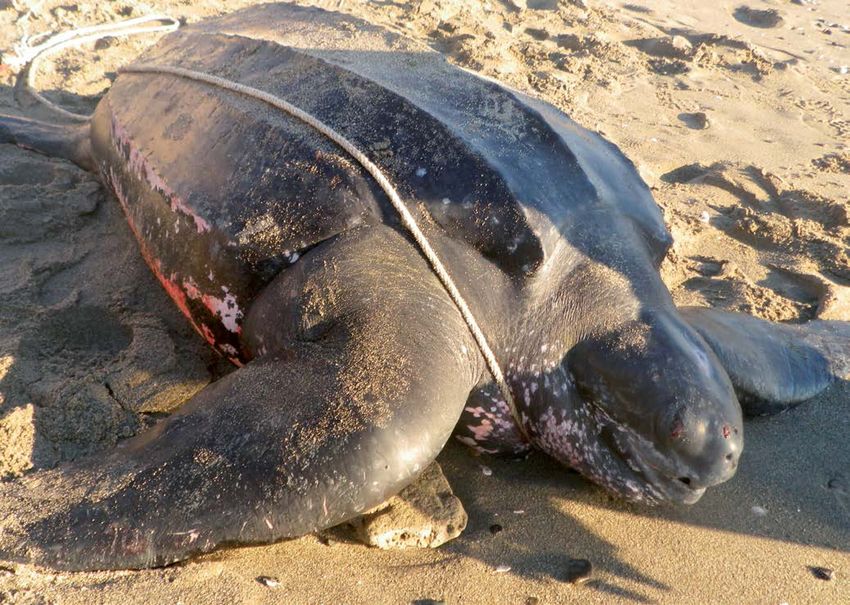
Marine Turtles
in the Mediterranean
Table 1. Loggerhead (Caretta caretta) nesting locations in the Mediterranean with >10 nests/yr in the most recent 5 years period. Table 2. Green turtle (Chelonia mydas) nesting
Beach length referred to surveyed length. Based on Casale et al. 2018, Hochscheid et al., 2018 and Katsiyiannis, 2019. locations in the Mediterranean, with nests/yr > 10 and
nests/km-yr > 3. Beach length refered to surveyed length. Species nesting in
the Mediterranean
REGION
NESTING LENGTH AVERAGE REGION
NESTING LENGTH AVERAGE Modified from Casale et al., 2018
BEACH/AREA (KM) Nests/year BEACH/AREA (KM) Nests/year
© DEKAMER
(Most recent 5-yr period) (Most recent 5-yr period)
Greece Southern Kyparissia Bay 9.5 1403 Cyprus Alagadi (Alakati) 1.7 59 REGION
NESTING LENGTH AVERAGE
BEACH/AREA (KM) Nests/year
Greece Laganas Bay, Zakinthos 5.5 938 Greece Koroni 2.7 56 (Most recent 5-yr period)
Some marine turtles nest and
Turkey Anamur 12 791 Lebanon El-Mansouri 1.4 55
Cyprus Chrysochou Bay 12 658 Cyprus East Coast 6.6 53
Turkey Kazanli 4.5 365 feed in close areas, while
Turkey Akyatan 22 322
Turkey Belek 16 628 Turkey Kale-Demre 8.5 52 others migrate great distances
Turkey Samandag 14 306
Turkey Dalyan 4.7 307 Cyprus North Coast 2.7 50
Cyprus Ayios Philon & Ronnas Beach 3.2 220 between their winter or feeding
Greece Rethymno, Crete 10.8 275 Greece Lefkas Island 17.13 50
Turkey Sugözu 3.4 213 grounds and their nesting
Cyprus West Coast 5 249 Cyprus Guzelyali (Vasilia) 1 45
Cyprus Alagadi(Alakati) 1.7 154 beaches once they reach
Greece Lakonikos Bay 23.5 190 Greece Messaras Bay, Crete 8.1 45
© ANNA LAMAJ FOR ARCHELON
Syria Latakia 12 140
Turkey Fenike-Kumluca 21 184 Cyprus South Karpaza 7.6 41
Turkey Alata 3 125
sexual maturity. Adult females
Turkey Patara 14 180 Cyprus South East Karpaz 7.2 41 usually return to the beaches
Turkey Davultepe 2.8 113
Turkey Kizilot 8.5 138 Cyprus Tatlisu (Akanthou) 0.3 38
Cyprus West Coast 5 108 close to where they were born
Turkey Demirtas 7.8 137 Libya Semeda 9.4 34
Cyprus Akdeniz Beach (Morphou Bay) 8.6 70
Turkey Göksu Delta 34.7 124 Greece Mounda, Kefalonia 2.8 29 to lay their eggs, normally
Cyprus South Karpaz 7.6 59
Libya Al-Gbeba 5.7 122 Libya Ain Ghazala 1.4 26
Cyprus North Coast 2.7 11
using the same beach each
Libya Al-Arbaeen 8.5 119 Greece Romanos 2.7 25 year thereafter. As hatchlings
Libya Al-Metefla 4.5 104 Libya West Camp 2.5 25
Greece Northern Kyparissia Bay 34 102 Turkey Alata 3 25
emerge from the sand they
Colors in tables indicating 1. Loggerhead turtle
Cyprus Akdeiz Beches (Morphou Bay) 8.6 101 Libya Al-Gwezat 5.5 23 eggs
immediately start crawling
the different protected areas
Turkey Cirali 3.2 86 Tunisia Great Kuriat* 0.9 22 2. Relocation of a towards the sea and swim into
© JULIA COSTESCU FOR ARCHELON
National Designated Areas
Turkey Dalaman 10.4 86 Libya Al Arar 7 22 doomed nest in
Sites of Community Importance (EU Natura2000) deeper waters. Life for baby
Turkey Fethiye 8.3 84 Cyprus North Karpaz 4.4 22 Laganas Bay,
Libya Al--Thalateen 5 73 Greece Kerkyra Island (Corfu) 7.8 20 National Designated Areas and Natura 2000 sites Zakynthos, Greece turtles is risky: perhaps only one
Greece Beaches adjancent to Kiparissia town 3.5 68 Libya Al Malfa 1.5 20 International Designated Areas (RAMSAR sites) 3. Protecting hatchlings in a few hundred or a thousand
Greece Kos Island 23 60 Libya Eogla 3.9 17 * Proposed MPA emerging in
Kyparissia Bay,
hatchlings will survive to
Greece Bay of Chania, Crete 13.1 60 Libya Elmabulha 5.3 16
Greece become an adult marine turtle.
4 5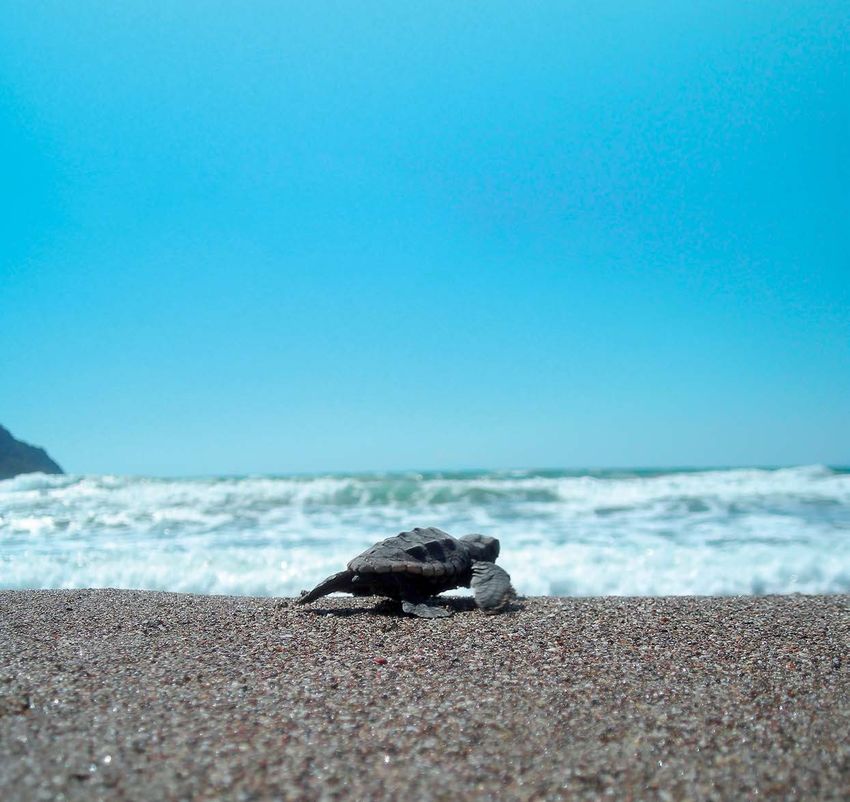
MAIN THREATS affecting
Main fisheries types in the Mediterranean. Most capture marine turtles.
marine turtles in the Mediterranean Depth (m)
0
The Mediterranean is a bountiful sea, with the increase of air and seawater
but holds many dangers for marine temperatures, sea level rise and severity
turtles. It has a relatively small surface of storm events are also threats impacting 20
area (2,510,000 km2) but more than 10 sea turtles in the Mediterranean. Turtles
million people live along its coast. It is are also vulnerable to factors such as
BENTHIC
also one of the world’s largest global cross-continental maritime traffic, high
tourist destinations, attracting almost a fishing pressure, often involving practices
90 PELAGIC
third of the world’s international tourists which are hazardous to marine turtles
every year. Although characterized by and to marine pollution which affects the
250 CONTINENTAL SHELF
its beautiful natural and cultural heritage whole Mediterranean, from the beaches to
and rich biodiversity, the Mediterranean the deep-sea floor.
is also a troubled and over-exploited sea, 400
where marine turtles are threatened by a Nonetheless, given the threats to these
800 SLOPE
range of factors. Intense development, species, significant efforts by naturalists, ©IUCN 2020
overuse of the marine and coastal zones, the general public and administrations Artisanal fishing (gillnets) Illegal, unreported and unregulated (IUU) gillnets Bottom trawl fishing
and agriculture are causing degradation are needed to conserve them for Purse-seiners Surface longline fishing
of marine future generations. The Mediterranean
Although physically and and terrestrial population of the loggerhead turtle is
physiologically perfectly habitats, including currently classified as “Least Concern”
adapted to live at sea, disturbance and under the Red List (RL) criteria. This status MARINE TURTLE BYCATCH IN MEDITERRANEAN FISHERIES
sea turtles depend on the destruction of has been achieved and maintained thanks
terrestrial environment Bycatch, the unintentional capture habitats, movement patterns, Adriatic Sea, Egypt, Israel, Tunisia
nesting beaches. entirely to long-term conservation efforts.
during one of the most of non-targeted species during environmental conditions, depth and Turkey. Pelagic longlines
vital phases of their Climate change- Mediterranean green turtle populations
fishing operations, has been and sea turtle survival to fishing mainly interact with sea turtles in
life cycle: nesting and driven alterations have yet to be assessed. described as an important factor gear) affect sea turtle bycatch the water column, while sea turtles
incubation of their eggs causing the decline of marine rates and impact on their survival. feed on the pelagic prey or migrate
on coastal beaches. species worldwide, including between different basins. Other
vulnerable species such as sea A recent review of incidental gears seem to have a negligible
turtles. Data on sea turtles bycatch catch of vulnerable species in impact on sea turtles, although
in the Mediterranean Sea have the Mediterranean estimated that impacts vary and certain practices
increased over time and become between 124,000 and 150,000 could have a considerable impact
more reliable as monitoring sea turtles can be bycaught in the in some areas.
programs (including on-board Mediterranean and that between
observers, interviews with fishers 33,000 and 39,000 of them might In the last decades, a number
Turtle failed crawl in Natura 2000 site in Cyprus Hatchling lost in tyre tracks. Kyparissia Bay, Peloponnese, Greece and logbooks) have increased die from different fishing activities of research studies, particularly
along with data standardization. on an annual basis1. Bottom with pelagic longlines, have been
However, the current available trawls and pelagic longlines are undertaken to find technical
information is still biased since the fisheries mainly impacting sea solutions to reduce sea turtle
efforts have been unequal over the turtles, with around 50,000 and bycatch. Further efforts are still
Mediterranean and Black Sea. 30,000 annual capture-events, needed to implement mitigation
respectively. Bottom trawl and measures taking the initial results
Interactions between sea turtles fixed gears (e.g. gillnets, trammel with pelagic longlines as well as
and fisheries occur wherever nets, combined nets) mainly to reduce sea turtle bycatch in
fishing activities overlap with interact with sea turtles in the bottom trawl and in fixed nets.
sea turtle habitats and migratory foraging habitat, while sea turtles Involving fishers and establishing
corridors. Here, different feed on the bottom or rest on a permanent cooperation with
factors (e.g. fishing effort, gear the seabed in wintering grounds. them in the conservation of sea
© JULIA MCDONALD FOR ARCHELON
type, practices on board) and The impact of the latter could be turtles is a fundamental factor
environmental and biological most important especially in the to increase the chances of sea
parameters (e.g. sea turtle continental shelves of the northern turtles’ survival.
© J.A. CAMIÑAS
1. Carpentieri et al. 2020
6 7
CONSERVATION MEASURES Table 3. Research and conservation priorities
for the population of marine turtles in the Mediterranean.
Based on Casale et al., 2018.
The future of marine turtles will for research and conservation of
be determined by our current and Mediterranean marine turtles, ranked
RESEARCH CONSERVATION
future actions. The development and in order of priority and potential PRIORITIES PRIORITIES
RANK
implementation of good management conservation impact. Some research
plans for the conservation of these species requires development of novel methods Set up long-term in-water monitoring
Year-round protection of key feeding
should be an urgent priority. The emphasis or practices (priorities 2, 4 and 10)
programmes in key foraging areas to assess 1 and wintering grounds
sea turtles abundance and population trends
should be on improving our existing technologically challenging, whilst
knowledge and creating a more integrated others such as research on Libyan Continue current conservation methods at
Assess distribution and level of
approach to marine and coastal activities populations of sea turtles are challenging nesting areas (in situ protection, relocations,
nesting activity in all countries, 2 light management, etc.) and enlarge efforts on
around the Mediterranean. due to the current country´s situation. including for Caretta caretta in Libya*
Measures to reduce turtle bycatch those sites with weaker implementation
INCREASE EFFORTS IN PRIORITY both through protection (priorities Quantify bycatch (including small-scale
RESEARCH AREAS AND GAPS 1, 4 and 6) and through actions to Educate fishers about best practice for
fisheries), rates and intentional killings in key 3 on-board sea turtle handling
In spite of major improvements in recent implement technical modifications of foraging areas and migratory pathways
decades, significant gaps remain in our fishing equipment (priorities 5 and 7) are
knowledge of the ecology and behaviour politically challenging. Other priorities Understand how climate change might
Develop a seasonal protection scheme through
of sea turtles. Available information and in conservation and knowledge, require
impact sex ratios, geographical 4 main migratory corridors
distribution and phenology
datasets are not homogeneous and not significant investment of effort and
always compatible, with a a greater focus resources but are technically feasible. Test and Implement bycatch mitigation
Estimate/improve estimates of
on loggerhead turtles, as well as on demographic parameters 5 approaches (e.g. use of TED in bottom trawlers or
LED lights in set nets)
particular geographical areas or research One good and important contribution
topics. Areas where important gaps to conservation efforts will be making Improve population abundance estimates and Enhance the effectiveness of Marine Protected
remain include the distribution of major available the large quantities of hitherto understand the connectivity and demographic Areas (MPAs) and the designation of large
nesting sites, the total annual number of unpublished data. Further efforts are implications among Atlantic and Mediterranean 6 trans-boundary MPAs programmes for sea
egg clutches laid at some needed to update current information sea turtle populations turtles (e.g. Adriatic region)*
There is a need to nest sites, age of female on nesting activity which is almost a
Develop effective monitoring programmes in pelagic
improve and expand green turtles at maturity, decade old for many sites, whilst there are Assess the movement patterns of
networking and survival rates, at-sea significant geographical and annual gaps adults from key breeding sites 7 and near-shore fisheries operations on incidental
take of sea turtles by all Mediterranean countries.
cooperation in the abundance, mortality and in data. There is also a lack of published
Mediterranean to
other aspects of behaviour. data on the morbidity and mortality effects Identify development habitats of
improve exchange and Continue efforts on capacity building for marine
use of knowledge of Table 3 presents a of pollutants and particularly the effect of post-hatchling and small turtles, as well 8 turtle conservation
breakdown of the most plastic ingestion, including the impact of as dispersal and settlement patterns
conservation of marine
turtles in the region. important actions needed phthalates released from ingested plastics. Assess the movement patterns of juveniles 9
(*) Only for Caretta caretta
Monitoring of nests in Kiparisia Bay, Greece Loggerhead turtle Caretta caretta Green turtle Chelonia mydas
© MERLIN POTTER ADAMS FOR ARCHELON
© CANER CANDEMIR
© DEKAMER
8 9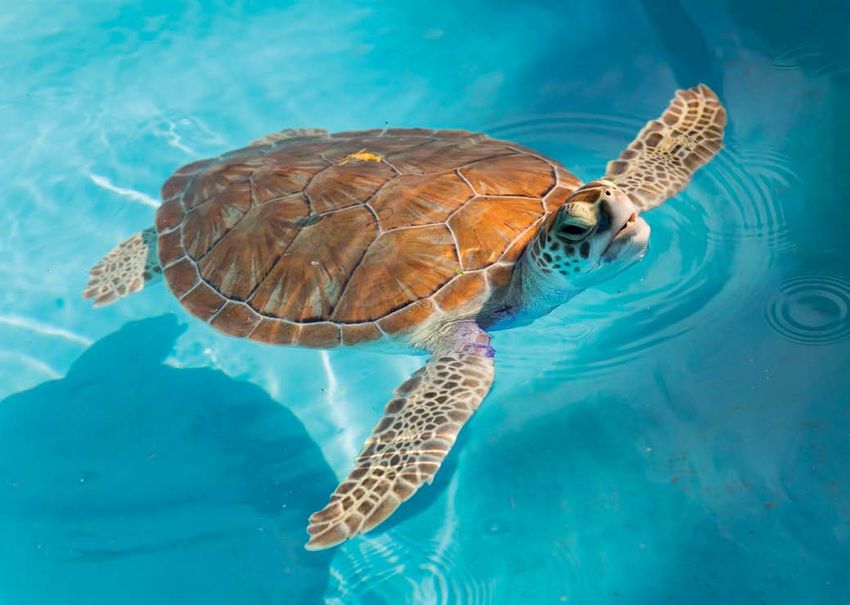
IMPROVE THE AVAILABILITY AND ENFORCE AND INCREASE MARINE
COLLECTION OF INFORMATION FOR TURTLE RESCUE CENTRES
ALL MEDITERRANEAN COUNTRIES TO IN THE MEDITERRANEAN
ASSESS THE STATUS OF POPULATIONS
There are about 40 rescue centres and In the 1980s, recognition of the
The IUCN Mediterranean Marine Turtle
first-aid facilities in the Mediterranean importance of dedicated rescue facilities
Specialist Group coordinates the
specializing in recovering and providing for marine turtles led to the establishment
compilation of quantitative information
veterinary treatment to injured sea turtles. of the first rescue centres in the
of marine turtle populations in the
Although they have an ultimate aim to Mediterranean in Italy, by the Stazione
Mediterranean. However, regular data
reintroduce successfully rehabilitated Zoologica Anton Dohrn in 1992, followed
is only available from some countries
animals to the wild, their conservation by ARCHELON in Greece in 1994. Others
(e.g. Greece, Turkey and Cyprus) and
work generally operates on individual followed, but the provision of facilities
lacking for others.
animals and not on the populations or and treatments in different centres was
CONSERVATION IN ACTION species as a whole. Rescue centres inconsistent. Over the next two decades,
The main breeding areas for both
Marine turtle conservation on nesting beaches perform two important functions: Through the need to standardize and regulate sea
loggerhead and green turtles, are beaches
started in Cyprus during the early 1970s, in Greece public involvement and turtle rescue was recognized,
of the Eastern basin. Information from Through emotional
and Turkey in the 1980s, and in Israel by the fundamental research, resulting in the publication
some countries as Egypt, Libya and Syria involvement, rescue
1990s. Surprisingly, important turtle nesting sites they can inform local of guidelines for marine
is lacking and conditions for researchers centres have the
continued to be discovered into the 2000s. For citizens, tourists and turtle rescue activities by the
in these countries need to improve. power to influence the
those countries in the Mediterranean that host the coastal and marine conscience of their Regional Activity Centre for
The most important areas for non-
majority of marine turtle nestings, nest protection managers about the visitors and thus to Specially Protected Areas
breeding adults, immatures and foster environmentally
has been the principal conservation focus, led status and threats to sea (RAC/SPA) of the Barcelona
juveniles are less well-known and there responsible behaviour.
by local communities, non-profit groups, and turtle populations, as well Convention, representing
is a need for further research. The
volunteers. Marine turtle rescue and rehabilitation as on general issues about a first step toward a
conservation challenges resulting from
centres play an important role in environmental the marine environment. Stakeholders are Mediterranean-wide sea turtle rescue
the geopolitical complexity of the region,
education and awareness. Conservation- also able to contribute directly to research network. Development of the first registry
combined with a lack of information
oriented activities focusing on the marine life of projects by contributing data such as of Mediterranean rescue centres showed
on some fundamental aspects of the
sea turtles and especially on fisheries and turtle sightings and by-catch, while experts a very uneven distribution, with a lack
biology of Mediterranean sea turtles have
bycatch started in the 1980s. The 1980s saw at rescue centres also contribute to the of centres in some African and Eastern
stimulated periodic conservation reviews
also the inauguration of important national and information available on sea turtles through countries, while other countries had
of both breeding species. However, efforts
international grassroots turtle conservation NGOs their research into physiology, demography, several (such as Italy, which hosts more
at national and regional levels need to
in the Mediterranean, including ARCHELON and parasitology and other health-related fields. than half of the existing centres).
increase to fill gaps in data availability to
MEDASSET as well as local associations.
adequately assess the conservation status
and trends of the populations.
Rescue Centres, First Aid Stations and other facilities for recovering
and providing veterinary treatment to injured sea turtles.
The initiative stemmed from Ullmann & Stachowitsch is currently managed by MEDASSET.
More information: www.medasset.org/our-projects/Sea-Turtle-Rescue-Map
Assessing beach suitabilty and sporadic nesting in Albania
© E. SACDANAKU
© E. SACDANAKU
10 11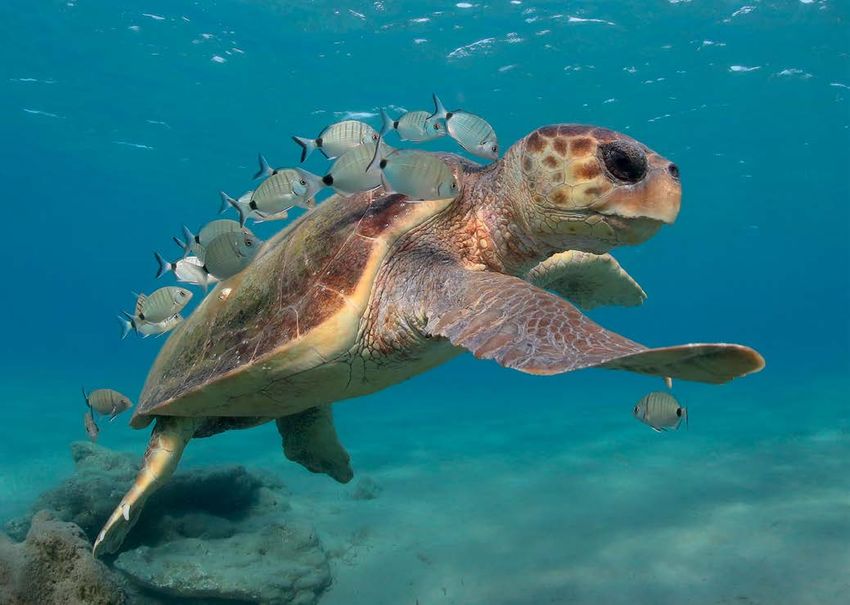
ENFORCE THE EXISTING NATIONAL Concerning Specially Protected Areas
AND INTERNATIONAL LEGISLATION and Biological Diversity of the Barcelona
Convention (Mediterranean region) (SPA
The following are some of the international Protocol)
treaties, conventions and agreements • Council Directive 92/43/EEC on the
that have contemplated regulations and Conservation of Natural Habitats and
protection measures for sea turtles in the of Wild Flora and Fauna (EU Habitats
Mediterranean Sea: Directive)
• General Fisheries Commission for the
• Convention on International Trade in Mediterranean (GFCM) of the Food and
Endangered Species of Wild Fauna and Agriculture Organization of the United
Flora (CITES) Nations (FAO)
• Convention on the Conservation of • International Commission for the
European Wildlife and Natural Habitats Conservation of Atlantic Tunas (ICCAT)
(Bern Convention or BCCEW) on bycatch in tuna and tuna-like fisheries
• Convention on the Conservation of
Migratory Species of Wild Animals Some Mediterranean countries also
(Bonn Convention or CMS) have a National Action Plan or specific
• Convention for the Protection of the legislation for the protection of sea turtles
Marine Environment and the Coastal and their critical habitats.
Region of the Mediterranean (Barcelona
Convention), with the Mediterranean A summary of the international legislation
Action Plan (MAP) and the Protocol is included in Table 4.
Table 4. IUCN Conservation status of sea turtle species and relevant international agreements, directives
and conventions concerning sea turtles of the Mediterranean sea with listed annexes, applicable
recommendations and regulations.
IUCN RED LIST RELEVANT INTERNATIONAL AGREEMENTS FOR THE PROTECTION
CATEGORY AND CRITERIA OF WILDLIFE IN THE MEDITERRANEAN
(year of publication)
COMMON SCIENTIFIC GLOBAL MEDITERRANEAN EU SPA/BD CITES CMS GFCM ICCAT
NAME NAME Habitats Protocol Appendices Appendices Recommendation Recommen-
Directive (Barcelona dation
Annexes Conven-
tion)
Annexes
LEAST
Loggerhead Caretta VULNERABLE
CONCERN II, IV
turtle caretta (2017)
(2015)
Chelonia ENDANGERED II
Green turtle Not Evaluated II, IV
mydas (2004)
Leatherback Dermochelys VULNERABLE
Not Aplicable IV
turtle coriacea (2013)
GFCM/35/2011/4 Rec: 13-11
I I, II
Lepidochelys VULNERABLE on the incidental on the
Olive ridley Not Aplicable – –
olivacea (2008) bycatch of sea by-catch of
turtles in fisheries sea turtles
CRITICALLY in the GFCM in ICCAT
Lepidochelys
Kemp’s ridley ENDANGERED Not Aplicable IV II Competence Area fisheries
kempii
(2019)
MAIN SPECIES
CRITICALLY
Hawksbill Eretmochelys
ENDANGERED Not Aplicable IV II
© SANDRA HOCHSCHEID FOR STAZIONE ZOOLOGICA NAPOLI
turtles imbricata
(2008)
CRITICALLY
African Trionyx VULNERABLE
ENDANGERED _ II II –
softshell turtle triunguis (2016)
IN THE MEDITERRANEAN
(1996)
COLORS and ABBREVIATIONS:
Resident populations CMS: Convention on the Conservation of Migratory species of Wild GFCM-FAO: General Fisheries Commission for the
Regular and occasional visitors animals (Bonn Convention) Mediterranean (GFCM) of the Food and Agriculture
CITES: Convention on International Trade in Endangered Species of Organization of the United Nations (FAO)
Wild Fauna and Flora ICCAT: International Commission for the
SPA/BD: Protocol concerning Specially Protected Areas and Conservation of Atlantic Tunas
Biological Diversity in the Mediterranean (Barcelona Convention)
12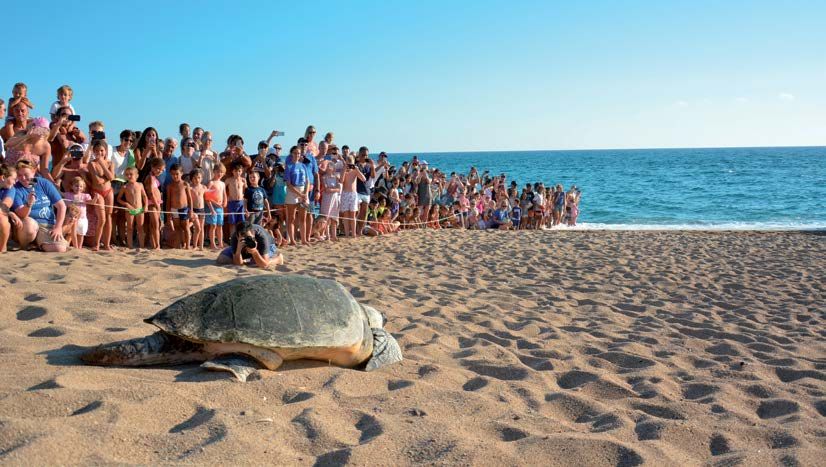
Female frequency of 2 nests per female per season,
loggerheads this corresponds to approximately 1,822 MAIN THREATS TO LOGGERHEADS
are considered nesting females per year. Average clutch
sexually mature Juvenile loggerheads forage
size is 110 eggs and mean hatching
at 21-34 years* throughout the Western Mediterranean
success is approx. 56-86%.
in open deep waters and the shallow
continental shelf. In the Eastern
Loggerheads are highly migratory, with
Mediterranean, adults tend to frequent
adults capable of traveling hundreds to
the shallow continental platform of
thousands of kilometres between foraging
the Northern Adriatic and the Tunisian
and breeding areas at the onset and end of shelf, while juveniles remain more
the breeding season (April – September). An in open waters. The main threats
unknown proportion of the adult female and to loggerheads include coastal
male turtles in the foraging areas prepare for development and associated activities
reproduction in any one year. For most adult as well as predation in all countries
females this preparation can take more than where nesting occurs. Killings of
a year. As they develop, juveniles initially turtles are reported for all countries,
move into the open sea where they feed on highlighting the probably significant
macro-plankton, then gathering in coastal impact of small-scale fisheries
in addition to semi-industrial and
feeding areas before they reach sexual
industrial fisheries. Boat strikes, marine
maturity. Loggerhead turtles are protected
debris pollution and chemical pollutants
throughout the Mediterranean but the level
all constitute additional threats to this
and nature of protection vary between
© KOSTAS PAPAFITSOROS
species.
countries. The IUCN Red List considers that
the Mediterranean population is increasing
and is catalogued as “Least Concern”
although several conservation measures are
needed to maintain this status.
LOGGERHEAD,
Caretta caretta Table 5. Changes in average nest numbers per year in main
nesting sites of loggerheads in the Mediterranean Sea*.
Note that sparse or occasional nesting occurs in other Mediterranean beaches.
Mediterranean loggerheads are the Loggerheads can be found throughout the
COUNTRY NESTING SITE AVERAGE NESTS YR-1 AVERAGE NESTS YR-1 CHANGE
smallest specimens of this species in the Mediterranean but nesting is concentrated BEFORE 1999 AFTER 2000 (%)
world, and their nesting ranges from the in the Eastern Mediterranean, with the Greece Zakynthos (Laganas Bay) 1301.3 1084.4 -16.7
Western Mediterranean to the Levantine highest numbers of nests in Greece, Southern Kyparissia Bay 580.7 987 +70.0
coast in the East, with an estimation of Turkey and Cyprus. Libya is probably also Rethymno, Crete 387.3 275 -29.0
Lakonikos Bay 191.9 190 -1.0
more than 8000 egg clutches laid annually. important but there is no recent information
Bay of Chania, Crete 114.9 74.8 -34.9
available. Israel and Tunisia are of secondary Messaras Bay, Crete 53.5 46.9 -12.3
importance as breeding grounds, as are Turkey Dalyan 165 269 +63.0
other countries for which there are few or no Dalaman 73 92.1 +26.2
recent data, such as Egypt and Lebanon. Fethiye 124 89.4 -27.9
Loggerhead Loggerheads exhibit consistently low
Patara 52.5 117.7 +124.2
turtle population Cirali 34 66.3 +95.0
nesting activity levels at sites in the Western Belek 129.7 638 +391.9
abundance
(including adults) basin in France, Italy, Malta and Spain but Göksu Delta 64.6 123.8 +91.6
is estimated to be numbers in the Eastern Mediterranean are Cyprus Akdeniz Beaches (Morphou Bay) 59.6 84.8 +42.3
Alagadi (Alakati) 65.7 54.1 -17.7
1,197,087 increasing. Egg clutches are documented
East coast 40.9 48.6 +18.8
– 2,364,843 annually at 25 major and 72 minor nesting North coast 37 37.9 +2.4
individuals. sites on 926.7 km of coast, considering Tatlisu (Akanthou) 30.9 36.6 +18.4
Available data Chysochou Bay 119.8 239.1 +99.6
major nesting sites those with >20 nests/
shows a positive West coast 57.1 98.3 +72.2
trend of nests yr and >10 nests/km/yr and minor nesting
Tunisia Kuriat Island 10.2 13.5 +32.4
© DEKAMER
counts for the sites are those with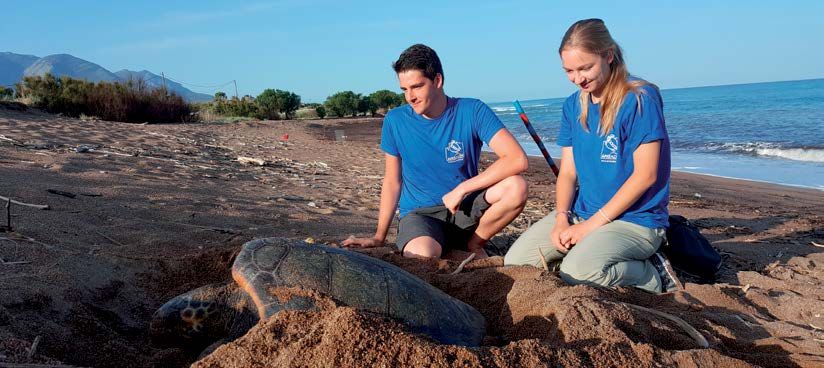
Female age during the first half of the 20th century but
at maturity is monitoring data now show an increase MAIN THREATS TO GREEN TURTLE
unknown but in nesting activity consistent with an
average clutch Main threats to green turtles
increase in the number of mature females.
size is 114 are similar to those affecting
eggs and mean
loggerheads, exacerbated by their
hatching success Green turtles share the same threats as
more limited range in the Eastern
70-77% loggerhead turtles, including those from
Mediterranean. In addition to
coastal development, pressure from
widespread regional threats such
fisheries and pollution. Green turtles
as habitat degradation, pollution,
are legally protected throughout the and fishing bycatch, illegal trade of
Mediterranean as is the case of other both species is particularly acute in
marine turtle species. The species is Egypt. Trade in turtle products has
globally threatened and is classified as been reported since the beginning
“Endangered” in the IUCN Red List of of the 20th century and consumption
threatened species (see figure at page 18). is a tradition documented since at
least from the 1970s to the present,
predominantly in Alexandria and Port
Said. There may also be some limited
consumption in other countries.
© ZELJKOKCANMORE
Table 6. Changes in average nest numbers per year (YR-1)
in main nesting sites of green turtles in the Mediterranean Sea*.
Note that accidental or occasional nesting occurs in other Mediterranean beaches.
COUNTRY NESTING SITE AVERAGE NESTS YR-1 AVERAGE NESTS YR-1 CHANGE
BEFORE 1999 AFTER 2000 (%)
GREEN TURTLE,
Cyprus Alagadi (Alakati) 46 86.1 +87.2
Akdeniz Beaches (Morphou Bay) 46 48.1 +4.6
North coast 19.3 13.1 -32.1
Chelonia mydas
West coast 44 70.8 +60.9
Turkey Akyatan 323 319.1 -1.2
Kazanli 149.2 255.8 +71.4
Samandag 56 212.3 +279.1
TOTAL 683.5 1005.3 +47.1
Green turtle nesting sites are confined to Most nests occur in Cyprus, Syria and
the Eastern Mediterranean. Turkey, with smaller numbers in Egypt, (*) Based on Hochscheid et al. 2018
Israel and Lebanon and sporadic nesting
Mediterranean green turtle populations on Crete.There are no recent quantified
are largely genetically isolated although data from Egypt or Lebanon. A single
there may be some connectivity with other site at Akyatan in Turkey supports
populations through the movement of approximately 20% of the total number Excavation of nest Zakynthos, Greece Collision boat propeller in Zakynthos, Greece
males. Juveniles are known to use coastal of nests in the Mediterranean and is the
waters during development (see map on largest known nesting beach in the region.
the cover page). Exceptionally nesting events are also
recorded, with the example of Rethymno
and Messara Bay in Crete (Greece). An
additional developmental habitat for green
turtles has been identified in Lakonikos
Bay (Greece). Current knowledge
Estimation of total
© GEORGE RALLIS FOR ACHELON
estimates that 1,164 - 2,674 egg clutches
© ANNA LAMAJ FOR ACHELON
population ranges are laid annually in 12 major and 53 minor
from 262,727 to 1,252,283
nesting sites in Cyprus, Syria and Turkey.
individuals. Available data
shows a positive trend of Mediterranean green turtle populations are
number of green turtle nests. thought to have dramatically declined
16 17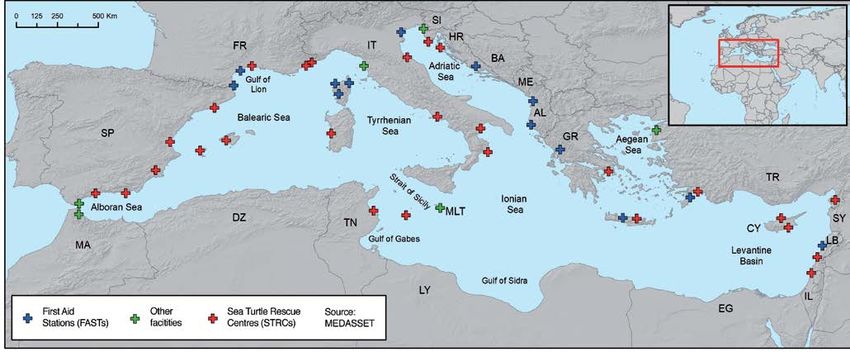
Bay of Biscay and Northern Portugal, Leatherbacks feed on jellyfish and other
travelling further south, between oceanic invertebrates, which they trap
Southern Portugal and Morocco during in their oesophagus with special spiny
winter and spring. During migration and structures. Floating plastic bags in the
movement between foraging grounds, sea can be mistaken for jellyfish and kill
some individuals are lured into the rich leatherbacks that eat them.
waters of Cadiz bay, where productivity
is enhanced by outflows from the Leatherback turtles are globally
Guadiana and Guadalquivir Rivers. These threatened and classed as Vulnerable
individuals may then disperse into the in the IUCN Red List of threatened
Mediterranean*. species due to anthropogenic impacts on
populations worldwide.
IUCN Red List Categories
at the regional level IUCN
(2012)
EXTINCT (EX) +
EXTINCT IN THE WILD (EW)
REGIONALLY EXTINCT (RE)
Extinction Risk
CRITICALLY ENDANGERED (CR)
Adecuate Data
ENDANGERED (EN)
VULNERABLE (VU)
Evaluated
© JOSE C. BÁEZ
NEAR THREATENED (NT)
Elegible for Regional LEAST CONCERN (LC) -
Assessment
Leatherback turtle stranded in a beach in Malaga, Spain DATA DEFICIENT (DD)
All species
NOT APPLICABLE (NA)
LEATHERBACK TURTLE,
NOT EVALUATED (NE)
Dermochelys coriacea
Artisanal boats using trammel nets
The leatherback turtle is a species Leatherbacks have been recorded in
with a cosmopolitan global range with waters of all Mediterranean countries
distinct populations in the Atlantic and and have been known since ancient
Pacific Oceans. The population in the times. However, they are probably under-
Atlantic Ocean ranges across the entire represented in historical accounts as they
region, including the Mediterranean Sea. were never commercially exploited and
Leatherback turtles occur in the Atlantic are difficult to transport in fishing boats
ocean, from tropical countries such as due to their great size. Reports mainly
Guyana in South America and Gabon derive from dead, stranded animals. Most
in central Africa, to the cold waters of reports suggest that they have been rare
Alaska which they can tolerate due to their but regular visitors throughout the region.
capacity for thermoregulation. Large adult
leatherbacks may have a carapace Leatherbacks are the most pelagic of
180 cm long, with a flipper-span of the sea turtles. Individuals nesting in the
270 cm and weight 500 kg, although the north-west Atlantic typically migrate east
© JUAN ANTONIO CAMIÑAS
largest ever recorded had a carapace to feed off the west coast of Europe and
291 cm long and weighed 916 kg. They North Africa, mainly between 30° and
can dive for as long as an hour to depths 45° north. In summer and autumn, they
as much as 1000 m. typically travel further north, between the (*) Lalire and Gaspar, 2019
18 19OTHER SPECIES Marine turtles that are rare in the Mediterranean
present in the Mediterranean also NEED PROTECTION
The Mediterranean Sea is also frequented Few individuals of some species such The conservation of these species does
by turtles originating from Atlantic as olive ridley (Lepidochelys olivacea), not depend so much on our actions in the
breeding areas, including large numbers Kemp’s ridley (L. kempii) and hawksbill basin as on the development programs in
of loggerhead turtles from north American (Eretmochelys imbricata) have occasionally Africa or America.
populations, some green turtles and been observed in the Mediterranean Sea.
leatherbacks. Green turtles in the waters There have also been a few records of Efforts to study the behaviour of these
of the Western Mediterranean, including loggerhead (Caretta caretta), leatherback species in the Mediterranean and to
© SOPHIE BURCET
the Spanish waters, are rare, and (Dermochelys coriacea) and green turtle protect them will help to conserve their
Leatherback Dermochelys coriacea mitochondrial DNA analysis indicates that (Chelonia mydas) of Atlantic origin in the breeding sites. They are few animals and,
they occasionally occur from individuals western Mediterranean Sea. therefore, even more valuable.
(haplotypes) of the nesting beaches of
African Atlantic populations. A limited
Good Environmental Status (GES) is
number of leatherbacks (Dermochelys
a term used to indicate ecologically
coriacea), olive ridley (Lepidochelys
diverse and dynamic oceans and seas
olivacea), Kemp’s ridley (Lepidochelys
which are clean, healthy and productive.
kempii) and hawksbill turtles (Eretmochelys
Such systems are fully functioning and
© IVÁN CUMPIÁN
imbricata) have been observed in the
resilient to human-induced changes, the
Mediterranean Sea. Leatherbacks have
Kemp’s ridley Lepidochelys kempii decline of biodiversity caused by human
been recorded throughout the whole basin
activities is prevented and biodiversity
and are considered a regular species,
is protected. Marine litter is a global
although for the most part only large
concern affecting all oceans and all
juveniles and adults of both sexes have
marine species, including marine turtles
been observed, and no nesting sites has
which can become entangled in plastic
been confirmed to date in the region.
and ghost gears or can ingest plastic and
© GEORGE GLEN FOR ARCHELON
sometimes pieces of fishing line. Each
The presence of both Kemp’s and Olive
© MARK DOHERTY
year millions of tons of litter end up in
ridleys in the Mediterranean is confirmed but
Hawksbill turtle Eretmochelys imbricata the Mediterranean, posing environment,
rare, with only a handful of records of juvenile
economic, health and aesthetic
Kemp’s in Malta, Southern Spain, France
problems. Mark-recapture studies in the foraging area of Amvrakikos Gulf, Greece
and Italy, and a single record of an Olive
ridley reported in Spain. There are several
records of hawksbills in the Mediterranean,
but they are extremely rare. It is believed
Marine turtles, a HISTORIC SYMBOL of the Mediterranean Sea
that the individuals observed in the Eastern
Mediterranean originate from the Red Sea, The relationship between sea turtles and naval supremacy, a sea turtle was pictured on its
humans in the Mediterranean has endured for coins. When Athens became the supreme naval
© MARK WATSON
as there are nesting beaches for this species
centuries. Both loggerhead (Caretta caretta) power in the region, it obliged Aegina to replace
Olive ridley Lepidochelys olivacea along the coasts of Sudan and Egypt.
and green turtles (Chelonia mydas) served the sea turtle on its coins with a tortoise.
for centuries as food and as an exportable The Museum of Natural Sciences in Madrid
The softshell turtle, (Trionyx triunguis)
food product for coastal human populations. houses a painting by Pedro Juan Tapia from the
is a large species of turtle frequenting This culminated in a period of intense over- late 16th century showing a large leatherback
freshwater and brackish habitats. The exploitation in the 20th century, lasting until the turtle (Dermochelys coriacea) captured in a
Mediterranean subpopulation is maybe 1970s, leading to the collapse of populations trap in Denia (Spain), which was sent to the
encountered in coastal and estuarine waters and ultimately, the establishment of the first cabinet of curiosities of King Felipe II. These two
of Southern Turkey and the Levant, and it is Coin from protection and conservation measures. In the examples serve to illustrate the importance of
listed as Critically Endangered in the IUCN Aegina 5 b.c. fifth century BC, the island of Aegina in Greece marine turtles in the history of human culture in
© O. TURKOSAN
Red List of threatened species. was a major military power. To emphasize its the Mediterranean.
Softshell turtle Trionyx triunguis
20 21A call to COLLABORATE
The Project “Conservation of Marine Turtles in the Mediterranean Region” aims
to enhance the protection and conservation of Marine Turtles in the Mediterranean ACRONYMS
ACCOBAMS Agreement on the Conservation of
Region by reducing human-induced direct mortality. Project Partners include
in the conservation of marine turtles
Cetaceans of the Black Sea, Mediterranean Sea and
ARCHELON, DEKAMER, IUCN-Med, MEDASSET, MedPAN, NMPZ, SPA/RAC contiguous Atlantic area
(leader), WWF Greece, WWF Turkey, WWF North Africa. BL ECA BirdLife Europe and Central Asia
and the Mediterranean Sea
FAO Food and Agriculture Organization of the United Nations
The Med Bycatch Project “Understanding Mediterranean multi-taxa ‘bycatch’ GFCM General Fisheries Commission for the
of vulnerable species and testing mitigation – a collaborative approach” aims Mediterranean
IUCN Med International Union for Conservation of Nature
to develop a common standardized methodology to collect data on the incidental – Centre for Mediterranean Cooperation
catch of vulnerable species in fishing gears and test mitigation solutions that MEDASSET Mediterranean Association to Save the Sea
can be replicated at the regional level. It is implemented through a partnership Turtles
Marine turtles should be regarded by and languages, has formed a consolidated between ACCOBAMS, GFCM-FAO, UNEP/MAP-RAC/SPA, IUCN-Med, BL ECA and NMPZ National Marine Park of Zakynthos
MEDASSET. RAC/SPA Regional Activity Centre for Specially Protected
Mediterranean people and visitors as a real and collaborative network of individuals, Areas of the United Nations Environment/Mediterranean
Action Plan
biodiversity treasure. The Mediterranean institutions and governments dedicated to The projects are funded by MAVA Foundation through its action plans M4 UNEP/MAP Regional Seas Programme of the United
is an exciting place for some species of this worthy goal. Reconciling fisheries and biodiversity and M7 protecting sea turtles nesting Nations Environment Programme/ Mediterranean Action
Plan
sites.
marine turtles, with prospects of range REFERENCES
IUCN Marine Turtles Specialists Group Camiñas, J. A. (1998). Is the leatherback (Dermochelys
expansions and new colonization, and Sporadic loggerhead nesting activity on The Marine Turtles Specialists Group (IUCN-MTSG) is a branch of the Species
coriacea Vandelli, 1761) a permanent species in the
Mediterranean Sea? Rapp. Comm. Int. Mer Medit,
where long-term conservation projects have Western Mediterranean beaches is not a Survival Commission (SSC) of the IUCN. IUCN-MTSG envisions marine turtles 35(1998), 388-389.
fulfilling their ecological roles on a healthy planet where all people value and Carpentieri, P., et al. (2020). Incidental catch of vulnerable
achieved stable or even positive population remnant of a past population but the result species in Mediterranean and Black sea fisheries: a review.
celebrate their continued survival. The Mission of IUCN-MTSG is to develop and Studies and Reviews n. 101. Rome, FAO.
trends in the countries. However, there is of long-distance dispersal events from both support strategies, set priorities, and provide tools that promote and guide the Carreras, C., et al. (2014). Origin and dispersal routes
of foreign green and Kemp’s ridley turtles in Spanish
still a long way to go before marine turtles Mediterranean and Atlantic populations. If conservation of marine turtles, and their ecological roles and habitats. Atlantic and Mediterranean waters. Amphibia-Reptilia,
www.iucn-mtsg.org 35(1), 73-86.
in the Mediterranean can be considered we are witnessing new colonization events Casale, P., et al. (2005). Size at male maturity, sexing
The Spanish Herpetological Association was founded in 1984, it is a non-profit methods and adult sex ratio in loggerhead turtles (Caretta
to be safe. Indeed, many major threats, of nesting beaches, this is an extraordinary caretta) from Italian waters investigated through tail
association that promotes and facilitates collaboration between herpetologists measurements. The Herpetological Journal,15(3), 145-148.
particularly coastal occupation, pollution and exciting fact, which implies some and coordinates the study of herpetofauna, the conservation of amphibians and Casale, P. (2015). Caretta caretta Mediterranean
subpopulation. The IUCN Red List of Threatened Species
and degradation of marine habitats, climate measures should be urgently implemented reptiles and their environment, and advises, directs and carries out studies related 2015: e.T83644804A83646294.
to herpetology, both at the Spanish and international arena. Casale, P. et al. (2018). REVIEW: Mediterranean sea
change-driven alterations and high fishing so that these animals have suitable www.herpetologica.es turtles: current knowledge and priorities for conservation
and research. Endangered Species Research, 36:
pressure as well as bycatch, need to be habitats for their needs. Conservation About IUCN Centre for Mediterranean Cooperation
229–267.
Casale P. and Margaritoulis, D. (Eds.) (2010). Sea
addressed to conserve Mediterranean programs to mitigate the impact of The IUCN Centre for Mediterranean Cooperation (IUCN-Med) opened in Malaga Turtles in the Mediterranean: Distribution, Threats and
(Spain) in October 2001 with the core support of the Spanish Ministry of conservation priorities. Gland. Switzerland, IUCN, p
sea turtles. To that end, a solid network anthropogenic activities coupled with 257-294.
Environment and the regional Government of Junta de Andalucía. The Centre’s FAO. (2019). Monitoring the incidental catch of vulnerable
of stakeholders, including the public, extensive monitoring of potentially suitable mission is to influence, encourage and assist Mediterranean societies to conserve species in Mediterranean and Black Sea fisheries:
Methodology for data collection. FAO Fisheries and
professionals of the sea and fishers, habitats will be crucial to facilitate the and use sustainably the natural resources of the region and work with IUCN Aquaculture Technical Paper No. 640. Rome, FAO.
members and cooperate with all other agencies that share the objectives of IUCN. Hornell J. (1935). Report on fisheries of Palestine. Crown
conservationists, researchers and local and stabilization of the possible new nesting www.iucn.org/regions/mediterranean Agents for the Colonies, Millbank, London.
national decision-makers must continue to populations in the Western Mediterranean. Hochscheid, S., Kaska, Y. and Panagopoulou, A. (Eds.)
(2018). Sea Turtles in the Mediterranean Region: MTSG
focus its energies on the actions needed It is everyone’s responsibility to study Annual Regional Report 2018. Draft Report of the IUCNSSC
Marine Turtle Specialist Group.
to assure that Mediterranean marine these natural processes linked to climate Hochscheid et al. (2018). Sea Turtles of the
Mediterranean Sea. SWOT, Vol XIV, pags. 20-29.
turtles survive and thrive into the future. change to understand and improve the International Union for Conservation of Nature (IUCN).
(2012). Guidelines for Application of IUCN Red List Criteria
Fortunately, the Mediterranean conservation management of the loggerhead turtle at Regional and National Levels. Version 4.0. Gland,
Switzerland and Cambridge, UK: IUCN. iii + 41 pp. https://
community, despite its disparity of cultures populations In the Mediterranean. portals.iucn.org/library/node/10336
JRC Scientific and Policy Reports (2013). Guidance on
Monitoring of Marine Litter in European Seas. A guidance
document within the Common Implementation Strategy
for the Marine Strategy Framework Directive. MSFD
Technical Subgroup on Marine Litter, 128p. European
Public release of a rehabilitated turtle in Romanos Peloponnese, Greece. INTERNATIONAL UNION FOR Commission
CONSERVATION OF NATURE Katsiyiannis, P. (2019). Discovery of the first feeding area
for adult and juvenile green turtles and loggerhead turtles
in Greece. Herpetological Bulletin,149, 32-33.
IUCN Centre for Mediterranean Cooperation Margaritoulis, D. et al. (2003). Loggerhead Turtles in the
Mediterranean Sea: Present Knowledge and Conservation
Marie Curie, 22 Perspectives. In: Bolten AB, Witherington BE (Eds.)
29590 - Campanillas Loggerhead Sea Turtles. Smithsonian Books, Washington,
175–198.
Málaga, Spain Stokes, K. et al. (2015). Migratory corridors and foraging
uicnmed@iucn.org hotspots: critical habitats identified for Mediterranean
green turtles. Diversity and Distributions, 21(6), 665-674
Tel.: +34 95 202 84 30 Ullmann, J. and M. Stachowitsch (2015).
Fax: +34 95 202 81 45 A critical review of the Mediterranean sea turtle rescue
network: a web looking for a weaver.
www.iucn.org/mediterranean Nat. Conserv. 10, 45e69.
CITATION
The designation of geographical entities in this book, and the presentation of the material, do not imply the expression of Camiñas, J.A.; Kaska, Y.; Hochscheid, S.; Casale P.;
any opinion whatsoever on the part of IUCN or other participating organisations concerning the legal status of any country, Panagopoulou, A.; Báez, J.C.; Otero, M. M.; Numa, C.,
territory, or area, or of its authorities, or concerning the delimitation of its frontiers or boundaries. Alcázar, E. 2020. Conservation of marine turtles in the
The views expressed in this publication do not necessarily reflect those of IUCN or other participating organisations. Mediterranean sea [brochure]. IUCN, Malaga, Spain.
© JULIA COSTESCU FOR ARCHELON
Core support to the activities of the IUCN Centre for Mediterranean Cooperation is provided by:
22You can also read


