Catalonia DESTINATION REVIEW FROM A SOCIO-ECONOMIC, POLITICAL AND ENVIRONMENTAL PERSPECTIVE IN ADVENTURE TOURISM - ENI CBC Med
←
→
Page content transcription
If your browser does not render page correctly, please read the page content below
DESTINATION REVIEW FROM A SOCIO-ECONOMIC, POLITICAL
AND ENVIRONMENTAL PERSPECTIVE IN ADVENTURE TOURISM

Catalonia
This publication has been produced with the financial assistance of the European Union under the ENI CBC Mediterranean

Sea Basin Programme. The contents of this document are the sole responsibility of the Official Chamber of Commerce,

Industry, Services and Navigation of Barcelona and can under no circumstances be regarded as reflecting the position

of the European Union or the Programme management structures.

The European Union is made up of 28 Member States who have decided to gradually link together their know-how,

resources and destinies. Together, during a period of enlargement of 50 years, they have built a zone of stability,

democracy and sustainable development whilst maintaining cultural diversity, tolerance and individual freedoms. The

European Union is committed to sharing its achievements and its values with countries and peoples beyond its borders.

The 2014-2020 ENI CBC Mediterranean Sea Basin Programme is a multilateral Cross-Border Cooperation (CBC) initiative

funded by the European Neighbourhood Instrument (ENI). The Programme objective is to foster fair, equitable and

sustainable economic, social and territorial development, which may advance cross-border integration and valorise

participating countries’ territories and values. The following 13 countries participate in the Programme: Cyprus, Egypt,

France, Greece, Israel, Italy, Jordan, Lebanon, Malta, Palestine, Portugal, Spain, Tunisia. The Managing Authority (JMA)

is the Autonomous Region of Sardinia (Italy). Official Programme languages are Arabic, English and French. For more

information, please visit: www.enicbcmed.eu

MEDUSA project has a budget of 3.3 million euros, being 2.9 million euros the European Union contribution (90%).
Contents
0. EXECUTIVE SUMMARY............................................................................................... 1

1. SOCIAL, ECONOMIC AND CULTURAL PROFILE......................................................... 2

       1.1 General Overview........................................................................................................................ 3

       1.2 Administrative, political and territorial structure........................................... 4

       1.3 Demographic evolution......................................................................................................... 5

       1.4 Economic structure............................................................................................................... 6

       1.5 Employment and living conditions..................................................................................7

       1.6 Local culture............................................................................................................................... 8

       1.7 Gender equality........................................................................................................................... 8

2. INFRASTRUCTURES AND MOBILITY.........................................................................11

       2.1 General overview...................................................................................................................... 12

       2.2 Hard infrastructures........................................................................................................... 12

       2.3 Soft infrastructures............................................................................................................19

       2.4 Accessible information....................................................................................................... 21

3. ENVIRONMENTAL PROFILE...................................................................................... 23

       3.1 General Overview.....................................................................................................................24

       3.2 Protected Areas......................................................................................................................24

4. DESTINATION STRATEGY AND MANAGEMENT..................................................... 28

       4.1 Tourism in Catalonia. Important numbers..............................................................29

       4.2 The destination management system...........................................................................31

       4.3 Catalonia’s tourism strategy........................................................................................33

       4.4 Sustainable tourism policies...........................................................................................35

       4.5 Main attractions................................................................................................................... 37

5. Annex...................................................................................................................... 39

       RESOURCES...........................................................................................................................................43

       ACRONYMS.......................................................................................................................................... 46
0. EXECUTIVE SUMMARY

Catalonia   is   an   autonomous    region    Geographically diverse and despite its
located in north-eastern Spain. With          small scale, Catalonia is a region with
its own linguistic and cultural identity,     an exceptional and very rich natural
Catalonia is a popular tourist destination    biodiversity heritage.
and economic powerhouse.
                                              In terms of tourism, Catalonia is a
The region is very well communicated, both    prime tourist destination offering many
nationally and internationally. There are 5   attractions to all sorts of visitors. As
commercial airports, 52 ports and yacht       a   Mediterranean       destination   with   a
clubs, 6 cruise ship ports and more than      millennial history, with its own culture and
12,000 kilometres of roads, connecting the    language and a rich historical and natural
region to any main European city in less      heritage, Catalonia offers great scenic
than 12 hours.                                variety. In addition, its great capacity and
                                              excellent facilities place it among Europe’s
Catalonia also has a vast range of soft
                                              top tourist areas, with approximately 30
infrastructures which allow both residents
                                              million tourists a year, more than half
and visitors to enjoy nature. More than
                                              from abroad. Accounting for roughly 12%
9,000 kilometres of signposted footpaths,
                                              of its GDP, tourism is one of Catalonia’s
6,400   kilometres     of   mountain-bike
                                              main sources of wealth and hence one of
trails and 26 kilometres of authorised
                                              its strategic priorities.
sea swimming lanes provide a perfect
starting point for the design of special
tourist products.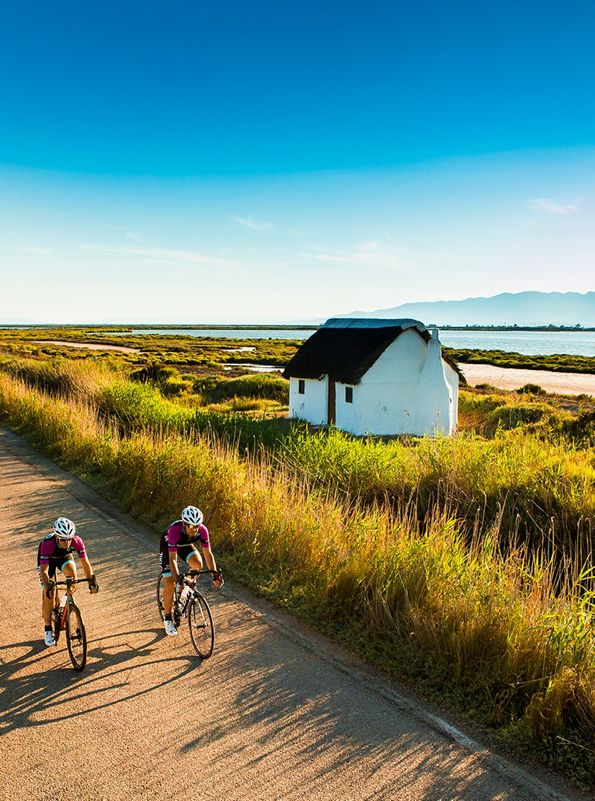
1. SOCIAL, ECONOMIC AND
CULTURAL PROFILE
1.1 General Overview                                          provinces (Barcelona, Girona, Lleida and
                                                              Tarragona), with Barcelona as its main
Catalonia        is   an      autonomous           region     capital.
located in north-eastern Spain. It takes up,
                                                              It is geographically diverse, with 580
approximately, 32,000 square kilometres
                                                              km of coast, a high mountain barrier
and it has borders with France and Andorra
                                                              (the Pyrenees) in the north and a wide
to the north and the Mediterranean Sea
                                                              depression inland. With its own linguistic
to the east. This strategic location has
                                                              and cultural identity, Catalonia is a
promoted a very strong link with other
                                                              popular tourist destination and economic
territories in the Mediterranean basin. It
                                                              powerhouse.
is administratively organised into four

  General overview of Catalonia
  Population (2019)                                     7.6 million (16.2% of Spain’s total population)

  GDP (2018)                                            €242,313 M (19.1% of Spanish’s GDP)

  GDP per Inhabitant (2018)                             €31.877,86

                                                        Agriculture (1.0%), Industry (20.7%),
  GVA per Sectors (2018)
                                                        Construction (5.4%), Services (73%)

  European Social Progress Index (2016)                 163 out of 272 regions

  Unemployment Rate (2019)                              11% (11.9% of Spanish’s total unemployment rate)

  Province Capitals                                     Barcelona (principal capital), Tarragona, Lleida and Girona

Global Market Research And Analysis
Report On Mediterranean Adventure Tourism - Catalonia                                                                 3
In terms of territorial structure, Catalonia
1.2 Administrative, is divided into four provinces – Barcelona,
political and territorial Girona, Lleida and Tarragona – and, at a
structure lower level, into 42 counties. Barcelona
city is its principal capital where most of
Catalonia is an autonomous community institutions and official headquarters are
within Spain. Recognised as a historic located.
nation, it has its own government, the
Generalitat de Catalunya, which has
legislative, executive and administrative
functions. The Catalan government has
its own exclusive responsibilities as well
as others which are relinquished by the
Spanish central government. Tourism
responsibilities are included in the latter.
Global Market Research And Analysis
Report On Mediterranean Adventure Tourism - Catalonia 41.3 Demographic km2, respectively), although there are
very big differences among territories
evolution and cites within Catalonia.
Catalonia has 7.6 million inhabitants, with Catalonia’s population will increase,
an equal male-female ratio. It represents based on official statistical estimations,
16.2% of Spain’s total population and 1.5% to 8 million inhabitants by 2030 thanks
of the European Union’s. By age group, to immigration. By this year, there will
the largest consists of people aged 40- be around 1.8 million people over 65,
59 (31%), followed by inhabitants aged representing 22.3% of Catalonia’s total
20-39 (24%). The population density in population (in 2018, they represented
Catalonia is far higher than in Spain (239 18.8%).
inhabitants/ km2 and 93 inhabitants/
Population evolution in Main cities with more than
Catalonia 2000-2030 (by age group) 20,000 inhabitants (2019)
Population Pop density
Barcelona 1,636,762 16,149.6
L’Hospitalet de Llobregat 264,923 21,364.8
9.000.000
Terrassa 220,556 3,143.6
6.750.000 Badalona 220,440 10,407.9
Sabadell 213,644 5,653.5
4.500.000
Lleida 138,956 654.5
2.250.000 Tarragona 134,515 2,324.0
Mataró 128,265 5,693.1
0
2000 2005 2010 2015 2020 2025 2030
Santa Coloma de
119,215 17,030.7
Gramenet
80 years old and older 20-38 years old and older
Reus 104,373 1,976.0
60-79 years old 0-19 years old
Girona 101,852 2,603.6
40-59 years old
Sant Cugat del Vallès 91,006 1,886.9
Sant Boi de Llobregat 83,605 3,894.0
Manresa 77,714 1,865.9
Source: IDESCAT Source: IDESCAT
Geographically speaking, Barcelona and dynamic areas within the region. Despite
its metropolitan area comprises 64.2% of this territorial concentration, Catalonia
Catalonia’s total population. This figure will has a network of intermediate cities of
grow as the inland territories are expected great dynamism.
to lose population in favour of the more
Global Market Research And Analysis
Report On Mediterranean Adventure Tourism - Catalonia 51.4 Economic structure 4.0. Between 2014 and 2018, Catalonia won
22 out of the 37 grants from the European
Catalonia is one of Spain’s premier Commission’s 5G PPP initiative, aimed
economies, contributing 19.1% of the at helping research entities to finance
total Spanish GDP. Historically a trading projects related to the new 5G technology.
nation, Catalonia maintains an economic The region region is also a reference
activity that has always depended on model for its innovation and research
its ability to connect with the rest of the system. Catalonia has 12 universities, 63
world. Its location in the Mediterranean research centres, 22 technology parks,
area and its transport infrastructure, as 15 research hospital institutes and 6
well as its trading, entrepreneurial and advanced technology centres. From 2014
open economy have given it a top-rank to 2018, Catalonia received 1,070 million
strategic position in the south of Europe. euros from the Horizon2020 programme,
invested in 2,137 projects.
The Catalan economy grew by 2% in 2019,1
as did the Spanish. Although this figure
confirms the slowdown in Catalonia’s
economy, after having exceeded 3% GDP in Catalonia 2018
in previous years (3.9% in 2015, 3.4% in (% of annual real change)
2016, 3.3% in 2017 and 2.6% in 2018), this Agriculture -0.4
is the sixth consecutive year of positive
Industry 1.1
growth, restricted by the weakening of the
Construction 4.7
global economy as commercial tensions
and geopolitical uncertainties have Services 2.9
increased. Catalan GDP growth in 2018 GDP 2.6
was higher than in the euro area (1.9%), 2
Source: Idescat
with a projected rate of around 1.2%3 for
2019. A moderate slowdown is anticipated
for 2020, which will also be reflected in the
economy of the entire euro area. Based on the latest available data, in
2018, all economic sectors grew except for
Catalonia as a whole has a long industrial
agriculture. The industrial sector was the
tradition. Food, chemicals, motor vehicles,
most affected by the weakening of global
energy and pharma are the main
trade while services continued to grow
industrial sectors. And today, this strong
at a stable rate, as did the construction
industrial base and a powerful ICT sector
sector, which moderated its performance
are key elements in making Catalonia
but still showed significant increases.
Annual average a driving force in industry
1. Estimated data by IDESCAT (Statistical Institute of Catalonia).
2. Latest official figure published by the European Commission.
3. Forecast by OECD.
Global Market Research And Analysis
Report On Mediterranean Adventure Tourism - Catalonia 6Together with industry, trade and According to the Financial Times, in 2018
tourism are important activities. Tourism and 2019 Catalonia was the best region
accounts for 12% of the Catalan GDP and to invest in in Southern Europe. Barcelona
has become one of the most significant and its metropolitan area form not only
economic activities. With more than 19 a leading economic and technological
million foreign tourists (2018), Catalonia centre in Europe but also a centre of
is one of the top European destinations trade, culture and services, and a first-
showing 22.2% of the Spanish total tourist rate tourist destination.
accommodation places and 2.5% of the
EU.4
1.5 Employment and In 2018, tourism generated 14% of the
employment in the total Catalan labour
living conditions market.
The unemployment rate in Catalonia Based on 2018 statistics, the average
rose to 11% in 2019, lower than the Spanish annual net income per household in
average rate (14.1%) but still higher than Catalonia was €13,338, slightly higher
the euro zone figure (7.4%). It is especially than the Spanish figure, which was €11,412.
problematic among some groups such
as young people, those with only a basic Lastly, as far as living conditions are
level of education and non-EU nationals. concerned, Catalonia has a Gini index5 of
30.3 (33.2 in Spain) and a gender equality
The labour market continues to be rate of 70, the same level as the whole
dysfunctional in several ways. Besides the Spain and slightly higher than the EU
high number of temporary jobs, the high average.6
percentage of involuntary part-time jobs
is significant (more than 50% in 2018), as
well as the high turnover of temporary
employees, who have very short contracts
(43.4% of temporary contracts in 2018
were for one month at most).
4. Data published by the Generalitat of Catalonia.
5. Coefficient calculating the inequality in the income distribution.
6. Data 2017.
Global Market Research And Analysis
Report On Mediterranean Adventure Tourism - Catalonia 71.6 Local culture7 Traditionally, art and thought trends
seep into Catalonia as a result of the
country’s geographic location, open to
93.8% of the citizens of Catalonia
Mediterranean and European countries,
understand Catalan, the official language
and also due to the leading spirit and
along with Spanish and Aranese. Catalan
attraction created by Barcelona.
is the common language used at school
and its use is standard in the media, In Catalonia, the most modern trends
financial world and cultural productions. coexist in harmony with the most
With regard to Spanish, nearly all citizens deeply-rooted traditions, some of which
understand and speak it. have been declared Intangible Cultural
Heritage by UNESCO. Folk festivals are
Catalan culture, architecture and history
a good reflection of how the people of
have developed their own unique,
Catalonia have preserved their cultural
global identity over the centuries. An
heritage.
innovative flair, creativity, capacity to
absorb different influences, co-existence
and tolerance have shaped a culture
that is both national and cosmopolitan.
1.7 Gender equality development, going from 1 to 100 –1 being
the highest inequality and 100 the highest
equality. As mentioned above, in 2017
Gender equality-related fields are the
the Gender Equality Index in Catalonia
order of the day. In fact, “gender equality”
was 70.9 %. Given the existing margin
is specifically established as one of the
of improvement, in 2019 the Catalan
17 Sustainable Development Goals of the
government approved its “Strategic Plan
2030 Agenda, set by the United Nations in
of Gender Equality Polices 2019-2022”,
2015, which envisages a world of universal
which includes more than 320 actions to be
respect for human rights and human
implemented during this period in favour
dignity, the rule of law, justice, equality
of equality for women with an estimated
and non-discrimination. Based on the
budget of €72.5 million. This plan, which
composite indicator that measures the
is the continuation of other plans already
distance a society has to go to achieve
implemented in recent years, is aimed
full equality among women and men,
at deploying all those terms established
the so-called Gender Equality Index, in
in the Law 17/2015 of 21st July, promoting
2017 Catalonia ranked 9th in Europe in
equality between women and men. The
this field. This indicator’s objective is to
key areas which this document takes into
reflect the reality of gender equality in
account revolve around: co-education
important aspects of welfare and people’s
7. Source: Generalitat de Catalunya
Global Market Research And Analysis
Report On Mediterranean Adventure Tourism - Catalonia 8and promotion of equal models and time to domestic tasks as men and 85%
values, promotion of equity in the labour of people asking for unpaid leave to
market and the co-responsibility in the take care of children or other relatives
uses of time, prevention and eradication are women.
of gender-based violence, social and
Tourism is one of the main economic
political participation of women, and
sectors worldwide and given its
personal and communal empowerment,
transversal character, has a pivotal role
making women visible and eliminating
to play in boosting and promoting actions
sexist communication, and a cross-
to achieve gender equality in our society.
sectional approach to the gender
And, as in other economic sectors, it has
perspective in public policies. In short, this
also an important margin of improvement
Strategic Plan aims to become the main
in this field.
tool to make progress, involving the whole
of Catalan society, in achieving effective
In fact, when talking about sustainable
equality between women and men
tourism it implicitly includes a gender
and also eradicating any type of sexist
approach. The UNWTO together with the
violence.
UN Environment Programme identifies
twelve goals to be achieved by so-called
The above-mentioned Strategic Plan
sustainable tourism. One refers to “quality
includes data showing the current
of work”, aimed at improving the quantity
situation of women in Catalonia:
and quality of locally created jobs without
• In 2017, women in Catalonia earned 14%
any kind of discrimination (including
less than men.
gender, race, etc.).
• In the same year, 54% of enrolments
By the same token, several international
for Catalan universities were women.
institutions aimed at promoting
In engineering careers, women
sustainable tourism development
represented only 25% of all students.
worldwide use indicators related to
• Only 20% of the boards of directors of
the social sustainability (professional
companies in the stock market are
opportunities for the local community,
women.
human respect, gender equality, etc.) to
• In 2019, women’s employment rate was monitor the level of sustainability of the
47.4%. tourist sector.
• Women devote almost twice as much
8. Source: https://www.htsi.url.edu/ca/igualtat-genere-turisme/
Global Market Research And Analysis
Report On Mediterranean Adventure Tourism - Catalonia 9This key role of tourism in gender equality Despite the lack of information and
is fully recognised by the UNWTO when specific data regarding gender equality
referring to the 2030 Agenda: “Tourism in the tourist sector in Catalonia, some
can empower women in multiple ways, figures show that there is still a long way
particularly through the provision of to go in this sense. As a case in point8:
jobs and through income-generating
• In Barcelona, only 30% of the 220 hotels
opportunities in small and larger-
from 3* to 5* are managed by women.
scale tourism and hospitality related
In other words, roughly speaking, only
enterprises. As one of the sectors with the
60 women manage hotels in one of the
highest share of women employed and
world’s major tourist centres.
entrepreneurs, tourism can be a tool for
• The salary gap in the tourist sector is
women to unlock their potential, helping
around 20%, lower than in the broader
them to become fully engaged and lead
economy with this figure increasing to
in every aspect of society”.
30% in Catalonia.
The second edition of the “Global Report
• Wage differences are bigger in technical
on Women in Tourism”, published by the
careers and intermediate studies.
UNWTO in 2019, reveals that:
• Although the young population (16-24
• 54% of people employed in tourism are
years old) has a more precrous living
women while in the broader economy
situation, this is the age range where
this percentage is 39%.
differences between women and men
• In hospitality, women hold less than 40% are lower.
of managerial positions, less than 20%
In conclusion, gender equality is an
of general management roles and less
important variable when talking about
than 8% of board positions.
sustainable tourism. Catalonia’s DMO
• Women in tourism earn 14.7% less, while
is aware of this fact and has already
in broader economy this percentage
included it as part of its current Strategic
increases to 16.8%.
Tourism Plan with the objective of making
• 23% of tourism ministers are women it a sustainable tourist destination from all
while, in terms of general government possible different points of view.
ministers, this figure is 20.7%.
Regarding the Catalan tourist sector,
the current Strategic Tourism Plan of
Catalonia already considers this gender
equality as one of the elements to be
taken into consideration when developing
a sustainable and responsible tourist
destination model.
Global Market Research And Analysis
Report On Mediterranean Adventure Tourism - Catalonia 102. INFRASTRUCTURES AND
MOBILITY
Global Market Research And Analysis Report On Mediterranean Adventure Tourism - Catalonia 112.1 General overview enable citizens and visitors to move
around in a more sustainable way, are
Catalonia has a complete transport key for the competitiveness of Catalonia
infrastructure system, which allows people as an economic powerhouse and as a
to move not only within the region but leading tourist destination worldwide.
also to quickly and easily connect with the
main cities in Europe. Airports, roads, trains,
public transport, etc. and a wide range of
the so-called “soft infrastructures”, which
Air Transport Sea Roads Railway Soft infrastructures
5 commercial 52 ports and yacht 12,000 km of roads High-Speed 9,000 km of
airports clubs connection national signposts ways
and internationally
+100 airlines ope- 6 cruise ship ports Access to the 500 train and railway 6,400 km of MTB trails
rating network of European stations
roads
26 km of authorised
open water routes
2.2 Hard infrastructures Catalonia wants to promote the mobility
of people and goods through fast, safe
Catalonia is a well- connected region, and efficient transport systems by
both nationally and internationally and by strengthening connectivity between
different means of transport: air, land and infrastructures and the logistics system
sea. A wide network of roads, together and working to improve the accessibility
with railway, airport and port facilities, of the country for the general public.
has turned this area into a worldwide hub.
Global Market Research And Analysis
Report On Mediterranean Adventure Tourism - Catalonia 12Airports
toulouse
Catalonia has five commercial airports.
In 2019, they generated traffic of almost
andorra
56 million passengers (4.6% more than la seu dÕurgell
Zaragova Girona
in 2018). Barcelona airport concentrates costa brava
lleida
95% of this volume, making it one of the alguaire
barcelona el prat
reus costa daurada
1% of global cities that generates 40% of Josp terradellas
worldwide passengers air traffic.
valencia
Volume of passengers in Catalan airports 2019
Volume of passengers Variation vs 2018
Andorra – La Seu d’Urgell NA NA
Barcelona – El Prat Josep Terradellas 52,686,314 5%
Girona – Costa Brava 1,932,255 -4.40%
Lleida Alguaire 58,600 30.60%
Reus – Costa Daurada 1,046,062 0.80%
TOTAL 55,723,231
Source: Aena, IDESCAT
Barcelona – El Prat Josep Tarradellas
Barcelona – El Prat Josep Tarradellas is, by far, the major airport in Catalonia. It has
become a worldwide model and the most important airport in the Mediterranean region.
It is the second airport in Spain and the sixth in the European Union in terms of volume of
passengers. In 2019, almost 53 million passengers took off or landed in Barcelona thanks
to the more than 100 airlines that fly to 219 destinations in 64 countries.
Out of all the routes available, 47 of them are intercontinental, a figure which must be
taken into consideration because it shows the high degree of international connectivity
that it gives to the city. Future plans for the airport include La City, a 150-hectare area with
hotels, office buildings and a wide range of facilities, plus the new rail link between the
T-1 terminal and the city centre. In addition, the L9 underground line has been extended
to the airport, its fast link to the city being of considerable advantage for passengers.
Global Market Research And Analysis
Report On Mediterranean Adventure Tourism - Catalonia 13Girona – Costa Brava Girona – Costa Brava airport is located in a prime location as it is close to the Costa Brava, the Pyrenees and the cities of Girona and Barcelona. Thanks to low-cost airline operations, Girona-Costa Brava airport has enjoyed spectacular growth in recent years, with passenger levels exceeding the five million mark in 2009. However, the airport has followed a negative tendency due to the reduction of operations and in 2019 it dealt with 1,932,255 passengers. Reus – Costa Daurada Reus airport is approximately three kilometres south-east of the city and 13 kilometres from Tarragona city centre. Due to the operations of low-cost airlines and the 2008 opening of an operational base for Ryanair, Reus Airport underwent significant growth 10 years ago. The airport had previously had a substantial base of charter flight passengers, mainly in summer. Since 2015, these facilities have been following a positive trend and in 2019 it processed 1,046,062 passengers. Numerous general aviation and sports aircraft also operate in Reus. Lleida – Alguaire Located 15 km from the city of Lleida, it favours the promotion of Catalonia as a top winter and mountain tourism destination. With a customs service, the airport can handle flights from countries outside the Schengen area, such as Russia and the United Kingdom. Some regular flights are also operated, while the premises are further used for testing, numerous sports events and prototype development. Andorra – La Seu d’Urgell The Generalitat of Catalonia, the Government of Andorra and the Spanish Ministry of Public Works have developed the premises into a public infrastructure project that has now handled its first regular flights. The airport was reopened in June 2010 following conversion of the premises and the runway. It is designed to become the main Pyreneean airport and the gateway to Andorra. The installation of a customs service will enable flights to be operated from non- Schengen countries. A-part from the five commercial airports in Catalonia, there are others worthy of consideration located in nearby regions and, consequently, in areas of influence for tourism in Catalonia such as Toulouse-Blagnac in France. Although there are others like Perpignan-Rivesaltes, Montpellier-Méditerranée or even Pau Pyrenees, they will not be taken into account due to their characteristics. In Spain, the airports in Valencia and Global Market Research And Analysis Report On Mediterranean Adventure Tourism - Catalonia 14
Zaragoza should be considered as influential airports for Catalonia.

Catalonia also has a wide network of aerial facilities formed by five aerodromes and

dozens of heliports.

Ports
Along its 580 kilometres of coast, Catalonia has 52 ports and yacht clubs, in addition
to the large seaports in Barcelona and Tarragona. Most of them have suitable facilities
and services for tourist activities.

         With regard to the area’s tourist profile, Water Sports Resorts should also be
         highlighted when talking about ports and sea activities. A Water Sports Resort
         is a tourism and leisure zone designed to accommodate water sports tourism,
         i.e. active holidays in contact with the water and with the possibility of doing
         a variety of water- based leisure activities. This is complemented by different
         types of accommodation, and the chance to enjoy the surrounding natural
         tourist and recreational facilities. The Association of Water Sports Resorts in
         Catalonia, with six Water Sports Resorts, accommodation and restaurants can
         be booked along with water sports and complementary activities.

Cruise ships9
The cruise ship industry plays a key role in tourism and the Catalan economy, bringing
vitality to ports of call and their areas of influence.

In total, Catalonia has six cruise ports with different features: Barcelona, Palamós,
Roses, Sant Carles de la Ràpita, Tarragona and Vilanova i la Geltrú.

Once more, Barcelona is the leading cruise ship port not only in Catalonia but also in
Europe, and has become a Mediterranean turnaround base. It welcomed 3.1 million
cruise passengers in 2019. The port has ten terminals, seven of which are devoted
solely to cruises. The port authority is modernising the existing terminals, building new
ones and enlarging the port to the south. MSC Cruises has announced the construction
of an exclusive terminal for its ships. There are also regular ferry lines to Rome, Livorno,
Sardinia, Genoa, Tangier, Tunis and Algiers which are served from the three purpose-
built terminals.

9. Source: Catalan Tourist Board. Press kit 2020.

Global Market Research And Analysis
Report On Mediterranean Adventure Tourism - Catalonia                                    15
Palamós. Palamós has consolidated its position as a stopover port for cruise ships, making it only second to Barcelona in Catalonia. This port operated 45 cruise lines in 2019, receiving more than 54,200 passengers, visiting the main attractions on the Costa Brava. The introduction of a customs service allows ships from outside the Schengen area to dock there. Roses. Roses is making progress as a destination on the north of the Costa Brava and 2019 ended with five arrivals and more than 2,500 passengers. Together with Palamós, the port is marketed under the Costa Brava Cruise Ports brand, aimed at promoting cruise passenger traffic and developing the related tourist offer in the Costa Brava. Sant Carles de la Ràpita. Located in Terres de l’Ebre, this port welcomes the Star Flyer in summer, a luxury four-masted sailing ship that berths six times during the season with almost a thousand passengers in total. Tarragona. Tarragona, one of Southern Europe’s main ports, is very well situated regarding the traffic of goods and boasts fine facilities and an attractive inland territory. Over 50 cruise ships of varying sizes with more than 100,000 passengers called here in 2018. Tarragona aims to establish itself as a home port as this will boost both the economy and the whole territory. Vilanova i la Geltrú. Located 40 km from Barcelona, Vilanova i la Geltrú has suitable facilities, services and access for small cruise ships sailing through the Mediterranean. These ports offer a top-quality service to cruise lines and allow cruise tourists to discover the Catalan coastline from the Costa Brava right down to the Delta de l’Ebre. Global Market Research And Analysis Report On Mediterranean Adventure Tourism - Catalonia 16
Network of roads
Roads are not only crossing points to move people and goods more and more quickly
but also supportive elements for the region. This involves, more or less complete and
coherent transport network, that communicates and interrelates all the communities
within Catalonia.

The Catalan network of roads extends throughout the territory, covering more than 12,000
kilometres. With a high concentration of motorways and high-speed roads around
Barcelona’s metropolitan area and coastline, different types of roads communicate
the capital with the inland areas.

European roads
The European network of roads covers the group of roads which cross the countries in
the European Union. In Catalonia, there are three:

• E9 Connecting Barcelona and Orléans (France), crossing Catalonia inland.

• E15 Connecting Algeciras and Inverness (Scotland), passing Tarragona,

• Barcelona and La Jonquera.

• E90 Connecting Lisbon with the Turkish-Iraqi border, passing Lleida and Barcelona.

This road network also enables travel between any main European cities in less than
12 hours.

                                                        Main roads which communicate
Railway network
                                                        Barcelona with the inland

 km’s of road by typology
 in Catalonia (2017)
 km of road
 Motorways and dual
                                             1,461
 carriageways
                                                                                              Girona
 Multi-lane highways                         142

 Single-lane highways                        10,412          lleida

 TOTAL                                       12,015
                                                                                  barcelona
 Source: IDESCAT

                                                                      tarragona

Global Market Research And Analysis
Report On Mediterranean Adventure Tourism - Catalonia                                                  17
The railway network offers good • Interprovincial trains. The RENFE
communications, both within the region railway company operates numerous
and abroad. In Catalonia there are three trains linking Catalan stations with
different railway networks: destinations in the rest of Spain. The AVE
high-speed rail link runs to Zaragoza,
• Suburban trains. The area around
Madrid and Seville. The conventional
Barcelona is served by the RENFE
train network also offers a wide range of
network of suburban trains
prices and destinations to choose from.
that operates frequently on five
main lines. It links different cities • At an international level, the Catalan
and towns within Catalonia. railway system connects with the
The “Ferrocarrils de la Generalitat” French rail network at the stations of
(FGC) company also operates various Portbou and Puigcerdà. Catalonia
local services around the provinces of can be reached by train from other
Barcelona and Lleida. European destinations in France, Italy,
Germany and Switzerland.
High-speed trains
High-speed trains are run around Catalonia on four lines, linking Lleida, Camp de
Tarragona, Barcelona, Girona and Figueres. To the west, the trains continue to Zaragoza
and Madrid and to the north, they cross the Pyrenees to Perpignan.
Madrid, Spain’s capital, can be reached in 2.5 hours from Barcelona and Andalusia,
in southern Spain, in six. After completion of the high-speed line to France via Girona
and Figueres, Paris can be reached in 6.15 hours, with further direct connections to
Marseille, Lyon and Toulouse. Thus, Catalonia is very well communicated with other
cities in Europe, making it the true hub of a vast Mediterranean Euroregion.
Global Market Research And Analysis
Report On Mediterranean Adventure Tourism - Catalonia 18Direct connections of trains which
Main railway lines in Catalonia
use High-speed lines in Catalonia
Girona
lleida
barcelona
tarragona
Public transport
Bus is the public transport of choice when moving around Catalonia. The bus network
is purpose-built to provide a service to the urban and suburban areas and to connect
different regions and cities within Catalonia.
In Catalonia there are more than 300 urban public transport lines with a network
spanning 3,500 kilometres.
In the Barcelona Metropolitan Region, the public transport network (metro, bus, train
and tram) is fully integrated, meaning that one ticket can be used for up to three
transfers.
2.3 Soft infrastructures
Catalonia is a large and geographically diverse region, whose environs have been,
and are, the playground of residents and visitors. Consequently, there is a vast network
of paths, trails, etc., which create a soft infrastructure that is also used to great effect
for tourist purposes. It is worth focusing on three of these infrastructure systems:
• Footpath network
• Cycling trails
• Vies Braves (open water routes)
Global Market Research And Analysis
Report On Mediterranean Adventure Tourism - Catalonia 19Hiking trails The Catalan footpath network is linked to the European and Peninsular networks thanks to its almost 9,000 kilometres of signposted ways, more than half of which are long- distance footpaths (GR), the rest being short-distance (PR) and local routes (SL). Based on this network, spread all over the region, different hiking routes have been developed and, in some cases, turned into tourism products. In this respect, Catalonia is at the forefront of the Hiking Europe project created to foster rural development by creating a tourism product focusing on hiking routes. Cycling trails There are also plenty of ways to discover and enjoy Catalonia by bike. The Green Ways (Vies Verdes) are accessible paths along abandoned railway lines designed for open- air recreational purposes and aimed at by non-motorised vehicle users, walkers, cyclists and people with reduced mobility. Gradients are very smooth and these infrastructures provide an excellent way of getting to know Catalonia. The user can stop at any of the former train stations, now converted into restaurants or information offices, that they will find along the way. There is also a network of cycle routes, all signposted and equipped to meet users’ needs and expectations. For mountain bikers, Catalonia has a complete network of mountain biking centres distributed throughout the region, a pioneering project set up in Spain seventeen years ago. Mountain biking centres in Catalonia are freely accessible areas with a minimum of 100 kilometres of signposted ways starting from a visitor centre with tourist information and cycling services. The 18 mountain biking centres composing the network offer more than 300 routes with over 6,400 kilometres of signposted ways and different degrees of difficulty. Vies Braves – Open water routes Vies Braves is the public network of marine and open water routes used for sporting, leisure and educational activities on the Costa Brava, Costa Barcelona, Barcelona city, Costa Daurada and, even, in the Pyrenees. At a practical level, a “via brava” is a route marked with signs and buoys, providing a safe way of enjoying open water, and to combine activities such as swimming and snorkelling. There are almost 30 different routes all along the Catalan coast (with a Global Market Research And Analysis Report On Mediterranean Adventure Tourism - Catalonia 20
single exception which is located in a                     routes, maps, etc., including a special
reservoir in the Pyrenees), representing up                section with MICE information).
to 26 authorised kilometres.
                                                           A-part from this webpage, there are
is a globally unique pioneering project that               two   more:    isyourhome.catalunya.com,
promotes responsible and sustainable                       containing information about specific
tourism in the areas with these kinds of                   needs-based            experiences      (family
facilities and generates a social impact                   activities,   winter    attractions,    cultural
on health, the environment, education                      holidays, etc.), available in six languages;
and public awareness.                                      and    experience.catalunya.com,         where
                                                           trips and experiences can be purchased.
https://viesbraves.com/en/
                                                           It is available in five languages.

2.4 Accessible                                             Secondly, social networks play a main role
information                                                in Catalonia’s tourist information system.
                                                           “Catalunya Experience” is the term used
Catalonia has a vast network of tourist                    by the Catalan Tourist Board to promote
information channels and, in fact, it is                   Catalonia through these channels. Its
considered a ground- breaking destination                  purpose is to become a focal point for
when       talking      about       tourist      content   Catalans, giving them a place where they
creation and ways of communicating it.                     can share their knowledge and become
                                                           local experts on the destination, and for
As a case in point, in 2018, the Catalan
                                                           visitors, offering them an opportunity to
government presented the first tourist
                                                           describe their experiences during their
campaign based on a virtual reality
                                                           trips to Catalonia.
game aimed at promoting a destination.
The game “Legends of Catalonia” can be                     To this end, Catalonia has its own profile
freely downloaded from the Play Station                    on the main platforms. For example,
online shop. The following webpage gives                   on Facebook (with almost 1.5 million
a better idea of what the game consists                    followers),    on       Instagram      (380,000
of:       http://isyourhome.catalunya.com/                 followers), on Twitter (70,000 followers),
legendsofcatalonia/en/.                                    on Youtube (8,000 subscribers) and on
                                                           Pinterest (almost 2,000 followers). Posts
The Catalan tourist information system
                                                           are in Catalan, Spanish and English.
differentiates information aimed at leisure
visitors from that aimed at professionals                  Other systems which allow visitors to get
working in the regional tourist sector.                    information about the destination are an
                                                           App, available in six languages, giving
Visitors coming to Catalonia have plenty
                                                           general advice and ideas to help visitors
of options to get information about the
                                                           enjoy their stay in Catalonia as well as
destination. Firstly, there is a traditional
                                                           offering more specific thematic proposals.
tourist     website        (www.catalunya.com),
                                                           There are more than 13,000 records,
with all the information about the regional
                                                           including monuments, routes, hotels, etc.;
tourist offer (accommodation, resources,

Global Market Research And Analysis
Report On Mediterranean Adventure Tourism - Catalonia                                                    21
and, finally, a geographic information within the Catalan government website
system (GIS) for tourism. With the aim of with information about the range of
raising Catalonia’s profile and improving tourist accommodation, data about
the knowledge DMOs have about tourist its categorisation, description and the
demands in the region, Catalonia’s documentation needed to get a quality or
tourism resources and services GIS makes sustainable label, training courses, legal
the government’s main geo-referenced issues, information about taxes, etc.
repository of tourism-related information
In addition to that, in terms of social
available to the public, using a modern
networks, there is a specific Twitter
mobile geo-mapping app which can
account, where the DMO of the destination
be consulted on the tourism promotion
publishes information about promotional
website: www.catalunya.com/mapa. This
events that are being held, new tourist
allows everyone to find out what tourism
publications, data which might be of
facilities are available near them and to
interest, new airlines operating in Catalan
obtain and combine detailed information
airports, etc.
on the main routes, accommodation and
information offices in Catalonia, as well as
Thanks to this structure, Catalonia has a
the cultural heritage to be enjoyed there.
significant online presence, meeting all
the requirements of travellers’ purchasing
Some of these systems are partially
process (from the moment of inspiration
replicated in the different countries
to the return home). The published
around the world where the Catalan
information covers the whole region,
Tourist Board has its branch offices.
making the whole of Catalonia available
The professionals working in the Catalan to the public through culture, gastronomy,
tourist sector have their own channels, local traditions, sports, landscapes, etc.
through which the published information as a unifying thread.
is totally adapted to their needs. To
this end, there is a specific section
Global Market Research And Analysis
Report On Mediterranean Adventure Tourism - Catalonia 223. ENVIRONMENTAL PROFILE
3.1 General Overview                                       within the economy, is not an exception.
                                                           In this sense, there are several laws that
Catalonia is a region with an exceptional and              can apply depending on the situation and
very rich natural and biodiversity heritage.               activity carried out.
It contains examples of different types of
European landscapes, albeit on a small scale.              3.2 Protected Areas
In an area of little more than 30,000km2, there
                                                           During     recent    years,    different    projects
is a wide variety of substrates, soils, climates,
                                                           related to environmental issues have been
orientations, altitudes and distances from
                                                           carried out in Catalonia. In 2018, the regional
the sea. Combined, these elements provide
                                                           government published the “Natural Heritage
Catalonia with great ecological diversity
                                                           and Biodiversity Strategy of Catalonia 2030”,
and a remarkable wealth of landscapes,
                                                           the framework document which will guide
habitats and species. There are over 600
                                                           the Generalitat’s nature conservation work
varieties     of    natural      and      semi-natural
                                                           until the year 2030. The ultimate objective
habitats and 65% of the territory maintains
                                                           is to halt natural heritage degradation
a plethora of natural features. However, it is
                                                           and biodiversity loss in the region, while
very vulnerable because of the pressures it
                                                           guaranteeing        its   sustainable      use   and
is subject to.
                                                           ensuring provision of the ecosystem services
Aware of the existence of this treasure                    upon which we depend.
and the need to preserved it, the Catalan
                                                           The region has also worked out a “Catalan
government has created the Directorate
                                                           Strategy     for    Flora     Conservation       and
General for Environmental Policies and
                                                           Recuperation and Preservation plans”, a
Nature aimed at promoting a sustainable
                                                           law related to climate change, a Catalan
development           for     Catalonia,        boosting
                                                           biodiversity   database        and   the     “Green
projects and R+D initiatives related to the
                                                           Infrastructure Programme of Catalonia”,
environment, planning and legislation of
                                                           a   strategically         planned    network       of
the protected natural areas, among others.
                                                           natural    and      semi-natural     areas       with
It is only an example of the commitment of
                                                           other     environmental       features     designed
the Generalitat of Catalonia regarding the
                                                           and managed to deliver a wide range
environmental health of the region.
                                                           of ecosystem services and protect the
In terms of a legal framework, there is a                  biodiversity of both rural and urban settings.
complex legal system regulating all the                    In 2017, the Catalan Government started
issues related to the environment, the                     this project within the framework of the EU
potential negative effects of any kind of                  Biodiversity Strategy 2020 and the European
activity that may be carried out and all                   Commission’s communication “Enhancing
the requirements and permissions needed                    Europe’s Natural Capital”.
depending on the activity or business to be
undertaken. Tourism, as a cross-over sector

Global Market Research And Analysis
Report On Mediterranean Adventure Tourism - Catalonia                                                        24
The Xarxa de Custòdia del Territori (Land Stewardship Network) is a non profit organisation
working to foster land stewardship as a conservation strategy for the natural, cultural
and landscape resources and values of Catalonia and its environment. Established in
2003, it is a second-level organisation made up of over 150 associations, foundations,
city councils, enterprises and people working in the land stewardship network.
Land stewardship is a strategy intended to generate accountability among owners and
users for the conservation and proper use of natural, cultural and landscape resources
and values. Land stewardship involves voluntary agreements between land-owners and
managers, and land stewardship entities in order to maintain and recover the natural
environment and lands- cape.
Source: www.custodiaterritori.org
Many other initiatives which have been At the moment, the above-mentioned
promoted in Catalonia in terms of plan includes more than 31% of the surface
environmental issues could be mentioned, of Catalonia and is basically aimed at
but, given the framework of the current preserving the most representative and
project, current focus is on the “System of best-conserved habitats and ecosystems
Protected Natural-Spaces of Catalonia”. as well as the geological heritage of the
region.
Catalonia has an extensive network of
protected areas, from the mountains to The law provides for a second level of
the coast, ranging from Euro-Siberian protection for some areas: Areas of
woodlands to semi-desert scrub and Special Protection. These areas, also
marine areas. The Plan for Spaces of included in the previously mentioned plan,
Natural Interest (Pla d’Espais d’Interès benefit from a specific management and
Natural – PEIN), approved in 1.992, is a protection regime. The different types of
high-level planning tool, which is used Areas of Special Protection are: national
to structure the Protected Spaces of parks, natural settings of national interest,
Catalonia. Its main objectives are, on nature reserves and natural parks.
the one hand, to establish a System of
Catalonia has one National Park, 14 natural
Protected Natural-Spaces, representative
parks, 7 natural settings of national
of the landscapes and biologically diverse
interest and almost 70 nature reserves.
richness in Catalonia and, on the other,
provide a basic protection for these areas.
The system includes almost 190 natural
areas distributed around Catalonia.
Global Market Research And Analysis
Report On Mediterranean Adventure Tourism - Catalonia 25Map of National and Natural Parks in Catalonia
1. Aigüestortes i Estany de St. Maurici National Park
2. Aiguamolls de l’Empordà 3
1
3. Alt Pirineu
4 6 3
4. Cadí-Moixeró
15
5. Cap de Creus 2
6. Capçaleres del Ter i del Freser 10
7. Collserola 11
13
8. Delta de l’Ebre
9. Els Ports
12
7
10. El Montgrí, les Illes Medes i el Baix Ter
11. Montseny
14
12. Muntanya de Montserrat
13. Sant Llorenç del Munt i l’Obac 9
14. Serra de Montsant 8
15. Zona Volcànica de la Garrotxa
At a European level, the creation of the are managed via a holistic concept of
Natura2000 Network became an essential protection, education and sustainable
nature- preservation initiative. Natura2000 development. At present, there are 147
is a network of core breeding and resting UNESCO Global Geoparks in 41 countries,
sites for rare and threatened species, and 13 of them in Spain.
some rare natural habitat types which
Similarly, there are two UNESCO Biosphere
are protected in their own right. It extends
reserves: Montseny and Terres de l’Ebre.
across all 27 EU countries, both on land
Biosphere reserves are areas comprising
and at sea. The aim of the network is to
terrestrial, marine and coastal ecosystems,
ensure the long-term survival of Europe’s
each one promotion solutions to reconcile
most valuable and threatened species
the conservation of biodiversity with its
and habitats, listed under both the Birds
sustainable use. Currently, there are 701
Directive and the Habitats Directive.10
biosphere reserves in 124 countries, 49 of
It has to be highlighted that the 95% of
them in Spain.
the Catalan surface included in this Plan
for Spaces of Natural Interest is part of
Natura2000 Network. Catalonia also has
two UNESCO Global Geoparks: Central
Catalonia and Orígens. UNESCO Global
Geoparks are single, unified geographical
areas where areas and landscapes of
international geological significance
10. Source: https://ec.europa.eu/environment/nature/natura2000/index_en.htm
Global Market Research And Analysis
Report On Mediterranean Adventure Tourism - Catalonia 26Another example of the good quality the Aigüestortes i Estany de Sant Maurici
of the environment in Catalonia is National Park received 552,000 visitors,
the existence of two Starlight Tourist establishing it as one of the main tourist
Destinations: Aigüestortes i Estany de resources in the Pyrenees. In total, more
Sant Maurici National Park and Serra than 3.5 million people visited the different
del Montsec. According to the Starlight natural parks in Catalonia in 2018.
Foundation, the UNESCO-guaranteed
In order to regulate and control the
organisation in charge of the certification
pressure that tourism can put on this
process, “Starlight Tourist Destinations
kind of fragile area, in 2015 the Catalan
are locations with ideal conditions for
government presented the “Plan for
observing the stars and where light
the promotion of nature tourism in the
pollution is controlled. This makes them
protected natural areas of Catalonia”.
logical destinations for tourism based on
It is the tool which defines a strategy
the appreciation of the sky as part of the
for boosting ecotourism in Catalonia,
natural world.
especially in protected natural spaces.
A Starlight Tourist Destination must not Its vision is to establish Catalonia as a
only prove the quality of its air, and the model in terms of nature tourism in the
means to ensure its protection but they Mediterranean region in 2020, based on its
must also have appropriate tourism evaluation and preservation of its natural,
infrastructure (accommodation, means cultural and landscape resources as well
of observation available to visitors, trained as its contribution to local development11.
staff for astronomical interpretation, etc.)
This is only one example of the importance
and its integration into nocturnal nature. If
that both environment and tourism have
the site does not have yet these facilities
in Catalonia and the will of the DMO to
and activities, the Foundation evaluates
anticipate any potential problems that
the project to develop them in the future.”
may occur when combining these two
All these natural and geological areas fields.
also have a tourist use, becoming the
ideal base from where to build and design
tourism products. For example, in 2018
Global Market Research And Analysis
Report On Mediterranean Adventure Tourism - Catalonia 274. DESTINATION STRATEGY AND
MANAGEMENT
Catalonia is one of the main tourist This idyllic scenario comes with some
destinations worldwide. Its capital, shadows which have already been
Barcelona, is one of the main attractions, identified by the organisations managing
and the region beats records in tourism the destination. An increasing number
each year, not only in numbers of foreign of tourist arrivals, reaching the load limit
arrivals but also in the total expenditure of some specific areas and resources
these visitors make. (specially in Barcelona), the high degree
of seasonality, the high concentration
Catalonia is a very complete destination
of visitors in Barcelona city and in the
both in terms of attractive resources
coastal areas and the reliance on limited
and also in services and infrastructures.
source markets are the main challenges
The region is very well-connected and
Catalonia faces nowadays.
it has a large transport network, which
makes the destination easily accessible.
Once there, its wide range of available
accommodation, its vast number of
companies offering a wide variety of
activities, its highly regarded gastronomy,
its nature conservation and its multiple
renowned attractions are the reasons
which make Catalonia the place for a
perfect tourist experience.You can also read


