Celtic & Anglo-Saxon Studies - UNDERGRADUATE - University of Aberdeen
←
→
Page content transcription
If your browser does not render page correctly, please read the page content below
Celtic &
Anglo-Saxon
Studies
UNDERGRADUATE
GUIDE
Celtic & Anglo-Saxon Studies

22
Celtic & Anglo-Saxon Studies

Introduction
                                    Aberdeen is one of the very few universities
                                    in Europe where it is possible for a student
                                    to study the Celts, Anglo-Saxons and Vikings
                                    in comparison. Our modules cover literature,
       M.A. IN                      culture, history and languages. The emphasis
                                    is on the Dark Ages and Middle Ages, but
      CELTIC &                      looking back to ancient times and forward to
                                    the modern period as well. No prior knowledge
    ANGLO-SAXON                     is expected. Students can choose their own
                                    pathway based on a wide range of available
      STUDIES                       modules, depending on their particular areas of
                                    interest. Aberdeen has been a centre for Celtic
                                    studies for more than a century, and our library
                                    resources are outstanding. The surrounding
                                    countryside is rich in archaeological and historic
                                    remains of Scotland’s Celtic and Nordic past.
                                    This document lists all the modules we currently
Celtic & Anglo-Saxon Studies        offer at levels 1 to 4, but they are not all available
                                    at the same time. For the latest and fullest
(CAX) is an innovative              details of which individual modules are available
interdisciplinary programme         in the current academic year, please consult the
available as a single-honours       university’s Catalogue of Courses
                                    www.abdn.ac.uk/registry/courses/
M.A. or as part of a joint-M.A.     undergraduate and click on ‘Celtic and Anglo-
degree with another subject, e.g.   Saxon Studies’. This catalogue is updated every
                                    summer to reflect the coming academic year’s
History, Archaeology, English,      modules. For advance information or for any
Linguistics, Scottish Gaelic or     other queries please email the programme
                                    coordinator (see bottom of document).
another modern language.

                                                                                              33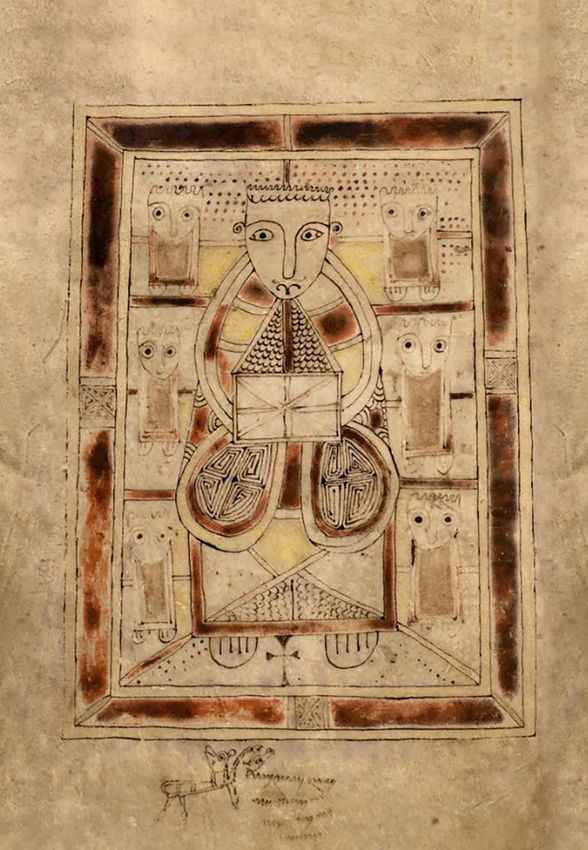
Celtic & Anglo-Saxon Studies

LEVEL 1 MODULES                                        Optional level 1 modules:
At level 1, all students registered for Celtic &
                                                       LOST GODS AND HIDDEN MONSTERS IN THE
Anglo-Saxon Studies (single and joint honours) are
                                                       CELTIC AND GERMANIC MIDDLE AGES
required to take the introductory module ‘Songs,
                                                       (15 credits)
Myths and Hero-Tales of the Old North’ and 30
credit points from modules considered to be part       Primordial giants, godlike ‘immortals’, elves,
of the Celtic & Anglo-Saxon curriculum, plus 75        leprechauns, trolls, water-monsters and the
credit points from other available modules.            walking dead: uncanny Otherworldly beings
                                                       feature widely in the literature of the Celtic and
Core modules, first semester:                          Germanic Middle Ages, as its Christian authors
                                                       reimagined their cultures’ pagan pasts. Drawing
SONGS, MYTHS AND HERO-TALES OF THE OLD                 primarily on Gaelic and Norse-Icelandic literature,
NORTH: AN INTRODUCTION TO EARLY CELTIC                 this course will explore how these beings were
                                                       conceptualized, how (if at all) they related to
AND ANGLO-SAXON LITERATURE
                                                       pre-Christian myth and religion, and why they
(15 credits) (compulsory)
                                                       continued to be significant to these cultures many
                                                       centuries after Christianization.
This module introduces students to the oldest
vernacular literature of Ireland, Scotland, Wales      •    One one-hour lecture and one one-hour
and England. We explore heroic narratives                   tutorial per week
featuring, for example, the Scandinavian monster-      •    Assessment: two essays (30% and 50%, 1500
fighter Beowulf (immortalized in England’s first            and 2000 words), tutorial participation (20%)
epic poem), the Irish warrior Cú Chulainn (hero of
the Táin) and the tragic Welsh princess Branwen,
caught up in a fatal power-struggle between Wales
and Ireland. We examine praise-poetry and heroic
elegy, meditative poetry, prophecy, and tales of
Otherworldly shapeshifters.

All these texts will be studied in English
translation, and no prior knowledge is expected.

•      Two one-hour lectures and one one-hour
       tutorial per week
•      Assessment: two essays (30% and 50%, 1500
       and 2000 words), tutorial participation (20%)

4
Celtic & Anglo-Saxon Studies

BARBARIANS, ROMANS, GODS AND WARRIORS                 MODERN IRISH FOR BEGINNERS 2
(15 credits)                                          (15 credits, second semester)

This module gives you an exciting introduction        This module gives students a continuation of
to the ancient Celtic and Germanic worlds. In         their study of the modern Irish language. It will
lectures and small-group tutorials, we will explore   encourage conversations in Irish on more
the peoples who inhabited western and central         advanced topics, through the use of current news
Europe in Antiquity. We will discuss their cultures   programmes and features, songs, literature, and
andtheir interactions with Greece and Rome. The       speaking practice in class on fun topics of the
module also covers the fates of these cultures in     students’ choice.
the post-Roman world. Change over time will
provide a major driver of the course: for instance,   •    Four classes per week
empire and its effect; the history and impact of      •    Assessment: one two-hour examination
the ‘barbarian’; the successive impacts of Roman           (60%), three translation exercises (10% each),
religion and of Christianity, and how they were            and oral assessment (10%)
represented in mediaeval ‘heroic’ literature.
                                                      SCOTTISH GAELIC LANGUAGE MODULES FOR
•    Two one-hour lectures and one one-hour           BEGINNERS AND INTERMEDIATES
     tutorial per week                                (2 modules at each skill level, one in each semester,
•    Assessment: one two-hour written                 15 credits each) (Based in Gaelic)
     examination (60%), essay of approx. 1500-
     2000 words (30%), tutorial participation (10%)   Scottish Gaelic (or simply ‘Gaelic’), the Celtic
                                                      language of modern Scotland, is the sister language
MODERN IRISH FOR BEGINNERS 1                          of modern Irish. The ‘Gaelic for Beginners 1A and
(15 credits, first semester)                          1B’ modules will enable students with little or no
                                                      prior experience of the language to speak, read,
This module aims to give students an introduction     write and understand Gaelic at a basic level and
to the modern Irish language (not to be confused      master a large working vocabulary, while ‘Gaelic
with Scottish Gaelic: see below). It covers basic     Language 1A and 1B’ are aimed at students who
conversation skills and the structures of the         are already relatively fluent and have studied the
language through the use of songs, videos and         language to at least Higher level at school (or
speaking practice in class. The module is open to     equivalent). These modules are taught through a
those with little or no knowledge of the language.    mixture of interactive classes, conversation classes,
                                                      and a programme of homework exercises and
•    Four classes per week                            self-directed learning. They are complemented
•    Assessment: one two-hour examination             by follow-up modules at level 2, available only
     (60%), three translation exercises (10% each),   for students who have already taken the level
     and oral assessment (10%)                        1 modules. Students wishing to learn a Celtic
                                                      language for two full years (four semesters)
                                                      should sign up in the first semester of their first
                                                      year; students wishing to take only one or two
                                                      semesters of Gaelic can take the level 1 modules in
                                                      their first or second year of study.
                                                                                                               5
Celtic & Anglo-Saxon Studies

GAELIC SCOTLAND                                         The second-semester module will provide
(15 credits, 1st semester) (Based in Gaelic)            students with a more or less comprehensive
                                                        understanding of Latin syntax and grammar, a Latin
Gaelic is Scotland’s oldest living language. In this    vocabulary of 700-800 words, and the ability to
introductory module you will learn about the            translate simple Latin texts into idiomatic English.
Gaels, their history and their role in the shaping of   Those who wish can go on to take one or both
modern Scotland. You will also learn about how          Latin modules at level 2 (see below).
Gaelic language and culture became minoritized in
its own country. Students will learn about various      LEVEL 2 MODULES
contemporary initiatives that are aimed                 At level 2, all students registered for Celtic &
at saving and promoting this indigenous language        Anglo-Saxon Studies (single and joint honours) are
and culture and this will be compared to minority       required to take 30 credit points from modules
languages and cultures elsewhere in the world.          considered to be part of the Celtic & Anglo-Saxon
                                                        curriculum, plus 90 credit points from other
LATIN 1 AND 2                                           available modules.
(2 modules, one in each semester, 15 credits each)
(Based in Divinity)                                     LOVE, LOSS AND REVIVAL: GAELIC IRELAND,
                                                        1700 TO THE PRESENT
Latin was the upper-class language of Roman             (15 credits)
Britain, the major language of the early churches in
mediaeval Britain and Ireland, and the language in      This module provides an introduction to Gaelic
which some of the finest literary works produced        Ireland from the eighteenth century to the
in mediaeval Britain and Ireland were written.          present, a period of historical trauma but also
There are four Latin modules at levels 1 and 2.         of unrivalled literary expression across many
These can be taken as a complete set under the          genres, from courtly poetry to the folk song, the
‘Sustained Study’ rubric, or as individual modules      autobiography and the novel. Reference will be
depending on prior ability. The first- semester level   made throughout to the political upheavals in
1 Latin module is an introductory, intensive module     which Gaelic Ireland was refashioned, alongside
for those with little or no previous exposure to        other key themes including the changing status of
Latin. Students completing this module should           the Irish language, and Ireland’s relationship with
have a Latin vocabulary of about 400 words              the rest of Europe. Though much Gaelic writing of
and a basic understanding of Latin grammar and          this period closely reflect the bleakness of history,
syntax. Students successfully completing this           it has also been a vehicle for joyful affirmation,
module will be adequately prepared to attend the        comedy, and tragic grandeur and resilience.
second-semester course if they wish. Students will
probably discover that their knowledge of English       •    One one-hour lecture and one one-hour
vocabulary and grammar/syntax is improved by                 tutorial per week
their study of Latin. The etymological roots of         •    Assessment: one two-hour written
many English words can be traced to the Latin                examination (60%), 2000-to-2500-word essay
language.                                                    (30%), tutorial participation (10%)

6
Celtic & Anglo-Saxon Studies

ARTHUR IN MEDIAEVAL CELTIC AND                          •    11 one-hour lectures and 6-one-hour tutorials
SCANDINAVIAN LITERATURE                                 •    Assessment: 2000-word essay (60%),
(15 credits)                                                 600-word source analysis (20%), tutorial
                                                             participation and online discussion (20%)
The module provides a survey of literature on
Arthur in the Middle Ages, focusing on early            INTRODUCTION TO SCOTTISH GAELIC
Welsh and Gaelic sources, related Scandinavian          LITERATURE
literature and French, Welsh and English romances.      (15 credits) (Based in Gaelic)
It includes discussion of broader themes and
questions posed by the literature, e.g. whether         This survey module is an introduction to Scottish
Arthur could have been a real person, how               Gaelic literature from the seventeenth century to
the Arthurian legend evolved over time and in           the present day. It is strongly recommended as
different areas of Europe, and why the character        a companion module to ‘Love, Loss and Revival’
has been elevated to iconic status.                     (listed above) which surveys the literature and
                                                        culture of modern Gaelic Ireland. It is taught
•    One one-hour lecture and one one-hour              using translated texts, alongside original sources
     tutorial per week                                  for those whose Gaelic skills are good enough.
•    Assessment: one two-hour written                   Students will gain new perspectives on key
     examination (60%), essay of approximately          areas of Scottish society such as Jacobitism, the
     2000-2500 words (30%), tutorial participation      Clearances, the Highland Land Wars, the Celtic
     (10%)                                              Revival and the modern Gaelic renaissance. This
                                                        module is suitable for anyone in programme year 2
VIKINGS: AN INTRODUCTION                                with an interest in Scottish society or literature.
(15 credits) (Based in History but taught with Celtic
& Anglo- Saxon staff)

The year 793: a surprise viking attack on the
peaceful monastic island of Lindisfarne. This raid
is often considered to mark the beginning of the
so-called Viking Age, a time of turbulence and
transformation with repercussions throughout
Europe and beyond. This period saw violence and
warfare, cultural contact and religious conversion,
political overhaul, and literary and artistic
creativity. As well as critically interrogating the
concepts of the ‘viking’ and the ‘Viking Age’, this
course provides an introduction to key themes
and topics in the study of early Scandinavia, c.
800-1200.

                                                                                                                77
Celtic & Anglo-Saxon Studies

THE CELTS, THEIR NEIGHBOURS, AND THE                    Other level 2 courses which may be of interest:
CLASSICAL WORLD
(15 credits)                                            SCOTTISH GAELIC LANGUAGE MODULES FOR
                                                        ADVANCED BEGINNERS AND INTERMEDIATES
Greek and Roman interactions with, and                  (2 modules at each skill level, one per semester, 15
perceptions of, Celtic and Germanic peoples             credits each) (Based in Gaelic)
will form the central theme of this module. It
includes in-depth discussion of migrations, material    These modules continue the course of study in
cultures and pre-Christian belief-systems. We will      modern Gaelic for students who have already
also analyse individual Classical authors’ motives      taken the level 1 modules in this language. See
and judgments in relation to Celts and Germani,         above under level 1 modules.
and how these perceptions evolved against the
background of the emerging Roman Empire. In             LATIN LANGUAGE AND LITERATURE 1 AND
addition the course involves discussion of broader      INTERMEDIATE LATIN 2
themes and questions posed by the sources, e.g.         (15 credits each) (Based in Divinity)
the portrayals of Celtic and Germanic peoples
in Greek and Roman visual art, and the possible         These two modules, running across the year,
uses of Classical texts in Celtic and Anglo-Saxon       build on the level 1 Latin modules (and can be
literatures.                                            taken separately by those who already have the
                                                        basic skills). It introduces students to medium-
•      One one-hour lecture and one one-hour            difficulty Latin texts, such as the Gospels and
       tutorial per week                                mediaeval saints’ Lives. The aim is to consolidate
•      Assessment: one two-hour written                 and extend students’ grasp of the grammar, syntax
       examination (60%), an essay of approx. 2000      and vocabulary of classical and mediaeval Latin,
       words, including references but excluding        covering all the chief constructions by the end of
       bibliography (30%), and tutorial participation   the module.
       (10%)

8
Celtic & Anglo-Saxon Studies

MODULES AT LEVELS 3 & 4                                  Language-only modules
Unless otherwise specified, level 3 and 4 (Honours)      NB: No previous knowledge of Celtic or Germanic
modules are worth 30 credits each and are taught         languages is required.
in combined classes of level 3 and level 4 students.
                                                         INTRODUCTION TO OLD GAELIC
•    Programme requirement (single honours):             (2 30-credit modules)
     students will need 240 credits overall. All
     students registered for Celtic & Anglo-Saxon        These modules provide a basic introduction
     Studies single honours are required to take         to Old Gaelic, the direct ancestor of modern
     210 credits altogether in years 3 and 4 from        Irish and Scottish Gaelic. Spoken in Ireland and
     modules available as part of the Celtic &           Scotland in the early Middle Ages, Old Gaelic
     Anglo-Saxon curriculum, with the option of          is the earliest Celtic language which we can
     taking 30 credit points in a different subject if   reconstruct with some certainty.
     they wish, or a further Celtic & Anglo- Saxon
     module if they prefer. They must take the           OR (in alternate years):
     level 4 dissertation module in Celtic & Anglo-
     Saxon Studies.                                      INTRODUCTION TO BRITTONIC LANGUAGE
•    Programme requirement (joint honours):              (2 30-credit modules) (mediaeval Welsh)
     students will need 240 credits overall. All
     students registered for Celtic & Anglo-             Brittonic languages were spoken throughout
     Saxon Studies joint honours are required to         mainland Britain and in Brittany prior to the
     take 120 credits from level 3 and 4 modules         invasions of the Anglo-Saxons, vikings and
     available as part of the Celtic & Anglo-Saxon       Normans, giving rise to modern Welsh, Cornish
     curriculum during their third and fourth years      and Breton. These modules provide a basic
     of study.                                           introduction to the mediaeval Welsh language,
                                                         forms of which were spoken in Wales, northern
                                                         England and southern Scotland during the early
                                                         Middle Ages.

                                                                                                                  9
                                                                                                                  9
Celtic & Anglo-Saxon Studies

‘Language combined with literature’ modules               The course will involve morphological, syntactic
NB: No previous knowledge of Celtic or Germanic           and lexical study, with an emphasis on translation
languages is required.                                    into English or modern Gaelic, and consideration
                                                          of the socio-historical and literary background
INTRODUCTION TO OLD ENGLISH LANGUAGE                      needed to reach a full appreciation of the texts.
                                                          Directed self-learning will include preparation of
This module will provide an introduction to the           translations for discussion and analysis in class and
language of the Anglo-Saxons. It will focus on            substantial reading on historical and cultural topics
grammatical study of the language, and translating        related to the texts and their authors.
basic Anglo-Saxon passages into modern English. It
will be based on a new version of the Old English         •    Assessment: two language exercises (40%
course designed by Dr Duncan Macrae-Gibson, an                 each), seminar participation (20%)
eminent Anglo-Saxonist and inspirational lecturer
at Aberdeen. This 21st-century version of the             Literature and history modules
course (published by Aberdeen University Press)           (Texts taught in translation)
will include traditional and online elements. The
course will give students the opportunity to begin        TALES OF VENGEANCE AND ENCHANTMENT:
learning the language in which ‘Beowulf’ and many         THE HEROIC AGE IN IRISH AND ICELANDIC
other fascinating poems and prose texts were              SAGA LITERATURE
composed.
•      Teaching and assessment: for information           This module explores and compares the legendary
       please contact the course coordinator, Dr          saga-narratives written in mediaeval Ireland and
       Aideen O’Leary (a.oleary@abdn.ac.uk)               Iceland which dramatize the great deeds and
•      In 2021-22 there will be an option to study        even greater misdeeds of Celtic and Scandinavian
       Old English under the ‘Independent Study’          ‘heroes’. Characters studied range from the
       course title: contact Dr Aideen O’Leary for        frenzied Ulster warrior Cu Chulainn to the tragic
       details                                            and troll-like Icelander Grettir the Strong and
                                                          the mythic dragon-slayer Sigurðr the Volsung,
EARLY MODERN GAELIC LANGUAGE AND                          made famous by Wagner but much wilder in the
TEXTS                                                     original. Stories studied will include cattle-raids,
(Based in Gaelic)                                         bloodfeuds, Otherworld quests and fights with
                                                          zombies. By the end of the course, students
This module is available to students with some            will know how to go berserk in an informed and
experience of studying a Gaelic language, normally        critically aware manner.
one semester or more studying modern Irish,
modern Gaelic or Old Gaelic. It introduces                •    Three hours of seminars per week, some
students to the Gaelic language and societyof the              including lecture-material
early modern period, c. 1200 to c.1700. Students          •    Assessment: one 3000-word essay (level 3)
will learn to read short historical and fictional texts        or 4000-word essay (level 4) (60%), primary-
in the original language (with help); students will            source exercise (30%), seminar participation
also read translated texts and scholarly materials             (10%)
about historical and cultural topics of that period.

10
Celtic & Anglo-Saxon Studies
DANGEROUS LIAISONS: LOVE, SEX AND INDEPENDENT STUDY IN CELTIC & ANGLO-
ROMANCE IN THE CELTIC WEST AND THE OLD SAXON STUDIES
NORTH (15 credits, level 3 or 4, depending on staff
availability)
The literature of the Celtic and Germanic Middle
Ages is famous for its tragic tales of ill-starred This module will provide the opportunity for
romance and forbidden love, as well as for the students with appropriate experience in Celtic
frankness and freshness with which its poetry & Anglo-Saxon Studies to pursue in-depth
explores the subject of sexual attraction. This exploration of a specific topic in Celtic and/
module will explore how the interwoven themes or Anglo-Saxon Studies. It gives students an
of love, sex and romance were dramatized opportunity for intensive engagement in a specific
in Celtic, Norse and Anglo-Saxon stories and area within the research field of an individual
poetry. Topics covered will include some or all staff member, and at level 3 it can be arranged as
of the following: love-triangles, maiden-kings preparatory work towards a dissertation.
and cross-dressing, amorous trolls and femmes
fatales, undead and fairy lovers, elopements and We also expect to run, in 2021-22, one of the
abductions, courtly love, and lyrics of requited and following three 30-credit modules (depending on
unrequited passion. staffing):
• One one-hour lecture and one two-hour • Celtic and Anglo-Saxon Kingship and the
seminar per week Exercise of Authority in the Earlier Middle
• Assessment: one 3000-word essay (level 3) Ages
or 4000-word essay (level 4) (60%), primary- • Saints, Sinners and Heretics in the Celtic and
source exercise (30%), seminar participation Anglo-Saxon Worlds
(10%) • Celtic and Anglo-Saxon Poetry
CELTIC ENCOUNTERS: THE GAELIC WORLD IN
MODERN IRISH AND SCOTTISH LITERATURE
Celtic Encounters looks at the ways in which
Irish and Scottish writers have reimagined texts
of Celtic origin in the nineteenth, twentieth, and
twenty-first centuries, from the Irish Literary
Revival through the Scottish Literary Renaissance,
to the present day. Writers have adapted
Old Gaelic sagas and hero tales for modern
consumption, reinvented themselves as latter-day
bardic poets, and been inspired by the Celtic and
Gaelic past to produce daringly modernist and
experimental new work.
11Celtic & Anglo-Saxon Studies
LEVEL 3 ONLY: LEVEL 4 ONLY:
SCOTTISH ARCHAEOLOGY VIKING ARCHAEOLOGY
(15 credits) (Based in Archaeology) (15 credits)
Here in Scotland we have a world-class record In their brief 300-year heyday, the peoples of
of past human society. From the spectacularly Viking-Age Scandinavia transformed the northern
preserved Neolithic settlement of Skara Brae to world, and themselves. This course explores
19th-century clearance villages, this course the Vikings at home, abroad, and in their new
explores the broad sweep of Scottish prehistoric homes overseas in the developing colonies of
and historic archaeology, with a chronological the diaspora that stretched from the coasts of
focus on the period from the earliest settlers North America to the Asian steppe. In lectures
to the major social and political changes of the and seminars, with hands-on classes looking at
Middle Ages. In lectures and a day-long study the finds, students will consider themes such as
trip, students will gain an in-depth insight into the settlement and social structure, urbanism and
archaeology of Scotland and will explore some commerce, pagan and Christian religion, and
of the major issues in human history: the origins the political process that created the modern
of agriculture and monumentality, worldview and nation- states of Norway, Sweden and Denmark.
belief in the north, settlement and social structure, As an introduction to the archaeology of the
urbanism and the emergence of the modern Viking Age, this course will provide students
world. with an insight into the nature of Viking Age
Scandinavian society and culture; an understanding
• 2 lectures per week, 1 week taken up by a of political developments in the Viking Age and
field trip the transformation from tribal- to state-based
• 100% continuous assessment societies in Norway, Sweden and Denmark;
detailed knowledge of the geographical scope
of the Viking world; and an understanding of
how archaeologists combine a range of sources
(material, textual and environmental) to achieve
a synthetic understanding of a discrete period of
history.
• 2 one-hour lectures per week, plus tutorials
or seminars in some weeks
• Assessment: 3000-word essay (50%),
museum-display-style poster project (50%)
12Celtic & Anglo-Saxon Studies
DISSERTATION IN CELTIC & ANGLO-SAXON For further information please contact the
STUDIES Undergraduate Programme Coordinator, Professor
(2nd semester) Ralph O’Connor (r.oconnor@abdn.ac.uk)
This dissertation is the culmination of a humanities Cover image: St John from the ‘Book of Deer’, a
student’s programme of study: an 8000-word Gospel-book with connections to the North-East
research essay written on a topic which they of Scotland, generally dated to the tenth century:
devise in consultation with a supervisor, who will Cambridge University Library, MS Ii.6.32, fol. 41v
meet them in a series of one-to-one supervision (copyright Cambridge University Library)
sessions to help them plan their work. It is
compulsory for single-honours students in their
fourth year. Joint- honours students choose
between writing their dissertation in Celtic &
Anglo-Saxon Studies or in their other discipline.
13
13
13Celtic & Anglo-Saxon Studies 14
Celtic & Anglo-Saxon Studies

                       15
                       15
Celtic &
Anglo-Saxon
Studies
+44 (0)1224 272090
study@abdn.ac.uk
MS: WLS0221You can also read


