Certification of Rotorcraft and FHA Process - Federal Aviation Administration
←
→
Page content transcription
If your browser does not render page correctly, please read the page content below
Certification of                   Federal Aviation
                                   Administration

Rotorcraft and FHA
Process

Presented to:        AEA
                January 31, 2012
OUTLINE
Certification Process
  – Installation of Complex Systems in Normal Category
    Rotorcraft
  – XX.1301 & XX.1309 Comparison
  – Guidance Material
  – Compliance with 27/29.1309
  – System Safety Assessment
  – Items to be aware of…
  – FHA/SSA Questions

                                        Federal Aviation   2   2
                                        Administration
Certification Process
1. Application (e.g. TC, ATC, STC, ASTC)
2. Certification Basis defined.
3. Certification Plans:
– Detail how compliance will be shown for each rule
(27.1309 analysis, ground test, flight test, etc.).
– Define level of FAA involvement (delegation).
4. Test planning & execution.
5. Data/Test Review: FAA reviews/witnesses tests
as necessary.
6. TC/STC issued.
Federal Aviation 3 3
AdministrationComplex Systems in Small Rotorcraft
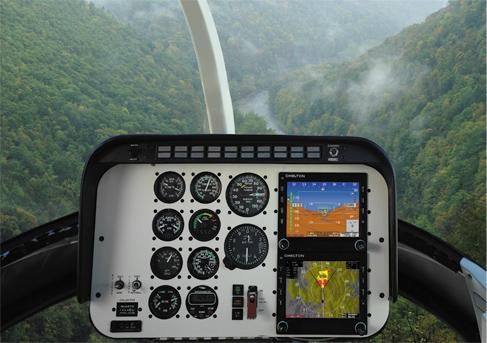
• Subject equipment
– Attitude Direction Indicator
– Synthetic Vision
– AHRS i.e. MEMS technology
– Air Data
– Navigation
– HTAWS
– Traffic
– Weather
– RAD ALT
– Autopilots / stability augmentation
– System integration
• Certification Bases that range from CAR 6 to part 27 amndt. 46
• Intended Function
– Will it only be used for Day/Night VFR ?
– Single/Dual Pilot
– CAT A / CAT B
• FHA / SSA
– Proper hazards classification
– Proper design levels, including software
– Requires input from various engineering disciplines and Pilots
Federal Aviation 4 4
Administration14 CFR 2X.1301 Comparison
• 2X.1301: Each item of installed equipment must-
– Be of a kind and design appropriate to its intended function;
– Be labeled as to its function and operational limitations
– Be installed according to its limitations
– Function properly when installed.
• Although the rule & its application are the same,
they result in different requirements due to the
platform’s design & operational differences.
Federal Aviation 5 5
Administration2X.1309 Comparison
• 2X.1309: While there are some differences in the 14 CFR Parts
23, 25, 27, 29, in general, they all say that each item should be
safe and reliable and not adversely affect any other system.
Basically, this is the regulation that requires that hazards posed by
the systems installed on aircraft must be addressed as part of the
certification process.
• RESOURCES
– AC 27/29.1309
– SAE ARP4754 “Guidelines for Development of Civil Aircraft and
Systems”.
– SAE ARP4761"Guidelines and Methods for Conducting the Safety
Assessment Process on Civil Airborne Systems and Equipment".
– Other published AC Guidance (e.g., 21-40,27-1B, 29-2B), FAA
Orders, RTCA Documents.
Federal Aviation 6 6
Administration27.1309 & 29.1309 Comparison
• It is assumed that the basic Part 27 aircraft will be
certified VFR.
• 27.1309 on a VFR Helicopter does not address
systems whose failure conditions are assessed to be
higher than major (i.e. hazardous or catastrophic).
– May require special conditions
• If the rotorcraft is to be certified for IFR flight, then you
must use 27 appendix “B” which invokes some Part 29
rules including portions of 29.1309.
Federal Aviation 7 7
AdministrationGuidance Material
• AC 27.1B, 27.1309 provides guidance for
compliance to FAR 27.1309
• AC 29-2C, 29.1309 provides guidance for
compliance to FAR 29.1309
• Both ACs recognize SAE-ARP 4761/4754
System Safety Assessment (SSA) process
• AC 20-174 for compliance to the new ARP
4754A.
Federal Aviation 8 8
AdministrationCompliance to 27/29.1309
• XX.1309 Compliance Data:
– Qualitative & Quantitative analysis required
for Catastrophic, Hazardous, and for
complex systems that have Major failure
classifications.
• FHA, PSSA, FTA, FMEA & CCA required.
• Must Substantiate probability of failure reqmts.
– Only Qualitative assessment required for
non-complex Major and Minor systems.
• No probability of failure substantiation required.
Federal Aviation 9 9
AdministrationSafety Assessment Process
• Functional Hazard Assessment (FHA)
– Aircraft Level & Systems Level FHAs
– Used to Identify Effects (i.e. Failure Condition
Categories) of System Failures on Aircraft
• 5 Failure Condition Categories
– Catastrophic
– Hazardous/Severe-Major
– Major
– Minor
– No-Effect
Federal Aviation 10 10
AdministrationSystem Safety Assessment hardware requirements • Catastrophic -
System Safety Assessment
Software & AEH Requirements
• RTCA/DO-178B Software Level and RTCA/DO-254
  AEH Level Commensurate with Failure Condition
  Category
   – Level A (Catastrophic)
   – Level B (Hazardous/Severe-Major)
   – Level C (Major)
   – Level D (Minor)
   – Level E (No Safety Effect)

                                    Federal Aviation   12   12
                                    Administration
Assessing the Effects of Failures
Integration of Cockpit Display Systems and
Pilot Interface
• In addition to the systems engineering specialists,
both flight test and HF evaluation of pilot-system
interface is used to evaluate and classify the hazard
level of a particular failure condition.
– Especially if it involves
the pilot – system interface
(control or misrepresentation
to the pilot of information)
Federal Aviation 13 13
AdministrationIssues to be aware of:
• FHA should not be accomplished after system
design and installation.
– Primary purpose of FHA is to set design standards; not to
appease FAA
• Do not use the equipment reliability to define failure
classification.
• The highest hazard classification for equipment that
is not required by certification or operational rules
NOT is “minor”.
Federal Aviation 14 14
AdministrationFHA / SSA questions for the group
• Should the hazard classification / threat to
the aircraft and or occupants change for
misleading information as a function of…
– Its Required vs. non-required in CAR 6 / part 27?
– What if it can be classified as “safety enhancing”
equipment?
– Its being installed to satisfy and Operational
equipment requirements i.e. (135)?
Federal Aviation 15 15
AdministrationDiscussion Time:
Back to Kim…
Federal Aviation 16 16
AdministrationQuestions to industry and the FAA:
– Do we, the FAA and industry, understand the risk tradeoffs if
we allow the installation of equipment with a lower level of
certitude than our guidance allows?
• Given the unique characteristics of rotorcraft
• What are the risk tradeoffs and what do they buy us? Do we get a
net gain in safety (as reflected by lower accident numbers)?
– How are we discouraging applicants and operators from
installing safety enhancing equipment that is not required by
any regulations?
– Are we going to exacerbate poor pilot decision making by
providing a system that may provide a false sense of security
(i.e. “snow tire syndrome”)
Federal Aviation 17 17
AdministrationYou can also read


