Challenging Disruption Through Empowering our People - SRAI-ARMS Meeting Hawaii Disruptive Trends in Global Research Management
←
→
Page content transcription
If your browser does not render page correctly, please read the page content below
Challenging Disruption
Through Empowering our
People
SRAI-ARMS Meeting Hawaii
Disruptive Trends in Global Research Management

Alice Boland and David Parrish
RMIT University, Melbourne, Australia

27 March 2019
                           1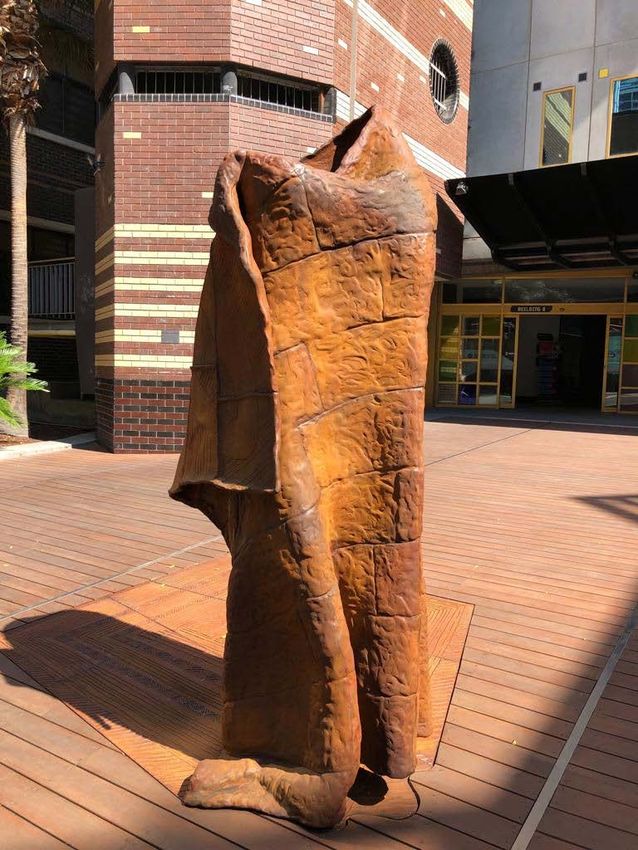
Welcome (Aloha!) and Introductions
      Who are we? Why is this topic significant to us
      and others?

Alice Boland                               David Parrish
Manager, Research Capability Initiatives   Senior Advisor – Planning
Research and Innovation Portfolio          Research and Innovation Portfolio
RMIT University                            RMIT University

                                   2
3
RMIT: Our story (Video 1m45s)
 VIDEO URL BELOW:

 https://www.youtube.com/watch?v=QFz5rKbrdn8

                                       4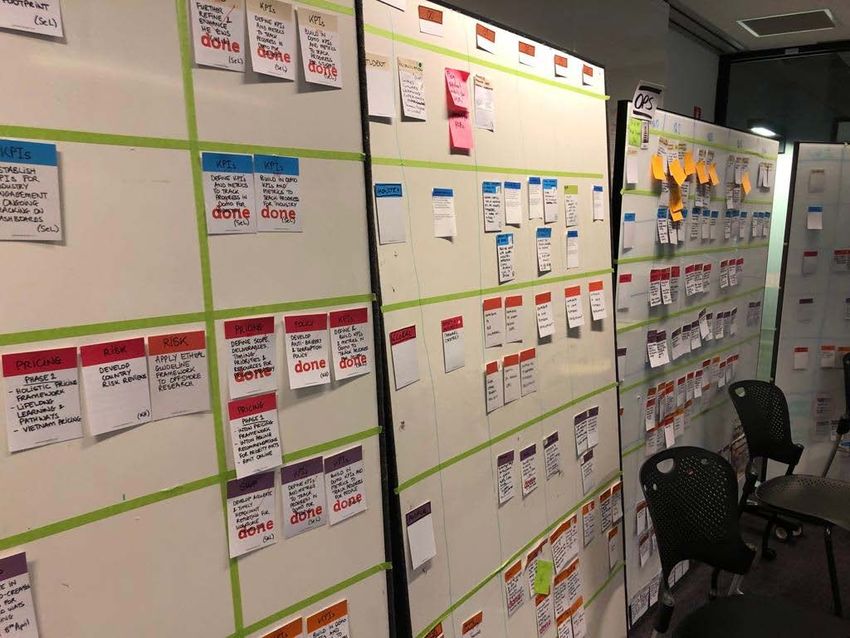
Presentation Outline
1
              Strategic Context
2
    Our journey to re-imagining our ways of
           working: lived experiences
3
          New
          New Ways
              Ways of of Working:
                         Working: Agile
                         .
                                  Agile
                         .

4
    Practices and support mechanisms for
            collaborative working
                         .

5
5
        Learning from Reconciliation
                         ..

6
      A cohesive approach to capability
                development
7
                Key Insights
                         .

                     5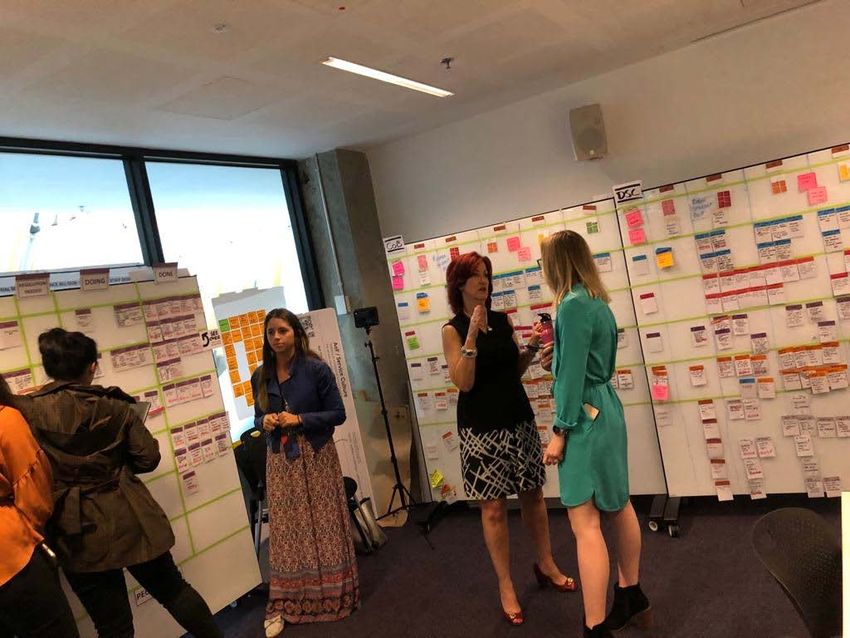
1
Strategic Context
Research and Innovation (R&I) portfolio and the
broader university context
Transforming Research Services (service culture
uplift including systems, eg self-service Researcher
Portal)
6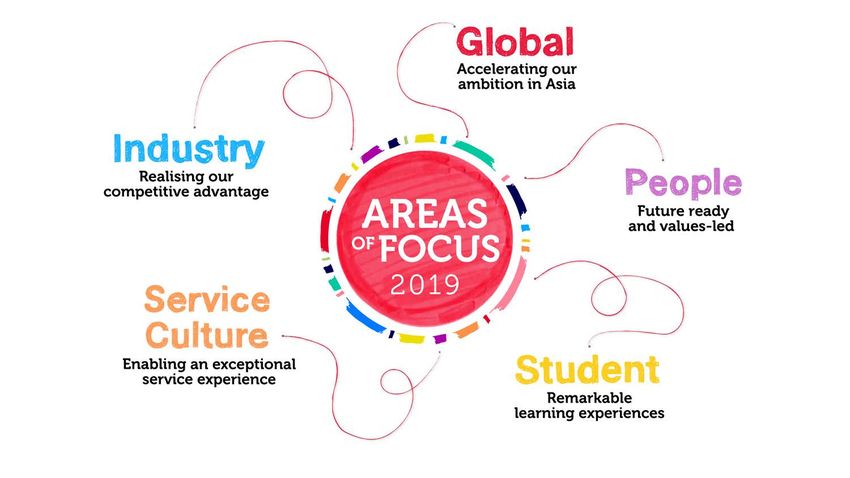
RMIT’s Strategic Soup: the view from the employee

                                         RMIT Strategy: Ready for Life and Work
       Reconciliation
                                         3 Directions, 7 Goals
                                         Direction 1: Life-changing experiences
        Action Plan
                                         Direction 2: Passion with a purpose
                                         Direction 3: Shaping the world

                                    Diversity and Inclusion Plans:
     Research and                   1.    Gender Equality
       Innovation                   2.    Diverse Genders, Sexes and Sexualities
                                    3.    Cultural and Linguistic Diversity
   Directions to 2020               4.    Staff and Students with Disability
                                    5.    Students from Low Socio-Economic Background

 R&I
 OPS                                           Value Creation 1.0 (Scenario
            SEH         DSC   BUS
                                                        planning)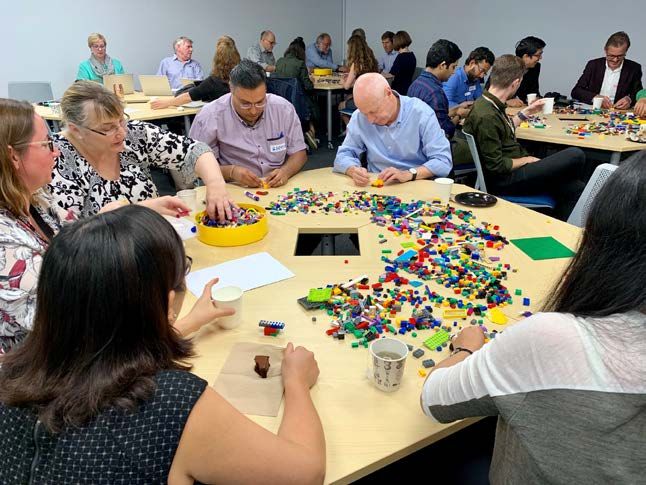
2
Our journey to re-imagining our ways of
working: lived experiences
Scaled Agile for Teams: training
RMIT enterprise-wide planning approach for 2019:
Areas of Focus
LEGO® SERIOUS PLAY® - driving collaborative
ideation around ways of working and areas of
future need.
8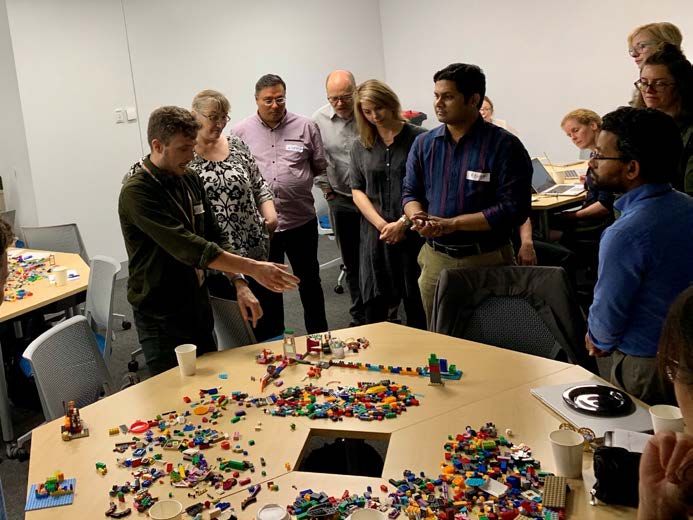
9
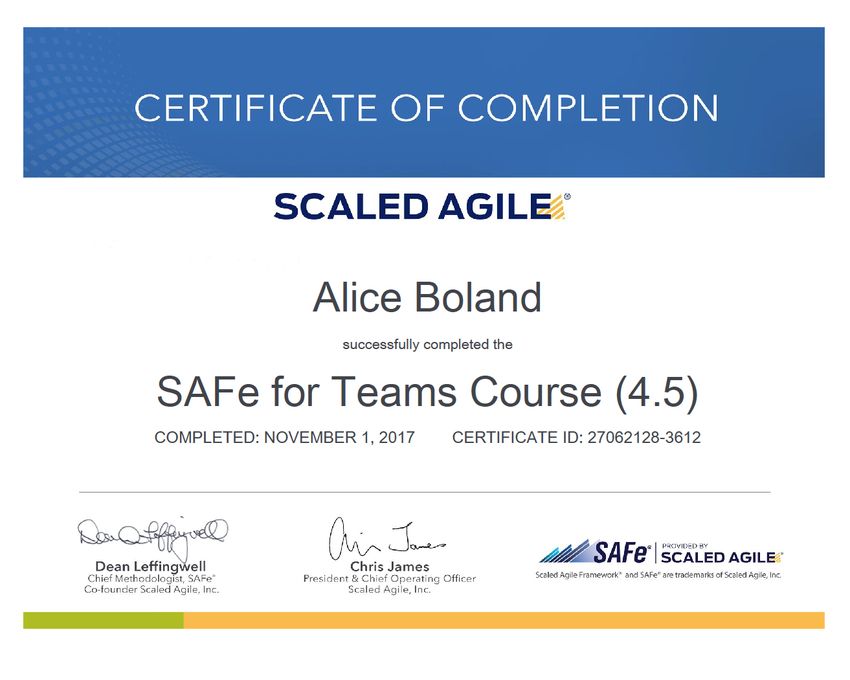
Scaled Agile Framework® (SAFe®) for Teams

                  10
11
RMIT: Areas of Focus 2019 (Video 2m27s)

 Video restricted to RMIT use

                                12
Seven week enterprise-wide
planning sprint.
Approx. 70 senior staff
worked together to strategise
openly and collaboratively,
challenged, debated and
iterated. RMIT Strategic Planning for 2019
13Professional Development
LEGO® SERIOUS PLAY®
Methodology
Unlocking imagination and
innovation building visions
for future strategy.
143
New Ways of Working: Agile .
Cadence Collaborative / Adaptive
Shorter planning cycles, e.g. one or two week
sprints, regular stand-ups (at the planning wall),
demos and “show and tells,” and finally a retro
(reflect, adapt, celebrate), then rinse and repeat! Social Contract: planning
Traditionally, planning has been
The team jointly constructs the their approach to working predictive, not adaptive. We spend
together, including deciding what is valuable and what is months formulating the “plan” and yet
Think big, plan important. The team counts on each other, has fun, looks
after each other and turns up!
still miss the mark! An adaptive approach
provides for just enough planning to get
us going and expects course corrections
small
along with way.
Keeping the goal in mind, break it down into the
smallest constituent tasks (one action per card)
Turn up and Physical Retrospective
The plan is physically represented on the
planning wall, cards are used, coloured Reflect and adapt:
stand up! pens, pictures are drawn, the team
remains standing and a big “done” stamp is
used to illustrate achievement. Team
What worked well?
What didn’t work well?
What puzzles us?
What have you done recently? What are you doing
members’ pictures are displayed!
shortly? What is blocking your progress? Do you
have new information that is important enough to
tell the group?
154
Practices and support mechanisms for
collaborative working
.
Learning from research practice
Narrative and story-telling
Capability building for staff
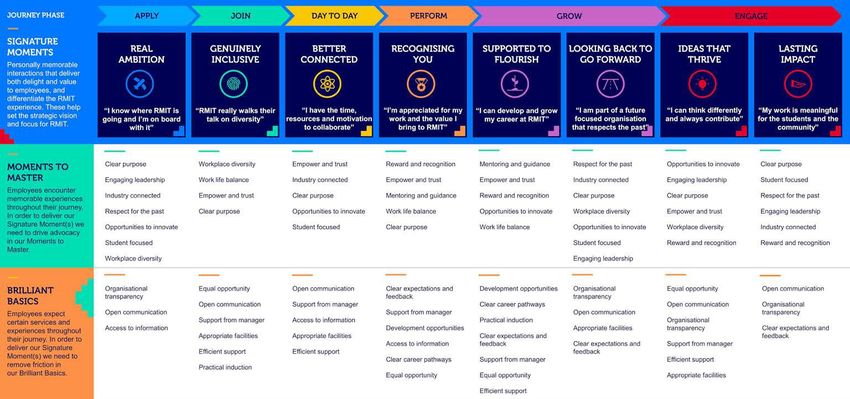
16Capability Building for staff 01 EMPLOYEE EXPERIENCE VISION This common aspirational vision is comprised of 8 Signature Moments that create value and are distinctly RMIT, 11 Moments to Master that create advocacy and 11 Brilliant Basics that are required to remove friction.
Capability uplift focus for 2019
Collaboration and Change capability
Breaking down the walls between portfolios and
teams – active co-creation
Providing the opportunities and the tools needed to
collaborate and solve problems eg design thinking
“The capacity to learn is a gift, the ability to
learn is a skill, the willingness to learn is a
choice” – Brian Herbert (NY Times Best
Selling Author)
18Delivery approach for capability uplift initiatives
Two approaches will be used
Employee-centred Project management
design
An agile approach to problem A more traditional
solving and solution design that approach that ensures
puts staff at the core of projects scope, plans and
and decisions; starts with stakeholders are
understanding their needs and closely managed to
motivations, generating multiple ensure the desired
ideas then prototyping, testing outcome is achieved
and iterating to deliver a with support from the
innovative outcomes. University community
195
Learning from Reconciliation
.
Reflection: Bundyi Girri (Video 3min30sec)
Video restricted to RMIT use
20Wurrunggi Biik - Law of
the Land is a 2.4 metre
artwork signifying a long-
lasting spiritual
connection to Country
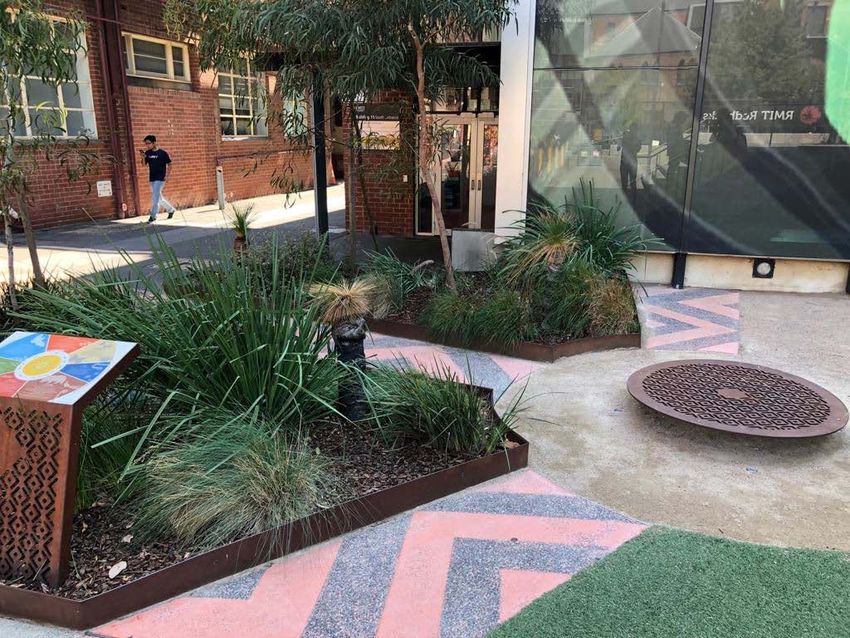
Ngarara Place, a unique
Indigenous garden and
design space at its City
campus
216
A cohesive approach to capability
development
227
Key Insights
.
Traditional approaches to planning are being
supplanted by collaborative, iterative and responsive
ways
Organisational context is important
We can learn from the Reconciliation journey
Agile methodologies provide inspiration for our new
ways of working but our lived experience highlights
other elements required for a cohesive approach
including:
focus on relationships
the importance of narrative and story-telling; and
capability uplift
23Thank You
Mahalo
Questions?
Alice Boland alice.boland@rmit.edu.au
David Parrish david.parrish@rmit.edu.au
http://www.rmit.edu.au/researchYou can also read


