Realising the FNH-RI: Roadmap - Karin Zimmermann (Wageningen Economic Research WUR , NL) - RICHFIELDS
←
→
Page content transcription
If your browser does not render page correctly, please read the page content below
Realising the FNH-RI: Roadmap

Karin Zimmermann (Wageningen Economic Research [WUR], NL)
Three ongoing tracks towards a FNH-RI
Design studies
       ●   EuroDISH: Determinants – Intake – Status - Health
       ●   RICHFIELDS: Focus on gap Determinants – Intake

I      ESFRI proposal Prospect Food Nutrition Health RI
       ●   Next round 2021, mature application
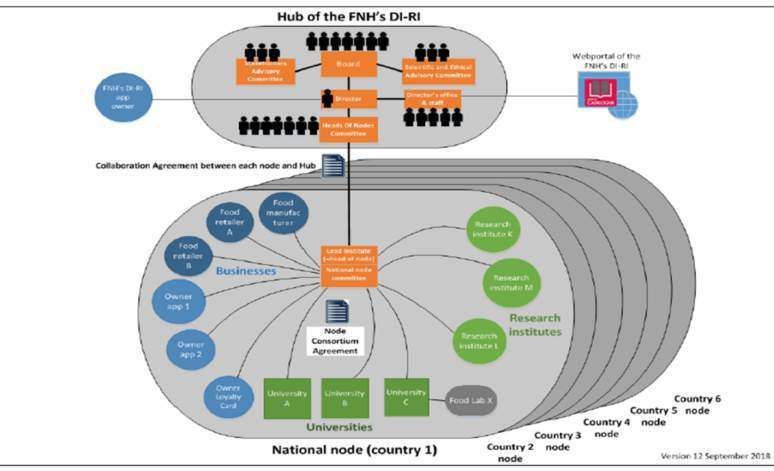
       ●   Implementation governance structure
       ●   Implementation finance structure

II     Getting the FNH community in shape
       ●   Preparing FNH-RI community for ESFRI-roadmap
       ●   Political & financial support ESFRI roadmap applications (Ministries)
       ●   Facilitate national nodes 2018-2020
III    Collaboration adjacent RI’s within SWG Food & Health
       ●   Preparing use cases to explore collaboration

                                                                                   2
I   Prospect FNH–RI –
    application ESFRI Roadmap 2021

                                     3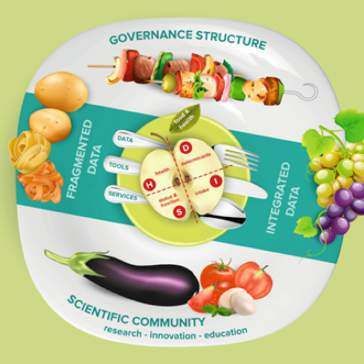
FNH-RI: Project family

                                        Food                             Consumer                   Health

                                                                         D            I         S              H
 DATA
            F

                                                    Welfare, others ..
                                  Health, Quality
            N   Sustainability
                                                                                          EURODISH (2012-15)
            H
 TOOLS                                                                       RICHFIELDS
            -                                                                 (2015-18)
            R
 SERVICES   I

                                 Advice ESFRI: food-chain FNH-RI to be submitted 2021

                                                                                                                   4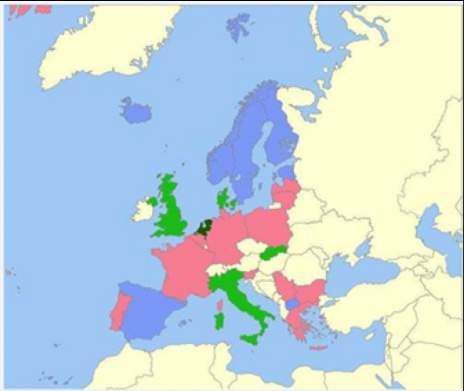
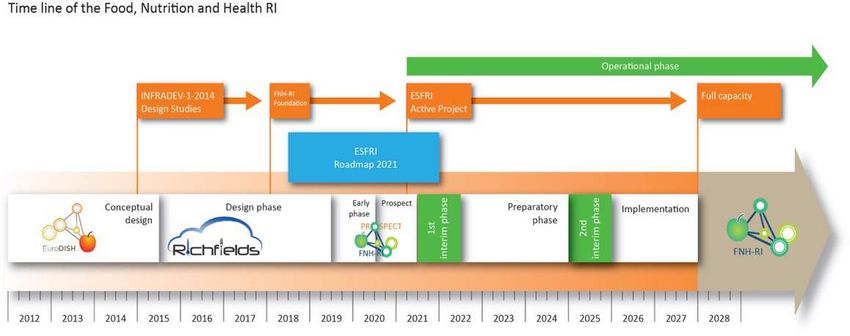
Time line

            5
PROSPECT FNH-RI represents the ESFRI
Roadmap application of FNH-RI
Part A: Involved MS, Consortium

Part B: Science case, Pan-European relevance, Socio-economic
impact, E-needs and accessibility

Part C: Stakeholder and user community, Governance and business
model, HRM, Risk assessment, Planning and preliminary activities to
move to a preparatory phase

Moderator - Governance and Finance towards an agile process with
different building blocks

                                                                      6
ESFRI ROADMAP2021 and FNH-RI development
        European Research                                          Research programme
        Agenda (FP/JPI/Etc.)                  ESFRI
                                                                     for European RI
2018
               RICHFIELDS                PROSPECT writing
2019
2020   Acquisition 1     Acquisition 2
2021
2022                                        Prepatory              Starting Communities
2023                   FP9
2024
2025                                     Implementation                   Project x
2026
2027
                                           Maintenance                    Project y
2028               FP 10
2029
                                           Maintenance
2030

                                                            ESFRI roadmap required        7
FNH-RI Roadmap to governance maturity

          Implementation   Mature governance structure based on sustainable
              Phase        governance structure (legal organisation, independed
                           from time) build on business model

           Preparatory
M             Phase
A                          “Simple” foundation linked to consortium agreement
T                          including new partners and new national nodes,
U                          Scientific and Industry Forums, depending on project
R                          durance
I
T          Initial Phase
Y
                           “Simple” foundation structure of the 5 core partners to
                           facilitate collaboration in MoUs and projects,
                           developing an FNH Industry Forum

                                                                                     8
FNH-RI Foundation 2018 first legal step to solid governance
§ Realise and sustain an European research infrastructure enabling
MoUs and national nodes development
§ Facilitate quality, cost effectiveness, and availability of resources in
the research system
§ Bring together expertise across disciplines, across public and private
sectors
910
II   Getting the FNH community in shape

                                          11
FNH Community – national nodes
Countries National Node Participants Europe
LEAD DISH-NL France (in progress)
Prospective Countries National Node Germany (in progress)
United Kingdom (in progress) Greece (in progress)
Denmark Foodhay Latvia (in progress)
Italy (in progress) Lithuania (in progress)
Slovakia AgriBioFood Bulgaria (in progress)
Macedonia FNH-RI Node Macedonia Estonia (in progress)
Prospective Countries in National Node Portugal (in progress)
the making Belgium (in progress
Spain (in progress) Serbia (in progress)
Finland (in progress) Poland (in progress)
Norway Sustain Health Ireland (in progress)
Sweden Food Science Sweden Participants Global
Iceland (in progress) Canada no
Australia no
12State of play FNH-RI Community across Europe
13Development of a FNH National Node
Step by Step – Establish a platform
Step 1: Find a lead institute/university
Step 2: Introduction workshop with broad invitations in the domain of
food systems, consumer research, nutrition, preventive health
(system)
Step 3: Find a joint interest in research and elaborate on it in terms of
platform science case and RI
Step 4: Get acknowledgement by the relevant Ministry form
perspective of the FNH-RI Science Case.
14Development of a FNH National Node
Step by Step – National ESFRI ROADMAP
Step 5: Get acquainted with your national ESFRI representative.
Step 6: Apply to the National ESFRI Roadmap
If on the next National Roadmap:
Step 7: Apply for funding for your national proposal to align FNH-
RI and FNH National Node initiatives
Step 8: Transfer the budget into a workplan for the platform
members
15Development of a FNH National Node
Step by Step – European FNH-RI
Step 9:The FNH National Node is representaed in the FNH-RI Board
Step 10: FNH-RI Board will apply for the ESFRI ROADMAP 2021 and
start writing in May 2018 as a consortium PROSPECT FNH-RI.
Step 11: On behalf of FNH community and FNH Board The Netherlands
will submit the proposal to ESFRI in April/May 2020
Step 12: January 2021: Hearing. Decision about the ESFRI ROADMAP
2021 and FNH-RI. October 2021: ESFRI 2021 Roadmap will be
launched.
16III Collaboration adjacent RIs –
within ESFRI SWG Food & Health Landscape
17Adjacent RIs within SWG F&H to FNH-RI
18FNH-RI and ELIXIR
§ databases & tools catalogue (help desk)
§ recommendations for data storage/transfer/access (FAIR)
§ training and services
Project use cases 2018 approved by the ELIXIR board and FNH-RI
Board, aiming to develop white paper (2019) about collaboration
to be the basic strategy on collaboration for signing MoU
19FNH-RI and METROFOOD
• member of stakeholder forum of METROFOOD
• standards on food safety, food quality and food data
When METROFOOD becomes a ERIC (2021) collaboration based
on added value will be described in MoU. FNH-RI board will sign
letter of cooperation in December 2018.
20FNH-RI and ECRIN
§ centres for nutrition in EU
§ ontologies and standards for data
§ training services
ECRIN was partner in EuroDISH and RICHFIELDS; already well
defined collaboration strategy are in place. FNH Board can start
preparation of a MoU. A use case (2019) will be developed on
nutrition data base and ontologies
21FNH-RI and BBMRI
§ implementing GDPR – informed consent
§ guidance on ethical, legal, and social issues when exchanging
data
Invitation by BBMR to prepare use cases; FNH-RI Board need to
assign this to researchers and experts of FNH-Community. Based
on next steps the possibilities to develop a MoU will be explored.
22Finally – Why join FNH-RI? Take home message:
• We need to have breakthroughs for food related societal challenges in
the next 30 year - FNH-RI is the fundament to build excellence science
to get the FNH science community in shape;
• We need to build on enriched data to fosters European and national
food and health strategies by jointly work on excellent science
knowledge translated to high impact solutions and innovations - FNH-
RI – as a tool- unites countries and enables collaboration across Europe
and beyond;
• We need to foster excellent science bridging national capacity and
sharing survey’s and facilities to strengthen transnational collaboration -
FNH-RI supports open science to foster comparison and enrichment of
data, tools and services beyond national borders;
23Finally – Why join FNH-RI? Take home message:
• We need to answer complex Euopean research and societal questions
by multi-disciplinary collaboration of consumer science, food
technology science, nutrition science and biomedical science to find
holistic answers, beyond discipline’s silos - FNH-RI is the moderator
for this as multi-disciplinary approach is the key stone of this RI;
• We need to underpin the design of the diet of the future – FNH-RI
foster an unique European community and possible beyond to collect
and connect data about the determinants of consumer food behaviour
and dietary intake, not only as research data, but also individual data
near time and on the spot.
24On behalf of all partners of
the FNH-RI consortium and
its partners from EuroDISH,
DISH-RI and RICHFIELDS:
THANK YOU FOR
YOUR ATTENTION
FNH-RI will underpin the design
of our plate of the future
25You can also read


