Chemistry - Undergraduate Degrees 2022 - Lancaster University
←
→
Page content transcription
If your browser does not render page correctly, please read the page content below
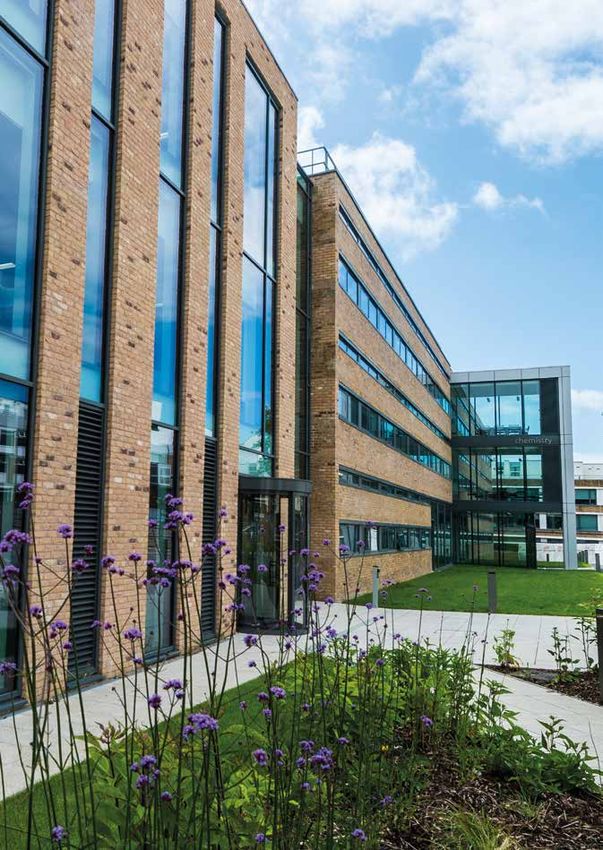
Chemistry

Undergraduate Degrees 2022
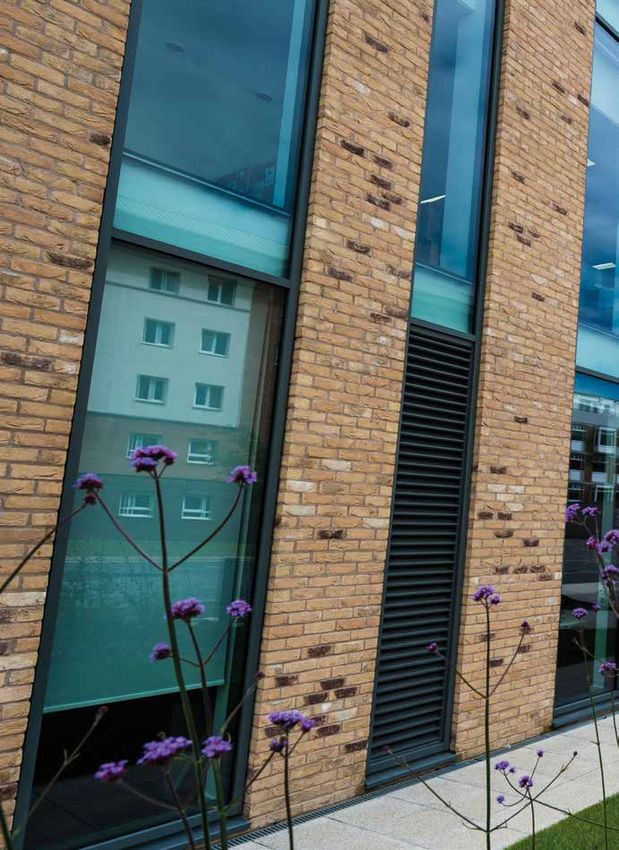
Welcome
Acting Head of Chemistry
Chemistry is a fascinating subject and one that I am incredibly passionate about.
Chemistry provides us with a unique perspective on our world; how it emerges
from the fundamental properties and interactions of atoms and molecules, and
how we can control chemical processes to enable us to shape it. As the scientific
study of the matter that makes up everything around us, chemistry allows us
to continually push boundaries of understanding, and to carry out research that
World Changing advances knowledge and improves lives
Chemistry Studying with us
at Lancaster
With world-leading academic staff and
world-class facilities, our Chemistry The Chemistry throughout your degree by your Academic Tutor who
Department is a offers pastoral care and advice as well as helping
Department is at the forefront of teaching friendly, engaging and with more academic concerns.
and research. Every day, we explore more of academically rigorous
Our students tell us that they appreciate the
community where
the world around us, making breakthroughs students and staff share accessibility of our teaching staff, all of whom
are active researchers with many being leading
that drive industry and improve lives. a love of chemistry with
international experts in their field. Through high
world-class laboratories
quality teaching, these experts will bring their
For you, we offer a world of possibilities for teaching and
knowledge and passion to your lectures and
research. We have an
and prospects, with a modern approach ethos of inclusivity, practical lab classes so that you will learn about the
fundamentals of chemistry, together with the latest
that combines a wide range of subject equal opportunity and
developments and their real-world applications.
community, which has
areas, a mix of teaching styles been more important Your personal and professional development matters
and all the support you will need than ever throughout the to us and we place a strong emphasis on helping
Covid-19 pandemic. Staff have worked closely with our graduates progress successfully to a range of
to prepare you for your future. students to minimise the impact of the pandemic careers both nationally and internationally in the field
as we transitioned between on-line and in-person of chemistry and beyond, and into further study.
teaching, and we will continue to build on this
experience during the forthcoming year. Our degree programme has been specially designed
to nurture a range of key transferable skills that will
All of you will have had your education impacted by enhance your future employment prospects, such as
Covid-19 in some way, and, for some of you, you will be communication and presentation skills, computing
coming in as an undergraduate with less confidence and mathematical skills, as well as a broad range of
and less experience than in previous years. We chemistry skills. Developing a portfolio of skills and
therefore want to reassure you, that we will be putting tailoring them to your future career choice forms an
support mechanisms in place, particularly in laboratory integral part of our degree, and our dedicated careers
practicals, throughout you first year to ensure that you service can offer advice about careers both in and out
have all the skills that you need to progress through of chemistry.
your degree. Our admissions process will also reflect
these changes; there will be no interviews this year, you Lancaster is a great place to study and enjoy the
will not be disadvantaged if you are unable to include experience of being a student. We hope that you’ll
extracurricular experiences in your personal statement make lasting friendships, create special memories
and due to the exam disruptions, we will be as flexible and develop life skills that will stay with you long
as possible with A level grades. after you graduate. We’d love to welcome you to
the Department.
We want all our students to flourish so we can help
you to make the most of your academic studies and Dr Lorna Ashton
your time here at Lancaster. You will be supported Acting Head of Chemistry
2 For more information please visit lancaster.ac.uk/chemistry
www.lancaster.ac.uk 02
3
More than
                                                                                                          £30 million
                                                                                                          invested in
                                                                                                           chemistry
                                                                                                          since 2012

                                                                            #6
                                                                   for student experience
                                                                                                            100% for
                                                                                                        overall student
                                                                                                          satisfaction
                                                                 The Times and Sunday Times             National Student
                                                                 Good University Guide, 2021             Survey, 2020

              #7
      for Chemistry
                                                                                                       Small class sizes
                                                                                                       and approachable
                                                                                                         academic and
                                                                                                         support staff
         in the UK
     Guardian League
        Table, 2021

                                                                                                           Flexible
                                                                                                            degree
                                                                                                         programmes

              #3
for student satisfaction                                        FREE Learning Resource Pack,
  Complete University                                             provides the key materials
       Guide, 2022                                                 to support your studies:
                                                                                                         Study abroad
                                                             Lab coat, eye protection, all glassware        option
                                                               and lab equipment, lab books and
 4   For more information please visit www.lancaster.ac.uk       online core course text books                          5
Every hydrogen atom in your body
was created at the big bang, that means
part of you is 13.5 billion years old.
Study chemistry at Lancaster and
discover the inner workings
of the world around us.

Be part of something amazing
       World changing                                                     Vital to the
       chemistry                                                          UK economy

Chemical technologies enrich our quality of life                   The UK chemical and pharmaceutical industry
by providing breakthroughs in energy, genetics,                    continues to be a vital part of the UK economy, with
biochemistry, healthcare and medicine, materials                   the UK being one of the world’s top global producers
science, forensics, nanotechnology, drug discovery                 of chemicals and pharmaceuticals. These industries
and pharmaceuticals, the environment and next-                     employ vast numbers of chemists in a range of roles,
generation computer hardware. It also underpins                    including in research and development, marketing,
many of our everyday activities including our                      sales and management.
consumption of food, water, electricity and gas,
cosmetics, cleaning products, paints and dyes.                     Chemistry graduates find employment in a broad
                                                                   range of careers, including pharmaceuticals,
                                                                   commercial research and development, academic
                                                                   research, product development, healthcare,
       Recognised professional                                     medicine, finance, teaching, environmental
       accreditation                                               protection, biotechnology, energy and food.
                                                                   A chemistry degree qualifies you for essentially
                                                                   all graduate careers.
All our single honours degrees are accredited by the
Royal Society of Chemistry.

6    For more information please visit lancaster.ac.uk/chemistry                                                          7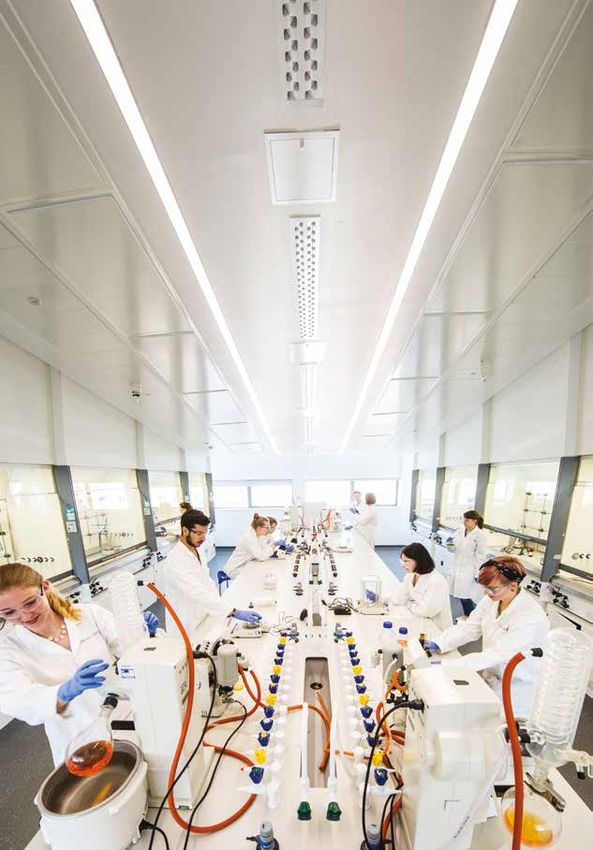
A home for
Equipped to achieve                                               Megan
                                                                  I knew Lancaster was the university
In October 2016, the newly refurbished                            for me when I first came on my Open
                                                                  Day, and I walked into the Chemistry

Chemistry Building was officially opened.                         Department, and it was so small and
                                                                  friendly, and all the lecturers knew
                                                                  exactly who I was.
                                                                  Before I came to Lancaster, I didn’t really
                                                                  know what the college system meant.
                                                                  But when I came here, it was a great way
                                                                  to make friends. It’s nice to have friends
                                                                  in your house, on your course and in your
                                                                  societies. I joined the snow sports society
                                                                  and the wind band because it was a great
                                                                  way to meet new people. In my spare time
This £20 million project provides the                             I enjoy being able to go cycling and really
very best in brand-new, custom designed                           explore what’s around Lancaster because
laboratories for both teaching and                                there are so many nice things.
research, together with instrument suites,                        I really enjoy all the lab time you have on
computer rooms, offices, and social spaces,                       the degree because it really helps your
                                                                  learning. A lot of the other universities
including: specialist synthetic, analytical                       I’d visited had done chemistry in an
and computational teaching labs, NMR,                             organic, inorganic and physical way, but
X-Ray diffraction, electron and atomic                            when I came here, the modules were
                                                                  more interchangeable, so you get a lot of
force microscopes, UV-Vis, IR and Raman
                                                                  variety in what you’re learning and it feels
Spectrometers, a Mass Spectrometry                                like a broader view of chemistry.
suite and the Nanoscribe microscale
                                                                  We’re also really lucky because the
3D printer.                                                       Chemistry Building is relatively new.
                                                                  We have our own areas to work in and
                                                                  everything’s in a nice central area. The
                                                                  labs are amazing!
                                                                  My favourite part of the course has been
                                                                  my third year research project. It’s been
                                                                  good to take something right from the
                                                                  start and follow it through, and do all the
                                                                  research, all the learning behind the theory,
                                                                  figuring out what’s going on, and planning
                                                                  experiments and having that control of the
                                                                  science that I’m doing.
                                                                  I’m not sure what I want to do after my
                                                                  degree yet. The Chemistry Department
                                                                  has been really helpful sending out lots of
                                                                  different job ideas and the careers service
                                                                  has been really helpful by looking over my
                                                                  CV and covering letters. When I do figure
                                                                  out what I want to do, I should be in the
                                                                  best possible position to get a job
                                                                  and succeed.

                                                                  Megan John
                                                                  BSc Hons Chemistry

8   For more information please visit lancaster.ac.uk/chemistry                                                   9
Osmium is the densest naturally
occurring element. A house brick
made of it would weigh roughly
as much as 56 basket balls – 32kg.
It’s elementary to a chemist!

Taught by the very best
To ensure that you have the best possible experience, our courses are taught by
experienced, highly qualified experts, many with international reputations.

       Modern chemistry skills                                            An integrated approach

Science in general, and chemistry in particular                    You will be taught chemistry as an integrated
is becoming increasingly multidisciplinary.                        subject, emphasising the practical and theoretical
We will therefore equip you with the knowledge                     skills that are important for a modern chemistry
and understanding of a broad range of science,                     graduate and which are highly valued by employers.
as well as advanced subject-specific skills,                       Our courses develop practical synthetic,
to meet this need.                                                 characterisation, measurement and analytical
                                                                   skills. They also involve data analysis, mathematical
Our teaching is research-led, and our curriculum
                                                                   and computational techniques, written and oral
explicitly developed to provide you with the
                                                                   presentations, report-writing, literature searching
skills that a modern chemistry graduate needs.
                                                                   and fundamental research.
As part of our commitment to teaching excellence,
we have developed our degrees in conjunction
with the Royal Society of Chemistry, and operate
a continual course development process in
response to student feedback.

10   For more information please visit lancaster.ac.uk/chemistry                                                           11
Supporting you every step of the way

After a disruptive time in your education, our small group tutorials and
seminars will support you throughout your studies. We have dedicated
careers advisors who are approachable and always on hand, and you will
receive individual supervision for your project work.
                                                                           A community for
                                                                           Benjamin
Supportive environment
We have small class sizes and excellent staff:student ratios to
support your teaching and learning.
                                                                           I came to one of the Applicant Visit Days, and           One thing that I’ve really enjoyed is the
Continuous feedback                                                        I was very impressed with how friendly the               opportunities for research. We’re given quite a
We continually provide you with academic feedback to further               Department was. It was my first impression               lot of independence. It’s quite exciting being at
develop your knowledge, skills and learning.                               of Lancaster, and it sold it to me. When you’re          the forefront of science and discovering new
                                                                           looking at different universities you’re also            things. I really enjoyed working with my supervisor,
Celebrating diversity                                                      comparing them on rankings, and Lancaster                and we were actually able to make an academic
As a Department we are all fully committed to the Athena SWAN              does score highly. You want to be able to say that       publication from what we researched.
charter, which challenges the underrepresentation and inequalities         you’ve been to a top class university.
                                                                                                                                    One of the best things about the Chemistry
of women within science in higher education and research. In early         In terms of applying what you learn, I think chemistry   Department at Lancaster is how small it is and
2016, we received an Athena SWAN Bronze Award, highlighting our            is one of the best subjects that you can study. It       this means that the staff to student ratio is really
commitment to promoting and celebrating inclusivity, diversity,            varies how much lab time we have but it could be up      good. You can speak with staff any time, and I’ve
and opportunity for all irrespective of gender or minority.                to fifteen hours a week. If you’re doing a project it    been really impressed with how eager they are to
We are also highly experienced in supporting students with various         could be up to 20/25 hours a week.                       help you. It’s a nice friendly atmosphere.
disabilities and work closely with the University’s Disability Service.    In my summer break, there are lots of opportunities      I’ve enjoyed living in Lancaster and have actually
                                                                           to advertise for internships and research. Last          been impressed with how much there is to do
Investing in your future
                                                                           summer I had the opportunity to do some research         here.
Our priority is to support every student to make the most of their         here and this year I’m hoping to get an internship at
life and education. As part of this, the University has committed          a company. I want to use the experience to decide        Benjamin Dale
£3.7 million in scholarships and bursaries to help with fees               what I want to do in the future, whether I’d like to     MChem Hons Chemistry
and living costs. Visit lancaster.ac.uk/ugfinance                          keep studying in academia, (doing a PhD), or if
                                                                           industry’s right for me.

12   For more information please visit lancaster.ac.uk/chemistry                                                                                                                           13
Vulcanised rubber tyres are effectively
one big molecule. Buses, cars and bikes
are rolling around the world on just
a few molecules.
At Lancaster University,
chemistry can take you far.

Flexible degree programmes
Chemistry is often referred to as the ‘central science’, as it interfaces with the
physical, environmental, and biological sciences. We have developed our degree
programmes to reflect the diversity of the discipline.

     Award: BSc Hons Chemistry
     UCAS Code: F100
     Duration: 3 years (full-time)

     Award: MChem Hons Chemistry
     UCAS Code: F101
     Duration: 4 years (full-time)

     Award: MChem Hons Chemistry (Study Abroad)
     UCAS Code: F1T7
     Duration: 4 years (full-time) including one year studying abroad

     You can view details of all our courses at
     lancaster.ac.uk/chemistry-courses

14      For more information please visit lancaster.ac.uk/chemistry                  15
Your global experience
As part of our MChem course, it is possible to spend a year studying
at a prestigious overseas university, studying your research project.
WORLDMAPDOTCS-green_42.qxp_Layout 1 18/06/2020 09:20 Page 1

Your studies abroad contribute directly to your degree.

 Possible destinations

 USA, Canada, Australia
 and New Zealand
 (Please note: study abroad
 destinations are subject to
 availability and are not guaranteed)
                                                                        A world for                                          at communicating because I’ve communicated
                                                                                                                             with all these different people and I’m flexible as

                                                                        Kate
                                                                                                                             I’ve had to adapt to a whole different country.
                                                                                                                             I also feel like you’re building your confidence
                                                                                                                             as well because you have to make new friends
                                                                                                                             really quickly, and make these connections. It
                                                                        I’d never really thought about Study Abroad until    also made me appreciate Lancaster more, as
                                                                        I came to the Open Day and it was mentioned at       I feel you are a bit spoiled because it’s such a
                                                                        the end of the speech. I looked into it a bit more   good department.
                                                                        and there was loads of support, so you’re not
                                                                        just getting thrown into this different country      In Kentucky, I did a computer-based project,
                                                                        and having to look after yourself.                   where I was simulating molecules that would
                                                                                                                             prevent the overcharging in batteries. It’s been
                                                                        We had the opportunity to go to Australia,           this project that’s made me realise that energy
                                                                        Canada and a couple of places in America and         storage is what I want to do.
                                                                        New Zealand. I went to Kentucky as the course
                                                                        there matched what I was doing here. It was          I visited Vancouver in my year away and could
                                                                        a really cool place and I feel I actually got to     see myself living there, so I’ve applied and been
                                                                        experience the real America.                         accepted for a PhD at Vancouver University.
                                                                                                                             All the PhDs I’ve applied for have real-world
                                                                        I got to do a project over there and work in         applications.
                                                                        an American research group. I also made
                                                                        connections as well; I still email my supervisor     Kate Fraser
                                                                        who supervised my project in Kentucky.               MChem Hons Chemistry (Study Abroad)
                                                                        Studying abroad has meant having more skills
                                                                        to add to my CV – I can now say that I’m good

16   For more information please visit lancaster.ac.uk/chemistry
                                       www.lancaster.ac.uk                                                                                                                         17
Degree specifics
                                                                                                                                  Modern
                                                                                                                               chemistry skills
First Year
Each of our single honours chemistry degrees share a common
first and second year. Here, the key concepts underpinning chemistry
are introduced, along with the supporting practical skills. The topics link
and interface with other disciplines and will be built upon in later years.

                                             The pandemic disruptions have meant that all of you will be in a similar
 Core Modules                                situation having missed sizeable amounts of laboratory practicals and
 + Atoms and Molecules
                                             having had to study in the majority of cases, independently. We have               An integrated
                                             therefore restructured our teaching modules across the board, particularly
 + Organic Structure                         in laboratory practicals, to ensure that you have all the skills that you need.
                                                                                                                                 approach
 + Organic Reactivity and                   You’ll study two thirds chemistry, together with one-third of a subject
   Mechanism                                 selected from a list of relevant topics.
 + Chemistry of the Elements                 The chemistry modules provide you with a broad introduction to
 + Coordination Chemistry                    degree-level chemistry, to ensure that you have the foundation
 + Skills for Chemists                       knowledge you will need to study more advanced topics in later
                                             years of the degree, irrespective of your pre-Lancaster background.
 + Spectroscopy and                         Each module consists of lectures, practical classes and seminars,
   Analytical Chemistry                      workshops and tutorials.
 + Thermodynamics of
   Chemical Processes                        You will develop maths and computational skills as well as theoretical
                                             and practical knowledge of synthetic, physical and analytical chemistry.
 + Chemical Reaction Kinetics
 + Physical Foundations                     Teaching in first year takes place for 2½ terms, with examinations
   of Chemistry                              following. The year is 50% exam and 50% coursework.

                                               Time     Monday      Tuesday       Wednesday     Thursday      Friday

 Free Learning Resource Pack                   9.00                               CHEM110       CHEM100
 provides the key materials to                                                    Lecture       Seminar
 support your studies:                         10.00    Biol100     CHEM110                                   CHEM100
                                                        Lecture     Lecture                                   Lecture
 + Lab coat
                                               11.00                Biol100                     CHEM110
 + Eye protection                                                   Lecture                     Lecture
 + All glassware and
                                               12.00    CHEM100                   Biol100                     CHEM110
   lab equipment
                                                        Lecture                   Lecture                     Seminar
 + Lab books
                                               13.00                                            CHEM100
 + Online core course                                                                           Lecture
   text books
                                               14.00    CHEM100     Biol100                     CHEM110
                                                        Lab Class   Lab Class                   Lab Class

                                               15.00    CHEM100     Biol100                     CHEM110
                                                        Lab Class   Lab Class                   Lab Class

                                               16.00    CHEM100     Biol100                     CHEM110
                                                        Lab Class   Lab Class                   Lab Class

                                               17.00    CHEM100     Biol100                     CHEM110
                                                        Lab Class   Lab Class                   Lab Class

                                             Timetables: Timetables are normally available one month before
                                             registration. Although we make every effort to make the timetabling as
                                             student-friendly as possible, scheduled teaching can take place on any
                                             day of the week.

18   For more information please visit lancaster.ac.uk/chemistry                                                                             19
Modern research- Low staff:student ratio
informed teaching
and curriculum
Final year projects
Inclusive and supportive working as part of
learning and working our world-leading
environment research groups
Second Year Third and Fourth Years
The second year of our Chemistry degrees builds upon the strong The final years of our degree programmes allow an element of specialisation,
foundations of the first year, where we introduce a range of new topics, and provide the opportunity for all students to undertake independent research
and go into greater depth with more familiar topics. projects in conjunction with one of our world-leading research groups.
The structure of second year is based around studying three chemistry Third Year Fourth Year
Core Modules
modules at any one time, for the first two terms. All of our chemistry In the third year of our BSc
modules have been designed to encourage the development of Core Modules Core Modules degree, you will take a one-
+ Chemistry of π-systems
problem solving, communication, practical, research and technical term research project, together
+ Strategies for Chemical skills. We also offer a transferrable skills and employability module, + Advanced Synthetic + Independent Research
with a series of taught modules
Synthesis which seeks to provide you with explicit practice in many of these Chemistry Project
that further develop chemistry
+ Molecular Structure skills in a broader context. + f-block Chemistry and knowledge and skills in more
Optional Modules
Determination Metals in Biology advanced areas.
As in the first year, associated with each module are lectures, practical
+ Organometallics, Catalysis classes (synthetic, physical, or computational), and a combination of + Investigation of Chemical + Solar Energy Conversion
For our MChem students, you
and Mechanism seminars, tutorials and workshops. Mechanisms and Storage
will spend that time beginning to
+ Inorganic Chemistry + Advanced Quantum specialise in an area of advanced
Modules in second year build upon the foundations of first year; + Biological Chemistry and
+ The Physical Principles Chemical Biology Chemistry chemistry, whilst honing the skills
more advanced synthetic chemistry is introduced, including topics
of Spectroscopy you need for undertaking a more
dealing with rationalising the reactivity and mechanism of organic + Organic Photochemistry
+ Core Computational in-depth research project in your
+ Thermodynamics and and inorganic molecules.
Chemistry + Self-organising Soft final year.
Statistical Mechanics
Familiar characterisation techniques such as NMR, IR, and mass Nanomaterials
+ Electrochemistry + Advanced Spectroscopy The final year of the MChem
spectrometry are built upon, and new techniques such as X-ray
and its Applications + Supramolecular Chemistry degree involves a two-term
+ Solids and Soft Matter diffractometry and UV/vis spectroscopy are introduced, both from
research project, together
+ Quantum Chemistry, a practical point-of-view, and from the theoretical side. + Advanced Kinetics, Reaction + Transition Metal Structure with a choice between a number
Symmetry and Group Theory Dynamics and Surfaces and Application to Catalysis of optional advanced taught
Phases of matter (including those associated with liquid crystals) and
influences on bulk behaviour are discussed, and characterised using Optional Modules Masters-level modules.
+ Advanced NMR: Proteins,
Please note: This list may change thermodynamic techniques, spectroscopy and electrochemistry.
Solids and Imaging Practical work still forms a
slightly subject to a curriculum review. + Advanced Techniques for significant part of these years.
The underlying origin of all of these effects is introduced by
Analytical Separations + Stereoselective Synthesis
means of quantum chemistry, which allows us to understand the However, rather than individual
and Catalysis
fundamental properties and interactions of atoms and molecules + The Chemistry of practical sessions which advance
at a molecular level. Biomedical Imaging + Advanced Materials skills and techniques of previous
Chemistry years, the practical work takes
Again, the year is approximately 50% exam and 50% coursework, + Investigating Mechanism a more combined and integrated
although details of each individual module vary. in Sustainable Polymer Please note: This list may change approach, where many of the
Synthesis slightly as it is subject to academics skills connect and integrate
and their research. in longer-term practicals
+ Elucidating the Properties
and projects.
and Interactions of Molecules
Please note: This list may change
20 For more information please visit lancaster.ac.uk/chemistry 21
slightly subject to a curriculum review.Exciting research projects
Spoilt for choice
In the final year of your degree, you will have for Emily
the opportunity to undertake a piece of original
research. We offer a broad range of projects I loved the feel of the University
when I first visited as it seemed to
across all our research areas. be like a small, friendly community.
The consistent high rankings across
university league tables were also really
appealing as well!
Everyone I spoke to was really friendly,
and made me feel excited at the prospect
of studying here. Although Lancaster is a
small city, there is still so much to do here.
The research projects form a major part
of your studies. They provide the Over the course of my degree, I have
spent extensive time in both synthetic
opportunity to work more independently, and physical chemistry laboratories,
but under the guidance and supervision developing my analytical and problem
of our expert academic staff, who have solving skills. The degree has provided
opportunities to also improve my
extensive experience in chemistry research. teamwork, communication and
For the BSc, the research project contributes independent thinking skills.
25% of your final year. For the MChem, the research There is a vast range of research being
project contributes 50% of your final year. conducted here at Lancaster across
the different areas of chemistry. When it
Project details came to choosing my Master’s research
Each project consists of: project, I was spoilt for choice! My
+ A n initial literature investigation, which places research project was on ‘Investigating
the proposed research into the broader picture the impact of monomer sequence on
of existing research and provides context and biodegradable copolymers’. It involved
details of the research challenge and goals combining different polymers in an
attempt to synthesise biodegradable
+ A ppropriate training in the specialist advanced polyesters that have desirable properties
techniques relevant to that project, as well as so they can be used in a variety of
building on the knowledge developed during the industries - including pharmaceuticals,
rest of the degree. These techniques are then biomedicine and packaging.
put into use, tackling a problem in contemporary
chemistry research over the course of one term My supervisor has provided me with
(BSc) or two terms (MChem) so much support. As my project links
so closely to projects she is currently
+ A concluding project report where you will detail researching, it is clear she has a really
the project, the experiments you have conducted, keen interest in the results I have got, and
results and discussion, what conclusions can be how to progress the project even further.
drawn from the study and what still needs to I loved doing my project, as it combined
be done many different areas of chemistry -
The final year research projects provide an including coordination chemistry, polymer
opportunity to discover whether a future career in chemistry and analytical chemistry. Emily Hindley
research is for you. They also build confidence and I am currently considering pursuing a PhD MChem Hons Chemistry
develop many transferable skills including written here at Lancaster University. Everyone
and oral presentation skills, critical thinking and at Lancaster is extremely friendly and
data-analysis, amongst many others. makes the idea of completing my PhD
here even more exciting.
22 For more information please visit lancaster.ac.uk/chemistry 23Local chemist, John Dalton, developed
the first atomic theory which laid the
foundations of modern chemistry.
See how modern-day techniques,
combined with innovative equipment
like our £1.2 million 700 MHz wide-bore
solid state NMR spectrometer,
can produce world-changing results.
World-leading departmental research
We are ranked 10th in the UK for the quality of our current research in the
2014 Research Excellence Framework (REF2014). Our modern approach
seeks to address the major challenges we face as a global community.
We are developing research
programmes that cross the
standard discipline boundaries,
and indeed the interfaces with
the other natural sciences and
that engage with government
and industry.
Significant investment from both
the University and the European Our research is structured
Regional Development Fund into around some core themes The research itself seeks
custom-designed facilities and to address many major
equipment enables us to tackle + Synthetic Chemistry challenges, relating to:
major research challenges.
+ A nalytical Chemistry
This will provide you with the + Healthcare
and Spectroscopy
opportunity to use an extensive
+ Chemical Theory and + Energy
array of modern analytical and
characterisation techniques. Computation + Materials
+ Biological Chemistry + The environment
24 For more information please visit lancaster.ac.uk/chemistry 25Hello future
Chemistry graduates are in high demand due to
the many transferable skills that are developed
in a chemistry degree.
Some examples of graduate careers are:
+ A ll areas of chemical industry, ranging from multinational oil, chemical
and pharmaceutical companies, to a host of smaller enterprises
producing new and specialised products
+ Energy providers
+ Public health and environmental protection
A career for
+ Research in universities, government institutions,
industry and private agencies
Sapphire
+ Teaching I really enjoyed my chemistry degree at Lancaster.
+ Patent agencies The support from all the staff members was really
amazing. There was a really good staff to student
+ Scientific journalism ratio in lectures as well as seminars/workshops
+ Forensic science which meant you got to know both staff and
other students very well, leading to a welcoming
+ Postgraduate medicine
learning environment.
Graduates can also seek employment in a wide range of non-chemistry The Department has During my degree I did an internship in the
related industries, in business, commerce, finance, banking or the
Civil Service. a dedicated lecturer Chemistry Department. This helped me make
faster progress with my fourth year project as
responsible for I was already familiar with the software I used
We offer careers advice and guidance throughout your time here
and beyond, as all Lancaster graduates have lifetime access to our careers support and it helped me gain a PhD place here in the
careers service. Department.
I decided to stay at Lancaster because it was a
unique opportunity to pursue research in actinide
chemistry through computational modelling.
In my PhD research, I’m working with an academic
who is looking at nuclear chemistry. I’m enjoying
the research as it has applications in the wider
world, particularly in the nuclear industry. If we
can understand the fundamental chemistry with
respect to bonding in uranium, then we can use
this knowledge as a solution to clean up nuclear
waste. After my PhD I hope to continue my
research as a post-doctoral researcher in this
field of work.
If you’re looking for research excellence and a
friendly, safe and beautiful place to both live and
study, then Lancaster University is for you!
Sapphire McNeil completed her MChem
Hons with a 1st class and is now studying
a PhD in Computational Chemistry at
Lancaster University
26 For more information please visit lancaster.ac.uk/chemistry 27Graphene is 200 times stronger than
steel, but light, flexible and transparent
– one of a range of new materials
offering innovative applications
across transport, medicine, energy,
the environment and technology.
Discover how new materials are
changing the world outside the lab.
Learning from industry
We are host to an £11 million North West centre for chemical
industry engagement, funded by the European Regional
Development Fund to support the chemical industry and
build links between academia and enterprise.
This unique centre provides the opportunity for Internships
graduate and postgraduate level industrial research
projects through a range of support options for
industry, from short-term feasibility studies and An internship will give you the opportunity to apply
materials characterisation, to developing longer- your academic knowledge in real-world situations
term collaborative programmes. whilst helping you to develop your transferable
skills. In collaboration with the University we offer
The Collaborative Technology Access Programme
competitive internships to our students in regional
(cTAP), provides industry with an opportunity to
industries across the North West and beyond.
access our equipment and expertise.
We have a growing portfolio of industrial
partnership clients.
28 For more information please visit lancaster.ac.uk/chemistry 29Entry Making the right Experience Lancaster
requirements decision Lancaster University is a diverse, varied,
exciting, vibrant and close-knit community;
Admissions you couldn’t ask for a better student experience.
All applications to study on our degree programmes
must be completed through UCAS, the UK
Universities and Colleges Admissions Service Take a virtual tour at lancaster.ac.uk/virtual-open-day
(see ucas.com for more details). Keep up-to-date with all the news on
Personal Statement
We understand that the pandemic has changed
everyone’s life. You therefore won’t be Lancaster University is situated in a 560 acre picturesque
disadvantaged if you cannot include extracurricular parkland campus, just three miles from the centre of
activities in your personal statement. Lancaster. It offers the very best of city, countryside
and coast.
On campus you will find everything you need from shops,
Choosing a Degree Programme library, student learning zone, theatre, £20 million sports
Due to the Covid-19 disruptions, we will be as
flexible as possible with A level grades. BSc or MChem centre, supermarkets, banks, travel agent, pharmacy,
If you are uncertain whether you want to study for dentist, medical centre, hairdressing salon to a variety
A Levels three or four years, bear in mind it is possible to of restaurants, bars, cafes and lots, lots more.
BSc Hons Chemistry: switch between the BSc and MChem at any point Lancaster is one of a small number of leading UK
during your first two years of study at Lancaster. universities to operate a college structure. All students
Our typical offer is ABB.
However, this is subject to internal progression join one of our eight undergraduate colleges – Bowland,
MChem Hons Chemistry and MChem Hons requirements; you must obtain an upper second Cartmel, County, Furness, Fylde, Grizedale, Lonsdale
Chemistry (Study Abroad): class mark overall in your studies to be allowed to and Pendle.
Our typical offer is ABB. remain on the MChem.
A level Chemistry is required for all of our
courses. We also typically ask for an A level Study Abroad
in a second science (preferably biology, It is also possible to switch on to this course once
mathematics or physics). The third A level you have started at Lancaster. Again, this course is
can be in any subject. subject to higher internal progression requirements
than our other degrees. You are free to switch to a
We also require a pass in the chemistry
Lancaster-based degree at any time.
practical endorsement.
Other qualifications Help from a Chemistry Unibuddy Ambassador
Details of our standard offers for non-A level routes We recognise that this can be a stressful time,
can be found at lancaster.ac.uk/chemistry-courses especially when you will have so many questions
about universities and their departments. To help
you make an informed decision, we have a number
of current chemistry students who have volunteered
Additional requirements
to be available to answer any questions you might
We require at least a grade B or 6 in GCSE Maths have about life and study at Lancaster, through the
and a grade C or 4 in English Language. University’s online unibuddy platform. All you have to
Many chemistry students are surprised by the do is visit lancaster.ac.uk/study/chat and choose a
maths content of degree-level chemistry. To prepare chemistry unibuddy ambassador to chat to.
our students for this, all our programmes include
introductory mathematics courses to cover this It’s your chance to ask one of our current students
material. We therefore do not require A level Maths what life here is really like!
(or equivalent), although it is useful if you have
studied maths to that level.
30 For more information please visit lancaster.ac.uk/chemistry 31Getting to know the Department Having the opportunity to get to know each other is very important to us. Offer Holder Events Due to the pandemic, we will be offering a hybrid mix of events subject to current Covid-19 government advice. We will invite you to one of our offer holder events, if you are offered a place on one of our degrees. Attendance is not compulsory, but we highly recommend you attend. On-campus events The structure of these events provides the opportunity for you to find out more about us and what it’s like to live and study here. You will receive a presentation detailing the degree programmes and a tour of the Department and the University. You will also have the opportunity to meet with some of our current academics and students and take part in a practical chemistry session in one of our teaching labs. Digital events If you are unable to visit us, we will also be providing digital events.These events provide similar opportunities to the on-campus events, but presentations and chat will be delivered live digitally. There will also be a live tour of the Department. More information on Covid-19 can be found here lancaster.ac.uk/coronavirus 32 For more information please visit lancaster.ac.uk/chemistry 33
Get in touch                                                                                                                       We are easy to reach!
We are passionate about our subject and are                                                                                        By road
                                                                                                                                   From the north or south, leave
                                                                                                                                                                     By rail
                                                                                                                                                                     There are direct rail links
                                                                                                                                                                                                      By coach and bus
                                                                                                                                                                                                      Lancaster city is on the national
always happy to answer any questions about                                                                                         the M6 motorway at Junction 33
                                                                                                                                   and take the A6 north towards
                                                                                                                                                                     between Lancaster and many
                                                                                                                                                                     of the UK’s major cities and
                                                                                                                                                                                                      coach network; National
                                                                                                                                                                                                      Express coaches call at the
our degrees and the application process.                                                                                           Lancaster for about 2 miles.
                                                                                                                                   The University is on the right.
                                                                                                                                                                     airports. The single journey
                                                                                                                                                                     between London and Lancaster
                                                                                                                                                                                                      University. A number of local
                                                                                                                                                                                                      buses run from Lancaster bus
                                                                                                                                   For SatNav use LA1 4YW.           takes between 2.5 and 3 hours.   station to the University every
                                                                                                                                                                                                      5 minutes on weekdays.
                                                                                                                                                                     Buses and taxis are available
Website information                                                                                                                                                  from just outside the station.
For more information about our degrees
and the Department please visit                                                                                                    Further details can be found at
lancaster.ac.uk/chemistry                                                                                                          lancaster.ac.uk/travel

Get in touch
If you have any further questions then please don’t hesitate to contact the Department.
T: +44 (0) 7966 176094
E: chemistry@lancaster.ac.uk

We look forward to hearing from you.

Disclaimer
The information in this brochure relates primarily to 2022/2023 entry to the University and every effort has been taken to
ensure the information is correct at the time of printing in June 2021. The University will use all reasonable effort to deliver
the course as described but the University reserves the right to make changes after going to print. You are advised to
consult our website at lancaster.ac.uk/study for up-to-date information before you submit your application. Please see
lancaster.ac.uk/compliance/legalnotice for further information.

34    For more information please visit lancaster.ac.uk/chemistry                                                                                                                                                                    35
Department of Chemistry
Chemistry Building, Lancaster University, Lancaster,
LA1 4YB United Kingdom
E: chemistry@lancaster.ac.uk
lancaster.ac.uk/chemistry
twitter.com/LancUniChem
facebook.com/LancasterUniChemistry
lancaster.ac.uk/chemistry
This brochure was created using vegetable-based inks, balanced 118kg of carbon,
and helped to protect 83m2 of landYou can also read


