Choosing Your CSA Farm Share - Community Supported Agriculture in Ann Arbor - Kim Bayer
←
→
Page content transcription
If your browser does not render page correctly, please read the page content below
Choosing Your CSA
   Farm Share
Community Supported Agriculture in
           Ann Arbor

                  Kim Bayer

         http://thefarmersmarketer.com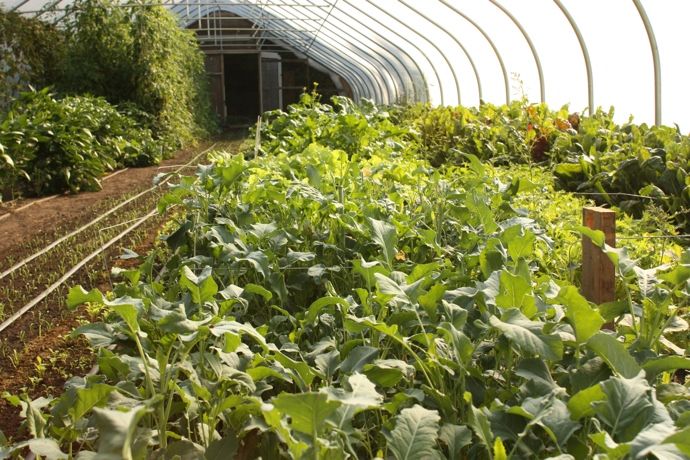
Choosing Your CSA Farm                                Over the past few years there has been an
                                                      amazing proliferation in the number and kinds of

Share: Seven Selection                                CSA farm shares!that are available to the good
                                                      people of fair Ann Arbor and environs (going way

Criteria (and an additional                           beyond just produce too). !In fact, there are more
                                                      than a dozen CSAs in our area from which to

consideration)                                        choose and a variety of models for participation
                                                      including: subscription, shareholder, and
                                                      shopper's choice. !

                                                      There are many produce CSAs, with their weekly
                                                      boxes of gorgeous, fresh, seasonal foods
                                                      throughout the summer, but there are also some
                                                      wonderful, innovative CSAs incorporating more
                                                      than just vegetables. For example, the Harvest
                                                      Kitchen (formerly Community Farm Kitchen) with
                                                      its prepared foods CSA, along with CSAs offering
                                                      meat (Old Pine Farm), locally grown frozen fruits
                                                      and vegetables (Locavorious), winter hoophouse
                                                      greens (Brines Farm), and even medicinal herbs
                                                      (Herbs of Light). !It's getting to be like CSA
                                                      heaven around here! !

Calling all food patriots: "Oh, Say Can You CSA”      If you want a weekly box of locally grown
might be the new national anthem for what’s           produce this summer, the end of winter is the
being called the Good Food Revolution. For            time to figure out which CSA best matches your
people who want to eat food that is good for          needs and then get your application submitted
them and good for the planet, the most direct         post haste. CSAs fill up around here! !Some
route is to get your food directly from a farmer      criteria to consider when making the choice for
you know and trust.                                   your produce CSA include: !

In case you haven't heard of it before,               • Type of CSA organization: Most typical is the
Community Supported Agriculture or a (CSA)              Subscription model (pay upfront, get a weekly
farm share is!generally a weekly allotment, or          box of vegetables chosen and packed for you).
share, of vegetables in season (usually May-            But there is at least one Shareholder farm (like
October) from a local farm, for which you pay in        the Subscription model, but greater
advance. !At a practical level, you’re giving a         involvement in decision making and farm
farmer a vote of confidence and some security           process) and at least one Shopper's Choice
with startup capital. In return, you get a discount     (pay upfront, choose weekly which produce
on your produce. Together you share the risks           you want) out there as well.
and rewards of the season.
                                                      • Growing Practice:!The main differentiators in
Once you’ve signed on to your farm membership,          growing practice are those based on:
what you can usually expect is to have a certain        Conventional Agriculture; Certified Organic; or
day each week (which you will know in advance)          Biodynamic/Organic Practice (for farms not
where you’ll go pick up a box of fresh, seasonal        certified organic, but either in transition to
produce. For example, many of our local CSAs            organic certification or in philosophical
bring their members’ shares to the Ann Arbor            alignment with the tenets of organic agriculture
Farmers Market on Saturdays. You just need to           and beyond organic). Unless a farm is certified
remember to get there before the farmer packs           organic and says so, you'll want to ask about
up and goes home! Most of the CSAs will give            this and investigate for yourself. !
you (or email you) a newsletter to let you know
what’s in the box, and may include recipes and        • What size share: Most CSAs offer a share that
upcoming events.                                        feeds a family of 2 adults and 2 children for a

                                             2
                               http://thefarmersmarketer.com
week as the standard. Some options you’ll see       Consider whether you’re interested in farm visits
  include: whole, half, family, individual, senior,   and special events: !Many CSAs have
  standard, large, every other week, etc.             opportunities to visit the farm on member work
  Generally you have to ask about this. Consider      days, or have cooking classes, farm tours,
  getting contact information for someone who         potluck dinners, music festivals, kids' day camps,
  has previously been a member to check on            etc. Most farms are very happy to have members
  quantity and quality of the food. If it’s too       volunteer their time in any capacity - they all need
  much food, you can always split your share          extra hands and help. !Visiting the farm,
  with friends or neighbors too - they will enjoy     especially if you have kids, is a great way to see
  the benefits.!                                      with your own eyes where your food comes from
                                                      and what goes into making it happen. !Many
• What season/how many weeks:!Most                    farms welcome visits and connections with open
  produce CSAs seem to have a 20 week season          arms. One farmer says of members stopping
  that lasts from June through October. Some          by:!"we get a lot of benefit from a social
  offer full season and half season shares. In my     standpoint because we get to see people, and
  research it seems the season for local CSAs         they get a lot of benefit because they get to
  may be anywhere from 10-26 weeks.! And              connect with the land. We’ve got small children
  several are now also offering extended season       and we get a lot of joy from having people visit.”
  shares into the winter and spring.
                                                      In Conclusion I've talked to a lot of CSA farmers
• Price per week:!When comparing cost and             lately. Most seem to be doing well, expanding
  value among CSA shares, it's helpful to look at     their memberships and their farms. Next year
  the price per week. This number gives a more        we'll have even more choices, as a few new
  accurate basis for decision making, since the       farms are planning to break ground this year.!
  overall cost and number of weeks is so variable
  among different CSAs. Most CSA shares cost          I heard again and again how seriously farmers
  in the range of $20-$40 per week. One               take the responsibility of providing the highest
  advantage of splitting a share with neighbors or    quality produce every week; of the creativity,
  friends - it costs half as much. !We pay $15 per    planning, skill, and flat out labor that goes into
  week for our half of a split share of just-picked   those CSA boxes. !We are very fortunate to have
  organic vegetables that are of a quality that we    so much talent and good food so close to us.
  could not buy in any store. I can't think of
  anything that's a better value for us.!             Even with some of the richest land in the state,
                                                      Washtenaw County spends less than 1% of its
• Does the farm specialize in something?!Do           estimated $1 billion food budget on food that is
  they grow exotic salad and multi-ethnic greens,     grown in Washtenaw
  or mostly standard "meat and potato"                County by local farmers. !
  produce? Some CSAs are very greens-                 By becoming a CSA farm
  intensive, some consciously plant very few          member, we can do
  greens, some let you choose all your own            something very directly to
  produce. !Check for your preference.!               change that. And eat the
                                                      freshest, most delicious
• Pickup time and location:!Many (but not all)        food too. Becoming a
  CSA farms offer pickup at the Ann Arbor             CSA member is
  Farmers Market on Wednesday or Saturday             transformative in many
  and also!offer pickup at the farm on specific       dimensions.
  days. !Cost is often less for farm pickup. !Your
  week will revolve around this pickup time, so       Prepare to take your tastebuds on a walk. And to
  choose one that gives you time to put all those     open your eyes to the landscapes of beautiful
  vegetables away.! You will also want to ask         farms brought to life through the care of some of
  what the policy is if you cannot make a pickup      the most hard working people you’ll ever meet.
  time - in general you are responsible for making    Remember to give warm thanks to the person
  any alternate arrangements if you can’t pick up.    growing the food for your table - now that you
                                                      know your farmer.

                                             3
                               http://thefarmersmarketer.com
Brines Farm (winter                                     spinach, kale, komatsuna, claytonia, mustard
                                                        greens, and collards) to the winter market for the

greens CSA)                                             past three years. And in 2009 with three
                                                        hoophouses in production, he started the area’s
Owner: Shannon Brines, Dexter, MI                       first winter greens CSA membership. His target
Phone: 734‐913‐8058                                     has been to provide three pounds of greens every
Email: shannon@brines.org                               week, for 23 weeks, to his CSA members. And
Season: November-April, 23 weeks                        shares also include a few baby root vegetables -
Pick-up: Saturday Ann Arbor Farmers Market              like tiny sweet carrots and white Hakurei turnips.
Cost: $575
Cost per week: $25/week                                 The greens, mostly from the cold-hardy Brassica
Growing practice: Organic practice                      family, are intended to supplement the winter diet
Website: http://www.brines.org                          of a family of four. It helps that these are
                                                        vegetables that taste their sweetest and best
After spending the day on GIS mapping and               during the coldest weather. Members have told
spatial analysis in a full-time University of           Brines things like “Even though I was not looking
Michigan job, thirty-something Shannon Brines is        forward to winter, somehow having fresh greens
a hoophouse farmer. In fact, Brines has three of        makes it more manageable” and “Having greens
these 30’x96’ passive solar greenhouse                  like komatsuna has given me a reason to look up
structures in production on the piece of land           all the funny names of things I hadn’t heard of
where he grew up outside of Dexter, and where           before.”
his parents still live. Brines says he doesn’t use
the usual term, “season extension,” for the winter     Brines categorizes each type of green as either a
season food growing in which he specializes.           “salad” or “stir-fry” vegetable, depending on
Instead he                                                                                   whether it
prefers Eliot                                                                                 tastes best
                                                                                              raw or
Coleman’s                                            Brines Farm Hoophouse                    cooked.
term “four
season                                                                                        Each week
harvest.”                                                                                     he updates
Coleman’s                                                                                     his website
nationally                                                                                    with the
recognized                                                                                    names and
work in                                                                                       photos of
Harborside,                                                                                   the greens
Maine and                                                                                     harvested
Shannon                                                                                       for the
Brines’                                                                                       week.
pioneering
                                                                                                  The cold
work in
                                                                                                  hardy
Dexter,
                                                                                                  greens can
Michigan
                                                                                                  make it
are clear
                                                                                                  through
indicators
                                                                                                  everything
that it is
                                                                                                  except
indeed
                                                                                                  weeks of no-
possible to eat from our own northern climate
                                                        sun, below-zero temperatures. Brines says of all
foodsheds even in the coldest months.
                                                        the plants that give no quarter and never give up
Although Brines grows produce for market in the         “spinach and claytonia seem to be the winter
spring and summer months as well, he considers          warriors,” but “it’s been a rough lettuce year.”
the back side of the year his special niche.            Even in the coldest months, Brines has had a
Giving armloads of joy to winter farmers market         nice diversity, with at least five different kinds of
shoppers, he’s been bringing fresh greens (like         greens each week.

                                            4
                              http://thefarmersmarketer.com
That diversity is important to him, in part for the   approachable way to save the world. It has been
sake of good eating but also for the sake of good     a way for me to see the fruits of my labor and to
farming. Using all organic methods, he rotates        make it so other people can see what’s possible
his beds, practices companion plantings when he       too.”
can (though he says more research is needed on
the special requirements of hoophouse growing),       Eating your greens - a way to feel more virtuous,
and works to increase the numbers of beneficial       more likely to see your 90th birthday, more
insects, like ladybugs and certain wasps.             connected to your local foodshed, and more like
Because, as he says “if you’ve got a ton of           you can save the world. All in one package. Turns
brassicas all in one place, you’d better believe      out Popeye was onto something.
the cabbage worms are going to find it.”

He says that diversity outside the hoophouse is       Capella Farm
just as important, and that hoophouses are just       Owners: Jennifer and Dave Kangas, Ann Arbor,
part of the answer for “full-scale vibrant            MI
nutritiousness year round.” He wonders “why not       Phone: 734-761-3554
capitalize on the awesome Michigan growing            Email: capellafarm@gmail.com
season and learn how to store the best of the         Season: May-October, plus a large Thanksgiving
seasons in your root cellar - that’s the most and     share (which has about 2-3 weeks worth of
best use of the calories. Canning and preserving,     produce) in November is included, about 22
making your own slaw and sauerkraut - adding all      weeks.
those elements are just as important as adding        Pick-up: Wednesday and Saturday at Capella
hoophouses to the landscape.”                         Farm on Scio Church Rd.
                                                      Cost: $650, with 15 hours of work for the season.
He notes that people have been using those old        Or, $750 and no work requirement.
time food preservation techniques for hundreds        Cost per week: $29 (with work hours), $34
and thousands of years in the winter gardens of       (without work hours).
Europe and in Native American agriculture.            Growing practice: Organic practice
Brines is a special fan of              heirloom      Website: http://www.capellafarm.com/
seeds, because “they were
developed over hundreds                                        “Regarding the member work hours, we’re
of years to be cold hardy.                                               mostly doing it so our members
The ones that we still                                                               will connect and
have are the ones that                                                                   understand what
worked.”                                                                                 goes into making
                                                                                        the food happen,
In addition to the full-                                                               why there’s bugs,
time University job and                                                                why there’s holes,”
the full-time farm,                                                                   says Capella Farm
Brines is also one of                                                                owner and farmer
the principle leaders                                                               Jennifer Kangas. “The
in sustainability and                                                              biggest thing that
the good food                                                                      we’re trying to do is
movement locally,                                                                 build a community of
working with Slow                                                                neighbors (though some
Food Huron Valley, the                                                          members are from as far
HomeGrown Festival, Transition and                                             away as Northville and
O2Michigan. He often appears to be a bit low on                               Canton) so that we can
sleep. What’s the motivation for so much              support                each other and respect the
involvement? He says “A lot of the world’s issues     land and understand where our food is coming
seem so overwhelming and so polarizing. But           from. One thing I’d like people to understand is
they don’t have to be. We’re either moving more       that if they want food to look a certain way, there
in that direction or we’re creating a healthy local   are going to be detrimental effects on the
economy. The food system is a more                    environment. If people can learn how to use

                                             5
                               http://thefarmersmarketer.com
produce that doesn’t look the way they normally      In addition to the 20 weeks of regular CSA
see it, that will go a long way. When we do work     produce, a Capella Farm membership includes a
days, maybe 2-3 a month, we get a lot of benefit     large Thanksgiving share with fresh, leafy greens
from a social standpoint because we get to see       and storage vegetables like pumpkins, brussels
people, and they get a lot of benefit because they   sprouts, potatoes and dried peppers.
get to connect with the land. We’ve got small
children and we get a lot of joy from having         Kangas says they’re considering building some
people visit.”                                       benches near the herb garden for possible “drop-
                                                     in” days, where anyone (not just members) can
Kangas left a career in banking to run Capella       come by to visit or just sit in a beautiful spot and
Farm, a small, diversified farm west of Ann Arbor,   commune with the flowers and the bees. She
with her husband. She says in addition to the        also wants to do some events like a spicy pepper
CSA, “we sell eggs for $4 a dozen, and the           party in the fall, and says they’ll have a
chickens are fed locally grown grain, and we also    sauerkraut-making party if they get enough
sell a limited number of New Holland White           cabbage.
heritage turkeys, and Boer meat goats.” They
focus on ethical eating and see animals as
important to the sustainability of the farm. She     Carpenter’s Greenhouse
says “we believe the natural cycle is that plants
need animals and animals need plants. The farm       and Organic Produce
will be self-sufficient if we can live within our    Owner: Dwight Carpenter, Allen, MI
natural network, and use manure to feed plants       Phone: 517-320-9619
and use the plants to feed the animals.”             Email: ddcarpenter7@yahoo.com
                                                     Season: Mid May-mid October, 20 weeks
Kangas says that although 2009 was their first       Pick-up: Wednesday and Saturday at Ann Arbor
year, “next year, we’re expanding. 80% of our        Farmers Market; Thursday at Northville Farmers
members from last year renewed. We are looking       Market; Saturday at Farmington Farmers Market.
into becoming Certified Organic. We’re putting up    Monday at Carpenter’s Greenhouse in Allen, MI.
a hoophouse in the spring - to extend the season     Cost: Full share $340; Half-share $170
and get all the seedlings going outside instead of   Cost per week: $17/week
in my house. I want to get the onions and            Growing practice: Certified organic
tomatoes in the ground earlier. We’ll have           Website: search on localharvest.org
vegetables earlier next year, and more variety
throughout the year.”                                Carpenter’s CSA program is a little bit different
                                                     from the “subscription” or “shareholder” models
                                                                         of most CSAs; the
                                                                         Carpenter’s CSA is more like
                                                                         “shoppers choice.” When
                                                                         you sign up, they make out a
                                                                         punchcard with your name
                                                                         and 20 weeks on it. You
                                                                         bring the card each week
                                                                         and if you have a full share,
                                                                         you pick out $20 worth of
                                                                         produce from whatever they
                                                                         have that week and that’s
                                                                         your share. If you want only
                                                                         strawberries for the week,
                                                                         you can get it. And if you
                                                                         want more produce for the
                                                                         week, you get a 15%
                                                                         discount on anything else
                                                                         over the $20 share. In
                                                                         addition, you can pick up on

                                            6
                              http://thefarmersmarketer.com
a different day whenever you want at any of the
markets where they set up. If you go on vacation      Community Farm of Ann
you don’t lose out, you can just get your card
punched later on. And, after your 20 weeks of         Arbor
CSA are finished, you still get the 15% member        Farmers: Anne Elder and Paul Bantle, Chelsea,
discount.                                             MI
                                                      Phone: 734-433-0261
Dwight Carpenter says “people absolutely love it.     Email: N/A
A lot of people don’t like greens or don’t use        Season: May-November, about 26 weeks
onions. This way they get just what they want.        Pick-up: Wednesday or Saturday at the farm
The reason it works so well for us is because we      Cost: Sliding scale: $700-$1800 (target average
have 17 acres outside that we garden and then         $1175)
the 1/2 acre in the greenhouse. So we have lots       Cost per week: $27-$69/week
and lots of stuff. I tell people to come in the       Growing practice: Biodynamic/Demeter
morning before 11am, because I sell out. But if       Certified
they call ahead, we’ll put things aside for them.”    Work requirement: 15 hours per season (or
                                                      additional $125)
The tomato blight during the summer of 2009
                                                      Website: http://www.communityfarmofaa.org
was heartbreaking to most farmers, but
                                                      Plus: Honey, flowers, herbs, straw
Carpenter says it turned out to be an
exceptionally good year for them. Their tomatoes      “Tending the earth and knowing that it’s getting
were protected in their greenhouse. And next          healthier is a wonderful thing,” says farmer Anne
year they’re planning to put cucumbers in the         Elder. “Because we have animals we can practice
greenhouse to protect them against blight too.        a true biodynamic system and I love that we
They also had excellent watermelons and               practice biodynamic agriculture.” She continues
muskmelons. And Carpenter says their onions           “One of my favorite things is to see a child start
were huge - close to a pound each.                    eating this food, and watching them year after
                                                      year, seeing them grow healthier and stronger
Carpenter says they had several acres of sweet
                                                      and knowing I’m a part of that.”
corn planted this year, but the deer ate it all. So
they’re putting up a deer fence.
They’re also planting a thousand new
raspberry plants and two thousand
new strawberry plants. With the half
acre greenhouse he’s going to try to
start extremely early with tomatoes
and cucumbers - after installing a new
irrigation system he thinks he may be
able to bring his hothouse babies to
market as early as the second week in
April.

Carpenter is working on extending the
season by installing another 3 cold
frames for early and late greens. He
says he’d like to have lots of different
greens available up to December, but
it’s very difficult to keep things from                                 Community Farm
freezing once they’re at the open-air
Ann Arbor Farmers Market in the
coldest weather. He’s definitely not
alone when he says “I sure wish they’d put in a       Anne Elder has been a farmer at Community
covered market.”                                      Farm of Ann Arbor (CFAA) with her partner, Paul
                                                      Bantle, since 1989. Community Farm was the
                                                      first CSA farm in our area, and one of the very

                                              7
                                http://thefarmersmarketer.com
first in the country to be developed around the      results in one of the lightest carbon footprints of
CSA model. The farm’s colorful and                   any agricultural method.”
heartwarming history, involving the members
holding bake sales over 10 years to raise the        As part of that philosophy, Community Farm
money to purchase the development rights for         recently converted one of its mid-century tractors
the land, is just one of the ways in which           to solar power. They continue to look for ways to
Community Farm is unique.                            incorporate wind and solar power for the farm.

Community Farm is among the few CSA farms            Most of the CSA farms in our area have a
that practice the original “shareholder” (rather     distribution season from 18-22 weeks long, but
than “subscription”) model where the members         Community Farm’s season is longer - about 26
themselves (rather than the farmers) own the farm    weeks. Farmer Anne Elder says that members
and take responsibility for its mission. Elder       get between 1-4 grocery bags of food every week
explains “the farmers                                                                 and that most
are hired by our                                                                      shares are split
membership and paid                                                                   between 2
by our members, they                                                                  families.
(the members) decide                                                                  Members come
the budget and the                                                                    to the farm to
finances of everything                                                                pick up their
at the farm. That’s an                                                                food each week,
incredible                                                                            which Elder says
empowerment to give                                                                   is also a great
to people.”                                                                           opportunity to
                                                                                      get more u-pick
She continues “Our                                                                    vegetables and
meetings are based on                                                                 to run into
consensus; we strive                                                                  friends. Elder
for everyone to have                                                                  remarks that
agreement...We move                                                                   they want to
about change pretty                                                                   foster that
slowly. It drives some people crazy, but helps       connection and that “we try to make it so people
with keeping the farm very stable. There is a big    can just come and lay a blanket down and take
effort to keep the love force very strong on the     nap. Sometimes we’ve had people with cancer
farm and it’s very successful.”                      come out out, set up a lawn chair and heal in the
                                                     love of the farm. Kids just come and run around
Their intention toward healing the earth is among    and become familiar with the smells, sounds, and
the reasons for practicing the biodynamic            sights of farming. Knowing the smell of good soil.
method of agriculture in which they are certified.   That’s a real deep seed in a being.”
According to Demeter, the US Biodynamic
certifying organization, biodynamic standards
include and are stricter than those for organic      Down on the Farm
certification, and “involve managing a farm within   Contact: Amos Coblentz, Homer, MI
the context of the principles of a living            Address: 299910 R Drive S., Homer, MI 49245
organism....Fertility and feed arise out of the      Phone: 517-542-2025 (call between
recycling of the organic material the system         7:30-8:30am)
generates. Avoidance of pest species is based on     Email: N/A
biological vigor and its intrinsic biological and    Season: June-October, 20 weeks
genetic diversity. Water is efficiently cycled       Pick-up: Saturday Ann Arbor Farmers Market
through the system... An important environmental     9am-1pm, Thursday Westside Farmers Market
value of Biodynamic farming is that it does not      4-7pm, Tuesday 777 Building, Tuesday
depend on the mining of the earth’s natural          Downtown Ypsilanti Farmers Market 2-6pm, (also
resource base. Instead it emphasizes contributing    drop off in Marshall, Jackson, Holt, and Homer)
to it. As such, it is a farming philosophy that      Cost: Small share (2 people) $300, Standard

                                             8
                               http://thefarmersmarketer.com
share (4 people) $525, Large share (8 people)          the CSA, then I know it’s sold already and I’m a
$800                                                   step ahead.”
Cost per week: Small $15, Standard $26.25,
Large $40                                              All of the labor to produce the food is done
Growing practice: Organic practice (2 of the           without tractors or other machines. When I asked
farms are certified organic, 2 are in transition but   about the advantages of using horse and human
use organic practices)                                 power Coblentz’s response was “Don’t know
Website: N/A                                           there’s much advantage to it, but that’s the way
Plus: Can order beef, chicken, eggs in a CSA,          we live, and we like it like that.”
and will have monthly order for Amish-made
jams, noodles, candies and other goods.                One technology they do use is hoophouse
                                                       growing to extend the season. Coblentz
Amos Coblentz is an Amish farmer from Homer,           appreciates having early tomatoes: “I’ve had a
Michigan who has joined with three neighboring         hoophouse already for 10 years, and we kind of
farmers to start the first cooperative CSA I’ve        like that. I don’t specialize in really late things, but
learned about. Coblentz says “we’re all in the         I will have early tomatoes, peppers, and green
Amish community here, within five miles of each        beans. I can get tomatoes by the 4th of July, then
other. We’ve known each other probably 15-20           the peppers, then green beans pretty soon after
years. We have two church districts here, that         that.”
helps us keep tabs on each other.” Two of the
farms are in Homer (Coblentz Acres and Kuntry          Last year they tried using a checklist system to
Greenhouse), and two are in Litchfield (Miller’s       let people choose what they wanted in their CSA
Country Acres and Herumbja Greenhouse).                boxes, but found that the logistics were too
Coblentz’s son Lester describes Homer and              complex. This year Coblentz is going to pack all
Litchfield as “two pea-sized towns” southwest of       of his boxes the same, but bring in some extras
Jackson.                                               to allow members to trade out things they don’t
                                                       like for things they prefer. So if green beans stick
Lester says working cooperatively “helps with a        in your craw, you can swap those for eggplant or
variety of ideas. Four heads are better than one.”     cucumbers instead. Coblentz says the weekly
His dad says “I thought about doing it myself, but     amount changes over the season, “At the first
then I thought - what if I can’t raise everything      part of the year the produce ain’t really coming
people want? Well, if I can’t raise enough of          that heavy. Toward the last, the produce is in full
something, another guy can do it.” And that’s          swing by then to make up for it.”
how they’ve worked it out - they’re each
responsible for packing the boxes for one of their     If you like the produce, you can also pre-order
drop-off points, but if they run out of something      eggs, chicken and beef. And you can actually go
they call on the others. Coblentz explains their                 “down on the farm” to a couple of events
interdependence: “If I need some potatoes I                       each season that they invite members to
ask some other guy what he’d                                       attend.
trade for potatoes, or just
buy them from
him.”
                                                                    Frog Holler Organic
They started
                                                                     Farm
the CSA                                                             Owners: The King Family,
program in                                                          Brooklyn, MI
2009. Amos                                                           Phone: 517-592-8017
Coblentz says it                                                      Email:
works because                                                          kings@froghollerorganic.com
“if I go to market                                                     Season: June-October, 18
without the CSA I                                                      weeks
could sit there all                                              Pick-up: Saturday at Ann Arbor
day and not sell                                         Farmers Market, or at the farm Saturday or
anything. If I go with                                 Sunday

                                              9
                                http://thefarmersmarketer.com
Cost: $450 (or $400 for pick-up at the farm)         we can grow. We’re trying to give people a really
Cost per week: $25/week (or $22/week with            good cooking experience week by week. We’re
farm pick-up)                                        thinking about what would be balanced, and
Growing practice: Organic practice                   what would be good; about recipes we like to
Website: http://froghollerorganic.com/               share that we love...There’s a creativity in finding
                                                     ways to interact with people and in asking what
When Ken and Cathy King started Frog Holler          does it mean to members to be in CSA - and
Organic Farm back in 1972 they lived in a log        what can we provide.”
cabin on their land that was formerly a wildlife
sanctuary. Soon they were joined on the farm by      Frog Holler specializes in salad and cooking
their 3 sons, Billy, Kenny and Edwin, who have       greens, and one option they offer for their CSA
continued the farming and music-making that          members is the “salad share” that includes an
Ken King loved.                                      extra portion of their locally famous salad mix.
                                                     The salad mix, for true salad afficionados,
The Kings were the first to bring intentionally                                               contains
organic                                                                                       already
produce                                                                                       washed
to the                                                                                        greens,
Ann Arbor                                                                                     tossed
Farmers                                                                                       with bits
Market in                                                                                     of herbs
the                                                                                           and
1970s.                                                                                        confetti-
Cathy                                                                                         like edible
King says                                                                                     flowers.
they were                                                                                     With over
also the                                                                                      a dozen
first to                                                                                      ingred-
bring                                                                                         ients, it’s
arugula to                                                                                    beautiful
that                                                                                          and
market in                                                                                     colorful,
the early                                                                                     and every
1980s,                                                                                        mouthful
and at the                                                                                    is a work
time                                                                                          of edible
people                                                                                        art.
didn’t
have a                                                                                          King says
clue what                                                                                       that
it was.                                              starting up a CSA has its highs and lows, noting
                                                     “we’ve found out that we like it and...it’s also a lot
King says the family started their CSA program in    of work. Because we take it seriously and there’s
response to the requests of their customers. Frog    a responsibility and we feel badly if it seems like
Holler Organic Farm, says King has “a healthy        we come up short. That’s kind of written into it.
market stall and a good community there, but we      (Because of the blight last summer) it was just
had so many people ask if we had a market box.       awful not having tomatoes this year. Awful.” But
We were drawn not so much by the financial           also, “we’ve learned that CSA members are really
thing, but this was another interface that           accepting and energized around food - and that
customers were asking for. And there’s a creative    stimulates us. Members put their money down
component to it.”                                    and said just give us anything. Bring it. That feels
                                                     good.”
So what’s that creative component? King says
“we’re designing the box within the limits of what

                                              10
                                http://thefarmersmarketer.com
One thing people like about the CSA share is Like regular size vegetables, Steinberg says
having a reason to eat their vegetables and try “microgreens are packed with nutrition and have
new things. King describes it as a sort of “health big flavor. That is why they have become popular
trainer in a box.” She says that at Frog Holler with chefs and home cooks.”
they’re focused on growing the things they
believe in, and things that people might not And apparently, microgreens are not just for folks
already be familiar with, like the sweet white with upscale palates. According to Steinberg, “for
Hakurei turnips. King says “they’re a delicacy, but starters kids are blown away with pea shoot
we don’t have time at the market to educate microgreens because they are very sweet tasting,
everyone about them. In the share we can put just like a sweet pea. When I sampled them at the
things that might be unfamiliar, like turnips, with a HomeGrown Festival, I was surprised how
recipe, and people love it. It’s win-win-win.” children responded to them. They kept asking for
me to cut more for them.”
Frog Holler Organic Farm CSA members also get
a couple of unique benefits - invitations to the Although he’s also studying for a degree in
farm for a 4th of July picnic and to the October journalism and broadcasting, Steinberg says “I
“Hollerween” party, plus 2 free tickets to
HollerFest, the weekend-long local music, food,
and community festival hosted at the farm in
August.
Inchworm Microgreens
Owner: Brian Steinberg
Phone: 734-646-2679
Email: Chefbrian1@yahoo.com
Season: May-September, 15 weeks!
Pick-up: Thursday 4-7pm at the Westside
Farmers Market, Ann Arbor
Cost: Full Share $180, Half Share $90, flexible
share (cost varies). A $10 refundable tray and soil
deposit is required. knew I wanted to be a local food producer, and
Cost per week: $12 (full share), $6 (half share) when I started growing microgreens, I found that
per week! opportunity. I love fact that they are tray grown,
Growing practice: Organic practice !! and that CSA members will receive fresh (still
Website:!http://lastoneeating.wordpress.com/ living) local food.”! The notion of living food, food
inchworm-updates/ that is still attached to the soil and imbued with
life force, definitely takes the idea of local food
According to Brian Steinberg, “microgreens are
another step.
tray grown sprouts, and shoots, which are young
plants that are harvested and eaten before the And because this living food is portable, perhaps
first true leaves form. Or in the case of micro- it’s a way for more people to make growing food
herbs like cilantro and basil, the microgreens are part of daily life. It certainly is for Steinberg, who
harvested when the first true leaves appear. Pea notes “the live tray is also another fun appeal. At
shoots are slightly bigger. Each individual my house, I like to keep a tray on the dinner table
microgreen is a plant at an early stage....Picture throughout the week, and cut them fresh for our
eating your broccoli plants at about an inch high.” ! salad, or garnish for stir fries, sandwich wraps, in
omelets, or just eat them raw.” At Chez
And where do microgreens grow? On a micro-
Steinberg “they have become our raw go to
farm of course! The farm is really at Steinberg’s
snack just like baby raw carrots are for many
normal suburban house in Ann Arbor, where he
people.”
has space for up to 200 trays of these micro-
veggies.
11
http://thefarmersmarketer.comCSA members with a full share, (which consists Christmas tree patch, along with wreaths and
of a weekly full tray of microgreens) can get decorations for the holidays. And, they offer a
either: just one kind of greens like pea shoots, cut flower share, a weekly quart-sized bunch of
sunflower seed shoots, or wheat grass for juicers old-fashioned flowers like: asters, sweet peas,
OR half and half: two half trays of any type of gladiolus, dahlias, statice, sunflowers, and
microgreen, OR a half tray of one variety and four zinnias. According to their website “flowers are a
mini inserts of microgreens like basil, radish, part of the farm’s biodiversity mission and not
cilantro, beet, etc. only add beauty to our farm but also to your
Steinberg says that a full share of pea or
sunflower shoots comes out to about a pound
per tray. Bought pre-harvested they’re $15 per
ounce, so if you’re a microgreen maniac, getting
a CSA share for these living foods is also a way
to micro-size your expenses.
Needle-Lane Farm
Farm Manager: Beverly Ruesink, Tipton, MI
Phone: 517-263-5912
Email: needlelane@tc3net.com
Season: Full season: 20 weeks from end of May
to mid-October; Summer season: 12 weeks from
July-September
Pick-up: Tuesday at Morgan and York (on
Packard) after 12pm; Tuesday at Needle-Lane
Farm, also Saturdays at Tecumseh Farmers
Market and Adrian Farmers Market house. Flowers also provide habitat and food for
Cost: Summer Season/Single (1-2 person): $284, beneficial insects and companion planting
Summer Season/Family (3-4 person): $454, Full benefits.”
Season/Single: $380, Full Season/Family: $660
Needle-Lane Farm has about 10 acres under
Cost per week: Summer season/Single: $23.66;
cultivation for produce and Ruesink says that it’s
Summer season/Family: $37.83; Full Season/
grown, year by year. She says “people really like
Single: $19: Full Season/Family: $33
the freshness of the vegetables, and knowing
Growing practice: Organic practice,
they’re supporting a local farmer.”
“Unconventionally grown”
Website: http://www.needlelanefarms.com/ A CSA is a complex system where both planning
Note: A weekly cut flower share is also available and action go into growing thousands of
($200 for 16 weeks), plus beef available by the seedlings, working out long-term crop rotations,
quarter, and U-cut Christmas trees and fixing machinery, as well as communicating
with members, accounting, and setting delivery
“I’ve been thinking about saying that our produce
schedules. When I asked Ruesink if being a
is “unconventionally grown,” muses farm
woman in charge of running such a complex
manager Beverly Ruesink. “Since we don’t pay
operation had any special challenges or
for it, we can’t use the “o” word. But everything
conferred any particular advantages she
we do is in keeping with organic practice.” After
demurred “With CSA management, anyone could
earning her degree in Horticulture from Michigan
do it if they really wanted to. Not having a partner
State University and helping to start the MSU
in this means the burden of all the complexity of
organic farm CSA, Ruesink came home to her
running a farm and solving problems comes
family’s 70 acre farm to start the Needle-Lane
down to me. But I’m working on finding the right
CSA in 2005.
people to step into different positions.”
In addition to the produce CSA, the farm also
Like many CSA farmers, Ruesink mentors a few
offers beef by the quarter, and they have a U-cut
interns each season who in turn help with the
12
http://thefarmersmarketer.comwork of the farm. She says “If you really want to aka “Farmer John,” looks the picture of old-
work on a farm I’ll take you if you’re smart and school farmer in his Carhartt jacket and knitted
want to learn and work hard.” It seems like there cap. But he offers up a new-school aphorism to
are more and more young people coming for describe his reason for being there “Health from
these internships who are interested in learning the farm, not the pharmacy.”
farming. Ruesink thinks perhaps that’s because
there’s “an inherent part of a human being that In the coldest months he and Lois, his pretty,
wants to be connected to nature, or maybe it’s dark-haired wife of more than 30 years, are at the
our current disconnection that has made more market every single week with eggs for sure, and
people interested.” likely some potatoes or a few of their
hydroponically grown greens.
Needle-Lane Farm does not come to the Ann
Arbor Farmers Market, but it does drop off at Hochstetler says that they were the 4th farm in
Morgan and York on Packard on Tuesday Michigan to be growing hydroponically. Having
afternoons. Since the share boxes are stored in the plants at waist height seems to be a help
their coolers, you could even come by on when you’re getting a little older and the knees
Wednesday morning and it would still be fresh. are acting up. And he says that customers also
really appreciate the fact that there’s no dirt in his
Our Family Farm beautiful Red Rollo or Jericho lettuce.
Owners: John and Lois Hochstetler, He says he likes to “grow crops that mainstream
Manchester, MI America likes best and I stay away from the
Phone: 734-428-9100, foreign stuff. I want to give people standard food
Email: ourfamilyfarm@sbcglobal.net items, not exotic Food Network stuff that takes
Season: June-November, 21 weeks two hours to cook.”
Pick-up: Ann Arbor Farmers Market Saturday
Hochstetler says their three biggest sellers are
and Wednesday
tomatoes, potatoes and lettuce. Together with
Cost: Standard share (4 person) $525. Also have
onions and eggs, those five items form the core
Large share (4-6 person) for $675. And an Every-
of what CSA members get every week. They add
other-week Standard share for $310.
to those main items things like radishes, greens,
Cost per week: $27.40 (standard share); $32.14
and arugula in the spring, and more as the
(large share); $31 (every other week share)
summer crops come in, including honey from
Growing practice: Naturally grown
their own bees.
Website: http://www.ourfamilyfarmllc.com/
Hochstetler is a DIY guy who loves
Note: Also have a Winter CSA with options for
experimenting. He wants to do more with
eggs, chickens, turkey and pork.
hydroponics and hoophouses (he says he thinks
A stalwart presence at the Ann Arbor Farmers he can get hoophouse tomatoes by the Fourth of
Market for the past few years, John Hochstetler, July), and the next thing he wants to try is pond
farming with tilapia.
Pregitzer Farm Market
CSA
Owners: Shannon and Wade Pregitzer, Munith,
MI
Phone: 517-769-2768
Email: shannon@yourfarmmarket.com
Season: June-October, 14 weeks
Pick-up: Thursday at Ann Arbor Westside
Our Family Farm eggs Farmers Market; Friday at the farm; Tuesday in
Jackson at the Water Treatment Center “duck
13
http://thefarmersmarketer.compond” on Lansing Ave.; Wednesday at Chelsea When I talked to a smiling and friendly Wade
Hospital Farmers Market and at the Stockbridge Pregitzer at the Westside Farmers Market last
Veteran’s park summer, he said that people have been known
Cost: Full share (4-6 person) $395, Half share to drive more than 100 miles to get his special
(2-3 person) $250, Every-other-week share (1-2 sweet corn. And he offered a great price on
person) $155. heirloom tomatoes if I was willing to come out
Cost per week: Full share: $28; half share: $18; and pick them myself; he had lots that he wasn’t
every other week share: $22. going to be able to get to. Both the corn and the
Growing practice: “Conventional tillage and tomatoes were excellent. When I asked him if
Integrated Pest Management. Mostly in they specialize in something with their farm share
transition. We still use some commercial he said they put in the “real meat and potatoes
pesticide if we have to, but are using more vegetables and stay away from those exotic
organic methods all the time, getting into more leaves.”
sustainable farm with cover crops like clover and
rye to put nitrogen back into the soil. We don’t Shannon Pregitzer says they did put in some kale
have to spray for weeds because we mulch with and collards last year, but she “doesn’t know how
plastic. We’re not going as far as being certified far we’ll go with the greens.” The implication
organic because it’s such a huge process.” seems to be that theirs is a CSA that doesn’t
Website: http://yourfarmmarket.com/ focus a lot on the green leafy end of things.
Note: Pregitzer Farm also has chickens (pre-
order) and egg shares: 1 dozen eggs each week Pregitzer says they try to accommodate their
for 14 weeks is $38 (or $2.70/dozen). Or, 1 dozen members’ likes and dislikes, noting “we do offer
every other week some
for 7 weeks is substitutions. If
$20 ($2.85/ you aren’t ever
Pregitzer Farm tomatoes going to eat
dozen).
something, we’ll
Shannon put something
Pregitzer says else in if we can.
that in their CSA We did that last
program year. Some
“customers like people couldn’t
that they get a eat corn - they
lot of got a couple ears
summertime for other people
favorites: cukes, in the family,
tomatoes, then more
peppers and zucchini,
sweet corn. We cucumbers or
put our top tomatoes. Some
quality produce didn’t want any
in the CSA box. cabbage, or
It’s been really successful. And people like that green peppers. We don’t guarantee it, but when
we put information and recipes in the boxes - i’m out packing I try to keep it in mind.”
that has been a hit. Eggs have been a huge hit.
They currently have 3 heated and one unheated
We’re going to do more chickens this year, and
greenhouse on their 25 acres of land. They’re
hopefully have more egg shares. We want to have
considering putting in another two or three
at least 40 egg shares available.”
unheated coldframe greenhouses so that they
Pregitzer says they had heard about the CSA can start to get some crops earlier: like broccoli,
model and thought about it for a few years before kohlrabi, snap peas, radishes, and spinach.
they decided to give it a try. Their first year was in
Members are invited to two main yearly events -
2006 and they started with about 10 members.
their spring membership party and a big fall open
Next year they plan to have 150 members.
14
http://thefarmersmarketer.comhouse, which includes tours of their greenhouses the Beckers put up their first hoophouse last fall
and farm, with a hayride, a corn maze and a free and only recently returned from a romantic
trip to the pumpkin patch to pick out a jack-o- European honeymoon. They recently released
lantern. their first membership application for their new
CSA, which will be among the first to extend to
Pregitzer also notes “we are offering a working 48 weeks of total production in 16 week shares
share this year. We don’t have a standard number for the spring, summer, and fall seasons.
of hours, but we’re offering it to people if they
want to come and work some hours to offset the Tomm Becker notes that with his experience
cost of the CSA. We’ll pay what we pay our other managing the year-round Student Organic Farm
workers and take that off their total. For some of at MSU, producing food in the colder months will
our customers, money is a little tight right now. be a specialty of theirs. He says “we grow year
This might be a way to help out a little bit.” round in passive solar hoophouses, and protect
some crops in the fields with agribon and straw
Sunseed Farm mulch. !It makes a lot of sense for us financially
to extend our season, and we believe it’s
Owners: Tomm and Trilby Becker important to maintain our community's food
Farm Location: Near the corner of Joy and supply through the winter. We want to grow
Maple Roads, just northwest of Ann Arbor. everything that we can at this point in this
Phone: 517-980-0893 climate.”
Email: farm.sunseed@gmail.com
Season: “We have 3 CSA sessions that we offer Their new website lists the dozens of vegetables
throughout the year. !Spring share runs 16 weeks they’ll be growing - from arugula to zucchini, with
from January through April. The Summer share celeriac, edamame, melons, sweet corn, and
runs 16 weeks from May through mid-August. ! tomatoes in between. It’s a long list! Becker says
Fall share runs 16 their shares are
weeks from the end designed for four
of August through people - 2 adults
December. That and 2 children.
makes 48 weeks of
CSA distribution Both Beckers have
through the year.” backgrounds that
Pick-up: Thursday led only circuitously
at the farm to farming, with
Cost: Spring share Tomm’s in English
(16 weeks) $320; Literature, and
Summer share (16 Trilby’s as an
weeks) $560; Fall environmental
share (16 weeks) activist. Tomm
$560. Becker’s experience
Cost per week: of working on the
Spring share: $20; MSU Student
Summer and Fall Organic Farm in the
share: $35 process of getting a
Growing practice: “Ecologically and naturally degree in English
grown, without synthetic pesticides or fertilizers, opened up the possibility of growing food for a
building the health of the soil.” living. He says: “It’s a wonderful thing to do. The
Website: http://www.farmsunseed.com/ process of it is very humbling and yet very
empowering to me, just giving water and
Tomm and Trilby Becker are the newest couple surrendering myself to the weather and the faith
behind the newest CSA I’ve learned about so far. of seeding and being able to steward so many
They got married last fall, and with the financial living things. That’s one side I really love, another
support of the “Small Farms, Small Farmers” side is providing for my community and feeding
initiative (run by Lisa Gottlieb and Jeff McCabe) people and connecting with people through
15
http://thefarmersmarketer.comfood.” them to each other, their land, and their
community Becker says that for the next big
He continues “I worked at MSU for about 5 years. thing on their event horizon “We'll probably hold
And in that time there had been children born, a hoophouse raising celebration with a workday
and now they are little people, talking, and and bonfire party. !And if we wanted to make it
walking around. It’s just cool to think about how really fun, we'd invite some of our musician
the food I guided into being helped form their friends to lively things up.”
bodies. It’s an honor to grow food. I love it. It
feels good to be outside and working. I like the
motions of farming aside from those more Tantré Farm
cerebral concepts; I like the work itself.” Owners: Deb Lentz and Richard Andres,
Chelsea, MI
Becker says he’s in the process now of seeding Phone: 734-475-4323
the hoophouse with lettuce, kale, chard and Email: tantrefarm@hotmail.com
some root vegetables for their first crops. And Season: Early June-Mid October, 20 weeks
outside of that passive solar structure says “I’m Pick-up: Saturday at Community High in Ann
putting in a cover crop, winter rye, and clover, to Arbor and at the Chelsea Farmers Market;
build the soil and lock in nutrients over the Wednesday at Ann Arbor Farmers Market;
coming years.” Tuesday, Wednesday and Friday pickup available
at Tantre Farm
They are able to make this start thanks to the Cost: Full share $600 for 20 weeks (or $575 for
friends who own the land, which will eventually farm pickup).
have a conservation easement through the Ann Cost per week: $30/week (or $28.75/week for
Arbor Greenbelt to preserve it as farmland and farm pick-up)
allow the Beckers to purchase it. Growing practice: Certified organic
Website: http://tantrefarm.com
The Beckers have big plans to eventually
implement a permaculture system that will
Note: Depending on what's still available, Tantré
incorporate animals, and ever-bearing fruit trees
will offer their extended season share for an
and berry bushes. Becker says he thinks that
additional 3-4 weeks in the fall, plus a large
someday they’d like to have more land under
Thanksgiving share with about 60 pounds of
production, and will see their starter farm turned
into a farm incubator that could
help other new farmers make
their own start. Tantré June Farm Share
That’s especially heartening
considering the depressing
news from the 2007 Ag Census
that says that the median age of
farmers increased between
2002 to 2007 from 55.3 to 57.1,
and that the number of farmers
under age 25 fell by 30%, while
the number of farmers over age
75 grew by 20%. With fewer
than 2% of Americans growing
our food, we need more ways of
getting new farmers! So this
CSA is important for many
reasons.
Moving into a new year of
relationships that will connect
16
http://thefarmersmarketer.comstorage vegetables. These are priced separately explains that they have designed the weekly
and usually available to non-members as well. boxes to include each part of the plant - roots,
stems, leaves, fruits and seeds. And that they
Certified organic since they started in 2001, want people to be able to easily make a salad, a
Tantré Farm is one of the largest and best known stir-fry, and other main dish foods from what’s in
of the local CSAs, with well over 300 members. each weekly box.
Owners Deb Lentz and Richard Andres represent
the two essential halves that make up the yin and In addition to the regular summer share, Tantré
the yang of the farm. Andres orchestrates the Farm has also begun offering 3-4 week “fall
planting, growing and harvesting of the food; harvest” shares, and a large Thanksgiving share
Lentz manages the communication with up to 60 pounds of mainly storage
and the organization of people, vegetables. And members often have the
resources and activities. opportunity to pick extra produce if they’d like
more to freeze or preserve.
Deb Lentz says that for her “it’s
all about community building Tantré hosts a number of special
and networking. I love being events during the year.
connected to this diverse There is a yearly
alternative informational
community....without the meeting for new
CSA, I don’t think I CSA members in
would have found that.” April, several special
farm days for kids,
Lentz and Andres along with spring,
have worked very hard summer and fall work
to create a welcoming parties that include
atmosphere at Tantré. All members member potlucks. Lentz
are invited to come out to the farm to also coordinates several
visit, help, walk around, picnic, harvest - hands-on cooking classes
anything - almost any time. There’s always that help with ideas for making
something to do on the farm and all they ask is produce into meals, and she
for a phone call in advance. hosts workshops on topics like tomato
preserving, and kimchi and cider making.
Much of the daily labor of planting, weeding,
watering, mulching and harvesting the food is Whatever they’re doing, it seems to be working.
done by young (and older) interns who live, work, Deb Lentz consults their most recent member
and learn on the farm for the entire season. survey about what people say they like. The
Eating, working and living together brings them most common response, she says, is about
together as kind of a patchwork family. Lentz about how glad members are to support an
says that mothering that extended family, helping ethical, organic, local farm and to know where
with life skills, basic cooking, even things like their food comes from. But they also say that
hanging clothes on the line, and general getting the weekly box of vegetables is like
relationship issues has become a part of her role opening a Christmas present, that they love
that she enjoys. eating with the seasons, and that it’s a wonderful
way to teach their children where their food
It’s a good complement for the work of putting comes from.
seeds in the ground and getting them to grow
which Lentz acknowledges is the domain of her
partner, Richard Andres. She says that Andres Two Creeks Organics
enjoys the work of growing plants and creating Owners: Amie and Mark Sanford, Manchester, MI
food as part of a larger system that can have a Phone: 734-678-1984
wider, even global effect. Email: twocreeksorganic@aol.com
Season: Late May-Early October, 20 weeks (last
The Tantré share box easily feeds four people
year they also did a 10 week share season)
and includes an impressive assortment. Lentz
17
http://thefarmersmarketer.comPick-up: Thursday at Westside Farmers Market Indiana) for seed potatoes, he picks up seed for
in Ann Arbor, Thursday through Saturday at the us.”
farm, Friday at Saline Farmers Market
Cost: $600 for full share, $325 for half share Sanford enthuses about those potatoes from E&R
Cost per week: $30/week (full share), $16.25/ Seed “They have the Irish Cobbler potatoes and
week (half share) they are the most awesome potatoes. You have
Growing practice: Certified naturally grown. to watch them because they can get the blight
“Our fields have been in hay for over ten years that happened during the Irish potato famine. But
with no chemicals or pesticides used on they are just delicious.” Another member favorite
them.!!Our poultry is pasture fed with no from the CSA was the sweet potatoes they grew
hormones or antibiotics.” for the first time last year - Beauregard, a
Website: http://www.twocreeksorganics.com/ northern hardy variety.
Note: Two Creeks Organics has a farmstand at In addition to the produce CSA, Amie Sanford
the farm. They sell honey and free-range eggs all says “we’re starting to have a lot call for our
year. They also have pastured chickens, ducks, chickens. We do about 150 at a time, regular
and turkeys for sale. They offer farm tours, and Cornish Rocks for meat chickens. We have three
run week-long summer camps. chicken tractors, so about 50 go in each, and we
have a small brooder tractor that we put the
A second career for both of them, Amie and Mark chicks in. The chicken tractors are pastured on
Sanford have been running Two Creeks Organics grass and moved every day. We have to have
as a CSA farm since something to
2007. Mark grew up protect them (the
on a farm and had chickens) because
dreamed about we have a lot of
getting back to that coyotes. We feed
kind of life. When he them all natural
suffered a career- grain and have
changing accident, them processed by
it seemed like the a licensed Amish
right time to buy family.”
property for an
organic farm. Of In addition to their
their 20 acres near produce, they offer
Manchester, about a “Chicken CSA”
4 or 5 are under with six ready-to-
cultivation for the cook whole
CSA, and they just chickens in June,
put in about an acre August and October
of new fruit trees. in a full share for
$315. That’s about
The Sanfords got their start with some mentoring $17.50 per chicken. And Two Creeks offers a half
help from other local farmers. Amie Sanford says share on chickens as well - three birds in each
“Tim and Robin Leonard of Garden Patch said month of June, August and October for $158.
‘you should do a CSA, you need a website and
you need to hook up with LocalHarvest.org.’” As a contribution to the community the Sanfords
And that “when we met Patricia and Ken Huling donate two full produce shares to the Community
of Valley Family Farm at the market, we kind of Resource Center in Manchester, their local food
joined forces with them. Last spring we were bank. That started last year when they had an
going to do some hoops for our row covers and excess of eggs. Amie Sanford offered the eggs to
Ken got the metal and my husband bent them, the food bank and the director was delighted
put on the covers and set them up. They’re because she had a client who needed non-meat
getting older, so there’s a few things we can do to protein. When Sanford mentioned that they also
help them out. When Ken goes to E &R Seed (in had extra vegetables she learned that the
18
http://thefarmersmarketer.comYou can also read


