Girl who kicked the door open - The bike doctors Your child is beautiful - IHC New Zealand
←
→
Page content transcription
If your browser does not render page correctly, please read the page content below

Au t u m n 2021

Girl who kicked the
         door open
       The bike doctors
           Your child is
              beautiful

             Strong Voices   Autumn 2021   1
CONTENTS
                                                                                     Page 3     The girl who kicked the
                                                                                                door open
                                                                                     Page 4     Community workshops
                                                                                                will develop local
                                                                                                approach
                                                                                     Page 5     We just inched a step
                                                                                                closer
                                                                                     Page 6     Schools to trial
                                                                                                employment service
                                                                                     Page 7     It’s time for more
                                                                                                ‘pay experience’

Kōrero                                                                               Page 8		Early deaths must be
                                                                                             better understood
                                                                                     Page 10 Disabled artists
Guest editorial                                                                              welcomed to the
                                                                                             heart of the art scene
I wish to pay tribute to our former IHC President, Chair and IHC
New Zealand Life Member Donald Thompson, ONZM, who died                              Page 12 A place to call home
early in February.                                                                           for those hardest hit
It was a great shock to lose Donald so suddenly. He made an enormous
                                                                                     Page 14 We’re spending too
contribution to IHC and the lives of people with intellectual disabilities.
                                                                                             long ‘getting ready’
But most of all he was a husband, an incredible father and a friend to many
of us.                                                                               Page 15 Try this one at home
Donald, a former Oamaru farmer, served at every voluntary level of the
organisation over 35 years and was widely known and admired within IHC.
                                                                                     Page 16 Bike repair shop has
                                                                                             the answer
He became a member of IHC not long after his daughter, Karen, was born in
1981 with a rare genetic condition and needed significant support.                   Page 17 ‘Your child is beautiful’
He was always ready to share their family’s experiences with Karen. “It was
                                                                                     Page 18 Charlie’s lifetime
difficult at the beginning because we had no-one to compare her with, we
didn’t know what she could achieve. Now we just accept Karen for who she is,”
                                                                                             crusade is over
he said in an interview in 2006.                                                     Page 19 Lily takes the lead
Donald said society had to allow people, even with significant disabilities, the
right to be heard. “I would encourage parents not to be the limiting factor in
                                                                                                      Scan the QR code with
their children’s development. I’m a great believer in stretching people’s ability
                                                                                                      your smartphone
as much as you can.”
                                                                                                      camera to read Strong
Donald was Branch President of IHC for North Otago for 12 years. The branch                           Voices online.
committee gave many families with a new diagnosis of intellectual disability
vital access to camaraderie and support. He remained Branch President until
2001 when the family sold the farm and moved to Wanaka.
Donald joined the IHC Board in 1998 and served on its New Zealand Council
for 20 years. He was elected President and Board Chair in 2005.
                                                                                     Keep up with what IHC is doing – follow
He stepped down in 2017 and significant contribution was recognised with             our campaigns and be the first to read
IHC New Zealand Life Membership. In 2019, he was made an Officer of the              our stories and see our videos.
New Zealand Order of Merit in recognition of his long commitment to IHC.
He was a director of IHC subsidiaries IDEA Services and Accessible Properties,       We’ll keep you posted with news and
                                                                                     views across the IHC Group and the
and a trustee of the Donald Beasley Institute, a disability research organisation.
                                                                                     disability sector.
From 2007 until 2017 he was a trustee on the IHC Foundation Charitable Trust.
Donald will be deeply missed as a husband to Gaye, father to Nick, Hamish and        We’d love to hear from you.
Karen, grandfather to his four grandchildren and great friend to many of us.
                                                                                     So join the conversation.
Our thoughts are particularly with his family.
                                                                                     facebook.com/ihcnewzealand
I will miss a great friend who was as generous with his wise counsel as
                                                                                     Read the strong voices blog
great company.
                                                                                     ihc.org.nz/strong-voices
Ralph Jones
IHC Group Chief Executive                                                            COVER IMAGE:
Above: IHC Board Chair Donald Thompson (left) with IHC Chief Executive               Sarah Holten-Warren discovered her
Ralph Jones at the Annual General Meeting in 2015.                                   voice and opened the way for other
                                                                                     young women with Rett syndrome to
                                                                                     use eye-gaze technology.
2     Strong Voices        Autumn 2021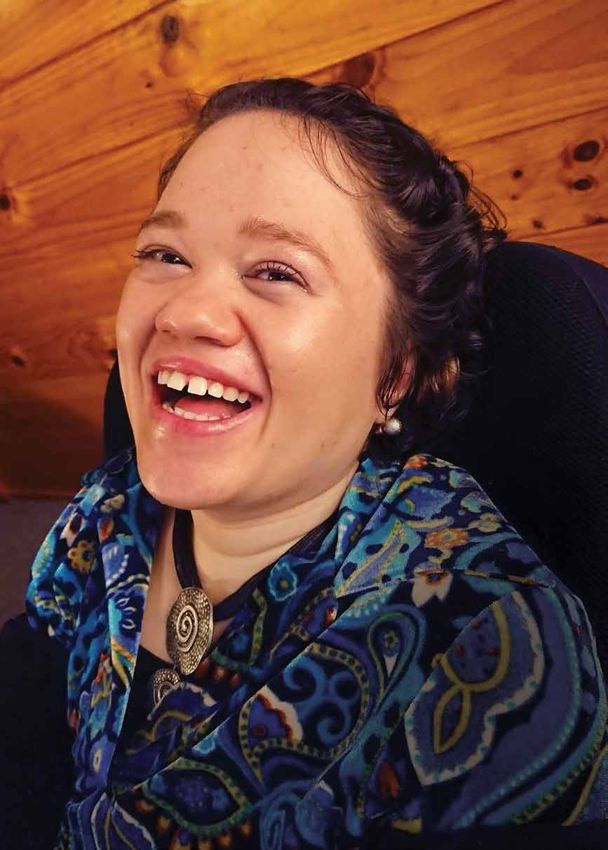
VOICES

The girl who kicked
the door open
Sarah Holten-Warren is under
attack from the degenerative
neurological condition Rett
syndrome and is fighting back
using her eyes and her art to
communicate.
Sarah, 27, a Māori mixed-media artist,
was one of five artists in the Studio One
Toi Tū Creative Studio Residency last
year. Her exhibition ‘Making My Mark’,
in October, is believed to be the first
eye-gaze art exhibition to take place
in Auckland.
The impact of her neurological condition
means Sarah cannot speak or use her
hands for everyday functions. Instead,
she uses a head pointer on an adaptive
headpiece to create her large-scale,
expressive artworks.
Sarah uses a speech-generating device
called a Tobii, which works by tracking
her eyes. Her point of vision becomes
a cursor or ‘dwell’ on the screen, which
selects the language or pictures she
wants to use. The Tobii device then
speaks them out through
voice generation.

“It was the eyes; the
understanding was
there.”
Sarah’s Mum Lisa Holten thinks back to
how she watched her small daughter,
who had learned to walk at nine months,
to push a chair up to the bench at
every opportunity and was expert in
doing three-point turns on her bike,
begin to change. She began to lose her
language and struggled to hold a spoon.
She developed gastric problems and
obsessive hand movements.
When Sarah was aged two she started to
bite her thumbs repeatedly, and when
Lisa sought medical help Rett syndrome
was diagnosed. Sarah lost a lot of her
fine motor skills by the age of four but
was able to walk and run until she was
10 or 11 years old.

Right: Sarah Holten-Warren reconnected
with her world through technology and is
making plans to develop a business based
on her art.

Continues on page 4.
                                            Strong Voices   Autumn 2021   3
Becoming
 Continued from page 3.

 As Sarah’s condition progressed Lisa
 remained convinced that her daughter
 was still reachable. “It was the eyes;
 the understanding was there,” she
 says. “There is so much behind them,
 there is so much expression.”
                                              an artist
                                              Lisa Holten didn’t imagine that her
 She says for people with Rett                daughter Sarah would, or could,
 syndrome the eyes remain the easiest         become an artist.
 part of the body to use. “There is a
 direct neural pathway to the brain.”         Lisa was caught up in the grind of managing
                                              day-to-day services. Like many families dealing
 Lisa says she struggled to have Sarah        with disability funding, she had become
 properly assessed. “They thought             focused on services – what was there and
 she couldn’t comprehend.” But Lisa           what wasn’t there.
 believed new eye-gaze technology             For the first four years Sarah’s Very High
 was a medical necessity for Sarah            Needs (VHN) funding had to be delivered
 and convinced the health assessment          by a Ministry of Social Development (MSD)
 service to let her try it. “I pleaded with   contracted day programme provider. She
 them to give her a trial and they gave       could have an individualised activity plan, but
 me two weeks.” Lisa shot a lot of video      it was problematic. Sarah needs continuity in
 in that fortnight and it convinced           her nursing-level care to manage restricted
 them. “They could see that she was           medications and medical equipment, and her           submitted costs. I manage the budget and
 having purposeful conversations and it       very changeable symptoms.                            help employ the staff. Sarah is the employer
 really opened their eyes,” Lisa says.                                                             and I am her agent,” Lisa says.
                                              “Her staff are highly trained. You can’t have
 Sarah started trialling a Tobii device in    outside staff coming in for a few hours, a few       “This is not for all people. There are a lot
 2013 and she was funded for her own          times a week from a provider. We need her            of people who can’t do individualised funding
 device in 2014. “She was the first Rett      team who work with her the majority of the           as it doesn’t work for them and what they
 girl in New Zealand to be funded for a       time,” Lisa says.                                    are wanting in supports. But there has to
 Tobii device. Now there are heaps of                                                              be choice. There can’t be a one-stop shop.”
                                              These staff were already employed through            Lisa says individualised funding works
 girls who have followed through with
                                              Sarah’s other health budgets, but in order           for them. “For Sarah, this has been the
 that device. Sarah kicked the door
                                              to pay them from Sarah’s VHN budget they             best thing.”
 open,” Lisa says.
                                              would need to be employed by the provider.
                                              That would mean secondary tax, another               Sarah goes to an art class at Māpura Studios
 Finally, Sarah got her voice. Lisa                                                                every week, and this led to her art residency
 discovered that her daughter had a           employment agreement, and a far lower pay
                                              rate, which wasn’t feasible.                         last year at Studio One Toi Tū. She also meets
 sense of humour and could – and                                                                   with a group of young adults at Peers, which
 did – have her on. “She does have a          Lisa says the situation with Sarah’s provider        offers creative projects, music and dance and
 lot to say.” Lisa says the affirmation       became very frustrating and they moved her           living skills through the Physically Disabled
 that Sarah could understand was a            VHN funding under the same umbrella as her           and Able-Bodied (PHAB) organisation. She
 huge breakthrough. “It was concrete          other budgets. They could now use the funds          also loves to go swimming and to get out in
 proof that I wasn’t a ‘hopeful mother’.      not only to pay for her programme costs but          the community to build relationships and
 She could say how she felt, if she           also to pay the staff.                               resources and pursue the art and business
 was hungry or tired, or in pain, or                                                               projects she has in mind, including plans for
 where she wanted to go, or who               “We are with Manawanui as a host. They
                                                                                                   a solo exhibition and adapting her art for use
 she wanted to see. Now the locus of          are basically the middleman between me
                                                                                                   on textiles.
 communication is under her control.”         and MSD and me and MoH and me and the
                                              DHB for Sarah’s budgets. They invoice the            Above: Sarah Holten-Warren uses a head pointer
                                              government department funders for our                to create her artworks.

    IHC

Community workshops will develop local approach
Close to 50 community workshops               “I’d like to thank everyone so far who has           also been a common theme is enabling
will be held by May to develop local          participated in the four workshops held              people to do things they enjoy and to connect
approaches to services around the             towards the end of 2020 in South/East                more with their communities.
                                              Auckland, North Canterbury, Hutt Valley,
country. This is part of the National                                                              Each workshop is facilitated by external
                                              Tauranga/Mount Maunganui and Mana.
Services Review by IDEA Services.                                                                  consultants from Connect+Co and, in most
                                              Joan says it has been a great opportunity to         situations, is co-hosted by the local Area
“We recognise that no two communities         hear from families about their top priorities        Manager and Association Chair.
are the same, and so it is crucial that we    and how we can incorporate them into future
understand what is important in your          plans. “We also intend to gather input from          The ideas will be collected and themes
area. Our goal with these workshops is        people we support and staff.”                        identified, and IDEA Services will then provide
to develop a localised approach for                                                                feedback to families.
                                              The groups so far have had the opportunity to
people with intellectual disabilities,”       create a vision for the future and to develop        Along with collecting feedback from people
says IDEA Services Chief Operating            some goals, including quality of life, friendship,   we support and staff, we will be developing
Officer Joan Cowan.                           variety, safety and future growth. What has          localised area plans.

4     Strong Voices         Autumn 2021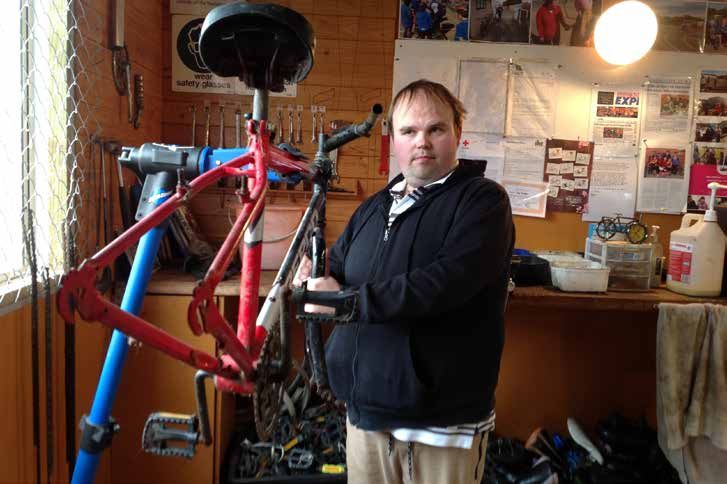
individual learning and social support needs.
Now the hard work starts again. Trish will be
updating the facts and gathering new evidence
to refresh the claim in time for the hearing,
which she hopes will be held this year.
IHC’s initial claim was supported by evidence
from parents, teachers, principals and others
in the education sector; evidence that is now
more than five years old. Trish is planning
a new survey to gather quantitative and
qualitative evidence from students, families,
principals, boards of trustees and learning
support specialists.
“We will get some updated evidence about
the discrimination that is being experienced.
What we are saying is that the schools don’t
have the capacity or resources to teach
disabled students or to respond to
disability-related behaviours.”
Trish says IHC’s education complaint may
not have yet made it to a hearing, but it has
already had an impact in terms of changes
in education policy. A new learning support
delivery model has been developed in place
of the one we have complained about. The
Ministry of Education has required schools
to set up learning support registers, so it
has a better idea of how many students
need support. There is a planned review
of Ongoing Resourcing Scheme funding,
a new Education Support Agency is being
developed to better support schools, and
the teaching profession has a new Code,
new graduating standards and a new focus
on developing and supporting school
We just inched
leaders. School boards of trustees are
now required by law to report on inclusion.
“The learning register is a positive step and
could be an important lever. We will have
a step closer
a clear picture of how many students need
support in the classroom. Whether the
Ministry will use that data to review and
adjust the resourcing framework is another
thing,” she says.
“During the 12 years of IHC’s human rights
legal action there has been undoubted
IHC progress in disabled students’ access
to education.”
Despite this, Trish says IHC needs to pursue
New Zealand just inched a step 2014 amended claim was different from the
the legal action because, in 2021, disabled
closer to fully inclusive education original claim lodged in 2008 and whether
students still experience discrimination
for disabled children. the IHC legal action was aimed at increasing
on a daily basis due to a flawed policy and
education funding.
resourcing framework and capacity issues
In December the Human Rights Review
IHC Director of Advocacy Trish Grant says across the education system.
Tribunal issued a decision – five and a half
the Tribunal’s decision to dismiss the Crown’s
years late – that it would hear a complaint “IHC’s founding families wanted their
challenges is great news. “We can now let the
from IHC that our education system children to access education on the same
human rights experts decide whether disabled
discriminates against disabled students. students can exercise their right to education basis as children without a disability. Seventy
free from discrimination,” she says. years on IHC continues to stand up for
The complaint has languished in a queue
fairness and equity. We will not turn our
waiting for a ruling from the overloaded “This is a disabled children’s citizenship backs on disabled children who are not
Human Rights Review Tribunal. issue. They shouldn’t have to beg for what getting a fair deal.”
The decision was about the challenges to they deserve.”
Above: Schools are not adequately resourced to
IHC’s claim brought by Crown Law on behalf IHC does not point the finger at schools respond to individual learning and social support
of the Attorney-General and the Ministry of or principals, saying instead that needs. Photo by Nathan Dumlao on Unsplash.
Education on the grounds of jurisdiction and discrimination in the system means schools
‘justiciability’– in other words whether IHC’s are not adequately resourced to respond to
Strong Voices Autumn 2021 5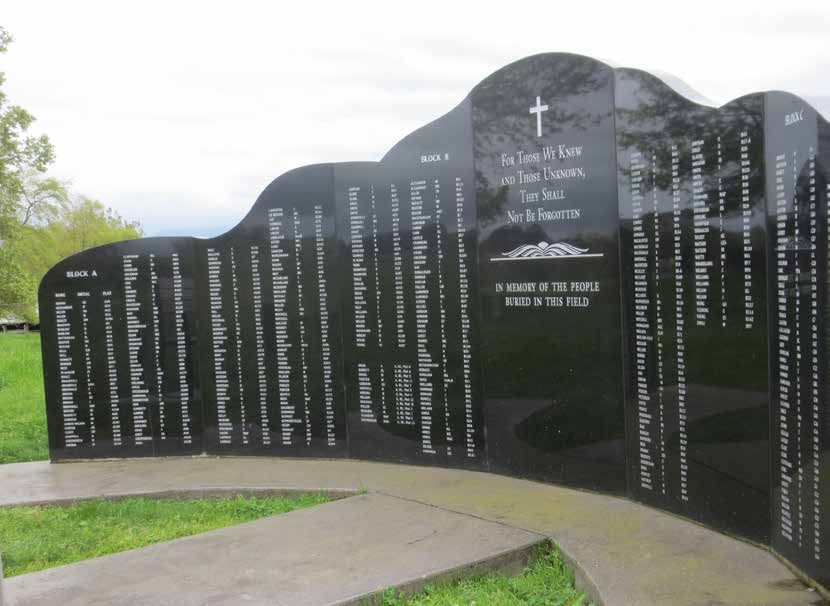
Bulletin                                            SECTOR

Free ‘plus-one’ bus travel
Free bus travel for carers of people with
                                                  Schools to trial
accessibility concession cards is now
available in the Waikato region. Around
2400 people hold concession cards for
                                                  employment
free bus travel in the area. The card was
introduced in 2019 and is for people
with permanent or short-term disabilities
                                                  service
of longer than six months. Cardholders
                                                  School leavers looking for work will
who need assistance to travel can now
                                                  have extra help this year thanks to a new
register their ‘plus ones’ with Waikato
                                                  scheme being trialled in a number of
Regional Council.
                                                  secondary schools.
Wellington Airport smooths the way                The pilot Employment Service in Schools was
People with hidden disabilities such as           launched on 1 February 2021 and will run
autism, dementia and ADHD can now                 until 30 June 2022. It is being managed by
travel a little easier after Wellington Airport   the Ministry of Social Development (MSD)
launched a new initiative to discreetly           and the Ministry of Health (MOH).
let staff know when a person might need           It will run in five Ministry of Education
extra help. Anyone travelling through the         regions: Auckland, Waikato, Wellington,
airport can now request a special green           Canterbury and Otago/Southland. IHC’s Choices
lanyard, which will help staff identify           NZ has been selected as a provider of the
people who might need extra care. The                                                                 Schools taking part in the three areas
                                                  service in Canterbury and Otago/Southland.          covered by the Choices NZ contract are:
lanyard is voluntary and will indicate that a
passenger might need more time to process         Kelvin Moffatt, MSD General Manager                 Canterbury – Christchurch Boys’ High School,
information or clear verbal instructions.         Service and Contracts Management, says              Hornby High School, Kaiapoi High School,
It will help those who have trouble reading       up to 1000 young people will be able to use         Lincoln High School, Linwood College,
departure and boarding signs, and people          the service. It is available to students in their   Middleton Grange School, Oxford Area
who need to stick with family or friends.         final two years of school and targets those         School, Rangiora High School, Rolleston
                                                  with high needs or very high needs funded           College, St Bede’s College, St Thomas of
Families to view IHC MySupport                    through the Ongoing Resourcing Scheme               Canterbury College, Te Pā o Rākaihautū.
information                                       (ORS). Students without ORS funding, but
                                                  who need additional support to learn are            Otago and Southland – Aurora College,
IDEA Services and Choices NZ are trialling an
                                                  also eligible. This includes students with          Bayfield High School, Blue Mountain College,
extension of the IHC MySupport database
                                                  disabilities, with health conditions or who         James Hargest College, Kaikorai Valley High
to allow the people we support and their
                                                  are neuro-diverse.                                  School, Otago Boys’ High School, South
families to view their information. It’s
                                                                                                      Otago High School, St Kevin’s College, Taieri
important for the people we support to            The Employment Service in Schools is an             College, Tokomairiro High School, Waitaki
have a good team around them. A big part          alternative to the MSD-funded Transition            Girls’ High School, Wakatipu High School.
of this is involving family members at the        Service. It is being provided in addition
right time. At present, information such as       to other post-school services and options           “Choices NZ looks forward to working with
support plans and goals can only be viewed        for disabled people, including MSD and              families, schools and communities to find
by staff. We have asked 40–50 people to           MOH-funded community participation and              employment and real opportunities for these
take part – a mix of people we support and        day services, tertiary education and open           young adults,” says Choices NZ National
their family members. The 12-week trial           employment opportunities.                           Manager Toni Griffiths.
started at the end of January. When it ends
                                                  Young people interested in participating in         Kelvin Moffat says funding was approved as
we will ask people if they found it useful
                                                  the service first need to check if their schools    part of the COVID-19 Budget package. The
and whether it’s something they want to
                                                  have chosen to be in the pilot. Around 50           goal is to increase expectations that young
continue with. We will let you know the
                                                  schools are participating so far.                   disabled people can and should be entering
outcome.
                                                                                                      the labour market when they leave school.
                                                  Pilot schools will connect young people with        The service aims to:
New coordinator for i-Volunteering                contracted providers.
Belinda Donaldson is our new IHC                                                                        • Promote employment or employ-
i-Volunteer coordinator. Her role is to           “Work experience is important to help young             ment-related training as the first and
implement an online/virtual volunteer             people understand what will be expected of              best option for young disabled people
programme to help link carers and people          them in the workplace. Under the Education              when they leave school.
with intellectual disabilities with online        and Training Act 2020 young people are
                                                  not entitled to be paid for work experience           • Develop work confidence through work
friends. Belinda isn’t new to working with                                                                experience and paid part-time work
IHC Volunteering and for the past several         in school hours; however, employers may
                                                  choose to pay them,” Kelvin Moffatt says. “If           outside school hours.
years has been working behind the scenes
on annual customer satisfaction surveys           a young person is employed outside school             • Collaborate with the students’ existing
and updating the coordinator manual.              hours, for example after school or at the               schools and learning supports to
IHC National Volunteering and Community           weekend, it is expected they will be paid.”             ensure the students’ educational and
Development Manager Sue Kobar says                The New Zealand Disability Support Network              employment goals are aligned.
this will broaden the opportunities for           is holding workshops in the main centres            Above: The Employment Service in Schools is an
IHC volunteers to support people with             for service providers, schools, students and        alternative pathway to employment. Photo by
intellectual disabilities.                        families/whānau to explain how it works.            Clarisse Meyer on Unsplash.

   6     Strong Voices         Autumn 2021
IHC

It’s time for more
‘pay experience’
Debbie Kennedy has done years of              ‘secret shoppers’ to check customer service    Phoebe has now left Otago to return home
work experience in hospitality and            in retail stories, job interview skills, and   to Wellington, but the pair plan to keep in
customer service with little pay to           visiting a job expo.                           touch. Debbie will now work with Kaitlyn to
show for it. She estimates half of the                                                       find work through Choices NZ and Kaitlyn
                                              In week five there was a dress rehearsal       is optimistic. “She will work well in a team
work she has done has been unpaid.
                                              for the job interview, conducted by Dean       – she is a team player,” she says. “The plan
Work experience can be a trap for people      and Phoebe, and Debbie passed with flying      is to keep applying and advocating for
with disabilities if it never leads to ‘pay   colours. “I would give her a job for sure,”    Debbie. Hospitality and retail jobs are no
experience’.                                  Phoebe says. “We wrote some notes about        longer entry-level jobs in Dunedin, and it
IHC recently tried a new approach to see      what she did well and a few little things to   seems employers are only looking for people
if Debbie Kennedy, a 24-year-old Dunedin      work on.”                                      with paid experience and people without
woman, could finally break through the job                                                   employment gaps.”
                                              Phoebe says Debbie knows her way around
barrier. Local IHC Volunteer Coordinator      customer service, but she says it’s one        Kaitlyn says Choices NZ can offer on-the-job
Dean Reed worked out a strategy with          thing to have the theory, but another to be    support and training to employers who
Choices NZ Facilitator Kaitlyn Brown to not   able to apply it in practice and to find the   are prepared to invest in Debbie and
only boost Debbie’s employment skills but     opportunity to talk about that experience      other Choices NZ clients. It can also advise
help her recognise and promote the many                                                      employers about the funding that is available
                                              with a prospective employer. “It’s a matter
skills she already has.                                                                      through the Ministry of Social Development
                                              of confidence.”
In September, Debbie was introduced to                                                       for job support and training.
Phoebe Hillyer-Brandt through the IHC         Debbie says she found the mock interview
                                              difficult. “I was nervous on the day. There    For more information about how Choices
skills-based volunteering programme.                                                         NZ can work with job seekers and partner
Phoebe was finishing a master’s degree in     were hard questions.”
                                                                                             with employers, see choicesnz.org.nz/
psychology and looking for a short-term       She would like a job in retail – “somewhere    what-we-offer/job-seekers
volunteering opportunity.                     that is a good environment” – and says she     Above: Debbie Kennedy and Phoebe
For four weeks they worked through a plan     found the skills programme helpful. “It got    Hillyer-Brandt end their working sessions with
– money handling, going undercover as         my confidence back up.”                        some time out.

                                                                                                  Strong Voices         Autumn 2021           7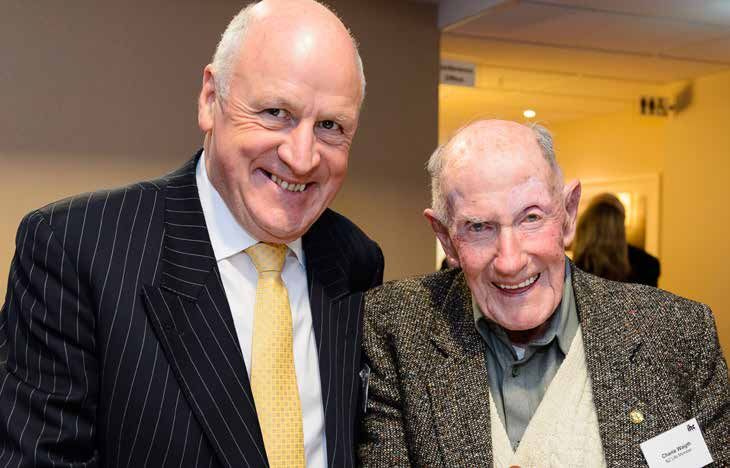
RESEARCH

Early deaths must be
better understood
Researcher Sharon Brandford is                  health checks, late diagnosis and treatment,      dies because there is an inherent lack of
keenly aware of the outrage felt in the         poor awareness of health issues and failure       value,” she says.
disability community over the way               to promote good health. Instead she wanted
                                                                                                  ‘Counting for Something’ was the second
New Zealand treats the lives and                to look behind the deaths and suggest how
                                                                                                  report to come out in 2020 criticising the
                                                a coordinated approach to recording them
premature deaths of people with                                                                   lack of information about the deaths of these
                                                might make a difference.
intellectual disabilities.                                                                        disabled New Zealanders.
                                                “We’ve known about the poor health
It was her own outrage that led her to look                                                       The report describes a piecemeal and
                                                outcomes for years now. The agencies
at how we investigate their deaths.                                                               uncoordinated approach by the Ministry of
                                                responsible for recording and investigating
Her report released late last year, ‘Counting                                                     Health (MOH) and various mortality review
                                                deaths must be supported to identify ways
for Something’, says life expectancy for New                                                      bodies and suggests they work together to
                                                to improve life expectancy,” she says.
Zealanders with intellectual disabilities is                                                      avoid these premature deaths.
between 18 and 23 years less than for the       “Bereaved families and friends want these
                                                                                                  An earlier investigation by the Chief
general population.                             premature deaths to count for something.”
                                                                                                  Ombudsman, released in July last year,
Sharon says she resisted the temptation         Underlying it all is a sense that the death of    identified significant gaps in the MOH’s
to plunge straight into what she sees as        someone with an intellectual disability is not    collection and use of information about the
contributing factors to those premature         a tragedy but ‘a release’. “It is just not seen   deaths of people with intellectual disabilities
deaths – too much medication, too few           to be a loss when someone with a disability       in full-time residential care.

8     Strong Voices       Autumn 2021
She believes more progress will be made
                                                   if the New Zealand health and disability
                                                   sectors create a culture of openness rather
                                                   than blame.
                                                   Sharon is keen to have a conversation
                                                   with the MOH about how to make people
                                                   with intellectual disabilities more visible
                                                   in health records and public health data;
                                                   to better inform families, friends and
                                                   carers about their options for investigating
                                                   a worrying death; and how to support
                                                   the MOH to urgently lead a coordinated
                                                   response to improve life expectancy. She
                                                   wants to see action involving not only
                                                                                                   “IHC calls on the new Minister of Health,
                                                   its Disability Directorate, but also health
That investigation found that the MOH had                                                          Andrew Little, to ensure health ‘justice’.
                                                   experts and policy makers in personal and
not adequately dealt with deaths reported                                                          This will require his officials in the Ministry
                                                   public health.
to it by disability service providers, despite                                                     of Health to lead the collaborative work
its knowing through its own research that          “I would really like there to be some           required to stop people with intellectual
people with intellectual disabilities were         clearing house where we could put all the       disability dying too early. These are avoidable
high users of health services but still had        information that we have already, so it is      deaths in many cases,” she says.
poor health.                                       more easily shared.”                            Dr Garth Bennie, Chief Executive of the New
Sharon, who has more than 35 years’                Sharon would also like disability providers     Zealand Disability Support Network, says
experience in the intellectual disability          to have a common approach to supporting         this is an extremely timely piece of research
support sector, backed the Ombudsman’s call        access to health and to investigating death,    highlighting the lack of progress in an area
for New Zealand to develop an independent          and to commit to increasing the awareness       that should be receiving the utmost urgency.
national death review system.                      and skills of the disability workforce.         “A comprehensive and accessible report,
                                                                                                   ‘Counting for Something’, provides a clear
She says she felt energised by the Chief                                                           pathway for substantial change that leaves
                                                   “With better recording, reporting and
Ombudsman’s investigation. Her purpose                                                             no doubt about who should be doing what
                                                   investigation, families, people with
in preparing her report was to increase the                                                        from this point forward.”
                                                   disability and advocates can push for
visibility of and responses to early deaths, and
                                                   attention to those factors known to impact      Top: For years, the nearly 500 people buried at
not just for those in full-time care. Her work
                                                   on health outcomes.”                            Tokanui Hospital Cemetery were remembered
has been funded by the IHC Foundation.
                                                                                                   with a single headstone. Photo by Ascend
She says overseas research shows that              The IHC Foundation says it is pleased to        Photography.
people with intellectual disabilities too often    contribute to this important debate – “in
                                                   the hope that we will finally see concerted     Top left: A memorial wall was finally built in 2016
die from conditions that can be treated                                                            to list the names of all those buried between
and would not normally be fatal, or from           action to address the unacceptable fact that
                                                                                                   1914 and 1964 at the Tokanui Hospital Cemetery,
conditions that are not recognised and             people with intellectual disability are dying   in a field that lies south of the Waikato town of Te
poorly treated.                                    younger than other New Zealanders”.             Awamutu. At one time 1000 patients, including
                                                                                                   many with intellectual disabilities, lived and
“New Zealanders with disabilities want and         IHC Director of Advocacy Trish Grant says       worked in the hospital. It closed in March 1998.
expect health services to treat them right         the Government now has an opportunity
                                                   to make this group of New Zealanders count      Above: Researcher Sharon Brandford says a
when they are unwell. Like everyone else,
                                                                                                   better understanding of premature deaths will
they want to get on with living good and           for something after decades of “death
                                                                                                   help us avoid them.
long lives.”                                       by indifference”.

                                                                                                        Strong Voices          Autumn 2021           9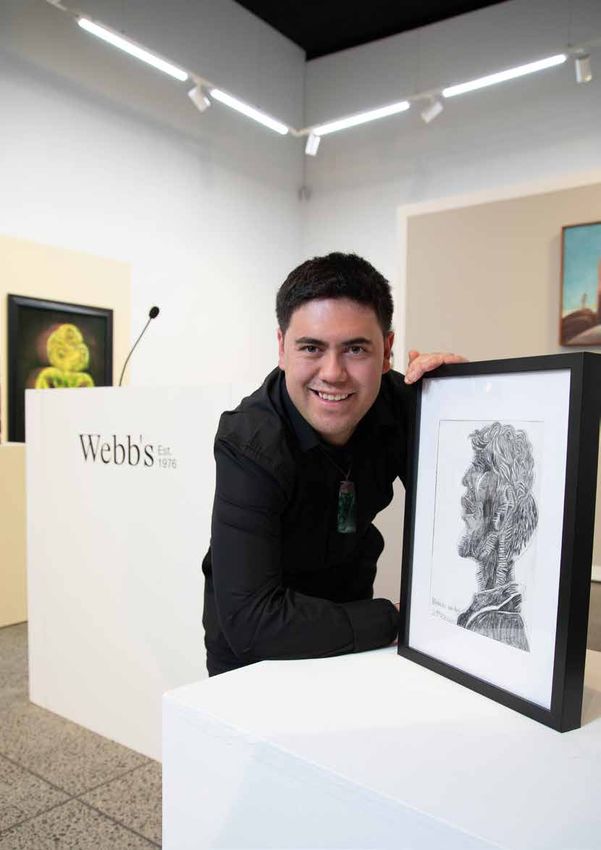
10 Strong Voices Autumn 2021
IHC

Disabled artists
welcomed to the
heart of the art scene

Disabled artists came out of lockdown            “The event way exceeded what I had hoped          the 30 finalists’ and winners’ artworks at the
and into the heart of the New Zealand            for,” she says. “Webb’s came on board and         gala event, but we don’t sell that many at the
art scene – selling more art than ever           agreed to hold the event at their premises        national exhibition. So Trade Me definitely
before.                                          and auction the works on the last big art         worked better. Some prices were high, some
                                                 auction night of the year, which was just so      just over reserve or just met reserve.”
Thanks to a brainwave of IHC Art Awards          tremendous, as their reputation put us on
Ambassador Dame Denise L’Estrange Corbet,                                                          During lockdown the artists couldn’t work
                                                 the map in terms of art; it gave the event
the three top works in the 2020 IHC Art                                                            in their studios. Artworks that they planned
                                                 enormous kudos.
Awards were auctioned live at Webb’s art                                                           to enter were not finished and no-one knew
auctioneers in Auckland, in association with     “I am so grateful to all those involved – the     when they would be. But behind the scenes
a WORLD Legacy Charity Project event called      artists who donated works, Webb’s, and            IHC Art Awards organisers were working on
Artists 4 Artists.                               especially the public who buy the works.”         a plan to make sure the event went ahead in
                                                                                                   some form.
Dame Denise approached 13 contemporary           The works of the three winners of the IHC Art
artists to donate works to be sold for the       Awards were sold first, ahead of the Artists      “Some of the artists had been working on
benefit of artists with disabilities. Renowned   4 Artists auction. Palmerston North student       their artworks for months, so it would have
New Zealand artists Billy Apple, Judy            Malachi Oldridge, who won the $5000 first         been a great disappointment not to have
Darragh, Dick Frizzell, Mike Weston and          prize with his self-portrait Malachi is a Māori   given people a competition,” Danette says.
Otis Frizzell, Max Gimblett, Bill Hammond,       Boy, sold his work for $1057. Michael Nathan      In 2019, 384 artists entered the national
Paul Hartigan, Gavin Hurley, Gregor Kregar,      won $2000 for his work Infinity Part 1. It sold   competition. But the impact of COVID-19 had
Judy Millar, John Reynolds, Greer Twiss and      for $1233. Gary Buchanan won $1000 for his        her worried. “When we reached 279, it was a
Pamela Wolfe all got involved. Their artworks    work New Convention Centre of Christchurch.       huge sigh of relief and we were really happy
raised nearly $51,000, all of which goes         It sold for $470.                                 with that number,” she says.
towards the IHC Art Awards.                      Most of the remaining entries in the Art          Left: IHC Art Awards winner Malachi Oldridge,
Dame Denise says that when all the art           Awards were sold on Trade Me. Sixty-nine          with his self-portrait Malachi is a Māori Boy, at
studios had to close when the country went       of the top 89 artworks entered in the IHC         Webb’s auctioneers.
into lockdown, she realised there would          Art Awards 2020 were sold to an online            Above left: Malachi Oldridge with IHC Art Awards
be no opportunity to access the wonderful        public audience.                                  Ambassador Dame Denise L’Estrange-Corbet, who
                                                                                                   arranged the art auction.
works that are usually submitted and sold.       “We sold a lot more artworks than we
She wanted to find another way of raising                                                          Above: Malachi and his family travelled from
                                                 would normally,” says IHC Art Awards Event        Palmerston North to the Auckland auction.
funds for the artists.                           Manager Danette Wilson. “We always sell

                                                                                                        Strong Voices           Autumn 2021            11
IHC
A place to call home for
those hardest hit
Last year marked the 10th anniversary Accessible Properties Chief Executive managed more than 1000 properties
of the creation of IHC’s property Greg Orchard says that vision is as true for IHC. These included – and still do –
company, Accessible Properties. now as it was then. “Our goal, our belief, IHC’s day bases and residential homes
is to create thriving communities,” and units.
Accessible Properties’ first day of operation he says. “Whether that is someone
was 1 July 2010, and as IHC Chief Executive “The people IDEA Services supports are
supported by IDEA Services or a family
extremely important to us,” says Greg. “We
Ralph Jones put it at the time, it signalled that’s been through some tough times are very proud of our homes and facilities that
“IHC’s intention to increase its participation financially, we want to give people a place keep people safe, happy and healthy.”
in the social housing market and provide to belong and thrive.”
accommodation for people who struggle Accessible Properties’ growth has been
to find somewhere to live because of health Accessible Properties hit the ground spectacular. Support from the Government’s
or disability issues”. running. From day one, the company Housing Innovation Fund in its first year
12 Strong Voices Autumn 2021Accessible Properties was the successful
bidder for the purchase of the Hamilton City
Council housing for older persons’ portfolio
and took possession of its 344 homes in
March 2016.
In December that year, Accessible Properties
entered into an agreement with the
Government to provide 358 of the 508 social
housing homes to be made available in South
and West Auckland.
To support tenants, Accessible Properties
By the end of the 2016 financial year, the works closely with agencies, councils, New
value of the property portfolio had grown Zealand Police and iwi to ensure properties
rapidly to more than $100 million. are safe and tenants well looked after.
Partnering with Lifemark Standards meant That’s reflected in annual tenancy surveys,
properties were adaptable for people with which show overwhelming satisfaction
disabilities and situated and grouped in ways among tenants.
that fostered community inclusion. Greg says: “Ten years is a significant
allowed Accessible Properties to build housing But the biggest growth for Accessible milestone, but we are committed and
units in Hamilton. Properties came in April 2017, when it looking forward to working with IDEA
formally acquired and began managing 1138 Services and the IHC Group for many more
The following year, Accessible Properties years to come.”
was the most successful applicant to the former Housing New Zealand homes.
Social Housing Fund, allowing a $23 million Top left: Tenants, volunteers and Accessible
In October, Associate Housing Minister Kris
programme to build 67 new housing units Properties staff pitch in for Clean Up Week 2019.
Faafoi opened the first development of Keeping neighbourhoods safe and clean helps
for social housing in Auckland, Hamilton, six homes in Tauranga – part of Accessible tenants and communities to flourish.
Tauranga, Wellington and Christchurch. Properties’ plan to help address the chronic
Top: Housing Minister at the time, Phil Twyford,
Within three years Accessible Properties Tauranga housing shortage. attends the opening of five new homes for people
was managing the largest non-government Accessible Properties wants to replace 140 with disabilities in Massey, Auckland in 2018.
housing portfolio in the country, with former state homes in Tauranga with more Above: An upgrade at Peachgrove Road in
870 homes. More than 4000 people than 400 new townhouses and apartments, Hamilton in 2016 gave tenants in the 22
with intellectual disabilities were using as part of its Pukehinahina Project. units gardens, picnic tables, and a place for a
IHC premises. barbeque.
“The need for social housing is not going away
In April 2014, Accessible Properties achieved Tenant Raymond Holloway poses for photos at
– it’s greater than ever. In Tauranga especially, his new home in Cameron Road, Tauranga, in
Community Housing Provider registration,
there is immense pressure,” says Greg. 2019: “It’s given me a new lease of life.”
providing access to income-related rental
subsidies. That meant the rent subsidies that “We know that places stress on older people,
used to be available only for Housing single-income households and poorer
New Zealand properties now applied to families. We are committed to working with
homes provided by Accessible Properties. Government to find solutions and homes.”
Strong Voices Autumn 2021 13VOICES
We’re
spending
too long
‘getting
ready’
David Corner has spent 12 years
representing people with intellectual
disabilities internationally. He has
spent 24 years promoting their rights
in New Zealand.
But when the bathroom in the house he
owns was renovated last year, he didn’t get
to choose the paint, or the vinyl that went
on the floor.
David, IHC National Self-Advocacy Adviser,
recently gave presentations about
self-advocacy at Regional Focus Groups in
Auckland, Hamilton, Kāpiti and Christchurch
to encourage people with disabilities to
speak up about how they want to live
them to exercise their will and preference, world – to Florida, Germany, Nepal,
their lives.
which was a right protected by the United Washington, Portugal, Spain, Suva, Thailand,
This was the second round of Regional Focus Nations Convention on the Rights of Persons India and Australia.
Groups organised by the IDEA Services with Disabilities.
Quality Team. At meetings and conferences David
David, who lives at home supported by participated in brainstorming sessions about
“It’s important to speak up about the another service provider, told of the time the issues facing people with intellectual
things that are important to you,” he told a new team leader turned up at his house disabilities in all parts of the globe and
participants at the Kāpiti forum. “IDEA unannounced. “My support worker didn’t let was able to contribute New Zealand’s and
Services needs to hear back from you about me know he was coming until two minutes his own experiences to the mix. “It’s all
what is working well for you in services and before he turned up – and it was my house.” about listening, including and respecting
what needs to be improved. It is the staff’s and valuing the people with intellectual
role to help you make the choices.” He said last year he was planning a party and disability,” he says.
saw emails between two people asking if his
He fears that people’s confidence can house was accessible. “It’s my house, but no Helen Sinclair, IHC’s National Manager
be easily eroded. “We don’t give them one asked me if my house was accessible.” Quality, says David delivered some important
confidence. We set them up to fail,” he says. self-advocacy messages at the meetings.
“There is a ‘readiness trap’ sometimes. ‘You As far as his bathroom renovation went, “His views prompted some great discussions
are not ready to go flatting. You are not David acknowledged that he did get a with participants about what good support
ready to go and talk to such and such’.” photograph of the chosen vinyl sent to looks like and the ways people can speak up
him, but said he had no opportunity to and be supported to raise issues that matter
David asked those at the meeting whether have input. most to them.” The Quality Team intends
they answered the phone in their homes and
In November, David signed off from his job to share the views of the focus groups
were able to choose what they ate or what
as Asia-Pacific Regional Representative for throughout the organisation and to get more
television channel they watched.
international disability organisation Inclusion people involved in 2021.
He reminded them that it was their right to International. At his final meeting he was Above: David Corner, IHC National Self-Advocacy
have support to make decisions, but people awarded life membership for his service. Adviser, says self-advocacy is about listening,
sometimes confused the line between acting including and respecting and valuing people with
in someone’s best interests and allowing It was a role that took him around the intellectual disabilities.
14 Strong Voices Autumn 2021IHC
VOICES
Try this one at home
Just pull the curtains and your lounge It is the story of a teenager with autism who
becomes a stage. Tear an old white finds the outside world tricky, so he creates
sheet into moonbeams. Then find a an incredible world at home. The Badger
soft, fluffy jumper to be The Badger. narrative is about navigating friendship. It is
performed by an inclusive cast – of people
Now you are ready to hear, see, touch, and live action, animated characters and
taste and smell The Badger Story. This is puppets. The giant badger was made by
new digital, multi-sensory theatre delivered Tusk Puppets in Christchurch and Deaf actor
online by the Glass Ceiling Arts Collective to Courtney Nairn is the screen goddess.
people with profound and multiple learning
disabilities. Co-founder and General Manager of Glass
Ceiling, Mike Eaglesome, says The Badger
It’s a COVID-inspired, in-home theatre a lot outside, but during the winter any
Story was born out of COVID. He says those online-appropriate activities have been
experience for families who supply their
with high health needs were even more a godsend. The days are very long as the
own props from the cupboard, supermarket
vulnerable during lockdown. Even at the best girls cannot easily occupy themselves. I am
or $2 shop. It was developed with funding
of times, going out to the theatre is beyond exhausted being entertainments manager.
from the IHC Foundation.
the reach of many. The Badger Story brings
The process of gathering the props is part theatre into their world. “D… liked the dough, the foliage, the fur and
of the whole experience. The Badger Story the water spray. R… enjoyed each sensory
comes with instructions about how to get “The Badger Story was initially conceived experience but loved the lights and torch
the best experience for participants as they to address the needs of a New Zealand activities. We also used our bubble machine
use all their senses and involve all the family. audience. However, given that it is delivered for the mist as the girls really love it and also
as a digital experience, the audience can be had our light machine for the rave at the end.”
“For me, going out into the forest and finding
anywhere.” Mike says New Zealanders out
leaves and playing with grass is an exciting Mike sees the theatre experience evolving
and about on their summer holidays were
thing in itself. Even my son, who has autism, as families join in. “It also makes me think
not so much in need of an indoor theatre about our next theatre experience for
it was an exciting process for him,” says
experience. “Meanwhile, in the United people with high health needs, and what we
author Charlotte Nightingale. Charlotte, a
teacher and actor, is Co-Founder and Artistic Kingdom it’s winter and they’re in COVID can do better/differently to make the user
Director of the Glass Ceiling Arts Collective. lockdown and the demand is much experience even better.
more apparent.”
The crew ventured into the trees near “If any of your IHC members/whānau are
Charlotte’s home with a binaural microphone Mike says they have already had good particularly keen to embrace The Badger
specially imported from Canada to record feedback from Britain. A mother of twin Story and give detailed feedback, we’d be
3-D stereo audio for more lifelike sounds. daughters with a rare genetic condition and really interested to hear from them.”
high needs, said she was working hard to Top: Puppeteers Jon Coddington and Paul Lewis
The Badger Story is an excerpt from
find a variety of meaningful experiences for from Tusk Puppets.
Charlotte’s play, The Incredible and Glorious
them while they were shut in.
World According to The Fitzroys, which won Above: Writer of The Badger Story, Charlotte
Best Performance (Ensemble) at Auckland “It wasn’t too bad when the weather was Nightingale, smells the fragrance of the forest
Fringe last year. nice during the summer and we could do floor. Photos: Tom Grut.
Strong Voices Autumn 2021 15IHC
Bike repair shop has the answer
You can’t get a greener, more “IDEA Services developed the project as an Tony has plans for even bigger and better
sustainable scheme than the Bike opportunity for the people we support to things this year, starting with a new name
Project, run by the bike repair guys learn to repair and maintain bikes with a – Ride Again Cycles – and the launch of a
view to using these skills to earn a wage,” website. “It’s got to be done. Cycling is a big
at Mersey Street, Invercargill.
Jo says. “The project aims to build technical part of everything now – the way the world
The team at the IDEA Services day base ability, teamwork skills and work confidence has gone.”
collect old bikes, fix them up and pass and to provide free recycled bikes to the
them on to people who need them. local community.” Jo says as more schools become involved
They recycle and reuse bikes that in learn-to-ride-a-bike programmes, they
Before lockdown the team worked for two days will get in touch to see if they can help with
would otherwise go to the landfill,
a week on the bikes. It’s now operating one providing a pool of bikes for the children to
encouraging people to use pedal power
day a week, with up to six people working on use at the schools.
rather than motor vehicles. They also
the bikes. One of the team,Mark Cook says he
hope to gain skills that might lead to “We have been approached by agencies
enjoys taking the bikes apart and has become
future employment. such as WINZ, Red Cross, Workbridge, local
expert at stripping them down.
Māori support service providers, Family
Service Manager Jo Fredericks-Rizzi says
Tony says there are many tasks for people to Works, and Women’s Refuge on behalf
the Bike Project started in 2011 as a joint
get involved in. “They learn to use tools, strip of their clients, and also directly by some
venture between IDEA Services, Bike
bicycles, sand down bikes and paint them back individuals who are experiencing periods of
Doctor Tony Tresidder, who operated a
up. We accept everything from wee bikes for hardship and would benefit from a bike to
voluntary bike repair and hire service in
kindy kids.” get to work or a job interview.
town, and the Invercargill Environment
Centre. The most recent donation was 17 If a donated bicycle is too far gone, they Support worker Hayden Anderson-Brown
bicycles to pupils at Fernworth Primary cannibalise it to repair other bikes. “We have says that after Fernworth Primary School
School, just before Christmas. got plenty of boxes of parts and tyres and tubes made the local newspaper, four people got
and reflectors. I have got too many parts,” in touch offering bikes and another four
Since 2011, around 450 bikes have been he says. asking for bikes.
restored and donated to school children,
local charities and support services, Tony often puts on the finishing touches. Below: Bike repair man Mark Cook has become
community groups, church groups, “I have done it all my life. I have done bikes expert at stripping down old bicycles so the
Workbridge clients and refugee families. ever since I was a wee kid,” he says. team can get to work on them.
16 Strong Voices Autumn 2021IHC
‘Your child is beautiful’
Shelby is the youngest of the five But when Shelby was three months old a follow-up meeting was held with the
Porowini kids and his arrival upended the family were assigned an outreach community nursing team. “Other health
their family life. But being told he was nurse who changed that. “She said, ‘Your professionals will follow. It’s taken on a life of
beautiful made all the difference. child is beautiful’. She just clicked with us its own,” Jim says.
straightaway. Ever since then we just never
Stephanie Porowini and her husband Mark He says it’s important that outreach
looked back.”
were living on the Gold Coast in Australia nurses are the right fit and parents aren’t
with their four children. She was selling Stephanie is now helping to make sure overwhelmed with offers of services all
real estate when she became pregnant other families have a better experience. at the beginning, but at different times as
with Shelby and they headed for home in She is one of a group of mothers who meet needed. “I am really happy that the families
Whāngārei. That was in 2016. in Whāngārei each month to offer each other are being heard.”
support over coffee. “Sometimes we get
“He was unexpected, but he is a blessing and Martina Ackermann, Quality Facilitator at the
mums who come along and tell their stories
he is amazing,” Stephanie says. “We found Child Health Centre, says the initial meeting
and sometimes they cry,” she says.
out he had Down syndrome when he was was to get a parents’/patients’ perspective.
first born. We knew he had a heart condition, More recently they have been meeting “The feeling of not being listened to seems
but we did not know anything else.” Shelby representatives of the Child Health Centre to be a common theme, also having to
was also born with a cleft palate and he at Whāngārei Hospital to identify gaps and repeat themselves – every different health
has trouble with choking and keeping food ways to improve services to families, who professional they come into contact with
down. A scan showed he had two holes in his experience long waits for assessment and is asking them the same questions,” she
heart – he has surgery scheduled at Starship treatment and poor communication. says. “The aim of this is to have a consistent
Hospital in February for a repair. approach for all children who come through
The mums’ group was initiated by IHC our service so everybody gets the same
“I had severe post-natal depression after Family Liaison Jim Callaghan to identify offering, the same support and the same
he was born. I didn’t bond with him the needs of families. “All the stories were information about where they can go to get
straight away. There were all these little different and the pathway for all of them had support.”
complications that he had. It just became been completely different,” he says. “The
Above: Shelby Porowini is going from strength
really overwhelming,” she says. “There was a consistent thing was the lack of consistency.”
to strength.
lot to deal with, with my other four kids.”
After an initial meeting late last year with a
Stephanie says she didn’t feel supported by multi-disciplinary team from the Northland
health and disability professionals. District Health Board’s Child Health Centre,
Strong Voices Autumn 2021 17IHC
Charlie’s lifetime crusade is over
Charlie Waigth was a lifetime crusader breed of do-it-yourselfers in IHC who built When the role of IHC branch committees
for his daughter Christine and for our services from the ground up. In New changed and they had less to do with
people with intellectual disabilities Zealand’s small towns in the 1960s there property and services, Charlie saw a new
throughout the country. was little support for families who had a important role in providing advocacy on
child with an intellectual disability so Charlie behalf of people with disabilities both
Charlie died in Auckland on 9 November and others would get IHC branches going within IHC and in the community.
2020 at the age of 96, after working for 50 wherever they happened to be.
When Charlie eventually retired after 50
years with IHC. Charlie was a postmaster and moved towns years of serving on IHC committees, he
It was a personal crusade at first. Charlie with his family every couple of years. This made one condition. If the IHC Counties
and Mary’s daughter Catherine was born in meant the family often had to start from Association was going to put on a lunch
1961 with Down syndrome. They were scratch to provide for Catherine. He helped for him he didn’t want any speeches.
living in Takapau in southern Hawke’s Bay to set up the Central Hawke’s Bay sub-branch With characteristic humility, he said that
when Catherine turned five, and there in 1966, the Pahiatua sub-branch in 1968 he was just one of many people in many
were no services for her. Charlie set out and the Manukau sub-branch in 1974. After communities trying to improve services and
to change that. their move to Auckland, most of his work for lives for their children with disabilities.
IHC was in Manukau, Papakura and Counties.
Charlie’s story traces the milestones of IHC – His daughter Theresa says he was a gentle
He was chair in Manukau for six years and
from the early pre-schools and occupational person with a deep faith, and Catherine
Branch President of Papakura for 16 years.
centres to special schools and institutions, enjoyed accompanying him to church each
then the closure of institutions. Charlie retired from the Post Office in 1980 week. He loved talking with a friend over a
at the age 56, after 43 years of service. He glass of wine.
He acknowledged that some of the changes didn’t retire from his voluntary role with IHC
were painful. In 1972, he and Mary were Mary died in 1998. There were five
until 2016.
persuaded by a social worker that Catherine daughters: Theresa, Catherine (deceased),
In a 2010 interview, a year before he was Jeannie, Mary and Linda (deceased).
should leave Kingswood Special School and
named a New Zealand Life Member of IHC, Catherine, who lived in IHC residential
go to Mangere Hospital & Training School,
Charlie said he was only doing what many services for many years, died in 2013.
which had recently opened. But Catherine
parents were doing throughout New Zealand
struggled to adjust. Above: Former IHC Board Member Michael
at the time. “You might say I was in the Quigg (left) with New Zealand Life Member
Charlie wasn’t a person to sit back and wait right place at the right time. We had to do Charlie Waigth at the IHC Annual General
for other people to help. He was one of a something to get those facilities.” Meeting in Wellington in 2015.
18 Strong Voices Autumn 2021You can also read


