Emerging Technology Predictions - 2021 Trailblazing technologies will make an outsize contribution to success in the year ahead - NCSI
←
→
Page content transcription
If your browser does not render page correctly, please read the page content below

Emerging
Technology
Predictions
2021

Trailblazing technologies will
make an outsize contribution
to success in the year ahead.

Emerging Into
the Data Age
What we really want to see emerging in 2021
is all of us, from our homes. By summer, a
semblance of normalcy and stability should
begin asserting itself globally. Old patterns will
return, but with changes. Other regions may
maintain the habit of wearing face masks in
public even after the pandemic. Temperature
checks as you board a plane may be a thing, and
restaurants might never feel crowded again.

“
A pattern that wasn’t interrupted by the pandemic, but instead shifted
into overdrive is digital transformation. The Data Age — defined by greater
interconnectedness through ubiquitous digital technologies — was already here.
Now it’s really here.                                                               Disruptions
                                                                                    anticipated
“COVID-19 has been a catalyst, greatly accelerating digital transformation,”
 says Ammar Maraqa, Splunk’s senior vice president and chief strategy officer.      in five or
“For business and IT leaders, the strategic long view has been dramatically         ten years
 compressed. Disruptions anticipated in five or 10 years have been                  have been
 compressed to a horizon of months or weeks.”
                                                                                    compressed
For a lot of organizations, high-speed transformation is going to look like a lot   to a horizon
more cloud. Organizations that were already fairly mature in their cloud adoption
                                                                                    of months
are pushing into automation and machine learning. Orgs that can really push the
envelope are planning for 5G, investigating augmented reality or blockchain, or     or weeks.”
deploying edge computing solutions.                                                 Ammar Maraqa, senior vice
                                                                                    president and chief strategy
                                                                                    officer, Splunk
A lot of powerful software is in our near future — in large part, says Splunk’s   Playing the
head of mobile engineering, Jesse Chor, because of a key hardware                 Game
                                                                                  Sure, gaming isn’t the only
development: the rise of the graphics processing unit (GPU). The central          use of advancing GPUs,
processing unit, the computer’s brain and a fundamental determiner of how         but it’s still a big one.
                                                                                  Splunk’s chief technology
fast a program can run, continues to steadily improve. But in recent years,       officer, Tim Tully, says the
the GPU — originally designed for 3D graphics and therefore                       improvement in GPUs
                                                                                  makes gaming a more
central to gaming — is increasingly important to use cases                        interesting tech space
                                                                                  than ever. He also admits
beyond “first-person shooter.”                                                    that since the pandemic,
                                                                                  he has become a more
                                                                                  regular gamer.
“The evolution of GPU is going to be a big one,” Chor says,
                                                                                  “GPU advancements are
“because that’s what unlocks machine learning on edge,                             allowing developers to make
that’s what unlocks AR, that’s what unlocks all these                              these super-immersive
                                                                                   games, and VR will be an
 great future experiences. And then if you combine that                            interesting element there,”
with the low latency and high bandwidth of 5G and                                  he says. “And since the
                                                                                   pandemic, gaming has
WiFi 6, you’ve got everything you need.”                                           become an even bigger
                                                                                   activity, a more important
This year’s predictions for emerging technologies                                  escape mechanism, than
                                                                                   ever. I think it will consume
include a number of ways to keep the most                                          more of the budget we used
                                                                                   to spend in restaurants or
powerful GPUs busy.                                                                movie theaters.”
Predictions and Survival
Strategies for 2021
06                                                 26
Artificial Intelligence/Machine Learning (AI/ML)   Biometrics
Self-learning ML will help us see beyond           Biometrics was already taking off before
buzzwords to value                                 the pandemic.
Challenges: Adversarial attacks, AI ethics,
human training                                     28
                                                   Blockchain
14                                                 The marketplace finally gets blockchain; it’s
                                                   focused on efficiencies today, and will see
5G/Mobile
                                                   wilder possibilities in the years ahead.
5G will be delayed, then big. Meanwhile, look at
WiFi 6.
Also: Contactless payments, two-factor
                                                   34
                                                   Edge Computing
authentication and biometrics.
                                                   Where it all comes together.

21
AR/VR
AR: Pandemic setbacks may lead to immersive
collaborative tools and healthcare.
VR: The hardware’s there. It’s do-or-die on the
software front.
Artificial Intelligence/Machine
Learning (AI/ML)
The adoption of AI/ML technologies was already under way when the pandemic hit, but since COVID-19
disrupted public health, the economy and pretty much every other aspect of how we live and work,
organizations have significantly sped up their incorporation of machine learning algorithms.

“We’re seeing that particularly, but not exclusively, with security use cases,” says Ram Sriharsha, Splunk’s
 head of machine learning. For algorithms already in use, the pandemic has created challenges. Predictive
 retail algorithms falter when our behaviors change suddenly and significantly. As the MIT Technology
 Review noted in May, “Machine-learning models trained on normal human behavior are now finding that
 normal has changed, and some are no longer working as they should.”

In other words, online retailers’ recommendation engines weren’t quite ready back in March for everyone
to suddenly care about nothing but toilet paper and hand sanitizer.

At this point, machine learning has mostly caught up with the changes caused by the pandemic and
recession. And across industries, algorithms have been, if not commoditized, then democratized. The
major cloud providers are offering the hardware and software to bring the power of machine learning to
their customers. Those providers and other third-party vendors are delivering “AI as a service.” And, more
importantly, the idea of artificial intelligence has taken hold in the corporate imagination.
                                                                                                     Splunk Emerging Technology Predictions 2021 | 06
Prediction
AI/ML will be held back by its own
limitations — until it can learn on its own.

                                                                                                                                               “
One thing holding back AI/ML adoption is the resource overhead, says Ram Sriharsha, Splunk’s
head of machine learning.

“The problem with the traditional ML pattern, in which people spend a lot of time building and
 deploying models, is that it just doesn’t scale,” he says. “Organizations are evolving at a much                                              I’m keeping
 faster rate, and the questions you’re asking your data are evolving. You can’t hire data science
 teams fast enough to keep up.”
                                                                                                                                               my eyes on
                                                                                                                                               self-learning
The answer, he says, is to automate the learning in machine
learning. “You not only have to automate the process of creating
                                                                    It’s a lot harder to get an algorithmic model to work with the
                                                                    shifting, unstructured sources of data that would drive better
                                                                                                                                               systems.”
models and deploying them, you have to automate the process         retail recommendations or supply chain refinements than it is to
of learning and relearning.”                                        get a model to master structured board games like chess and go,            Steve McMahon, CIO, Splunk
                                                                    but that’s what CIOs want. It’s definitely what our CIO wants.
A challenge closely connected to the human-intensive process,
he notes, is the fact that most machine learning models rely on     “I’m keeping my eyes on self-learning systems,” says Splunk CIO
well-structured, clearly labeled data to learn.                      Steve McMahon. “I want my process automation largely to be
                                                                     self-aware, so to speak, and learning so that it can identify the
“You’re going to see increasing amounts of R&D energy trying to
                                                                     greatest opportunities.”
 solve these two problems, which is how to make the algorithms
 learn with as few labels and as little human input as possible,”
 Sriharsha says. “The more I can throw ML at unstructured
 data and have the algorithm figure out how to extract what
 it needs from the data, the more powerful its contribution to
 the organization will be.”

                                                                                                                                         Splunk Emerging Technology Predictions 2021 |   07
Prediction
Defense against adversarial
learning will improve in the
next few years. Because it has to.
Last year, our predictions report warned of the potential threat of AI sabotage: You can poison
the outcomes of AI-driven automation by poisoning the data it learns from. We gave the example
of tricking an autonomous vehicle into misunderstanding a stop sign. In September, researchers
found that a tiny sticker on an object the size of a fighter jet could hide it from an AI processing
                                                                                                                                                  “
                                                                                                                                                  As an industry,
drone footage. The threat of data deception remains on the horizon, and a new area of research                                                    we haven’t
will have to rise to the challenge, because today’s AI is as naive as a week-old puppy.
                                                                                                                                                  thought
“Machine learning algorithms trust the data they learn from,”       And just like the dominance of Microsoft’s operating system gave              carefully
                                                                                                                                                  about how to
 Ram Sriharsha says. “But what happens if people are trying to      hackers one big target, a small number of dominant AI platforms
 hack you? As an industry, we haven’t thought carefully about       would draw all the attacks.

                                                                                                                                                  learn in the
 how to learn in the presence of adversaries.”
                                                                    “Once that market consolidates around one platform that almost
He says that researchers will need to explore how to make their      everybody is using, hackers are really incentivized to figure out
models robust against adversaries. And he says that now is the
time to develop those techniques, because the potential power
                                                                     how to break it,” he says. “With that kind of adversarial attention,
                                                                     we have to spend a lot of energy right now to build robust
                                                                                                                                                  presence of
of such attacks will grow thanks to standard market forces.          algorithms that can withstand attack.”                                       adversaries.”
“In time, there will not be hundreds of machine-learning startups
 selling hundreds of machine-learning platforms,” Sriharsha says.                                                                                 Ram Sriharsha, Head of Machine
“There will be a few, or one.”                                                                                                                    Learning, Splunk

                                                                                                                                            Splunk Emerging Technology Predictions 2021 | 08
Strategy
Look beyond AI’s buzzword heat to get                                                                                                               “
                                                                                                                                                    A lot of the time
real, meaningful value from AI/ML.                                                                                                                  when people ask
                                                                                                                                                    for AI, they’re
AI is often a black box, a vague promise, a hope for a Star Trek future. Certainly vendors are
slapping “Now with AI!” on products like it’s extra raisins in your Raisin Bran. And corporate
                                                                                                                                                    just checking
customers are getting caught up in the ill-defined excitement.                                                                                      a box.”
                                                                                                                                                    John Sabino, Chief Customer Officer,
“A lot of customers won’t even think about using your product if it        Delivering an AI-based product, that’s a vendor’s job. But how           Splunk
 doesn’t have AI built into it, or the potential for it to be integrated   an organization uses AI to be more competitive or deliver better
 as soon as the initial use cases or outcomes are derived,” says           outcomes, that’s a strategic consideration. Which is important
 John Sabino, Splunk’s chief customer officer. “But a lot of the time      for an organization to consider, Sabino adds. “You’re looking to
 when people ask for AI, they’re just checking a box. They’re not          build relationships with providers who really understand how to
 sure what it is, but they’re afraid of being left behind.”                leverage AI, and who really understand your business and use
                                                                           cases, because this is a strategic relationship. It’s how a company
Simon Davies, vice president of Splunk in APAC, says that
                                                                           in a competitive industry can leapfrog the competition.”
organizations in the Asia-Pacific region are already outgrowing
the buzzword phase. “They’ve moved on from AI being something
that you specifically think about to being a core part of any type
of decision or technology,” he says. “Instead, the conversation is
about ‘How can your platform assist us?’”

                                                                                                                                                 Splunk Emerging Technology Predictions 2021 | 09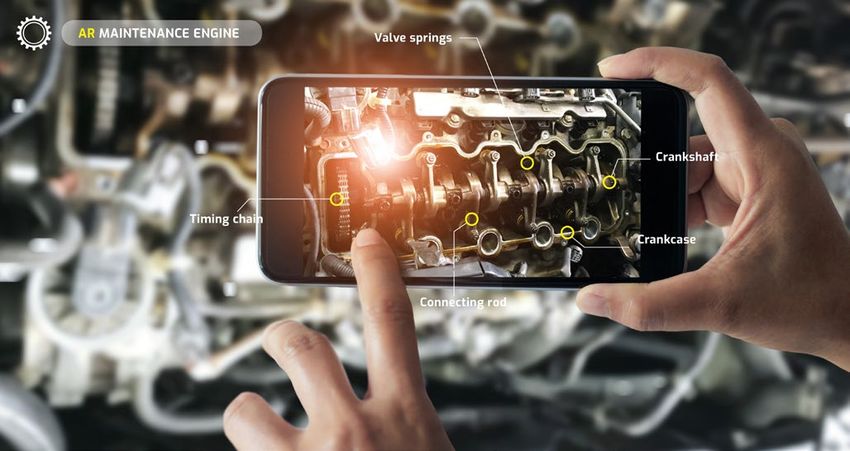
Prediction
Increased attention to the challenges of
ML bias will build ethical responsibilities
into engineers’ job descriptions.
As we leave more decisions to algorithms, there will be increased attention to how they’re making
those decisions. The utopian vision of fair outcomes derived from dispassionate examination
of objective data overlooks the matter of who selects the data sets and designs the algorithms
themselves: flawed and inevitably biased human beings.

We’ve seen examples of bias already. Our predictions last year
noted the adversarial learning example of jerks (technical term)
teaching a crowdsourced chatbot to be racist. Algorithmic bias
in the mortgage industry is a well-known failing, and facial
recognition hit a wall amid multiple controversies in 2020.

A July paper in Royal Society Open Science discussed the
problem of “unethical optimization” and mathematical methods
for detecting and eliminating such biases. Ram Sriharsha expects
that pursuit to take on added importance in the next few years.
But he says that the goal of completely eliminating bias is
doomed to failure, so it has to be coupled with a goal to at
least understand bias when it (inevitably) occurs.
“
“Take the classic example of loan applications being racially       than that, we’re already seeing partnerships designed to
 biased, even when it’s not an intention but an inadvertent         prevent these unintended biases. If computer scientists in
 result of the data you fed it,” Sriharsha says. “You can’t teach   the past have worked in isolation, now they’re working with
 an algorithm, ‘Recognize race and don’t be a jerk about it.’       ethicists, economists and sociologists to understand the
 So explainability is going to be crucial.”                         societal implications of certain models.”

If we can understand how an algorithmic model produced an           If we can’t teach every software engineer to be a sociologist,
                                                                                                                                               Explainability
objectionable outcome, we can more quickly adjust it to produce
better, fairer conclusions. Was the training data biased because
                                                                    urban planner, community activist and moral philosopher, we can
                                                                    at least make sure the engineer has them all on speed dial.
                                                                                                                                               is going to
it didn’t accurately reflect the full ethnic and gender makeup
of society? Does a particular data set reflect societal biases
                                                                    These consultations, and the very act of considering wider                 be crucial.”
                                                                    ranges of consequence, mean that better, fairer models will
that the model is then reinforcing? Are there other data sets
                                                                    take more time and consideration to build. Problem: “Let’s slow            Ram Sriharsha, Head of Machine
that would contribute to a clearer picture of our society, and
                                                                    down and think this through” is not typical Silicon Valley                 Learning, Splunk
produce outcomes that better align with an organization’s or
                                                                    cocktail conversation.
community’s values?
                                                                    “‘Move fast and break things’ has been the mantra of Silicon
Explainability can help us fix errant models as they err, but the
                                                                     Valley,” Sriharsha notes. “And I think that for Silicon Valley
bigger question, Sriharsha says, is how we handle ethical issues
                                                                     entrepreneurship to remain at the top, you have to move fast.
up front, before the models are turned loose.
                                                                     Especially in a rapidly evolving field like AI. But we’ll probably
“It starts with education, evolving the course work we use to        have to learn to move fast and not break things.”
 train future computer science engineers,” he says. “But more

                                                                                                                                          Splunk Emerging Technology Predictions 2021 |   11
Prediction
Machine learning will help speed
the discovery of new medicines — in
part by looking at previous “failures.”
This prediction looks at one of the fields where data obsessed us all in 2020: healthcare. The
current crisis is finding new applications of artificial intelligence, with the healthcare sector
seen as a major growth area. For instance, the U.S. Centers for Disease Control developed a
coronavirus chatbot that uses AI to tell you whether you need to go to the hospital.
But a challenge in applying machine learning to healthcare is Some clinical trials are stopped not because a drug fails, he says,
that it’s a human-intensive field, in which a lot of what happens but because it wasn’t effective enough in an envisioned scenario.
in terms of treatment and research moves, by necessity, at a But it’s possible that those drugs, or new structural variations of
human pace. And the smallish numbers involved in clinical them, could be more effective in other important scenarios. This
trials or individual treatments don’t really cry out for advanced existing, unused data could help researchers more quickly zero in
algorithmic support, Sriharsha notes. on new, effective medicines.
“Where I feel AI/ML make the most sense in medicine today is not “If you want to see the biggest impact of AI in healthcare and life
in current trials, but in the thousands that have already occurred,” sciences in the next 10 years,” Sriharsha says, “probably that is
he says. “Clinical trials are extremely expensive. Companies where it’s going to happen.”
spend billions of dollars on them, and many fail. There are vast
troves of data on the structure of drugs that didn’t move forward,
but might have undiscovered promise.”
Splunk Emerging Technology Predictions 2021 | 12Prediction
Smarter AI will work wonders,
and challenge human workers.
“
AI/ML, drawing insights from data and acting on it through automation, will transform just about
every digital interaction in our lives. And at this point, nearly every interaction in our lives has a
digital component. As the above trends come together — ethically sound algorithms that are
robust against adversaries, and that can learn on their own — we’ll see them act more like In-house
humans, making more consequential decisions and actions.
training on new
Humans, however, will still have work to do in a world so underscored the need for training as companies must match methodologies
transformed by AI. Ram Sriharsha says that the human disruption workers to rapidly evolving roles:
will be substantial. Many current jobs will be eliminated or
This dynamic is about more than remote working — or the and techniques
fundamentally altered, and many new jobs will be created. In
both cases, a new workforce will be needed, and organizations
role of automation and AI. It’s about how leaders can reskill
and upskill the workforce to deliver new business models in is going to be
should begin retraining now.
Companies should be training their workforces, Sriharsha says,
the post-pandemic era.
To meet this challenge, companies should craft a talent
important.”
noting that such training used to be more common. “Companies
strategy that develops employees’ critical digital and
are going to realize that it’s a value-add for them to train their Ram Sriharsha, Head of ML, Splunk
cognitive capabilities, their social and emotional skills,
employees now. In-house training on new methodologies, new
and their adaptability and resilience. Now is the time for
techniques and so on, is going to be important.”
companies to double down on their learning budgets
A McKinsey article in May says that the COVID-19 pandemic has and commit to reskilling. Developing this muscle will also
illustrated the effects of sudden change on a workforce, and strengthen companies for future disruptions.
And every organization’s strategy coming out of 2020 is to build
resilience to further disruptions.
Splunk Emerging Technology Predictions 2021 | 135G/Mobile
Pretty much since the invention of the smartphone, the focus of our digital lives has been the
screen in our hands. For software developers, mobile first was a mantra for years until now it’s
so basic that it needn’t be said. Splunk’s chief technology officer, Tim Tully, notes that he can do
80% of his job on his smartphone (but adds that, since COVID-19 sequestered him at home, he’s
reverted to a heavy, powerful desktop machine for the first time in a decade).
The rise of the mobile device was significantly driven by the arrival of 4G networks that allowed
mobile data streaming, which in turn powered the success of Netflix and YouTube, Uber and Lyft,
all the social media networks and more.
(Before 4G, we still mostly used phones for talking. Now, we use our phones for data and bark
instructions at an AI-enabled hockey puck that lives on our coffee table.)
5G is next on the horizon, but there are significant roadblocks that will slow its rollout. Before we
consider the longer term, there are immediate mobile trends that were greatly accelerated by the
pandemic. To name two: two-factor authentication and digital payments.
Splunk Emerging Technology Predictions 2021 | 14Prediction
Two-factor authentication will become “
Hardware tokens
the widespread norm, not an option. include little
USB security
The sudden wave of office workers logging in from home raises security concerns, because
now there are more people logging in from outside your network who might not be who they keys, or can be
said they are. incorporated into
It’s a challenge that should be keeping security experts and mobile software engineers awake mobile phones.”
at night. “The surface area of security has expanded because of COVID and mobile,” says
Splunk Head of Mobile Engineering Jesse Chor, “and I think it’s definitely a concern.” Mick Baccio, Security Advisor, Splunk
White House, and was CISO for the Pete Buttigieg presidential
campaign, agrees that 2FA is growing, and he sees hardware
tokens as the likeliest solution. Hardware tokens include little
USB security keys, or can be incorporated into mobile phones.
“A hardware token pretty much shuts down the risk of account
takeover,” Baccio notes. “Who doesn’t want to shut that down?
It’s one of the biggest problems security teams face. Just shut it
down and move more resources to your next biggest problem.”
“The scary part now is that there are only two incumbent mobile
operating systems,” Chor says. “If Apple or Google screw up their
Expect to see more adoption of two-factor authentication, operating system, think about how devastating a vulnerability
whether by a phone app that asks, “Did you just try to log in?” could be. A simple bug around my PIN, say, could let you get into
or a biometric scan. Mick Baccio, a Splunk security advisor who my work network, hack my email, use my ecommerce accounts,
has worked for the Dept. of Health and Human Services and the hit my bank. You can basically be me.”
Splunk Emerging Technology Predictions 2021 | 15“
I think COVID is
going to really
accelerate
the adoption
of biometric
identification
for security and
payments.”
Jesse Chor, Head of Mobile
Engineering, Splunk
And as for the form factor of the two-factor, Chor says he’s “a big “Just like we don’t send passwords over the air anymore, we
fan of biometrics. I think COVID is going to really accelerate the send hashes, the devices will send a hash of your biometric
adoption of biometric identification for security and payments.” data,” Chor says. The device becomes a conduit for information
that is confirmed in the cloud. A lost or stolen phone is no
An important value of biometric logins, Chor says, is that it
security threat, as long as you still have your thumb on hand.
replaces the physical device. If the mobile phone is the interface
“I think security is going to head that way, where the phone is
for the biometric identification, but does not store biometric data,
just a conduit.”
it’s useless to a thief. (See below for more on biometrics.)
Splunk Emerging Technology Predictions 2021 | 16Prediction
Contactless payment will rise faster
than expected. (Like, really fast.)
COVID has driven adoption of digital payments, in terms of contactless payment apps such as
Apple Pay, Google Pay, Samsung Pay, Square Cash, Venmo and PayPal One Touch. And after the
pandemic recedes and we achieve a “new normal,” expect the convenience and no-touch benefits
to continue to gain traction.
“People still go out and buy things, and when they do, they’re seen as being mainstream,” he says. “Now contactless payments
more often using contactless payments, which generally involves have become much more prevalent — essentially the norm.
a phone,” Jesse Chor says. “And ideas like the digital wallet — That wouldn’t have happened quite as quickly if it weren’t for
Apple Pay — will make a lot more sense to a lot more people.” the pandemic.”
In an April report, Bain & Co. noted that disruptions to businesses
from restaurants to retail to the entire travel industry meant that
payment volumes were down, and payment services providers
were suffering. But not so, the contactless payment industry.
Bain observed signs of growth, including hiring at several of
the payment providers, and predicted faster-than-anticipated
adoption even after the pandemic ends and the economy
recovers. Bain’s pre-COVID estimate was that 57% of transaction
value would be done digitally by 2025. Since the pandemic,
Bain has revised the prediction to 67%.
Simon Davies, vice president of Splunk in APAC, says COVID has
pushed several emerging technologies to center stage in the
Asia-Pacific region. “Before COVID, people were already doing
things like blockchain, mobile technologies, etc. but weren’t
Splunk Emerging Technology Predictions 2021 | 17Prediction
Despite rising appetite, 5G won’t hit in
2021. Expect rollout to be held up by
hardware challenges at least into 2022.
Pre-COVID, the telecom industry was eager to roll out 5G, the next-generation telecommunications
standard that promises greater bandwidth and lower latency, and a cell tower every eight feet
or so. The technology could make our mobile devices more powerful, and fuel other emerging
technologies, including virtual and augmented reality. These days, robust deployment of 5G looks
more like a three-to-five-year proposition.
Tech industry news site EPS News predicts slow and uneven “5G’s problem is the chicken and the egg,” says Jesse Chor. “You
5G adoption: “Before the pandemic struck, the mobile industry need demand that’s realized in devices that can use 5G, and
was rushing to bring 5G networks and technologies to market. you need the carrier infrastructure. But who’s going to build one
With declining revenue and a shrinking market, this shift is less without the other?
likely to take place soon. Some carriers and manufacturers
“I think the biggest obstacle for 5G is the physical limitations of
already delayed upcoming releases of 5G devices and services.”
the technology,” he says. Not only does the new standard require
Analysts at 451 Research also see the delays, but note that this is new cell towers, but 5G has a much shorter range than 4G, and
no time to sleep in, writing1 in July, “5G will not move the needle in is not great at penetrating walls, meaning we’ll need a lot more
the enterprise in 2020, but planning must start now. ... A couple of towers than earlier standards required. That’s expensive, and
years from now, 5G networks will support ultra-low latency and also, there’s a global pandemic.
mission-critical communications that enable the applications
“Especially with COVID, manufacturing has been slowed, and
and processes supporting the digital transformation of industries,
it’s really hard now to get fleets of people to install things,
some of which will see acceleration due to COVID-19.”
to even get the proper permits,” Chor says. “But despite the
1 451 Research, “Update: 2020 Trends in Applied Infrastructure & DevOps,” July 2, 2020
Splunk Emerging Technology Predictions 2021 | 18real barriers to adoption right now, the demand for higher bandwidth
is going up. Between work-from-home and the hunger for streaming
Never Mind the 5G,
entertainment, people are very bandwidth-hungry.” Here’s the WiFi 6
Chor sees the tipping point coming from the device side: “I think phone
Jesse Chor says that a lot of the benefits
manufacturers need to get on it. We’ve just seen it with Apple, which
we want from 5G will be delivered first by
launched the 5G iPhone 12 in October. That could increase the total
WiFi 6, an available but not-yet-widespread
addressable market by 30% or so. Other carriers will follow, especially if
technology.
they have assurances from carriers about when 5G coverage is coming.” “WiFi 6 is at least 10 times faster than regular
Another impediment to rollout is that the pandemic has shuttered key WiFi, so it will bring the bandwidth and low
locations for initial rollout. Chor expects corporate and college campuses latency we talk about with 5G,” he says. “If
to work with carriers to roll out the infrastructure. you’re a business, you want to roll it out fast,
and you can have it today — you just need
“Once offices broadly reopen, I think a lot of tech companies will start
connected devices that can use it.”
instituting 5G within their campuses or buildings and pump it up that way,
because there’s a lot of productivity they can gain with connected devices Many new devices, such as iPads and
with low latency,” Chor says. And if tech employees or college students iPhones, are ready for WiFi 6. Schools and
and staff are enjoying high-speed bandwidth as they work, they’ll drive corporate campuses can benefit from the
demand where they live. technology, and it will be a major part of the
Look for initial networks to roll out in Asia, he adds. “China is already rolling bandwidth equation that includes 5G.
it out in a lot of places. I was there just prior to COVID, and I saw the towers
“WiFi 6 is great for internal devices you
popping up everywhere,” he says. “And developing economies, in Asia and
control, manage and own. 5G would be for
elsewhere, have an advantage in terms of lacking legacy infrastructure.
outside devices that you don’t necessarily
It’s just a different discussion when you’re starting from near-zero, versus
control and own, but you want them to be
upgrading from an extensive legacy investment.”
connected,” he says.
The World Economic Forum lists 5G as one of 10 emerging technologies
to watch in the wake of COVID-19, from distance learning and telehealth
A shopping mall would want 5G available for
to drone deliveries and contactless payments, and notes that nearly
shoppers, for instance, but might use WiFi 6
every other technology on the list depends upon stable, affordable, high-
internally for retailers and management.
speed internet. But while acknowledging the power of the technology, it “Just like 5G, WiFi 6 will soon be ubiquitous,”
also notes that “the adoption of 5G will increase the cost of compatible he says. In a few years, pretty much any WiFi
devices and the cost of data plans. Addressing these issues to ensure enabled device you buy will be WiFi 6.”
inclusive access to the internet will continue to be a challenge as the
5G network expands globally.”Chor notes that 5G promises much more than just higher “Connected glasses, like a phone on your face, totally makes
bandwidth. Both 3G and 4G networks ushered in new services, sense, especially given the rise of AR/VR.”
and whole new industries, from Lyft to Door Dash to the
It will take a few years, say five to 10, and it’s not just about
kaleidoscope of digital streaming channels. Telecommunications
use cases.
bandwidth unlocks tremendous economic power.
“You need advancement in material sciences, battery technology,
“And I’m sure that 5G will do the same, with greater bandwidth
a lot of stuff that needs to catch up,” Chor says. “But once we
and lower latency unlocking new things we didn’t think of,” he
have them, who would not want glasses that do everything?
says. “If you look at the market caps of internet companies, they
Then you’re like Iron Man. It will be a while before we get there,
exploded every time another telecom standard was unlocked.”
but it’s definitely coming.”
Among the new possibilities to be unlocked: new mobile form
factors. (Prediction: In the future, we’re all Tony Stark.) “The
future of mobile is hands-free, wearable devices,” Chor says.
Splunk Emerging Technology Predictions 2021 | 20AR/VR Speaking of augmented and virtual reality (AR/VR): If ever there was a time when people might yearn to retreat into a digital reality, 2020 was surely that time. But both the hardware and the software were still finding their footing, and like anything that wasn’t rock solid at the start of the year, COVID-19 presented a setback. But the setback will be temporary. In July, IDC took stock of the developing technology and estimated that from 2019 to 2024, the compound annual growth rate in global AR/VR spending would be 76.9% worldwide, reaching $136.9 billion.2 AR and VR are naturally lumped together in many discussions, but they’re not the same thing. Augmented reality overlays data on live video, often through a phone or tablet camera. (Think Pokémon Go, or watch this Splunk video demonstrate an industrial repair scenario.) Virtual reality is what we’ve been expecting at least since Tron hit movie theaters in 1982: Interactive worlds created entirely from computer graphics. VR requires headsets, currently on the expensive and cumbersome side, to create true immersion. Virtual and augmented reality improve collaboration and access to knowledge. As a greater percentage of our retail activity and business communication move online, there will be demand for more immersive experiences. Additionally, industries not nearly as well-established as ecommerce are making massive shifts to digital platforms: Remote learning and telemedicine are entering many school districts, universities and medical practices for the first time. 2 IDC Press Release, “Pandemic Tempers Growth in AR/VR Spending, but the Long-Term Outlook is Positive,” July 20, 2020
New medical applications are already appearing. Doctors at George Washington University
Hospital have been using VR to uncover lung damage from COVID-19 since March.

“Telemedicine has certainly accelerated, with medical practices working in partnership with
 insurance providers,” says Simon Davies, vice president of Splunk in the Asia-Pacific region.

“One of the most interesting VR advancements I’m seeing is in data visualization and event
 management. The ability to effectively consume data is critical to timeliness. Organizations are
 using virtual reality to consume 20 to 30 dashboards, coupling human intelligence with machine
 intelligence to distill meaningful insights in real time.”

An AR/VR survey of venture capitalists, released in March by law firm Perkins Coie, predicted
that AR will continue to outpace VR, in part because mobile devices are already everywhere, and
they’re better suited to AR overlays than full-immersion VR.

                                                                                                    Splunk Emerging Technology Predictions 2021 |   22
According to the World
Economic Forum
According to the World Economic Forum, AR does
three things very well: visualization, annotation and
storytelling — each of which can be very useful to
workplaces, schools and institutions during and
after the pandemic. Further, AR/VR experiences
could help mitigate the isolating nature of lockdowns
and lingering effects on, for instance, business and
leisure travel.
The WEF links to news stories about the
following examples:
• Virtual job training for young adults with autism
• AR visualization of air pollution worldwide
• “All 185 first-year medical students at Case Western
Reserve University (CWRU) are using HoloLens
and HoloAnatomy, an award-winning AR app by
CWRU and Cleveland Clinic, to learn from their
own homes.”
• “London’s National Theatre is using AR to help make
its performances more accessible for people who
are deaf and hard of hearing.”
• Microsoft’s Project Tokyo helps visually impaired
people to “see” using AR and AI and the HoloLens.
The device can detect the location of people in the
user’s environment, and recognize faces, relaying
the information to the wearer via audio.Prediction
AR/VR’s breakthrough application
will be immersive collaborative
communication.
“I think of it as Zoom on steroids,” Jesse Chor says. The toll remote work takes on collaborative
communication means we’ll want more immersive solutions that make interaction easier and
more effective. “Not like a Zoom call today, where everyone talks over each other: ‘Oh, sorry, you
go ahead.’ ‘No, you go.’”
5G bandwidth and more powerful laptops will reduce latency
problems and provide opportunity for new ways to collaborate,
to share visual presentations, on-the-fly notes and more. Post-
COVID, more workers are going to continue to work remotely,
and tech companies have long believed that innovation arises
from the live, daily mix of coworkers, and that the hallway
and kitchen are as important, if not moreso, than designated
conference rooms.
“So the question becomes, how do remote teams effectively
replace actually being in front of each other? We’re going to want
virtual collaboration to be as close to the real thing as possible,”
Chor says. “I think the next iterations of video conferencing will
incorporate AR and VR technology.”
Splunk Emerging Technology Predictions 2021 | 24Prediction We’ll see a breakout hit in consumer/ entertainment VR by early 2022, or virtual reality will drop off the radar. Any consumer entertainment model requires a combination of hardware and content. The hardware element, Jesse Chor says, is there. But that isn’t enough. “Virtual reality is at a very, very interesting spot,” Chor says. “It’s not new — it has been around forever, and it’s at a very vulnerable time now.” He notes that the success of entertainment technology is driven by content. A new device might be an obsession only for the hardcore hobbyist until a viral hit drives mainstream adoption. Chor says VR’s hardware is there. The Oculus Quest, released in 2019 and sold out everywhere in 2020, is the Nintendo Switch of VR: A cheap, attractive device to drive adoption. Now we need the critical-mass software, the breakthrough game. “It’s do-or-die; either that breakthrough comes in 2021, early ’22, or it’ll be another 10 years before it gets visited again.” So VR needs its “Legend of Zelda: Breath of the Wild” or “Super Mario Odyssey.” Otherwise, Chor says, companies will lose patience and stop investing in the technology. He’s optimistic that a hit will emerge to capture interest. “Because with COVID, there’s an audience for anything that’s driving immersion at home.” And there’s only so much bread we can bake.
Biometrics
Biometrics was already taking off before the pandemic. Apple devices
had been asking for your thumbprint for years, and the newest
iPhones really want to be unlocked by your face.

In addition to biological attributes such as thumbprint, voice and
facial scans, biometrics includes behavioral measurements, and that
goes back centuries: Verifying identity by comparing signatures is
not exactly cutting edge. Similarly, what time you regularly log into a
system, your typing style, how you walk — all are being used today
to identify individuals.

UK schools have used fingerprinting or face scanning for access
control, recording attendance, buying lunch, checking out library
books. One school, University Technical College, Leeds, has had
to abandon its fingerprint sensor access controls due to the
coronavirus pandemic, replacing them with proximity card sensors,
facial recognition and, for health purposes, a thermal camera.
(On the other hand, a French court blocked high schools from
using facial recognition.)

Japan’s Seven Bank was testing ATMs that use facial recognition in
late 2019, and in 2020 trials were under way to use facial recognition
for cashierless checkouts in Japanese 7-Eleven stores.

                                                                          Splunk Emerging Technology Predictions 2021 | 26
Prediction
Biometrics will move up in
the world. And into the cloud.
“I’m a big fan of biometrics,” says Splunk Head of Mobile Engineering Jesse Chor. He predicts that
biometric adoption, like (and as an example of) two-factor identification, will increase sharply in
the Data Age. And he predicts that a key evolution in biometric verification will be solutions that
don’t store your data on your device. Because if the app that verifies your thumb print is stored
on your phone, bad guys need only hack your phone (which may be preferable to hacking your
thumb, actually).
“The data won’t be stored on your phone,” Chor says. “It’s going to The New York Times under the headline, “The Secretive
live in the cloud. The phone just sends the thumbprint it receives Company That Might End Privacy as We Know It,” and use
to another entity, and it’s up to that entity to decide, is this the of facial recognition and other biometric data collection
right one? And your device won’t send your actual biometric data, (including DNA samples) as part of China’s oppression of its
but a hash, just like we do with passwords now.” Uighur minority generated international condemnation.
While biometric identification is a great way to minimize security Chor notes that legal and ethical guidelines will have to
breaches that depend on account or identity theft, the field is be worked out on the national and international level, and
highly controversial, particularly around facial recognition. In permissible use of biometric data may vary. (A September
September, the city of Portland, Oregon, banned use of facial article in the MIT Technology Review discusses such efforts.)
recognition by government or businesses, a more stringent ban But biometric technologies are too important and useful to
than bans on government agency usage already enacted by kill. Whether we’re doing our jobs or managing our personal
San Francisco, Oakland and Boston. Controversies around the finances, the most important aspects of our lives are digital,
technology have led to calls for greater regulation. A 2019 and increasingly under threat of cyberattack.
profile of one facial recognition provider’s practices ran in
Splunk Emerging Technology Predictions 2021 | 27Blockchain
The enterprise blockchain ecosystem has rapidly matured, and Splunk’s head of blockchain, Nate
McKervey, measures that in a very hands-on way.
“2020 has been the first year where I have not had to explain blockchain once to organizations,”
he says. “They come in understanding it to a high-enough degree that we can show them what
problems we’re solving, which is a wonderful thing. Looking back, 2018 was the year of ‘what
is blockchain’ conversations. 2019 was full of ‘nobody needs blockchain’ discussion, and in
2020 we’ve reached, ‘Okay, I understand where it’s useful and valuable. Now, how can you help
me be successful?’”
The 2021 conversation, he predicts, will be, “What is your blockchain strategy?”
“In two years,” he says, “some companies will realize that if they don’t have a blockchain strategy,
they’ll be less competitive because they won’t be as efficient as their competitors.”
With that in mind, he provided a rapid-fire series of predictions around digital ledger technologies.
Splunk Emerging Technology Predictions 2021 | 28Prediction
COVID will accelerate
blockchain adoption.
McKervey says that when the pandemic lockdowns began, he assumed
that organizations would conserve resources and focus on core
technology investments.
“I even told our leadership that I expected emerging technologies An August article at CIODive.com backs him up. The publication
to be the first ones to be cut,” he says. But by autumn, not spoke to experts who also had expected 2020 to be a bad year
one of the more than 100 organizations he was talking to had for blockchain, but were seeing continued interest, particularly
suspended their blockchain initiatives. “In fact, we’ve had more in supply chain and other use cases where value is obvious.
inbound interest.” As Congress continues to urge the utilization of blockchain
technology, we expect no slow down in interest.
Splunk Emerging Technology Predictions 2021 | 29Prediction
Successful blockchain
implementations will focus
on efficiencies.
As blockchain emerges from that 2019 trough of disillusionment, McKervey expects adoption
to accelerate in the pandemic/post-pandemic era. The degree to which the pandemic
interrupted supply chains will particularly drive interest in blockchain technologies, which can
improve visibility into the source of goods, and where they are at any time, and how overlapping
supply chains interact.
“If my supply chain is 10 times more efficient than yours, your The financial services industry was our big pick last year for
vendors aren’t going to want to work within your supply chain,” blockchain strides. That sector continues to be a strong area
McKervey says. “We’re seeing organizations decrease paperwork of blockchain interest, with particular interest in central bank
and manual processes by 97%. If their competition doesn’t do digital currencies (CBDCs), but expect supply chain applications
the same, they won’t be able to compete.” to see the greatest near-term improvements, largely driven by
the pandemic.
Splunk Emerging Technology Predictions 2021 | 30Prediction
In the short term, organizations will
struggle to turn blockchain test projects
into full-scale successes.
Blockchain initiatives still start with small proof-of-concept projects that prove value on a small
scale, and success drives full implementation … which is where the trouble often starts.
“The move to production is where the real challenge comes,” McKervey says. “When you do a proof
of concept, you just have to show that it functions. When you move to production, it needs to be
secure, stable and to perform at scale.”
The trouble, he says, is often a lack of observability. Problems in “The problem is, then they have this code that they
production have to be diagnosed. You need visibility into data have to support and scale and modify as the ledgers
from the digital ledger itself, your infrastructure, your applications. get upgraded and modified, and that’s a huge hurdle
Often organizations stitch together a mix of individual tools to we’ve worked with customers on,” he says. As a
analyze and visualize each type of data. And they may have to result, he expects to see vendors respond with more
write proprietary code to analyze the ledger data. It reminds him interoperative monitoring solutions, or, as Splunk
of the days before Splunk, when sysadmins would write scripts to provides, cohesive observability solutions that
awk and grep through log files. combine logs, metrics, traces and ledger data.
Splunk Emerging Technology Predictions 2021 | 31Prediction While blockchain consortiums are a leading model, they’ll be hampered by coordination and visibility challenges. A lot of enterprise blockchain experience right now is through consortiums, in which companies in a certain industry or supply chain collaborate via a digital ledger. The consortium operator, which is not a stakeholder in the partnership itself, may be coordinating the solution, but lacks visibility, as do the members of the consortium. And visibility can be a challenge when some data may be proprietary to a specific participant, and when some of the participants may be rivals. Among the biggest challenges, McKervey says, is getting to a target, since the members use different infrastructure, cloud decentralized state. Often the consortium starts with centralized providers and monitoring solutions. This parallels the challenge control by the operator, with the goal of decentralizing the individual organizations find as they power up from proof of control. This can only be achieved when sufficient visibility concept to full production, and is another force that will drive across the consortium is obtained. Sufficient visibility is a difficult a more cohesive approach to observability.
Prediction
In about three years, blockchain gets
really exciting.
The short term for blockchain is in security and efficiency, but looking a few years out, new
business-transformative blockchain-based solutions will emerge and most won’t even know
blockchain is part of the solution. Secure voting, tracking of political donations, tracking of disease
outbreaks and securing medical supply chains are all happening now, but business-transformative
use cases are hard to predict. (Did the taxi industry see the Uber model coming? Exactly.)
Decentralized identity will be an enabler of these new business models.

Decentralized identity is especially interesting, McKervey         “That stuff is a ways out, though,” McKervey says. “Right
says. Individuals and organizations use many globally unique        now we’re still seeing blockchain develop as a strategic
identifiers, such as: communications addresses (email address,      technology for businesses and the public sector. We’re
user name, etc.), ID number (passport, driver license, tax ID),     at the stage where blockchain is beginning to increase
product identifiers (serial numbers, barcodes, RFIDs). The vast     efficiencies, but most CIOs aren’t yet seeing blockchain
majority of these globally unique identifiers are not under our     as a top initiative.”
control, and may be open to fraudulent use: identity theft. The
                                                                   When will they get the message? “When leaders see their
idea of a means of identification that is secure, global and not
                                                                   business model disrupted,” he says, “and by then it may
controlled by a central body has many appeals and applications.
                                                                   be too late for their organization.”

                                                                                                                               Splunk Emerging Technology Predictions 2021 | 33
Edge Computing Edge computing is an inevitable progression. We’re already managing a great deal of the data and interactions of our smartphones and laptops via the cloud, with software that’s delivered as a service rather than installed on the endpoint. And we’re constantly digitizing more stuff. We’re putting sensors into warehouses, onto trucks and freight trains, in industrial machinery. The result is that we’re measuring things and making decisions about devices on the edges of our networks by shipping the data to a central, probably cloud-based datacenter, doing the analytics, and sending back automated instructions. All that back and forth takes time, and latency is a problem. (That’s right, a quarter-century ago, we were all on dialup, and now we’re complaining about the speed of light. Sounds funny, but half-second latency won’t be a laugh when your car is driving itself through rush-hour traffic.) Our main prediction about edge computing (in which analytics and automation do all the “thinking,” and take action, at the network periphery rather than reporting back to the mother ship) is that it’s here, it’s necessary, and it’s getting better. What’s interesting is the way in which the edge provides a perfect arena for every emerging technology we’ve been discussing.
Prediction
Emerging technologies come together
at the edge.
John Sabino says that the real power in emerging technologies is not any one of them, but
the combinations. “I think the keys are AI/ML and automation, and when you add them to
IoT, edge computing and 5G, you can transform entire industries — logistics, manufacturing,
healthcare, energy.”

Tim Tully sees the same effect, and notes that smarter AI, and      “When I was at GE, we had this concept of an industrial internet
more powerful hardware and robust connectivity will be               that is only gaining steam,” Sabino adds. “You can see it on
transformative for applications of edge computing. “More and         brewery lines right now. You might have four master brewers
more is happening at the edge, because we can do more and            that might operate a multimillion-gallon line.”
more computation as the hardware and software gets more
                                                                    Progress. We’ll drink to that.
sophisticated,” Tully says. “Local processing reduces the latency
of moving the data to the cloud to process, and you get the
same results.”

                                                                                                                                       Splunk Emerging Technology Predictions 2021 | 35
Future Steaks, Working Assumptions
We asked Jesse Chor for his most far-out, decade-plus prediction, and he gave us a pretty wild
vision. Today’s 3D printers can handle machine parts and numerous consumer goods. Chor says
that’s just the foot in the door for digital printing.
“I look at COVID-19 as an example,” he says. “Without a doubt, it’s
going to accelerate vaccine production and testing, but I’m also
looking ahead to a world where we digitally print vaccines, we
digitally print medicine. It’s going to be world-changing, and even
that’s just a start. Imagine digitally printing food.”
Sounds amazing, though if we’re predicting Star Trek futures,
we’re more excited about visiting a VR holodeck than eating
a filet mignon printed by a food replicator. To ground us back
in the present, we asked Tim Tully for his most immediate,
prosaic prediction.
“We’re all going to have to update our home networks,” he says.
So many people are working from home, perhaps while a working
spouse and distance-learning kids compete for bandwidth. And
even if that’s not you, you’re probably consuming a lot more
digital entertainment at home during the COVID era, in place of a
more on-the-go social life.
“If you have three kids in the house on Zoom doing school plus
two working parents, that’s probably 5x the amount of traffic
you’ve ever had to have before,” he says. “I’ve helped a number of
our execs upgrade to enterprise-level or prosumer tech.”
So bring on the WiFi 6, and get on the Oculus Quest waiting list.
The future is now.
Splunk Emerging Technology Predictions 2021 | 36Contributors
Jesse Chor Steve McMahon
Jesse is head of mobile engineering at Splunk. Splunk CIO Steve McMahon has 20+ years in
Before that, he was director of software the high-tech industry, having previously held
development engineering at Yahoo, which had transformative roles at Cisco, IBM and several
acquired Sparq, a mobile marketing startup he startups. At Splunk, he has led the Business
founded and led as CEO. Transformation, Global Customer Support and
Cloud Operations and Engineering organizations.
Simon Davies John Sabino
Simon is vice president of everything Splunk John is Splunk’s customer success officer, which
in the Asia-Pacific region. Before that, he means he and his team help customers adopt
was Microsoft’s vice president of business industry best practices and Splunk technology to
applications for Asia Pacific and Japan, and drive success through data. John was also senior
held leadership roles at Salesforce, Oracle vice president of commercial operations for both
and Citibank. GE Capital and NBC Universal.
Ammar Maraqa Ram Sriharsha
Ammar is Splunk’s senior vice president and Ram is the head of machine learning at Splunk,
chief strategy officer. He joined in 2015 as vice leading the application of state-of-the-art ML
president of business operations, and has held techniques, including the ML that powers Splunk.
several key leadership roles since. Back in the Previously, he led engineering and product
day, he led corporate development and strategy development for genomics at Databricks and
at Cisco, held product roles at Dell, and started started the R&D center for Apache Spark in
his career as a growth-focused consultant Amsterdam. He was a principal scientist at Yahoo
with Bain & Co. Research, and he holds a PhD in theoretical
physics from the University of Maryland.
Nate McKervey Tim Tully
Nate is the head of blockchain at Splunk; he has Tim is our chief technology officer, responsible
been a data junkie since he discovered Splunk for Splunk’s Products and Technology
in 2005, as an engineer at Harris Corporation. organization. Before that, he spent 14 years at
Now he’s on a mission of next level business Yahoo as chief data architect, VP of engineering
transformation using distributed ledgers for and more. He’s big on the intersection of data,
multiparty systems. design and mobile, and advises entrepreneurs,
startups and universities.
Splunk Emerging Technology Predictions 2021 | 37You can also read


