LEGACY CHARTER ACADEMY SAFE RETURN TO SCHOOL & CONTINUITY OF LEARNING PLAN
←
→
Page content transcription
If your browser does not render page correctly, please read the page content below
LEGACY CHARTER ACADEMY
                                   SAFE RETURN TO SCHOOL &
                                  CONTINUITY OF LEARNING PLAN
                                        Updated: June 2021

Overview: Consistent with our charter, we believe that the best learning environment for our
students includes regular, day-to-day, in-school instruction provided by a teacher. Our goal is to
have a traditional, in-school learning environment for our students if this can be accomplished
while keeping students and staff safe and healthy. As we pursue this goal, we continually seek
guidance from the U.S. Centers for Disease Control (CDC) on best practices in mitigating the
spread of COVID-19. This document summarizes our school’s safe return to school plan for the
2020-21 school year, which we plan to continue into the 2021-22 school year. As the CDC,
state, and local health department guidelines change and are released for the upcoming school
year, the school will update its plan and practice. These updates will occur every six months,
and more frequently as needed.

If necessary, the school is prepared to transition to hybrid or remote learning environments. We
are committed to providing all students with a high-quality education regardless of the learning
environment(s) we use throughout the year. In anticipation of possible interruptions to in-person
instruction, our management partner, National Heritage Academies (NHA), has provided a
Chromebook or laptop device to each student. This investment in technology was made to
ensure a seamless transition between models when necessary.

Background on learning models: At the beginning of the 2020-2021 school year, we knew
that changes in our learning model would be required to keep students and staff safe and
healthy. We began the school year prepared to operate in various modes as necessary
throughout the year. Detailed plans were created around each learning scenario, which
included:
    • In-person learning: a return to a traditional classroom environment.
    • Remote learning: teaching and learning done completely at home.
    • Hybrid learning: a combination of in-person and remote instruction.
    • Virtual learning: teaching and learning in a fully online environment. These students are
       enrolled in fully online learning regardless of what learning model the rest of the school
       is using. This option has been available to families all year long.

These detailed plans were created by the school, its management partner, NHA, and its Board.
They were made available for public comment when the Board was reviewing and approving it
and documented as the COVID-19 Preparedness & Response Plan and Extended COVID-19
Learning Plan. The approved plan was posted on the school’s website and has been available
throughout the year at: https://www.nhaschools.com/schools/Legacy-Charter-
Academy/en/Transparency-Reports

Personal protective equipment: The school follows CDC, state, and local guidelines for using
masks and face coverings. Masks and face coverings can be homemade items or disposable
level-one surgical masks. Masks need to be worn by all staff and students throughout the day
unless an underlying health condition or sensory issue exempts them. Reusable masks have

        This plan is in draft form and is available for public comment/input at the upcoming Board meeting.
been provided to the school for staff use. If students are unable to obtain a mask, additional
masks are made available in the school’s main office as needed. All students must wear masks
whenever they are outside the classroom for reasons such as transitioning and arrival/dismissal,
and when social distancing cannot be maintained. Staff and students are required to wash cloth
facial coverings or dispose of disposable masks daily.

Students are instructed to use masks properly. In situations where a student is refusing to wear
a mask properly, we offer education to emphasize the importance of a healthy and safe school
community. In the event of continued non-compliance, the school reaches out to the
parent/guardian for support.

We revisit the need to require staff and students to wear masks based on CDC, state, and local
health department guidelines.

Social/physical distancing: At least one of the following measures is always required to
maintain the health and safety of our school community:
   • Social distancing of three to six feet.
   • Barriers
   • Use of masks/face coverings.

Social distancing reminder signs and one-way traffic floor markings (where possible) are placed
throughout the school building. Social distancing floor/seating markings are established in
waiting/reception areas. When feasible, the school spaces classroom desks three to six feet
apart.

The school uses staggered arrival times and/or multiple entrances/exists to allow for social
distancing. Students keep their personal items separate and in individually labeled cubbies,
containers, or lockers. Students transition between classrooms at staggered times to allow for
social distancing at lockers.

Students eat in their classrooms or eat while socially distanced in the gymnasium/cafeteria.

When possible, teachers rotate in and out of classrooms rather than having students transition.
This helps eliminate the need to have student desks wiped down after every class period.
However, when student movement does take place, the teacher is responsible for ensuring that
every desk has been disinfected before a new group of students enters the classroom.

Whenever possible, specials teachers rotate in and out of the classrooms as well. However,
when necessary to use their own classroom/space, all hands-on classrooms are disinfected
between student groups. Students should not be sharing personal materials such as pens,
pencils, etc. Each classroom has materials to disinfect commonly shared items such as
computers and curricular tools.

Hygiene and cleaning: We have made several significant changes with our janitorial service
partner, Aramark, such as increasing manpower, changes in management structure, improved

       This plan is in draft form and is available for public comment/input at the upcoming Board meeting.
training, greater accountability, and monthly performance audits. In addition to baseline janitorial
services, Aramark also provides additional cleaning services due to COVID-19. These include:
    ● All high touch point locations –light switches, door handles, bathroom faucet handles,
        and so on – are disinfected three times a day (mid-morning, mid-afternoon, and
        evening).
    ● All cleaning materials are EPA-approved for use against COVID-19.
    ● We continue to clean playground structures with EPA-approved disinfectant.
    ● Aramark provides the school all necessary materials.
            o Aramark is ensuring that each classroom has hand sanitizer, a spray bottle of
                Virex Disinfectant Cleaner, paper towels, and instructions on how to properly use
                the provided materials when additional cleaning/disinfecting is needed in
                classrooms. Staff must wear gloves, surgical masks, and face shields when
                performing all cleaning activities.
            o Aramark is also ensuring that the school stocks plenty of hand soap to stay
                ahead of any shortage. Soap, hand sanitizer, and Virex are refilled, as
                necessary.
    ● All janitorial staff are being retrained on cleaning and disinfecting specifically for COVID-
        19.
    ● Facilities Preparedness and Response Plan (attached as Appendix A)
            o We have created an action plan to be used if there is a suspected or confirmed
                case of COVID-19 in the school building. This plan includes thorough disinfection
                and cleaning, which may require a temporary closure of the school.
    ● We store cleaning and disinfection products safely and in compliance with standards.

In addition to the added efforts of our provider of janitorial services, we are all joining in the
effort to promote safe hygiene habits. Handwashing posters instructing and reinforcing proper
handwashing techniques are placed in bathrooms.

Monitoring student and staff health: The school cooperates with the local public health
department in screening and testing students and staff. When needed, we take students'
temperatures outside the school when they first arrive and before they enter it. Trained staff
does this work using appropriate personal protective equipment (PPE), including gloves,
disposable face masks, and face shields.

Staff members must complete daily wellness checks before arriving at work to ensure they do
not exhibit COVID-19 symptoms (fever, cough, shortness of breath, or difficulty breathing). NHA
has created a daily health-screening app for this check. Staff members use their mobile device
to scan a QR code and complete the required screening survey.

We monitor and follow local health department and state recommendations. If an employee or
student shows COVID-19 symptoms or runs a fever of 100.4 or higher, they are sent directly
home or to an identified isolation room until they can be safely picked up. When the isolation
room is in use, the student and any staff member supervising the student are required to wear
masks.

        This plan is in draft form and is available for public comment/input at the upcoming Board meeting.
Confirmed cases: If there is a confirmed case, the school's Business Partner from NHA's
People Services team –
• reports the case to the local department of health;
• informs NHA's Facilities team to ensure proper cleaning is done;
• partners with NHA's communications team to ensure that proper stakeholders are
notified in a timely manner; and
• ensures compliance with employee and student confidentiality and HIPAA requirements.
Staff and students with suspected or confirmed cases of COVID-19 can return to school after
they have complied with any CDC isolation guidelines and:
• they have received a negative COVID-19 test;
• ten days have elapsed since the individual first had symptoms; or
• at least three days have elapsed since the individual had a fever or symptoms have
improved.
When there are suspected or confirmed COVID-19 cases in the building, the Facilities
Preparedness and Response Plan calls for a move into a Level 3 Response Procedure. Within
24 hours of the last known presence of a suspected/confirmed case in the facility, all known
areas accessed by individual(s) with suspected or confirmed cases are closed and vacated. We
close the building fully or partially as deemed necessary by school leaders and their Director of
School Quality (DSQ). Aramark personnel prepare for full disinfection after 24 hours has
passed. These professionals use enhanced PPE (gloves, face masks, and gowns) during
disinfection. Re-entry is forbidden until disinfection is complete. The duration of disinfection
depends on the number of areas visited in the facility by the suspected/confirmed case.
Vaccinations: NHA has provided us up-to-date information and resources on vaccination in our
state and county. The NHA Business Partner monitors the availability and distribution of the
vaccines on a state-by-state and county-by-county basis and provides updates as additional
information is released.
Continuity of Learning for Special Populations: If a remote or hybrid learning setting is
required, the school ensures equity for all students. Special populations, including students with
IEPs, English Learners, and at-risk students, are prioritized for in-person instruction whenever
possible. Students with IEPs or 504s access the same learning opportunities offered to general
education students. These learning activities and supports address student needs identified in
their IEP/504 to the extent appropriate. To accomplish this, special education providers
collaborate with general education teachers to ensure provision of accommodations and
modifications (when appropriate) that allow students to access learning opportunities.
Individualized accommodations are documented and shared with classroom teachers for each
student. English Learning (EL) teachers work with classroom teachers to provide necessary
scaffolds to schoolwork to ensure that EL students have access to the core content.
The school complies with the regulations imposed by the state and by the Individuals with
Disabilities Education Act (IDEA) ensures that all children with disabilities receive an Individual
Educational Program (IEP) designed to address their unique needs. All required components of
the IEP are addressed, including a description of the student’s present level of academic
This plan is in draft form and is available for public comment/input at the upcoming Board meeting.achievement and functional performance, including disability-related needs, goals and
objectives, supplemental aides and services, program services, ancillary services, and extended
school year.
All students with disabilities are considered general education students first. Each IEP is
designed to assure that eligible students receive a free appropriate public education (FAPE) and
specialized instruction delivered by highly qualified special education staff within the least
restrictive environment (LRE). Before school opens, we review registration forms to identify
students with current IEPs from previous schools attended. We inform parents of their rights,
procedures, and responsibilities under special education law. Decisions about an IEP are made
by the school's IEP Team. This team has required participants, including general and special
education providers and administrators. Parents are also encouraged to join the IEP Team.
As much as appropriate, children who are disabled are educated with children who are
nondisabled. Special classes, separate schooling, or other removal of children with disabilities
from the regular educational environment occurs only if the nature or severity of the disability is
such that satisfactory education in regular classes with supplemental aids and services cannot
be achieved.
To meet LRE requirements, the school ensures that a continuum of placement options is
available to students with disabilities, including:
• services provided within the general education classroom;
• pull-out services;
• special classes;
• home instruction;
• instruction in hospitals and institutions; and
• in special circumstances, access to programs and services in settings outside the
school.
The Individualized Education Program Team (IEPT) makes decisions about student placement.
Continuity of food services: We meet all guidance and procedures set forth by the CDC and
by state and local health departments related to food service models and operations for
students. Meals are served in a unitized manner during the school year to avoid contamination.
We provide staff additional PPE, including gloves, masks, cleaning chemicals, and hand
sanitizer. Sneeze guards have been added to all food distribution carts. Cutlery, seasonings,
and sauces are placed directly on individual trays. Students eat in their classrooms or in the
gymnasium/cafeteria with appropriate social distancing.
In the event of a COVID-19 outbreak, we work with school nutrition agencies and local health
departments to ensure that we comply with all requirements. We continue serving food when
schools are closed when that is allowed and can be done safely. We continue to provide meal
service to the extent applicable. We notify parents when food is available via the
SchoolMessenger system (which can send emails and texts to each family), school newsletters
and updates, and our website as appropriate.
This plan is in draft form and is available for public comment/input at the upcoming Board meeting.Mental health, behavioral, and emotional support services and support: Traumatic
experiences like COVID-19 can impact learning, behavior, and relationships. The COVID-19
pandemic affects children's emotional health as well as their physical health and academic
experience. We believe children’s well-being comes first and that young people learn best
when they are happy, safe, calm, and cared for properly.
As educators, we need to do everything possible to reduce the effect of trauma so students
learn at an optimal level. Trauma does not discriminate between urban and suburban students
because people experience threats like COVID-19 individually. Schools and school networks
must nurture the hearts and minds of children and staff and respond thoughtfully and
innovatively to support our community members' mental health.
School Wide Trauma Informed Care is a tier one support at our school. NHA’s Leadership
Summit, held each summer, has included a general session, as well as three additional
breakout sessions, that highlight trauma-informed education and instruction on social and
emotional skills. In addition, we share information on trauma informed support throughout the
school year via an emailed newsletter to continue the discussion on trauma, to provide
additional resources, and to provide talking points for parents, families, and staff.
The school also prioritizes the mental and social-emotional health of staff. Leaders hold one-
on-one meetings with employees that help leaders assess employees' physical and mental
health. We also have an ethics hotline employees can use report concerns. Additionally, we
give employees free access to an employee assistance program, through which they can
access a library of resources for self-care as well as free counseling sessions.
Virtual select option: We understand that not every family may be comfortable with in-person
learning at this time. Virtual select learning is an optional form of remote learning for students
do not attend in-person classes for some or all of the school year. These students are held to
the same state academic standards as students attending school in person.
These students do not spend 100 percent of their day with the virtual classroom teacher. The
virtual teacher sets the weekly schedule and pace for virtual learners. All virtual learning
includes real-time small-group instruction from the teacher at least five times a week using a
video conferencing tool. When students are not participating in small-group time with the
teacher, they work independently on assignments posted in Google Classroom. We provide
appropriate accommodations to children with Individualized Education Programs (IEPs) or
Section 504 plans.
This plan is in draft form and is available for public comment/input at the upcoming Board meeting.Appendix A
COVID-19 Facilities Preparedness and Response Plan
Revised July 9, 2020
NHA Facilities has developed a facilities preparedness and response plan in partnership with Aramark, our
janitorial service provider. Considering the equal impact that COVID-19 has had on all communities, this plan is
intended to be implemented at all NHA schools and the Service Center.
I. General Procedures:
Baseline Janitorial Services: As a baseline, janitorial services will follow an established task and
frequency schedule to ensure that facilities are maintained to an APPA 2 cleaning standard. These are
cleaning tasks that will occur regardless of COVID-19 prevalence. These tasks include, but are not
limited to, daily restroom cleaning/disinfection, vacuuming, hard surface floor care, glass/surface
cleaning, and trash removal. High touch points are disinfected daily. Student desks, countertops and
conference tables are routinely cleaned/disinfected once per week on a rotating basis.
High touch points are surfaces that have frequent physical contact on a daily basis. Examples include:
Light switches Door knobs/handles
Drinking fountains Door push plates and crash bars
Sink faucets Stair railings (interior)
Restroom dispenser buttons/levers Elevator buttons
Restroom partition handles, locks, and doors Toilet/urinal flush levers
Assistance from school staff will be needed to accomplish daily disinfection cleaning of student desks
and lunch tables. Please see the “Employee Disinfection Responsibilities” section below.
Additional Janitorial Services for COVID-19: Additional services will be completed beginning at a
Level 2 Exposure Level to reduce the risk of COVID-19 exposure in our facilities. This includes an
increased disinfection frequency of all high touch points three times per day; twice during working
hours/school hours (mid-morning and after lunch service) and once as part of evening janitorial.
Please note that these additional janitorial services will be a top priority and may take precedence over
certain baseline janitorial services during school hours to ensure they are completed. All Aramark
managers and custodians will be well informed of these additional services and will be retrained on
proper disinfection cleaning ahead of the first day of school.
Please direct any concerns or questions about these additional janitorial services to your Aramark
Regional Manager. NHA Facilities Department may be contacted for additional support.
Employee Disinfection Responsibilities: Disinfection of certain non-porous items and hard surfaces
will need to be done by NHA employees. This includes all technology (phones, keyboards, computers,
projectors, copiers, printers), desks/workstations, Gym/PE equipment, employee-furnished (personal)
furniture and items, and lunch tables. Aramark will provide disinfection materials for use by NHA
employees.
As noted above, student desks are cleaned/disinfected by Aramark on a weekly basis. This will
continue. School staff will need to clean student desks in between the weekly cleanings to support
3850 Broadmoor Ave. SE, Grand Rapids, MI 49512 | P 616.222.1700 | nhaschools.comNHA COVID-19 Facilities Preparedness and Response Plan
disinfection cleaning under COVID-19. Please note that disinfection cleaning by students is not
permitted or advised.
Provided Materials: As part of baseline janitorial services, Aramark provides hand washing soap,
paper towel and toilet paper. Aramark will continue to follow their supply reordering cadence and will
closely monitor the supply inventory in our buildings to ensure that shortages do not occur. In addition,
specific supplies will be provided in each classroom and main office area, at a minimum, to promote
hygiene and support disinfection cleaning by school staff. These items include:
• (1) 16 oz. bottle of Purell hand sanitizer (resupplied monthly)
• (1) roll of perforated paper towel (resupplied as needed)
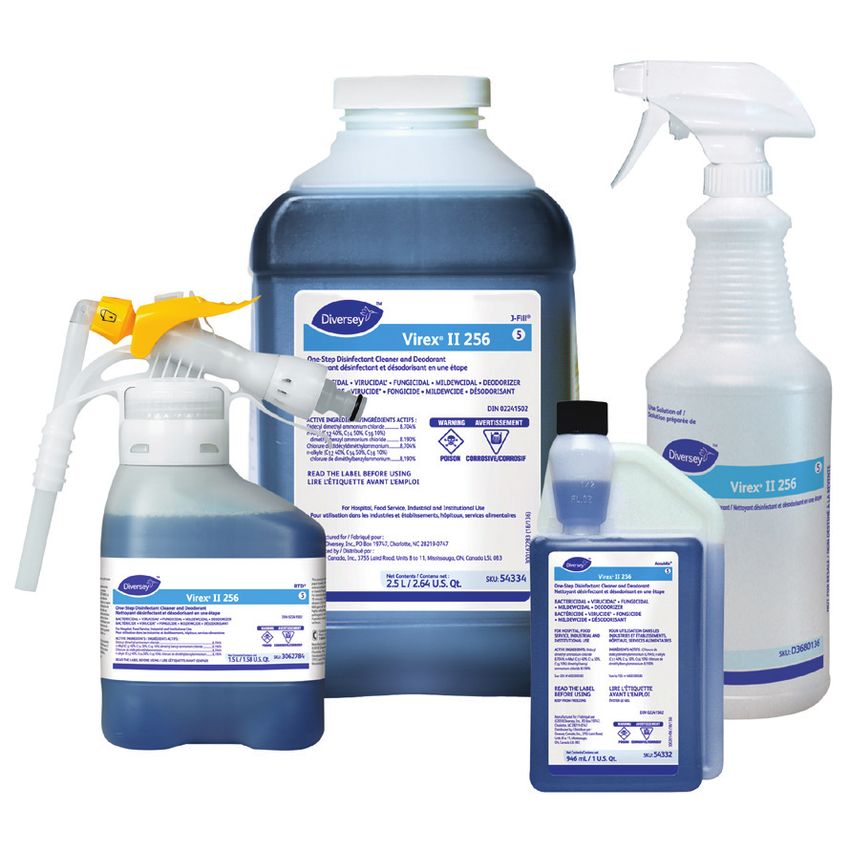
• (1) spray bottle of Virex II 256 disinfecting cleaning solution (prepared and resupplied as needed
by Aramark lead custodian). Refer to enclosed usage instructions and safety data sheet
(Attachment A)
Please inform your Aramark lead custodian or Regional Manager if any of these supplies need to be
refilled.
Employee or Parent Supplied Cleaning Materials: We recognize that many employees may elect to
bring in their own disinfecting cleaning materials or accept disinfection cleaning materials donated by
parents. This is supported; however, the following guidelines must be adhered to:
• Product must be listed on EPA’s List N: Disinfectants for Use Against SARS-CoV-2 (COVID-19)
• Must be a non-aerosol, ready-to-use or wipe product that is commonly available at retail/grocery
stores. Examples are Clorox® Disinfecting Wipes and Lysol® Disinfecting Wipes.
• Must be used according to manufacturer’s instructions.
• Must not contain bleach.
• Must have a copy of the product’s Safety Data Sheet (SDS) on file in the main office – this
information can commonly be found on the manufacturer’s websites. Enclosed are examples for
the two products listed above (Attachment B).
Reduce Clutter: We strongly recommend reducing or eliminating unnecessary furnishings from
offices and classrooms and keeping areas organized to help facilitate more efficient and complete
disinfection/cleaning. This is especially true in the event of a suspected or confirmed COVID-19 case
within the facility.
Examples of unnecessary furnishings include non-NHA furnished items, such as bean bag chairs, sofas
and miscellaneous items that are not essential for instruction. Please note that these items are not
cleaned as part of baseline or additional janitorial operations.
Facilities Improvements: Certain physical items will be installed in each building to help protect
employees and provide guidance on COVID-19 safe practices. These items include:
• Plexiglass barriers or “sneeze guards” in the main office area (OA desk and Registrar desk)
• Instructional signage, such as proper handwashing technique and notice to visitors for facility
access requirements.
Other items that may need to be implemented include tape or decals on floors to promote social
distancing and wayfinding. These are items that schools may elect to implement on their own. Tape on
floors is something that commonly damages the carpeting in our facilities and is something that we
Page 2 of 4NHA COVID-19 Facilities Preparedness and Response Plan
usually do not recommend. However, we recognize the potential necessity in implementing this
measure during this time.
II. COVID-19 Exposure Levels:
The below exposure levels shall dictate the scope and frequency of disinfection cleaning according to
reported COVID-19 risks within the community and facility. This is in addition to baseline janitorial
services:
LEVEL 1 Normal Operations
• No reported cases in the surrounding community
• No known or suspected cases within the facility
• Normal janitorial routines – no enhanced disinfection necessary
LEVEL 2 Enhanced Cleaning Operations
• Reported cases in the surrounding community
• No known or suspected cases within the facility
• Disinfection of all high touch points three times per day – twice during business
hours and once during evening janitorial
LEVEL 3 Suspected or confirmed case reported in the facility.
• Partial or full building closure recommended depending on known areas visited in
the building and to allow for disinfection cleaning.
• Cleaning timeline – Please reference Section III: Level 3 Response Procedure
• Post-cleaning: reopen facility and return to Level 1 or 2 (depending on community
COVID-19 spread)
III. Level 3 Response Procedure:
The Level 3 response is enacted when a suspected or confirmed COVID-19 case is reported in the
building. The procedure below represents the most common expected situation and is in accordance
with CDC guidelines.
1. Suspected or confirmed case is reported to NHA People Services.
2. NHA People Services conveys information to NHA Facilities, including areas accessed in the
building by the suspected or confirmed case and last known time and date.
3. NHA Facilities notifies Aramark of the situation to begin disinfection cleaning procedures:
0 – 24 hours following last known presence by suspected/confirmed case in the facility:
• All known areas accessed by the suspected/confirmed case closed and vacated. No re-
entry permitted by students, school staff or Aramark personnel.
• Partial or full building closure, as deemed necessary by school leadership.
• Aramark personnel prepare for full disinfection cleaning after 24 hours since last known
presence by the suspected/confirmed case in the facility. If possible, outside doors and
windows will be opened to increase air circulation in the affected areas.
Page 3 of 4NHA COVID-19 Facilities Preparedness and Response Plan
24 – 72 hours following last known presence by suspected/confirmed case in the facility:
• All known areas accessed by the suspected/confirmed case closed and vacated. No re-
entry permitted by students or school staff until disinfection cleaning is completed.
• Partial or full building closure, as deemed necessary by school leadership.
• Aramark personnel complete full disinfection cleaning in the affected areas utilizing
enhanced PPE (gloves, face masks, gowns). Disinfected areas/surfaces include, but are not
limited to, all high touch points (including keyboards and phones). Additional steps for the
affected areas include:
o Sweep or pick up trash from floor and clean/disinfect trash containers
o Clean all surfaces
o Clean hard surface floors utilizing Virex disinfectant or fully vacuum if carpet
o Inspect the space for disinfection cleaning completion
• Aramark Regional Manager will inform school leadership of cleaning status and estimated
date/time for safe re-entry. Duration of disinfection cleaning will depend on extent of areas
visited in the facility by the suspected/confirmed case.
3 – 7 days following last known presence by suspected/confirmed case in the facility:
• All known areas accessed by the suspected/confirmed case closed and vacated. No re-
entry permitted by students or school staff until disinfection cleaning is completed.
• Partial or full building closure, as deemed necessary by school leadership.
• Aramark personnel complete full disinfection cleaning in the affected areas utilizing normal
PPE (gowns not required). Disinfected areas/surfaces include, but are not limited to, all high
touch points (including keyboards and phones). Additional steps for the affected areas
include:
o Sweep or pick up trash from floor and clean/disinfect trash containers
o Clean all surfaces
o Clean hard surface floors utilizing Virex disinfectant or fully vacuum if carpet
o Inspect the space for disinfection cleaning completion
• Aramark Regional Manager will inform school leadership of cleaning status and estimated
date/time for safe re-entry. Duration of disinfection cleaning will depend on extent of areas
visited in the facility by the suspected/confirmed case.
7 days or more following last known presence by suspected/confirmed case in the facility:
• Affected areas may continue to be occupied.
• Partial or full building closure not necessary.
• Disinfection cleaning not necessary. Aramark continues normal janitorial operations
according to Level 1 or Level 2 COVID-19 exposure level protocols.
IV. Questions / Concerns / Suggestions:
Please direct any questions, concerns, or suggestions about the COVID-19 Facility Preparedness and
Response Plan to the NHA Facilities Department at covidquestions@nhaschools.com.
Page 4 of 4NHA COVID-19 Facilities Preparedness and Response Plan
ATTACHMENT A
Virex II 256 Usage Instructions and Safety Data SheetVirex® II 256 One-Step Disinfectant Cleaner and Deodorant One-step quaternary disinfectant cleaner and deodorant to clean and disinfect hard surfaces. Features & Benefits • Kills microorganisms including HIV-1, VRE, MRSA, GRSA, MRSE, VISA, PRSP, Herpes Simplex Types 1&2, Influenza Type A2, Adenovirus, Rotavirus and many more • Kills the organisms that cause odors and works as an odor counteractant to further eliminate odors not associated with bacteria • Highly concentrated quaternary formula provides excellent one-step, cost-effective cleaning and disinfection Applications • Used in medical and general institutional facilities • Use solution is neutral to floor finish so it will not dull, pit or soften floor finishes
Virex® II 256
                                                                                        One-Step Disinfectant Cleaner and Deodorant

Use instructions
Preparation
• Pre-clean heavily soiled areas.
• Dilute a 1:256 solution into a bucket, bottle, scrubber or other container.
• Apply solution to hard, nonporous environmental surfaces. To disinfect, all surfaces must remain wet for 10 minutes.
• Air Dry, wipe surfaces to dry and remove any residue, or rinse with potable water as necessary.

                                         Technical data                                                      Virex® II 256
                                                 DIN                                                          02241502
                                            Color/Form                                                     Clear, blue liquid
                                                                                                           10.2 (Concentrate
                                                  pH
                                                                                                        8.8 (Use Dilution 1:256)
                                                Scent                                                            Minty
                                                                                                         3 years (Concentrate)
                                             Shelf Life
                                                                                                         1 year (Use Dilution)

 Product                                  Pack size                                          Dilution                        Product code
 Virex® II 256                            2 x 2.5 L / 84.5 oz. J-Fill® Bottles               1:256                           54334
 Virex® II 256                            6 x 946 mL / 32 fl. oz. AccuMix® Containers        1:256                           54332
 Virex® II 256                            2 x 1.5 L / 1.58 U.S. Qt. RTD® Units               1:256                           3062784
 Virex II 256
        ®
                                          12 x 946 mL / 32 fl. oz. Empty Bottles                                             D3680136

 Safe handling
 Please make sure your employees read and understand the product label and Safety Data Sheet before using this product. The label contains
 directions for use; and both the label and SDS contain hazard warnings, precautionary statements and first aid procedures. SDS are available
 online at www.diversey.com or by calling 888.352.2249. Improper use or dilution may result in damage to surfaces and may result in health
 and physical hazards that match those of the concentrate. Please refer to the Diversey HazMat Library, only available through Internet
 Explorer, http://naextranet.diversey.com/dot/, for up-to-date shipping information.

www.diversey.com
© 2018 Diversey, Inc. All Rights Reserved. PSS90483 (18/170)
SAFETY DATA SHEET
Virex® II 256 (Canada)
One-Step Disinfectant Cleaner & Deodorant
Revision: 2020-04-29 Version: 03.0
1. IDENTIFICATION
Product name: Virex® II 256 (Canada)
One-Step Disinfectant Cleaner & Deodorant
Product Code: 3062784, 54332, 54334
SDS #: MS0300585
Recommended use: •Industrial/I
nstit
uti
onal
•Di si
nfect antCleaner
•Thi sproducti sintendedt obedi l
utedpr iort
ouse
Uses advised against: Uses other than those identified are not recommended
Manufacturer, importer, supplier: Canadian Headquarters
US Headquarters Diversey Canada, Inc.
Diversey, Inc. 6150 Kennedy Road Unit 3
1300 Altura Rd., Suite 125 Mississauga, Ontario L5T 2J4
Fort Mill, SC 29708 Phone: 1-800-668-7171
Phone: 1-888-352-2249
SDS Internet Address: https://sds.diversey.com
Emergency telephone number: 1-800-851-7145; 1-651-917-6133 (Int'l)
2. HAZARDS IDENTIFICATION
Classification for the undiluted product
Acute oral toxicity Category 4
Skin corrosion/irritation Category 1C
Serious eye damage/eye irritation Category 1
Specific target organ toxicity (repeated Category 2
exposure)
Flammability Flammable Liquids, Category 4
Signal word: Danger.
Hazard Statements
COMBUSTIBLE LIQUID. CAUSES SEVERE SKIN BURNS AND SERIOUS EYE DAMAGE. HARMFUL IF SWALLOWED. MAY CAUSE
DAMAGE TO ORGANS THROUGH PROLONGED OR REPEATED EXPOSURE.
Precautionary Statements
Causes burns/ serious damage to mouth, throat and stomach. Keep away from flames and hot surfaces. No smoking. Keep container tightly closed.
Avoid contact with eyes, skin and clothing. Wash affected areas thoroughly after handling. Do not eat, drink or smoke when using this product.
Wear protective gloves, protective clothing and eye or face protection. IF SWALLOWED: Rinse mouth. DO NOT induce vomiting unless directed to
do so by medical personnel. Drink a cupful of milk or water. IF ON SKIN (or hair): Take off immediately all contaminated clothing. Rinse skin with
water for at least 15 minutes. Wash contaminated clothing before reuse. IF INHALED: Remove person to fresh air and keep comfortable for
breathing. IF IN EYES: Rinse cautiously with water for several minutes. Remove contact lenses, if present and easy to do. Continue rinsing for at
least 15 minutes. Immediately call a Poison Center (1-800-851-7145) or physician. Get medical attention or advice if you feel unwell. Store in a
Virex® II 256 (Canada) 1 of 6
One-Step Disinfectant Cleaner &
Deodorantwell-ventilated place. Keep cool. Dispose of in accordance with all federal, state and local applicable regulations. SUPPLEMENTAL
INFORMATION:. Mix only with water. DO NOT MIX WITH BLEACH OR ANY OTHER PRODUCT OR CHEMICAL. Can react to release chlorine
gas.
Health hazards not otherwise classified (HHNOC) - Not applicable
Physical hazards not otherwise classified (PHNOC) - Not applicable
Classification for the diluted product @ 1:256
This product, when diluted as stated on the label, is not classified as hazardous according to OSHA 29CFR 1910.1200 (HazCom 2012-GHS) and
Canadian Hazardous Products Regulations (HPR) (WHMIS 2015-GHS).
Hazard and Precautionary Statements
None required.
3. COMPOSITION/INFORMATION ON INGREDIENTS
Classified Ingredients
Ingredient(s) CAS # Weight %
Didecyl dimethyl ammonium chloride 7173-51-5 5 - 10%
n-alkyl dimethyl benzyl ammonium chloride 68424-85-1 5 - 10%
Ethyl alcohol 64-17-5 1 - 5%
Tetrasodium salt of EDTA 64-02-8 1 - 5%
Lauryl dimethyl amine oxide 1643-20-5 0.5 - 1.5%
Sodium sesquicarbonate 533-96-0 0.5 - 1.5%
1-decanamine, n-decyl-n-methyl- 7396-58-9 > 0.1 - < 1%
*Exact percentages are being withheld as trade secret information
4. FIRST AID MEASURES
Undiluted Product:
Eyes: IF IN EYES: Rinse cautiously with water for several minutes. Remove contact lenses, if present and easy to do. Continue rinsing for at least
15 minutes.
Skin: IF ON SKIN (or hair): Take off immediately all contaminated clothing. Rinse skin with water for at least 15 minutes.
Inhalation: IF INHALED: Remove person to fresh air and keep comfortable for breathing.
Ingestion: IF SWALLOWED: Rinse mouth. DO NOT induce vomiting unless directed to do so by medical personnel. Drink a cupful of milk or
water.
Most Important Symptoms/Effects: No information available.
Immediate medical attention and special treatment needed Not applicable.
Aggravated Medical Conditions: Individuals with chronic respiratory disorders such as asthma, chronic bronchitis, emphysema, etc., may be
more susceptible to irritating effects.
Diluted Product:
Eyes: Rinse with plenty of water.
Skin: No specific first aid measures are required
Inhalation: No specific first aid measures are required
Ingestion: IF SWALLOWED: Call a Poison Center (1-800-851-7145) or doctor/physician if you feel unwell.
5. FIRE-FIGHTING MEASURES
Specific methods: Use water spray to keep fire-exposed containers cool
Suitable extinguishing media: Use dry chemical, CO2, water spray or "alcohol" foam.
Specific hazards: Corrosive material (See sections 8 and 10).
Special protective equipment for firefighters: As in any fire, wear self-contained breathing apparatus pressure-demand, MSHA/NIOSH
(approved or equivalent) and full protective gear.
Extinguishing media which must not be used for safety reasons: No information available.
6. ACCIDENTAL RELEASE MEASURES
Virex® II 256 (Canada) 2 of 6
One-Step Disinfectant Cleaner & DeodorantPersonal precautions: Put on appropriate personal protective equipment (see Section 8.).
Environmental precautions Clean-up methods - large spillage. Material is toxic to fish. Do not discharge into lakes, streams, ponds,
and clean-up methods: or public water unless in accordance with an NPDES permit. Prevent product from entering drains.
Water runoff can cause environmental damage. Soak up with inert absorbent material. Sweep up and
shovel into suitable containers for disposal. Use a water rinse for final clean-up.
7. HANDLING AND STORAGE
Handling: COMBUSTIBLE LIQUID. Keep away from heat, hot surfaces, sparks, open flames and other ignition sources. No smoking. Keep
container tightly closed. Ground/Bond container and receiving equipment. Use explosion-proof electrical, ventilating or lighting equipment. Use only
non-sparking tools. Take precautionary measures against static discharge. Avoid contact with skin, eyes and clothing. Wash thoroughly after
handling. Do not taste or swallow. Product residue may remain on/in empty containers. All precautions for handling the product must be used in
handling the empty container and residue. Avoid breathing vapors or mists. Use only with adequate ventilation. Remove and wash contaminated
clothing and footwear before re-use. Mix only with water. DO NOT MIX WITH BLEACH OR ANY OTHER PRODUCT OR CHEMICAL. Can react to
release chlorine gas. FOR COMMERCIAL AND INDUSTRIAL USE ONLY.
Storage: Store in a well-ventilated place. Keep cool. Store locked up.
Aerosol Level (if applicable) : Not applicable.
8. EXPOSURE CONTROLS / PERSONAL PROTECTION
Exposure Guidelines: .
Ingredient(s) CAS # ACGIH OSHA
Ethyl alcohol 64-17-5 1000 ppm (STEL) 1000 ppm (TWA)
1900 mg/m3 (TWA)
Undiluted Product:
Engineering measures to reduce exposure:
Good general ventilation should be sufficient to control airborne levels.
Personal Protective Equipment
It is the responsibility of the employer to determine the potential risk of exposure to hazardous chemicals for employees in the workplace in order to
determine the necessity, selection, and use of personal protective equipment.
Eye protection: Chemical-splash goggles.
Hand protection: Chemical-resistant gloves.
Skin and body protection: Protective footwear. Wear suitable protective clothing.
Respiratory protection: In case of insufficient ventilation wear suitable respiratory equipment. A respiratory protection program
that meets OSHA's 29 CFR 1910.134 and ANSI Z88.2 requirements must be followed whenever
workplace conditions warrant a respirator's use.
Hygiene measures: Handle in accordance with good industrial hygiene and safety practice.
Diluted Product:
Engineering measures to reduce exposure:
Good general ventilation should be sufficient to control airborne levels.
Personal Protective Equipment
Eye protection: No personal protective equipment required under normal use conditions.
Hand protection: No personal protective equipment required under normal use conditions.
Skin and body protection: No personal protective equipment required under normal use conditions.
Respiratory protection: No personal protective equipment required under normal use conditions.
Hygiene measures: Handle in accordance with good industrial hygiene and safety practice.
9. PHYSICAL AND CHEMICAL PROPERTIES
Physical State: Liquid Color: Clear, Blue
Evaporation Rate: No information available Odor: Characteristic
Odor threshold: No information available. Boiling point/range: Not determined
Melting point/range: Not determined Decomposition temperature: Not determined
Autoignition temperature: No information available Solubility: Completely Soluble
Solubility in other solvents: No information available Relative Density (relative to water): 1.0
Density: 1 Kg/L Vapor density: No information available
Bulk density: No information available Vapor pressure: No information available.
Flash point (°F): > 187 °F > 86 °C Partition coefficient (n-octanol/water): No information available
Viscosity: 0 Elemental Phosphorus: 0 % by wt.
Virex® II 256 (Canada) 3 of 6
One-Step Disinfectant Cleaner & DeodorantVOC: 3.3 % * pH: ≈ 10.2
Flammability (Solid or Gas): Not applicable Corrosion to metals: Not corrosive to metals
Sustained combustion: Not determined
Explosion limits: - upper: Not determined - lower: Not determined
Dilution pH:
≈ 8.8
Dilution Flash Point (°F): > 187 °F > 86 °C
VOC % by wt. at use dilution: 0.01 %
* - Title 17, California Code of Regulations, Division 3, Chapter 1, Subchapter 8.5, Article 2, Consumer Products, Sections 94508
10. STABILITY AND REACTIVITY
Reactivity: Not Applicable
Stability: The product is stable
Hazardous decomposition products: None reasonably foreseeable.
Materials to avoid: Oxidizing agents. Anionic surfactant. Do not mix with chlorinated products (such as bleach).
Conditions to avoid: None known.
11. TOXICOLOGICAL INFORMATION
Information on likely routes of exposure:
Skin contact, Inhalation, Ingestion, Eye contact
Delayed, immediate, or chronic effects and symptoms from short and long-term exposure
Skin contact: Unlikely to be irritant in normal use.
Eye contact: Corrosive. Causes serious eye damage. Symptoms may include pain, burning sensation, redness, watering, blurred
vision or loss of vision.
Ingestion: Causes burns/ serious damage to mouth, throat and stomach. Symptoms may include stomach pain and nausea.
Symptoms may include vomiting, nausea, and/or feeling of general unwellness. Harmful if swallowed.
Inhalation: May cause irritation and corrosive effects to nose, throat and respiratory tract. Symptoms may include coughing and
difficulty breathing.
Sensitization: No known effects.
Target Organs (SE): None known
Target Organs (RE): No information available
Numerical measures of toxicity
ATE - Oral (mg/kg): 1700
ATE - Inhalatory, mists (mg/l): >20
12. ECOLOGICAL INFORMATION
Ecotoxicity: No information available.
Persistence and Degradability: No information available.
Bioaccumulation: No information available.
13. DISPOSAL CONSIDERATIONS
Do not contaminate water, food, or feed by storage or disposal.
Waste from residues / unused products (undiluted product):
This product, as sold, if discarded or disposed, is not a hazardous waste according to Federal regulations (40 CFR 261.4 (b)(4)). Under RCRA, it is
the responsibility of the user of the product to determine, at the time of disposal, whether the waste solution meets RCRA criteria for hazardous
waste. Dispose in compliance with all Federal, state, provincial, and local laws and regulations.
Virex® II 256 (Canada) 4 of 6
One-Step Disinfectant Cleaner & DeodorantWaste from residues / unused products (diluted product):
This product, when diluted as stated on this SDS, is not a hazardous waste according to Federal regulations (40 CFR 261.4 (b)(4)). Under RCRA, it
is the responsibility of the user of the product to determine, at the time of disposal, whether the waste solution meets RCRA criteria for hazardous
waste. Dispose in compliance with all Federal, state, provincial, and local laws and regulations.
Pesticide Storage:
Refer to product label.
Pesticide Disposal:
Refer to product label.
Container Disposal:
Refer to product label.
RCRA Hazard Class (undiluted product): Not Regulated.
RCRA Hazard Class (diluted product): Not Regulated.
14. TRANSPORT INFORMATION
DOT/TDG/IMDG: The information provided below is the full transportation classification for this product. This description does not account for the
package size(s) of this product, that may fall under a quantity exception, according to the applicable transportation regulations. When shipping
dangerous goods, please consult with your internal, certified hazardous materials specialist to determine if any exceptions can be applied to your
shipment.
DOT (Ground) Bill of Lading Description: UN1903, DISINFECTANT, LIQUID, CORROSIVE, N.O.S., (quaternary ammonium compound), 8, III
IMDG (Ocean) Bill of Lading Description: UN1903, DISINFECTANTS, LIQUID, CORROSIVE, N.O.S., (quaternary ammonium compounds), 8, III,
MARINE POLLUTANT
15. REGULATORY INFORMATION
International Inventories at CAS# Level
All components of this product are listed on the following inventories: U.S.A. (TSCA), Canada (DSL).
U.S. Regulations
CERCLA/ SARA
Canadian Regulations
This product is a Canadian DIN registered product and is subject to certain labeling requirements for disinfectants under national regulations. These
requirements differ from the classification criteria and hazard information required for safety data sheets (SDS), and workplace labels of
non-disinfectant products by the HPR (WHMIS 2015). This SDS was prepared in accordance with the HPR (WHMIS 2015) criteria, which may result
with differences between the label and SDS language.
DIN No. : 02241502
Ingredient(s) CAS # NPRI
Ethyl alcohol 64-17-5 X
16. OTHER INFORMATION
NFPA (National Fire Protection Association)
Rating Scale: (Low Hazard) 0 - 4 (Extreme Hazard)
Health 3
Flammability 2
Instability 0
Special Hazards -
Diluted Product:
Health 0
Flammability 0
Instability 0
Special Hazards -
Virex® II 256 (Canada) 5 of 6
One-Step Disinfectant Cleaner & DeodorantRevision: 2020-04-29
Version: 03.0
Reason for revision: Not applicable
Prepared by: North American Regulatory Affairs
Additional advice: •Doesnotcont ai
nanaddedf r agrance
Notice to Reader: This document has been prepared using data from sources considered technically reliable. It does not constitute a warranty,
express or implied, as to the accuracy of the information contained within. Actual conditions of use and handling are beyond seller's control. User is
responsible to evaluate all available information when using product for any particular use and to comply with all Federal, State, Provincial and
Local laws and regulations.
Virex® II 256 (Canada) 6 of 6
One-Step Disinfectant Cleaner & DeodorantNHA COVID-19 Facilities Preparedness and Response Plan
ATTACHMENT B
Safety Data Sheet ExamplesSAFETY DATA SHEET
Issuing Date 17-Jun-2016 Revision Date 17-Jun-2016 Revision Number 1
1. IDENTIFICATION OF THE SUBSTANCE/PREPARATION AND OF THE
COMPANY/UNDERTAKING
Product identifier
Product Name Clorox Disinfecting Wipes3 - Crisp Lemon
Other means of identification
Synonyms None
EPA Pesticide registration number 5813-79
Recommended use of the chemical and restrictions on use
Recommended Use General Purpose Cleaner - Non-aerosol
Uses advised against No information available
Details of the supplier of the safety data sheet
Supplier Name The Clorox Company
Supplier Address 1221 Broadway
Oakland
CA
94612
US
Supplier Phone Number Phone: 1-510-271-7000
Emergency telephone number For Medical Emergencies call: 1-800-446-1014
For Transportation Emergencies, call Chemtrec: 1-800-424-9300
2. HAZARDS IDENTIFICATION
Classification
This product is not considered hazardous by the 2012 OSHA Hazard Communication Standard (29 CFR 1910.1200).
GHS Label elements, including precautionary statements
Emergency Overview
. The product contains no substances which at their given concentration, are considered to be hazardous to health.
Appearance White Physical state Pre-Moistened Towelette Odor Lemon
(no free liquids)
Precautionary Statements - Prevention
None
_____________________________________________________________________________________________
Page 1 / 8RM00010 - Clorox Disinfecting Wipes3 - Crisp Lemon Revision Date 17-Jun-2016
_____________________________________________________________________________________________
Precautionary Statements - Response
None
Precautionary Statements - Storage
None
Precautionary Statements - Disposal
None
Hazards not otherwise classified (HNOC)
Not applicable
Unknown Toxicity
21.5 % of the mixture consists of ingredient(s) of unknown toxicity
Other information
No information available
Interactions with Other Chemicals
No information available.
3. COMPOSITION/INFORMATION ON INGREDIENTS
.
Chemical Name CAS No Weight-% Trade Secret
Ethylene glycol monohexyl ether 112-25-4 1-5 *
Quaternary ammonium compounds, 85409-23-0 0.1 - 0.2 *
C12-14-alkyl[(ethylphenyl)methyl]dimethyl,
chlorides
Alkyl C12-18 Dimethylbenzyl Ammonium Chloride 53516-76-0 0.1 - 0.2 *
*The exact percentage (concentration) of composition has been withheld as a trade secret
4. FIRST AID MEASURES
First aid measures
General Advice Show this safety data sheet to the doctor in attendance.
Eye contact If in eyes: Hold eye open and rinse slowly and gently with water for 15-20 minutes.
Remove contact lenses, if present, after the first 5 minutes, then continue rinsing eye. Call
a poison control center or doctor for treatment advice.
Skin contact Rinse immediately with plenty of water and seek medical advice. If skin irritation persists,
call a physician.
Inhalation Remove to fresh air. If breathing is difficult, (trained personnel should) give oxygen. Call a
physician or Poison Control Center immediately.
Ingestion Drink 1 or 2 glasses of water. Call a physician or Poison Control Center immediately.
Most important symptoms and effects, both acute and delayed
Most Important Symptoms and Irritating.
Effects
_____________________________________________________________________________________________
Page 2 / 8RM00010 - Clorox Disinfecting Wipes3 - Crisp Lemon Revision Date 17-Jun-2016
_____________________________________________________________________________________________
Indication of any immediate medical attention and special treatment needed
Notes to Physician Treat symptomatically.
5. FIRE-FIGHTING MEASURES
Suitable Extinguishing Media
Use extinguishing measures that are appropriate to local circumstances and the surrounding environment.
Unsuitable extinguishing media
CAUTION: Use of water spray when fighting fire may be inefficient.
Specific hazards arising from the chemical
No information available.
Hazardous Combustion Products
Carbon oxides.
Explosion Data
Sensitivity to Mechanical Impact No.
Sensitivity to Static Discharge No.
Protective equipment and precautions for firefighters
As in any fire, wear self-contained breathing apparatus pressure-demand, MSHA/NIOSH (approved or equivalent) and full
protective gear.
6. ACCIDENTAL RELEASE MEASURES
Personal precautions, protective equipment and emergency procedures
Personal precautions Avoid contact with eyes.
Other Information Refer to protective measures listed in Sections 7 and 8.
Environmental precautions
Environmental precautions See Section 12 for additional Ecological Information.
Methods and material for containment and cleaning up
Methods for containment Prevent further leakage or spillage if safe to do so.
Methods for cleaning up Pick up and transfer to properly labeled containers.
7. HANDLING AND STORAGE
Precautions for safe handling
Handling Handle in accordance with good industrial hygiene and safety practice. Avoid contact with
skin, eyes or clothing. Do not eat, drink or smoke when using this product.
Conditions for safe storage, including any incompatibilities
Storage Keep containers tightly closed in a dry, cool and well-ventilated place.
Incompatible Products None known.
_____________________________________________________________________________________________
Page 3 / 8RM00010 - Clorox Disinfecting Wipes3 - Crisp Lemon Revision Date 17-Jun-2016
_____________________________________________________________________________________________
8. EXPOSURE CONTROLS/PERSONAL PROTECTION
Control parameters
Exposure Guidelines This product, as supplied, does not contain any hazardous materials with occupational
exposure limits established by the region specific regulatory bodies
Chemical Name ACGIH TLV OSHA PEL NIOSH IDLH
Ethylene glycol monohexyl ether None None None
112-25-4
Quaternary ammonium compounds, None None None
C12-14-alkyl[(ethylphenyl)methyl]dimethyl,
chlorides
85409-23-0
Alkyl C12-18 Dimethylbenzyl Ammonium None None None
Chloride
53516-76-0
Appropriate engineering controls
Engineering Measures Showers
Eyewash stations
Ventilation systems
Individual protection measures, such as personal protective equipment
Eye/face protection No special protective equipment required.
Skin and body protection No special protective equipment required.
Respiratory protection No protective equipment is needed under normal use conditions. If exposure limits are
exceeded or irritation is experienced, ventilation and evacuation may be required.
Hygiene Measures Handle in accordance with good industrial hygiene and safety practice.
9. PHYSICAL AND CHEMICAL PROPERTIES
Physical and Chemical Properties
Physical state Pre-Moistened Towelette (no free liquids)
Appearance White Odor Lemon
Color No information available Odor Threshold No information available
Property Values Remarks Method
pH 6 - 9 (liquid) None known
Melting / freezing point No data available None known
Boiling point / boiling range No data available None known
Flash Point No data available None known
Evaporation Rate No data available None known
Flammability (solid, gas) No data available None known
Flammability Limit in Air
Upper flammability limit No data available
Lower flammability limit No data available
Vapor pressure No data available None known
Vapor density No data available None known
Specific Gravity ~1.0 (liquid) None known
Water Solubility Completely soluble None known
Solubility in other solvents No data available None known
Partition coefficient: n-octanol/water No data available None known
Autoignition temperature No data available None known
Decomposition temperature No data available None known
_____________________________________________________________________________________________
Page 4 / 8RM00010 - Clorox Disinfecting Wipes3 - Crisp Lemon Revision Date 17-Jun-2016
_____________________________________________________________________________________________
Kinematic viscosity No data available None known
Dynamic viscosity No data available None known
Explosive properties No data available
Oxidizing properties No data available
Other Information
Softening Point No data available
VOC Content (%) No data available
Particle Size No data available
Particle Size Distribution No data available
10. STABILITY AND REACTIVITY
Reactivity
No data available.
Chemical stability
Stable under recommended storage conditions.
Possibility of Hazardous Reactions
None under normal processing.
Conditions to avoid
None known based on information supplied.
Incompatible materials
None known.
Hazardous Decomposition Products
None known.
11. TOXICOLOGICAL INFORMATION
Information on likely routes of exposure
Product Information .
Inhalation May cause irritation of respiratory tract.
Eye contact May cause slight irritation.
Skin contact Substance may cause slight skin irritation.
Ingestion Ingestion may cause irritation to mucous membranes. Ingestion may cause gastrointestinal
irritation, nausea, vomiting and diarrhea.
Component Information
Chemical Name Oral LD50 Dermal LD50 Inhalation LC50
Ethylene glycol monohexyl ether 739 mg/kg (Rat) 721 mg/kg (Rabbit) >0.5 mg/L (Rat, 4 h)
112-25-4
Information on toxicological effects
Symptoms May cause redness and tearing of the eyes.
Delayed and immediate effects as well as chronic effects from short and long-term exposure
Sensitization No information available.
_____________________________________________________________________________________________
Page 5 / 8You can also read


