THE LEAFLET Past Issues - PRECISION FORESTRY FOR BETTER FOREST MANAGEMENT - SceneSharp
←
→
Page content transcription
If your browser does not render page correctly, please read the page content below
SUMMER 2020                                                              THE LEAFLET
                                                                      VOLUME 2, ISSUE 2

             NORTHERN HARDWOODS RESEARCH INSTITUTE’S QUARTERLY NEWSLETTER

                      HARVEST KNOWLEDGE, PROMOTE GROWTH

                                                         THE LEAFLET
                                                         Past Issues

                  PRECISION FORESTRY FOR BETTER FOREST MANAGEMENT

                  Leverage technology to better characterize trees and stands, assign
                  treatments, optimize bucking, increase value and reduce cost !
SUBSCRIBE!
TABLE OF CONTENT

3   FEATURE ARTICLE
    Precision Forestry and the NHRI’s Mixed-wood and Hardwood Silviculture Tool Box

17 PROMISING PARTNERSHIPS TO MAKE DIGITALIZATION OF THE FOREST PRODUCTS
    VALUE CHAIN A REALITY
    Showcase of project with Scene Sharp Technologies -NHRI Embarks on Research Collabora-
    tive with SceneSharp Technologies

    Showcase of projects with Lim Geomatics and Groupe Système Forêt – Forest inventory for
    decision-making

    Showcase of project with Groupe Savoie inc. – Precision Operations planning

    Showcase of project with Remsoft – Tailoring digital supply chain optimization to small to
    medium-sized enterprises in forestry

30 FACES OF NHRI
    The people behind NHRI’s precision forestry initiatives

37 SPOTLIGHT ON OUR PARTNERS
    Congratulations to Nicholas Coops for receiving the world’s most prestigious forestry ho-
    nour, the Marcus Wallenberg Prize.

40 UPCOMING EVENTS

    _________________________________________________________________
    Cover page: showing Katam Technologies’ digital forest measurement using a smartphone
    (https://www.katam.se/products/forest/)

    HARVEST KNOWLEDGE                                                PROMOTE GROWTH
SUMMER 2020                                                                                       THE LEAFLET
                                                                                             VOLUME 2, ISSUE 2

           FEATURE ARTICLE
           Precision Forestry and the NHRI’s Mixed-wood and Hardwood Silviculture Tool Box

  Early into its beginnings, the NHRI realized that efficient ways to translate knowledge into solutions
  needed to be developed and our journey into precision forestry was born. Precision Forestry is the use
  of measurement and monitoring tools such as LiDAR, UAVs, Satellite imagery, etc. and decision-making
  tools including spatial optimization and multi-criteria decision analysis with highly repeatable mea-
  surements, actions and processes to support decision-making for the forestry sector to maximize
  economic return in a sustainable way. It is also about leveraging modern techniques such as artificial
  intelligence, machine and deep learning, leveraging big data and modern analytics to solve problems in
  the supply and value chains.
  The Northern Hardwoods Research Institute (NHRI) has launched a multi-year and multi-phase initia-
  tive to develop a suite of tools to improve and render more sustainable and feasible the management
  of mixed and hardwood forests in the region. The concepts also apply to pure softwood forests.
  We will be creating a suite of technology solutions (modules within a tool box) that is to be made avai-
  lable to forestry professionals for the planning and silviculture of mixed and hardwood stands and fo-
  rests. The NHRI will lead the development of the tool box and leverage its already existing body of
  knowledge. The Hardwood and Mixed-wood Silviculture Toolbox will consist of 13 separate modules
  that, while interconnected, can be used independently (see figure 1).
  By promoting the sustainable development of hardwood-dominated forests, the Institute is a key
  player for a stronger and more resilient forest sector in eastern Canada and North America but also,
  supports other sectors such as ITC, aerospace, machine manufacturing, etc.

  Value Proposition or Cost of Poor Quality (COPQ)
  Improvements in forest management planning can materialize in the following tangible and other ena-
  bling benefits:
    1. Increase (maintain) growing stock, annual allowable cut and annual harvest levels. The NHRI
       has determined that any increase in harvest levels on Crown Lands offsets expensive replace-
       ment wood coming from out of the Province. The benefits include cost savings, increased pro-
       duction, start-up of closed facilities, etc. Depending on the calculation method and the conside-
       ration of economic activity multipliers, the benefits can be in the range of tens of millions of dol-
       lars for the whole sector in New Brunswick. In New Brunswick, depending on the approach to
       calculate, one cubic meter of fibre contributes between $100 and $200 to the economy (GDP &
       taxes).

                                                      3
SUMMER 2020                                                                                         THE LEAFLET
                                                                                               VOLUME 2, ISSUE 2

           FEATURE ARTICLE
           Precision Forestry and the NHRI’s Mixed-wood and Hardwood Silviculture Tool Box

    2. Increase in High Value Products. Better planning will lead to better utilization and a higher pro-
       portion of high-grade material such as prime sawlogs and veneer logs. Our NHRI rule of thumb is
       that any increase of one percentage point in high-grade material is worth $ 1 000 000 to the fo-
       rest sector.
    3. Reduced risk and adaptation to cumulative negative effects. Some future benefits that are more
       difficult to forecast and to determine economic impacts include adaptation to climate change
       (increase in drought and frequency of severe weather events such as ice and windstorms) and
       reducing threats of forest health decline. Specifically, the status quo approach is likely to reduce
       the growing stock of sugar maple at the benefit of species of commercial value (intolerant hard-
       woods, red maple and American beech).
    4. Improve commercialization of Intellectual Property generated in our Province. Because of the
       implication of several private sector partners in addition to those of the forest products industry
       (IT, aerospace, analytics), there are great opportunities to increase commercialization of pro-
       ducts and services from IP associated with the initiative. This could also lead to the start-up of
       new firms and enterprises in the province.
    5. Sustain economic growth of our firms in the sector by:
             - Increasing harvesting productivity and reducing cost
             - Provide better utilization of products and increase the proportion of high-grade products
             - Reduce waste
             - Reduce the reliance on raw materials from outside the region
             - Improve sustainability of the resource

  What are the tools (modules) in this box? (see diagram page 5)

  Module 01- Tree Classification System (status: ready)
  The NHRI has developed a Tree Classification System (page 6) for New Brunswick. It is a simple tool to
  classify trees their form and risk of losing vigour. It provides the knowledge of single-tree stem attri-
  butes that are critical in the decision-making process. As an example, it is important to consider tree
  vigour and health when choosing a silvicultural system and prescriptions. Tree form are in turn useful
  in determining product potential as well as predicting harvesting and processing costs.
  To use the Tree Classification System, one needs to evaluate trees in stand plots while doing the forest
  inventory and assign a form class and a risk class to each tree. Alternatively, data from remote sensing
  can be used to assign proportions of form class and risk class for forest areas or pixels. That tool is rea-
  dy and mature.
                                                       4
5

NHRI Tree Classification System      NHRI Tree Classification System
    Tree Form—Determination Key       Risk—Summary and Determination Key

6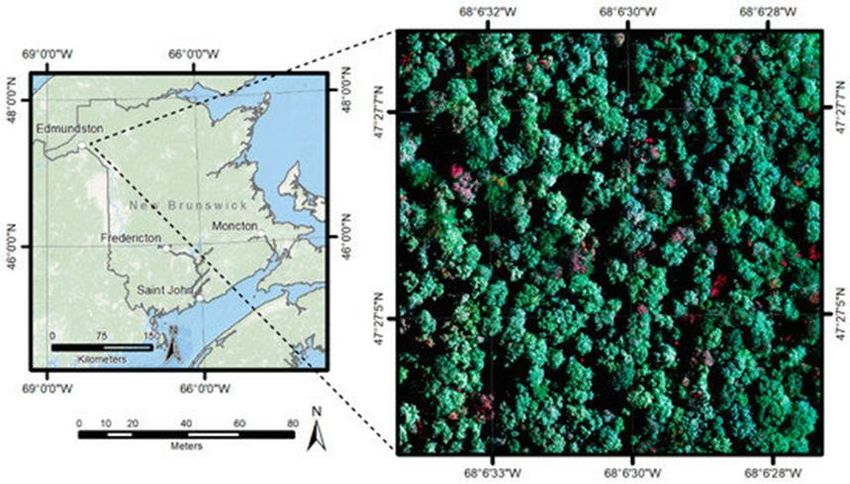
SUMMER 2020                                                                                   THE LEAFLET
                                                                                         VOLUME 2, ISSUE 2

           FEATURE ARTICLE
           Precision Forestry and the NHRI’s Mixed-wood and Hardwood Silviculture Tool Box

  Module 02- Vigour Prediction Tool (Status: in improvement mode)
  In 2016 the NHRI developed a tool that uses remote sensing to predict vigour in hardwood dominated
  forest stands. This valuable product enables forest managers and planners to make better silviculture
  recommendations and identify priority areas for harvest. According to our own definition, vigour is
  represented as the proportion of commercial trees likely to survive in the next 15 years and/or their
  value expected to remain stable or improve over time (R1&R2 from the NHRI Tree Classification sys-
  tem for New Brunswick).

                                             The NHRI has forged a strong partnership with Scene Sharp
                                             Technologies from Fredericton and together, they are im-
                                             proving the tool built in 2016 to include better logic, le-
                                             verage AI and higher resolution satellite imagery such as
                                             that of Sentinel II.

                                                    7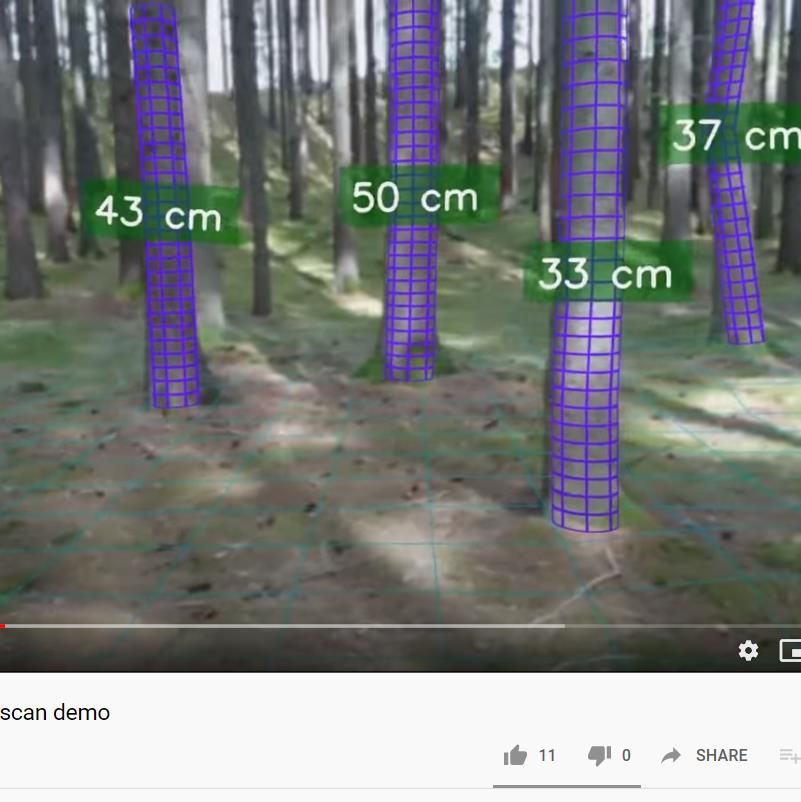
SUMMER 2020                                                                                       THE LEAFLET
                                                                                             VOLUME 2, ISSUE 2

           FEATURE ARTICLE
           Precision Forestry and the NHRI’s Mixed-wood and Hardwood Silviculture Tool Box

  Module 03- High Quality Hardwood Potential Mapping Tool (status: in development)
  The NHRI Quality Hardwood Potential mapping tool is designed to identify, and rank sites based on
  their potential to produce high quality hardwoods. The specific objectives of this tool are to estimate
  the potential of forest sites to produce high quality hardwoods by allowing users to adjust input va-
  riables and modify weights to adapt the model to different contexts and locations across eastern Cana-
  da.
  The GIS-based product leverages New Brunswick’s unique abundance of high resolution site informa-
  tion such as Biomass Growth Index (Hennigar), new soil layers (UNB, Shane Furze), Depth to Water
  Table (UNB, Paul Arp), Species Affinity Indices (Hennigar), the suite of NB ecological land classification
  system layers produced since the 1980’s and a few new variables tested at the NHRI. It will also use
  the vigour predictions derived from Module 02. To complete the module, we need to produce an im-
  proved model, validate with an independent dataset, produce the final tool and conduct a pilot on one
  land base in N.B.

              High Quality Hardwoods Potential mapping tool methodology

  We are revamping this tool in 2020 so that it is more accurate, customizable and takes into account
  new information.
                                                      8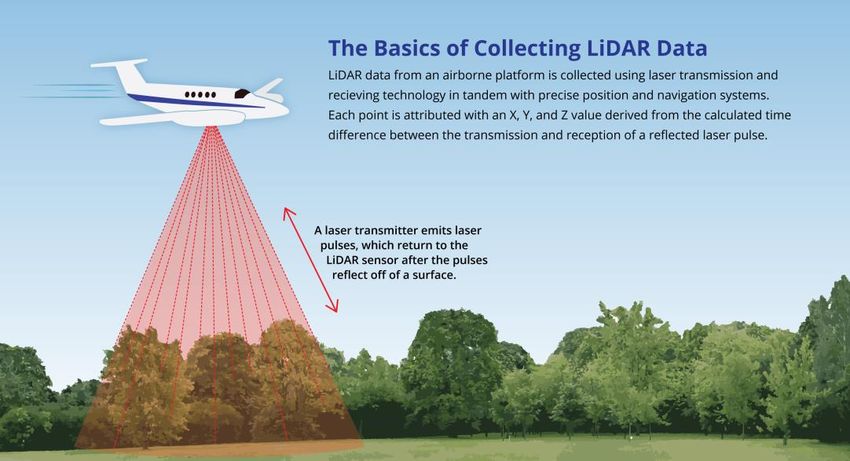
SUMMER 2020                                                                                         THE LEAFLET
                                                                                               VOLUME 2, ISSUE 2

           FEATURE ARTICLE
           Precision Forestry and the NHRI’s Mixed-wood and Hardwood Silviculture Tool Box

  Module 04- Product/volume distribution matrix (status: ready and improving)
  Early on, we developed a tool that allows practitioners to predict product recovery using data from
  four tree characteristics: species, DBH, form class and risk class.
  The format is an interactive matrix where one can input inventory data to get product volume as out-
  put for a cutting bloc or a stand. Alternatively, remote sensing data (LiDAR) can also be used to predict
  volumes for larger areas. This product is already mature, but we are constantly improving when new
  data becomes available. Ultimately, the New Brunswick Slasher program will be modified with this in-
  formation.

                                    The NHRI product prediction tool

  Module 05- Silviculture Prescription System (status: ready and being implemented)
  Managing hardwood and mixed-wood stands requires well-planned treatments that not only improve
  existing trees but also regenerate desirable species. The successful recruitment of new cohorts of key
  tree species is vital to sustaining our resource. Better silviculture will lead to better productivity and a
  higher ratio of more valuable trees. We think that it is also directly compatible with other values and
  objectives such as habitat and ecosystem services. A thorough understanding of the relationships
  among species, site, environment, and climate – informing a sound silviculture framework – allows fo-
  rest managers and landowners to balance timber production objectives with habitat and biodiversity
  values.

                                                       9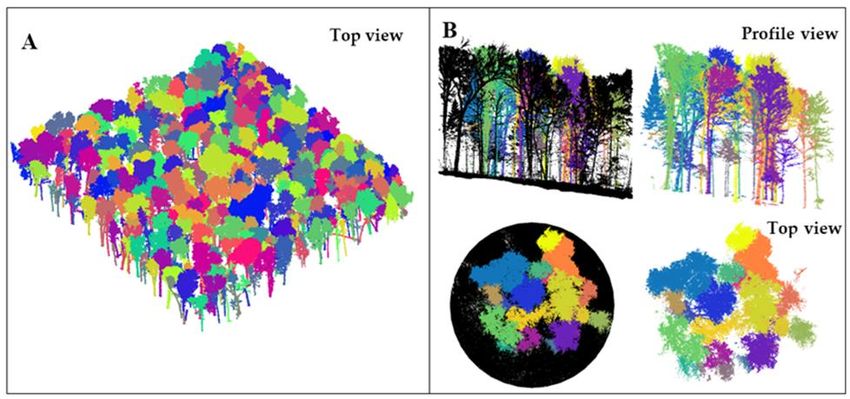
SUMMER 2020                                                                                    THE LEAFLET
                                                                                          VOLUME 2, ISSUE 2

           FEATURE ARTICLE
           Precision Forestry and the NHRI’s Mixed-wood and Hardwood Silviculture Tool Box

  In short, better silviculture based on the best available science leads to healthier, more productive,
  and more valuable forests. That is why our team has devoted so much energy, resources, and brainpo-
  wer to developing and mobilizing the Northern Hardwoods Research Institute’s Silviculture Prescrip-
  tion System (NHRI – SPS 2.0).
  The NHRI’s Silviculture Prescription System is a 5-step process that starts with the description of a
  stand and ultimately recommends very specific treatments in forests that are dominated by hard-
  woods.
  The NHRI Silviculture Prescription System was introduced in 2015 and its implementation was gradual-
  ly undertaken in various stands of all tenure types in New Brunswick. From these trials, several impro-
  vements were recommended and led to the re-design of the SPS. Version 2.0 of the SPS was com-
  pleted in January 2020. Improvements brought to our original SPS include:
       • Simplified framework;
       • New nomenclature of silviculture systems to minimize confusion on two-aged/extensive
         systems (formerly called “Irregular Shelterwoods”);
       • More robust logic for treatment determination;
       • Better instructions for implementation.

                                                    10
SUMMER 2020 THE LEAFLET
VOLUME 2, ISSUE 2
FEATURE ARTICLE
Precision Forestry and the NHRI’s Mixed-wood and Hardwood Silviculture Tool Box
Module 06- Stand Growth and Yield Modeller (status: ready and improving)
NHRI has been working with FORUS Research since 2013 to improve
the quality of hardwood growth and yield predictions in the FORUS
(OSM) software platform. Hardwood management enhancements
include: 1– added Tree Risk and Form tracking in tree list (cannot pre-
dict Risk or Form yet, but if known from cruising, this information can
be used to prioritize trees for harvest in the model); 2– new ‘J’ com-
mand for retaining trees across a range of DBH classes to emulate
single tree selection method given: Q factor (diameter distribution
shape), trails, target residual basal area; 3– spatial constraints for par-
tial harvests (command for simulating pseudo-spatial operational constraints on crop-tree selection
and, command for simulating random crop tree selection issues or operational errors); 4– auto DBH
and height growth increment calibration routines that can automatically modify underlying growth
predictions in the model to better match local growth rates observed in the field— tested with re-
trospective survey 20 years after partial harvest in tolerant hardwoods. These OSM local calibration
files are made available by FORUS Research for alternate forest types and treatments and are updated
as new versions are released.
11SUMMER 2020 THE LEAFLET
VOLUME 2, ISSUE 2
FEATURE ARTICLE
Precision Forestry and the NHRI’s Mixed-wood and Hardwood Silviculture Tool Box
Module 07- Enhanced Forest Inventory Simulator (status: not started)
The purpose of this component is to develop a process to generate new and improved inventory va-
riables using remote sensing technologies to automate silvicultural diagnostics in complex hardwood
and mixed wood stands and in tactical planning (5-10 years).
Initially, four new inventory variables for micro-stands (20m X 20m) will be produced; the species com-
position, vigour, quality/grade of trees (AGS / UGS ratio) and the presence of pre-established quality
regeneration and the distribution of trees within the 20m cell. We will eventually apply the methodo-
logies being developed (AI) to improve the suite of the nearly 50 existing EFI variables that were deri-
ved mostly from LiDAR data.
https://blog.bluemarblegeo.com/2017/04/27/got-lidar-now-what/
A lidar instrument principally consists of a laser, a scanner, and a specialized GPS receiver. Airplanes and
helicopters are the most commonly used platforms for acquiring lidar data over broad areas.
Lidar systems allow scientists and mapping professionals to examine both natural and manmade environ-
ments with accuracy, precision, and flexibility.
Source: National Oceanic and Atmospheric Administration, U.S. Department of Commerce
12SUMMER 2020 THE LEAFLET
VOLUME 2, ISSUE 2
FEATURE ARTICLE
Precision Forestry and the NHRI’s Mixed-wood and Hardwood Silviculture Tool Box
Module 08: Stand Polygonization Tool (status: not started)
Because of the recent change in the paradigm with regards to the resolution at which are becoming
available through remote sensing, we must revisit the process by which stand boundaries are being
defined. In New Brunswick, forest inventory variables are created for micro-stands (20mX20m). While
the resolution is required for some applications, it is overwhelming for others and a process to amalga-
mate cells into larger units is needed.
This completely new tool will function in two separate ways. First, a relatively simple GIS process will
be created where from user inputs and criteria, cells will be amalgamated into larger units and form
stands as defined by the user. Secondly, a heuristic optimization algorithm will be created (using the
same inputs as in the previous approach) so that the new stand configuration is based on optimal solu-
tions.
Example of a stand polygonization tool initiative
Source: Dechesne, C. et al., 2016. Forest stand segmentation using airborne LiDAR data and very high resolution multispectral
imagery. Int. Arch. Photogramm. Remote Sens. Spatial Inf. Sci., XLI-B3, 207–214.
13SUMMER 2020 THE LEAFLET
VOLUME 2, ISSUE 2
FEATURE ARTICLE
Precision Forestry and the NHRI’s Mixed-wood and Hardwood Silviculture Tool Box
Module 09: Tactical Silviculture Planner (status: in development)
This brand-new module consists of a tool that will automatically assign a high-level silvicultural regime
(treatment) to a stand or micro-stand using enhanced forest inventory (EFI) and site variables in one
phase and prepare an optimized tactical or operations plan based on the silvicultural requirements for
harvest season and system. It will function in the following way:
- Create a simplified NHRI SPS logic for management planning;
- Design an algorithm to assign NHRI treatment to micro-stands using existing information;
- Interface with the stand polygonization module to create larger stands;
- Assign an optimal silviculture regime to the larger stand.
The user will be able to select a number of candidate stands and prepare an optimal tactical (multi-
year) or operating plan with an objective function and constraints that consider the mandatory harvest
season and system and requirements to successfully establish new cohorts of future trees.
Module 10: Harvest Treatment Planning Tool (status: not started)
Variations in species composition, diameter and height distributions, and quality make the manage-
ment of hardwood-dominated stands difficult, particularly when considering mechanized forest opera-
tions. This tool will be designed to improve the feasibility of forest operations in heterogeneous forest
stands.
Taking advantage of harvester’s on-board-
computer (OBC) technology and data, It will
build operational maps identifying the type
and spatial extent of silvicultural treatments to
be performed. Once uploaded to positioning
systems in harvesting machines, the operators
will be provided guidance on the silvicultural
treatment to be performed and the location of
the suggested machine trails.
Much energy will be focused on the refinement of silviculture treatment determination logic, keys, and
algorithms. We envision that a change of paradigm is needed so that we cease to deal with silviculture
planning separate from operations planning as well as producing forest and stand inventory.
14SUMMER 2020 THE LEAFLET
VOLUME 2, ISSUE 2
FEATURE ARTICLE
Precision Forestry and the NHRI’s Mixed-wood and Hardwood Silviculture Tool Box
This tool will connect with modules #7, #8 and #9 and require the development of interfaces with har-
vesting equipment that leverage augmented reality technologies. We will also explore the use of super
-high (>2000 points per m2) point cloud technology to enable better decisions by operators.
T
m
r
i
e
a
Segmentation of trees from super-high-density LiDAR data (Vandendaele, 2020) l
t
Module 11: Financial calculator (status: Beta version ready and improving) (
c
We have built a beta model of a financial tool to evaluate different silvicultural options at the stand,
b
woodlot, second-order watershed, or assemblage of stands within a tactical unit/plan scale in NB. The t
tool is designed in consultation with potential users and will be sensitive to recruitment of new co-
horts, growth rates, species composition and evolution of tree quality under the conditions identified
under objective 1.
The tool will allow for a direct comparison of adaptation options based on several biological indicators
and financial criteria such as the rate of return (IRR and ROI), net present value (NPV), and annual
equivalent value. An interface with current mainstream operational applications (GIS-optimization) will
be developed. Initially the tool will operate as a non-spatial unit. Later, a spatially explicit model will be
built using common GIS platforms.
Module 12: Strategic planning tool (status: not started)
There is a strong need to explore strategic planning alternatives for mixed and hardwood stands that
are fundamentally different than those inherent to the much simpler softwood forests. In addition, a
new process must be developed to encourage this change.
15SUMMER 2020 THE LEAFLET
VOLUME 2, ISSUE 2
FEATURE ARTICLE
Precision Forestry and the NHRI’s Mixed-wood and Hardwood Silviculture Tool Box
Our tool will be built upon the NHRI hardwood potential mapping tool to “zone” quality hardwoods. It
will also enable to explore new ways to optimize hardwoods for products and volume that include:
- Creation of a High Quality Hardwood Potential Tool from Module #03;
- Easing-off “sustainable, non-declining” flows to allow the immediate improvement of quality
hardwood forests;
- Leverage vigour mapping to queue blocks and stands;
- Create a process to generate new stand polygons;
- Build new yield scenarios based on the novel silviculture of the NHRI.
The novel approach will be demonstrated on an actual industrial land base in New Brunswick.
Module 13: Mobile applications and intelligent database
The NHRI has developed a few tools that can be used by forest practitioners to better manage their
forests and operations, but these tools are not available on a common platform in which users could
enter, collect and retrieve their data. The current application’s architecture, which does not allow to
fully integrate other tools or manage users’ data without having to rewrite the complete application is
a stand-alone software not integrated with larger framework.
To provide better service and value to its customers and partners, and to promote the use of their
developed tools, the NHRI is seeking software engineering and development companies to build a
web/cloud-based server and a suite of web and mobile applications. Recommendations for implemen-
tations, such as using APIs, MySQL and Amazon Web Services (AWS), have already been proposed
from a software engineering firm.
The practising forestry professionals who use our tools and solutions will benefit from a suite of apps
all integrated within an agile web server and a framework that allows for growth in the future. A con-
cept validation project has already been conducted with one.
For this specific module, the project consists of:
- Constructing mobile app (iOS, Android) and a web-based application to run the NHRI Silvicul-
ture Prescription System (SPS) in its second version that will collect and store (on a server) field
data when within cell phone coverage;
- Initiating the web-server platform to accommodate the SPS application and subsequent ones;
- Setting the stage for the development of future applications.
16SUMMER 2020 THE LEAFLET
VOLUME 2, ISSUE 2
PROMISING PARTNERSHIPS TO MAKE DIGITALIZATION OF THE FOREST
PRODUCTS VALUE CHAIN A REALITY
Showcase of project with SceneSharp Technologies
NHRI has entered into a partnership with New Brunswick-based SceneSharp Technologies to enhance
their species determination capabilities, build a forest stand vigour assessment tool and explore other
technology solutions for here at home and around the world. Leveraging remote sensing and machine
learning, the research collaborative will make predictions at the 10-metre resolution level.
“Our institute was created to partner with innovative companies like SceneSharp,” says Gaetan Pelle-
tier, Executive Director. “This collaboration will pair their high-quality visual data collection capabilities
and artificial intelligence technology with our expertise in forest management and knowledge transfer.
This will lead to deeper learning and greater digitalization of the industry, especially regarding the
upstream portion of the forest products value chain. We have worked with many organizations in the
past few years but SceneSharp’s cutting edge technology and agile approach separates them from the
pack.”
SceneSharp’s flagship technology, fuse go AI, improves the quality of any image from any source whe-
ther it be from satellite, drone, or security camera by revealing the data behind the picture. The AI mo-
del is applied to the image, enhancing the data, and bringing it to life. This means better data is avai-
lable through machine learning to support effective planning, management and decision making.
“NRHI is helping us to get to a higher
level of accuracy of species determi-
nation by providing us with their
training data and industry
knowledge,” says Rick MacPhee,
SceneSharp CEO. “The training data
is teaching our AI to more effectively
map tree species and monitor any
changes in forest health such as pest
infestations. We are building a
smarter way for forest companies,
woodlot owners and managers to
protect and improve their in-
vestment.”
Accurate mapping of species is critical to managing forest inventory, making biomass and stand vo-
lume estimation but more importantly, make better silviculture decisions. In large forests and woo-
dland areas, it is difficult to get current and precise information on the spatial distribution of species,
abundance and density, especially if the species composition is as complex as seen in eastern North
17SUMMER 2020 THE LEAFLET
VOLUME 2, ISSUE 2
PROMISING PARTNERSHIPS TO MAKE DIGITALIZATION OF THE FOREST
PRODUCTS VALUE CHAIN A REALITY
Showcase of project with SceneSharp Technologies
America. Relying on ground-based or aerial survey data, which could be up to 10 years out of date,
makes it very challenging to conduct sustainable forest management practices and resource evalua-
tion.
Together, NHRI and SceneSharp will advance its fuze go technology to deliver four to six times impro-
ved quality across all spectral bands from any satellite or aerial sensor and increase the usefulness
from a wide range of data sources. It will allow for specific species predictions at the micro strand le-
vel. This will be achieved through the capture of unique spectral signatures (fingerprints) for forests
and crops as well as for other natural and man-made features.
“SceneSharp’s fuse go AI 2.0 will track trees over their entire lifecycle if needed, enabling forest mana-
gers to grow a better product, faster and more cost-effectively,” continues MacPhee. “Woodlot
owners can also transition to a proactive management strategy, dealing with complex conditions as
they arise.”
Assessing forest health and complexity is key to assessing its value. Having up-to-date information
about the quality, types and number of trees will enable forestry companies and landowners to deter-
mine what is required to harness the potential. The analytics can also be used to track changes in con-
ditions and provide the necessary information for calculating accurate forest inventories that include
carbon.
“Our role is to bring relevance to research and represent the voice of the customer,” says Pelletier.
“They are looking for AI-based solutions that support decision-making, monitors risk and increases sus-
tainability and profitability. This initiative aligns well with the needs of industry, woodlot owners and
our institute’s partners. What’s even more exciting is this world-class technology will be developed
here in New Brunswick.”
The goal is to increase SceneSharp’s ability to accurately predict
species with 80 to 90 percent accuracy. It currently predicts
eight species, seven times out of 10. That information, coupled
with vigour, will allow for better predictions of growth rates.
“The strengthening of our accuracy and analytics will enable us
to provide an even better solution,” said MacPhee. “This lear-
ning from this partnership will allow our customers to grow
higher quality trees, faster. They will be more agile and better
positioned to make solid business decisions, while capitalizing
on the advantages automation presents to the industry.”
Photo: Myriam Cyr Photography
18SUMMER 2020 THE LEAFLET
VOLUME 2, ISSUE 2
PROMISING PARTNERSHIPS TO MAKE DIGITALIZATION OF THE FOREST
PRODUCTS VALUE CHAIN A REALITY
Showcase of projects with Lim Geomatics and Groupe Système Forêt – Forest inventory for
decision making
There is no doubt that at some point into the near future, the need to go to the forest and physically
measure some trees to understand tree and stand attributes will be greatly diminished. But today the
production of precise information from remote sensing is still emerging and requires substantial R&D.
A partner of our institute often says, ‘Remote sensing has for the past decades consistently over prom-
ised and under delivered…’. There is certainly some truth to that statement.
While we are learning the merits and usefulness of technology
such as LiDAR, machine and deep learning, artificial intelli-
gence, modern high-resolution imagery and unmanned « Remote sensing has
aerial systems carrying state-of-the art sensors, the
for the past decades
NHRI is convinced we need solid processes to ade-
quately acquire cruise data in the most efficient way.
consistently over
The following article describes the partnership the promised and under
NHRI has established with two leading solution firms to delivered … »
improve their applications and adapt them to its needs.
Photo: Myriam Cyr Photography
19SUMMER 2020 THE LEAFLET
VOLUME 2, ISSUE 2
PROMISING PARTNERSHIPS TO MAKE DIGITALIZATION OF THE FOREST
PRODUCTS VALUE CHAIN A REALITY
Showcase of projects with Lim Geomatics and Groupe Système Forêt – Forest inventory for
decision making
Groupe Système Forêt (GSF) is a team of multi-disciplinary professionals working
mainly in the development of geomatic solutions for the forest industry.
GSF provides tools to efficiently plan, monitor and exploit the forest with top of the line products like
GSFNav Windows for forestry machinery and GSFNav Android for field surveys, and ArcMap extensions
like GSFOutil, GSFSondage and GSFDebit for forestry planning and monitoring in the office. GSF is also
involved in training, custom software development, satellite imagery and GPS sales and consulting.
Our mission is to simplify geomatic and surveying for for-
estry people, and to promote customer knowledge and
development through training and ongoing support. For-
estry solutions are developed on the Windows platforms
using ESRI products (ArcGIS Desktop, ArcGIS Pro, etc.).
Business partner of ESRI Canada Limited since 1995, GSF
remains to this day a strong retailer in Canada of ESRI
Canada Desktop solutions and its extensions such as Spa-
tial Analyst and 3D Analyst. Well established in the eastern North America (Quebec, Ontario and the
Maritimes), GSF works in several sectors such as forestry, mining, environmental and municipal.
NHRI’s experience shows that traditional field inventory is still the most reliable source of information
necessary to assign harvest-based silviculture activities for a particular location in mixed and hardwood
stands.
Predictions of tree and stand attributes derived
by remote sensing applications such as LiDAR and
multispectral imagery, while the way of the fu-
ture, have not reached the level of maturity that
is required at this point. Their current use today
remains that of planning at the tactical scale and
certainly augment knowledge that is out there.
It is certainly undeniable that the spatial resolution obtained by remote sensing-derived products is
phenomenal and cannot be achieved solely by increasing sample size in traditional inventories.
Until recently, no efficient software solution permitted data gathering and compilation in the field to
assign a prescription from the NHRI Silviculture Prescription System (SPS 2.0).
20SUMMER 2020 THE LEAFLET
VOLUME 2, ISSUE 2
PROMISING PARTNERSHIPS TO MAKE DIGITALIZATION OF THE FOREST
PRODUCTS VALUE CHAIN A REALITY
Showcase of projects with Lim Geomatics and Groupe Système Forêt – Forest inventory for
decision making
For this reason, NHRI contacted GSF, a well-known subject matter expert, to adapt their existing soft-
ware, GSF-Sondage, to the particularities of the New Brunswick forest sector. Because GSF-Sondage
was developed for the Quebec forestry environment, modifications needed to be made mostly in the
vocabulary, terminology, types of data collected, and generated outputs. Therefore, GSF and NHRI col-
laborated on the development of GSF-Sondage «NB version» over the winter and spring of 2020.
NHRI first transmitted the obvious elements that should be created or modified, then the GSF team
realized those modifications. Afterwards, the «beta» version was tested and only a few minor ad-
justments where necessary to produce the final version of the application. This version allows capture,
transfer, and compilation of all inventory data as well as the production of a report used in granting an
SPS 2.0 prescription.
In parallel, NHRI also worked with Lim Geomatics to use their new cruising platform for its silviculture
prescription work.
Lim Geomatics and the NHRI are kindred spirits on the quest to digitally transform
the forest industry. In 2006, Dr. Kevin Lim, President and Chief Executive Officer of
Lim Geomatics, founded the company to operationalize his doctoral research on estimating the biophy-
sical properties of forests using lidar data. Today, the firm has a team of developers, designers, and da-
ta scientists working from locations across Canada and from two main offices in Ottawa and Calgary.
That original ethos of innovation has inspired a range of precision forestry technologies.
"We really understand how far you can push these tools and where they're going to have the biggest
impact," says Candice Fulgencio, Director of Marketing and Communications. Lim Geomatics has
specialized in creating precision forestry tools that go the extra step and allow foresters to address bu-
siness problems, like how to reduce costs or increase merchantable volume, instead of just technical
problems. "That’s when we know we've hit that innovation sweet spot, when clients can ask the system
a question and get an answer that drives efficiency or profitability," says Fulgencio.
Developing ways for clients to maximize the value of their investments in geospatial data is also what
led Lim Geomatics to put such a high premium on design. “We have user-experience designers on staff
because we’ve learned that the more accessible the tool, the more valuable it becomes.”
21SUMMER 2020 THE LEAFLET
VOLUME 2, ISSUE 2
PROMISING PARTNERSHIPS TO MAKE DIGITALIZATION OF THE FOREST
PRODUCTS VALUE CHAIN A REALITY
Showcase of projects with Lim Geomatics and Groupe Système Forêt – Forest inventory for
decision making
Here are three examples of precision forestry tools created by your friendly neighbourhood innovation
team at Lim Geomatics:
Stratus: They leveraged decades of forestry and geospatial domain expertise to develop this next gene-
ration asset and inventory management system. Clients can manage every step of the value chain—
lidar-based inventory, cruising, road construction, wood flow logistics, short and long-term strategic
plans—from one modern and intuitive interface. Stratus forms the hub of an integrated digital ap-
proach to forestry.
Prism: They developed this data collection and reporting application to meet the needs of every field-
data entry aspect of the forest operations cycle. Prism was built tough and designed so it's easy to use
under the canopy. It has a mobile and web component that work together to improve the quality and
efficiency of data collection, from undertaking timber cruises before a harvest right through to site prep
for the next fresh crop of seedlings.
Op Tracker: First released in early 2014, Op Tracker has become an indispensable tool for foresters and
logging contractors across Canada and the United States. The digital solution consists of a web and a
mobile application that work in tandem to provide operators and managers with the latest information
from the field. The end result is more informed decision-making at every level of a harvest. We're talk-
ing right from the initial boundary marking of a block to machine operators cutting wood to frontline
supervisors monitoring the harvest and all the way up to superintendents making long-term strategic
plans.
Lim Geomatics: Forestry Geospatial Platform
22SUMMER 2020 THE LEAFLET
VOLUME 2, ISSUE 2
PROMISING PARTNERSHIPS TO MAKE DIGITALIZATION OF THE FOREST
PRODUCTS VALUE CHAIN A REALITY
Showcase of project with Groupe Savoie inc. – Precision Operations planning
Since 2019, NHRI collaborates actively with Groupe Savoie’s forestry department in the implementa-
tion of Precision Block Planning. Precision inventories that combine field timber cruises with remote
sensing are conducted to assign silviculture prescriptions, set harvest productivity, and volume and
sawlog recovery targets. Operational results are then compared to inventory-based forecasts to en-
sure follow-up and continuous improvement. This initiative is where we put the beta versions of our
tools to the test and get feedback from end users.
More importantly the initiative esta-
blishes concrete targets that aim to
improve the productivity of participa-
« Hardwood operations vary
ting companies on several fronts.
These targets are incentives and key a lot more than in softwood,
process indicators for the teams invol- which can impact greatly our
ved (NHRI and Company) to think out- contractor’s productivity and
side the box and strive to use the best our wood costs. »
available knowledge and cutting-edge
tools. When those are not available, or Yves O’Brien
not yet efficient enough from an ope-
rational perspective, our team finds
the right partners to develop them and then work towards implementation as fast as possible - and
the cycle continues.
At NHRI we always strive to advance knowledge and tools by following the principles of Agile design
and development. The precision block planning initiative is a perfect project for such an approach. It
allows us to work with a multitude of partners (mainly IT and geomatics companies) to test out new
technologies and processes to improve productivity. By setting out ambitious objectives, we force
ourselves and our partners to focus on solutions and always think in terms of continuous impro-
vement. Like Yves O’Brien* said: “With the help of the Institute, Groupe Savoie is working on the im-
provement of forest operations planning and execution using a management system and Precision
Block Planning.”
For the 2020 season, NHRI will assist Groupe Savoie inc. in the implementation of Precision Harvest
Planning (page 25) by testing the most recent technologies available today. The coveted solutions
23
18SUMMER 2020 THE LEAFLET
VOLUME 2, ISSUE 2
PROMISING PARTNERSHIPS TO MAKE DIGITALIZATION OF THE FOREST
PRODUCTS VALUE CHAIN A REALITY
Showcase of project with Groupe Savoie inc. – Precision Operations planning
should ideally allow coordination and data challenges across forest operations planning and sche-
duling. It should also centralize and make all the harvest, delivery, and destination information ins-
tantly accessible via an intuitive web interface and, finally, create a unified view of the supply chain to
support collaborative, real-time planning and scheduling.
“The partnership with NHRI is a key element of this initiative. Their technical support, expertise and
experience in forest inventory and precision tools are an important advantage for us. We have a lot of
responsibilities in our day-to-day work and we just do not have at this time the resources Precision fo-
restry requires. Beyond the obvious sustainable forestry objectives, we seek the same goals, control
wood supply costs, stop contractor turnovers, make better decisions, and ease the whole wood supply
process.”
“ The partnership with NHRI is a key element of
this initiative. Their technical support, expertise
and experience in forest inventory and precision
tools are an important advantage for us. »
Yves O’Brien
Native from Saint-Quentin, Yves O’Brien is Procurement Vice President at Groupe Savoie inc. He has a
forestry degree from la Faculté de foresterie of Université de Moncton, and he is responsible of all
wood fiber procurement, from round wood to biomass either from Crown lands or private woodlots.
24
18SUMMER 2020 THE LEAFLET
VOLUME 2, ISSUE 2
PROMISING PARTNERSHIPS TO MAKE DIGITALIZATION OF THE FOREST
PRODUCTS VALUE CHAIN A REALITY
25 18SUMMER 2020 THE LEAFLET
VOLUME 2, ISSUE 2
PROMISING PARTNERSHIPS TO MAKE DIGITALIZATION OF THE FOREST
PRODUCTS VALUE CHAIN A REALITY
Showcase of project with Remsoft – Tailoring digital supply chain optimization to small to
medium-sized enterprises in forestry
Forestry supply chains are composed of businesses of all sizes: a complex network of companies that
range from large, multi-national organizations, to middle-sized businesses with 100-500 employees,
and small businesses with 10 or more employees. Each business fills a niche and plays a key role in
growing, harvesting, processing, and delivering wood products to market.
The large companies manage greater volumes of product, have bigger budgets, and more staff with a
wider range of skills. Small to medium-sized enterprises (SMEs) are leaner and nimbler. Regardless of
size, however, they all face the same challenge of managing a complex forestry supply chain.
Options for managing your operation within a complex supply chain sometimes favor the larger compa-
nies. Large companies can afford specialized software solutions that help to optimize their planning,
tracking and efficiency and allow them to engage more effectively with other stakeholders in the supply
chain. In many cases, these software solutions are designed for larger, multi-site operations, and they
are beyond the reach of the SMEs who equally need management and optimization tools for their busi-
ness.
Digital Forestry Solutions for SMEs
Recognizing an opportunity to improve operations and lower costs for SMEs through digital supply
chain management, Remsoft and NHRI have partnered to support best practice implementation of the
Remsoft Operations Cloud within small and medium-sized enterprises in the forestry sector. The first
SME pilot implementation is underway this month with a leading producer of hardwood products in
Canada. Research for the project is supported through the New Brunswick Innovation Foundation’s
(NBIF), Innovation Voucher Fund.
Remsoft is a leading provider of forestry software solutions for planning, scheduling, and operational
management. For more than 25 years, Remsoft solutions have helped global forest companies and go-
vernment to develop and manage sustainable, repeatable solutions. These solutions focus on increa-
sing efficiencies, managing risks, and reducing cost: outcomes businesses of all sizes strive for.
NHRI brings their unique expertise in data and research related to the management of hardwoods and
mixed forests to the partnership; and their experience in developing solutions to forestry management
challenges including resource growth, silviculture prescriptions, timber value and long-term sustainabi-
lity.
26SUMMER 2020 THE LEAFLET
VOLUME 2, ISSUE 2
PROMISING PARTNERSHIPS TO MAKE DIGITALIZATION OF THE FOREST
PRODUCTS VALUE CHAIN A REALITY
Showcase of project with Remsoft – Tailoring digital supply chain optimization to small to
medium-sized enterprises in forestry
The Remsoft Operations Cloud
Remsoft Operations is a cloud, SaaS solution for managing the forest supply chain. Within the Remsoft
Operations Cloud, forest product companies can consolidate and connect all the people, processes and
data sources needed to manage the entire supply chain from the forest to the mill. It provides real-time
supply chain visibility to support better operational management, improve costs and margins.
The ability to see everything in one, real-time view is key to unlocking cost savings, revenue, and per-
formance opportunities across the forest value chain. And, with its cloud architecture and modular de-
sign, Remsoft Operations can scale to any company’s needs.
Large, global operators with hundreds of users, across different teams are actively planning and sche-
duling in the Remsoft Operations Cloud, and the system is being used to manage thousands of harvest
units and several millions of tons of fibre. The project with NHRI is focused on streamlining the imple-
mentation process, data preparation, and data integration templates and procedures to drive down
implementation and ongoing costs such that SMEs can adopt the Remsoft Operations Cloud for impro-
ved supply chain management and control.
View harvest progress, from standing volume to roadside, in the Remsoft Operations Cloud.
27SUMMER 2020 THE LEAFLET
VOLUME 2, ISSUE 2
PROMISING PARTNERSHIPS TO MAKE DIGITALIZATION OF THE FOREST
PRODUCTS VALUE CHAIN A REALITY
Showcase of project with Remsoft – Tailoring digital supply chain optimization to small to
medium-sized enterprises in forestry
Steps to Success
A key challenge for small to mid-sized businesses adopting digital forest supply chain solutions such as
Remsoft Operations is preparing the necessary data. The NHRI-Remsoft partnership will leverage
NHRI’s expertise to overcome this challenge by streamlining the implementation process, including da-
ta preparation and integration.
As a first step, Remsoft, NHRI and the SME end users will work together to prepare, review, and vali-
date the SME’s existing operational data. Remsoft experts will then determine the data load require-
ments and confirm the data transfer schedule/frequency. Next, Remsoft will provide a streamlined ver-
sion of Remsoft Operations and work closely with the SME to load data, tailor the software to their
needs, and configure it to align with complimentary software, such as Esri ArcGIS.
View planned and actual delivered volumes, against roadside volume, in the Remsoft Operations Cloud.
The overall goal of this project is to streamline the Remsoft Operations implementation process for
SMEs with a scope and budget that is within reach of the SME market. During the project, Remsoft will
work in tandem with clients to identify areas for improvement to the product and implementation pro-
cess to support the SME market.
28SUMMER 2020 THE LEAFLET
VOLUME 2, ISSUE 2
PROMISING PARTNERSHIPS TO MAKE DIGITALIZATION OF THE FOREST
PRODUCTS VALUE CHAIN A REALITY
Showcase of project with Remsoft – Tailoring digital supply chain optimization to small to
medium-sized enterprises in forestry
View of Harvest Progress in Remsoft Operations.
Stronger Together
Beyond the pilot project, Remsoft and NHRI hope that by tailoring digital supply chain solutions to
SMEs, this will contribute to improved operations, better delivered wood costs for the forest sector and
a sustainable and globally competitive SME forestry sector in the province of New Brunswick and
beyond.
Map View of Annual Plan in Remsoft Operations.
29SUMMER 2020 THE LEAFLET
VOLUME 2, ISSUE 2
FACES OF NHRI
The people behind NHRI’s precision forestry initiatives
Gaetan Pelletier - Executive Director
As the executive director, Gaetan is accountable for everything that
goes on at NHRI. He manages the team and all the ins and outs associ-
ated with running an applied research center. On top of reporting to
the board, constantly identifying new funding opportunities and de-
veloping promising partnerships; Gaetan is also a hands-on director
who likes to get involved with partners, clients and supporting the
team in delivering projects and products.
Expertise: * Applied research operations and management
* Forest management strategies
* Forest operations and management
* Silviculture and ecology
* Large-scale practices for planted stands, natural mixes
woods and hardwoods
* Leading edge precision forestry trends and available
tools
Joey Volpe - Knowledge Mobilization Manager
Joey’s diversified background and versatile skill set are an asset for our
team and more importantly for our clients trying to navigate the inno-
vation ecosystem. His role within our team is to manage knowledge mo-
bilization. Joey is the person responsible for making sure the knowledge
we develop at NHRI is useful and accessible to our partners and clients.
Whether it’s for launching a new training, promoting a new product or
making sure we share the results of a study with the world; Joey is re-
sponsible for leading our knowledge transfer activities. Part of his time
is also spent recruiting and managing clients and identifying and pursu-
ing new projects and business opportunities.
Expertise: * Applied research operations and project management
* Business development and client management
* Innovation funding opportunities and financial leveraging
* Marketing and knowledge mobilization
30SUMMER 2020 THE LEAFLET
VOLUME 2, ISSUE 2
FACES OF NHRI
The people behind NHRI’s precision forestry initiatives
Pamela Hurley Poitras - Silviculture Specialist and Drone Pilot
Pam joined the NHRI team in 2013 and she has played a pivotal role in
our organization ever since. She is often relied upon as the link be-
tween applied field knowledge, industry partners, cutting edge tech-
nology and our research team, a forest management Rosetta Stone of
sorts. Since joining our team, Pam has worked on a wide variety of
projects from detecting change in canopy structure using 3D model-
ing, to creating HD inventory in the McCoy Brook area and investi-
gating the use of remote sensing for regeneration characterization. To
say that she has kept herself at the cutting edge of technology when it
comes to forest management would be an understatement.
Expertise: * Silviculture operation’s management
* Drone piloting
* GIS field application and data analysis
* Precision Forestry equipment and field application
Monique Girouard - Project Coordinator
Monique Girouard has been part of our team at NHRI since 2013.
Since then, she has occupied various roles and managed several key
projects for our partners and clients. Her official title is Project Coordi-
nator, but contrary to most who have a similar title she is responsible
for providing support to many projects at the NHRI as well as creating
training packages.
Expertise: * Applied research project management
* Continuous improvement processes
* Growth and yield modeling
* Various in-analyses and models developed by NHRI
31SUMMER 2020 THE LEAFLET
VOLUME 2, ISSUE 2
FACES OF NHRI
The people behind NHRI’s precision forestry initiatives
Jeannot Lebel - Forester
Jeannot’s role at NHRI is to bring support to our field operations in
terms of planning and the development of new forest management
tools. Over the next year, Jeannot will be working on developing the
NHRI Tactical Silviculture Planner (TSP). His mandate will be to put to-
gether a variety of tools developed by NHRI and our partners into an
easy to use and accessible forest management toolkit. Jeannot will
also work closely with our Precision Forestry Team in order to validate
and field-test these new technologies and bring them support in
terms of planning the NHRI’s field operations.
Expertise: * Forest management planning
* Forest operations and management
* Silviculture and field operations
* Application and interpretation of forest management
tools – GIS, LIDAR, Remote sensing technologies, etc.
* Forestry regimes and requirements in both New Brun-
wick and Québec
Dr Ines Khedhri - Scientific Researcher
Her work at NHRI revolves around researching modelling approaches
applicable to the prediction of regeneration, quality and growth of
northern hardwoods. She is currently building a statistical model
that will help better predict the growth and quality of hardwoods in
a given stand. The models constructed by Ines will serve to develop
various field tools to help foresters better predict these variables
based on field data. Doctor Khedhri brings a wealth of knowledge to
our team, especially when it comes to her experience in managing
large databases and developing statistical models.
Expertise: * Modeling and statistical analysis of remote sensing for-
est data
* Development of modelling and statistical analysis ap-
proaches applicable to the prediction of regeneration,
quality and growth of northern hardwoods
32SUMMER 2020 THE LEAFLET
VOLUME 2, ISSUE 2
FACES OF NHRI
The people behind NHRI’s precision forestry initiatives
Jennifer Amanda Cyr - Forester
Jennifer is comfortable working in both forest operations and
knowledge mobilization. Her main duties revolve around working wi-
thin the Precision Silviculture Team where she is responsible for com-
pleting and coordinating field work related to service contracts and
research and development projects. She also works on certain aspects
of GIS data analysis. Jennifer is sometimes called upon to bring a
helping hand when it comes to mobilizing the knowledge developed in
the field.
Expertise: * Forest data collection and analysis
* Forest inventory using cutting edge technology
* GIS applications to field work and planning
* Knowledge mobilization
Angela Oliveira - Graduate Student
Angela’s work is focused on investigating the benefits of commercial
thinning in hardwood forests. Under the guidance of Tom Erdle she is
working on modeling the impacts of commercial thinning treatments at
both the stand and forest level.
Expertise: * Extensive experience in forest production planning
(strategic, tactical, and operational levels – harvesting and
transportation)
* Optimization modelling
* Economics and feasibility studies
* Database management and data analysis
33SUMMER 2020 THE LEAFLET
VOLUME 2, ISSUE 2
FACES OF NHRI
The people behind NHRI’s precision forestry initiatives
Anis Zouagui - Graduate Student
Anis' work is focused on developing a model for predicting the pro-
duction potential of tolerant hardwoods. This tool will identify and
classify sites based on their potential to produce high quality tolerant
hardwoods. And thereafter, to support silvicultural methods that en-
courage the sustainable yield of the desired species and products.
Expertise: * Research in remote sensing and geomatics applied to
forestry
* Spatial and statistical analysis of spatial reference data
* Production of detailed information on the forest by re-
mote sensing, GIS, LiDAR
* Integration of multi-source information in decision sup-
port systems
Stéphanie Landry - Graduate Student
Stéphanie’s research centers around the use of remote sensing tools,
such as satellite and LiDAR, to determine characteristics of regenera-
tion. Stéphanie’s main research project is attempting to fill that void
by estimating regeneration occupancy in the Acadian forest of New
Brunswick using a combination of satellite images and LiDAR. This pro-
ject will also help better understand the limits of remote sensing in
terms of its ability to penetrate through the forest canopy and thus be
a useful tool to estimate regeneration characteristics. She is also in-
vestigating herbivory pressure (browsing) on regeneration.
Expertise: * GIS and remote sensing (satellite images and LiDAR)
* Wildlife ecology and management
* Statistical modeling
* Scientific vulgarization
* LASTools
* Forest Regeneration
34SUMMER 2020 THE LEAFLET
VOLUME 2, ISSUE 2
FACES OF NHRI
The people behind NHRI’s precision forestry initiatives
Mohammed Henneb - Post-doctoral fellow
Mohammed’s postdoctoral project is a partnership between the K.-C.-
Irving Research Chair at the Université de Moncton and the NHRI. It
aims on the modelization of commercial hardwoods sapling density in
the Acadian forest. The main goals of this project are to : 1) assess the
effects of the silvicultural, environmental, and, ecological variables on
the sapling density of those species; 2) generate statistical probabili-
ties of the species-specific sapling density. The results of this study will
contribute to improve our knowledge on the hardwoods regeneration
in the Acadian forest. Finally, these results will give operational an-
swers (silviculture guidelines) to our industrial partners.
Expertise: * Forest ecology
* Forest regeneration and forest management
* Forest soils
* Cartography (GIS)
* Statistical analysis of ecology data
Marie-Andrée Giroux - Collaborator
Marie-Andrée is an assistant professor at Université de Moncton and
holds the K.-C.-Irving Research Chair in Environmental Sciences and
Sustainable Development since 2016. Her research program aims at
understanding how human activities affect connections between eco-
systems that are established, for instance, through migration and
movement of wildlife across ecosystem boundaries. She works on a
range of biological models, including mammals and birds inhabiting
temperate and arctic environments. In parallel of her graduate and
postdoctoral experience in Université du Québec à Rimouski, Universi-
té Laval and University of the Arctic (Norway), Marie-Andrée acquired
professional experience with the Government of Nunavut and the
Centre de la science de la biodiversité du Québec. This led her to de-
velop a collaborative and interdisciplinary approach that aims to feed
policy makers with the knowledge required to implement evidence-
based policies in a world under global pressures.
35You can also read


