Rethinking Healthcare for 2030 - Insurtech Global Outlook
←
→
Page content transcription
If your browser does not render page correctly, please read the page content below

Rethinking Healthcare for 2030
Contents.
In this document we present our understanding of how relevant industries such as
insurance and health care are living a joint metamorphosis where emerging technologies
will be the main accelerators to solve today's and tomorrow's most ambitious challenges.

How Tech &                        Genomics is no                   The Just-In-Time
Health companies                  longer rocket                    Bio Printing
are using data?                   science.                         technology.
Health and lifestyle monitoring   Genetic tests are one click      Three-dimensional printing of
is more than a trend; it has      away from people, there are      human organs is not
become a way of life for many     already several companies that   something from a sci-fi movie.
people.                           have democratized genetic
                                  information.                     This technology will
On the other side, insurance                                       dramatically change devices,
and health care companies are     The collaboration of genomics    design, development,
focusing on data models to        with the insurance industry      manufacturing and
better understand consumers.      could generate a bright future   commercialization.
                                  in the anticipation and risk
Would people want to obtain       process reduction.               Health Insurance companies
benefits in exchange for the                                       will play a key role in the value
exploitation of their data by                                      chain where devices will be an
companies?                                                         affordable organ option for
                                                                   patients.

                                                                                                   2
How Tech & Health
companies are
using data?

CONTENTS                Health and lifestyle monitoring
                        is more than a trend; it has become a
                        way of life for many people. On the
Our vision              other side insurance and health care
A practical overview
                        companies are focusing on data
on Health and Data
                        models to better understand
The Glimpse             consumers.
Why insurers want
your information?       Would people want to obtain
                        benefits in exchange for the
Startup radar           exploitation of their data by
Top 3                   companies?
Data across the value
chain. Insurtech 2020

On numbers
Data as a trend

Food for thought
Conclusions and key
ideas

                                                                3
Our vision.
It is happening. Healthcare and insurance                newlly digitalized environment health insurance
industries are experiencing a joint disruption           companies can be totally competitive.
being forced to transform the way they
connect to the increasingly digital ecosystem            Companies like the American Health IQ are
that surrounds them. The most noticeable                 revolutionizing the underwriting and pricing
transformation for these industries is the fact of       arena through their methodology to select
having in front a persona and not a                      healthier policy holders and keeping them
consumer, with a high degree of                          healthy through rewards tied to behaviors such
empowerment and information about a                      as embracing fitness goals, purchasing healthy
health/insurance product or service they are             food and getting regular health screenings.
about to acquire.
                                                         From everis we envision that both insurance
Personas demand relationship models based                and healthcare companies must take into
on hyper-personalization, immediacy and                  account this challenge as a unique
active participation in decision-making related          opportunity where the short-term transaction
to the exchange of their data due to their               must be transformed into a long-term
sensitivity.                                             collaboration where insurers and healthcare
                                                         providers proactively interact and empathize
These new relation models start to transform             with personas in the most important moments
the traditional insurance value chain by offering        of their journey ensuring a healthier life with
personas a more diversified portfolio,                   lower risks.
underwriting and pricing optimization; always
seeking that the value is perceived and that

        CONNECTED          ROBOTICS             INTEGRATED             SMART             ACTIVE &
         HEALTH            & GAMES                 CARE                HOMES         HEALTHY LIFESTYLE

                                                CHALLENGES

                                                 Omnichannel

                 INSURANCE      Data Decision                                    HEALTHCARE
                  INDUSTRY                        PERSONA         Immediacy       INDUSTRY
                                      Control

                                                Personalization

                 EMERGING TECHNOLOGIES

                     IOT               CLOUD               BLOCKCHAIN                AI
                                                                               Conversational
                                                                              bots & Cognitive
                                                                                  learning

                                                                                                           4
Our vision.
               The most noticeable
            transformation for both
                 the healthcare and
             insurance industries is
          the fact of having in front
                a persona and not a
              consumer, with a high
          degree of empowerment
                   and information.

                              JORDI
                          FONTESTAD
                            everis Health
                                 Director

                                     5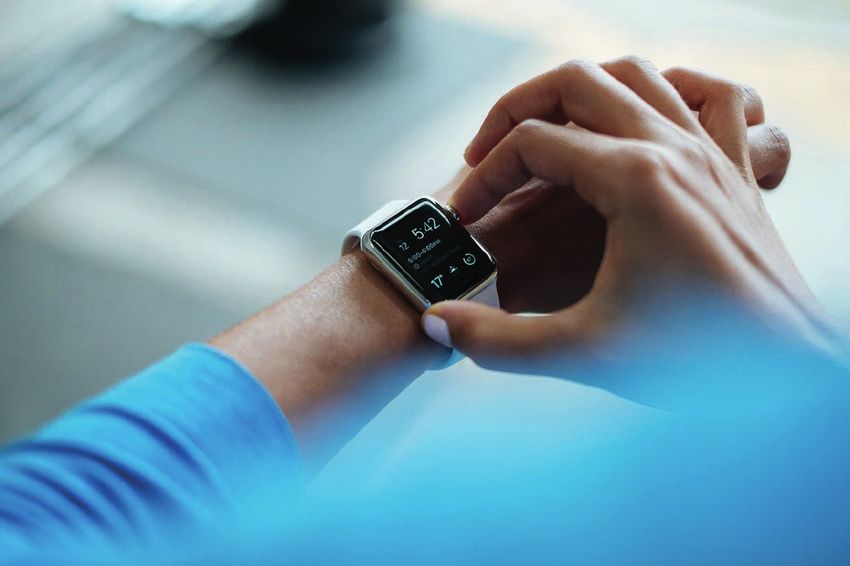
THE GLIMPSE

Why insurers want your
information?
A complementary vision that faces the challenge from different
perspectives. The concern seen various points of views such as: users,
administration, corporations or technology companies.

The latent concern of users, companies and               through these devices and health or insurance
regulators for the use of personal data is               companies.
promising to emerge in different fields.
                                                         For example, Fitbit, recently acquired by Google,
On the one hand, people are increasingly interested      has gone from being the clear dominant of the
in monitoring their activity and recording their own     wearable segment (a 45% market share in 2014) to
evolution in their own devices. On the other hand,       being a company with little weight in this industry
companies want to offer hyper-personalized               (5.9% in 2019 ). These devices are no longer a
products and services to deliver added value to          novelty for users and companies such as Apple, the
their customers and differentiate themselves from        current leader in this market, has managed to
their competition.                                       integrate a greater number of functionalities related
                                                         to Health, integrating data into a wider ecosystem,
In this context, insurance and health companies are      that of well-being.
continually incorporating, over the last few years
and thanks to the advances of technology, new
options and features into their offering. This model
allows their clients to obtain certain benefits in
                                                            The goal from the insurance
return of the access and exploitation of their data by      industry is clear: to
these organizations.
                                                            reduce loss ratios and to
The goal from the insurance industry is clear: to           promote habits of
reduce loss ratios and to promote habits of
prevention and healthy living.                              prevention and healthy living.
Fitness, the gateway to health
                                                         The North American insurance company John
Well-being and health have been a trend for years        Hancock, meanwhile, already began to promote a
and, unlike fad, the former are capable of               significant change in the industry in 2015, when it
transforming and impacting economies, industries,        offered its first interactive life policy based on the
businesses and consumers in the long term.               knowledge of the activity of its users. Now, at the
                                                         end of 2019 and thanks to the agreement with
In the case of health, this transformation is already    Vitality, it is expanding this model to all its life
happening and we see how improvements in                 products and is only going to market these types of
technology and lowering costs in tracking devices        policies, so users will pay less when registering
are making people proactively decide to have a           their activity in an application.
deeper knowledge of their activity and data related
to their health status.                                  But it's not just about monitoring physical activity,
                                                         the agreement with Vitality goes further and
Initially, people were focused on an offer of novel      rewards users when they improve their habits:
value, which allowed them to access their data in        improving the quality of sleep (with a 30-day
real time and see their evolution. It was the moment     challenge) or eating healthier (if they buy healthy
when the wearable boom occurred, but there was           food in a network of establishments attached to this
still no direct connection between the data obtained     health program).

                                                                                                             6
THE GLIMPSE

                                                                  Why insurers want your information?

Among the rewards, the reduction in the price of the     possible to be granted by the same provider.
policy stands out, but there are also discounts on       Let's say that an insurer knows that a client has to
food, electronic devices (including discounts on         do a medical review and can send him a WhatsApp
Apple Watch and free Fitbit devices), subscription to    message indicating this information and offering the
magazines and applications related to healthy living     available slots to book the one that best suits the
and meditation, hotels...                                insured. This interaction would be taking place in a
                                                         channel that the user uses in their day to day and
A health ecosystem. From insurers to service             would be carried out from an advisory perspective,
providers                                                with a non-intrusive approach.

The above examples are basically related to              Other options are that the user has voluntarily
prevention and well-being, that is, everything that      decided to seek advice through a button to inform
has to do with improving the quality of life of people   him about something that concerns him. In this
before they have to make use of medical services.        case, there could be a consultation and a button
                                                         that could guide you through a series of questions
But what would happen if users found in their health     and to derive the options from that correspondence.
service provider a HUB that would give them value
in all their interactions at any time and not only       Another option is for the user to voluntarily decide
when they had to go to a medical appointment?            to seek advice through a bot to learn about
                                                         something that worries her or him. In this case, the
It is a new model in which the patient is at the         patient could make an inquiry and the bot could
center and, thanks to the use of advanced                guide him or her by asking a series of questions and
technological tools, facilitates the work of doctors     refer to the corresponding appointment options
and improves the user experience: before, during         based on the answers and the information provided
and after receiving care. This omnichannel benefit is    (for example photographs of skin spots).
based on a deep knowledge of the patients and
offers a multitude of services that until now were not

                                                                                                           7
THE GLIMPSE

Why insurers want your information?

Finally, the user could also know in advance which     A positive scenario for all parties
specialist he or she wants to go to and find an
available slot through services such as Alexa or       The benefits for the insurance companies are many:
WhatsApp, where he would be shown the name of          they could know if there is any change in the client's
different doctors, their location (depending on the    risk profile, inform the insured that they have to
area chosen by the user ); and even see the            complete medical tests or contact them to
assessment or rating of that professional.             encourage changes in their lifestyle.

The medical consultation is also digitized             This approach is clearly aimed at expanding the
                                                       offer of value to move from being insurers to service
If doctors could access all that information           providers and to significantly reduce the payment of
centralized on a single platform, they could have a    reimbursements for the provision of medical and
360 view of the patient. With all the data coming      assistance services
from the wearables (with prior authorization) and
also of the medical history and of the tests carried   But at the same time it affects the improvement of
out before the patients.                               patients' lives. The better the life that people lead,
                                                       the less health problems they will have.
Similarly, health professionals could contact users
through the channels they usually use. For example,    This is a scenario in which prevention will be key
they could make a video call through WhatsApp,         and in this respect we would like to open a
Skype or by phone. Without forgetting that the         reflection: can there be a better use of the data than
option of the F2F consultation is always open.         what is done to improve people's quality of life?

A new way to understand Insurance

Rally Health                  Manulife Vitality        Discovery Vitality         AIA Vitality
UnitedHealthcare Motion
Real Appeal

                                                       Multiply

Cigna MotivateMe
Program                                                                           Ping An Health Vitality

                              Generali Vitality

Lifestyle Returns Steps
Program
                                                                                  Live Great Corporate
                                                                                  Wellness Program

Go365 wellness program

John Hancock Vitality                                                             Health Maintenance Reward
                                                                                  Program

Wellness For Life Program                                                         Live better
                                                                                                                8
STARTUP RADAR
What’s new?
A selection of startups that are innovating and doing things differently in the
field of healthcare and wellness:
$520K
Total Funding
The startup motivating employees to live more active lifestyles,
Barcelona-based WeFitter is helping companies reduce healthcare Platform Ecosystem /
costs through gamification and health tracking data. Founded in April Marketplace
2015, the health solution aggregates real-time data from health and Business Model
fitness apps to give a complete view of a person’s health, enabling
health insurers to reduce healthcare costs and increase profit margins. Product Design & Development
Areas of Value chain
WeFitter secured €260K in funding from Wellness Holding, the owner
of TechnoGym, in 2015 whilst a seed funding round of €130K in 2018
Big Data & Analytics, AI and IoT
brought the total raised to €710K. The startup has been reported to be Technologies
entering the American and Finnish fitness markets as their user base
continues to grow.
$124M
Total Funding
The American startup Health IQ is an insurance company rewarding
Platform Ecosystem / those with healthy lifestyles like runners, cyclists, weightlifters,
Marketplace yogis, vegetarians and well-managed diabetics. By combining
Business Model current health, health literacy and active lifestyle to better predict
long-term health, users are getting rates up to 41% lower. The
startup use an easy method, inviting users to answer an online
Underwriting
Areas of Value chain
health quiz and through data analysis it is determined a
personalized pricing discount tied to healthier living.
Big Data & Analytics The Mountain View, California-based company founded back in
Technologies
2014 continues growing, during 2019 raised $55 million Series D
financing round led by Greenspring Associates, Aquiline Technology
Growth and Hanwha Asset Management.
N/A
Total Funding
It is a science and technology-based wellness program that supports
and rewards healthy habits. It focuses on three established pillars of Platform Ecosystem /
good health: nutrition, physical fitness, and mental well-being; and Marketplace
recognizes the decisions users make each day that can have a big Business Model
impact on both their physical and financial well-being.
Underwriting
The company has more than 150 years in the insurance market and Areas of Value chain
partnered with the Vitality Group, a well-established in South Africa
and UK and is becoming more widespread in the United States. The Big Data & Analytics and IoT
program's works for policyholders by scoring premium discounts for Technologies
hitting exercise targets tracked on wearable devices such as a Fitbit
or Apple Watch and get gift cards for retail stores and other perks by
logging their workouts and healthy food purchases in an app.
9STARTUP RADAR
Tailoring your insurance
policy according to your data.
From reinventing customer engagement and experience, to using
data-driven processes to optimize operating models, health insurance
companies are more and more investing in technologies to increase their
productivity efficiencies
It is crucial for health insurers to be aware of the insurers face the challenge of reshaping their
developments and changes occurring in the market products and services towards an increasingly
thanks to the advances of technologies and the customized offer. With tailored portfolio
integration of the digital component. Trespassing diversification, underwriting and pricing
the physical boundaries and using digital optimization, based on the customer’s relevant
technology to track and link healthy behavior is data, insurance companies are able to move from
starting to be a target aim to insurers, and will generic and reactive to personalized and proactive
certainly become a must-have in most regions of organizations.
the world. Despite regulations prevent some
concepts from being applied to the standard and Insurtechs are enabling, as well, new capabilities to
basic health insurance coverage, success have provide added value to their customers. New
been demonstrated to be hand-by-hand with solutions developed by health Insurtech companies
technology. are transforming the existing traditional value chain,
from product to claim management altogether.
The relationship between the different players within These value chain adjustments have to be
the health insurance industry is changing. They are understood and actively managed by health
more linked thanks to the digital scenery and so insurers globally in order to compete effectively.STARTUP RADAR
Tailoring your insurance policy according to your data
PRODUCT DEVELOPMENT MARKETING & DISTRIBUTION UNDERWRITING
PRODUCT DEVELOPMENT
• Digitally enabled platforms assist in optimal service offering identifications and support
these service’s deliveries.
• Emergence of digital platforms aimed at population management, health data collection,
integration and analysis, usually with the help of wireless tracking devices and apps.
• Wearables and Genomics, for example, help customers, on one side, to adopt a healthy
lifestyle and healthcare companies, on the other side, to implement personalized medicine.
MARKETING & DISTRIBUTION
• Development of digital channels allows to create new, more effective schemes for
members’ acquisition and health insurance services distribution.
• AI is transforming the distributions in unprecedented ways. Chatbots answering
customers’ personal questions, automation and behavioral economics lead to
process optimization and insurance personalization.
UNDERWRITING
• The traditional underwriting in health insurance requires evidence from customers on their
own. New technologies have facilitated new data sources that insurers can use to assess
and price risk.
• The ability to assess an individual’s medical history digitally eliminates the need for
underwriters to search and wait for the information, effectively smooth-running and
accelerating the process and, consequently, reducing costs.
POLICY ADMINISTRATION
• IoT technology makes possible to track location and conditions of goods, enabling InsurTechs to
underwrite more precisely the risk.
• P2P models seem to be the new way to cover unattended patients that are uncovered.
• Data usage increases security and flexibility in policy administration as the processing of
unstructured data leads to classification accuracy and efficiency, and reduces errors.
CASE MANAGEMENT & COLLECTION
• Using big data and robo-advisors, among others, insurance companies keep the sole
ownership on its customers while increasing its competitive differentiation.
• Data usage is a big part of insurer’s arsenals in the addressing of more effective claims
management. Insurers deploy it more in areas like claims fraud and severity indication rather
than in detecting underwriting weaknesses.
11STARTUP RADAR
Tailoring your insurance policy according to your data
POLICY ADMINISTRATION CASE MANAGEMENT & COLLECTION
PRODUCT DEVELOPMENT MARKETING & DISTRIBUTION
Provides genetic testing and interpretation to With “medical insurance at your fingertips” as motto,
individual consumers. Their product permits Bowtie aims at offering an online user experience that
customers to analyze their genome features while uses intelligent automation to tailor policies to each and
their data is collected and profiled to be used on every consumer. They use a totally-encrypted system to
research and other product development. protect customer’s personal data, but use it to provide
insurance value specific to every client.
UNDERWRITING
Uses an online health quiz and the subsequent data Connects health payers to millions of people in Africa
analysis to determine personalized pricing discounts who are currently excluded from access to affordable,
tied to healthier living. Working with partners in quality healthcare services. It collects patient data related
healthcare, pharmaceuticals and medical devises to healthcare through a digital platform and connects
across Europe, Health IQ uses customer’s data on patients, providers and payers.
current health, health literacy and active lifestyle to
predict their long-term health.
POLICY ADMINISTRATION CASE MANAGEMENT & COLLECTION
Connects insurers with potential customers and allows It is a virtual nurse chatbot that uses voluntary disclosure
people to crowdfund campaigns to help patients in need of personal data to recommend patients partners network
of financial support in healthcare expenses. Throughout services and products. Their services include instant
social platforms as WeChat, patients are able to share access to chatbot customer service, healthcare
their medical data to receive financial assistance from monitoring and claims AI assistance, creating a more
other millions of users. The technology WaterDrop Inc. transparent and human relationship with the customer.
uses improves transparency and eliminates false caring
demand.
CONCLUSION
Overall, new innovative ways of healthcare delivery customized products, a high demand in today’s
containing digital components are being developed world. Technologies, in conclusion, have unlocked
by health insurance companies to cut costs and new propositions throughout data collection,
increase efficiency. Emerging technologies have management and administration and have made of
open an enormous toolbox for insurers. The digital the traditional value chain, a new value added.
integration has permitted health Insurtechs to sellBY NUMBERS
By numbers.
Healthcare, a 268 startups Google will launch its
own smartwatch, the
company has chased-
$4.2
Between 2010 and 2018,
insurance companies have Fitbit
invested in or partnered with
trillion
$2.1
268 startups in the startup
ecosystem in different sectors
ranging from Insurance to
global industry. Fintech and Healthcare. billion.
In the last 3 years, the Health Global health care
line of business has attracted
spending is
55% large amounts of investments
due to current players projected to reach
attempting to expand into
new territories in the USA and
to adapt their models to
$10.06
More than 55% of
respondents said they would
Medicare advantage plans.
trillion
use a wearable health
monitoring device at home. by 2022.
14,000 Investors have 14%
companies followed it: Total 6%
financing in new
have been created in the last
five years in the healthcare
companies in the last 2019 2060
Public spending on health and
industry as entrepreneurs five years exceeds long-term care in OECD
around the world rush to this countries is to increase to
$75 billion.
growing industry to develop 14% by 2060 (vs. ~6% today)
innovative solutions. according to OECD
predictions.
100% 7
Worldwide end-user
spending on wearable
devices will total
Insurtech industry still seems to be
$52 billion
poorly represented in France and European startups are
Europe, compared to the USA, positioning themselves around
where it gathers 100% of the wearables where data analysis
unicorns of the Insurtech (Oscar, allows for better life
CollectiveHealth, Gusto, Zenefits, underwriting and clears the in 2020 — an
Clover) or Asia, with WeDoctor, areas of prevention and the increase of 27%
valued at over $1 billion. promotion of healthier lifestyles. from 2019.
13FOOD FOR THOUGHT
Key ideas.
THE PERSONA MODEL
Persona yes, not a client. At the center of the relation model with insurance and
healthcare companies demanding personalization, immediacy and participation
in decision-making related to the exchange of their data due to their sensitivity.
WHY SHARE YOUR DATA?
If you have read our post you can relax and think about sharing your health and
lifestyle data for exchange on insurance benefits. Are you considering it?
THE TECH GIANTS
Companies who are out of the insurance and healthcare industry begin to gain
prominence in the health arena such as Google with Fitbit's acquisition with the
objective of reaching everyday consumers and competing with Apple on hardware.
KEEP AN EYE ON
John Hancock (JH) is transforming life insurance by fully embracing a behavioral-based
wellness and leaving behind the traditional way of doing business in insurance. The
company introduced the JH Vitality Program, a unique life insurance program that
provides the coverage users need while offering savings and rewards for living healthy.
MORE?
If you want to delve deeper into the world of insurance, check out our Insurtech Global
Outlook 2020.
14Genomics is no
longer rocket
science.
CONTENTS Genetic tests are one click
away from people, there are
already several companies that
Our vision have democratized genetic
A practical overview
information.
on Genomics
The Glimpse The collaboration of genomics
Reaching a point with the insurance industry
where genomics could generate a bright future
woven into everyday in the anticipation and risk
life process reduction.
Startup radar
Top 3
Interviewing Made of
Genes
On numbers
Genomics as a trend
Food for thought
Conclusions and key
ideas
15Our vision.
Precision and personalized medicine is New startups, not only in the Insurtech
increasingly breaking into the healthcare sector. spectrum, have already understood that these
The understanding of this concept is that one disruptive technologies open a hand fan of
diagnosis or treatment for all is not enough, in opportunities and are starting to implement
this type of medicine the approach for disease these methodologies in their offers.
treatment and prevention takes into account
individual's variability in genes, environment, Such is the case of Made of Genes, through a
and lifestyle for each persona. high performing computational platform
dedicated to improving health and wellness
The first human genome to be sequenced took through personal genomics and P4 medicine:
13 years. Now it only takes one day. Genomics Preventative, Personalized, Predictive, and
is revolutionizing the healthcare industry by Participatory.
having a direct and personalized relation with
persona's through their genomic data; making The popularly called “Netflix of Genomics” has
a more easy understanding on their state of transformed the way genomics used to be
health and enabling through technology a seen, providing a personalized genome
secure data privacy environment. sequencing to its consumers.
This tendency is also true for the insurance Our vision at everis is that insurers should take
industry. The amount of data insurers had in advantage of the possibilities that genomics
their hands to work with has evolved and the provide in regards to a new way to deal with
range of options they could use to rate is now genetic data and spread insurance risk fairly.
greater than ever before. Today, there is a Being careful, in accordance to the different
chance to work on the basis of a risk table regulations that might frame this scenario,
composed by people whom about insurers can genetic testing results represent a great
know whether they could or could not develop opportunity for the industry but also for
life-threatening diseases in the future. personas.
A hyper-personalization trend on genomics
Precision Persona's are Insurance New companies
medicine is demanding companies can like 23andme,
helping the health ownership and leverage genetic Made of Genes
industry shift from control over their data to improve and Veritas
the one-treatment genomic data quality of life and Genetics are
/diagnosis-for all. promote longevity humanizing
of persona's. genetics.
16Our vision.
Today, there is a chance
to work on the basis of a
risk table composed by
people whom about
insurers can know
whether they could or
could not develop
life-threatening diseases
in the future.
JORDI
FONTESTAD
everis Health
Director
17THE GLIMPSE
Reaching a point where
genomics woven into
everyday life
The study of the human genome has become an increasing trend. More
and more, countries are betting for the implementation of genomic
medicine and it resounds beneficiary for individuals, for the healthcare
systems and for insurance companies as well.
As seen in the map, it is not an isolated fad, rather Essential for the evaluation of potential insured
an active initiative around the globe. Genomics,
genetic testing, and precision medicine will play a However, legal frameworks should be constructed
rapidly increasing role in patient care and disease around the basis of symmetry of knowledge. If
prognostication and ultimately lead to insurers are denied relevant data that is easily
improvements in morbidity and mortality. available to insured parties, it will become
increasingly unviable to underwrite certain products.
However, genetic testing is an emotionally charged
and controversial topic for the public, lawmakers
and regulators. And, of course, as well for the
insurance industry. From one side, although
information from predictive tests offers clinical
The goal from the insurance
industry is clear: to
From the other perspective, individuals find
incentives on knowing their genetic risks as for in reduce loss ratios and to
buying insurance at standard rates or in larger promote habits of
amounts. A person may avoid testing for fear that a
positive result might lead to an increase in prevention and healthy living.
insurance rates or to complete or partial denial of
coverage. Furthermore, a person with a family
history of a dominant disease, as Alzheimer, for In this context, insurers must not be prevented from
instance, that might have been denied insurance, using genetic testing information to assess risk of
may seek testing as a negative result would render candidates for initial coverage, renewal or increased
him insurable. coverage. This just in the basis of protecting the
companies and policyholders from adverse
Consequently, the legal battlefield seems unstable. selection.
Countries apply different approaches and,
dependent on legislation, life insurers may, or may For that reason, many affirm insurers may be able
not, take these results into account when to use any piece of data available in the person’s
underwriting. medical record to decide whom they can insure,
and at what rate. Prohibiting insurance companies
For example, Canada, Belgium, Norway or Portugal from accessing such information for the purpose
prohibit any use of predictive genetic test results for underwriting a potential insured would have a
insurance purposes. Others as the United States or significant impact on insurers and the efficient
South Korea prohibit discrimination on the bases of operation of insurance markets.
the information provided by these tests, but allow
the access to them in the need for actuarial sound Think it in this way: life, long-term care or disability
risk assessment. insurance are based on informed guesses insurers
18Reaching a point where genomics woven into everyday life
make about your life expectancy. If their risk table is testing should be balanced against the risk for
top-loaded with people who know they are at high potential anti-selection, claims experience and
risk to develop a life-threatening disease in the near increased exposure to legal and reputational
future, premiums for everyone across the board challenges in cases in which insurers are perceived
could become unaffordable, and the business model to be misusing test results or if they select genetic
for this industry could collapse. testing services that cannot deliver or produce
Genomics, then, serve as the bridge between those inaccurate results.
guesses and the most plausible reality. They make
probability exact. A beneficiary tool for all
Opportunities and threats for insurers Expanding data collection efforts outside of
traditional clinical study designs and promoting
While genetic testing may not impact aggregate risk physician and patient awareness will likely lead to
pools initially, it may evolve to become a game greater review and coverage of these tests. Not just
changer at an individual level. Individuals identified because it rises a new weapon for the insurance
to be at increased risk for larger or premature claims industry, but also because it proves helpful for the
might be charged higher premiums, denied insured too.
coverage for certain conditions or even denied
insurance altogether. Similarly, insurers may offer a Insurance companies may benefit indirectly from the
standard risk classification to persons who engage advent of genetic testing, because early intervention
in healthy behaviors shown to mitigate the higher may increase life span, mitigate or prevent disability,
risk of their genetic predisposition to disease. In and reduce long-term treatment costs. Directly,
simpler words, genomics become a sort of tailor of insurers may benefit from it for risk selection and
insurance decisions. rating.
There are also several possible risks for insurers. Likewise, genetic tests motivate people to make
The health benefits of offering predictive genetic lifestyle changes or take healthier actions. Hence,
19THE GLIMPSE
Reaching a point where genomics woven into everyday life
life insurers are exploring ways to offer customers consumers and physicians— cut off the price of its
genetic testing services as a way to improve “myGenome” service to $600. The main difference:
long-term health outcomes. Surveys prove that Veritas requires a medical professional to evaluate
people receiving personalized genetic reports make the results for individuals. Making precise medicine
at least one positive change in their health behavior. affordable for the normal consumer, the company is
This includes improving eating habits, exercising predicting the price of a whole genome to decline to
and getting more sleep. $100-$200 by 2021.
The Era of the Social Genome Popularly called “the Genomics Netflix”, Made of
Genes uses a subscription-based model, for which
In 2019, 23andMe was the first company to get users pay a monthly fee of only between 15 to 20
American Food and Drug Administration (FDA) euros.
approval to market direct-to consumer genetic
tests. A service they called Genotyping, this By such a low price, consumers can access their
technology looks at points in the human genome personal genetic information as many times as they
that convey information about genetic want. B2B-oriented, Made of Genes parallel brand
predispositions in regards to 600,000 variants. For a Genomcore, offer also services to large
price of $199, the 23andMe has sold around 10 organizations, hospitals and governments for the
million genetic-testing kits. solving of technological, economic and legal
challenges concerning the management of genomic
Competitor Veritas Genetics —who had offered in data.
2016 the first $1,000 whole genome sequence to
Genomic projects around the world
USA • Brazil • UK • France • Netherlands • Switzerland • Denmark • Estonia • Finland • Turkey • Saudi Arabia •
Qatar • China • Japan • Australia
20STARTUP RADAR
What’s new?
A selection of startups that are innovating and doing things differently in the
field of genomics:
$786.1M
Total Funding
Named after the number of chromosome pairs in humans, 23andMe
aims at helping understand what their genes mean by indexing them B2B B2C
and highlighting significant findings. Founded in 2006, the startup Business Model
allows its users to study their ancestry, genealogy, and inherited traits.
They also provide categorized data for researchers and scientists in Product Design & Development
regards to the human genome. Areas of Value chain
Following a rigorous methodology, 23andMe customers are in control Big Data & Analytics, Artificial
of their information, they choose how their genetic data is collected, Intelligence, Blockchain
used and disclosed to others. To ensure the quality, accuracy and Technologies
reliability of the results, the person’s DNA analysis –called genotyping–
is performed in US laboratories certified by CLIA of 1988. 23andMe
received $3.9 M in Series A by Google in May 2007 with the objective
of expanding even more the search giant’s world of information.
$1.1M
Total Funding
Their founders purported to make of the company a leader in the DNA
B2B B2C analysis. Aiming at reducing the need of multiple sampling, they follow
Business Model two business lines: Genomcore (B2B), focused on personalized
medicine infrastructure for hospital or administrations, and Made of
Product Design & Development Genes (B2C), more oriented to the personal genetics.
Areas of Value chain
It uses a high-performance computer platform based on hybrid-cloud
architecture ensuring the scalability and compliance required for clinical
Biotechnology/ Genetics/
Big Data and Big Analysis. It provides a professional framework for the
Genomics Blockchain clinical implementation of P4 Medicine based in omics sciences with a
Technologies
customer-centric approach. The framework is based on the patient’s
data ownership with a unique-in-a-kind, patent pending, method for
ensuring informed access to genomic sequence and health records.
$51.7M
Total Funding
Veritas looks for DNA variants in hundreds of genes associated with
hundreds of conditions in multiple disease groups. The company’s Data monetization
CLIA-certified laboratory works with a team of bioinformaticians, Business Model
geneticists, computer scientists and genetic counselors.
Pricing & Underwriting
In 2016, Veritas raised $30M in Series B financing round after Areas of Value chain
launching a $999 consumer-initiated whole-genome sequencing and
interpretation service earlier that year. In 2017-2018, it also signed Biotechnology/ Genetics/
deals with Genomenon, the Mayo Clinic, Inova, the Women’s College Genomics Blockchain
Hospital in Toronto and Fabric Genomics. In 2018, Veritas partnered Technologies
with Nebula Genomics, offering that firm access to its platform. In
2019, the company inked an agreement with Genomika to offer its
whole-genome and whole-exome sequencing services in Brazil.
21STARTUP RADAR
The genomic revolution.
We have identified one of the most promising genetics worldwide
startups, Made of Genes, considered as “Netflix of Genomics”. This
Spain-based company has created the first service on the market that
integrates all-in-one personal genomics.
Interview with Miquel Bru, co-founder of Made of Genes.
Insurtech: Hello, Miquel. Thank you for learned from scratch, from the real
joining us in the Startup Radar Podcast. beginning. So when you say “man, five
years later we’re here, look at the place that
Let’s think throwback to 2015. When was the we are at; we started two guys and now we
most difficult moment since you created the are twenty two and we are still dreaming on
company and which was the happiest? that, we are still working for that dream”,
that is the happiest moment for sure.
Miquel Bru: We’ve been lucky. My partner
Oscar Flores and I finished our MBA in Insurtech: Genomics is something
ESADE in January 2015 and we founded the considered as rocket science for many of us.
company in January 2015. We decided to How do you think Made of Genes is really
do it, but we knew that we had a long way. working to change this paradigm and to
We are talking about a high-computing show people that this is something that you
platform, so it’s not easy to develop all the can have?
infrastructure that we have behind us. We
needed funding, so we started to talk with Miquel Bru: When I started this project with
some accelerators in Spain and we were my partner, the mission was to make
accepted in Wayra. The first day, they put in precision medicine a reality. The problem is
a room fifteen consultants and told us to do about awareness, and not about high
a pitch of our company. That was the technology which is already here. So for me
hardest part, because that day we realized there are three things: first, to put the right
that this was not going to be easy. And we technology, secondly, to make it efficient
22STARTUP RADAR
The genomic revolution. Personaliized health for unique people
and the third part is about security and privacy. So if just the part of genetics, we cannot know enough.
we have the solution for these three steps, we can So that’s why we are now launching our new project
make precision medicine arrive to everyone, and this that is what we call “personalized health”. We’ve
is our goal. been training an algorithm and a machine-learning
technology that aggregates data about the genetics
Insurtech: How difficult or easy has it been to and all the biochemical markers to give you
transfer your value proposition to patients? How do personalized recommendations.
you focus your communication in order to be
something that everybody can understand? Insurtech: In the regulation field, that this is
something important, have you experienced barriers
Miquel Bru: It has been really difficult. We started as when presenting your project, your technology to
a B2C approach and then we moved to pure some government offices or to other companies?
technology providers, and now we are moving to
B2B B2C. We always want to go with the channel; Miquel Bru: The problem is if you develop a
with insurance companies, with private hospitals, technology or a platform, without thinking about
because we believe that we must collaborate, this is privacy, but if from the beginning you start to
like a net. We are at the starting point of a new way develop all your technology thinking about all these
of taking care of yourself, what we call the kind of issues, then it’s really easy. That is the only
“personalized health”. But we need doctors, nurses, thing that we had to do, to develop a technology
physiotherapists, nutritionists and collaborate all that can be deployed in different servers, not a fixed
together. This is the kind of value that we think that technology that can be just in our own data servers.
we must put on the table to get to the final So, if you take into account that every country has
consumer, to make a real difference. different regulations, you can use different platforms
and you can deploy your technology in different
Insurtech: Do you think patients’ thoughts platforms, so you can adapt really easy the
regarding data is changing or do you think it’s still a technology to the regulations about privacy, how
dilemma? you can share and how not.
Insurtech: Why do you think companies invest in
Miquel Bru: I used to think that was a big dilemma Made of Genes?
for everyone to share, but then you realize that we
are really used to share. The thing is, first if you know Miquel Bru: I think that investors, business angels,
it or you don’t know it, and secondly if you agree or invest on you for the team. You can have an idea,
you don’t agree. That’s why one of the things that but ideas are going to change, so what makes the
we’ve developed is based on a Blockchain difference is the implementation of the idea. What
technology. It’s about an electronically informed you need is a team that can implement whatever
consent channel, with an IP where we encrypt the comes and has the ability of adaptation. Adaptation
data in a way that even the Made of Genes team, is the key factor of everything.
cannot access to the database. We always need to
ask to our data owners, to our “genome owners”. So Insurtech: And what are the risks that you think a
at the end, if we have the technology to make it potential investor would see in your company?
right and we just ask the users, I think people are
really agree to share data. Miquel Bru: One of the biggest risks that everyone
puts in our table is that precision medicine and
Insurtech: How do you differentiate from your genomics is going to stay. The big question is if we
competitors? How are you doing things in a different are earlier or is it the right time. I always answer that
way? it’s the moment and we are late, also. Because what
people don’t realize is that genomics is now in our
Miquel Bru: I think that we always have been life already. Implementing this and implementing in
innovative on the way. We are the first to talk about the private sector, depending on the market, is a risk
storing the data, to think and talk about “we don’t factor, but the startup is about to risk, to risk some
have to go for one part of the genome, let’s go for part in order to get something that is vision and we
the whole genome and reuse it”. Also we are the want to be there the firsts. If we wait for the wave,
first to talk about privacy-first policy, and now we are then we are not going to be there.
the first saying “genomics is not everything”. With
23STARTUP RADAR
The genomic revolution. Personaliized health for unique people
Insurtech: In massive markets, are you finding a lot
of barriers?
Miquel Bru: In genetics massive markets there is just
one that is the United States. You have the famous
one, 23andMe and there are others. It’s the place Once we have the
where you can find more competitors and you can
find more people that is doing similar things. That is
a good thing, because you have someone to
right technology, and it
compare with, so the market is more prepared to
this kind of product, that is a really good thing, but
is efficient and safe,
also, you have to fight a little bit more with your
place on the market. So that’s why we are now at this we can make
precision medicine
moment avoiding this kind of markets; we prefer to
go other markets that are also huge, Middle East,
Latin America, Europe.
Insurtech: Let’s move to the future. Are you
arrive to everyone, and
expecting to be a company to be acquired or would
you like to become the “Netflix of Genomics”? this is our goal.
Miquel Bru: We wanted to be the “Netflix of
Genomics” and still want to. I think that is
something that will come, depending on how is
going the future, depending on how are going the
projects, depending on a lot of factors and now I
cannot evaluate it. But we’ll see, both paths can be
okay. If we start to play the game of the investors,
we are playing the game of the investors, but maybe
we can also be the next Netflix of Genomics, this is
something that will come to the table in the right
moment.
Listen to the live version of this interview.
Discover our Startup Radar Podcast.
THE STARTUP RADAR PODCAST
Made of Genes:
The genomic revolution.
00:00 21:32
24BY NUMBERS
By numbers.
Less than 20,000 About 80% of a survey
respondents declared
25,000
0.02 %
their willingness to share
-
genetic information with
Genomics produces huge
volumes of data; each human their insurer in return for a
genome has 20,000-25,000 genes premium or health
of humans have had comprised of 3 million base pairs. management benefit
their genomes This amounts to 100 gigabytes of
sequenced. data, equivalent to 102,400
photos. 80%
90% 17 years
It takes an average of 17 years for
The global genomics
industry is worth
90% of respondents in a research evidence to be
survey mentioned they
should be in control of who
implemented in clinical
practice.60 We have a global
responsibility to accelerate the
$16.4 B
has access to their genetic
implementation of genomic
data, and a 89% are willing medicine and enable the timely as of 2018 and is
to be informed of findings realization of the benefits of expected to reach
that resulted from the access genomics for individual patients,
$41.2B by 2025.
to their genetics data. families, and healthcare systems.
$100M As for anti-selection, a study
conducted more than 10 years ago
demonstrated that there is a
$23M
One of the giants of gene 5.7-fold increased tendency for
Genome Medical, a leading
sequencing, Illumina, has spun nationwide telegenomics company
policy owners to change their
providing genomic-based medicine,
off a new $100 million long-term care insurance coverage
today announced that it has
company called Grail to create if they know they carry genes
raised $23 million in Series B
an all-in-one blood test for associated with increased risk for
financing to accelerate the
Alzheimer’s disease.
cancer – and its investors development of its technology and
include Microsoft co-founder medical services which support
Bill Gates and Amazon’s Jeff
Bezos. 5.7K patients, physicians and healthcare
systems in all 50 states of the US.
$4B 15 According to AngelList,
minutes
there are
160+
Since 2013, the governments of
at least 14 countries have invested
over US$4 billion in establishing In 2003, the human genome
national genomic-medicine was mapped. It took 13
initiatives to address years and $3 billion. Today genomic; 4,228+
implementation barriers and any human genome can be biotechnology; 9,893+ life
transition testing from centers of sequenced for $1,500 in 15 sciences; and 4,893,827+
excellence to mainstream medical startups around the world.
minutes.
practice.
25FOOD FOR THOUGHT
Key ideas.
PERSONALIZED MEDICINE
Precision medicine will play an increasing role in the healthcare industry.
Genetic testing results lead to patient care and disease prognostication, and so
might motivate people improving their lifestyle decisions and health behaviors.
ETHICAL SHIFTING QUICKSAND
Genomics rise controversy over the public opinion, as the person’s privacy and
confidentiality might be jeopardized. Consequently, insurers must keep an eye
on these moral issues.
SYMMETRY OF KNOWLEDGE
The information provided by genetic tests is significantly relevant for insurers to be
able to underwrite certain products. Insurance companies ought to be able to access
to policy owner’s medical reports genetic data.
HAND FAN OF OPPORTUNITIES
Genomics are for insurers tailors of decisions. They help in risk assessment, premiums
affording and case management. However, insurance companies should be careful with
legal and reputational challenges associated with anti-selection.
LOOK OUT FOR
Made of Genes, the “Netflix of Genomics”, will revolutionize with their service where users
sequence their genome once and can access this information many times in their life.
Always with total privacy and professional counselling.
.
.
26The
Just-In-Time
Bio Printing
technology.
CONTENTS Three-dimensional printing of
human organs is not something from a
sci-fi movie.
Our vision
A practical overview
This technology will dramatically
on 3D Printing
change devices, design, development,
The Glimpse manufacturing and commercialization.
3D Printing
Health Insurance companies
Startup radar will play a key role in the value
Top 3 chain where devices will be an
affordable organ option for
On numbers patients.
3D Printing as a trend
Food for thought
Conclusions and key
ideas
27Our vision.
Imagine being able to print a live organ as you this technology, due to an increasing in
are used to do with a photography. Sounds Research & Development, government support
distant, but some progress is happening in the and tax incentives.
3D printing field, which has come with an
innovation to respond to this growing demand Three of the more than a hundred examples
and to solve some problems they themselves that are implementing this cutting-edge
have being facing: costs of manufacturing, time technology are companies like: Allevi, Cyfuse
efficiency and consumer delivery. Biomedical K.K. and Pandorum Technologies,
who are leading to medical advancements and
With the techniques of Bioprint 3D, this improved quality of life in their own markets.
technology is revolutionizing the healthcare
industry, with the production of living tissue, From everis we visualize bioprinting 3D as a
blood vessels and organs potentially for turning point for both the healthcare and the
medical purposes. By this time, it has already insurance industry. It leverages a new portfolio
been made clear that personalization is the possibility, with new policies and liabilities to be
trend that highlights the most nowadays among covered by insurers, and so it is a chance that
different sectors and 3D printing is one of them. these actors must take advantage of,
proactively collaborating with these innovative
Bioprint 3D has revolutionized the global companies to ensure that not only
healthcare scenario and has opened an technologies, but also research, development
enormous door for insurers. Asia and the USA and commercialization are viable in today’s
are clearly the most advanced in general with market.
Bioprinting the ecosystem
100 Bioprinting
established
GOVERNMENTS companies HEALTHCARE
Regulations and INDUSTRY
incentives. Precise and personalized
. treatments in regenerative
medicine.
ACADEMIA INSURANCE
R&D in new bioprinting INDUSTRY
technologies and use New portfolio possibility,
cases. with new policies and
liabilities to be covered.
28Our vision.
It is a chance for insurers
to proactively collaborate
with innovative
companies to ensure that
not only technologies, but
also research,
development and
commercialization are
viable in today’s market.
JORDI
FONTESTAD
everis Health
Director
29THE GLIMPSE
A limitless future into the
printing of organs and a
handful of opportunities for
insurers
The study of the human genome has become an increasing trend. More
and more, countries are betting for the implementation of genomic
medicine and it resounds beneficiary for individuals, for the healthcare
systems and for insurance companies as well.
Artificial intelligence may seem like the product of can bring massive benefits to the industries as it
science fiction, but this umbrella of technologies is enables a customizable offer that fits perfectly the
already operating in our daily lives, even disrupting user’s specificities.
several industries. From automotive to aerospace,
construction, engineering and even the medical In regards to healthcare, additive manufacturing is
field, 3D printing emerges as one of this century’s an exciting development transforming the sector.
game changers. Offering bespoke models, faster processes, cost
savings and ultimately improved patient outcomes,
American engineer Chuck Hull would not certainly 3D printing is a technology that, if implemented
expect back in 1983 that his 3D printer invention properly, has the potential to make a difference to
would come a long way and revolutionize the thousands of lives.
insurance system three decades after. Additive
manufacturing, popularly known as 3D printing, Bioprinting: turning the healthcare world on its
refers to a collective term for technologies in which head
objects are built up layer by layer using different
materials as basis. 3D printing is significantly applied in different ways
in medicine: from individually customized
Quick, cheap and effective production prosthetics, all the way to scale models of patient
anatomy, dental and medical surgical guides and
As there is no need for intervention by other people perfectly suited implants.
but everything is machine-operated, additive
manufacturing has considerably shortened the As more applications are discovered, the impact of
production and delivery times, especially for those 3D printing on the medical industry has become
products of smaller series. absolutely astonishing.
3D printing reduces development cycles, speeds Solutions to medication dosage and pharmacology
products into the market quicker and can lower the issues on drug interaction or the manufacturing of
cost of manufacturing. It also has the potential to medical tools and devices can be other of the
shake up supply chains, as products are made possibilities available with this technology, but what
closer to consumers or even by consumers is especially exciting and applicable for the field of
themselves at home. transplants is bioprinting.
It has been already said numerous times that the Not only solves moral and ethical issues tied to
trend is increasingly pointing at personalization of traditional transplant methods, 3D printed tissue
products. 3D printing is reassuring in this aspect. It cells and organs has also increased acceptance as
30customized organ development using the patient’s most sought after technology in the biomedical
own cells. industry.
Bioprinting uses 3D printing techniques to combine Full of promise… but also of risks
cells, growth factors and biomaterials to fabricate
biomedical parts that maximally imitate natural While 3D printers reduce manufacturing costs and
tissue characteristics. This new technology has increases time efficiency, they do also generate
promoted, as well, research work for diseases like liability issues. Insurance risks can be substantial for
cancer, helping in the study of tumors growth and parties involved in this emerging technology, as its
development in order to find a cure. process involves more players than traditional
manufacturing: there is people code-controlling the
The flexibility offered by 3D printing services lets printer, others operating it, others supplying the
medical professionals create patient-specific materials, inter alia. Hence, companies often need
devices at an affordable cost. It also represents a multiple policies to ensure protection.
great opportunity in what comes to the complexity
of surgical means, sterilization, speed and Although nowadays the 3D printing products do not
customization of medical practices. have a proper legal status that defines them, their
tremendous growth in commercial and private
Bioprinting around the globe applications in recent years has leveraged
companies’ exposure to liabilities in regards to
There are around 111 established bioprinting intellectual property, technology errors and
companies and many entrepeneurs worldwide are omissions, environmental liabilities or cyberattacks.
showing interest in this emerging field.
This is where the insurance industry comes to
The ecosystem made up by these enterprises scene. Enterprises investing is these technological
proves that this technology has gained increasing approaches should review their insurance portfolios
attention due to the ability to control the placement to make sure they are covered against these new
of cells and molecules for tissue regeneration and potential liabilities. Whether it is a defective or
that it is just a matter of time before it becomes the harmful product or there is a machinery breakdown,
31You can also read


