Civil Defence Emergency Management - Draft Long Term Plan 2021-31 Activity Plan Proposed for adoption - Christchurch City ...
←
→
Page content transcription
If your browser does not render page correctly, please read the page content below
Draft Long Term Plan 2021-31
               Activity Plan

Civil Defence Emergency Management
           Proposed for adoption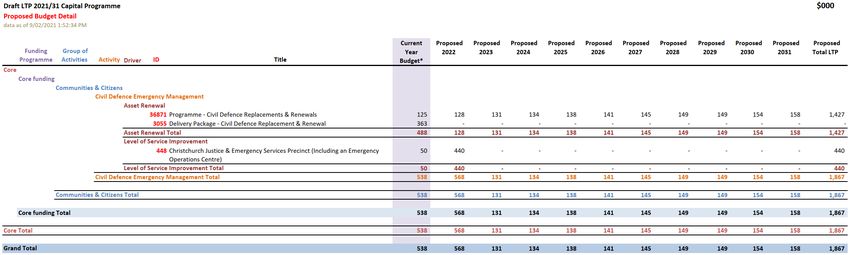
Approvals

 Role                                          Position                     Name                               For Draft LTP

                                                                                                   Signature                       Date of sign-off

 General Manager                               General Manager Citizens &   Mary Richardson                                      10 February 2021
                                               Community

 Activity Manager                              Head of Civil Defence &      Rob Orchard
                                               Emergency Management                                                                4 February 2021

 Finance Business Partner                      Finance Business Partner     Michael Down                                           3 February 2021

Draft Long Term Plan 2021-31 - Activity Plan                                        Page 2 of 23                       Civil Defence Emergency Management
Table of Contents 1. What does this activity deliver? ......................................................................................................................................................................................................................................4 2. Community Outcomes – why do we deliver this activity? ...........................................................................................................................................................................................5 3. Strategic Priorities – how does this activity support progress on our priorities? .....................................................................................................................................................6 4. Increasing Resilience .......................................................................................................................................................................................................................................................7 5. Specify Levels of Service .................................................................................................................................................................................................................................................8 6. Does this Activity Plan need to change as a result of a Service Delivery Review (S17A)?...................................................................................................................................... 13 7. What levels of service are we proposing to change from the LTP 2018-28 and why? ........................................................................................................................................... 13 8. How will the assets be managed to deliver the services?......................................................................................................................................................................................... 16 9. What financial resources are needed? ........................................................................................................................................................................................................................ 17 10. How much capital expenditure will be spent, on what category of asset, and what are the key capital projects for this activity? ................................................................ 19 11. Does this activity have any significant negative effects on social, economic, environmental or cultural wellbeing, now or in the future? .................................................. 21 12. What risks are identified and what controls and mitigations are planned? ........................................................................................................................................................... 22 Draft Long Term Plan 2021-31 - Activity Plan Page 3 of 23 Civil Defence Emergency Management
1. What does this activity deliver?
The New Zealand National Disaster Resilience Strategy sets out three priorities to improve our nation’s resilience to disasters:
1. Managing risks: what we can do to minimise the risks we face and limit the impacts to be managed if hazards occur;
2. Effective response to and recovery from emergencies: building our capability and capacity to manage emergencies when they do happen; and
3. Enabling, empowering, and supporting community resilience: building a culture of resilience in New Zealand so that everyone can participate in and contribute
   to communities’, and the nations, resilience.

The levels of service shown in this Activity Plan focus on readiness, response and community resilience. Managing risks (reduction) is considered to be part of the
business as usual approach taken by Council’s infrastructure units as part of their Asset Management Plans. Whereas Recovery is an organisation, and Canterbury-wide,
activity that cannot be fulfilled by any one individual entity.

Readiness as in the National Disaster Resilience Strategy that relates to “Developing operational systems and capabilities before an emergency happens, including
making arrangements with emergency services, lifeline utilities, and other agencies, and developing self-help and response arrangements for the general public”.

Response as in the National Disaster Resilience Strategy that relates to “Actions taken immediately before, during or directly after an emergency to save human and
animal lives and property, and to help communities begin to recover”.

Resilience as in the National Disaster Resilience Strategy that relates to “The ability to anticipate and resist the effects of a disruptive event, minimise adverse impacts,
respond effectively post-event, maintain or recover functionality, and adapt in a way that allows for learning and thriving”.

The levels of service are in alignment with the statutory requirements for Council as per the Civil Defence Emergency Management (CDEM) Act, the National CDEM Plan,
the National Disaster Resilience Strategy, and the Canterbury CDEM Group Plan.

The Civil Defence Emergency Management activity includes the following services:
     1. Co-ordinates civil defence emergency management readiness and response;
            o Operational readiness including facilities and equipment being available prior to an emergency;
            o Plans developed to inform staff, volunteers and agency representatives of how phases during a response should function;
            o Respond to and manage civil defence emergencies within the Council’s area.
            o Incorporate lessons learned from response to events and exercises into improvement of procedures and plans.
     2. Increase community resilience through public education programmes and community planning and volunteering;
            o Development and delivery of public education programmes;
            o Support the development of community ‘owned’ response plans;
            o Encourage involvement of community volunteers in CDEM readiness and response;

Draft Long Term Plan 2021-31 - Activity Plan                                       Page 4 of 23                                                Civil Defence Emergency Management
3. Training of EOC personnel and community volunteers;
o Development and delivery of local level training for EOC staff and community volunteers;
o Ensuring adequate staff attend Group and/or National level training to increase the individual’s capability;
o ‘Introduction to EOC’ for new employees training to be included as part of staff induction training.
o Running of annual exercise at the tier level defined by NEMA (local, regional, South Island-wide, national).
2. Community Outcomes – why do we deliver this activity?
Community Outcomes Describe in 2-3 sentences how the activity effects the Community Outcome
Primary Outcome Safe and healthy CDEM helps contribute to safe and healthy communities by helping to build resilience through educating,
communities supporting and empowering communities. And, in doing so, communities across the city will be better prepared
for an uncertain future and the emergencies it may bring.
CDEM provides for and coordinates suitably trained and competent personnel for emergency management
responses to natural disasters.
Secondary Outcome 1 Strong sense of CDEM contributes to building a strong sense of community, encourages active participation in civic life and values
community the voices of all cultures and ages (including children). This is achieved primarily through empowering and
supporting individuals and communities to act for themselves and others, in peacetime and in times of
Secondary Outcome 2 Active participation in emergency response.
civic life
Secondary Outcome 3 Valuing the voices of all
cultures and ages
(including children)
Note the performance measures and targets used to measure the difference the activity makes for the community outcomes is in the Level of Service table in Section 5.
Draft Long Term Plan 2021-31 - Activity Plan Page 5 of 23 Civil Defence Emergency Management3. Strategic Priorities – how does this activity support progress on our priorities?
Strategic Priorities Activity Responses
Enabling active and Engaging with communities so they can prepare for future emergency events is a critical aspect of the CDEM Activity. This activity
connected communities to works towards building community resilience and provides opportunities for residents to connect and to contribute to planning for
own their future their area.
Meeting the challenge of Responding to climate change will be an important consideration for the CDEM activity for the 2021 – 2031 period. As we encounter
climate change through more extreme weather events and communities become more exposed to frequent flooding, sea level rise, increased drought and a
every means available heightened risk of fires.
Ensuring a high quality
drinking water supply that The CDEM Activity does not support progress on this priority.
is safe and sustainable
Accelerating the
momentum the city needs The CDEM Activity does not support progress on this priority.
Ensuring rates are An increase of investment in CDEM is an investment in the preparedness of our city. The better we are able to prepare, the more we
affordable and sustainable can reduce the impact of extreme events on the community.
The increased drivers of Risk and Resilience will no doubt require additional resources to be made available to CDEM.
Funding for developments in equipment and technology such as tsunami warning systems, emergency alerting capabilities,
communications equipment and response vehicles, will enable the organisation’s CDEM capability to be flexible, adaptable and ready
to respond at a moment’s notice.
Investment in communication technology could enable the presence of immediate communication channels with elected members
and increase timely communication to residents. This is particularly so in the build up to emergency events (where known), or as
quickly, accurately and consistently as possible during an event.
Building community resilience comes from a sustained effort of consistently engaging with communities. Having a readily available
(to the public) and well-resourced team of professionals that can guide communities in planning for uncertain futures will be an asset
to the city and will improve visibility both for council and CDEM.
Draft Long Term Plan 2021-31 - Activity Plan Page 6 of 23 Civil Defence Emergency ManagementStrategic Priorities Activity Responses
Public education and engagement activities are of course public-facing activities that require consistency and constancy. This in-turn
dictates the need for dedicated resources to deliver against meaningful performance targets. And, as existing resources are currently
at capacity. Any increased requirement in this area would need to be resourced appropriately.
Overall the CDEM activity in general will need to be resourced in a way that not only provides depth and flexibility to cover multiple
risks, it will also need to address increased frequency of activations due to the effects of climate change, as well as increasing
capability and capacity to conduct simultaneous response activities.
4. Increasing Resilience
CDEM contributes to Christchurch (and New Zealand) being a disaster resilient city/nation that acts proactively to manage risks and build resilience in a way that
contributes to the wellbeing and prosperity of all New Zealanders. Christchurch CDEM primarily does this through ensuring we have effective responses to emergencies,
and through enabling, empowering, and supporting community resilience.
Education is power: community education gives people the opportunity to make their own decisions in advance of events, and to understand more what to expect at
the time of response. This, in turn, can lead to greater emotional resilience, and faster emotional recovery. Education before events lessens community stress at the
time of the emergency through a developed understanding of what is happening, and ultimately having more power and control over their own situation.
One of the most significant shocks that is likely to impact Greater Christchurch, as mentioned in the Resilient Greater Christchurch Plan is tsunami. The CDEM Unit has a
number of projects/activities that will address the risk to Christchurch. These projects/activities include:
- Developing an updated Christchurch tsunami response plan.
- Delivering public education regarding the changes to our tsunami evacuation zones.
- Ensuring we have the capacity and capability of communicating to the community at an early stage of an incident through
multiple channels such as emergency mobile alerting, tsunami sirens and information boards.
The tsunami work programmes are expected to be delivered within the first 2 years of the LTP.
Draft Long Term Plan 2021-31 - Activity Plan Page 7 of 23 Civil Defence Emergency Management5. Specify Levels of Service
LOS C/ Performance Historic Benchmarks Future Performance Targets Method of Community
number M1 Measures Performance Measurement Outcome
Levels of Service (LOS) Trends Year 1 2021/22 Year 2 2022/23 Year 3 2023/24 Year 10 2030/31
Co-ordinates civil defence emergency management readiness and response
2.5.1.1 C Christchurch CDEM 2018/19: The CDEM Act requires; CDEM Plans are CDEM Plans are CDEM Plans are CDEM Plans are Plans are identified Safe and
plans covering Achieved Local authorities to plan for reviewed reviewed reviewed reviewed in the CDEM healthy
local response 2017/18: emergency management and to annually annually annually annually Planning Framework communities
arrangements are Achieved respond and manage the adverse that outline the
in place effects of emergencies in its following:
2016/17:
Achieved Council’s district. Christchurch
And; hazards and risks
2015/16:
Achieved To provide a basis for the How CCC is to carry
out its roles and
2014/15: All integration of national and local responsibilities
Plans emergency management
planning and activity through the during response
reviewed,
however, alignment of local planning with a Communication
Local CDEM national strategy and national protocols
Arrangement plan. Activation triggers
s require and levels of
further work. response (including
2013/14: deactivation
Achieved criteria)
2012/13: Plans include an
Achieved updated
Christchurch
Tsunami Response
Plan that reflects
learnings from
previous
experience as well
1
C/M – Community or Management level of service (LOS)
Community LOS - Previously known as LTP LOS. These are LOS that are community facing and will be published in our Statement of Service Provision.
Management LOS - Previously known as Non-LTP LOS. These are LOS that are measured in the organisation to ensure service delivery.
Draft Long Term Plan 2021-31 - Activity Plan Page 8 of 23 Civil Defence Emergency ManagementLOS C/ Performance Historic Benchmarks Future Performance Targets Method of Community
number M1 Measures Performance Measurement Outcome
Levels of Service (LOS) Trends Year 1 2021/22 Year 2 2022/23 Year 3 2023/24 Year 10 2030/31
as incorporating
the new tsunami
evacuation zones.
2.5.2.1 C Council maintains The National Disaster Resilience One primary One primary One primary One primary Primary Emergency Safe and
an effective Strategy 2019 states that and one and one and one and one Operations Centre healthy
response capability Government and national secondary secondary secondary secondary (EOC) available for communities
and capacity to organisations should; facility available facility available facility available facility available the coordination of a
manage civil “Build capability and capacity for to be activated to be activated to be activated to be activated multi-agency
defence response and recovery - within 60 within 60 within 60 within 60 response in event of
emergencies in its minutes minutes minutes minutes an emergency)
area (Designated Ensure emergency management
facilities, capability and capacity is not just
equipment and fit-for-purpose, but future-ready Secondary
infrastructure for and adaptable.” Emergency
use in an Operations Centre
Emergency) (EOC) available for
the coordination of a
multi-agency
response in event of
an emergency)
2.5.2.3 M Council maintains New The National Disaster Resilience CDEM CDEM CDEM CDEM At least one Safe and
an effective Strategy 2019 states that emergency emergency emergency emergency Response Vehicle is healthy
response capability Government and national response response response response maintained for rapid communities
and capacity to organisations should; vehicles are vehicles are vehicles are vehicles are deployment of
manage civil “Build capability and capacity for readily readily readily readily personnel and
defence response and recovery - available, available, available, available, equipment
emergencies in its equipped and equipped and equipped and equipped and
area (Designated Ensure emergency management maintained for maintained for maintained for maintained for
facilities, capability and capacity is not just immediate immediate immediate immediate At least one Mobile
equipment and fit-for-purpose, but future-ready operational use operational use operational use operational use Emergency
infrastructure for and adaptable.” Command Unit is
use in an maintained for rapid
Emergency) deployment of
emergency
Draft Long Term Plan 2021-31 - Activity Plan Page 9 of 23 Civil Defence Emergency ManagementLOS C/ Performance Historic Benchmarks Future Performance Targets Method of Community
number M1 Measures Performance Measurement Outcome
Levels of Service (LOS) Trends Year 1 2021/22 Year 2 2022/23 Year 3 2023/24 Year 10 2030/31
management
capability
2.5.2.4 M Council maintains New The National Disaster Resilience CDEM CDEM CDEM CDEM Communications Safe and
an effective Strategy 2019 states that emergency emergency emergency emergency network/equipment healthy
response capability Government and national communication communication communication communication is available and communities
and capacity to organisations should; s equipment is s equipment is s equipment is s equipment is appropriate for use
manage civil “Build capability and capacity for readily readily readily readily in an emergency
defence response and recovery - available, and available, and available, and available, and response
emergencies in its maintained for maintained for maintained for maintained for
area (Designated Ensure emergency management immediate immediate immediate immediate
facilities, capability and capacity is not just operational use operational use operational use operational use
equipment and fit-for-purpose, but future-ready
infrastructure for and adaptable.”
use in an
Emergency)
Increase community resilience through public education programmes and community planning and volunteering
2.5.4.1 C Build resilience 2018/19: 71 The CDEM Act 2002 requires that At least 60 At least 60 At least 60 At least 60 The number of Safe and
through public 2017/18: 55 Council to promote and raise CDEM public CDEM public CDEM public CDEM public public education healthy
education and public awareness of hazards and education education education education activities delivered communities
community 2016/17: Not risks. activities occur activities occur activities occur activities occur across the city.
measured Strong sense
engagement The National Disaster Resilience annually, annually, annually, annually, of
programmes 2015/16: 86 Strategy Objective 13 - Enabling, including including including including
tsunami public tsunami public tsunami public tsunami public Priority will be given community
2014/15: 140 Empowering, and Supporting to the most ‘at-risk’ Active
education and education and education and education and
2013/14: 81 Community Resilience looks to; communities such as participation
Stan’s Got a Stan’s Got a Stan’s Got a Stan’s Got a
“Enable and empower individuals, Plan school Plan school Plan school Plan school those in coastal in civic life
households, organisations, and programmes programmes programmes programmes areas as well as Valuing the
businesses to build their those at risk from fire voices of all
resilience, paying particular and the impacts of cultures and
attention to those people and other natural ages
groups who may be disasters (including
disproportionately affected by children)
disasters”
Draft Long Term Plan 2021-31 - Activity Plan Page 10 of 23 Civil Defence Emergency ManagementLOS C/ Performance Historic Benchmarks Future Performance Targets Method of Community
number M1 Measures Performance Measurement Outcome
Levels of Service (LOS) Trends Year 1 2021/22 Year 2 2022/23 Year 3 2023/24 Year 10 2030/31
2.5.4.2 C Build resilience 2018/19: 19 The CDEM Act 2002requires At least 10 At least 20 At least 30 At least 30 The number of Active
through public Council to promote and raise community community community community community response participation
education and public awareness of hazards and based groups based groups based groups based groups plans shared with in civic life
community risks. are actively are actively are actively are actively the relevant
engagement The National Disaster Resilience supported in supported in supported in supported in community board.
programmes developing developing developing developing Strong sense
Strategy Objective 13 - Enabling, of
Empowering, and Supporting community community community community
response plans response plans response plans response plans Community Boards community
Community Resilience looks to; are made aware of
(CRP) (CRP) (CRP) (CRP)
“Enable and empower individuals, relevant CDEM
households, organisations, and related hazards and Safe and
businesses to build their risks in their area healthy
resilience, paying particular and have received communities
attention to those people and updates on CDEM
groups who may be related community
disproportionately affected by response plans
disasters” (CRP), resources and
activities within their
area
Training of EOC personnel and community volunteers
2.5.10.1 M Enhance 2018/19: 184 The CDEM Act 2002 requires that A minimum of A minimum of A minimum of A minimum of A comprehensive Safe and
professionalism of staff and 32 members of CDEM Groups make 150 staff 150 staff 150 staff 150 staff system will be healthy
EOC personnel and volunteers available, suitably trained & suitably trained suitably trained suitably trained suitably trained maintained communities
community 2017/18: 194 competent personnel for for EOC roles for EOC roles for EOC roles for EOC roles recording the levels
volunteers through emergency management of training
training and 2016/17: Not response. undertaken and
exercises recorded competencies of
2015/16 : 332 staff and volunteers
with CDEM roles
Draft Long Term Plan 2021-31 - Activity Plan Page 11 of 23 Civil Defence Emergency ManagementLOS C/ Performance Historic Benchmarks Future Performance Targets Method of Community
number M1 Measures Performance Measurement Outcome
Levels of Service (LOS) Trends Year 1 2021/22 Year 2 2022/23 Year 3 2023/24 Year 10 2030/31
2.5.2.2 M Enhance Clause 104 of the National CDEM An annual An annual An annual An annual A comprehensive Safe and
professionalism of Plan 2015 states: exercise takes exercise takes exercise takes exercise takes system will be healthy
EOC personnel and National CDEM Exercise place at the place at the place at the place at the maintained, communities
community Programme required level required level required level required level recording the levels
volunteers through to align with to align with to align with to align with of exercises
training and (1) The National CDEM Exercise NEMA’s NEMA’s NEMA’s NEMA’s conducted and will Active
exercises Programme provides the expectation in expectation in expectation in expectation in look to incorporate participation
means to co-ordinate the National the National the National the National lessons learned for in civic life
exercising of the CDEM CDEM Exercise CDEM Exercise CDEM Exercise CDEM Exercise improvement of
operational capability of Programme Programme Programme Programme CDEM processes and
agencies and CDEM Groups plans.
and their local partners.
(2) The National CDEM Exercise
Programme
(a) seeks to exercise the
operational arrangements
within this plan, CDEM Group
plans, and agency plans to –
(i) improve response and
recovery at local, CDEM
Group, and national levels;
and
(ii) assess readiness;
2.5.11.1 M Enhance 2018/19: The CDEM Act 2002 requires that At least 80% At least 80% At least 80% At least 80% A comprehensive Safe and
professionalism of 75% to 94% members of CDEM Groups make Emergency Emergency Emergency Emergency system will be healthy
EOC personnel and available, suitably trained & Support Team Support Team Support Team Support Team maintained communities
community competent personnel for (EST) (EST) (EST) (EST) recording the levels
volunteers through emergency management volunteers have volunteers have volunteers have volunteers have of training
training and response. completed the completed the completed the completed the undertaken and Active
exercises Emergency Emergency Emergency Emergency competencies of participation
Preparedness Preparedness Preparedness Preparedness staff and volunteers in civic life
and Intro to CD and Intro to CD and Intro to CD and Intro to CD with CDEM roles.
Centres training Centres training Centres training Centres training
Draft Long Term Plan 2021-31 - Activity Plan Page 12 of 23 Civil Defence Emergency ManagementLOS C/ Performance Historic Benchmarks Future Performance Targets Method of Community
number M1 Measures Performance Measurement Outcome
Levels of Service (LOS) Trends Year 1 2021/22 Year 2 2022/23 Year 3 2023/24 Year 10 2030/31
2.5.11.2 M Enhance 2018/19: The CDEM Act 2002 requires that At least 80% of At least 80% of At least 80% of At least 80% of A comprehensive Safe and
professionalism of 97% members of CDEM Groups make New Zealand New Zealand New Zealand New Zealand system will be healthy
EOC personnel and available, suitably trained & Response Team Response Team Response Team Response Team maintained communities
community competent personnel for (NZRT) (NZRT) (NZRT) (NZRT) recording the levels Active
volunteers through emergency management members members members members of training participation
training and response. trained to trained to trained to trained to undertaken and in civic life
exercises national national national national competencies of
standards standards standards standards staff and volunteers
with CDEM roles.
6. Does this Activity Plan need to change as a result of a Service Delivery Review (S17A)?
No S17A Service Delivery Review in this planning period.
Per Legal Opinion report regarding S17A Exemptions to ELT and Finance and Performance Committee of the Whole, July 2019: “There is a reasonable rationale
supporting the claim for an exemption relating to the legislative requirements in the CDEM Act and upcoming changes.”
7. What levels of service are we proposing to change from the LTP 2018-28 and why?
Activity/ Level of Service Change from 2018-28 LTP Reason What will be done differently Options for consultation
AMENDMENTS
2.5.4.2 Build resilience through public education At least 30 communities The reason for the change in numbers is due to Community engagement is a No consultation
and community engagement programmes: have developed the limited availability of staff across the CDEM high-touch environment. The required, target
At least 10 communities based groups (moving community resilience Unit to adequately engage with communities in CDEM Unit will aim to target returning to previous
to 20, then 30 groups by 2023/24) are actively planning a meaningful way. With only three (3) particular community groups levels by year 3 of this
supported in their development of community documentation, Community Resilience Coordinator’s (CRC) to and organisations to ‘support’ plan.
resilience plans (CRP) resources, or activities cover the city, and in order to better align with and ‘empower’ their
the National Disaster Resilience Strategy, CRCs development rather than
will aim to build resilience by paying particular
Draft Long Term Plan 2021-31 - Activity Plan Page 13 of 23 Civil Defence Emergency ManagementActivity/ Level of Service Change from 2018-28 LTP Reason What will be done differently Options for consultation
attention to those people and groups who may complete plans and resources on
be disproportionately affected by disasters, their behalf.
and not necessarily city-wide volume. The Where a ‘Response Plan’ is
emphasis has also changed from counting desired by the community, the
documentation, resources or activities towards Community Resilience
this goal, and instead focuses on community Coordinator’s (CRC) will aim to
response planning with the community. provide guidance and support to
achieve this.
2.5.10.1 Enhance professionalism of EOC The reason for the change in target is related to Instead of targeting ‘additional’ No consultation
personnel and community volunteers through the impacted availability of Council’s business volumes of staff to attend ‘EOC’ required. Reduction in
training and exercises: units to make staff available to receive training. training, there will be a focus proposed target is
A minimum of 200 staff
A minimum of 150 staff suitably trained for EOC This may also be further affected due to towards ‘practical’ training for required to fit
suitably trained for EOC
roles. imposed requirements for smaller class sizes. those already with EOC ‘theory’ availability of unit staff
roles.
training. to deliver training.
This could be further assisted by
the organisation confirming in-
advance, the designation of key
staff to be made available to take
part in an activated EOC.
2.5.11.1 Enhance professionalism of EOC Change to update name of volunteers in this No change to service delivered. No consultation
personnel and community volunteers through section from ‘Welfare’ to ‘Emergency Support required, clarification
training and exercises: Team’ (EST). This reflects the change in the only.
At least 80% Emergency Support Team (EST) scope of this team.
volunteers have completed the Emergency
Preparedness and Intro to CD Centres training.
2.5.11.2 Enhance professionalism of EOC Change of name from ‘Response Team’ to No change to service delivered. No consultation
personnel and community volunteers through reflect their proper and official title of ‘New required, clarification
training and exercises: Zealand Response Team’ only.
At least 80% of New Zealand Response Team
(NZRT) members trained to national standards.
NEW
2.5.2.1 Council maintains an effective response Re-inclusion of a level of Clarifies the need for arrangements for facilities No change to service delivered. No consultation
capability and capacity to manage civil defence service and target from to support civil defence response and other required, clarification
emergencies in its area (Designated facilities, the LTP 2015-25 operations that service is provided.
equipment and infrastructure for use in an
Emergency)
Draft Long Term Plan 2021-31 - Activity Plan Page 14 of 23 Civil Defence Emergency ManagementActivity/ Level of Service Change from 2018-28 LTP Reason What will be done differently Options for consultation
One primary and one secondary facility available
to be activated within 60 minutes.
2.5.2.3 Council maintains an effective response New The intent here is to cover the existing No change to service delivered. No consultation
capability and capacity to manage civil defence capability as a minimum. No additional required, clarification
emergencies in its area (Designated facilities, resource/ finance needed here, but this will that service is provided.
equipment and infrastructure for use in an reflect the requirement for replacements under
Emergency) the CDEM R&R budget.
CDEM emergency response vehicles are readily
available, equipped and maintained for
immediate operational use.
2.5.2.4 Council maintains an effective response New Increased communications capability could No change to service delivered. No consultation
capability and capacity to manage civil defence include sat-phones, messaging systems and required, clarification
emergencies in its area (Designated facilities, web-based tools as well as the basic radio that service is provided.
equipment and infrastructure for use in an networks required to meet future demand.
Emergency)
CDEM emergency communications equipment is
readily available, and maintained for immediate
operational use.
2.5.2.2 Enhance professionalism of EOC Reinstatement from LTP Reinstatement of exercise LOS target, amended An annual exercise will take place No consultation
personnel and community volunteers through 2015-25 to align with requirements of national agency to enhance the professionalism required, clarification
training and exercises: NEMA of EOC personnel and that service is provided.
An annual exercise takes place at the required community volunteers.
level to align with NEMA’s expectation in the
National CDEM Exercise Programme.
DELETIONS
2.5.1.2 Christchurch CDEM plans covering local New CDEM plans are The time bound target of 12 months is not Management-level level
response and recovery arrangements are in developed within 12 achievable. This is due to what is involved in of service, no need for
place: months of initiation. developing a new plan. Developing a new plan consultation
involves four key steps (conducting a needs
analysis, plan development, plan testing, and
plan implementation). The last three steps are
very time intensive and involve working with a
large number of stakeholders. Due to the
consultative process, deadlines are often
dictated by the availability of key stakeholders.
Draft Long Term Plan 2021-31 - Activity Plan Page 15 of 23 Civil Defence Emergency ManagementActivity/ Level of Service Change from 2018-28 LTP Reason What will be done differently Options for consultation
2.5.1.3 Christchurch CDEM plans covering local 100% of Unit Business LOS and target to be deleted from CDEM. The Management-level level
response and recovery arrangements are in Continuity Plans have new structure of the organisation lends itself to of service, no need for
place: been updated. moving this internally focused function consultation
elsewhere, or as part of risk management via
each business unit
8. How will the assets be managed to deliver the services?
While there is a small number of assets in support of this activity there is no Asset Management Plan for this activity.
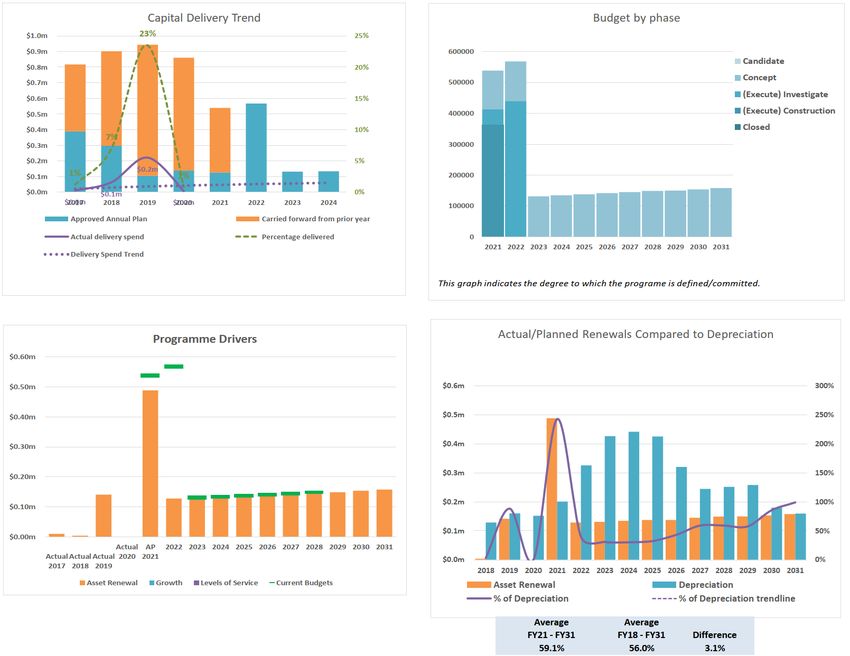
Draft Long Term Plan 2021-31 - Activity Plan Page 16 of 23 Civil Defence Emergency Management9. What financial resources are needed?
Civil Defence Emergency Management
Annual Plan
000's
2020/21 LTP 2021/22 LTP 2022/23 LTP 2023/24 LTP 2024/25 LTP 2025/26 LTP 2026/27 LTP 2027/28 LTP 2028/29 LTP 2029/30 LTP 2030/31
Activity Costs before Overheads by Service
Co-Ordinate Civil Defence Readiness, Response
984 825 812 831 850 870 892 914 936 961 985
Training of Emergency Ops Centre Personnel 137 130 125 128 131 134 138 141 144 148 152
Public Education to Increase Public Awareness510 414 394 402 411 423 433 444 454 465 476
1,630 1,370 1,332 1,360 1,392 1,427 1,464 1,499 1,535 1,574 1,613
Activity Costs by Cost type
Direct Operating Costs 519 512 523 534 545 559 572 586 603 618 634
Direct Maintenance Costs 35 36 37 37 38 39 40 41 42 43 45
Staff and Contract Personnel Costs 1,061 805 757 772 792 812 834 855 871 894 916
Other Activity Costs 16 17 16 17 16 17 17 17 18 18 19
1,630 1,370 1,332 1,360 1,392 1,427 1,464 1,499 1,535 1,574 1,613
Activity Costs before Overheads 1,630 1,370 1,332 1,360 1,392 1,427 1,464 1,499 1,535 1,574 1,613
Overheads, Indirect and Other Costs 74 75 79 75 74 76 70 71 77 71 72
Depreciation 201 326 427 442 425 320 245 252 258 180 159
Debt Servicing and Interest 18 26 33 35 37 29 24 24 26 18 16
Total Activity Cost 1,923 1,797 1,871 1,913 1,927 1,852 1,802 1,847 1,896 1,843 1,860
Funded By:
Fees and Charges - - - - - - - - - - -
Grants and Subsidies - - - - - - - - - - -
Cost Recoveries - - - - - - - - - - -
Total Operational Revenue - - - - - - - - - - -
Net Cost of Service 1,923 1,797 1,871 1,913 1,927 1,852 1,802 1,847 1,896 1,843 1,860
Funding Percentages:
Rates 100.0% 100.0% 100.0% 100.0% 100.0% 100.0% 100.0% 100.0% 100.0% 100.0% 100.0%
Fees and Charges 0.0% 0.0% 0.0% 0.0% 0.0% 0.0% 0.0% 0.0% 0.0% 0.0% 0.0%
Grants and Subsidies 0.0% 0.0% 0.0% 0.0% 0.0% 0.0% 0.0% 0.0% 0.0% 0.0% 0.0%
Cost Recoveries 0.0% 0.0% 0.0% 0.0% 0.0% 0.0% 0.0% 0.0% 0.0% 0.0% 0.0%
Capital Expenditure
Replace Existing Assets 125 128 131 134 138 141 145 149 149 154 158
Improve the Level of Service - 440 - - - - - - - - -
Total Activity Capital 125 568 131 134 138 141 145 149 149 154 158
Draft Long Term Plan 2021-31 - Activity Plan Page 17 of 23 Civil Defence Emergency ManagementFunding Consideration
Local Government Act 2002 Section 101 Funding Consideration. The following tables are based on the financials from the previous page.
Funding Policy
Funding Principles
User-Pays Exacerbator-Pays Inter-Generational Equity Separate Funding?
- - Low -
The table above shows how Council has considered funding in relation to the Activity, using a simple high / medium / low scale:
User-pays – the degree to which the Activity can be attributed to individuals or identifiable groups rather than the community as a whole;
Exacerbator-pays – the degree to which the Activity is required as a result of the action (or inaction) of individuals or identifiable groups;
Inter-generational equity – the degree to which benefits can be attributed to future periods; and
Separate funding – the degree to which the costs and benefits justify separate funding for the Activity.
Where an Activity is paid for through a number of funding mechanisms, Council’s practice is to meet its operating costs in the first instance from fees & charges
and grants & subsidies (subject to the considerations outlined above). If the Activity requires further operational funding, this remainder is funded through
rates.
This capital programme will be funded in accordance with the following principles:
Investment type Initial funding Serviced and/or repaid by:
Renewal / replacement Rates and debt Rates
Service Improvement and other assets Debt Rates
Growth Debt Rates
Operating Cost Funding Policy
This table below shows Council’s broad funding target for the Activity (i.e. how much is paid for by individuals / groups, and how much by the community as a
whole), and the associated funding mechanism used (i.e. general rates, targeted rates, user charges, etc.). As the precise balance between individual / group
and community funding may vary in practice (particularly for volumetric fees and charges), the funding target for each of the below tables is expressed in broad
terms rather than specific percentages:
Low = this source provides 0%-25% of the funding for this Activity;
Medium = this source provides 25%-75% of the funding for this Activity; and
High = this source provides 75%-100% of the funding for this Activity.
Draft Long Term Plan 2021-31 - Activity Plan Page 18 of 23 Civil Defence Emergency ManagementFunding Target Funding mechanism
Individual / Community Individual / Group Community
Group
- High n/a General Rates (High)
Capital Cost Funding Policy for this Activity
Rates Borrowing DC s Grants and Other
Medium Medium - -
10. How much capital expenditure will be spent, on what category of asset, and what are the key capital
projects for this activity?
Capex for R & R spend on New Zealand Response Teams (NZRT) and Emergency Support Teams (EST) operational equipment – ongoing
Capex for relocating Tsunami Siren SCADA into the Justice Emergency Services Precinct (already available and carrying forward in 2020-21 so may be resolved prior)
- required as part of scope of JESP and also as part of a planned move away from 3 waters hosting this currently - $TBC
Draft Long Term Plan 2021-31 - Activity Plan Page 19 of 23 Civil Defence Emergency ManagementDraft Long Term Plan 2021-31 - Activity Plan Page 20 of 23 Civil Defence Emergency Management
* The Current Year Budget in the capital schedules may differ from the Annual Plan 2020/21 total capital in the financial summaries in section 9 above. The Current Year
Budget includes any funding carried forward from the prior year-end and other changes approved since the Annual Plan was published.

11. Does this activity have any significant negative effects on social, economic, environmental or cultural
    wellbeing, now or in the future?

 Negative Effect             Mitigation
 Social                      N/A
 Economic                    N/A
 Environmental               N/A
 Cultural                    N/A

Draft Long Term Plan 2021-31 - Activity Plan                                    Page 21 of 23                                             Civil Defence Emergency Management
12. What risks are identified and what controls and mitigations are planned?
Risk Planned Controls and Mitigation
Impact of Covid-19 response
The ongoing effects of COVID-19 and the nature of the required CDEM response has impacted the - CDEM budgeting may wish to consider including funding arrangements solely
ability for CDEM to conduct its BAU operations over a protracted length of time. This has, and will for response activities.
continue to, impact the delivery of public education and training levels of service should the FTE for - Additional staffing levels could be made available to allow for separate
these tasks be re-allocated solely to emergency response. ‘Response’ roles to those of public education/community engagement. This
Additional risks are that council business units may not release staff to be trained by CDEM for future will allow for some BAU to continue during an emergency event that doesn’t
deployments into an Emergency Operations Centre (EOC). impact the whole city.
- Ensure Council staff are supported to attend CDEM training through an
organisational requirement/mandate.
Increased Emergency Response
Increased responses to natural disasters may be realised due to the impacts of climate change. And, in - Council staff that are non-essential to core business can be identified and
addition to direct costs incurred by council for managing additional emergencies, there is also a risk trained appropriately for focusing towards emergency response.
that BAU functions of council are affected through loss of staff due to deployment within the council’s - Additional CDEM staffing could allow for some BAU activity to occur during an
Emergency Operations Centre (EOC). emergency response
- Funding for emergency response could be allocated/ring-fenced to allow for
The increasing nature of emergency response will impact CDEM LOS as CDEM staff effectively cease costs associated with EOC operations and Welfare that would not be
BAU activities in order to respond to incidents. reimbursed from the National Emergency Management Agency (NEMA).
- An exception for LOS targets could be made in the event of a major disaster.
Community Response Plans
Community Response Plans (CRP) are developed by the community and for the community. There is a Community Resilience Coordinators (CRC) will prioritise the most at-risk
risk that not all communities and community groups will be able to be engaged and supported by communities based on geographical location and/or need. This will include
CDEM in the development of plans. assessing individual community exposure to tsunami, fire and impacts from other
natural hazards.
Technology Communication and Vehicles - Capex and Opex needs to be available to CDEM to ensure that adequate
Technology and particularly communications technology is a rapidly changing environment. CDEM funding can be directed to the right place at the right time to capture
may not be able to maintain momentum with the rest of the emergency management sector due to improvement opportunities and to ensure operational capability and
technological and financial constraints within council. capacity is not only fit-for-purpose but future-ready and adaptable.
- IT systems within council BAU should be recognised as not always being the
right fit for emergency management. IT systems should reflect the 24/7/365
nature of emergency response readiness.
Draft Long Term Plan 2021-31 - Activity Plan Page 22 of 23 Civil Defence Emergency ManagementRisk Planned Controls and Mitigation
Business Continuity Planning (BCP) - Appropriate resilience should be built into core and critical systems through
There is a risk that council’s core services and processes do not have adequate resilience to promptly BCP planning and evacuation plans/drills.
respond to and recover from the impacts of an emergency event such as a building or site fire, a flu This should include recognition of critical lifelines and dependencies and
pandemic, or a natural disaster. proactive management of the same.
- Responsibility for BCP co-ordination was originally assigned to CDEM Unit
BCP roles and responsibilities are not well defined and adopted across governance and business effective from 1 July 2017. This activity plan proposes that this could better
levels. align with council’s new structure to sit either within Risk & Audit, The GM
Resources Group with an internal focus, or under Strategic Policy and
This may result in: Performance.
- Public and staff safety endangered - Budget provision for a fulltime BCP Coordinator role could continue to
- Critical service delivery interruption or failure provide consistency and constancy of council’s focus on achieving and
- Legislative/regulatory non-compliance or non-conformance (CDEM Act, RMA, LGA, Health Act, HSE maintaining its responsibility under the CDEM Act 2002 to function to the
Act, HSNO) fullest possible extent, even though this may be at a reduced level, during and
- Financial costs for inefficient recovery and response after an emergency.
- Reputational damage
- Community economic impact
- Long-term damage to affected service area
Impact of Covid-19 response
The ongoing effects of COVID-19 and the nature of the required CDEM response has impacted the - CDEM budgeting may wish to consider including funding arrangements solely
ability for CDEM to conduct its BAU operations over a protracted length of time. This has, and will for response activities.
continue to, impact the delivery of public education and training levels of service should the FTE for - Additional staffing levels could be made available to allow for separate
these tasks be re-allocated solely to emergency response. ‘Response’ roles to those of public education/community engagement. This
Additional risks are that council business units may not release staff to be trained by CDEM for future will allow for some BAU to continue during an emergency event that doesn’t
deployments into an Emergency Operations Centre (EOC). impact the whole city.
- Ensure Council staff are supported to attend CDEM training through an
organisational requirement/mandate.
Draft Long Term Plan 2021-31 - Activity Plan Page 23 of 23 Civil Defence Emergency ManagementYou can also read


