Classroom physics - Institute of Physics
←
→
Page content transcription
If your browser does not render page correctly, please read the page content below
Editorial

Classroom                                       March 2020 | Issue 52
                                                                        News
                                                                        Careers
physics                                                                 Resources
                                                                        Digest
The magazine for IOP affiliated schools
                                                                        Opportunities

Sound and waves:
the slink-o-scope

New quick practicals to fit into your lessons
Careers in acoustics
Teacher support in Ireland

iop.org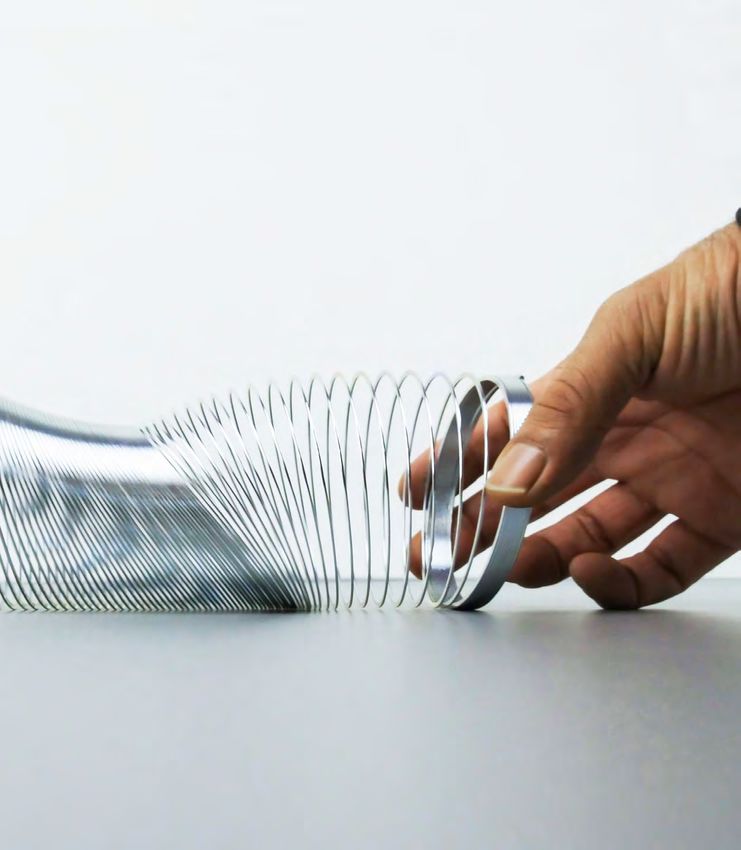
Editorial Classroom physics | March 2020
This issue Meeting of minds over teacher CPD
News
3 Quick practicals
4 Llongyfarchiadau Cerian!
5 Diagnostic questions
Careers
6 Acoustics: sounds like a
Credit: IOP
good career move
Resources Teachers making electromagnetic trains at an IOP CPD day in February
Something special happened at the IOP in What was exciting about the meeting was
8 Physics education research January. Something we hope will impact the level of consensus. And the desire
the future of the teaching profession. for a national movement to ensure that
9 Sound waves pull-out Something we feel is the beginning of a big all teachers, whatever career stage, have
national change. subject-specific CPD embedded in their roles.
10 Activity 1: Dancing sprinkles
We invited a range of people to come We agreed CPD policy should work on
11 Activity 2: Slink-o-scope together to discuss where subject- three levels:
specific CPD should be going. And they Individual: give teachers autonomy and a
12 More dancing sprinkles came - teacher training providers, subject say in their CPD. Subject-specific CPD
associations including history, geography should take account of knowledge gaps
13 Stories from Physics and and maths, representatives from the needing filling and be rich enough to
Marvin and Milo Chartered College of Teaching and staff challenge experienced teachers.
from the Department for Education, School: governors and school leaders
Digests plus host, Professor Sir John Holman, should provide opportunities for both
former headteacher, chemist and generic and subject-specific CPD to all
education adviser. teaching staff.
14 Physics Education National: the government should develop
Distinguished education researcher a strategy for providing programmes and
16 TalkPhysics & Physics World Professor Rob Coe had sent a review of creating demand from teachers
evidence about the value of subject-specific and schools.
17 Education in Chemistry CPD in advance of the meeting and this
& CLEAPSS formed the basis for the discussion. The The next stage is for a working group to
consensus was that at least 50% of CPD hone these ideas with a view to developing
Opportunities (over the course of a teacher’s career) a sustainable CPD strategy. We will also be
should be subject-specific. However, the pursuing government funding for subject
current landscape – and recent government communities to develop and run coherent
18 Opportunities: schools, policy – shows this is far from the subject-specific CPD programmes.
teachers and students experience of most teachers. And Prof Coe’s
summary of existing research suggests just It is early days. But it feels now we are all
20 IOP teacher CPD 1% of the national budget for education is ready to bring about change.
currently associated with CPD.
Editor With this issue...
Caroline Davis
caroline.davis@iop.org Good practical GOOD PRACTICAL – MAKING
Marvin and IOP Education
Marvin and Milo
SCIENCE IT HAPPEN
science poster Milo cards
The Light Collection
BENCHMARK 1
Why should my school prioritise
practical science? Planned practical science: Every school should
have a written policy that explains why teachers
use practical science, the outcomes they expect
‘Hands on practical work is an essential part of How can we ensure that our from it and how they achieve those outcomes.
Physics pull-out
learning science, and it also develops valuable skills practical science teaching is effective? The process of producing the policy is as
and attitudes.’ important as the policy itself.
ASE’s President, Professor Sir John Holman, in The Good Practical Science report provides a
the Good Practical Science report. See the five framework for world-class practical science based
purposes of practical science in the box below. on international evidence. BENCHMARK 3
This takes the form of 10 benchmarks against which Expert teachers: Teachers should have subject-
schools can judge their provision. In many ways specialist training (both initial and continuing)
the ingredients of good practical science are the in the subject (biology, chemistry, physics etc)
Fun practical
ingredients of all good science learning – expert and age range they teach, so they can carry out
teachers, well-planned lessons and technical support practical science with confidence and knowledge
(benchmarks 1, 3 and 6). of the underlying principles.
BENCHMARK 6
Great ideas from
We’d like to develop our practical science. Technical support: Science departments should
Taj Bhutta
Where do we start? have enough technical or technician support
to enable teachers to carry out frequent and
What are the benefits of generating effective practical science.
ASE recommends starting with benchmark 1:
planned practical science. a practical science policy?
ASE has developed seven flexible one-hour
modules for science teams to use for professional Producing a policy encourages teachers and
development to draw up an impactful practical technicians to think collectively as a department
science policy. These modules also support you to about why and how they approach practical
activities to do
work towards benchmarks 2 and 4. science. The Good Practical Science report found
that practical science is most effective when staff BENCHMARK 2
and students are clear about why they are doing it.
Purposeful practical science: Teachers should
ASE has collated case studies of how five very know the purpose of any practical science
different science departments went about creating activity, and it should be planned and executed
their policies, and the impact these processes had so it is effective and integrated with other
the Association for
on their teaching. Each case study includes a copy science learning.
taj.bhutta@iop.org
of their policy.
I’m a technician. How can science ‘It has been excellent to focus the department on BENCHMARK 4
the best use of practical activities within lessons,
teams make the most of their and the materials provided have created some of Frequent and varied practical science: Students
technicians? How can I be supported the best department CPD sessions we have had for should experience a practical activity in at least
to do my job more effectively? a while. I have adapted the materials to make them half of their science lessons. These activities can
fit the needs of my department and, in my visits to be short or long, but should be varied in type.
lessons, I can see a greater clarity and explicitness
with sound from
Professional learning opportunities are provided in the planning of practical activities for specific
by ASE, CLEAPSS, IOP, RSB and RSC. See also ASE
and CLEAPSS resources for technicians. Consider
aims, which is great to see.’ BENCHMARK 5
applying for RSciTech in recognition Euan Douglas, Head of Science
St George Catholic College Laboratory equipment and facilities: Schools should
of your expertise and experience.
have enough laboratories to make it possible for
every teacher to do frequent practical science safely.
‘Technicians are at the heart of practical work in Each laboratory should have sufficient equipment
www.iop.org
Science Education.
schools and colleges. They prepare, maintain and for students to work in small groups.
collate all resources. They advise teachers on what See ASE and CLEAPSS guidance on laboratory design.
works well and safely, and often support students
directly. Technicians are at the forefront of new
ideas and technology, developing and sharing BENCHMARK 7
innovative practicals with their strong local and I’m a teacher. What support is there
national networks. Without technicians, practical Real experiments, virtual enhancements: Teachers
work would not happen.’ to help me develop my expertise?
should use digital technologies to support and
Simon Quinnell, ASE Chair 2020-21 enhance practical experience, but not to replace it.
Professional learning opportunities are provided by
our cat and dog
ASE, CLEAPSS, IOP, RSB, RSC and STEM Learning.
See also ASE’s journals, IOPSpark and RSC BENCHMARK 8
Photography
LearnChemistry. Consider applying for CSciTeach
in recognition of your experience, expertise and
Investigative projects: Students should have
commitment to the profession. opportunities to do open-ended and extended
investigative projects.
Includes the 10 Gatsby
BENCHMARK 9
A balanced approach to risk: Students’ experience
Purposes of Practical Science of practical science should not be restricted by
unnecessary risk aversion.
A To teach the principles of scientific enquiry See ASE and CLEAPSS guidance on best practice in
health, safety and risk assessment.
B To improve understanding of theory through practical experience
C To teach specific practical skills (such as measurement and observation)
scientists
that may be useful in future study or employment BENCHMARK 10
Dan Josman
D To motivate and engage students Assessment fit for purpose: Assessment of students’
work in science should include assessment of their
E To develop higher level thinking skills and attributes such as communication, practical knowledge, skills and behaviours. This
teamwork and perseverance. applies to both formative and summative assessment.
Practical Benchmarks
Visit ase.org.uk/goodpracsci for resources, case studies
and to read the full report
This Good Practical Science project is supported by the Gatsby Charitable Foundation
A2 Poster Draft 3.indd 1 14/11/2019 15:08
2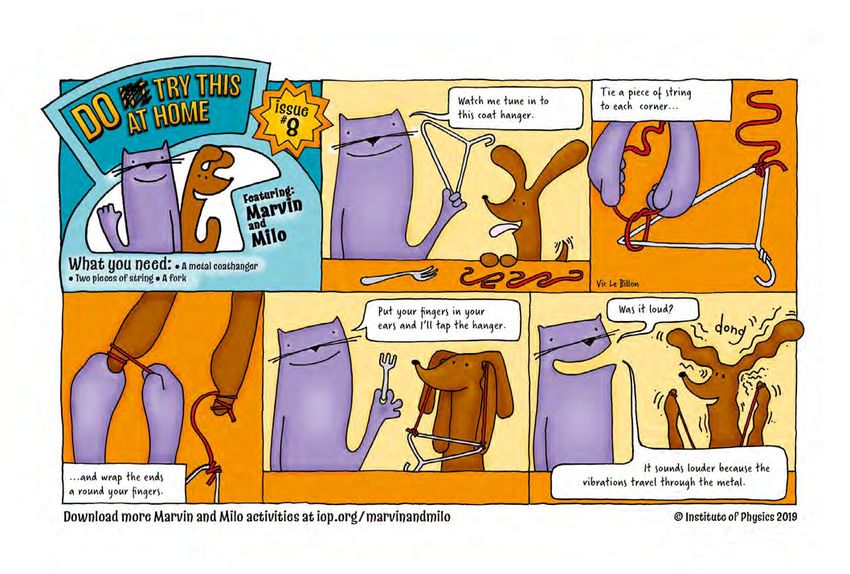
Classroom physics | March 2020                                                                                                                        News

Quick practicals to fit into your lessons                                                                     What does good practical
                                                                                                              science look like?

                                                                                                                                                                 Credit: Gatsby Charitable Foundation
                                                                                                              This was the question that Professor
                                                                                                              Sir John Holman, President of the Association
                                                                                                              for Science Education, sought to answer in
                                                                                                              his report Good Practical Science.

Which cylinder has the greatest mass? What will happen when the ice melts? Just some of the many questions    John and his team spoke to experts, reviewed
students can explore in our quick practicals at spark.iop.org/quick                                           literature and visited six countries including
                                                                                                              Finland, Singapore and Germany, where
We’ve launched a set of new classroom                         “This is what motivated our quick practical     practical science education is known to be
practicals on IOPSpark. They are easy                         project. With seed funding from Gatsby          successful. Time and again we saw that
to set up, usually require minimal kit and                    we’ve started collecting together a set of      practical science is key not only for learning
will take less than 20 minutes to run with                    quick demos and class practicals that take      but also for inspiring the next generation of
most classes.                                                 20 minutes or less to perform, but are still    scientists, engineers and technicians.
                                                              rich in physics. Many require minimal kit and
They are a response to the Gatsby Charitable                  prep, and so even if you are operating on a     The report defines a framework of
Foundation’s report, Good Practical Science,                  shoestring with little technician support you   benchmarks for good practical science to
which outlined a framework for good practical                 can still use them.”                            guide science departments. Strikingly, many
science in schools. Its recommendations                                                                       of the ingredients of good practical science
included:                                                     Each demo includes questions you could          are also the ingredients of all good science
  Be clear about the purpose of any                           ask to promote class discussion and has         learning – expert teachers, well-planned
   practical activity.                                        a clear purpose in the form of a suggested      lessons and technical support. So, much
  Plan activities so they are integrated                      learning outcome.                               of what relates to good science teaching in
   with other learning.                                                                                       general. John and his team also found that
  Students should experience a practical                      Covering all the domains of physics and         world-class practical science should be both
   activity in at least half of their                         spanning the 11 to 19 age group, we have        frequent and varied in type, which is why they
   science lessons.                                           also created supporting videos and visuals      have supported the IOP to make it easier to
   Activities can be short or long, but should                for display on the board.                       bring well-planned and enriching practical
  be varied in type.                                                                                          activities into the classroom even if time
                                                              more...                                         is short.
“We know that there is a lot of material to get
                                                              Explore the activities at
through when you are teaching and so fitting
a practical into fifty per cent of your lessons
                                                              spark.iop.org/quick                             Rob Cremona
                                                                                                              Gatsby Charitable Foundation
can be challenging,” Taj Bhutta, IOP school
                                                              Sound-themed examples from the
engagement manager said. “But we also know
                                                              collection feature in the physics pull-out
that practical science improves understanding
                                                              on pages 9-12.
                                                                                                              more...
of theory, develops important skills and                                                                      See the ASE practical science poster
engages students by showing them what                                                                         featuring the ten Benchmarks of Good
scientific experimentation is all about.                                                                      Practical Science included with this edition
                                                                                                              of Classroom Physics.

                                                                                                              Search Gatsby Good Practical Science
                                  6-15 March | britishscienceweek.org                                         to find out more about the good practical
                                                                                                              science benchmarks.

                                                                                                                                                             3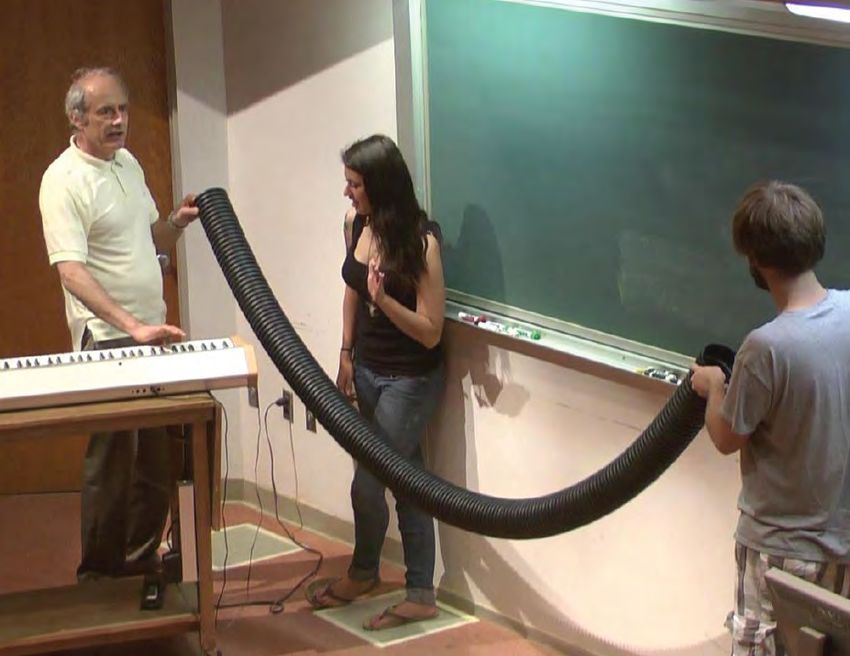
News                                                                                                                                Classroom physics | March 2020

                                                                Llongyfarchiadau Cerian!
                                                                We were delighted to learn that IOP Wales       education consultancy, See Science, which
                                                                teacher coach Cerian Angharad received          managed the Welsh STEM Ambassador
                                                                an MBE in the 2020 Queen’s New Year             Programme. She has always worked to ensure
                                                                Honours List.                                   students study and enjoy science in Welsh,
                                                                                                                getting numerous resources translated. All
                                                                IOP head of education, Charles Tracy, said:     this placed her at the epicentre of science
                                                                “Cerian has dedicated her whole career to       education support in Wales.
                                                                improving STEM teaching and learning. Her
                                                                commitment has enhanced the lives, both in      Cerian described her reaction: “I couldn’t
                                                                school and beyond, of thousands of young        believe it at first. I had to re-read the letter
                                                                people. We are fortunate to have Cerian         several times for the news to sink in. It’s a
                                                                as part of our team, and we warmly              huge honour to be recognised.
                                                                congratulate her.”
                                                                                                                “I really believe that all young learners can
                                                                Hailing from Cardiff, Cerian began her career   succeed in STEM. Teaching science doesn’t
                                                                as a classroom teacher in Pontypool in 1994.    have to be just about getting grades, it can
                                                                Four years later, she became head of physics    be about so much more.”
                                                                in a Welsh-medium school.
                                                                                                                more...
                                                                She joined the IOP as a physics teacher         Read about Cerian at
                                                                network coordinator in 2004, working            beta.iop.org/mbe-iop-teaching-learning-
                                                                to support other teachers and she has           coach-wales
                                                                been a strong advocate for our Improving
                                                  Credit: ASE

                                                                Gender Balance project. In this year she        To find out about IOP support for teachers in
                                                                also began working for the Association of       Wales, contact samantha.borley@iop.org
                                                                Science Education. In 2010 she co-founded

IOP teacher support in Ireland                                                                                     IOP Schools and Colleges
                                                                                                                   Affiliation Scheme
IOP education in Ireland is changing. We have                   Events in Ireland 2020 (visit iopireland.org
welcomed our new Ireland national manager,                      for more info):                                      Classroom Physics magazine four
Karen Sheeran and Engagement Officer,                                                                                times a year with e-shots
Lucy Kinghan, who work with our IOP                               The Annual Frontiers of Physics Teachers           Physics World monthly magazine
coaches, to support teachers of physics and                       Conference is scheduled for Saturday 19            Online access to Physics Education
promote physics.                                                  September in Maynooth.                             Resources such as posters and
                                                                                                                     careers materials
We now provide in-school support for                              The Northern Ireland Physics Teacher
teachers of physics. IOP coach David                              Conference takes place in June.                  If your school is not yet affiliated,
Keenahan said: “IOP coaches visit schools                                                                          contact us at affiliation@iop.org,
and work with teachers at any stage from                          Look out for evening workshops, including        call +44 (0) 20 7470 4832
junior cycle through to senior. These visits                      the ever-popular VPLab [Virtual Physics          or visit iop.org/affiliation
are particularly beneficial for newly qualified                   Laboratory] software, as well as Rocket
teachers or for teachers whose specialism                         Launching and Isaac Physics resources
is outside of physics. They can help with                         and more.
optimising use of existing laboratory
equipment or deliver workshops on topics like
electricity and junior cycle investigations.”                   more...
                                                                Get in touch with your local IOP coach via
Our Irish Improving Gender Balance project                      lucy.kinghan@iop.org
has completed its pilot year and is now                                                                            Follow us
working with almost 30 secondary schools to                                                                        @IOPTeaching
identify and address issues around gender
imbalance in subject choices.

4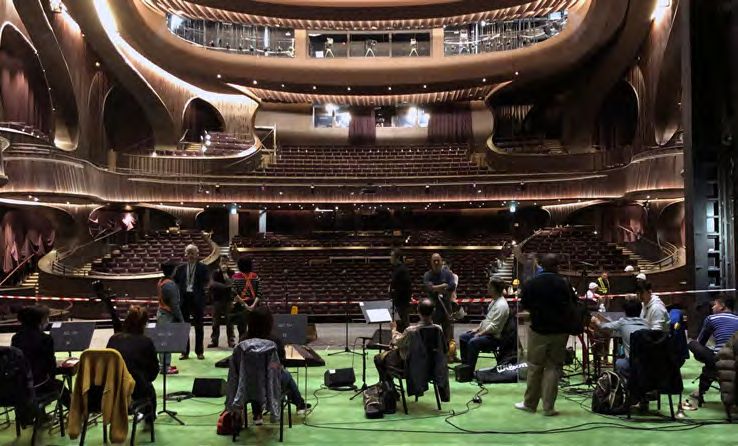
Classroom physics | March 2020                                                                                              News

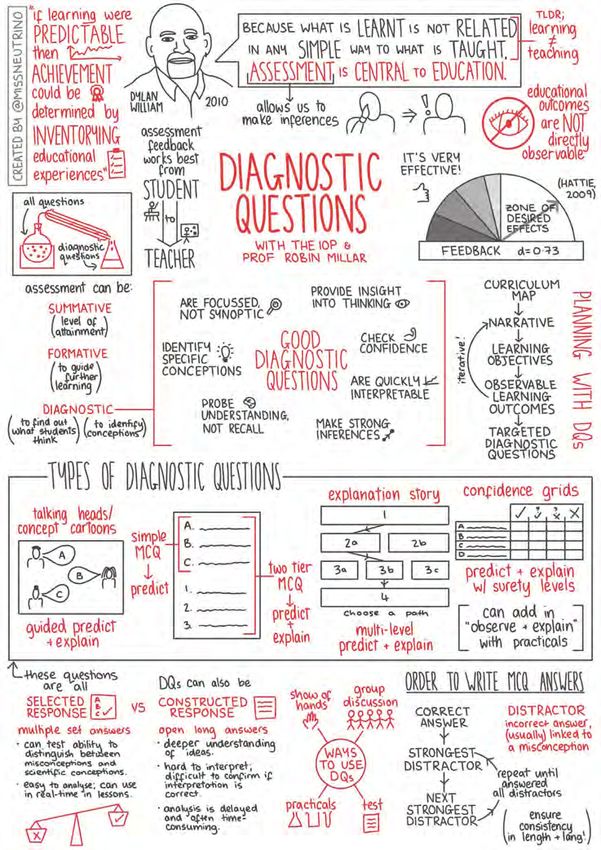
Diagnostic
questions
in Scotland
and England
British educationalist Dylan Wiliam
famously said: “What is learnt is not
related in any simple way to what is taught.
Assessment is central to education.”

Probing student understanding while learning
is happening, as well as at the end of a
topic, is vital. This requires a good bank of
diagnostic questions so that you can shine
light on students’ ideas and misconceptions
to address them early on.

We have been working with Professor Robin
Millar, internationally renowned researcher
in the field of science education, to run
workshops to support teachers in developing
their own diagnostic questions as well
as gathering together questions to share
more widely.

more...
Visit spark.iop.org/misconceptions

Scotland

                                                                                                                               Credit: MissNeutrino
There is a bank of questions collected
by Stuart Farmer, IOP education manager
for Scotland on TalkPhysics. He is organising
a question-writing workshop at this year’s
SSERC physics teachers summer school
in May.

more...
Browse questions at
bit.ly/IOPdiagscot                              IOP teacher resources websites have moved!
Contact Stuart at stuart.farmer@iop.org
                                                Please note that all the resources from our teacher websites can now be
England                                         accessed from IOPSpark. The original websites have now been switched off.
We held our first question-writing workshop
in November - get in touch to find out about
                                                Teaching Advanced Physics (teaching ideas and resources – 16+)
joining future ones.
                                                spark.iop.org/teaching-advanced-physics

more...                                         Supporting Physics Teaching (for those new to teaching
IOP diagnostic tool is at                       physics or wishing to develop their existing skills – 5-16)
iop.org/diagnostic                              spark.iop.org/supporting-physics-teaching
Contact Jessica.howell@iop.org
to find out about workshops.                    Practical Physics (collection of experiments for 11-19)
                                                spark.iop.org/practical-physics
Follow the discussion on TalkPhysics at
bit.ly/IOPdiageng

                                                                                                                               5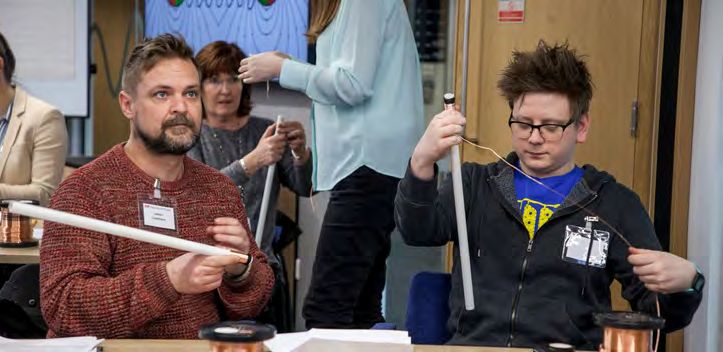
Careers                                                                                                              Classroom physics | March 2020

                                                                                                  is processed and the technology behind
          exploration       planes                                                                voice-activated controls), plus there are

     AI for music  noise        wind farms
                           cars washing machines    architecture
                                                                                                  case studies from architecture and building
                                                                                                  acoustics, cars and hearing.
     Alexa digital
     Siri Skype mp3
                                   vibration        city squares                                  Starting salaries for a STEM acoustical

          Acoustics
                                                     arenas                                       engineer typically range from £21,000 to
                                             connect classrooms                                   £25,000 and currently there are more
                                                                                                  jobs available than graduates with the
                                                 theatres

                        audio
                                                                                                  right qualifications.

                                                                                                  I’d advise students who are not yet
                                             damaging wildlife
                music
                                                                                                  sure whether they want to focus on
                                  noise pollution                                                 sound to go for a general first degree like
                                                                                                  physics or mechanical engineering. Many
              enjoy           hearing loss hearing aids                                           people in the acoustics industry started
    microphones smart phone             medical ultrasonics                                       liked this, specialising later by taking a
                                                music therapy
           relax mixing decks          cochlear implants
                                                                                                  post-graduate degree.
      headphones
                            speed       science sonar                                             Routes into acoustics careers
      nature              communicate psychology                                                  A big decision for students interested in
                                    geophysics                                                    sound is whether they want to predominately

                                                                                    Credit: IOP
                                            biocoustics                                           follow a STEM or a practitioner route:
                                                                                                    STEM acoustic degrees produce
                                                                                                    engineers or scientists who design
                                                                                                    products, programme audio
Acoustics:                            Professor Dame Anne Dowling, past President
                                      of the Royal Academy of Engineering, noted
                                                                                                    software or carry out scientific explorations.
                                                                                                    To follow this route, students need to
sounds like a
                                      that acoustics is “paradoxically so ubiquitous                study science and mathematics post-16.
                                      that it [is] almost invisible as a profession”.                The two long-standing centres

good career move                      But students who are into music and
                                      good at STEM might well want to study
                                                                                                    for these degrees are the universities
                                                                                                    of Salford and Southampton.
                                                                                                    Practitioner courses produce intelligent
                                      for a career in this area. Acoustic science                   users of technologies who become skilled
                                      and engineering might be less well-known                      in the artistic use of sound. Jobs
                                      than other STEM subjects, but as sound                        include sound engineers for live sound,
                                      is everywhere, there is a wide range                          recordist for TV or producers of podcasts.
                                      of fascinating careers.                                       Many universities run practitioner
                                                                                                    courses in sound engineering and
                                      The salfordacoustics.co.uk website contains                   production, but beware, becoming a STEM
                                      careers-linked curriculum resources for                       engineer after a practitioner degree usually
                                      schools and colleges. It has professionally                   requires significant retraining.
                                      produced resources on hearing and                              The Tonmeister course at Surrey
                                      acoustics including:                                          University is a rare example of
                                        acoustics demos                                             a degree that fully combines the STEM
                                        revision material for physics A-level                       and practitioner routes.
                                        high speed video and animations                             Another route opening up this year
                                        about sound                                                 is a new level 4 apprenticeship
2020 is the International Year          ideas for lesson starters, careers resources                for Acoustics Engineering
of Sound. Trevor Cox, professor         and practical activities.                                   Technicians. Another route opening up
of acoustic engineering at the                                                                      this year is a new level 4 apprenticeship
                                      In particular, salfordacoustics.co.uk/                        for Acoustics Engineering Technicians,
University of Salford, writes         careers has case studies where professional                 visit instituteforapprenticeships.org for
here about possible career            acoustical and audio engineers explain how                  more information.
paths in sound. He is part of         their curriculum knowledge is used in their
a team which has developed a          jobs.                                                       more...
                                                                                                  All resources can be accessed free of charge
set of teaching resources with
                                      Their roles range from Noise and Vibration                  at salfordacoustics.co.uk
curriculum-linked career              (new materials to absorb sound and reduce
information for students in           environmental noise) to Digital Technology                  Find out about the Year of Sound at
the world of acoustics.               (machine learning to improve how sound                      sound2020.org

6
Classroom physics | March 2020 Careers
Magnus Woodgate
Careers
Software Engineering for hearing aids
profiles
Why did you choose to work in acoustics?
A background of music production and technical interest crossed over
more...
nicely whensalfordacoustics.co.uk/careers
I discovered the field of acoustics. Acoustical engineering is
good because you can go down a more or less technical route when you
find out what aspects interest you the most.
What did you study to get into acoustics?
Monitoring sound at Glastonbury Festival Hearing aid software engineer
During my A levels I was studying maths, physics and music technology, but
“The local council’s environmental “IMagnus
love being works for aSonova
able to have inon
real impact
was also producing (and recording) a lot ofhealth
electronic/live
department setsmusic.
us noise people from helping to
Zurich develop children’s
limits to reduce noise pollution. speech, to more sophisticated noise
What makes acoustics interesting to you? We work with the sound engineers removal to aid people’s day-to-day work
to make sure each stage does not and social life.” Magnus Woodgate
For myself in-particular, the combination of
go so
overmany disciplines
their limits.” required to understand
Elle Kalavsky individual acoustic
concepts. This makes acoustical skills so vastly applicable in other domains.
What is your job?
I am currently a software engineer in audiology, working with fitting algorithms Visit
for hearing aids. This chamber
the anechoic
involves writing real-time fitting algorithms which wirelessly change the audio processing done by the
Recommendations “For several years, I’ve been taking students
hearing aids. It also includes real time machine learning, where I specialise on mobile devices.
from Dave Cotton, to the University of Salford’s acoustics
department to see the facilities and learn
What doIOPyou coach
do on a typical
and workday? about the courses on offer. They visit the
anechoic chamber and reverberation rooms
I work onphysics teacher.
several projects for new technologies writing software for mobile devices
wherefrom scratch,
they see the most as well as
vacuumed piece of
maintaining and improving larger projects. I also am always looking at new research
carpetalgorithms
in the UK! and
implementing them in practice to see whether they are viable for consumer hearing aids.
“The visits introduce students to careers
Credit: IOP
in an area they had not heard of before.
What do you love about your job? They hear about the work placements and
realise they can have a meaningful and
Being able to have a real impact to people.A student
Working in Devonin thethemedical
enjoys industry
confusaphone at a comes with extra challenges
interesting career in an area of physics they
regional day last year
when it comes to safety and much stricter requirements, but the outcomes in the long
enjoy - therun are remarkable.
acoustics of speakers, vacuum
The confusaphone cleaners, washing machines and buildings
What is most challenging about your job? “The confusaphone has always been
all need to be researched. Every year, our
students enrol on acoustical and audio
Probably the crossover between so many fields.
one of my This requires
favourite a strong
lesson starters.knowledge
It of many
engineering domains in
degrees.”
shows whatnew
parallel to be able to work efficiently and discover happens when one’s
research areas.left
and right hearing is mixed up.
What are the most important skills to“Ithave in your job?
is very easy to make the
I think a strong combination of how to process digital audio,
confusaphone followingunderstanding
the how people perceive sound, as
instructions on the Salford Acoustics
well as advanced computer science knowledge - practical software engineering experience is almost always
website and it’s a great way to
Credit: Salford Acoustics
necessary. The quality of software is extremely important,
show how being inthethe medical industry. Being able to
we can determine
speak and work in German is a strong advantage
direction in
of some
sound. areas of acoustics research in Europe.
It’s a learning
experience that is always enjoyed by
How does your work make a difference
theto peoples’
whole class.” lives?
Working with hearing aids has a direct impact to people’s lives and can help in a variety of ways from
salfordacoustics.co.uk/listening- Salford and Southampton universities both welcome
helping to develop children’s speech, to more sophisticated noise removal to aidschool
devices in most people's
visits. Contact day-to-
the departments direct to arrange.
day work and social life.
What else might a student need to know about a career in acoustics? 7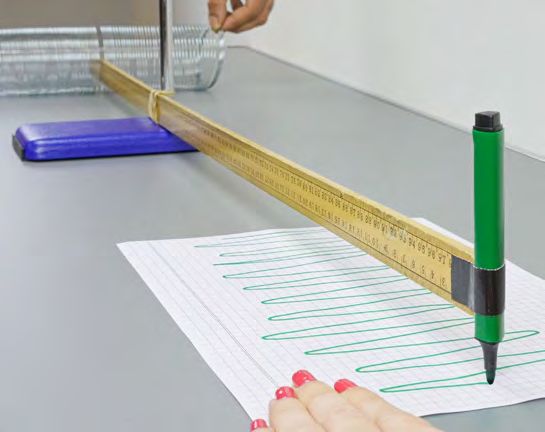
Resources                                                                                                                                Classroom physics | March 2020

Physics education research

                                                                                             Chinn and Malhotra
                                                                                             investigated children’s
                                                                                             perceptions when heavy
                                                                                             and light rocks were
                                                                                             dropped simultaneously

                                                                                         Credit: Shutterstock
What you know                         Demonstrations are a powerful tool for
                                      teaching physics concepts. They allow
                                                                                                                was similar to that of the group who had not
                                                                                                                been told the rocks had different masses.

can change
                                      teachers to guide students’ attention to                                  Most of the students who predicted that
                                      aspects of what they have observed that                                   the light or heavy rock would hit first did not
                                      they might miss if they carried out the                                   observe what they predicted. By contrast,
what you see                          practical themselves.                                                     students who predicted the rocks would hit
                                                                                                                at the same time were highly likely to report
                                      Watching demos can also lower the cognitive                               seeing a simultaneous landing.
                                      load on students as they don’t have to
                                      occupy their working memory with details of                               The authors refer to this effect as schema-
                                      performing the task themselves. But research                              facilitated observation. They argue that when
                                      suggests teachers shouldn’t assume                                        data is vague or ambiguous it can be hard to
                                      that students will interpret what they see in                             detect an appropriate pattern, and having a
                                      the same way an experienced scientist would.                              conceptual structure, or schema, can help
                                                                                                                to make sense of noisy empirical data and
                                      The knowledge people possess can have an                                  guide perception.
                                      impact on how they interpret events. This
                                      claim is of significance when considering                                 Chinn and Malhotra argue that conceptual
                                      how demonstrations (for example, the                                      change can be impeded because students
                                      sound activities described in this issue) are                             with incorrect schema can fail to make
                                      organised in the classroom.                                               correct observations. They suggest that
                                                                                                                supporting students to understand that
                                      Educational psychologists Chinn and                                       observations can be biased may promote
In this column,                       Malhotra showed 228 children aged 9-10 a                                  conceptual change but such change will
James de Winter                       demonstration in which a heavy and light rock                             require an extended period of teaching.
                                      were dropped simultaneously. The students
(University of Uppsala and
                                      were split into two groups. One group was                                 To summarise: when planning a
University of Cambridge)
                                      informed that the rocks had different masses,                             demonstration, it is worth considering how
and Richard Brock                     the other was not. Before the drop, students                              your students’ prior knowledge may influence
(King’s College London)               were asked to predict what would happen.                                  how they interpret what they see in a
highlight accessible and usable       Then both groups were asked to report what                                demonstration and the aspects they
resources based on research into      they saw during the drop.                                                 focus on.
physics education.
                                      The authors had expected that most
Join the Physics Education Research   students who made an incorrect prediction                                 more...
                                      (either the heavy or light rock will land first)                          Michael Shermer’s The Believing Brain is
group on Talk Physics at                                                                                        a good introduction to how humans make
talkphysics.org/groups/               would have been biased to observing what
                                      they had predicted. Indeed, only a quarter                                sense of the data they encounter.
physics-education-research-per/
                                      of students who believed that one or other
                                                                                                                Reference:
                                      of the rocks would hit first perceived a
or email                              simultaneous landing.
                                                                                                                Chinn, C. A., & Malhotra, B. A. (2002). Children’s responses to
                                                                                                                anomalous scientific data: How is conceptual change impeded?.
research@teachphysics.co.uk                                                                                     Journal of Educational Psychology, 94(2), 327-343.
to get involved with physics          However, the distribution of observations
education research discussions.       from the students who predicted incorrectly

8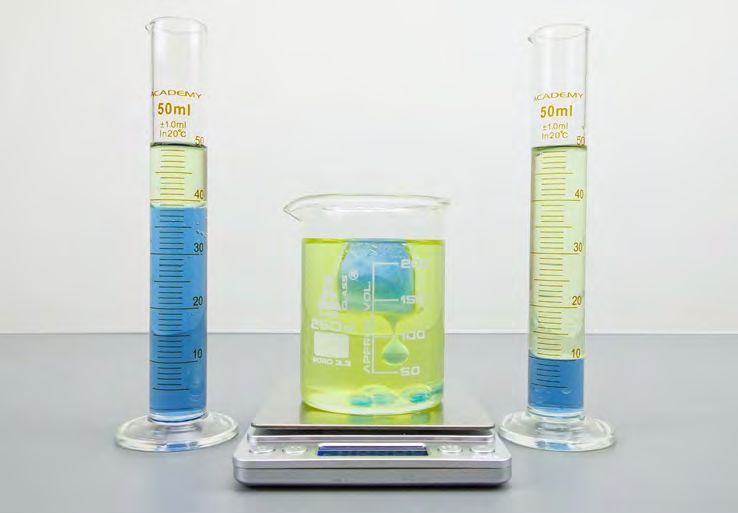
Classroom physics | March 2020                                                                                                         Resources

                                                                                                                      Pull out and keep!

Teaching sound waves

    What’s inside

    Activity 1: Dancing sprinkles
    Activity 2: Slink-o-scope
    Student sheet: More dancing sprinkles

Sounds confusing?                                 Misconception            How to address it               Try this

Sound is a topic that gives rise to many          Sound can travel          Demonstrations in which         • A bell in a bell-jar.
misconceptions. Our everyday language is          through empty space       the air surrounding the         • A buzzer in a vacuum
littered with deceptive phrases like “the sound                             sound source is removed           coffee saver.
was carried on the air” and “listening to the
radio”. So when students get to secondary                                                                   The sound from the bell or
school, they are likely to have a confused idea                                                             buzzer gets quieter as the air
of what a sound wave is.                                                                                    is removed.

Asking them to draw diagrams for situations
where sound is involved can be revealing.         Sound is something        Class activities that           • Cups and strings.
Some will avoid using diagrams altogether;        that is carried by        explore sound travelling        • Listening by resting an ear
others will represent sound as a single entity,   individual particles      through solids                    on the desk whilst a neighbour
for example a line that travels from a source                                                                 delicately scratches the bench.
to a detector. Most will struggle to represent
sound accurately.                                                                                           Emphasise that the individual
                                                                                                            particles in a solid can’t move
Effective teaching strategies for 11-14 year                                                                from one end to the other.
olds include re-enforcing the source, medium
and detector model, and using experiments
where there is no obvious source of moving air    Sound travels more        Models that show that a         • Use standing dominoes or Jenga
(see Activity 1). As they progress, they learn    slowly in a solid         disturbance travels faster        blocks arranged in two rows.
about the longitudinal nature of the waves.       than a gas                in denser materials               One row has the dominoes with
However, many 14-16 year olds find it difficult                                                               twice the spacing of the other.
to conceptualise this type of motion. The fact
that an oscilloscope trace for a sound wave                                                                 When students knock over the
looks like a transverse wave only adds to                                                                   starting domino, the disturbance
their confusion.                                                                                            will travel faster through the more
                                                                                                            densely packed dominos.
A good teaching sequence for 14-16 year olds
is to introduce waveforms using the slink-o-
scope demonstration before exploring sounds
using a real oscilloscope (Activity 2).

Other common misconceptions and                                    New quick practicals on IOPSpark
suggestions on how to address them are                             The class practical and demonstrations featured in this issue are
shown in the adjacent table.                                       part of our new collection on IOPSpark at spark.iop.org/quick

                                                                                                                                                  9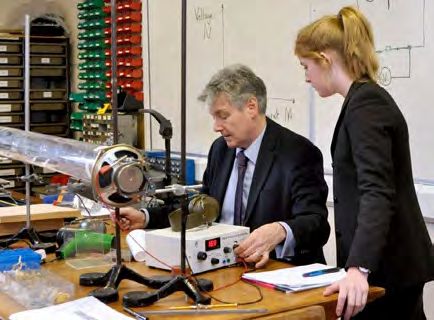
Classroom physics | March 2020

                                                                                                                                       Ages 11-14
Activity 1: Dancing sprinkles
This class practical shows that a loud sound is capable of making grains jump. You can use it to introduce
the idea that sound is a vibration of the air.

                                                                        Instructions
                                                                        Ask the students to:
                                                                        1. Cover the top of the bowl with cling film. Stretch it tightly.
                                                                        2. Shake some of the sprinkles onto the cling film.
                                                                        3. Hold the baking tray close to – but not touching - the cling film and
                                                                        strike it sharply with the spoon.

                                                                        Discussion
                                                                        Ask students: “Why do you think the sprinkles move when they
                                                                        haven’t been touched by anything?”

                                                                        Highlight what is the source, medium and detector in this experiment
                                                                        (baking tray, air and cling film respectively) and introduce the idea that
                                                                        sound is a vibration of the air in your explanation.

                                                                        When the metal sheet is struck it vibrates and these vibrations are
Equipment                                                               transmitted through the air to the cling film. The sprinkles on the
                                                                        surface of the cling film help us to see its motion.
Each group of students will need:
  Bowl
                                                                        Extension idea
  Cling film
  Hundreds and thousands sprinkles of the type                          Students could investigate how changes in volume and pitch affect the
  used for cake decorations                                             motion of the sprinkles (see worksheet on page 12).
  Metal baking tray to make a loud noise                                more...
  Large metal spoon or drumstick                                        spark.iop.org/dancing-sprinkles

     Speedy phones                               Laptop oscilloscopes                             Make ‘em sing
     You can measure the speed of sound          There are a number of free software              Bring a bit of The X Factor into your
     using two smartphones with the              packages to turn a laptop into an                classroom by combining oscilloscope
     PhyPhox app. Watch the video at             oscilloscope. Download onto multiple             activities with karaoke! As well as singing
     bit.ly/PhyPhoxSound and download            laptops for class practicals. For                along to their favourite songs, you could
     the app at phyphox.org                      example, Soundcard Oscilloscope,                 challenge students to sing a single note.
                                                 available from zeitnitz.eu/scope,                Alternatively, ask students to bring their
                                                 allows you to pause the trace so that            musical instruments to provide a purely
                                                 you can discuss key features.                    instrumental sound source.

                                                                                                  Credit: Shutterstock

10
Classroom physics | March 2020
Ages 14-16
Activity 2: Slink-o-scope
This activity introduces sound wave traces on an oscilloscope using a mechanical analogue.
Equipment Demonstration procedure
Slinky spring 1. Appoint an assistant to hold the paper under the pen.
2. Hold one end of the slinky in place and move the other back and
Metre rule
forth to generate longitudinal waves. Show the result to the class –
Rubber band the pen should trace a straight line.
Clamp stand 3. Now ask the assistant to move the paper at a steady speed in a
Felt tip pen straight line towards the clamp stand as you send waves down
the slinky.
Sticky tape
4. Display the resulting trace to the class – they should see a curve
Graph or squared paper with a shape close to a sine wave.
Discussion
Ask students: “What labels should I add to the vertical and
horizontal axes?”
Encourage them to think about what causes the motion of the pen
across the paper. The up and down motion is driven by the slinky.
The vertical axis shows the displacement of the coils. In the sideways
direction, the paper was pushed at a steady speed. Emphasise that
the horizontal axis shows time: the distance between two peaks is the
time-period (not wavelength).
Then ask: “How would the graph change if I moved the coil back
and forth by a greater amount? More quickly?”
Preparation If the coils move back and forth by a larger amount, ie you increase
the amplitude of the waves, the size of the peaks will get bigger. If they
Building and testing a slink-o-scope takes about 10 minutes. move more quickly, ie you increase the frequency, the peaks on the
For instructions, see diagram above or watch the video at at graph will get closer together.
spark.iop.org/slink-o-scope
Test your slink-o-scope by placing paper underneath the pen.
Slink-o-scope vs oscilloscope
When you send longitudinal waves down the slinky, the metre rule
should pivot around the rod of the clamp and the pen should move
Change in Slink-o-scope
up and down on the paper.
oscilloscope setting model
Turn time base on Move paper at steady speed
Increase time base setting Increase speed of the paper
to new steady speed
Increase vertical Increase pen to
sensitivity setting pivot distance
more...
For a teachers’ introduction to the controls on an oscilloscope see
bit.ly/IOPoscilloscope
11Resources Classroom physics | March 2020
Student sheet
More dancing sprinkles
What to do:
1. Shout at the sprinkles going from a loud
to quiet voice (ie change volume).
2. Shout “boo” in a deep voice and “me” in
a high voice (ie change pitch).
3. Record your observations below.
Effect on sprinkles
Volume of shouting Pitch of shouting Height of movement Speed of movement
(high/low) (high/low) (higher/lower) (faster/slower)
4. Complete the following sentences using these words (some more than once, some not at all):
waves • air • amplitude • frequency • vibrate • backwards • forwards • lower • higher • faster
When you make an object vibrate, this motion is passed on to the surrounding the object.
The molecules which make up the air and hit other air molecules. This creates sound
that travel through the air.
The sound waves strike the cling film and cause it to , which causes the sprinkles to move.
When you shout, the difference in high and low sounds is caused by variations in in the sound wave you produce:
A higher is due to air waves fluctuating more rapidly and the sprinkles bounce up
and down . With fewer fluctuations per second the pitch is lower and the sprinkles bounce up
and down more slowly.
The of the sound determines how loud it is. With louder shouting, the sprinkles jump .
12Classroom physics | March 2020 Resources
Stories from physics
Sound: ears, guns
and Bell
The pinna notch
The pinna (or auricle) is the visible part of the of sound. Bell had the idea that replicating blocks. But, at the Olympics, a traditional
ear and is made of cartilage. It amplifies the structure of the human ear would produce gun is still used. Analysis of data suggests
incoming sounds-frequencies between a better recording device. Blake was inspired that runners in lane 8 leave the blocks, on
2 kHz and 7 kHz are amplified with a and proposed using a human ear as part of average, 150 milliseconds before athletes in
peak gain of around 12 dB. However, the the device and he obtained one through his lane 1. This can make a difference of around
amplification is not uniform across all contacts at Harvard Medical School. They 1 m at the finishing line. The difference in
frequencies. The complex shape of the connected the bones in the ear to a straw performance is not just related to the speed
auricle means that sound waves travel along that traced patterns on a sheet of glass of sound. Those closest to the gun may
a number of paths to reach the ear drum. covered in soot from an oil lamp. Bell later also benefit as reaction time appears to
Destructive interference between waves that reported that his work on the phonautograph be inversely proportional to the ‘go’ signal
have travelled along different paths results led to his insight that if a thin ear membrane intensity. Noises loud enough to provoke a
in a selective attenuation or reduction of could control the movement of bones, a startle response decrease reaction time and
frequencies between 6-16 kHz. This range of paper membrane might be used to vibrate increase the peak motor force exerted.
attenuated pitches is called the pinna notch a piece of iron, setting the ground for his
and the frequency range it occurs at shifts invention of the telephone. In 2016, a curator
as the elevation angle of a source of sound at the Canada Science and Technology
varies. It is thought we use the pinna notch as Museum, constructed a replica of Blake and
a clue to determine the elevation of a sound. Bell’s phonautograph.
Bell’s ear machine The startling starting gun
Alexander Graham Bell’s fascination with Researchers have discovered that the
sound and human hearing may have been starting gun technology used in athletics more...
inspired by his mother’s and wife’s deafness. gives an advantage to runners in the inside These stories were collected by Richard
With Boston audiologist Clarence J. Blake, lanes. Many athletics events use a silent Brock, lecturer at King’s College London and
Bell improved the design of phonautographs, starting gun that triggers a start tone from former physics teacher. Follow him on Twitter
devices for producing visual representations speakers positioned behind the runners’ @RBrockPhysics
Musical coat hanger Marvin and Milo cartoons can be downloaded at
spark.iop.org/collections/marvin-and-milo
13Digests Classroom physics | March 2020
Sounding off and My favourite
lighting up demonstration
Physics Education editor Gary It is quite difficult to think of convincing If you want an amazing demonstration
demonstrations which show that sounds of a source of sound in action then top
Williams highlights his favourite travelling through the medium of air are of the list has got to be the Singing Rod.
papers on sound and waves from acting like a wave, especially with younger It is not difficult to understand why the
the archive (this page) and picks his students. So a good starting point for author of this paper, Paul Gluck, described
top articles from the current volume teaching waves is the source-medium- this as his favourite demonstration. You
(opposite page). detector model as outlined by Ian Lawrence. can demonstrate the difference between
longitudinal and transverse waves,
Using this model allows the teacher to fundamental and harmonics, nodes and
Access over 50 years of articles at explain the entire journey. For example, play antinodes, interference and the Doppler
iopscience.org/physed a video of a guitar string in slow motion so effect – all you need is one aluminium rod,
they can see the oscillation of the source. which could be from a clamp stand, and
Similarly, show a slowed-down oscillation in some rosin, as used by ballet dancers and
a detector, such as the diaphragm moving in fiddlers, and a small hammer.
a microphone.
more...
So if the journey starts and finishes with Read Paul’s paper at bit.ly/PEsingingrod
an oscillation, it is not too great a jump to
expect the journey through the medium to be See Gary’s demonstration on YouTube at
made up of a series of oscillations - which bit.ly/YTsingingrod
constitute a sound wave. Part of the reason
Physics Education is our why it is difficult to show sounds travelling
international online journal for through a medium is that our ears are really
everyone involved with the teaching very good at hearing - we can detect
very small changes, in fact pressure
of physics in schools and colleges. variations of less than one billionth of
atmospheric pressure.
Affiliated schools have free access –
email affiliation@iop.org for a more...
reminder of your log in details. bit.ly/PEsounding
Musical instruments,
throat singing and
wine glasses
There are two authors particularly worth
looking out for when searching the pages of
Physics Education for papers relating to the
teaching of sound. Between them they have
written enough for an entire issue or more of
music related papers!
Michael C LoPresto, a trombone-playing
singer and teacher of physics, has written
many papers over the years, from
A theoretical Trombone to Hearing the music
in the spectrum of hydrogen. Michael J Ruiz is
Credit: Physics Education
professor of physics at the University of North
Carolina. His papers include Tuvan throat
singing and harmonics, Fun with singing wine
glasses and The monster sound pipe.
more...
Search for LoPresto or Michael J Ruiz on The monster sound pipe: the keyboard is used to match the frequency when the tube is smacked.
iopscience.iop.org The matched tone is found to be a semitone lower than the theoretical predicted value.
14Classroom physics | March 2020 Digests
Developing critical analysis of explanations in physics
teachers: which direction to take?
This is a stand-out paper. French physicist She describes what critical analysis is, then
Laurence Viennot describes the direction she looks at the obstacles to it for teachers, how
thinks we should be moving in when it comes to help them critically analyse explanatory
to teaching physics: away from rote learning texts and quality-diagnose these texts. The
and towards more critical thinking. skills outlined in the paper are of plenty of
use outside of physics, and being critical of
She says: “Although it is hard to accept, explanations in textbooks and online allows
there are many examples of ‘teaching teachers to bring a critical eye to their
rituals’—that is, contestable explanations own explanations.
Credit: Shutterstock
that are both very common and undiscussed.
These include the idea that a hot air balloon She concludes: “Focusing students and
can stay at a stable altitude with the same teachers on their responsibility to actively
pressure everywhere around the envelope accept or reject received explanations would
and inside.” [In fact, balloons stay stable at also help to enhance their self-confidence.”
altitudes because of the pressure gradients Common explanations should be analysed: can hot
air balloons stay at a stable altitude with the same
inside and outside the balloon’s canopy.] more... pressure everywhere around the envelope and inside?
bit.ly/PEDcritic
Determining Planck’s
constant with LEDs. What
More recent
articles
What
could possibly go wrong?
happens
next?
The giant, the wintermaker, and the
Credit: Physics Education
hunter: contextual ethnoastronomy
towards cultivating empathy
bit.ly/PEDgiant
A series of stills from a video showing the LED behaviour What makes a good physics teacher?
as the voltage across them is increased. Views from the English stakeholder
community bit.ly/PEDgoodteacher
If you do the standard Planck’s constant
practical with LEDs then you need to
read this paper by physicists and physics
Is it simple to explain simple
educationalists Dean Zollman and Ian
experiments? The ‘heavy newspaper’
Bearden. I was under the impression that I
stick break bit.ly/PEDsimple
had a reasonable grasp on how this practical
worked. I knew that you cannot use just
any old selection of different colour LEDs
Catastrophic cancellation in elastic Credit: Physics Education
and I knew about looking at the LEDs by
looking down a cylinder of black paper to collision lab experiments
make sure you see the point where the light bit.ly/PEDcatastrophic What happens when two similar
is just triggered. balloons with different
inflations are connected by a
But the choice of LEDs turns out to be critical. Measuring a spring constant using
The authors write: “For some LEDs, the energy an optical spring-mass system and a
tube. Is it possible to blow up
of the light emitted from the LED can be quite solar panel bit.ly/PEDalgebraic two balloons simultaneously
different from the gap energy. If these LEDs using a ‘Y’ connection?
are used for the experiment, the results will
give different results for Planck’s constant.” Once more about the Cartesian diver more...
more... bit.ly/PEDdiver2 bit.ly/PEDwhatballoon
bit.ly/PEDleds
15Digests Classroom physics | March 2020
Sound as an
Edited highlights from our online discussion
ambiguous term
forum. Log in or register to join these In 2018, teacher supporter Jon wrote: “I’ve – infrasound, ‘sound’ and ultrasound. The
discussions at talkphysics.org been thinking for a while about how many analogy is light, where sometimes we’re using
ambiguous terms we encounter in physics at it to mean electromagnetic waves (eg the
the 11-14 level. I’m used to plenty of words Diamond “Light” Source) and other times we
we encounter in everyday life, which then specifically mean an electromagnetic wave
have a specific meaning in physics (energy, we can see. For light, I think we’re offered
power, etc), however I’m more interested clear physics terminology that we can choose
in the terms that seem to have multiple to use to distinguish between these – do
meanings even within physics, or where their I mean any electromagnetic wave, or do I
everyday use is sometimes used in physics or specifically mean the light that humans can
physics teaching. see? Is anyone aware of similar terminology
we can use for sound?”
“Right now I’m intrigued by ‘sound’. I think
we sometimes mean specifically a wave that more...
humans can hear, but other times we use Follow the discussion at
it as an umbrella term for all similar waves bit.ly/TPambiguous
Sound designs
The refurbishment of public buildings is often and Hong Kong as well. Optimising this
more than meets the eye. Anna Demming space meant providing the means to balance
Stories from our magazine for the global speaks to acousticians and architects about the sound of the singers with respect to
physics community. Visit physicsworld.com the acoustic considerations behind their the orchestra, and to emulate the open-air
designs for public spaces and some of the acoustics these traditions were fostered on.
tricks to tackle the conflicting demands on The auditorium was designed with complex
these venues. shapes, gaps and insulation to absorb or scatter
sound, including motorised curtains that can be
For example, the Xiqu Centre in Hong Kong, adjusted as needed.
which opened in 2019, must cater not only
for amplified and non-amplified Western more...
music but various traditions of Chinese Read the full article at
operas from Beijing, Shanghai, Guangdong physicsworld.com/a/acoustics-in-architecture
Credit: Sound Space Vision
The Xiqu Centre in Hong Kong has unusual acoustic demands.
16Classroom physics | March 2020 Digests
How live drawing boosts
students’ learning
The idea that working memory is restricted 3. Then add your label to the diagram silently.
EIC is the Royal Society of Chemistry’s – if too much material enters the working 4. Allow students to read it.
magazine for teachers. Visit edu.rsc.org/eic memory, it doesn’t all fit and learning 5. Bring your students’ attention back to you,
doesn’t occur – isn’t new. But this model is and start drawing the next section.
an oversimplification. 6. Explicitly gesture and point to the bits
you want students to look at while you are
Cognitive scientists believe that working explaining eg by saying ‘look at this’.
memory is split into two parts: the 7. Repeat the cycle until your diagram
phonological loop which deals with language, is complete.
and the visuo-spatial sketchpad which deals
with images. Both components are limited You can also use dual coding to illustrate
to a number of items and work as separate how the content is organised and how
channels, effectively doubling the overall different components relate to each other.
number of items that can be held in the However, a random image on a slide isn’t
working memory. going to help students with dual coding
unless it is directly tied to the material. You
When learning, you benefit from access to have to keep your students’ attention fixed on
both visual and verbal memory, which is the flow of your explanation.
where dual coding comes in. Dual coding
uses language and images simultaneously, In short, use a visual representation to
and you can use it to great effect in the support your verbal explanations as often
science classroom with this live drawing as you can. Avoid crowding your students’
approach: working memories and be sure to direct their
attention to where it needs to be.
1. Start with a blank canvas
(ie an empty board). more...
2. Start drawing the diagram, explaining By Adam Boxer, head of science at
aloud as you go. The Totteridge Academy, London.
Full article at rsc.li/3aqxnFJ
New advice on
radioactive materials
We recently uploaded a new version of radioactivity, we have developed a Frequently
L93: Managing Ionising Radiations and Asked Questions. So if you want to know the
CLEAPSS is an advisory service Radioactive Substances in Schools and answer to this question, search for GL334 on
supporting science and technology Colleges (dated November 2019). Ensure science.cleapss.org.uk
in schools. Its advice and guidance any old paper copies are suitably recycled.
is recognised by Ofsted and the HSE Details of the update can be found on
for safe practice for practical work in CLEAPSS’s website – search for document CLEAPSS, the physics teacher’s best friend
schools. Visit cleapss.org.uk GL114.
We were recently interviewed on the Physics
We also clarified our guidance on the grout/ Teaching Podcast, run by seasoned physics
dustbin route for the disposal of sealed teachers Robin and Thomas. The podcasts
sources. Search our website for GL220 for address their experiences teaching,
the updated guidance – this applies to, for misconceptions in physics, teaching ideas
example, old Cobalt-60 sources or Radium and, most importantly to us, practical
paint diffusion cloud chamber sources. work. Samir from CLEAPSS spoke about
practical work in physics, notably the vacuum
Want to know the difference between ping-pong cannon and Arduino, the role
a RPA and RPO? of CLEAPSS in practical science, and how
CLEAPSS is pronounced!
Following a deluge of routine helpline
calls with respect to the area of practical Search for CLEAPSS on the
physicsteachingpodcast.com
17Opportunities: schools, teachers and students Classroom physics | March 2020
Register now for two free Cavendish Laboratory
opportunities for schools Physics Outreach
Bring your students to the Summer Science Exhibition The Cambridge Physics Experience is a free one-day event organised by the
Aimed at students in years 10-13 who are aspiring to study science Cavendish in collaboration with many Cambridge colleges.
or mathematics further, visits provide an opportunity to explore the
future of science and meet researchers, finding out about the skills and This one-day programme consists of:
approaches being used to solve 21 real world issues. Attend either a fixed · a Cambridge college tour
two-hour slot or a full-day programme. · information and advice about Higher Education and applying to Cambridge
at the Cavendish Laboratory
Details and booking links: · an afternoon of practical physics and curriculum physics problem solving.
royalsociety.org/schools-booking
CPE events aim to increase participation in physics by all and to challenge
Help judge the Young People’s Book Prize misconceptions about physics and Cambridge University.
Schools, with their students, are invited to apply to be a judging panel for
the Young People’s Book Prize 2020. Successful schools receive a free set
Bursaries are available for travel and lesson cover for schools in
of the six shortlisted books, plus a set of judging materials to guide your
certain areas.
group in choosing a winner. In November, results from panels across the
UK will be combined to decide the ultimate winner.
Suitable for years 7 upwards. Schools welcome from throughout the UK.
Dates available in 2020 and 2021. For more information, please visit
sciencebooks@royalsociety.org
outreach.phy.cam.ac.uk/cpe
Exploring the
Credit: Marc Quinn Studio
International Space Station
AR Adventure in Space is a free mobile game application available from the
App Store and Play Store. Players explore the International Space Station,
role-playing as an intern alongside British ESA astronaut Tim Peake.
Features of the app include: World’s largest space dedicated
• float inside the station with a 360° view, watch videos narrated
by astronauts and learn about apparatus use for living in space
to the story of medicine
• ask Tim questions about going on a spacewalk, having a Newly opened at the Science Museum, Medicine: The Wellcome Galleries spans
cuppa in space and much more centuries and continents. More than 3,000 objects reveal how ideas about
health have changed throughout history.
• mini games: try to eat and drink in space or capture cargo using
the Canadarm Arranged around five themes – Medicine and Bodies, Exploring Medicine,
Medicine and Treatments, Medicine and Communities and Faith, Hope and Fear
• career quiz about space careers on and off Earth. – the displays are free to visit. They are an unparalleled resource for secondary
students, linking to science, history, psychology, PSHE and religious studies.
Created by Octagon Studio in collaboration with
Venture Thinking for the UK Space Agency Space If your school can’t visit, access the collection using our free interactive
For All programme. resource featuring digital 3D scans of key objects. Students can explore the
objects from every angle, learning how they were used and discovering how
lives have been transformed by changes in medicine and healthcare.
sciencemuseum.org.uk/learning/medicine-wellcome-galleries-school-info
18You can also read


