Climate action. Socially. Just - A manual of arguments for a fair and ecological society - Bibliothek der Friedrich-Ebert ...
←
→
Page content transcription
If your browser does not render page correctly, please read the page content below
Climate
action.
Socially.
Just.
A manual of arguments for
a fair and ecological society

4 – Content                                                                                                                                                                                                           Content – 5

Content
Foreword
page 6                                                    1                                        page 14
                                                                                                                   2                                        page 34
                                                                                                                                                                            3                                     page 52

We urgently need a bold climate policy. And ma-
                                                          Ambitious climate                                        Decarbonisation of the                                   Compounding
king this policy socially just is a precondition for      action for social justice                                economy                                                  megatrends
its sustainability and success. With this manual of       and equality
arguments we present ways of doing what we as                                                                      Building a society and economy no longer based on        Decarbonisation is not the only transformation
a society have to do now, before it’s too late.           Climate change is threatening the foundations of         carbon-intensive fossil fuels (“decarbonisation”) will   that we are currently witnessing. For example,
                                                          our well-being. In contrast, ambitious climate action    require massive investments as well as technical and     digitalization and demographic change, as well as
Introduction                                              can reduce existing social injustice — both globally     social innovation. At the same time it is an opportu-    the changing nature of employment will signifi-
page 10                                                   and at home. Social democrats have always fought         nity to create many new and secure jobs, new pro-        cantly affect how and when we work.
                                                          for social justice. They have successfully dealt with    ducts and new business models in many industries.
In this manual of arguments, we apply the rules of
best practice for effective climate communication.        fundamental transitions of the past in a socially just
The dos and don’ts of climate communication, as           manner, and they can draw on an extensive repo-
well as the structure of the manual and the chap-         sitory of inspiring concepts for environmental and
ters it includes, will be outlined in the introduction.   social sustainability.

4                                          page 66
                                                          5                                        page 88
                                                                                                                   6                                      page 110
                                                                                                                                                                            7
                                                                                                                                                                                                                 page 126

Socially just energy                                      Socially just mobility                                   Who decides on ambitious                                 Mutual benefits of
transformation                                            transformation                                           climate policies in a                                    democracy and ambitious
By promoting the energy transition, four goals will                                                                democracy?                                               climate policies
                                                          A mobility transformation offers huge opportunities
be achieved in moving our societies forward. Firstly,
                                                          to increase our quality of life. It is needed, and it    All the necessary political instruments to combat        Democracies are best suited to ensure effective and
renewables will democratise our electricity systems.
                                                          is already happening, as hundreds of communities         climate change are already available — they simply       just climate policies. And, conversely, with ambitious
Secondly, they will help us to ensure affordable
                                                          implement smart and sustainable mobility concepts,       need to be applied, preferably as a mix of supra-        climate policies, we can also protect democracy.
access to reliable energy for all: workers, businesses
                                                          which make the lifes of their citizens healthier,        national, national, regional and individual actions.
and consumers. Thirdly, the energy transition will
                                                          urban spaces more community friendly, local econo-
clearly help to combat climate change and the asso-
                                                          mies stronger, societies more just and the environ-
ciated social distortion. Finally, renewables improve
                                                          ment cleaner for us and for generations to come.
individual and public health.
6 – Foreword                                                                                                                                                                                                            Foreword – 7

Foreword
Dear Reader,

There are some issues which, despite their excep-         will affect each and every one of us. We can
tionally complex and challenging nature, we have          improve our current quality of life. As our re-
ample evidence to suggest are entirely solvable           action to the Covid-19 pandemic illustrates, faced
and, what is more, solving them would immediately         with new constraints, we are able to adjust and
change our lives for the better. Climate policy is one    change our way of life, making it more sustainable.
such issue, and with this manual of arguments, we         The same is true of our efforts to tackle the clima-
seek to contribute to the common effort to meet           te crisis. The policies and best practices in this field
this challenge.                                           are anything but wishful thinking, these things are
                                                                                                                     the company management ignored the winds of              step up our efforts, speed up the process and
                                                          already part of everyday reality for thousands and
                                                                                                                     change, sticking for far too long to outdated tech-      build on the many good practices, that have
First though, we thought it might be nice to begin        thousands of people in cities, regions and countries
                                                                                                                     nologies and allowing a plethora of business oppor-      delivered tangible, practical results when it
with a personal story. A tale related by one of the       with progressive environmental policies around
                                                                                                                     tunities pass them by. Whether we are talking about      comes to making our societies environmentally
authors of our manual. In the process of writing his      the world. Collective action is crucial if we are to
                                                                                                                     decentralised energy supply, sustainable transport,      sustainable and improving our quality of life
chapter, our author started to commute to work            achieve the infrastructural changes needed to in-
                                                                                                                     the just transition of coal regions, providing former    and that of the generations to come.
by bicycle two or three times a week, instead of          duce changes in behaviour. Rather than leaving it
                                                                                                                     coal workers with sustainable green jobs, thus en-
making the journey by car as usual. This author           to the markets, this common undertaking must be
                                                                                                                     suring income stability for their families, ambitious    With people‘s support
does not just live on the outskirts of the city centre,   a democratic process based on universal solidarity
                                                                                                                     climate policies are helping the people, who would       Encouraging news: There is overwhelming support
but rather all of 11 km from the office. This is an       and a strong commitment to a common cause.
                                                                                                                     otherwise be hit hardest by the impacts of a rapidly     for this type of policy from populations around the
excellent illustration of how small impetuses and
                                                                                                                     changing climate. These policies provide them with       world: A majority of citizens have indicated their
incentives, what we might call »nudges«, whether          Climate action means social justice
                                                                                                                     security and prospects. By facing the challenges of      support for governments to prioritise climate ac-
material or psychological, can change our way of life     A key message of our manual is that social justice
                                                                                                                     our current climate reality head on, green policies      tion, even during the post-Covid economic recovery
for the better. In the case of this one author, these     and social wellbeing are inextricably linked
                                                                                                                     put our lives and the lives of our children on a more    period. According to a December 2019 Eurobarome-
benefits included improving his physical condition        with the environment and climate. It is, after
                                                                                                                     solid footing.                                           ter, 94 per cent of Europeans state that protecting
and health, saving a bit of money, no longer contri-      all, always the financially less well-off or the middle
                                                                                                                                                                              the environment is important to them personally
buting to air pollution, and allowing himself time        classes who suffer more because of the climate crisis,
                                                                                                                     The EU has set itself the goal of becoming the first     while 78 per cent agree that environmental issues
in the outdoors to order his thoughts and enjoy the       rather than those with a secure web of privileges
                                                                                                                     carbon-neutral continent by 2050. This is far from       have a direct effect on their daily life and health.
fresh air. Even more importantly though, the au-          and enough of a financial cushion to absorb its dire
                                                                                                                     utopian. The good news is that established social        A majority of citizens around the world (68 per cent)
thor was rewarded with a positive sense of having         consequences. It is the small farmers who have lost
                                                                                                                     democratic policy tools are already in place that sup-   agree that if their governments do not act now to
contributed to a healthier future for his children.       their living because of drought, the elderly citizens
                                                                                                                     port energy efficiency, the replacement of fossil fuel   mitigate the climate crisis, they will be failing their
And this is the first key message of this manual: By      enduring the increasingly hot summers, the sub-
                                                                                                                     with renewable energy, sustainable mobility, waste       citizens. Almost six in ten (57 per cent) say they
changing our way of life, making it more com-             urban middle-class commuters constantly stuck in
                                                                                                                     management, the transition from a linear to a cir-       would be reluctant to vote for a political party
patible with our environment, we can prevent              traffic jams or living near motorways and industrial
                                                                                                                     cular economy, to name just a few. And with these        whose policies do not take the climate crisis seri-
those dramatic changes for the worse, those               areas, permanently inhaling emissions, or the wor-
                                                                                                                     policies, we can achieve our goals. We just need to      ously. We should not allow these expectations for
consequences of a deteriorating climate that              kers at a car factory whose jobs are at risk because
8 – Foreword                                                                                                                                                                                                             Foreword – 9

action, signalled by the people, to be left unful-       from the limited endowment of natural resources?          continue to increase, without us being able to             We are aware of the concerns over this change,
filled. Policymakers need to act on such strong          Third, in order to achieve this, we should be guided      stop this vicious cycle. Forests, which serve as na-       which is why in each chapter, we address them
societal consensus.                                      by the principle of consistency, i.e., our material and   tural carbon sinks, being destroyed by fires because       directly, debunking the myths surrounding climate
                                                         energy flows have to be reshaped in such a way that       of drought, methane gas released from melting per-         policies and instrumentalising people’s legitimate
The global and European climate goals that the           they are compatible with the needs and limits of the      mafrost or the loss of white ice cover which previ-        uncertainty. The best thing about action to tackle
EU’s Green Deal and other policies address are           ecosystem that surrounds us. The fourth principle         ously reflected a lot of sunlight back into the atmos-     the climate crisis is that it is not based on wishful
backed by science and are practically undisputed.        that must be factored in is sufficiency: How can we       phere, are just three such »tipping points«, which         thinking. Climate action can refer to and take
The truth is that to achieve them, we will also need     change our consumption patterns in such a way that        we have probably already reached. This is why the          inspiration from hundreds and hundreds of
to rethink certain concepts, particularly those that     we simply use fewer natural resources than before?        vast majority of nations signed the Paris Climate          examples of best practice that deliver real-life
have shaped the Western economic model over the          And last but by no means least are the principles         Agreement in 2015, creating a multilateral frame-          results. Therefore, in writing this manual, we stick
past few centuries: the strong focus on GDP and          of social justice, fairness and solidarity: How do we     work for »[h]olding the increase in the global             to the facts and only the facts, realistic policies and
growth, the undeserved value attached to activities      make sure that when we tackle the climate chal-           average temperature to well below 2°C above pre-           practical solutions, not pie in the sky scenarios.
that are detrimental to our environment, social jus-     lenge, everybody shoulders a share of the respon-         industrial levels and pursuing efforts to limit the
tice and our wellbeing. With our dominant econo-         sibility that is congruent with their abilities and       temperature increase to 1.5°C above pre-industrial         It is the job of political foundations and think tanks
mic model having dire consequences for our natural       needs, so that our efforts leave no one behind. Ir-       levels, recognizing that this would significantly          to propose solutions, capture best practices, and
habitat and also causing widespread social injustice,    respective of whether we are talking about scaling        reduce the risks and impacts of climate change«, as        consolidate lessons learned, and then to ensure
it becomes increasingly evident that the problems of     up renewables, bringing about the mobility transi-        stated in article 2. The Intergovernmental Panel on
                                                                                                                                      1
                                                                                                                                                                              these available for implementation, in doing so
the environmental crisis and social disruption           tion, creating sustainable green jobs, etc., the core     Climate Change (IPCC), an international scientific         helping decision-makers, opinion-leaders, active and
have one common root cause: the neoliberal               principles outlined here make sure that we are not        body that compiles the findings of thousands of the        engaged citizens and members of the community
capitalist logic with its mantras of infinite growth,    just doing different things, but that we are really       world’s most renowned climate scientists, described        tackle the most pressing of challenges in the best
competitiveness, profitability and exploitation of re-   doing things differently. In other words, we are          the tremendous differences between a global tem-           interests of current and future generations. We as
sources at all costs. These two crises must therefore    being genuinely sustainable.                              perature increase of +1.5°C and +2°C in its comprehen-     social democrats consider this our duty. Historically,
be tackled using the same set of solutions. Putting                                                                sive special report »Global Warming of 1.5°C«,2            it was the social democratic movement that both
it bluntly, if we want to ensure the continuation of     In this volume, you will find 139 pages teeming with      highlighting the importance of not reaching the            challenged and achieved social transformations,
human life on our planet, the prevailing concept of      arguments, best practice cases, facts and figures sho-    tipping points of our earth’s climate system.              shepherding societies through hard times with the
progress and quality of life per se must incorporate     wing that this can feasibly be done, that in nume-                                                                   ultimate goal of making them more humane and
elements such as sustainability, intergenerational       rous areas and cases it is something we are already       When we speak of »ambitious climate poli-                  just. Who could be better equipped to find the right
justice and solidarity, the common good and a way        doing, and how we can step up our efforts and be          cies« in this manual, we mean policies in line             compromise, balance and synergy between climate
of life that is compatible with the needs and limits     bolder in the pursuit of our common goals, making         with the 1.5°C target, policies that can save us           and social security and justice?
of our natural habitat, of our mother earth.             our lives and societies not just environmentally sus-     from uncontrollable, self-reinforcing global hea-
                                                         tainable but also more socially just.                     ting. By »ambitious climate policies«, we mean true        »Nothing happens automatically. And only few
When you read through this manual of arguments                                                                     social-ecological transformation for the better,           things last. Therefore be mindful of your strength,
you will be able to identify some overarching prin-      The 1.5°C tipping points                                  not just some green cosmetic changes to otherwise          and of the fact that every era wants its own ans-
ciples that must always be factored in when we           It is only natural for every change to give rise to       conventional policies. Thus, »[f]or everything to stay     wers, and you have to be up to its speed in order to
appraise the challenges ahead of us. These principles    uncertainty. However, inaction when it comes to the       the same, everything must change.«3 In other words,        be able to do good.« These famous words spoken
provide us with a framework and a general sense          climate crisis will create much more uncertainty be-      if we still want to live on an inhabitable planet, then    by the late great Willy Brandt some 28 years ago
of direction. The first of them is efficiency: How       cause of the dire consequences for the environment,       our societies must change—for the better. If we fail,      are just as apt for today’s mission. In our case, we
can we minimise the use of energy and resources          which has a huge impact on all of us. If we fail to       the climate crisis will destabilise not only our natural   know the challenges we have to address and we are
to produce a given economic output? The second           limit global heating to 1.5°C, there is a high            environment, but also our societies and our well-          mindful of the strengths we possess. But we need to
principle is »decoupling«: How can we, in the long       risk of us reaching »tipping points« in the               being.                                                     redouble our efforts. We hope that this publication
run, completely decouple our economic activities         Earth’s system, after which global heating will                                                                      will play its part achieving precisely this.
10 – Introduction                                                                                                                                                                                                 Introduction – 11

Introduction                                                                                                        As you delve into the individual chapters, you will
                                                                                                                    notice that they each begin with a positive, tan-
                                                                                                                    gible vision. This evokes gratifying emotions in
                                                                                                                    the reader and fosters the openness and courage
                                                                                                                    required to identify and seize opportunities to
                                                                                                                    address the climate crisis and its causes, rather than
                                                                                                                    withdraw from the issues at stake (Harré 2011).
Climate Communication and
                                                                                                                    In a context of alarming climate catastrophe and
the Structure of this Manual                                                                                        overwhelming global injustice, this is often easier
                                                                                                                    said than done. It is important to remind ourselves
Scientists have been warning about global heating         First, the team of authors considered the manual’s        of the potential risk and unwanted side effects of
since the 1970s. Today, we are constantly being floo-     prospective target readership. By developing de-          communicating an avalanche of messages invoking
ded with information about climate crises, and en-        scriptions of the hypothetical persona the manual         unpleasant emotions such as fear, anxiety, guilt and
vironmental disasters feature in the news on a daily      sought to address, we identified some common              existential angst. There is a high chance that our tar-
basis. Despite the omnipresence of what has been          denominators for the values, identities, mental           get audiences will understand the argument, maybe
dubbed »problem-knowledge« (as distinct to action-        models, demography, habits and context factors of         even become aware of the reality of the threat and
knowledge), there is a momentous lack of action—          the people we hope this publication to reach. Very        hold biospheric and altruistic values—harmful beha-
both on the political and the individual level. Reasons   often, ensuring a good fit between our com-               viour will continue or even worsen. Such a pheno-
for this gap between awareness, intention and             munication and the target audience is just as             menon has been the subject of research for decades
behaviour are manifold. Studies have shown that           important as the content of the message itself            and creates what social psychology calls »cognitive       well aware. But these are presented in a form that
simple information campaigns—an approach often            (Webster & Marshall 2019).                                dissonance«. As a consequence, we run the risk of         makes them easier to digest, encouraging readers to
used to raise awareness about climate catastrophe—                                                                  stimulating behaviours that are environmentally           draw motivation for action from them, rather than
rarely ever lead to a change in an individual’s pro-      Another fundamental consideration was the fram-           problematic, diverting the reader’s attention away        causing them to retreat from the issues at stake.
environmental behaviour (Steg & Vlek 2009). In light      ing of the respective arguments. Social psychology        from the risks, causing them to reinterpret those
of this, climate policymakers, sustainability advo-       and cognitive linguistics have shown that how we          risks in self-serving ways and become apathetic           Another essential consideration when it comes to
cates and environmental activists can benefit from        communicate content actually changes how people           about the problems, or activating materialistic           strategic communication is the language we use.
valuable insights from environmental psychology           respond to them (Lakoff & Wehling 2008). With             values (Crompton & Kasser 2009).                          Employing progressive frames is key to gene-
and communication science.                                this in mind, our manual provides the reader                                                                        rating change and showing that transforma-
                                                          with proactive arguments to enable them to                One possible way of addressing this dilemma is to         tion is possible. In this manual, therefore, a lot of
We know that it will take more to combat climate          become the author of his or her own narrative.            focus on constructive visions of sustainability and       care was put into creating frames that focus on a
crises than just stating the facts. We need to think      Rather than solely responding to hegemonic dis-           justice that are primarily inspiring and motivating.      just and sustainable future. By using certain words
strategically about our messaging if we want to           course, we have created arguments with frames             These draw the reader’s attention to the messages         and phrases and deliberately including or excluding
reach our audience and avoid potential resistance or      that can be used as tools for you to tell your own        being advocated and elicit positive feelings. This, in    certain aspects of the larger discourse, we aim to
reactance, which may end up defeating our original        story of social democratic transformation towards         turn, brings out important qualities that are essen-      promote more helpful ways of seeing the world.
purpose. In this manual of arguments, many of the         global justice and sustainability. These lines of argu-   tial to social progress (Harré 2011). Besides stimu-      With this in mind, the framings of the respective
following principles concerning the psychology of         ment create an overarching narrative that make this       lating creativity and openness, the positive              arguments are designed to appeal to a very specific
climate communication have been put into practice.        manual both of practical use and empowering for           emotions also improve the reader’s ability to             set of values. They make the messages motivational
They provide valuable advice for social democrats         the reader. Each chapter is designed to inspire the       process the alarming information that is an               and they are effective drivers for action. By incorpo-
working in the context of social-ecological transfor-     reader to take a different approach to the issues at      inevitable and crucial part of climate communi-           rating appeals to concepts like justice and fairness,
mation on how to make their communication more            stake and reclaim agency for a story of change that       cation. In this manual, we do not shy away from the       intrinsic values are fostered which strengthen the
effective.                                                we are all part of.                                       harsher aspects of reality, of which we are all too       motivation to build a more sustainable, equitable
12 – Introduction                                                                                                                                                                                                                     Introduction – 13

                                                                                                                                                                              Endnotes and
                                                                                                                                                                                Sources

and democratic world. For example, the first chapter      show how change, which is entirely possible, can be        Endnotes Introduction
immediately starts off with the narrative that am-        brought about, underlining positive social norms           1
                                                                                                                         Using language that distances another group from ourselves.
bitious climate action is important for social justice    adhered to by other individuals and institutions
and equality. By focussing on future generations,         already working towards transformation. People
                                                                                                                     Sources Introduction
class and the global North-South division, this           are social beings. When we learn about things that         Crompton, T. & Kasser, T. (2009): Meeting environmental challenges: The role of human identity; available at:
narrative depicts how climate action is a useful tool     other people do (the more similar these people are         www.valuesandframes.org/downloads (last accessed on 1.11.2016).
for fighting injustice. Taking this perspective instead   to ourselves, the better), it has a profound influ-
                                                                                                                     Klöckner, C. A. (2013): A Comprehensive Model of the Psychology of Environmental Behaviour – a Meta-Ana-
of focusing on the cost of climate action or even         ence on our own actions. In fact, the influence of         lysis, in: Global Environmental Change, 23(5), 1028–1038.
ceding the stage to a discourse that considers climate    social norms is one of the most important drivers
action a means to an extrinsic end (such as company       of human behaviour—and at the same time one of             Lakoff, G. & Wehling, E. (2008): Your Brain’s Politics. How the Science of Mind Explains the
                                                                                                                     Political Divide. Heidelberg: Carl-Auer Publishers.
profits, power, achievement or national security) is      the most subconscious. Learning about sustainable
                                                                                                                     Public Interest Research Centre (2011): The Common Cause Handbook. A Guide to Values and Frames for
useful to stimulate sustainable motivation.               initiatives and the work being done by like-minded         Campaigners, Community Organizers, Civil Servants, Fundraisers, Educators, Social Entrepreneurs, Activists,
                                                          people can be more motivating and seminal than             Funders, Politicians, and everyone in between.

Additionally, we have taken great care to take into       having an awareness of the environmental problems
                                                                                                                     Harré, N. (2011): Psychology for a Better World. Auckland Department of Psychology, University of Auckland;
account the respective target audience of the diffe-      that make such action necessary in the first place         available at: www.psych.auckland.ac.nz/psychologyforabetterworld (last accessed on 16.06.2020).
rent arguments. By considering what the prospec-          (Klöckner 2013). By providing best practice exam-
tive readers care about, what they have in common                                                                    Steg, L. & Vlek, C. (2009): Encouraging pro-environmental behaviour: An integrative research agenda, in: Jour-
                                                          ples, we aim to highlight already successful changes,
                                                                                                                     nal of Environmental Psychology, 29, 309–317.
and what is relevant for their shared identity as         which make future changes seem more feasible.              Underhill, R. (2020): A Practical Guide For Communicating Global Justice and Solidarity – An alternative to
social democrats, the messages are more likely to hit     These best practice examples are presented in a way        the language of development, aid and charity; available at: https://www.healthpovertyaction.org/wp-con-
home (PIRC 2011). Again, you can see this clearly in      that emphasises the role people play in creating           tent/uploads/2019/04/A-Practical-Guide-For-Communicating-Global-Justice-and-Solidarity.pdf (last accessed on
                                                                                                                     17.06.2020).
the first chapter which emphasises the strong con-        change, thus making them all the more inspiring to
nection between social democrats’ past struggles          the reader.                                                Webster, R. & Marshall, G. (2019): The #TalkingClimate Handbook. How to have conversations about climate
and social justice.                                                                                                  change in your daily life. Oxford: Climate Outreach

The first and second chapters, in particular, cover       Another important benefit of the best practice
issues of class and globalisation. When addressing        examples is that they provide action knowledge
aspects of justice, security, economy and jobs, we        about how to tackle certain issues. This can help
needed to categorise less-privileged groups of peo-       foster in people the sense of being capable of the         Endnotes Foreword
ple, people who have not benefited as much from           action necessary to protect the environment. This          1
                                                                                                                         https://unfccc.int/files/essential_background/convention/application/pdf/english_paris_agreement.pdf
the capitalist global economy. We sought to be as         is highly relevant, as both individual and collective
                                                                                                                     2
                                                                                                                         https://www.ipcc.ch/sr15/
                                                                                                                     3
                                                                                                                         This well-known quote is from the novel The Leopard by Giuseppe Tomasi di Lampedusa.
inclusive as possible in our language by avoid-           self-efficacy have proven to be essential for pro-
ing »othering«1 instead drawing out similari-             environmental behaviour (Klöckner 2013).
ties. While aiming to be explicit about the indivi-
dual hardships people are facing, at the same time        As Albert Einstein once fittingly said: »We can’t
we also wanted to highlight the underlying systemic       solve problems using the same kind of thinking we
problems and possible ways of countering them             used when we created them«. This manual raises
(Underhill 2020). Consequently, the recommen-             some burning issues in industrialised, capitalist socie-
dations set down in this manual can help to               ties. Even more importantly, it goes beyond a mere
promote solidarity and empathy and to build a             analysis of the status quo, also depicting possible
more inclusive society (PIRC 2011).                       ways to move forward, toward a more just,
                                                          sustainable and social democratic future.
Another key element of each of the chapters in
this manual are the Best Practice Examples, which
14 – Titel                                                                                1 Ambitious Climate Action for Social Justice and Equality – 15

 1
        1                                               In the following chapter, we will          concept of a social-ecological trans-
                                                        highlight the importance of ambiti-        formation is nothing new for social
                                                        ous climate policies to secure social      democracy, but is an integral part of
                                                        justice (part I) and social progress       its historical development (part III).

 mbitious
 A
                                                        (part II). We will also show that the

 Climate Action
 for Social
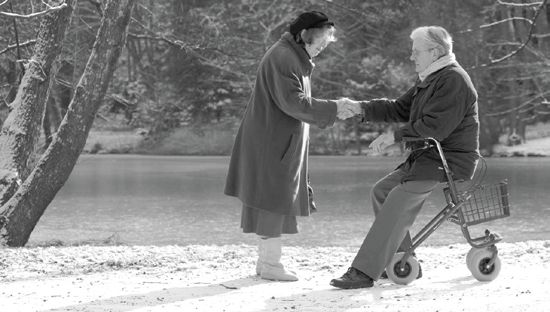
                                                           Magda, what would you like
                                                           for your birthday this year?

 Justice and                                                                                                                  An ambitious climate
                                                                                                                              policy so that I can be

 Equality
                                                                                                                              a wonderful grandma
                                                                                                                              just like you when I
                                                                                                                              grow up.

Ambitious climate action is an essential tool to
fight against growing injustice — both globally
and at home. Social democrats have always fought
for social justice. They have successfully dealt with
fundamental transitions in a socially just manner,
and they can draw on an extensive repository of
inspiring concepts for environmental and social
sustainability.
16 – 1 Ambitious Climate Action for Social Justice and Equality                                                                                                        1 Ambitious Climate Action for Social Justice and Equality – 17

Part I: Ambitious climate action                                  jobs for a predominately low-skilled
                                                                  workforce. Here we are referring to the
   is an important tool to fight
                                                                  agricultural sector, which already suffers
against growing injustice—both                                    from droughts, storms, water shortages and
          globally and at home.                                   increasingly unpredictable weather patterns,
                                                                  and tourism, which, on top of these challen-
Ambitious climate policies foster social justice. This            ges, also faces the problem of sea level rise
is something that is underlined by an increasing                  (see also Chapter 2, page 40). Thus, the less
number of progressive citizens and social democra-                privileged are more vulnerable to the im-
tic politicians alike. In the section below, we will              pacts of the climate crisis. The ILO estimates
shed light on the interplay between the climate                   a loss of 80 million full-time jobs within the
crisis and social justice for various marginalised                next ten years as a result of the climate crisis—
groups.                                                           but even this figure depends on us keeping
                                                                  global heating below +1.5°C. If we fail to
In countries around the world, we are facing a crisis
                                                                  reach this target, even more people will
of justice. As a result of the climate crisis, the
                                                                  lose their jobs. Studies show that EU citizens
less privileged groups in society are suffering
                                                                  perceive the risk of losing their jobs due to
from a triple burden of growing injustice:
                                                                  the impacts of global heating (or because
  1. First, marginalised citizens suffer more                    of inequality) as higher than the risk of
                                                                                                                        The less privileged fly less, whether for busi-           having contributed less to emissions—it is impe-
     from the consequences of the climate                         job loss due to carbon emissions reduction               ness or for pleasure, they do not drive (large)        rative that the climate crisis be curbed to avoid a
     crisis:                                                      measures.3                                               cars, they have much smaller apartments to             deepening gap between the world’s rich and poor.
                                                                                                                           heat, and buy fewer consumer products. In
		 • When a heat wave hits a city, the 40°C tem-
                                                              2. Second, socially marginalised groups have                fact, 45 per cent of global greenhouse gas             The climate crisis is not only a crisis of justice
       peratures affect older people living in a stuffy
                                                                less capacity to cope with climate crisis                  (GHG) emissions are caused by the richest 10           from the perspective of the privileged versus
       40m2 flat far more than the inhabitants of
                                                                impacts like these—they are simply less                    per cent of the world’s population, while the          the deprived groups in society, but also along
       nice big house with shady garden to cool off
                                                                resilient:                                                 poorest 50 per cent are responsible for as little      several other dimensions, specifically justice
       in. Similarly, a well-paid employee can switch
                                                            		 The costs of a flooded cellar or storm damage              as 13 per cent of emissions. Although most of          a) between generations, b) between nations,
       on the AC, or leave the office, while a blue-
                                                                to a roof represent a higher burden for socie-             these wealthy »top emitters« are found in the          and c) between men and women.
       collar worker cannot leave the production
                                                                ty’s poor than for affluent citizens with good             industrialised countries of the Global North, it
       line in a stiflingly hot factory. This is not only                                                                                                                           1. We all want a better future for our
                                                                insurance cover. People working in heavily                 is important to note that a third of them live
       a matter of personal comfort: Even in afflu-                                                                                                                                   children and grandchildren.
                                                                affected sectors are typically also less flexible          in middle-income countries, such as Russia.5
       ent Germany, 20,000 people have died in
                                                                when it comes to changing their jobs. A small-                                                                      •W
                                                                                                                                                                                      e want them to live in dignity and without
       heat waves in recent years—twice as many as
                                                                scale farmer might not have the necessary             The UN Special Rapporteur on extreme poverty and                fear, to be able to develop their talents and
       in traffic accidents.1 Other natural disasters
                                                                capital and knowledge to install an innovative,       human rights, Philip Alston, even warned that                   take care of their loved ones. However, toge-
       caused by global heating will also hit margi-
                                                                water-saving irrigation system to counter the         »[w]e risk a ›climate apartheid‹ scenario where the             ther with our parents, we have used so many
       nalised parts of society harder, because their
                                                                effects of a drought, for example.                    wealthy pay to escape overheating, hunger and                   resources that there will not be much left for
       homes, schools and work places are often
                                                                                                                      conflict while the rest of the world is left to suffer.«6       future generations.7 Acidic oceans brimming
       situated in places where natural hazards are           3. This is all the more unfair, because, third,                                                                        with plastic waste instead of fish, deserted
       more likely, for example on unstable soil or             underprivileged groups in society contri-             We all want our societies to be just, and we are all            landscapes, dwindling biodiversity, and socie-
       in flood-prone areas.2                                   bute less to the climate crisis—and this              striving to fight against growing inequality. In light          ties that are all too frequently in crisis mode
		 • In addition to this, the sectors hardest hit              applies to every country, both now and in             of the three reasons described above—the margi-                 due to the spread of disease, natural disasters,
       by the climate crisis currently provide                  the past.4                                            nalised being more vulnerable, less resilient and
18 – 1 Ambitious Climate Action for Social Justice and Equality 1 Ambitious Climate Action for Social Justice and Equality – 19
and exploding costs resulting from the need to features such as long, increasingly eroded coast- i.e. the problems that have been caused to a 3. It is a well-established fact that global
adapt to the new situation—what a heritage to lines mean they might be hit by severe storms considerable extent by the countries of the Glo- heating impacts women more than men.
pass on to our children!8 It is hardly surprising with growing frequency, or they might see bal North. From this perspective, the EU’s target • More women suffer from poverty, they often
that youth movements around the world go to huge river deltas swallowed up by the ocean.11 of carbon neutrality by 2050 is not ambitious, lack access to crucial resources, and, in times
great lengths to remind our generation that • With most of these nations being low-income but in fact too late. of crisis, many societies tend to rescue or feed
»There Is No Planet B« for them to live on. So,
9
countries, they are at a disadvantage when it • Today, international solidarity when it comes boys and men before girls and women.13 In ad-
if we want our children to live a happy comes to trying to increase their resilience.12 Im- to tackling the climate crisis not only means dition to this, economic sectors severely impac-
life, we need to transform our societies proving resilience not only requires costly infra- fair »burden sharing« in recognition of histo- ted by global heating ― agriculture, tourism
and economies according to social and structure development, but also the creation ric emissions, but also a fair distribution of the and healthcare, for example ― employ a large
environmental principles—in other words, of rescue plans or establishment of funds for opportunities generated by green innovation. female workforce. In many sub-Saharan
we need to change them for the better, victims of extreme weather events. Yet, human If countries in the Global North, having caused African countries women play a stabilising role
right now. and financial resources are often lacking. a large proportion of the emissions in the first for their families and communities because
place, now sell innovative green technologies of their importance in agriculture, and now
2. Ensuring climate justice is also treated as • Thus, the climate crisis has the potential to
to those countries in the Global South that are this model of life is increasingly at risk. In the
a priority at an international level, where significantly exacerbate global inequality. In
now suffering from the consequences of those tourism sector, many jobs will be lost as well—
we see the same patterns of injustice on light of this, an international debate over the
measures to combat global heating, then this when Croatia’s beaches are gone, there will no
the national level: responsibility of different nations to limit the
can no longer be called international solidarity. longer be any need for chambermaids. In the
climate crisis has been going on for decades.
• Countries with a low carbon footprint (current, healthcare sector, in contrast, many additional
While it is now clear that to avoid a temperature After having made a significant contribution to
historical, total and per capita) will be hardest nurses will be needed to keep our healthcare
increase of 1.5°C (which would lead to irrever- global heating in the first place, the countries
hit by the impacts of global heating. Most of systems functioning when the climate crisis fully
sible global heating), every nation has to be of the Global North should at very least trans-
these countries are located in already warm unfolds. We need to ensure that this additio-
carbon neutral by 2050, we must not neglect to fer »green technologies« to the most affected
regions, which might, with increasing heat, nal work is performed by employees working
consider responsibility for historic emissions— countries of the Global South, allowing them
become uninhabitable deserts. Geographic
10
under good conditions, and not only by nurses
to »leapfrog«. It would be even better if the
countries of the Global North were to support who are already doing (unpaid) overtime today
green research and innovation in the Global (see above, page 19, and for the gender equality
South, so that more patents, for example for effects of climate policies, see Chapter 3,
renewable energies or for urban mobility, could page 55).
be claimed by firms in the Global South. • However, it would be a mistake to depict wo-
• International solidarity has been a guiding prin- men solely as helpless victims of the climate
ciple for social democracy since its inception. crisis. From smallholder farmers in the Global
Today, in a globalised world, solidarity is not South rediscovering traditional agricultural
only a question of values, but also a genuine techniques that are beneficial in the current
asset, because it means combining forces. We situation, to Greta Thunberg, the teenage
can only prevent the climate crisis from threa- founder of »Fridays for Future«—around the
tening humanity if we truly stand together globe women are leaders in the fight against
and work together on a global basis. The Paris the climate crisis.14 When scientific data is
Climate Agreement, one of the most important available, it often shows that women are both
multilateral treaties in recent decades, is an better informed about the climate crisis and
excellent basis for such joint action. more concerned about its impacts.15
• Thus, climate policies should not only take
the difference in the consequences of20 – 1 Ambitious Climate Action for Social Justice and Equality 1 Ambitious Climate Action for Social Justice and Equality – 21
climate impacts for men and women into to cause lower emissions, pay less from the electric SUV. It would also be fairer and heal- the list of the biggest GHG emitting countries,
account, but also specifically empower outset. The total tax revenue could then either thier to ban all cars from city centres—provided for example, mean that the other 171 coun-
women to combat this challenge, thereby be directly reimbursed to the poorer members there are good alternatives—than to only allow tries that signed the Paris Climate Agreement
contributing to gender equality. of society, or be used in part for environmen- new electric vehicles (see also Chapter 5, page would not have to do anything until the Polish
tal projects benefitting less privileged groups 107). government decides to fully implement the
But what about… in society—this could include new community • These are just some examples demonstrating treaty’s obligations?
…concerns that climate mitigation measures could gardens, free public transport or new heating/ that the best solution from an environ- 3. Third, even if national governments oppose
lead to new injustice within nations due to wi- insulation systems for social housing projects. mental perspective will also bring about ambitious climate policies, this does not mean
dening social gaps—for example because of CO2 In both cases, marginalised groups have more greater social justice. that the carbon footprint of the country con-
prices hitting the less privileged harder? money in their pockets at the end of the year, cerned cannot be reduced. President Trump’s
which could help them to improve their social But what about… announcement that he was going withdraw
The way forward: Ensuring status and at the same time serves as a reward …the fact that many countries in Europe cause from the Paris Climate Agreement was met
social justice at home for their comparatively small carbon footprint. relatively few emissions while the governments of with fierce resistance on the level of many US
• Ambitious climate mitigation measures can help • However, it is not only fiscal measures that major emitting countries, such as the United States states and communities, their opposition con-
to reduce existing social injustice. And social should be assessed in terms of their effects on or Brazil, refuse to take appropriate action? veyed with the slogan »We Are Still In«. The
democrats in particular should make sure that social justice. In fact, climate-related and all campaign bearing the same name today unites
new policies are designed with this in mind. other regulations and government investments The way forward: Ensuring stakeholders with a combined budget of 6.2
• On a national level, there are many best prac- also have to be subject to the same scrutiny: global climate justice trillion dollars—which would make it the third
tice solutions. One excellent example is a carbon Better free public transport, new bicycle lanes This »blame game« where we all point our fingers largest economy in the world.18 Similarly, in
pricing system with a redistribution effect.16 In or subsidies for (cargo) bicycles are a better at our neighbours, waiting to see who makes the many other countries, progressive politicians
this system, the privileged, the »top emitters«, investment from the perspective of the socially first move, is a typical delaying tactic. In the context participate in direct dialogue on a community
pay more, while marginalised groups, who tend marginalised than subsidies for a 60,000euro of the fight against the climate crisis in (Eastern and province level (e.g. the »Covenant of Ma-
and Western) Europe, this argument does not hold yors«) about the best ways to combat global
for five reasons: heating.19
4. Fourth, small countries can play a crucial role
1. First, if we take a) historic emissions caused
if they lead by example. This is true for nations
by early industrialisation, and b) per capita
of the Global South, such as the internationally
emissions into account, every single European
acclaimed „Climate champions« Costa Rica and
country has a high carbon footprint. Overall,
Morocco, but also for small European states.
European countries caused 33 per cent of glo-
Denmark, for example, pursues a very ambi-
bal emissions, while the EU-28 countries alone
tious climate policy, reducing emissions and
caused 22 per cent.17 What is not reflected in
supporting green diplomacy. Such role model
the numbers is the fact that CO2 emissions are
states can set off a »domino effect«. The Ger-
counted where they are produced, not where
man energy transition, for example, began as
a product is consumed. So, if carbon-intensive
a unique political experiment in the late 1990s
steel is produced in India but used in Slovakia,
in a context of worldwide dominance of fossil
then India is the country with the bad record.
fuel generation and a tiny niche for extremely
2. Second, if every country were to wait for its costly renewable alternatives. Within just
»bigger neighbours« to make the first move, a few decades, it had triggered the global
in the end, nobody would do anything. Does success of renewable energy generation and
the fact that Poland is ranked number 26 on led to the emergence of a highly competitive22 – 1 Ambitious Climate Action for Social Justice and Equality 1 Ambitious Climate Action for Social Justice and Equality – 23
renewable industry. Throughout this manual, we will describe mul- Part II: Ambitious climate poli- • Hunger is on the rise again: According to the
5. Fifth, for many years, major opponents have tiple examples of positive co-benefits of am- FAO „Climate variability and extremes are […]
cies protect the social achieve-
been describing climate mitigation measures bitious climate policies—for social and gender a key force behind the recent rise in global
as a »burden«—where, in fact, they are just equality, for jobs, for health, for democratic ments made in recent decades. hunger«,24 and as a result »[t]he number of
the opposite. Ambitious climate policies decision-making processes, and even for time undernourished people in the world has been
are a tremendous opportunity to build sovereignty.20 Over the last few decades, our global community on the rise since 2015, and is back to levels seen
fairer, healthier societies, and to improve has made remarkable progress towards food secu- in 2010–2011«.25 Climate-induced crop failures
the wellbeing of people across the globe. rity, access to water and to healthcare, and millions also affect agriculture in (Eastern) European
have been lifted out of poverty. Data from recent countries. Drought in Russia in 2010 and 2012,
years shows, however, that this social progress has for example, reduced crop yields by between
not only come to a standstill, but that some social one-quarter and one-third, causing a sharp
achievements have already been reversed because increase in food prices.26
of the emerging climate crisis, and because those • Access to safe drinking water will not only be a
successes have partly been based on the overexploi- problem in areas already prone to drought, but
tation of environmental resources.21 also in many countries of the Global North. In
Central and Eastern Europe, the governments
• The number of people in absolute poverty was of Bulgaria, the Czech Republic, Hungary,
in constant decline for almost two centuries. Lithuania, Poland, Moldova, Romania, Slovakia,
This is undeniably a great success.22 We also Slovenia and Ukraine are working with the
saw a considerable increase in wealth in many World Meteorological Organization (WMO) to
countries of Eastern and Southern Europe. establish an integrated drought management
However, according to the World Bank, 122 system.27 Of particular concern are the glaciers
million people could be pushed back into of Central Asia, which provide drinking water
poverty by 2030 because of the impacts of for the inhabitants of all neighbouring coun-
the climate crisis, dramatically reversing the tries, and which are currently shrinking drama-
positive trend of poverty reduction.23 tically.
• The growing climate crisis is increasingly put-
INACTION ON CLIMATE PROTECTION ting our healthcare systems under pressure:
INCREASES POVERTY Heat stress and injuries from natural disasters
are not the only cause of concern, however.28
Due to increasing temperatures, host animals
from (sub-)tropical regions are able to survive
in Europe, leading to the spread of vector-
borne diseases, such as the West Nile fever,
which has already reached South-East Europe
and the Czech Republic.29 Last but not least, air
pollution is exacerbated by the climate crisis, re-
ducing the life expectancy of millions of people
(see also Chapter 5, page 90). This is a serious
problem because only half of the world’s pop-
ulation has access to healthcare, and many24 – 1 Ambitious Climate Action for Social Justice and Equality 1 Ambitious Climate Action for Social Justice and Equality – 25
people are forced into poverty because they will be in the future, where they will migrate to price tag to the economic losses caused by higher costs, but would also drive innovation,
cannot afford the medical treatment they and whether the climate crisis was the decisive climate-induced natural disasters: currently, and many social co-benefits could be realised
need.30 factor in them choosing to leave their homes, approximately 520 billion US dollars per year, (for more detail on this, see Chapter 2, page
Thus, ambitious climate policies help us to protect cautious estimates have still been made. For the equivalent of Sweden’s GDP.37 For countries 36ff).38
the social progress we have achieved over the past example, a recent World Bank report predicted in a +5°C world, however, it is impossible to es-
decades or even centuries.31 around 140 million climate refugees by 2050 if timate the economic and infrastructural losses,
climate action is delayed.35 not least because the loss of cultural heritage CLIMATE PROTECTION INVESTMENT
• What is more, social-ecological transforma-
and destruction of livelihoods when large parts BENEFITS THE ECONOMY
tion of our economic systems will help to end
of St. Petersburg, the Netherlands and Croatia’s
hunger (for example by reducing food waste),
coastline are below sea level will be immeasur-
will prioritise robust healthcare systems above
able.
short-lived consumption goods, and will en-
able all members of society to live a better life • Last but not least, unmitigated global heating
through a fairer distribution of wealth (not would also destabilise our political systems
necessarily through constantly increasing GDP). including undermining achievements such as
It is this vision of a better future that pro- participatory decision-making procedures and
gressive actors have been endeavouring to increased gender equality. In times of crisis, the
achieve for decades. executive are usually required to take bold and
drastic measures, often neglecting the voices of
But the impacts of the climate crisis not only threa-
other political stakeholders. Situations like this
ten our social system. Other features of human
seldom bring about social progress and innova-
security are also at risk:
tion, but rather involve a return to old-
• One issue the debate has focused on has been
fashioned values (see also Chapter 7, page 128). • UN Secretary General António Guterres was
the climate crisis as a driver of armed conflict.
absolutely right when he emphasised that
Water scarcity, famine, and hence mass migra-
But what about… »[t]here is a cost to everything. But the
tion aggravate (rather than cause) conflicts • The impacts of global heating on infrastruc-
the investment needed to make our societies more biggest cost is doing nothing.« 39 A recent
both within and between nations. Experts ag- ture receive less attention in the debate. Given
climate resilient? study revealed that 30 trillion US dollars in
ree that with increased global heating, the cli- the importance of schools, hospitals, railways,
damages caused by global heating could be
mate crisis will become a more important factor roads and factories, however, it is clear that a
The way forward: Ensuring prevented if we stuck to the 1.5°C target. The
in worldwide conflicts,32 and the UN has even climate-resilient infrastructure is critical to all of
social and human security vast majority of nations, representing 90 per
declared the climate crisis »the greatest threat us: Buildings must be able to withstand natural
• We need to invest in agricultural planning, he- cent of the world’s population, would benefit
to global security«.33 disasters (storms, floods, heavy rain, wildfires,
althcare systems, water management, resilient from this.40
• The question of climate refugees is also in- landslides, etc.), as well as »slow onset events«
(drought, melting permafrost and glaciers, or infrastructure and also early-warning systems • This is all the more true in view of the millions
creasingly at the centre of international debate.
sea level rise). In light of the global heating we to be able to cope better with the consequen- of human lives and livelihoods, the cultural
As the UNHCR emphasises: »Climate change
have already caused, these impacts are inevit- ces of global heating that even from today’s and natural heritage, that will be lost. These
and natural disasters can add to and worsen
able.36 And faced with the virtual impossibility perspective we know to be unavoidable. The are things that you simply cannot put a price
the threats that force people to flee across
of creating a resilient infrastructure for a +5°C World Economic Forum estimates an investment tag on.
international borders. The interplay between
world, the focus should be on slowing down need of 1.8 trillion US dollars in five key areas .
climate, conflict, poverty and persecution greatly
global heating and mitigating its effects— This may seem a lot, but the good news is that
increases the complexity of refugee emergen-
thereby building a better future. by 2030 this investment can unlock benefits
cies.«34 While it is hard to predict how many
in the amount of 7.1 trillion US dollars. Such
climate refugees there are and how many there • Similarly, it is only today that we can attach a
investment would not only prevent much26 – 1 Ambitious Climate Action for Social Justice and Equality 1 Ambitious Climate Action for Social Justice and Equality – 27
global dimension today is largely thanks to
Part III: Social democrats are
Willy Brandt whose New Eastern Policy repre-
well equipped for the challen- sented an important step towards a united
ges that lie ahead Europe and who demanded global governance
after the collapse of communism—a require-
Having dealt with many significant changes and ment that is more important today than ever
transitions, social democrats can draw on a rich before.
history of concepts for environmental and social • As the champion of workers, social democratic
sustainability: parties never focussed exclusively on environ-
• Throughout its history, social democracy has mental protection measures but were always
always been closely associated with environ- concerned about the social impacts. Politicians
mental issues. For the hard-working industrial were frequently preoccupied with concerns
workers, nature was a haven and somewhere over job losses and failed to seize the opportu-
to rest, a place where they could recover from nities for structural change. This made it all the
long shifts in factories or down the mines. At more important that, in the 1970s, the SPD de-
the same time, it gave them an opportunity to cided to tackle a structural change on its home
escape the often difficult living conditions in turf of North Rhine-Westphalia. The target was
the working-class areas of the towns and cities. the coal and heavy industry. For Willy Brandt,
Choosing to spend time in nature has therefore the goal was to »make the sky above the mi-
always been an expression of self-determina- ning towers on the Ruhr blue again«. A lengthy
• A milestone in environmental policy was the But what about…
tion. The workers’ movement that emerged conversion process started with a strong em-
publication of the Brundtland Report entitled …the shared climate politics of social democra-
throughout Europe in the 1880s endeavoured phasis on economic diversification: new re-
»Our Common Future«. The report, written cy and trade unions, both rooted in the workers’
to institutionalise this interest in nature. With search, production and service companies mo-
under the leadership of the former Social De- movement? Aren’t we betraying our past?
this in mind, the tourist association »Friends of ved to the former industrial areas. As a result,
mocratic Prime Minister of Norway, Gro Harlem
Nature«, an international association of na- the quality of life in the region improved sig-
Brundtland, defined the term sustainable de- The way forward—together with the trade
ture-loving workers from different countries, nificantly, not least due to the better environ-
velopment for the first time and sparked broad unions and acknowledging our roots
was founded in 1895. At this early stage in the mental conditions. This transformation in North
debates about global sustainable environmen- • There is no doubt that trade unions can and
history of social democracy already, it was ack- Rhine-Westphalia is still considered a positive
tal policy. would like to play a key role in the fight
nowledged that international nature issues had example of environmentally conscious struc-
to be resolved collaboratively. tural change (see also Chapter 2, page 43). • In Central and Eastern Europe, too, environ- against the climate crisis. They are natural part-
mental degradation became an issue in the ners when it comes to supporting environmen-
• In the 1970s and 1980s, environmental policy • During this period, various countries saw the
1980s, not least in the wake of the Chernobyl tal transformation that also leads to more social
issues were discussed more and more explicitly establishment of the first Green parties, which
nuclear disaster. Environmental groups were justice.
and openly. Around the world, environmen- brought numerous environmental issues to the
formed across the region, their members being • In the past, a trade unionist with a progressive
tal degradation had become all too evident. political stage and also pushed other parties to
declared opponents of the communist regimes. opinion on the climate crisis may have strug-
Through his North-South Commission, German include environmental policies in their political
After the collapse of communism, many of gled to garner support. But with the climate
Chancellor Willy Brandt fostered exchange be- programmes. Besides the Greens, the social de-
these environmental activists found a political crisis unfolding, significantly exacerbating
tween developing countries and the countries mocrats developed all-encompassing environ-
home in social democratic parties, where they inequality both nationally and globally, destroy-
of the Global South. His was the first German mental concepts. Thirty years later, many social
continued to elaborate more environmental ing millions of jobs in heavily impacted sectors,
federal government to adopt a development democratic parties still see themselves as having
issues. threatening the health and wellbeing of even
programme in 1971. The fact that we are dis- social and green roots.
cussing environmental and climate issues in a more workers and undermining our commonYou can also read


