Climbing the Prosperity Ladder - The rise of the socially mobile in Asia, Africa and the Middle East - Standard Chartered
←
→
Page content transcription
If your browser does not render page correctly, please read the page content below
Climbing the
Prosperity Ladder
The rise of the socially mobile in
Asia, Africa and the Middle East

              A study into social mobility, financial proficiency and digital savviness among
              11,000 emerging affluent consumers in China, Hong Kong, India, Indonesia,
              Kenya, Malaysia, Nigeria, Pakistan, Singapore, South Korea and the UAE.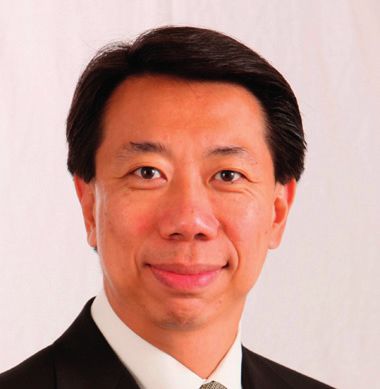
Standard Chartered                                                                                     Climbing the Prosperity Ladder
                                                                                                                             Page / 2

                 Contents
                 Executive summary / 3

                 The social mobility boom / 4

                 Better investment for a brighter future / 19

                 Digital dividends: technology holds the key to financial success / 27

                 Conclusion / 34

                 Methodology / 36

                 Appendix / 37

                 All figures in this report are represented as percentages, unless otherwise stated.

                 In charts, due to the rounding of decimal places, displayed figures may not always add up to 100%.

                 In charts, the average represents the average across the markets in this study.

                 The methodology can be found at the end of this report.
Standard Chartered Climbing the Prosperity Ladder
Page / 3
Executive
summary
In societies with high rates of upward social mobility, people
have the chance to carve out a life for themselves and their
children that surpasses that of their parents. The number
of people climbing the social ladder is slowing in the West1.
But we are seeing a new group of people in fast-growing
economies in Asia, Africa and the Middle East who are
accumulating wealth and rapidly improving their personal
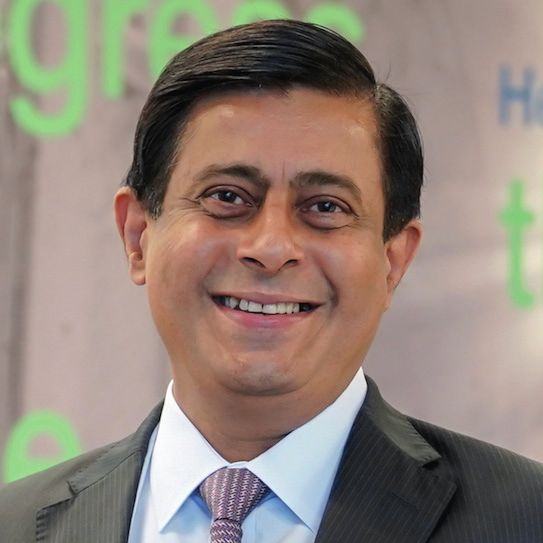
wellbeing. Ben Hung
CEO, Retail Banking &
Wealth Management
We call this group the ‘emerging affluent’. They have money to spend, save
and invest. This is our fourth study of this important consumer group: we
believe their economic power represents a significant driver of market growth.
The emerging affluent are creating their own prosperity by achieving more
in their education, careers and businesses than their parents did. Digital
technology is broadening their access to money management and helping to
support their financial wellbeing. But there is still room for the emerging affluent
to aspire to, and reach, even more ambitious goals.
As a leading international bank helping clients prosper across Asia, Africa
Vishu Ramachandran
and the Middle East, we want to understand how people maximise Group Head, Retail Banking
opportunities to advance themselves and their children. That includes gaining
a better appreciation of their aspirations and the financial tools they need to
achieve them.
Our study does just that: it provides fresh insights into the social mobility of
the emerging affluent across these regions. It reveals that there is space for
improved investment strategies among this group. They want to keep reaching
higher through smarter choices but they feel held back by a lack of financial
knowledge.
The emerging affluent are on an upward social trajectory and they’re hungry
for financial tools and information. They’re helping to fuel growth in some of
the world’s most dynamic markets. As they aspire to improve their own lives,
they’re contributing to the wellbeing of the communities they live in. It’s an
exciting journey and we hope this study sheds more light on their dreams
and ambitions.
1
A Broken Social Elevator? How to Promote Social Mobility, OECD, 2018Standard Chartered Climbing the Prosperity Ladder
Page / 4
The social
mobility boom
In Asia, Africa and the Middle East, many economies are
experiencing rapid growth, allowing people to benefit from
newfound wealth and, as a result, the opportunities this
provides. In this dynamic environment, the emerging affluent
are scaling the social ladder and fuelling their expanding
economies by outstripping their parents’ success.
To identify the social status of the individuals included in this study, we
examined each person’s level of education, employment and property
ownership against his or her parents’, as well as looking at the size of their
personal income and how quickly it was increasing.
By using these metrics we found that, across the 11 markets in our study,
almost six in 10 (59%)2 of the emerging affluent are experiencing upward social
mobility3. Not only are they wealthier and better educated than their parents
were, but the socially mobile are becoming increasingly prosperous across
their own lifetimes. They outweigh the two-fifths (42%) of the emerging affluent
who are not socially mobile: that is, those who have not yet experienced a
clear improvement on their parents’ position in society.
Some of the emerging affluent have taken social mobility to the next level.
7% are experiencing supercharged social mobility, ascending further and
faster than the rest of the socially mobile, showing dramatic increases in
income, education and career success.
2
This figure includes the total number of the emerging affluent that are experiencing upward social mobility,
which comprises the emerging affluent that are positively socially mobile (52%) and the emerging affluent that are
experiencing supercharged social mobility (7%)
3
In this report references to the ‘socially mobile’ will refer to those whose social status has moved upwards from
that of their parents and whose personal wealth has increased over time. ‘Not socially mobile’ refers to those
who have stayed the same or moved downwardsStandard Chartered Climbing the Prosperity Ladder
Page / 5
Figure 1:
Percentage of the emerging affluent experiencing social mobility
Supercharged socially mobile*
Socially mobile*
Not socially mobile
Average 42% 7% 52%
China 33% 7% 60%
Hong Kong 41% 6% 53%
India 33% 11% 56%
Indonesia 46% 4% 50%
Kenya 39% 7% 54%
Malaysia 45% 6% 49%
Nigeria 44% 6% 50%
Pakistan 37% 11% 53%
Singapore 46% 4% 51%
South Korea 51% 4% 45%
UAE 43% 7% 50%
* socially mobile in an upward directionStandard Chartered Climbing the Prosperity Ladder
Page / 6
The socially mobile are a powerful force for economic change, but they are also enjoying the benefits
of their successes. Career progression has resulted in a significant increase in earnings for the socially
mobile: more than a third (35%) have enjoyed a salary increase of 10% or more in the past year, in
contrast to 16% of those who are not socially mobile.
This is not an isolated pay hike but a snapshot into quickly advancing careers: more than a quarter of the
socially mobile (28%) have seen their earnings increase by half or more in the past five years, compared
to just 6% who are not socially mobile. They are also confident that their earnings will continue to rise,
with 43% expecting their salaries to grow by half or more over the next five years.
Figure 2:
Percentage of the socially mobile whose earnings have
significantly increased in recent years
50
Increased by 10% or Increased by 50% or more
more in the last year in the last five years
40
Average 35% 28%
China 23% 26%
30
Hong Kong 20% 18%
India 46% 30%
Indonesia 36% 36%
20
Kenya 37% 33%
Malaysia 35% 29%
Nigeria 46% 30%
10
Pakistan 44% 34%
Singapore 30% 25%
South Korea 23% 22%
0
UAE 42% 27%Standard Chartered Climbing the Prosperity Ladder
Page / 7
Perhaps unsurprisingly given their surging salaries, three-quarters of the socially mobile are in
management positions or running their own business whereas 52% of their fathers and 34% of
their mothers were in this position at the same age.
Figure 3:
Percentage of the socially mobile who hold management
positions or own a business compared to their parents
Socially mobile Fathers of the socially mobile Mothers of the socially mobile
75%
Average 52%
34%
81%
China 41%
30%
68%
Hong Kong 31%
26%
85%
India 61%
31%
71%
Indonesia 60%
38%
75%
Kenya 49%
43%
79%
Malaysia 57%
39%
74%
Nigeria 56%
50%
83%
Pakistan 65%
28%
75%
Singapore 48%
35%
50%
South Korea 51%
34%
77%
UAE 61%
31%Standard Chartered Climbing the Prosperity Ladder
Page / 8
While climbing the social ladder, the emerging affluent are also moving up the property ladder. Despite
rising house prices in many markets, particularly South Korea, Hong Kong and some parts of China,
88% of the socially mobile own their home, compared to 78% of their parents.
Entering higher education was an even greater indicator of the gap between the socially mobile and their
parents: 85% went to university compared to exactly half of their fathers and 41% of their mothers.
Figure 4:
Percentage of the socially mobile who have achieved a
university or college degree compared to their parents
Socially mobile Fathers of the socially mobile Mothers of the socially mobile
85%
Average 50%
41%
91%
China 34%
29%
81%
Hong Kong 31%
27%
93%
India 71%
50%
83%
Indonesia 55%
46%
86%
Kenya 46%
40%
84%
Malaysia 40%
32%
82%
Nigeria 48%
41%
89%
Pakistan 66%
49%
77%
Singapore 39%
35%
84%
South Korea 61%
51%
85%
UAE 63%
54%Standard Chartered Climbing the Prosperity Ladder
Page / 9
Madhur Jha
Head of Thematic Research
The markets in this study are all unique and it is encouraging to
see that there are such promising levels of social mobility across
all of them, despite their different stages of development. Strong
performances throughout the markets shows that there really
is dynamic movement happening in these economies and that
people are seizing the chance to thrive.
Asia’s ‘tiger’ economies in Hong Kong, Singapore and South
Korea are mature markets, and their growth is where we would
expect it to be. It is good to see that social mobility is still at
promisingly high levels despite the challenges that come with
being in an advanced stage of development.
These different circumstances mean direct comparisons cannot
be made with China, India and Pakistan, whose economies have
recently been developing rapidly.
Social mobility is booming across these three
markets, but plenty more markets are also
on the up. Despite their differences, across
all of the markets the emerging affluent are
focusing on providing for their children’s
education4, which shows that they are
determined to make sure the future is even
brighter for the next generation.
4
See page 22Standard Chartered Climbing the Prosperity Ladder
Page / 10
Wonder women
Increased levels of education among the emerging affluent have had an impact on women.
Among all emerging affluent women, 84% have completed higher education – almost double
the number of their mothers who went to university (44%). Research from the World Bank
Group shows that girls’ education is important for continuing to drive economic growth5.
This is especially true in the case of aging populations, where there is a need to bolster the
size of the workforce.
Emerging affluent women’s economic power has increased even more than their academic
qualifications. While one-third of their mothers did not have a job, 2% of emerging affluent
women are now homemakers or unemployed. Women in the markets in our study are working
their way upwards, and they are providing extra workforce productivity at the same time.
More than half of those achieving supercharged social mobility are women (55%), meaning
they are enjoying more accelerated mobility and climbing the hierarchy faster than men.
Figure 5:
Percentage of men and women Supercharged women
among the socially supercharged
Supercharged men
80
68%
65%
63%
60 55% 51% 55%
54% 53%
53% 52%
51% 51%
49% 49% 48%
40
46% 47% 47%
45% 49% 45%
35%
32%
20
Average
China
Hong Kong
India
Indonesia
Kenya
Malaysia
Nigeria
Pakistan
Singapore
South Korea
UAE
5
Missed Opportunities: The High Cost of Not Educating Girls, World Bank Group, 2018Standard Chartered Climbing the Prosperity Ladder
Page / 11
Lay Choo Ong
Global Head, Wealth Proposition
It is exciting to see that women are more empowered than ever
to achieve financial success, armed with better education and
higher earning power: 84% have a university degree, while 96%
are earning a salary.
More emerging affluent women are experiencing supercharged
social mobility than men – they are accelerating their careers,
growing businesses and buying homes at a rapid pace.
96%
of the emerging
affluent women
earn a salary
84%
have a university
degreeStandard Chartered Climbing the Prosperity Ladder
Page / 12
The fast-trackers:
China, India and
Pakistan
The fast-growing economies of China, India and Pakistan are providing abundant
opportunities for scaling the social pyramid. Leading the way, in both China and
India 67% of the emerging affluent are experiencing positive social mobility, while
Pakistan is not far behind with 64%.
Of the emerging affluent in these countries, India and Pakistan both have more
than one in 10 (11%) that are experiencing supercharged social mobility, versus
7% in China.
Strong earnings progression is fuelling impressive rates of social mobility in
all three countries. Many of the socially mobile have benefitted from a salary
increase of 50% or more in the last five years – 34% in Pakistan, followed by
30% in India and 26% in China.
This gap could widen, with India and Pakistan more optimistic about their future
salaries than their Chinese counterparts. Almost half of the socially mobile in
Pakistan (48%) and India (46%) predict another earnings increase of 50% or
more in the next five years, whereas less than three in 10 (29%) expect the same
in China.
While the emerging affluent in China are more cautious about salary growth than
their counterparts in fast-growing Pakistan and India, workplace remuneration
is just one side of the social mobility equation. Education has been considered
crucial to improving social standing in China for a long time, but the generational
shift towards university access among the socially mobile is larger than any other
market: more than nine in 10 have attended university (91%), compared to 34%
of their fathers and 29% of their mothers.Standard Chartered Climbing the Prosperity Ladder
Page / 13
The steady
climbers: South
Korea, Singapore
and Hong Kong
Since the rapid expansion of these so-called ‘tiger’ economies
in the second half of the twentieth century, their markets have
become more mature.
Levels of positive social mobility are still strong in Asia’s more
developed markets, looking considerably healthier than the
stalled mobility in many Western economies6. Hong Kong
matches the average rate of social mobility for the markets in the
study, with 59% of the emerging affluent scoring as mobile, and
Singapore is close behind (55%). South Korea is the only market
where slightly more of the emerging affluent are not socially
mobile, as the rate of upward mobility sits at 49%.
With economic growth not increasing as quickly as it did for their
parents’ generation, emerging affluent millennials (aged 25-34) in
these markets hold a more pessimistic view of their social status
than their peers in other economies. In South Korea, where
challenges resulting from an aging population are a concern and
general standards of living are higher, 60% of millennials do not
consider themselves to be affluent, followed by 52% in Hong
Kong. By comparison, around half that amount in China (28%)
and India (28%) think the same.
6
A Broken Social Elevator? How to Promote Social Mobility, OECD, 2018Standard Chartered Climbing the Prosperity Ladder
Page / 14
On the up: Nigeria,
Kenya, Indonesia,
Malaysia and the UAE
In the other markets in our study there are encouraging opportunities for the
emerging affluent located in Africa – from the east and west – as well as in
Southeast Asia and the Middle East.
In Kenya more than six in 10 (61%) of the emerging affluent are socially mobile,
and more than half are on the ascendance in Nigeria (56%) and Indonesia
(54%). Salaries are increasing particularly rapidly in Africa, with around a third
of the socially mobile in both Kenya (33%) and Nigeria (30%) reporting that
their earnings have increased by half or more in the last five years.
Malaysia has a 55% social mobility rate. This is strong considering that
continual social movement is more challenging in mature markets, and the
Malaysian economy is more developed than many of its emerging market
neighbours.
The UAE is also performing well when it comes to social mobility. As a
commodity-rich market that also has an established business infrastructure7,
this developed economy has an impressive upward mobility rate of 57%.
The emerging affluent are determined to keep climbing, and confidence about
their success is high across these diverse economies. In all five markets, the
number of the emerging affluent who believe they are better off than their
parents is higher than the rate of social mobility8.
7
UAE scores 21st in the ‘Ease of Doing Business’ Index. See Doing Business 2018, World Banking Group, 2018
8
See chart on page 17Standard Chartered Climbing the Prosperity Ladder
Page / 15
Symbols of success
When it comes to defining success, 53% of the emerging affluent think that the most important
sign of achievement is increasing personal wealth over time. This growth in capital can come
from increased earnings, good financial planning or any other means, but accumulating overall
wealth is the top priority for most of the emerging affluent.
Behind this overall trend, the other factors that define prosperity for the emerging affluent vary
depending on where they live. In Nigeria, leaving a legacy to your children is especially important,
with nearly a quarter describing this as a sign of success (24% compared to 16% on average).
There is also a focus on entrepreneurship in Nigeria, with 32% believing that business ownership
is an important sign of success, compared to an average of just less than a quarter (24%).
This figure is 29% in Malaysia and rises to nearly four in 10 of the emerging affluent in Indonesia
(38%), who place the most value on individual enterprise.
Hong Kong is the only market where getting on the property ladder is considered to be the
ultimate marker of achievement, with nearly half (46%) of the emerging affluent describing home
ownership as a symbol of success.
Priorities are different in China, where buying luxury goods is more than twice as important as
on average. Nearly a quarter (24%) of the emerging affluent in China say that being able to afford
personal luxuries is an important status symbol, compared to 11% across all markets in the
study, suggesting that luxury spending in China will remain steady even if the economy slows.
Being able to put your children through university defines financial success for 17% of the
emerging affluent, but nowhere more so than in Kenya and the UAE, where this figure rises
to a fifth (19%).
Figure 6:
Percentage of the emerging affluent who believe the following
factors define personal financial success
Factors defining personal financial success Average
Increasing your personal wealth over time 53%
Owning a house 38%
Rapid career progression (e.g. promotions, salary increases) 31%
Starting a successful business 24%
Owning a nice car 20%
Spending more money on your passions / leisure 20%
Putting your children through university 17%
Leaving a legacy to your children 16%
Being able to afford personal luxuries (designer goods, expensive jewellery, etc.) 11%
Earning more than your parents 8%Standard Chartered Climbing the Prosperity Ladder
Page / 16
Great
expectations:
how perception
exceeds reality
Across all the markets in the study, attitudes are buoyant
among the emerging affluent. Optimism about economic
conditions is riding so high that seven out of 10 believe they
are in a better financial position than their parents when, in
reality, the level of social mobility sits lower at 59%.
Enthusiasm is riding highest in Indonesia, where the gap
between belief in social mobility and the reality is almost
as high as a quarter (23%). China has the highest levels of
confidence overall, with 84% of the emerging affluent saying
that they are wealthier than their parents. In reality, two-thirds
(67%) are experiencing upward social mobility.
The emerging affluent in South Korea and Hong Kong are
slightly less optimistic, but very accurate in their perception of
intergenerational changes. In Hong Kong there is a 59% rate
of social mobility, and 58% recognise that they are financially
better off than their parents. The gap widens marginally in
South Korea, where 49% are socially mobile but only 47%
believe that they are wealthier than their parents.
These two markets have more advanced economies than
most others in the study and their growth has slowed
following rapid expansion from the 1960s to the early 1990s.
This market shift may contribute to the emerging affluent
considering themselves to be slightly less wealthy than the
previous generation.
Despite experiencing a similar growth phenomenon to South
Korea and Hong Kong, Singapore’s emerging affluent remain
confident about the country’s prospects. A total of 69% feel
wealthier than their parents – 14% more than are actually
experiencing social mobility according to this study’s metrics.
Those located in the most advanced market in the study
besides these three ‘tiger’ economies are also positive about
prosperity compared to the previous generation: in the UAE
the perception versus reality gap reaches 16%.Standard Chartered Climbing the Prosperity Ladder
Page / 17
Figure 7:
Difference between the socially mobile and the emerging
affluent that feel they are better off than their parents
Percentage of the emerging affluent Percentage of the emerging affluent who
Difference
who are socially mobile feel better off than their parents
54% +23%
Indonesia
77%
67% +17%
China
84%
55% +16%
Malaysia
71%
57% +16%
UAE
73%
64% +15%
Pakistan
79%
55% +14%
Singapore
69%
67% +13%
India
80%
59% +11%
Average
70%
61% +10%
Kenya
71%
56% +10%
Nigeria
66%
59%
Hong Kong
58% -1%
49%
South Korea
47% -2%Standard Chartered Climbing the Prosperity Ladder
Page / 18
The rise of the supercharged
Most of the emergent affluent in the markets we have studied are mobile, but some are
moving at speed. These are known as the supercharged socially mobile. Making up 7% of
the emerging affluent, they are a small but mighty force. The supercharged socially mobile
have achieved great personal success and are experiencing extreme upward mobility
through the vast gap between their parents’ situation and their own, and a steep increase
in earnings across their own careers.
The supercharged are leapfrogging up the social ladder by exceeding their parents’
achievements at every level: education, employment, home ownership and personal wealth.
They have pursued education and property and achieved it: nine out of 10 have a university
degree and 94% own their home, even though less than half of their parents did at the
same age (43%).
Wealth is the ultimate sign of success for the supercharged. Their money symbolises how
far they have come and provides the motivation to keep aiming even higher. 61% of the
supercharged define personal success as increasing their wealth over time. They are far
more driven by capital than those who aren’t socially mobile, with less than half of this
group saying the same (49%).
One way the supercharged are building their nest egg is by accelerating their careers.
81% are at management level or above, or running their own business. With 40% of their
fathers and 21% of their mothers achieving this at the same age, the supercharged are
demonstrating that they are determined to keep moving on up.
Figure 8:
Percentage of the supercharged who have achieved
degrees, managerial status and home ownership
compared to their parents
Parents
Supercharged
Father Mother
University or college degree 90% 34% 22%
Manager or business owner 81% 40% 21%
Home owner 94% 43%Standard Chartered Climbing the Prosperity Ladder
Page / 19
Better investment
for a brighter
future
The emerging affluent are taking social mobility into their
own hands. They believe that it’s not how much money
you earn, it’s what you do with it that counts. Investing in
financial products is helping them to keep moving up the
ladder, with 56% saying this was a strategy for meeting their
financial goals and increasing their wealth. By comparison,
less than half (43%) said that their salary and career
progression was a strategy for helping them to achieve this.
Figure 9:
Percentage of the emerging affluent who would use
the following strategies to meet their financial goals
and increase their wealth
Strategy Average
Investing in financial products (e.g. stocks, bonds, mutual funds) 56%
Career progression and salary increase 43%
Starting a business 27%
Having a side hustle 24%
Part-time second job 18%
Making use of the ’gig economy’ 12%
Expected inheritance 3%Standard Chartered Climbing the Prosperity Ladder
Page / 20
By proactively managing their money, the emerging affluent are striving for an even better future. They
believe that smart financial choices will improve their social status: more than two-thirds (69%) say that
managing their finances effectively holds the key to greater social mobility.
Asia’s developing economies put weight on successful money management. In Indonesia, eight in 10
of the emerging affluent believe good financial management is a major factor in achieving greater social
mobility, closely followed by India (79%).
Figure 10:
Percentage of the emerging affluent who believe managing their
finances effectively is key in achieving social mobility
80%
Indonesia
70%
Nigeria 75%
China
67% 71%
Singapore Malaysia
53%
South Korea
79%
India
71%
Pakistan
69% 71%
Average Kenya
66%
UAE
53%
Hong KongStandard Chartered Climbing the Prosperity Ladder
Page / 21
Didier von Daeniken
Global Head, Private Banking and Wealth
Management
With information overload, multiple wealth management solutions
and volatile markets, it is increasingly difficult for investors to
make decisions.
The research findings highlight that 42% of the emerging affluent
feel their lack of financial knowledge is holding them back.
Additionally, almost eight in 10 use only one investment product
or none at all, as they may not understand all the solutions
available to them, or have access to relevant market insights.
This suggests that personalised investment advice could help
the emerging affluent reach their goals more effectively, by taking
advantage of a wider range of solutions to build a diversified
portfolio, aligned to the amount of risk they can take.
42%
of the emerging
affluent feel their lack
of financial knowledge
is holding them backStandard Chartered Climbing the Prosperity Ladder
Page / 22
The wealth wish-list
The emerging affluent know what they want to achieve with their money, and
have identified clear goals to work towards.
Paying for their children’s education was ranked as the most important savings
priority for the emerging affluent in every market in the study. On average,
education is twice as important as the next largest target, with 16% saying this
is their top financial goal. Saving to buy an investment property comes next,
with 8% describing this as their top priority.
Education is a key lever of upward social mobility, so the emerging affluent
want to use their money to increase their family’s prosperity in the future.
Other highly-ranked savings priorities also aim to build security for the long
term rather than being short-term luxuries. Buying a first home and setting up
a business are both the top saving priority for 7% of the emerging affluent.
Whatever the goal for the emerging affluent, they believe that they are
organised and proactive about achieving it. Just over half of the emerging
affluent say they have a plan to accomplish their ambitions: 51% believe that
they invest with a target and a strategy to achieve it. Of the rest, 35% have a
target but no organised investment strategy to help them achieve it, mainly
putting their money into savings with some investments on the side, and less
than a sixth (14%) do not invest or have a target at all.
The emerging affluent generally describe impressive investment habits, but the
products they actually use suggest there is a gap between their perception
and the reality.Standard Chartered Climbing the Prosperity Ladder
Page / 23
More room for returns
The emerging affluent have positive intentions about using investments to
achieve their goals. But despite the drive to achieve their targets, there is
space for more sophistication in their methods. When describing the financial
products they use to meet their goals the most basic savings approaches
came out on top.
Savings accounts are the most popular method of achieving wealth targets,
with nearly half (49%) using them to reach their top financial goal across
all markets. This is followed by time deposits (29%) and then property
investment, with less than a quarter (23%) using real estate to increase
their wealth.
Considering that just over half also believe they have an investment target and
strategy, this reliance on basic savings accounts could suggest the emerging
affluent believe they are using more advanced strategies than in reality.
In only four of the markets in the study do the emerging affluent choose an
investment product9 as one of their top three financial products for achieving
their main savings goal. In Hong Kong, 26% use equity investments, while
mutual funds are used by 31% in India and 26% in Pakistan. In China, 23%
use fixed income investments.
Relying too heavily on basic savings accounts may not be the best way for
the emerging affluent to increase their savings pot, as it can mean a missed
opportunity for higher returns. Developing an investment strategy through
a diverse investment portfolio could help many of the emerging affluent to
achieve their financial goals faster.
Although there is space for more developed investment strategies among
the emerging affluent, some do still use investment products to achieve their
savings goals. Fixed income investments are most popular overall, with 19%
of the emerging affluent using these to contribute towards achieving their top
financial goal. Equity investments come a close second (18%) and mutual
funds are in third (16%).
9
In this report, ‘investment products’ refers to fixed
income investments, stocks, equities, mutual funds,
unit trusts, investment-linked insurance, self-invested
pension funds, real estate investment trusts (REITS)
and real estate property fundsStandard Chartered Climbing the Prosperity Ladder
Page / 24
49%
Figure 11:
Percentage of the emerging
affluent who use the following
financial products to achieve
their top financial goal
29%
23%
19%
18%
16%
16%
Savings
15% account
Time deposits /
fixed deposits
13%
Property investment
13% Fixed income investments
(e.g. direct investment in bonds)
Stocks / equities
11%
Mutual funds / unit trusts
Insurance – endowment / life insurance
Insurance – investment-linked insurance
Self-invested pension fund
Real estate investment trusts (REITS) or real estate property funds
Company pension fundStandard Chartered Climbing the Prosperity Ladder
Page / 25
Mind the gap: the need for
financial knowledge and advice
For the emerging affluent, the desire to actively improve their financial position is clear, even if they are
mainly focusing on basic savings products to achieve their aims.
The emerging affluent want to know more about money management and believe that a lack of financial
understanding is stopping them from succeeding further. 42% said that they felt held back in their
aspirations by their lack of financial knowledge. This frustration suggests that a better understanding of
investment products would help the emerging affluent to use them as a more effective and important part
of their investment strategy.
The emerging affluent are hungry to improve their financial position, but a missed opportunity across all
markets is a lack of professional guidance, which gives a broad view of the options available and finds
solutions tailored to individual needs. Instead, the emerging affluent turn to friends and family, with more
than a third citing this as their main source of financial advice (35%).
Professional financial guidance could be the missing link in achieving an integrated investment strategy.
The financial knowledge and advice gap limits the returns that the emerging affluent can earn from their
capital, hindering them in hitting their wealth targets. In total, 52% say they are far away from meeting
their top financial goal, with half of these (25%) describing themselves as very far away.
Closing this gap by accessing sound financial advice will help the emerging affluent to make informed
decisions with confidence, so that their money can work smarter and harder, and keep them moving
onwards and upwards.
India 55% Figure 12:
China 52% Percentage of
Pakistan 52% the emerging
affluent who feel
UAE 49%
held back by their
Malaysia 43% lack of financial
Average 42% knowledge
Singapore 41%
Kenya 38%
Hong Kong 36%
Nigeria 35%
South Korea 32%
Indonesia 28%Standard Chartered Climbing the Prosperity Ladder
Page / 26
Emerging entrepreneurs
Budding entrepreneurs are common among the emerging affluent. More
than a quarter (27%) see starting their own business as a key strategy for
increasing their wealth. This figure rises significantly in Nigeria (41%),
Indonesia (39%) and Malaysia (35%), where entrepreneurial spirit is strongest.
Older generations are as likely as millennials (aged 25-34) to use business
ownership to increase their wealth. In Indonesia, the 45-55 age bracket is
most likely to start a business, with 46% describing it as part of their financial
strategy.
Women in business have a supportive economic environment in Singapore,
which ranks among the top locations for female entrepreneurship10. This is
reflected in our study, with 32% of Singapore an women saying that starting
their own business is one of their strategies to achieve their financial goals,
compared to 28% of men. This translates to financial rewards: business
income is more likely to be a top source of revenue for women (56%) than it
is for men (49%).
The emerging affluent are keen to use other enterprising strategies to make
money, with 24% saying they would have a side hustle11 alongside their day
job, while 18% say the same of a part-time job, and 12% would use the gig
economy as a strategy for increasing their wealth12. In the UAE, people are
especially keen to make extra income from the freelance opportunities offered
by the gig economy, with 17% of the emerging affluent saying they would use
this as a strategy to increase their wealth.
10
Women Entrepreneur Cities Index, Dell, 2018
11
We define a ‘side hustle’ as a passion project or interest pursued alongside a full-time job, with the intention of
turning it into the primary source of income
12
We define ‘the gig economy’ as work in the form of short-term, flexible contracts or freelance contract workStandard Chartered Climbing the Prosperity Ladder
Page / 27
Digital dividends:
technology
holds the key to
financial success
Online banking tools are key to effective financial
management today. With payments and transfers, stock
investments and financial advice all available at the touch of
a button, new technology allows for quick and easy money
management anywhere in the world.
‘Fintech’ – or financial technology – is a secret weapon for the emerging
affluent, with almost two-thirds (65%) saying that their familiarity with digital
tools has been vital to their personal success. On top of this, digital money
management has helped 61% of the emerging affluent get closer to achieving
their financial goals13.
Digital technology makes financial products more visible and accessible,
allowing users to make more informed decisions quickly and easily. The
emerging affluent confirm this is the case, with the majority (65%) saying that
online banking makes them feel they have more control over their money and
investments.
New digital tools have the most impact in developing markets with dramatic
rises in upward social mobility. India’s emerging affluent are the biggest
advocates of online banking, as eight out of 10 believe it gives them more
control; nearly three-quarters (73%) also say this in Pakistan.
Digital money management involves using websites and apps for a range of financial transactions such as
13
monitoring bank balance, making payments and transfers and managing investmentsStandard Chartered Climbing the Prosperity Ladder
Page / 28
Smartphones for
smart savings
Globally, more time is spent on smartphones than ever before
and this extra screen time could be helping the emerging affluent
to stay on top of their finances. More than three-quarters (78%)
use their bank’s smartphone app to monitor their bank balance
and make payments once a week or more.
This new source of financial control could be helping the
emerging affluent drive their social mobility, with smartphone
apps revolutionising money management in emerging economies
and driving financial inclusion.
When it comes to making daily digital transactions, Nigeria leads
the way with 39% monitoring their bank balance and making
payments every day via mobile apps. Indonesia is not far behind,
with 37% of its emerging affluent doing the same, in contrast to
an overall figure of 29%.
Banking apps aren’t the only way the emerging affluent are using
their smartphones to manage their money. Making payments
through third-party platforms such as Alipay, Apple Pay, M-Pesa,
PayPal or WeChat Pay is even more popular in certain markets.
In Kenya, 42% use their smartphones to make payments with
these kind of services every day; this figure rises to nearly half of
the emerging affluent in China (47% compared to 30% overall).Standard Chartered Climbing the Prosperity Ladder
Page / 29
Aalishaan Zaidi
Global Head, Digital Banking
Across all age groups, more of the emerging affluent are using
digital tools to help them keep track of their money than ever
before, and the convenience of online financial management
helps people to live their busy lives.
The emerging affluent in our study are very savvy when it comes
to using technology for their everyday banking, but they have not
fully adopted it for more strategic financial activities like investing.
This could be stopping them from maximising their wealth, so
bringing the accessibility of digital to wealth management could
really help them to achieve their goals.
We know that investment can involve bigger and more
complicated decisions than everyday banking, which is why
providing clients with more choice and flexibility on how they
bank with us is crucial. This isn’t about removing face-to-face
banking, because we know that some people prefer making
financial decisions through traditional channels, while others
want the convenience of tracking their wealth on-the-go from
their phones.
Digital has really democratised who can access wealth
management strategies, and with online and mobile digital tools
available on demand it is set to help even more of the emerging
affluent to keep growing their nest egg.Standard Chartered Climbing the Prosperity Ladder
Page / 30
Mature but mobile
Older generations have embraced mobile banking, with little difference between age groups
when it comes to using smartphones once a week or more to monitor bank balances and
make payments via banking apps.
However, millennials (aged 25-34) are a little more likely to make smartphone payments
through third-party platforms. Nearly a third (32%) of millennials use these to make
smartphone payments every day, compared to just over a quarter (26%) of the 45-55s.
Enthusiasm for
on-demand advisers
Basic financial tasks are increasingly taking place quickly and securely via smartphone
devices and the emerging affluent have an appetite for managing their wealth more broadly
online, even if there’s risk involved.
They are comfortable going online for financial advice, with more than half (56%) saying they
would invest in financial products online if an on-demand adviser was available.
Confidence in online advisers is especially high in
India (69%) and China (67%), with more than two-
thirds saying they would trust them when investing
in financial products. The strongest preference for
face-to-face financial advice is in South Korea,
although 38% would still be happy to go digital for
investment advice.
What’s more, risk is not a problem for the emerging
affluent if strong rewards are possible. When investing
their money in online financial products, 53% would
accept a high level of risk in exchange for a high level
of return. Malaysia’s emerging affluent are particularly
confident when it comes to high stakes, with 59%
accepting the risk/return trade-off, although India still
leads the way with two-thirds willing to do so.Standard Chartered Climbing the Prosperity Ladder
Page / 31
Figure 13:
Percentage of the emerging affluent who would
invest in financial products online, but only if they
had an on-demand adviser available to assist
India 69%
China 67%
Indonesia 61%
Pakistan 60%
Malaysia 58%
Average 56%
Kenya 55%
Singapore 53%
UAE 52%
Nigeria 51%
Hong Kong 48%
South Korea 38%
Figure 14:
Percentage of the emerging affluent who would
accept a high level of risk for a high level of return
when investing in online financial products
India 66%
Malaysia 59%
Pakistan 58%
China 57%
Indonesia 57%
Kenya 54%
Average 53%
Singapore 53%
UAE 52%
Nigeria 50%
Hong Kong 49%
South Korea 32%Standard Chartered Climbing the Prosperity Ladder
Page / 32
Fernando Morillo
Global Head, Retail Products and Segments
Despite their different cultures and backgrounds, the emerging
affluent share many of the same financial priorities and concerns
across the markets in our study.
Last year, our study discovered that the emerging affluent are
avid savers who prioritise building financial stability. This has not
changed, and this year 69% of the emerging affluent have told
us that they believe managing their wealth effectively is key to
achieving greater social mobility.
With digital connectivity at its highest level in history, the
emerging affluent have the opportunity to manage their money
online via investment platforms, full suites of payment services
and goal-based savings platforms.
Prasenjit Chakravarti
Global Head, Personal and Premium Banking
Taking advantage of online financial tools and services could
provide the opportunity the emerging affluent need to maximise
their assets and meet their targets, but a lack of financial
education and advice is stopping them from meeting their
financial goals.
Different service providers will offer varying levels of advice
and support, and an important consideration for the emerging
affluent should be whether the platform provides a professional
on-demand financial adviser to help them make the best
decisions tailored to their financial situation and goals.Standard Chartered Climbing the Prosperity Ladder
Page / 33
The rise of the
financially digitally
savvy
Technology is changing the banking landscape, allowing Figure 15:
anyone to monitor their bank balance, make payments or
invest in financial products wherever they are. It’s helped the Percentage of the
emerging affluent to take control of their finances and to keep digitally savvy who
climbing the social ladder. are socially mobile
The emerging affluent who are digitally savvy14 are more
confident and proactive about using technology to manage
their money and they are also more prosperous overall. Two-
thirds of the digitally savvy feel affluent; by contrast, just half
of those who aren’t digitally savvy say the same. The digitally
savvy are also 10% more likely to be close to meeting their top
savings goal.
What’s more, technology is a force for social mobility, allowing
those who master it to improve their position in society. Digital
savviness goes hand-in-hand with success, as 62% who
demonstrate it are socially mobile, compared to half of those
who are not. Three-quarters of confident, frequent users of
tech products also consider themselves better off than their
parents, compared to just 61% of those who are not.
Tech-confidence is important for those who want to be
financially digitally savvy as this enables them to make the
most of new banking technology when managing and growing
their wealth.
Conversely, not being up to speed with technology can
block the emerging affluent from achieving their wealth goals.
Unsurprisingly, those who aren’t digitally savvy have a less
positive experience of digital banking. Less than half (43%) of
this group say digital banking makes them feel like they have
more control over their investments, compared to three-
quarters of their more knowledgeable peers.
As embracing technology is helping people be more financially
savvy than ever, going digital has never been so important for Not socially
helping the emerging affluent move onwards and upwards. mobile
Socially mobile
14
We define ‘digitally savvy’ as the frequent
use of a variety of digital products and
services and confidence in using themStandard Chartered Climbing the Prosperity Ladder
Page / 34
Conclusion
Social mobility is powering the economies the emerging affluent
live and work in. As markets expand, individuals are seizing
the opportunity to climb the social ladder and, as a result, are
continuing to fuel economic growth with their spending power.
Dynamic economic conditions have helped the socially mobile
to flourish, but they have also worked to elevate themselves
by achieving high levels of education, increasing their wealth
through employment, entrepreneurship and investment, and
becoming homeowners.
They have exceeded their parents’ achievements on all of these
factors but are also driven to keep succeeding, seeking to
continue to grow their wealth through investments, savings
and salary increases.
As the world becomes faster and more complex, the best
money management opportunities are constantly changing and,
therefore, being plugged into our digital world has never been
more important.
Digital banking and wealth management tools can help the
emerging affluent to set and track their goals, and provide
portfolio performance reports and market commentary which
help them to achieve them sooner. Online financial tools with
on-demand advice could provide the financial know-how that the
emerging affluent want to be able to invest with confidence.Standard Chartered Climbing the Prosperity Ladder
Page / 35
Discover more
At Standard Chartered, we strive to provide expertise and products that will help the
emerging affluent continue to thrive. Our purpose is to help people keep achieving their
goals all over the world, whether they are buying a house, sending their children to
university or starting a business.
Our local Standard Chartered websites provide tailored information about some of the
financial development opportunities available to emerging affluent clients.
Discover Premium Banking, available in most of the markets surveyed for this study, which
has a suite of products and services designed to help the emerging affluent achieve their
financial goals. Whether it is through on-demand advice, digital tools and online wealth
management or low-cost global transfers, find out more about the range of services and
rewards that help our customers in their journey upwards.Standard Chartered Climbing the Prosperity Ladder
Page / 36
Methodolgy
Climbing the Prosperity Ladder is the fourth instalment of Standard Chartered’s emerging affluent
research studies. 11,000 interviews were conducted either online or face-to-face in June and July
2018 across major cities in 11 markets across Asia, Africa and the Middle East – China, Hong Kong,
India, Indonesia, Kenya, Malaysia, Nigeria, Pakistan, Singapore, South Korea and the UAE.
The social mobility of the emerging affluent was measured through key metrics widely recognised
as measures of individual advancement, which include both intergenerational and intragenerational
factors. These were:
• the respondents’ level of education, employment status and home ownership in comparison to
their parents
• the respondents’ earnings and how much they had increased in the last five years
Each respondent was attributed a social mobility score based directly on these factors, which was
used to identify the socially mobile, as well as a group of top-performers: the supercharged, who
register significantly higher scores on the social mobility scale and dramatically widened the gap
between themselves, and both the previous generation and the rest of the socially mobile.
The study also looked at specific data to measure the digital savviness of the emerging affluent. This
was assessed based on how often they used social media platforms, smartphone apps, and basic
digital financial activities such as bank account monitoring and online payments.
Market Sample Gross monthly income Cities
Shanghai, Guangzhou, Shenzhen,
China 1000 RMB 10k – 40k
Beijing
Hong Kong 1000 HKD 20k – 80k Hong Kong
Bangalore, Mumbai, Jaipur, New
India 1000 INR 80k – 200k
Delhi, Chennai
Indonesia 1000 IDR 20m – IDR 68m Jakarta
KES 100k (before tax, combined with
Kenya 1000 Nairobi
spouse/partner)
Kuala Lumpur, Petaling Jaya, George
Malaysia 1000 RM 7.5k – RM 16k
Town/Greater Panang, Johor
Nigeria 1000 N 83k – N 2m Lagos, Abuja, Port Harcourt
Minimum income before tax at least
Pakistan 1000 Islamabad, Karachi, Lahore
PKR 40k (spouse/partner combined)
Singapore 1000 SGD 5k – 16k Singapore
South Korea 1000 KRW 4m – 7m Seoul, Busan
UAE 1000 AED 10k – 50k Abu Dhabi, DubaiStandard Chartered Climbing the Prosperity Ladder
Page / 37
Appendix
Percentage of the socially mobile who own their home
compared to their parents at the same age
Average
China
Hong Kong
India
Indonesia
Kenya
Malaysia
Nigeria
Pakistan
Singapore
South Korea
UAE
Socially mobile 88% 95% 82% 90% 94% 86% 93% 77% 88% 91% 88% 91%
Parents of the
78% 93% 68% 83% 82% 77% 83% 67% 81% 83% 63% 75%
socially mobile
Percentage of the emerging affluent whose top savings priority is their
children’s education
Average
China
Hong Kong
India
Indonesia
Kenya
Malaysia
Nigeria
Pakistan
Singapore
South Korea
UAE
My children’s
16% 18% 12% 17% 19% 19% 16% 14% 18% 15% 9% 16%
education
Percentage of the emerging affluent who believe that managing their money
digitally has helped them get closer to achieving their financial goals
Average
China
Hong Kong
India
Indonesia
Kenya
Malaysia
Nigeria
Pakistan
Singapore
South Korea
UAE
- 61% 72% 48% 76% 71% 60% 64% 55% 67% 60% 42% 63%Standard Chartered Climbing the Prosperity Ladder
Page / 38
Percentage of the emerging affluent who believe financial education would help
them reach their financial goals faster
Average
China
Hong Kong
India
Indonesia
Kenya
Malaysia
Nigeria
Pakistan
Singapore
South Korea
UAE
- 60% 63% 56% 62% 60% 57% 66% 58% 58% 62% 63% 54%
Percentage of the emerging affluent who believe that familiarity with digital tools
has been vital to their personal success
Average
China
Hong Kong
India
Indonesia
Kenya
Malaysia
Nigeria
Pakistan
Singapore
South Korea
UAE
- 65% 74% 50% 78% 78% 66% 67% 64% 70% 61% 46% 64%Standard Chartered Climbing the Prosperity Ladder
Page / 39
Important information and disclosures
Standard Chartered Bank is incorporated in England with limited liability by Royal Charter 1853 Reference Number ZC18. The
Principal Office of the Company is situated in England at 1 Basinghall Avenue, London, EC2V 5DD. Standard Chartered Bank
is authorised by the Prudential Regulation Authority and regulated by the Financial Conduct Authority and Prudential Regulation
Authority.
Banking activities may be carried out internationally by different Standard Chartered Bank branches, subsidiaries and affiliates
(collectively “SCB”) according to local regulatory requirements. With respect to any jurisdiction in which there is a SCB entity, this
document is distributed in such jurisdiction by, and is attributable to, such local SCB entity. Recipients in any jurisdiction should
contact the local SCB entity in relation to any matters arising from, or in connection with, this document. Not all products and
services are provided by all SCB entities.
This document is being distributed for general information only and it does not constitute an offer, recommendation or solicitation
to enter into any transaction or adopt any hedging, trading or investment strategy, in relation to any securities or other financial
instruments. This document is for general evaluation only, it does not take into account the specific investment objectives, financial
situation or particular needs of any particular person or class of persons and it has not been prepared for any particular person or
class of persons.
Investment products are not bank deposits or obligations of or guaranteed by Standard Chartered Bank or any of its subsidiaries
unless specifically stated. Investment products are subject to investment risks, including the possible loss of the principal amount
invested.
Predictions, projections or forecasts contained herein are not necessarily indicative of actual future events and are subject to
change without notice. You are cautioned not to place undue reliance on such statements. Opinions, projections and estimates
are solely those of SCB at the date of this document and subject to change without notice. Past performance is not indicative of
future results and no representation or warranty is made regarding future performance. Any forecast contained herein as to likely
future movements in rates or prices or likely future events or occurrences constitutes an opinion only and is not indicative of actual
future movements in rates or prices or actual future events or occurrences (as the case may be). SCB makes no representation or
warranty of any kind, express, implied or statutory regarding, but not limited to, the accuracy of this document or the completeness
of any information contained or referred to in this document. This document is distributed on the express understanding that, whilst
the information in it is believed to be reliable, it has not been independently verified by us. SCB accepts no liability and will not be
liable for any loss or damage arising directly or indirectly (including special, incidental or consequential loss or damage) from your
use of this document, howsoever arising, and including any loss, damage or expense arising from, but not limited to, any defect,
error, imperfection, fault, mistake or inaccuracy with this document, its contents or associated services, or due to any unavailability
of the document or any part thereof or any contents.
Copyright: Standard Chartered Bank 2018. Copyright in all materials, text, articles and information contained herein is the property
of, and may only be reproduced with permission of an authorised signatory of, Standard Chartered Bank. Copyright in materials
created by third parties and the rights under copyright of such parties are hereby acknowledged. Copyright in all other materials not
belonging to third parties and copyright in these materials as a compilation vests and shall remain at all times copyright of Standard
Chartered Bank and should not be reproduced or used except for business purposes on behalf of Standard Chartered Bank or
save with the express prior written consent of an authorised signatory of Standard Chartered Bank. All rights reserved. © Standard
Chartered Bank 2018.Standard Chartered Climbing the Prosperity Ladder
Page / 40
Market specific disclosures
China:
This document is being distributed in China by, and is attributable to, Standard Chartered Bank (China) Limited which is mainly
regulated by China Banking Regulatory Commission (CBRC), State Administration of Foreign Exchange (SAFE), and People’s Bank
of China (PBOC).
Hong Kong:
This document, except for any portion advising on or facilitating any decision on futures contracts trading, is being distributed in
Hong Kong by, and is attributable to, Standard Chartered Bank (Hong Kong) Limited 渣打銀行(香港)有限公司 (CE#AJI614)
which is regulated by the Hong Kong Monetary Authority and the Securities and Futures Commission in Hong Kong.
India:
SCB in its capacity of a distributor or referrer of Investment Products may offer advice which is incidental to its activity of distribution/
referral. SCB will not be charging any fee/consideration for such advice and such advice should not be construed as ‘Investment
Advice’ as defined in the Securities and Exchange Board of India (Investment Advisers) Regulations, 2013. The client can avail of the
investment advisory services of SCB only upon (i) executing separate documents with the Investment Advisory Group of SCB for
availing ‘Investment Advice’ (as defined in the Securities and Exchange Board of India (Investment Advisers) Regulations, 2013) from
it; and (ii) paying specific fees (if applied by SCB) for such ‘Investment Advice’.
Indonesia:
This document is being distributed in Indonesia by Standard Chartered Bank Indonesia, which is a financial institution licensed,
registered and supervised by Otoritas Jasa Keuangan. You shall seek specific advice from accountant, legal, financial or other
professional adviser when dealing pursuant to this material.
Kenya:
Our Investment Products and Services are distributed by Standard Chartered Investment Services Limited, a wholly owned
subsidiary of Standard Chartered Bank Kenya Limited (Standard Chartered Bank/the Bank) that is licensed by the Capital Markets
Authority as a Fund Manager. Standard Chartered Bank Kenya Limited is regulated by the Central Bank of Kenya.
Malaysia:
This document is being distributed in Malaysia by Standard Chartered Bank Malaysia Berhad. Recipients in Malaysia should contact
Standard Chartered Bank Malaysia Berhad in relation to any matters arising from, or in connection with, this document.
Nigeria:
This document is attributed in Nigeria to Standard Chartered Bank Nigeria Limited (Standard Chartered Bank). Our Investment
Products and Services are distributed by Standard Chartered Bank under the licence and regulation of the Central Bank of Nigeria.
Pakistan:
This document is being distributed in Pakistan and is attributable and applicable to Standard Chartered Bank (Pakistan) Limited
which is regulated by State Bank of Pakistan (SBP), Securities & Exchange Commission of Pakistan and governed under laws
applicable in Pakistan.You can also read


