Closing the loop on carbon emissions from chemical plants
←
→
Page content transcription
If your browser does not render page correctly, please read the page content below
Closing the loop on carbon emissions from
chemical plants
19 March 2021, by Louise Renwick

                                                     Researchers from the Cambridge Centre for
                                                     Advanced Research and Education in Singapore
                                                     (CARES) have proposed a new, onsite CO2
                                                     recycling technology that could take the waste CO2
                                                     from chemical production processes and turn it into
                                                     other chemicals that go straight back in to the
                                                     production unit. Furthermore, this technology does
                                                     not require new plants and factories to be built—it
                                                     can be retrofitted into existing chemical plants, thus
                                                     not competing with mature methods for bulk
                                                     chemicals production.

                                                     The recycling concept is based on the use of an
                                                     electroreduction reactor, where CO2 is converted to
                                                     useful chemicals, e.g. ethylene. Although this
                                                     technology can be applied to any plant that
                                                     produces CO2, using concentrated CO2 streams is
                                                     most economically viable so that costly procedures
                                                     are not required to separate CO2 out from flue gas
                                                     streams. For this reason, the researchers have
                                                     chosen a chemical production process where such
Proposed pathway for CO2 recycling (R4) within EO    a concentrated CO2 stream is already available:
manufacture (R1)–(R3). Credit: Magda Barecka         ethylene oxide (EO) manufacturing. Currently, EO
                                                     plants frequently vent this pollutant stream to the
                                                     atmosphere, and the proposed technology enables
                                                     conversion to ethylene instead. This bulk chemical
To avoid environmentally and economically            is used as raw material for production of ethylene
devastating climate breakdown, quick action to       oxide, meaning that the products of CO2
reduce greenhouse gas emissions that contribute      electrolysis can be used directly at the same plant,
to global heating is essential. However, the         minimizing both the direct CO2 emissions and the
dependence of the world economy on products          requirement for petrochemical feedstocks.
derived from fossil fuels is a major obstacle,
hindering our progress towards an emissions-free     As a key raw material for ethylene glycol
future.                                              manufacturing, as well as a common disinfectant,
                                                     EO is widely used and always in demand, making
At present, the chemical industry is responsible for EO production an excellent market to showcase the
around 15% of industrial carbon dioxide (CO2)        benefits of CO2 recycling.
emissions. For as long as economies continue to
depend on fossil fuels, these emissions will remain In order for such a technology to be viable for a
a harmful by-product. As we wait for renewable       chemical company, it must meet three criteria: a
energy technologies to become adopted more           significant reduction of CO2 emissions, a short
widely, what if we could make use of these           payback time and no change in the production
emissions instead of allowing them to continue       scale of the chemical. CO2 recycling using
polluting the atmosphere?                            electroreduction fulfills these requirements, with low

                                                                                                    1/3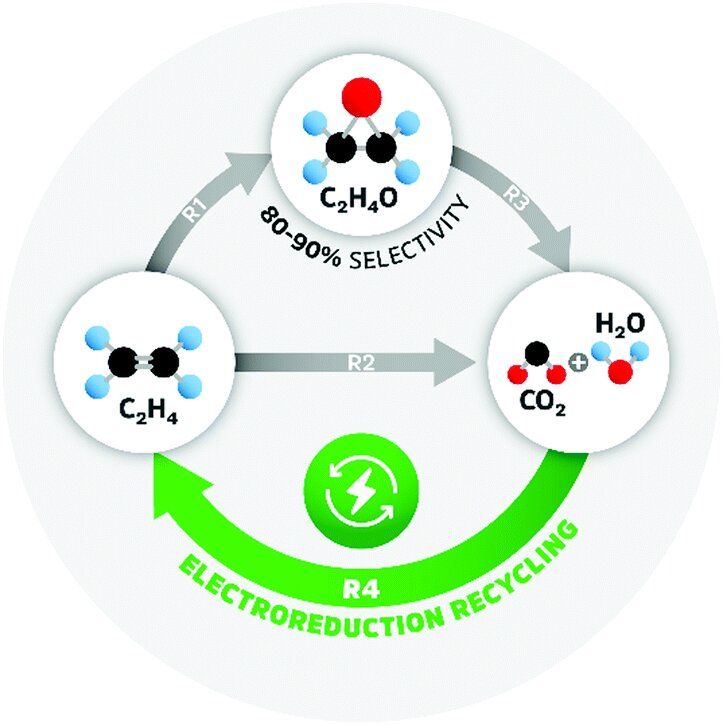
operational costs and minimal disruption to existing technology is exciting due to the huge impact it can
manufacturing processes.                              make at a very low cost and with a simple retrofit
                                                      for existing chemical plants. Furthermore, if
                                                      renewable energy is used, we could reduce direct
                                                      CO2 emissions by up to 80% in each plant. There is
                                                      so much potential for emissions reduction across
                                                      the board and we are looking forward to seeing the
                                                      technology start to make a difference."

                                                          More information: Magda H. Barecka et al.
                                                         Economically viable CO2 electroreduction
                                                         embedded within ethylene oxide manufacturing,
                                                         Energy & Environmental Science (2021). DOI:
                                                         10.1039/D0EE03310C

                                                         [1] www.edb.gov.sg/en/our-industri … y-and-
                                                         chemicals.html. Data from 2015.

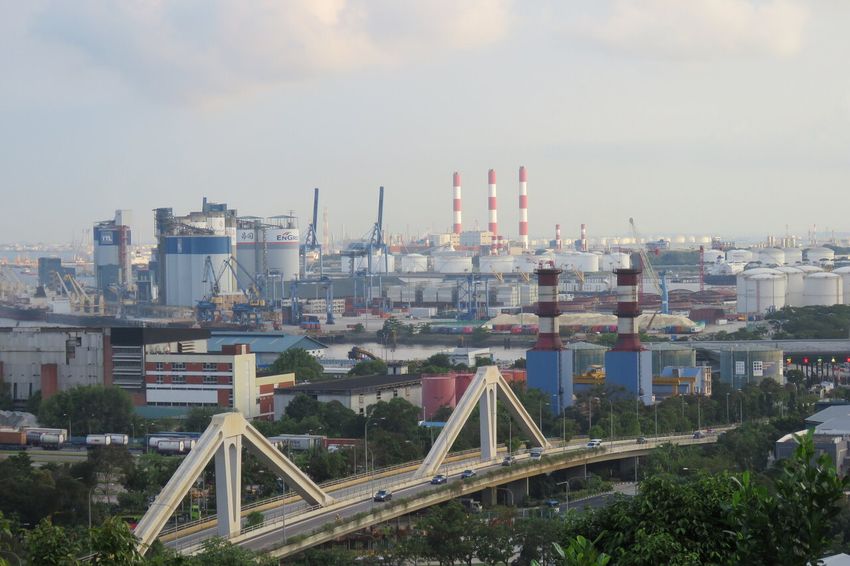
Singapore's Jurong Island? Credit: Louise Renwick

                                                          Provided by Cambridge Centre for Advanced
                                                         Research and Education in Singapore
Running the recycling process on renewable
energy, such as wind or solar, would lead to
significant emissions reduction. Operating entirely
with a waste stream product, CO2 recycling has the
flexibility to run while intermittent renewable energy
is available, with small-scale storage solutions in
place. If the renewable energy is only partially
integrated into the grid mix, the process can still
make a significant impact on CO2 emissions and
reduce the need for non-renewable feedstocks.

This work has positive implications for Singapore
as it aims to meet its Paris Agreement pledge of
reducing its emissions by 36% from 2005 levels by
2030. Singapore's chemical industry is a vital part
of its economy, employing over 25,000 people and
ensuring Singapore's place in the top 10 chemical
exporters worldwide.1

The paper's authors Dr. Magda Barecka, Professor
Joel Ager and Professor Alexei Lapkin are part of
CARES' eCO2EP project, which aims to develop
ways to transform CO2 emitted as part of the
industrial process into compounds that are useful in
the chemical industry supply chain. eCO2EP is one
of several projects hosted by CARES.

Dr. Barecka, lead author on the paper, said "This

                                                                                                       2/3
APA citation: Closing the loop on carbon emissions from chemical plants (2021, March 19) retrieved 3
                                   January 2022 from https://phys.org/news/2021-03-loop-carbon-emissions-chemical.html

                                   This document is subject to copyright. Apart from any fair dealing for the purpose of private study or research, no
                                   part may be reproduced without the written permission. The content is provided for information purposes only.

                                                                                                                                                3/3

Powered by TCPDF (www.tcpdf.org)
You can also read


