Science 3 Resource Booklet Cluster Day 2018/2019 - JCT
←
→
Page content transcription
If your browser does not render page correctly, please read the page content below

Resource Booklet

Science        3
      Cluster Day
       2018/2019
Contents Page

1

    Checking in on the CBA and the SLAR Process               2

    Building a Picture – My Professional Learning             3

    Evaluating Data – BW6                                     4

    Collaborative Planning Documents                          8

    Planning for L2LP                                         11

    Activities for Students Following L2LP                    12

    Assessment Modes                                          13

    Supports for Writing Assessment Items                     21

    Level 2 Learning Programmes                               23

    Thinking about Reflection                                 24

    Models and Modelling: An Introduction                     25

                                                         26
    Contact Us                                                27

    Contact Us                                                29
Checking in on the CBA and the SLAR Process

                                                                                         2
What have you learned about managing        What is the impact of engaging with the
          the CBA process?                        CBA on students’ learning?

What is the value of the CBA as a way of   How has your experience of the SLAR process
gathering information about the learners    supported your learning about your subject
           in your classroom?                 and your understanding of standards?
Building a Picture - My Professional Learning
    Throughout today, you will be invited to pause at intervals and add to the boxes below, aspects of your own
3
    professional learning which you may like to engage with upon returning to school. Score yourself from 0-10
    (0 = need a lot of work, 10 = I am confident in this area).
Evaluating Data – BW 6

      BW 6: Students should be able to evaluate how human health is affected
                                                                                                                            4
      by: inherited factors and environmental factors including nutrition;
      lifestyle choices; examine the role of micro-organisms in human health

Physical Activity Levels (P.A.L.)

       2
                                                                                                             1.9
      1.5                                                                             1.725
                                                                 1.55
                                          1.375
       1             1.2

      0.5

       0
            Little or no Exercise Slightly Active (Sport   Moderately Active Very Active (Sport 6-7 Extra Active (Very
                                     1-3 days/week)          (Sport 3-5           days/week)       hard exercise/sports )
                                                             days/week)

Nutrition Activities 1 – 4

 Activity 1: Calculate your client’s daily energy needs

                      Formula: BMR X PAL = Daily Energy Needs (kcal)
                                                                                                     Daily Energy Needs
            Client                            BMR                              PAL
                                                                                                            (kcal)

 Do you have enough information to evaluate if this meal is suitable for your client? Please circle
 your answer:
                            Yes                                                        No

             Why?
Activity 2: Calculate your client’s energy needs for dinner only
         Formula: Daily Energy Needs (kcal) X Fraction = Dinner Energy Needs (kcal)
5
            Daily Energy Needs
                                           Fraction Needed for Dinner       Dinner Energy Needs (kcal)
                   (kcal)

         (Answer from Activity 1)

    Do you have enough information to evaluate if this meal is suitable for your client? Please circle
    your answer:
                            Yes                                           No

                Why?

    Activity 3: Modify your client’s dinner
                                Original Meal                              Modified Meal
     Food                    Mass (g)       Energy (kcal)               Mass (g)       Energy (kcal)
     Pasta                     70              263.8
     Bacon                          50              229.7
     Courgette                    100               16.5
     Mushroom                       50              14.3
     Sweetcorn                      50              49.3
     Cream                          30              101
     Cheese                         5                21
                            Total (kcal)            695.6           Total (kcal)
    Do you have enough information to evaluate if this meal is suitable for your client? Please circle
    your answer:
                        Yes                                            No

                 Why?
Activity 4: Suggest recommendations for your client’s dinner based on inherited
factors and lifestyle choices (use the nutritional data labels on the next page).
                                                                                             6

       If you want to calculate your own Basal Metabolic Rate, follow your choice of link:

                                 http://www.calculator.net/bmr-calculator
Nutritional Information

7
           70g                      70g                     100g

    kcal           kcal                              kcal          kcal
                             kcal         kcal

           50g                      50g                     50g

    kcal         kcal        kcal         kcal       kcal            kcal

           5g                       30g
                                                            15g
    kcal            kcal     kcal          kcal
                                                     kcal          kcal
Science Department - Collaborative Planning Document
  Unit ___________ Duration _6 weeks__ Term ___________ Year _____
                                                                                                        8
       Learning Outcome                           Key Learning for this Unit Unpacked
  CW9: Students should be able to
                                                   (Understanding, skills and values)
consider chemical reactions in terms
     of energy, using the terms          1) Understand that chemical reactions involve the
   exothermic, endothermic and              rearranging of atoms, which can result in a difference in
                                            energy between the reactants and the products.
 activation energy, and use simple
                                         2) Explain and use correctly the terms exothermic and
energy profile diagrams to illustrate
                                            endothermic as they relate to chemical reactions.
          energy changes                 3) Consider how data shows whether an endothermic or
                                            exothermic reaction is taking place.
                                         4) Understand that activation energy is the minimum
          Action Verb 1                     energy particles need in order for a chemical reaction to
Consider - describe patterns in data;       take place.
use knowledge and understanding to       5) The energy changes taking place during a chemical
interpret patterns; make predictions        reaction can be represented by graphs/diagrams.
        and check reliability            6) Use simple energy profile diagrams to illustrate energy
                                            changes.
                                         7) Make predictions.
                                         8) Interpreting patterns allows us to make predictions.

                                                       Agreed Assessment Checks
          Action Verb 2                  1) Can students use the terms exothermic, endothermic
Use - apply knowledge or rules to put       and activation energy in the context of describing
         theory into practice               chemical reactions?
                                         2) Can students correctly interpret data about chemical
                                            reactions to decide which are exothermic and which are
                                            endothermic?
                                         3) Can students make predictions about energy changes in
                                            chemical reactions?
                                         4) Use simple energy profile diagrams to illustrate energy
                                            changes in a chemical reaction.

                       Nature of Science- Agreed Assessment Checks
1) What constitutes a pattern? (NoS 4)
2) Can students apply learning about chemical reactions and energy in one context to solve a
   problem in another context? (NoS 5)

                                                 Planning a Unit of Learning
                                                 https://www.jct.ie/science/planning_next_steps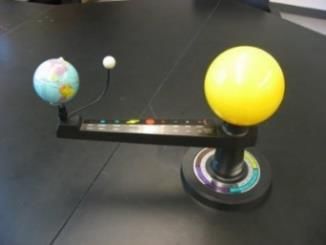
Science Department - Collaborative Planning Document
      Unit ___________ Duration _6 weeks__ Term ___________ Year _____
9
            Learning Outcome                          Key Learning for this Unit Unpacked
      PW6: Students should be able to
                                                       (Understanding, skills and values)
      explain energy conservation and
    analyse processes in terms of energy     1) Understand that energy cannot be created or destroyed
          changes and dissipation               but changes form.
                                             2) Understand that energy can be stored, for example as
                                                potential energy, chemical energy.
                                             3) Identify different forms of energy and analyse processes
                                                to identify energy changes, including potential, kinetic,
                                                electrical, thermal and chemical.
                                             4) Understand that not all energy changes are useful, and
               Action Verb 1                    that energy can be dissipated, i.e. it changes into forms
      Explain - give a detailed account         from which it is not recoverable.
        including reasons or causes          5) Analyse processes for energy dissipation.

                                                           Agreed Assessment Checks
                                                 1) Explain the law of conservation of energy using
               Action Verb 2                        practical examples, identifying energy changes in
    Analyse - study or examine something            various processes.
      in detail, break down something in         2) Analyse processes to identify energy changes
                                                    including potential, kinetic, electrical, thermal and
        order to bring out the essential
                                                    chemical.
     elements or structure; identify parts
                                                 3) Interpret information about processes to deduce
        and relationships, and interpret            useful energy conversions and whether energy has
       information to reach conclusions             been dissipated.
                                                 4) Demonstrate understanding of the dissipation of
                                                    energy

                            Nature of Science- Agreed Assessment Checks
    1) Can students apply learning about energy conservation to solve problems in unfamiliar contexts?
       (NoS 5)
Science Department - Collaborative Planning Document
Unit ___________ Duration _6 weeks__ Term ___________ Year _____
10
Learning Outcome Key Learning for this Unit Unpacked
BW3: Students should be able to
(Understanding, skills and values)
outline evolution by natural selection
and how it explains the diversity of 1) Understand what is meant by the term evolution.
living things 2) Natural selection as the differential survival of some and
elimination of others.
3) Role of mutation in evolution.
4) As survival depends on suitability to the environment,
different inherited characteristics might thrive in
different environments.
5) Appreciate that survival is dependent on being well
Action Verb 1 adapted to the environment – survival of the fittest.
Outline - to make a summary of the 6) Understand that better adapted organisms survive and
significant features of a subject can pass on their genetic variation to their offspring,
leading to diversity in different environments
7) Appreciate that evolution takes time.
8) Use natural selection to explain diversity in different
contexts.
9) Ability to summarise
Action Verb 2 Agreed Assessment Checks
Click here to choose an Action Verb 1) Can students summarise the significant features of
natural selection as a mechanism for evolution?
2) Can students use evolution by natural selection to explain
diversity in a number of given examples?
Nature of Science- Agreed Assessment Checks
1) Can students apply learning to solve problems in unfamiliar contexts? (NoS 5)
2) Can students explain what is meant by a theory? (NoS 1)Planning for L2LP
11 Priority Learning
Elements Learning Outcomes
Unit
Developing an awareness of B4: Subtract two-digit whole numbers in
numbers the context of an everyday situation
Developing an awareness of C1: Use appropriate words to describe
temperature temperature (hotter/colder)
Numeracy
C2: Identify instruments for indicating
temperature
Developing an awareness of time J4: Solve problems to work out the
passage of time
Speaking appropriately for a A1: Listen to obtain information relating
variety of purposes and to more than one option
demonstrating attentiveness as a A5: Participate in practical, formal and
Communicating and
listener informal communication
Literacy
Using technologies for a range of F2: Use technology for education
purposes F9: Access a range of websites
Developing an awareness of
D1: Give examples of safe practices in a
Preparing for work health and safety using
science lab
equipment
Learning Unit
To access the planning documents and other resources from this learning unit, follow your choice of
link:
https://padlet.com/JCTScience/SampleActivities for Students Following L2LP
Activity One
12
Title: Looking at changes in temperature
Complete the table below.
State what was Starting Finish Difference Did the chemicals
added together Temperature Temperature between the get hotter or
(oC) (oC) two colder?
temperatures Please circle
Hotter
Colder
Hotter
Colder
Hotter
Colder
Activity Two
Pick a word from the red box to complete the statements in the green boxes.
TEMPERATURE
This is a
THERMOMETER __________________
HOTTER
It measures the
COLDER ____________________
Moving the slider up makes it _________________
Moving the slider down makes it _______________Mode 1 – Completion Questions
Completion Questions are types of supply response questions, where students provide very short, often 1-
13 word answers. They can include:
• fill in the blanks • complete the phrase • direct questions with very short answers
Cognitive Level
Knowledge Understanding Application Analysis Synthesis Evaluation
✓
Comparing Effectiveness of Questions
In pairs, compare the questions in the following examples and discuss why one
question is more effective than the other.
Example 1
Less Effective More Effective Why?
The _____ __________ absorbs Digested food is absorbed in the
digested food. _______ _______.
Example 2
Less Effective More Effective Why?
Every atom has a central Every atom has a central core
____________ called a nucleus called a ____________.
Example 3
Less Effective More Effective Why?
The sub atomic particle that The sub atomic particle that
orbits the nucleus of an atom is orbits the nucleus of an atom is
known as an ___________ known as a(n) __________
Example 4
Less Effective More Effective Why?
The moon sometimes passes The moon sometimes passes
directly behind the earth and directly behind the earth and
into its shadow. This is a into its shadow. This is called a(n)
_____________. _______ _______Example 5
Less Effective More Effective Why?
Complete the following word
equation for photosynthesis:
____________ + ____water___ 14
____________ + ____water___
____________ + ____________
____________ + ____________
Once you have finished discussing the questions, open the envelope on the
table, find the card that applies to this mode of assessment and follow the
instructions.
Read the following and discuss
Advantages Disadvantages
• Good for who, what, where, when content • Difficult to assess higher levels of learning
• Minimises guessing because the answers to completion items
• Student must know the answer vs. are usually limited to a few words
recognising the answer • May overemphasise memorisation of facts
• Can usually provide an objective measure of • Questions may have more than one correct
student’s ability to recall and memorise facts answer
“Fill-in-the-blank-type questions differ from the other question types in that they demand recall skills.
Multiple-choice, true-false, and matching all rely on recognition, since all response possibilities are given,
and the learner must merely identify the correct one. But fill-in-the-blank-type questions require
producing a concept and therefore, test learners’ knowledge of individual terms and concepts at a deeper
level than recognition question types “
(https://www.ispringsolutions.com/blog/8-tips-for-writing-good-fill-in-the-blank-questions-in-e-learning-courses/)Mode 2 - Multiple Choice Questions
Multiple Choice Questions (MCQs) are types of select response questions where students are given a choice
of answers to select from. MCQs can include:
15
• question with answers • incomplete statements • calculations, etc
Cognitive Level
Knowledge Understanding Application Analysis Synthesis Evaluation
✓ ✓ ✓ ✓ ✓ ✓
Comparing Effectiveness of Questions
In pairs, compare the questions in the following examples and discuss why one
question is more effective than the other.
Example 1
Less Effective
What piece of equipment would be most suitable to measure 100 cm 3 of water?
A. Mass balance C. Funnel
B. Retort stand D. Graduated cylinder
More Effective
Which graduated
cylinder would be
best suited to
accurately measure
15cm3 of water?
Why?
Example 2
The following table lists 3 metals and their corresponding densities. Use Substance Density g/cm3
the information provided to calculate the volume of lead that would have a Copper 8.9
mass of 0.560kg? Lead 11.2
Gold 19.3
Less Effective More Effective Why?
A. 20 cm3 C. 40 cm3 A. 0.05 cm3 C. 20 cm3
B. 30 cm3 D. 50 cm3 B. 6.272 cm3 D. 50 cm3Example 3
Less Effective
How much thermal energy does the motor produce?
A. 14 joules C. 50 joules 16
B. 36 joules D. 86 joules
More Effective
Light 1 Light 2 Light 3
If choosing one of the above to provide lighting, which would be the most efficient?
Light 1 Light 2 Light 3
Why?
Example 4
Less Effective More Effective Why?
Which acidic substance is known to Which of the following substances is
kill bacteria? known to kill bacteria?
A. Starch A. Amylase
B. Glucose B. Glucose
C. Hydrochloric acid C. Hydrochloric acid
D. Amylase D. Starch
Once you have finished discussing the questions, open the envelope on the
table, find the card that applies to this mode of assessment and follow the
instructions.
Read the following and discuss
Advantages Disadvantages
• Versatile at all cognitive levels • Difficult to construct good test items
• Can be used to diagnose misconceptions • Difficult to come up with plausible
• Minimum of writing for students distractors/alternative responses
• Guessing reduced if written effectively • Time consuming to write
“Multiple choice items are considered to be among the most versatile of all item types. They can be used to test
factual recall as well as levels of understanding and ability to apply learning. The multiple-choice item can test not
only information recall but also the ability to use judgment in analysing and evaluating.“
(Is This a Trick Question? A Short Guide to Writing Effective Test Questions, Ben Clay, Kansas Curriculum Center, 2001)Mode 3 – Matching Sets
Matching Sets are types of select response questions where students are asked to match question and
17 response items, typically given in 2 lists. They can include:
• terms with definitions • structures with functions • problems with solutions, etc
Cognitive Level
Knowledge Understanding Application Analysis Synthesis Evaluation
✓ ✓
Comparing Effectiveness of Questions
In pairs, compare the sets in the following examples and discuss why one set is
more effective than the other.
Example 1
Less Effective
Match the following:
1. Where food is absorbed into the bloodstream A. Oesophagus
2. The organ that produces most of the digestive enzymes B. Small Intestine
3. The tube that connects the mouth to the stomach C. Pancreas.
More Effective
On the line to the left of each statement in the first column, write the letter of the
corresponding answer from the second column. Not every answer may be used.
___ 1. Where food is absorbed into the bloodstream A. Oesophagus
B. Small Intestine
___ 2. The organ that produces most of the digestive enzymes C. Pancreas
___ 3. The tube that connects the mouth to the stomach D. Liver
Why?Example 2
Less Effective
Match the terms with their meanings.
A. Natural satellite of the Earth 18
1. Heart
2. Electron B. Organ that pumps blood around the body
3. Volt C. The process by which a liquid turns into a gas
4. Evaporation D. The S.I. unit for potential difference
5. Moon
More Effective
Match the subatomic particle to the relevant statement. Each particle may be used more than
once.
1. A positively charged particle in the nucleus A. Electron
2. A negatively charged particle B. Neutron
3. A particle with no charge C. Proton
4. A particle which orbits the nucleus of an atom
5. A particle which has a mass of 1/1840 a.m.u.
Why?
Once you have finished discussing the questions, open the envelope on the
table, find the card that applies to this mode of assessment and follow the
instructions.
Read the following and discuss
Advantages Disadvantages
• Maximum coverage at knowledge level in a • Time consuming for students
minimum amount of space/prep time • May not be appropriate for higher
• Valuable in content areas that have a lot of facts levels of learning
• Suitable for students with lower reading ability
“According to Benson and Crocker (1979) in Educational and Psychological Measurement, students with
low reading ability scored better and more consistently with matching questions than the other types of
objective questions. They were found to be more reliable and valid. Thus, if a teacher has a number of
students who have lower reading scores, they might want to consider including more matching questions
on their assessments.“
(https://www.thoughtco.com/effective-matching-questions-for-assessments-8443)Mode 4 – Subjective Response Items
Subjective Response Items are supply response questions that require students to provide more than just a
few words in their answers. They can include:
19
• short answer questions • extended response (essay styles Q’s) • problems, calculations, graphs, etc
Cognitive Level
Knowledge Understanding Application Analysis Synthesis Evaluation
✓ ✓ ✓ ✓ ✓ ✓
Comparing Effectiveness of Questions
In pairs, compare the questions in the following examples and discuss why one
question is more effective than the other.
Example 1
Less Effective More Effective Why?
Outline how you could Outline, using words and/or diagrams, how
investigate the factors you might investigate one factor of your
that affect choosing that affects photosynthesis. Include
photosynthesis. in your answer, any equipment you might
use and how you would ensure a fair test.
Example 2
Less Effective More Effective Why?
“The importing of coal into Ireland “The importing of coal into Ireland
should be banned”. Following on should be banned”. Following on
from the discussions we had in from the discussions we had in
class, give one argument for and class, give one argument for and
one argument against the above one argument against the above
statement. Then give your own statement. Then give your own
opinion as to whether you support opinion as to whether you support
the above statement or not, the above statement or not,
making sure to explain why. making sure to explain why.
[Teacher’s notes: this Q worth 4 [Teacher’s notes:
marks] 1 valid argument for = 1 mk
1 valid argument against = 1 mk
Personal opinion = 1 mk
Justification = 1 mkExample 3
Less Effective More Effective Why?
Using words and/or diagrams, compare
What is meant by the
and contrast the three subatomic particles 20
term ‘electron’?
of the atom. Use the following in your
answer: mass, charge and location.
Example 4
Less Effective More Effective Why?
State the functions of Dónal knows that respiration takes place in the cells of
the heart, lungs and his body. He also knows that his heart, lungs and small
the small intestines. intestine are three organs that have a vital role to play
Explain how they each so that respiration can take
have a role to play in place. Explain how these three
the process of organs contribute towards the
respiration. respiration process. Include
references to the functions of
the organs in your answer.
Once you have finished discussing the questions, open the envelope on the
table, find the card that applies to this mode of assessment and follow the
instructions.
Read the following and discuss
Advantages Disadvantages
• Students less likely to guess • Subjective, potentially unreliable marking
• Easy to construct • Time consuming to mark
• Time consuming to answer • Not efficient for assessing knowledge of basic
• Stimulates more study facts, provide students more opportunity for
• Can appropriately assess learning intentions bluffing
which focus on the ability to apply skills or • Favour students who possess good literacy
knowledge in the solution of problems skills
“When students answer different questions, they are actually taking different tests. If there are five essay
questions and students are told to answer any three of them, then there are ten different tests possible. It
makes it difficult to discriminate between the student who could respond correctly to all five, and the
student who could answer only three. If we are going to compare students for scoring (ranking) purposes,
then all students should perform the same tasks.“
(Is This a Trick Question? A Short Guide to Writing Effective Test Questions, Ben Clay, Kansas Curriculum Center, 2001, parentheses added)Supports for Writing Assessment Items
Completion Questions
21 Suggestions for writing effective items
1. Do not omit so many words from the statement that the intended meaning is lost.
Too many blanks may be confusing for the student and result in meaningless guessing. Either reduce the
number of blanks to significant words only or include clear instructions to give the question context.
2. If possible, put the blank at the end of a statement rather than at the beginning
Asking for an answer before the student understands the intent of the statement can be confusing and may
require more reading time. Support your students’ thought processes by placing the gaps towards the end.
3. Make sure there is only one possible answer!
Students might not necessarily answer the question the way you intended. For example, the less effective
question in example 4 on page 13 could be answered with the following – a rare occurrence, a miracle, a
scary event, etc. So make sure you write the question in such a way that there is only one answer that
makes sense.
4. Avoid grammatical clues to the correct response
If the indefinite article is required before a blank, use a(n) so the student does not know if the correct answer
begins with a vowel or a consonant.
Tips
• Read the question with the answer in mind, to ensure the sentence is grammatically correct.
• It is difficult to write completion items so that there is only one correct answer. When preparing for
marking, list the correct answer and any other acceptable alternatives and be consistent.
Matching Sets
Suggestions for writing effective items
1. Use homogeneous content in a matching set.
Unrelated topics included in the same matching set may allow for over-obvious matches. To avoid students
using the process of elimination to work out the answers, keep the content to one topic or issue.
2. Use uneven number items to match or allow responses to be used more than once.
If you have equal numbers of items in both lists, then the last item can be answered using the process of
elimination. Try using a different number of items to help reduce guessing and the use of the process of
elimination. Your students will also have to think more if they know that some items will be used more than
once.
3. Place longer descriptions on the left with shorter response items on the right.
Rather than the student having to read through many long phrases to find a match, they only have to read
the shorter phrases. Reducing the reading time in this way will be particularly helpful for students with
reading difficulties.
4. Include clear instructions which state the basis for matching the stimuli with the responses.
Make things clear for your students by explaining whether or not a response can be used more than once
and indicating where to write the answer.Tips
• Avoid asking students to match items using connecting lines. This makes it more difficult to correct.
Use capital letters instead of lower case letters as there will be fewer problems when correcting due to
poor hand writing.
22
• Keep the number of items to a minimum, avoid sets with more than ten. Order the responses in some
systematic way (e.g. alphabetically) to help the students sort through them.
Multiple Choice Questions
Suggestions for writing effective items
1. Don’t give away any clues to the answer!
Make sure that you have no information in the question that will help a student identify the correct answer.
Equally, watch out for hints in the answers, particularly grammar hints, that may point out the correct
response to a student.
2. Make the problem clear to the student and make sure the answers are plausible.
Put the problem in the question stem so that the student has a clear indication of what is being asked. Also,
don’t include silly or implausible answers – this will only encourage the use of the process of elimination.
Keep answers related to a particular theme.
3. Use multiple- choice questions as diagnostic questions
Multiple-choice questions can be used to diagnose students’ misconceptions or common
misunderstandings. If you accompany the correct answer with three incorrect answers, where each
incorrect answer reveals a specific mistake or misconception, then you will gain valuable insight into why
your students got the question wrong.
4. Ensure the question’s content and cognitive demand aligns with the learning being tested.
It is important to check the action verb of the LO/LI in question. An effective and valid question should assess
not just the appropriate content but also the appropriate cognitive level. Tap into higher cognitive levels by
using stimulus materials such as graphs, diagrams or unknown situations where students have to apply what
they have learned.
Tips
• Justify – ask students to justify their answer. This will result in reduced guessing and also help identify
misconceptions and the reasons for wrong answers.
• Make sure you randomly distribute the correct answers among the alternative positions throughout the
test so that students can’t find a pattern among the correct answers. Make sure answer choices are
parallel in grammar and length. Students, if guessing, tend to be drawn towards the longest answer.
Subjective Response Questions
Suggestions for writing effective items
1. Ensure the questions content and cognitive demand aligns with the learning being tested.
It is important to check the action verb of the LO/LI in question. An effective and valid question should assess
not just the appropriate content but also the appropriate cognitive level.
2. Use prompts or stimulus material to tap into higher cognitive levels of learning
Using stimulus material can allow students to apply what they have learned to a new situation or think about
information in a different way. Alternatively, provide some background information which they must link
with what they already know.3. Develop a marking scheme to accompany each item
It is good practice to decide on how the marks are to be allocated for a question, and what an acceptable
answer looks like, before you begin marking the test. Having a marking scheme in place beforehand should
help eliminate subjectivity and therefore help improve the validity of the questions.
23
4. Make the question and the nature of the response clear to the student
Unless clear instructions are given, the student’s answer may make sense to them but might not be what
the you were looking for. It is important to let students know what you expect in an answer.
Tips
• While keeping an eye on the action verbs in the learning outcomes, remember that these were written
for teachers. Make sure to use student friendly language in your questions to suit the age and stage of
the students
• When solving problems or performing calculations, state clearly if you require students to show their
work.
For further supports like these and more, please see our website - www.jct.ie/science/science
Level 2 Learning Programmes
Level 2 Learning Programmes (L2LPs) are designed for a very specific group of students who have general
learning difficulties in the higher functioning moderate and low functioning mild categories. The special
needs of these students are such as to prevent them from accessing some or all the subjects and short
courses on offer at Junior Cycle that are broadly aligned with Level 3 National Framework of Qualifications.
In a typical post-primary school, the number of students following an L2LP may amount to two or three
students. (Source: L2LP Guidelines for Teachers)
L2LPs are designed to be suitable for both special schools and mainstream post-primary school settings. It is
envisaged that, as far as possible, the students under consideration here, who are in mainstream settings,
will undertake the L2LPs in mainstream classes.
The L2LPs are built around five Priority Learning Units (PLUs) and two short courses that focus on the social,
personal and pre-vocational skills that prepare students for further study, for work and life. They focus the
students towards independence and provide them with the opportunity to develop knowledge, skills and
attitudes necessary for adult life. Each PLU is broken down into elements, with each element covering a
number of learning outcomes.
Further information can be accessed
at www.jct.ie/l2lp/l2lpThinking about Reflection
Why Reflect?
Teachers have to be at the heart of any effort 24
To understand prior knowledge. to improve learning and it’s widely accepted
Impacts motivation for and attitudes towards that where schools reflect on the quality of
learning. their work and plan for how it can be
improved, students learn better.
Helps learners understand themselves.
Allows learners to see their growth over time.
(Looking at our School: A quality Framework
Goal setting. for Post-Primary Schools, 2016, page 6)
To develop a plan to achieve these goals.
The
suitability
of their
questions
How
How
conclusions
?
conclusions
are
are
supported
supported
by
by evidence
evidence
What might
students
reflect upon
Strengths
as they
? investigate?
and
limitations
of their
data
Data
gathering
methods ?Models and Modelling: An Introduction
25
A scientific model is a
representation of a structure, Scientific modelling is the process
process, system or phenomenon. by which ideas about the natural
Models can take many forms, e.g. world are represented and used
diagrams, flow charts, equations, to develop explanations.
graphs, physical replicas.
Models serve many important
functions in science. They help
While using scientific modelling,
scientists:
scientists collaboratively make
➢ Generate predictions changes to their representations
➢ Construct explanations over time in response to new
➢ Show gaps in knowledge evidence and understandings.
➢ Pose new questions for
investigation.
Students’ models could also be used
Students might make models in the
to help test and revise predictions in
classroom where the action verb in a
the process of model-based inquiry.
learning outcome is describe.
A suitable investigation could be, for
Students should be able to develop
example, to identify the cause of the
models and use them to explain
seasons. Students represent their
scientific ideas as part of their
initial ideas by constructing models
engagement with E&S4, CW2.
and then, having engaged with
Students will engage with scientific activities, discussion and
models in their realisation of E&S2, experiments, make changes to their
and CW3. models over time.
Students might often represent their Using modelling in the classroom
ideas about science using many replicates how scientists work and
forms and types of models. activates student voice.Why use Scientific Modelling in the Classroom?
➢ This is the way in which many scientists work, so it is both a teaching approach and an authentic
representation of how science produces explanations.
26
➢ Model-based inquiry involves small group activity and discussion, which engages students more
deeply with the theory involved in practical work.
➢ Students see the need to learn new science ideas.
➢ Students are involved in arguing about evidence and monitoring their own thinking along the way.
The diagram below summarises the key conversations within a model-based inquiry. As students gain
experience with guided forms of investigation, they eventually begin asking themselves the relevant
questions without prompting. (Taken from Windschitl, M., Thompson, J. and Braaten, M. (2008), ‘Beyond
the scientific method: Model based inquiry as a new paradigm of preference for school science
investigations’.)
Some useful websites
➢ www.ambitiousscienceteaching.org
➢ www.nuffieldfoundation.org (Nuffield Practical Work for Learning: Model-Based Inquiry)Contact Information
27
31
Information and resources are available on our website: www.jct.ie
In particular, see CPD Workshops for resources used at today’s
workshop.
For any queries, please contact us on one of the following:
Email: info@jct.ie (Advisors’ individual email addresses are available from the Meet the
Team section of the website.)
Phone number: 047 74008
Follow us on Twitter @JctScience and @JCforTeachers
The Science Specification and Guidelines for Classroom-Based Assessments and Assessment
Task are available at www.curriculumonline.ie
Feedback Mailing List
Please follow your choice of link below to give If you would like to receive news and updates
us feedback on today’s workshop: from the JCT Science team, and you are not
already on our NEW post-GDPR mailing list,
please follow your choice of link below to
subscribe:
or
http://jctregistration.ie/
or
followed by
https://www.jct.ie/science/science
followed byYou can also read


