Cohesion policy 2021-2027 - What is new in Commission's proposals on urban and territorial matters? - Europa EU
←
→
Page content transcription
If your browser does not render page correctly, please read the page content below
Cohesion policy 2021-2027
                      What is new in Commission’s proposals on urban
                      and territorial matters?
François Gallaga
DG Regional and Urban Policy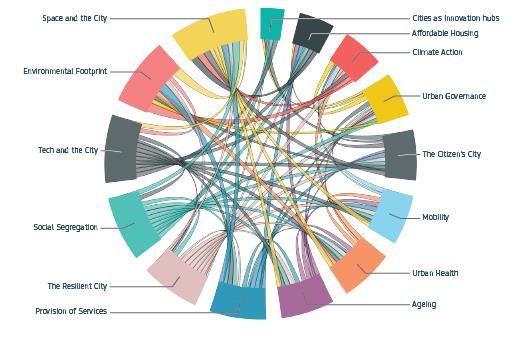
2021-2027: A modern, dynamic policy
Modern investment                 Simple, flexible, dynamic               For all regions
▪ Focus on transition to smart,   ▪ 7 funds, 1 regulation (50% shorter)   ▪ Balanced and fair
  low-carbon economy                                                        method
                                  ▪ key administrative simplifications
▪ Stronger conditions & link to                                           ▪ 75% to poorest regions,
  European Semester               ▪ Faster implementation (return to        where most needed
                                    n+2)
▪ Comprehensive performance                                               ▪ Tackling emerging needs
  data in near real time          ▪ Responsive to emerging needs            and economic transition
                                    (migration, economy)                    across the EU
Policy objectives
11 objectives simplified and consolidated to 5:

1.   A smarter Europe (innovative & smart economic transformation)          5 POs all

2.   A greener, low-carbon Europe (including energy transition, the   valid for integrated
     circular economy, climate adaptation and risk management)        urban and territorial

3.   A more connected Europe (mobility and ICT connectivity)              approaches

4.   A more social Europe (the European Pillar of Social Rights)

5.   A Europe closer to citizens (sustainable development of urban,    New cross-cutting Policy
                                                                       objective that can use all
     rural and coastal areas and local initiatives)                    investment categories and
                                                                       indicators from PO1-4!
Reinforcing integrated
urban and territorial development
An objective ?
A method?
Territorial tools?The Objective Foster economic, social, and environmental sustainability and resilience in all places. Urban context: ▪ to benefit from agglomeration economies and positive spill-overs towards the wider functional urban areas and rural areas close to cities ▪ to address negative effects of concentration (traffic congestion, pollution, urban sprawl, affordable housing, poverty etc). Other territories: ▪ to build on the potentials and specific assets of remote rural areas and local communities (beyond compensatory measures)
The Objective
What is Sustainable Urban Development? (new ERDF/CF Art. 9)
Integrated territorial development targeting urban areas.
   • All investments under PO5 specific objective 1 (per definition for urban
     areas)
   • All investments under PO1-4 and territorial instruments (ITI, CLLD)
     targeting urban areas                      IB designation is not
                                                obligatory, but the
Minimum 6% ERDF                                 minimum requirements for
                                                integrated territorial
                                                development must apply!
The Method Minimum requirements to operationalise the support to integrated territorial development (New CPR Art 23 and Art 25-28 for CLLD) • Interventions linked to territorial or local strategies (definition of the targeted geographical area according to needs and potential, locally coordinated interventions through an integrated approach) • Relevant local or territorial body shall select or shall be involved in the selection of operations (multi-level, optionally community-led) and partnership with relevant actors to be ensured at local level).
The Method

Integrated

approach in

  cities?

     Source: ‘The Future of Cities’ Report - EC Joint Research Centre (JRC) 2019
                                      https://ec.europa.eu/jrc/en/publication/eur-scientific-and-technical-research-reports/future-cities
The territorial tools Support from the Funds to be provided for integrated territorial and local development in forms of: • ITI: when territorial strategy receives funding from multiple priorities, or even programmes, funds or POs (CPR Art 24) • CLLD: Specific delivery method to enhance the participatory approach (CPR Art 25-28) • Other territorial tool: when territorial strategy receives funding through PO5 priority or programme (CPR Art 22 (c))
Support only PO 5
 ERDF/CF Programme
                                   •   Provides continuation for the
                                       multi-thematic urban and CLLD
                                       priority axis and other national

                     PO2
PO1

              PO2

                             PO5
       PO1
                                       tools
                                   •   Suitable for experimentation and
                                       integrated local projects
                                   •   All intervention fields and
                                       indicators are available to
                                       monitor thematic inputs, outputs
                                       and results
                                   •   Coordination and governance
                                       arrangements need to ensure
                                       consistency with sectoral policies.
      Territorial strategy
Support through PO5 and other POs
• A very comprehensive way to
ERDF/CF Programme ERDF/CF Programme
provide support to a
territorial strategy
• Can be suitable for a
PO4
PO2
PO4
PO1
PO2
PO5
PO1
PO3
territorial strategy with a
substantial support from
Cohesion Policy
• Suitable to ensure the link
ESF Prog.
with other policies (enabling
conditions, TC)
• Can include multiple tools
PO4
PO4
PO4
and strategies (e.g. CLLD
strategies within ITI strategy)
• Importance of appropriate
coordination, governance and
Territorial Strategy
monitoring across the
different strandsSupport outside PO5
ERDF/CF Programme ▪ Concentrate the ERDF
support to a limited number
of locally relevant themes
PO2
PO1
PO2
PO2
PO1
▪ Suitable for a
country/region with high
thematic concentration
and/or small allocation
▪ At least two priority, and
the local strategy must be
integrated also in this case
▪ The integrated approach
and the role of local level
(minimum requirements)
need to be described in the
Territorial Strategy programmeSummary of main changes 2014-2020 2021-2027 • Focus on 11 thematic objectives, integrated • 5 policy objective breaking policy silos, integrated territorial approach treated horizontally (specific territorial approach got its own cross-cutting policy chapter in programming documents) objective - Europe closer to citizens (PO5) • ITI and multi-thematic priority axis to break • ITI tool remained to draw funding directly from thematic silos other policy objectives • Different set of rules for ITI under sustainable • Coherent minimum requirements for all territorial urban development (ERDF Art. 7) and ITIs for other tools defined in the CPR (territorial strategies and territorial strategies duties of local/territorial bodies) • Designation of Intermediate bodies is obligatory for • No intermediate body needed for the minimum urban development scope of responsibilities • No specific monitoring arrangements, based on • Indicators and categories for PO5 to improve thematic operations, outputs and results flexibility and EU level monitoring
Thank you for your attention!
                      Please contact us:
            REGIO-URBAN-TERRITORIAL@ec.europa.eu

www.ec.europa.eu/inforegio        www.facebook.com/EuropeanCommission

www.twitter.com/@EU_Regional      www.linkedin.com/company/1809

DG REGIO collaborative platform   plus.google.com/+EuropeanCommission
www.yammer.com/regionetwork

                                  Sign up for our 'REGIOFLASH'
www.flickr.com/euregional
                                  www.inforegiodoc.eu
You can also read


