COLLABORATIVE LEARNING OF THE SINGAPORE TEACHING PRACTICE IN INNOVA PRIMARY - TEACHERS' CONFERENCE 2019 Sharing by SSD, Francisca Subash Lazar ...
←
→
Page content transcription
If your browser does not render page correctly, please read the page content below

COLLABORATIVE LEARNING OF THE
SINGAPORE TEACHING PRACTICE IN
       INNOVA PRIMARY

     Sharing by SSD, Francisca Subash Lazar
  Co-facilitated by Saravanan and Lai Nai Huey
          TEACHERS’ CONFERENCE 2019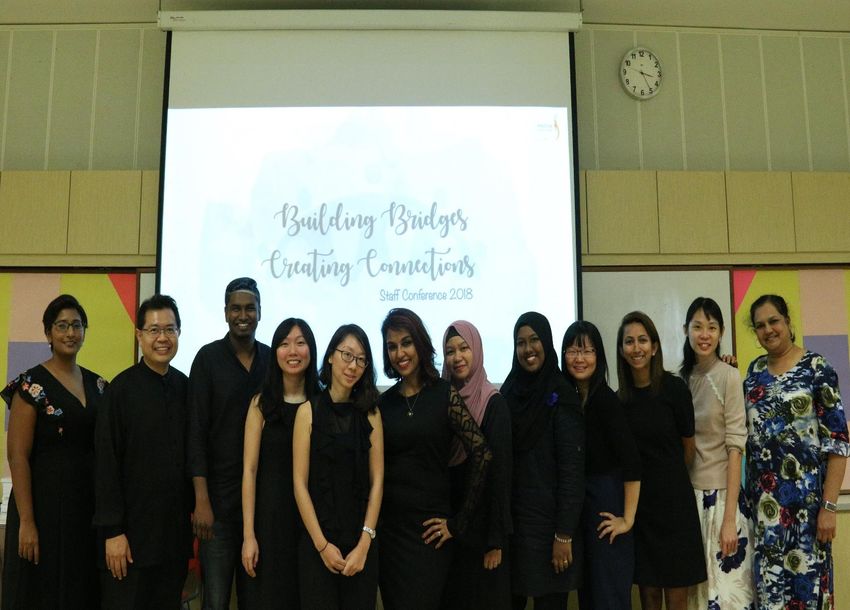
Objectives

• At the end of the session participants will be able to
1. identify key structures that drives effective collaborative
     learning and professional development,
2. understand the effectiveness of bite-sized approach to the
     STP implementation, and
3. the importance of review and monitoring of systems.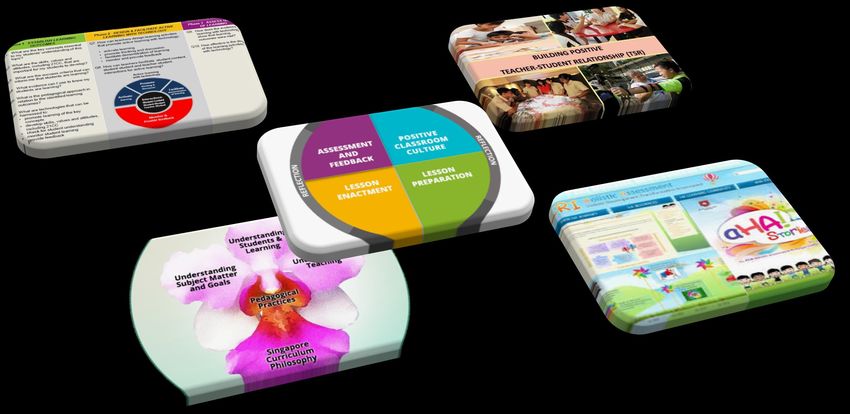
Ice Breaker – Coat of Arms
                                          1.
1.Your Name & School - Top banner
                                     2.        4.
2.Your designation & department
3.Your favourite past time
4.One thing you are already doing
  in your school in terms of STP
5.One thing you wish to learn from   3.        5.

  this session
Presentation Outline

1.    The Innova story on Professional Development (PD) culture and
      the Singapore Teaching Practice (STP) implementation
2.    Needs analysis and findings
3.    Structured approach for implementation
4.    Review findings and refinement
5.    Monitoring of efforts
6.    Support structures that drive positive behaviour and challenges
7.    Moving forward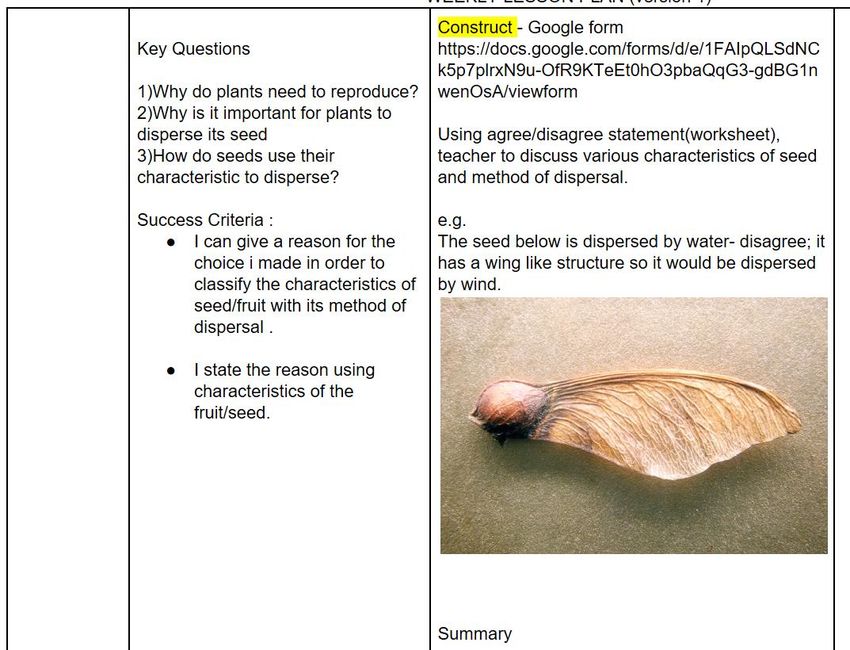
This is a story of the heart, head and hands.
In the Hearts of Innova Primary

                        We believe
• every teacher can make a difference,
• every teacher wants to contribute, and
• every teacher wants to improve his/her teaching practice.
Innova Approach
             Heart, Head and Hands
Heart:   Seek first to understand, then be understood.
         Listen with the heart.
Head:    Plan the journey together with them.
         Communicate the appropriate skills and knowledge.
Hands:   Coach, mentor and provide timely guidance. Handhold where
         necessary.
         Give them space, watch from afar and let them grow.
About Us
                                               To be an Inspirational, Inviting and
                                     VISION            Innovative school

  Students who are champions of      DESIRED
  character, change and citizenry   OUTCOME
                                                            Connecting Hearts
                                    MISSION                   Engaging Minds
                                                             Igniting Passions
Integrity, self-discipline,
teamwork, adaptability,             VALUES
      and respect
Culture Building: Develop Self, Develop Others, and
Develop All
 • Development and performance cycle

    • Coherence                                         • Focus on student outcomes
    • Improvement                                       • Clear understanding of
                            Feedback      Reflection      effective teaching
                            and              and
                            review       goal setting

                         Implementation Professional
                           and sharing  practice and
                                        learning                • Leadership
    • Collaborative
      learning culture                                          • Flexibility
What is Collaboration?
Please pen your thoughts on the post-its
Assignments-Relationship-Courses (ARC in Innova: 2019 PD plans)
Role             Identified Teachers                     Teacher Leaders                Key Personnel
Assignment/      -   Level coordinators                  - Professional Learning        - Head of Department (HOD)/
Self-initiated   -   2nd IC of committees                  Team (PLT) facilitators        Subject Head (SH)
activities       -   IC of staff learning journey        - Induction programme          - IC of committees
                 -   IC of staff conference              - Mentoring programme          - IC of Key Personnel (KP) learning
                 -   IC of innovation                    - Beginning Teacher (BT)         journey
                 -   IC of staff retreat                   programme                    - IC of KP retreat
                                                         - 2nd IC of PLT projects       - IC of PLT projects
                                                                                        - School event ICs

Relationship     - Mentor for BTs and selected           - Mentor for BTs and           - Instructional Programme
                   teachers                                selected teachers              (IP)/Non-IP mentor
                 - Buddies for new teachers              - Coaches for identified       - Mentor for 2nd IC
                 - Co-operating Teachers for trainees      staff                        - Reporting officers
                                                                                        - Buddies for newly appointed KPs
                                                                                        - Mentor for SHs of the
                                                                                          department

Courses          Assessment literacy, STP, Student Learning Space (SLS), cyber wellness, character and citizenship education
                 (CCE), care management/safety, and courses that are aligned with Teacher Growth Model and Leader Growth
                 Model that meets their learning needs.                                                              12
Learning and Development Plan for BTs
Transformational Competent Collaborative Community
Ethical Educator
Leader Professional Learner Building
MOE Desired Outcomes Collaborative Tools, Team
Subject Teacher,
Problem Solving Strategies
Form Teacher, CCA Partners with
Classroom Leader CCA Teacher, CCE PLT Members
Teacher Parents
Teacher
Assignments and Relationship
Pedagogy and Student
Leader as Change Agent:
Professional Ethics, Development Curriculum: Collaborative Tools, Team Engaging Parents: A Practical
Professional Development:
Ethics in Subject Disciplines Classroom Management Problem Solving Strategies Approach
It’s a Process, Not an Event
Strategies, Basic Counselling
Course: MOE Core Training Programme and STEM
Assessment Literacy Structured Mentoring
Participants of MOE Conducting of PTM
Reflective Practice Skillful Teachers and Induction
Conversation Session
(Basic) Programme
Course: School Based Key Learning Programme 13Structured Mentoring and Induction Programme
• 2 year in-house programme for BTs led by Senior
Teachers (STs) and KPs (Internal)
Acquisition of pedagogical skills and
BT competencies
A developmental programme for the
ATL Aspiring Teacher Leaders
ST Application of mentoring skills for the STs
14Beginning with The End in Mind
We want to… help our teachers to be more
confident and collaborative in
their teaching practice
in order to…
help every student learn better
and develop his/her joy for
learning.
Copyright © Ministry of Education, Singapore.Whole Community Approach
Setting up an STP core team
School leaders, SSD, HOD/IP, Teacher Leaders, and HOD/ICT
Knowledge Bases
Theory-practice connection
Guided by LT/ST/YH looking into Teacher-student relationship (TSR)
Subject Matter and Goals
Pedagogical Practices
Guided by IP Heads
Appreciation of Singapore Curriculum Philosophy/
Understanding teaching through focused conversation
Implementation plans and reviews
Guided by SSD during connect time/subject PLT/Time-Tabled-
TimeSTP CORE TEAM: Organisation Structure
• Lesson planning
Principal: Chief advisor
• Curriculum planning and
VP2: Advisor assessment VP1: Advisor
• Monitoring of lesson plans
SSD LT/EL1 • Resource pooling
HOD/Sci and HOD ICT
PEDAGOGICAL PRACTICES UNDERSTANDING TEACHING UNDERSTANDING SUBJECT
MATTER AND GOALS: MP4
UNDERSTANDING STUDENTS AND LEARNING
TRAINING AND DEVELOPMENT
UNDERSTANDING STUDENTS AND Strategic Alignment with School
LEARNING Goals
• 24 Teaching Areas • Positive TSR: Theories and practices • Lesson planning
• Staff wellbeing management • Understanding students’ needs • Curriculum planning and
• LNA alignment assessment
UNDERSTANDING TEACHING
• Professional language building • Monitoring of lesson plans
• Classroom management • Resource pooling
• Communication with staff • Good stories sharing
• Reflections • Buddy systemsSingapore Teaching Practice
Roadmap in Innova Primary
Understanding and
adopting
2017 2019
2018
Awareness Deepening
ReviewingConsultative Approach Awareness
• Directions by school leaders
(SLs)
• Planning by core team School STP core
• Innova conversation with
leaders team
staff
• Analysis by core team
• Proposal of plans to SLs and
Exco
• Communication to staff TeachersThink Time
Using a word or two,
describe your thoughts
about what has been
shared.Your voice matters…. Go to www.menti.com and use the code 30 11 8
Staff Voice: Identifying Staff Needs and
Concerns
Awareness
                                                                         Awareness
                  STP Need Analysis Findings

                       Positive Classroom                           Assessment and
Lesson Preparation                           Lesson Enactment
                             Culture                                   Feedback
• Planning key        • Empowering          • Arousing interest    • Checking for
  questions             learners                                     understanding
                                            • Facilitating
• Deciding on                                 collaborative          and providing
  instructional                               learning               feedback
  strategies
                                            • Using questions to   • Setting
                                              deepen learning        meaningful
                                                                     assignments
Varying Concerns
Awareness Informational Personal Management Consequences Collaboration
Will it Will I be
What is S ? What is the How will How can this
improve my able to work
What is T? STP? this affect help me in my
practice? with others
What is P? me? current work?
to make a
greater
impact?Our Unique IPS Method: Clover Fashion (4-in-1)
Teacher-
Holistic
student
assessment
relationship
Collaborative
MP4
Learning
STP Streamlining our effortsUnderstanding
Communication of Aligning Efforts and Adopting
IPS Key Learning Programme IPS School Culture
Joy of learning – Embrace All
Learners
Professionalism Innovation
Engagement in learning
Encouraging learner engagement
Learning Accountability
Critical and inventive thinking
Lesson preparation and quality questions
Care Excellence
Planning key questions and using questions to
deepen learningBeing Resourceful and Tapping on Availability
Structured Approach for Implementation
                                                         Understanding
               STP Core team meeting                     and Adopting
                held every Thursday
                     before PLT                 Demonstrated a
                                                close knitted
                                                collaboration and
                                                partnership of
                                                Teacher Leaders,
                                                IP HODs and staff.

Post-PLT review done at
academic TTT and ST/LT
                           Implementation at PLTs
TTT every Thursday
                              in the following
                                Wednesday
Transfer of Learning from Planning to Enactment
Understanding
Setting a focus per term and Adopting
TERM ONE
To facilitate lesson planning processes
TERM TWO
To sharpen classroom practices with peer observation
TERM THREE AND TERM FOUR
Lesson study, action research, and SLS
implementationLearning Deliverables Evident via Lesson Planning
Term One Term One
• Planning in small To facilitate lesson planning
teams (pair/triads)
process
• Plan lessons for
teaching area assigned
by PLT Term Two
To sharpen classroom practices
Term Two with peer observation
• Planning for weekly
submission for subject
taught Terms Three and Four
Lesson study, action research, and
SLS implementationSTP: Teacher Learning Community Formative Assessment Infusion
Monitoring of Efforts
Sustainability in Mind: Building a Lesson
                Repository
     Plans are uploaded into shared Google folder by subject areas.
PLT Plan 2018
TERM ONE FOCUS
TO FACILITATE LESSON PLANNING PROCESSES
SESSION ONE
E.g.,
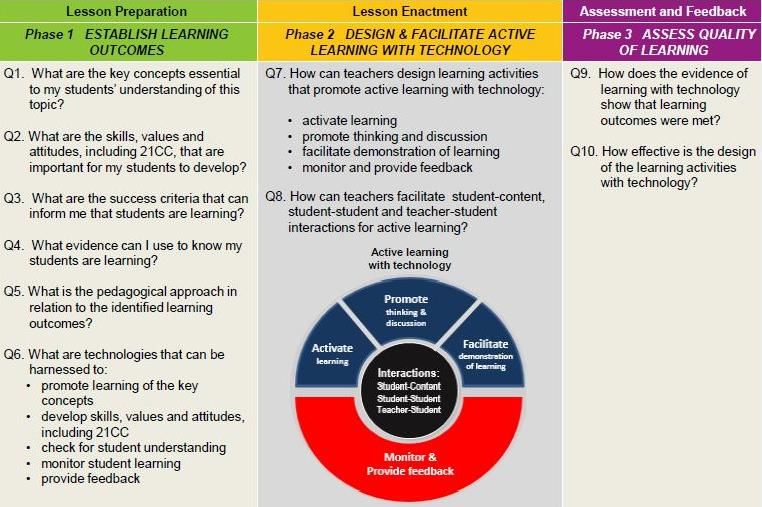
STP: Lesson preparation/
Determining lesson objectives
Design Phase 1: Determining what key concepts are essential to my students'
understanding of this topic
Heighten staff awareness on core element such as content, syllabus and developing attitude,
skill and awarenessPLT Plan 2018
TERM TWO FOCUS
TO SHARPEN CLASSROOM PRACTICES WITH PEER OBSERVATION
SESSION ONE
STP: Lesson preparation/Planning key questions
TLC: Improving hinge point question (Workshop Seven)
Deepening staff capability in planning key questions and using questions to deepen learning.TERM THREE FOCUS
Lesson study, action research, and SLS implementation
SESSION ONE SESSION TWO SESSION THREE SESSION FOUR SESSION FIVE
Data collection
Lesson refinement as part of AR/LS
PLT end of term
Processing data as review/reflection
Implementation and peer observation
part of AR/LS
Building capacity of staff in carrying our research and develop as professionals.TERM FOUR FOCUS
Lesson study, action research, and SLS implementation
SESSIONS ONE and SESSIONS THREE and
SESSION FIVE SESSION SIX SESSION SEVEN SESSION EIGHT
TWO FOUR
Data collection
PLT end-of-
Draft report writing
Implementation term
Processing data
review review/
as part of Preparation for staff conference
reflection
research/LSPLT Plan 2018 and 2019
Teachers Feedback after Term One

• FGD was held on 16 April 2018 to gather teachers’
  feedback.
• Teachers are using essential questions in their
  lessons.
• However, they felt that they needed more scaffolding
  to craft essential questions.
Intervention after FGD

•Another training session to deepen
 understanding on essential questions with
 practical examples and hands-on activities.
Used to… Now… Apply…
https://tinyurl.com/TCIPS
Teacher’s Perspective
PLT in 2017

                                     Based on
                 Research was        reference
Problem area
                conducted as a   material(books),
  in student
                  PLT team to     PLT team tried
learning was
                    identify        out various
  identified
                   problems/       strategies to
   based on
                misconceptions      overcome
results/data.
                among pupils.        identified
                                     problem.
Change
PLT in 2018 (Terms One and Two)
                                            Identifying
                                          learning needs
         Reviewing of lesson
                plan

                                                            Sharing of the STP area
                                                                 by LT and ST
Conducting lesson based on
   the STP lesson plan

                                                            PLT group
                             Crafting part of lesson       discussions
                                 collaboratively
Collaboration
Lesson planning is
Dedicated time: One hr based on STP area
shared during PLT
Smaller PLT groups
Lesson planned
(three to four
Leverage ICT tools based on weekly STP
members per group)
area of focusKey Questions 1) Why do plants need to reproduce?
PLT
               collaborative     STP sharing
                   lesson        by ST and LT
                 planning
Progress to
Individual
Lesson                   Peer lesson
                          feedback
Planning
(Term Three)

               Individual lesson planning
                    based on the STP
Activating prior
Knowledge
Sequencing of
content
Providing clear
explanationTeachers’ Feedback Anisha: ‘I used to think that crafting essential questions is just to get response whether students understand my teaching; now I learnt that crafting essential questions is to stimulate students’ thinking and encourage discussion between the group members.’
Teachers’ Feedback
Lee Yee:

‘l used to think that essential questions are important
questions that guide students to learn; now l learnt that it is
also questions for us to spark curiosity or debate and the
answers’ usually change as understanding deepens.’
• The collaboration resulted in teachers infusing STP more
  confidently in their lesson plans and lessons.
• Teachers were able to use the language of the STP in their
  lesson plans.
Moving from what needs to be taught to…
How my students are going to learn…
Students’ Feedback
Students were given the following template for their feedback.

                   Previously____________
                   ___________________.

                   Now________________
                   ___________________.
Determining Lesson Objectives
‘Previously, we did not know what we were going to learn for
that lesson.
Now, “We are learning to…” is written on the board at the
beginning of the lesson. It alerts us to important information
that we should focus on.’
Renee (5E)Encouraging Learner Engagement
‘Previously, our teacher mostly told us what we needed
to know. We felt like sponges, absorbing what our teacher said.
Now, our teacher encourages us to be curious and think critically. She does not just
give us answers but always asks questions that require us to think more. Now we feel
more responsible for our own learning.’
Ren Khin, 5EArousing Interest
‘Previously, we just sat down and listened to our teacher talk. Sometimes I feel a
little restless.
Now, we sometimes have role-plays to start our lesson. The other day, our teacher
asked us to role-play as electrical parts and form a closed circuit. This helped us
think of what we learnt about closed circuit in the previous lesson. It was fun.’
Rayan Z. (5E)Dedicated to learning
more about how to PLT on lesson
A great teacher develop our students planning
can leave a lasting holistically incorporating the
impact on the STP has taught us to
students. focus on students
learning needs.
Students at the
heart of our
educational
decisionsSupport Structures that Drive
Positive Behaviour
• Strong involvement of school leadersSupport Structures that Drive
Positive Behaviour
• Dedicating resources for core team to look into infusion of the STP
and strengthening PLT understanding staff needs
• Fluidity and flexibility of plans and adaptability of core team to meet
the needs
• Funds set aside for training and building resources
• Strong monitoring structures and gentle nudges
• Recognition of good effortsChallenges • To build self-directed teacher learners • Grounds-up initiative • Deep reflection from teachers and improvement • Creating more teacher leaders who will come forward more • Consider if provisions inhibit teacher’s contribution • To have a balanced tight-loose approach
Culture Building is Key
Our Journey Continues
You can also read


