COLT 2018 Conference on Learning Theory - July 5-9 2018, Stockholm, Sweden - Computational Learning Theory
←
→
Page content transcription
If your browser does not render page correctly, please read the page content below
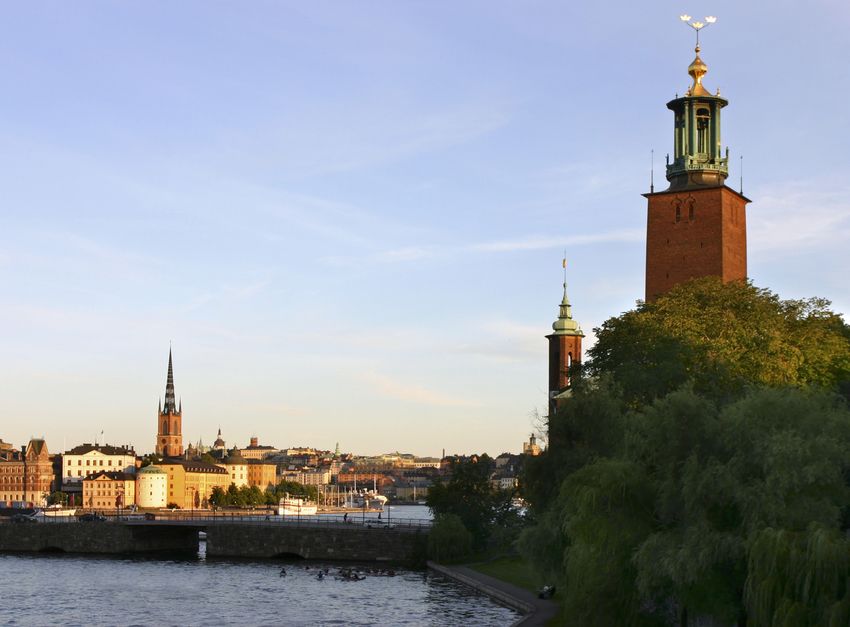
Association for Computational Learning

                                         COLT 2018
                                         Conference on Learning Theory
                                         July 5-9 2018, Stockholm, Sweden

                                                                            1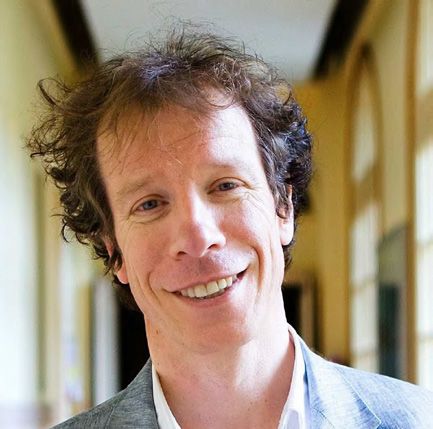
COLT 2018

                                                   Sponsors
                    We are extremely grateful to our sponsors for being so very generous in supporting COLT,
                critically ensuring the conference's continued success, and making attendance more affordable
                  for students through subsidized registration fees and travel awards which were provided to
                           more than 25 student authors. Thank you for all your support and generosity.

                                                      Platinum:

2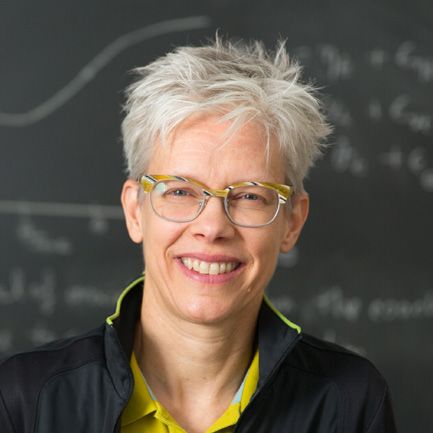
COLT 2018

                       Gold:

注意事项

       1LOGO
       20%30%90%100%
         0%10%
                       Silver:
       3LOGO

                 Hosted by:

                                             3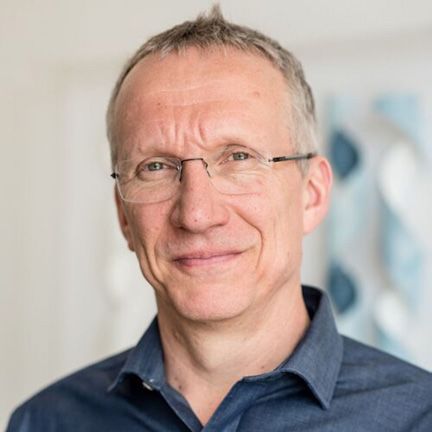
COLT 2018

                Welcome to the 31st edition of COLT,
                the Conference on Learning Theory

                This year, we will enjoy 91 presentations, each of them lasting for 10 minutes. We thank and congratulate the
                different authors for their contributions. Each presenter is invited to participate in a poster session at
                the end of the day of their presentation. During poster sessions, participants are able to engage directly
                with the presenter and learn more about the content of a paper. We also thank the three keynote
                speakers, Stephane Mallat, Susan Murphy and Johan Håstad for their participation.

                                                            Sebastien Bubeck and Philippe Rigollet, Program chairs of COLT18

                Welcome to Stockholm, and to KTH Royal Institute of Technology! We are glad to host the conference
                this year, and hope you enjoy your stay in Stockholm. The social event is scheduled Sunday, July 8, at
                Artipelag, an astonishing museum in the archipelago. We will go there by bus. Please be in front of the
                main KTH building, Lindstedsvägen 1 at 7:30PM.

                                                                     Alexandre Proutiere, Local arrangement chair of COLT18

                                             Location of venue

4
COLT 2018

General information
The conference venue

The conference venue is located in KTH main campus, room Q1, Malvinas väg 4 (previously called Osquldas
väg 10), and is within walking distance from the metro (“tunnelbana”) station “Tekniska Högskolan”.

Lunches will be served in the ”Ljusgården” at Lindstedtsvägen 3 in the E building, floor 3. See the map below
showing how to walk from Q1 to Ljusgården. Lunches on Monday will be served outside the room Q1.

Stockholm and KTH

KTH is Sweden’s largest technical research and learning institution and home to students, researchers
and faculty from around the world dedicated to advancing knowledge. KTH has over 13 000 students,
about 1 800 doctoral students and 5 200 employees.

Stockholm is the beautiful capital of Sweden and the home of KTH. The city was founded in the
13th century and is situated on the east coast of Sweden, bordering the Baltic Sea. With 2.1 million
inhabitants, it is the heart of Swedish trade and business life, and is known for its rich cultural
history and closeness to nature.

                                                                                                                            5
COLT 2018
Practical information
Getting around
The easiest and cheapest way to get around in Stockholm is with public transportation. The public
transport system encompasses buses, tramways and metro, as well as commuter trains and some
ferries.
The transport provider SL has recently changed to a completely electronic ticket system. You can not pay
in cash when getting on board on a bus, tramway, metro or train. You can buy a card at the airport, any
SL Center, Pressbyrån or at the manual ticket booths when entering the subway. Have the card pre-set
to journeys within one zone (all of central Stockholm is the same zone).
You can also use the app “SL-Reseplanerare och biljetter” to pay for your ticket with your credit card.
If you are planning to use public transportation we encourage you to download the app “Res i Sthlm”,
which will help you to plan your traveling. It can be set to English mode if desired.
WiFi
You can use the WiFi “KTH-Conference”. The password for the first three days is xazupape, and on
Monday vetyparo. Alternatively, you can use eduroam.
6COLT 2018
Travel information
Arlanda Airport is located 40 kilometers north of Stockholm City and connected to downtown by a
high-speed train and airport coach as well as public transportation alternatives.
Airport coach
The buses from Arlanda take about 35-45 min and buses depart every 10-20 minutes from Arlanda
Airport to the City Terminal (located next to Stockholm Central Station). Tickets cost 99 SEK if you buy
online and 119 SEK when buying on the bus.
Website: https://www.flygbussarna.se/en
The Arlanda Express train
The train from Arlanda takes about 20 min and departs every 15 minutes (most hours of the day). Ticket
prices vary: 140 SEK for students, 150 SEK for youth up to 25 years and 280 SEK for adult 26 years and
over. If you hold an International Student Identification Card (ISIC), ask for a student discount on the
Arlanda Express train.
Website: https://www.arlandaexpress.com/
Taxi
A taxi from Arlanda to the central station takes about 30 min. The prices are often fixed to any
destination in Stockholm City and average at 520 SEK.
This is an affordable option if you are a group of students traveling together. We strongly recommend
that you ask for the estimated price or the fixed price before you start a taxi journey. We recommend
use of the major companies Taxi Stockholm and Taxi Kurir.
Local transportation via commuter train
Local transportation takes about 38 minutes. The commuter trains depart from SkyCity located
between terminal 4 and 5 regularly and the price is 151 SEK (regular SL ticket + extra airport fee).
Website: www.sl.se/en
7COLT 2018
Organizers
Program chairs Sponsorship chairs
Sebastien Bubeck (Microsoft Research) Satyen Kale (Google)
Philippe Rigollet (MIT) Robert Schapire (Microsoft Research)
Publications chair Local arrangements chair
Vianney Perchet (ENS Paris-Saclay) Alexandre Proutiere (KTH)
Open problems chair
Wouter Koolen (CWI, Amsterdam)
Programme committee
Jacob Abernethy (Georgia Tech) Vladimir Koltchinskii (Georgia Tech)
Shivani Agarwal (University of Pennsylvania) Wouter Koolen (CWI, Amsterdam)
Shipra Agrawal (Columbia University) Tomer Koren (Google)
Alexandr Andoni (Columbia University) John Lafferty (Yale University)
Pranjal Awasthi (Rutgers University) Po-Ling Loh (UW Madison)
Francis Bach (INRIA) Gabor Lugosi (ICREA and Pompeu Fabra University)
Nina Balcan (Carnegie Mellon University) Shie Mannor (Technion)
Afonso Bandeira (New-York University) Yishay Mansour (Tel Aviv University and Google)
Mihail Belkin (Ohio State University) Ankur Moitra (MIT)
Shai Ben-David (University of Waterloo) Robert Nowak (UW Madison)
Quentin Berthet (University of Cambridge) Vianney Perchet (ENS Paris-Saclay and Criteo)
Alina Beygelzimer (Yahoo! Research) Alexandre Proutiere (KTH)
Avrim Blum (TTI Chicago) Luis Rademacher (UC Davis)
Guy Bresler (MIT) Maxim Raginsky (University of Illinois)
Olivier Cappé (Université Paris-Saclay) Sasha Rakhlin (University of Pennsylvania)
Constantine Caramanis (UT Austin) Lorenzo Rosasco (MIT and Universita' di Genova)
Alexandra Carpentier (OvGU Magdeburg) Robert Schapire (Microsoft Research)
Nicolo Cesa-Bianchi (University of Milan) Ohad Shamir (Weizman Institute)
Arnak Dalalyan (ENSAE) Suvrit Sra (MIT)
Amit Daniely (Hebrew University) Nathan Srebro (TTI Chicago)
Ronen Eldan (Weizman Institute) Karthik Sridharan (Cornell University)
Tim van Erven (Leiden University) David Steurer (ETH Zurich)
Vitaly Feldman (Google) Csaba Szepesvari (University of Alberta)
Aurelien Garivier (University Paul-Sabatier) Matus Telgarsky (University of Illinois)
Rong Ge (Duke University) Ambuj Tewari (University of Michigan)
Claudio Gentile (Universita degli Studi dell’Insubria) Alexandre Tsybakov (ENSAE-CREST)
Steve Hanneke Ruth Urner (Max Planck Institute)
Elad Hazan (Princeton University) Santosh Vempala (Georgia Tech)
Daniel Hsu (Columbia University) Roman Vershynin (UC Irvine)
Prateek Jain (Microsoft Research) Manfred Warmuth (UC Santa Cruz)
Satyen Kale (Google) Yihong Wu (Yale University)
Varun Kanade (Oxford University)
8COLT 2018
Acknowledgments
Sponsor lists
Platinum: Silver:
American express AWS
Google AI DE Shaw&Co
Western Digital IBM
Mobileye
Gold:
Apple
Baidu
Microsoft
Best student paper sponsors WiML-T lunch sponsor
Machine Learning Journal WiML
Mark Fulk foundation
Host Booklet design
KTH Louise Gustafsson
Local arrangements
Cecilia Lunglöf and Alexandre Proutiere
9Program at a glance
Thursday Welcome reception and registration 6pm – 8pm, Ljusgården,
5th of July E building KTH, 18:00
Friday Registration, 08:00-08:55
6th of July Sessions in room Q1, 09:00-17:30
Posters in rooms Q31 and Q34, 17:30.19:00
Saturday Sessions in room Q1, 09:00-17:00
7th of July Posters in rooms Q31 and Q34, 18:00-20:00
Sunday Sessions in room Q1, 09:00-17:30
8th of July Posters in rooms Q31 and Q34, 17:30-19:30
Banquet at Artipelag, 19:30- 23:30,
Bus departs at 19:30 from Lindstedsv. 1, https://artipelag.se/
Monday 09:00-12:00, Sessions in room Q1
9th of July 12:00-14:00, Posters in rooms Q31 and Q34
10Keynote speakers
Stephane Mallat (Ecole Polytechnique)
Stephane Mallat’s research interests include learning, signal processing,
and harmonic analysis. He is a member of the French Academy of sciences,
an IEEE Fellow and a EUSIPCO Fellow. In 1997, he received the Outstanding
Achievement Award from the SPIE Society and was a plenary lecturer at
the International Congress of Mathematicians in 1998.
Susan Murphy (Harvard)
Susan Murphy’s research focuses on improving sequential, individualized,
decision making in health, in particular on clinical trial design and data
analysis to inform the development of adaptive interventions (e.g.
treatment policies). She is a member of the US National Academy of
Sciences, a former editor of the Annals of Statistics and a 2013 MacArthur
Fellow.
Johan Håstad (KTH)
Johan Håstad is a theoretical computer scientist best known for his work
on complexity theory. He has received two Gödel prizes, one in 1994 for
his work on circuit lower bounds and one in 2011 for his work on
hardness of approximation. He is a fellow of the American Mathematical
Society and was a plenary speaker at the International Congress of
Mathematicians in 1998.
11COLT 2018
Friday, 6th of July
Session 1: Registration (08:00-08:55)
Session 2: Opening remarks (08:55-09:00)
Opening remarks by chairs Sebastien Bubeck and Philippe Rigollet
Session 3 (09:00-10:00)
09:00 Tim Roughgarden and Joshua Wang
An Optimal Learning Algorithm for Online Unconstrained Submodular Maximization
09:10 Ashok Cutkosky and Francesco Orabona
Black-Box Reductions for Parameter-free Online Learning in Banach Spaces
09:20 Dirk van der Hoeven, Tim van Erven and Wojciech Kotłowski
The Many Faces of Exponential Weights in Online Learning
09:30 Gautam Goel, Niangjun Chen and Adam Wierman
Smoothed Online Convex Optimization in High Dimensions via Online Balanced Descent
09:40 Jason Altschuler and Kunal Talwar
Online learning over a finite action set with limited switching
09:50 Dylan Foster, Alexander Rakhlin and Karthik Sridharan
Online Learning: Sufficient Statistics and the Burkholder Method
Coffee break (10:00-10:30)
Session 4 (10:30-12:00)
10:30 Rishabh Dudeja and Daniel Hsu
Learning Single Index Models in Gaussian Space
10:40 David Durfee, Kevin A. Lai and Saurabh Sawlani
L1 Regression using Lewis Weights Preconditioning and Stochastic Gradient Descent
10:50 Matthew Brennan, Guy Bresler and Wasim Huleihel
Reducibility and Computational Lower Bounds for Problems with Planted Sparse Structure
11:00 Florent Krzakala, Lenka Zdeborova, Jean Barbier, Nicolas Macris and Leo Miolane
Optimal Errors and Phase Transitions in High-Dimensional Generalized Linear Models
11:10 Guillaume Martinet and Samory Kpotufe
Marginal Singularity, and the Benefits of Labels in Covariate-Shift
11:20 Yuanzhi Li and Yingyu Liang
Learning Mixtures of Linear Regressions with Nearly Optimal Complexity
11:30 Adam Klivans, Pravesh K Kothari and Raghu Meka
Efficient Algorithms for Outlier-Robust Regression
11:40 Dylan Foster, Satyen Kale, Haipeng Luo, Mehryar Mohri and Karthik Sridharan
Logistic Regression: The Importance of Being Improper
11:50 Shiva Kasiviswanathan and Mark Rudelson
Restricted Eigenvalue from Stable Rank with Applications to Sparse Linear Regression
12COLT 2018
Lunch break (12:00-14:00)
Session 5: Invited talk Stephane Mallat (14:00-15:00)
Session 6 (15:20-16:20)
15:20 Jonathan Weed
An explicit analysis of the entropic penalty in linear programming
15:30 Naman Agarwal and Elad Hazan
Lower Bounds for Higher-Order Convex Optimization
15:40 Yin Tat Lee, Aaron Sidford and Santosh Vempala
Efficient Convex Optimization with Membership Oracles
15:50 Jacob Abernethy, Kevin A. Lai, Kfir Y. Levy and Jun-Kun Wang
Faster Rates for Convex-Concave Games
16:00 Srinadh Bhojanapalli, Nicolas Boumal, Prateek Jain and Praneeth Netrapalli
Smoothed Analysis for Efficient Semi-definite Programming
16:10 Oren Mangoubi and Nisheeth Vishnoi
Convex Optimization with Unbounded Nonconvex Oracles Using Simulated Annealing
Session 7 (16:30-17:30)
CHAIR: Sacha Tsybakov
16:30 Yanjun Han, Jiantao Jiao and Tsachy Weissman
Local moment matching: A unified methodology for symmetric functional estimation and
distribution estimation under Wasserstein distance
16:40 Ilias Diakonikolas, Jerry Li and Ludwig Schmidt
Fast and Sample Near-Optimal Algorithms for Learning Multidimensional Histograms
16:50 James Sharpnack
Learning Patterns for Detection with Multiscale Scan Statistics
17:00 Yuval Dagan and Ohad Shamir
Detecting Correlations with Little Memory and Communication
17:10 Steve Hanneke, Adam Kalai, Gautam Kamath and Christos Tzamos
Actively Avoiding Nonsense in Generative Models
17:20 Timothy Carpenter, Ilias Diakonikolas, Anastasios Sidiropoulos and Alistair Stewart
Near-Optimal Sample Complexity Bounds for Maximum Likelihood Estimation of Multivariate
Log-concave Densities
Session 8: Poster session (17:30-19:30)
13COLT 2018
Saturday, 7th of July
Session 9 (09:00-10:00)
09:00 Manish Raghavan, Aleksandrs Slivkins, Jennifer Wortman Vaughan and Zhiwei Steven Wu
The Externalities of Exploration and How Data Diversity Helps Exploitation
09:10 Max Simchowitz, Horia Mania, Stephen Tu, Michael Jordan and Benjamin Recht
Learning Without Mixing: Towards A Sharp Analysis of Linear System Identification
09:20 Constantinos Daskalakis, Nishanth Dikkala and Nick Gravin
Testing Symmetric Markov Chains From a Single Trajectory
09:30 Ana Busic and Sean Meyn
Action-Constrained Markov Decision Processes With Kullback-Leibler Cost
09:40 Jalaj Bhandari, Daniel Russo and Raghav Singal
A Finite Time Analysis of Temporal Difference Learning With Linear Function Approximation
09:50 Gal Dalal, Balazs Szorenyi, Gugan Thoppe and Shie Mannor
Finite Sample Analysis of Two-Timescale Stochastic Approximation with Applications to
Reinforcement Learning
Coffee break (10:00-10:30)
Session 10 (10:30-12:00)
10:30 Vladimir Kolmogorov
A Faster Approximation Algorithm for the Gibbs Partition Function
10:40 Vishesh Jain, Frederic Koehler and Elchanan Mossel
The Mean-Field Approximation: Information Inequalities, Algorithms, and Complexity
10:50 Vishesh Jain, Frederic Koehler and Elchanan Mossel
The Vertex Sample Complexity of Free Energy is Polynomial
11:00 Guy Bresler and Dheeraj Nagaraj
Optimal Single Sample Tests for Structured versus Unstructured Network Data
11:10 Marco Mondelli and Andrea Montanari
Fundamental Limits of Weak Recovery with Applications to Phase Retrieval
11:20 Yu Cheng and Rong Ge
Non-Convex Matrix Completion Against a Semi-Random Adversary
11:30 Jason Klusowski and Yihong Wu
Counting Motifs with Graph Sampling
11:40 Cheng Mao, Ashwin Pananjady and Martin Wainwright
Breaking the $1/\sqrt{n}$ Barrier: Faster Rates for Permutation-based Models in Polynomial Time
11:50 Yanjun Han, Ayfer Ozgur and Tsachy Weissman
Geometric Lower Bounds for Distributed Parameter Estimation under Communication Constraints
14COLT 2018
Lunch break (12:00-13:40)
Session 11: Open Problems (13:40-14:00)
Session 12: Invited talk Susan Murphy (14:00-15:00)
Session 13 (15:20-16:50)
15:20 Hongyi Zhang and Suvrit Sra
An Estimate Sequence for Geodesically Convex Optimization
15:30 Nilesh Tripuraneni, Nicolas Flammarion, Francis Bach and Michael Jordan
Averaged Stochastic Gradient Descent on Riemannian Manifolds
15:40 Prateek Jain, Sham Kakade, Rahul Kidambi, Praneeth Netrapalli and Aaron Sidford
Accelerating Stochastic Gradient Descent for Least Squares Regression
15:50 Chi Jin, Praneeth Netrapalli and Michael Jordan
Accelerated Gradient Descent Escapes Saddle Points Faster than Gradient Descent
16:00 Loucas Pillaud-Vivien, Alessandro Rudi and Francis Bach
Exponential convergence of testing error for stochastic gradient methods
16:10 Oliver Hinder
Cutting plane methods can be extended into nonconvex optimization
16:20 Zalán Borsos, Andreas Krause and Kfir Y. Levy
Online Variance Reduction for Stochastic Optimization
16:30 John Duchi, Feng Ruan and Chulhee Yun
Minimax Bounds on Stochastic Batched Convex Optimization
16:40 Gergely Neu and Lorenzo Rosasco
Iterate averaging as regularization for stochastic gradient descent
Session 14: Business meeting (17:00-18:00)
Session 15: Poster session (18:00-20:00)
15COLT 2018
Sunday, 8th of July
Session 16 (09:00-10:00)
09:00 Espen Bernton
Langevin Monte Carlo and JKO splitting
09:10 Raaz Dwivedi, Yuansi Chen, Martin Wainwright and Bin Yu
Log-concave sampling: Metropolis-Hastings algorithms are fast!
09:20 Andre Wibisono
Sampling as optimization in the space of measures: The Langevin dynamics as a composite
optimization problem
09:30 Wenlong Mou, Liwei Wang, Xiyu Zhai and Kai Zheng
Generalization Bounds of SGLD for Non-convex Learning: Two Theoretical Viewpoints
09:40 Belinda Tzen, Tengyuan Liang and Maxim Raginsky
Local Optimality and Generalization Guarantees for the Langevin Algorithm via Empirical Metastability
09:50 Xiang Cheng, Niladri S. Chatterji, Peter Bartlett and Michael Jordan
Underdamped Langevin MCMC: A non-asymptotic analysis
Coffee break (10:00-10:30)
Session 17 (10:30-12:00)
10:30 Bangrui Chen, Peter Frazier and David Kempe
Incentivizing Exploration by Heterogeneous Users
10:40 Asaf Cassel, Assaf Zeevi and Shie Mannor
A General Approach to Multi-Armed Bandits Under Risk Criteria
10:50 Nicolo' Cesa-Bianchi, Claudio Gentile and Yishay Mansour
Nonstochastic Bandits with Composite Anonymous Feedback
11:00 Chen-Yu Wei and Haipeng Luo
More Adaptive Algorithms for Adversarial Bandits
11:10 Yasin Abbasi-Yadkori, Peter Bartlett, Victor Gabillon, Alan Malek and Michal Valko
Best of Both Worlds: Stochastic & Adversarial Best-Arm Identification
11:20 Haipeng Luo, Chen-Yu Wei, Alekh Agarwal and John Langford
Efficient Contextual Bandits in Non-stationary Worlds
11:30 Andrea Locatelli and Alexandra Carpentier
Adaptivity to Smoothness in X-armed bandits
11:40 Thodoris Lykouris, Karthik Sridharan and Eva Tardos
Small-loss bounds for online learning with partial information
11:50 Johannes Kirschner and Andreas Krause
Information Directed Sampling and Bandits with Heteroscedastic Noise
16COLT 2018
Lunch break (12:00-14:00)
Session 18: Invited talk Johan Hastad (14:00-15:00)
Session 19 (15:20-16:20)
15:20 Yuanzhi Li, Tengyu Ma and Hongyang Zhang
Algorithmic Regularization in Over-parameterized Matrix Sensing and Neural Networks with
Quadratic Activations
15:50 Paul Hand and Vladislav Voroninski
Global Guarantees for Enforcing Deep Generative Priors by Empirical Risk
16:00 Noah Golowich, Alexander Rakhlin and Ohad Shamir
Size-Independent Sample Complexity of Neural Networks
16:10 Dmitry Yarotsky
Optimal approximation of continuous functions by very deep ReLU networks
Session 20 (16:30-17:30)
16:30 Nina Holden, Robin Pemantle and Yuval Peres
Subpolynomial trace reconstruction for random strings and arbitrary deletion probability
16:40 Ahmed El Alaoui and Michael Jordan
Detection limits in the high-dimensional spiked rectangular model
16:50 Yingjie Fei and Yudong Chen
Hidden Integrality of SDP Relaxations for Sub-Gaussian Mixture Models
17:10 Sanjeev Arora, Wei Hu and Pravesh K Kothari
An Analysis of the t-SNE Algorithm for Data Visualization
17:20 Charles Fefferman, Sergei Ivanov, Yaroslav Kurylev, Matti Lassas and Hariharan Narayanan
Fitting a putative manifold to noisy data
17:20 Yan Shuo Tan and Roman Vershynin
Polynomial Time and Sample Complexity for Non-Gaussian Component Analysis: Spectral Methods
Session 21: Poster session (17:30-19:20)
Banquet at Artipelag
The bus departs at 19:30 from Lindstedtsvägen 1.
https://artipelag.se/
17COLT 2018
Monday, 9th of July
Session 22 (09:00-10:00)
09:00 Themis Gouleakis, Christos Tzamos and Manolis Zampetakis
Learning from Unreliable Datasets
09:10 Cynthia Dwork and Vitaly Feldman
Privacy-preserving Prediction
09:20 Vitaly Feldman and Thomas Steinke
Calibrating Noise to Variance in Adaptive Data Analysis
09:30 Michela Meister and Gregory Valiant
A Data Prism: Semi-verified learning in the small-alpha regime
09:40 Daniel Alabi, Nicole Immorlica and Adam Tauman Kalai
Unleashing Linear Optimizers for Group-Fair Learning and Optimization
09:50 John Tsitsiklis, Kuang Xu and Zhi Xu
Private Sequential Learning
Coffee break (10:00-10:30)
Session 23 (10:30-12:00)
10:30 Arnab Bhattacharyya, Suprovat Ghoshal and Rishi Saket
Hardness of Learning Noisy Halfspaces using Polynomial Thresholds
10:40 Avrim Blum and Lunjia Hu
Active Tolerant Testing
10:50 Paul Beame, Shayan Oveis Gharan and Xin Yang
Time-Space Tradeoffs for Learning Finite Functions from Random Tests, with Applications to Polynomials
11:00 Andreas Maurer and Massimiliano Pontil
Empirical bounds for functions with weak interactions
11:10 Ido Nachum, Jonathan Shafer and Amir Yehudayoff
A Direct Sum for Information Learners
11:20 Victor Chernozhukov, Kaspar Wuthrich and Yinchu Zhu
Exact and Robust Conformal Inference Methods for Predictive Machine Learning With Dependent Data
11:30 Mikhail Belkin
Approximation beats concentration? An approximation view on inference with smooth radial kernels
11:40 Piotr Indyk and Tal Wagner
Approximate Nearest Neighbors in Limited Space
11:50 Chicheng Zhang
Efficient Active Learning of Sparse Halfspaces
18COLT 2018
Lunch break (12:00-14:00)
Session 24: Poster session (12:00-14:00)
19COLT 2018
Conference on Learning Theory
www.learningtheory.org/colt2018/
20You can also read


